



Long hair can carry bangs better than most people think. In fact, choppy bangs for long hair are often the easiest fringe to live with because they do not sit there like a hard line and demand perfection every morning. They move. They break up. They grow out with a little grace, which is more than I can say for a blunt, one-length fringe that has a bad mood before breakfast.
That freedom is the whole appeal. Long hair already gives you weight and swing, so the bangs do not need to do all the visual work on their own. A choppy fringe can soften a strong jaw, make straight hair feel less flat, and give thick hair a place to release some bulk without turning the whole cut into a shag. Done well, it looks lived-in rather than messy. Done badly, it looks like you got impatient with kitchen scissors. Small difference. Big outcome.
The trick is matching the fringe to the rest of the haircut. A choppy bang that looks airy on fine hair can disappear on dense hair. A piecey fringe that feels cool with beach waves can look too scattered on poker-straight lengths. So the best styles here are not just pretty names — they’re different ways of solving a real haircut problem.
1. Soft Eyebrow-Skimming Choppy Bangs

This is the safest place to start if you want a fringe without a dramatic personality change. Soft eyebrow-skimming choppy bangs sit just at or a hair above the brow, with short broken pieces instead of one solid line. On long hair, that keeps the face open while still giving you movement around the eyes.
Why It Flatters Long Hair
Long lengths can make the face look stretched if everything hangs in one direction. A soft, choppy fringe fixes that by putting a little motion right at the top of the face. It works especially well on straight and slightly wavy hair because the uneven ends stop the bangs from looking heavy.
Ask for a fringe that’s slightly longer at the temples and a touch shorter in the middle. That tiny shift matters. It keeps the bangs from looking like a helmet and gives you an easier grow-out later.
- Best on oval, heart, and long faces.
- Works well with air-dried texture or a quick blow-dry using a small round brush.
- Needs a light hand with texturizing spray; too much and the pieces separate in a weird way.
Tip: keep the shortest point no shorter than mid-forehead unless you want a sharper look.
2. Piecey Bottleneck Choppy Bangs
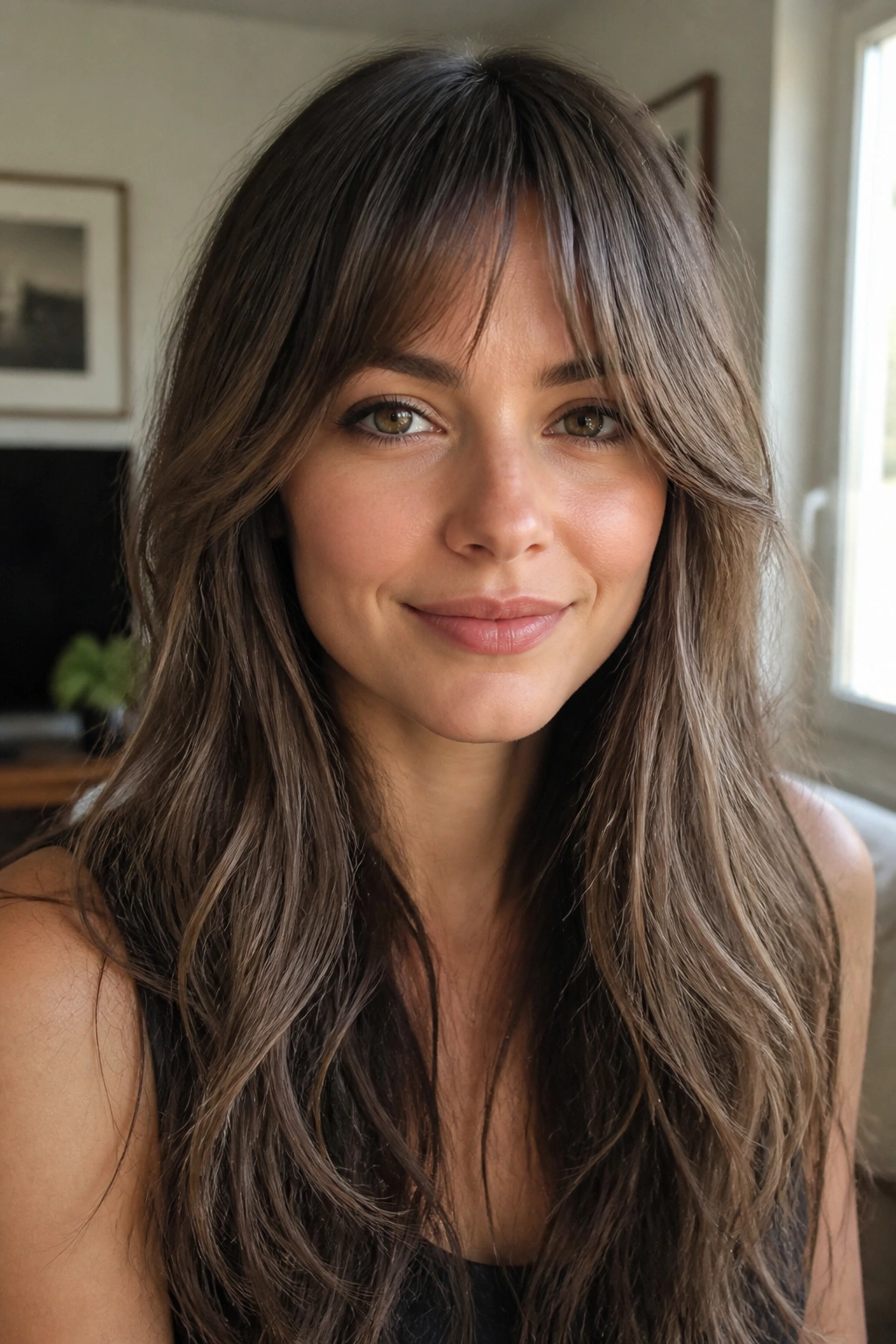
Why do bottleneck bangs keep showing up in salons? Because they solve two problems at once: they frame the face and they do not box you into one look. The center opens just a bit, then the sides drop longer, which makes the whole fringe feel softer on long hair.
How the Shape Works
A choppy bottleneck bang has a narrow center and wider side pieces, but the ends are cut into broken, feathered bits so it never feels too neat. That makes it friendlier than a strict curtain bang if your hair is thick, and less severe than a straight fringe if your forehead is more on the smaller side.
I like this style most on hair that has some bend. You can wear it with a loose blowout, but it also works when you tuck the side pieces behind the ears and let the front sections fall on their own.
Styling Notes
- Dry the center first so it doesn’t split weirdly.
- Use a flat brush to direct the sides away from the face.
- Add a pea-sized dab of styling cream to the ends only.
One warning: don’t over-layer the sides. The whole point is a gentle swing, not a shredded outline.
3. Wispy Curtain Bangs With Choppy Ends

Picture a fringe that parts in the middle, falls around the cheekbones, and still has a few uneven pieces that refuse to behave. That is the charm here. Wispy curtain bangs with choppy ends look especially good on long hair because they echo the length instead of fighting it.
The middle part makes the face feel open, which helps if you wear your hair down most of the time. The choppy ends keep the style from turning too polished. A lot of curtain bangs go too smooth and lose personality fast. This version keeps a little grit.
It suits wavy hair best, though straight hair can wear it too if you bend the ends with a round brush or flat iron. The longest pieces should land near the cheekbone or just below it, then taper into the rest of the hair. That gives you a soft line when the hair moves.
Best choice if you want bangs that can disappear into layers on lazy days. That is the real win. Not having to fight them every morning.
4. Blunt-to-Choppy Fringe
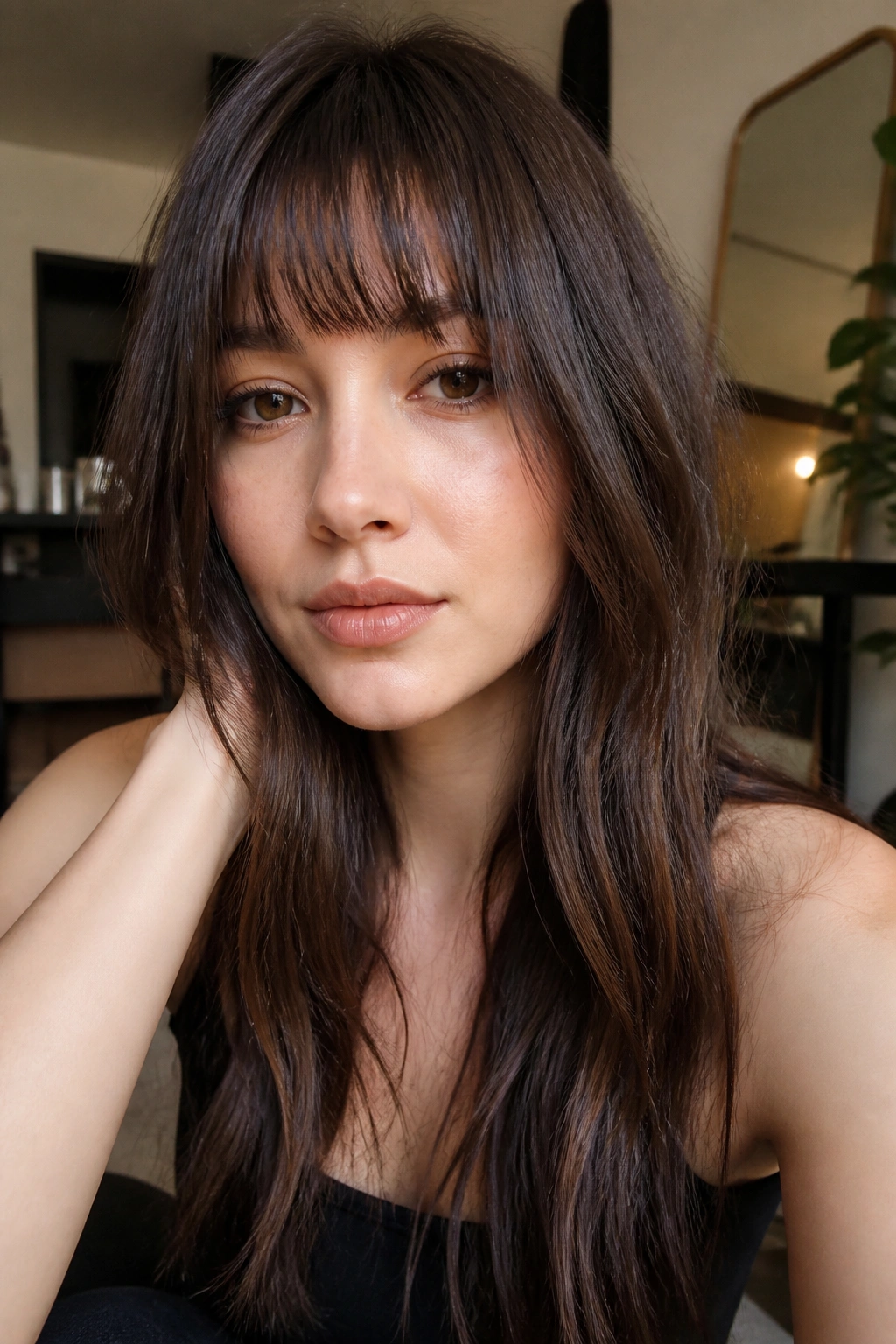
A straight-across bang does not have to feel severe. If the ends are broken up with light texturing, the result is a blunt-to-choppy fringe that still reads strong but feels less boxed in. On long hair, that contrast can be excellent. The length stays romantic; the fringe brings structure.
The key is restraint. You want the top line to stay fairly solid so the bangs have presence, but the very ends should be point-cut or razor-finished so they do not sit like a brick. That little bit of breakage makes a big difference when the rest of your hair is long and heavy.
This is one of the better options for thick hair because the density helps the fringe hold shape. Fine hair can wear it too, but the cut has to be delicate or it can go see-through fast. I would not go too short here unless you like your bangs very obvious. They’ll announce themselves. Loudly.
Best with a precise blow-dry and a little bend at the ends. Not pin-straight. That can look harsh.
5. Side-Swept Choppy Bangs
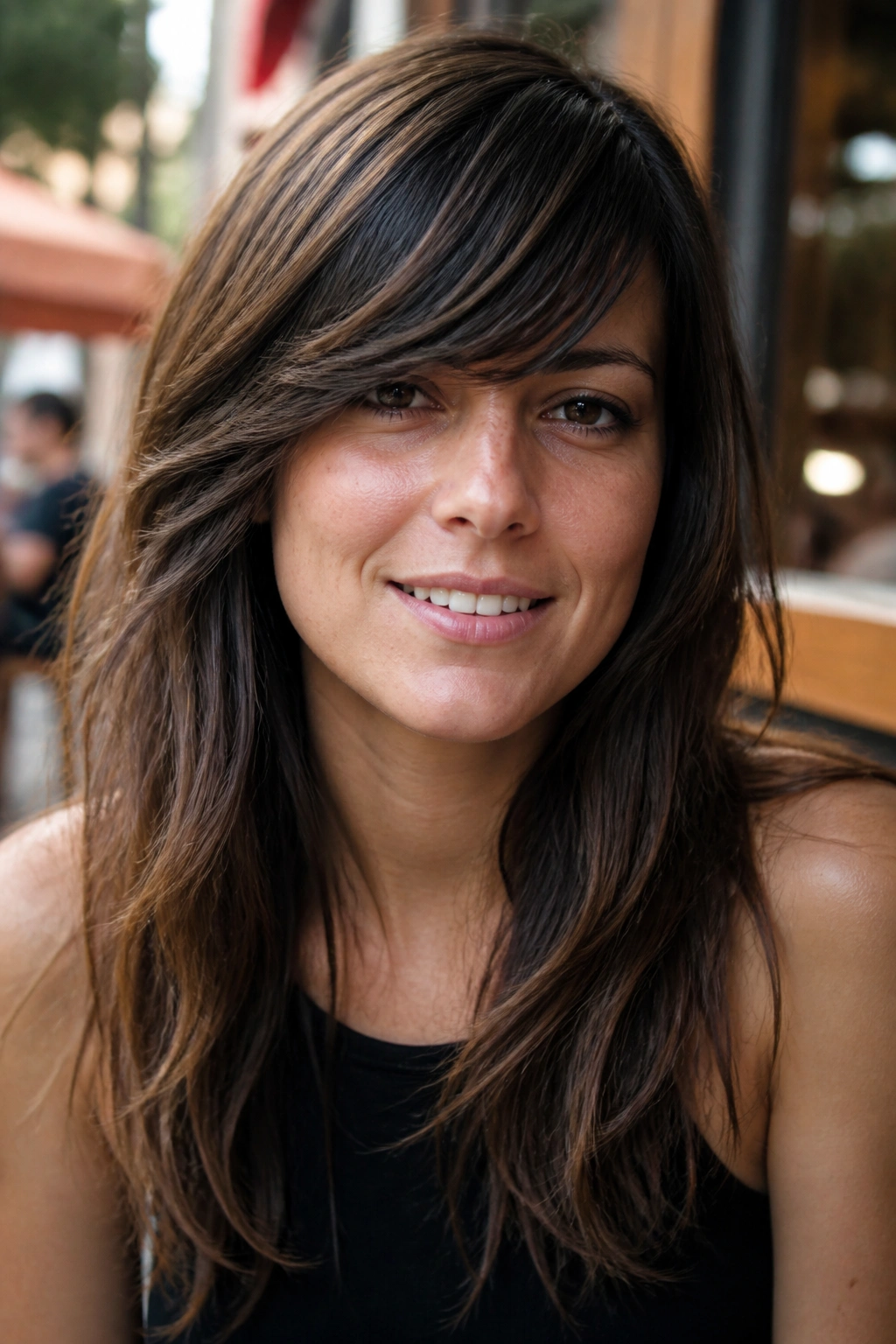
Side-swept bangs never went away. They just got smarter. When they’re cut with choppy ends, they stop feeling old-fashioned and start looking easy in a good way. The sweep softens the forehead, while the broken edge keeps the fringe from clumping into a single heavy section.
This style is especially kind to long hair because it blends into face-framing layers. You get a front section that moves, but you do not lose length around the sides. That matters if you like to wear your hair tucked behind one ear or pulled into a low ponytail.
What Makes It Different
Unlike a full fringe, side-swept choppy bangs do not need perfect styling every day. They can fall naturally, especially if your hair has a little wave. A quick pass with a round brush at the roots is usually enough.
- Good for round and square faces.
- Easier grow-out than shorter bang shapes.
- Works with layers that start at the chin or collarbone.
My take: this is one of the least fussy bangs on the list. If you hate babysitting your fringe, start here.
6. Baby Choppy Bangs
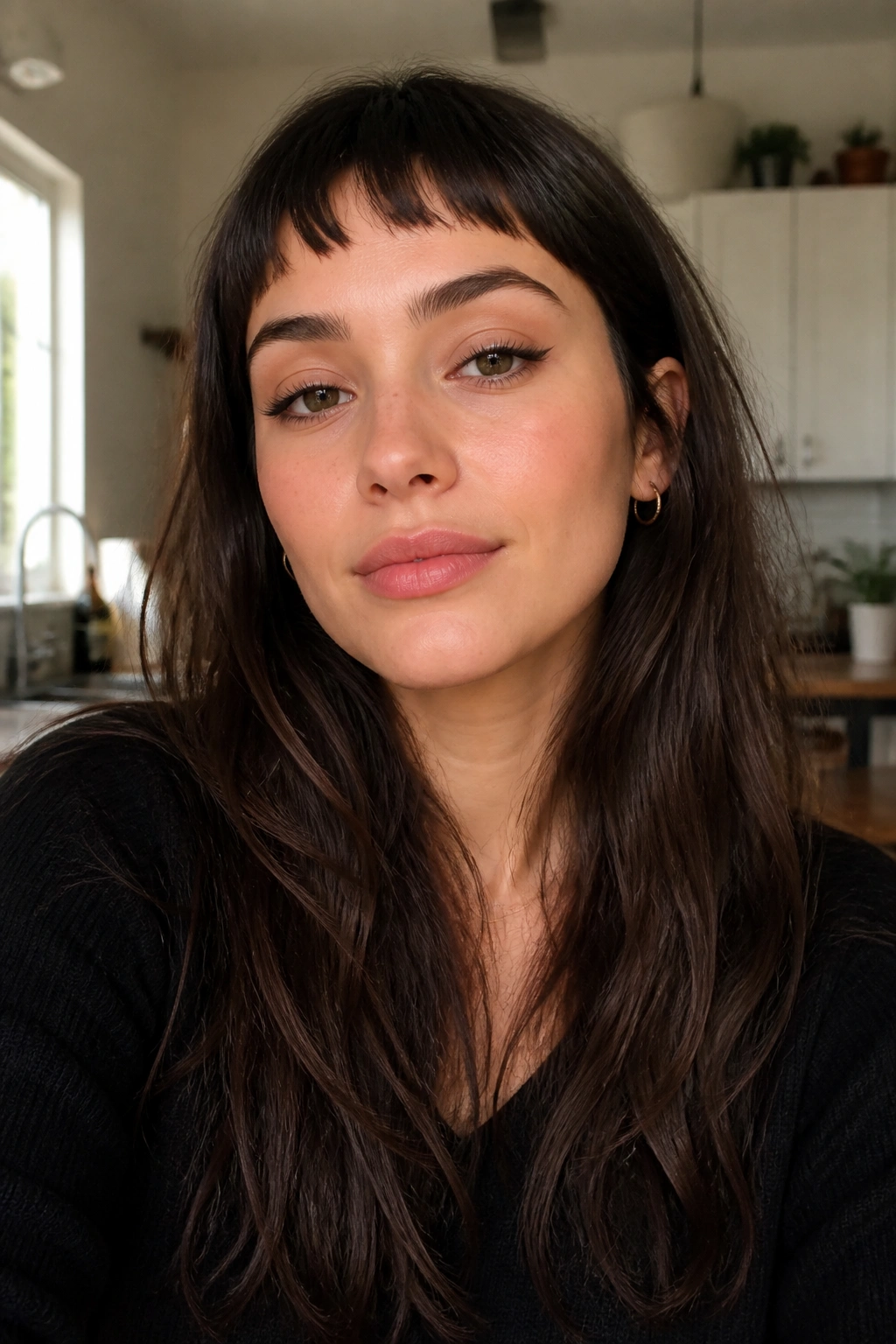
Short bangs are not for everyone. I’ll say that plainly. But baby choppy bangs can look fantastic on long hair when you want contrast and a little edge without committing to a heavy full fringe. The broken ends keep them from feeling too sharp, which helps a lot.
The balance is the point. Long hair can handle a tiny bang better than shorter cuts because the length absorbs the drama. You end up with a strong front shape and a soft body underneath. It is a sharp look, but not a harsh one.
Keep the edges slightly irregular and do not flatten them too much with heat. A tiny bit of bend makes them look intentional instead of bluntly chopped. They pair well with high buns, loose waves, and center-parted lengths.
Best For
- Strong brows or expressive eyes.
- Straight or lightly textured hair.
- People who like a bold front detail with low maintenance in the back.
Warning: baby bangs show every mistake. If your hairline grows unevenly or you have a stubborn cowlick, talk through it before you cut.
7. Feathered Face-Framing Bangs
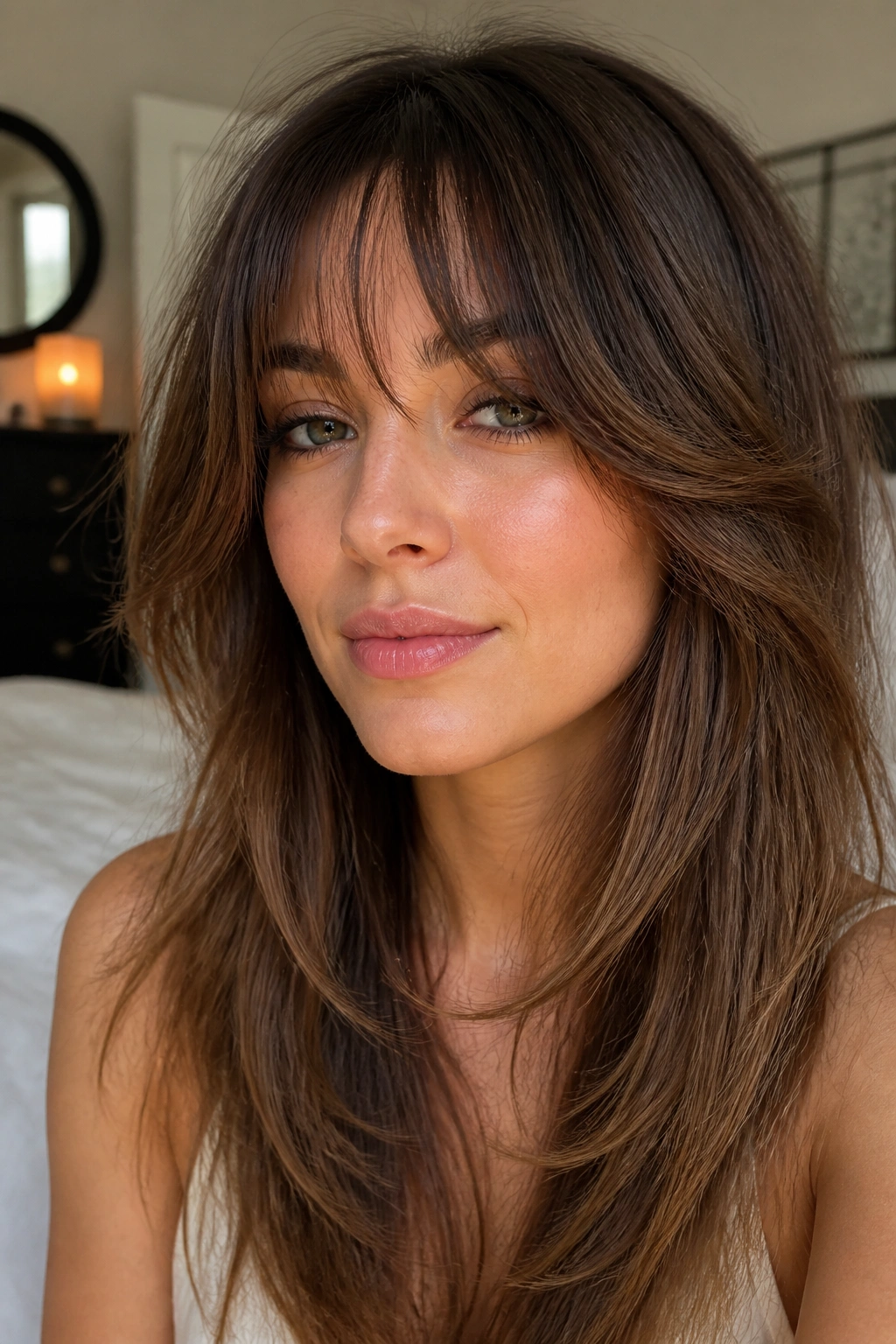
Can bangs feel soft and still have shape? Absolutely. Feathered face-framing bangs are proof. The pieces start near the brow or temple, then taper down into the front layers with lots of movement in the ends. On long hair, they make the whole cut feel lighter without losing structure.
This style is a smart choice if you like your hair mostly down but still want something that changes the outline of your face. The feathering keeps the fringe from sitting flat against the forehead, which is where a lot of long-hair bang cuts go wrong. Flat bangs on long hair can look a little heavy. Feathering fixes that.
How to Get the Most From It
Use a small round brush only at the root and let the lengths fall loose. You do not need a hard curl. In fact, too much curl makes the pieces look dated.
- Works well with medium to thick density.
- Great for blending into layers around the cheekbones.
- Needs a trim every 6 to 8 weeks if you want the shape to stay crisp.
If your hair is thick, ask for internal texturizing rather than thinning the surface. Surface thinning can make the front go frizzy fast.
8. Heavy Choppy Bangs With Long Layers
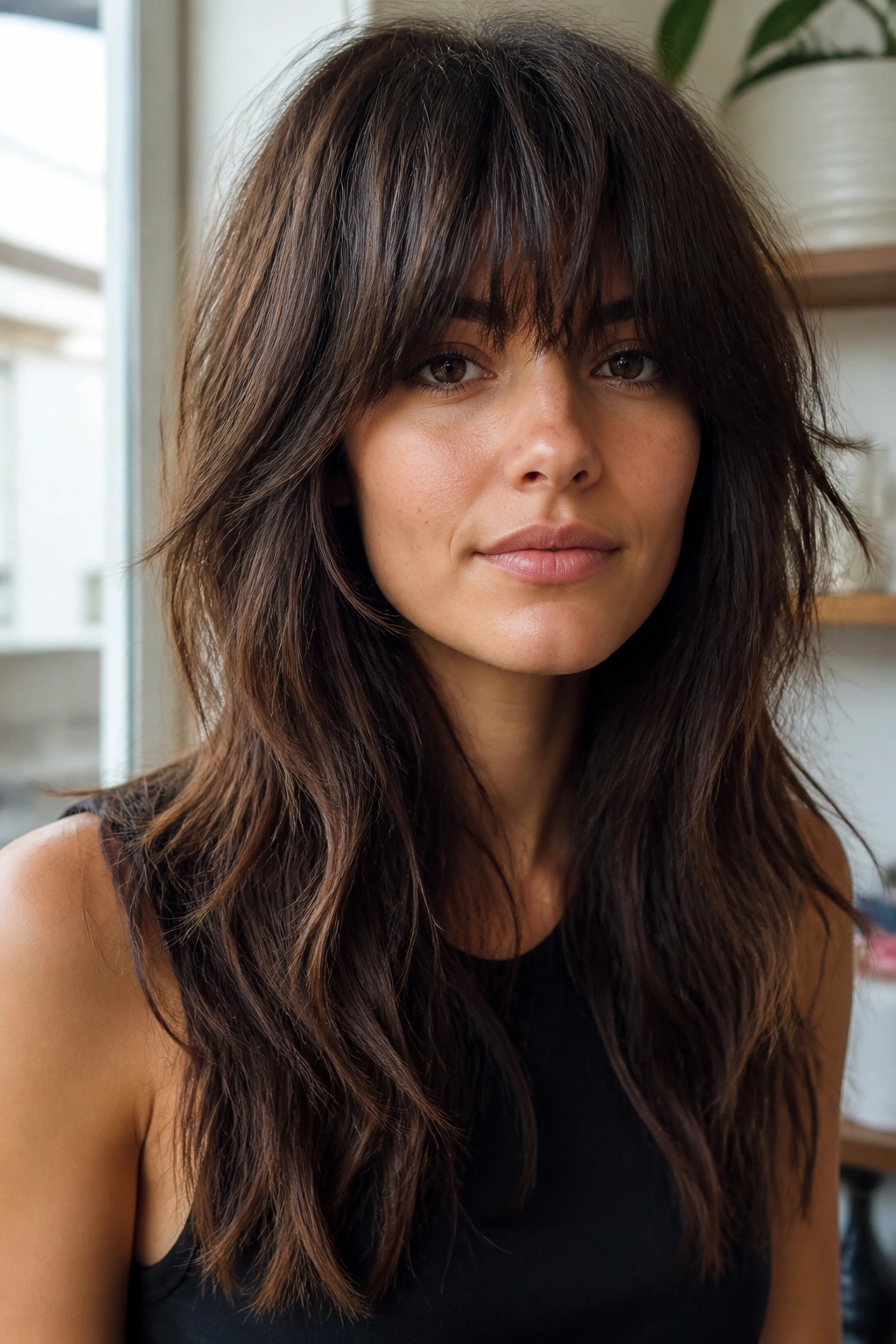
This is the style for people who want their bangs to matter. A heavy choppy bang gives you more coverage across the forehead, but the ends are still broken up enough to avoid that solid, heavy shelf effect. Long layers through the rest of the hair keep the cut from feeling too dense.
I like this on thick hair most of all. Thick hair can carry weight at the front without collapsing, and those choppy ends help the bangs move instead of sitting stiff. It also gives long hair a bit of attitude. Not punk. Just a little more presence.
What to Watch For
The fringe should not be too deep unless you really want that full look. A bang that starts too far back can swallow the face, especially if your hair is naturally coarse. Keep the center weighty, but carve out the edges so the corners drop softly.
- Strong on oval and long faces.
- Best with layered lengths below the shoulders.
- Needs root lift if your hair lies very flat.
Best styling move: blow-dry the bangs side to side first, then settle them into place. That keeps the root from sticking straight down.
9. Arched Choppy Bangs

A small curve at the center can change everything. Arched choppy bangs follow the natural shape of the brow rather than cutting flat across it, which makes them feel softer and more deliberate on long hair. The arch creates a bit of lift in the middle, and the choppy ends keep it from looking too formal.
This style is one of those quiet fixes that hair people love. It flatters a lot of face shapes because the arch opens the center while the longer sides soften the temples. If your forehead is a little shorter, it’s a particularly nice trick. You get the bang effect without making the face feel crowded.
Keep the curve subtle. Too much arch and the bangs start to look retro in a way that may not be what you want. A gentle curve is enough.
The best part? They look good even when they are not freshly styled. A few stray pieces only help.
10. Razored Choppy Bangs

Razored bangs and choppy bangs are cousins. Put them together and you get a fringe with movement baked right in. Razored choppy bangs are cut with a lighter edge, so the ends look soft and slightly jagged instead of blunt. On long hair, that makes the front feel airy, which helps if the rest of your lengths are dense.
They are especially useful if you have straight hair that tends to lie too neatly. A razor cut breaks up that stiffness. The bangs look less controlled, in the good way. Not sloppy. Just easier.
What Makes Them Different
A scissor-cut fringe can feel heavier and cleaner. A razored one carries more separation and movement. That means you can push it to the side, wear it straight down, or let it split a bit naturally.
- Better for straight to wavy textures than very curly hair.
- Works well with dry-cutting at the salon.
- Needs a light styling paste or cream, not a thick wax.
One honest note: a razor cut is not ideal for every hair type. If your ends fray easily or your hair is already fragile, ask your stylist for a softer point-cut version instead.
11. Split-Center Choppy Bangs
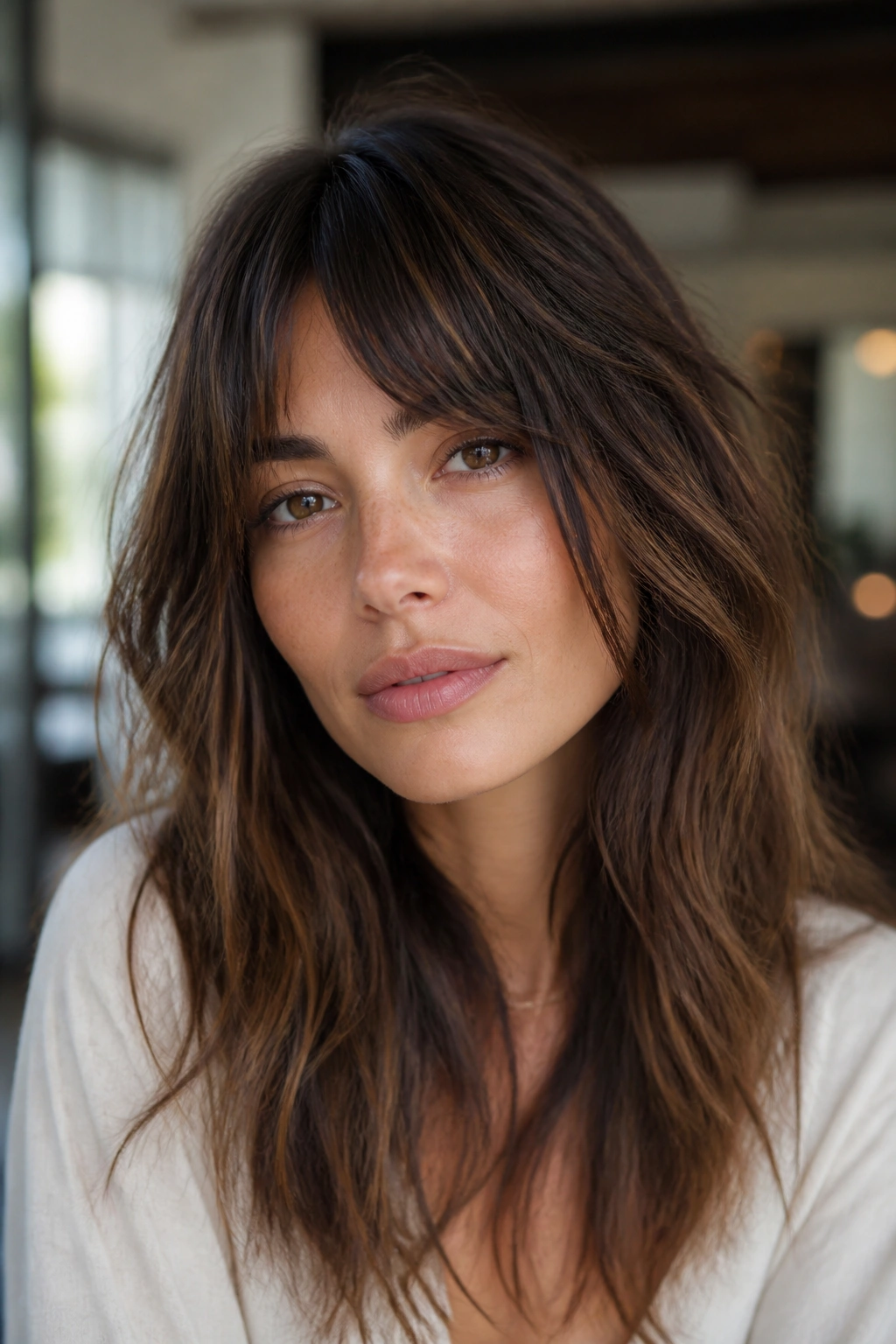
Do you like curtain bangs but want something a little less polished? Split-center choppy bangs hit that middle ground. The part opens near the center, but the pieces are cut short enough and uneven enough that they do not fall into the neat curtain pattern everyone expects.
This style works well on long hair because the fringe and the lengths feel connected. The bangs guide the eye down the face, then blend into the layers around the jaw and collarbone. It is a tidy shape with a bit of mess in it, and that mix is what keeps it interesting.
How to Style It
Blow-dry the roots forward first, then guide each side away from the face with a round brush or your fingers. Stop before the ends get too curled. You want a split, not a swoop that swallows half your forehead.
When It Works Best
- If your hair has natural bend.
- If you wear center parts often.
- If you want a fringe that grows out without a hard line.
Tip: keep the shortest bits no higher than the upper brow line unless you want a much bolder front.
12. Grown-Out Choppy Bangs
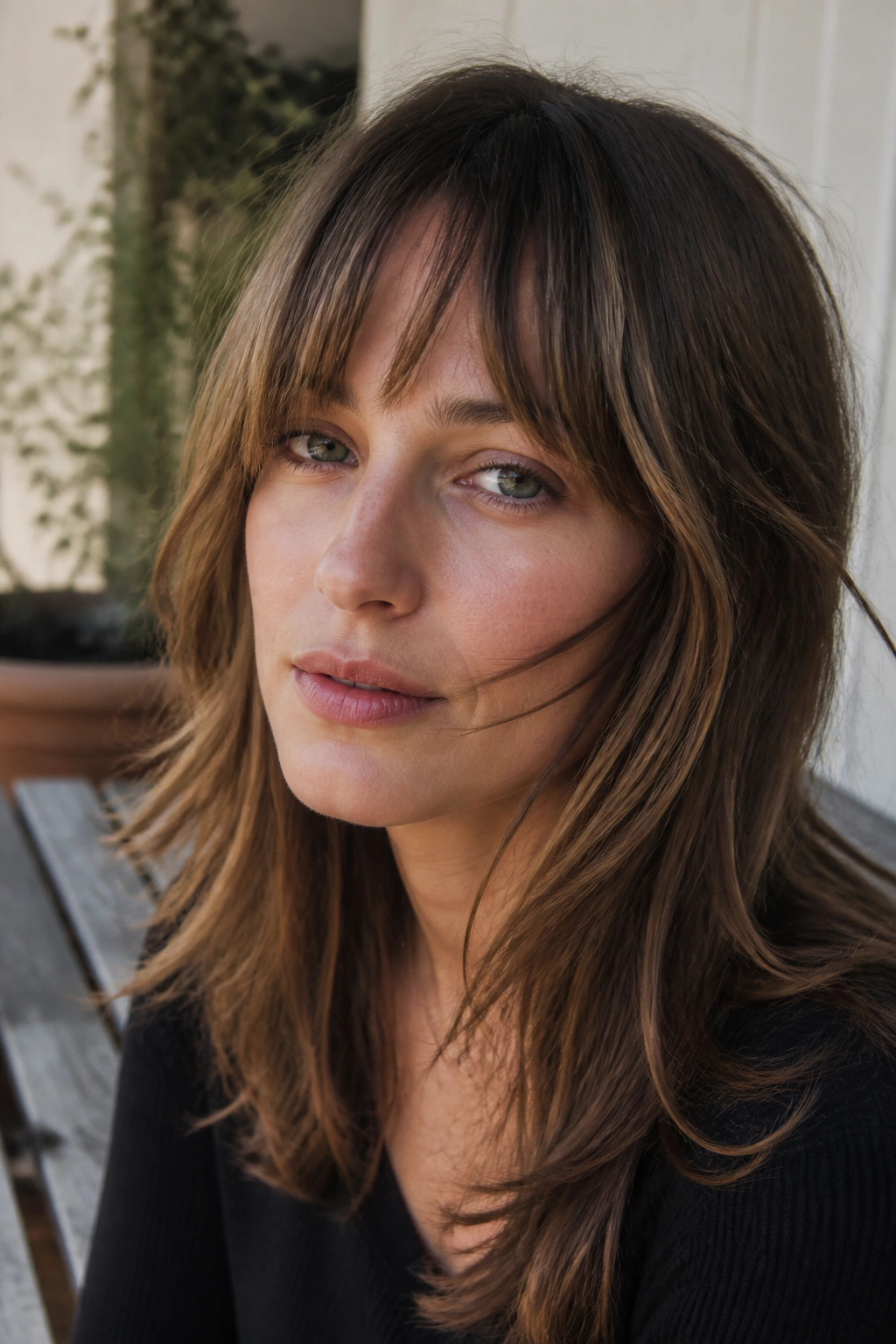
Sometimes the best bang style is the one that already looks a little lived in. Grown-out choppy bangs are great for long hair because they blur the line between fringe and face-framing layers. That makes them forgiving, easy to tuck back, and easy to ignore on busy mornings.
This is not the same as “I forgot to trim my bangs.” There is a shape to it. The front pieces still sit around the brows and cheekbones, but the ends are broken up enough that they melt into the rest of the haircut. It feels relaxed without looking unfinished.
I’d call this a smart choice for people who are bang-curious but commitment-shy. You get the movement, the softness, and the face framing, and you are not trapped in a sharp line that needs constant maintenance.
Best with: long layers, shoulder-length face framing, and hair that naturally falls a little forward at the sides.
13. Shaggy Choppy Bangs
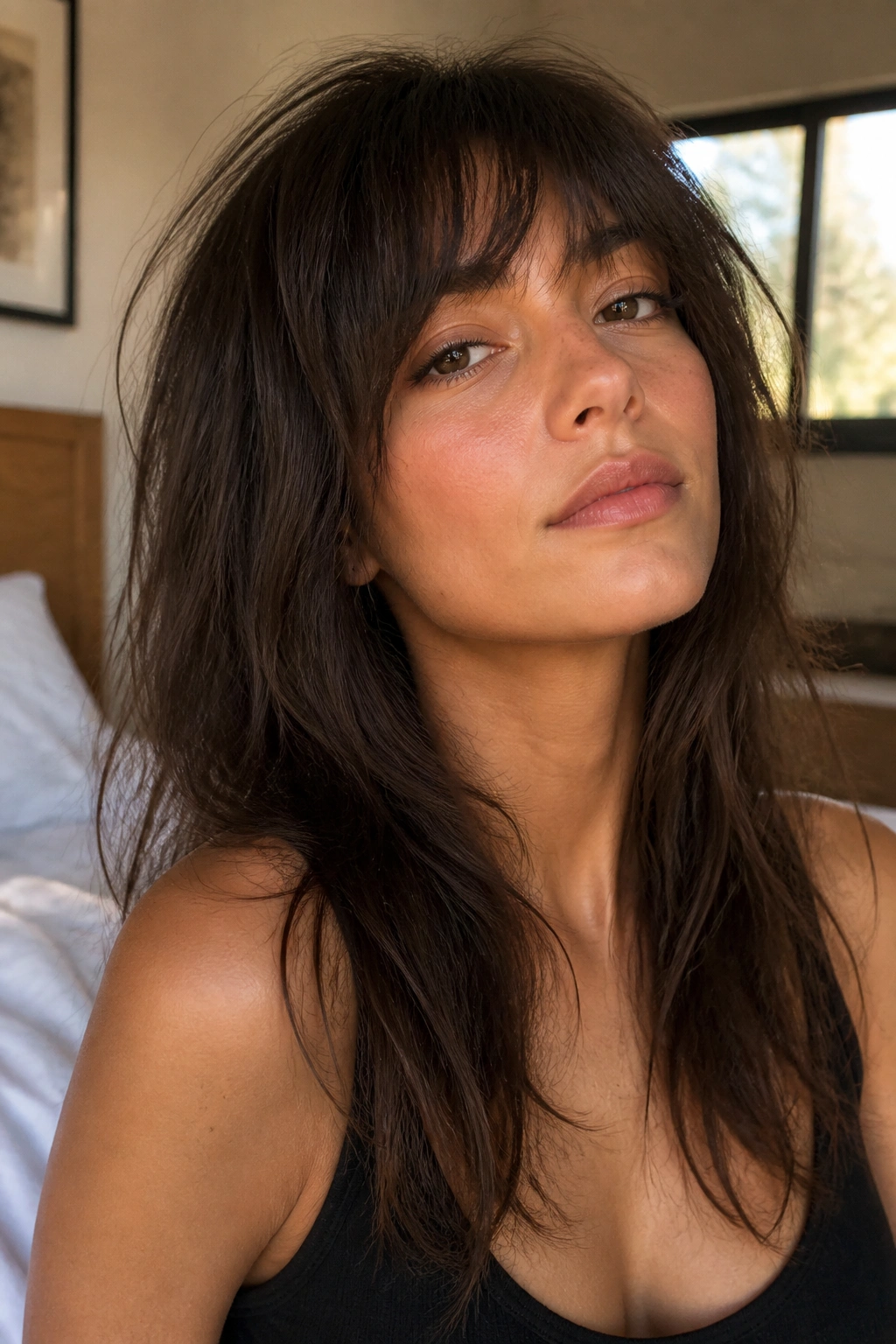
There’s a difference between shaggy and messy. Shaggy bangs have purpose. Messy bangs have a bad morning. Shaggy choppy bangs on long hair give you that undone texture people love in layered cuts, but the shape still needs to be controlled enough to sit well around the face.
They work because they echo the rest of a shag or soft layered cut. If the lengths are full of movement, the bangs should not be rigid. The chopped ends keep the fringe from turning into a heavy block, while the texture helps it blend into the top layers.
This is one of the better styles for wavy hair and for anyone who likes an air-dry routine. A little salt spray, a little scrunching, and you are there. Straight hair can wear it too, but it usually needs a bend at the root to keep the shape from falling flat.
My opinion: if your long hair feels too “done,” a shaggy fringe is often the fastest way to loosen it up.
14. Choppy Bangs With Beach Waves

Some bangs are cut to sit still. These are not those bangs. Choppy bangs with beach waves are built for texture, and the long hair underneath should move the same way. That means the front can be piecey, separated, and a little imperfect without looking accidental.
The best part is how forgiving this combo is. If the bangs split a little or one side sits higher, the waves in the rest of the hair soften the whole thing. The haircut does not need razor-straight precision to look good. It wants rhythm.
Styling Shortcut
Use a 1-inch curling iron or wand, but leave the first inch at the root straight. That keeps the texture from looking too curled. Twist only the mid-lengths and ends, then run your fingers through once everything cools.
- Great for long layers and a lived-in finish.
- Works on medium to thick hair especially well.
- Needs dry shampoo at the roots if your fringe gets oily fast.
Warning: too much curl near the face makes choppy bangs lose their shape. Keep it loose.
15. Air-Dry Choppy Bangs

If heat styling makes you sigh, this is your lane. Air-dry choppy bangs are cut to do some of the work on their own, which matters when the rest of your hair is long and already asks for patience. The uneven ends help the fringe fall in a softer way as it dries.
This style loves natural movement. Straight hair gets a slightly broken outline. Wavy hair gets that easy, piecey front that people spend way too much time trying to fake. The cut does half the job, and that is the point.
How to Keep Them Looking Intentional
Towel-dry the bangs first, then twist them lightly with your fingers so they dry in the direction you want. If they split too much, clip them at the root for 10 to 15 minutes while they set.
- Use a light leave-in, not a heavy cream.
- Scrunch only once or twice.
- Avoid touching them while they dry.
Tip: if your bangs puff up at the sides, they were probably cut too short for your texture. A slightly longer fringe usually behaves better.
16. Choppy Bangs With Curls

Can curly hair wear choppy bangs? Yes, and when the cut is right, it looks fantastic. Choppy bangs with curls need more length than straight hair does because curl shrinks up once it dries. The choppy ends keep the front from turning into one solid blob, which is the main thing to avoid.
The shape should follow the curl pattern instead of fighting it. That means your stylist should cut the bangs dry or mostly dry, then adjust for where the curls actually land. Long hair gives the curls room to balance the fringe, so the overall shape feels full but not bulky.
This style is especially good if you want your curls to frame your face rather than bounce away from it. A few shorter pieces near the cheekbones can help the bangs settle in.
Best practice: keep some length in reserve. Curls spring up more than people expect, and bangs that look long when wet can land a full inch shorter once dry.
17. Micro-Choppy Bangs for Long Straight Hair

Very long, straight hair can take a tiny bang better than most styles. Micro-choppy bangs for long straight hair create a strong contrast: smooth length below, short broken texture above. That contrast is the whole point. It makes the haircut look deliberate and a little sharp.
This is not the most low-key option, and it should not be treated like one. Micro bangs sit high, show the forehead, and put all the attention on the eyes. The choppy cut softens them enough to keep them from feeling severe, but they still have edge.
Who Should Try Them
- People with strong brows or a defined eye line.
- Straight hair that needs a focal point.
- Long lengths that feel too plain on their own.
They do require upkeep. Not tons, but enough. If you let them grow too much, the shape loses its point fast.
My take: if you want a fringe that looks intentional even from across the room, this is the style that does it.
18. Soft V-Shaped Choppy Fringe
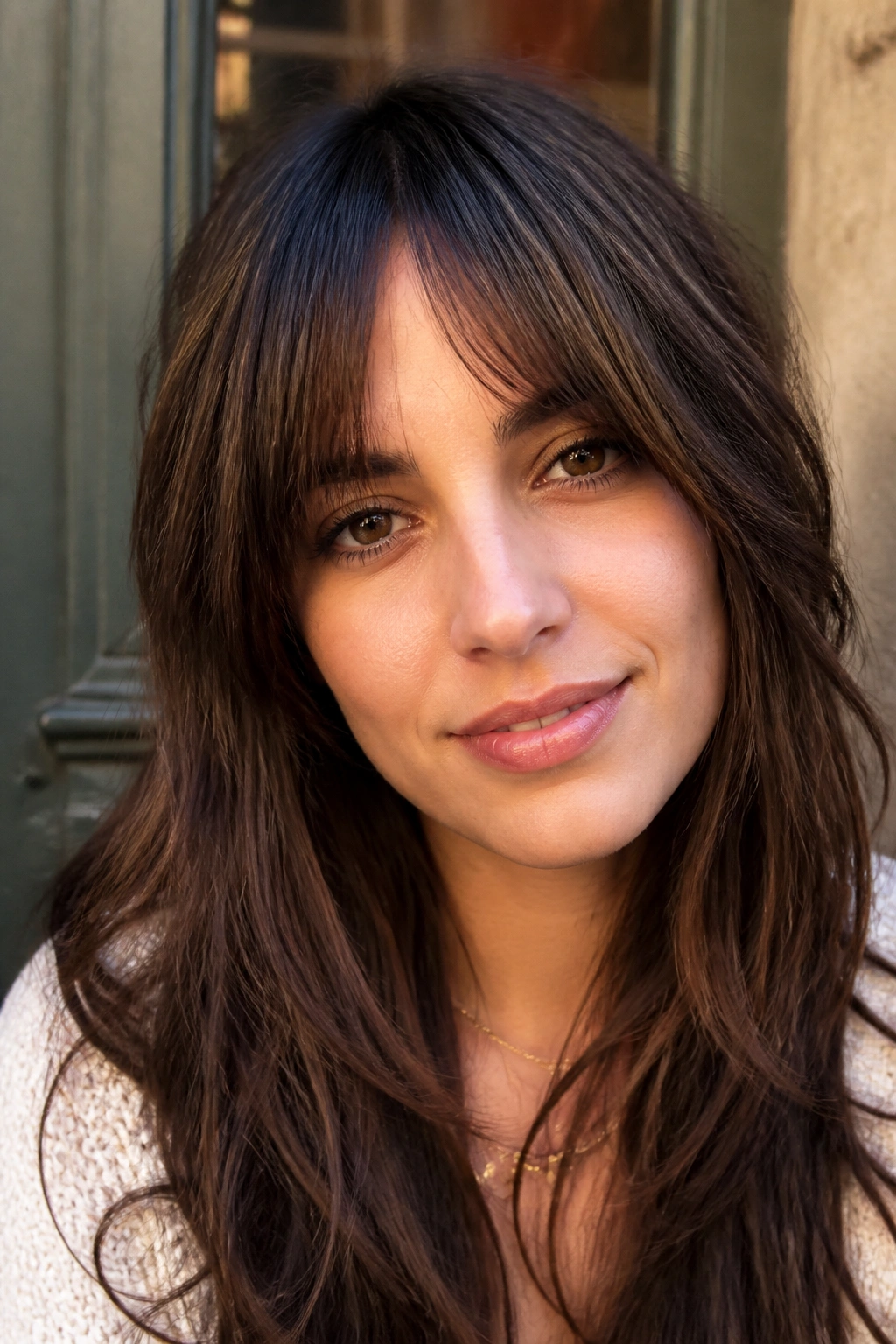
A V-shaped fringe opens slightly in the center and drops longer at the sides, but the edges are cut in a broken way so it never feels formal. On long hair, that shape makes a nice visual path from the forehead to the cheekbones and then into the rest of the length.
Compared with a straight choppy bang, this one feels more fluid. Compared with a full curtain bang, it feels more contained. That middle ground is useful if your hair is thick around the front or if you want your bangs to sit neatly under a hat without turning into a flat slab.
The V should be subtle. If the point comes down too low, the bang starts to look pointed in a way that is hard to wear. A soft V is enough. It opens the face without shouting about it.
Best for: rounder face shapes, long layers, and hair that benefits from a bit of front structure.
19. Uneven Textured Bangs
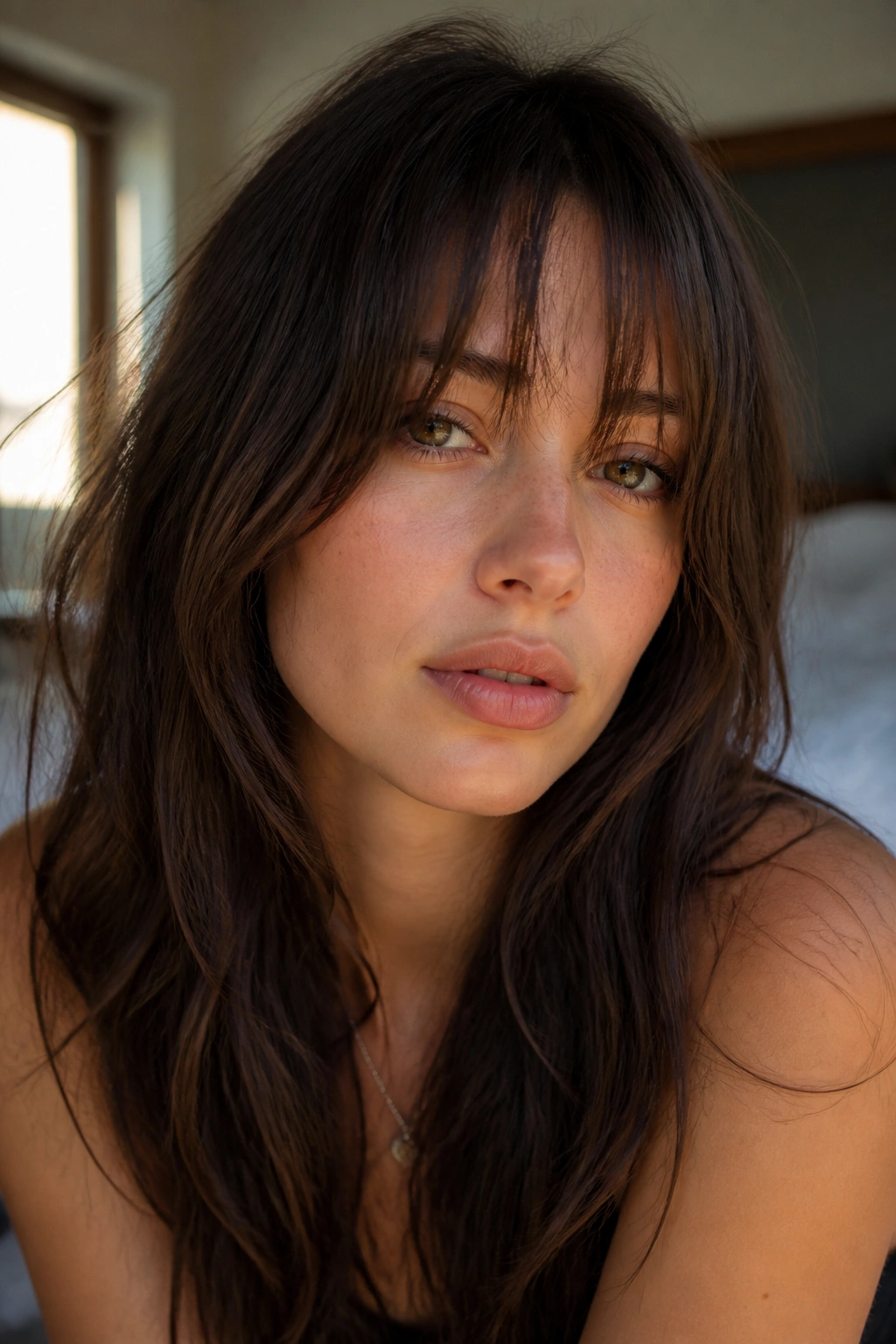
Not every fringe needs symmetry. In fact, one of the better choppy bang looks is a deliberately uneven one, where the pieces vary slightly in length and density. Uneven textured bangs bring a little edge to long hair without needing color, heat, or a complicated style plan.
The trick is making the unevenness look planned. A few pieces should sit higher, a few should fall lower, and the ends should be broken enough that the eye reads movement, not error. It is a good option if you like hair with a little grit.
This style works best when the rest of the hair has layers too. If the lengths are dead straight and the bangs are rough, the contrast can feel too harsh. Add soft layers through the body of the hair and it starts to make sense.
Tip: ask for point cutting rather than a blunt straight line. That gives the fringe a more natural finish right away.
20. Dense Choppy Bangs
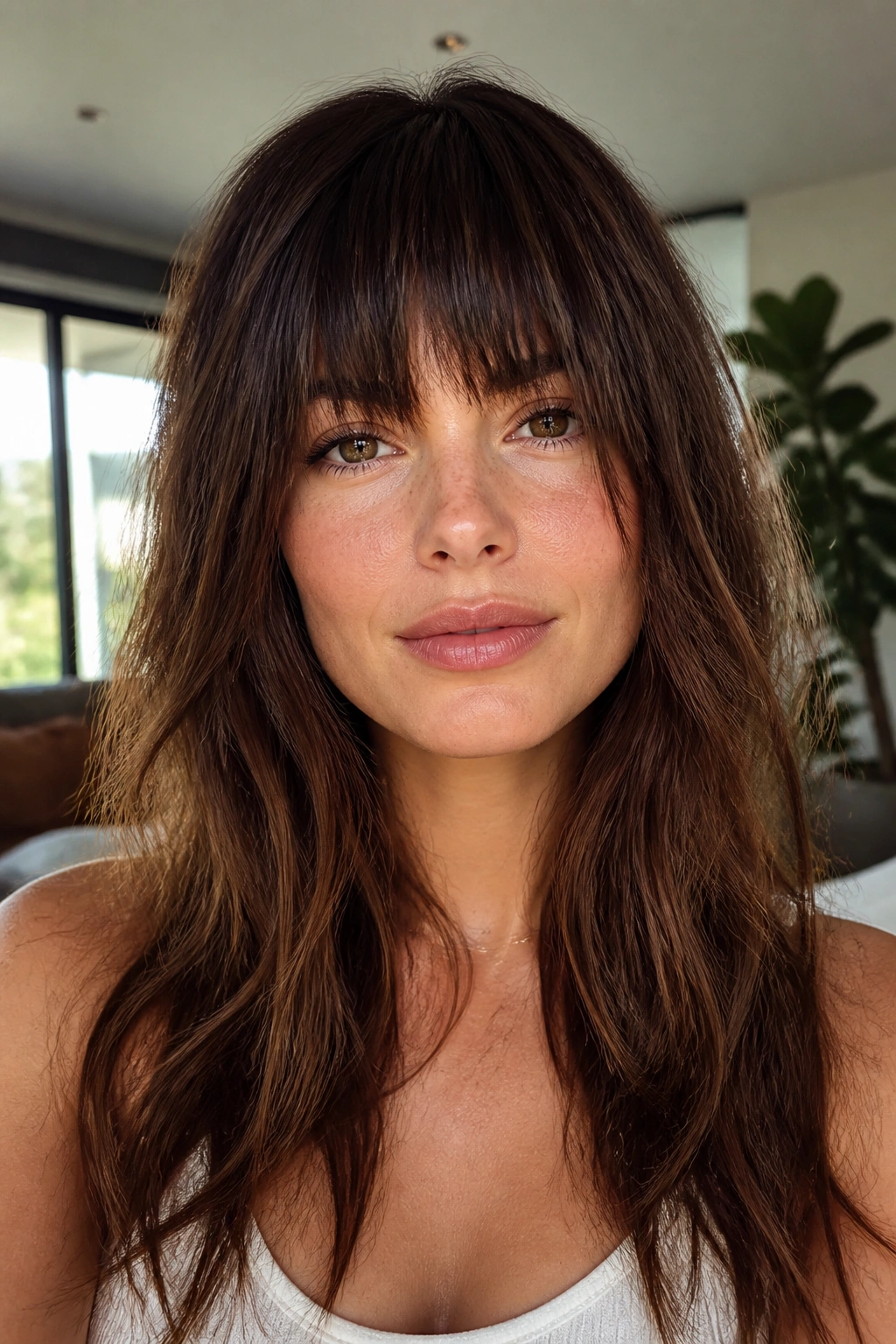
Thick hair can make bangs feel like a commitment, and honestly, it is. But dense choppy bangs are a smart answer when you want coverage and texture at the same time. The front has enough weight to sit with authority, while the chopped ends stop it from turning into a flat curtain.
This style is one of the strongest choices for very long, thick hair because the density at the front balances the density everywhere else. If your hair tends to balloon in humid weather, a dense fringe can actually help anchor the look. It gives the haircut a focal point.
What to Ask For
Ask your stylist to remove bulk from the interior, not just the surface. Surface thinning can leave the top layer wispy and the lower layer too heavy. Interior texturizing keeps the fringe controlled.
Best Styling Pairings
- Smooth blowouts with a soft bend under.
- Long layers that start below the chin.
- Side parts when you want the bangs to open up.
One caution: dense bangs can get warm and heavy on the forehead. If you run hot or hate hair touching your skin, keep the length just a bit lighter.
21. Face-Framing Layered Bangs
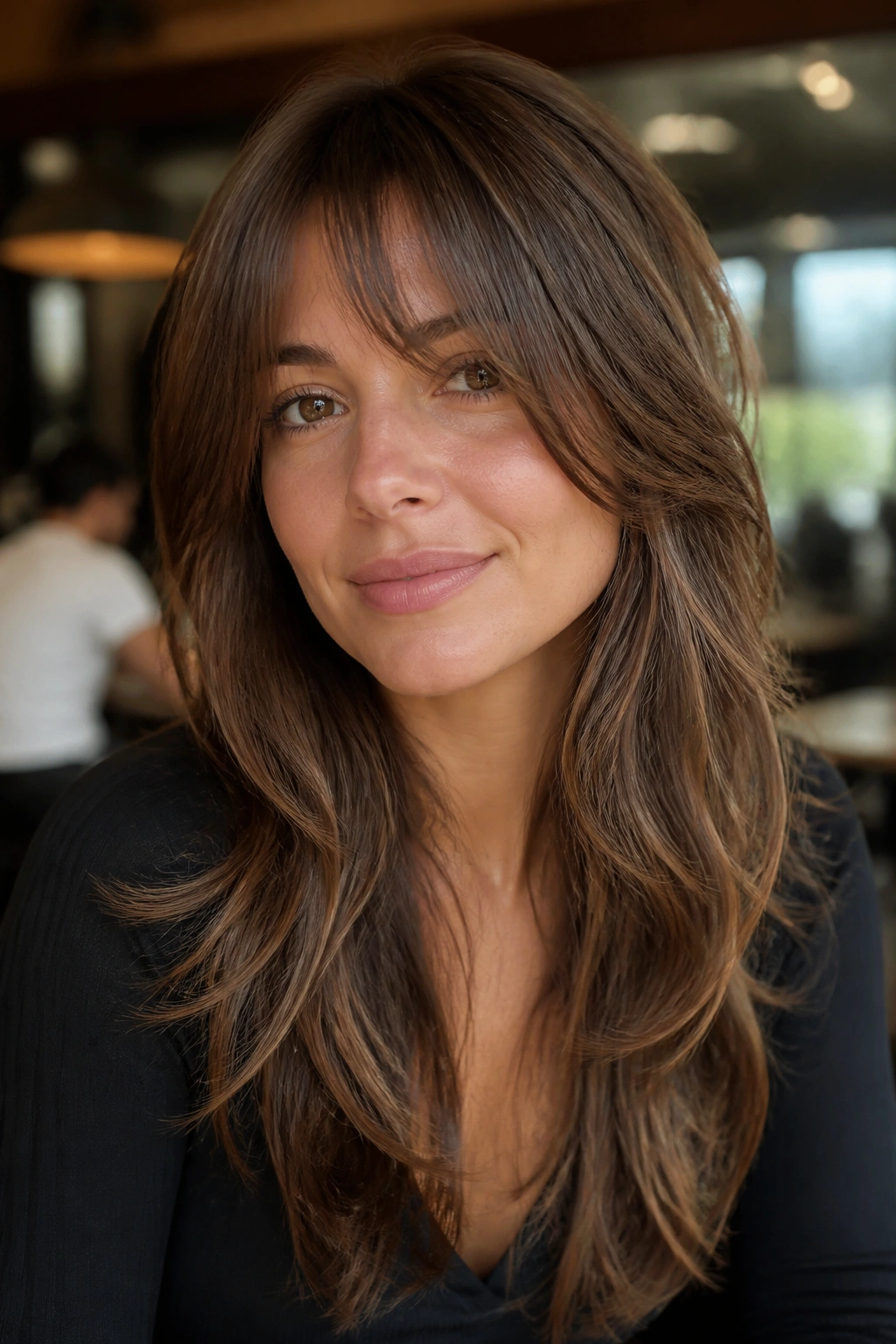
If you want bangs but do not want them to sit strictly as bangs, this is the move. Face-framing layered bangs start as fringe and then melt into the front layers, so the line between the two is blurry in a good way. On long hair, that softness keeps everything connected.
The style is forgiving because it grows out into the haircut instead of away from it. You can tuck the front pieces behind your ears, wear them down, or sweep them back and still have the cut make sense. That flexibility matters if you are not in the mood to restyle every morning.
I like this option on layered cuts with a lot of movement through the mid-lengths. The bangs should not feel separate from the rest of the head of hair. They should feel like the first visible layer.
Best note: if you tend to wear your hair half-up, this style gives you shape around the face even when the top section is pulled back.
22. Long Choppy Bangs That Graze the Lashes

This is the fringe I recommend to people who want the safest possible entry into bangs without giving up softness. Long choppy bangs that graze the lashes give you the bang effect, but they stay long enough to tuck, sweep, or split when you need them to. On long hair, that flexibility is gold.
The choppiness matters here because it stops the bangs from hanging like one curtain. You want a few shorter pieces near the center, longer ones at the edges, and enough texture that the fringe moves when you do. It should fall lightly over the eyes, not sit there like a lid.
These bangs are also easier to live with during the grow-out stage, which is where a lot of styles get annoying. They slip into side bangs, curtain shapes, or face-framing layers without a dramatic line. That means fewer awkward weeks in between trims.
If you are unsure what to ask for, say this: “Long, piecey bangs with soft, broken ends that still reach the lashes.” That’s the haircut in one sentence. Not fancy. Just useful.
