



Wispy bangs can do a very useful little trick: they can make thin-looking hair seem fuller without turning the front of your head into a heavy curtain. That matters more than people think. A blunt fringe on fine hair can go flat, separate in odd places, and show every bit of scalp when the light hits it. A softer, airier fringe gives you shape without asking your hair to hold more weight than it wants to carry.
The catch is that not every soft fringe works the same way. Some styles add lift at the crown. Some blur a high forehead. Some make a bob look less severe. And a few are only good if your hairline has enough density to support them, which is where people get into trouble by asking for too much hair to be cut too short in the wrong place. That’s how you end up with bangs that look cute for one day and awkward for the next ten.
Thin-looking hair usually needs movement more than bulk. It needs a cut that leaves a little air in the shape, and a styling routine that does not flatten everything with a heavy hand. A tiny round brush, a light mousse, a quick pass with a flat iron, or even a couple of Velcro rollers can change the whole mood of a fringe. Small tools. Big payoff.
The best wispy bangs do not pretend the hair is thick when it isn’t. They make the most of what’s already there, and that’s a smarter move anyway. So the useful question isn’t whether bangs “work” on thin hair. It’s which kind of wispy fringe makes your hair look like it has more life, more movement, and a little more room to breathe.
1. Brow-Grazing Wispy Bangs
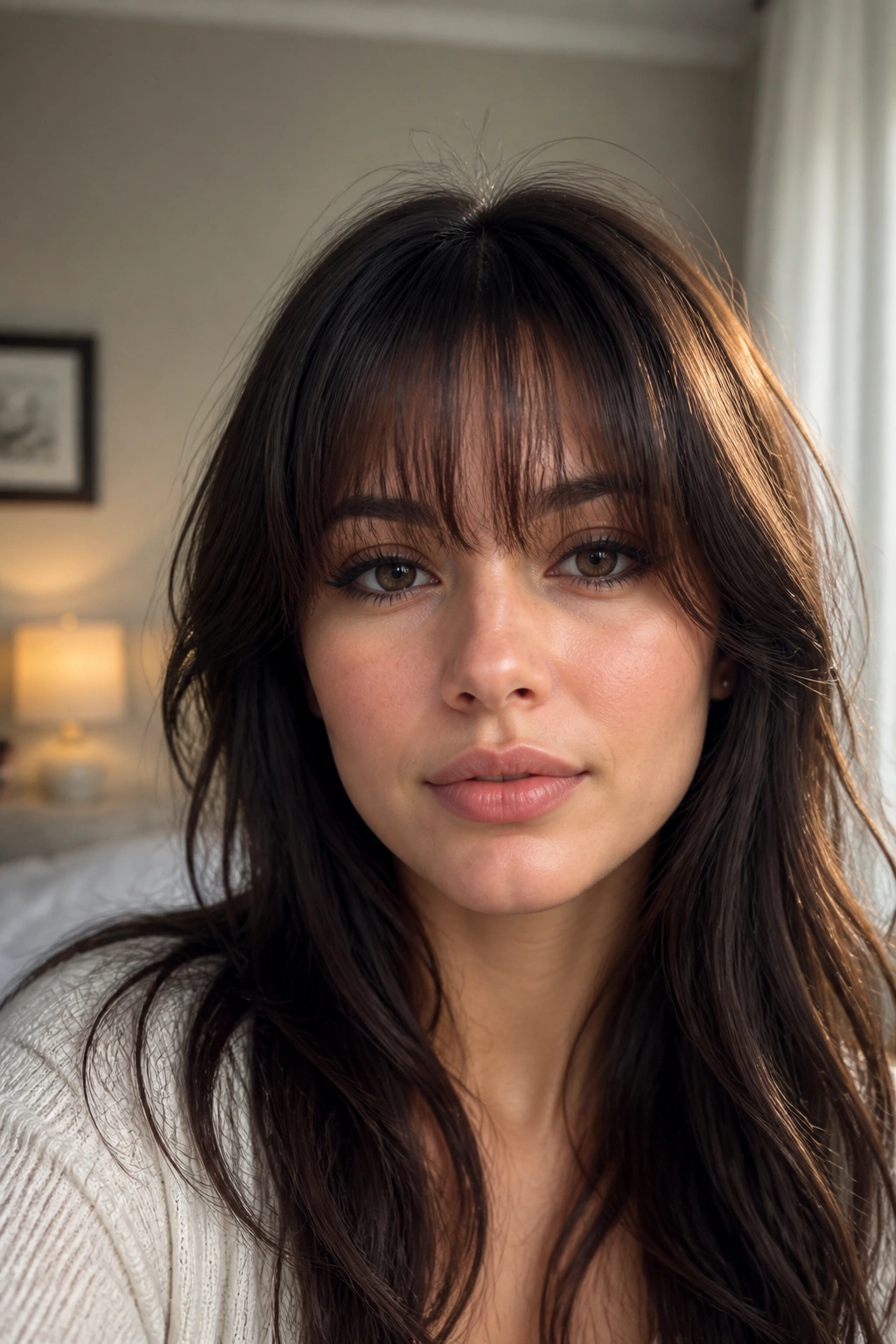
Brow-grazing wispy bangs are the safest place to start if you want softness without giving up definition. They sit right around the eyebrows, which means the eye line gets a little frame, but the fringe still feels light enough to separate into pieces instead of hanging in one flat strip.
Why They Work So Well on Fine Hair
The length matters. Bangs that stop around the brows leave enough hair to show texture, and that little bit of texture reads as density. If the cut is done with point cutting rather than a blunt snip, the ends land in uneven, airy little tips instead of a hard line.
A good version of this cut uses slightly longer sides and a lighter center. That keeps the fringe from looking too wide or boxy. It also gives the front of the hair a softer fall, which is useful if your hair goes limp by noon.
- Ask for soft point cutting at the ends.
- Keep the center just at or a touch below the brows.
- Blow-dry with a small round brush, pulling the fringe forward and then slightly down.
- Finish with a tiny mist of flexible hairspray, not a stiff helmet of it.
Best move: keep these bangs a little longer than you think you want. Thin hair shrinks visually once it dries.
2. Wispy Curtain Bangs

Why do curtain bangs keep showing up in salons? Because they are one of the few fringe styles that give thin-looking hair room to move. The center part opens the face, and the longer sides fall away instead of sitting flat across the forehead.
How to Ask for Them
The trick is to keep the shortest pieces around the cheekbone or just below it, then let the rest taper gently into the sides. That taper is doing real work. It keeps the bangs from looking chopped off, which is where finer hair can start to look stringy.
If your hair is fine around the temples, ask for a softer, narrower center section. Too much width can swallow the face. Too little width can look like an accident. The sweet spot is a fringe that separates easily into two soft wings.
A center part also helps if you wear your hair up often. You can sweep the pieces out of the way and still get that face-framing effect when the rest of the hair is tied back. That’s a nice bonus. Not glamorous, just practical.
How to Style Them
Use a round brush or a large Velcro roller to lift the roots for 30 to 45 seconds while the bangs cool. That cooling time matters. If you skip it, the hair falls faster than you want.
3. Side-Swept Wispy Bangs
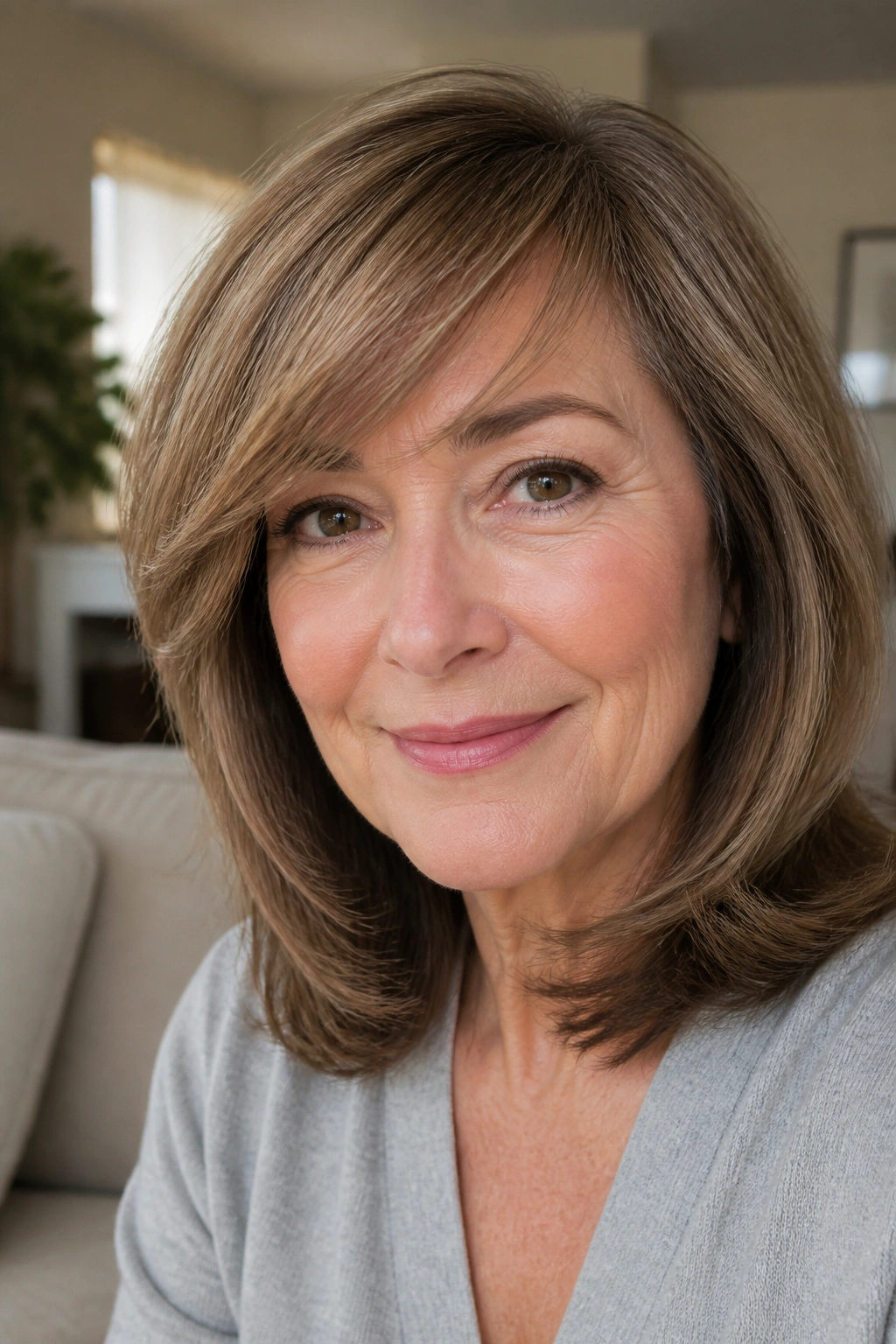
Side-swept wispy bangs are underrated. They are one of the easiest ways to hide a flat spot at the hairline, and they look especially good on fine hair that needs a little diagonal motion to wake it up.
I like these when the front section feels sparse or the crown gets oily fast. A side sweep gives the illusion of lift because the hair is moving across the face instead of sitting straight down. It also makes the cut look intentional even on days when the rest of your style is doing its own thing.
What Makes Them Different
Unlike a straight fringe, side-swept bangs don’t ask for perfect density across the whole forehead. That means you can keep them lighter at the inner corner and thicker near the longest side, where they blend into your layers.
They work well with layered lobs, collarbone cuts, and shoulder-length shags. They do not love heavy, one-length hair that refuses to move. That hair needs a little help before the bang can do its job.
What to Tell Your Stylist
- Start the shortest piece around the arch of the eyebrow.
- Leave enough length to tuck the bang behind the ear if needed.
- Keep the outer edge soft, not blunt.
- Avoid over-thinning the fringe; it can go see-through in a bad way.
One clean side sweep can save a bad hair day. That’s the honest version.
4. Feathered Arched Bangs

Feathered arched bangs have a softer shape than a straight fringe, and that softness is exactly why they suit thin-looking hair. The arch gives the front of the hair a little structure, while the feathering keeps the edges from feeling heavy.
A lot of people think an arched bang needs thick hair to work. Not really. What it needs is smart placement. The center should sit a touch shorter, with the corners tapering down toward the temples. That creates a gentle curve that opens the face without boxing it in.
Less hair. More shape.
The best version of this fringe looks almost floaty at the ends, especially when the blow-dry is done with a narrow brush and a light touch. Don’t drag the hair too hard or flatten it with too much product. Fine hair remembers pressure. It will stay limp if you bully it.
Use a pea-sized amount of mousse at the roots, then blow-dry the fringe from side to side for a minute or two before setting the curve forward. That little back-and-forth motion keeps the bang from clinging to the forehead. If your hair tends to separate, a mist of dry shampoo at the root helps more than another round of hairspray.
5. Bottleneck Wispy Bangs
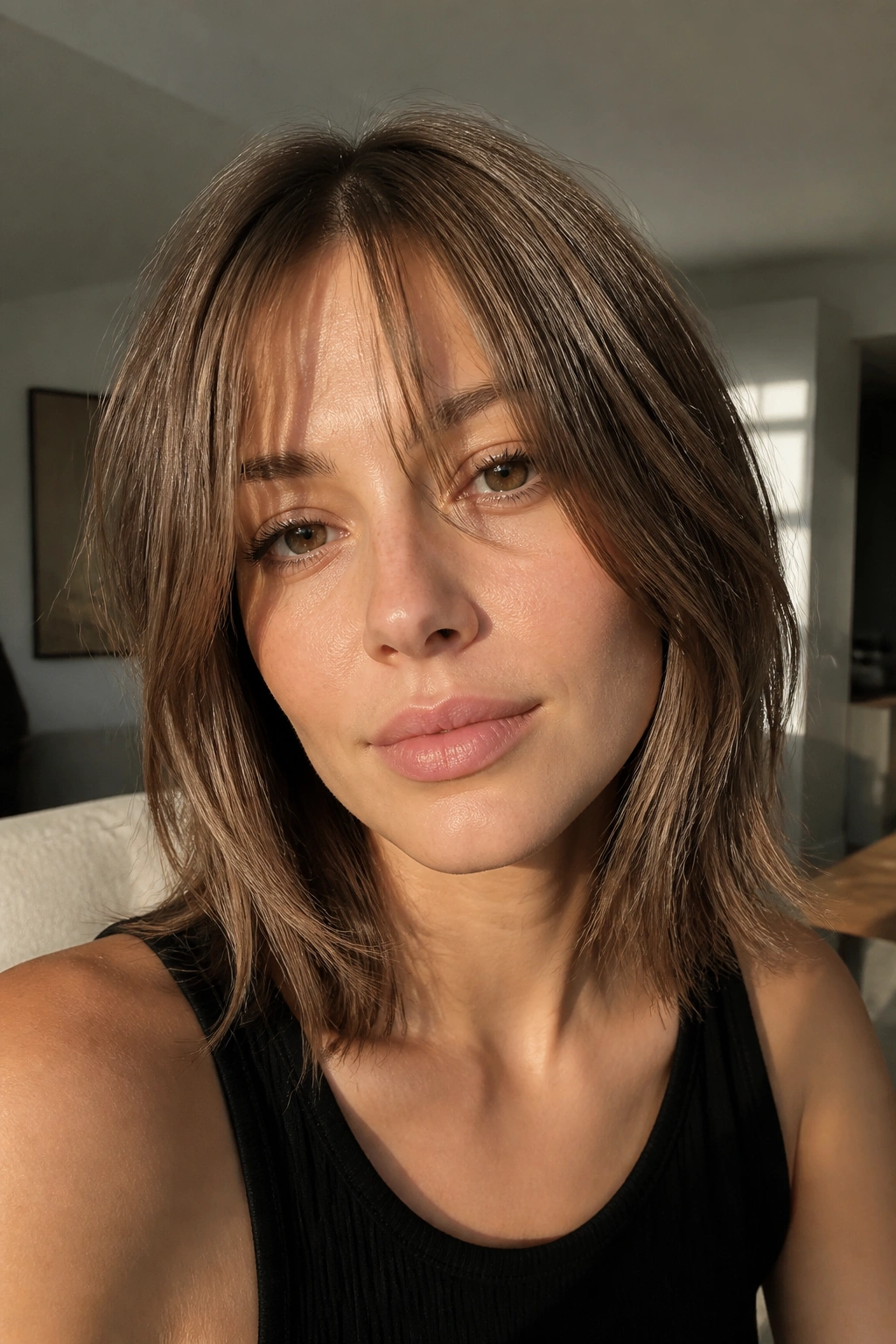
Bottleneck bangs are a smart middle ground between curtain bangs and a full fringe. They start narrow in the center, then widen as they move out toward the temples. On thin-looking hair, that shape can be a gift because it keeps the front light while still giving the face some definition.
This is one of those styles that looks more complicated than it is. It just needs a little thought in the cut. The center pieces should be short enough to land near the brows, while the outer pieces reach farther down toward the cheekbones. That difference in length is what creates the bottle-neck shape.
The result feels less severe than a straight bang and less open than a full curtain. It frames the eyes without demanding a thick wall of hair across the forehead.
Best For
- Oval faces that want a bit more focus around the eyes
- Heart-shaped faces that need a softer balance at the top
- Fine hair that looks better with movement than with blunt edges
If your hair is very sparse at the hairline, ask for a softer center section and keep the sides longer. That way the fringe doesn’t start to split in a visible, awkward line. It should look like it belongs there, not like it was forced into the cut at the last minute.
6. Choppy Wispy Bangs
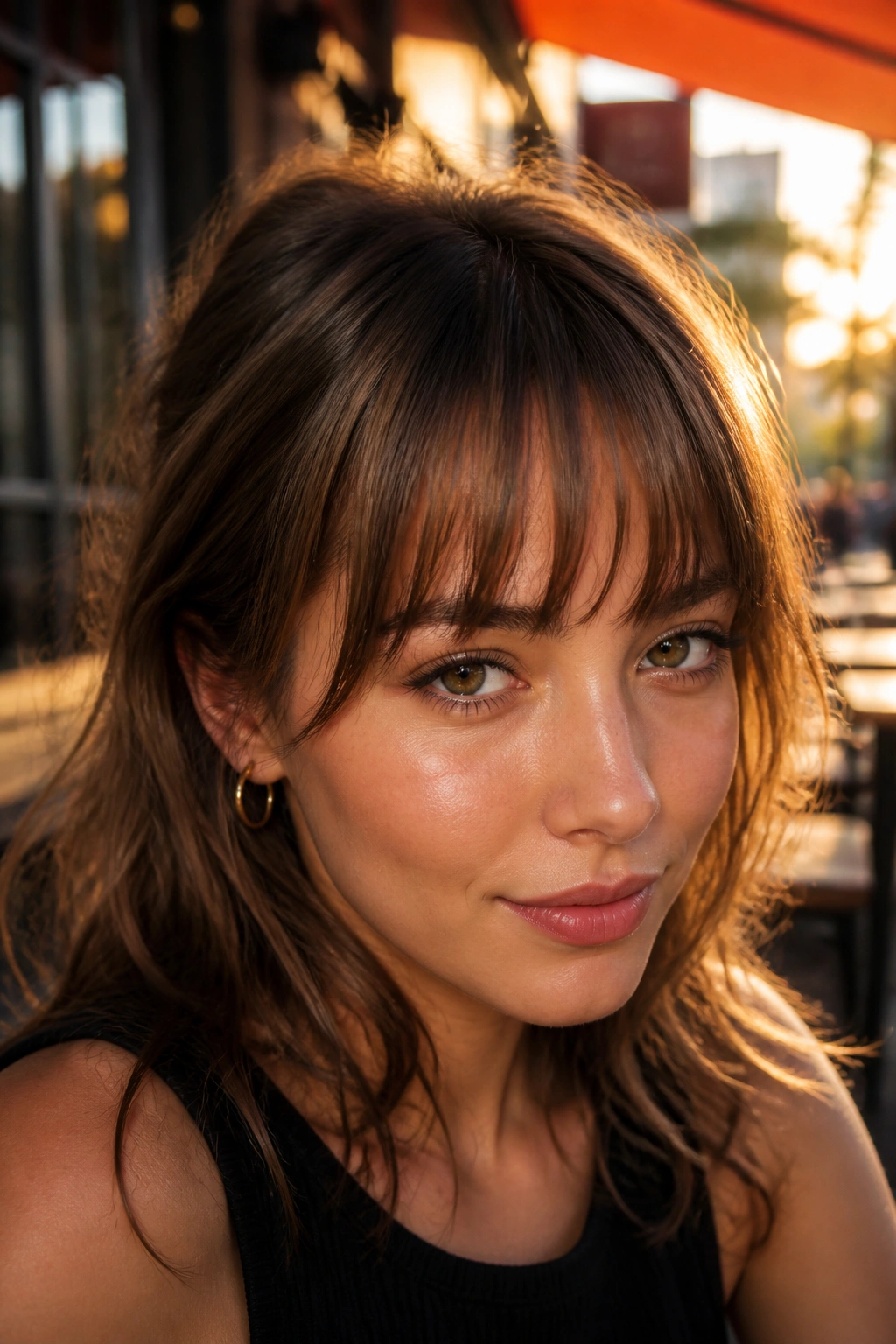
Choppy wispy bangs can be fantastic on thin-looking hair, but only if they’re cut with restraint. Too much choppiness and you get little broken strands that look thin in the wrong way. The good version has movement and texture. The bad version looks like the fringe got eaten by scissors.
The Cut
Ask for soft internal texture, not aggressive thinning. That usually means point cutting into the ends and leaving some uneven length so the fringe can separate into pieces. The pieces should still feel connected. If they’re too disconnected, the forehead starts to show through in a patchy way.
The Styling
A dab of lightweight styling cream, warmed between your fingers, can help the pieces stay in place without clumping. Use it only on the ends. The roots need lift, not grease.
You can also rough-dry the fringe with your fingers first, then go back in with a small brush to finish the shape. That gives the bang a little looseness, which is exactly what the style needs. Too polished, and it looks heavy. Too messy, and it loses the point.
This fringe is good for people who hate anything too neat. It has personality.
7. French-Inspired Airy Fringe

There’s a reason people keep asking for that soft, face-skimming fringe that feels casual but not sloppy. It plays nicely with fine hair because it looks like movement is the whole point. The front is lightly broken up, the edges are soft, and the overall effect is more lived-in than precise.
That matters when your hair lacks natural bulk. A rigid line can expose every gap. An airy fringe hides the seams. It gives the eye enough detail to follow without demanding a dense block of hair.
What to Watch For
The key is balance. You want enough hair in the fringe to show up, but not so much that it turns heavy once it dries. A stylist who knows this look will usually keep the center slightly shorter and the sides loose enough to merge into the rest of the cut.
A Few Smart Details
- Works especially well with a chin-length bob or layered lob
- Looks best when the ends are slightly irregular
- Needs a quick daily re-shape, even if that only takes two minutes
- Can be tucked away on bad styling days
I like this fringe because it does not look overplanned. It looks like hair that happened to fall in the right place.
8. Split Wispy Bangs

What if you want bangs, but you do not want bangs sitting on your forehead all day? Split wispy bangs solve that problem neatly. They open in the middle and move outward, which keeps the face visible and the hair from lying in one heavy sheet.
That split is also useful if your hair is thin at the center hairline. A flat, straight fringe would expose that immediately. A split fringe breaks the line and gives your hair a softer outline, which is often more flattering in real life than in a style photo.
How to Wear It
Use a comb to separate the fringe while it is still warm from the blow-dryer. Then set each side away from the face with a brush or your fingers. The goal is not perfect symmetry. A little asymmetry is fine. In fact, it usually looks better.
Best Pairings
- Oval or longer face shapes
- Layered shoulder-length cuts
- Glasses, because the open center keeps the frame area from feeling crowded
- Hair that has a slight bend already
If your hair wants to fall straight down, add a tiny bend with a flat iron at the ends. Just a soft curve. Nothing stiff.
9. Long Grown-Out Wispy Bangs

Long, grown-out wispy bangs are the easiest way to test whether you even like fringe. They sit below the brows, often brushing the cheekbones or upper lashes, and they blend into the rest of the cut instead of shouting for attention.
For thin-looking hair, that blending is the whole point. A longer fringe gives you movement without the visual risk of a short, sparse bang. It also buys you time between trims, which matters if your hair grows unevenly or tends to lose shape fast.
A fringe like this can be swept to either side, parted in the middle, or tucked into layers. That flexibility is valuable. Some bang styles are cute only on good styling days. This one has more range.
One sentence, but it matters: longer wispy bangs are easier to live with.
They are especially good if you work with heat tools often, because the ends can be curled under slightly or bent away from the face with a round brush. A light spray at the root keeps them from collapsing into your eyes by lunchtime. Not a lot. Just enough.
10. Shaggy Wispy Bangs
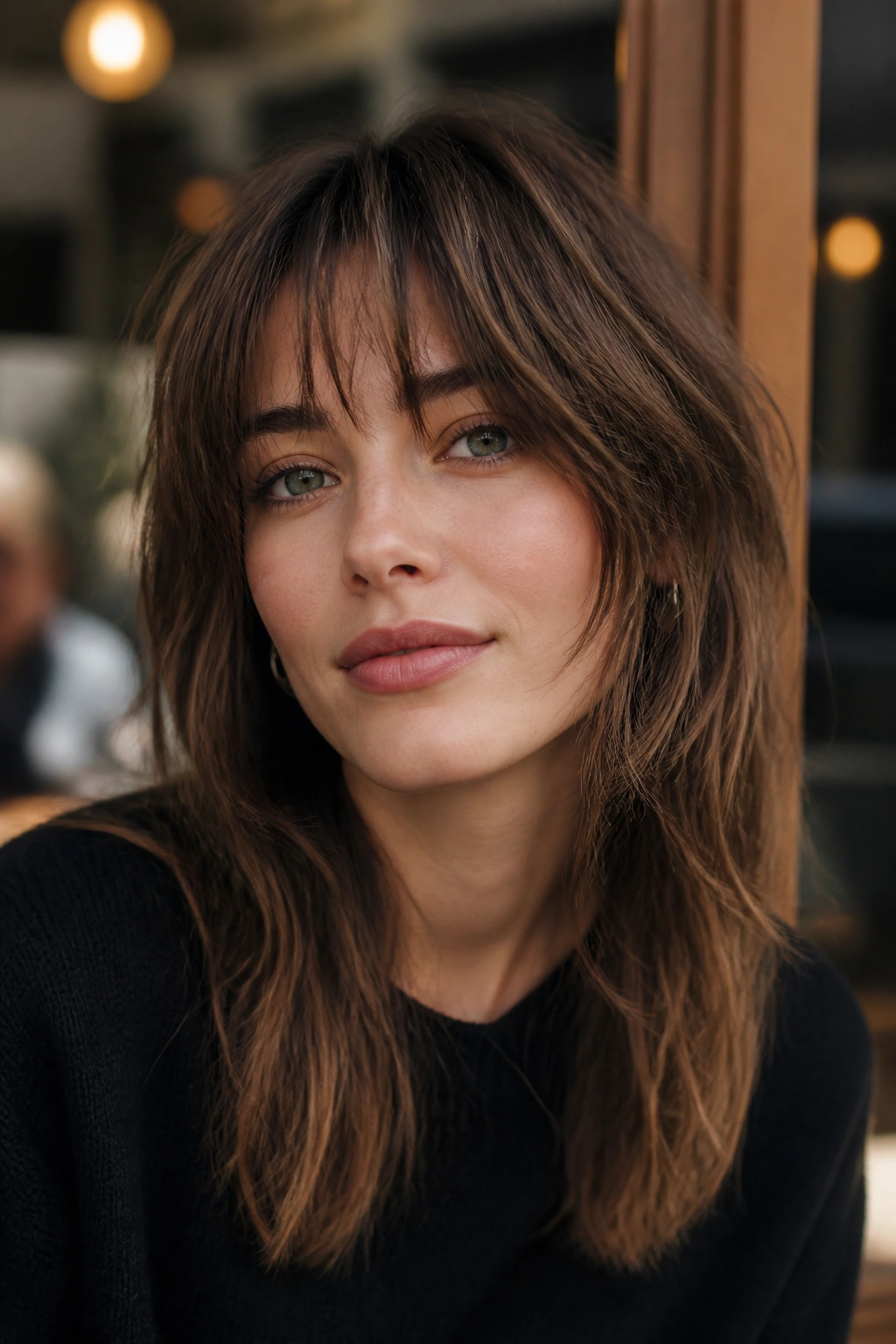
If your hair is thin, a shaggy fringe can feel like cheating in the best way. It creates movement where there wasn’t much before, and it makes the whole haircut look fuller because the layers stop repeating the same flat line.
This is the one I reach for when someone says their hair goes limp no matter what. A shaggy bang gives the front a broken, lived-in shape that does not need to be perfect. That’s useful, because perfection and fine hair do not get along for long.
Why It Helps
The layers around the fringe keep the eye moving. Instead of reading as one thin strip, the bang reads as texture. That shift is subtle, but it changes how the whole haircut sits.
It also works well if your hair has a natural wave. The bend in the hair keeps the fringe from lying flush against the forehead. Straight hair can wear it too, but it usually needs a little root lift and a quick twist with the brush.
Where It Falls Short
If you want a clean, polished bang, this is not that. Shaggy fringes are meant to look loose. They can get messy in humid air, and you will probably need to rework them during the day. If that sounds annoying, skip ahead. If that sounds fine, this cut gives back more than it asks for.
11. Face-Framing Wispy Bangs
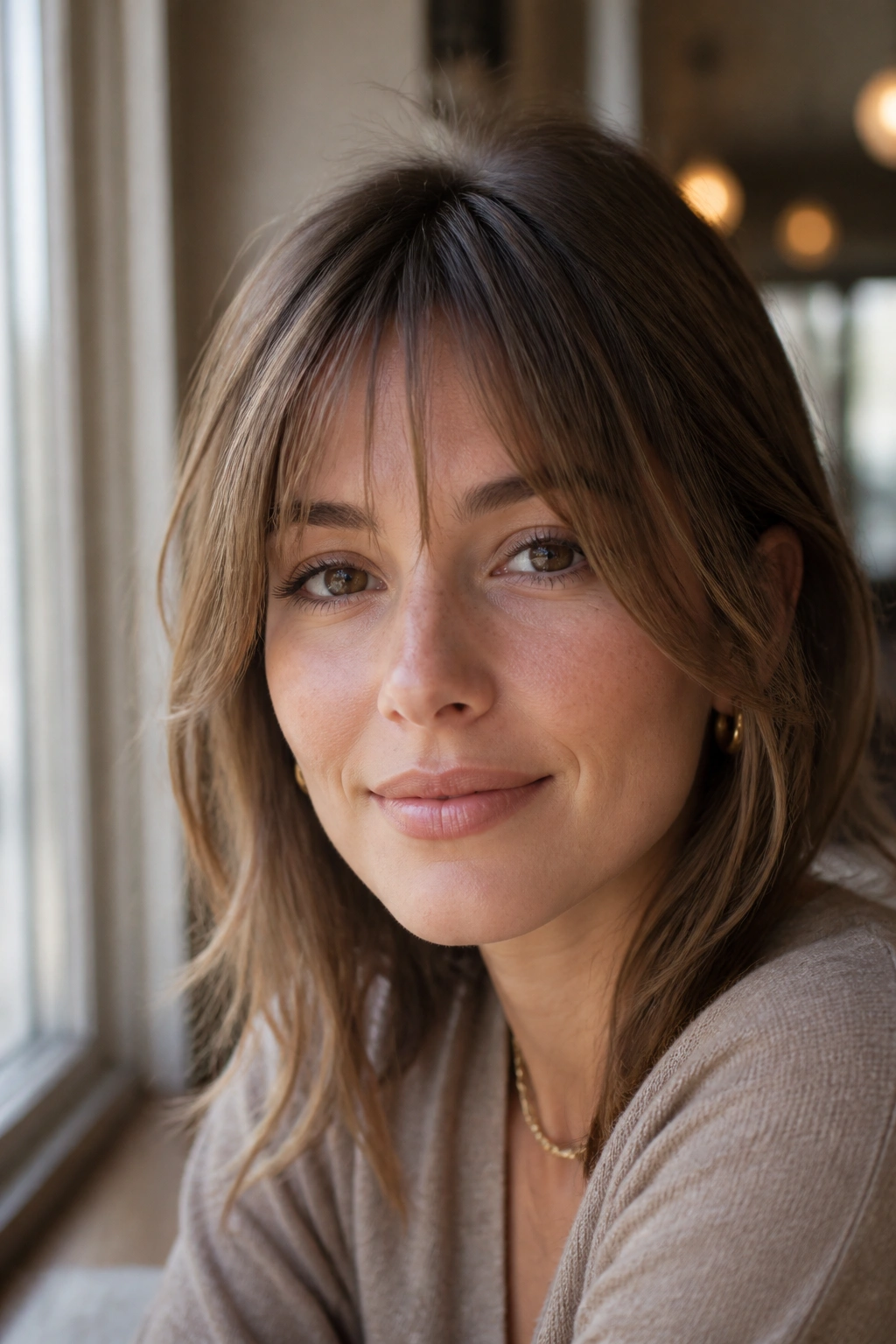
Face-framing wispy bangs are less about the forehead and more about the whole front section of the haircut. They start softly near the temples or cheekbones and blend into the rest of the layers, which makes them a nice choice for thin-looking hair that needs the illusion of width around the face.
What Makes Them Useful
Instead of putting all the visual weight on the center of the forehead, this style spreads it out. That helps the hair feel fuller because the shape is moving along the sides too. It’s a small shift, but it matters a lot.
A good cut keeps the shortest pieces around the upper cheek area and lets the rest feather back into the length. That means the fringe never feels stranded on its own. It belongs to the haircut.
Ask for This
- Soft, tapered front pieces
- A gradual blend into the side layers
- No hard line across the brow
- Enough length to tuck behind the ear if needed
This is one of the easiest bangs to wear with ponytails and buns. The front stays soft even when the rest of the hair is pulled back, which saves you from the “I have bangs, now what?” problem.
12. Piecey Layered Bangs
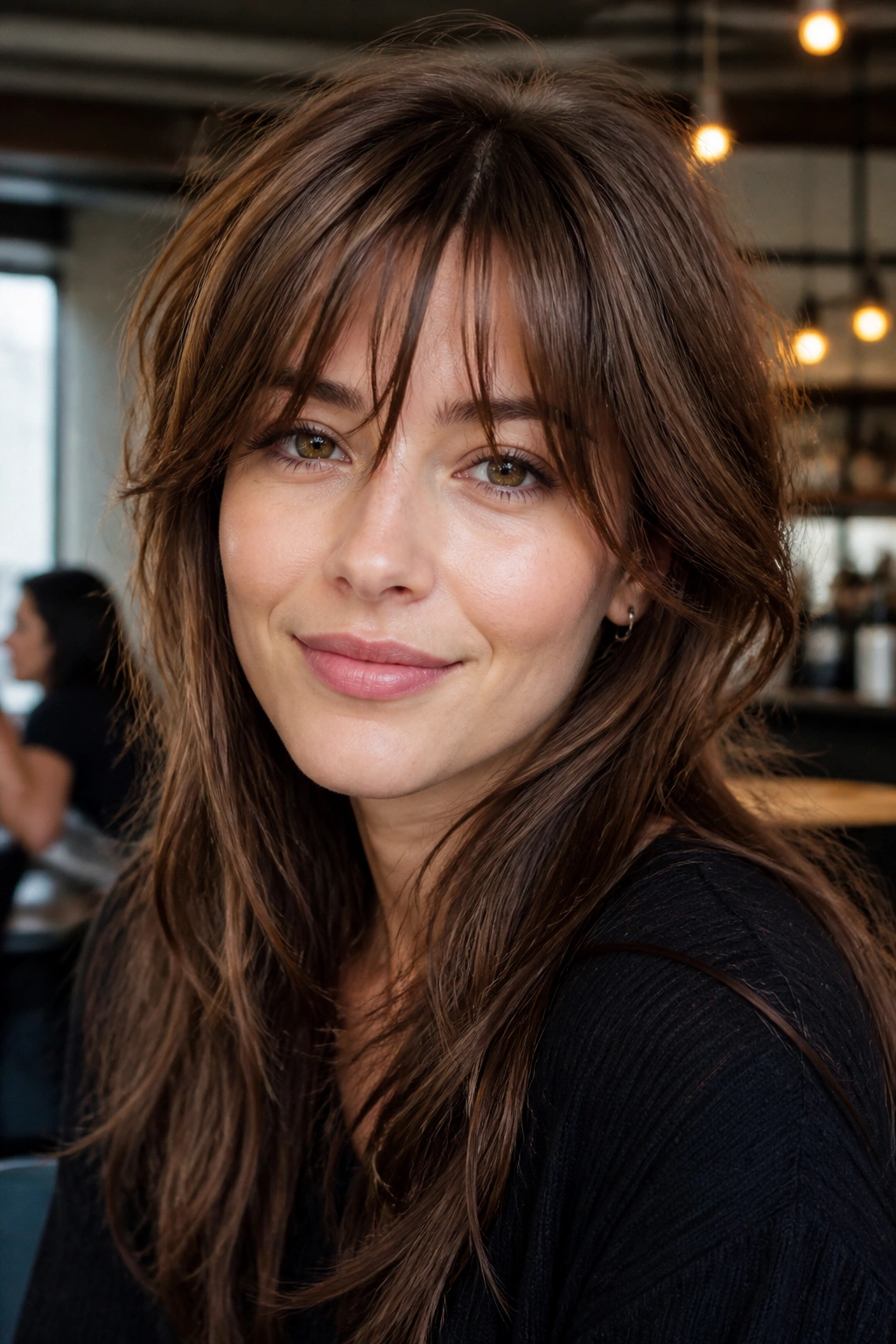
Piecey layered bangs are all about separation. You want little strands, not one solid strip. On thin-looking hair, that separation can make the fringe look lighter and a little fuller at the same time, because the eye sees texture instead of empty space.
I’ve always liked this kind of bang on hair that has a fine texture but enough strands to support a soft stack of pieces. It’s one of those styles that looks better when it isn’t overworked. Brush it too much and the pieces disappear. Put too much product in and they clump. Annoying, yes. Also true.
Styling Trick
Start with a tiny amount of root lift spray, then blow-dry the bangs forward. Once they’re dry, pinch a few pieces apart with your fingers and add a touch of dry shampoo if the roots need grit. That little bit of grit helps the fringe hold shape without looking stiff.
What to Avoid
- Heavy oils near the forehead
- Over-brushing after drying
- Cutting the pieces too short at the center
- Over-thinning the fringe until it turns wispy in the wrong way
The best piecey bang looks accidental, but it is not. Someone had to cut it carefully for it to look that easy.
13. Rounded Wispy Bangs
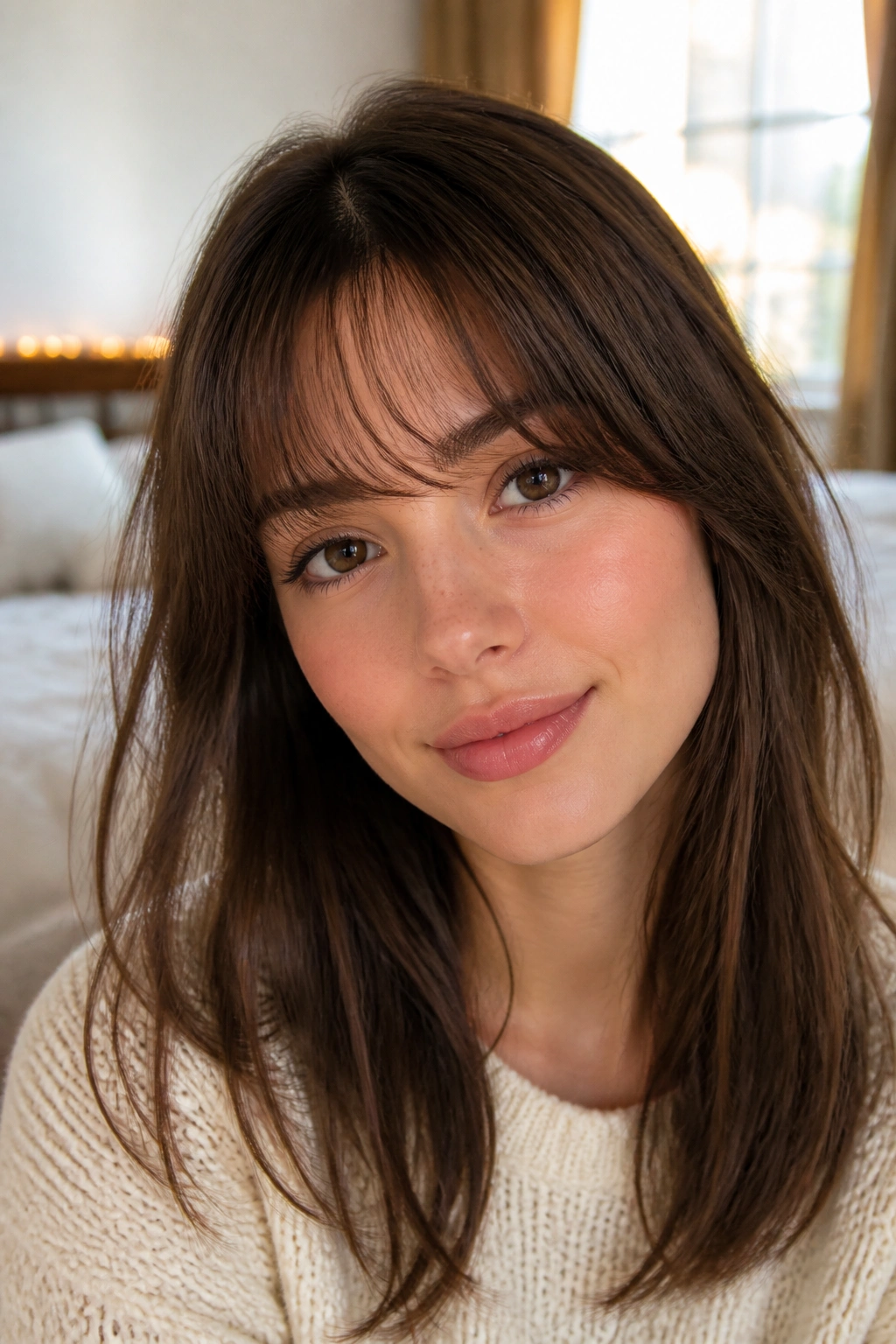
Rounded wispy bangs create a soft U-shape across the forehead, which sounds like a small detail until you see it on thin-looking hair. The curve makes the fringe feel intentional, and the softness around the edges keeps the style from looking hard or blocky.
They are especially useful if your face is a bit longer and you want to reduce that vertical stretch a little. A rounded line adds width where the eye wants it. Not a lot. Just enough to make the face feel more balanced.
Keep the corners longer than the center. That’s the key.
A rounded bang also helps if your hairline is uneven. The curve distracts the eye from tiny gaps by creating one continuous shape. That can be a relief on days when your hair refuses to sit neatly.
Styling is straightforward. Blow-dry the middle first, then guide the sides down and slightly outward. If the center sticks up, press it down with the brush for a few seconds while it cools. The cooling part matters more than people think. Hair remembers the shape it dries in.
14. Wispy Bangs with a Center Part
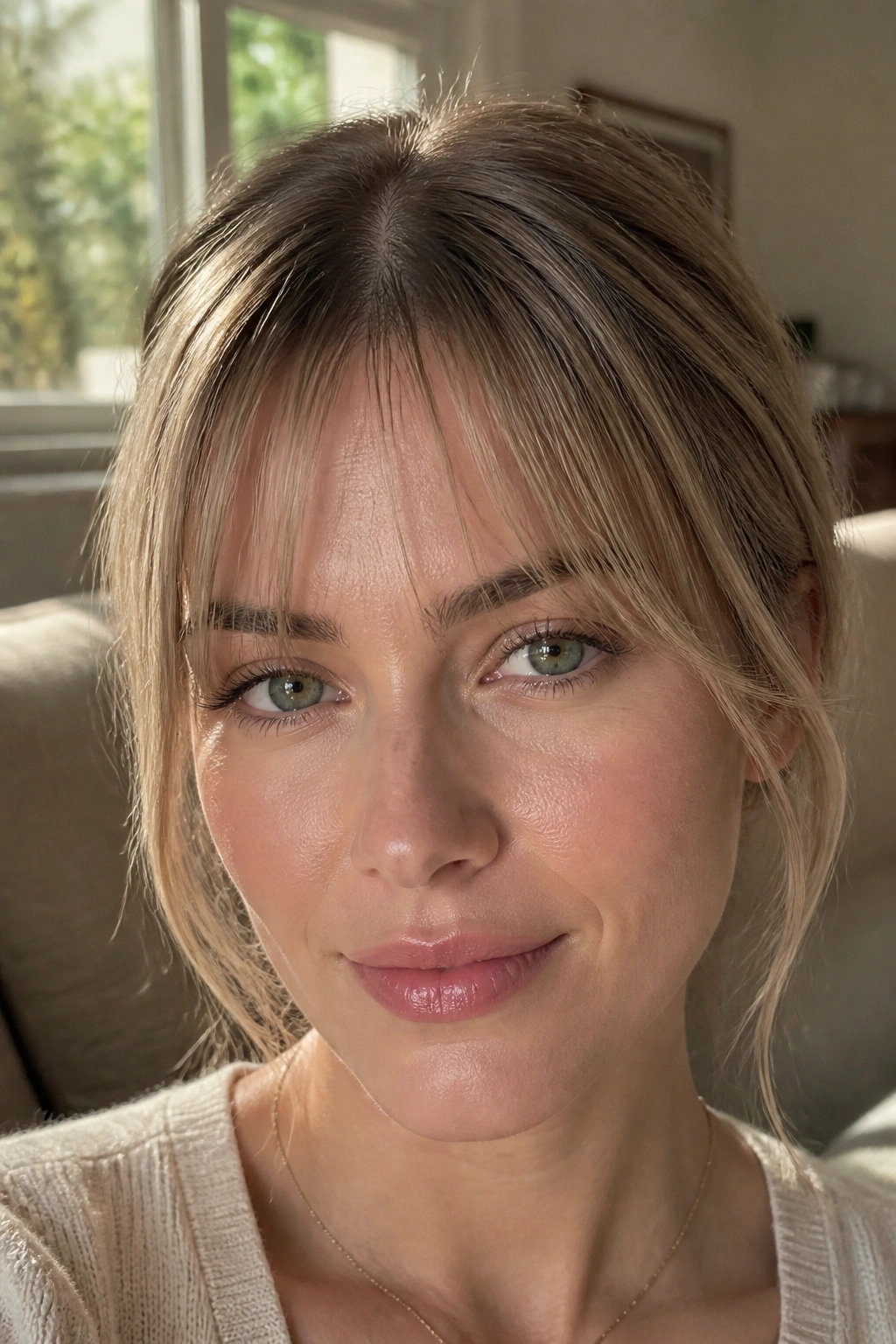
A center part in the bang area sounds picky, but it can be a lifesaver for thin-looking hair. It lets the fringe open naturally instead of sitting across the whole forehead, and that openness makes the hair look less crowded.
This style works when you want a bang without the commitment of a full fringe. You get softness around the face, but you can still move it around, pin it back, or let it drop into place on its own. That flexibility matters on mornings when the front section refuses to behave.
Who Should Try It
- People growing out older bangs
- Fine hair that separates easily
- Haircuts with soft layers around the jaw
- Anyone who dislikes a heavy forehead fringe
The middle part should be shallow, not dramatic. If you split it too deep, the bangs stop looking like a style and start looking like two random side pieces. That’s not the same thing.
A light mist of texture spray at the roots can help the part stay in place without making the hair crunchy. And if the pieces slide apart during the day, that’s fine. A little movement is part of the appeal.
15. Airy Side-Curtain Fringe
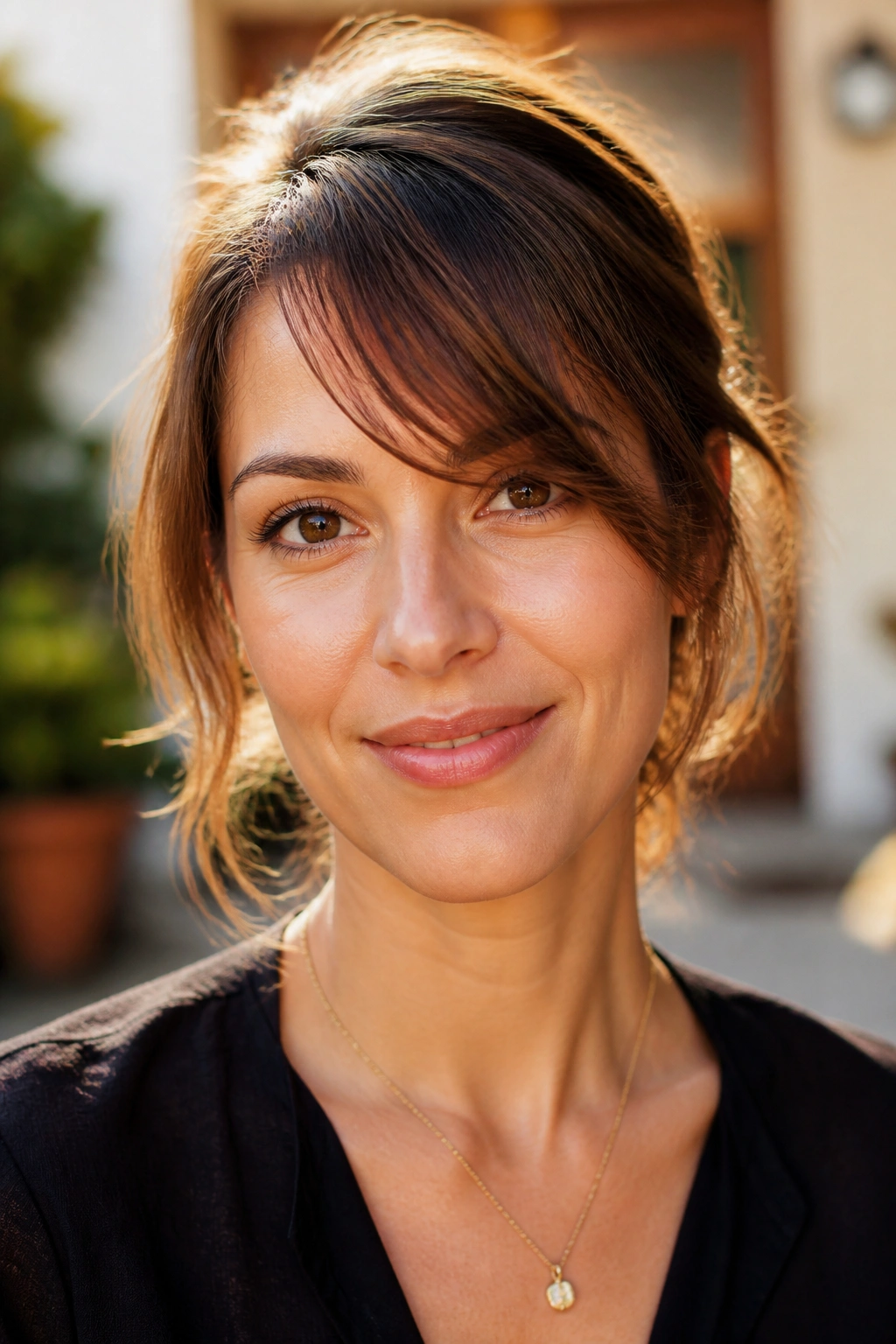
Airy side-curtain fringe is the softer cousin of a full curtain bang. Instead of sweeping both sides equally, it leans a little more to one side, which creates a looser frame around the face and leaves the center lighter.
That asymmetry is useful on thin-looking hair because it keeps one side from carrying too much weight. The fringe feels easier, and the face gets a gentle diagonal line that can make the hair look more dynamic. Dynamic is a better word here than polished. Polished can turn flat fast.
What Makes It Different
Unlike a fuller curtain bang, this version does not need as much density at the center. It depends more on shape and direction. The shortest pieces can start near the nose bridge or upper cheekbone, then fall away in a gradual sweep.
It’s a strong option if you wear your hair behind one ear often. The fringe can flow with that habit instead of fighting it. That sounds small, but hairstyle friction is a real thing. If your cut fights your routine, you stop liking it.
I’d choose this for someone who wants softness first and statement second.
16. Textured Fringe with Soft Ends

Textured fringe with soft ends is where a lot of fine-haired people make a smart turn. The cut adds enough detail to keep the front interesting, but the ends stay soft so the bang does not look chopped to bits.
What to Ask Your Stylist
Ask for texture at the ends only, not a thinning pass all over the fringe. A razor can work here, but only in careful hands. Too much blade work on fine hair can leave the ends frayed and weak. That’s the part people regret later.
What to Skip
- Heavy internal thinning
- Very blunt center sections
- Cutting the fringe too wide across the forehead
- Layering every piece to the same short length
A textured fringe like this looks best when the hair is air-dried halfway and then finished with a brush or fingers. That keeps the shape loose. If you go straight to a brush on soaking-wet hair, you can flatten the root before it has a chance to stand up.
This is one of those cuts that benefits from a stylist who knows when to stop. That restraint is the whole point.
17. See-Through Wispy Bangs

See-through bangs are exactly what the name suggests: light enough that you can see bits of forehead through them. On thin-looking hair, that can be a feature, not a flaw. The fringe stays airy, and the whole front section looks delicate rather than overpacked.
The style works because it uses spacing on purpose. Instead of trying to cover everything, it leaves a little transparency between strands. That makes the bangs feel lighter on the face and easier to style when the weather is warm or humid.
Easy Styling Routine
- Mist the roots with a lightweight volumizing spray.
- Blow-dry the fringe forward using a small brush.
- Let the bangs cool in place for 20 to 30 seconds.
- Separate the strands with your fingers and stop there.
That’s enough. More product usually works against the look.
See-through bangs are especially nice if your forehead tends to get oily fast, because they don’t collapse into one solid strip as quickly as denser bangs. They need a touch-up, yes, but they also recover faster after a bad moment.
18. Soft Arc Wispy Bangs

Soft arc wispy bangs have a gentle curve that sits a little higher in the center and a little lower near the sides. The shape is subtle, but it gives thin-looking hair a nicer outline than a straight line does.
Why This Shape Helps
The center lift pulls attention toward the eyes, while the longer sides soften the transition into the rest of the haircut. That means the fringe does not feel isolated. It feels like part of the whole cut, which is what makes it look fuller.
This style is good if your hairline is a little uneven or if the front section grows in different directions. The arc helps smooth out those odd bits without forcing the hair into a rigid shape.
A round brush works better than a flat brush here. You want just enough bend to create the curve, not a big roll. Too much curl and the bang starts looking dated fast. Too little and you lose the shape.
Use the smallest amount of heat needed. Fine hair hates overcooking.
19. Wispy Bangs That Blend Into a Bob
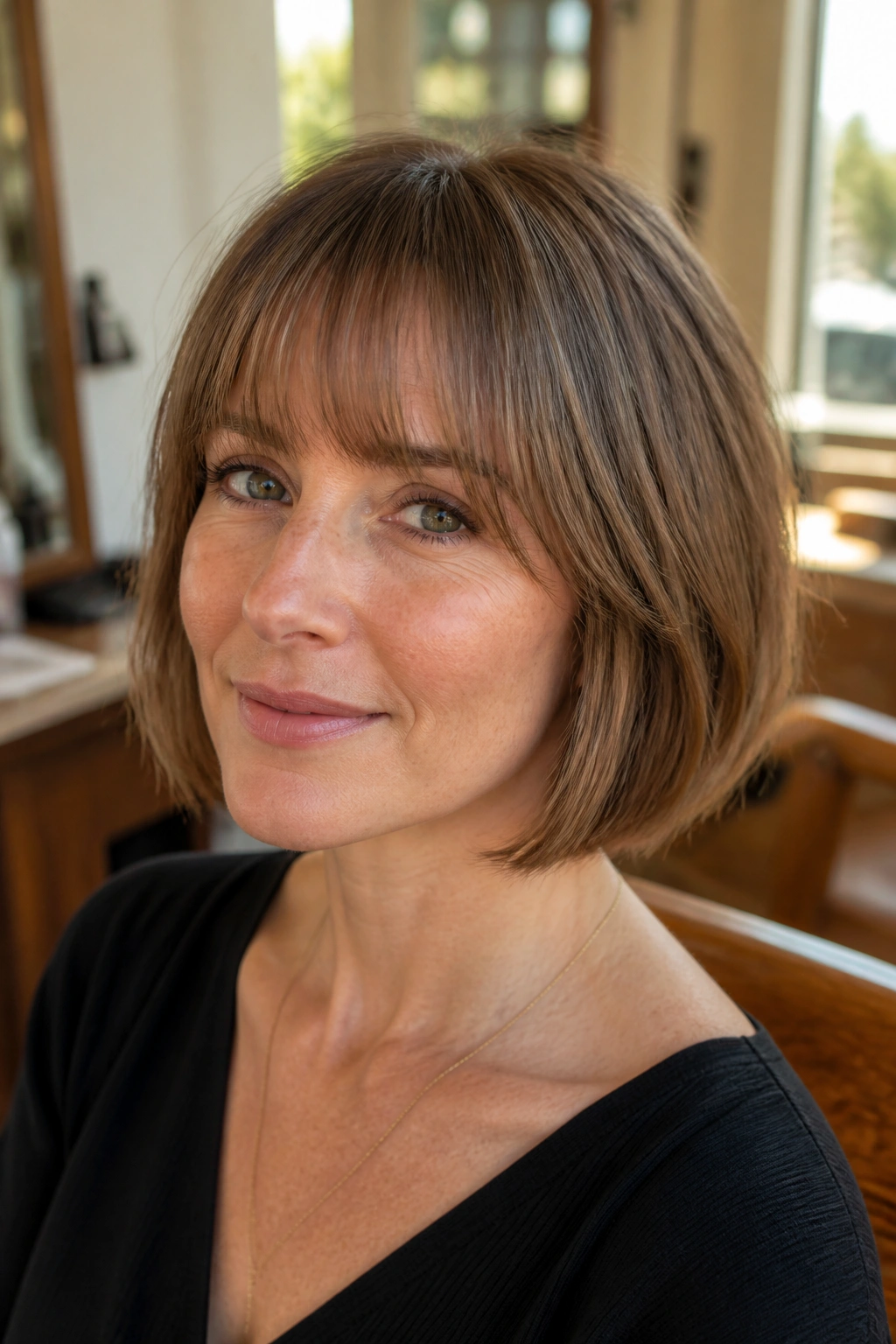
If you wear a bob, bangs that blend into it can be one of the smartest cuts you choose. The front stays light, the sides connect, and the whole haircut reads as one shape instead of a bob plus a random fringe.
That blending is especially helpful for thin-looking hair because it spreads the visual weight around. A bob with disconnected bangs can make the front seem sparse. A blended fringe makes the cut feel planned from every angle.
The Details That Matter
- Start the bang around brow level.
- Let the side pieces hit around the cheekbone.
- Keep the transition soft instead of abrupt.
- Match the texture of the fringe to the ends of the bob.
A chin-length bob with blended wispy bangs can look airy and sharp at the same time. That’s rare. Usually you get one or the other. The trick is keeping the ends of the fringe soft enough to move, while the bob itself stays clean.
This is a strong option if you want structure without weight. It’s tidy, but not stiff.
20. Soft Fringe That Blends Into Layers
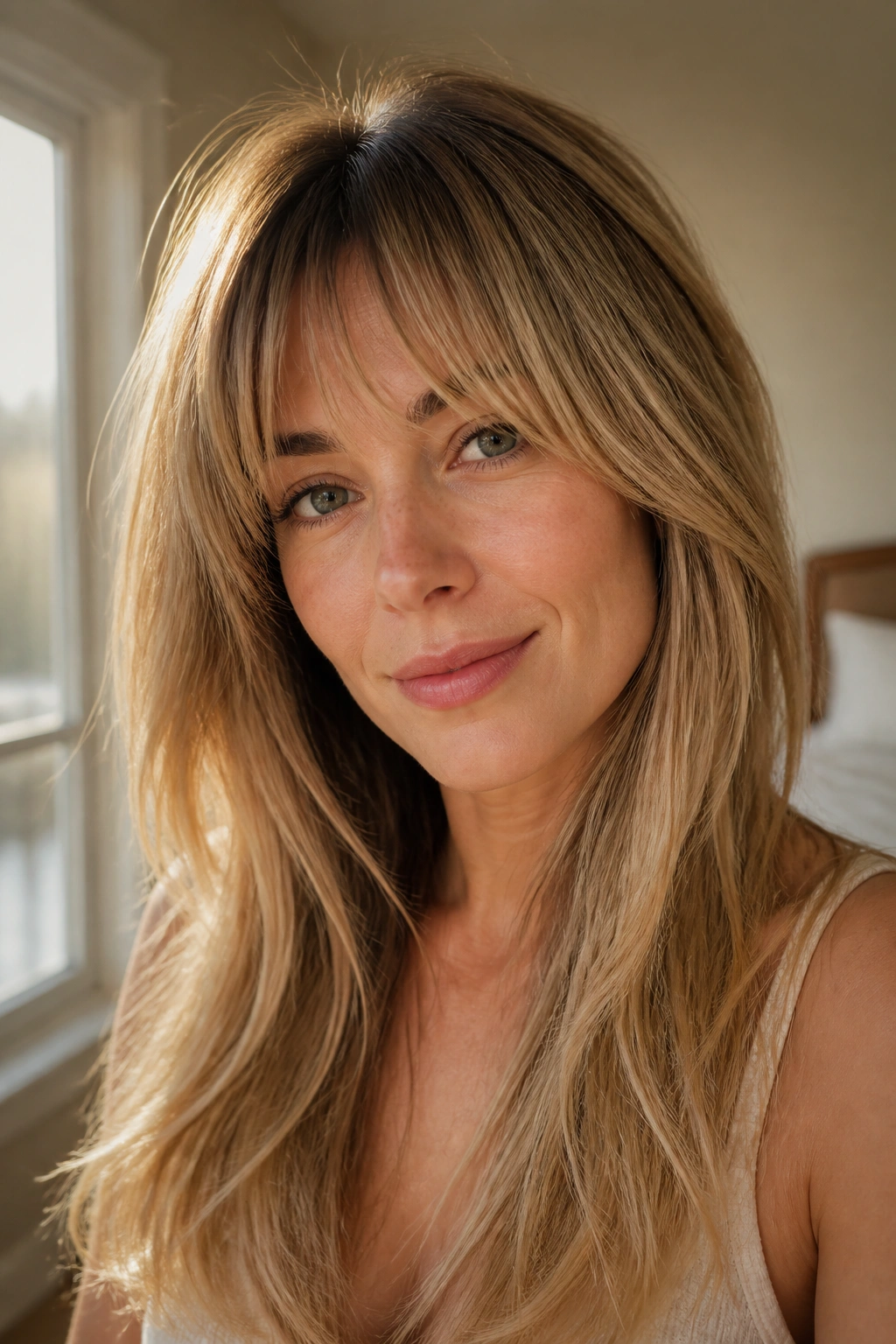
Soft fringe that disappears into layers is the least fussy option on this list, and honestly, that’s why it works so well for thin-looking hair. The front section is there, but it never feels like a separate event. It melts into the sides, the crown, and the length.
That blending is useful if you want to test bangs without making the whole haircut feel committed to one shape. It also helps if your hair is fine enough that a strong, separate fringe would steal too much density from the rest of the cut.
Why It’s a Good Final Pick
Unlike a heavy fringe, this one never asks the front of your hair to carry the whole style. The layers do part of the work. The bang only needs to soften the face and keep things moving.
The Best Way to Wear It
- Keep the shortest pieces at brow level or slightly below.
- Ask for a soft taper into the front layers.
- Style with a lightweight mousse or spray, not thick cream.
- Let a few strands fall where they want to fall.
That last part matters. A soft fringe like this looks best when it is not overmanaged. If you want bangs that can survive a quick blow-dry, a rushed morning, and a little wind, this is the one I would hand to you first.
