



A round face and short hair can be a lovely match — if the cut doesn’t stop at the wrong place. The phrase short haircuts without bangs for round faces sounds picky, but the details are the whole game: where the ends land, how the part falls, and whether the sides puff out at cheek level.
The easiest mistake is a cut that draws a neat little circle around the face. Cute in theory. Not so cute when the silhouette makes the widest part of the cheek look wider.
The better short cuts borrow from architecture. A little angle. A little height. A clean nape. Maybe one side that sits a touch lower than the other. They leave the forehead open, which keeps the face from feeling boxed in, and they give the eye a reason to move instead of parking in the middle of the face.
Some styles are polished, some are tousled, some need a round brush and three minutes in the morning. The common thread is that they create shape where round faces need it most. The first cut below is the safest place to start if you want something flattering, wearable, and not fussy.
1. Chin-Length Bob for Round Faces Without Bangs

A chin-length bob works when it lands with intention. Too short, and it can widen the cheeks. Too long, and you lose the neat edge that makes the cut feel sharp.
Why It Flatters Round Faces
The sweet spot is usually right at the jaw or a hair below it. That keeps the eye moving downward instead of stopping at the fullest part of the face. A side part helps even more because it creates a diagonal line, and diagonals are your friend here.
- Ask for the front pieces to sit just below the chin, not directly on the cheek.
- Keep the top smooth and flat enough to avoid extra width.
- Blow-dry the ends with a slight bend inward or outward, not a big round puff.
- If your hair is thick, remove bulk from the interior, not the outer line.
One small shift in length can change the whole face shape. That’s the part people miss.
This cut is especially good if you want something easy to tuck behind one ear on a busy day. It looks clean on straight hair, and it can still work on waves if the layers are kept light.
2. The Angled Bob That Falls Longer in Front

Why does a small angle matter so much? Because it breaks the circle.
A classic angled bob is shorter in the back and a little longer toward the front, which gives the face a longer frame without needing bangs. The front pieces should not be dramatically longer unless you want a bolder look. A gentle difference of 1 to 2 inches is often enough to make the style feel slimmer through the cheeks.
This one works because the eye follows the slant. That slant matters more than most people think. A straight horizontal line at jaw level can make a round face feel wider, while an angled line pulls attention down and forward. It’s subtle. Which is exactly why it works.
Wear it sleek for a more polished finish, or add a soft wave through the ends if your hair needs movement. Keep the back neat. If the back gets too bulky, the whole shape loses its purpose.
3. Long Pixie with Tapered Sides
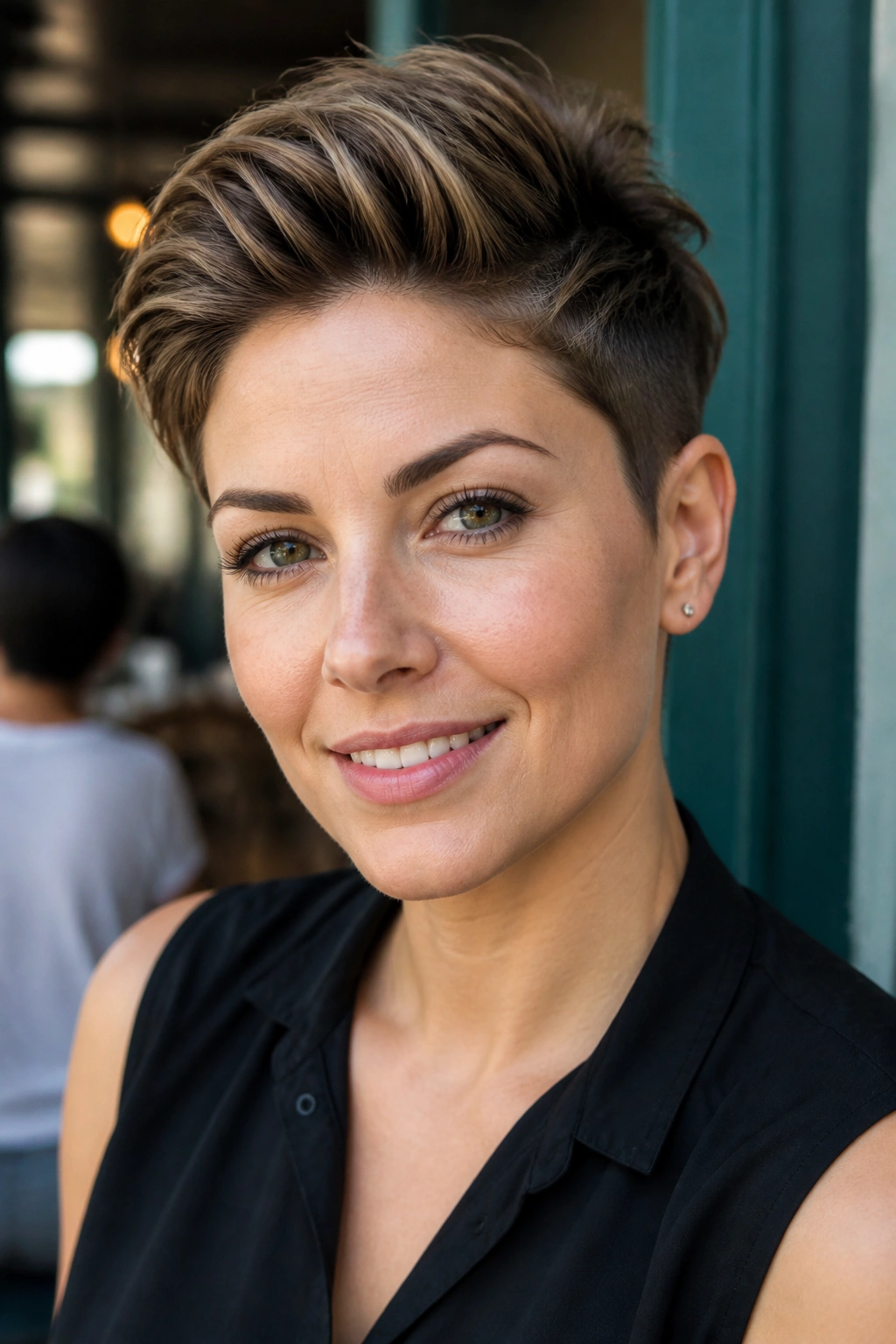
Picture someone who wants short hair but doesn’t want their face fully exposed. That’s where the long pixie earns its keep.
The top stays longer — usually around 2 to 4 inches — while the sides and nape are tapered close. That contrast creates vertical lift, and vertical lift helps round faces look a little longer. The forehead stays open, which is useful here. No fringe needed. None.
What to Ask for at the Salon
- Keep the top longer than the sides by at least 1 inch.
- Taper the temples so the cut doesn’t flare out at cheek level.
- Leave enough length on top to sweep back or slightly to one side.
- Keep the nape close and neat, not fluffy.
This cut shines when the crown has some lift. A pea-sized amount of matte paste is usually enough. Work it through dry hair, pinch the ends, and leave the front a little messy if you like that lived-in look.
Tiny cut. Big personality.
4. Stacked Bob with Crown Lift
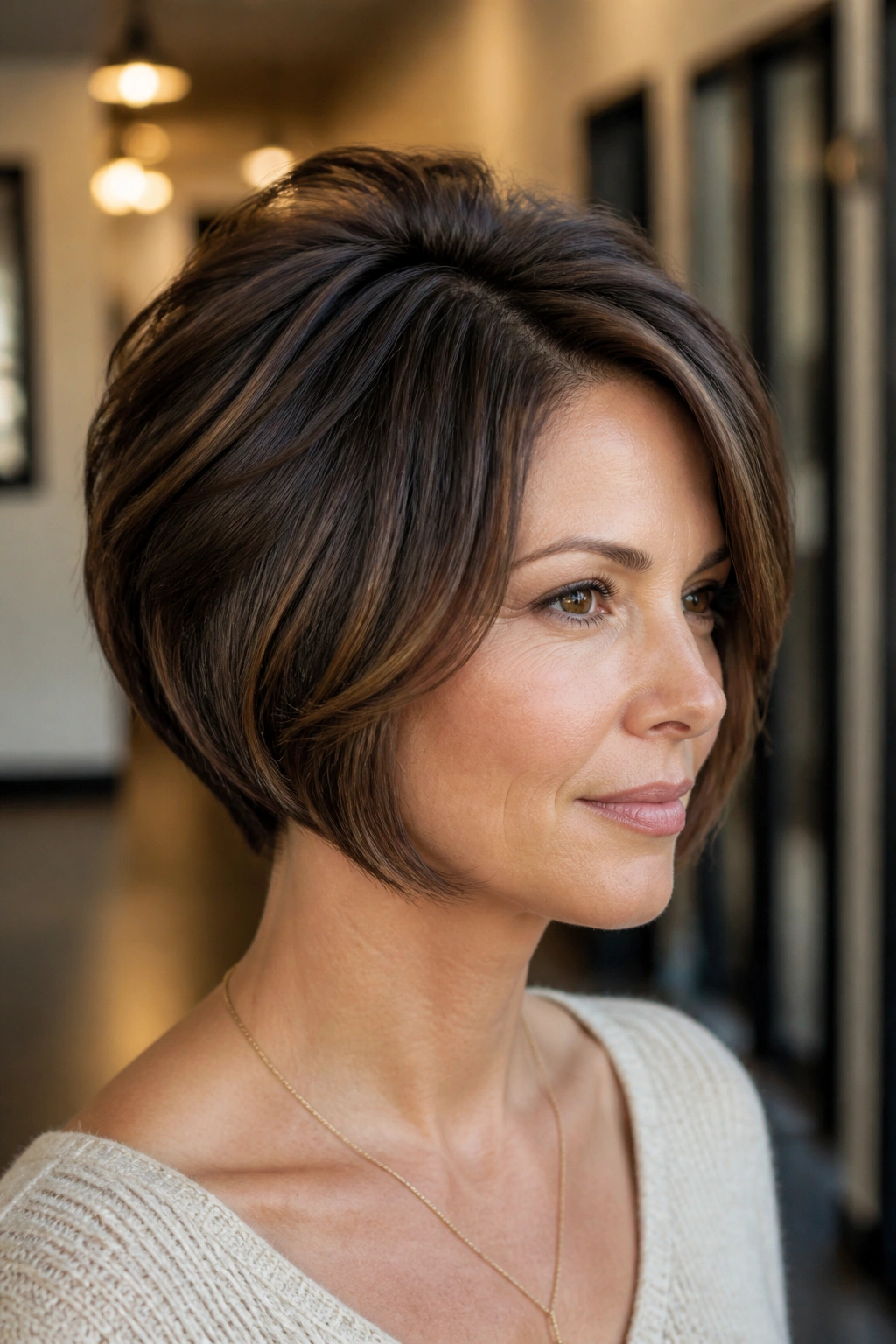
A stacked bob can do real work on a round face, especially if your hair tends to fall flat.
The stacked back removes weight from the lower half of the haircut and builds height near the crown. That extra lift pulls the face visually upward. It also gives the style a tidy curve that feels structured, not mushy, which is a problem with some shorter bobs on round cheeks.
Flat hair loves this cut. Thick hair does too, as long as the layers are controlled and the stacking isn’t overdone. If the back gets too bulky, the shape can tip into helmet territory, and nobody wants that.
Ask for the back to be graduated tightly while the front stays a little longer and softer. The result should look deliberate from every angle. Not fluffy. Not wedge-like. Just clean and lifted.
5. Collarbone Lob for Round Faces Without Bangs

Still nervous about going too short? Start here.
A collarbone lob is long enough to feel safe, but short enough to count as a real haircut. For round faces, that extra length below the cheekbones matters because it gives the face a longer frame. A center part can work if your hair is fairly straight, though a slightly off-center part usually gives more shape.
How to Style It
- Blow-dry with a round brush for a smooth bend at the ends.
- Add loose waves from the mid-length down if you want softness.
- Keep the front pieces below the cheek line.
- Use a light serum, not a heavy cream, if your hair is fine.
The best part is flexibility. You can wear it tucked, waved, or straight, and it still reads as polished. It also grows out nicely, which matters more than people admit. Haircuts that age well between salon visits save time and money, and this is one of them.
If you want a short style without the drama of a pixie, this is the safe bet.
6. The Asymmetrical Bob That Breaks Up the Circle
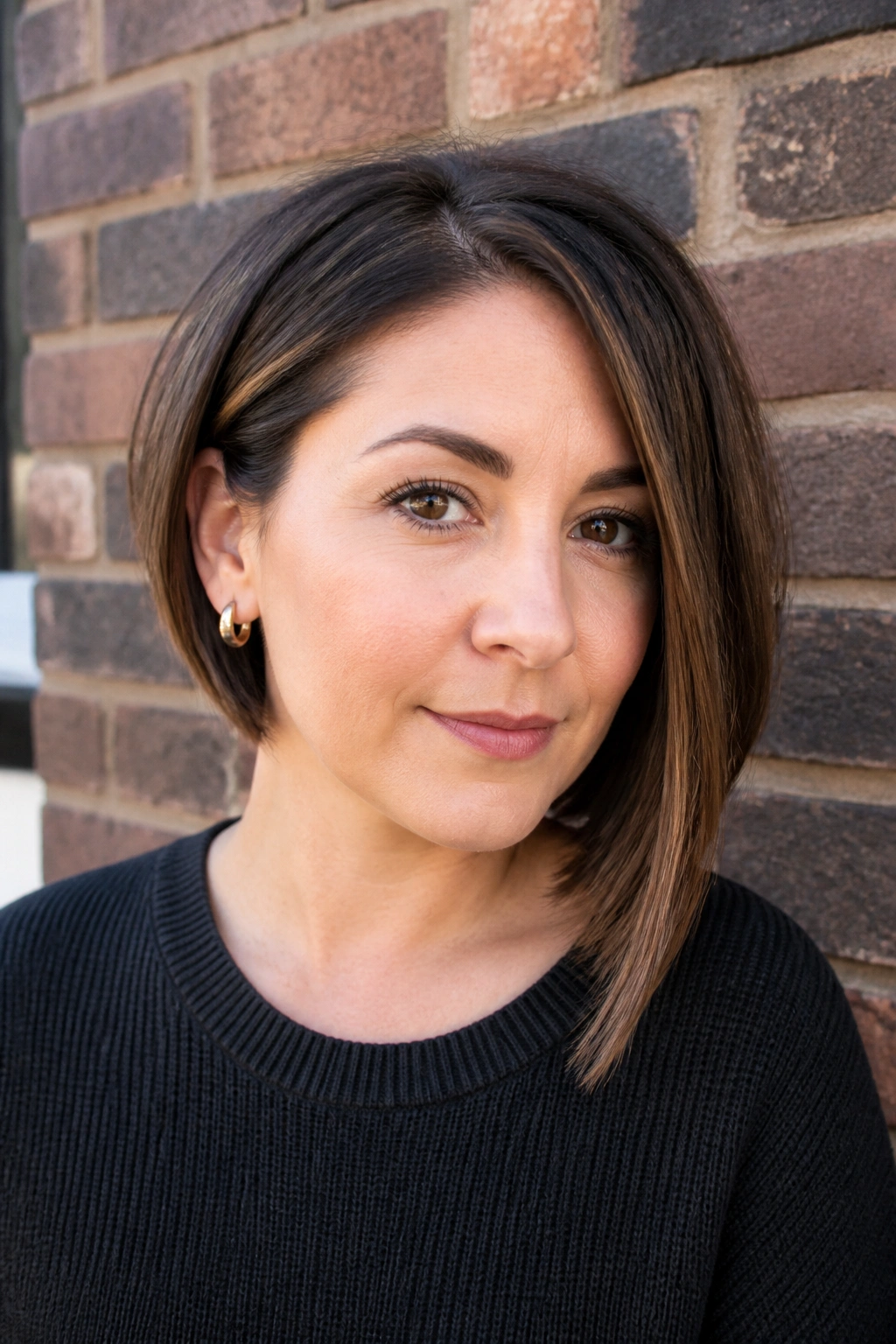
Perfect symmetry is overrated on a round face.
An asymmetrical bob uses uneven length to interrupt the soft curve of the cheeks. One side hangs a little longer — often by about an inch, sometimes a touch more — and that difference creates a line the eye has to follow. The face reads less like a circle and more like a shape with edges.
This cut works especially well if you like side parts and clean styling. You can tuck the shorter side behind your ear and let the longer side brush the jaw. The contrast feels modern without being loud about it.
The trick is restraint. If the difference between the two sides gets too dramatic, the haircut starts wearing you instead of the other way around. Keep the angle readable, not extreme. That’s the line I’d draw.
7. Textured Crop with Piecey Ends

A good textured crop should look a little broken up at the ends, not frizzy and not puffy. That difference matters.
The whole point is to keep the shape compact while letting the top move. On a round face, that means the sides stay close enough to avoid extra width, while the top gets just enough lift to stretch the silhouette. If you wear glasses, this cut can be especially sharp because it keeps the frame area open.
What Makes It Work
- The top needs piecey separation, not a helmet shape.
- The sides should stay narrow through the temples.
- The neckline should be clean and low.
- A matte paste or light wax helps define the tips.
Too much texture at the cheeks is a bad idea. That’s where the cut can go sideways.
I like this style on people who do not want to spend ten minutes styling their hair every morning. Scrunch a little product through dry hair, twist a few pieces between your fingers, and leave it alone. It’s casual, but it still has shape.
8. Inverted Bob with a Clean Nape
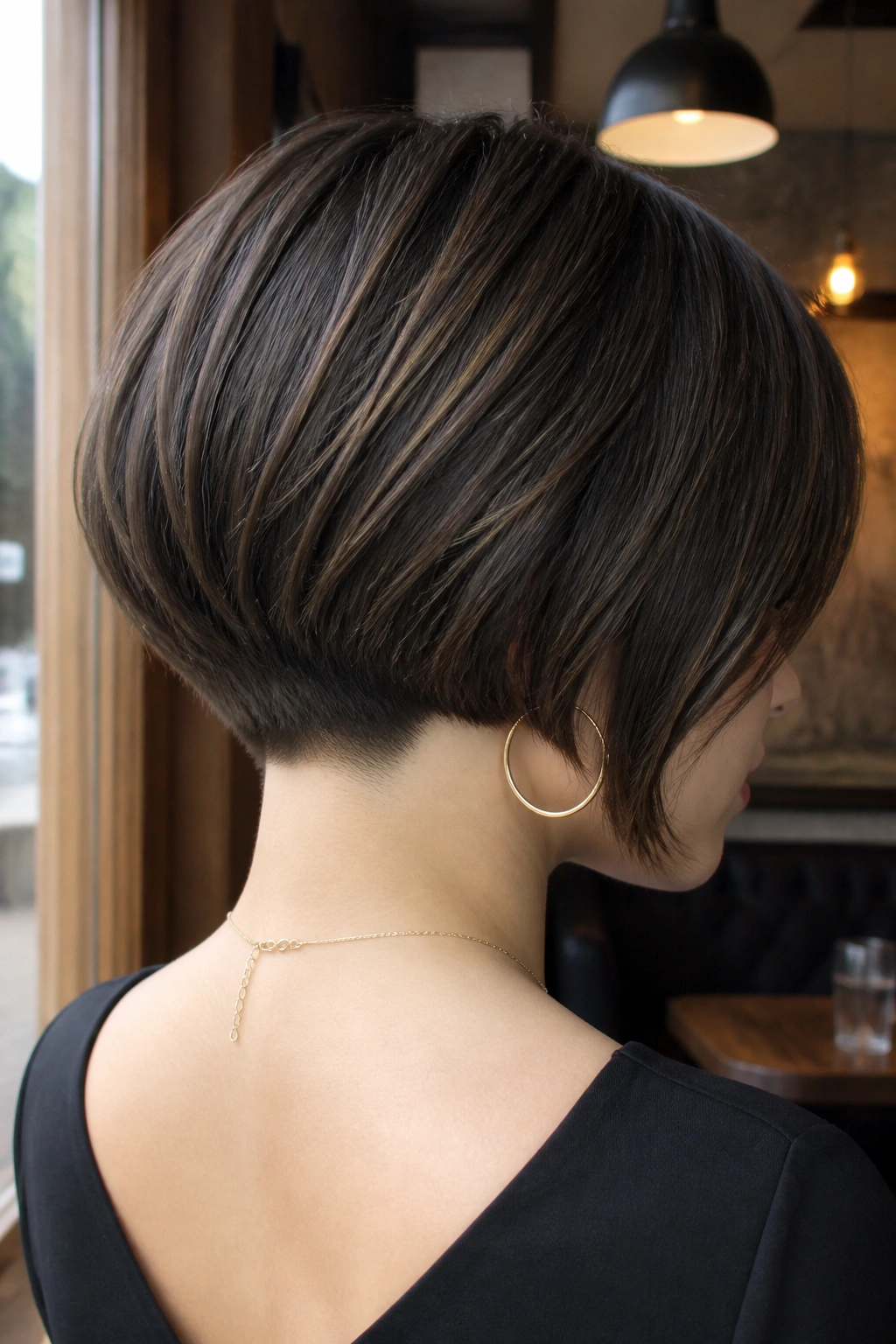
A clean nape changes everything.
An inverted bob is shorter in the back and longer in the front, but unlike a loose angled bob, the shape is usually more pronounced and polished. The short back exposes the neck, which makes the whole face look a bit longer. The longer front pieces keep the cut from feeling severe.
What to Ask Your Stylist
- Keep the back short enough to show the nape.
- Let the front graze the jaw or sit slightly below it.
- Avoid adding too much width at the sides.
- Keep the line sharp, especially if your hair is straight.
This is a smart choice if you want structure. It has more attitude than a soft lob, but it does not need bangs to feel complete. The open forehead keeps the look balanced, and the clean neckline gives it a crisp finish.
It’s a haircutter’s haircut, in a good way. Precise. Clean. Easy to read from across the room.
9. Curly Bob That Sits Below the Cheekbones

Curly hair changes the rules a bit.
If your curls are cut too short on a round face, they can bunch at cheek level and make the face look wider. A better curly bob sits just below the cheekbones or closer to the jaw, where the curls have room to fall instead of ballooning out. No bangs needed. In fact, skipping them often makes the shape easier to wear.
The other thing that helps is cutting curls with their natural pattern in mind. Wet curls lie to you. Dry curls tell the truth. A stylist who shapes the bob while the curls are dry, or at least nearly dry, can place the length more accurately. That matters a lot.
Use curl cream on soaking-wet hair, scrunch with a microfiber towel, and diffuse on low heat. Let the crown lift a little. Heavy roots flatten the whole look, and flat roots on curly hair tend to drag the face down instead of lifting it.
10. The Bixie Cut for Round Faces Without Bangs
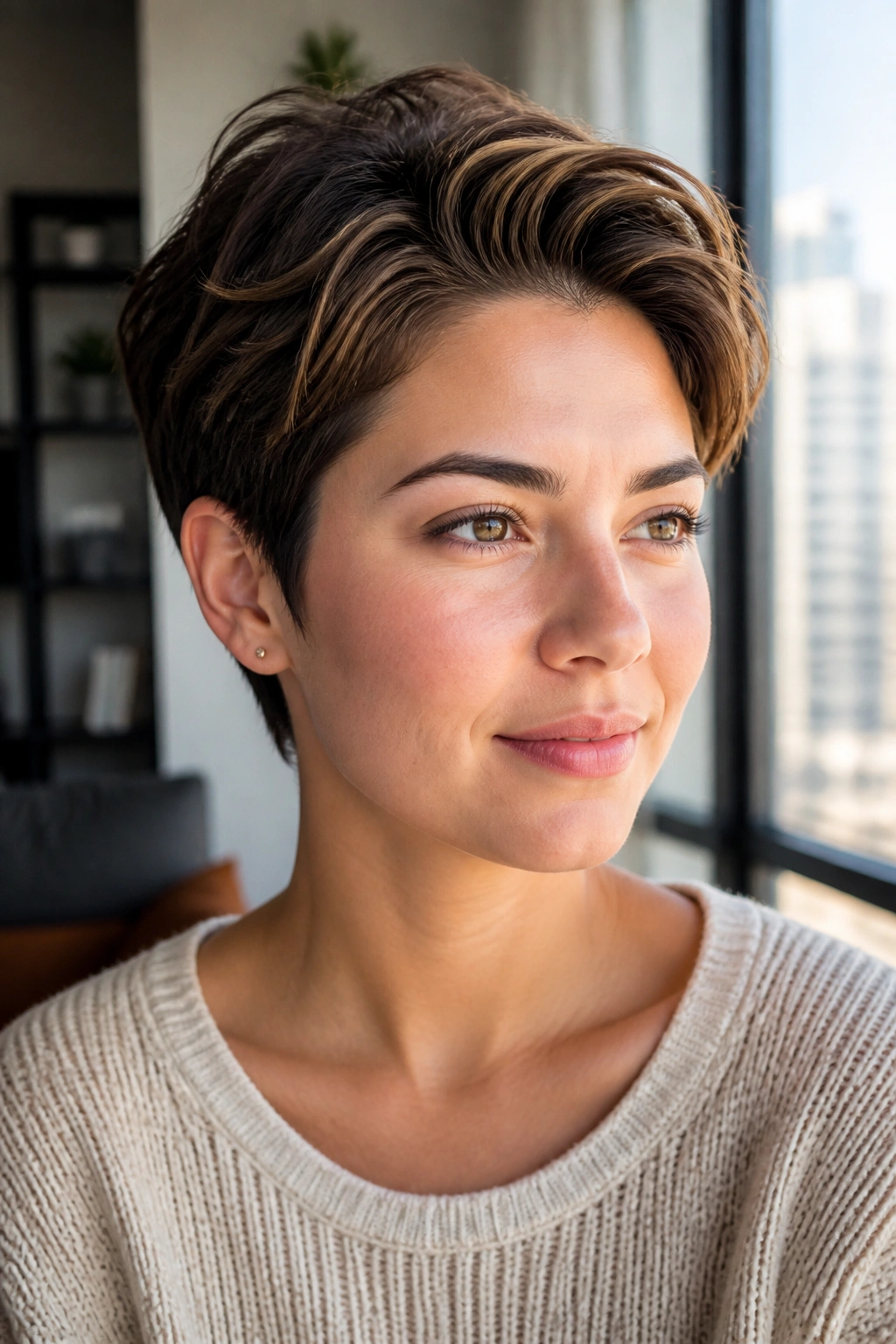
A bixie sits between a bob and a pixie, and that middle ground is why it works so well on round faces.
The top stays short enough to feel fresh, but not so short that the style loses softness. The sides are usually tapered, and the neckline is neat. That combination gives the face a little length without making it look boxed in. It also keeps the forehead open, which is handy when you want no bangs but still want a full haircut.
The best bixies have some air in them. Not too much. Just enough. You want the top to lift, the temples to stay close, and the crown to move. If the shape gets too rounded, the whole thing can read as wide. That’s the mistake to avoid.
A good rule: keep the top around 3 to 4 inches, then tighten the sides and nape. Style with a dab of paste or a lightweight mousse. The result should feel soft, not fluffy.
11. Razor-Shaped Shag Without a Fringe
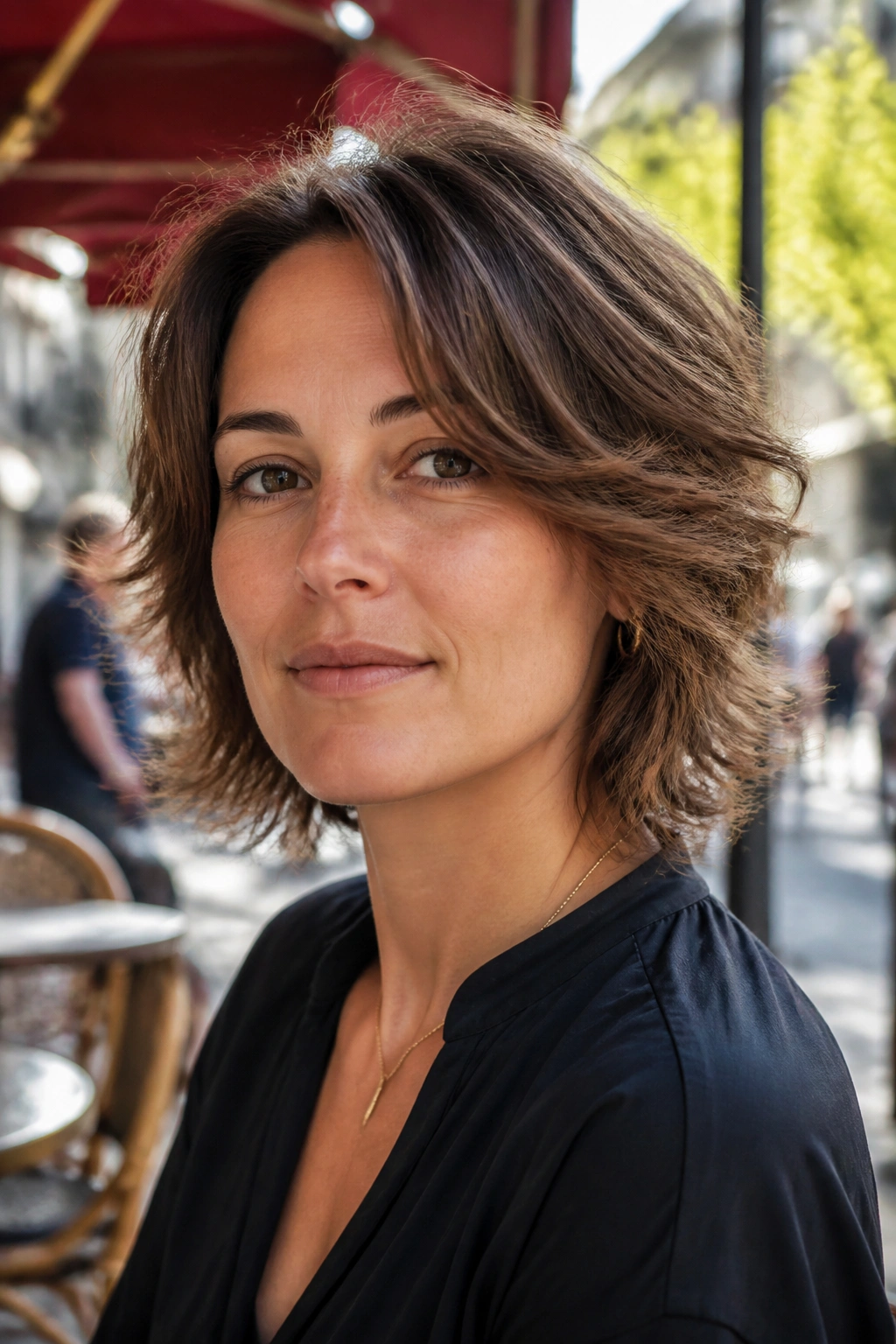
A shag without bangs sounds odd at first, but it can be one of the smartest short cuts for a round face.
The key is where the layers begin. If they start too high, the crown can puff up and the face can look wider. If they start around the cheekbones or lower, the haircut gains movement without stealing width from the sides. That’s the sweet spot. Short, but not fussy.
Where the Layers Should Begin
- Start the first visible layers around the mid-cheek to jaw area.
- Keep the top soft, not heavily teased.
- Leave the front open with no blunt fringe.
- Let the ends look slightly shattered for movement.
A razor cut helps here because it breaks up heavy edges. On straight or wavy hair, that softness keeps the shag from feeling blocky. On very curly hair, though, a razor can add frizz if it’s used too aggressively. That part matters.
This is one of those cuts that looks effortless only when it’s actually been shaped with care. Funny how that works.
12. The Sleek A-Line Bob
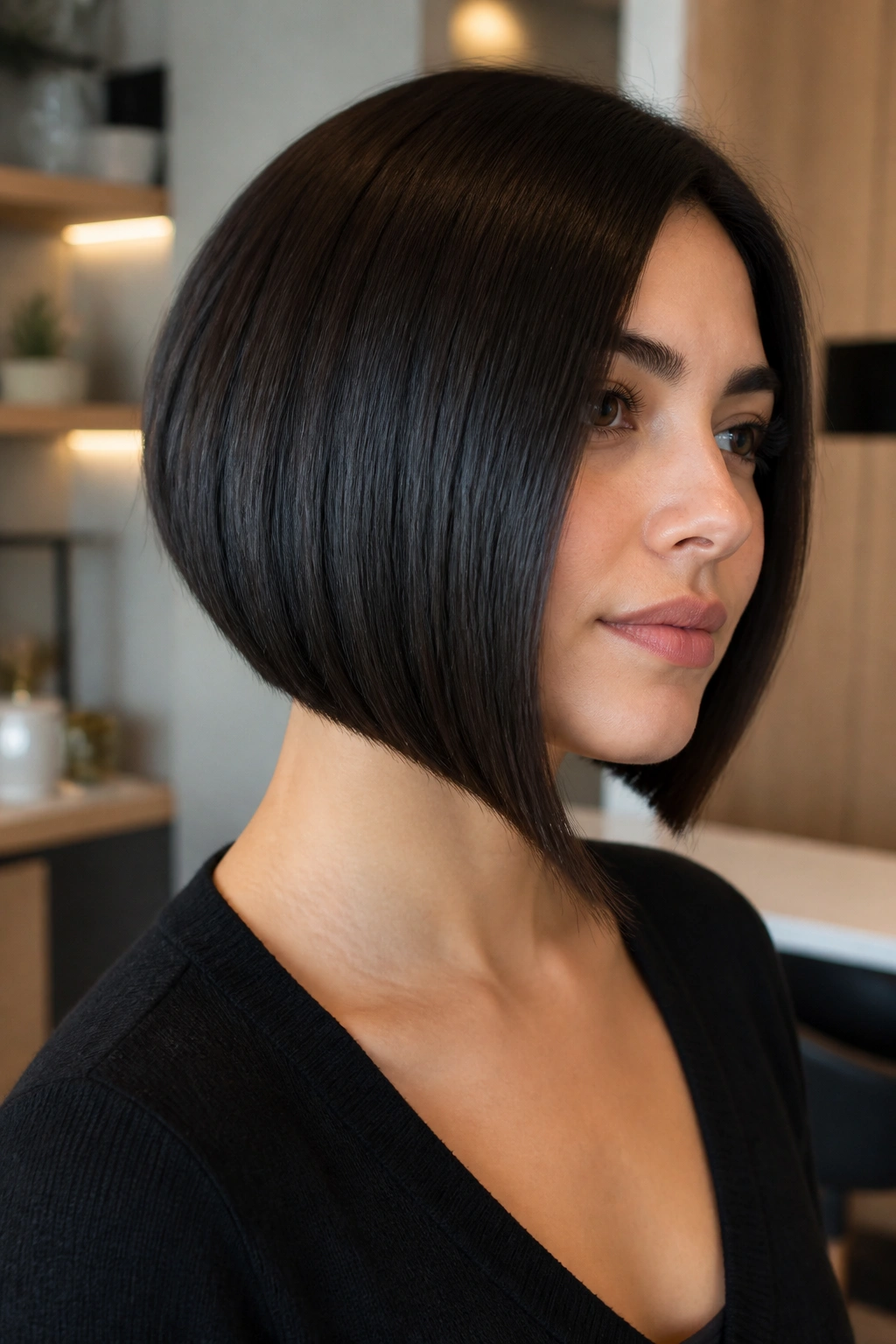
A sleek A-line bob is the neat, no-nonsense cousin in this whole group.
The back sits shorter, the front drapes longer, and the line stays clean from root to tip. That uninterrupted diagonal creates length through the face, which is why it suits rounder shapes so well. A smooth finish helps too. No big bend. No fluffy ends. Just a tidy line with enough polish to feel intentional.
This cut is best for people who like hair that behaves. Straight or slightly wavy textures are easiest, though a strong blowout can calm down more stubborn hair. If your ends tend to flip out, have your stylist leave a little more weight in the front so the line stays visible.
The A-line shape can look sharp with a center part, but a soft side part usually feels more flattering on a round face. That tiny shift moves the eye off center and gives the haircut a little more depth. Small thing. Big effect.
13. Feathered Crop That Lifts at the Crown

Feathering sounds old-fashioned until you see it done well.
On a short haircut, feathered layers can keep the top light and airy while preventing the sides from feeling too heavy. That’s useful for round faces because the cut gets movement without adding extra width through the cheeks. It’s a softer alternative to a blunt crop, and it usually looks less severe around the jaw.
What Makes It Different
- The top should have short, flicked layers.
- The sides should stay narrow and close to the head.
- The neckline should be trimmed clean.
- A small round brush helps direct the ends upward and back.
This cut shines when the crown has a little lift. Not a teased-up mess. Just a bit of height that keeps the face from looking compressed. If your hair is fine, feathering can make it look fuller without making it look bulky. If your hair is thick, it can take out some of the heaviness.
There’s a narrow line between feathered and fuzzy. Stay on the right side of it.
14. The Undercut Pixie That Removes Side Bulk
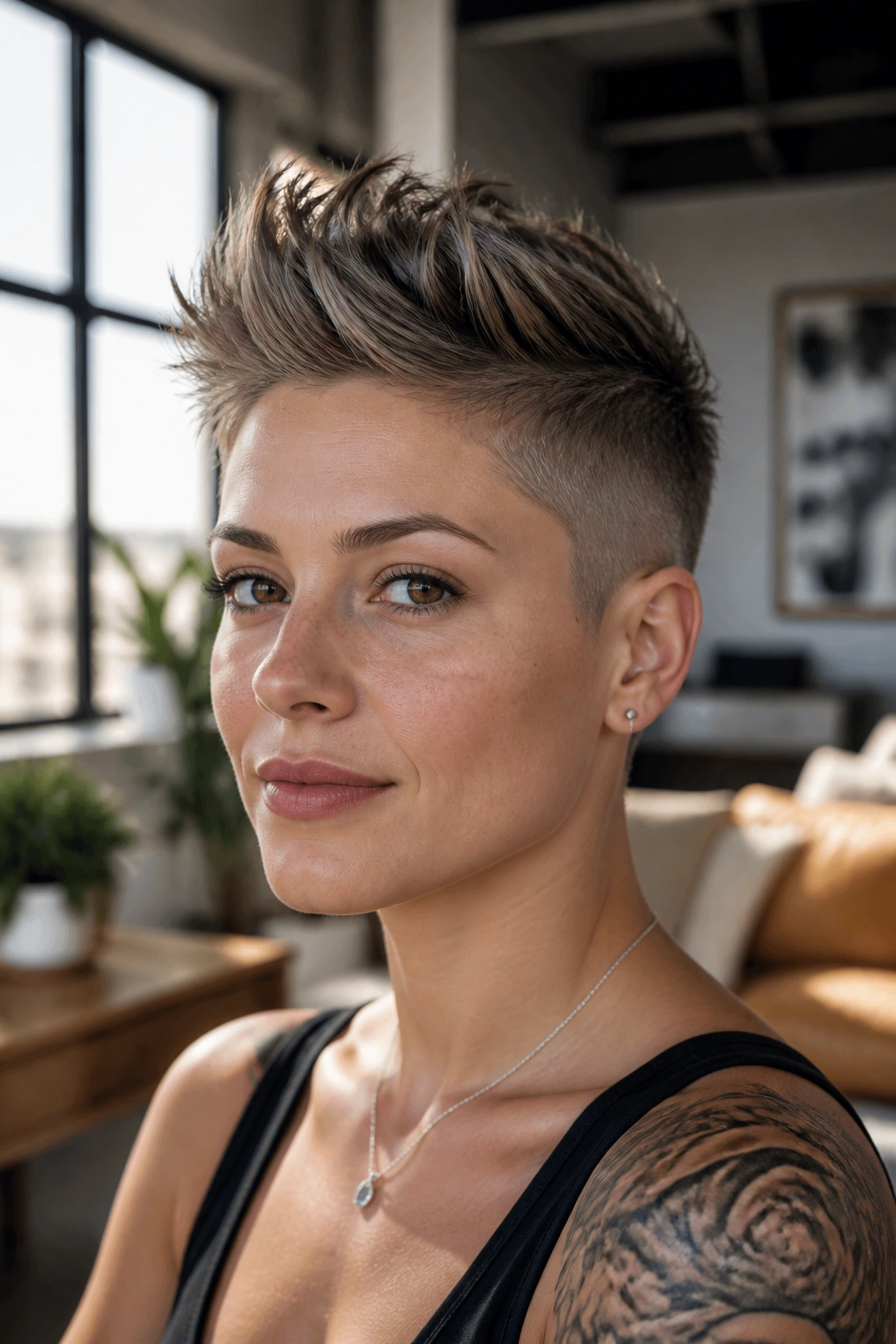
If your hair is thick and your face is round, removing bulk from the sides can be the fastest fix of the bunch.
An undercut pixie keeps the sides and back very close while leaving enough length on top to style upward, back, or slightly to one side. That vertical lift is doing real work here. It stretches the face, shows off the eyes, and keeps the cheeks from competing with the haircut.
The downside is maintenance. This style grows out fast at the temples and nape, so it needs regular cleanup to stay sharp. If you hate salon visits, that matters. A lot.
Still, when it’s done well, the shape is hard to beat. It feels crisp without being stiff, and it can look surprisingly soft when the top is left a little longer. Ask for texture on top and precision on the sides. Both matter. If one gets ignored, the whole thing loses its balance.
15. Tucked-Behind-Ears Bob with Open Sides

Some cuts flatter a round face by hiding parts of it. This one does the opposite.
A tucked-behind-the-ears bob opens the sides of the face and gives the eye a clean line from forehead to jaw. That openness works well when the bob itself is cut between chin length and just below the jaw, because the ear tuck creates a little vertical break in the silhouette. It’s simple. Almost plain. And that’s why it works.
This style is especially useful if you wear glasses or earrings. The hair moves out of the way and lets the accessories do some of the work, which sounds small until you see it in a mirror. Then it’s obvious.
Keep the ends neat so the tuck looks deliberate, not accidental. One side tucked, one side loose, can be more flattering than tucking both sides. That small asymmetry keeps the cut from feeling too symmetrical, which round faces rarely need.
16. The Soft Graduated Bob That Builds Shape

Why does a little graduation matter? Because it builds shape where a round face needs it most.
A graduated bob is shorter in the back and gradually longer toward the front, but the transition is softer than a hard inverted cut. That softer structure makes the crown feel lifted without turning the style into a wedge. It’s a nice middle road if you want something polished but not sharp.
What It Does for a Round Face
- Lifts the crown without adding width at the cheeks.
- Creates a gentle forward line that narrows the face.
- Keeps the neck visible, which helps lengthen the profile.
- Works well with straight or slightly wavy hair.
A stylist can tailor the degree of graduation to your hair density. Fine hair usually needs more support in the back. Thick hair often needs more weight removal inside the shape. The haircut should feel molded, not puffed out.
I’d choose this for someone who wants structure and softness in the same cut. It has both, if the layering is handled with care.
17. Razor Bob with Shattered Ends

There’s something clean about broken-up ends. Not messy. Just lighter.
A razor bob with shattered ends takes the weight out of the perimeter, which keeps a round face from looking boxed in by one solid line. The effect is strongest on straight or slightly wavy hair, where the pieces can move enough to create a softer edge. The forehead stays open, the sides stay controlled, and the overall shape feels easy.
Do not over-razor curly hair unless the texture can handle it. That’s where frizz sneaks in and ruins the finish.
This cut is a good match if you want a bob that doesn’t look stiff at the ends. The shape should still be readable, though. If the perimeter gets too shredded, the whole style loses its outline and starts looking thin rather than airy. That’s the part to watch.
A flat iron with a slight bend at the ends can keep the shape smooth. Or skip heat and let the natural texture do the work. Either way, the point is movement without bulk.
18. Center-Parted Mini Lob
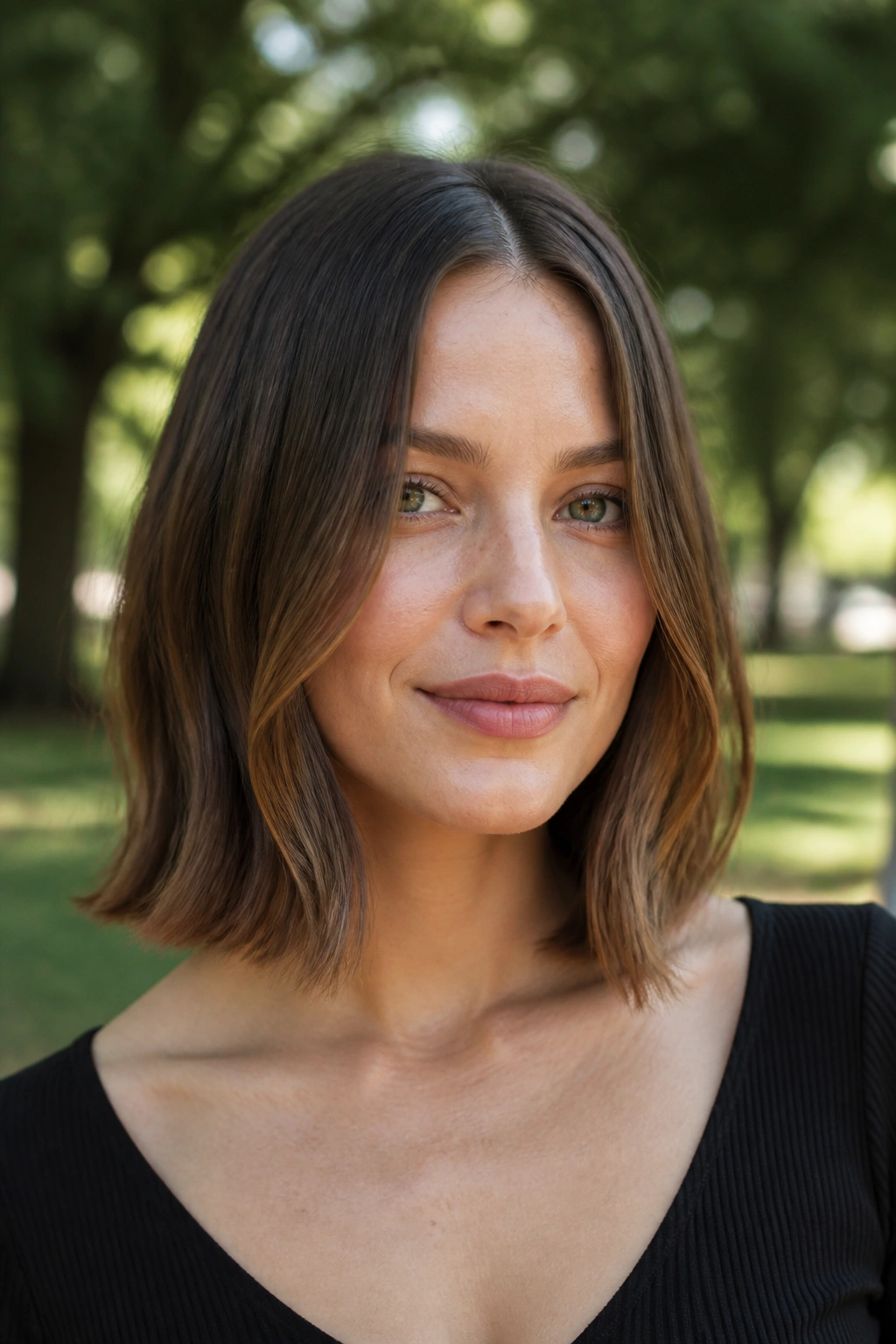
A center part can be tricky on a round face, but it’s not automatically a bad idea.
The trick is length. A mini lob that sits right at the collarbone or a little above it gives the center part enough vertical room to work. If the hair is too short, the middle part can make the face look wider. If the length is right, the part opens the forehead and stretches the face in a clean, even way.
This cut feels calm. Not dramatic. Good for people who want their hair to look tidy with almost no effort. The ends can be blunt or lightly layered, depending on how much movement you want. A tiny bend through the front pieces helps keep it from lying too flat against the cheeks.
If your hair naturally falls to one side, you may need a little training at first. A quick blow-dry with a flat brush usually fixes that. After a week or two, the part settles in and the whole thing starts to feel like yours.
19. Sculpted Crop with Long Top and Tapered Nape
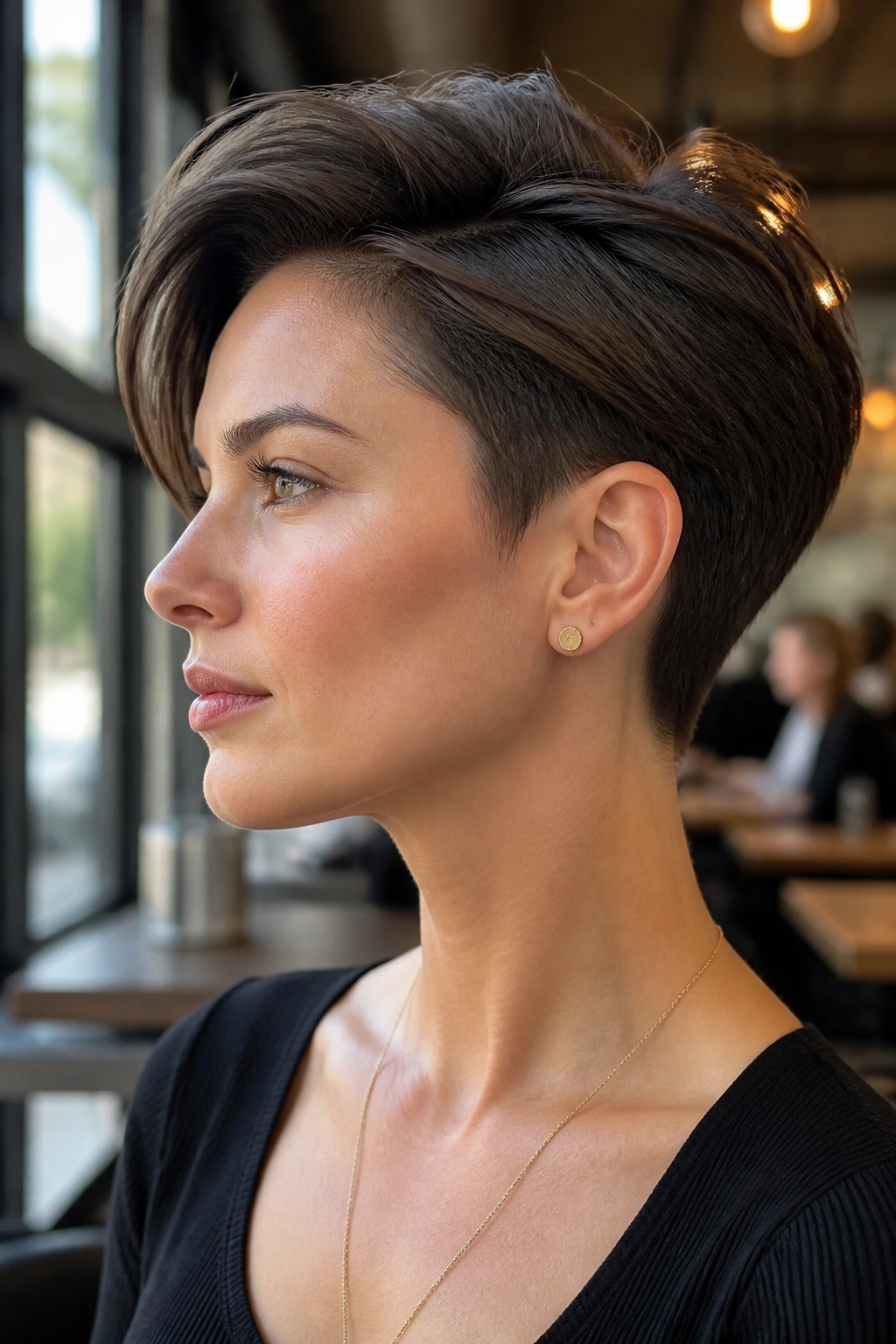
This is the short cut for someone who wants shape, not softness.
The top stays longer, sometimes 3 to 5 inches, while the nape and sides are tapered close enough to expose the neck and temples. That contrast gives a round face some needed direction. The eye sees height first, then length, then the face. Good order.
You can wear it brushed back for a sharper look, or piece it forward slightly without creating bangs. The difference is in the line, not a fringe. That keeps the forehead open and the profile clean.
A sculpted crop needs regular shaping because the silhouette loses its crisp edge as it grows. But when it’s fresh, it looks smart and a little bold. It’s one of those cuts that says the person wearing it knew exactly what they wanted. Which is a nice feeling, honestly.
20. The Blunt Bob with Airy Movement
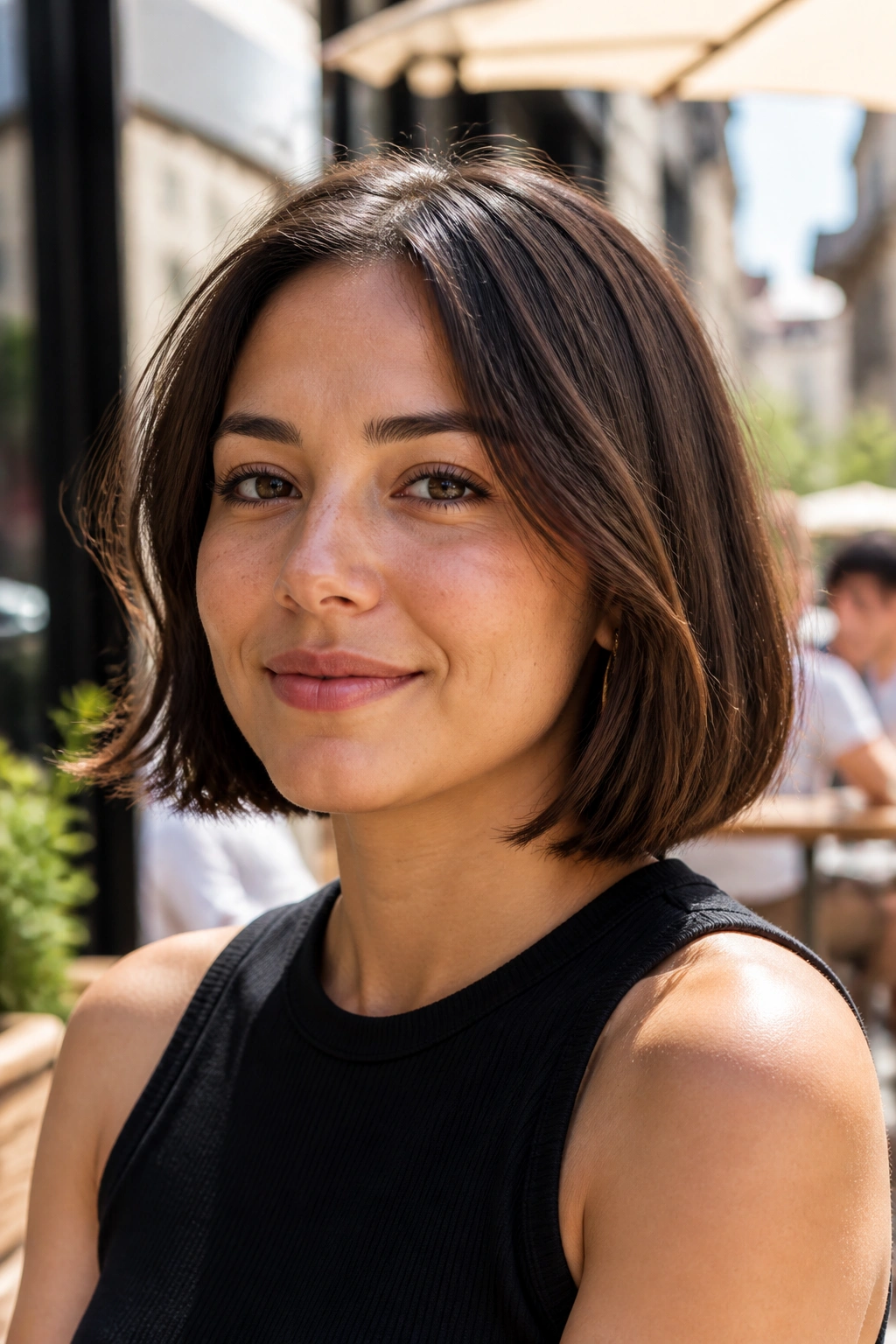
A blunt bob does not have to feel heavy.
On a round face, the trick is to keep the line straight but the finish soft. That means a blunt cut that lands near the jaw or just below it, plus a bit of airy movement through the ends so the shape doesn’t sit like a box around the cheeks. No bangs. No clutter at the forehead. Just a clean frame with enough motion to keep it from feeling rigid.
A deep side part can help here if you want a little extra length through the face. A center part works too, especially if the hair is sleek and the bob hits below the widest part of the cheek. The wrong version is one that stops exactly at the roundest point and flares outward. That’s the one to avoid.
If you want a low-maintenance cut that still feels neat on a workday and easy on a weekend, this is a strong finish. It’s not flashy. It doesn’t need to be. The shape does the talking.
