



Wavy hair has opinions. So do bangs.
A fringe that looks soft and easy in a salon chair can flip, split, or puff up once it meets real life, a humid bathroom, or a cowlick that refuses to behave. That’s why bangs for wavy hair are a different conversation from bangs on pin-straight hair. You are not just choosing a shape. You are choosing how much movement you want to keep, how much styling you can stand, and how gracefully the cut will grow out when you miss a trim by a couple of weeks.
The good news is that wavy texture gives you more options than people think. Some bangs sit right on top of the bend and look expensive with almost no work. Others need a blow-dry and a round brush, but they still reward you with softness that straight hair has to fake. The trick is knowing which styles fight your pattern and which ones borrow from it.
A smart fringe respects shrinkage, density, and the way your hair parts on its own. It also looks decent when you tuck one side behind your ear or let it dry with a little unevenness. That last part matters more than most glossy salon photos admit.
1. Curtain Bangs for Wavy Hair
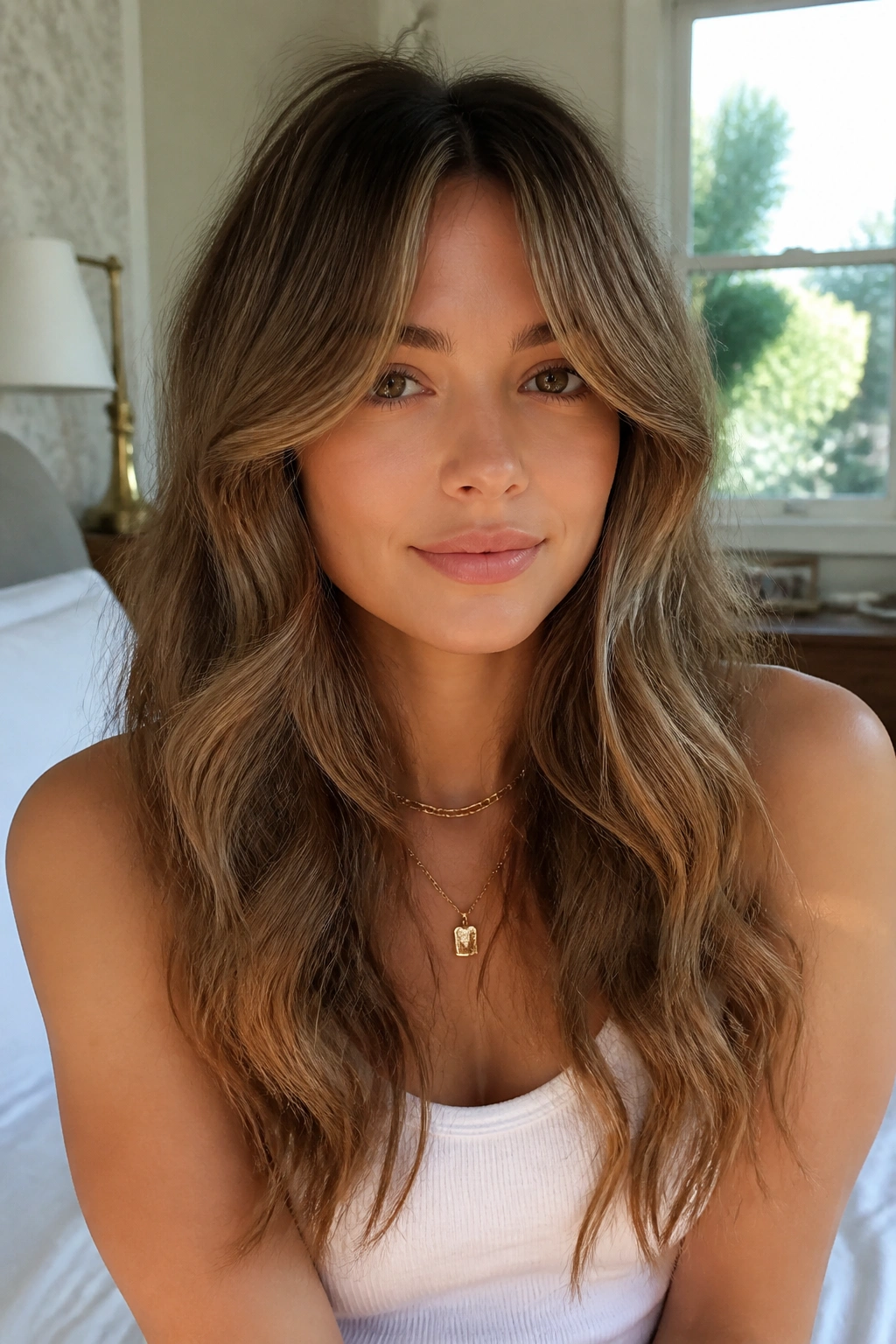
Curtain bangs are the easy yes. They split down the middle, fall away from the face, and let the wave do half the work. On wavy hair, that movement keeps them from looking too stiff, which is exactly why this style shows up again and again in real life instead of only in photos.
Why They Work
The center can start around the bridge of the nose, then taper longer toward the cheekbones or jaw. That extra length gives your waves room to bend instead of springing straight up. If your hair has a loose S-shape, curtain bangs usually settle fast and do not ask for a full styling ritual every morning.
- Ask for a soft center opening, not a hard chop.
- Keep the outer corners long enough to blend into face-framing layers.
- Dry the front pieces forward first, then split them once they’re about 80% dry.
Best move: leave them a little longer than you think you need. Wavy hair shrinks more than most people expect.
2. Bottleneck Bangs

Bottleneck bangs are the more tailored cousin of curtain bangs. They start narrow in the center, then flare out near the eyes and cheekbones, almost like the silhouette of a bottle neck. On wavy hair, that shape can look clean without feeling strict.
The reason they work is simple: the shortest part sits where the hair usually wants to bend anyway, so the fringe doesn’t collapse into a blunt shelf. If your waves are loose and your hairline has a few cowlicks, this shape gives you control without making the front of your head look heavy. It’s a nice middle ground when you want something deliberate but not fussy.
Practical application matters here. Keep the center piece just above the brows, then let the sides fall longer and softer. A small round brush can smooth the middle, but you do not need to iron every strand flat. That would defeat the point, and frankly, it looks less natural on wavy hair.
3. Side-Swept Fringe
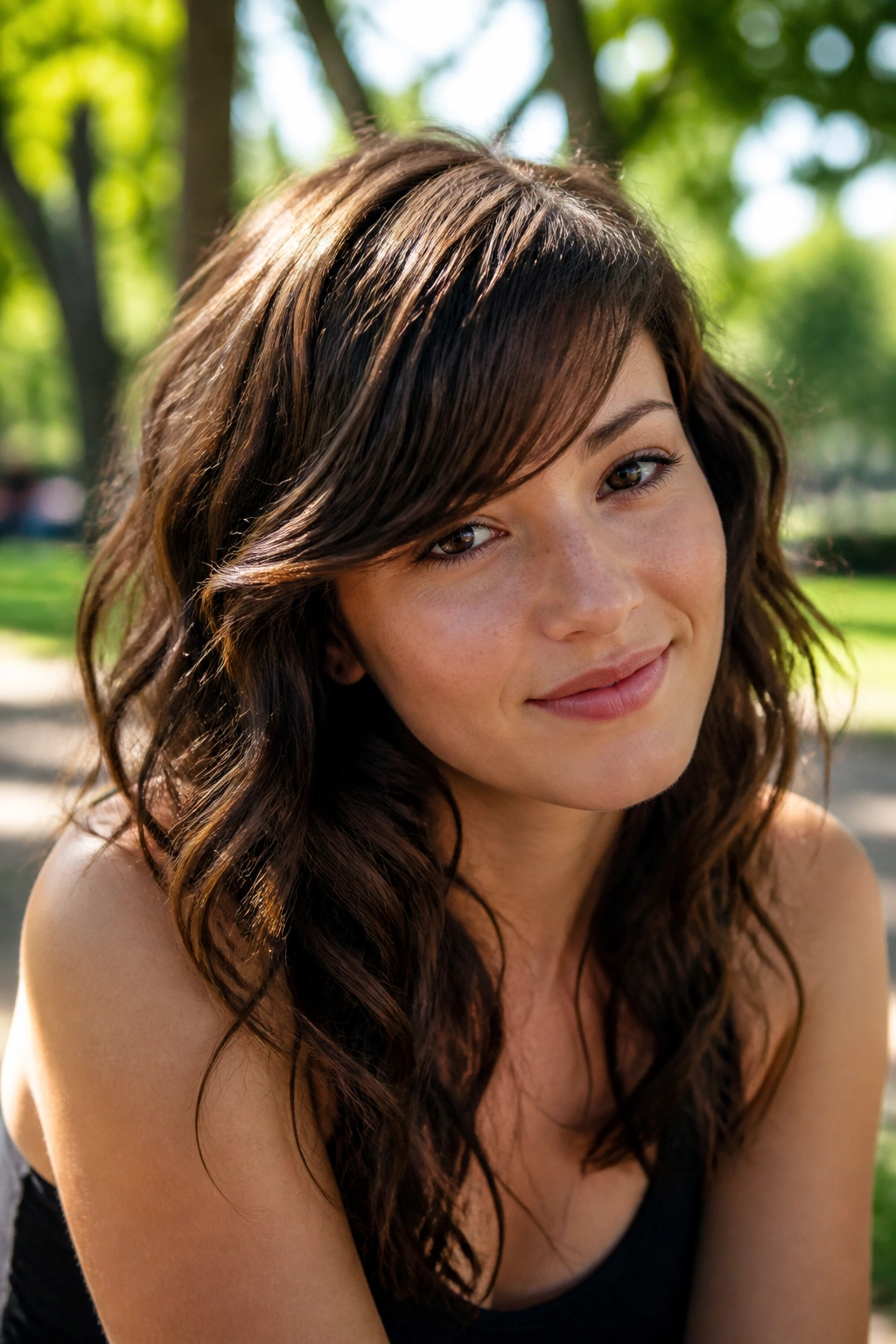
Why does a side-swept fringe look so good on waves? Because it follows the diagonal line your hair already likes to make. Instead of forcing both sides to behave the same way, you let one direction carry the shape, which is a relief if your roots lift on one side and lie flatter on the other.
That diagonal also makes this style forgiving. A side fringe hides a cowlick better than a straight-across bang, and it still looks intentional when it falls a little unevenly through the day. If you’re not in the mood for a styling project every morning, this is one of the easier answers.
How to Wear It
Dry the fringe toward the heavier side while it’s still damp. Pin it there for a few minutes if your wave wants to split back in the wrong direction. A light mousse at the root helps, but don’t load the front with product or it can go stringy fast.
A side-swept fringe is especially good when you want movement near the eyes without covering your whole forehead.
4. Eyebrow-Grazing Blunt Bangs
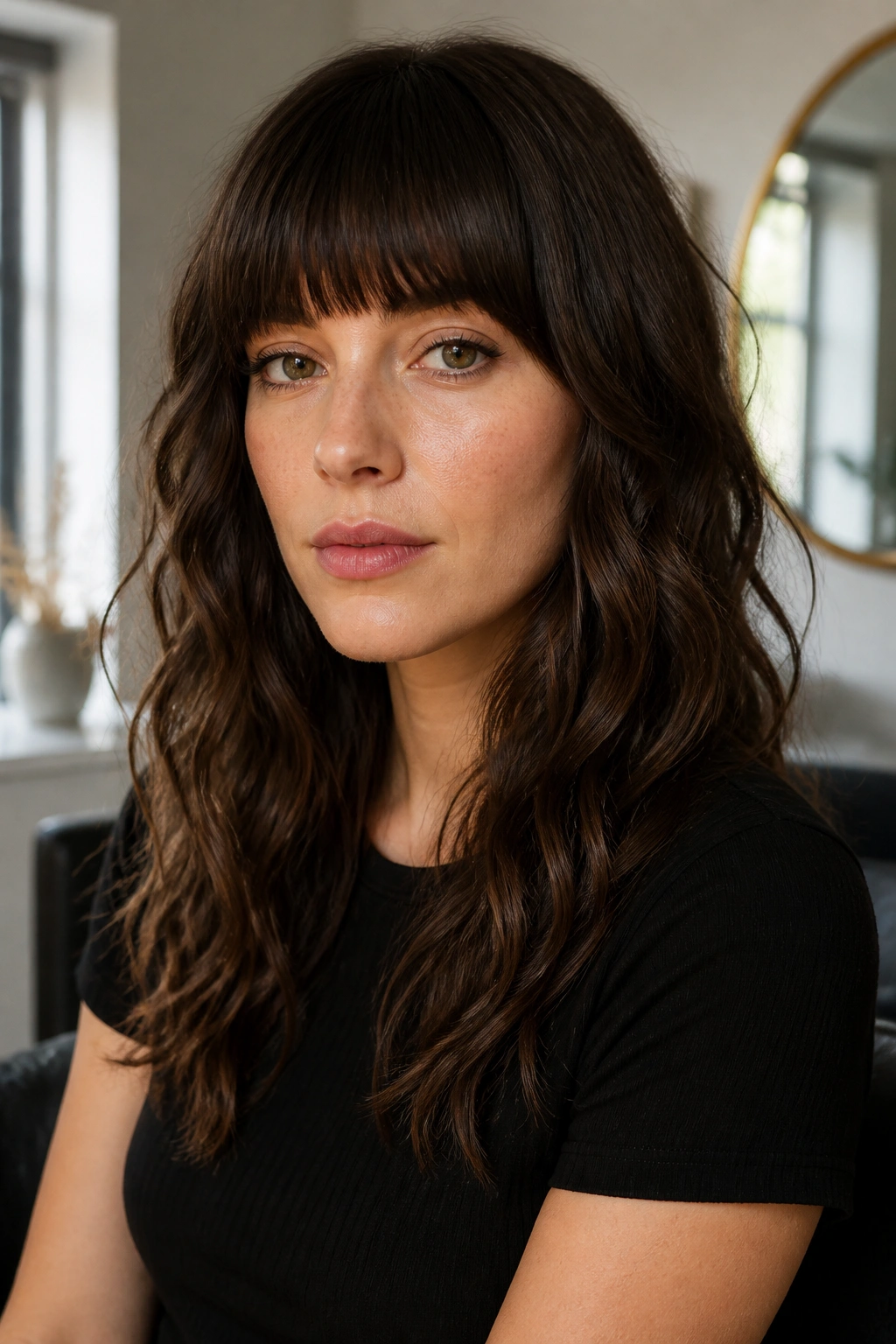
A crisp fringe can work on wavy hair. It just needs honesty about texture.
Picture a blunt line that kisses the brows, then softens a little at the ends so it doesn’t look like a ruler cut it. That sharper edge can be beautiful on medium-to-thick waves, especially if you like contrast. The wave in the rest of the hair makes the front look deliberate, not severe.
If your hair is dense, this cut gives the forehead a strong frame. If your hair is fine, it can look thin fast, so I’d be cautious. You want enough weight to keep the line visible when the hair dries and lifts. A stylist will usually point-cut the very ends so the fringe doesn’t feel boxy.
- Best on hair with enough density to hold a line.
- Needs a blow-dry in small sections.
- Looks strongest when the ends are softened by about 1/4 inch of texture.
The clean edge is the point. Let the rest stay wavy.
5. Wispy See-Through Bangs

Wispy bangs are the low-drama choice for people who want to test the waters. They leave forehead skin visible through the fringe, which keeps wavy hair from looking bulky at the front. That little bit of space matters more than it sounds like it should.
I like this cut for fine or medium waves because it doesn’t fight the natural lift at the roots. The bangs can bend, separate, and move around without turning into a hard block. They also grow out better than people expect. A tiny trim goes a long way, and the shape stays soft even when the cut is no longer fresh.
The trick is density. You want enough hair to make a fringe, but not so much that it turns into a curtain. A light mist of texturizing spray helps separate the pieces after they dry. And no, this is not the place to over-brush. That usually makes the fringe puff instead of float.
6. Shag Bangs

Shag bangs belong with wavy hair the way sneakers belong with jeans. They look like they were meant to be there.
What Makes Them Different
Unlike a neat fringe, shag bangs are broken up, layered, and a little messy on purpose. They blend into the rest of the cut instead of sitting on top of it like a separate piece. That is why they work so well with waves that already have grit and bounce.
A good shag fringe usually sits somewhere between eyebrow level and the top of the cheekbones, with uneven pieces around the edges. That unevenness is not a mistake. It’s the style.
Who Should Try It
If your hair has medium to high density and you don’t mind a textured finish, shag bangs can be a dream. They are especially useful if you air-dry a lot, because the shape still looks intentional when the wave pattern dries in its own direction. A little salt spray or lightweight cream is enough.
7. Birkin Bangs

Birkin bangs have that soft, lived-in feel that makes people think you spent less time styling than you actually did. On wavy hair, they look best when they sit a little longer and a little looser than a traditional straight fringe. That softness keeps the front from fighting your texture.
The shape usually grazes the brows and gets a touch longer at the edges. It is not a sharp curtain, and it is not a blunt line. It sits in the middle, which is why it works so well for waves that bend in different directions. If your hairline has tiny cowlicks near the temples, this style handles them without making a scene.
I’d ask for texture through the ends rather than a heavy full fringe. That leaves the bangs with enough air to separate naturally. A quick pass with a blow-dryer and a paddle brush is often enough. If you like hair that looks a little tousled even when it’s been done, this one earns its keep.
8. Choppy Piecey Fringe
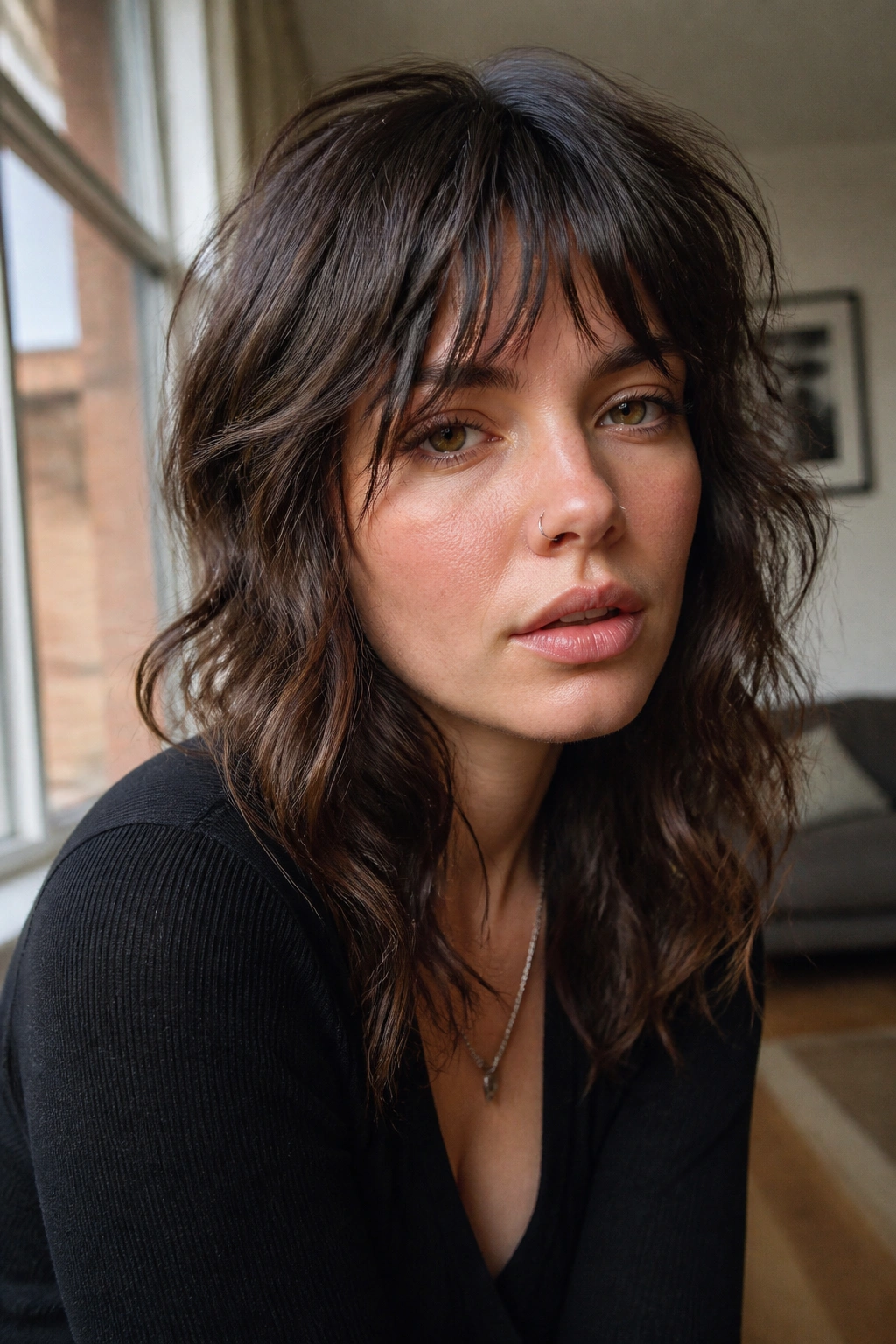
Choppy piecey fringe is for people who want movement first and symmetry second. The cut uses broken edges, so the waves can fall into small sections instead of one solid wall. That can look especially good if your hair has a touch of frizz, because the texture reads as part of the style rather than a problem to flatten.
A lot of straight-across bangs go wrong on wavy hair because they look too uniform. Choppy fringe fixes that by giving the front a more irregular line. You can wear it with shoulder-length hair, a shag, or even a bob that needs some edge. It’s a good choice if you like a bit of mess and do not mind using your fingers instead of a brush.
Best styling habit: scrunch the front lightly after the hair is 80% dry. That keeps the pieces separate. If you need polish later, twist one or two strands with a bit of cream, then leave the rest alone.
9. Micro Bangs

Micro bangs are bold. They also have a strange superpower on wavy hair: they make texture look graphic instead of soft.
Because the fringe sits high on the forehead, the wave pattern reads as shape rather than length. That can be very cool, but it also means the cut has to be honest about your hairline. If your waves spring up a lot when they dry, you need to leave a little extra length at the start. Otherwise the bangs can end up much shorter than planned.
This is not a casual maintenance cut. You will probably trim more often, and you will notice every tiny bend in the front. Still, micro bangs can be sharp and modern on thick waves, especially when the rest of the hair is longer and a little undone. The contrast is the point.
If you want to try them, start with a soft version that clears the brows by half an inch rather than slicing them super short. Safer. Much safer.
10. Crescent Bangs

Crescent bangs curve gently across the forehead, shorter in the middle and longer toward the sides. On wavy hair, that curved line feels softer than a blunt fringe and more polished than a loose curtain. It gives the face a frame without boxing it in.
I like crescent bangs for people whose waves create volume at the temples. The curve lets the front tuck inward a little, which can balance a wider forehead or a strong brow line. The cut also grows out in a forgiving way because the sides blend into the rest of the hair instead of stopping abruptly.
How to Get the Shape
Ask for a rounded outline, not a flat chop. The middle should sit around eyebrow level, while the outer pieces brush the cheekbones or just below them. Dry the fringe with a small round brush, lifting the center slightly and directing the sides out and down.
A crescent fringe feels controlled, but not stiff. That balance is the charm.
11. Feathered Fringe

Feathered fringe is one of those cuts that sounds old-fashioned until you see it on real waves. Then it makes sense. The softness at the ends keeps the fringe from turning into a solid block, and the lightness gives the hair room to move.
This style works best when the stylist removes bulk from the interior, not just the surface. That means the fringe can bend and separate instead of hanging as one heavy sheet. It’s a smart pick if you have medium-density hair and want something airy that still covers the forehead a bit.
You can wear feathered bangs with a bob, a layered lob, or longer hair. The style tends to look especially good when dried with the fingers first, then smoothed lightly with a brush near the ends. A tiny bit of shine cream on the tips helps the pieces stay soft. Too much, and the feathering disappears. That’s the line to watch.
12. Asymmetrical Bangs
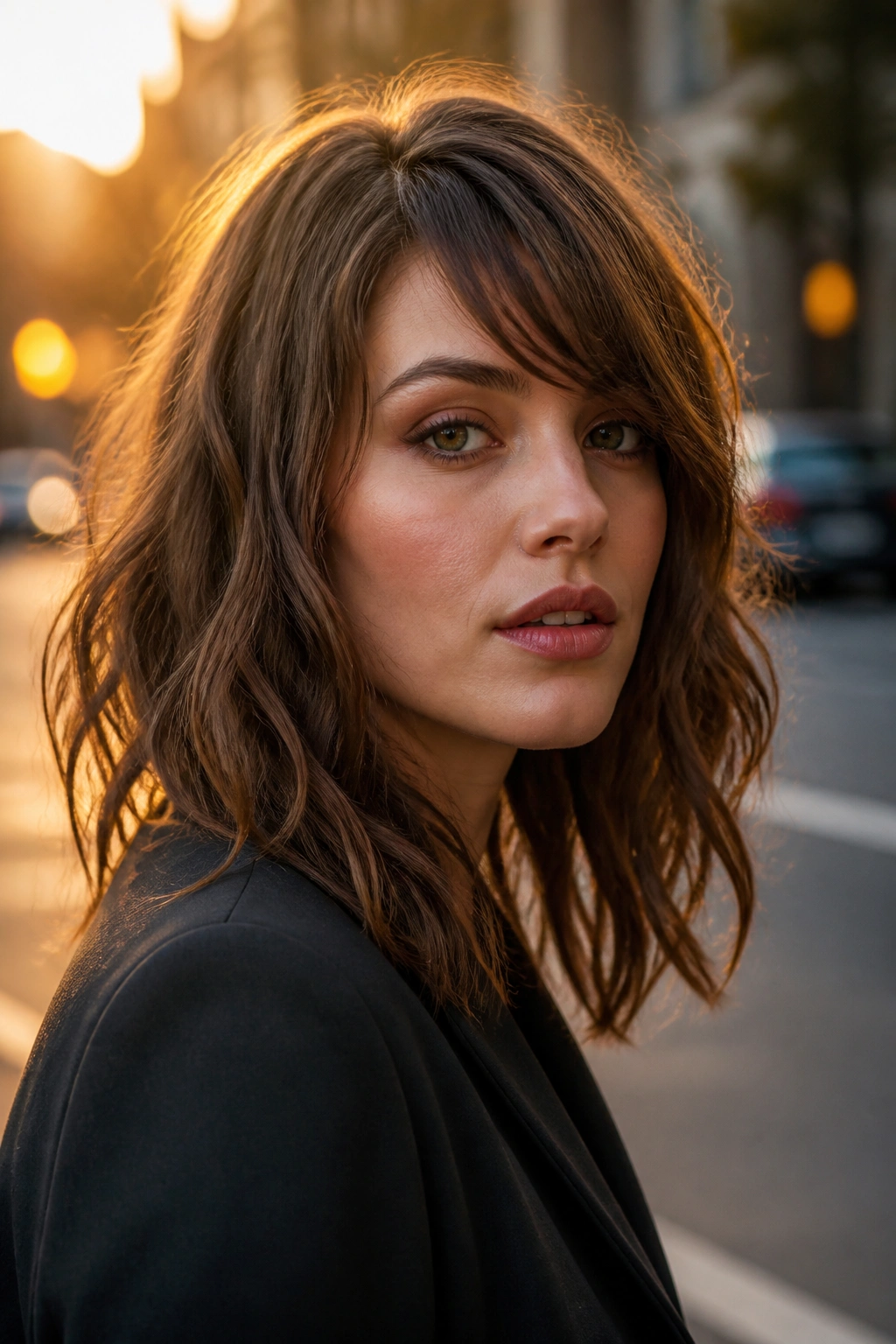
Asymmetrical bangs are underrated. One side sits a little shorter, the other drifts longer, and the whole thing feels slightly off-center in a way that flatters wavy texture.
Why does this work so well? Because waves are rarely perfectly even from left to right. Your hair already has favorite directions, so an asymmetrical cut makes peace with that. It can also soften a strong cowlick or a forehead that feels hard to balance with a straight fringe. The diagonal line pulls the eye instead of trapping it.
The style is especially good if you like a fringe that can be tucked back on one side. It gives you two looks without actually needing two haircuts. Ask for a gentle slope rather than a dramatic slash unless you want the fringe to feel more editorial. A little smoothing cream at the root can help the shorter side settle, but don’t overdo it.
13. Layered Face-Framing Fringe

Layered face-framing fringe is for people who want bangs but do not want the front of their hair to feel like a separate event. The shorter pieces blend into cheekbone and jaw layers, so the cut feels like a whole shape instead of a fringe dropped on top.
On wavy hair, that blend matters. It keeps the front from puffing out in one block and lets the wave pattern move through the haircut cleanly. If your hair is medium to long, this approach can be easier to live with than a full fringe because the grow-out stays pretty. You are not stuck with a visible line when the trim starts slipping.
A good version usually has the shortest pieces at the cheekbone or just below the brows, then angles down toward the jaw. That means you can air-dry it, twist it behind your ears, or throw it up and still look decent. I reach for this option when someone wants softness more than drama.
14. Brow-Skimming Broken Fringe

A brow-skimming broken fringe looks like a blunt bang that got a little air into it, and that’s exactly why it works on waves. The line is there, but it isn’t sealed shut.
This style is a nice middle path for thick hair that would feel too heavy in a wispy fringe and too harsh in a full blunt one. The edges are chipped just enough to let the texture show. You still get the frame across the forehead, but the cut breathes.
What to Ask For
Tell the stylist you want a fringe that sits on or just above the brows with lightly shattered ends. Not razored to death. Just softened enough to move.
Daily Wear
Let it dry mostly on its own, then smooth the center with a brush if needed. If the pieces separate, that’s fine. It should look a little undone.
This is one of those cuts that gets better once it stops looking fresh out of the salon.
15. Airy Bangs for Wavy Hair

Airy bangs are almost weightless. They leave space between the strands, so the forehead still peeks through and the fringe never feels like a helmet. For wavy hair, that matters a lot because texture can add visual bulk fast.
What I like about this style is how little it argues with the natural bend. You can wear it with a lazy air-dry, and it still looks intentional because the gaps are part of the design. If your hair is fine, airy bangs can give you the feeling of a fringe without sacrificing too much density. If your hair is thick, they keep the front from swallowing your face.
A light root lift helps, but keep the product light too. A pea-sized amount of mousse is often enough. Then let the bangs dry in the direction you want before touching them. If you keep fussing while they dry, they’ll split in odd places and the whole point is gone.
16. Rounded Full Fringe
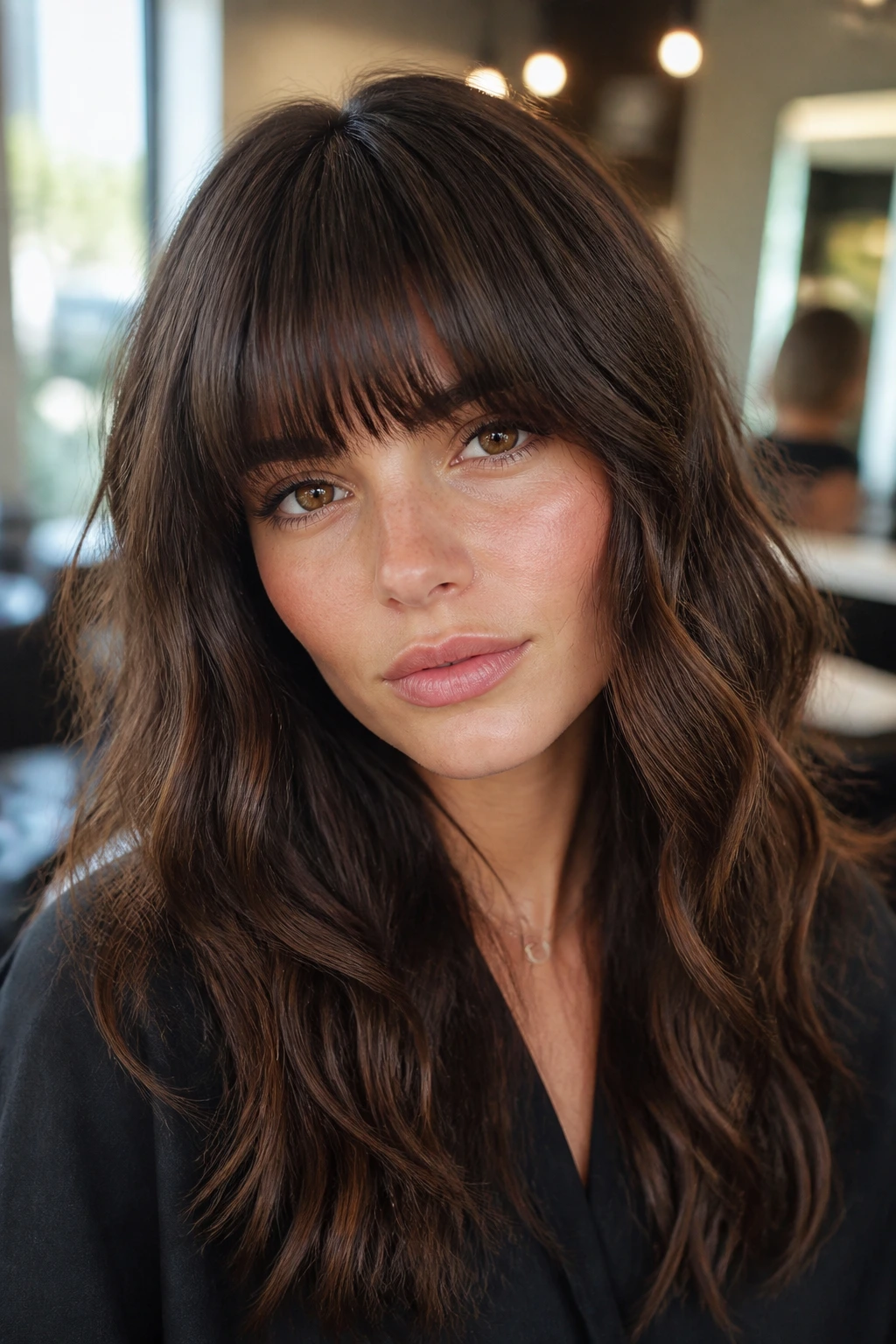
Rounded full fringe is the one to choose when you want structure. The cut curves gently from temple to temple, giving the forehead a soft arc instead of a straight wall. On wavy hair, it can look rich and polished if the density is there.
This is not a style for sparse hair. You need enough hair at the front to hold the line when the waves dry and lift. If you have medium or thick texture, though, it can be a beautiful match. The round shape works with the natural bend at the sides and keeps the center from looking too severe.
The styling part is where people get it wrong. You do not need to flatten every strand. Dry the roots first, using a brush to guide the curve, then let the ends keep a little movement. If the fringe lands a touch higher in the center than you planned, that can actually help the shape. A perfect circle is not the goal. A soft arc is.
17. Long Split Fringe
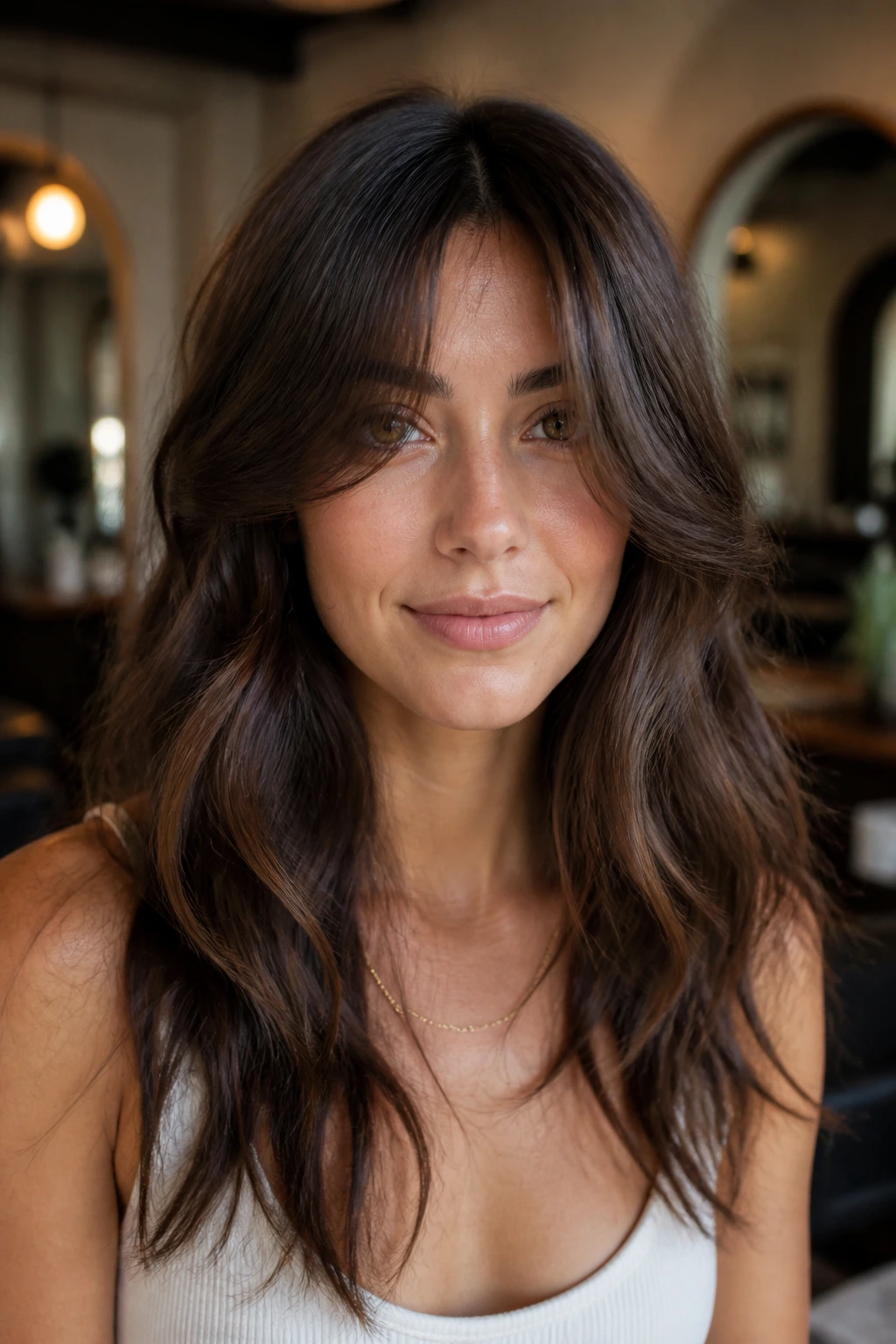
Long split fringe feels like curtain bangs with more weight. The center part stays clear, but the pieces are longer, heavier, and a little more grown-up. On wavy hair, that extra length gives the fringe a chance to bend naturally instead of kicking up at the brow.
This cut is great if you want the front to frame your face without shouting about it. The longer pieces can brush the cheekbones, skim the lips, or disappear into layers when you tuck them back. That flexibility is useful when you wear your hair up often. It also means the cut survives grow-out with less awkwardness.
I’d call this a good choice for medium-length hair and longer bobs. The fringe needs room to drape. If you keep the outer pieces a little longer than the center, the whole thing moves better. A soft twist of the front pieces while drying can keep them from separating too sharply.
18. Wolf-Cut Bangs

Wolf-cut bangs are messy in the best way. They sit inside a bigger, shaggier haircut, which gives the front of wavy hair a sense of lift without polish overload.
Why They Stand Out
Unlike a neat fringe, these bangs are disconnected on purpose. They can be short in the center, jagged at the edges, and blended into heavy layers around the crown. That makes them ideal if your waves are dense and a little wild.
The whole style leans into texture. It does not ask your hair to behave. It asks your hair to look cool doing its own thing.
Who Should Skip It
If you want a polished, even frame every morning, this is probably too messy for you. If you enjoy air-dried volume, rough texture, and a slightly rebellious finish, it can be a lot of fun. A little mousse at the roots and a diffuser on low speed usually do more good than a flat iron ever will.
19. Cheekbone Bangs

Cheekbone bangs are named for where they land, and that placement is the whole trick. The shortest pieces point toward the cheekbones, which gives the face a lift without covering the eyes or crowding the forehead.
On wavy hair, the shape is useful because the wave can curve right along the face. The front pieces don’t need to lie flat; they just need to bend in the right direction. That makes the style flattering on hair that has a bit of bounce near the roots. It also works well with layered cuts because the fringe can melt into the rest of the hair instead of reading as a separate strip.
If you like to tuck hair behind one ear, this is a strong pick. The shape still makes sense when it gets pushed aside. Ask for the front pieces to be cut so they hit the cheekbones at their longest point, then keep the center slightly shorter. The face gets framed, but never boxed in.
20. Soft Baby Bangs

Soft baby bangs are a gentler version of the ultra-short fringe. They sit above the brows, but the edges are broken up enough that the look feels playful instead of severe. On wavy hair, that softness matters because a hard line can become too sharp once the texture starts moving.
This style works best when the hair is thick enough to support a short cut without exposing too much scalp. The fringe should still feel light. Think small, airy pieces rather than a solid block. That way the waves can show through just enough to keep the front from looking heavy.
A short fringe like this needs regular trims. No escaping that. Still, if you like a bold shape and want your eyes to be the focus, it can be striking. I would keep the rest of the hair soft and textured so the contrast doesn’t feel cartoonish. The haircut should have balance, not a dare.
21. Dense Fringe with Internal Texture
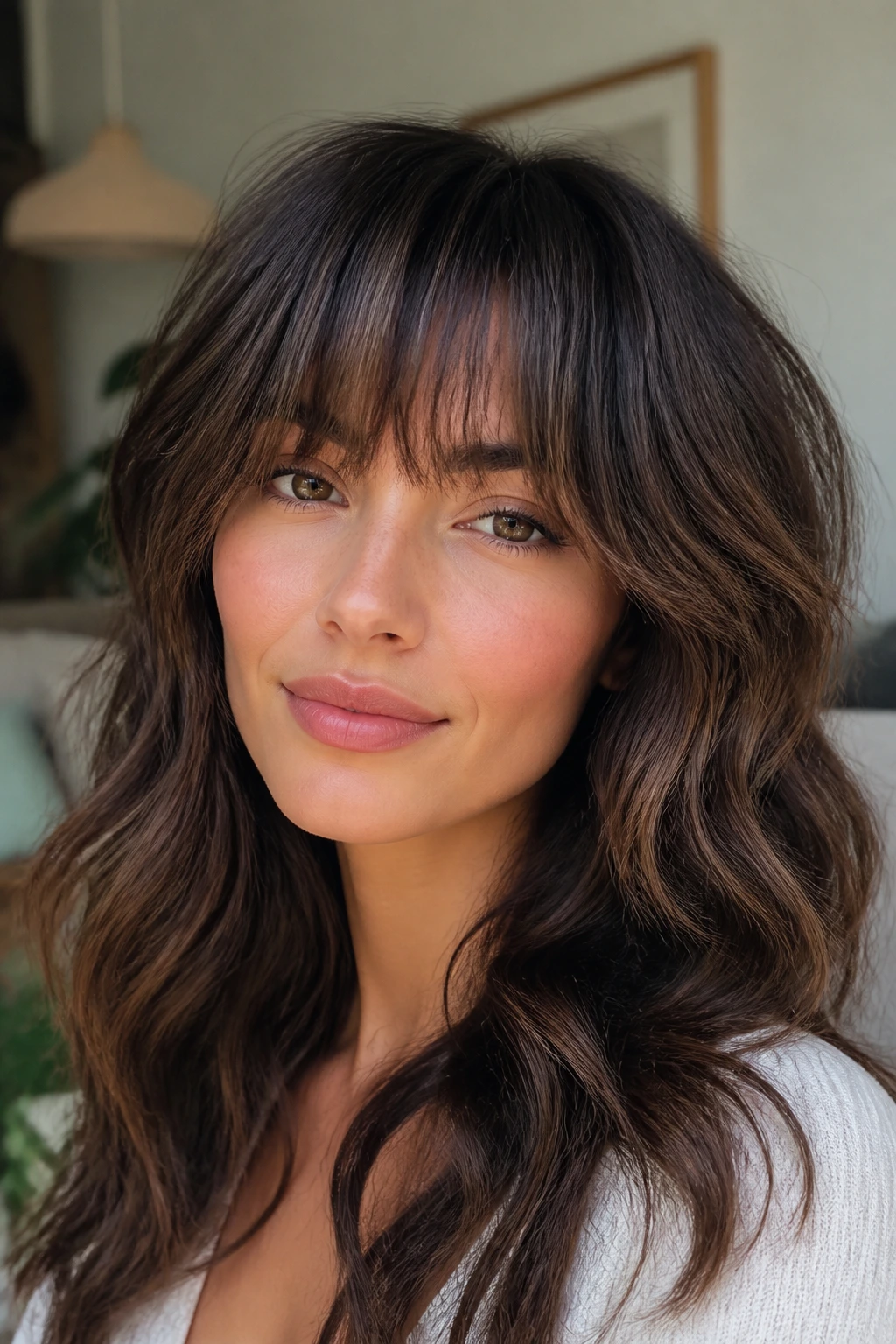
A dense fringe with internal texture sounds contradictory, and that’s why it works. You keep enough hair in the bang to make a visible line, but the inside is thinned so the waves can break apart instead of swelling into a solid shelf.
This is a smart move for thick wavy hair that tends to get heavy at the front. A stylist can remove bulk from the middle layers of the fringe while leaving the surface shape intact. The result feels fuller than wispy bangs, but lighter than a heavy blunt cut. That balance is useful if your hair grows fast and expands around the forehead after a few washes.
I like this version when the goal is control without flatness. It can be brushed forward, air-dried, or separated with a fingertip and still hold together. If you want bangs that look substantial on day one and still behave on day four, this is one of the better bets.
22. Grown-Out Curtain Bangs
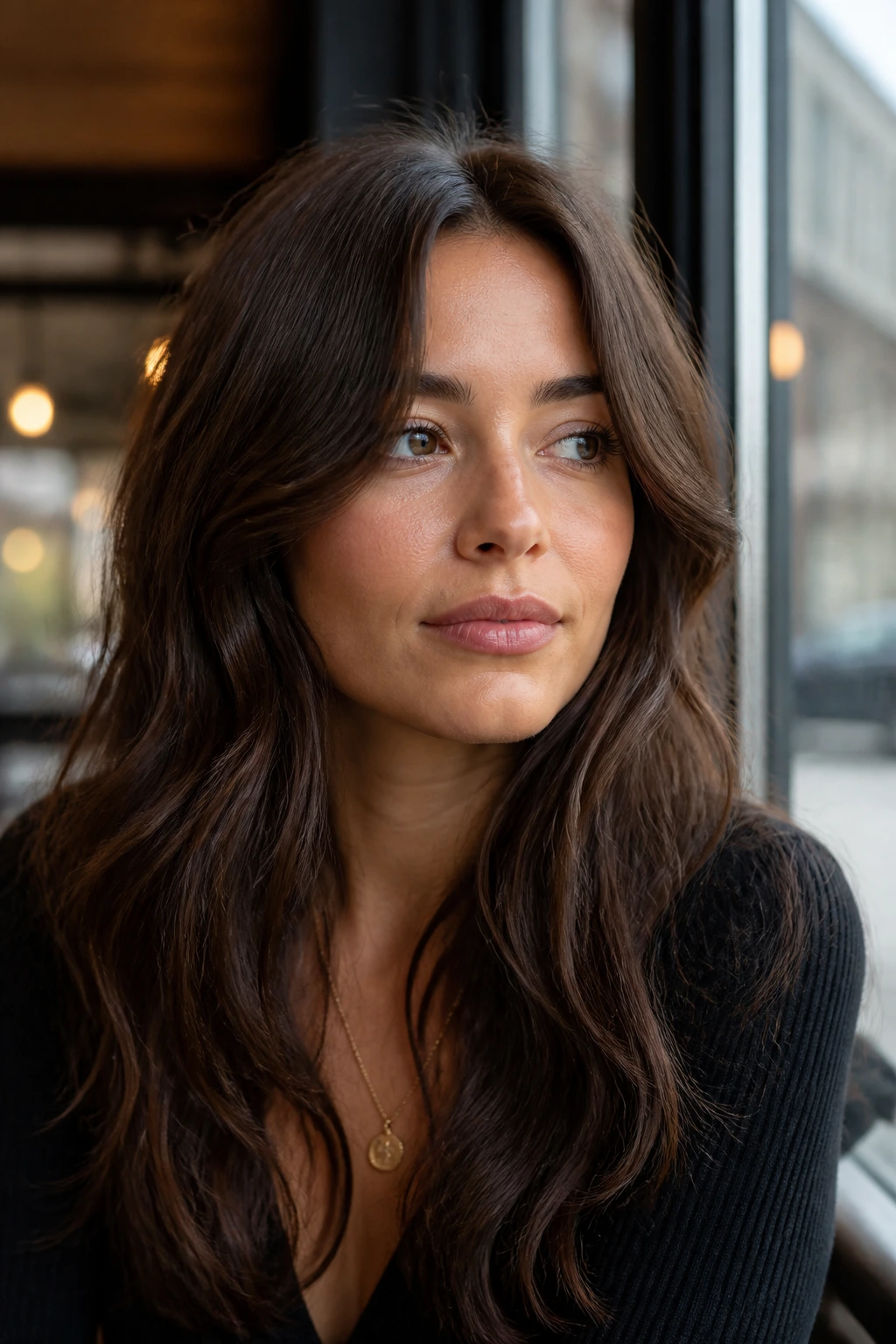
Grown-out curtain bangs are not a compromise. They are a style in their own right.
Most bangs look awkward when they start to grow out. Curtain bangs are the exception, and the longer version is even more forgiving on wavy hair. The center part stays open, the sides get softer, and the whole front starts blending into the rest of the haircut. That makes it easy to live with if you hate strict upkeep.
The cut usually sits below the cheekbones and may fall close to the jaw when dry. That extra length lets waves settle into their own pattern. It also means you can pin the pieces back, part them off-center, or let them sweep forward when you want more frame. The style has range. That’s the word for it.
If you’re nervous about getting bangs at all, this is the safest place to start. You get the face-framing effect without committing to a sharp line across the forehead.
23. Deep Side Fringe
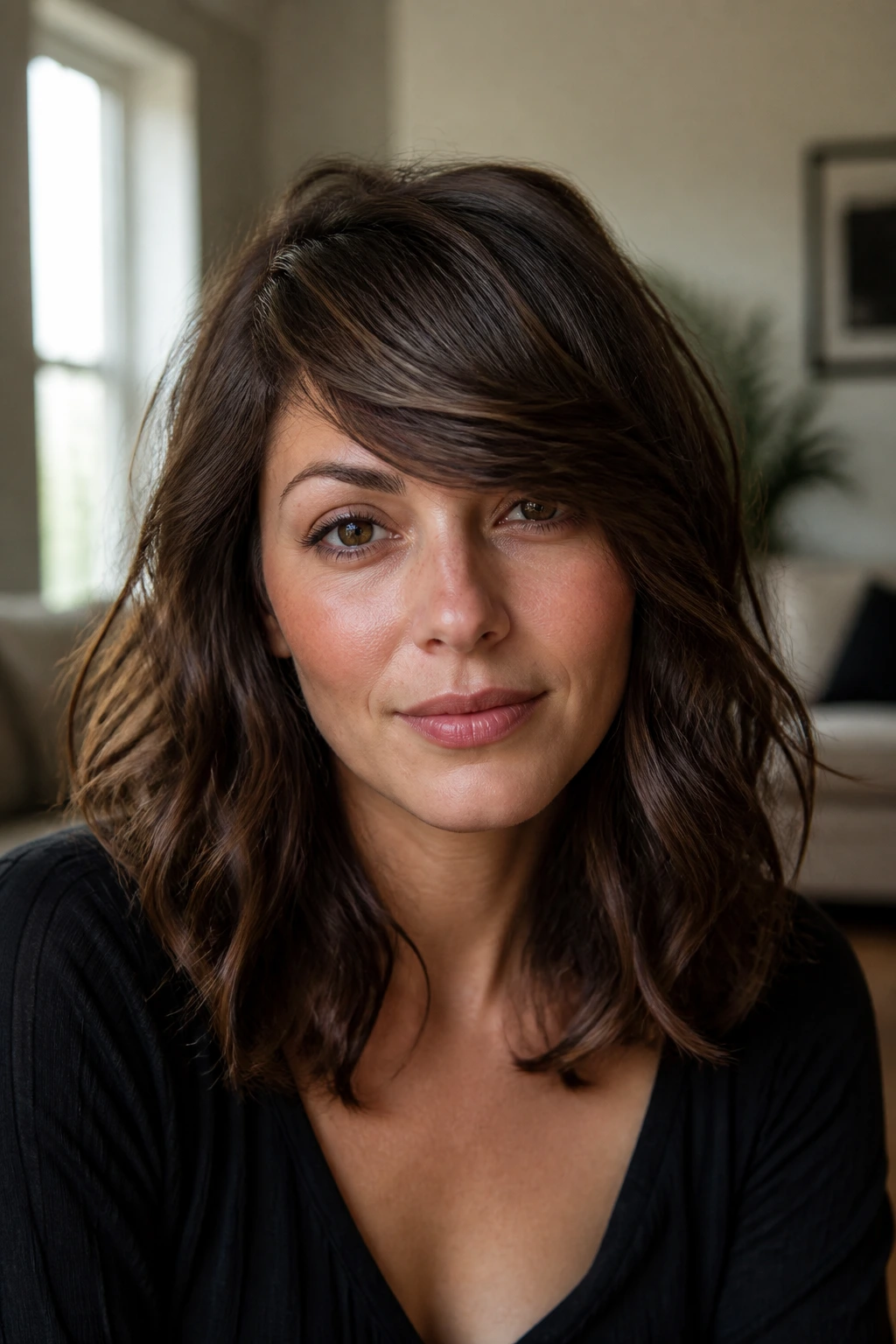
A deep side fringe is what happens when you commit to one direction and let it carry the whole look. The part starts farther over than a classic side sweep, so the fringe falls in one long curve across the front of the face.
That curve is friendly to wavy hair because it uses the pattern’s natural movement. The fringe can tuck into the waves on one side and sit fuller on the other, which creates shape without much effort. It’s also a lifesaver for people who have a stubborn cowlick near the hairline. A deep side part gives that cowlick a job instead of a fight.
Styling is straightforward. Blow-dry the front in the direction of the part, pin it there while it cools, and let the rest of the hair keep its texture. If you want a bit of polish, use a smoothing cream near the roots only. Too much product through the ends will make the side fringe hang limp, and nobody wants that.
24. Arching Fringe
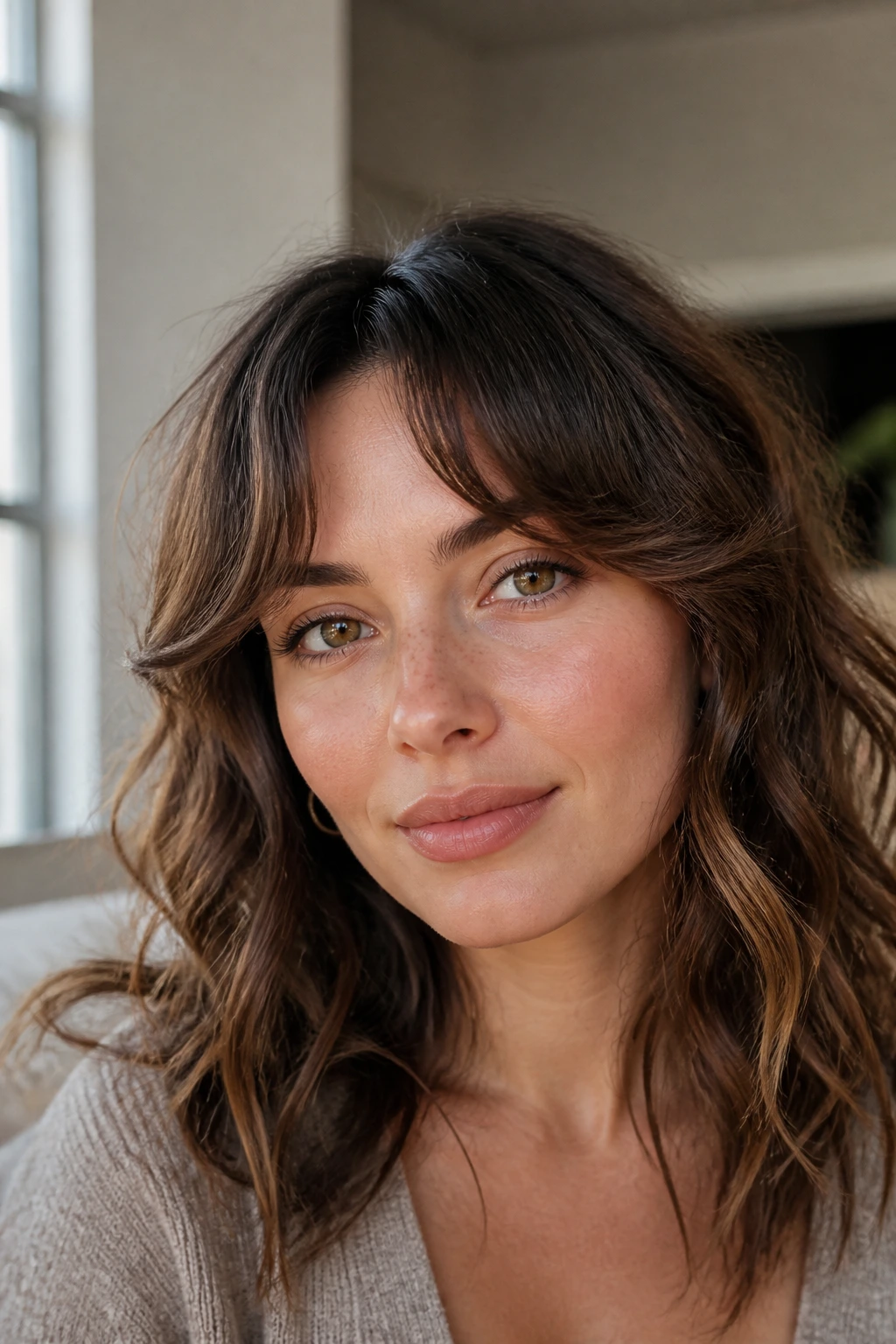
Arching fringe curves upward and then down, like a soft eyebrow shape translated into hair. It sounds subtle, and it is, but on wavy hair that curve can make the front look tailored without seeming rigid.
This style works nicely when you want to open the face but still have fringe coverage. The middle sits a touch shorter, while the sides angle down in a graceful arc. That keeps the shape from fighting the wave pattern near the temples. It also makes the forehead feel less boxed in than a full straight fringe.
What Makes It Different
The curve is more controlled than curtain bangs and less blunt than a classic fringe. That middle ground is useful if you like softness but want the bangs to read as a real haircut.
Best For
People with medium density, oval or heart-shaped faces, and waves that bend rather than spring wildly. A soft brush and a little heat at the roots go a long way.
25. Razor-Cut Bangs
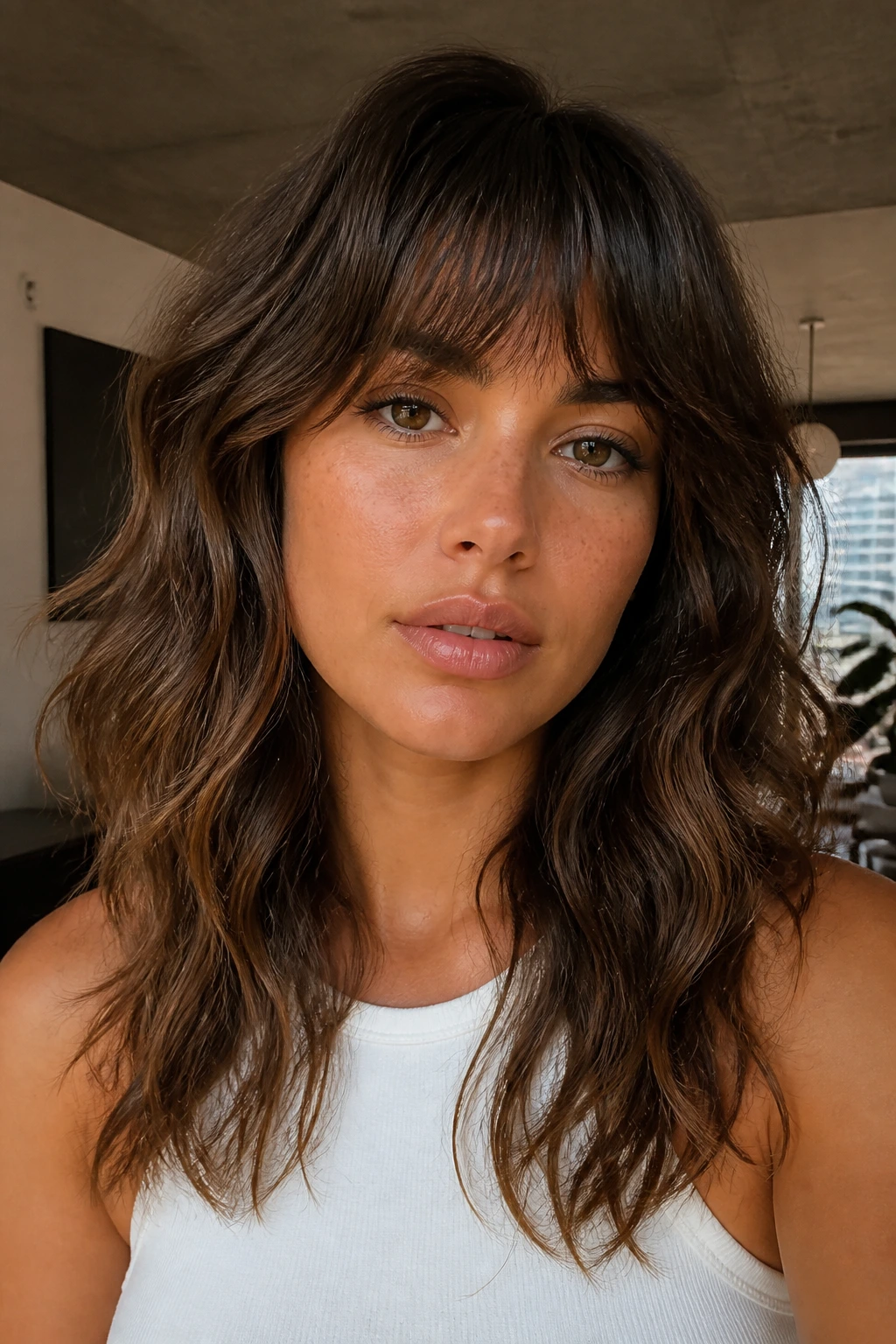
Razor-cut bangs are all about edge softness. A razor removes hair in a finer, more feathery way than blunt shears, so the fringe ends up looking airy and lightly torn instead of solid. On wavy hair, that softness can be a gift.
The cut lets the wave move through the fringe without creating a heavy line. It can be especially nice if your hair gets puffy at the front after drying. The razor gives the pieces a little space to breathe. That said, this is not the right choice for everyone. Very fragile hair can get frayed if it is cut too aggressively, so the hand doing the work matters.
I like razor-cut bangs when the goal is motion. They work well with lived-in layers, soft shags, and hair that is usually air-dried. If you keep them a bit longer, they’ll settle into the rest of the hair instead of sticking out as a separate section. That’s the sweet spot.
26. Retro Bardot Bangs

Bardot bangs have that soft, feminine sweep that feels a little retro without becoming costume-y. They’re longer in the center, lighter at the sides, and meant to frame the eyes in a relaxed way. On wavy hair, they look lovely because the texture gives the fringe a bit of body.
The key is volume at the roots, not stiffness. You want the front to rise slightly, then fall open around the face. That shape flatters wavy hair that has some lift near the crown and doesn’t mind a little bounce. If your waves are flatter at the top, a quick blow-dry with a round brush can help the fringe sit where it should.
This style pairs well with long layers and shoulder-length cuts. It feels dressed up without being fussy. A touch of dry shampoo at the roots on the second day can bring the shape back fast. Not glamorous. Just useful.
27. Low-Density Fringe

Low-density fringe is the answer when your hair is fine and you do not want the front to look thick or heavy. The fringe uses fewer strands, so the forehead still shows through a bit and the waves can break naturally without collapsing into one solid mass.
That restraint helps a lot on wavy hair with a soft texture. Too much hair in the bang can look flat at the root and puffy at the ends. A lower-density cut avoids that. It also gives you more control over how much forehead you want to show, which matters if you like a lighter look.
The style can be cut straight across or with a slight center split. Either way, it should feel airy. A bit of volumizing spray at the roots, then a gentle finger-dry, is often enough. I’d avoid heavy oils near the front. They make fine bangs separate in a sad, stringy way.
28. Soft Center-Part Fringe
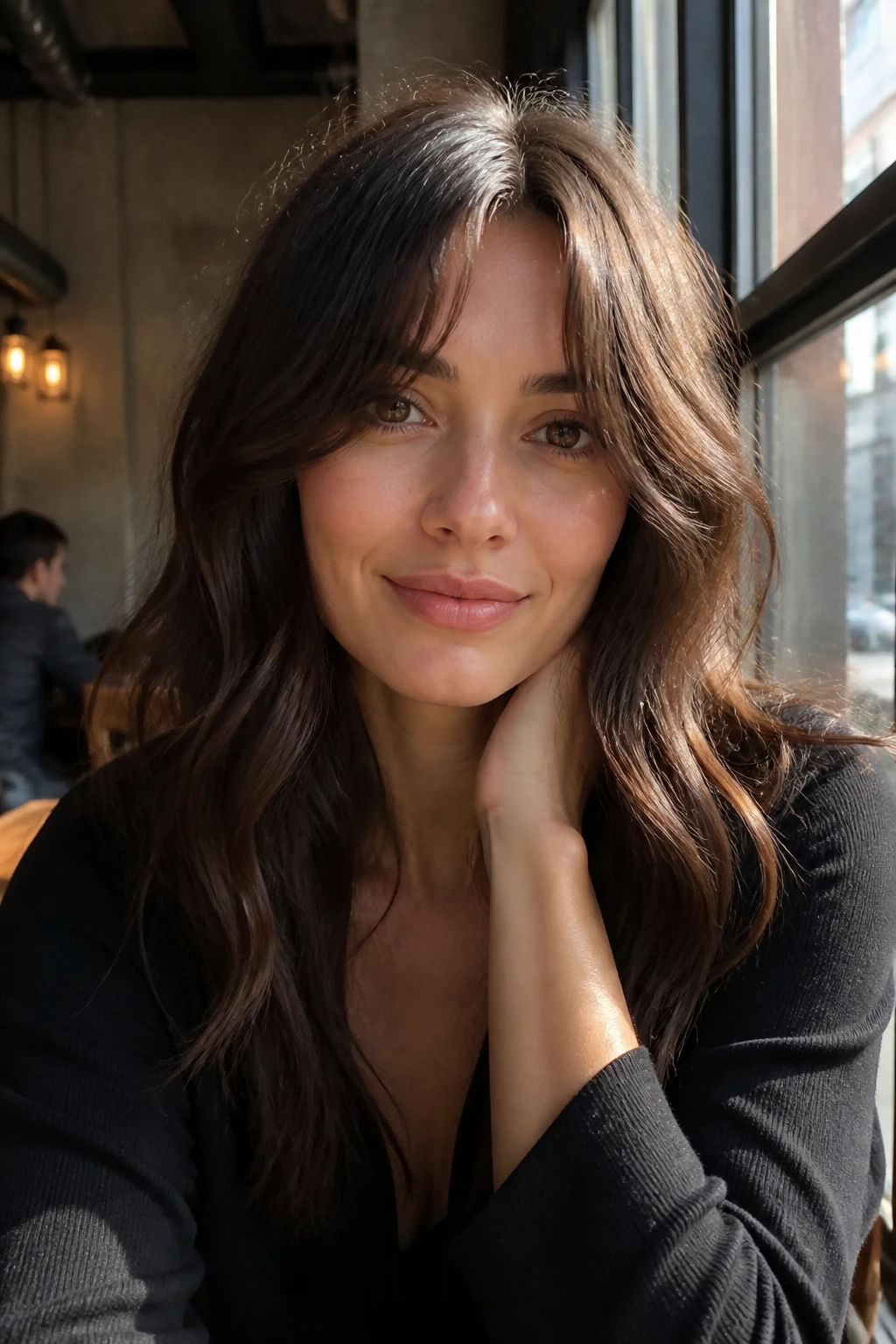
A soft center-part fringe is for people who want the idea of bangs more than the maintenance of a full fringe. The part stays open down the middle, but the pieces are shorter and lighter than a classic curtain bang, so the front still frames the face.
On wavy hair, this cut is forgiving. The split lets the wave fall where it wants, while the shorter pieces around the eyes keep the shape from disappearing completely. It’s a nice choice if you like hair that can be pushed aside, tucked behind the ears, or left to do its own thing. The style has a lot of flexibility, which is useful if your mornings are not exactly leisurely.
A stylist should keep the center soft and the sides slightly longer, with enough blend that the cut doesn’t look like two separate front pieces. If the front dries too flat, a quick bend with a round brush can wake it up. Nothing dramatic. Just enough shape to keep it alive.
29. Flippy 70s Fringe
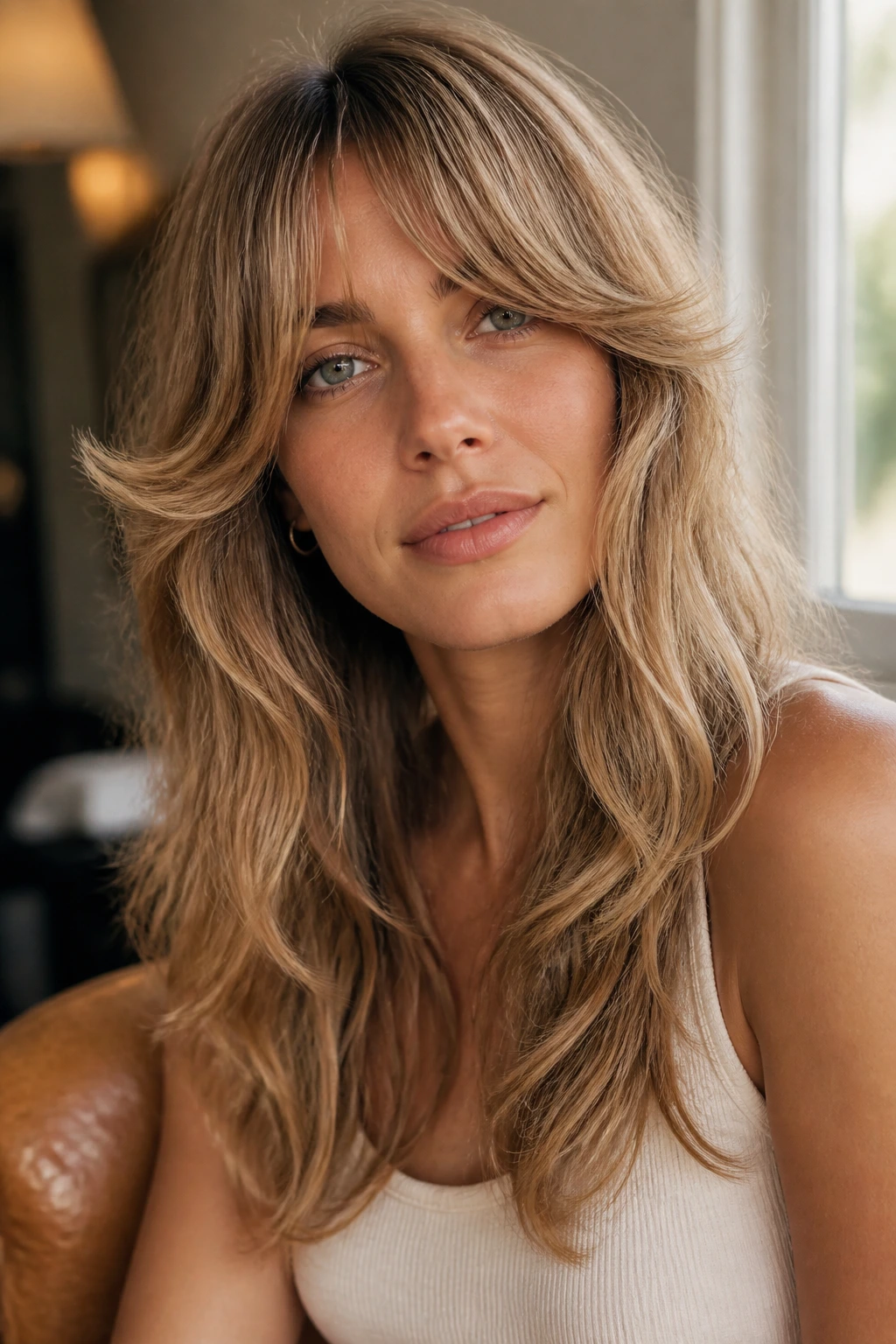
Flippy 70s fringe brings movement back to the ends, and wavy hair usually wears that well. The fringe starts with a soft frame near the brows, then turns outward a little at the tips, which gives the whole haircut a breezy, lifted feel.
This is a good option if you like a little nostalgia but do not want a heavy retro look. The flip keeps the bangs from sitting flat against the forehead, and the waves add extra bounce through the sides. It can look especially good with layers around the cheekbones and collarbone because the whole haircut moves in the same direction.
You do need a bit of styling to encourage that outward bend. A round brush or medium-barrel brush works better than a flat brush here. Use low heat, roll the ends away from the face, and let them cool before you touch them. The shape hangs on longer that way. Small detail. Big difference.
30. Long Curtain Bangs with Layers

Long curtain bangs with layers are the closest thing to a universal peace treaty for wavy hair. They keep the center open, stretch the sides long enough to blend into the haircut, and keep the whole front from feeling overcut. If you want bangs but hate the feeling of a hard line, this is a strong place to land.
The layered approach helps the waves fall in soft ribbons instead of one thick sheet. That means the fringe can dry naturally and still look like it was planned. It also gives you options. You can wear the bangs loose, push them out of your face, or tuck them into the rest of the layers without a sharp break showing.
I’d choose this if you want movement more than drama and you like a cut that still looks decent on lazy days. Ask for the shortest point around the nose or upper lip, then let the sides drop into cheekbone and jaw layers. It is easy to wear, easy to grow out, and hard to hate.
Final Thoughts
Wavy hair does not need bangs that behave like straight hair. It needs shapes that leave room for bend, shrinkage, and a little personality. That’s the difference between a fringe that looks charming at breakfast and one that sends you to the mirror after every wind gust.
If you’re torn between two options, pick the longer one first. A little extra length gives you room to see how your wave pattern settles, and it’s far easier to trim down than to wait for a too-short fringe to recover. That small bit of caution saves a lot of regret.
The best cuts here are the ones that work with your texture on a normal Tuesday, not only after a salon blowout. That’s the standard I’d use.
