



A good ponytail can save a morning. A bad one can make you feel like your head is being pulled backward all day.
That is why simple ponytails for everyday wear matter more than people give them credit for. They are not the “I gave up” style. When they’re done well, they look clean, relaxed, and pulled together without acting like your hair has to be in a formal mood.
A hair tie does more than hold hair back. The height, the tension, the part, and even the texture at the roots change how the whole style sits on your face. Freshly washed hair tends to slide; second-day hair usually grips better. Fine hair often needs a little dry shampoo or texture spray at the roots, while thick hair usually behaves better with two thin elastics instead of one chunky one that stretches out by lunch.
The small details are the whole trick. A 1-inch wrap around the base hides a basic elastic. A soft brush gives you a smoother finish than your fingers, but fingers leave a looser look that feels less stiff. Tiny choices, honestly. They change everything.
1. The Low Sleek Ponytail
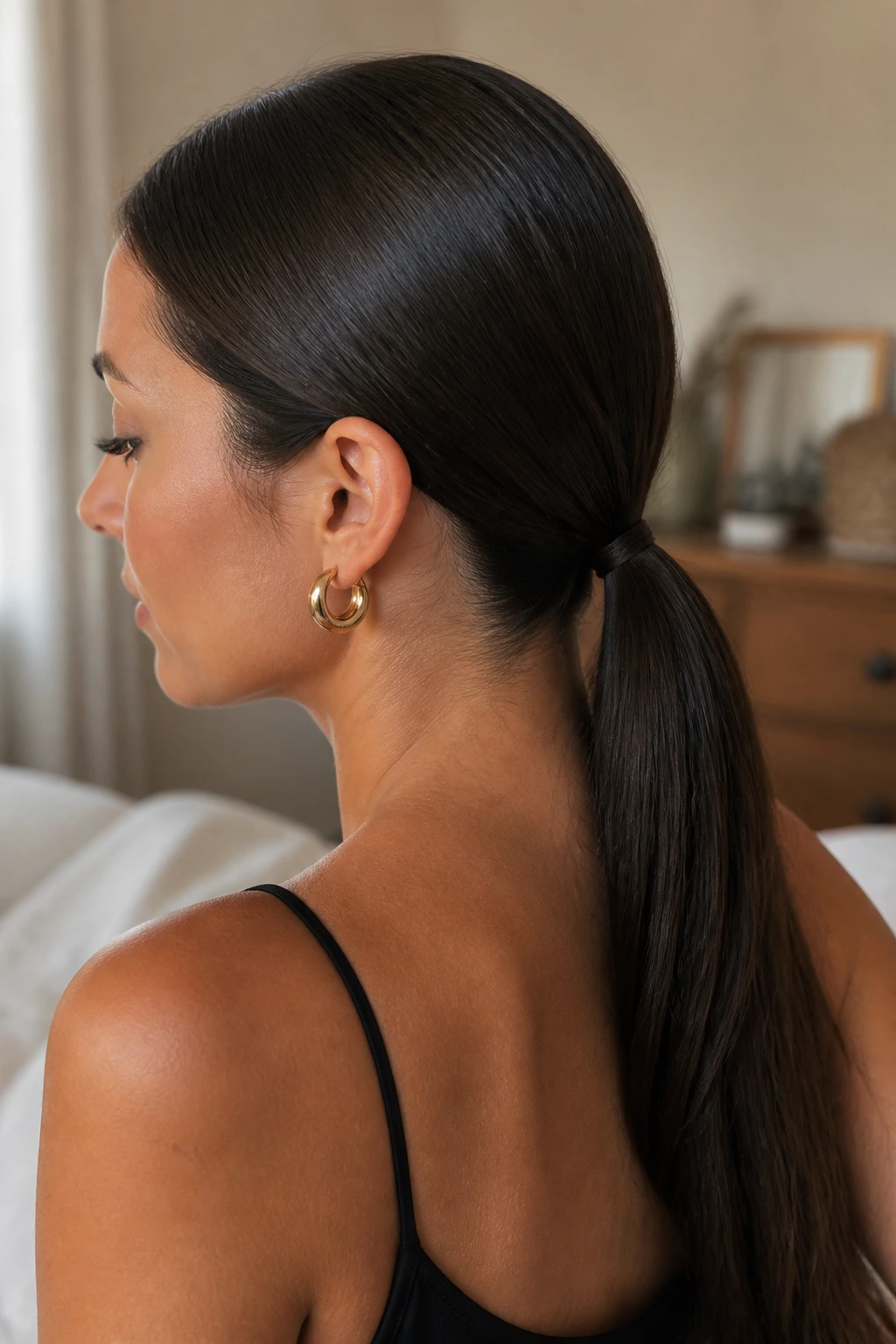
The low sleek ponytail is the one I reach for when I want hair off my face but still want the line to look deliberate. It sits at the nape, follows the shape of the neck, and has a calm, tidy feel that works with a T-shirt or a blazer.
Why It Works
A low ponytail keeps the weight close to the head, which means less tugging and less bounce when you move around. It also leaves the top flatter, so the style looks cleaner than a high tie that can puff up at the crown.
A pea-size bit of smoothing cream helps a lot here. Brush from the ears back first, then from the crown down, so you do not trap bumps in the top layer.
- Best for straight, wavy, or lightly layered hair
- Sits nicely with a center part or a soft side part
- Needs one snag-free elastic and one bobby pin for the wrap
Tip: Mist the brush, not the hair, if flyaways are your problem. That keeps the finish controlled without making the roots wet and stringy.
2. The Mid-Height Ponytail

This is the ponytail that looks normal in the best way. Not too sporty, not too polished, not trying to make a speech. It lands around the middle of the back of the head and tends to flatter a lot of face shapes because it keeps some lift without pushing everything to the top.
The sweet spot is usually just above the line where your ears end. Go too high and it can feel peppy. Go too low and it can slump. Right in the middle, the style gets a little movement and still stays practical for errands, work, or a long day at school.
It also behaves well with medium-thick hair that needs control but not a hard, tight hold. If your hair is heavy, put the elastic in, then lift the ponytail slightly at the base and smooth the top with your palm. That tiny lift keeps it from looking dragged down.
3. The High Wrapped Ponytail
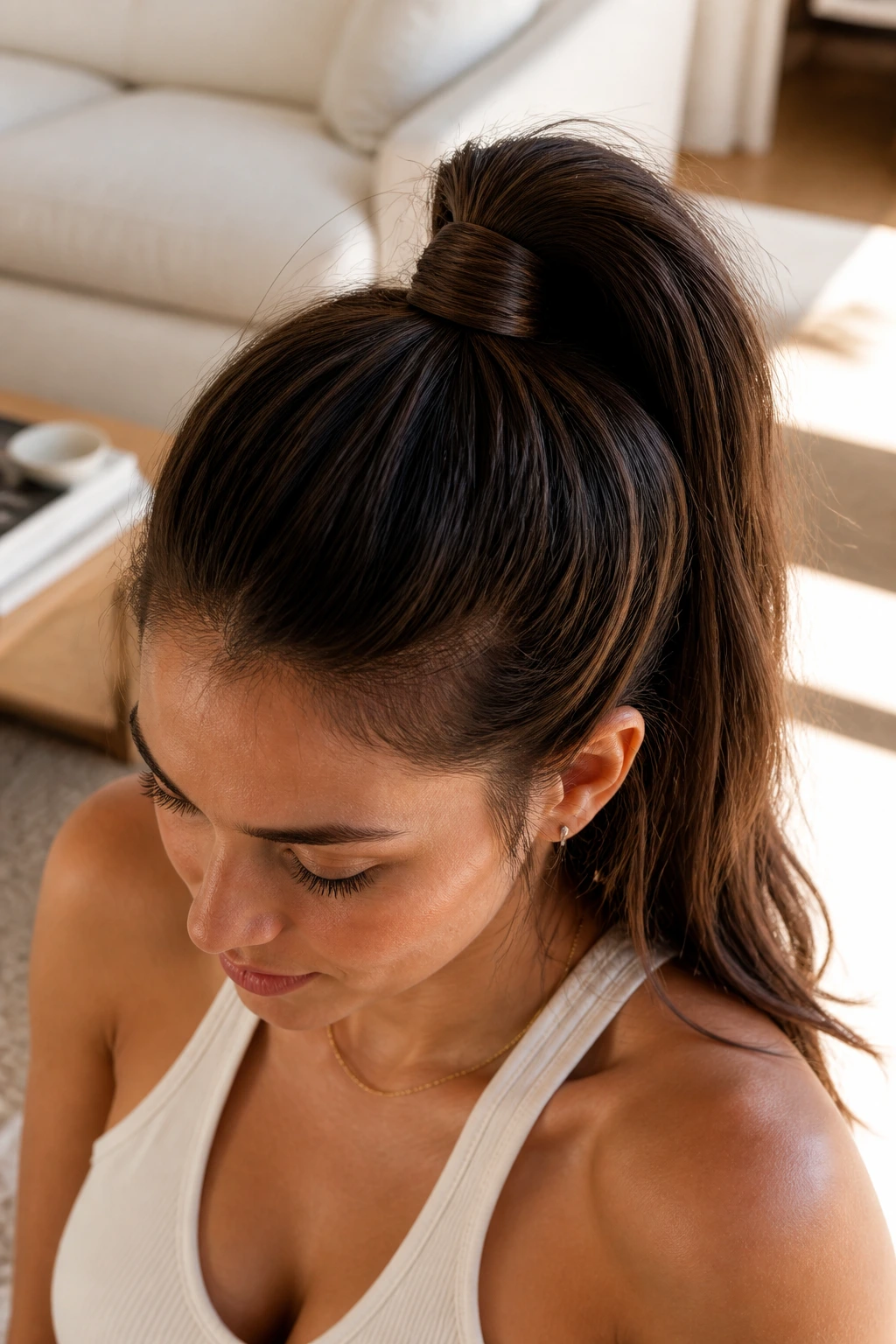
Why does a high ponytail change your whole face so fast? Because it lifts the eye line, shows more of the cheek area, and makes the hair feel lighter the second it leaves your shoulders. It sounds basic. It never looks basic when the base is neat.
The wrapped version is the one I prefer for everyday wear. Leave out a skinny strand from underneath the ponytail, wrap it once or twice around the elastic, then pin it under the base. That tiny move hides the band and makes the style look finished without adding fuss.
How to Wear It
Keep the crown smooth, but do not flatten it into the skull. A little lift at the roots keeps the ponytail from looking harsh. If your hair is fine, a quick puff of texture spray at the roots gives the tie something to hold onto. If your hair is thick, use a second elastic underneath the first one so the ponytail does not sag by midday.
4. The Side-Swept Ponytail

When the middle part keeps fighting back, a side-swept ponytail can feel like a small truce. It pulls the hair over one shoulder or just behind one ear, which softens the whole shape and gives a little curve that a straight-back style does not.
This one is especially useful when you are growing out bangs or dealing with front layers that never stay still. The side placement lets those pieces fall in a more natural way instead of asking them to behave like a rigid frame.
- Place the tie just below one ear for the softest line
- Leave one temple piece loose if the front feels too severe
- Use a flat clip or a bobby pin under the hair if the side keeps slipping
The style has an easy, lived-in feel. It is quieter than a high ponytail and less severe than a tight low one, which is why it works so well on normal days when you want your hair to look cooperative without looking overworked.
5. The Bubble Ponytail
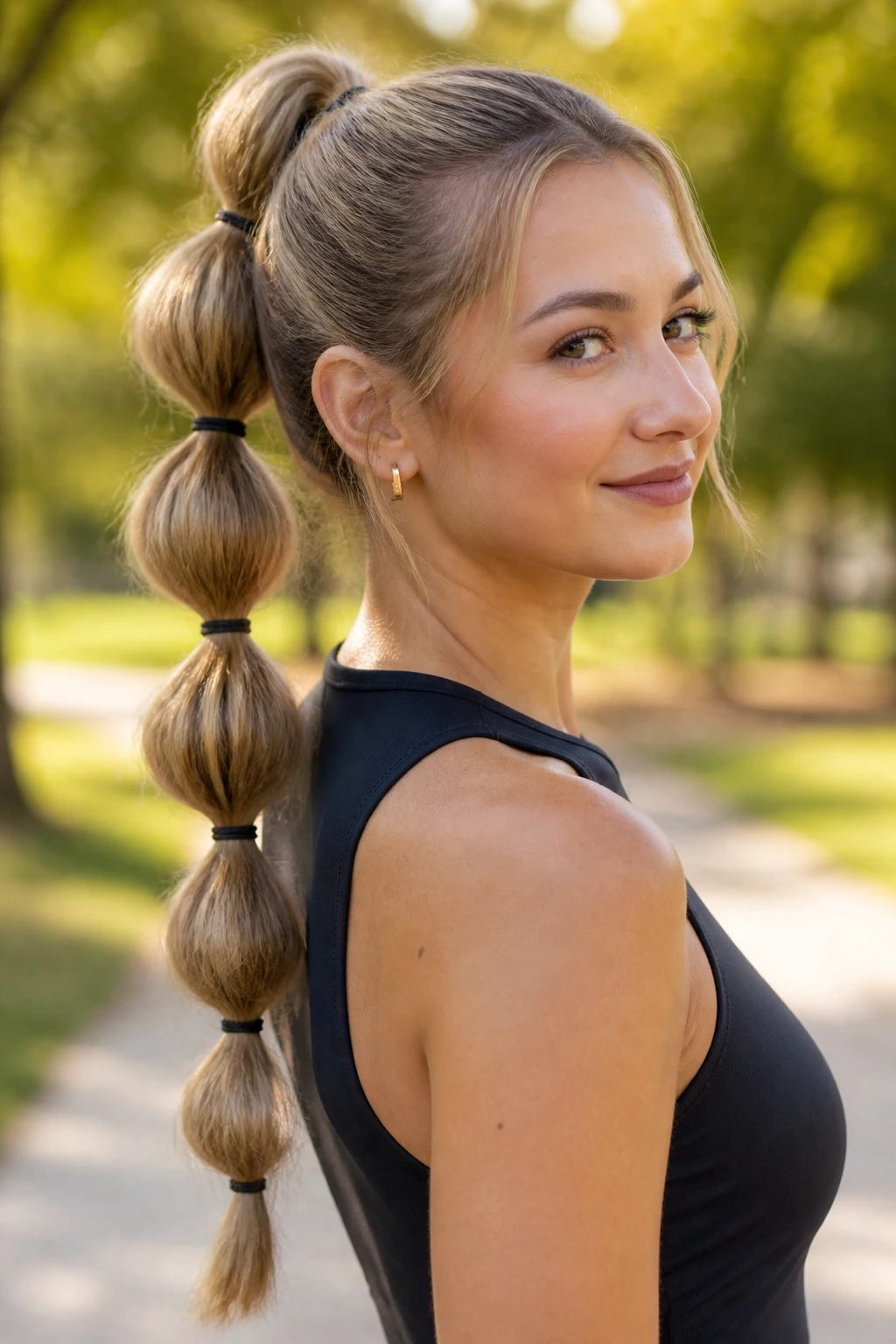
The bubble ponytail looks playful, but it is also a decent answer for long hair that falls flat halfway through the day. You secure one ponytail, then add small elastics every 2 to 3 inches down the length and puff each section slightly so it forms rounded “bubbles.”
Keep the bubbles loose. That part matters more than people think. If you pull each section too tight, the style starts looking strained, not bubbly, and the ends lose the softness that makes the whole thing feel easy.
Clear elastics are the quiet choice here, though matching hair ties work fine if you want the lines to disappear. Long hair, thick hair, and even slightly layered hair can all handle this style, though very short layers may poke out unless you smooth them with a little cream first.
The nice thing is that it does not need perfect symmetry. A slightly uneven bubble reads as relaxed, which is exactly where this ponytail works best.
6. The Braided Ponytail
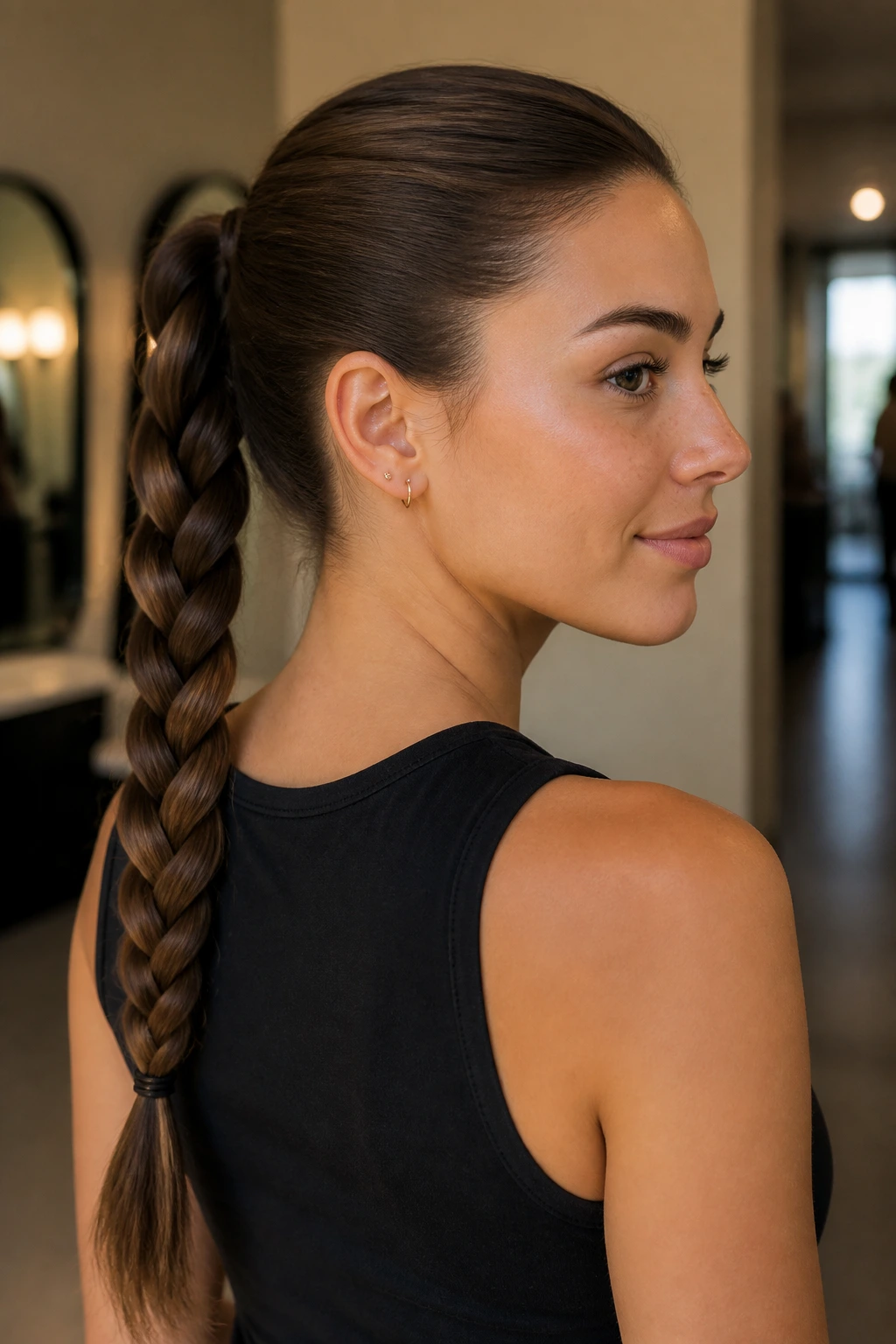
Unlike a plain ponytail, a braided tail keeps the ends from turning into a frizz ball by noon. Once the hair is tied back, you braid the tail itself and secure the end with a tiny elastic, which gives the style more structure without asking for fancy hands.
A simple three-strand braid is enough. You do not need to make it complicated unless you like the look of a fishtail or a rope braid. The point is to keep the length neat and stop the ends from tangling against your coat, bag, or chair back.
This one tends to work especially well on hair that is a little layered or a little dry at the ends, because the braid keeps the pieces together. If your hair slips apart easily, mist the tail with a light texturizing spray before you braid. That gives the strands more grip.
It is an ordinary style with a useful job: hold the hair back and keep it from turning into a mess.
7. The Twist-Back Ponytail
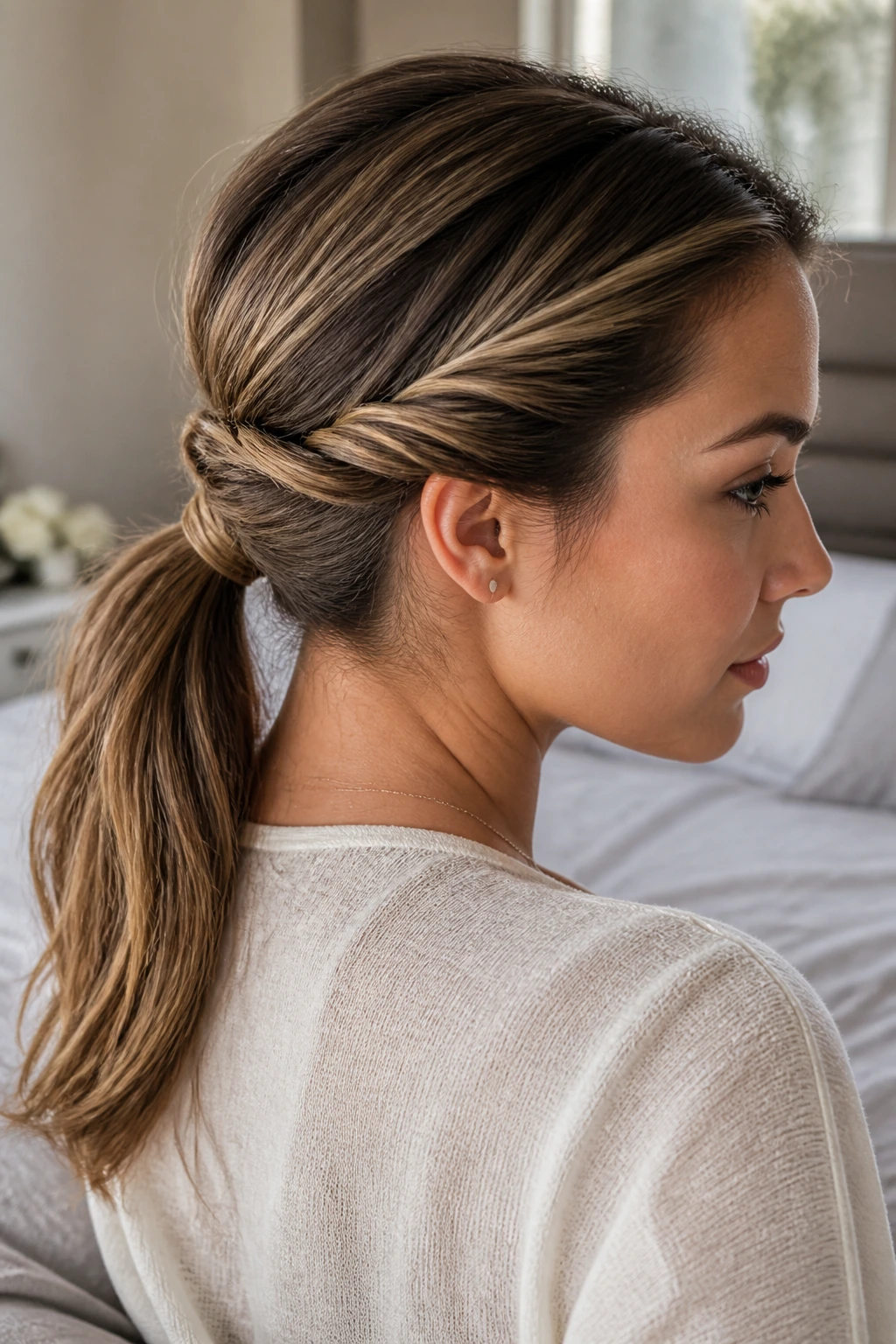
A twist-back ponytail is what happens when you want the front of your hair to look controlled but do not want the full commitment of a braid. You twist two small side sections back toward the nape, then gather everything into one ponytail.
Why It Helps with Face-Framing Layers
Those front pieces that keep slipping loose have somewhere to go. Instead of fighting them, you tuck them into the twist. The style looks neat from the front and still stays soft around the face, which is a good balance if blunt pulling never feels comfortable.
- Use two twists, one on each side, for the cleanest result
- Secure each twist with a small pin before gathering the rest
- Works well on hair that has grown-out bangs or shorter layers
Small warning: twist toward the back, not upward. Upward twists create little ridges at the temples, and those are hard to hide once the ponytail is in place.
8. The Loose Wavy Ponytail
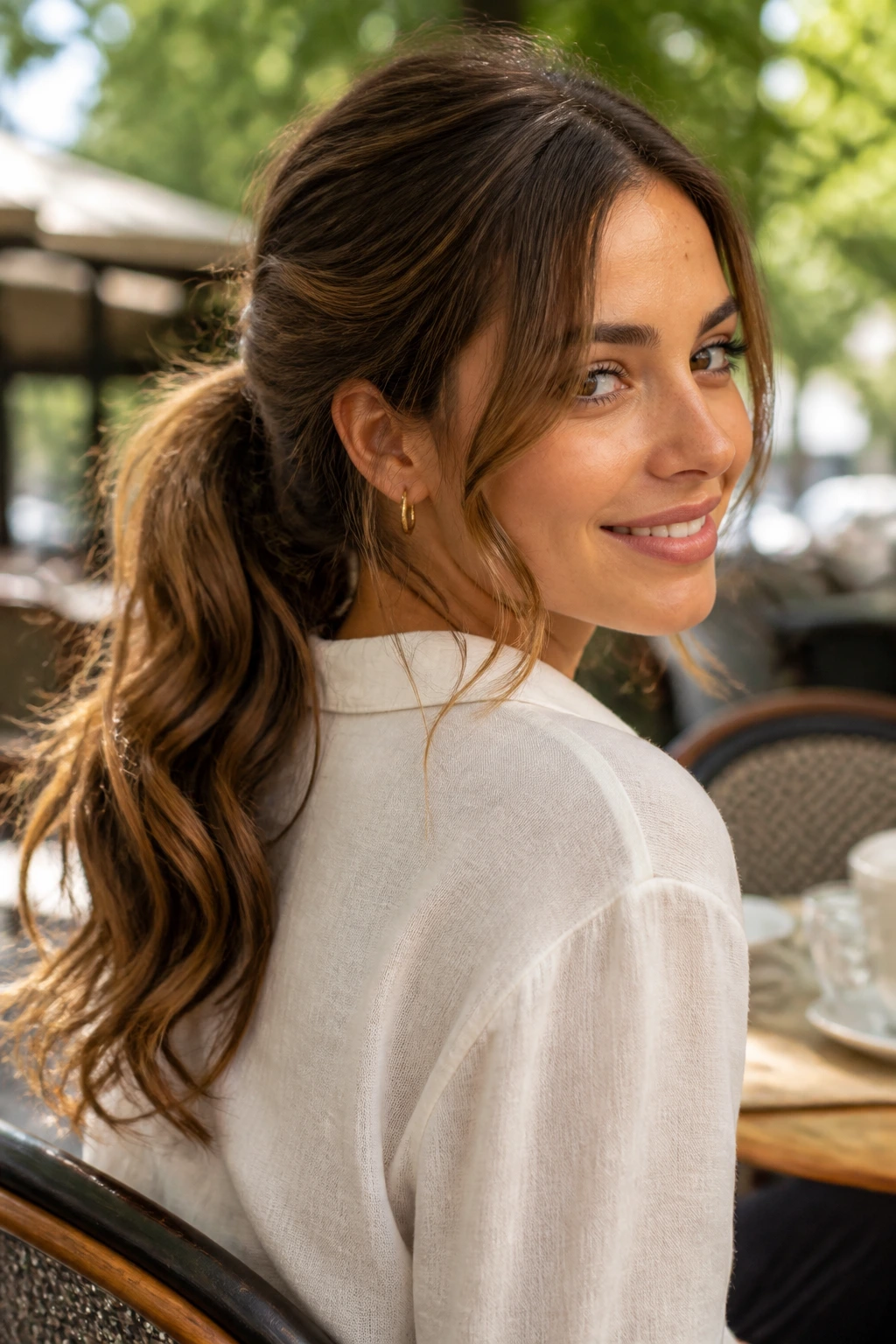
If you want one ponytail that looks like you tried, this is the cheat code. Loose waves, a low or mid tie, and a little air left around the roots give the style movement without making it fussy.
The trick is not to overbrush. Brush enough to smooth the top, then leave the wave pattern alone through the tail. If you pull a wavy ponytail too tight, it turns into a flat rope, and the whole point disappears.
This style is especially kind to second-day hair. The hair has just enough texture to hold the tie, and the wave through the tail keeps the ends from looking thin. A 1-inch curling iron or a flat iron bend through the last half of the hair can help if your natural wave is weak.
It feels easy because it is easy. That is the appeal.
9. The Center-Part Ponytail
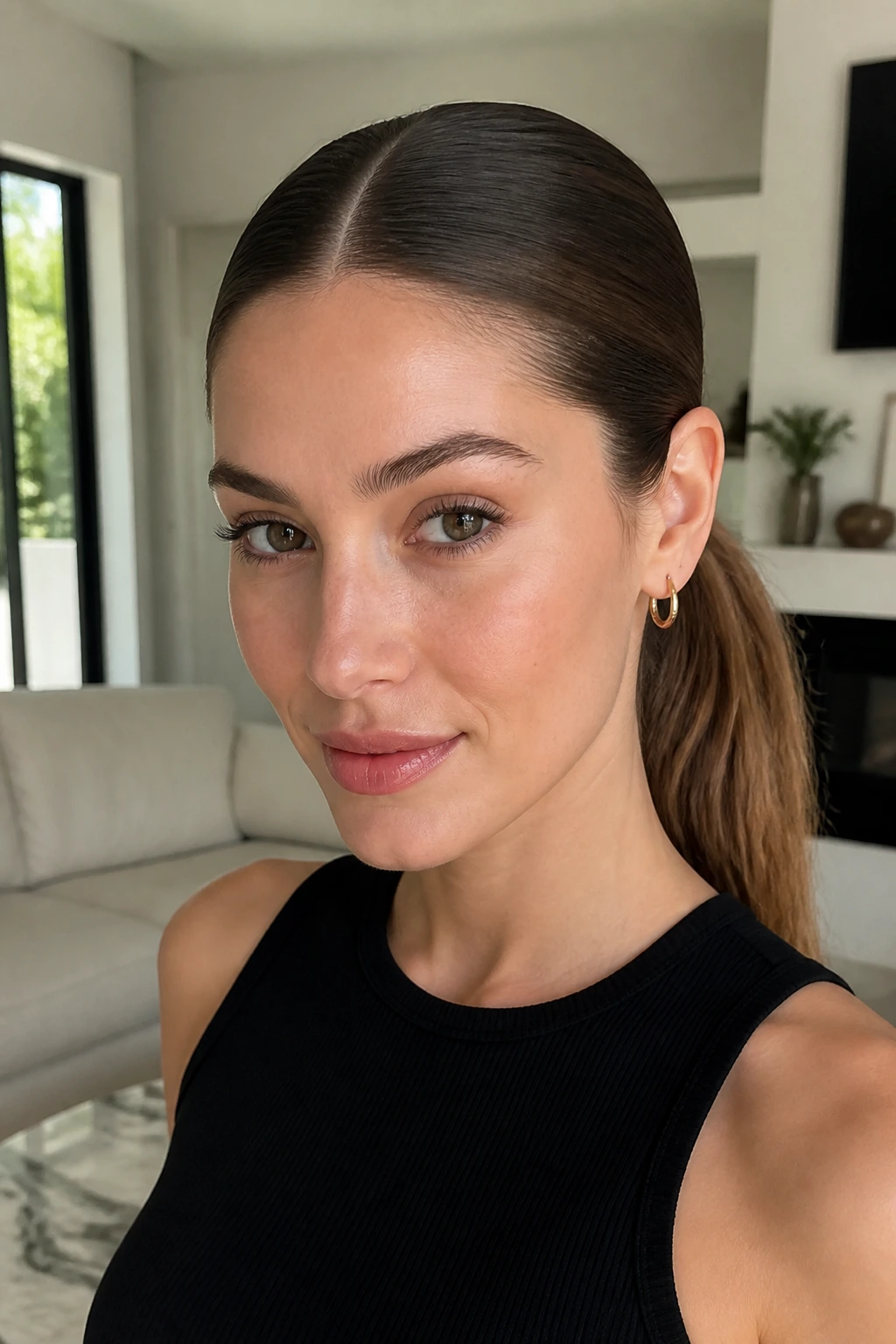
Why does a center part make a ponytail look cleaner? Because it gives the eye a straight path from the forehead to the tie, and that makes the whole style feel organized even when the rest of the hair is loose and simple.
A center-part ponytail works especially well with straight hair, long layers, and glasses. The part keeps the front even on both sides, so the ponytail reads as intentional instead of tossed together at the last minute. Keep the tie low or mid-height if you want the part to stay the main feature.
How to Wear It
Use the tip of a tail comb to make the part straight, then smooth each side back separately before gathering the hair. If you drag a brush across the whole head too soon, the part can drift and the style loses its sharp line.
A little shine spray on the top layer can help, but go light. You want a clean look, not greasy roots.
10. The Knotted Ponytail
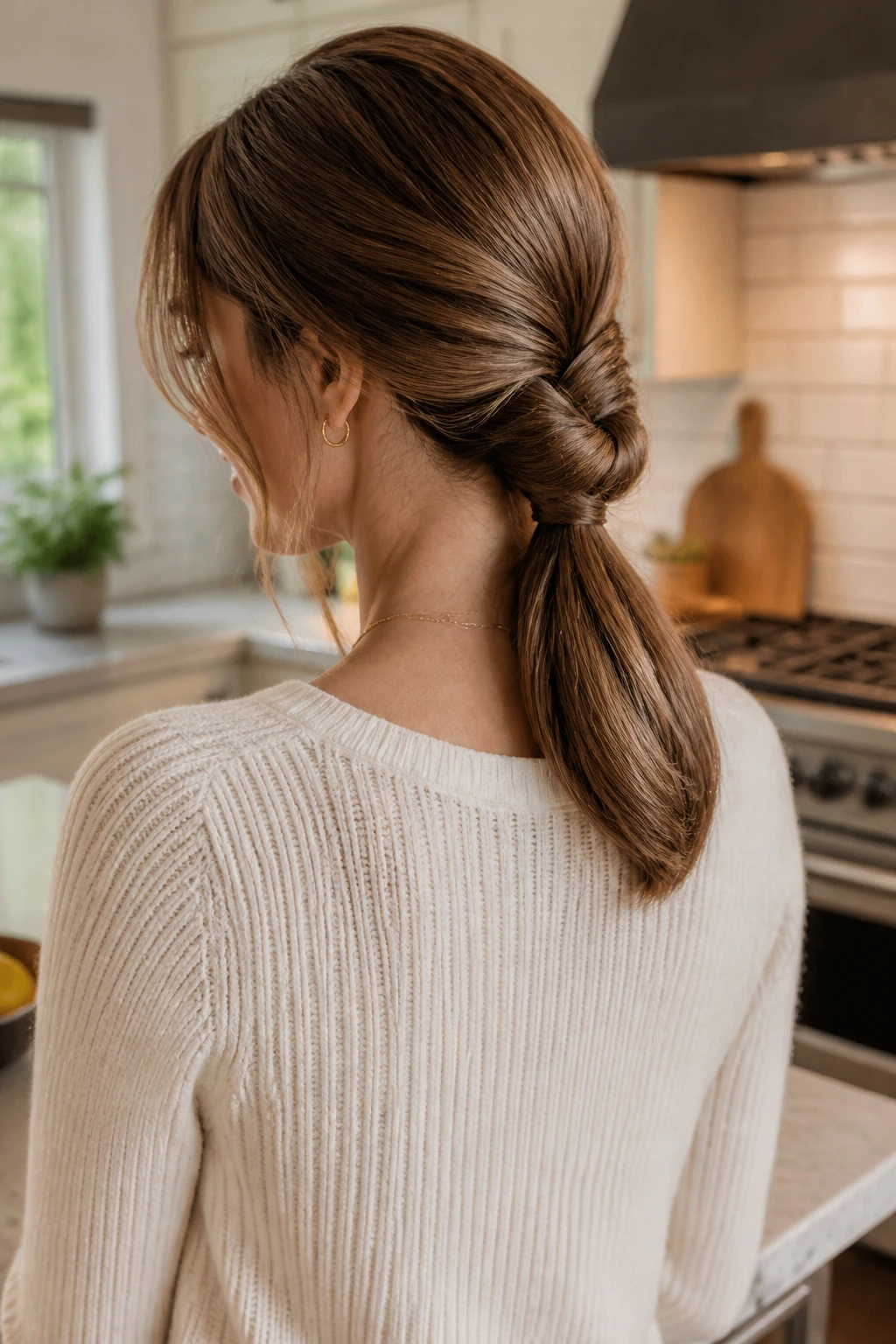
There is something satisfying about a knotted ponytail. It looks like you did a neat little trick, even though the steps are simple: split the hair into two sections, tie one over the other in a knot, then secure the ends underneath.
It is a nice change when braids feel overdone and a regular ponytail feels too plain. The knot creates a visible center line, which gives the style texture without making it fussy or formal.
- Works best on medium to long hair
- Needs a bit of slip control at the ends, so a dab of leave-in helps
- A hidden elastic under the knot keeps the whole shape from loosening
The knot looks especially good when the front is smooth and the ends are a little soft. If the hair is very layered, a couple of bobby pins underneath can stop the shorter pieces from escaping.
11. The Claw-Clip Ponytail
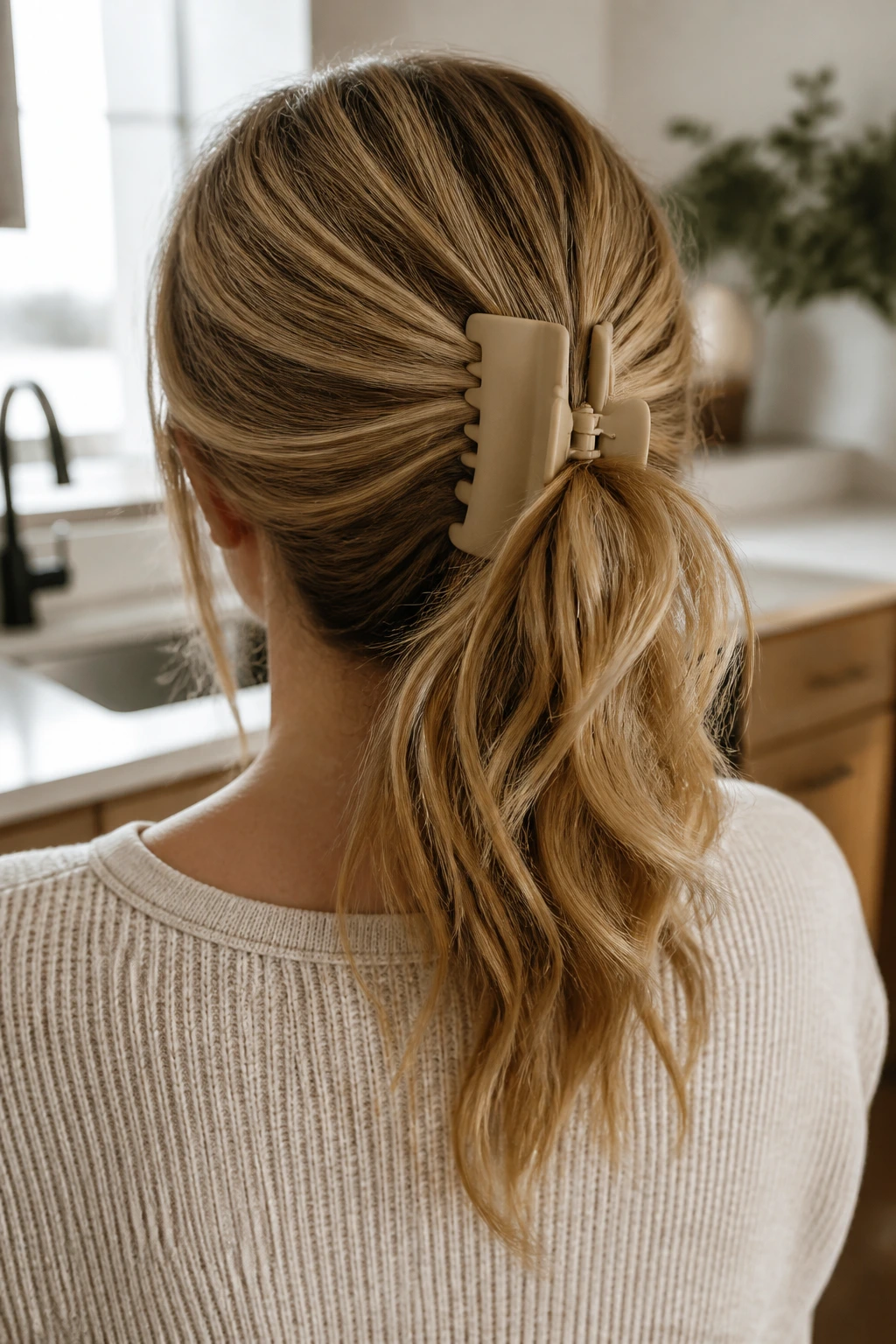
The claw-clip ponytail is not really a ponytail in the classic elastic sense, and that is what makes it useful. You twist the hair once, fold it back into a loose tail shape, and clip it in place with a large claw clip so the ends spill out.
It is gentler than a tight tie. That matters on days when your scalp feels tender or your hair has already been through too much brushing. A clip also lets the roots breathe, which can be a relief if you wear your hair up for hours at a stretch.
A medium or large clip works better than a tiny one that snaps shut around too much hair and then slips out. Thick hair needs stronger teeth. Fine hair does better with a lighter clip that does not crush the whole shape.
The key is balance: loose enough to stay comfortable, firm enough that the style does not collapse the second you turn your head.
12. The Double-Elastic Ponytail
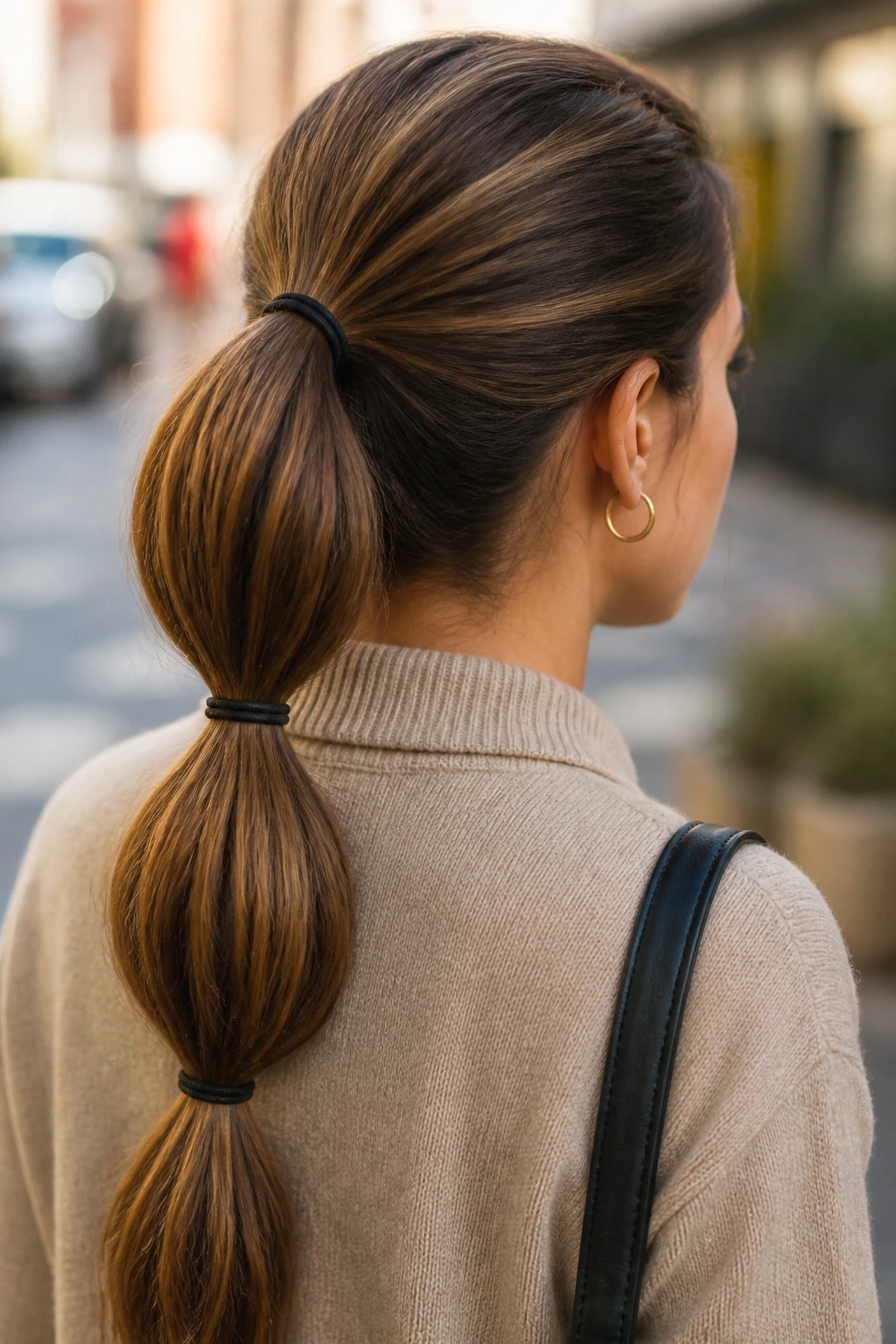
A double-elastic ponytail is exactly what it sounds like: two ties, one near the base and one a little lower down. It is not flashy, but it solves one of the most annoying ponytail problems, which is the slow slide that happens when the hair is heavy.
Unlike a single-elastic style, this one spreads the weight out a bit. That can make a huge difference on long hair, dense hair, or layered hair that tends to pull a ponytail downward by midday. The extra elastic acts like a second anchor point.
Use the first elastic to hold the hair at the chosen height. Put the second one 1½ to 2 inches lower, then tug both sections lightly so they blend into one long shape. If your hair is thick, this is often better than using one very tight elastic that starts hurting after an hour.
It is a plain fix, but plain fixes are often the ones that last.
13. The Half-Up Ponytail
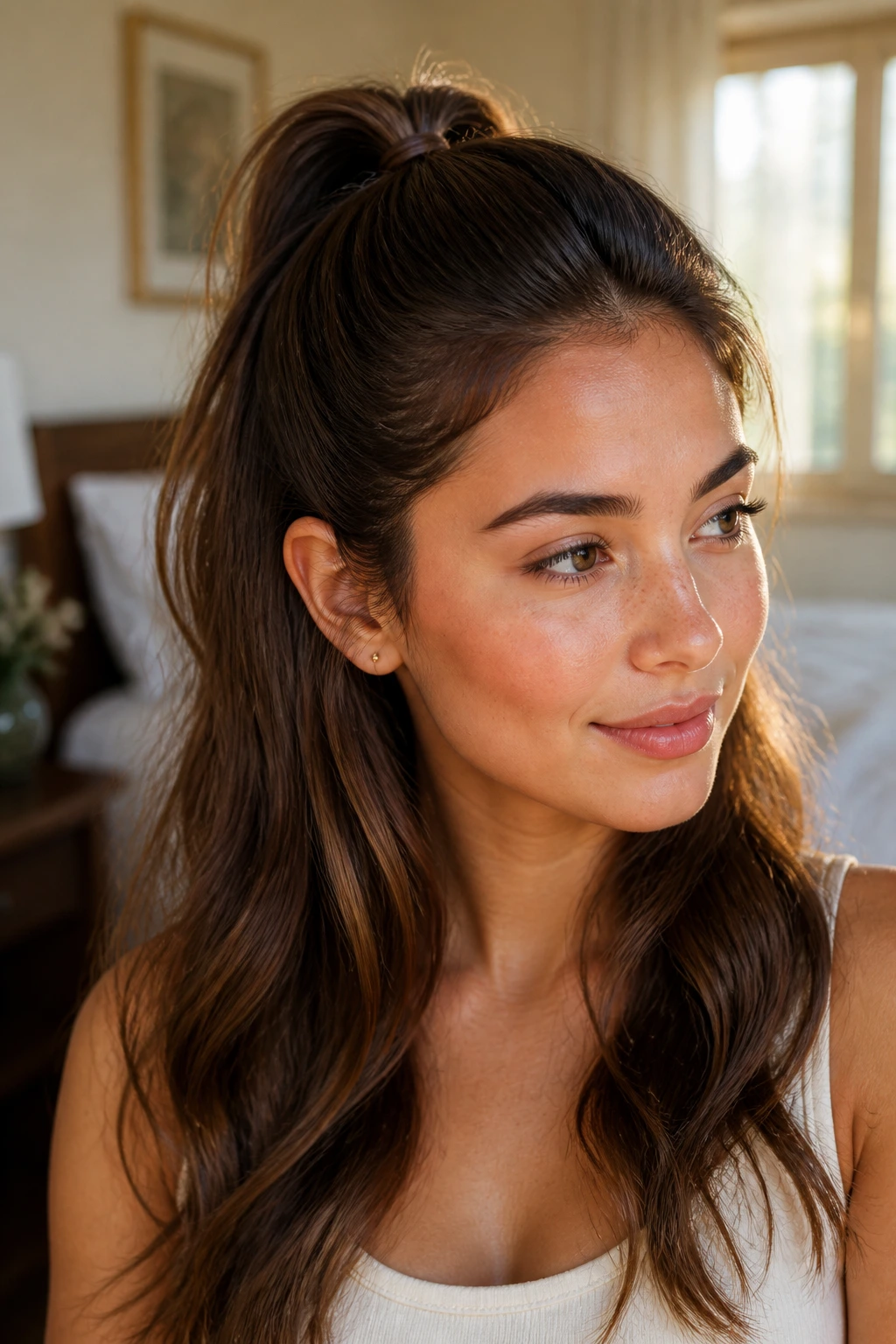
The half-up ponytail is the style you wear when you want your hair out of your face but you do not want to lose the softness of the rest of it. The top section is pulled back, the bottom stays down, and the result feels casual without getting sloppy.
Why It Works
It gives lift at the crown and still lets the length show. That makes it a favorite for growing-out bangs, curls that need room, and wavy hair that looks better when it keeps some movement around the shoulders.
- Gather the top section from the temples back to the crown
- Keep the elastic a little looser than a full ponytail
- Let the lower layers stay soft instead of combing them flat
A small scrunchie works well here if you want a gentle finish. If you prefer a tighter hold, a clear elastic keeps the shape cleaner. Either way, the style stays useful because it handles the front of the hair without asking the rest of it to disappear.
14. The Crisscross Ponytail
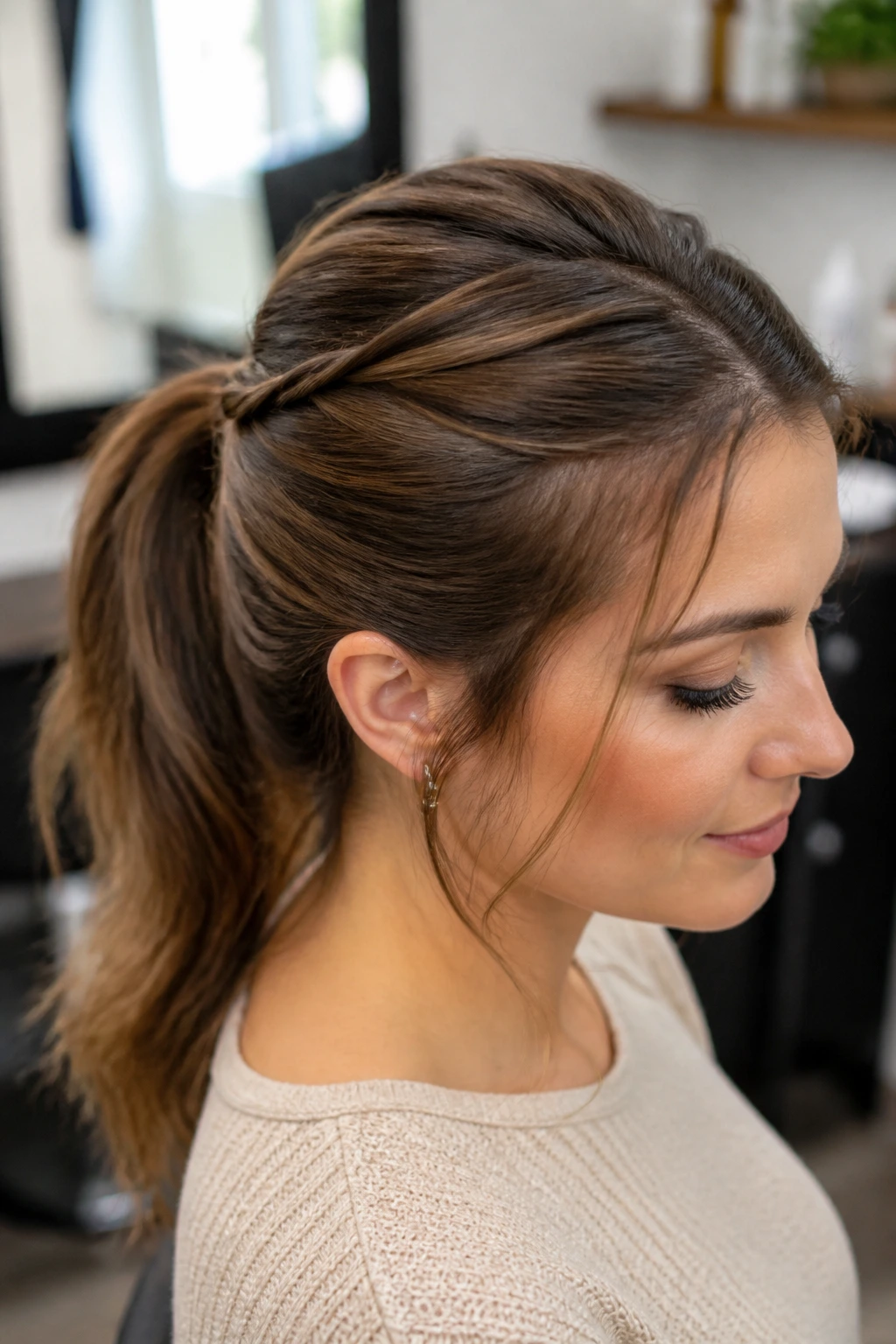
This is one of those small tricks that makes a basic ponytail look cleaner. You take two front sections, cross them over each other at the back, then secure them into the main ponytail so the front line looks layered instead of plain.
The crisscross shape hides the elastic well and adds a little texture near the crown. It is a quiet upgrade, not a big one, which is exactly why it fits everyday wear. No one needs to know you spent 90 seconds making it look more finished.
If your hair is fine, this method helps the ponytail look fuller because the crossed pieces add width around the base. If your hair is thick, it keeps the front from feeling too bulky because the pieces are spread instead of all shoved straight back.
It is a small detail. Small details are often the whole point.
15. The Rope-Braid Ponytail
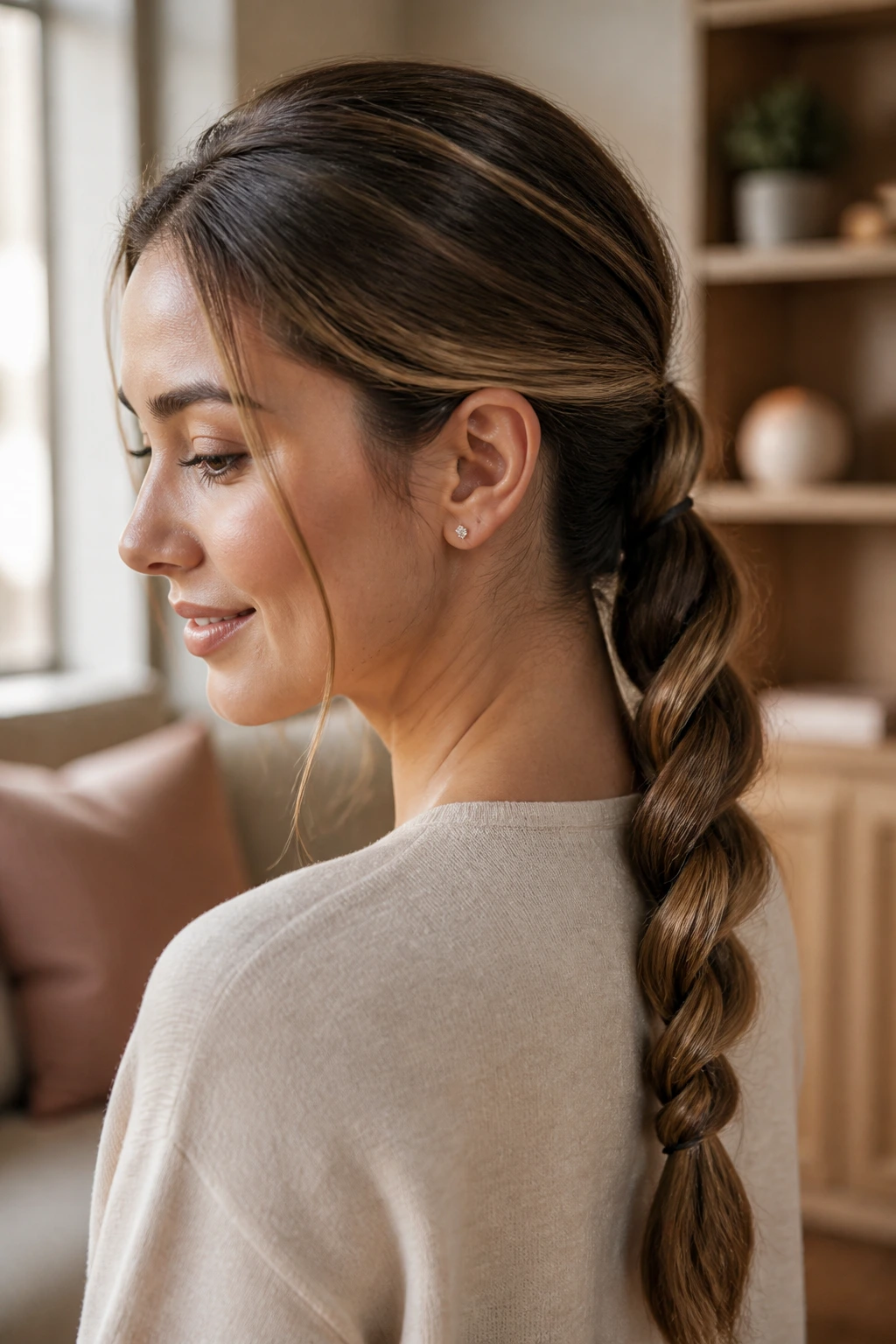
Why does a rope-braid ponytail feel easier than a regular braid? Because it only uses two sections. You twist each section in one direction, then wrap them around each other in the opposite direction, and the pattern locks together with less fuss than a three-strand braid.
How to Use It
Start with a low or mid ponytail, split the tail into two equal pieces, and twist them both the same way before crossing them together. Keep the tension even, or one side will look tighter and the rope will start to unwind.
A little serum on the ends helps if your hair gets fuzzy. The rope braid shows those ends more than a plain tail does, so dry, rough ends can stand out fast. A clear elastic at the bottom keeps the finish neat.
It is a good move on days when you want a bit of pattern without the hand fatigue of a more detailed braid. Simple, tidy, done.
16. The Soft Voluminous Ponytail
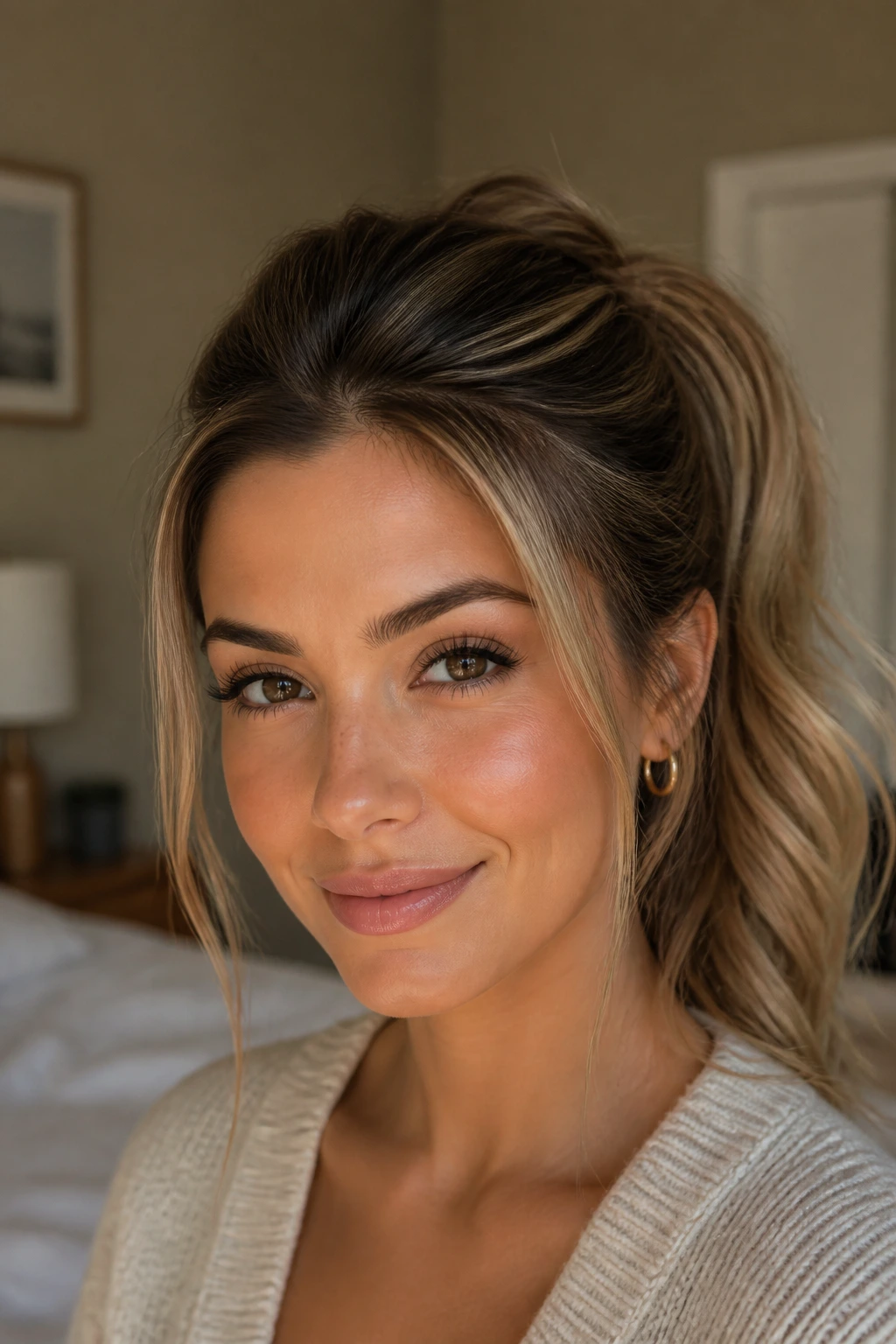
A soft voluminous ponytail is what you reach for when your hair has gone flat under a hood, a hat, or a long morning inside. The goal is not height for its own sake. The goal is a little shape at the crown and a tail that still feels relaxed.
The easiest way to get it is to backcomb a 1-inch section at the crown, then smooth the top layer over it so the tease stays hidden. Use a light texturizing spray near the roots and a looser elastic than you would for a strict sporty ponytail.
- Backcomb only the crown, not the whole top
- Pull the ponytail a half-inch lower than you think you need
- Tug the sides gently after tying to round out the shape
If you overdo the teasing, the ponytail starts looking stiff and dry. A little lift is enough. The style should feel airy, not helmet-like.
17. The Sporty Ponytail
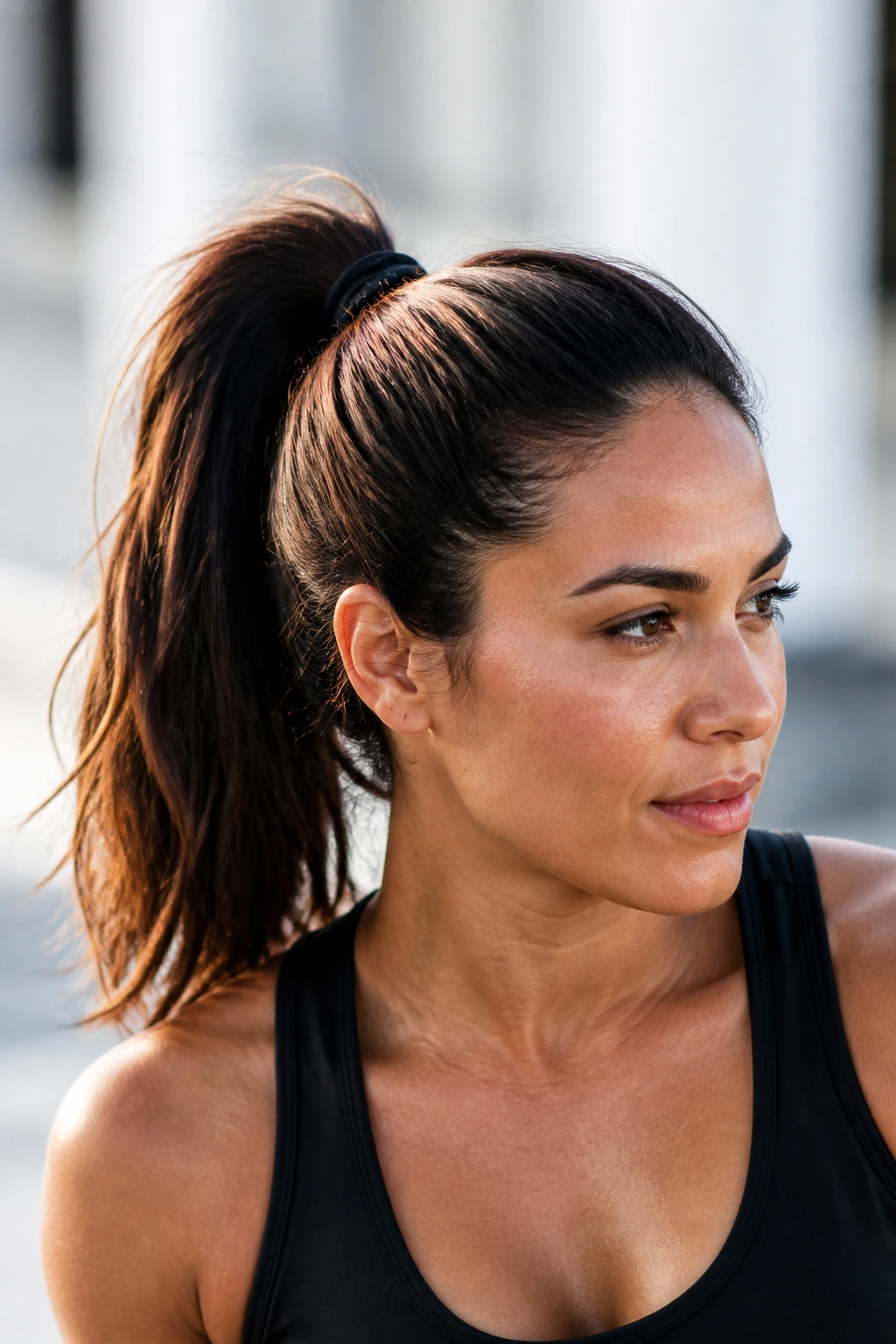
A sporty ponytail needs to stay put while you move, sweat, walk fast, or keep bending over a sink. That is the whole brief. It should not slip, it should not poke, and it should not make you reach back and fix it every ten minutes.
The tightness matters here, but so does comfort. Pull the top smooth, tie the hair at a secure high or mid-high point, and make sure the base sits flat against the head. If your hair is very slippery, rough it up a little at the roots with fingers before you tie it back so the elastic has something to grab.
A fabric-covered elastic or a grippy sports tie helps more than a slick band. And if you want the style to look cleaner after the workout run, keep one small strand free to wrap around the base. It is a tiny change, but it keeps the ponytail from looking too gym-only.
A good sporty ponytail should move, not slide. That is the real test.
18. The Tucked-Under Ponytail
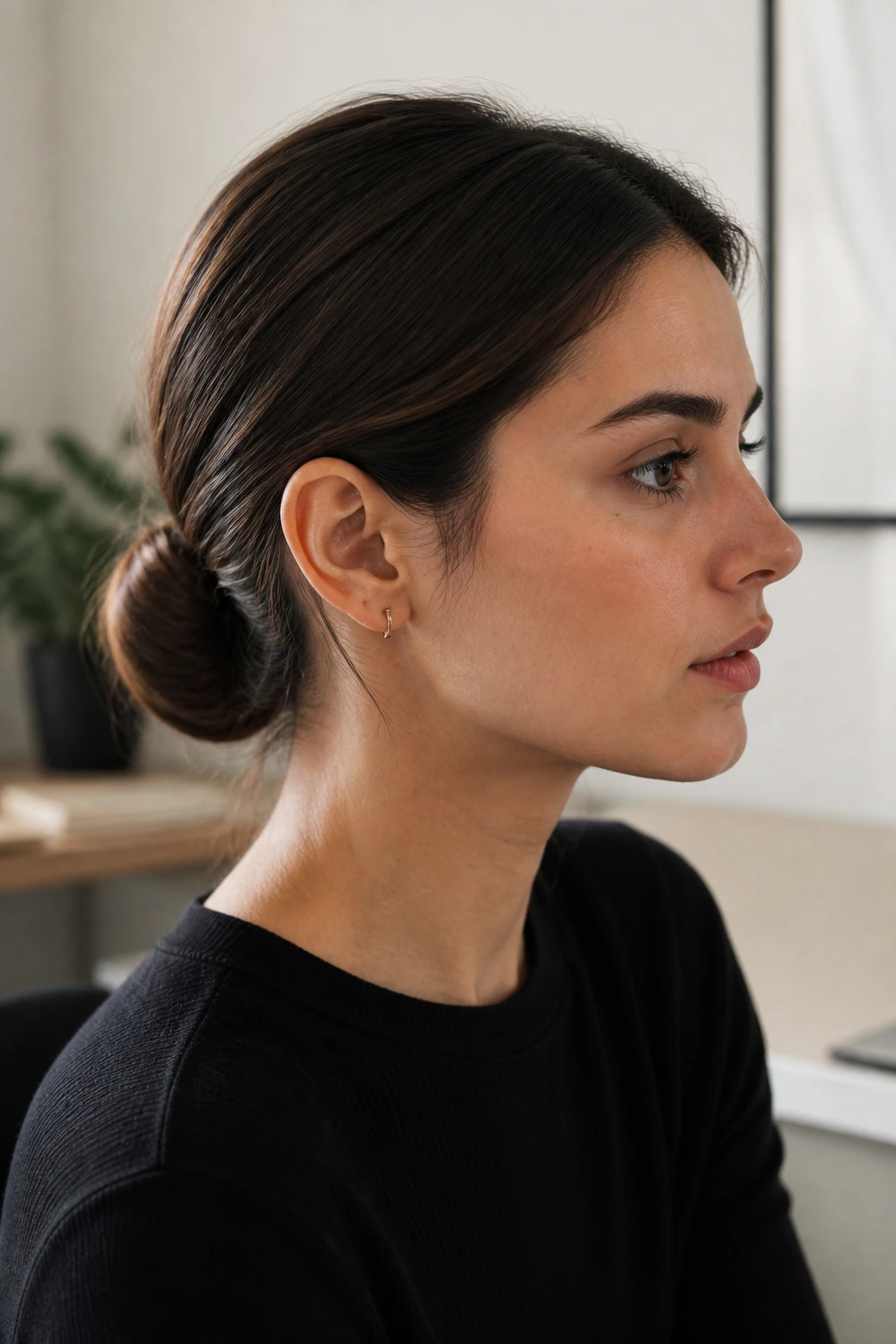
A tucked-under ponytail gives you the clean shape of an updo without needing a full bun. You secure a low ponytail, fold the tail up and under itself, then pin it so the length disappears into a compact roll.
It works especially well on shoulder-length hair and layered cuts that do not always want to stay in a full ponytail. The tucked shape keeps ends from sticking out at awkward angles, which can happen when the hair is too short for a smooth traditional tie.
Compared with a bun, it feels less stiff and usually sits lower on the head. That makes it easier for everyday wear, especially if you want something neat for work but not too formal for the rest of the day.
If your hair is thick, use two or three bobby pins or a pair of spin pins so the tuck does not sag open. If it is fine, one well-placed pin is often enough.
19. The Low Flipped Ponytail
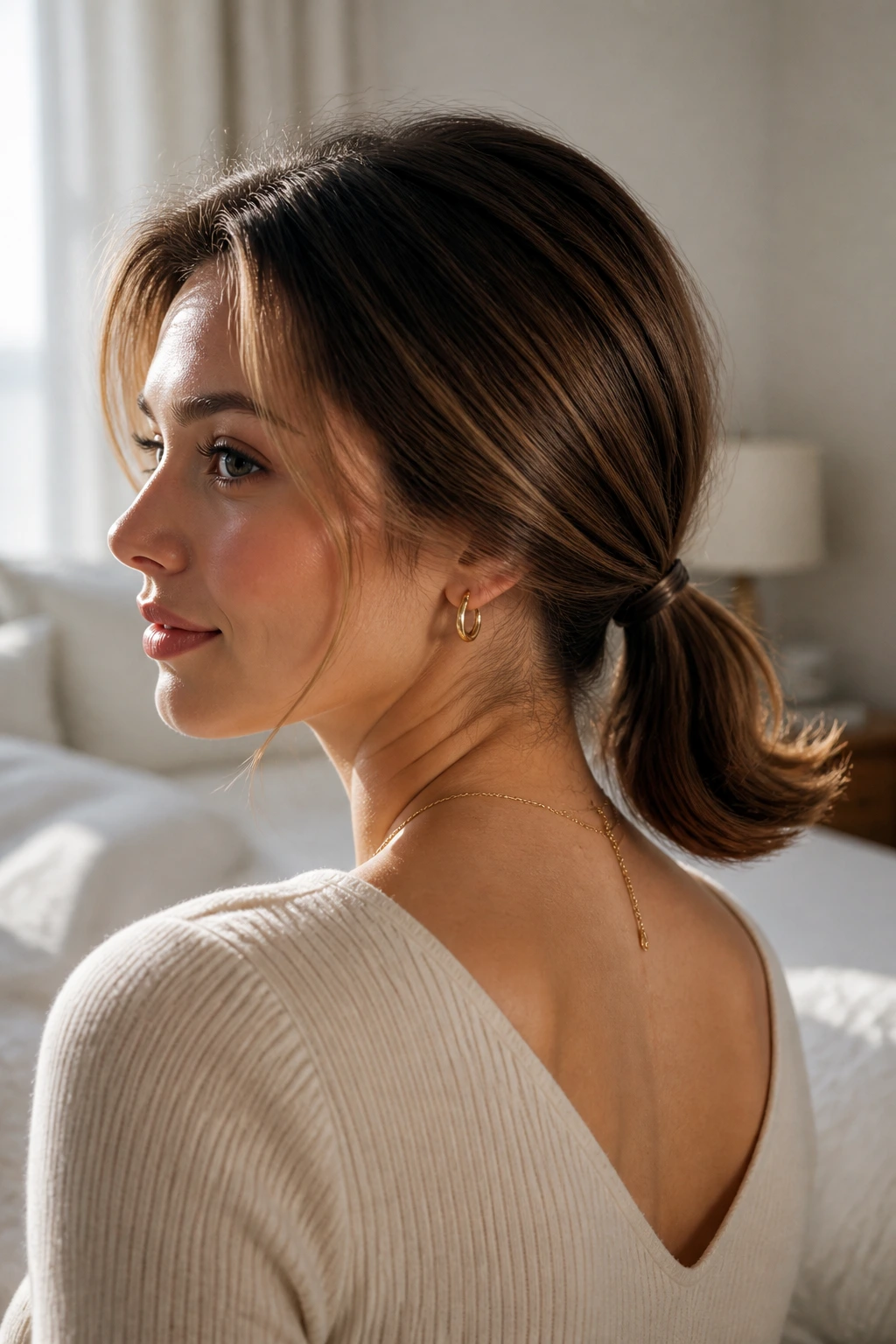
The low flipped ponytail has a tiny bit of personality without asking for much effort. You keep the ponytail low, then flip the ends outward or inward so the tail bends at the bottom instead of hanging straight.
Why It Feels Fresh
That little bend changes the silhouette. A straight tail can look plain. A flipped end gives the style some shape, and the result feels softer around the shoulders.
- Use a flat iron on low heat if your hair needs help holding the bend
- Flip only the last 2 inches for a subtle finish
- Keep the base smooth so the curve at the end stands out
This style works especially well with a middle part or a soft side part. It also pairs nicely with shoulder-length hair, where the flip adds movement without making the tail too long or too heavy.
It is a small finish, but it does a lot of work.
20. The Mini Ponytail for Short Hair
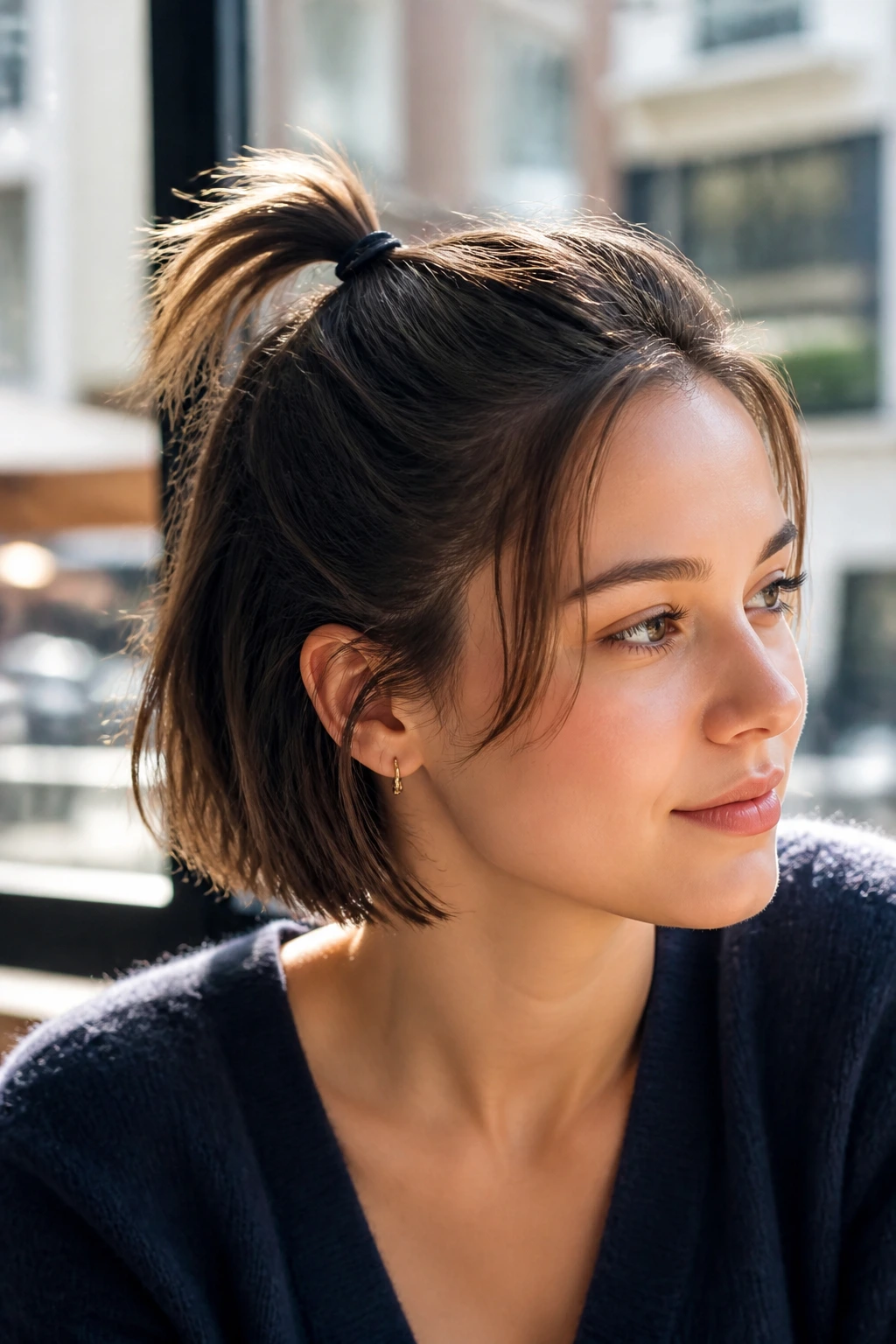
Short hair does not cancel ponytails; it just changes the scale. A mini ponytail at the crown or near the nape can keep chin-to-shoulder-length hair off the face while still showing the cut instead of hiding it.
The trick is to use smaller tools. A tiny elastic, a fine comb, and a little texture powder at the roots go a long way. If you try to treat short hair like long hair, the style usually slips because there is not enough length to anchor it properly.
This version looks good when you leave a few shorter pieces around the temples and ears. Those soft bits keep the ponytail from looking too severe, and they help the shape blend into the haircut instead of fighting it. A small tail can be enough. It does not need to pretend to be more.
The smaller the ponytail, the less it needs to be perfect. That is the part people forget.
