



Short hair does not make updos impossible. It makes them more honest.
There’s no hiding behind five extra inches of length and a mountain of spray. A messy style on a bob, lob, or cropped cut has to earn its shape with texture, pin placement, and a little nerve. That’s why the best messy updos for short hair look lived-in instead of overworked. They keep a few pieces loose on purpose. They also know when to stop.
Day-old hair usually behaves better than freshly washed hair. So does hair that’s been hit with dry shampoo at the roots and a light mist of texturizing spray through the mid-lengths. Fine hair needs grip. Thick hair needs control. Curly hair needs a plan that doesn’t fight the bend already there.
Pinning matters more than people think. A bobby pin pushed flat into the hair is weak; crossed into an X is sturdier. U-pins, small elastics, and even a tiny claw clip can do some of the heavy lifting when your ends are too short to wrap cleanly. A good short-hair updo is less about forcing the hair into a shape and more about convincing it to hold one for a few hours.
1. The Twisted Nape Chignon
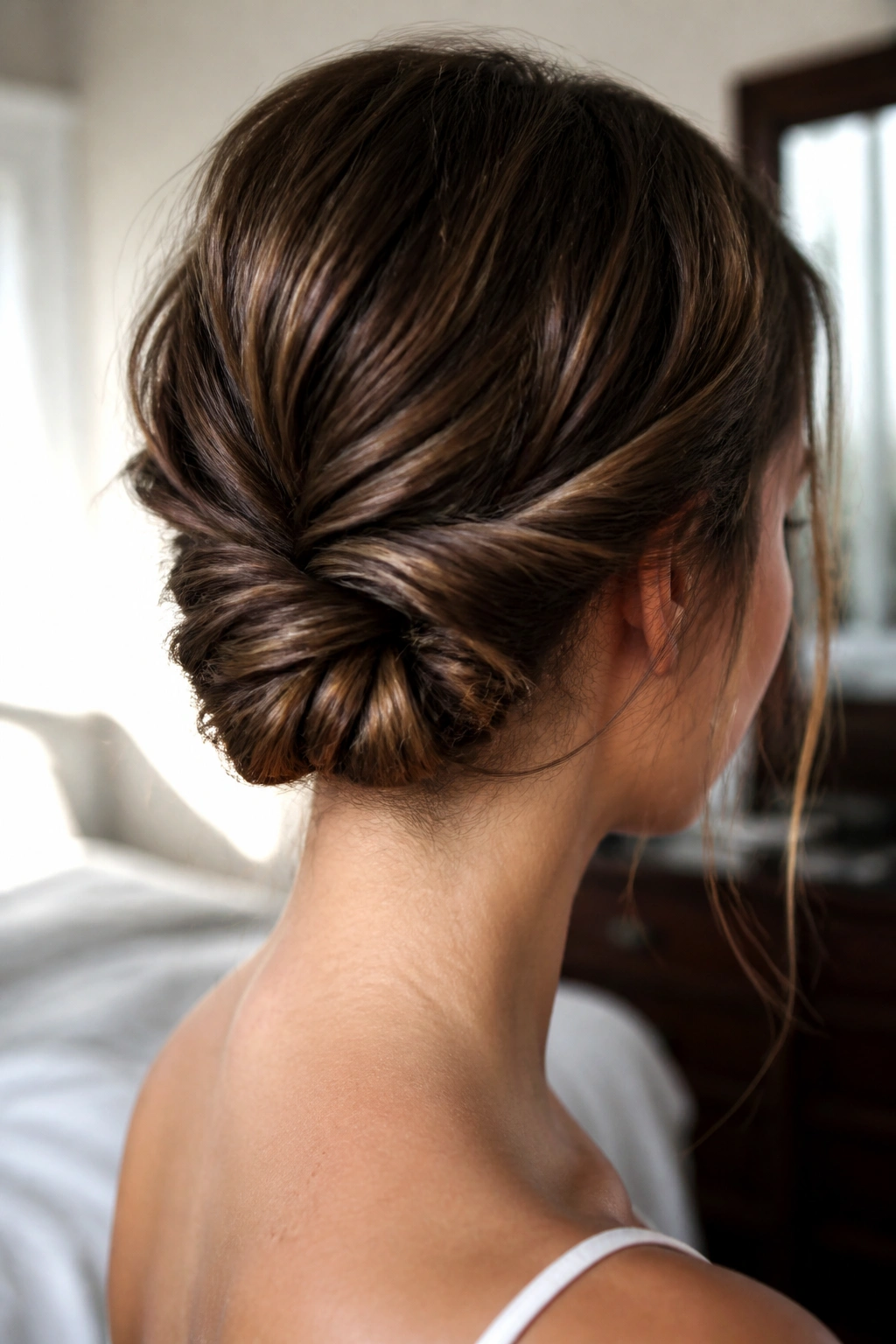
This is the one I’d hand to someone who wants a graceful result without a ton of fuss. A twisted nape chignon works especially well on chin-length hair and blunt bobs because the shape lives low and uses the neck as its frame. It looks deliberate, but not stiff.
Why It Works So Well
Take two side sections, twist them back, and pin them at the nape. Then gather the remaining length into a small coil and tuck the ends under. That little hidden tuck is the whole trick. The style gives you the outline of a chignon without asking your hair to do a full wraparound roll it may not quite have the length for.
If your layers slip, rough up the roots first with dry shampoo or a gritty spray. Clean, slippery hair fights this style. A little texture makes it behave.
Best on: bob-length hair, layered lobs, and straight-to-wavy textures
You’ll want:
- 4 to 8 bobby pins
- 1 small clear elastic
- Dry shampoo or texturizing spray
- A light-hold hairspray
One smart move: cross two pins at the nape instead of using one straight pin. It stays put longer.
2. The Messy Mini Bun That Fakes Length
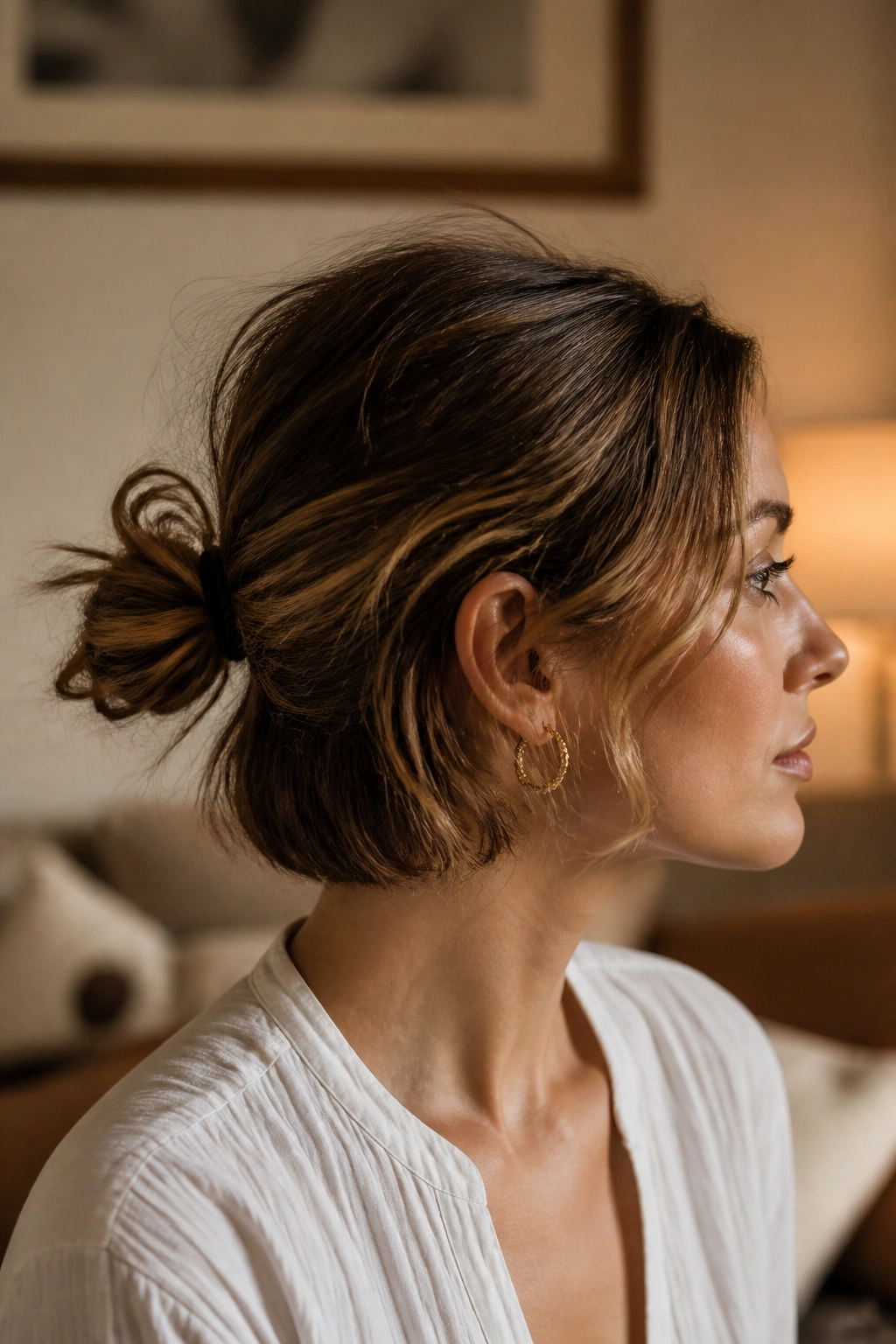
Can a bun work on short hair? Yes, if you stop trying to make it look like a full-size bun. A mini bun is tiny by nature, and that’s the point. It can sit low, sit high, or sit slightly off-center, which keeps it from looking too neat.
The easiest version starts with a small ponytail made from the top half of the hair or from all of it, depending on how much length you have. Twist the ponytail, coil it once or twice, and leave the ends poking out a little instead of forcing them under every time. Those loose ends make the bun look relaxed rather than like a tight little knot someone made in a rush.
I like this style on bobs that graze the jawline. It has enough shape to read as an updo, but it still looks believable on shorter hair. If your ends are blunt, pull a few face-framing pieces loose and soften the front with your fingers. Too much brushing kills the whole thing.
A tiny bun can look chic in five minutes. It can also collapse in ten if you skip the pins.
3. The Half-Up Knot for Bobs
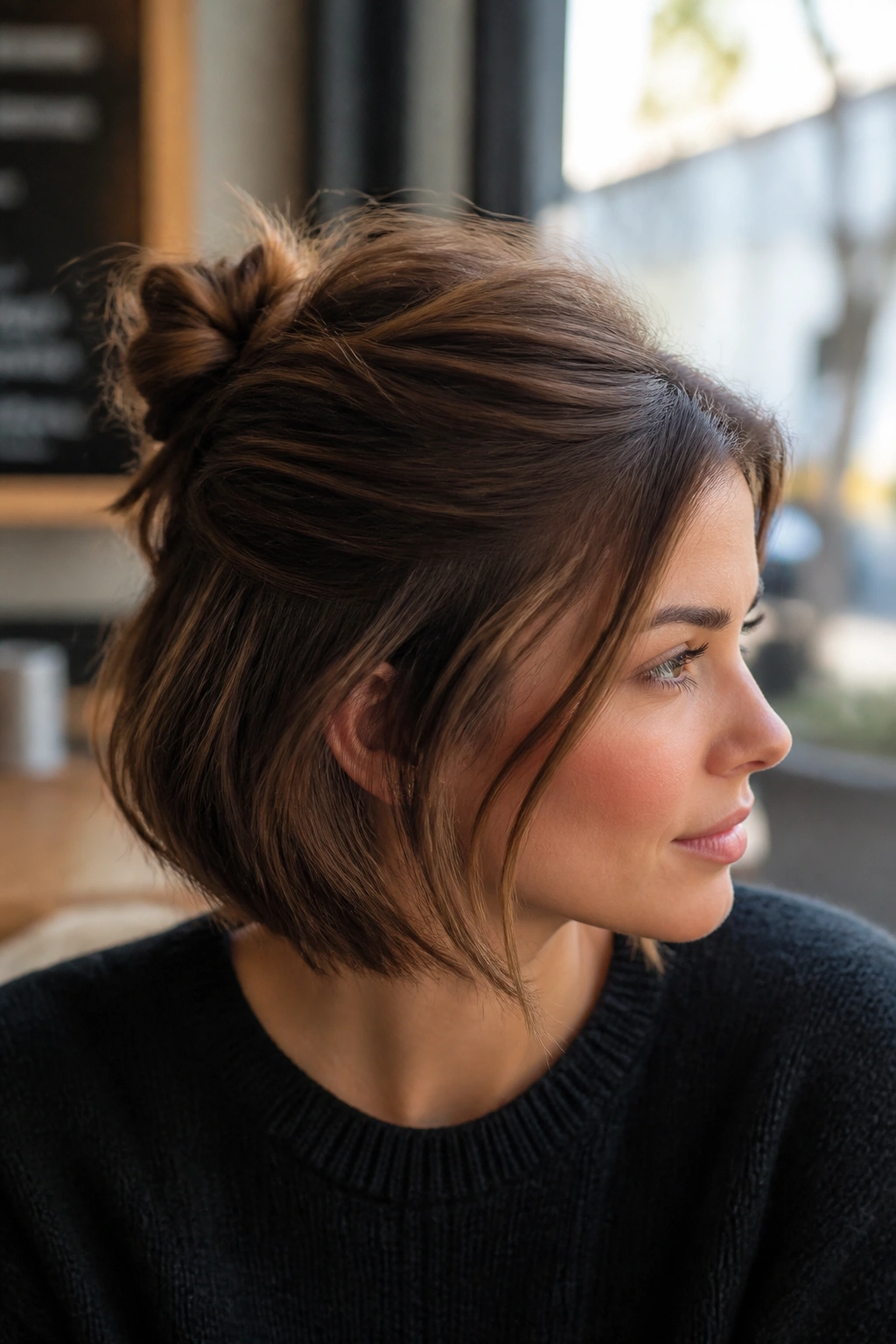
Half-up styles are a gift for women with short hair because they let you get hair off your face without pretending you have waist-length strands. A half-up knot keeps the crown tidy and leaves the bottom section free, which is useful when the back is too short to fully gather.
Start by lifting the hair from temple to temple and tying a small knot at the back of the crown. If the knot is too small to hold its own, pin the tail ends flat against the head. That gives the illusion of a real knot instead of a sad loop that keeps loosening. A little backcombing at the crown helps too, especially if your hair tends to collapse by midday.
Best Uses for This Style
- Chin-length bobs that need height at the crown
- Straight hair that falls flat fast
- Layered cuts with shorter pieces around the face
- Casual events where you want hair off the neck but not fully up
The charm here is the contrast. The top feels pulled together. The bottom feels loose and easy. That split makes the style look intentional even when the knot itself is tiny.
4. The Pinned French Twist with Loose Ends
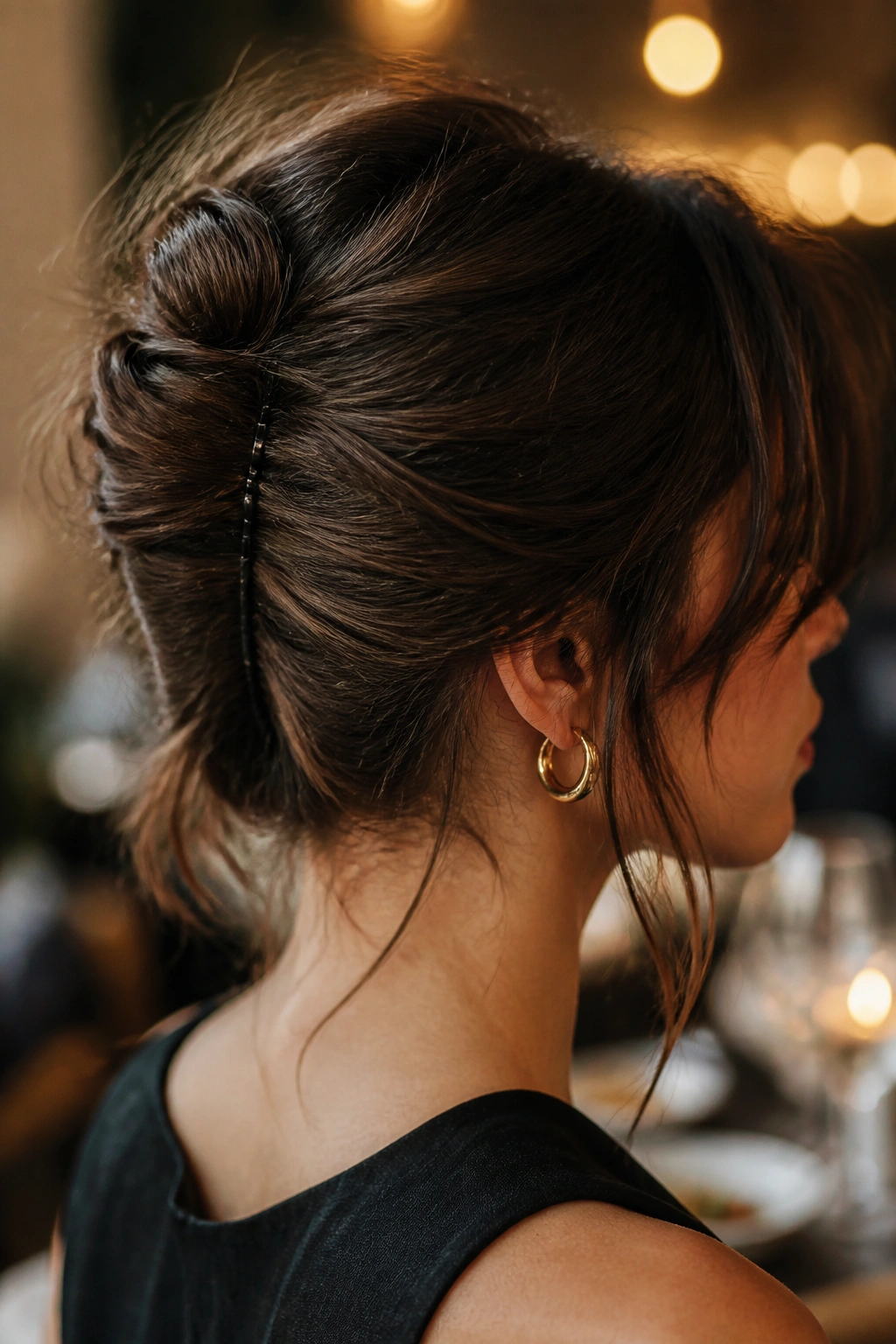
A French twist usually sounds too formal for short hair, and that’s fair. The polished version can look fussy fast. A messy French twist, though, is one of the smartest short-hair updos around because it uses vertical shape instead of length.
How to Keep It Soft
Tease the crown lightly, sweep the hair to one side, and roll it upward toward the middle of the head. Don’t build a perfect tube. Leave a few ends out at the top and bottom. Those little escapes keep the style from looking like it was wrapped in a hurry by someone wearing gloves.
Pin vertically along the seam of the twist, not across it. That’s the part many people miss. Vertical pins catch the folded hair better, and the twist holds without becoming a helmet. A mist of medium-hold hairspray before the final pins go in helps, especially on silky hair.
This style works beautifully for dinner, a wedding, or anything where you want a little polish but not a full formal updo. It also flatters short hair because it adds the illusion of length through shape instead of through actual inches.
5. The Braided Crown That Hides Short Layers
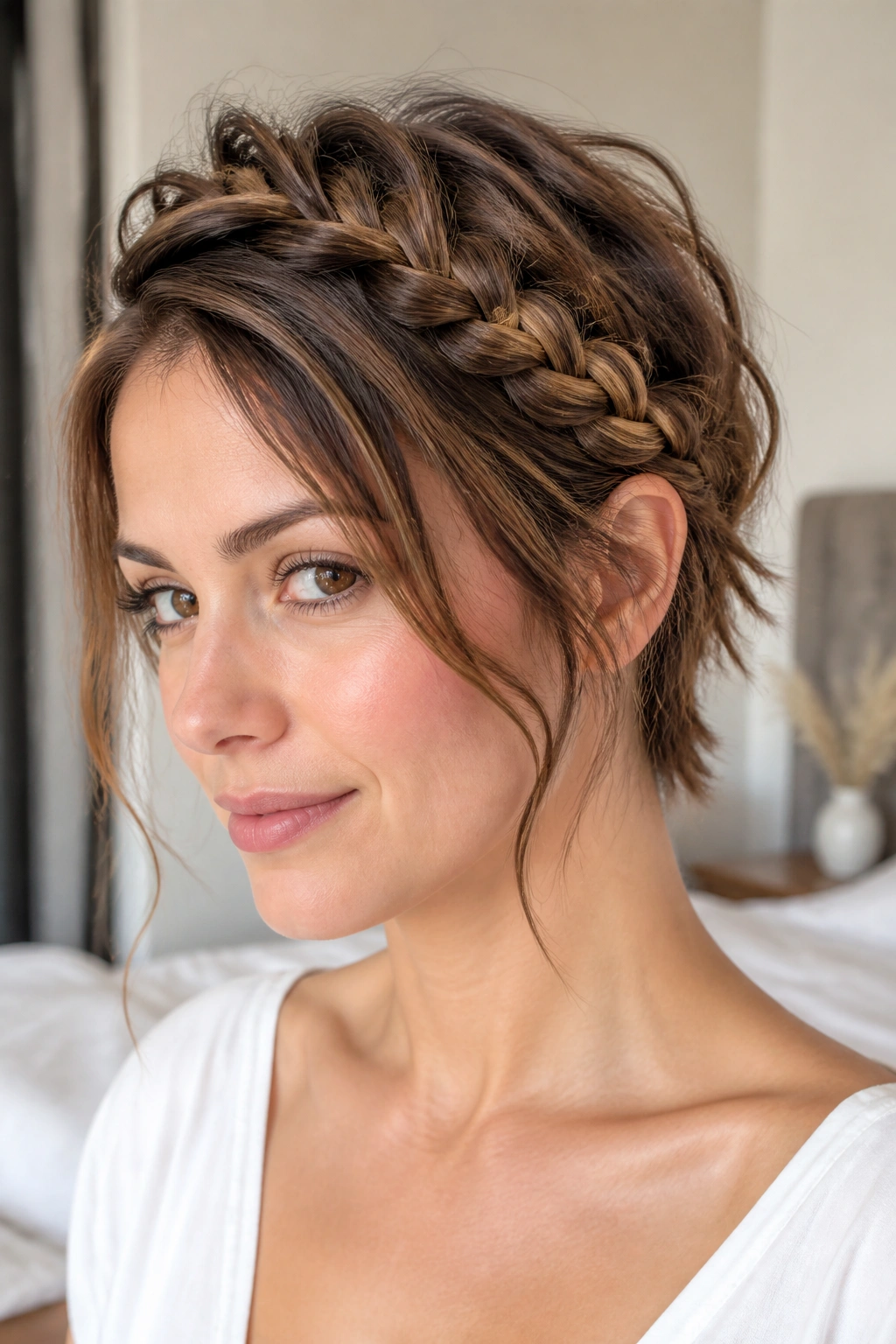
Braided crowns are a lifesaver when your layers keep escaping every other style. Short pieces around the face can be annoying in a low bun, but they’re useful here because a crown braid can absorb them instead of fighting them. It wraps the top of the head and creates a soft frame almost by accident.
Start one braid above the temple, keep it loose, and guide it across the crown toward the opposite side. If your hair is too short for a full braid on both sides, braid one side and twist the other into place. Nobody needs to know the route was improvised. Pin the braid behind the ear or under the opposite side of the crown so the seam disappears.
What Helps Most
- Second-day hair with a bit of grit
- Small clear elastics for the braid ends
- A tail comb for parting
- A few pins placed under the braid, not over it
I prefer this style when the hair has uneven layers or a grow-out fringe. The braid hides all sorts of things. It also gives the front a gentle lift that plain pin-back styles often miss.
6. The Side-Swept Roll with Height at the Temple
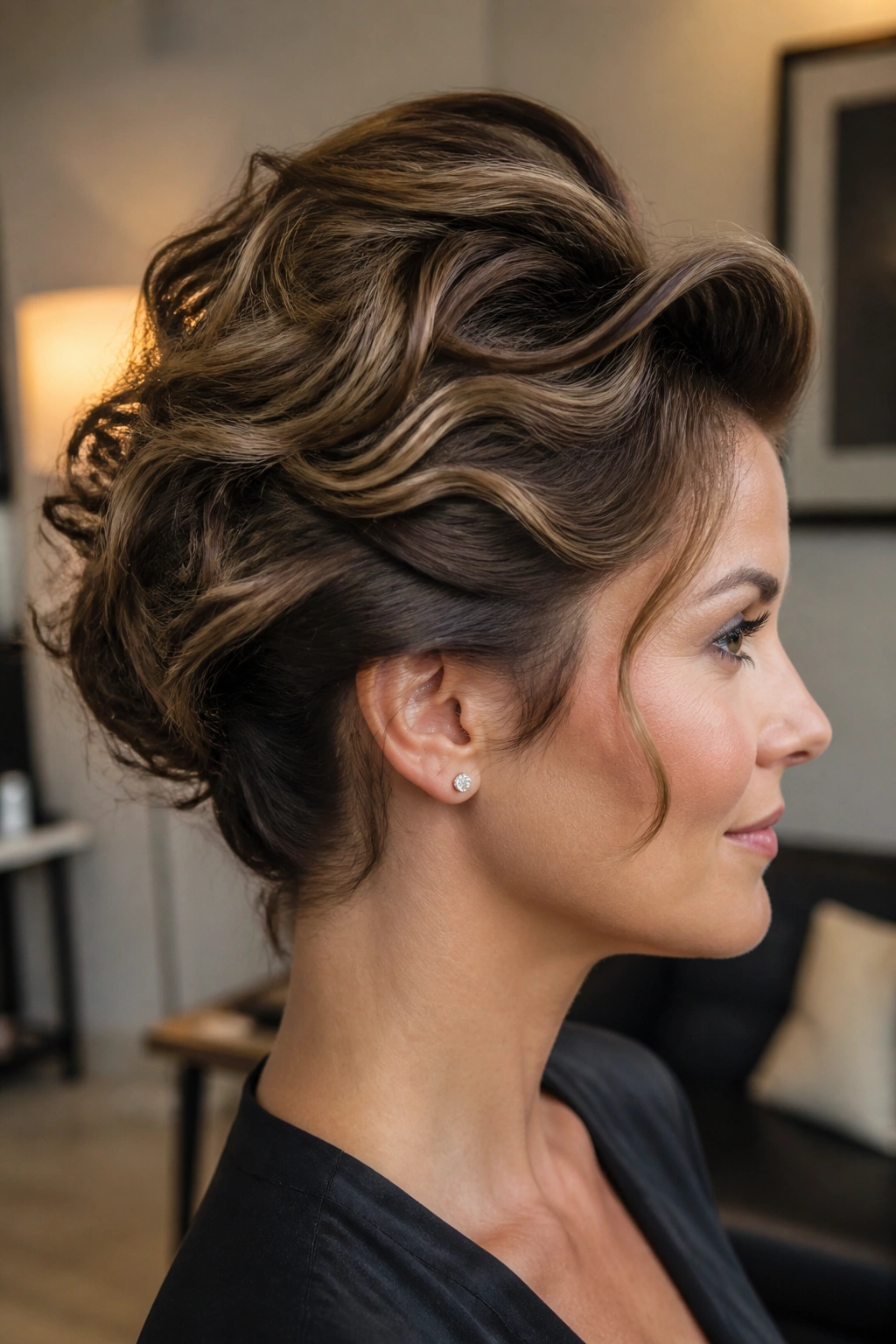
This one has a little old-Hollywood drama, but not the overdone kind. The side-swept roll works because it builds volume where short hair usually needs it most: the temple and crown area. The rest is tucked low, so the style stays wearable.
Curl the front section loosely, then backcomb the roots just a bit. Sweep the hair toward one side and roll or fold it back in a soft diagonal line. Pin the shape just behind the ear and at the crown. If you have an asymmetrical cut, this style can look especially good because it follows the cut instead of fighting it.
A side part helps, but it does not have to be deep. Too deep and the style starts looking severe. Too shallow and you lose the sweep. Split the difference and keep one side fuller than the other.
A small warning: don’t smooth every strand flat. The roll needs some texture at the top or it goes limp fast. Let the front bend a little. That bend is doing half the work.
7. The Loop Bun with Wispy Pieces
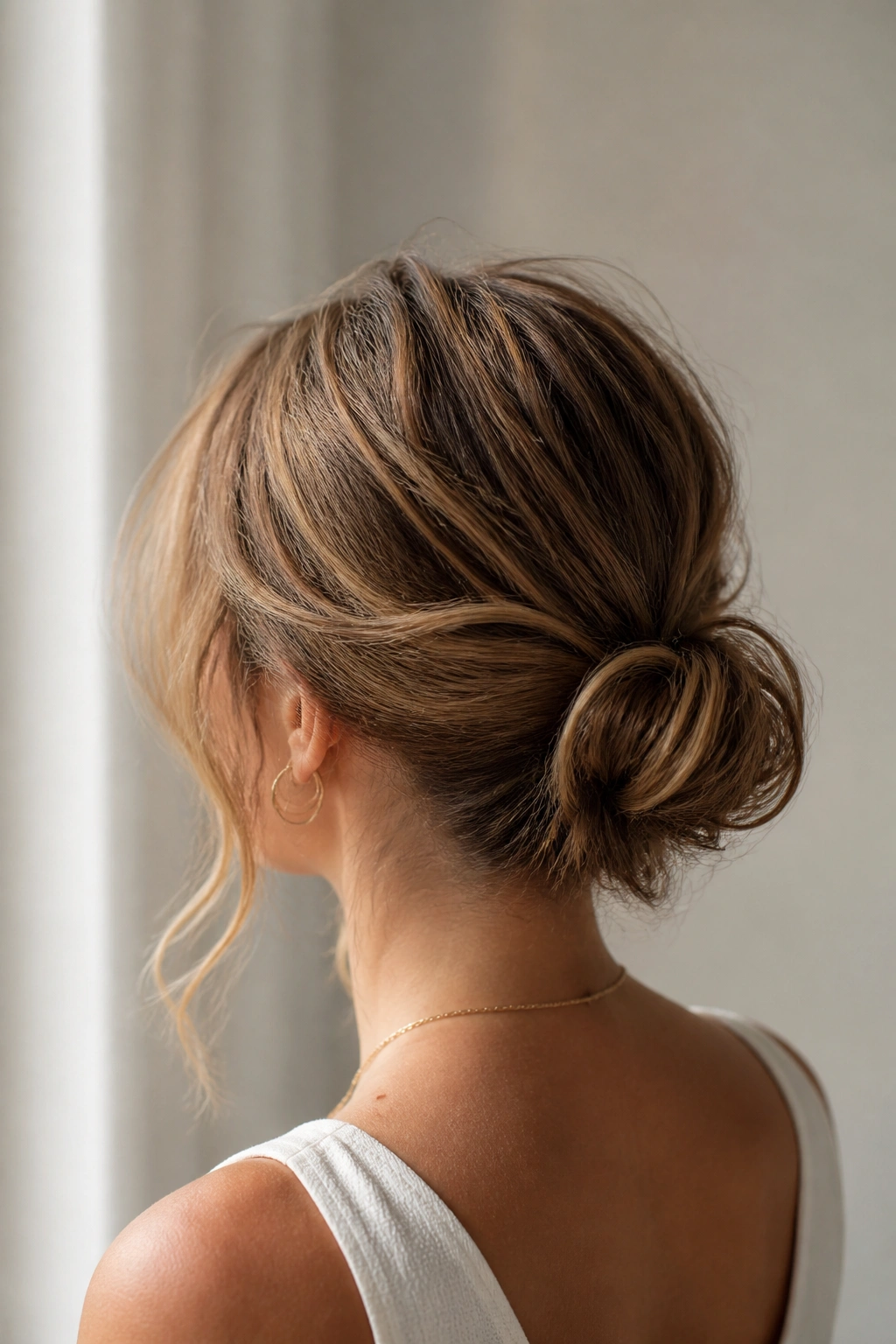
Loop buns are one of those styles that sound a little weird until you see them on short hair, then they make perfect sense. They’re small, quick, and forgiving. You pull the hair into a low ponytail, but on the final wrap you stop halfway through, leaving a loop and a tail. Then you pin the tail under the loop and tug the top just enough to make it soft.
The result is compact and messy at the same time. Which is useful, honestly, because a lot of short-hair styles fail when they get too ambitious. This one never asks for that.
It works best on hair that reaches the base of the neck or a little below. If your ends are too short, clip the tail underneath with a few hidden pins and call it a day. The asymmetry is part of the charm. A loop bun with one side a little puffier than the other looks better than a perfect, balanced version. Perfect can wait for another hairstyle.
8. The Faux Bob Tuck-Up
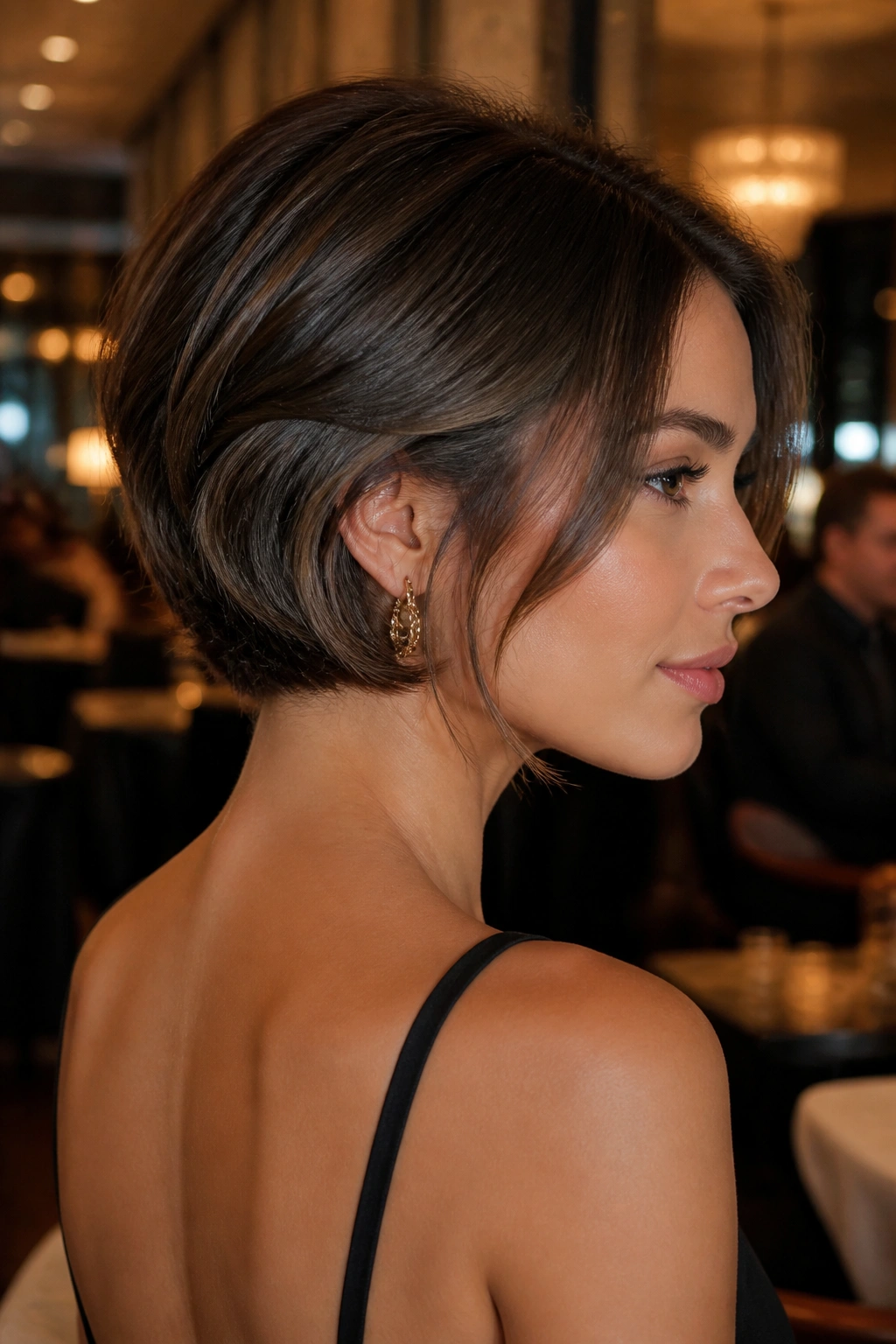
Need your short hair to look even shorter for a night out? A faux bob tucked up at the neckline gives that neat, sculpted feel while still leaving you room to move. It’s one of the few updos that can make short hair look richer, not smaller.
The trick is to curl the ends under slightly first, then tuck and pin the lengths up against the neck so they vanish beneath the top layer. If your hair is layered, leave the shortest pieces out around the face. They soften the shape and stop the style from looking too sealed-off. A little shine spray on the outer layer helps too, but don’t overdo it. You want softness, not grease.
This style can feel fussy the first time you try it. That’s normal. The pins may take a few tries, and the tucked shape may need one side adjusted twice. Once you’ve done it, though, you start to see how useful it is for shorter lengths that need a dressed-up shape without actual long hair.
9. The Messy Top Knot for Short Bobs
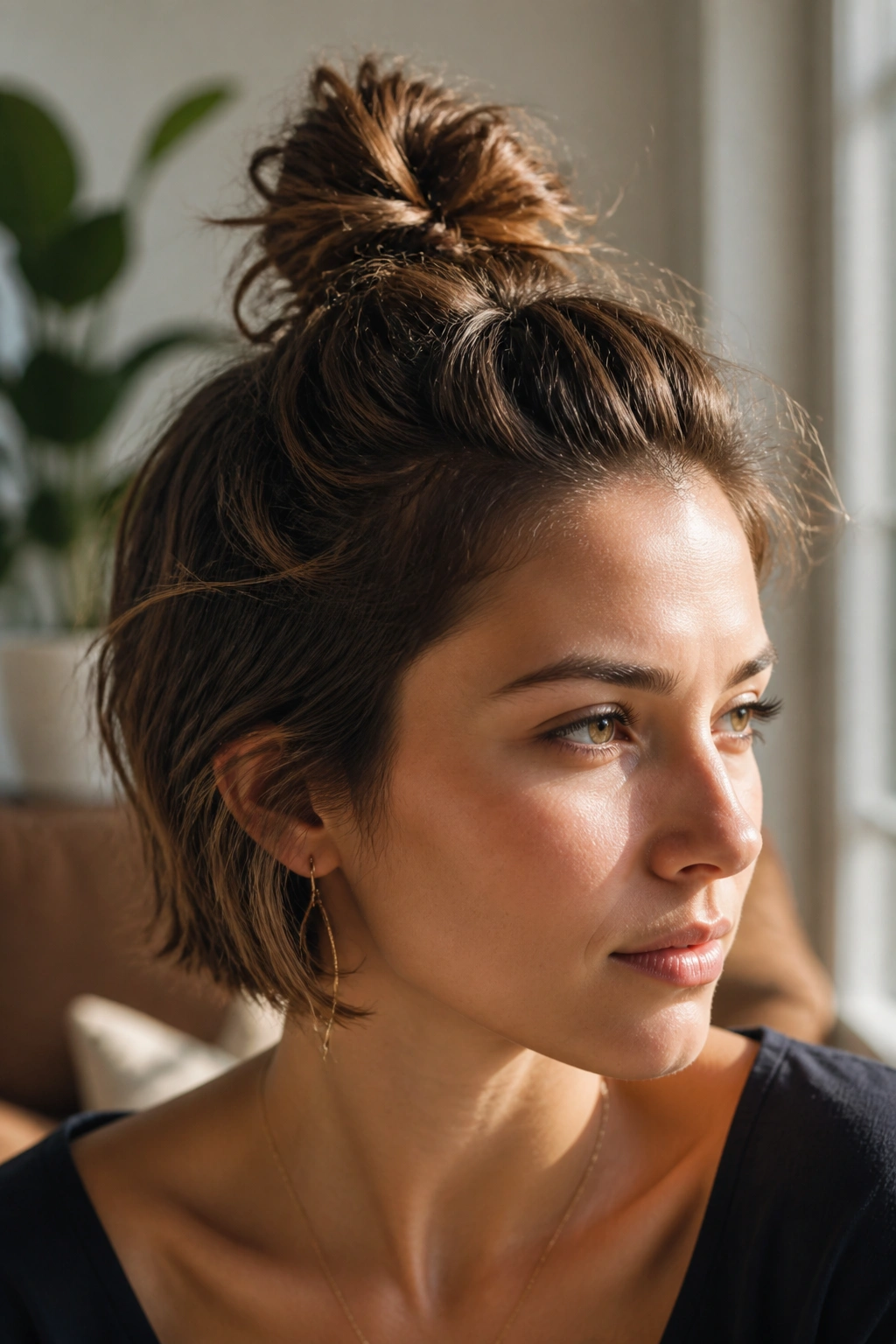
A top knot on short hair should never look like it’s pretending to be a full-sized bun. If you treat it like a tiny knot with attitude, it works much better. Pull the hair up high, twist it once, and let some ends stick out. That roughness makes it feel modern instead of strained.
What Keeps It Standing
- Dry shampoo at the roots before you start
- A small elastic that grips tightly
- Two pins crossed through the base of the knot
- Light finger-teasing at the crown for lift
That’s enough. You do not need to build a tower of hair. In fact, if you pile and tuck too much, the style gets bulky and awkward. Short bobs do best when the knot is compact and the crown has a little height. If your hair slips, rough the underside of the knot with a texturizing spray and pinch it into shape with your fingertips.
This one is especially good for weekend hair, errands, or anything casual where you want your neck clear and your face open. It’s not precious. That’s why it works.
10. The Rope-Twist Halo
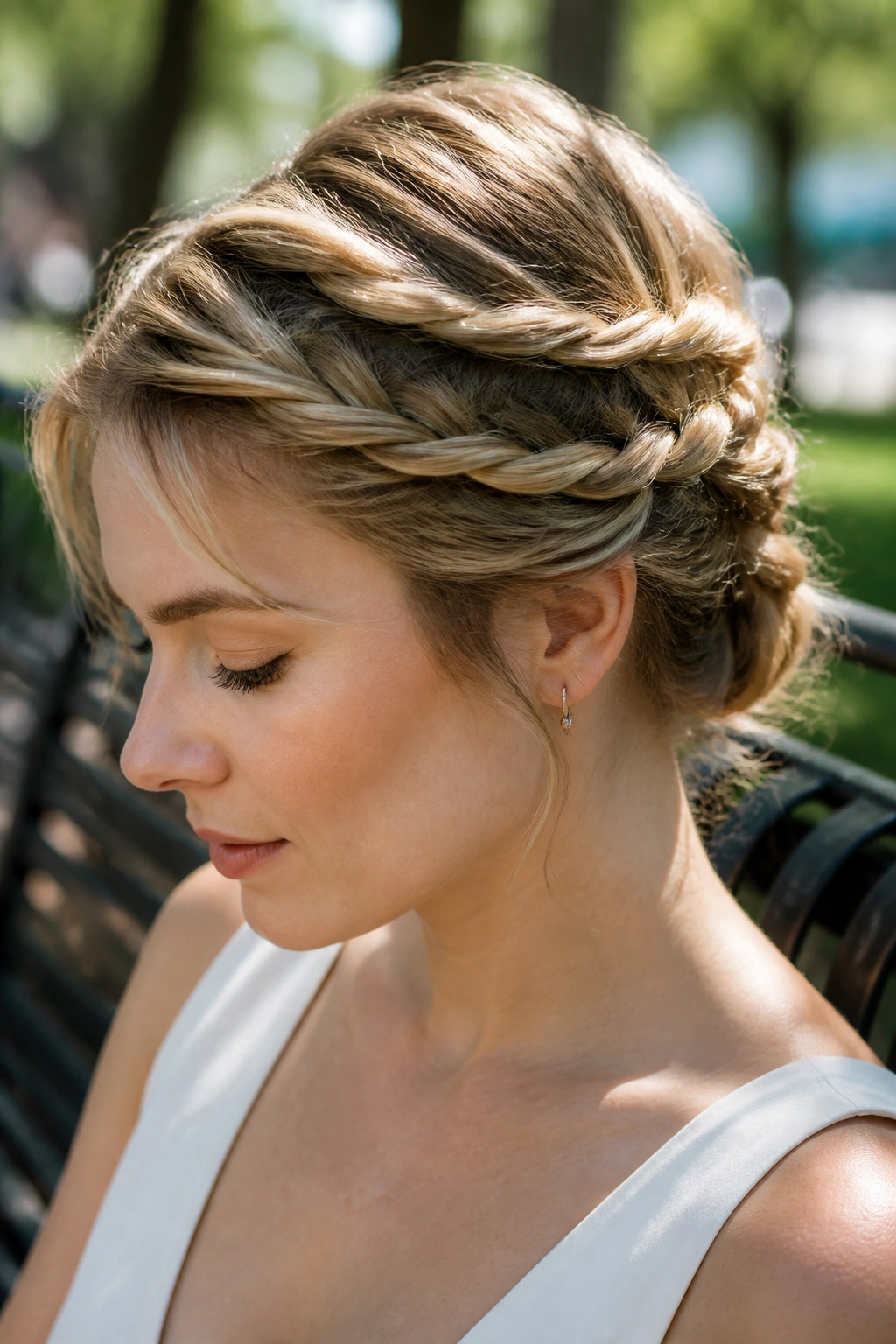
A rope-twist halo is a nice answer when braids feel too neat. Instead of crossing three strands, you twist two sections around each other and guide them across the head like a soft band. For short hair, that’s easier to manage because each section stays compact.
Begin with one side above the ear. Twist backward, keeping tension light, and pin the rope at the crown. Repeat on the other side, or fold the second twist underneath if your hair is too short to reach all the way around. A few loose ends near the nape are fine. Better than fine, actually. They keep the style from looking like a school recital updo.
Best Hair Types for This One
- Wavy hair with natural grip
- Growing-out pixies
- Short layered bobs
- Hair that refuses to hold a three-strand braid
A rope twist also plays nicely with a subtle side part. That small shift changes the whole shape. If your hair is fine, mist each section with a little spray before twisting. If it’s thick, twist more loosely so the halo doesn’t sit too heavy around the head.
11. The Pinned-Back Volume Puff
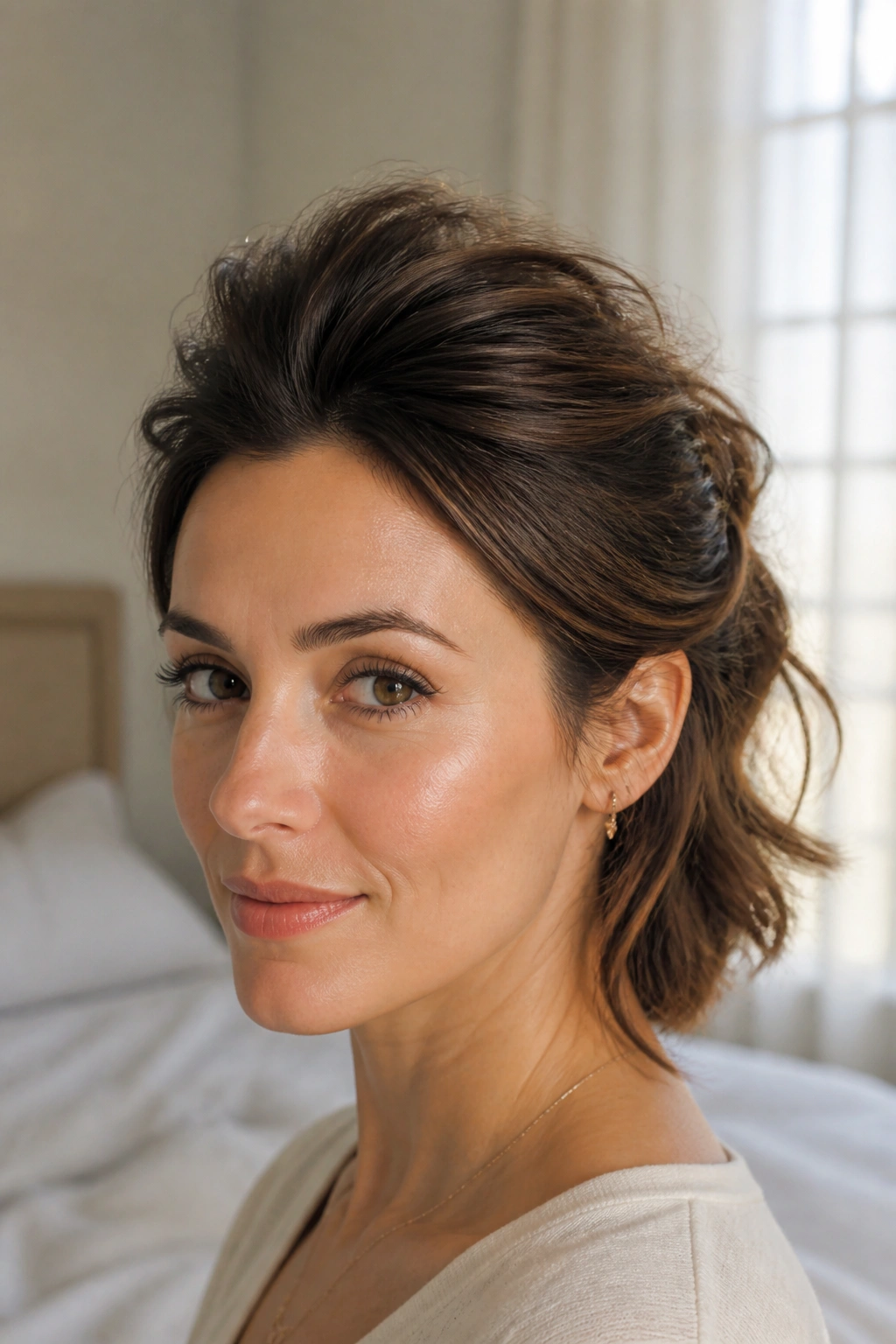
Sometimes you don’t need a full updo. Sometimes you just need the front and sides off your face, with a little height left at the crown so the whole style feels finished. That’s where the pinned-back volume puff comes in.
Tease the roots at the crown, smooth only the surface, and pin the side sections back behind the ears or just under the crown. Leave the length loose in the back, or tuck the very ends under if they’re grazing your collar. The puff at the top gives the style its shape. Without that, it can look like you merely forgot to style your hair.
This works especially well on curly and textured hair because the natural body helps the shape stay lifted. Straight hair can wear it too, but it benefits from a little root spray or dry shampoo first. The style is casual, yes, but it still needs a spine.
One small detail makes a big difference: hide the pins under the top layer, not on top of it. Visible pins pull the eye away from the shape. Hidden pins let the volume do the talking.
12. The Nape Knot with Face-Framing Strands
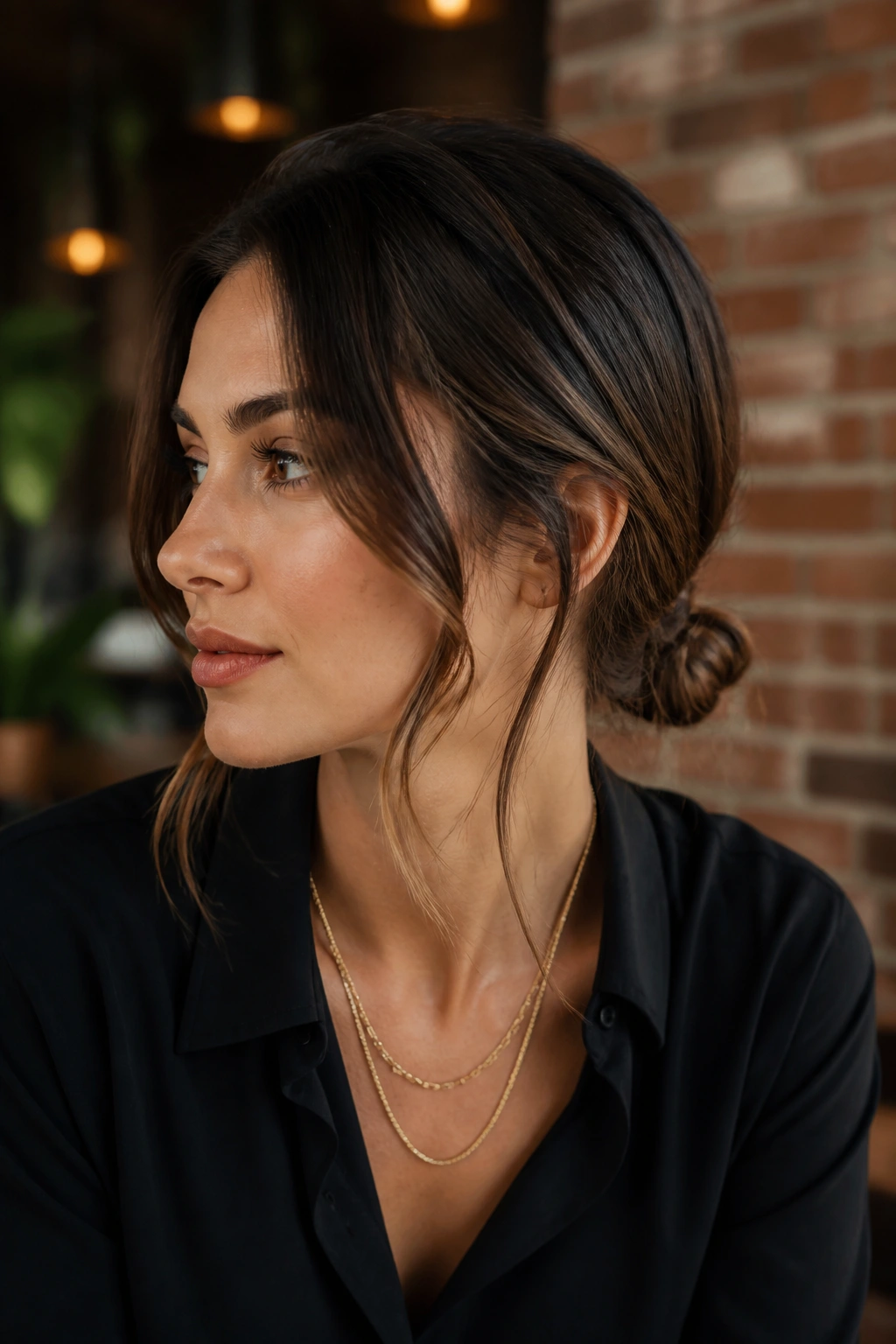
A nape knot is the softer cousin of the mini bun. It sits low, which makes it practical, and it leaves room for two face-framing strands to fall forward, which keeps it from feeling severe. For short hair, that balance matters a lot.
Gather the hair at the nape, twist it once, and knot or coil it into a small bun. Then pull out two front pieces, one on each side, and curl them lightly with a small wand or flat iron if needed. Those tendrils make the style look finished even when the knot itself is tiny. They also hide the fact that shorter layers may not fully reach the bun.
How to Keep It Soft
Use a flexible hairspray, not a stiff lacquer. Stiff spray makes the front pieces look frozen, and that ruins the easy feel of the style. A little bend is better. Pin the knot with two pins crossed through the middle, then press the bun gently with your fingers so it sits flat but not tight.
This is a good choice for date nights, casual parties, or any day when you want hair up without losing softness around the face.
13. The Accessorized Twist-and-Pin
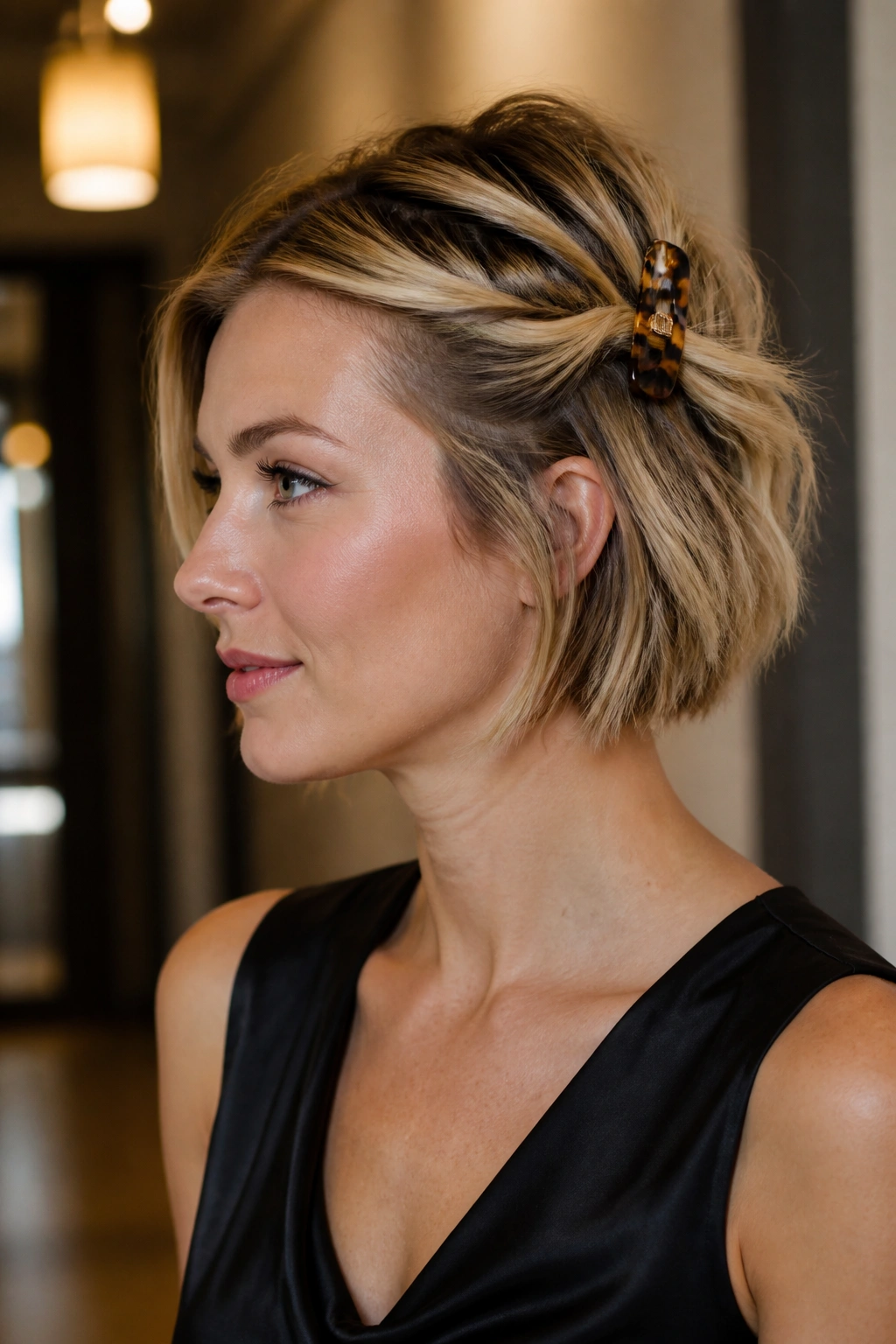
Accessories do some of the work that short hair can’t always do on its own. A chunky barrette, pearl clip, silk ribbon, or small comb can turn a very basic twist-and-pin into something polished enough for an event. That’s not cheating. That’s good sense.
Twist one side back, pin it, then add the accessory where the twist ends or where the hair meets the crown. If the back is too short for a real bun, let the accessory cover the seam and keep the style anchored. This is especially useful for pixie-grow-out stages, when the hair is neither short enough to be fully cropped nor long enough to behave like a bob.
Good Accessories for Short Hair
- A medium barrette with a strong clasp
- Small decorative combs
- U-shaped pins with a little weight
- Narrow headbands that don’t slip
The best part here is flexibility. A plain gold clip feels clean. A fabric bow softens the whole look. A black satin barrette can make rough texture feel intentional in one second. If the hair is freshly washed, add a bit of dry shampoo first so the clip has something to grab.
14. The Undone Low Roll
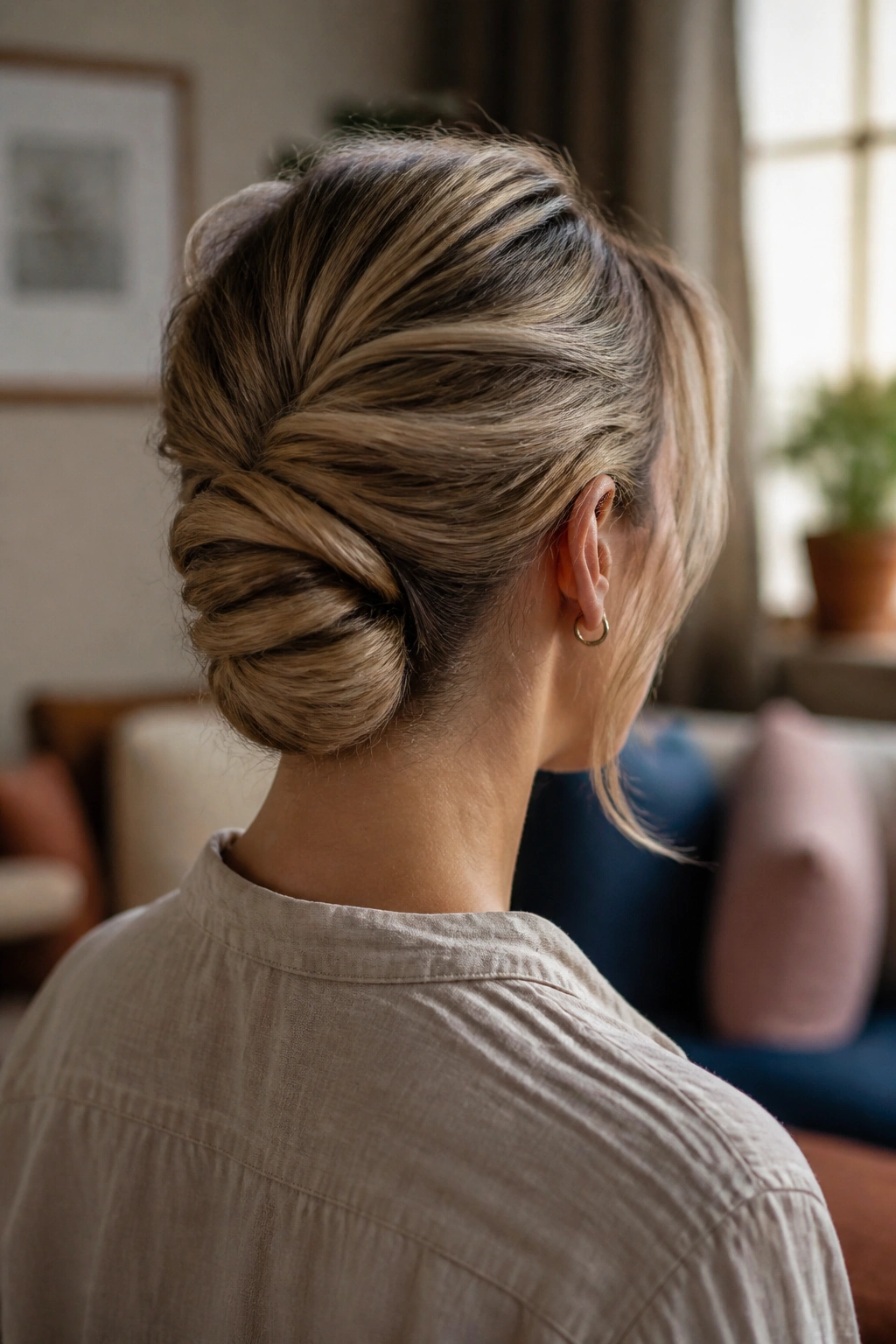
The undone low roll is the version I reach for when I want the feel of a French twist but none of the stiffness. It sits low at the back, folds the hair inward in sections, and leaves the surface a little imperfect on purpose. That softness is the whole point.
Instead of making one solid roll, divide the hair into two or three loose sections and fold each toward the center at the nape. Pin as you go. The result should look like a soft seam running up the back of the head, not a tight shell. If your hair is too short for the fold to close completely, let the tips peek out underneath. It still reads as a style.
This one likes texture. Straight hair often needs a wave set first, even if it’s a loose bend from a flat iron. Wavy hair usually needs less coaxing. And fine hair? Fine hair needs pinning in more than one spot, because gravity gets pushy with it.
A tiny side part or a slightly off-center roll keeps the style from looking too formal. It looks better with a few irregularities than with perfect symmetry.
15. The Crowned Pin-Curl Updo
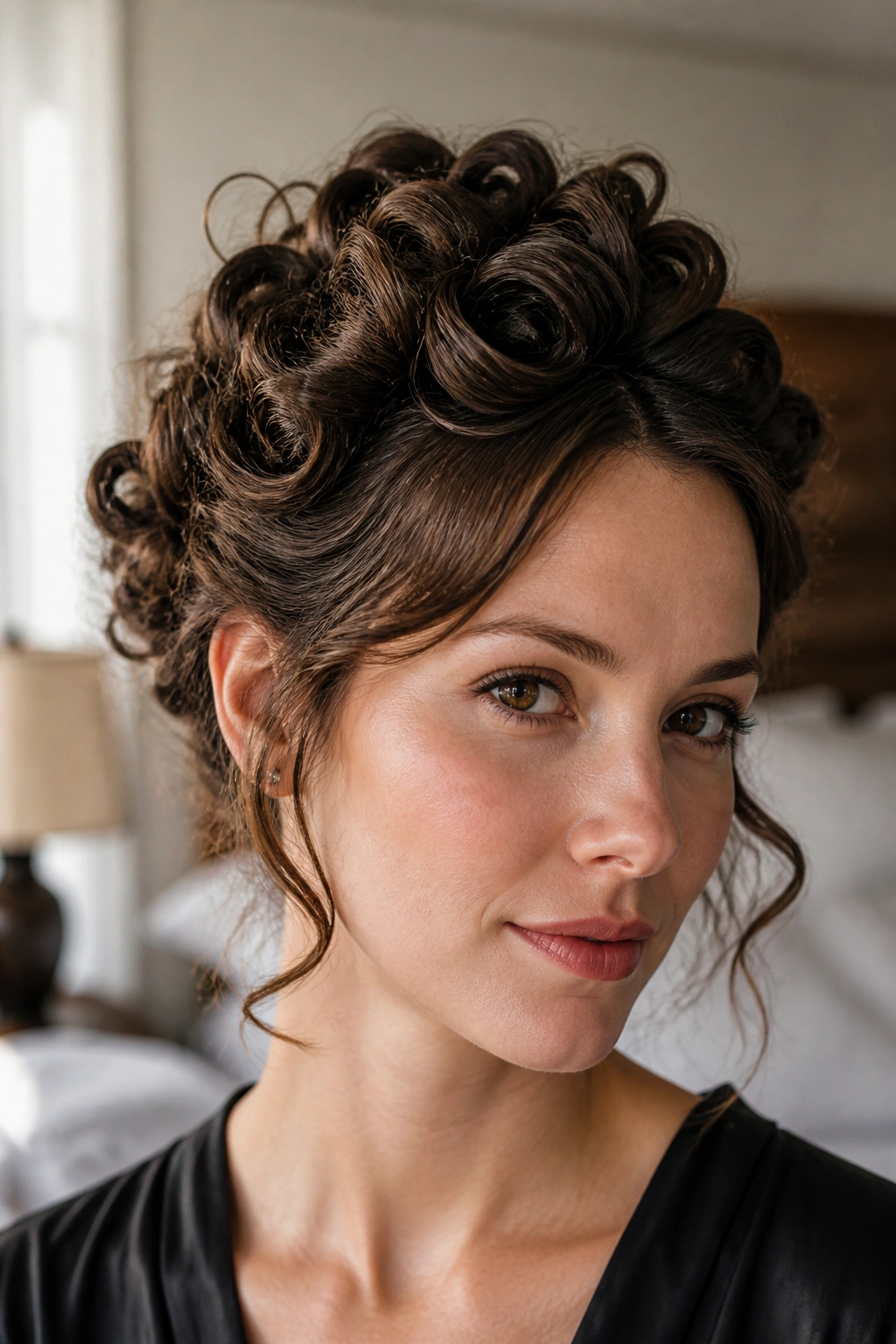
Pin curls can feel old-fashioned in the best way. On short hair, they create shape where there isn’t much length to build with, and they make a messy updo look detailed instead of accidental. A crowned pin-curl updo is a little more work than a twist or knot, but the texture is worth it.
Roll small sections of hair toward the scalp, pin them flat, and let them cool or set before loosening a few pieces. Once the pins come out, the hair has a soft bend that gives the crown shape and the ends a little movement. You can cluster the curls near the top and leave the lower sections tucked, which keeps the look controlled but still relaxed.
This style is strong on short layered cuts because each pin curl adds structure without demanding a long wrap. It also works when you want a formal finish that doesn’t look slick. That shiny, over-brushed wedding-hair thing? Not here.
A light mist of hairspray after the pins come out is enough. Too much, and the curls stiffen into little shells. A gentle rake with the fingers, not a brush, keeps the texture intact.
Final Thoughts
Short hair gives you a different kind of updo, not a lesser one. The styles that work best lean into texture, hidden pins, and shapes that sit low or compact instead of trying to copy a long-hair bun.
The smartest move is usually the least obvious one: rough the roots a little, leave a few ends loose, and pin in more than one place. Clean, flat hair is the enemy here. A little grit changes everything.
And if a style looks slightly imperfect? Good. That’s usually the sign it belongs on short hair in the first place.
