



Thick hair can look expensive and polished in one mirror, then turn into a wide, stubborn shape the second it dries. That’s the daily joke of dense hair: it has body, but it also has opinions.
The fix is not “take a lot off” and hope for the best. A strong short cut for thick hair needs weight removed in the right places, with the perimeter kept clean enough to hold shape. Done well, short layers give you swing, air, and movement without making the ends look see-through. Done badly, you get puff, frizz, and that helmet effect nobody asked for.
A good stylist will talk about internal layers, face-framing pieces, graduation at the nape, and where your hair sits heaviest — not just the overall length. That’s the real game. Thick hair is rarely hard because it’s too much hair; it’s hard because the bulk sits in the wrong spots.
The styles below cover polished bobs, shaggy crops, pixies with more room on top, and a few shapes in between. Some are neat. Some are messy on purpose. All of them make sense on thick hair when the cut is planned with a little care.
1. The Chin-Length Layered Bob That Lifts the Jaw

A chin-length bob is one of those cuts that looks simple until you see it on thick hair done right. Then it clicks. The line sits around the jaw, which keeps the shape crisp, while soft internal layers stop the sides from flaring out like a triangle.
Why it works
The secret is restraint. You do not want the top chopped to bits. You want 3 to 5 soft layers inside the shape, usually starting below the cheekbone so the ends still feel solid. That keeps the bob from collapsing into a fluffy mess by noon.
Ask for a blunt perimeter with light point-cutting at the ends. That keeps the outline clean and helps thick strands move instead of sticking out in a hard block. A blowout with a 1-inch round brush gives the best result, especially if your hair bends at the ends and refuses to stay tucked under.
- Best for round, oval, and heart-shaped faces
- Works well on straight or slightly wavy hair
- Needs about 10 minutes of styling, not 40
- Grows out in a tidy way
Pro tip: tuck one side behind the ear and leave the other loose. It breaks up the width fast.
2. The Interior-Layer Bob That Looks Sleek from the Outside
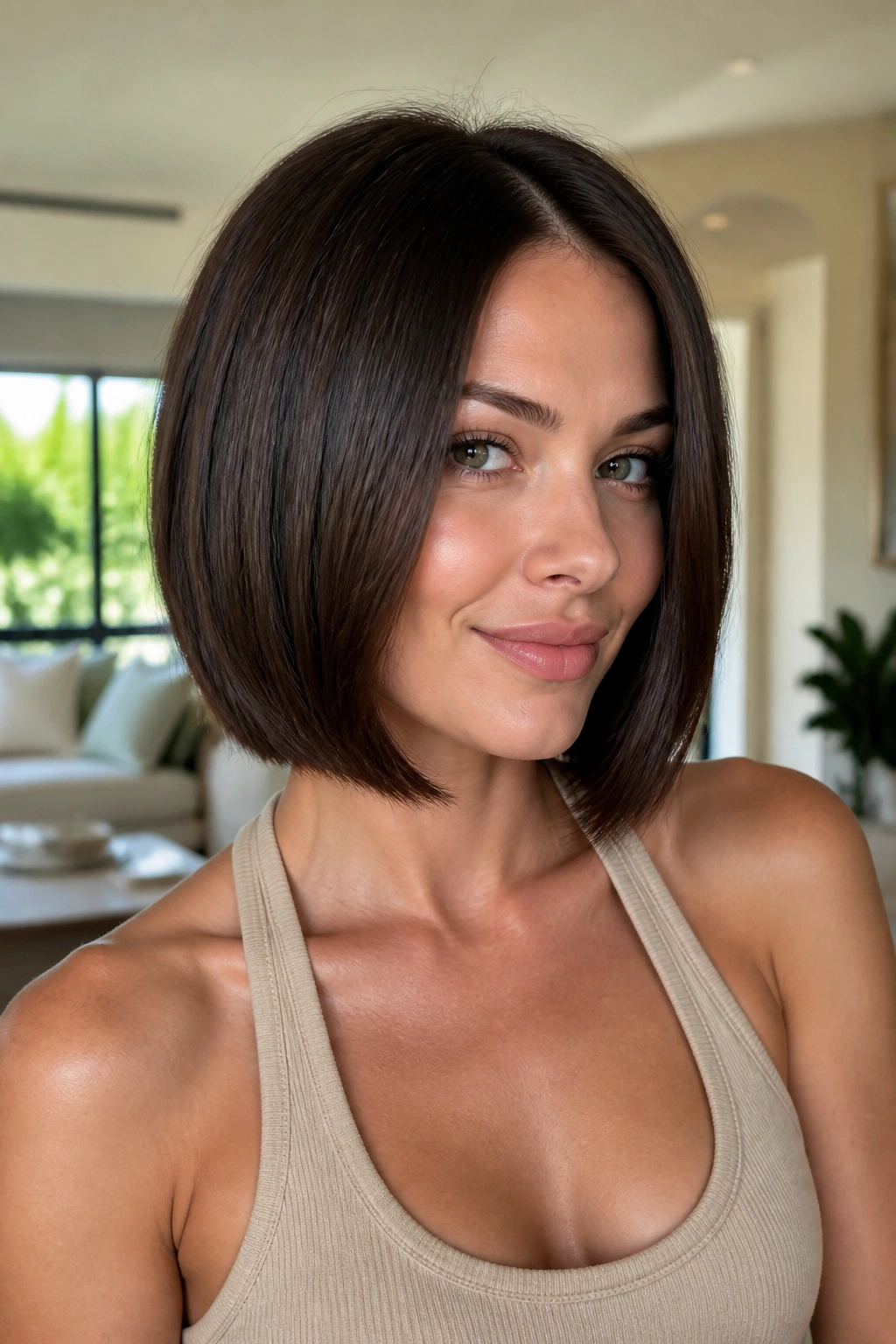
This is the cut I reach for when someone wants thickness to feel controlled, not thinned out. From the outside, it can read almost blunt. Underneath, the stylist has removed bulk with hidden layers, so the bob swings instead of sitting like a brick.
A lot of people think thick hair needs aggressive thinning. Usually, it doesn’t. It needs weight removal in the middle section, not shredded ends. That’s why this cut stays polished even when you air-dry it. The surface still looks full, but the inside has room to move.
If your hair is straight and heavy, this shape is especially useful. A center part gives it a sharp feel. A side part softens the whole thing and keeps the front from falling flat against the cheekbones. Either way, the ends should sit neatly at the jaw or just below it.
What to ask for: interior layers, a soft bevel at the ends, and no aggressive thinning shears near the perimeter. That last part matters. A lot.
3. The Feathered Pixie Bob with a Lifted Crown
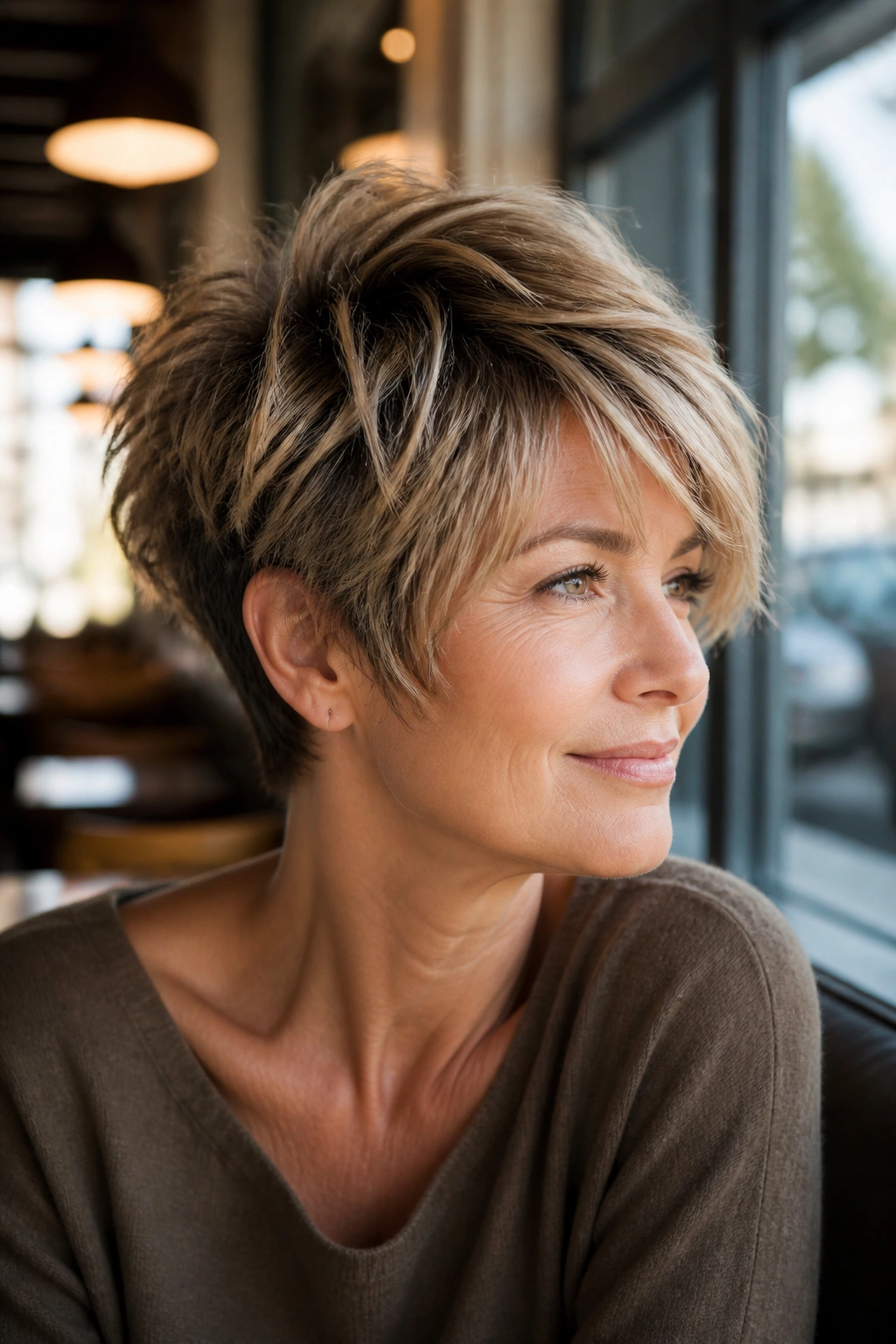
Short on the sides. Fuller on top. That’s the whole point here, and it works beautifully on thick hair that has too much weight in the back or around the ears.
The feathered crown gives the cut height without making it feel spiky. The nape stays short and tidy, which keeps neck bulk under control. If your hair tends to collapse under its own weight, this shape wakes it up fast.
How to wear it
Start with mousse at the roots, then rough-dry the top with your fingers until it’s about 80 percent dry. After that, use a small round brush or your hands to push the crown up and slightly forward. You want lift, not a stiff shell.
This cut likes movement. It does not need perfect styling. A little paste on dry ends is enough to separate the front pieces and keep the shape from reading too neat.
- Good for dense hair with a lot of crown weight
- Needs regular trims to keep the back tight
- Works especially well with glasses and strong brows
- Can be styled in under 8 minutes
One caution: if your hair grows fast at the nape, this cut needs more salon visits than a bob.
4. The Blunt Lob with Long Face-Framing Layers
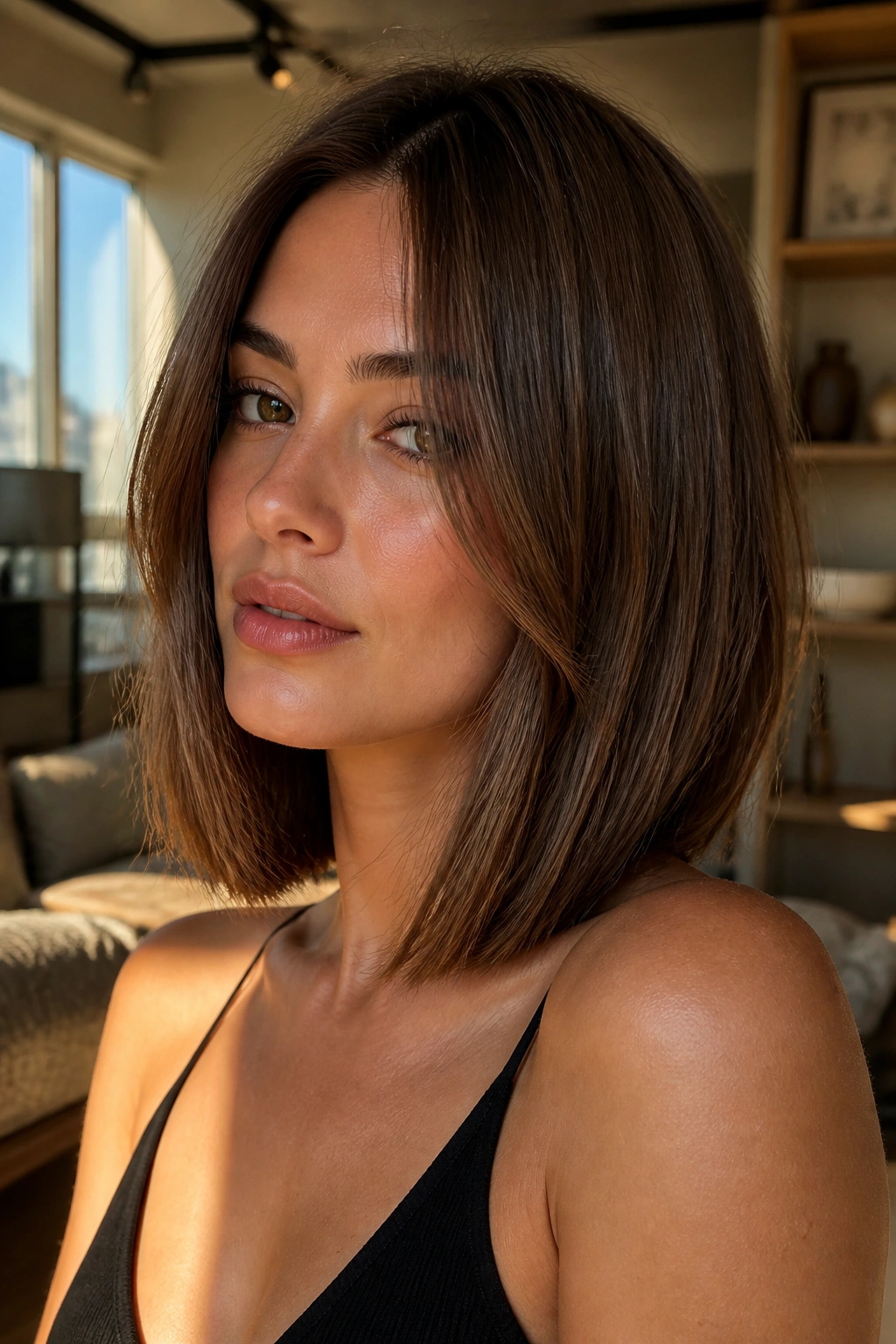
Why does a blunt lob belong in a list of layered cuts? Because thick hair often needs a strong outside line and lighter pieces inside. That combination gives you structure without the heavy, boxy feeling that a one-length lob can create.
The best version lands around the collarbone, with face-framing layers that start near the cheekbone and slide down toward the collarbone. Those front pieces matter more than people think. They pull the eye down and keep the cut from ballooning around the sides.
This is one of the easiest short layered cuts for thick hair to live with. You can air-dry it and still look intentional. You can blow it out and get something sharper. You can bend the ends with a flat iron and keep the rest soft.
If you hate endless maintenance, this is a good place to land. It grows out without turning awkward fast, and it still leaves enough length for a ponytail on lazy days. That matters more than any trend word ever will.
5. The Curly Crop with Round Layers
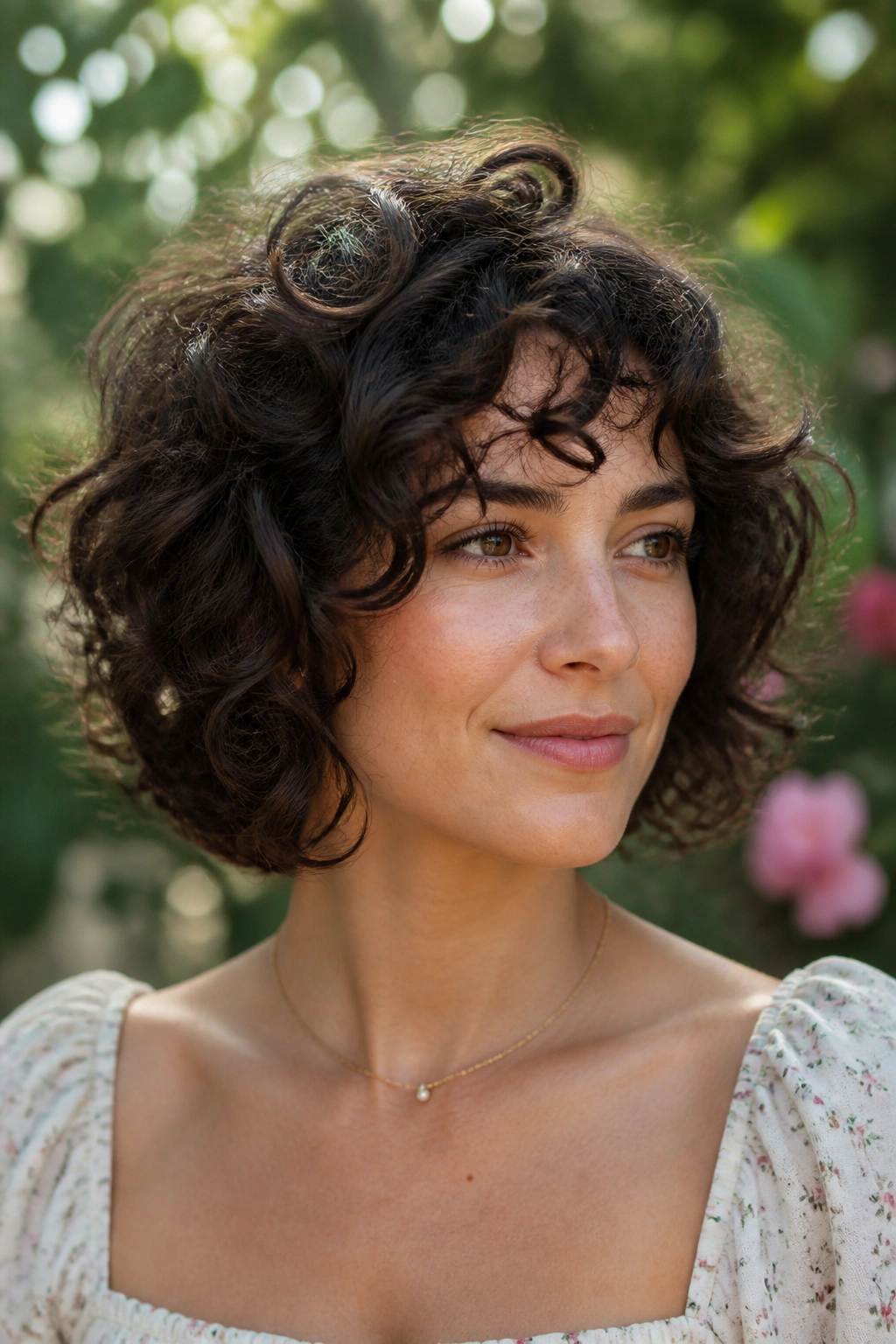
Curly thick hair needs a different kind of thinking. Straight hair can hide layers in the interior. Curls show everything. So the shape has to follow the curl pattern instead of fighting it.
Round layers are the answer. They keep the haircut from turning into a pyramid and help the curls stack in a way that feels soft, not wide. A good curly crop usually gets cut dry or mostly dry, because shrinkage changes everything once the curls spring back up.
A shoulder-length curl won’t behave like a chin-length curl. That’s the part most people miss. The stylist has to look at where your curls land when they’re dry, then cut with the shape in mind. If the top is too short, you get puff. If the lower layers are too heavy, you get a shelf.
Styling note: use a cream or gel on soaking-wet hair, scrunch with a T-shirt, then diffuse on low heat. High heat makes dense curls frizz out faster than almost anything else.
6. The Razor-Cut Crop with Piecey Ends
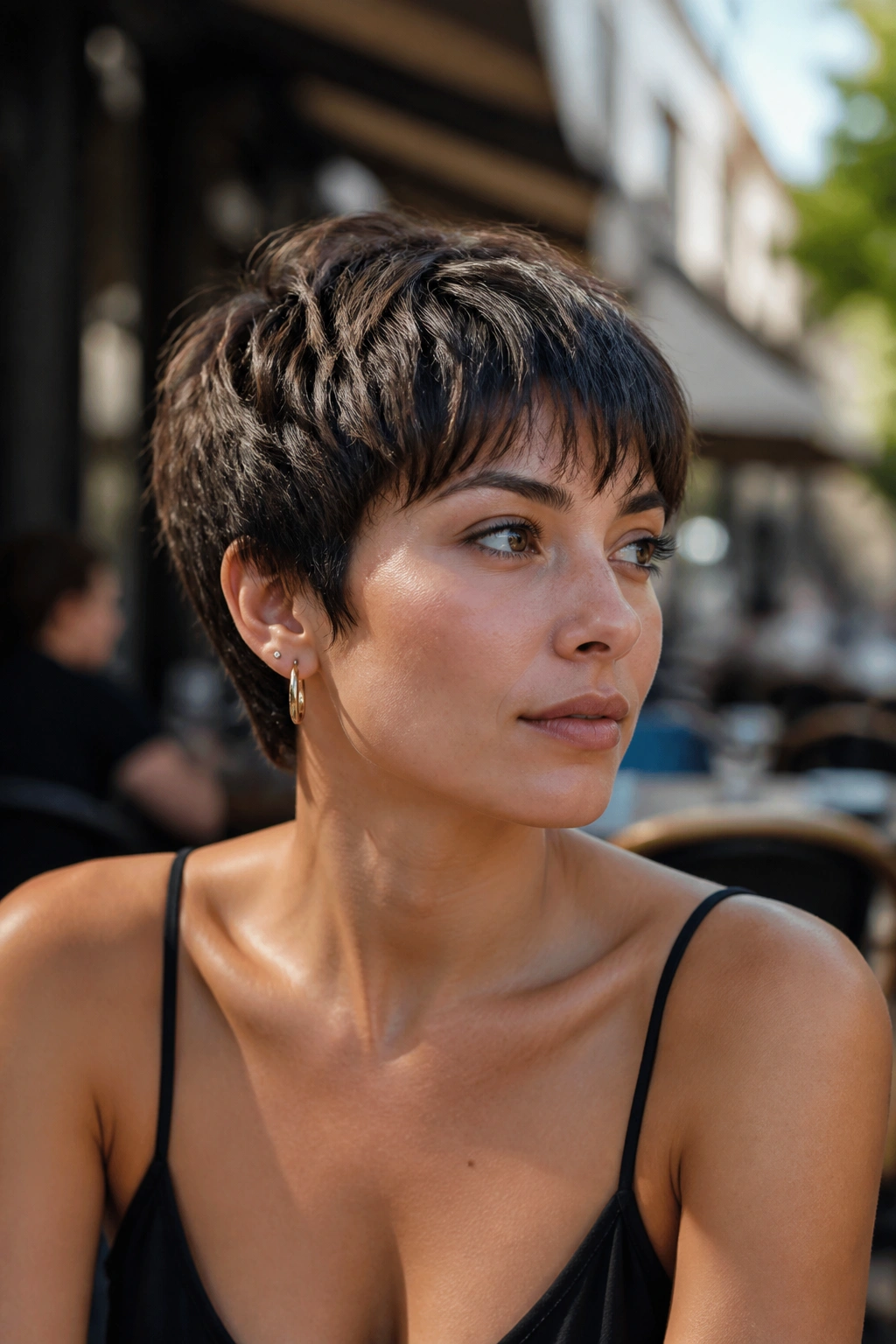
This one has attitude, and it needs the right hair to back it up. A razor cut softens the ends and creates separation, which can be a gift for thick hair that feels dense and rope-like. The result is lighter, more broken up, and less blocky.
Not every head of thick hair should get razor work. If your hair is already frayed, very dry, or brittle, a razor can make the ends look fuzzy. But if your strands are coarse and healthy, the effect is sharp in the best way.
The cut usually sits somewhere between a short bob and a crop. The perimeter stays short enough to feel fresh, while the razor adds movement through the lower layers. It looks especially good when the front pieces are a little longer and fall toward the cheekbones.
What to watch for
- The razor should be used lightly, not hacked through the whole head
- The ends need moisture, because piecey hair shows dryness fast
- A pea-sized amount of cream is often enough
- Air-drying keeps the shape soft and easy
This is a cut for people who like hair with edge, not a polished shell.
7. The Tousled Bixie That Breaks Up Bulk
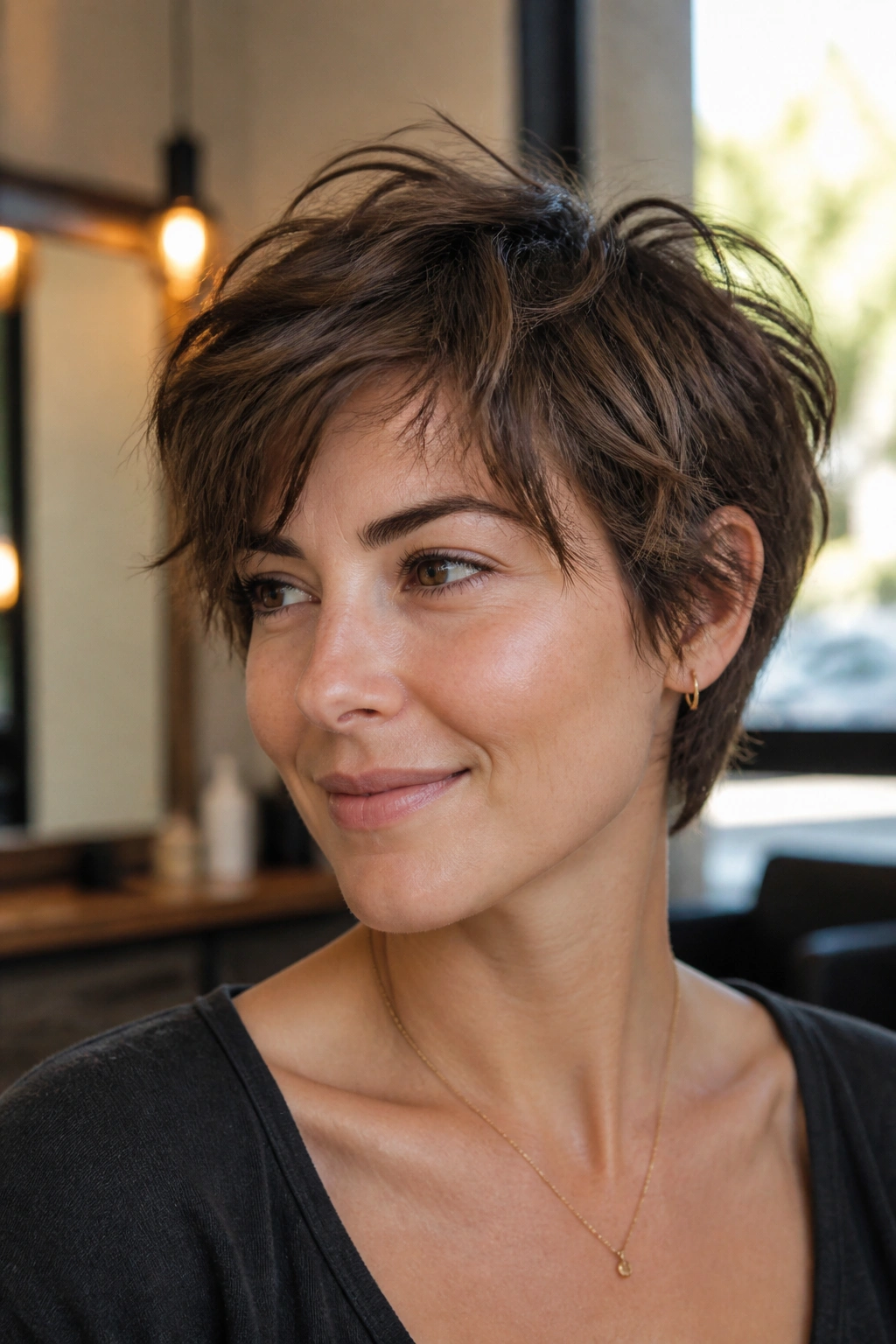
A bixie sits between a bob and a pixie, which is part of why thick hair handles it so well. You keep some length where you want it, but you remove the heavy blanket feeling that can make short hair look puffy.
The trick is balance. The top stays longer, the sides taper, and the nape gets cleaned up so the cut doesn’t sit square against the neck. If your hair is thick around the ears, this shape can feel like a relief.
I like this cut on people who want short hair but still want a little swing around the face. It has more softness than a classic pixie and less fuss than a bob. It also suits hair that has a natural bend, because the bend helps the layers settle on their own.
A dab of matte paste is enough on dry hair. Use your fingers to push pieces in different directions. You want texture, not a combed finish. Too neat, and the whole thing loses its charm.
8. The Angled Bob with a Stacked Nape
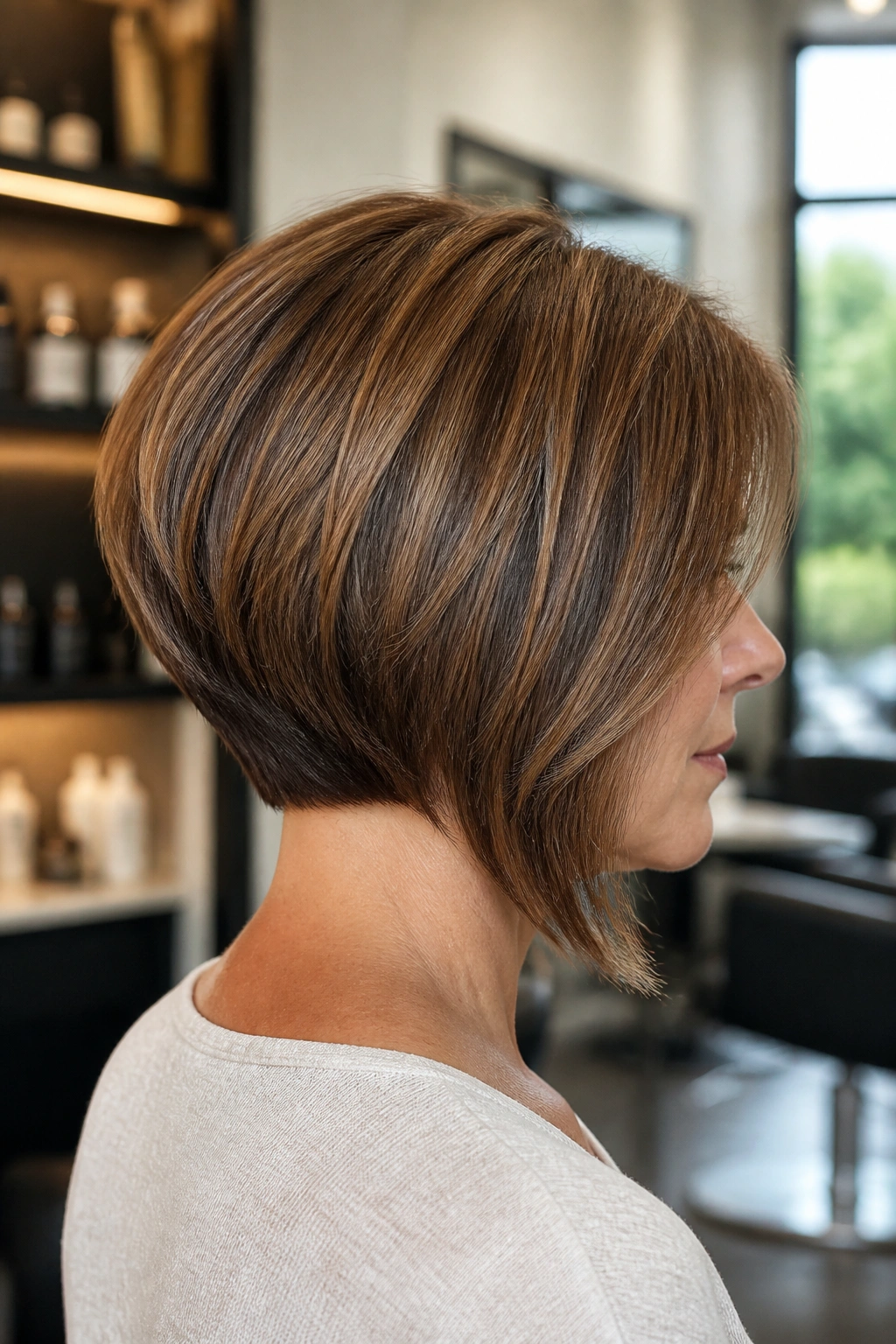
Sharp at the front, shorter at the back. That angle does real work on thick hair.
The stacked nape removes a lot of hidden bulk where hair often grows the heaviest, especially if your neckline is dense and the hair sticks out in a wedge. Meanwhile, the longer front pieces keep the cut from feeling too severe. That contrast is what gives the style its shape.
This cut is a good fit if your hair is straight and thick enough to hold a clean line. Wavy hair can wear it too, but the angle will look softer and less crisp. Either way, the silhouette stays neat as long as the nape is cut with care.
A round brush helps a lot here. Blow-dry the back downward first, then curve the front under slightly so the ends hug the jaw. Use a drop of serum on the last two inches only. If you put serum at the roots, the whole cut can go flat and lose the lift that makes it work.
9. The Collarbone Lob with Hidden Layers

Not every short layered style has to be cheek-length. Sometimes the smartest move is to stay at the collarbone and let the layers do the heavy lifting.
This cut keeps enough length to calm thick hair, but the hidden layers stop the ends from hanging in one thick curtain. That makes a huge difference if your hair tends to swell at the sides when it dries. You still get movement, but the shape stays long enough to feel easy.
A collarbone lob is also forgiving when you’re tired of styling. Air-dried, it looks casual. Smoothed out with a blow-dryer, it looks clean. Worn with loose bends from a flat iron, it feels soft and a little undone.
Who it suits
- People who want shorter hair but not a full chop
- Thick hair that gets bulky at the bottom
- Wavy textures that need some control
- Anyone growing out a bob and wanting shape in the meantime
There’s a reason stylists keep returning to this length. It behaves.
10. The Wolf-Inspired Crop for Natural Texture
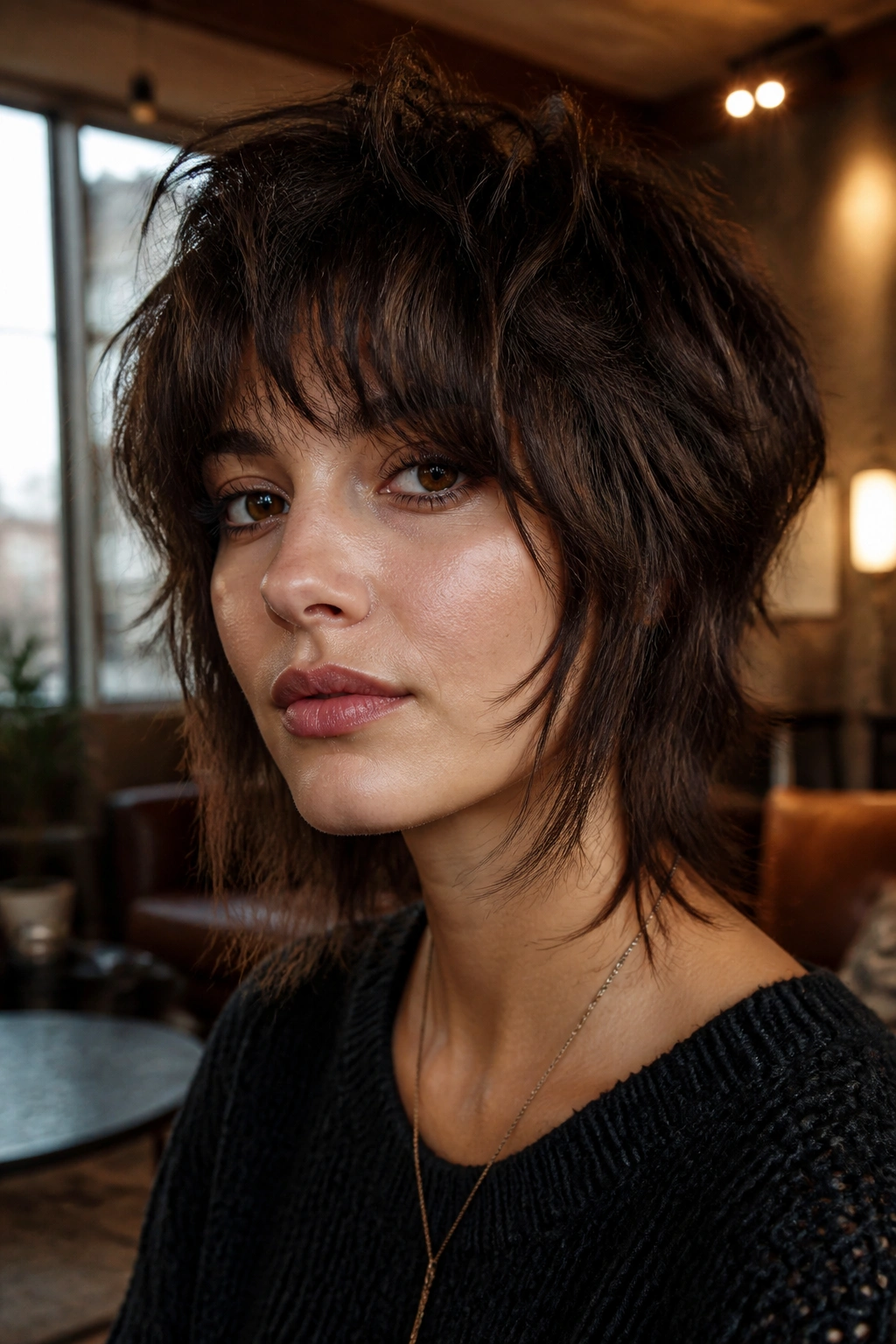
The wolf cut has a reputation for being dramatic, but the short version can be surprisingly wearable on thick hair. It’s all about a shorter crown, shaggy layers, and a little length left around the face so the cut doesn’t feel too rough.
The appeal is texture. If your hair already bends, flips, or frizzes in a way that looks alive rather than messy, this cut works with it. The layers break up the mass, and the tapered shape keeps the top from sitting like a cap.
The science behind the shape
The shorter crown removes height where thick hair often piles up. The longer pieces around the temples and jaw stop the cut from becoming too puffy on the sides. That balance is why it looks better on dense hair than a random choppy cut with no plan.
A curl cream or light mousse is enough for styling. Scrunch it in, let the hair dry partly on its own, then finger-comb the top. No heavy brushing. That ruins the separation and makes the layers blend into a blur.
This one has personality. Plenty of it.
11. The Side-Swept Layered Bob That Softens the Face

A deep side part changes everything. On thick hair, it pulls volume away from the center and gives the haircut a more sculpted line.
This bob works especially well if your face needs a little softening around the forehead or if a center part makes your hair split in a way that feels too flat. The side-swept front opens up one side of the face while the layers on the opposite side add lift.
The cut itself usually sits between the jaw and the collarbone, with layers that angle forward. That forward motion matters. It stops thick hair from widening out at the sides and gives the whole style a cleaner fall.
Use a root-lift spray at the crown and direct the front pieces across the forehead with a medium round brush. The goal is not a stiff swoop. It’s a soft sweep with a little bend at the ends. That small detail keeps the style from looking dated.
12. The Wedge Bob with Soft Graduation
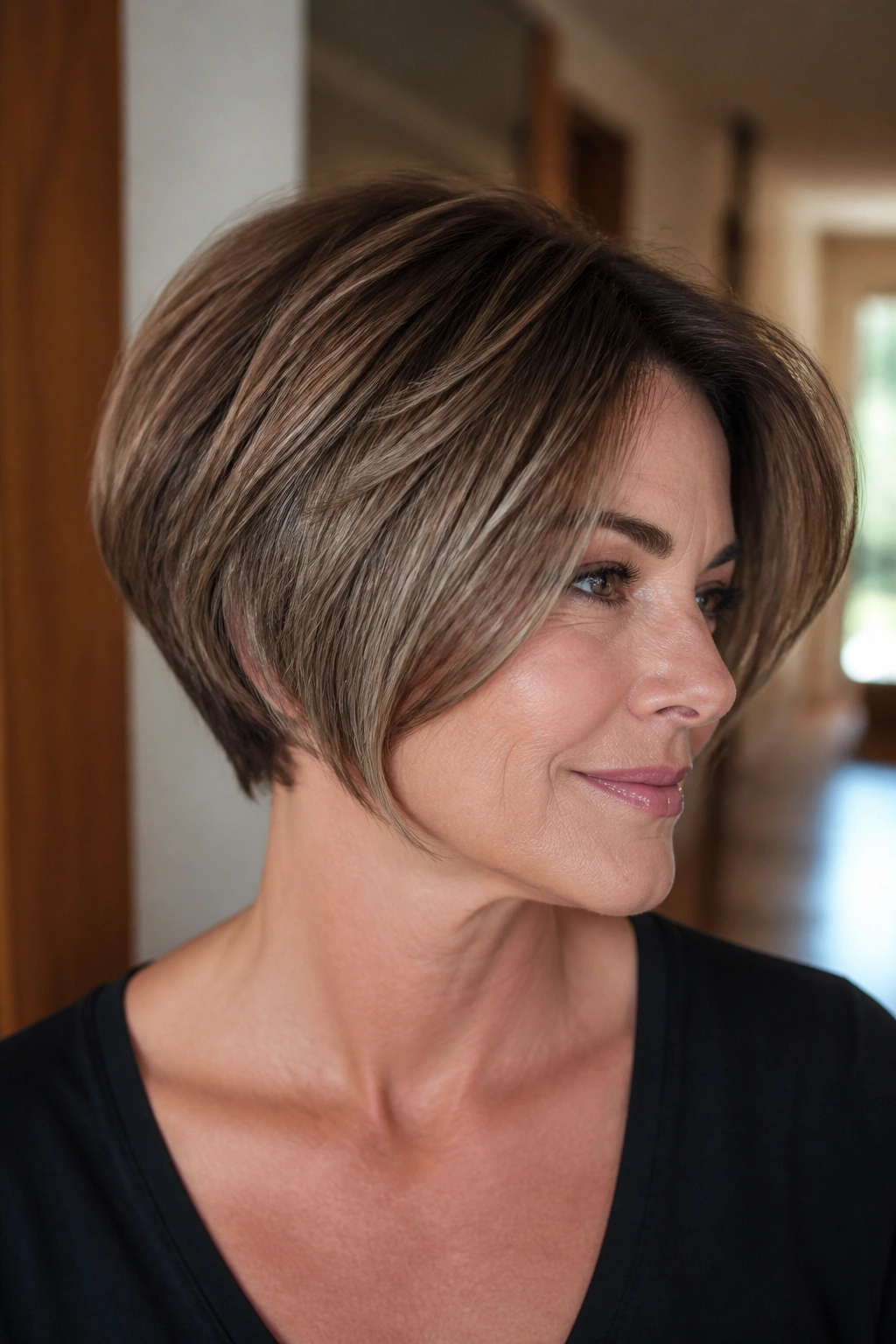
Here’s the blunt truth: thick hair can make a classic wedge look dated fast if the graduation is too stiff. Softening the back solves that.
A modern wedge bob keeps the short, tucked-in back shape that helps thick hair lie closer to the head, but it softens the line through the sides and crown. That means you still get structure without the hard helmet finish that older versions sometimes had.
This cut is particularly useful if your hair grows out wide at the nape. The graduated back takes weight off that area and lets the hair stack neatly. Meanwhile, the longer front bits stop the silhouette from feeling too severe.
It’s a good cut for people who like order. If you want your hair to look tidy after a quick blow-dry, this shape delivers. It also works well with strong cheekbones and defined jaws, because the cut frames the face without swallowing it.
A paddle brush, a touch of smoothing cream, and a few minutes of direction at the roots are enough. Don’t overwork it. The shape is the point.
13. The Airy Short Shag That Never Sits Still
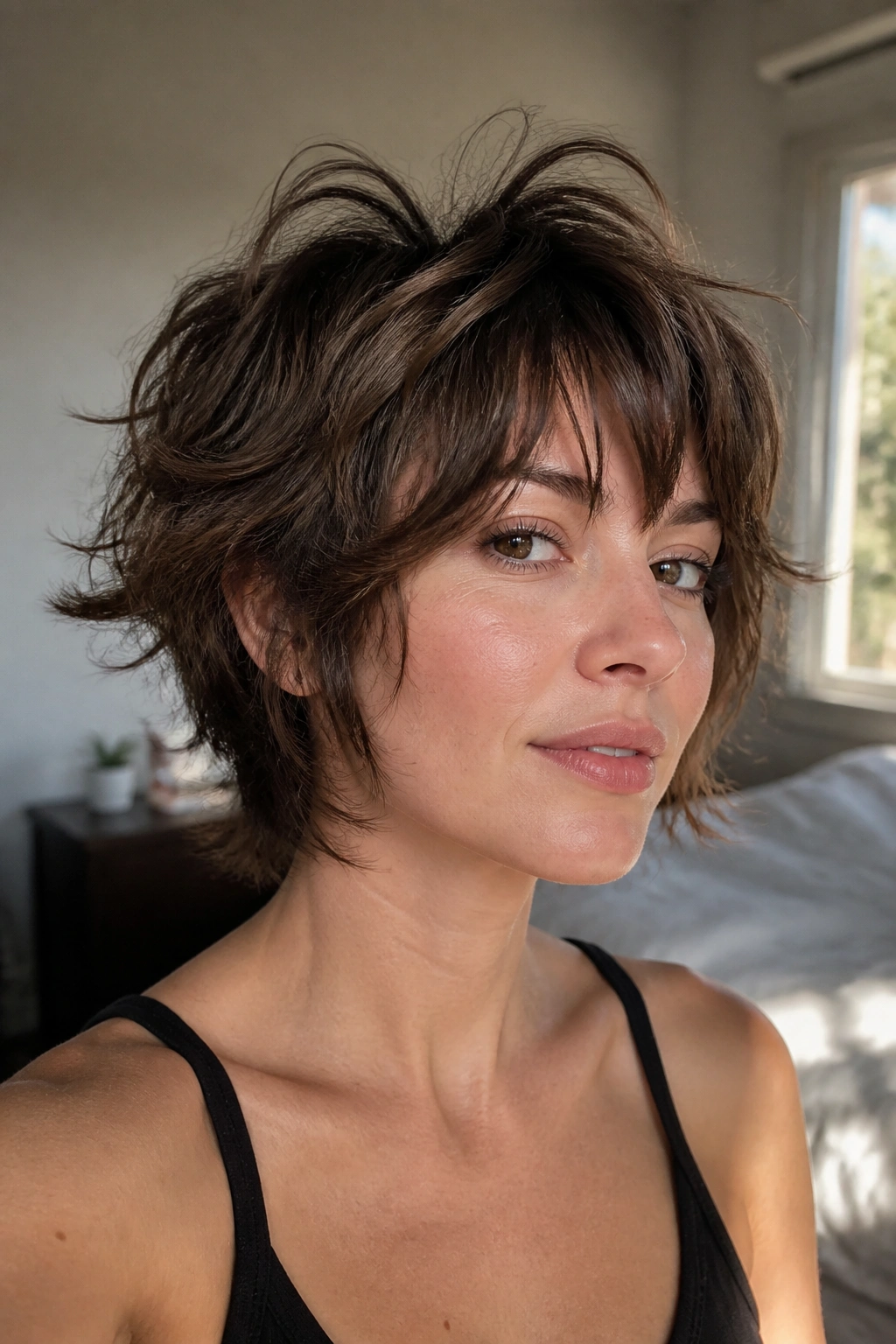
A short shag is what happens when thick hair is given room to move instead of being forced into one heavy shape. The layers are choppier, the fringe is softer, and the overall look has a little grit.
This cut is especially good for hair that refuses to lie flat. If your thick hair forms a bulky triangle or puffs at the sides, a shag breaks that outline apart. The crown gets lift, the ends get lightness, and the face gets a bit of softness without any hard lines.
How to get the most from it
- Ask for shorter layers at the crown and softer ones through the sides
- Keep the fringe long enough to push off the face if needed
- Use texturizing spray sparingly; too much can make thick hair feel dry
- Let some sections air-dry and rough them up with your fingers
This is one of those cuts that looks better when it’s not over-styled. That’s good news if you’re after something fast. It’s also honest. A shag that has been flattened into submission loses its charm immediately.
14. The Tapered Crop with Long Top Layers
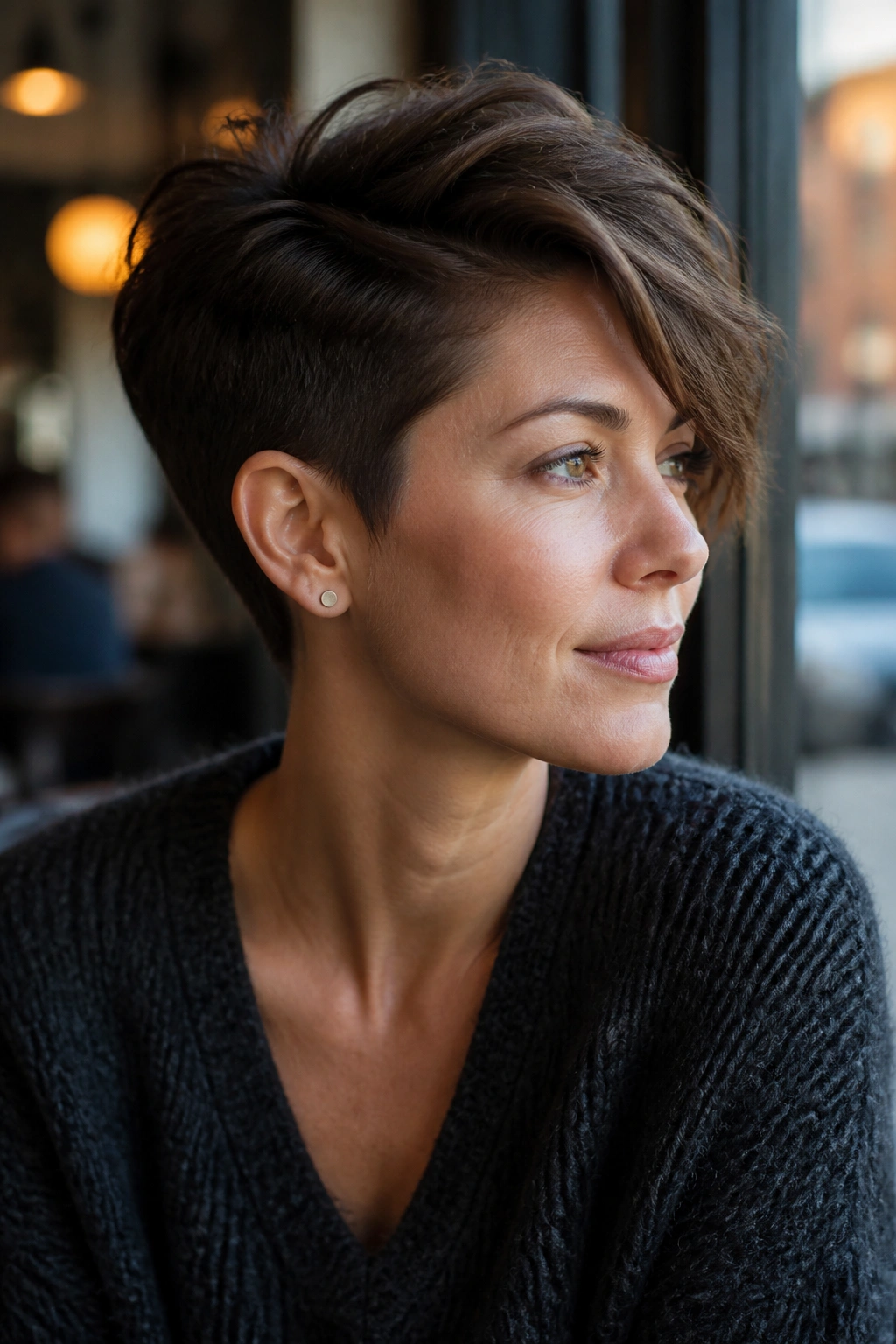
A tapered crop strips away bulk where you do not need it and keeps length where you do. That is the whole point, and thick hair takes to that logic well.
The nape and sides are cut close enough to stop the shape from ballooning, while the top stays long enough to brush forward, back, or slightly to the side. If you like switching your part without changing your haircut, this shape gives you room to play.
It’s also one of the more practical choices for coarse hair. Coarse strands can hold shape, but they can also feel heavy. The taper lightens the bottom, and the longer top gives the haircut some flexibility so it doesn’t end up looking too severe.
Use clay or a light pomade on dry hair if you want definition. A tiny amount goes a long way. Seriously. Thick hair can eat product and still look dry, but too much turns this style greasy fast.
This cut is best if you want short hair that behaves.
15. The Curtain-Bang Bob with Soft Movement

Curtain bangs change the whole mood of a thick-haired bob. They break up the front weight, soften the forehead, and make the haircut feel lighter even when the back is still full.
The best version hits around the chin or just below it, with curtain bangs that start near the cheekbone and blend into face-framing layers. If the bangs are too short, thick hair can make them puff. If they’re too long, they can disappear into the rest of the cut. The sweet spot is often around the cheekbone or lip.
What makes it work
The bangs create motion at the front, which keeps the haircut from looking square. They also grow out more gracefully than blunt fringe, which is handy if you do not want to maintain a perfect bang line every few weeks.
Blow-dry the bangs with a medium round brush, pulling them away from the face first, then letting them fall back into place. That little bend at the root matters. It stops the fringe from splitting in odd directions as the day goes on.
This cut has a softer, friendlier feel than a sharp bob. That’s part of the appeal.
16. The Choppy Crop with an Undercut
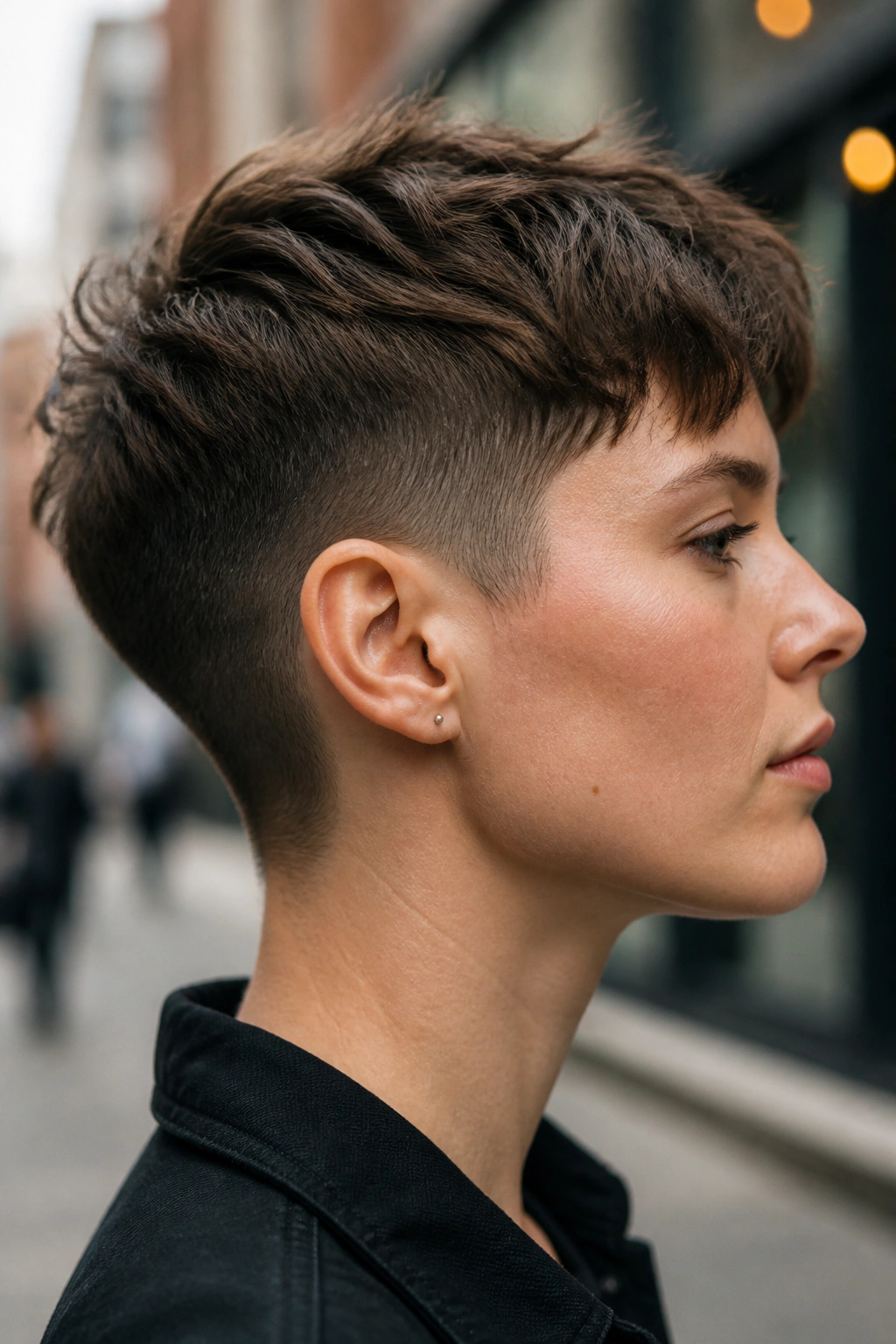
This one is for very dense hair, the kind that seems to have a second layer hiding underneath the first. An undercut removes that hidden mass at the nape or sides, which means the top can sit lighter and more controlled.
It is not a shy haircut. Good. Thick hair does not always need shy solutions.
The top stays choppy and textured, while the underside is clipped shorter so the bulk doesn’t push the shape outward. That can be a huge relief if your hair feels hot, heavy, or hard to dry. It also makes short styles hold better because the head shape shows through in a cleaner way.
- Best for very dense, straight, or wavy hair
- Needs trims every 4 to 6 weeks
- Works well with dry texture paste
- Can be worn sleek or messy
One honest note: if you like changing lengths often, an undercut is a commitment. It grows out awkwardly if ignored. But if you want a cut that removes weight where it matters, it’s hard to beat.
17. The Rounded Layered Bob That Tames the Triangle

A rounded bob is one of the quietest fixes for thick hair, and I mean that as a compliment. It keeps the silhouette curved instead of boxy, which is exactly what helps when your hair wants to sit wide at the sides.
The layers live inside the shape, not all over the surface. That keeps the outline smooth while still making room for movement. The result is a cut that hugs the head a little more closely and keeps thick hair from jutting out at the temples or jaw.
This is a good choice if you hate sharp edges. It softens the face without getting floppy. It also works well with hair that has a little bend but not enough curl to bounce on its own.
One-sentence truth: this cut is about shape control.
Use a blow-dryer and a paddle brush to guide the hair inward, then finish the ends with a round brush if you want a cleaner curve. If the ends flip out too much, the layers are probably too short. That’s the clue.
18. The Soft Mullet Bob That Blends Edge with Ease

The soft mullet bob is a little rebellious, but not in a cartoonish way. It keeps the front shorter and the back slightly longer, with blended layers that stop the cut from looking harsh. Thick hair handles that contrast nicely because it can support the shape without going flat.
The style works best when the layers are feathered instead of chopped bluntly. That gives the haircut motion through the crown and side sections, while the longer back keeps enough weight to ground the whole thing. If you have thick wavy hair, the shape can look almost effortless without being lazy — which is a rare thing in haircuts.
What to tell your stylist
- Keep the front pieces soft, not severe
- Let the crown stay a little longer than a classic shag
- Blend the back so it doesn’t form a hard tail
- Leave enough length to tuck behind the ears if needed
This is a smart ending point for the list because it captures what thick hair likes most: structure, movement, and enough length in the right places to avoid puff. If you bring photos to the salon, bring two — one for the shape and one for the texture. That split matters. A good cut is not just about how short it is. It’s about where the weight lives, where it leaves, and how the hair falls when you stop touching it.
