



A short choppy bob with bangs does one thing a blunt cut rarely does: it moves. The ends kick out a little, the fringe softens the face, and the whole haircut feels lighter even when the length barely changes.
That’s why people keep coming back to it after growing out a pixie, cutting off damaged ends, or just getting tired of hair that sits there like a sheet.
The phrase covers a lot of ground, though. A razor-cut bob with micro bangs feels sharp and graphic; a chin-length version with wispy fringe feels softer; a stacked cut brings lift at the crown, which matters if your hair lies flat by noon. A good one should look alive, not half-finished.
Bang choice changes everything. Blunt fringe, curtain bangs, baby bangs, side bangs — each one pushes the cut in a different direction, and the wrong pairing can make the whole shape feel heavy or awkward. The right pairing is a small relief: easy to wear, quick to style, and full of movement without looking messy. Start with the shape that suits your hair, then let the bangs do their job.
1. Chin-Length Choppy Bob with Wispy Bangs
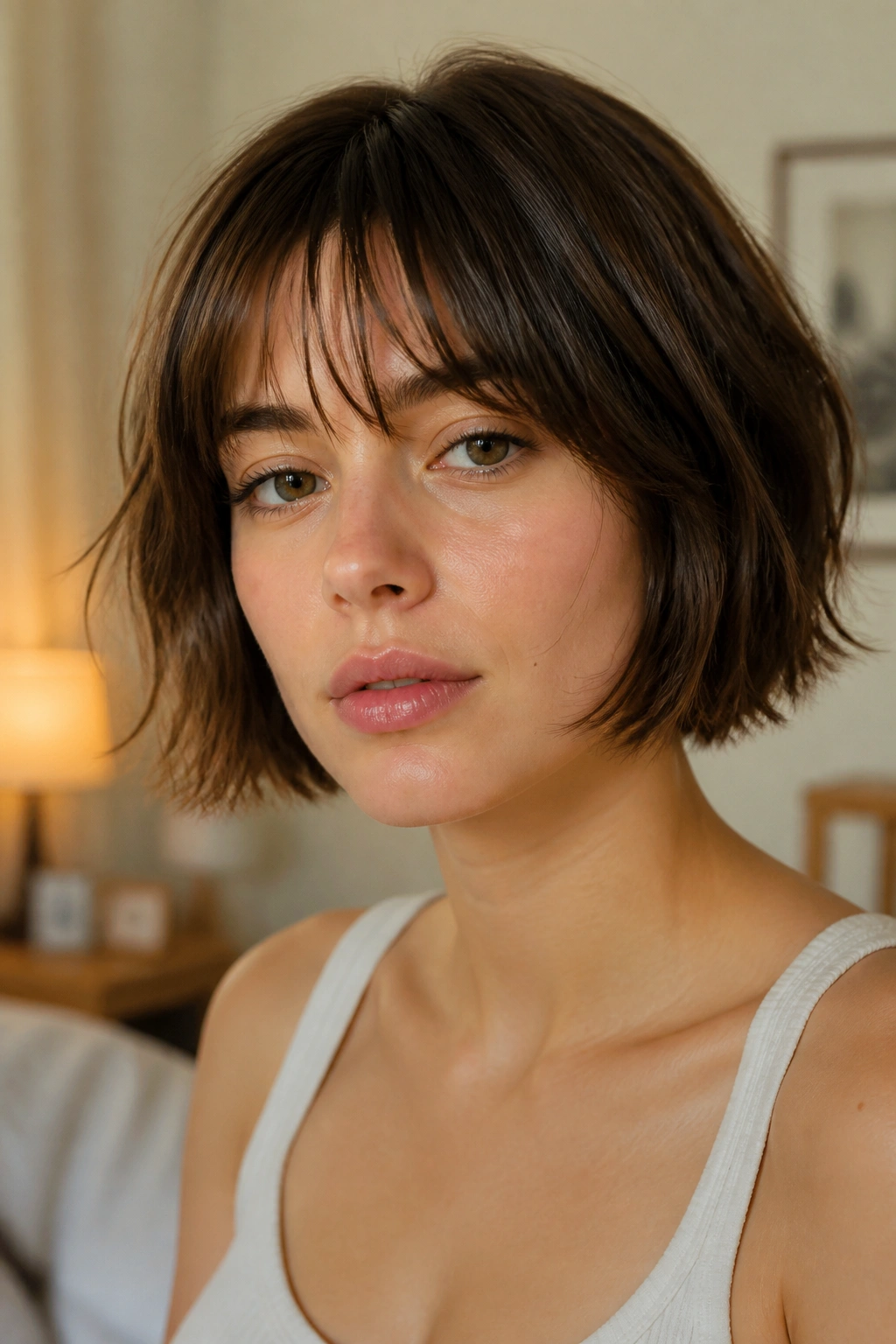
This is the easiest place to start if you want a short choppy bob with bangs that still feels soft around the face. Chin length keeps the shape clean, and wispy bangs stop the front from feeling too boxed in.
Why It Works
The little frayed ends matter here. A clean bob can look severe fast, especially on straight hair, but a few chipped layers through the perimeter break up that helmet effect. Wispy bangs do the same thing up top — they blur the forehead line instead of drawing a hard stripe across it.
Quick details that make this cut work:
- The length usually lands right at the chin or a hair below it.
- The fringe stays light, with a bit of see-through space in the middle.
- The ends should be point-cut, not chopped bluntly.
- A dab of lightweight mousse keeps the crown from collapsing.
Ask your stylist for a soft, broken edge rather than a heavy line. That one request changes everything.
2. French Bob with Micro Bangs
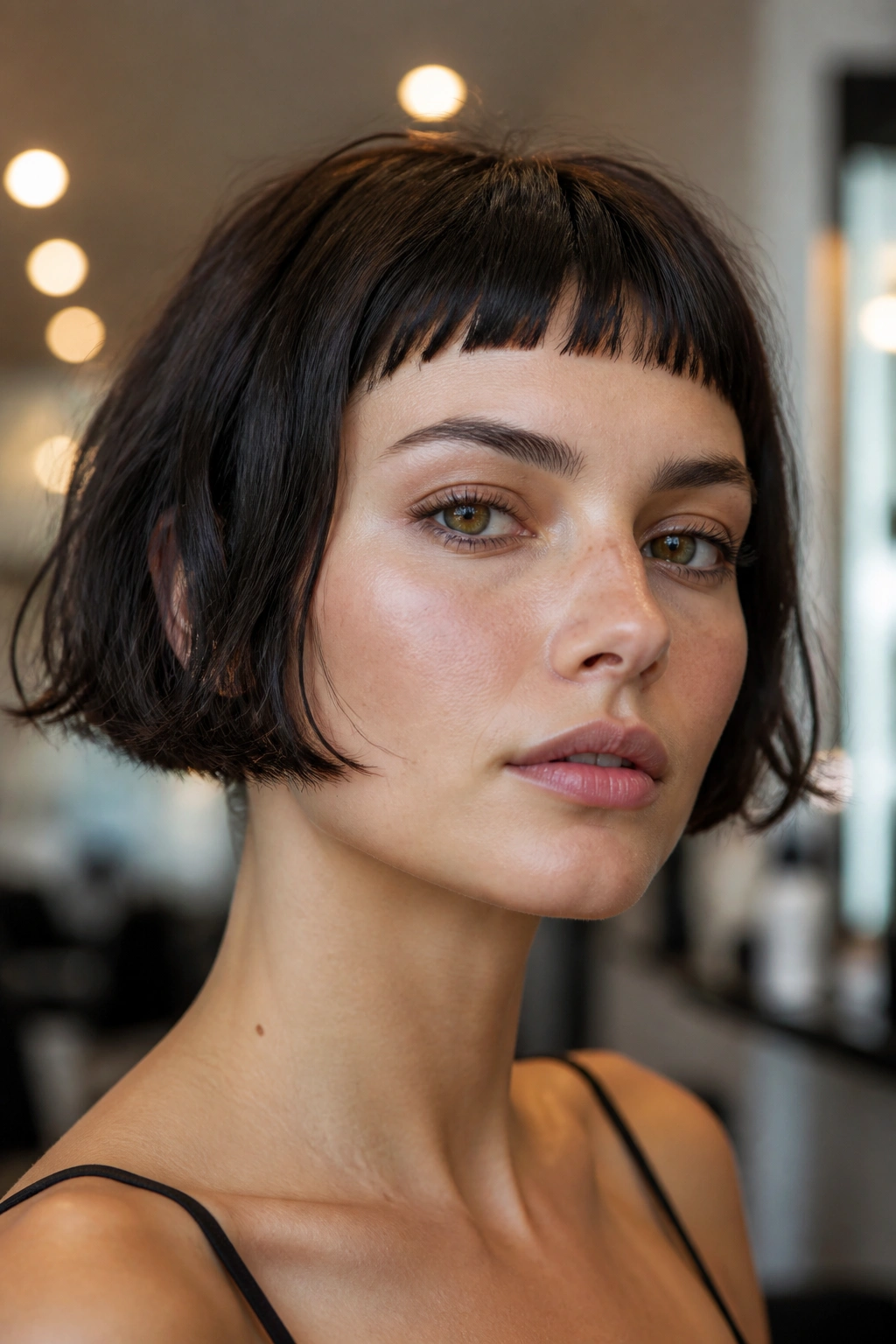
This cut is not shy. A French bob with micro bangs sits close to the face, and that short fringe puts all the attention on the eyes, brows, and cheekbones.
The beauty of it is the attitude. Micro bangs can look a little severe if they’re cut too straight or too thick, but when they’re slightly textured, they feel sharp in a good way. The bob itself should stay compact, usually around lip to cheekbone length, with just enough choppiness at the ends to keep it from feeling stiff.
I like this version on straight or barely wavy hair because the shape stays readable without much effort. A bit of matte paste through the tips is usually enough. If you love a polished line but hate hair that hangs in your face, this one has a real edge.
3. Jaw-Length Textured Bob with Curtain Bangs
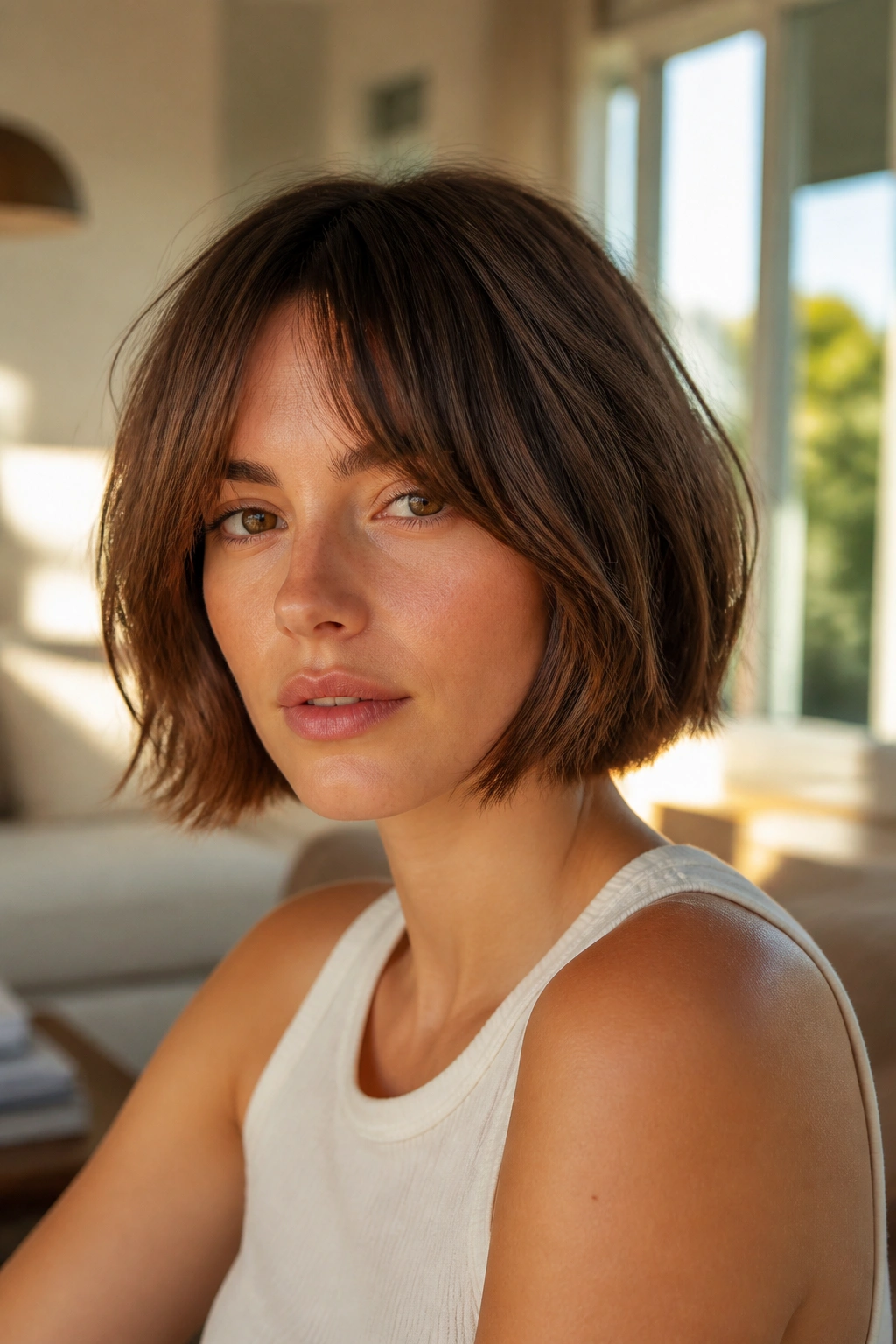
Why does this one feel so easy to wear? Because curtain bangs open the face while the jaw-length cut gives you enough structure to keep the whole thing from floating away.
The combination works especially well when the ends are chipped up a little. You still get the neat outline of a bob, but the texture stops it from looking like a helmet. Curtain bangs help the cut breathe, too. They part away from the center and sweep into the cheeks, which softens a strong jaw or balances a longer face.
How to Style It
Use a round brush or your fingers, depending on how much polish you want. Blow-dry the bangs away from the face first, then bend the ends of the bob in different directions with a 1-inch curling iron if you want more lift. If you prefer air-dried hair, scrunch in a cream with a little grip and let the fringe fall where it wants.
The best thing here is the grow-out. This cut doesn’t get ugly fast. It just shifts.
4. Razor-Cut Bob with Side Bangs
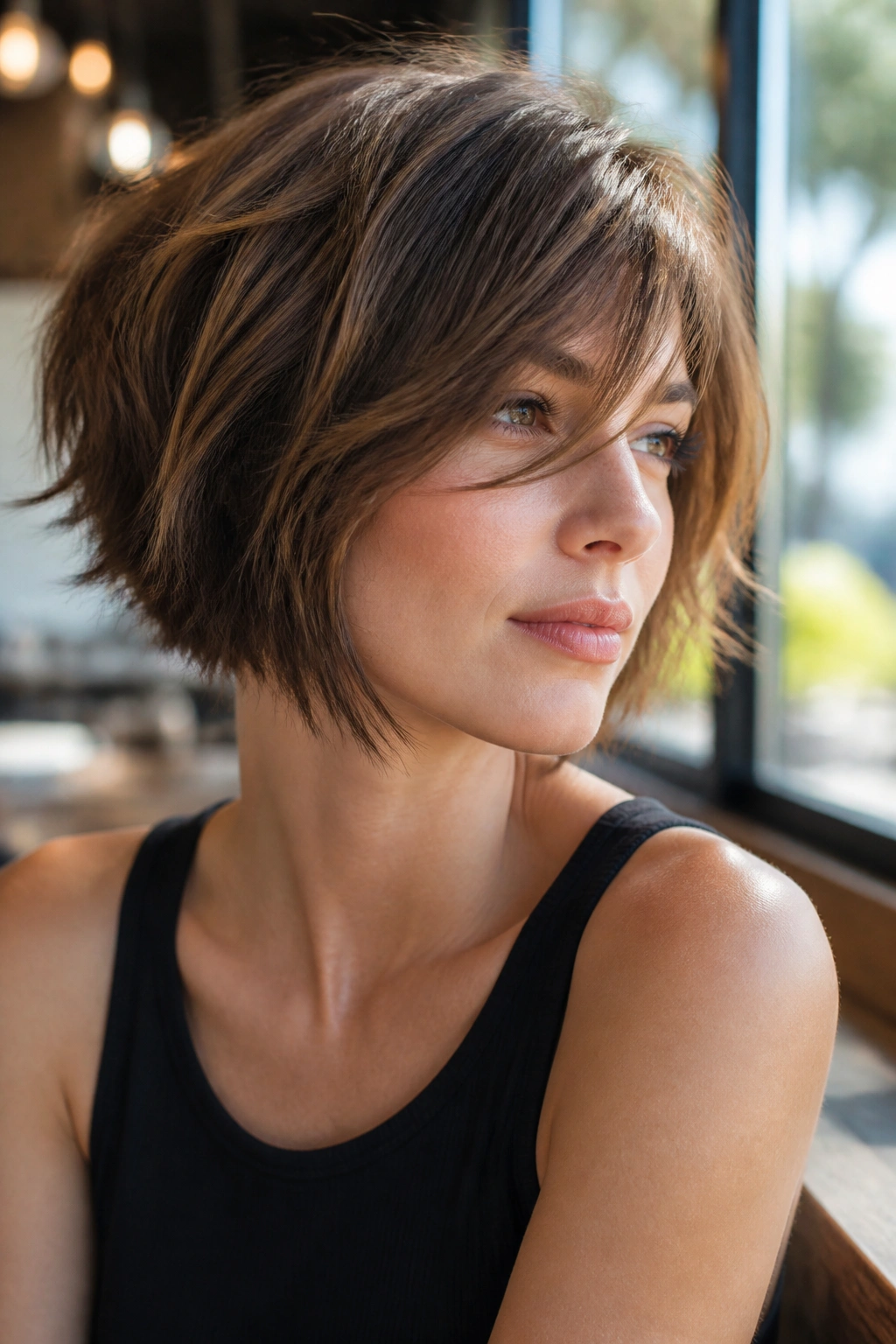
If your hair flips out at the ends by lunchtime, a razor-cut bob can turn that into part of the look instead of a problem. Side bangs help the front move in the same direction, which keeps the cut from feeling too pieced out.
A razor cut removes weight in a softer, more broken way than scissors alone. That matters on thick or medium-thick hair, where a blunt edge can feel boxy. The side fringe adds motion across the forehead, and the angled front pieces can pull the eye toward the cheekbones instead of the jaw.
- Ask for internal weight removal, not random thinning at the top.
- Keep the side bang long enough to touch the cheekbone.
- Blow-dry the fringe in the direction you want it to sit.
- Use a heat protectant before any iron work, because the short front pieces get fried fast.
This is a good choice if you want some attitude without going all the way to micro bangs.
5. Stacked Choppy Bob with Full Fringe

A stacked bob with a full fringe has a little drama built in, and that is the point. The back is cut shorter and lifted, so the crown gets height, while the front fringe puts a firm line across the face.
Flat hair hates this cut. Seriously. If your roots collapse by noon, the stacked shape gives you a base of volume that you cannot fake with product alone. The stacked back also keeps the neckline clean, which makes the front fringe feel even more intentional.
The trick is to keep the fringe textured enough that it doesn’t sit like a curtain. A heavy, one-piece bang can drag the whole haircut down. Ask for the fringe to be point-cut or softly sliced so it has a bit of air between the strands. A small round brush at the roots is worth the extra two minutes. So is a quick blast of heat at the crown.
This one looks best when it has a little lift, not when it’s pressed flat.
6. Wavy Short Bob with Bottleneck Bangs
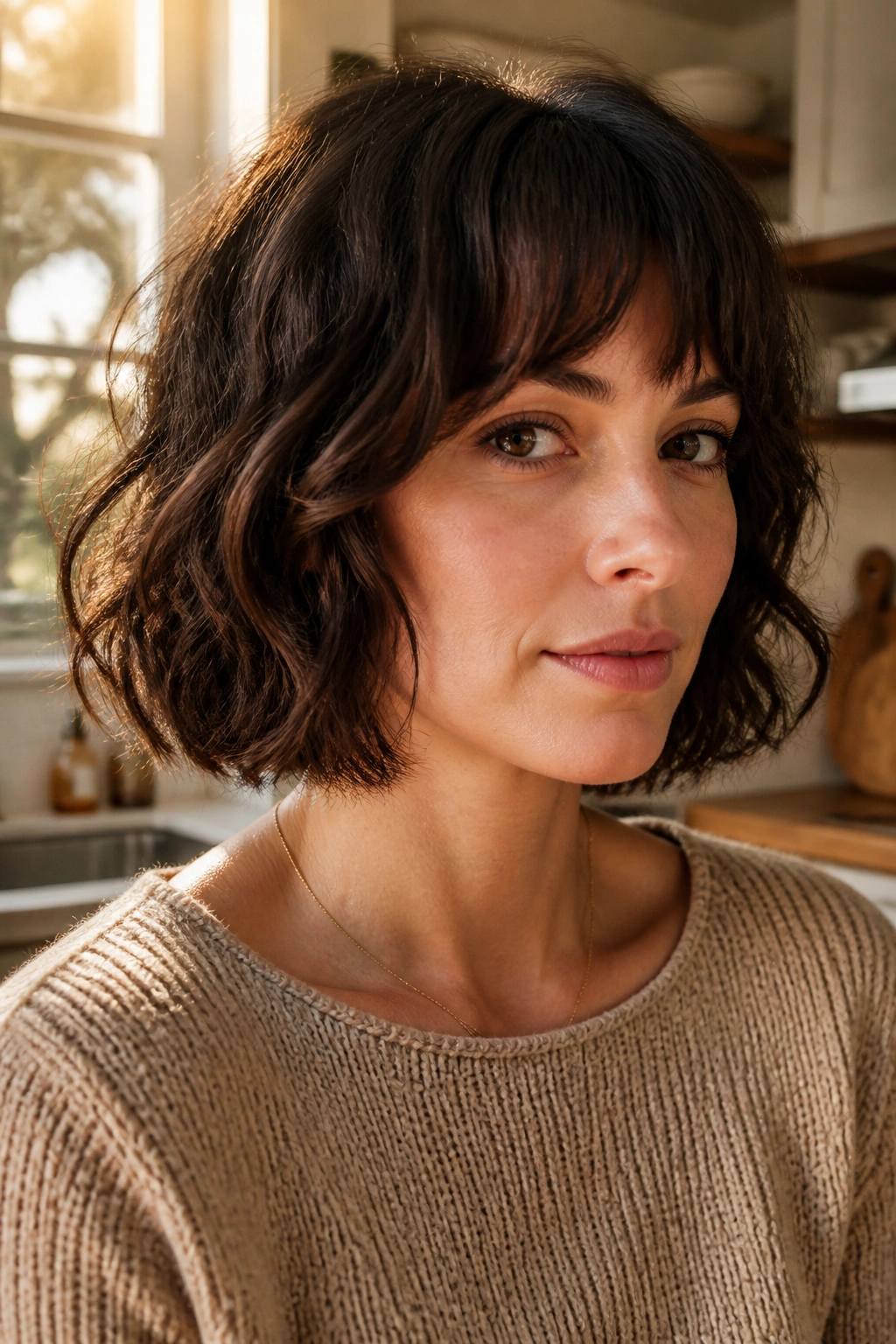
Unlike a blunt fringe, bottleneck bangs start narrow between the brows and open toward the temples. That shape gives wavy hair a cleaner landing point, and it keeps the front from fighting the natural bend of the cut.
The short bob underneath should stay loose and slightly uneven at the ends. If the lines are too exact, the wave loses some of its charm. Bottleneck bangs are useful because they frame the face without swallowing it, and they grow out in a way that does not feel awkward after a few weeks.
This version is especially nice if you want a softer face frame but do not want curtain bangs that split too widely. A little mousse in damp hair, a quick scrunch, and a diffuser are usually enough. If your wave pattern is inconsistent, twist the fringe with your fingers while it dries and leave the rest alone. That small amount of control helps more than a full styling routine.
It’s easy hair, but not lazy hair.
7. Messy Bob with Baby Bangs

A baby bang changes the whole mood in one snip. Suddenly the bob feels playful, a little sharper, and much less polished in the usual salon way.
Why It Works
Baby bangs sit well above the brows, so they create a strong focal point. Pair them with choppy ends, and the haircut stops reading as sweet or classic. It leans quirky, modern, maybe a little rebellious — which is exactly why people either love it or skip it entirely.
Quick notes before you ask for it
- Keep the fringe textured, not square.
- Leave the bob around cheekbone to jaw length.
- Ask for slightly broken ends through the perimeter.
- Style with a light cream or tiny bit of paste, not heavy serum.
The best baby bangs are a little imperfect. If they’re cut too straight and too thick, the look can get stiff fast. Tiny irregularities are your friend here.
8. Layered Pixie Bob with Soft Fringe
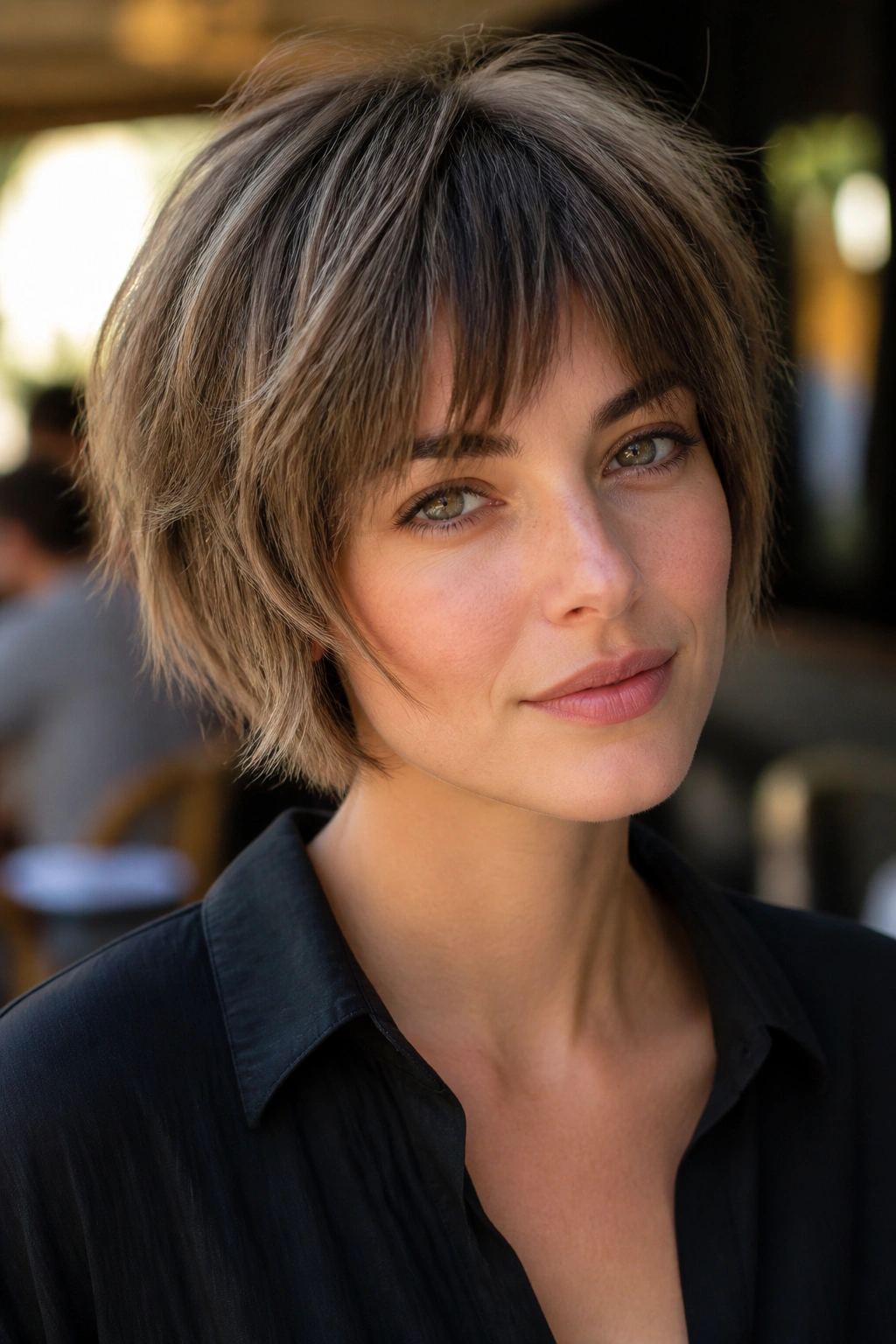
This is the closest thing to a shortcut haircut. A layered pixie bob takes the easy shape of a bob and trims away enough weight to make the whole cut feel light on the head.
The soft fringe keeps it from looking too cropped. Instead of a hard line, the bangs skim the forehead and blend into the shorter layers around the temples. That matters if you want a cut with movement but do not want to commit to a true pixie. The front can still be brushed forward, tucked aside, or pushed up with a dab of paste.
It’s a smart choice for thick hair that gets bulky fast, but it can also work on finer hair if the stylist keeps the layers controlled. Too many short layers and the shape turns wispy in a bad way. Too few and you lose the point of the cut. Somewhere in the middle is the sweet spot.
Use root spray at the crown and a pea-sized amount of styling cream through the ends. That’s usually enough.
9. Asymmetrical Bob with Sweeping Bangs
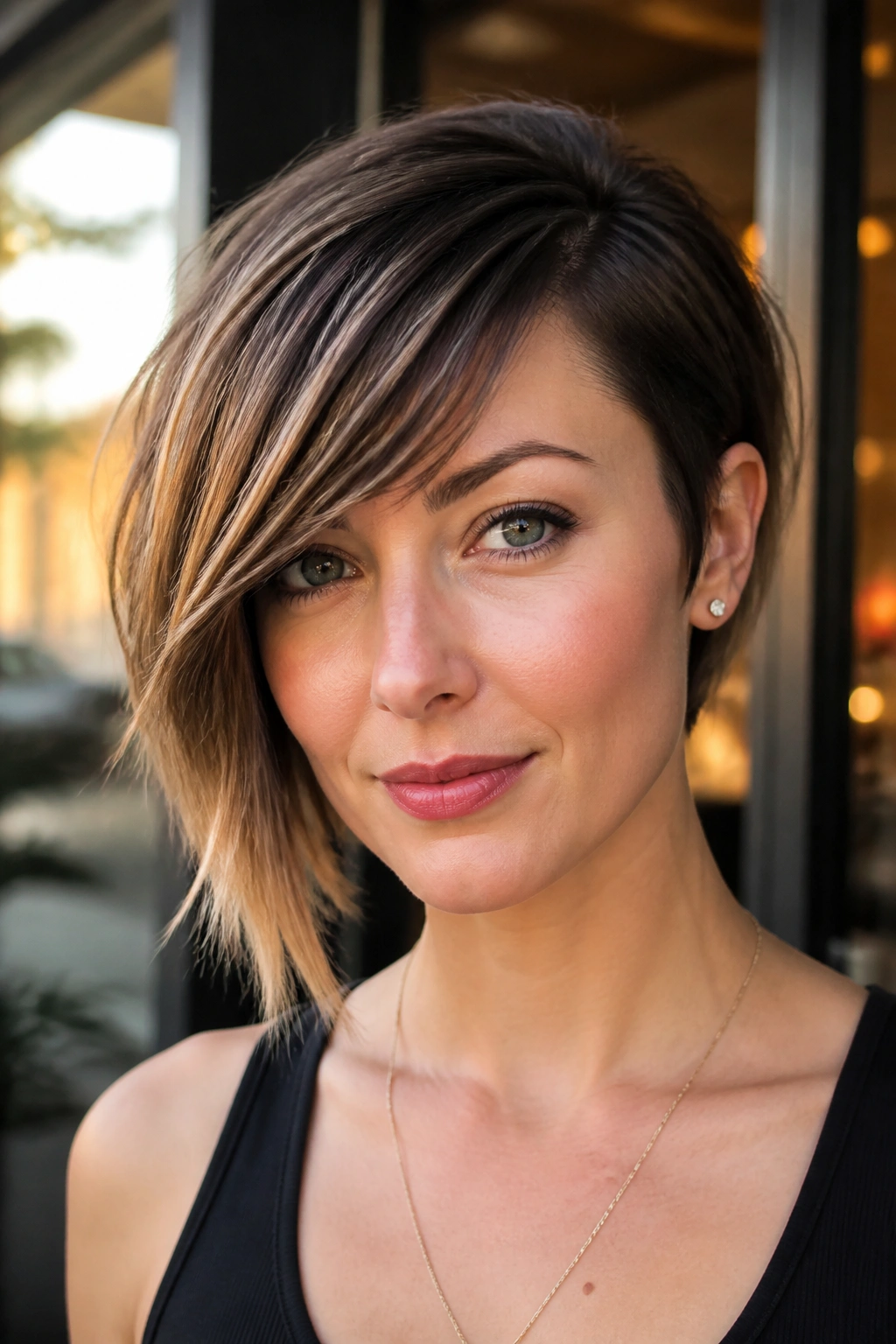
Why does this cut feel a little cooler than a straight bob? Because the uneven sides make the shape feel deliberate, and sweeping bangs echo that movement instead of fighting it.
The longer side should not be dramatic just for drama’s sake. A difference of an inch or so between sides can be enough to create that angle across the jaw. Sweeping bangs help carry the eye from the shorter side to the longer one, which gives the cut flow. Without that front movement, the asymmetry can look unfinished.
How to Wear the Angle
A deep side part usually makes this shape sing. Blow-dry the bangs in the direction they’ll live, then use your fingers to break up the ends near the cheekbones. If your hair is straight, a slight bend at the front pieces keeps the line from feeling too severe.
This one works especially well if you want a bob that looks styled even when you have not spent long on it. The angle does some of the work for you.
10. Rounded Bob with Thick Blunt Bangs

Picture a bob that curves gently under at the jaw and a fringe that lands straight across the forehead. That’s the basic shape here, and it has a lot more softness than the words sound like they should imply.
The rounded perimeter keeps the bob from feeling boxy, while the thick bangs add structure up top. Together, they create a balanced shape that can be especially nice on longer faces, since the fringe shortens the forehead visually and the rounded line widens the silhouette a touch.
- Works best on straight to softly wavy hair.
- Needs a smooth blow-dry or a quick pass with a flat iron.
- The bangs should be dense, but not carved like a shelf.
- Avoid too much thinning at the fringe line; it can separate in odd pieces.
This cut is less casual than some of the others on this list, and that is the charm. It has presence.
11. Air-Dry Bob with Grown-Out Curtain Bangs

This is the low-fuss version, and the grown-out bangs are the reason it works. Instead of trying to sit perfectly, they fall near the cheekbones and let the rest of the bob do its thing.
The cut itself should be soft around the edges, with a little texture through the mid-lengths so the hair doesn’t dry into a block. Air-drying short hair can go wrong fast if the perimeter is too blunt or if the bangs are cut too short. Once that happens, you spend the whole day fighting cowlicks and trying to tuck one side back into place. Nobody needs that.
A light leave-in cream or a wave spray is usually enough. Scrunch the hair once, then leave it alone while it dries. If your bangs separate in the middle, finger-comb them once when they’re about 80% dry and stop touching them. The less you fuss, the better this shape behaves.
The grow-out looks good, too, which is a rare gift.
12. Razor Bob with Arched Bangs
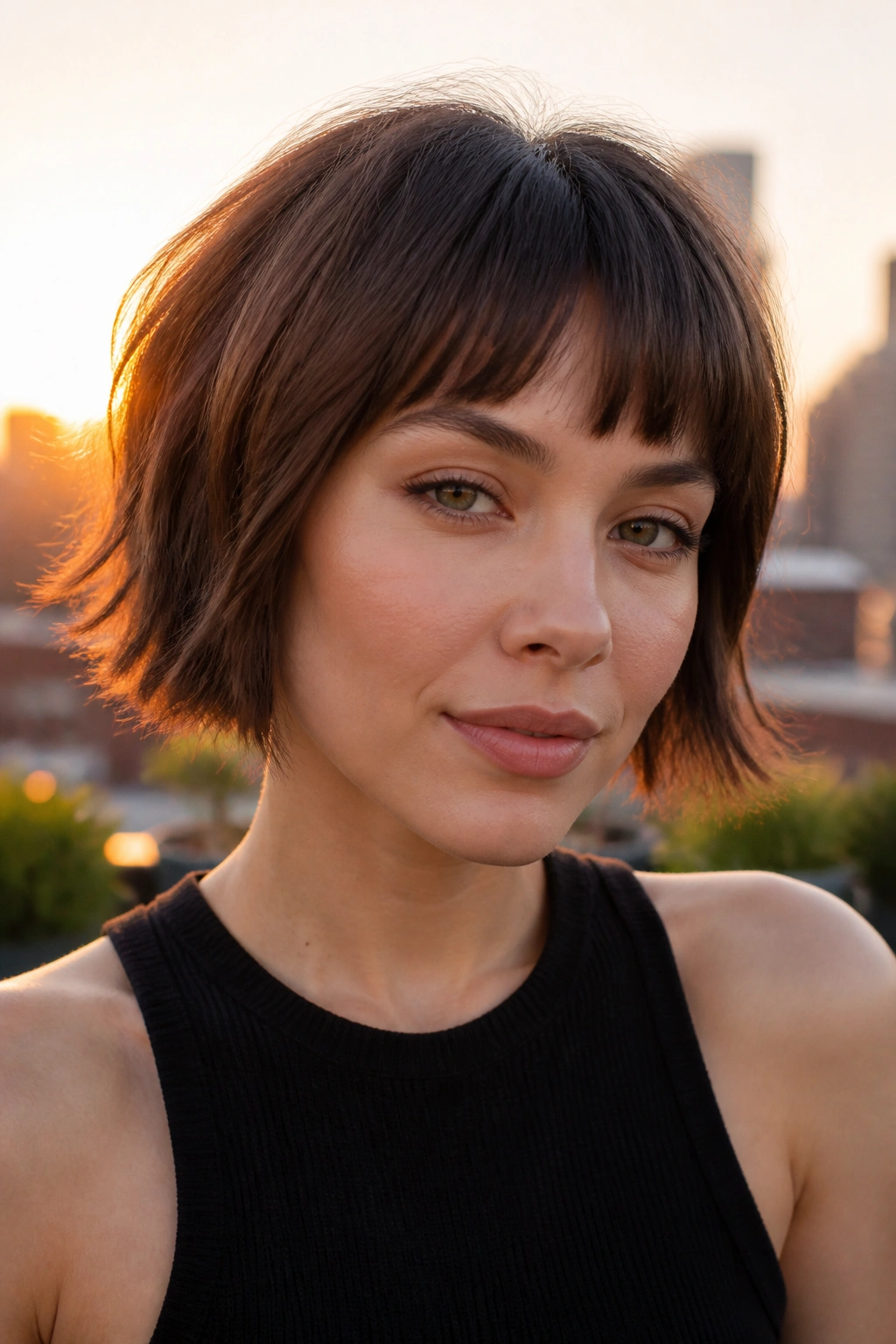
Unlike blunt fringe, arched bangs rise a little in the center and curve down at the sides. That gives the face some lift without putting a hard line right across the forehead.
A razor bob leans into that movement by keeping the ends soft and slightly shattered. The haircut feels lighter because the perimeter isn’t rigid, and the bangs echo that same softness. If you wear glasses, this can be a smart pick — the arch leaves room around the frames so everything doesn’t crowd your face.
The cut suits people who want definition without severity. It’s also good if you like shorter fringe but do not want to look boxed in. Ask for the bangs to be cut dry if possible, since wet bangs can shrink in a way that hides the shape. A tiny round brush and a quick bend at the temples are usually enough to set them.
The result is neat without feeling strict. That’s a nice line to walk.
13. Tucked-Behind-Ear Bob with Side-Swept Fringe
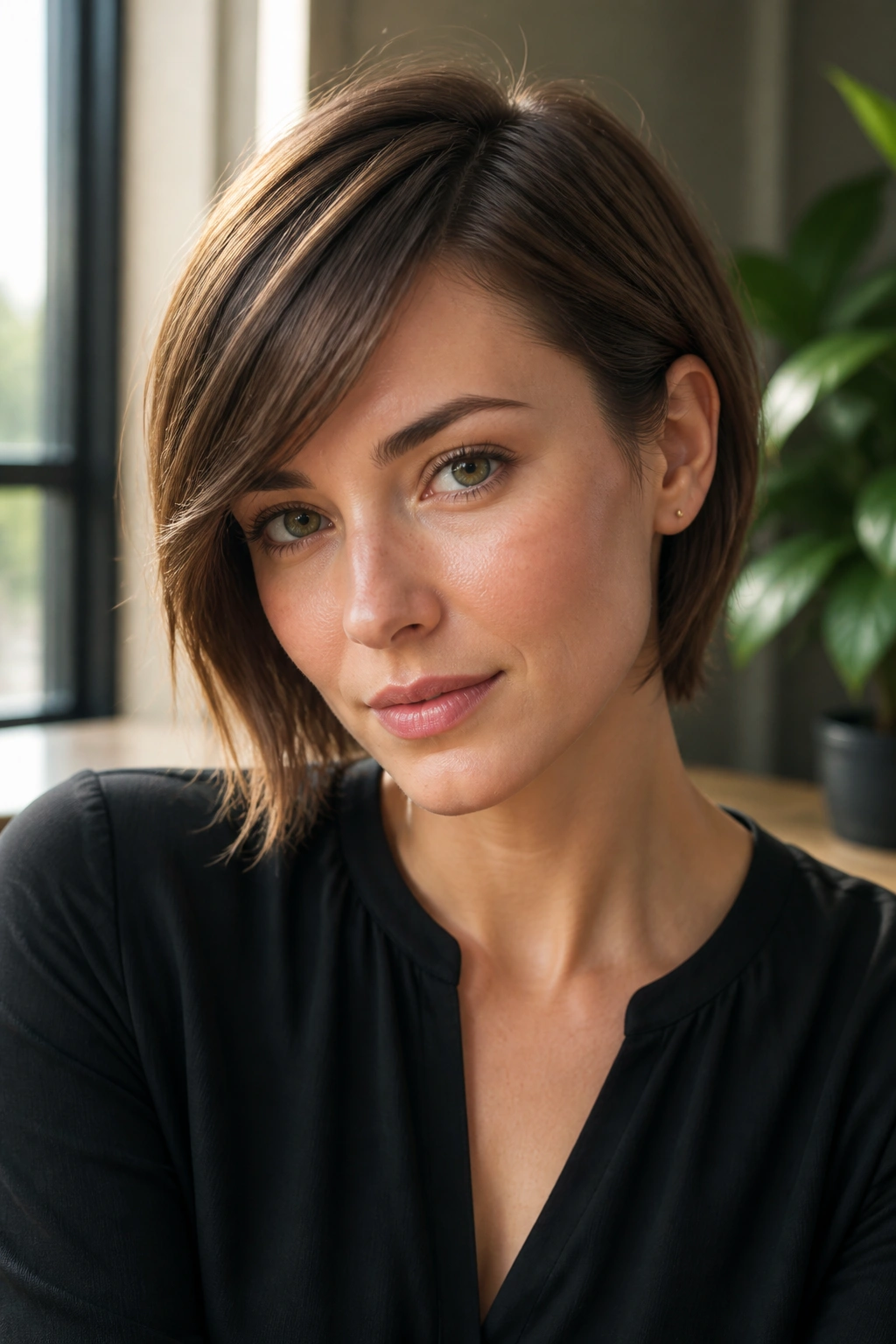
A bob that tucks neatly behind one ear can feel almost tailored, especially when the fringe sweeps the opposite way. The shape looks calm at first glance, then the choppy ends give it some bite.
Why It Works
The tucked side opens up the cheek and jaw, which makes earrings and neckline details matter more. The side-swept fringe balances that openness by keeping the front soft. Together, they create a haircut that feels polished in a way that never gets too stiff.
A few details worth asking for
- Keep one side slightly longer so the tuck has somewhere to land.
- Let the fringe start high enough to sweep cleanly across the forehead.
- Use a bit of texture through the ends so the tuck does not flatten the whole cut.
- Finish with a dry texturizing spray, then pinch the pieces apart with your fingers.
This is a good office-to-dinner bob. It behaves during the day, but it does not lose its edge when you mess it up a little.
14. Tousled Bob with Feathered Bangs

This is the cut for hair that looks better after you stop treating it like it needs perfect control. Feathered bangs and a tousled bob both want motion, so they work together instead of arguing.
The bangs should be soft at the tips, not wispy to the point of disappearing. Feathering means the ends move in different directions, which makes the front feel airy and easy to blend into the sides. The bob underneath can be bent with a curling iron in random directions, then broken up with your hands so it does not turn into a row of neat curls.
I like this look with a little grit. A texture spray on dry hair gives the strands something to hold onto, and a tiny bit of pomade on the fringe keeps it from flying around. If your hair is naturally wavy, you are halfway there already. If it is straighter, a few rough bends around the face can fake the same energy.
It should feel lived-in, not messy because you gave up.
15. Edgy Undercut Bob with Short Fringe
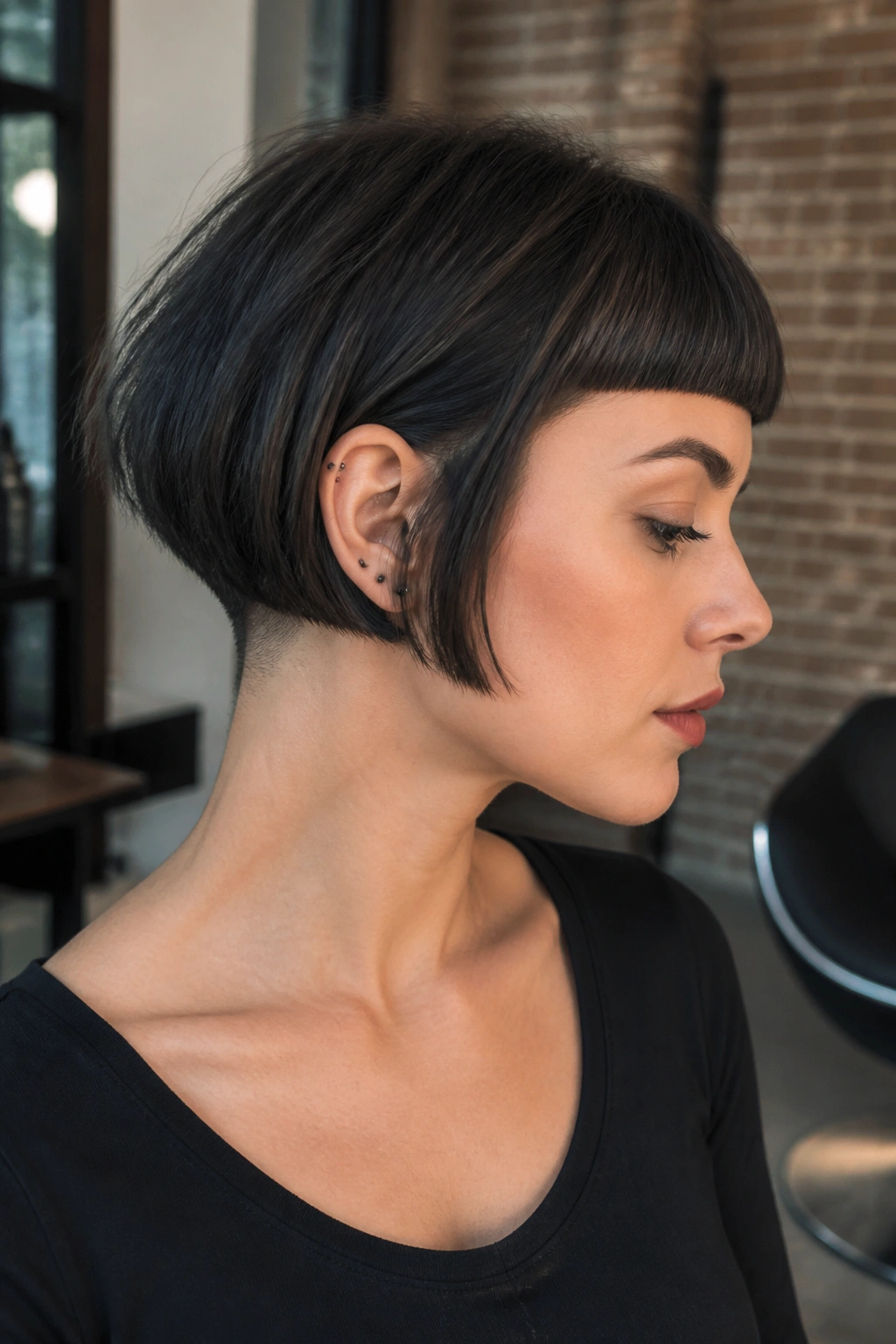
Why does this one feel so different from the rest? Because the undercut removes weight from underneath, and that changes the whole balance of the bob.
The short fringe keeps the shape graphic. You get a clean front, a lighter back, and a hidden bit of edge below the surface that makes the haircut feel tougher than it looks from the outside. It is a strong choice if you have thick hair and hate how hot or bulky it gets around the nape.
How to Ask for It
Tell your stylist how much of the undercut you want visible when the hair is down. Some people want a secret shave that only shows when they tuck the hair up. Others want the undercut to be part of the look.
Ask for the fringe to be blunt enough to read short, but textured enough that it does not sit like a hard block. That tiny bit of softness keeps the cut from feeling costume-y.
This one is not subtle. That is the point.
16. Curly Short Bob with Curly Bangs

Picture a bob that stops around the cheek or jaw and a fringe that follows the curl pattern instead of fighting it. That’s the whole trick here.
Curly bangs need a little length because curls spring up once they dry. If they’re cut too short, they can bounce higher than you wanted and leave the front awkwardly open. A smart curly bob keeps enough length in the fringe to let the curl form its own shape. The ends of the bob should be lightly layered so the silhouette doesn’t puff out into a triangle.
- Cut the bangs dry, or nearly dry, if your curl pattern is strong.
- Use a curl cream that gives slip without weighing the front down.
- Diffuse on low heat and low speed.
- Keep your hands off the bangs once they start forming.
A curly bob with bangs can look amazing when the shape is planned around the curl. When it isn’t, the front tends to steal the whole haircut. That’s a hard lesson, and an expensive one.
17. Fine-Hair Choppy Bob with Light Bangs
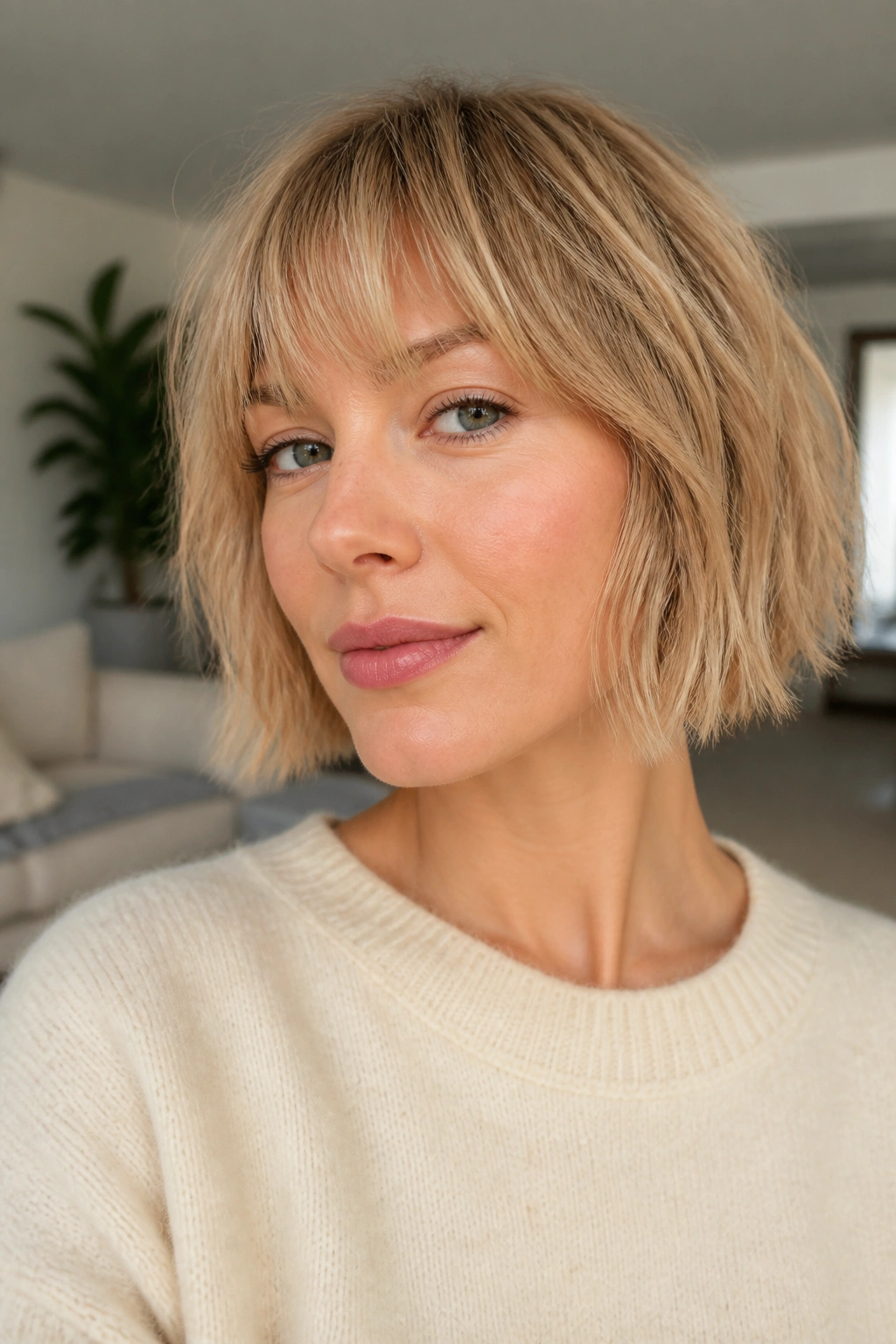
Fine hair needs a different kind of choppiness. Too many layers, and the ends go see-through. Too little texture, and the bob sits flat against the head.
The better move is a light, controlled chop through the perimeter with bangs that stay airy instead of dense. You want enough movement to make the hair look fuller, but not so much that the silhouette loses its body. A slightly blunt edge under the light layers can help the shape hold its line.
This is where styling product matters more than people think. A root-lifting mousse at the crown gives the hair some lift before blow-drying, and a dry shampoo mist at the roots can keep the style from collapsing later in the day. A wide round brush works better than a giant one, since it gives the shorter sections a little bend without stretching them flat.
The goal is simple: shape first, fluff second. If the haircut has no line, the texture disappears.
18. Thick-Hair Choppy Bob with Weight-Removed Layers
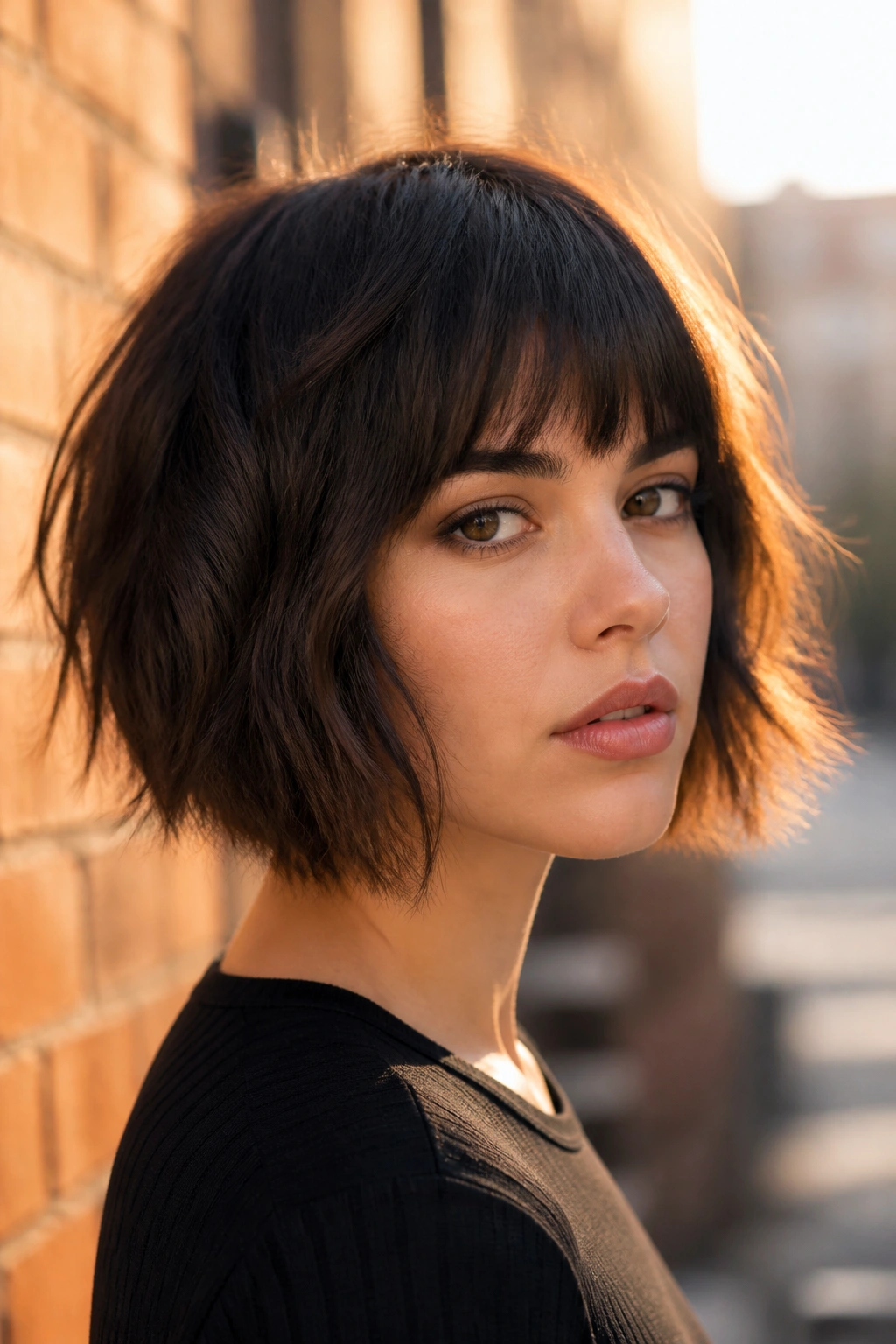
Unlike a one-length bob, this version is built to take bulk out without making the hair look thin. Thick hair needs room to move, and weight removal around the mid-lengths and lower sections is what keeps the cut from puffing out like a triangle.
A strong fringe helps balance all that mass. The bangs can be full, side-swept, or slightly rounded, but they need to be cut so they sit cleanly instead of pushing forward in one heavy sheet. Dry cutting is often useful here because thick hair behaves differently once it loses water. What looks balanced wet can feel bulky after it dries.
This cut is best for people who are tired of a bob that looks heavy by the second day. Ask for internal layers, not shredded ends everywhere. There’s a difference. Internal layering removes weight from inside the shape, while over-texturizing just makes the outline fuzzy.
If you have thick hair and want a bob that sits close to the head, this is the one I’d point to first.
19. Salt-and-Pepper Choppy Bob with Soft Bangs
Salt-and-pepper hair has built-in dimension already, so a choppy bob can look especially good on it. The mix of silver, dark strands, and in-between tones makes texture visible in a way dyed hair sometimes hides.
Soft bangs are the smart move because they let that color variation show through around the face. A hard, dense fringe can flatten the effect. A softer bang line keeps the forehead area light and lets the silver pieces catch the eye without looking striped.
Why It Works
The choppy ends scatter the light differently across the cut, which makes the color pattern look richer. That is one reason this style can feel full even when the hair isn’t especially thick. The movement does a lot of the visual work.
Good details to request
- A fringe that has a little space between the pieces.
- A bob length that lands around the jaw or just above it.
- Light texturizing through the ends, not harsh thinning.
- A shine serum only on the very tips, so the shape stays clean.
Softness wins here. Too much edge can fight the natural beauty of the color.
20. Glossy Sleek Choppy Bob with Razor Bangs
This is the dressier version of the whole bunch. Razor bangs bring a sharp front line, while the choppy bob keeps the shape from feeling too strict or formal.
The gloss is part of the look, but it should not turn the hair into a stiff sheet. Think smooth roots, separated ends, and bangs that still move when you turn your head. A flat iron can help, but only if you keep the passes light and stop before the hair loses all texture. One or two bends through the bob are enough. The point is shine with movement, not pin-straight perfection.
This cut looks especially good when the bangs skim the brows and break slightly at the center. That tiny irregularity keeps the front from feeling severe. Pair it with a middle part if you want something cleaner, or shift the part a little off-center if you want the bangs to fall with more shape.
It’s polished. It’s a little sharp. And when it’s cut well, it does that rare thing a short haircut should do: it makes you want to keep touching it.
The best short choppy bob with bangs is the one that still looks good after you stop fussing with it. If it falls into place after a quick dry or a few finger-combed bends, you’ve got the right shape.
And if the fringe needs constant rescue, it’s probably too heavy, too short, or cut for a photo instead of a real life. That’s the part people forget. A good bob should live on your head, not on a salon mirror.
