



A short choppy bob can make a plain haircut feel sharp in one snip. The trick is that “choppy” should read as deliberate texture, not a rescue mission after a rushed salon visit.
That distinction matters more than most people think. A good short bob haircut keeps a clear outline around the jaw or nape, then breaks up the inside with point-cut ends, razor work, or loose internal layers so the shape moves instead of sitting there like a helmet.
Fine hair, thick hair, straight hair, curls — all of them can wear a bob with edge. But they need different treatment. Fine hair usually wants light, uneven texture without too much thinning. Thick hair often needs weight removed in the right places so the style doesn’t puff out. Curly hair needs bigger pieces and a dry cut, or it gets triangular in a hurry.
That’s why the best short choppy bobs for women with edge are never random. They’re specific. Clean enough to look intentional, rough enough to feel alive. And once you see how much difference a few inches, a part shift, or a razor-soft perimeter can make, it gets hard to go back to a safe little bob.
1. Chin-Skimming Choppy Bob with a Soft Fringe
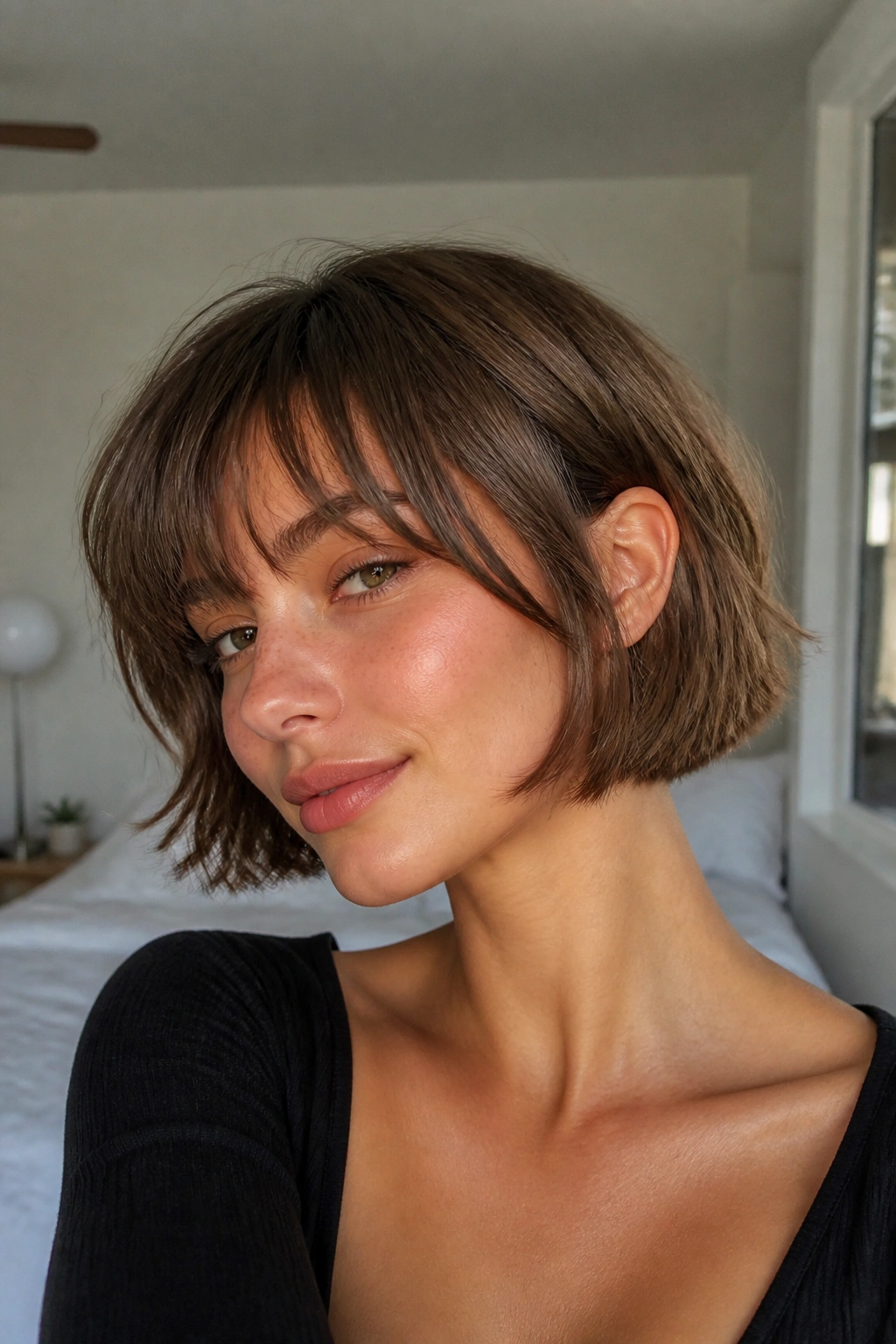
A chin-skimming bob with a broken fringe has a nice bite to it. It’s short enough to show the neck and jaw, but the fringe keeps the cut from feeling severe.
Why It Works
The edge comes from the balance. The outline sits around the chin, while the ends are point-cut so they don’t make one hard, flat line. That tiny bit of irregularity matters.
- Ask for the length to hit right at the chin or 1/2 inch below it.
- Keep the fringe soft, not thick and blunt across the forehead.
- Use point-cutting on the ends so the perimeter feels airy.
- Best on straight to wavy hair that can hold a small bend.
Pro tip: tuck one side behind the ear and leave the other loose. It gives the cut that slightly careless, cool-girl feel without extra styling.
2. Jawline Bob with Razor-Soft Ends
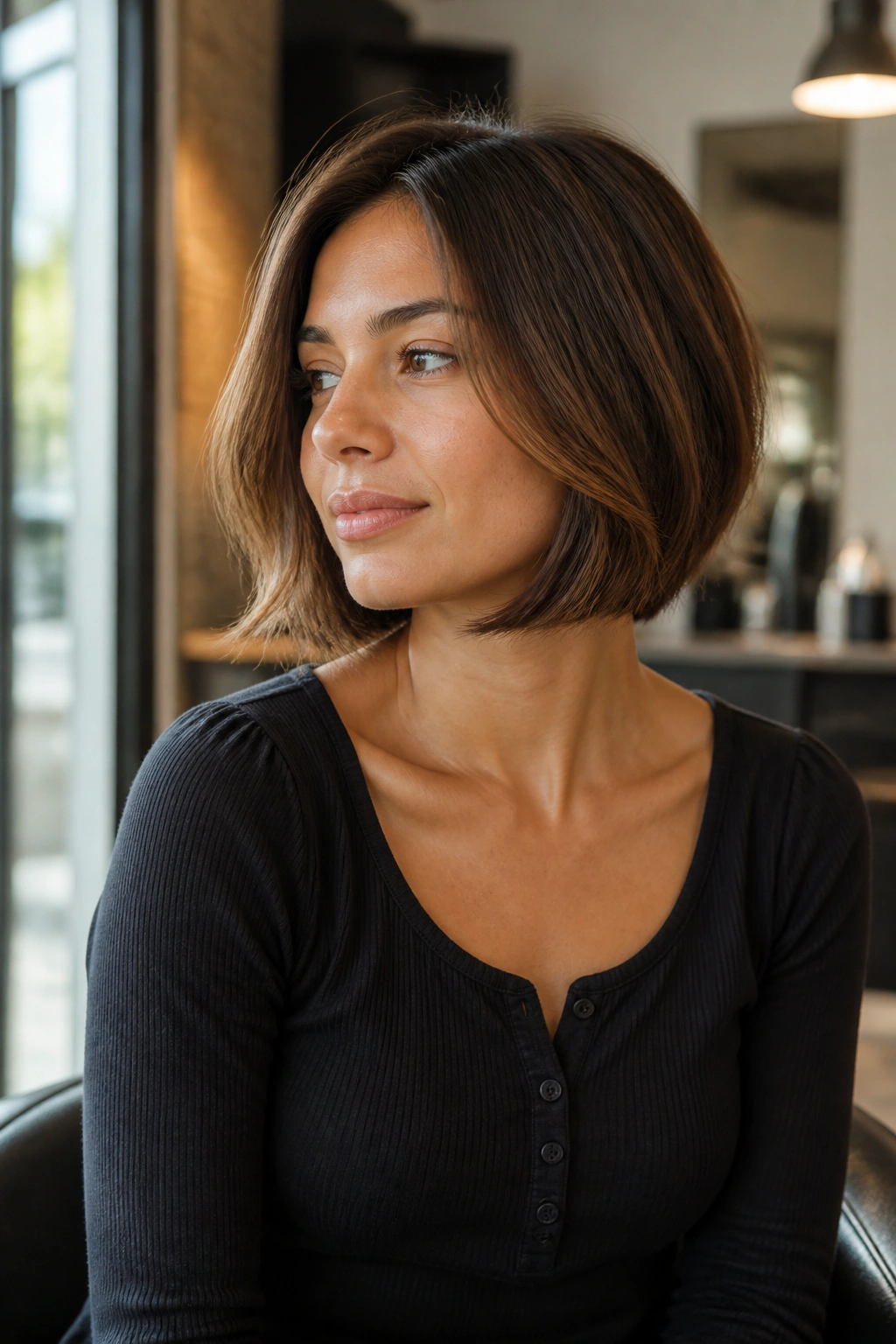
A jawline bob can look tougher than a shorter crop if the ends are sliced instead of cut bluntly. The line still frames the face, but it doesn’t sit there like a hard edge.
Razor-soft ends work especially well when you want movement at the sides. They stop the cut from feeling boxy, which is a real problem on square or round faces. The haircut can still be polished; it just has a little grit in it.
The styling part is easy, which is half the appeal. A round brush gives it a soft curve, while a flat iron with a tiny bend at the bottom makes the ends look broken up. Leave the roots smooth and let the last inch do the talking. That contrast is where the personality lives.
3. Asymmetrical Short Choppy Bob

Why does an asymmetrical bob look sharper than a perfectly even one? Because the uneven line makes the eye move. It feels intentional, a little bit rebellious, and less precious than a classic bob.
The best version keeps one side only 1 to 2 inches longer than the other. That’s enough to show the shape without making the haircut look lopsided. A side part helps, too, especially if the longer side falls across the cheekbone.
How to Wear It
If you want this cut to look clean, keep the styling smooth near the roots and piecey at the ends. That contrast matters. A light smoothing cream on damp hair, then a quick bend with a flat iron through the last couple of inches, usually does the trick.
This is a strong choice for anyone with a longer face, pronounced cheekbones, or a habit of pushing hair to one side anyway. It already has attitude. Don’t overcomplicate it.
4. Micro Bob with Piecey Ends

A micro bob can be a rude little haircut — in the best way. It sits somewhere between a bob and a crop, usually just below the ears, and it puts the whole face on display.
A cut this short needs broken ends or it gets too severe. The piecey texture softens the outline, so the hair doesn’t look like one solid block. It’s also a good choice if you like a neck-baring haircut that doesn’t pretend to be shy.
- Keep the length around the earlobe to 1 inch below it.
- Ask for light point-cutting through the perimeter.
- Skip heavy layers; they can make the shape too airy.
- Works best with straight, fine, or lightly wavy hair.
Watch out for this: if your hair grows fast around the ears or nape, you’ll notice it quickly. A micro bob needs trims more often than a chin-length cut.
5. Undercut Bob with a Heavy Top
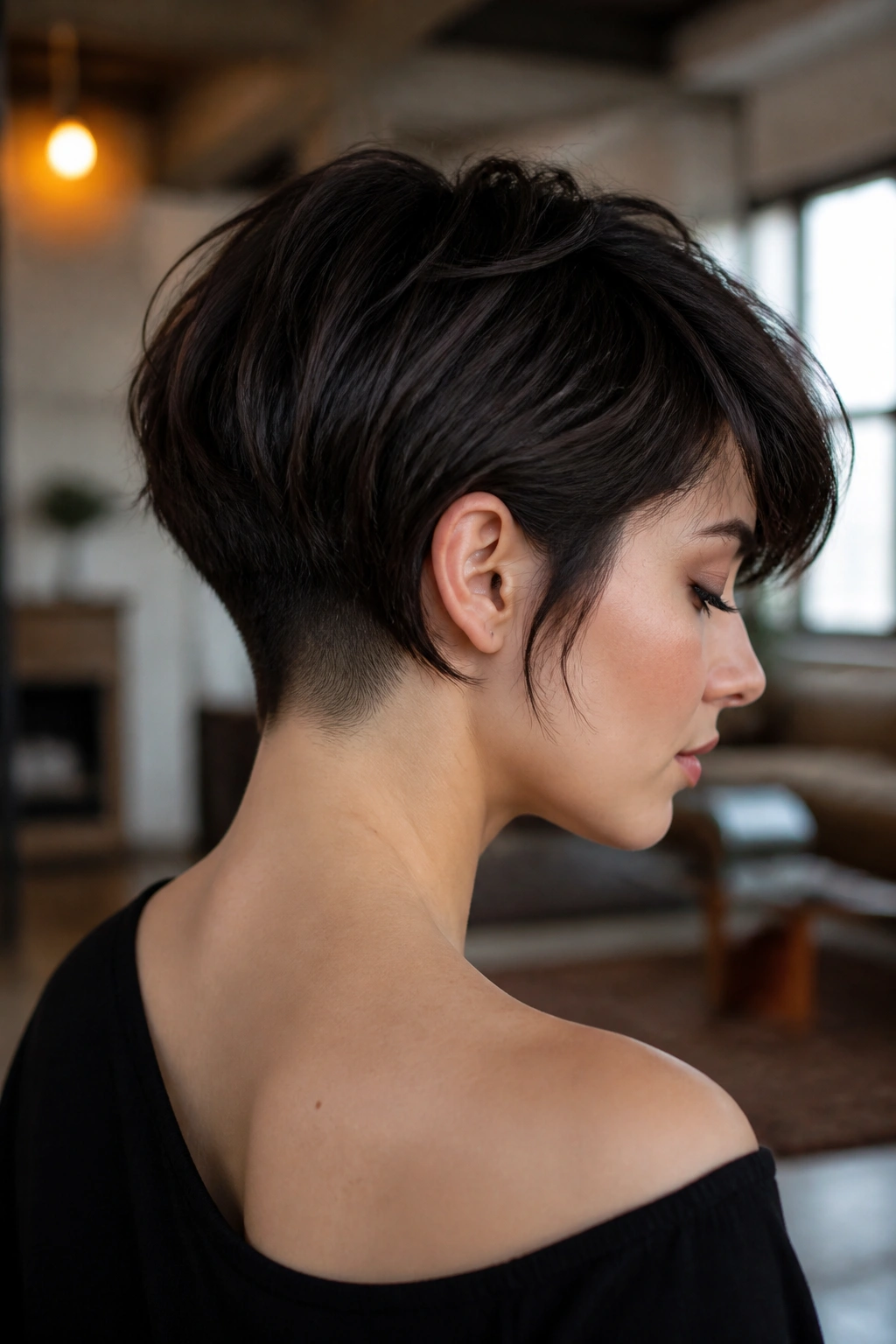
Some cuts need a little rebellion built into the nape. The undercut bob does exactly that, taking bulk out from underneath so the top layer can sit heavier and more dramatic.
That hidden clipper work makes a big difference if your hair is dense. Instead of ballooning at the bottom, the bob lays closer to the head. The top keeps its weight, which gives the style a cleaner, more graphic line.
A lot of people assume undercuts always look extreme. They don’t. If the shaved area stays tucked under the top layer, the cut just feels sharper and easier to move around in. It also dries faster. That part is not glamorous, but it matters on busy mornings.
If you want edge without losing polish, this is one of the smartest short choppy bob options on the list.
6. Wavy Bob with Shattered Layers
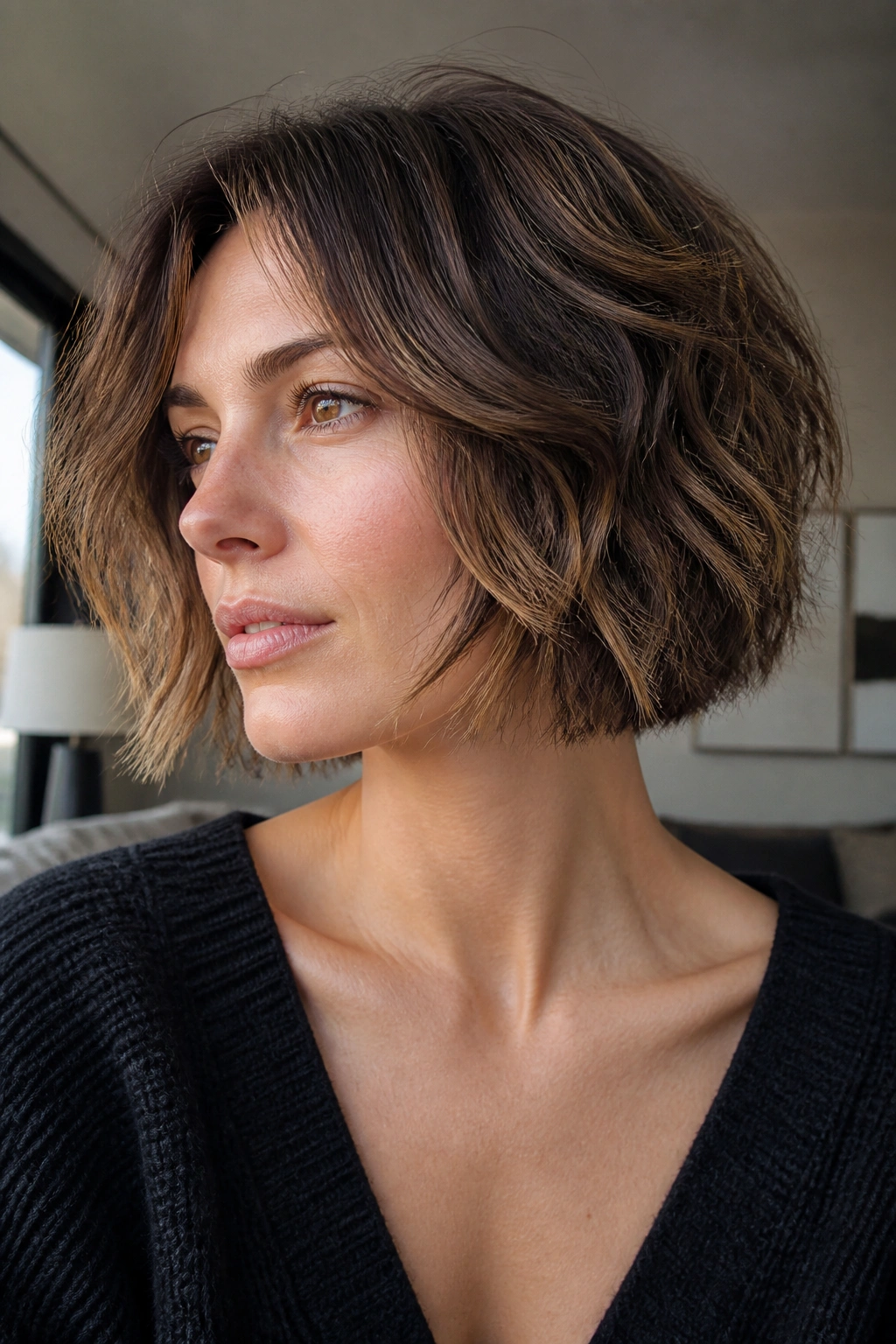
A wavy bob with shattered layers is a different animal from a smooth bob. It looks relaxed, but not lazy. That’s the sweet spot.
Unlike a classic layered bob, this version breaks the shape into uneven pieces so the waves can fall into little bends instead of one uniform ripple. The hair ends up looking lived-in, which is useful if you air-dry a lot or hate spending twenty minutes with a round brush.
The cut works especially well when the layer breaks start around the cheek or jaw, not near the roots. Too much layering too high up can make wavy hair puff out. A softer, lower break keeps the silhouette controlled.
A texturizing cream or light wave spray is enough here. Scrunch, twist two or three sections, and leave the ends imperfect. That’s the whole point.
7. Curly Choppy Bob with Rounded Shape

Curly hair and short length can get along beautifully when the cut is handled with care. The mistake is cutting curls like they’re straight. That is how you get a triangle.
Why Curly Hair Needs Bigger Pieces
A choppy curly bob should keep the shape rounded, with the texture broken up in bigger sections rather than shredded into tiny bits. You want movement, not frizz chaos. Cutting it dry helps the stylist see where each curl actually lands.
- Ask for the cut to be shaped with the curl pattern in place.
- Leave enough length to account for shrinkage — often 1 to 2 inches longer than the final look.
- Keep the fringe soft and curl-friendly if you want one.
- Use a curl cream, not a heavy butter that weighs everything down.
One good rule: if the curls are springy and tight, the bob usually looks best a touch longer than you first imagine. Short curly bobs are gorgeous. Too short, though, and the shape can get loud fast.
8. Blunt Bob with Internal Texture
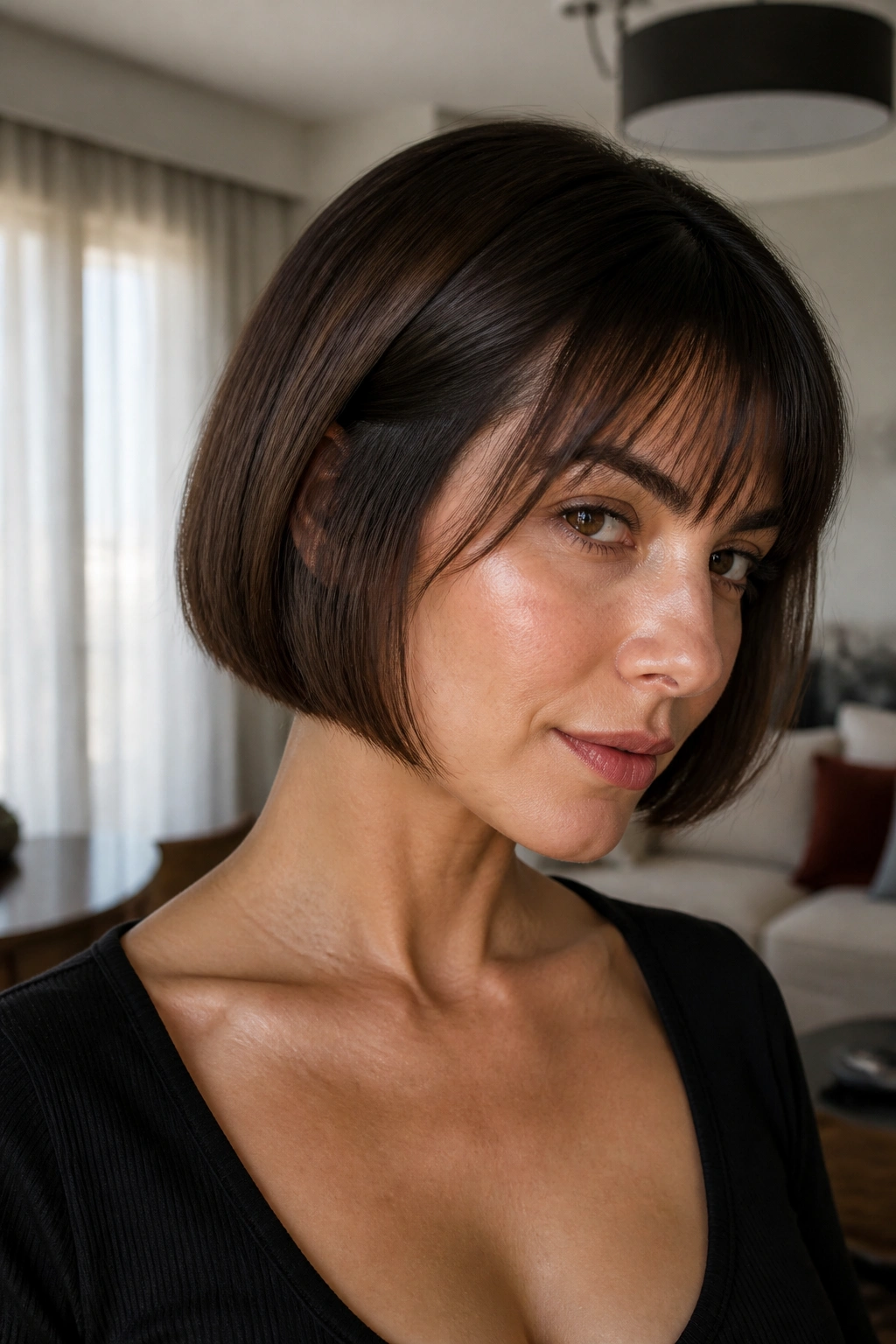
A blunt outline keeps this cut clean; the hidden texture keeps it from feeling stiff. That combination is what makes a blunt choppy bob worth wearing.
Most of the action sits underneath the top layer. The stylist removes a little weight inside the hair, then leaves the outer line crisp. From the front, it still reads as a neat bob. Up close, you can see the movement. That’s the good stuff.
This is a smart option if you like order but don’t want your hair to sit flat and obedient. It can handle straight hair especially well because the blunt edge gives the style structure while the interior texture stops it from looking too polished. The result feels modern without trying too hard.
If you’ve ever liked the idea of a classic bob but found it too prim, this is the version to ask for.
9. Curtain Bang Bob with Broken Ends

Can curtain bangs make a short bob look less sweet? Absolutely. They push the whole haircut a little off center, which gives it more personality right away.
The bangs should start around the brow or slightly below it, then open toward the cheekbone. That soft frame keeps the cut from feeling too heavy in front. Pair that with choppy ends around the jaw and the whole style gets a lived-in shape that doesn’t need much fuss.
How to Style It
Blow-dry the fringe away from the face with a small round brush, then let it fall apart on purpose. A little dry texture spray at the roots helps the part stay soft instead of flat. If you like a looser finish, twist the front pieces once while they cool.
This cut suits women who want edge without going full punk. It’s approachable. Still sharp, though. There’s a difference.
10. Feathered Bob with Tapered Ends

Feathered ends are what keep a short bob from feeling helmet-like. They let the cut breathe a little, especially if your hair is thick or tends to sit heavy at the bottom.
A feathered bob works by tapering the ends inward and away from the face, so the perimeter looks softer and lighter. The shape can still be short and clean, but it doesn’t feel boxy. That matters a lot around the nape and jaw.
A round brush gives this cut a bit of lift at the crown, while a light finishing cream keeps the ends separated. Don’t overdo the product. Feathered texture looks best when it moves. If the hair is saturated, the whole point gets lost.
This is one of those cuts that looks easy because the shape is doing the heavy lifting. It is doing a lot, though.
11. Side-Parted Choppy Bob
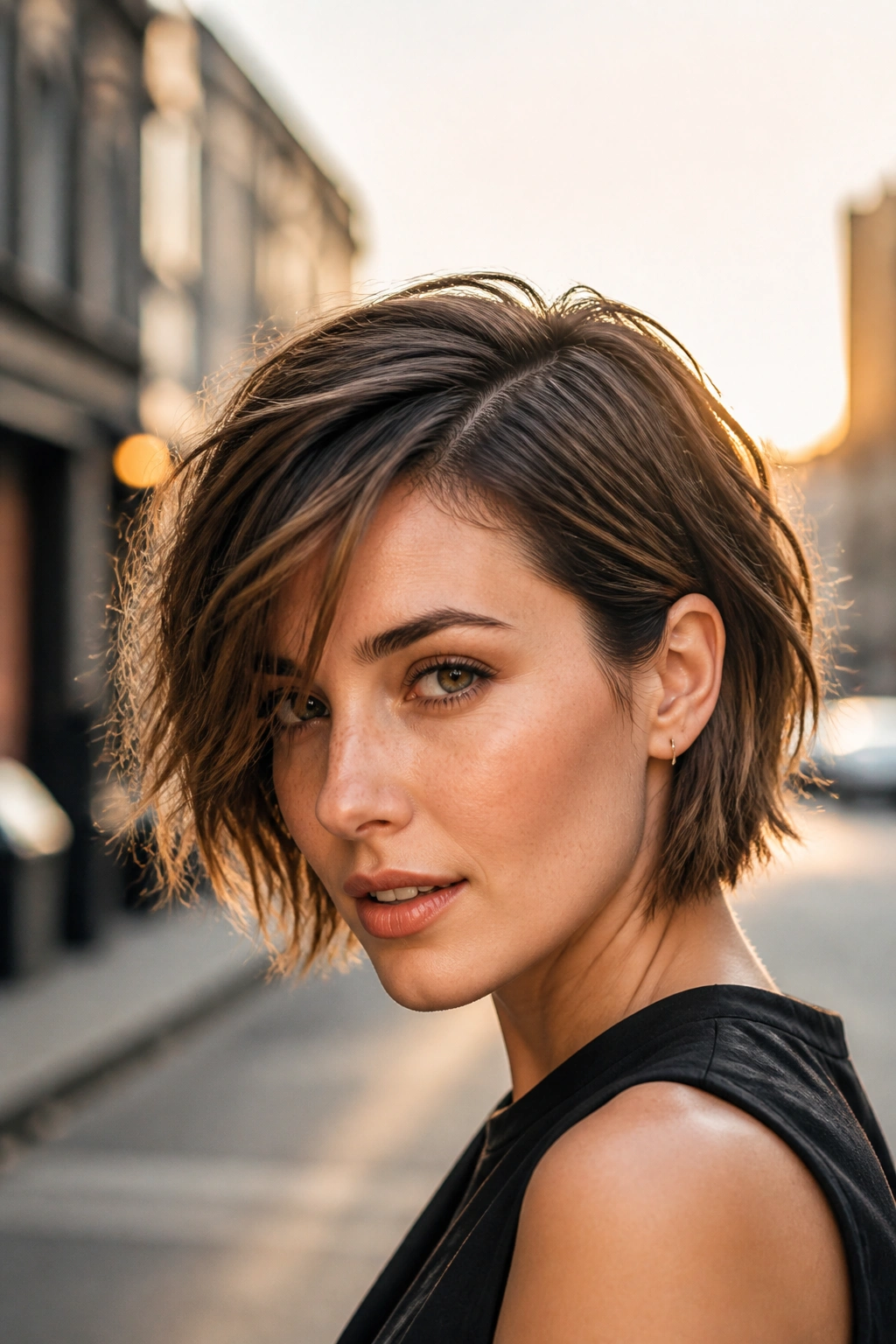
Side parts still have teeth. They can make a short bob feel less neat and more interesting without changing the cut much at all.
A deep side part shifts the weight to one side, which creates a natural sweep across the forehead and cheek. That makes the choppy ends feel sharper because the hair is already moving before you touch it. People with finer hair like this trick because it builds volume without teasing.
The cut itself can stay simple: jaw-length, lightly layered, and a little broken at the perimeter. The side part does the styling work for you. If your hair falls flat on top, lift the roots with a mousse or a small brush while blow-drying. That little bit of lift changes everything.
It’s a plain idea, honestly. But plain isn’t the same as boring, and this bob proves it.
12. Inverted Choppy Bob with a Tucked Nape
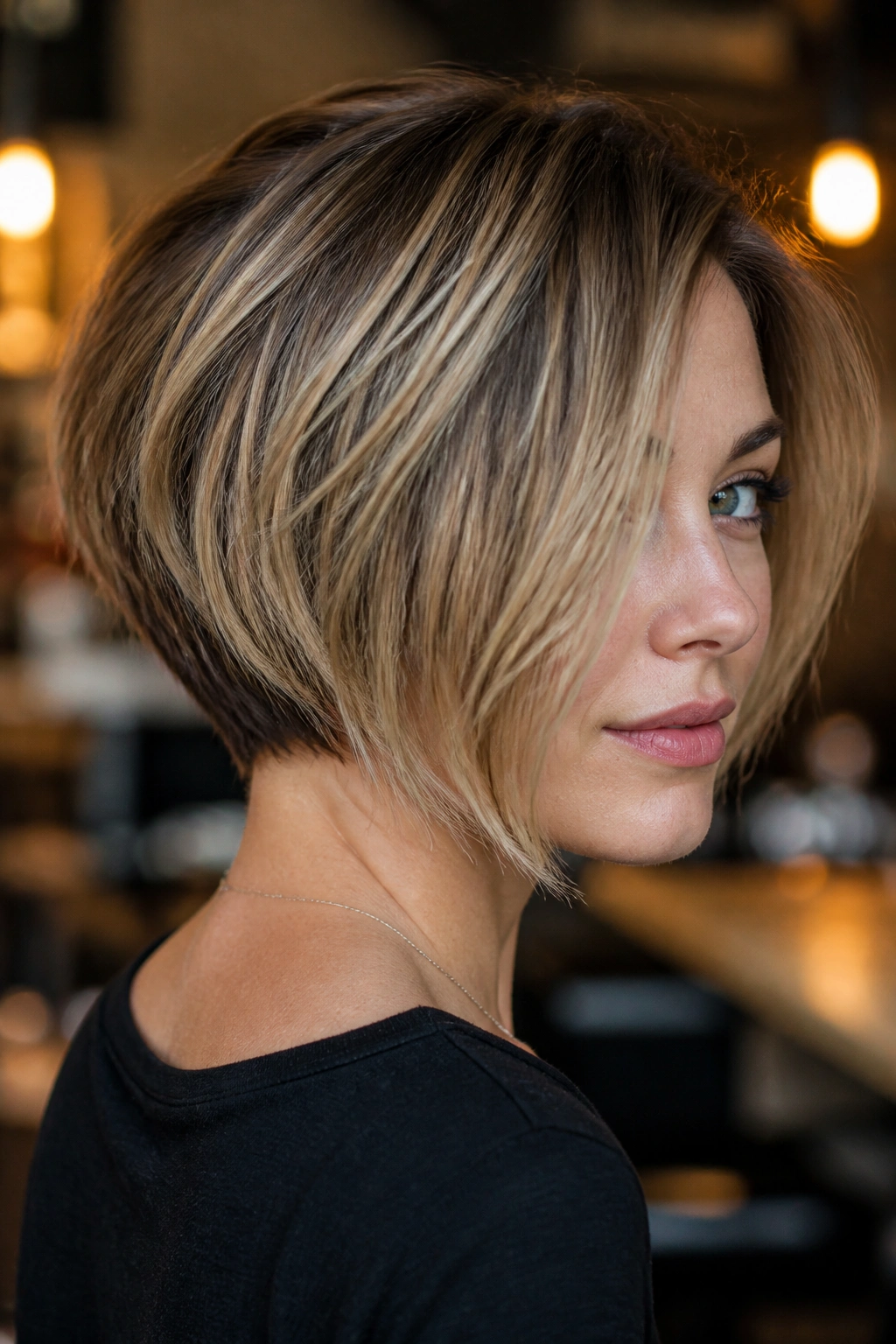
An inverted bob is the cut that makes people check the back of your head. The shorter nape and longer front create a clean slope, and the choppy texture keeps that slope from feeling too formal.
Unlike a classic inverted bob, this version keeps the front ends a little rougher. The back can stay close to the neck, while the front pieces fall a touch longer toward the chin. That small difference gives the haircut a sharper profile and more movement when you turn your head.
What to Ask For
- Shorter back with a visible angle toward the front
- Soft, textured ends instead of a hard blunt line
- A nape that hugs the neck, not a bulky stacked shape
- Enough length in front to show the angle clearly
This cut is especially good if you want lift at the back and a little edge at the jaw. It has shape before you even style it. Nice when hair can do half the work.
13. Choppy Bob with Micro Bangs

Micro bangs are not timid. They pull the whole haircut forward and make it feel more graphic, which is exactly why they work with a short choppy bob.
The rest of the cut should stay relatively simple — a line around the chin or jaw, then broken ends for movement. If the bob itself gets too layered, micro bangs can make the style feel crowded. Keep the perimeter cleaner and let the fringe be the loud part.
Why It Works
Short bangs expose the brows and upper face, which gives the haircut a punchier look. The bob underneath balances that by framing the jaw. It’s a strong shape, and it photographs well in real life too, not just on a perfect angle in a mirror.
Maintenance is the catch. Micro bangs need trimming more often than a side fringe, usually every 2 to 3 weeks if you want them to stay crisp. If you enjoy that sharp little line, great. If not, skip them.
14. Nape-Length Choppy Bob with Face-Framing Pieces

A nape-length bob can carry a lot of attitude when the front pieces stay longer and the ends are cut with a little irregularity. The hair sits close to the neck in back, then opens toward the face.
That shape is useful if you want a short haircut that still feels wearable. The front pieces can skim the cheekbone or jaw, which softens the whole look. Meanwhile, the nape stays tidy and neat, so the cut never turns bulky from behind.
It works especially well with a side part or a slight off-center part. Those tiny shifts keep the shape from feeling too symmetrical. And symmetry, frankly, can be the thing that makes a short bob feel too polite.
Ask for face-framing pieces that are only 1 to 2 inches longer than the nape. That difference is enough to create shape without turning the haircut into a lob.
15. Rounded Choppy Bob with Soft Volume

Why does a rounded bob look softer even when the ends are jagged? Because the silhouette curves, and the eye forgives the roughness when the outline feels deliberate.
The crown carries a little lift here, while the sides tuck in just enough to follow the head shape. The ends are still choppy, but they’re arranged in a way that keeps the overall style rounded instead of square. That’s a nice move for anyone who wants edge without harshness.
How to Ask For It
Tell the stylist you want a rounded bob that lands around the jaw with soft internal texture and lightly broken ends. If they understand haircuts, they’ll know you mean movement inside the shape, not a shaggy mess. A rounded bob is one of those cuts that looks much better when it’s tailored to your hair density.
It’s a solid pick for medium to thick hair, especially if you hate a sharp corner at the jaw.
16. Bixie-Bob Hybrid with Choppy Sides
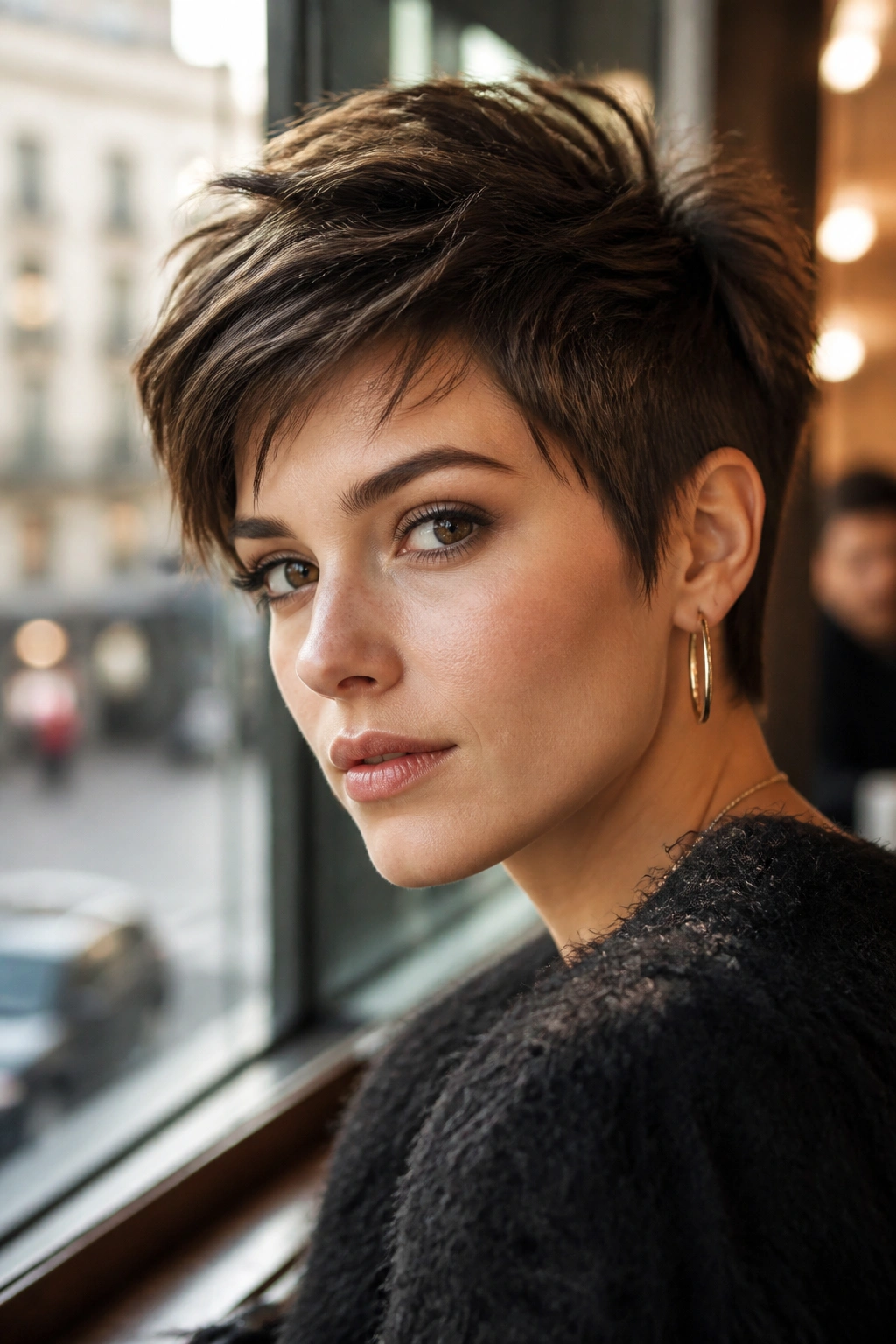
If you’re flirting with a pixie but not ready to commit, this is the doorway cut. The bixie-bob hybrid keeps more length than a pixie, but the sides and crown are short enough to feel sharp.
The choppy sides are the part that give it edge. They stop the cut from reading as soft or sweet, especially if the top has a little lift. Think of it as a bob that lost some length in the right places and gained attitude in exchange.
- Keep the top around 4 to 5 inches if you want styling room.
- Let the sides stay closer to the head.
- Ask for piecey separation around the temples.
- Works well with a small amount of wax or paste through the ends.
Best for: women who like short hair but still want some shape around the face. This one has a nice grow-out, too, which matters more than people admit.
17. Razor-Broken Bob for Fine Hair
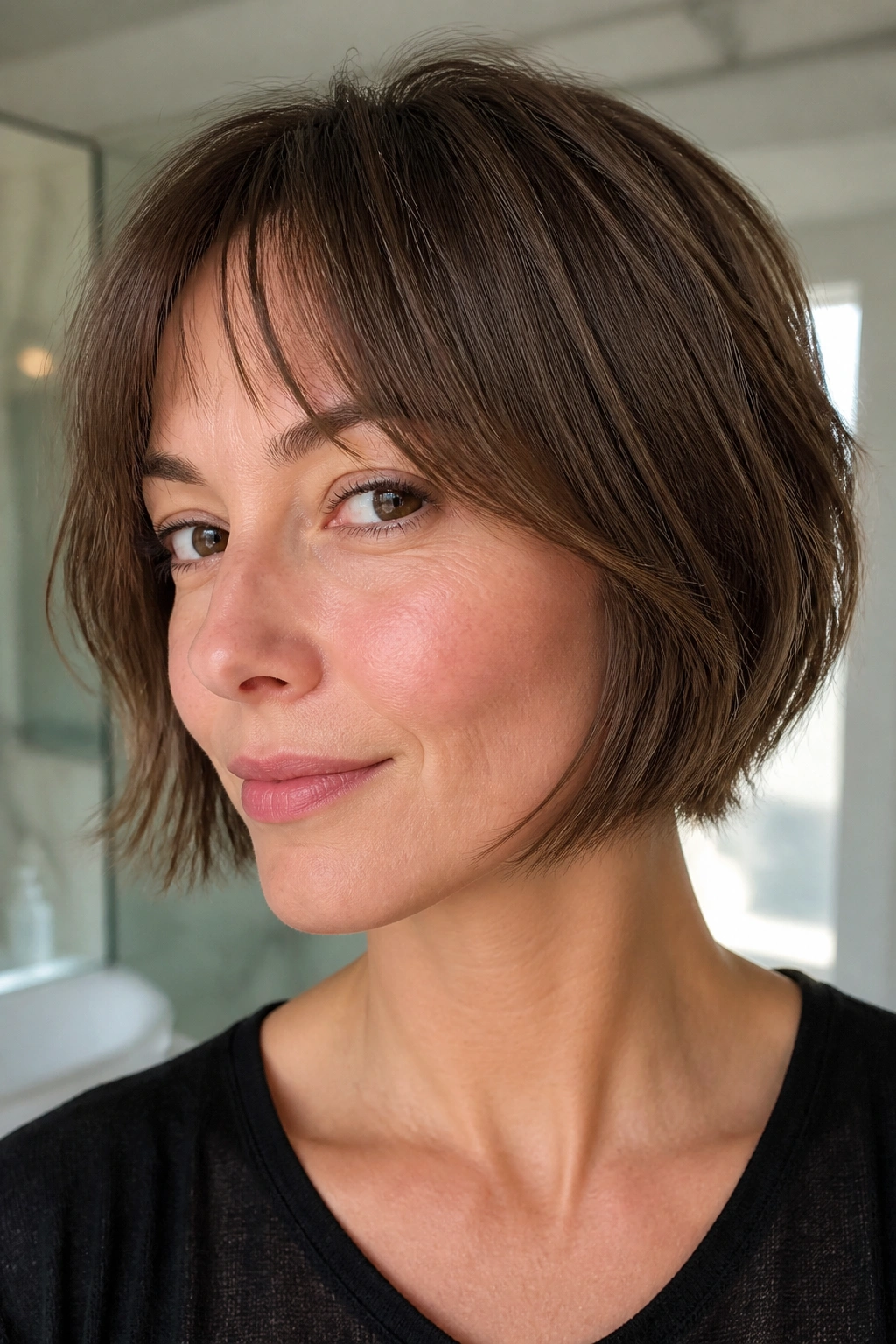
Fine hair likes a cut that steals as little density as possible. That’s why a razor-broken bob can be a better choice than a heavily layered one.
The razor work should stay light and controlled, just enough to crack the line at the ends and keep the bob from collapsing into one flat sheet. Too much slicing makes fine hair look wispy in the wrong way. A little? Good. A lot? Usually no.
This cut works best when the perimeter stays close to the jaw or just above it. That gives the hair enough shape to look fuller while the broken ends add motion. A root-lifting mousse, applied only at the crown, can help the whole thing stay up a bit longer through the day.
Fine hair does not need drama everywhere. It needs the right kind of movement in the right places. That’s the whole game.
18. Tucked-Under Bob with Sharp Ends

A tucked-under bob has a crisp little bend at the bottom that makes the haircut feel neat, but the sharp ends keep it from looking prim. That mix is useful when you want structure and a bit of bite.
Unlike a sleek Italian bob, this version bends under with a little more movement through the lower half. The perimeter still reads clean, but the ends are cut to look lightly broken, not polished to death. It’s especially nice on straight hair that tends to lie too flat unless you give it some shape.
A paddle brush or flat brush blow-dry usually gets the under-bend in place. Once the hair cools, pinch the ends with a small amount of paste or cream. Do not load the roots with product here. You’ll kill the lift, and the bob will just slump.
This is a smart office-to-dinner cut. Quiet, but not meek.
19. Shaggy Bob with Heavy Texture
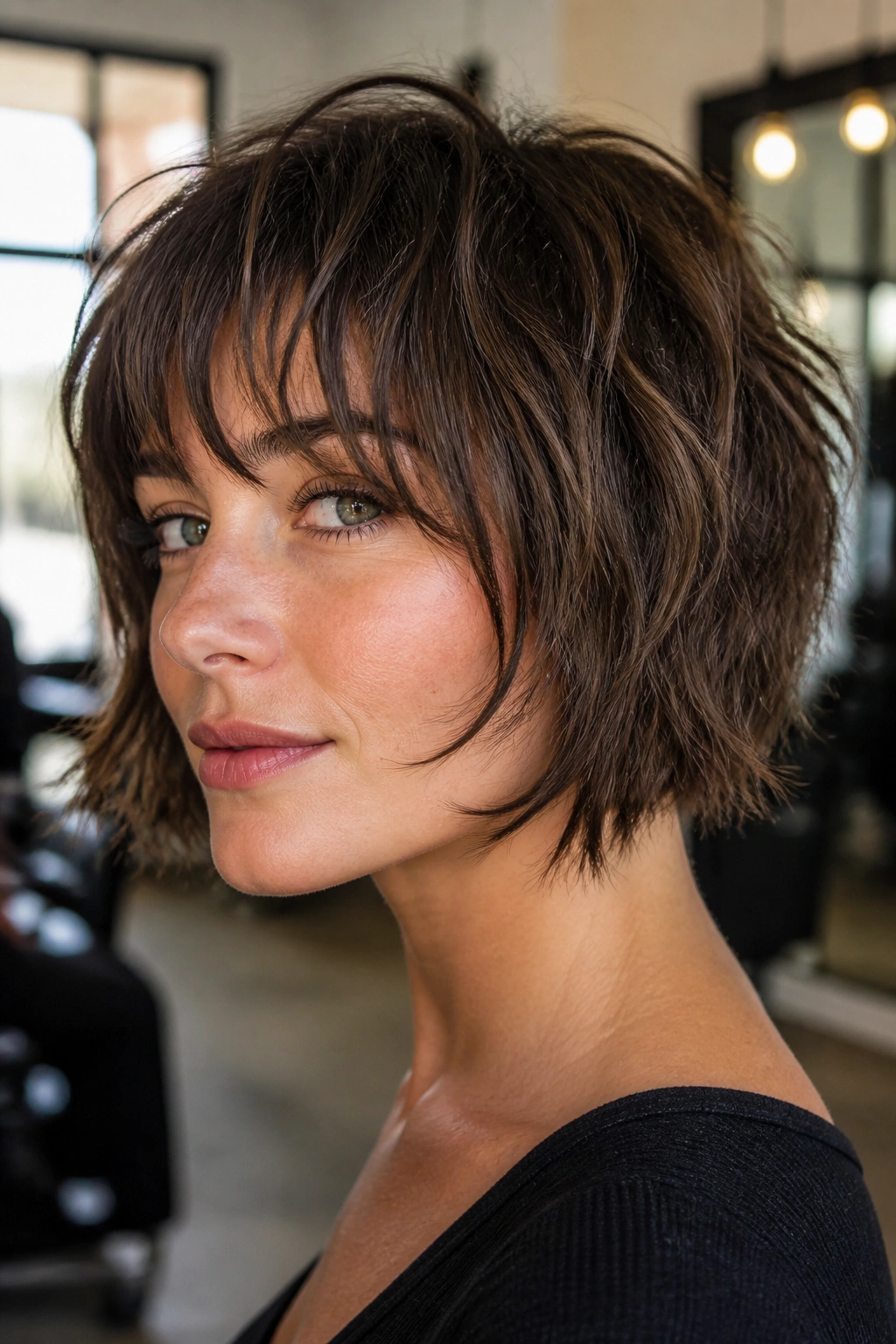
Chunky layers are for people who want movement you can see from across the room. A shaggy bob with heavy texture leans into that idea, but it still keeps enough shape to count as a bob.
What Makes It Different
The layers start low enough to keep the outline intact, then the interior gets broken up so the haircut moves in pieces. That gives the style a rougher look than a feathered bob or a rounded bob. It’s looser, a little less polite, and better when you like hair that looks touched, not frozen.
- Best on medium to thick hair
- Looks good with a side part or messy center part
- Needs a texturizing spray more than a heavy cream
- Grows out with a soft, lived-in shape
One thing to know: if the layers start too high, the cut can lose its bob shape fast. Keep the bulk at the bottom so the haircut still feels grounded.
20. Edgy Blunt-Choppy Bob with a Deep Side Part
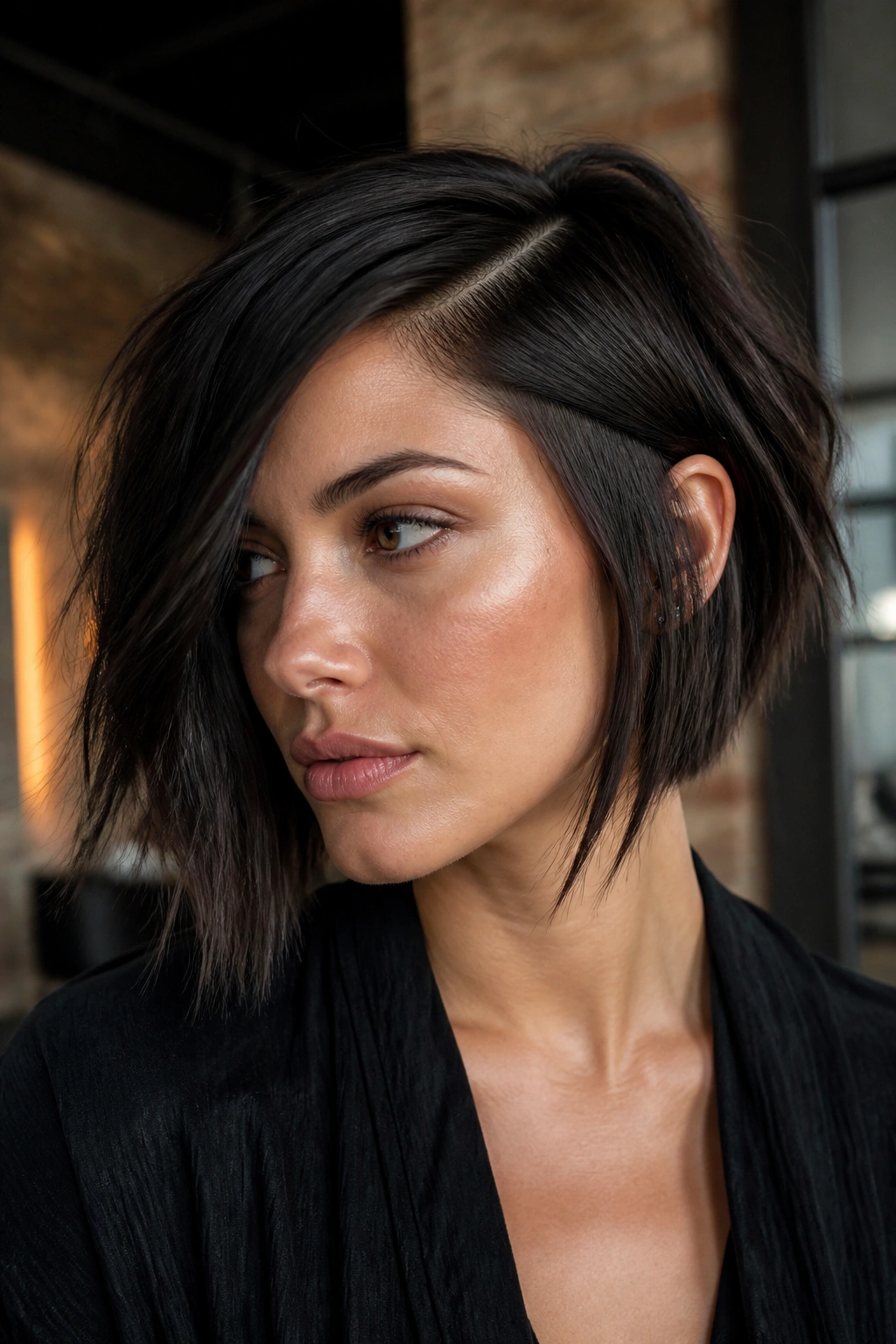
A blunt-choppy bob with a deep side part is the safest way to get edge without tipping into costume territory. The line stays strong, the part creates movement, and the broken ends keep the haircut from feeling too polished.
The length usually works best around the chin or a touch below it. That gives the bob enough face-framing power while still showing the neck. The blunt baseline keeps the structure firm, but the stylist should soften just the last bit of the perimeter so the ends don’t look too exact.
If you want a haircut that reads sharp in a meeting and cool in a black T-shirt, this is the one I’d send people toward first. It’s clean. It’s a little messy. It doesn’t try to be cute, which is half the charm.
Ask for a blunt foundation, point-cut ends, and a deep side part. That combination gives you the look in one sentence, which is always a good sign.
