



The best chin length cuts for thick hair do one thing well: they shape the bulk instead of just chopping it off. That sounds obvious until you’ve seen what happens when a dense head of hair meets a blunt cut with no plan. The ends puff out, the sides widen, and the whole shape starts looking more like a triangle than a bob.
Thick hair gives you options. A chin-length cut can look crisp, expensive, soft, airy, or sharp enough to make a jawline look stronger than it really is. The trick is knowing where to keep weight, where to release it, and when to leave the ends alone. I’m suspicious of any advice that says thick hair always needs more thinning. Sometimes it does. More often, it needs better placement.
Shorter does not automatically mean easier. Chin-length hair sits right in the danger zone where fullness can either flatter your face or overwhelm it, depending on the cut line. Too many layers and the shape goes fuzzy. Too little and the whole style sits there with no bend, no movement, and no reason to exist.
The cuts below solve that in different ways. Some lean blunt and polished. Some use hidden layers, angles, bangs, or a sneaky undercut to take the pressure off the perimeter. Pick the one that matches your texture and your tolerance for styling, because the right version can make thick hair feel controlled without making it feel flat.
1. Blunt Chin-Length Bob
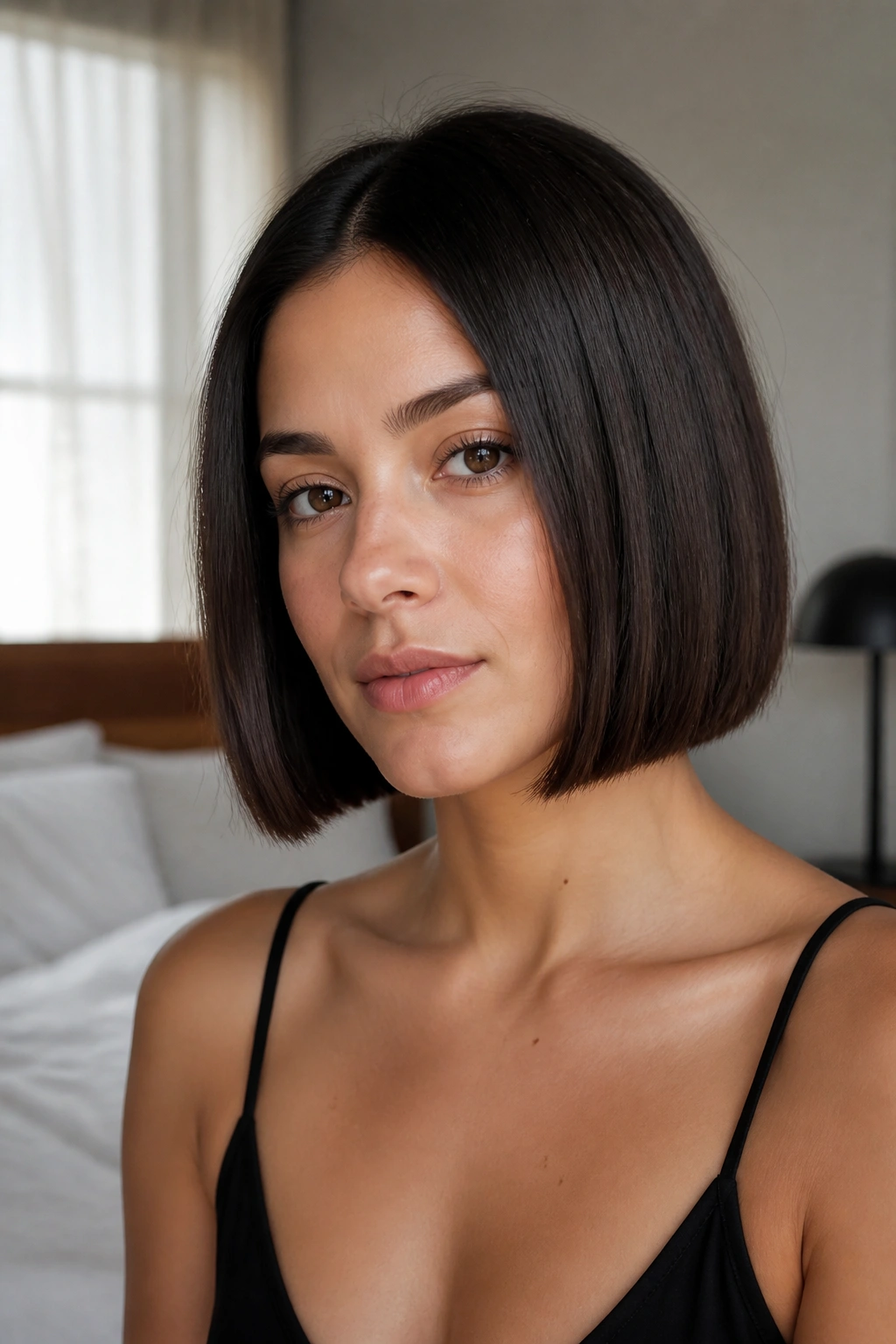
A blunt chin-length bob is the cleanest answer when thick hair needs structure more than decoration. The line lands right at the chin, the ends stay full, and the whole cut keeps its shape without asking for a lot of daily help. It looks especially good when your hair has natural density through the middle but does not need a lot of movement at the ends.
What makes it work
The blunt perimeter gives thick hair something to do. Instead of collapsing into a puff or turning wispy at the bottom, the cut holds a hard edge that feels deliberate. That edge matters. It keeps the shape from spreading out too far at the sides.
Ask your stylist for:
- A clean perimeter that hits the chin, not the cheek
- Minimal thinning at the ends
- Very light point-cutting only if the bottom edge feels too boxy
- A middle or slight off-center part if you want balance
- A neckline that stays tidy when you tuck your hair behind your ears
Best for: straight to slightly wavy dense hair.
This cut is not the place for heavy razoring. That can make the outer layer fray, and frayed ends on thick hair do not read as soft. They read as frizzy. Keep the outline solid, then style it with a blow-dry brush or a paddle brush and a small amount of smoothing cream.
It has backbone. That is the point.
2. Soft Layered Chin-Length Cut

Layers can help thick hair, but only when they stay quiet. A soft layered chin-length cut removes some bulk without carving the haircut into pieces that fight each other. The result is movement, not chaos. You still keep enough weight around the jaw to hold the shape, which is the part many layered bobs get wrong.
Why the layers stay hidden
The best version uses internal layers that sit under the top section of hair. They take pressure off the middle of the cut while keeping the outside line intact. That means the bob still looks full when you look at it head-on, but it won’t balloon the minute humidity shows up.
What to ask for
- Layers that begin below the cheekbone
- Soft internal debulking, not sliced-out ends
- Face-framing pieces that start near the lips or chin
- A perimeter that stays fairly strong at the bottom
If your hair is coarse, this cut can be a lifesaver. Coarse strands often stand away from the head more than fine hair does, so a little internal relief makes the whole style sit better. If your hair is fine-but-dense, keep the layers even lighter. Too much cutting inside the shape can leave the bob looking thin at the ends and bulky everywhere else.
One clean tip: dry it with the ends slightly tucked under, not fluffed outward. That small move keeps the silhouette calm.
3. Textured French Bob

The French bob sits close to the head, swings at the chin, and has that slightly undone edge that keeps dense hair from looking too formal. On thick hair, it works because it doesn’t ask the hair to be perfectly smooth. It lets the texture breathe a little, which is often the only sane approach.
A lot of people imagine this cut as airy and delicate. It can be, but on thick hair it reads more like compact and chic, with enough body to feel substantial. The magic is in the looseness at the ends and the way the shape sits just under the cheekbones. If the cut is too neat, it loses the whole point.
I like this style on hair that has some natural bend. Straight thick hair can wear it too, but then you need a bit of styling polish so it doesn’t look helmet-like. A light mousse on damp hair, then a quick rough-dry with fingers, gives it that lived-in finish without making it look careless.
The fringe matters here, too. A tiny eyebrow-skimming bang can be cute, but it is not required. If you want less maintenance, skip the fringe and let the chin line do the work. It’s a small haircut with a big personality.
4. A-Line Chin-Length Bob
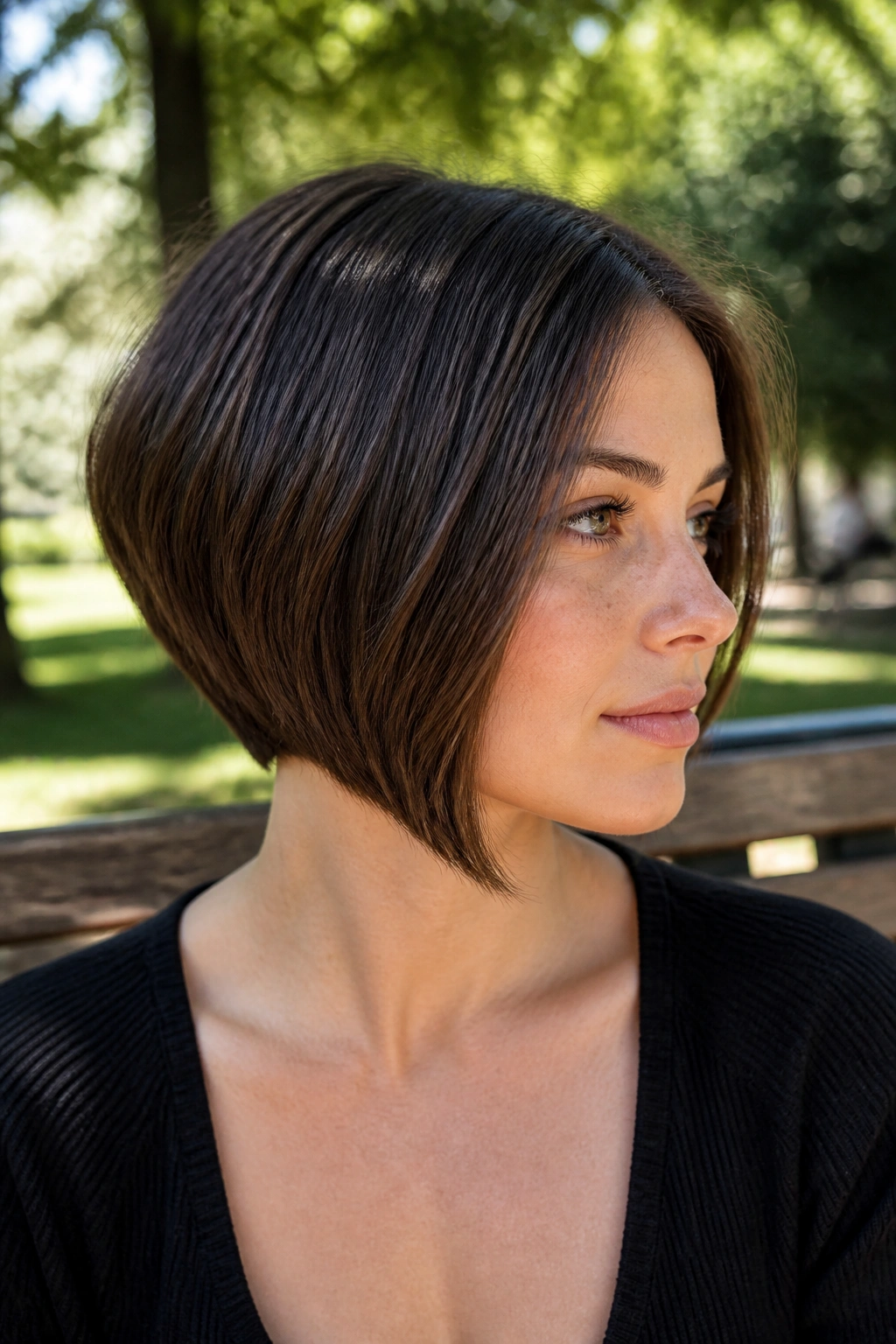
Why does a small angle help so much? Because thick hair often needs direction, not more length. An A-line chin-length bob is shorter in the back and a little longer in the front, which pulls bulk away from the neck and gives the face a cleaner frame.
What the angle actually does
The front pieces can skim the jaw while the back stays tucked in and compact. That makes the haircut feel lighter without sacrificing the full, dense look people usually want from thick hair. It also keeps the style from looking boxy when you turn your head.
Good salon notes
- Ask for the front to sit about 1 to 2 inches longer than the back
- Keep the angle subtle if your hair is curly or wavy
- Leave enough weight in the front so it does not flip out too hard
- Use a round brush only on the front sections if you want a polished bend
This is a smart choice for anyone with a fuller face or a strong jaw, because the diagonal line softens the width at the cheeks. It’s also a good cut if you like tucking one side behind the ear. The front still looks finished even when the style gets messy.
A strong A-line can be sharp. A softer one can be quietly flattering. Both are useful.
5. Chin-Length Shag with Curtain Bangs
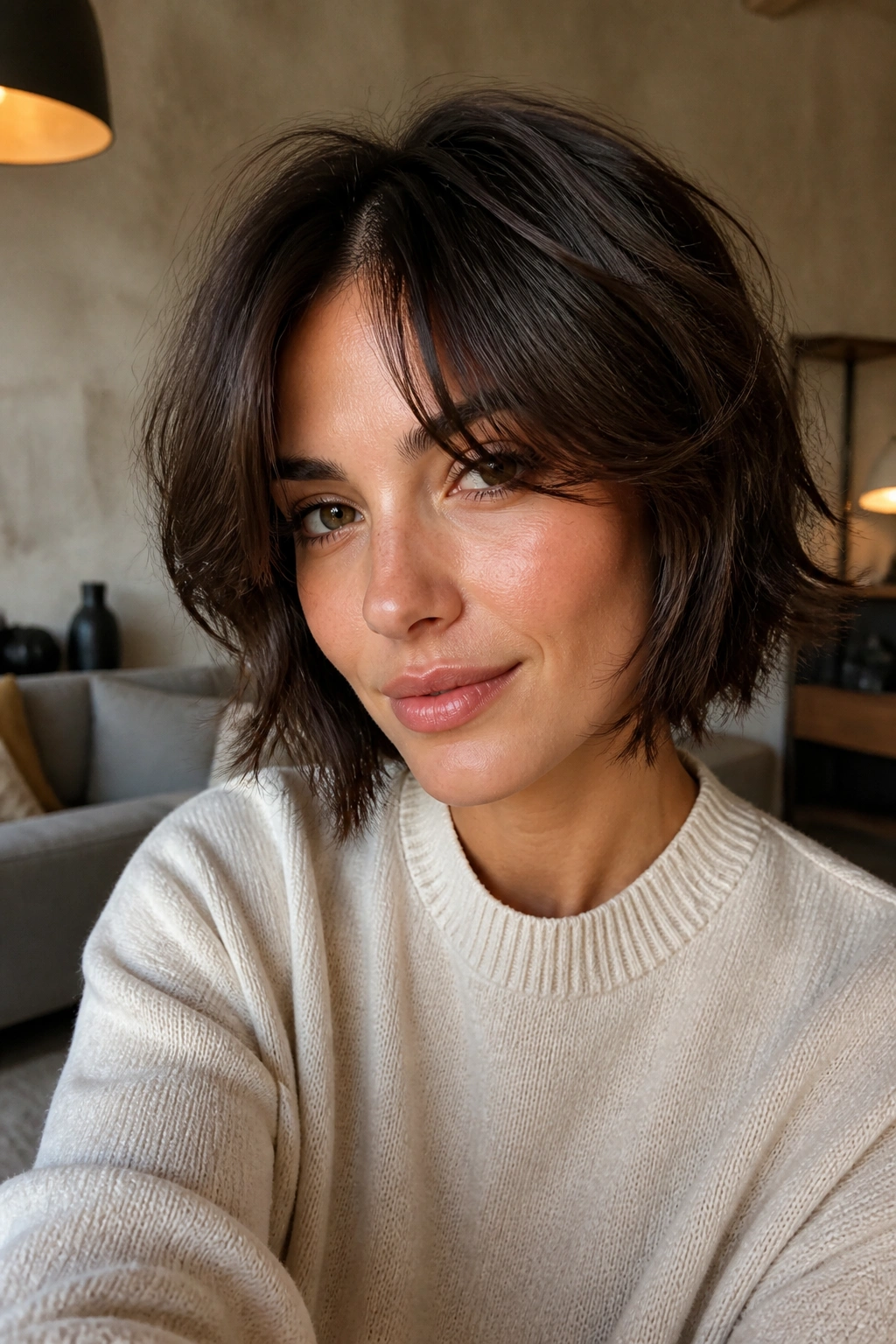
A shag sounds wild on thick hair until you see what it does to the crown. Then it starts making sense. The shape breaks up heaviness near the top and keeps the perimeter from feeling like one solid block, which is exactly where thick hair can go wrong.
Curtain bangs change the whole mood. They split the front open, skim the cheekbones, and make the cut look less severe. If your hair grows in heavy around the temples or forehead, those bangs can take a surprising amount of visual weight off the face. They should feel soft, not chopped.
Where the cut can go wrong
Too many short layers at the crown and you get volume in the wrong place. The head starts to look rounder, not lighter. That is why the best shag on thick hair keeps the upper layers controlled and places the movement lower, around the jaw and collarbone line.
A good version needs a little styling time. Not much. A diffuser, a touch of cream, and a few twists with your fingers are usually enough. If you like hair that looks a little tousled rather than exact, this is a strong pick. If you want every strand in place, it will probably annoy you.
It’s one of the few chin-length cuts that can handle a little mess and still look intentional.
6. Rounded Bob with Internal Layers

If your thick hair balloons out at the sides the minute it dries, a rounded bob is worth a serious look. The idea is simple: the haircut curves inward slightly instead of sitting in a flat line or kicking outward at the ends. That curved silhouette can make dense hair look controlled without looking stiff.
Internal layers are the quiet part of the cut. They remove weight from inside the shape while leaving the outer edge solid. That balance matters. Remove too much from the perimeter and the ends go wispy. Remove too little from inside and the hair keeps its old habits.
What to tell your stylist
- Keep the outline rounded, not square
- Take weight out from the interior, especially through the mid-section
- Leave enough length at the chin so the bob can tuck inward
- Avoid high layers near the top unless your hair is very heavy
This cut is especially good if your hair grows wide through the cheeks and jaw. The rounded shape pulls the eye down and in, which makes the whole head look neater. It also behaves well with a medium round brush and a quick bend at the ends. Nothing fussy.
No scissors circus. Just shape.
7. Side-Parted Chin-Length Cut
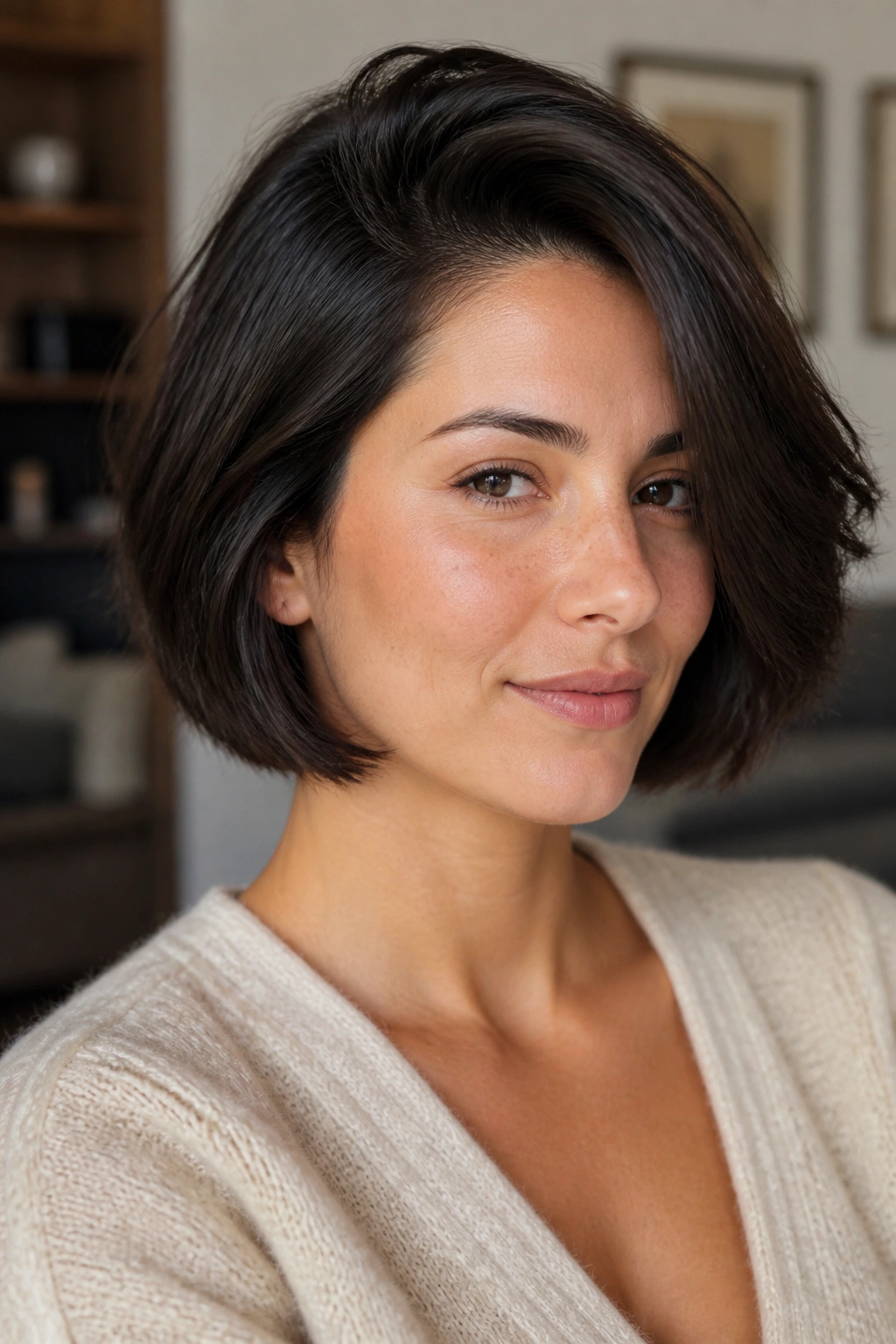
A side part can calm thick hair faster than another layer ever will. That’s the part people miss. When you move the weight off center, the cut stops sitting like a block and starts falling in a line that feels more natural on the face.
This is especially useful if your hair has a stubborn cowlick or insists on parting in a way that makes the middle look too dense. A deep side part gives the haircut asymmetry, and asymmetry is a good friend to thick hair. It breaks up the bulk without requiring a dramatic shape change.
I like this cut on round, square, or heart-shaped faces because the longer side can skim the cheekbone and soften the outline. If your jaw is strong, the side sweep can keep the whole look from feeling too severe. If your hair is straight and heavy, ask for the part to be cut and styled into the shape, not fought against. That tiny detail helps more than people think.
It is a low-drama move with a big payoff. Some mornings, that is exactly what you want.
8. Piecey Wavy Bob

I like this cut on hair that already has a little bend, because you can spend five minutes on it and still look finished. The piecey wavy bob does not try to force thick hair into one smooth sheet. It lets the waves separate into loose sections, which keeps the shape from getting too bulky.
How to style it
- Work a golf-ball-sized amount of mousse through damp hair
- Scrunch the ends while the hair is still wet
- Diffuse on low heat until about 80 percent dry
- Break up a few front pieces with dry fingers and a tiny bit of serum
That’s enough. More product can weigh the hair down and make the wave clump in odd places. Less can leave it puffing out like cotton. The sweet spot is a finish that looks touchable but not fluffy.
What makes it different
A piecey bob needs separation at the ends, not all over the haircut. That means the shape can stay full through the body while the tips look lighter and more defined. If you have thick hair that bends naturally, this is a useful compromise. It gives you texture without forcing a shag haircut onto hair that does not want one.
If you brush it dry, you’ll lose the whole effect. Hands are better here.
9. Chin-Length Bob with a Hidden Undercut
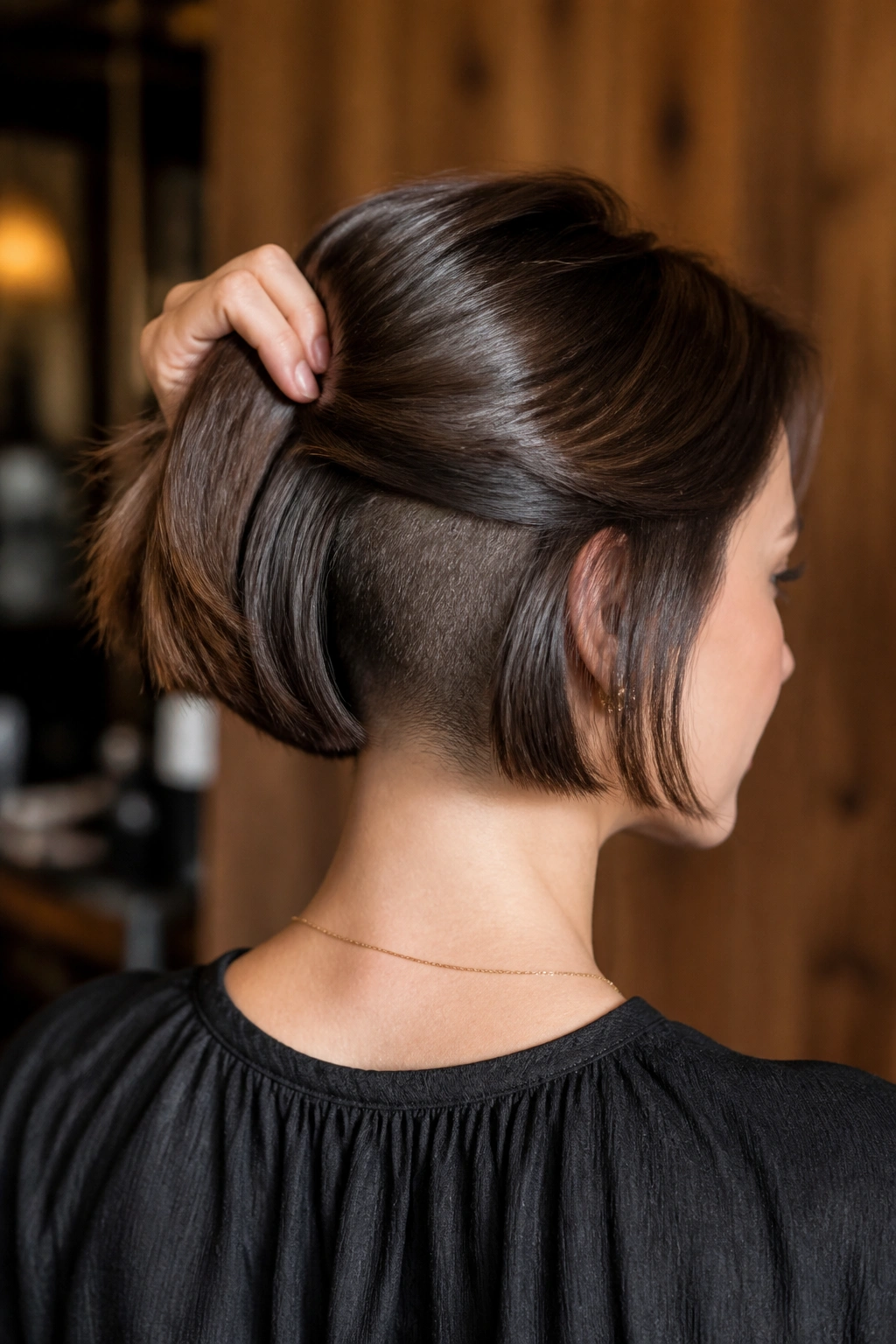
A hidden undercut sounds drastic. It often looks calmer. That’s why it works so well for very dense hair. The outer layer still reads as a normal chin-length bob, but the underneath has been reduced enough to stop the haircut from sitting like a heavy cap.
The cut is usually taken at the nape or in a small lower section under the crown, where the bulk tends to build up first. Even shaving or clipping out a half-inch to an inch in that hidden zone can make a big difference. It takes weight off the back without changing the outside shape too much.
The catch is maintenance. If the hair grows fast there, the underside can start to feel thick again after a few weeks. And if you wear tiny buns or high ponytails, the shorter section may peek out. That doesn’t make the cut bad. It just means you need to know what you’re signing up for.
This is the move I’d keep in my back pocket for hair that feels bulky no matter how carefully it’s cut. Not every chin-length style needs an undercut. But when the density is serious, it can be the cleanest fix.
10. Inverted Bob with a Tapered Nape

Unlike a straight A-line, the inverted bob builds more lift in the back and lets the front stay longer and sleeker. That difference sounds minor on paper. On thick hair, it changes everything. The nape gets a tighter shape, the crown gets a little more structure, and the front can drape instead of jutting out.
Best for
- Dense straight hair that tends to sit flat at the crown
- People who want a polished shape with some lift in back
- Anyone whose neck looks better with a tighter nape line
A tapered nape helps the haircut sit closer to the head. That matters when the back of thick hair wants to kick out. If the graduation is cut well, the line from the crown to the chin looks smooth and deliberate. If it’s cut too steeply, the back can get bulky and triangular. There’s a fine line there.
This cut usually looks best with a clean blowout or a round brush through the back sections. You don’t need a barrel full of product. A little smoothing cream and a pass with a nozzle is enough. The shape does the heavy lifting.
It’s sharper than a rounded bob, and a touch more technical. That’s part of the appeal.
11. Chin-Length Cut with Bottleneck Bangs

Why do bottleneck bangs play so nicely with thick hair? Because they spread the weight out instead of dumping it into one heavy fringe. The center stays shorter, the sides drop longer, and the whole front opens in a way that looks soft instead of blunt.
That shape matters if your forehead is on the smaller side or if full bangs tend to feel too dense. Bottleneck bangs sit somewhere between curtain bangs and a classic fringe. They give coverage near the center, then melt into the front layers near the cheekbones. It’s a smart trick for thick hair because the bangs do not have to fight the rest of the cut.
How to keep them from feeling heavy
- Ask for the center to start around brow level
- Leave the outer corners long enough to hit the cheekbone
- Keep the edges textured, not chopped
- Style them with a round brush or a quick bend from a flat iron
If your hair grows fast or your fringe gets oily, this shape is easier to live with than a full straight bang. There is more air between the pieces, so they do not close in on the face as much. Still, bangs require maintenance. No one should pretend otherwise.
When they’re cut well, though, they make a chin-length bob feel a lot less severe.
12. Curly Chin-Length Shape

Curly hair at chin length can look plush and expensive when the cut respects the curl pattern. That is the whole game. Thick curls do not want to be forced into a straight-line bob that ignores shrinkage, because the result is usually a triangle with a headache.
Wet curls lie. Dry curls tell the truth.
That is why a dry cut or a curl-by-curl approach often works best here. A stylist can see where the curls spring up, where they bunch, and where the bulk lands around the jaw. Leaving a little extra length on purpose is normal. A spiral can shrink an inch or two once it dries, depending on how tight the pattern is and how dense the hair feels.
A chin-length curl shape should keep the perimeter full but not heavy. The outer edge can be rounded or slightly tapered, and the layers need to support the curl pattern rather than break it apart. A light gel or mousse helps the curls hold their shape while drying. If you touch them too much, the whole thing goes frizzy. Annoying. True.
This cut rewards patience. It also rewards a stylist who actually understands curls, which is not a small thing.
13. Sleek One-Length Bob with Micro-Texturizing
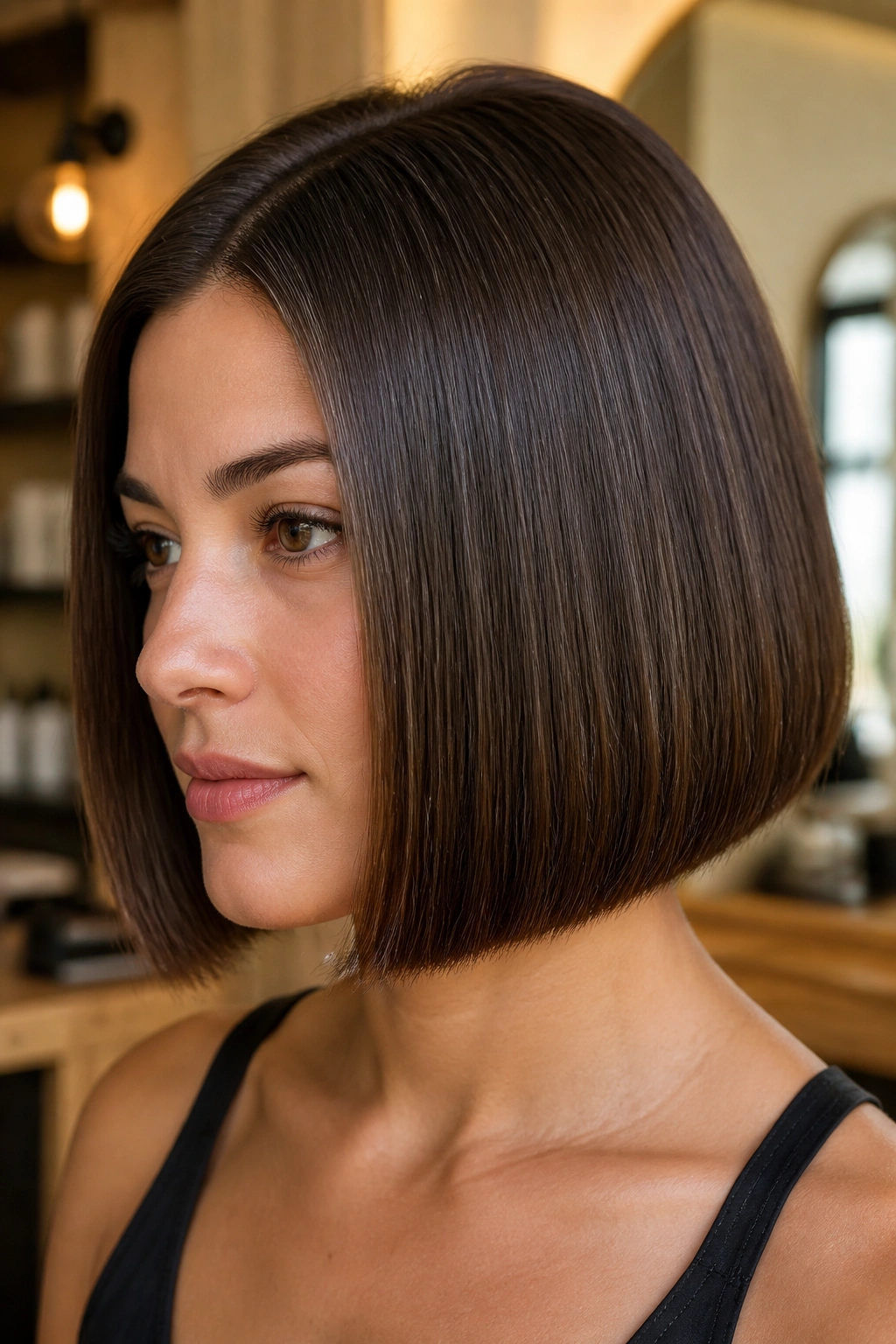
A one-length bob is not boring when the hair is thick enough to hold a hard line. In fact, thick straight hair can make this cut look expensive in the plainest possible way. The trick is restraint. Keep the outline strong, then use micro-texturizing only where the haircut needs a tiny bit of softness.
What micro-texturizing means here
It means light refinement on the surface, not aggressive slicing through the whole bottom edge. The perimeter should still look full and clean. If the ends get too shredded, the cut loses its shape fast and starts swelling at the sides.
Good candidates
- Straight, dense hair that already falls neatly
- People who like a polished finish
- Anyone who wants a sharp silhouette with low daily fuss
This cut is usually a good match for a center part and a smooth blowout. A flat iron can help, but only if you bevel the ends slightly instead of making them stick straight like a board. A subtle curve at the bottom keeps the shape from feeling severe.
If your texture bends or puffs, this style may be less forgiving. That’s the trade-off. It looks clean because it stays clean, not because it hides a lot of loose texture.
Sometimes simple is the boldest move.
14. Feathered Chin-Length Cut

If your thick hair flips out at the ends every time you turn your head, feathering can soften that outline. The word gets abused a lot, though. Feathering should not mean hacking random strands away until the haircut feels thin. It should mean shaping the hair so the front and upper sections move with a little lightness.
That matters most around the face. Feathering near the cheekbones and jaw can make a heavy chin-length cut look gentler. It also helps if your face is square or round, because the softer edges keep the cut from sitting too bluntly against the bone structure. You still want the bottom to hold some weight. Just not all of it.
Where feathering should stop
- Keep the bottom edge fairly full
- Use more feathering around the front than the back
- Avoid over-thinning the crown if your hair already has lift
- Ask for a medium round brush finish, not a fluffy blowout
A feathered bob is one of those cuts that looks better when it moves. The ends should turn a little, not kick out sharply. If you like a softer, more relaxed shape, this is a smart option. If you want razor-clean precision, it may feel too loose.
Still, on thick hair that tends to act restless, a little feathering can save the whole day.
15. Rounded Chin-Length Bob with Soft Face-Framing Ends

If you want one chin-length cut that behaves on most dense textures, this is the one I’d put at the top of the stack. It keeps the perimeter rounded and full, but it adds just enough framing near the front to stop the shape from feeling heavy. The result is tidy without looking severe.
The reason it works is balance. The ends tuck in a little, the front pieces skim the jaw or cheekbone, and the body of the hair stays strong enough to hold shape. That mix is useful if your thick hair sits somewhere between straight and wavy, or if it tends to puff up when it gets too short and blunt. It also grows out well, which matters more than people admit.
What to ask for
- A rounded base that lands at the chin
- Soft face-framing pieces that start near the mouth or cheekbone
- Minimal texturizing through the ends
- Enough weight left in the perimeter to keep the line clean
This cut is easy to wear with a quick blow-dry or a loose air-dry and a bit of cream. It does not need a perfect finish to look good. That’s a big deal on thick hair, because few people want to wrestle their strands every morning.
When the hair is dense and the goal is clean shape instead of drama, this one usually cooperates.
