



Frizzy hair does not need to be hidden. It needs shape.
That sounds like a small difference, but it changes everything. Short bobs for frizzy hair work when the cut stops fighting the hair’s natural swell and starts holding it in place. A clean perimeter, the right amount of weight at the ends, and a shape that fits the way your hair behaves in humidity can do more than a cabinet full of smoothing creams.
The biggest mistake I see is over-thinning. Frizzy hair often looks softer for about five minutes after a razor goes through it, then it puffs, bends, and kicks out at the sides. Heavy ends usually behave better. So does a cut that keeps the outline controlled instead of shredded.
My bias is simple: I like bobs that look good on a normal morning, not only after a long styling session. Some of these are blunt and tidy, some are airy, some depend on internal shape, and some are for the hair that gets huge the second it dries. Pick the one that matches your texture, your face, and how much effort you’re actually willing to give it.
1. The Chin-Length Blunt Bob That Holds Its Shape
A chin-length blunt bob is the haircut I reach for when frizz is coming from dry ends and a fuzzy outline. The blunt edge gives the hair somewhere to stop. That matters more than people think.
Why It Works
When hair is cut to one solid line, the ends sit together instead of flying apart. That means less halo, less feathering, and less of that triangle shape that can happen when frizzy hair is layered too much. The cleaner the perimeter, the calmer the bob usually looks.
Ask for the length to land right at the chin or a hair below it, not above the jaw unless your hair is very dense. Anything too high can make coarse hair flip outward and sit away from the face. A stylist can soften the very ends with tiny point cuts, but the line should still read as blunt from a few feet away.
- Keep the cut one length through the bottom.
- Avoid heavy razor work.
- Use a leave-in cream before drying.
- Finish with one drop of oil on the ends, not the roots.
Pro tip: If your hair expands as it dries, ask for the final shape to be checked dry, not only wet.
2. The Soft Stacked Bob That Lifts the Back
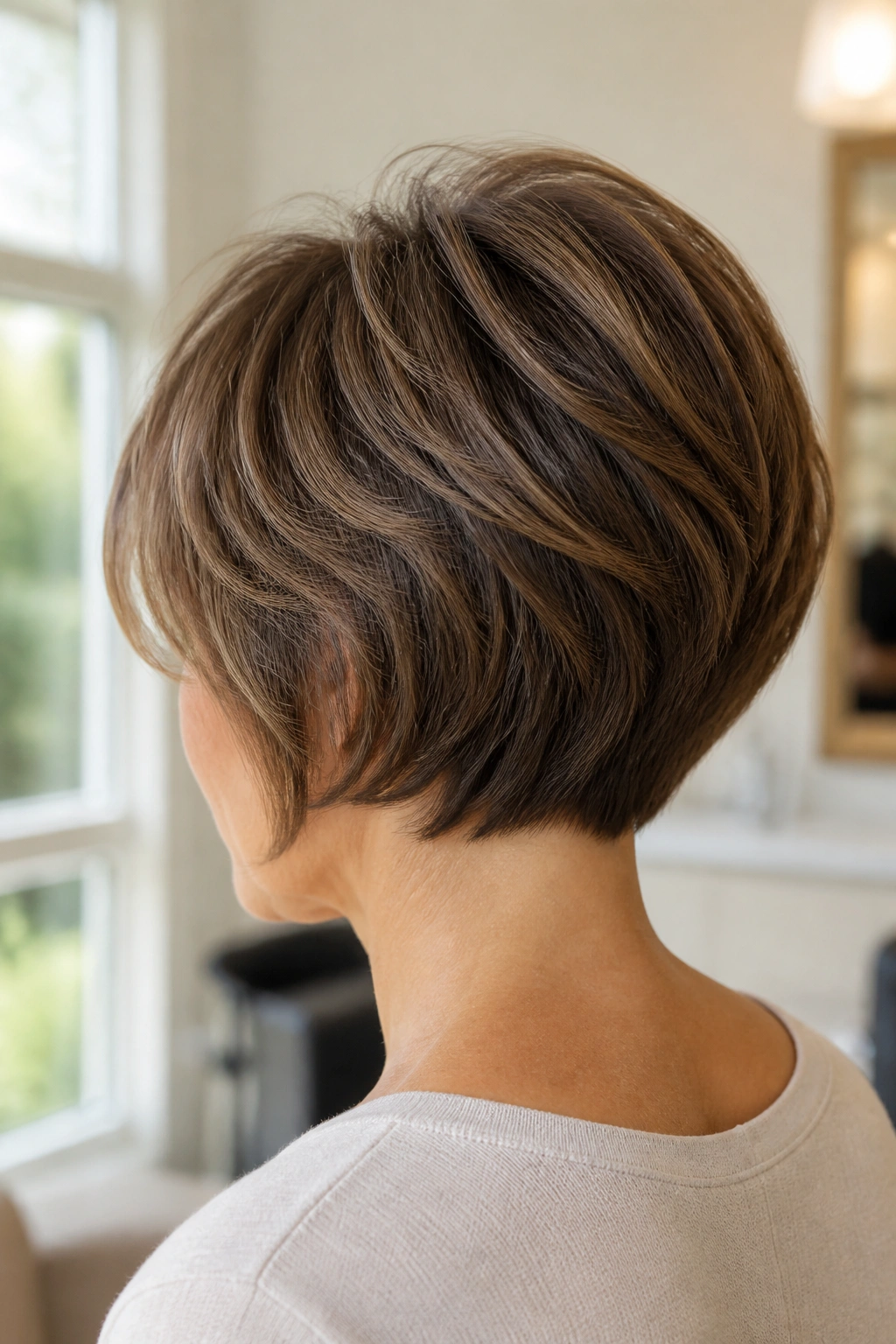
A soft stack is a good fix when the back of the head looks bulky but the sides go fluffy. It gives you lift where you want it and cuts down weight where you do not. That balance is the whole game.
Unlike a severe stacked bob, this version keeps the graduation gentle. The nape is shorter, the line rises a little toward the crown, and the sides still carry enough length to stay grounded. That keeps the haircut from looking too sharp or too old-school.
I like this cut on thick, straight-to-wavy hair that tends to puff at the bottom after a blow-dry. It also helps if the crown lies flat and the back of the head needs a touch of shape. The point is lift without puff. Not a hard shelf. Not a mushroom.
The best styling move is a round brush at the roots, then a quick bend under the ends with the dryer nozzle pointed downward. Skip aggressive flipping. That is where the frizz starts to win.
3. The A-Line Bob That Leaves the Front a Little Longer

Why does this cut calm the sides so well? Because the longer front pieces act like little anchors.
An A-line bob is shorter in the back and gradually longer in the front, so the hair frames the face without exploding straight out at the cheekbones. For frizzy hair, that extra length in front gives the outline more control. It also helps if your hair widens at the jaw or if you want the face to look a touch narrower.
How to Wear It
Keep the angle subtle. A dramatic A-line can feel too sharp on coarse hair, and the front may kick out instead of lying smooth. A mild slope is easier to live with, especially if you air-dry a lot.
A center part gives this bob a clean, modern shape. A side part makes the front pieces fall even softer. Both work. What matters is that the front is long enough to tuck behind the ear on one side without looking chopped.
If your hair is frizz-prone near the temples, use a small brush and dry those pieces first. They frame the whole cut, so if they go fuzzy, the rest of the bob can still look a little unfinished.
4. The French Bob That Sits High and Easy
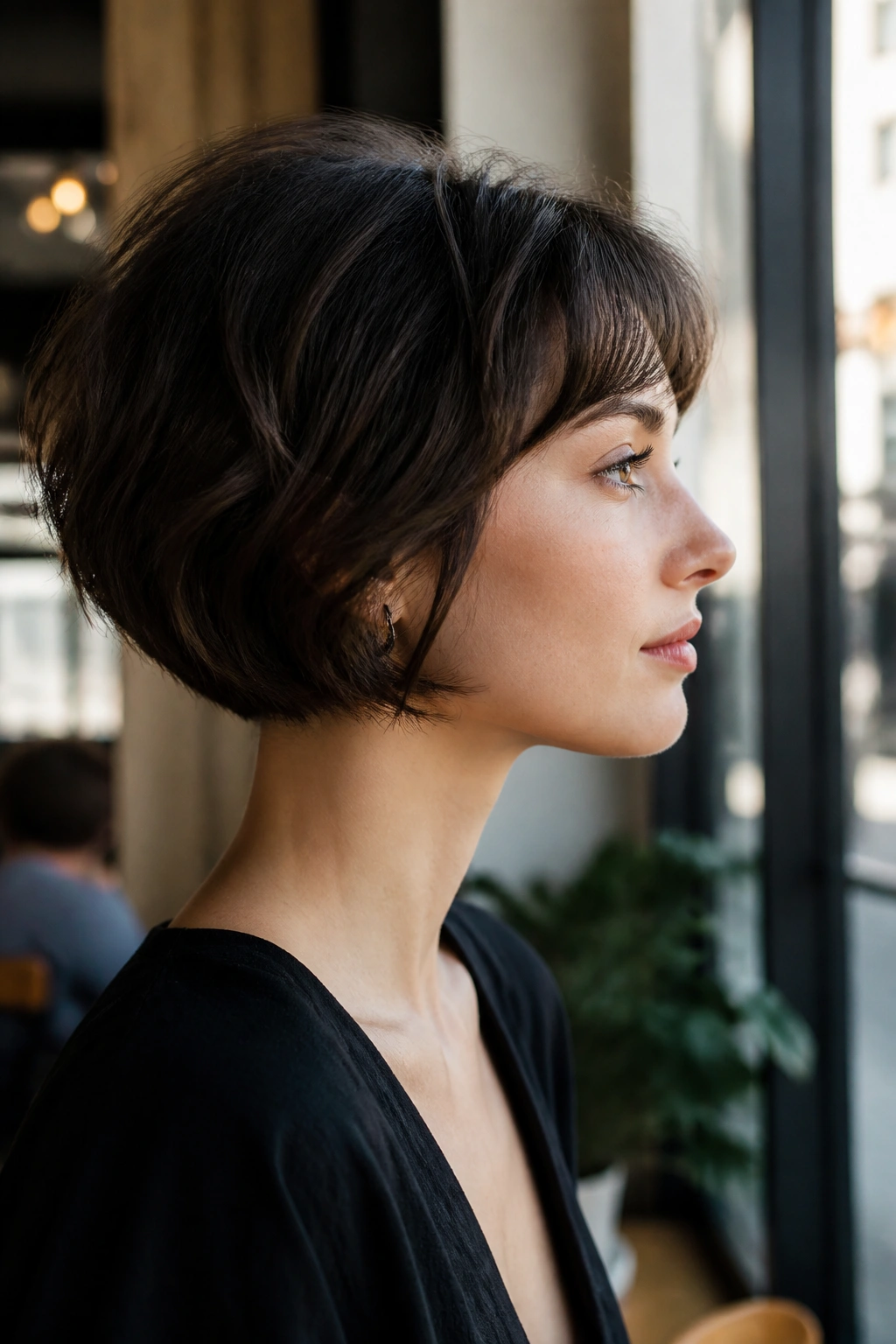
If your hair has loose wave, this one can be a joy. The French bob sits around lip to jaw length, usually with a fringe or a soft front edge, and it leans into texture instead of pretending texture isn’t there.
The trick is restraint. A French bob should feel light, but not stringy. You want enough weight through the sides that the shape stays crisp, while the top and fringe have just enough softness to move.
This is not the bob for over-layering. That is where people go wrong. The charm of the cut is the line around the face, not a pile of broken pieces. On frizzy hair, too many layers can make the whole shape look dusty.
A mousse or lightweight curl cream works well here, especially if you scrunch the hair with a microfiber towel and let the ends dry with a little bend. A harsh brush can ruin the finish fast.
5. The Italian Bob That Looks Full Without Feeling Puffed

The Italian bob has a fuller, rounder feel than a blunt bob, and that is exactly why it works on frizzy hair that needs body without chaos. It usually lands at the jaw or just below it, with a bit of bounce through the mid-lengths.
I like this cut on hair that is coarse, thick, or naturally expansive. It leaves enough substance at the bottom to stop the sides from blooming out, but it doesn’t have the hard edge of a one-length chop. Think plush, not fluffy. There’s a difference.
The shape depends on interior softness rather than obvious layers. That means the stylist may point-cut a little inside the shape, but the perimeter stays solid. That solid edge is doing more work than most people realize.
A large round brush or a hot brush can help the Italian bob fall into that smooth curve. If you air-dry, twist the front sections once or twice while they’re damp so they don’t puff away from the face. Slight bend. Good. Splayed-out ends. Not good.
6. The Box Bob That Keeps the Outline Clean

Unlike a rounded bob, the box bob leans square. That sounds strict, and in a way it is, but it can be excellent for frizzy hair because the outline stays deliberate.
The box bob uses a straight bottom line and sides that fall with almost no taper. The result is weight at the edges, which helps hair that tends to separate and fray. For someone with a lot of density, that weight can be the difference between “styled” and “puffed up by lunch.”
This cut suits people who like crisp haircuts and are willing to keep up with trims. A box bob grows out less gracefully than a softer shape, so cleanups every 6 to 8 weeks usually make sense if you want the line to stay sharp.
It’s also one of the better options if your frizz is tied to humidity rather than curl pattern. The structure gives the hair a place to settle. No fluff. No wandering ends. Just a tidy frame that looks strong even when the weather is doing its worst.
7. The Curly Bob with Internal Shape
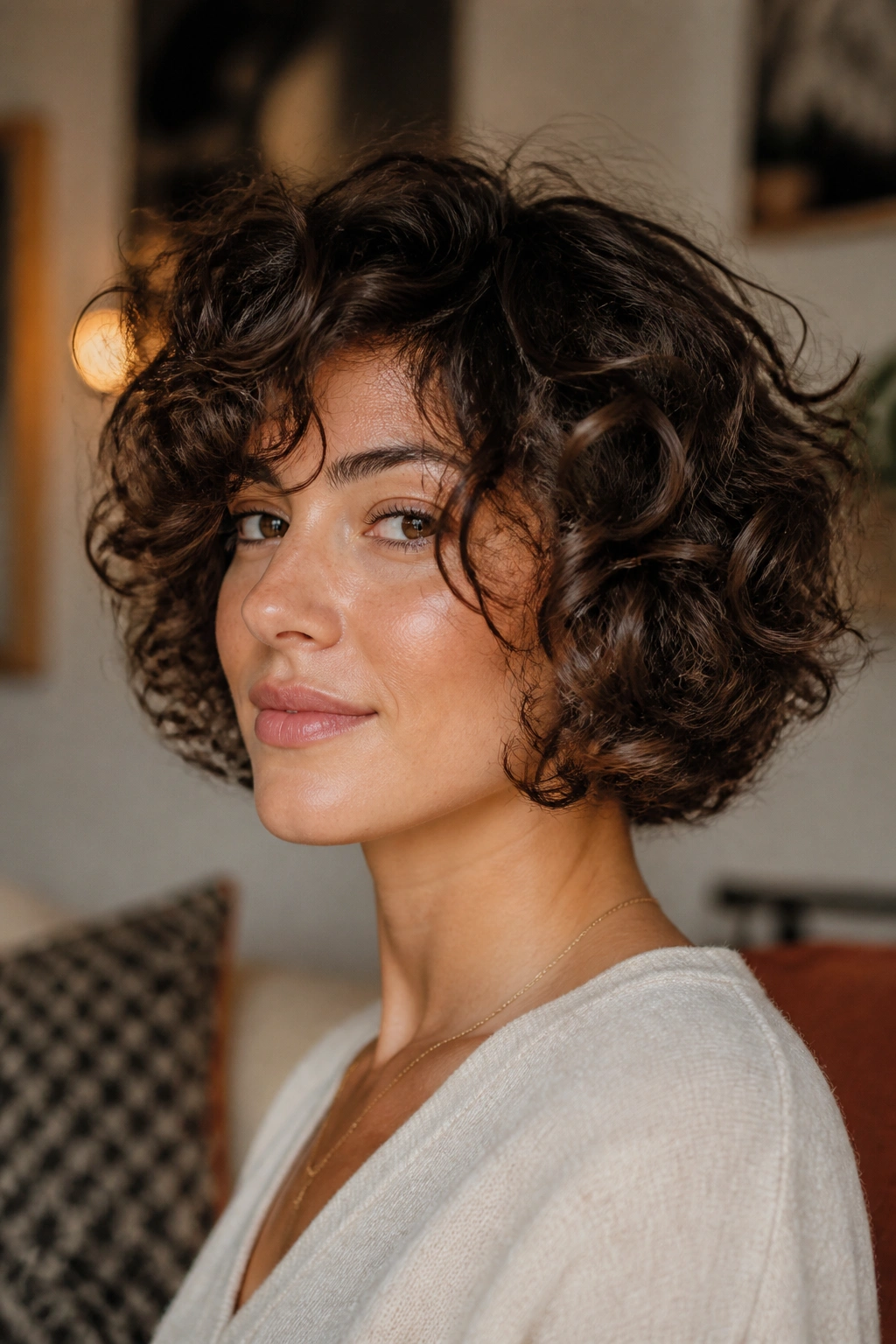
Can a curly bob tame frizz? Yes, if it’s cut with the curl pattern in mind instead of against it.
This is where people mess up by insisting on a wet, straight-looking guide cut. Curly and frizzy hair often shrinks and expands in different places, so a dry cut or a curl-by-curl approach can be much kinder. The goal is not identical length all around. The goal is balance.
Cut It Dry, or Close to Dry
A stylist who understands curls will check where the hair springs up, where it lays flat, and where it bulks out near the cheek or nape. Then they shape the bob so the curl clumps sit together instead of splaying apart. That’s how you get a bob that looks intentional instead of triangular.
What to Ask For
- Dry cutting or very careful curl-by-curl shaping
- Internal removal of bulk, not aggressive thinning
- Enough length to let curls bounce without sticking out
- A finish that checks the shape from the side, not only from the front
For styling, use a curl cream with decent slip, then diffuse on low heat until the roots are dry. Touch the hair less than you want to. That part matters.
8. The Wedge Bob That Lifts the Nape
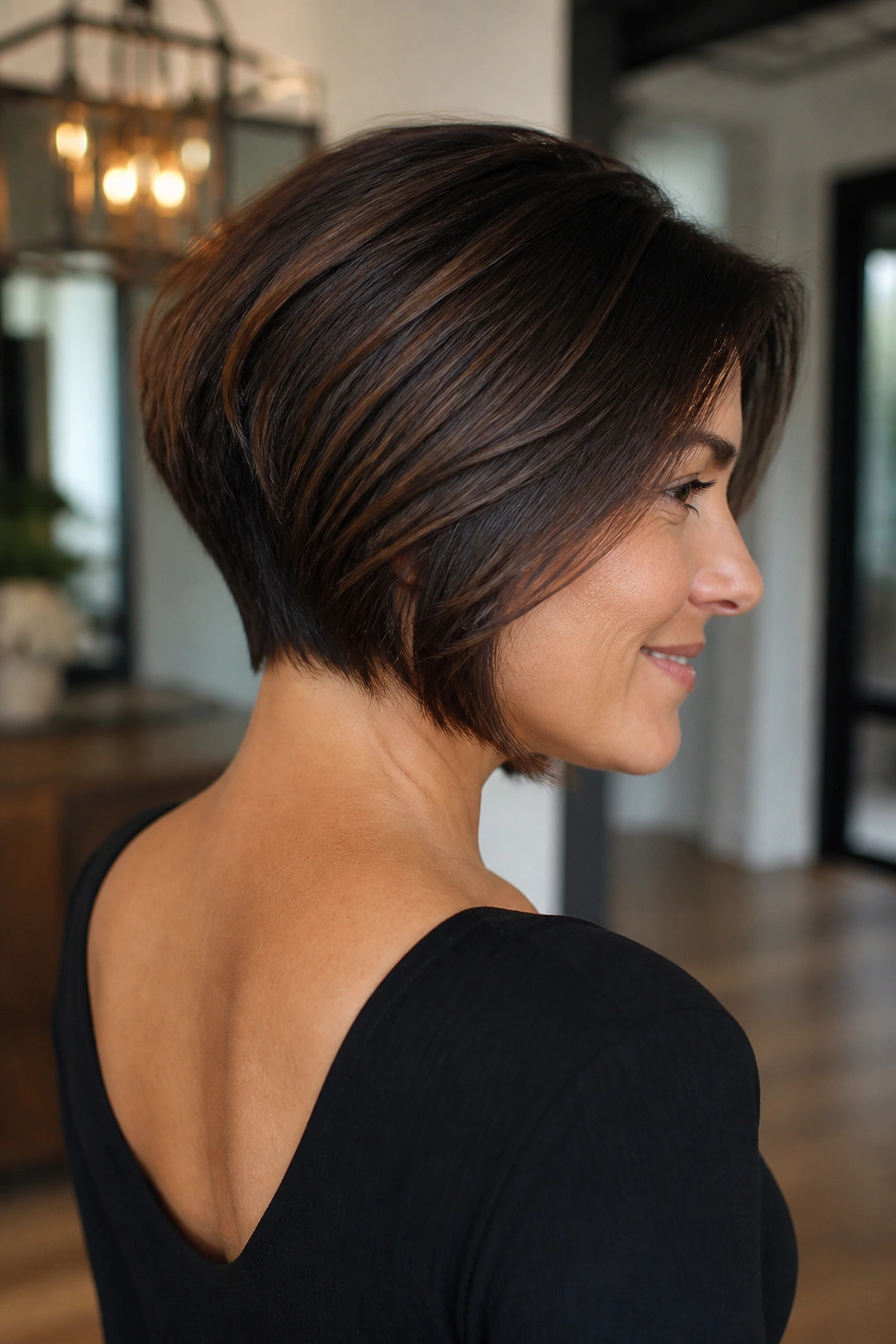
A wedge bob gives the back of the head a little architecture. The nape is shorter, the crown has lift, and the shape narrows down toward the neck in a clean sweep.
That narrowing is useful for thick, frizzy hair that tends to look bulky at the back. Instead of letting the hair sit like a block, the wedge removes weight in a way that still looks neat. It’s a smart cut when the issue is bulk, not limpness.
I would not recommend going too extreme with it. A severe wedge can date the look fast and make coarse hair stick out around the crown. A softer wedge, though, can be very useful, especially if the neck area is where your hair gets hot, sweaty, and fuzzy.
One small detail makes a big difference: keep the top smooth. If the crown is overtexturized, the whole cut loses the clean slope that makes it work in the first place.
9. The Deep Side-Part Bob That Calms a Wide Face Shape
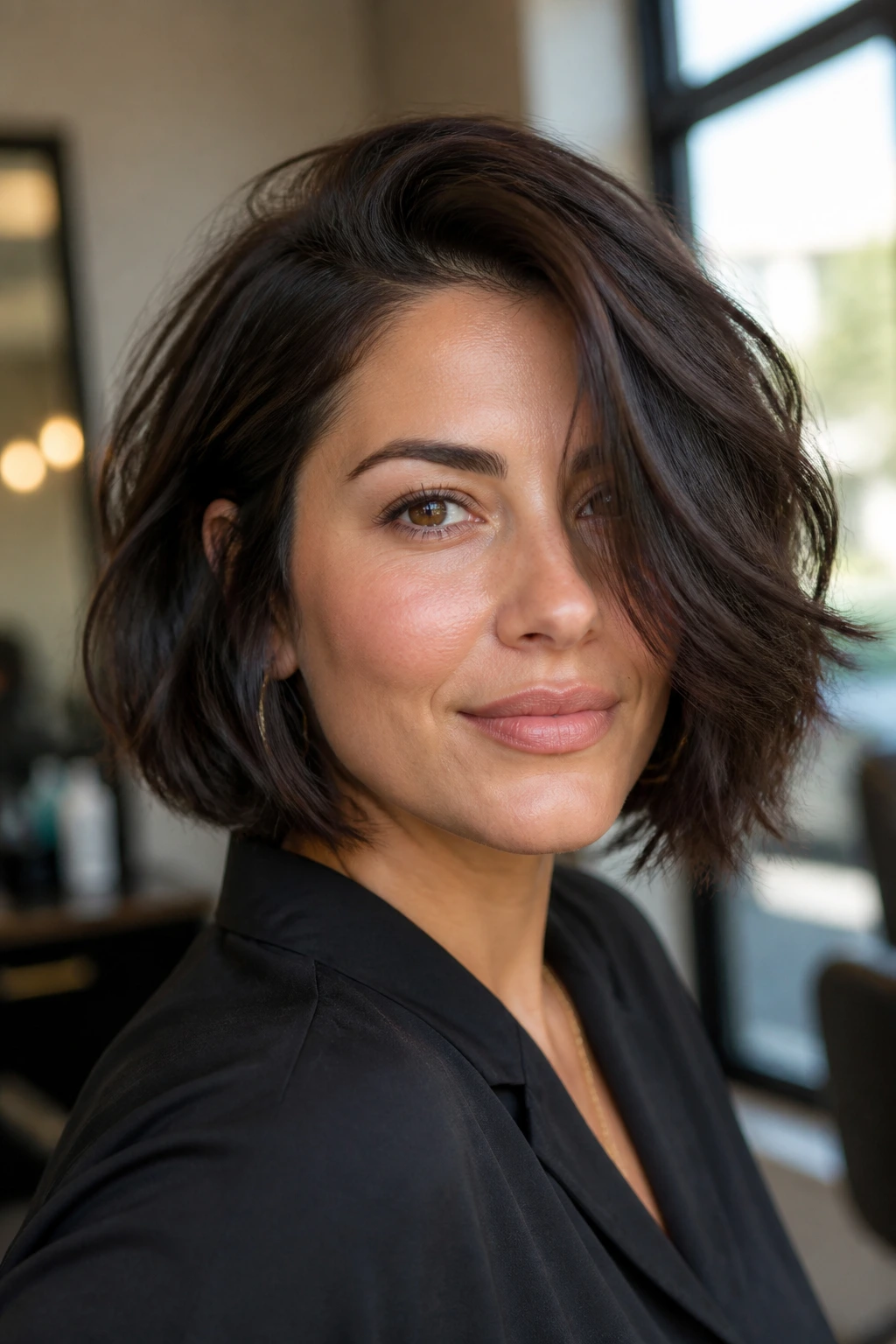
A deep side part changes how frizz sits on the head. That’s the blunt truth. It moves volume away from the center and lets one side lie flatter, which can make a bob look more polished without changing much length at all.
This cut is especially good if your hair blooms around the temples or if a center part makes the whole shape feel too symmetrical and puffy. A side part can break up the mass and give the bob a bit of motion. It also helps round faces, because the long diagonal line draws the eye across rather than straight out.
Best Styling Move
- Blow-dry the root area in the opposite direction first.
- Flip the part back once the hair is half dry.
- Smooth the top layer with a brush, then leave the rest alone.
That last part is where people usually overdo it. The sides do not need to be glassy. They need to lie in the right direction. Direction beats perfection.
If your hair has a stubborn cowlick, this bob may take a little more work, but the payoff is real. It can make an unruly cut look purposeful in under ten minutes.
10. The Jaw-Length Bob with Face-Framing Pieces
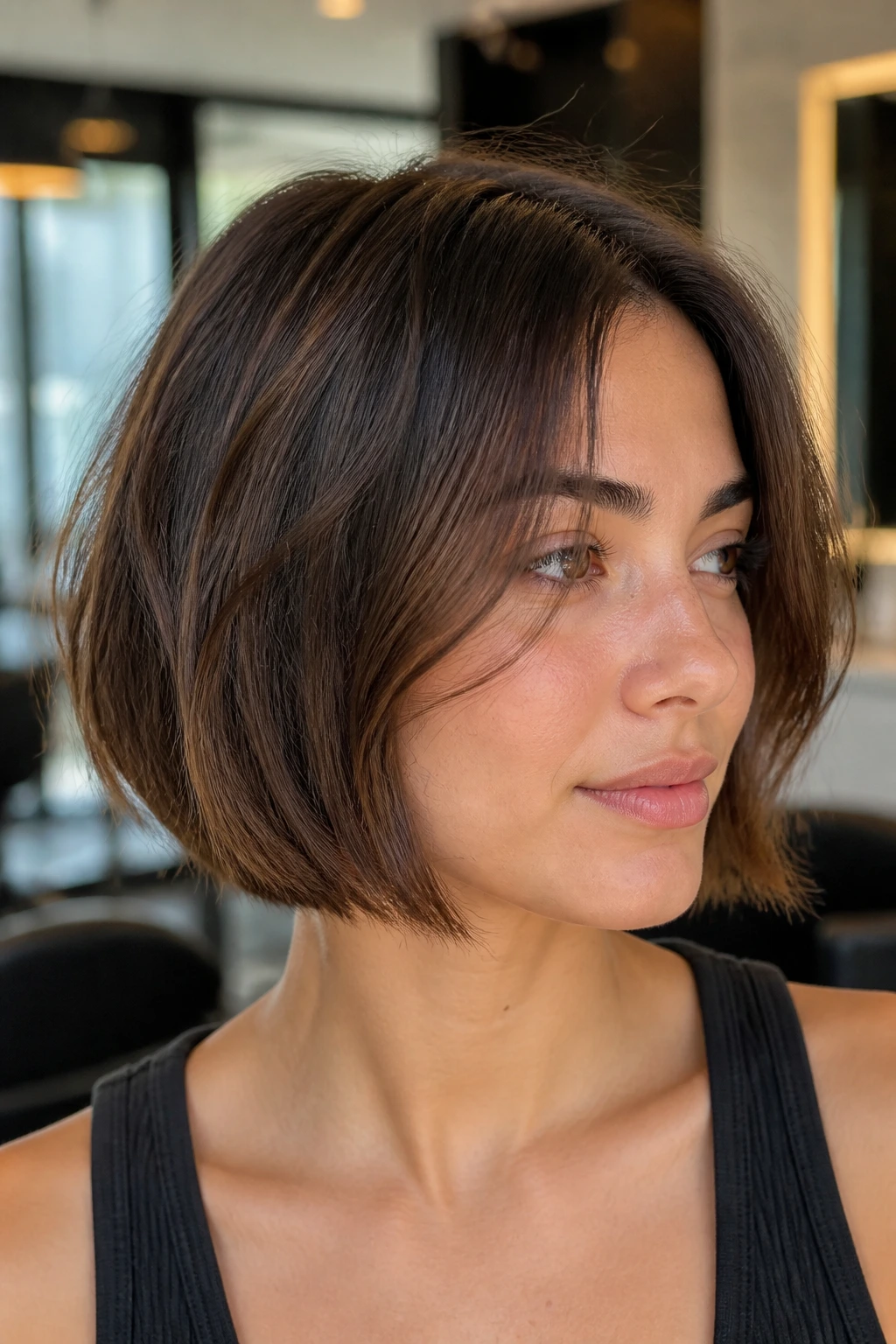
A jaw-length bob is the haircut equivalent of getting the clutter off the counter. Everything looks cleaner because the shape is simple.
This version works well when frizz gathers around the chin and jawline. The length lands just where the face starts to widen, and the front pieces soften the outline so the cut does not feel boxy. It’s a nice middle ground for someone who wants short hair but not a severe chop.
The best face-framing pieces are not chunky. They should taper gently, starting around the cheekbone or lip, then falling into the main line of the bob. Too much layering around the front can make the hair kick out. Too little, and the cut can feel hard.
One reason this bob behaves better than people expect is that it can be half styled and still look good. Smooth the front, leave the back a little rough, and the shape still reads well from across the room. That kind of forgiveness is worth a lot.
11. The Micro Bob That Makes Texture Look Deliberate
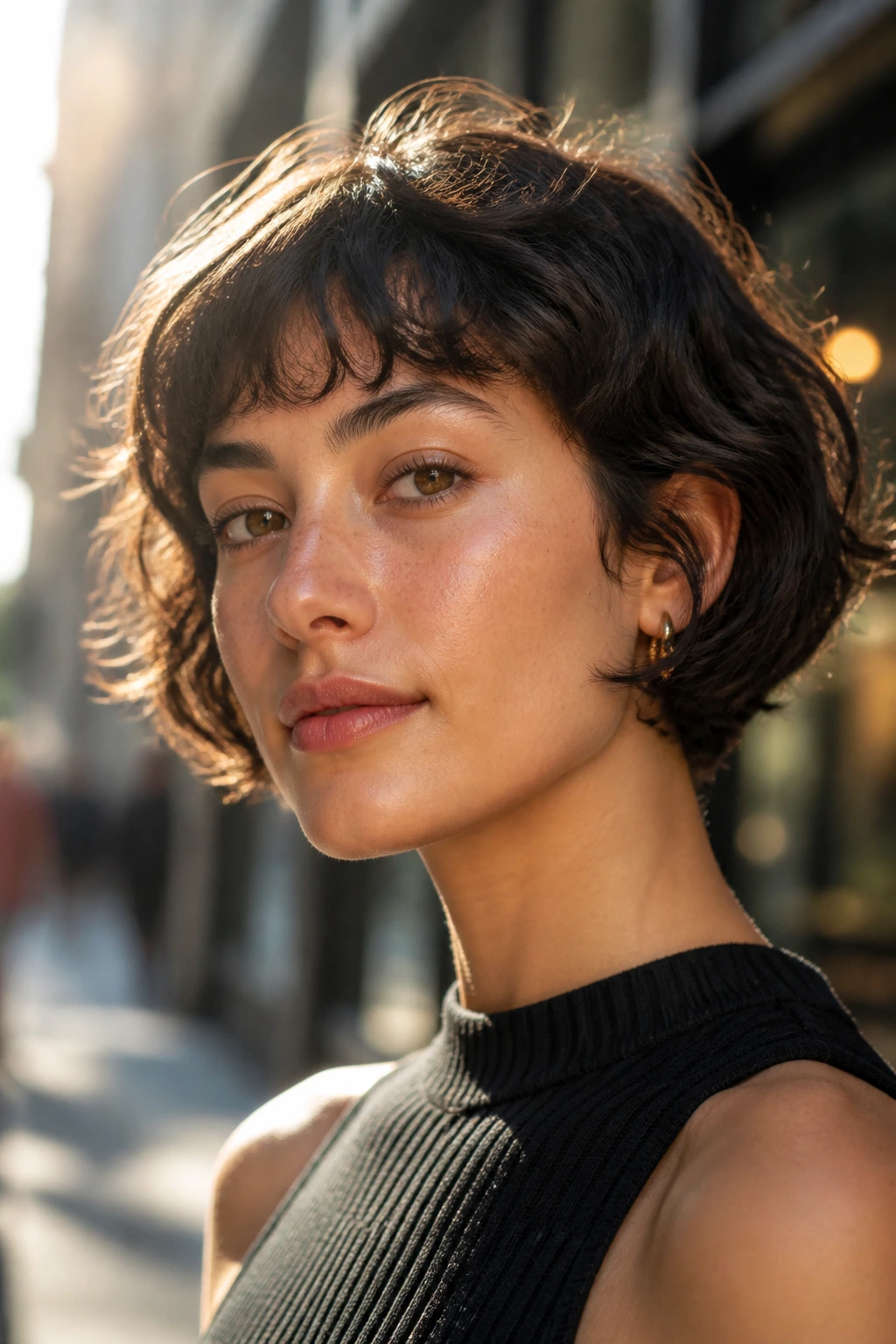
The micro bob is short. Really short. Usually above the jaw, sometimes skimming the ear, and that is exactly why it can work on frizzy hair that gets bulky when it grows longer.
Shorter hair has less room to swell. That sounds obvious, but it matters. If your ends puff out as soon as they touch your collarbone, taking the length up can make the whole head look neater with less effort. The silhouette reads sharp even when the texture itself is rougher.
Who It Suits
- Hair that is dense and expands at the sides
- People who like regular trims
- Faces that can handle a little sharpness near the cheekbones
- Anyone who wants the texture to read as part of the style
The catch is upkeep. A micro bob grows fast, and the line loses its shape sooner than a longer cut. It also shows every uneven section, so it needs a stylist who is comfortable working close to the head.
Still, when it’s done well, it’s one of the cleanest answers to frizz. There’s less hair to misbehave.
12. The Shaggy Bob with Controlled Texture
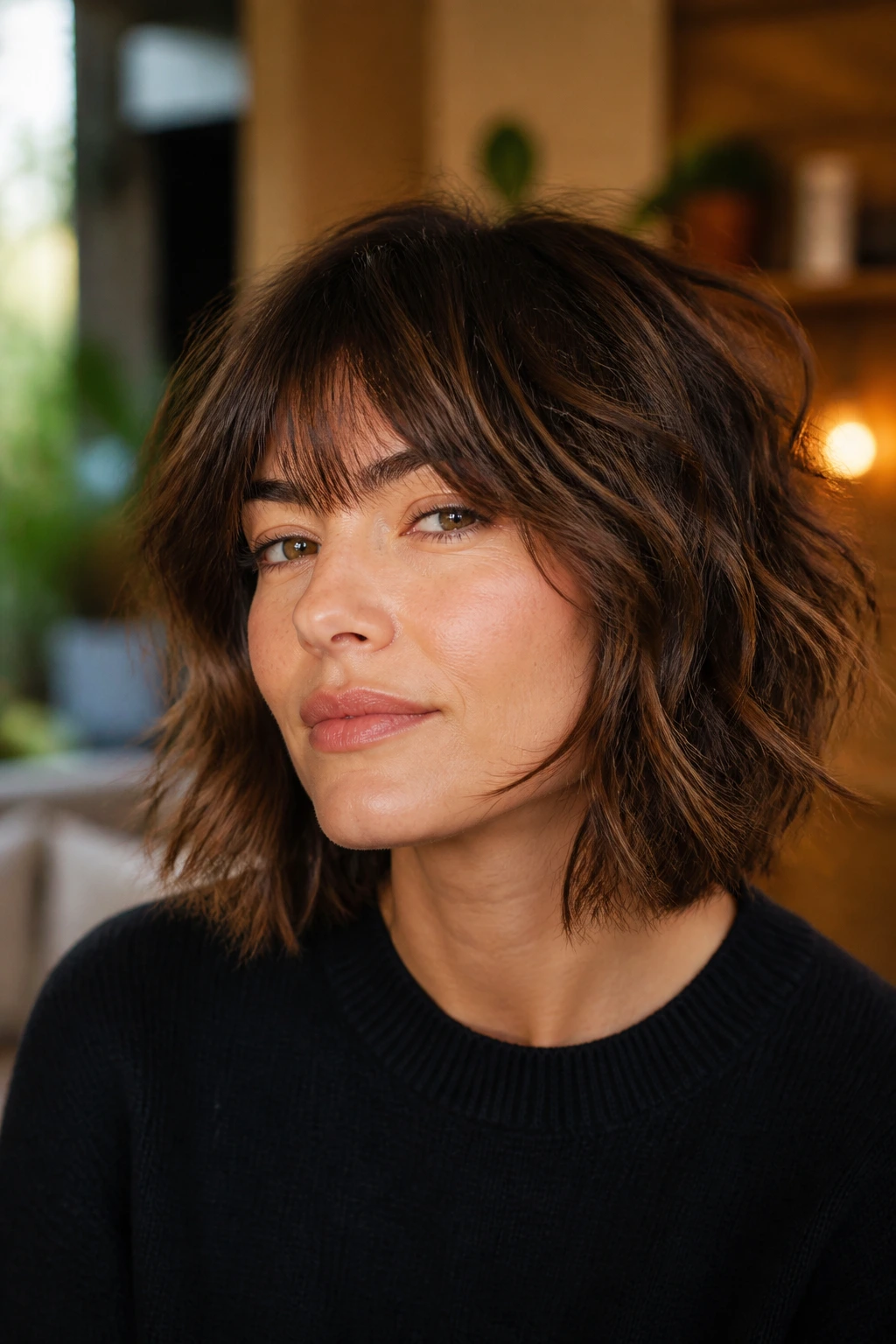
A shaggy bob can be good for frizzy hair, but only if the texture is controlled. Too much layering and you get a puffball. Too little and you get a block. The sweet spot sits in the middle.
I like this version for wavy hair that wants movement. The layers are soft, usually hidden inside the shape, and the outer line stays long enough to keep the whole cut from scattering. Controlled texture means the bob still has a perimeter. Without that, the frizz takes over.
This cut is especially useful when you hate the feel of heavy hair on your neck but still want some body. It gives you air and swing without making the ends look thin. That is harder to do than it sounds.
A little sea-salt spray can help, but use a light hand. If the product dries crunchy, the frizz will show more, not less. A flexible cream or mousse is usually safer.
13. The Undercut Bob for Dense, Thick Hair
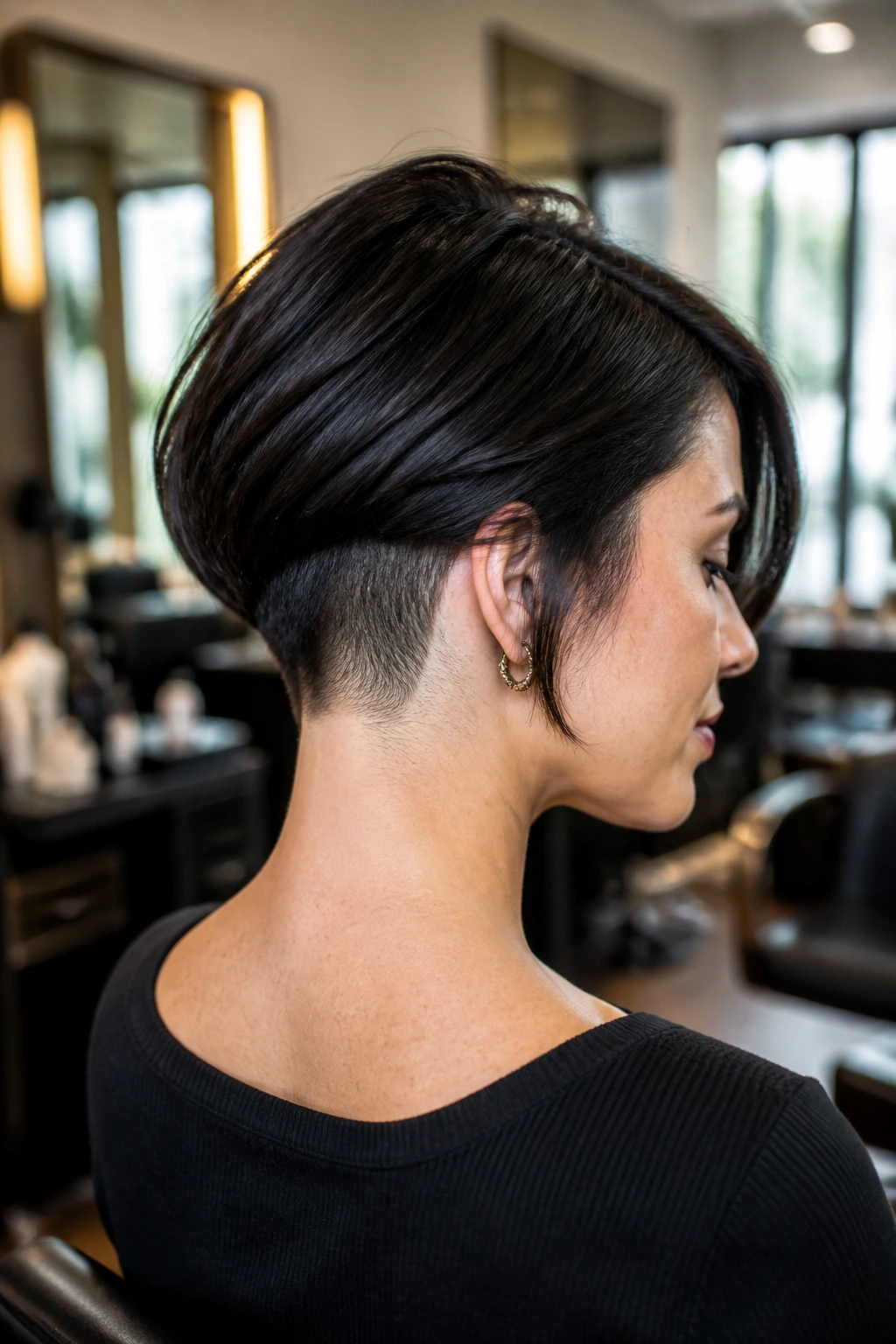
If your hair is so thick that every bob turns into a helmet, an undercut can be a relief.
This haircut removes bulk underneath the top layer, so the visible shape stays neat while the hidden weight is reduced. It’s a smart move for people whose hair expands at the nape or around the lower sides. The outline looks smoother because the inside is doing less work.
Unlike a stacked bob, the undercut bob doesn’t rely on layers to create lift. It removes mass from beneath. That makes it a good choice when the problem is density, not limpness. And that difference matters. A lot.
There is a tradeoff. You need someone who knows where to take the bulk out without creating a hole in the silhouette. The grow-out also needs maintenance. But for the right person, it can turn a heavy, frizzy mop into a bob that sits close to the head and behaves in humidity.
14. The Rounded Bob That Softens Coarse Ends
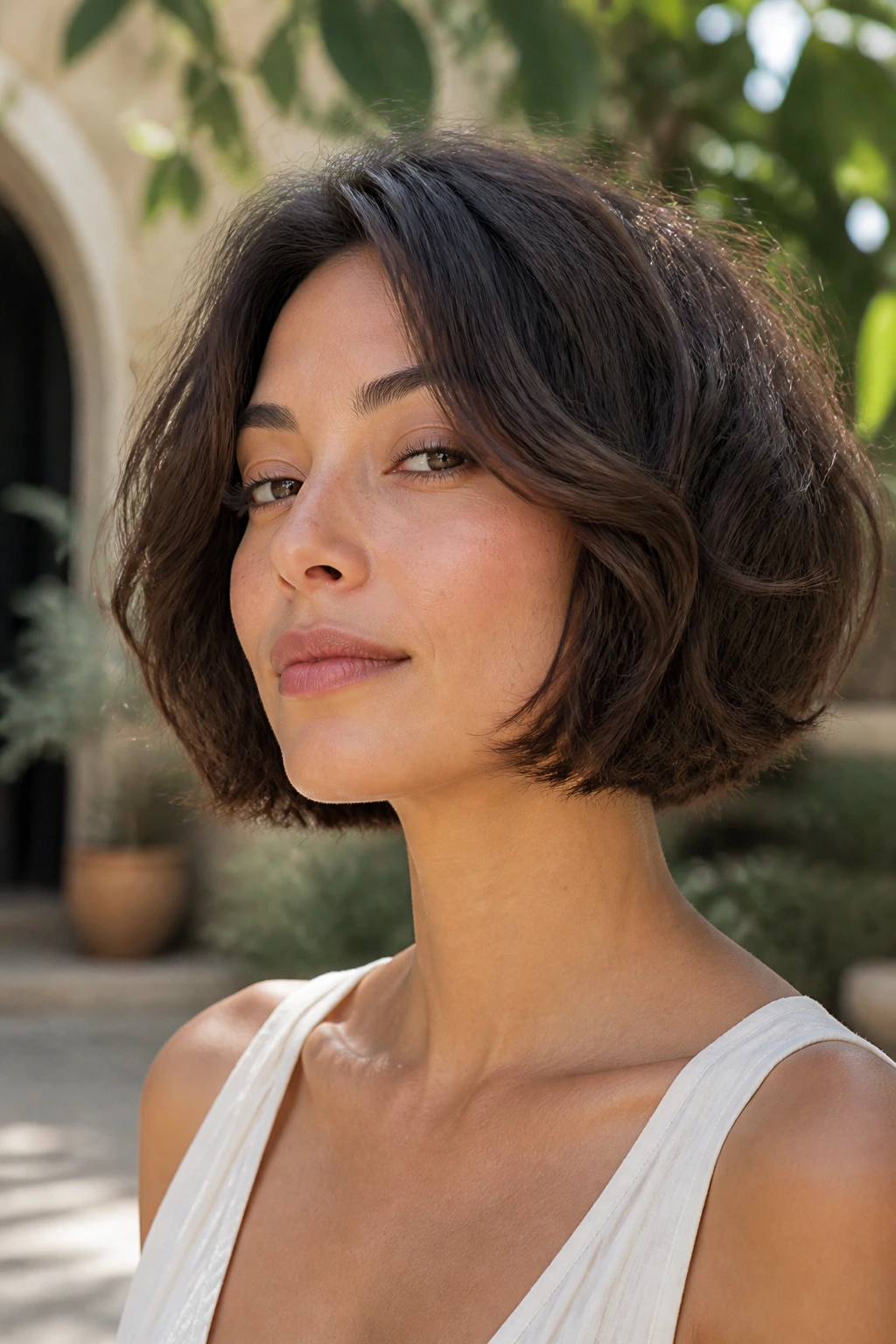
Hard edges are not the goal here.
A rounded bob curves gently around the jaw and cheeks, which helps coarse hair settle instead of sticking out in a blunt, boxy way. The shape feels softer than a box bob, but still structured enough to keep frizz from spreading all over the place.
This cut works when the hair is full through the middle and a little stubborn at the ends. The rounded shape keeps the bottom from kicking out in corners, and that can make a big difference if your hair wants to flare at the sides once it dries.
The styling is simple, though not lazy. A paddle brush will flatten the sides too much. A medium round brush, used lightly, helps the curve sit close to the face. If you’re air-drying, tuck the front pieces behind the ears for a few minutes while they set. Small trick. Big payoff.
It’s also a good choice if you want a bob that feels softer in motion. The shape moves, but it does not fray apart.
15. The Bob with Curtain Bangs and Tapered Sides
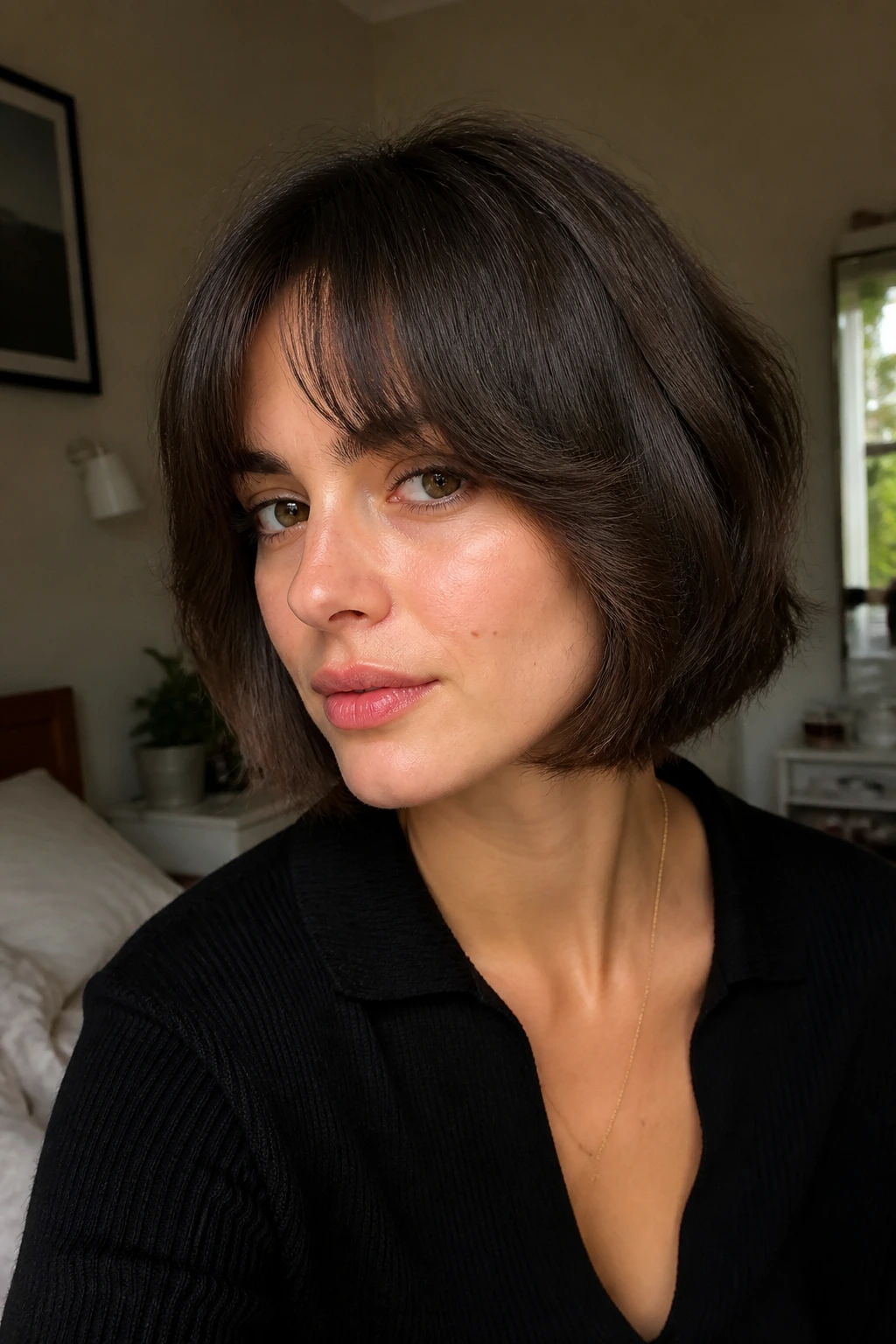
Curtain bangs can be a smart companion to a short bob when frizz shows up first around the forehead and temples. They break up the top of the haircut so the whole look doesn’t feel heavy or blocky.
The bangs should be longer through the middle and tapered at the sides, not chopped straight across. That shape is easier to live with on frizzy hair because it can bend with the texture instead of standing up in little pieces. A short, blunt fringe is a gamble. A soft curtain fringe is usually kinder.
The sides matter just as much. If the bob is too wide at the cheek, the fringe loses its job. A little taper near the temples helps the haircut fall inward, which keeps the face-framing area from puffing outward.
Best Way to Style It
- Blow-dry the bangs first, while they’re still very damp.
- Use a small round brush or your fingers to direct them away from the face.
- Let the rest of the bob dry with a cream or light mousse.
- Finish by smoothing only the top and fringe, not the whole head.
That targeted styling saves time. It also keeps the haircut looking lived-in instead of overworked.
Final Thoughts
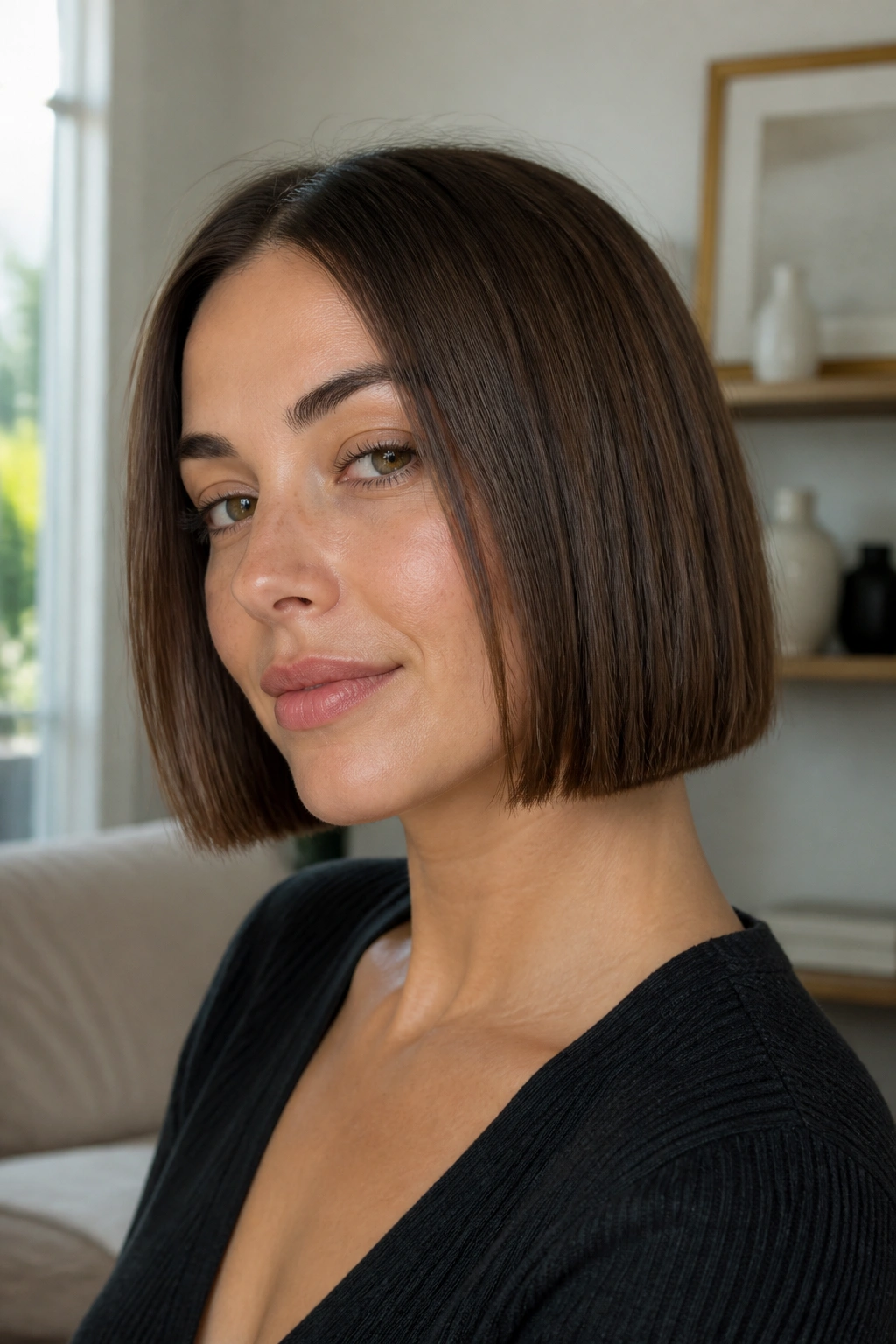
The best short bob for frizzy hair is usually the one that respects where your hair gets bigger, not the one that tries to flatten everything into submission. Some cuts work by keeping weight at the ends. Others use angles, graduation, or hidden bulk removal. Different tools. Same goal.
If your hair is wide at the sides, keep the bottom line strong. If it balloons at the crown, ask for some shape through the back. If your texture is curly, have it cut in the way it actually dries. That last part is worth repeating, because so many bad bob haircuts start with a wet guess.
A good bob should make your morning easier. Not perfect. Easier. And if the cut still needs a bit of cream, a quick diffuse, or a five-minute round-brush pass, that’s fine. The shape should do most of the work before you do.
