



A side part can do more for a bob than an extra inch of length ever will. It shifts the weight, opens one side of the face, and gives even a plain cut a little motion and attitude. That small change is why side parting bob haircuts keep showing up in real salons: they’re easy to wear, but they never look flat.
The trick is that asymmetry doesn’t have to mean a dramatic uneven cut. Sometimes it’s the part itself. Sometimes it’s a longer front corner, a tucked side, a wave that falls differently on each cheek, or a fringe that lands heavy on one brow and light on the other. All of those choices change how the eye moves across the face.
I’ve always liked bobs that do a little work for you. A blunt, center-parted bob can look sharp and polished, sure, but a side part usually feels a touch more alive. It can soften a strong jaw, add lift to fine hair, and make thick hair look less boxy. It can also rescue a bob that’s grown out a bit and started to feel too neat.
The 15 looks below aren’t copy-paste versions of the same haircut. Some are sleek. Some are airy. Some lean bold, and a few are quietly flattering in that way people notice without being able to explain why. That’s the sweet spot.
1. Deep Side Part Chin Bob

A deep side part on a chin-length bob is the quickest way to get asymmetry without changing the whole shape of the cut. One side sits closer to the cheekbone, while the other side falls forward and feels a little fuller. The result is crisp, not fussy.
Why it works
The deep part creates a strong diagonal line, and diagonals are always more interesting than straight-down symmetry. If your hair is fine, this cut can also fake density at the root because the heavier side has more room to lift. Straight hair shows the shape most cleanly, but a soft bend through the ends keeps it from looking severe.
This is the bob I’d hand to someone who wants structure but does not want to babysit their hair. A quick blow-dry with a round brush, a dab of smoothing cream, and a side tuck on the shorter side are often enough. Clean. Sharp. Easy.
Best for: fine to medium hair, oval faces, and anyone who likes a tidy outline.
Styling note: aim the blow dryer at the root of the heavy side for 10 to 15 seconds, then clip it up while it cools. That little pause helps the lift last.
2. French Bob With a Feathered Side Sweep

Can a bob look casual and precise at the same time? Yes, and this is the version that proves it. A French bob with a feathered side sweep sits somewhere between chic and slightly undone, which is exactly why it feels so wearable.
The cut usually lands around lip to jaw length, with soft edges and a side-swept front that brushes across the forehead. That sweep gives the face a slanted line, which breaks up symmetry in a very flattering way. It’s especially nice if you like a fringe but hate anything that feels heavy or trapped on the brow.
I like this one on hair with a little natural wave. The bend keeps the ends from curling under too neatly, and the feathered front makes the whole thing look lighter. On straight hair, a flat brush and a small amount of texturizing spray at the ends will keep it from feeling too sharp.
Who should try it: anyone who wants a short bob with movement and a softer finish.
What to avoid: a thick, blunt fringe. That turns the cut into something else entirely, and not always in a good way.
3. A-Line Bob With a Tucked Short Side

One side tucked behind the ear, the other left to swing forward. That simple move changes everything.
An A-line bob already has asymmetry built in because the front is longer than the back. Add a side part, and the cut starts reading as deliberately angled instead of just slightly longer in front. The shorter side opens the face and shows off the jaw, while the longer side gives the eye somewhere to land.
This is one of those side parting bob haircuts that looks more expensive than it is. Not in the money sense. In the “someone paid attention to the shape” sense. The angle needs to be clean at the nape, and the front pieces should skim the collarbone or just miss it, depending on how dramatic you want the line.
Best details to ask for
- A shorter back that sits close to the neck
- A longer front that drops 1 to 2 inches past the chin
- A side part placed slightly above the arch of the eyebrow
- Soft beveling at the ends so the line doesn’t look boxy
If your neck is short or your jaw is very soft, keep the front a touch longer. That balance matters more than people think.
4. Layered Collarbone Bob With a Side Flip

This is the bob for people who want movement without losing length. The collarbone length gives you room to play, and the side flip stops the cut from lying too flat against the face.
A layered collarbone bob works because the layers take weight out of the sides, then the part pushes one side into a fuller shape. You get lift at the root, a bit of swing through the middle, and ends that can either curve under or kick out a little. That last detail makes a bigger difference than it sounds like it should.
How to style the flip
Use a mousse or root spray at the crown, then blow-dry the heavy side in the opposite direction first. Flip it back only after the root is warm and almost dry. That’s the part people skip, and it’s why their side part falls flat by lunch.
A round brush gives the ends a soft bend, but I actually prefer a paddle brush for the first pass if the hair is thick. It stretches the shape out before you polish it.
This cut is good when you want your bob to feel less “finished” and more lived-in. Not messy. Just less stiff.
5. Curved Bob With Face-Framing Bend
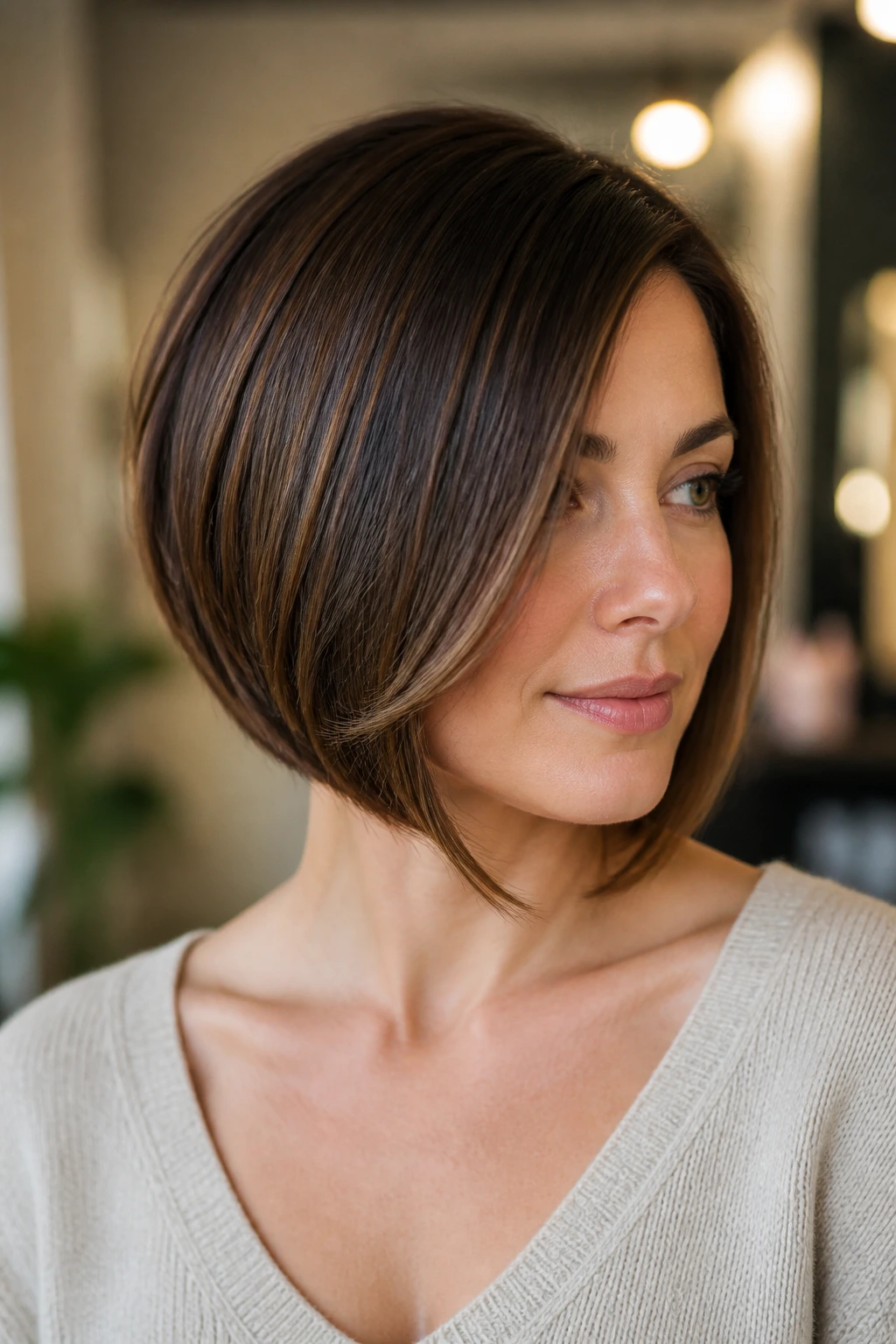
A curved bob is one of my favorite answers to a strong side part because the shape already hugs the face. Instead of hanging straight down, the ends arc inward a little, so the cut looks rounded and softer from the front.
The asymmetry here comes from contrast. One side appears fuller because of the part, while the curve at the ends keeps the whole thing from feeling angular. If you have a square jaw, this is one of the kinder bob shapes. It doesn’t fight your face. It works with it.
There’s a nice trick with this cut: keep the shortest front piece right at the jawline and let the opposite side fall a bit lower, maybe just below the chin. That tiny difference is enough. You do not need a huge imbalance for the haircut to read as intentional.
A small barrel brush, around 1 to 1.25 inches, will help create that bend without making the ends curl under too hard. Use a light serum on the mid-lengths only. Roots should stay airy.
6. Blunt Bob With an Off-Center Part

A blunt bob does not have to be symmetrical to feel polished. Put the part just off center, and the whole cut changes mood. It goes from strict to sharp with one small adjustment.
The blunt edge is the point here. The ends are cut straight, which makes thick hair look cleaner and gives fine hair the illusion of a denser line. The side part breaks up that blocky feel and keeps the face from looking boxed in. I like this especially on hair that has a slight natural wave, because the wave keeps the line from becoming too rigid.
Unlike a center-part blunt bob, this version has a little more personality. You still get the strong edge, but the part draws attention diagonally across the forehead and cheek. That’s the bit that keeps it from looking too formal.
If you wear glasses, this is a strong option. The off-center part leaves room for the frame, and the straight line of the bob balances heavier lenses nicely. A flat iron can sharpen the finish, but only if you keep the movement subtle. Poker-straight ends can feel a touch cold.
7. Wavy Bob With an S-Curve Parting
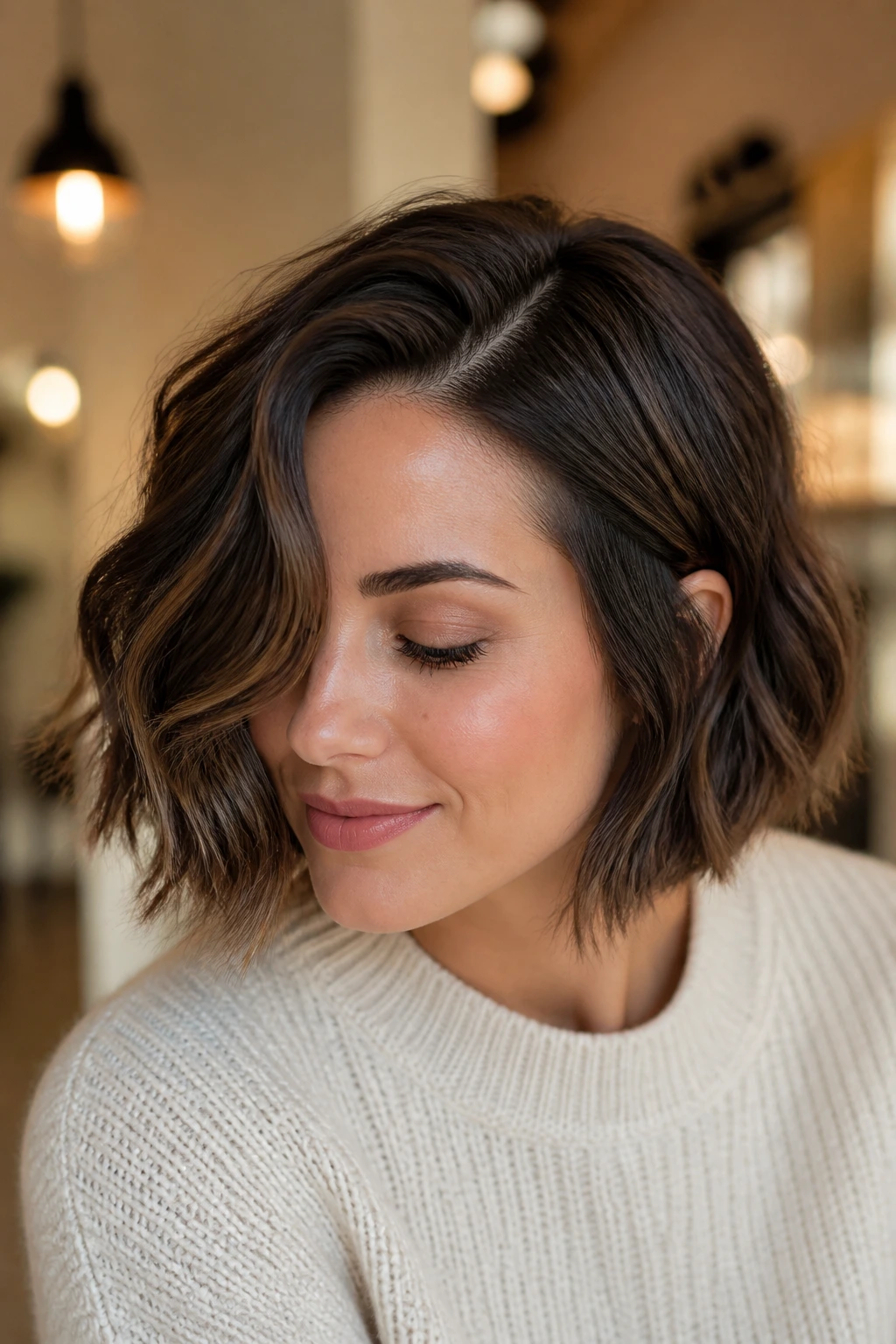
A wave has its own agenda. A side part that follows the hair’s natural bend usually looks better than one drawn with a ruler.
The shape that makes it work
The S-curve parting is a small thing, but it softens the top of the haircut before the waves even start. Instead of fighting the hairline, the part snakes around it a little, which helps the hair fall with less resistance. That matters if your hair likes to split at the crown or kick back in weird places.
Use a light mousse on damp hair, then scrunch the mid-lengths and ends with your hands. A diffuser on low heat keeps the bend soft. If you’re air-drying, clip the heavier side at the root for 10 minutes so it doesn’t collapse.
Good habits for this cut
- Start the part where the eyebrow arches, then shift it only a finger-width or two.
- Keep the ends blunt enough to hold shape.
- Add a pea-sized amount of cream to the front pieces only.
- Refresh with water and a mist of sea salt spray, not heavy oil.
This one feels relaxed, but the detail is in the parting. Miss that, and the whole bob can go from effortless to accidental.
8. Asymmetrical Bob With One Longer Side
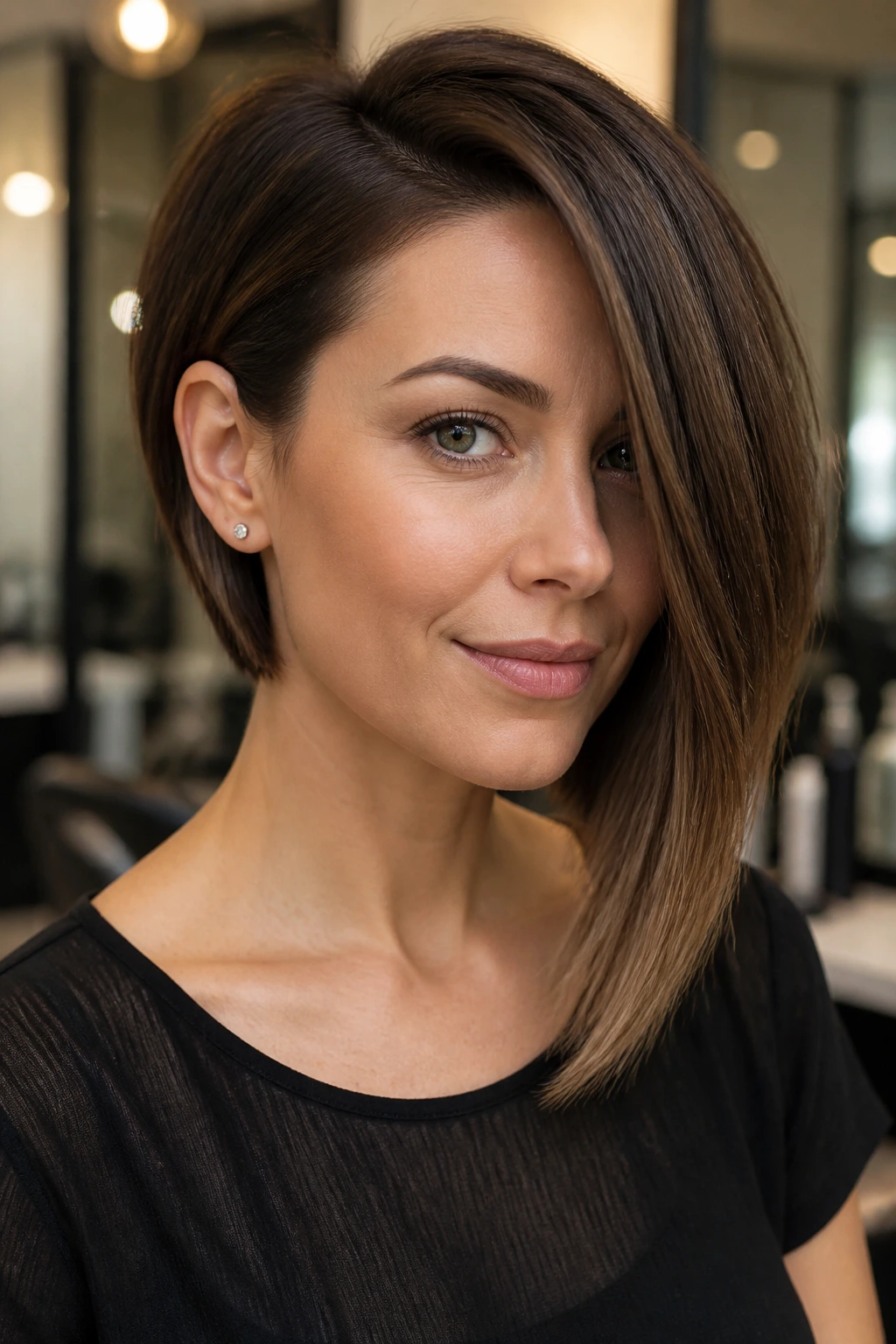
Short on one side. Longer on the other. No apology needed.
This is the haircut that gives asymmetry the loudest voice. The difference in length is visible even when the hair is tucked behind the ear or pinned back with a clip. It’s not subtle, which is the point. If you want a bob that reads modern without looking trendy in a disposable way, this is one of the strongest shapes on the list.
The side part supports the cut instead of carrying all of its personality. That’s useful, because the part alone can only do so much. With an uneven bob, the cut itself creates the drama, and the part simply steers it.
I prefer this style on straight to slightly wavy hair, mainly because the line shows best when the ends land cleanly. Curly hair can wear it too, but the length difference needs more attention or the shape disappears into volume. And that can be lovely, if you want softness. It just changes the whole point.
Keep the longer side at least 1 inch past the shorter side. Less than that and people will assume it’s a mistake, not a design choice.
9. Curly Bob With Side Volume

Curly hair and a side part get along better than a lot of people expect. The trick is not forcing the curls into a flat shape. Give them a side anchor, then let the volume rise where the hair wants it.
The best curly bob with asymmetry usually has one side sitting fuller near the temple and the other side falling a little closer to the cheek. That creates a nice sweep across the face, especially if the curls are mixed in size. Tight curls, loose curls, and waves all behave a little differently here, so the shape matters more than the exact pattern.
What makes it work: the part should follow the curl direction near the root, not fight it. If you create a side part against the natural growth pattern, you’ll spend forever trying to flatten one side and lift the other. Waste of time.
A light gel or curl cream on soaking-wet hair helps set the shape. Scrunch upward, then diffusing on low heat keeps the root from drying limp. If you like more lift, clip the top section at the side part while it dries. Small move. Big payoff.
This is one of the few bobs that actually looks better with a little frizz around the edges. Too much polish can kill the charm.
10. Sleek Glass Bob With a Sharp Side Part
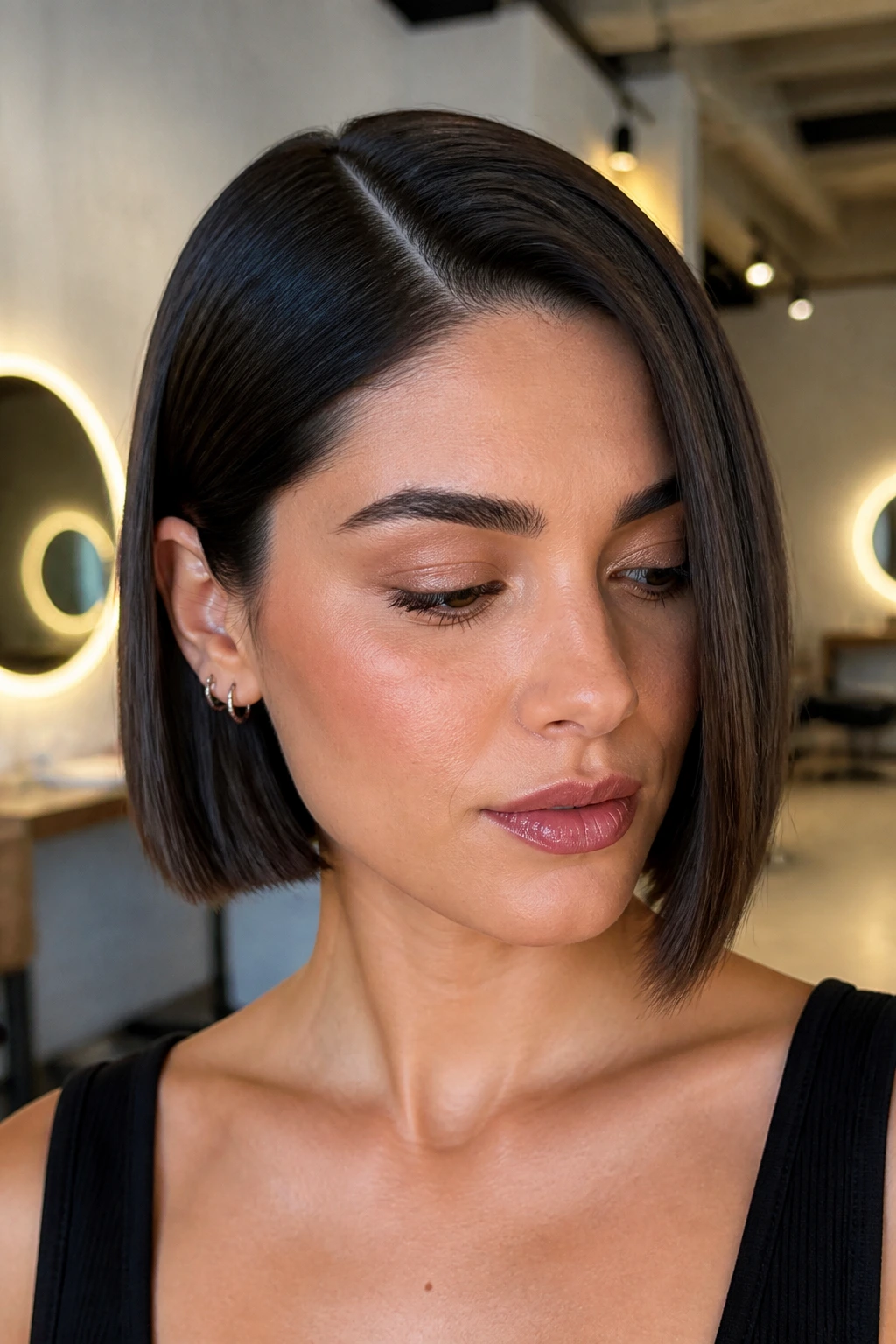
Do you want the cleanest version of asymmetry? This is it. A glass bob with a sharp side part is all about shine, line, and control.
The part carves the face in two and gives the bob a precise edge, while the sleek finish turns every hair into part of the outline. That sounds severe, and it can be, but it doesn’t have to feel hard. On the right face shape, the contrast is elegant in the plainest, strongest sense of the word.
I’d pick this cut for straight hair that already behaves. If your hair bends wildly at the ends or frizzes the moment humidity shows up, you’ll fight the style more than you enjoy it. A smoothing blow-dry cream, heat protectant, and a flat iron with 1-inch plates are enough for the finish. No need to overcomplicate it.
The side part should be crisp, almost exact, with the heavier side falling across the cheekbone. Tuck one side behind the ear if you want the asymmetry to look even sharper. That little reveal of ear and jaw gives the haircut its edge.
The best version looks glossy, but not crunchy. Keep the product light.
11. Shaggy Bob With Piecey Side Fringe

A shaggy bob can look a little wild in the best way, and the side fringe keeps it from reading as plain messy. The pieces around the face break the line, then the part sends the hair off in a direction that feels loose and easy.
What makes it different
Unlike a blunt bob, this one relies on texture instead of hard edges. The layers are choppy, the fringe is broken up, and the side part lets the shorter front pieces sit differently on each side. You get movement even when the hair is barely styled.
That matters if your hair is fine but not silky. A shaggy cut can build the feeling of thickness because the ends aren’t all landing in the same place. The side fringe helps too, because it pulls attention to the eyes and cheekbones instead of to the overall length.
How to keep it from turning sloppy
- Use a light texturizing spray on dry hair, not a heavy cream.
- Twist a few front pieces around your fingers after blow-drying.
- Keep the fringe long enough to tuck back when you want it out of the way.
- Trim every 6 to 8 weeks, or the shape starts to droop.
This is a good cut for people who like a bob but don’t want it to feel precious. A little roughness suits it.
12. Bob With an Undercut and Heavy Side Part
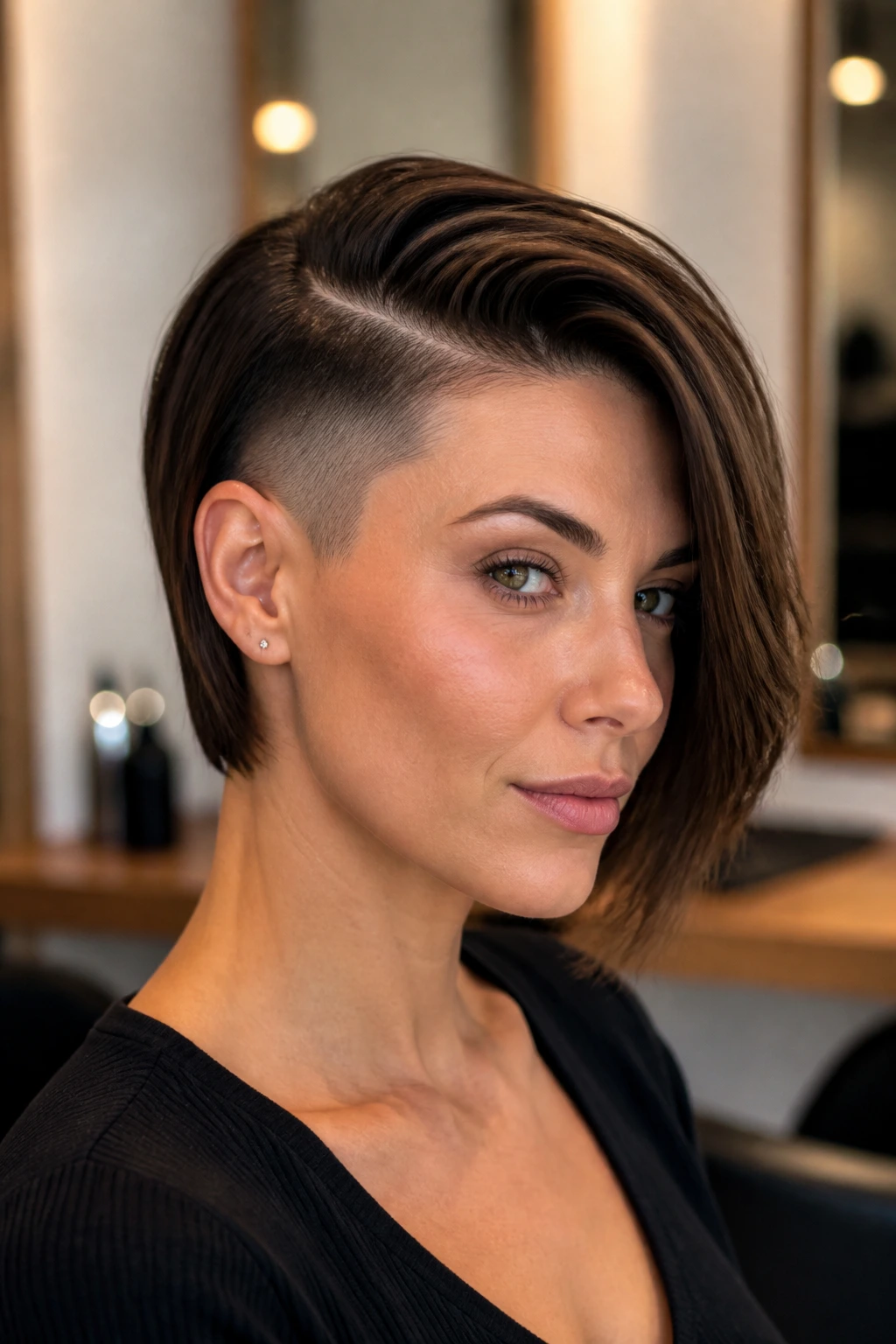
If you’ve got thick hair and you’re tired of the triangle effect, this one deserves a hard look.
An undercut removes bulk from the bottom layers, which lets the top sit with more movement. Add a heavy side part, and the haircut suddenly has direction instead of just volume. The top side can sweep over the shorter side, while the undercut keeps the nape from puffing out like a helmet.
I’ve seen this work especially well on dense hair that grows fast and sits wide around the neck. The cut feels lighter, but not thin. That’s the difference. You’re not removing shape; you’re removing weight.
The undercut can be hidden, which is useful if you want the option to wear the hair down at work or tuck it up when the weather gets warm. Ask for a subtle panel at the nape rather than shaving too high unless you want the contrast to show.
This is not the bob for someone who wants a wash-and-go life with zero styling. It needs a hand shape at the crown. But if your hair has a lot of body and a mind of its own, it can be the cleanest fix.
13. Italian Bob With Soft, Heavy Ends

There’s something deliciously solid about an Italian bob. The ends sit heavy, the outline feels full, and the side part keeps the whole shape from becoming a block.
This cut usually lands between the chin and collarbone, with enough length to swing but not so much that it loses its bob identity. The beauty of it is the weight. The hair falls with a kind of calm. Then the side part breaks the calm just enough to make it interesting.
I like this look when the blow-dry is smooth but not flat. A round brush can round the ends under slightly, but don’t overdo the curve. The best version has body through the mid-lengths and a gentle bend near the bottom. That fullness is what gives the haircut its presence.
If your hair is very fine, this style can still work, but the ends should be kept blunt. Too much layering and the whole thing goes wispy fast. Thick hair, on the other hand, can carry a bit of internal layering without losing that heavy feel.
The side part here is less about drama and more about shifting the shape just off balance. Quiet move. Strong effect.
14. Micro Bob With an Airy Side Part
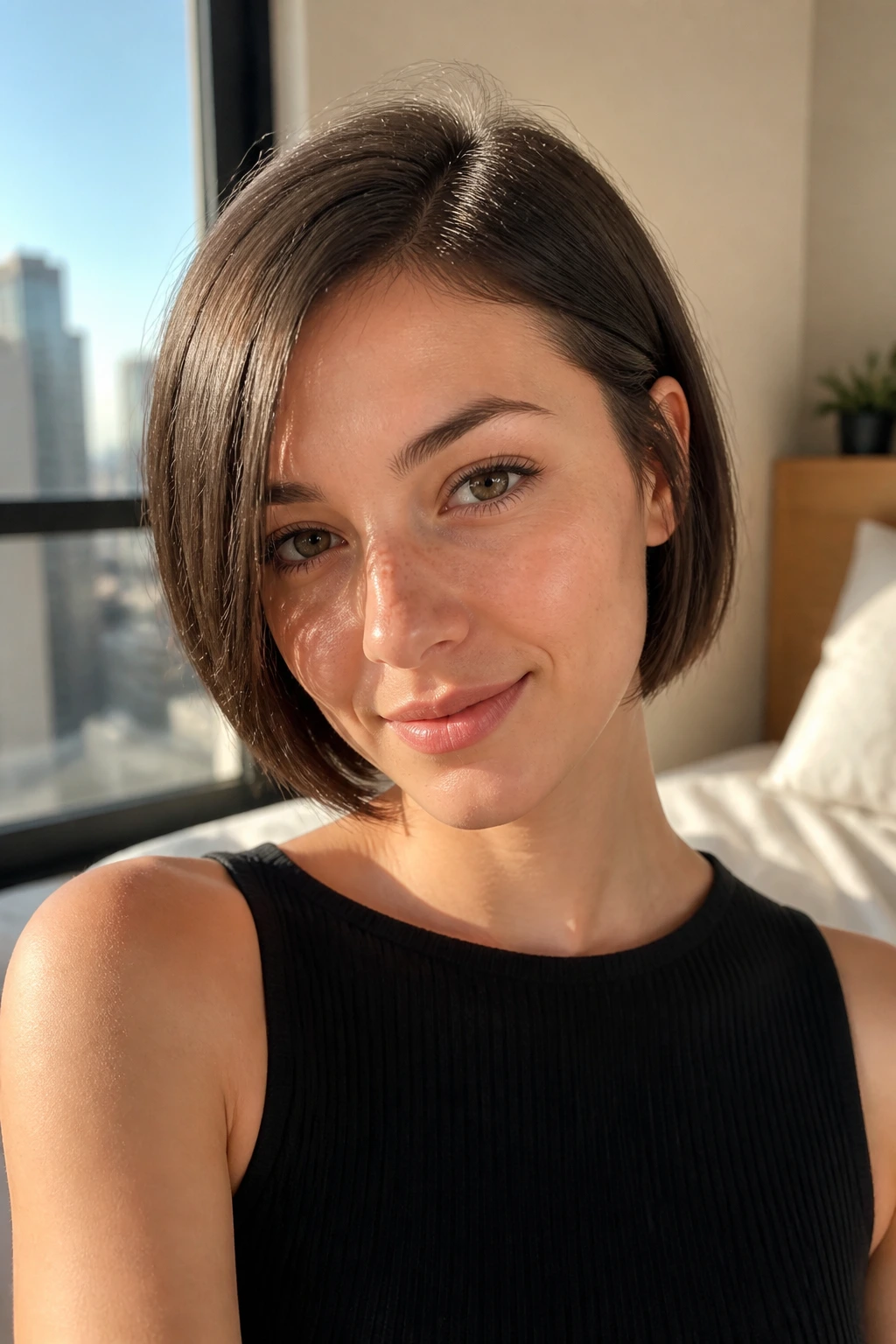
A micro bob can look severe when it’s parted dead center. Move the part to one side, and the whole cut loosens up.
How to keep it light
The length usually sits somewhere between the cheekbone and the jaw, which means every inch counts. A side part changes where the eye lands first, and that helps the haircut feel less helmet-like. It also opens room at the forehead, which matters more on short cuts because there’s nowhere to hide a bad shape.
This is one of those styles that benefits from very clean edges. The cut should be sharp, but the styling should stay light. A tiny amount of mousse at the roots and a mist of shine spray through the ends is enough. Heavy products make micro bobs collapse fast.
- Keep the part soft, not ruler-straight.
- Blow-dry the crown upward before pushing hair over.
- Tuck one side behind the ear for a sharper line.
- Use a small clip at the temple if the front wants to drift.
A micro bob is not a timid haircut. It looks best when the side part gives it a little motion and the neckline stays clean. That’s the whole point.
15. Graduated Bob With Hidden Layers

A graduated bob has one job: build shape through the back without making the front feel bulky. Add a side part, and the haircut starts to show off its angles.
Unlike a blunt bob, the graduated version stacks softly at the nape and gets slightly longer as it moves forward. The side part draws the front section over to one side, which gives the cut a diagonal finish across the face. That diagonal line is doing a lot of heavy lifting. It adds lift at the crown and keeps the profile sleek.
This is a smart pick for fine hair that needs body or for straighter hair that falls a little too flat at the back. Hidden layers keep the shape from puffing out too much, which is a real problem with shorter bobs and dense hair. The layers should be subtle. If they show too much, the cut stops looking polished.
A small round brush and a root-lifting spray are enough for styling. Focus on the back first, then sweep the front over to the side and let it cool in place. That cool-down matters. Hair remembers shape better when it sets cold.
If you want asymmetry that feels built into the haircut rather than added on top, this is one of the better choices.
Final Thoughts
The strongest side parting bob haircuts are the ones that match the hair you actually have, not the hair you wish you had. Fine hair usually looks best with cleaner edges and root lift. Thick hair often needs internal weight removal or an undercut to keep the shape from spreading out.
A side part by itself can change the mood of a bob, but the cut underneath still does the real work. That’s why a sharp blunt line, a soft curve, a shaggy texture, and a graduated back all read so differently even though they share the same basic idea.
If you’re sitting between two options, pick the one that fits your daily routine. A sleek glass bob is gorgeous, but it asks for more maintenance. A wavy or shaggy version gives you a little more freedom. Either way, the off-center line is doing what it does best: making the haircut feel alive instead of stuck in place.
