



Short braids are the sweet spot when you want your hair to look finished without feeling like you’ve got a whole extra head sitting on your shoulders. A good short braid style can look neat, playful, sharp, soft, or all of those at once, and that range is exactly why so many Black women keep coming back to them.
The parting matters more than people think. So does braid size. A chin-length braided bob with clean knotless roots has a completely different feel from a shoulder-grazing set of cornrows with beads, even if both styles take the same basic amount of hair and the same afternoon in the chair. Tiny details change everything.
I keep recommending short braid styles for Black women because they give you room to experiment without committing to a heavy install. You can go sleek, curly, sculpted, side-swept, or full of texture. You can also keep them practical — easier to sleep on, easier to wash around, and a lot less likely to drag on your edges than long braids that hang down your back.
1. Knotless Braided Bob
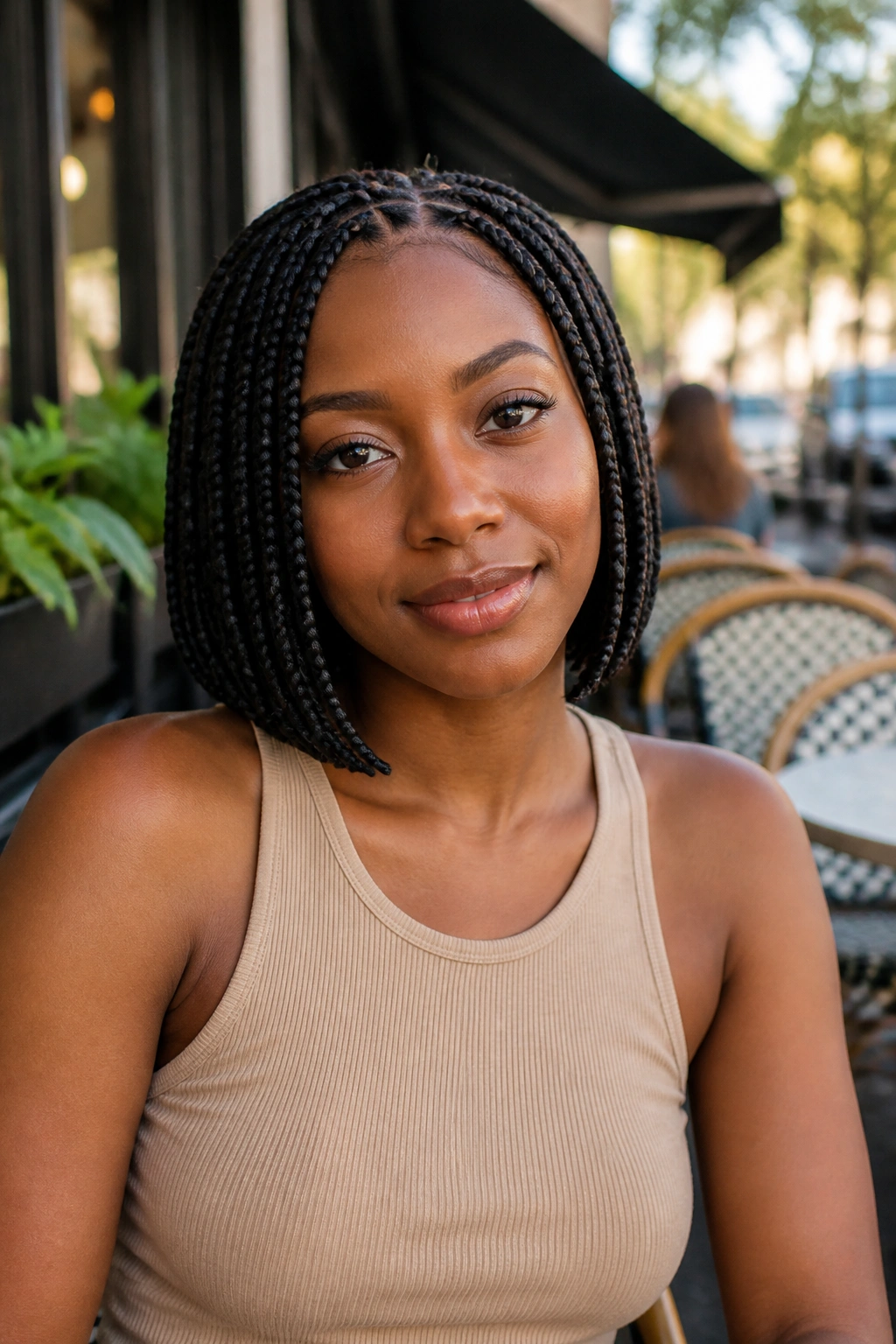
If you want the cleanest short braid style with the softest root, knotless braids are usually the first place to start. They sit flatter at the scalp, and that alone changes the whole mood. The style feels lighter, looks smoother, and tends to move a little better when you turn your head.
The bob length keeps it from feeling heavy. Chin length is neat and polished; collarbone length gives you a little more swing. I like this style for people who want short braids that still read as finished from every angle, not just the front.
What to ask for
- Knotless feed-in roots so the base lays flat.
- Medium-sized sections if you want the style to last without taking forever.
- Blunt ends or lightly curled ends depending on whether you want sharp or soft.
- Braid length that stops at the jaw, chin, or collarbone, not much lower if you want the short-braid feel to stay.
One thing I would not do is make the parts too big. Big parts on a short bob can look choppy in a way that feels accidental instead of styled. Keep the scalp clean, keep the tension even, and this style does a lot of work for you without screaming for attention.
2. Box Braids Bob with Curled Ends

Why do curled ends change everything? Because they break up the hard line that short braids can sometimes get at the bottom. A blunt bob can look crisp, sure, but curled ends soften the shape and make the whole style feel a little more alive.
This version works especially well if you want short braids that don’t look too severe. The curls give movement when you walk, and they keep the style from sitting flat against your neck. Ask your braider to set the ends on perm rods or flexi rods, then dip or steam them carefully so the curl stays neat.
I like this on women who wear simple clothes and want the hair to do a little more talking. It does not need much else. A gold hoop, lip gloss, done.
The catch is maintenance. If you’re rough with the ends, the curl will frizz faster than the braid itself. Sleep with a satin scarf, and don’t keep brushing the ends like they’re loose hair.
3. Triangle-Part Short Box Braids

Triangle parts make a short braid style look deliberate right away. Same braids. Different energy. The parts catch your eye before the braids even have a chance to settle in, and that’s why this style can look more styled than a standard square-part bob.
I like triangle-part short box braids when someone wants something familiar but not basic. The shape gives the scalp pattern more movement, especially if the braids are shoulder-grazing and the ends are blunt. It’s one of those details that people notice even if they can’t name it.
Why the parting matters
- Triangle sections make the top of the style look more sculpted.
- They work well with medium or small braids because the pattern shows up better.
- The look holds up best when the parts are clean from the start.
- This style is good if you like braid styles that look good in ponytails and half-up looks too.
Don’t let anybody rush the sectioning. Bad parts show up fast on short braids because there’s less length to distract the eye. Clean triangles give the whole style a crisp, tailored feel.
4. Lemonade Braids to the Shoulder

A side-swept braid pattern instantly shifts the face shape. That’s the whole trick. Lemonade braids — even in a shorter version — create that slanting line that makes the style feel softer on one side and cleaner on the other.
The scalp looks neat, almost glossy when the rows are parted well. The braids fall across the shoulder instead of straight down the back, which means you get movement without extra bulk. It’s a good pick if you want short braid styles for Black women that still have a little drama without getting loud about it.
I like this style most with a deep side part and braids that stay close to the head at the top before dropping into a medium-short length. You can keep the ends blunt, curl them, or add a tiny bit of beadwork if you want the style to feel less plain.
One warning: don’t make the side rows too tight. Lemonade braids already pull the eye toward the temple, and extra tension there is a bad trade.
5. Straight-Back Cornrows

Plain does not mean boring. Straight-back cornrows are proof of that.
When the rows are even, the whole style looks sharp in a way that fancier braid patterns sometimes miss. There’s a clean honesty to it. No extra geometry, no added hair story, just neat rows that sit close to the scalp and keep the hair tucked away.
This style is one of the easiest to live with. You can wear it to work, to the gym, to class, or under a scarf on low-effort days. If you want less time in the chair and more time between styling decisions, straight-back cornrows are hard to beat.
A good version usually starts with 4 to 8 rows, depending on density and how thick you want the braids. Keep the parts straight, not wobbly. Keep the tension even, not yanked at the hairline. That’s the difference between a style that looks clean and one that looks like it was done in a hurry.
6. Feed-In Braids into a Low Bun
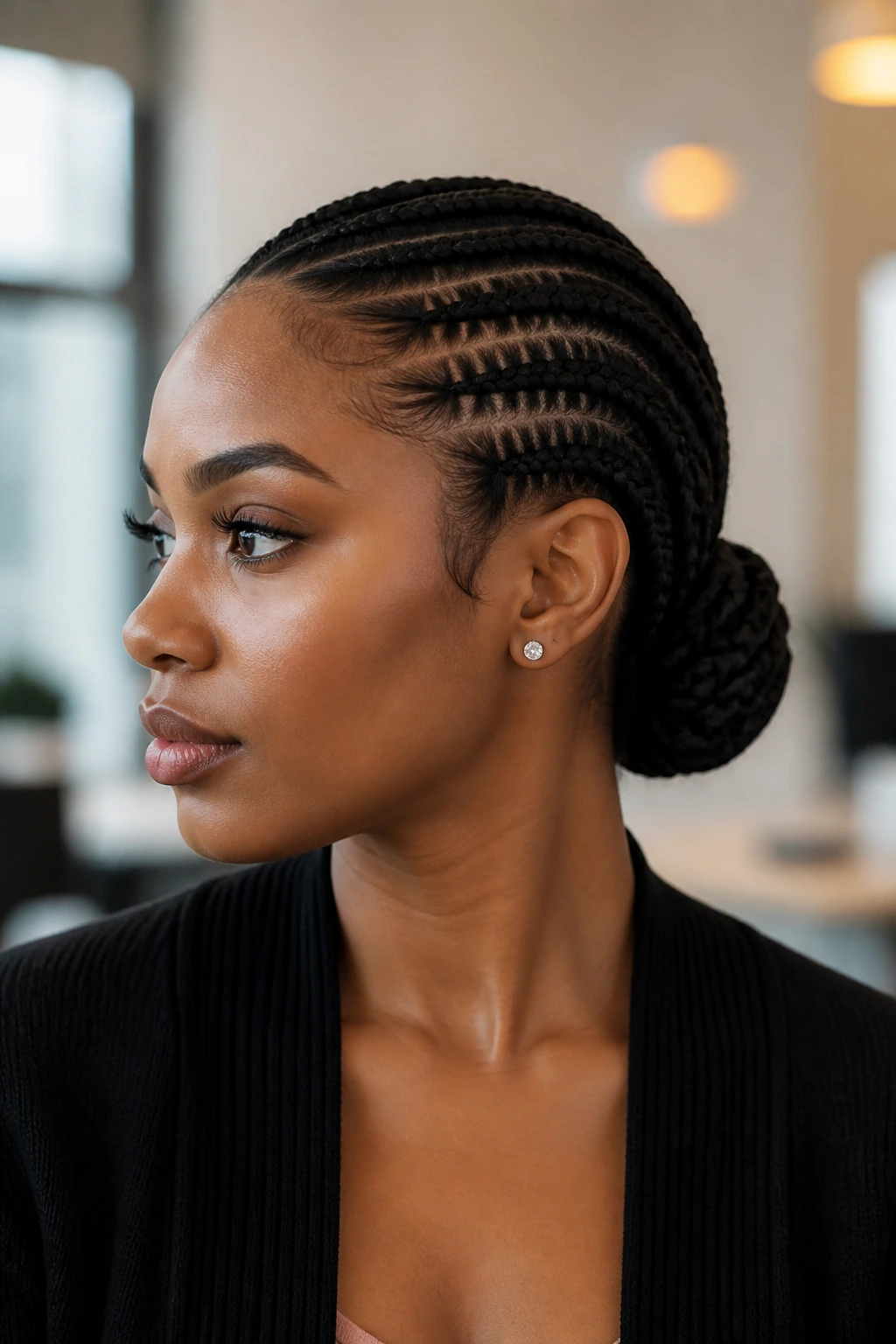
This is the style I reach for when someone wants a short braided look that still feels dressed up. Feed-in braids into a low bun look controlled and polished, but not stiff. The bun gives shape, and the feed-in method keeps the roots from looking bulky.
It works especially well on days when you want your neck clear and your hair tucked back. Think meetings, events, travel, or any situation where you do not want loose ends touching your collar. The style also gives you more room to play with braid thickness at the front, since the bun does the heavy lifting at the back.
The details that matter
- Start with small to medium feed-in braids so the roots stay flat.
- Build the bun at the nape, not too high, if you want it to read as short.
- Ask for even tension at the hairline so the style does not feel tight after a few hours.
- Add a few wrapped braids around the bun if you want it to look fuller.
I’d skip this style if your braider tends to braid too tight at the edges. The shape depends on comfort as much as looks.
7. Fulani Braids with a Center Braid

What happens when you leave one braid right down the middle and let the rest frame the face? You get a style that feels balanced, directional, and a little ceremonial without trying too hard. That’s the quiet charm of Fulani braids.
The center braid is the anchor. The side braids do the framing. Together, they make the face look longer and the whole style feel intentional. On short lengths, Fulani braids are especially nice because they keep the silhouette compact while still giving you room for beads, cuffs, or a few loose curly pieces at the ends.
How I’d wear it
- One center braid that runs from the hairline back.
- Two to four side braids on each side, depending on fullness.
- Beads only at the ends if you want the style to stay light.
- A middle part only if your scalp likes it; otherwise, shift the center braid a hair to one side.
This is one of those styles that looks elegant in real life, not just in photos. The pattern does the work for you.
8. Tribal Braids with Side Details

A lot of people call every patterned braid style “Fulani,” and that’s where the conversation gets sloppy. Tribal braids are broader. They can mix cornrows, feed-ins, loose braids, and decoration in one style without sticking to a single formula.
That flexibility is exactly why they work so well on short hair. You can keep the braids close to the scalp at the top, then add a few hanging pieces or curled ends near the face. The style feels personal. Less copied. More yours.
I like tribal braids when somebody wants something with shape but not something rigid. You can build them with one center braid, or offset the pattern, or add side details that make the style feel custom. A few thin gold cuffs can be enough. Too much decoration and the style starts fighting itself.
If you want the style to stay light, keep the embellishment near the ends rather than loading the roots. That keeps the head comfortable and the silhouette clean.
9. Stitch Braids with a Clean Middle Part
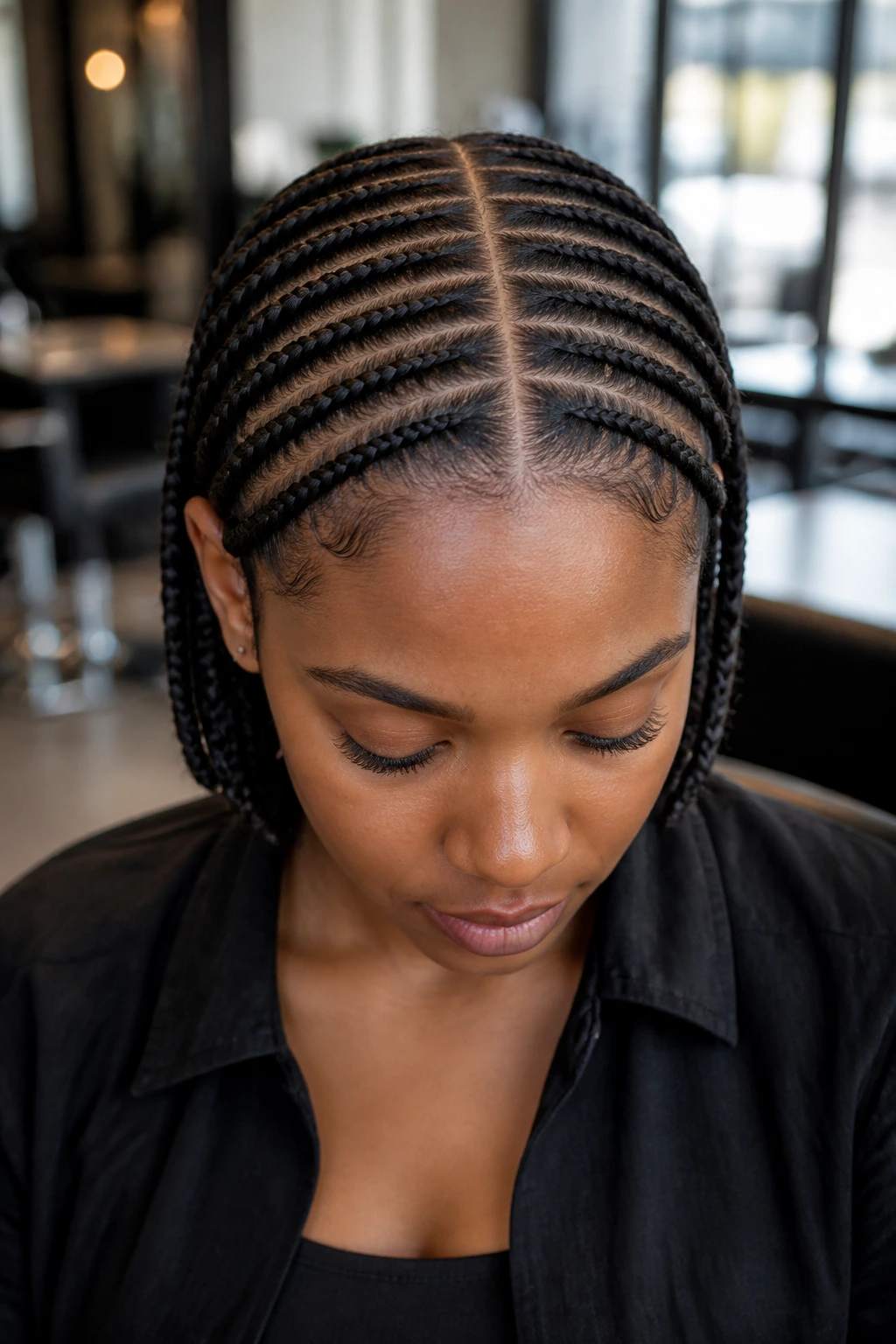
Sharp. That’s the whole point.
Stitch braids are for the person who loves clean lines. The parting looks almost drawn on, and the braids sit in little “stitch” sections that give the scalp a crisp, graphic look. On short braids, that precision is the appeal. You don’t need length when the pattern is doing the visual work.
This style can be as simple as four or six braids running straight back from a middle part. Or it can get more detailed with curved sections near the front. Either way, it needs a steady hand and a rat-tail comb that actually separates hair cleanly.
What I like most is how easy it is to style after installation. A stitch-braid bob can be worn down, tucked behind the ears, or pulled into tiny ponytails. It has structure. That matters.
Ask for strong hold at the roots, but not crunchy buildup. Too much gel or wax makes the scalp look cloudy instead of neat, and the lines lose their crisp edge.
10. Goddess Braids with Curly Pieces
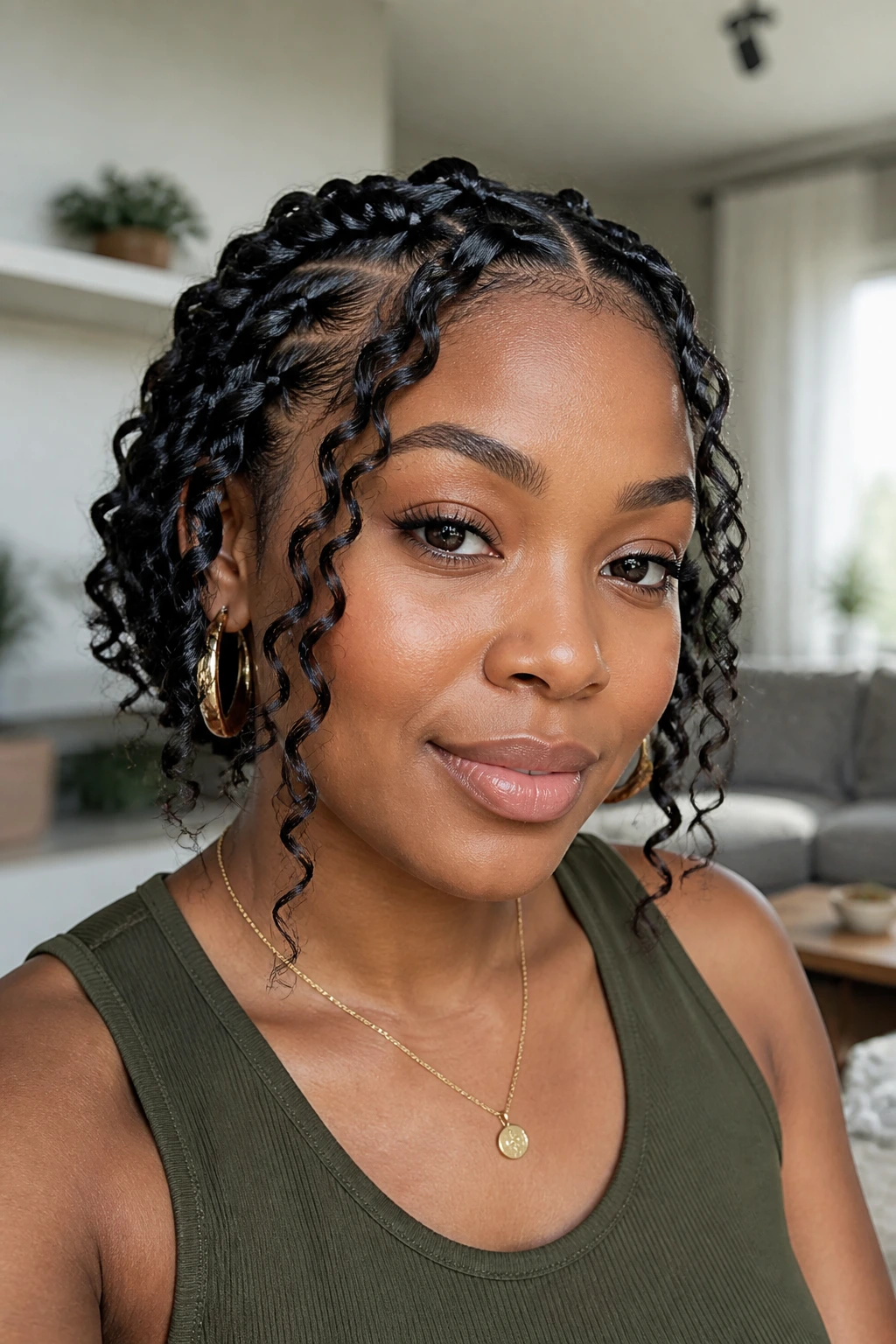
If you want softness, do not skip the curly pieces.
Goddess braids are usually larger, chunkier braids with loose curls woven in or left out between sections. On a shorter style, that curl makes a big difference. It breaks up the braid pattern and gives the hair a lived-in look that feels less formal than straight cornrows.
I like this when someone wants braids but does not want the style to look hard. A few curly strands around the face can change the whole read of the haircut, especially on shorter lengths where the hair sits close to the jawline. The style can be romantic, but it still holds shape.
What makes it work
- Use one to three curly pieces near the face, not a whole nest of curls.
- Keep the braid size medium or large so the curl contrast stands out.
- Choose curls that match the braid’s texture enough to look intentional.
- Refresh the loose pieces with mousse and finger-coiling if they start to flatten.
This is one of the few braid styles where a little mess is part of the charm. Clean braids, loose curls, and a soft finish. That’s the balance.
11. Boho Braids Bob

Boho braids are for people who want texture first and polish second. A short boho braid bob looks airy because the loose curly strands interrupt the braid line in a softer way than a standard bob ever can.
The style works best when the curls are placed with some restraint. A little near the front. A little through the middle. A few at the ends. If you add too much loose hair, the style starts to look tangled instead of bohemian, and nobody wants that.
I find this cut especially flattering when the braids stop around the chin or collarbone. The curls bounce around the face and make the short length feel fuller. It’s a good trick if your natural hair is fine or if you want the style to look less severe than neat box braids.
The downside is upkeep. Those loose pieces are the first thing to frizz. Sleep with a bonnet, and use a light mousse when the curls start to lose their shape. Heavy products weigh the style down fast.
12. French Curl Braids
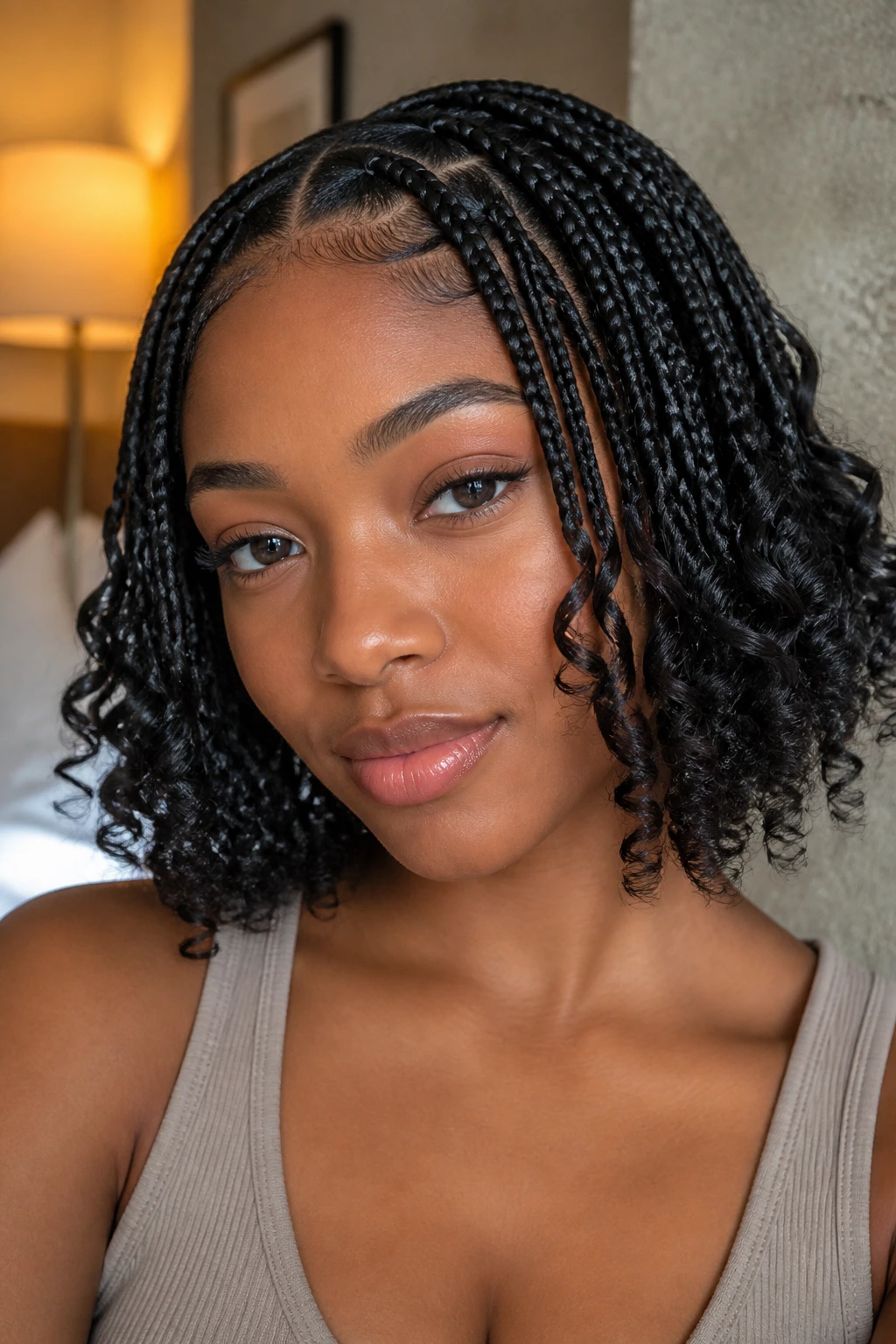
French curl braids have a clean, polished shape with ends that stay curled instead of blunt. They sit in a sweet spot between sleek and soft, and that’s why they’ve become such a strong choice for short braid styles for Black women who want something elegant without being fussy.
The curls at the ends do the styling work. They give motion, frame the jaw, and stop the braids from looking too boxy. If the braids are cut to a bob length, the style has enough structure to feel neat and enough swing to avoid feeling stiff.
A good French curl braid depends on the quality of the curled extension hair and the way it’s set. If the curl pattern is flimsy, the ends can look limp within a day or two. If the curl pattern is too tight, the style can feel busy. Aim for a soft coil that drops naturally.
I’d call this a good pick for people who like a finished look with less decoration. No extra beads needed. The curl is the detail.
13. Braided Halo Crown
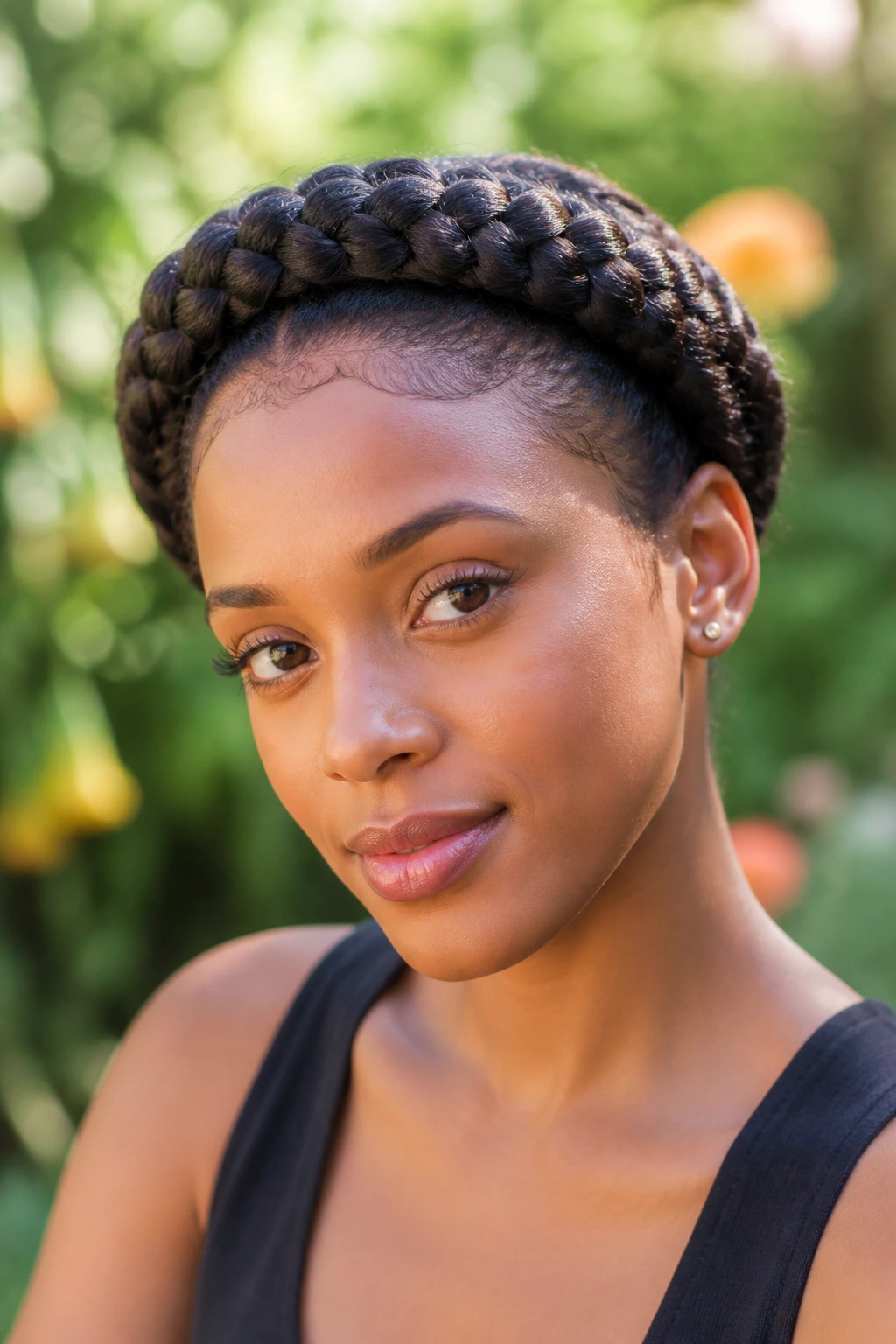
When you want your hair off your face and neck, a halo crown braid makes sense fast. The braid wraps around the head like a frame, which gives the whole style a calm, finished look without needing long length.
Short hair can do this well, especially with added hair tucked in just enough to build the crown. The important part is keeping the braid close to the head so it stays snug but not tight. If the braid sits too high, the crown loses that wrapped shape and starts to look like a random row.
How to keep it balanced
- Start with a deep side or middle part, depending on how you want the crown to sit.
- Build the braid along the perimeter of the hairline.
- Tuck the ends neatly at the nape or behind the ear.
- Keep the front smooth so the halo line stays clean.
This style is one of my favorites for short braids because it feels calm. Not plain. Calm. There’s a difference. It works when you want the hair to behave and still look like someone cared.
14. Asymmetrical Side-Part Braids

Asymmetry gives short braids movement before the first braid even starts.
A deep side part shifts the whole mood. One side sits fuller, the other side stays more tucked, and that off-balance shape keeps the style from looking too symmetrical or too stiff. On a short braid bob, that one decision can make the hair look more styled and less routine.
This look is especially good if you like a little face framing. The fuller side can drop closer to the cheekbone, while the tighter side keeps the profile neat. It’s a clean way to soften strong features or add length to the face without changing the actual cut.
I’d pair this with medium braids and a slight curl at the ends if you want movement. If you keep the ends blunt, the shape looks more graphic. Both are good. They just say different things.
One small thing: don’t let the part drift. A sloppy side part ruins the whole effect. The asymmetry only works when it looks chosen.
15. Jumbo Knotless Bob

Big braids, short length, less chair time. That’s the appeal here.
A jumbo knotless bob gives you the visual weight of thick braids without the drag of long hair. Because the sections are larger, the style installs faster and feels lighter on the scalp than a tiny braid set. On a short bob, the proportions can look bold in a good way, almost architectural.
This style is best when you want a short protective style and you do not want to spend all day getting it done. Fewer braids mean less time, but also less room for mistakes. So the sections have to be clean. Very clean. If the parts wobble, the whole look shows it.
Why people choose it
- Fewer braids means a faster install.
- The large braid size gives the bob a chunky, modern shape.
- It works well with thicker hair or a fuller hairline.
- You can curl the ends slightly if you want the shape to soften.
I like jumbo knotless bobs for people who want impact without fuss. They’re not delicate. That’s part of the appeal.
16. Zigzag Cornrows
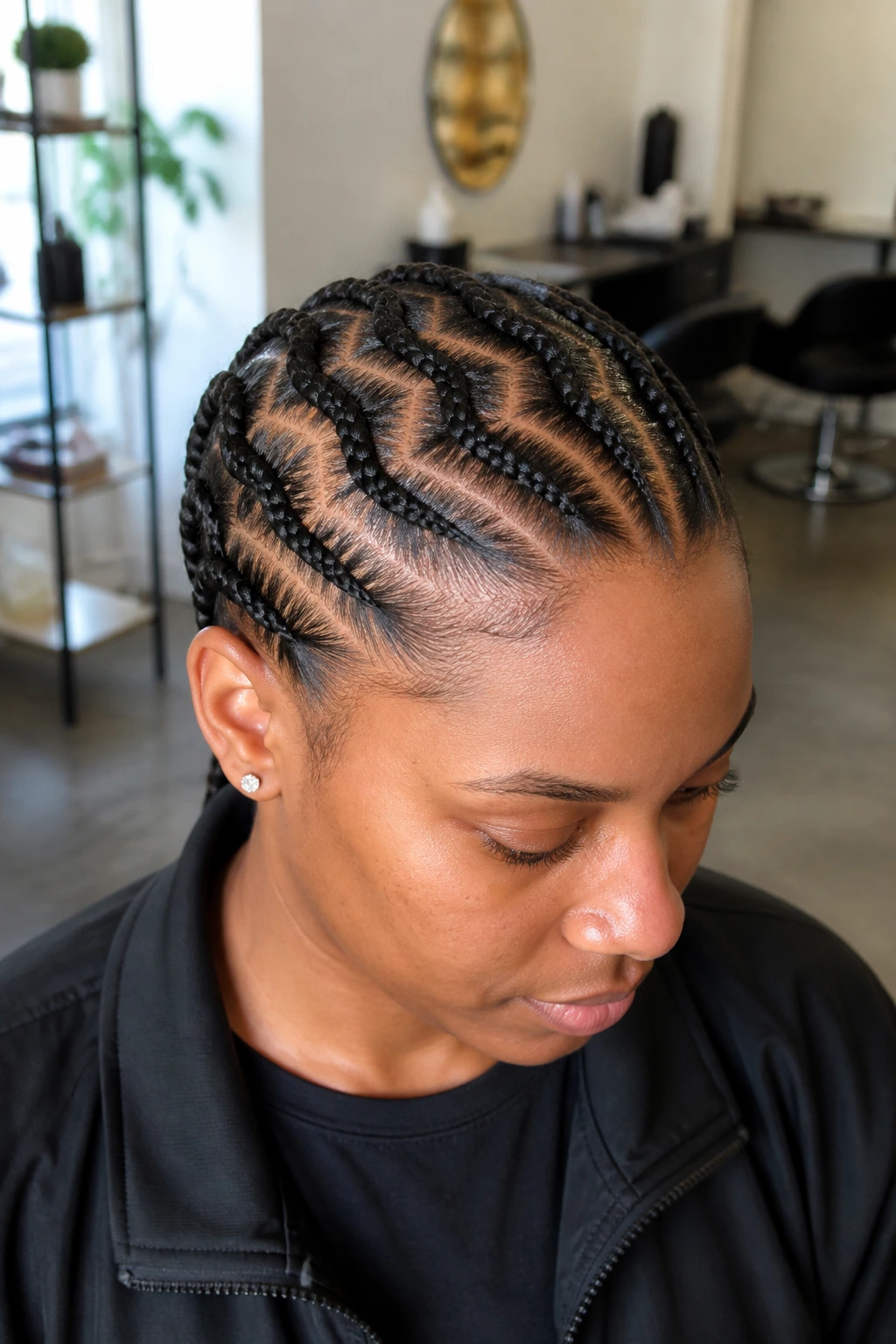
A zigzag part turns a simple cornrow set into something with movement. The braid itself may be straightforward, but the parting line pulls the eye in a different direction, which makes the whole style feel less expected.
This is one of the best short braid styles for Black women who like a little pattern without a lot of length. You can keep the cornrows close to the scalp, stop them at the nape, and let the parting do the visual talking. It’s neat, practical, and a little playful.
Good ways to wear it
- Pair zigzag parts with 4 to 6 rows for a clean look.
- Add a low bun or tiny ponytail at the end if you want a more finished finish.
- Keep the zigzags consistent, because uneven curves show fast.
- Use a light mousse, not heavy grease, so the part lines stay visible.
I’d avoid overcomplicating this with too many extra details. The zigzag pattern is the point. Let it breathe.
17. Half-Up Half-Down Braided Bob
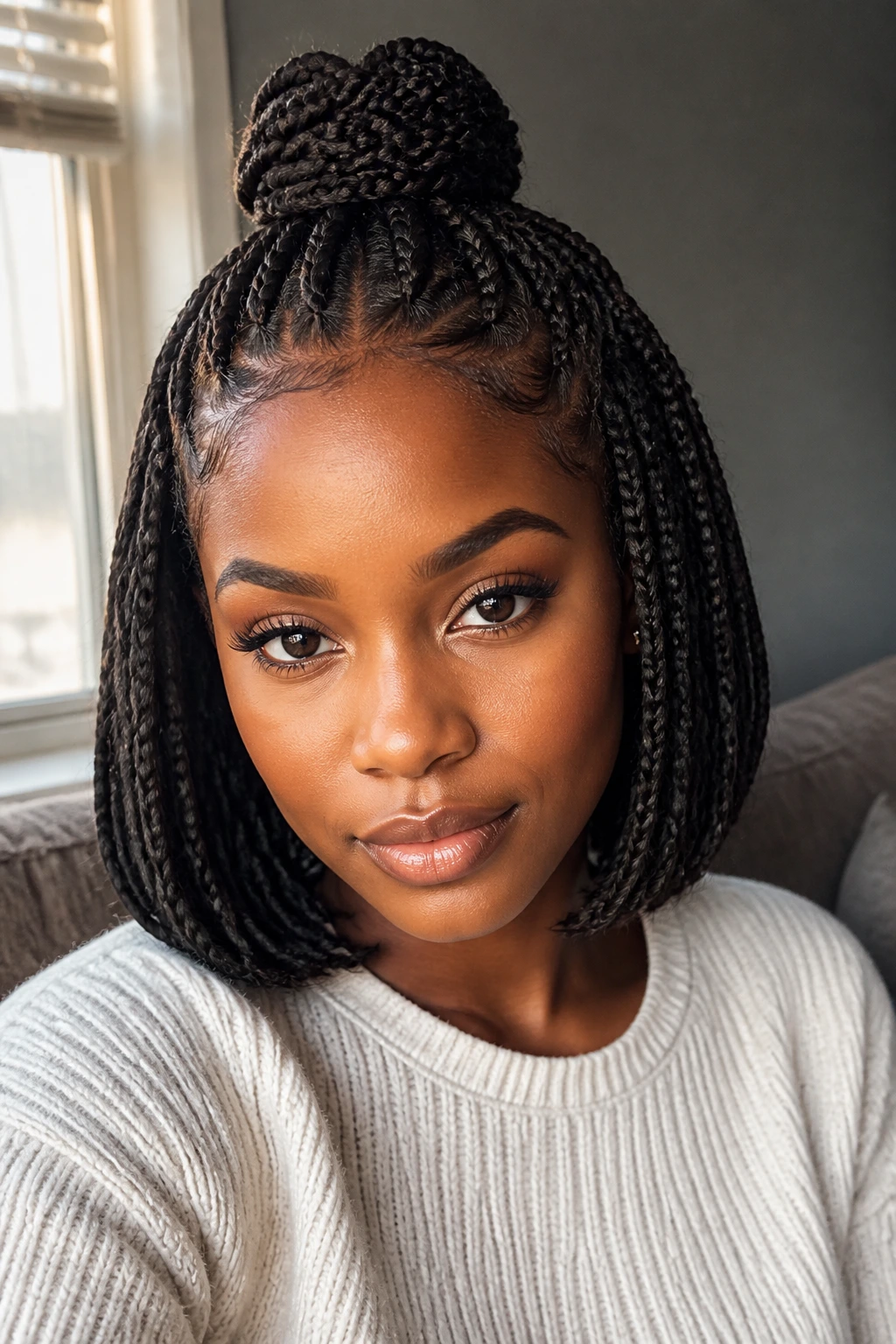
I like this style because it solves a real problem: you get the neatness of braids, but you still get some movement around the face.
The half-up half-down braided bob keeps part of the hair secured while the rest hangs loose, which makes it feel easier to wear than a fully pinned-up style. On short braids, the proportion matters. If the top section is too heavy, the style loses balance. If it’s too small, the top looks like an afterthought.
The best version usually starts with clean front sections and a simple knot, puff, or small wrapped bun at the crown. The loose bottom section should stay even, not straggly. A few face-framing braids help a lot here, especially if the bob stops at the chin.
This style works for people who like to change their look without taking the braids down. One day up. One day down. That kind of flexibility is hard to beat.
18. Micro Braids Bob

Tiny braids change the whole texture of a bob. Instead of reading as chunky and defined, the style looks fuller and more fluid, almost like a curtain of braids that moves in a softer way when you walk.
Micro braids do take patience. A lot of patience. They usually take longer to install than larger styles, and they ask more of the scalp if the tension is wrong. So I only like this style when the braider knows how to keep the sections small without making the base too tight.
What to think about before you choose them
- Micro braids give the most styling flexibility.
- They can be worn tucked, loose, half-up, or pulled back.
- They tend to take longer to install than medium braids.
- They look best when the braids are consistent from root to tip.
This is a good style if you like detail and you don’t mind maintenance. It is not the fastest choice. But when it’s done well, the finish is hard to ignore.
19. Beaded Short Braids
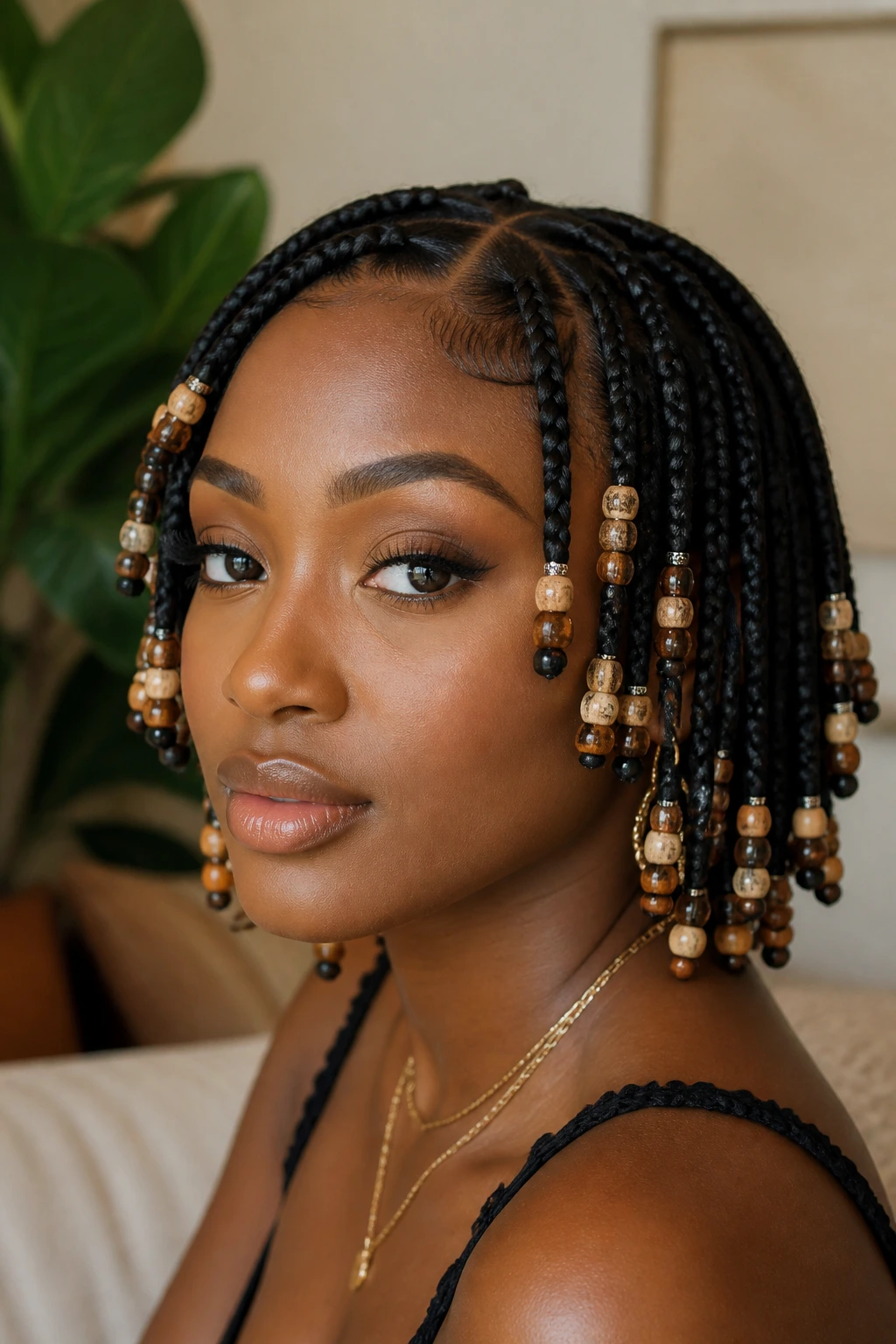
Sound matters.
Beads bring a little movement and a little personality to short braids, and you hear the difference every time you move your head. The style can be playful, classic, or grown, depending on the bead size and the number of braids you decorate. On shorter lengths, a few well-placed beads are usually enough.
I prefer lighter beads on short braid styles because heavy ones can drag at the ends and make the whole style sit awkwardly. If the braids are bob length, too much weight at the bottom changes the shape in a bad way. A small set of wooden, clear, or gold-toned beads can look clean without being bulky.
This style works especially well for people who want the braids to feel personal. It is one of the easiest ways to make a short braided look feel like yours instead of a copy of somebody else’s hair inspiration board.
Tip: keep the bead placement uneven on purpose — a few at the ends, a few on the side, not every braid in the same place. That feels more natural.
20. Braided Ponytail on Short Hair

A braided ponytail is one of the smartest short braid styles when you want length illusion without actually wearing long braids. The hair is gathered back, usually low or mid-height, and the braid pattern feeds into the ponytail so the finish looks clean from the front and tidy from the sides.
This style is practical in the best way. It keeps hair away from the face, gives the scalp some breathing room, and still lets you show off the braid pattern. If your hair barely brushes the shoulders, this is one of the easiest ways to create a more pulled-together silhouette without adding too much bulk.
A few details that make it work
- Keep the base smooth so the ponytail sits flat.
- Use two to four braids feeding into the ponytail for a balanced look.
- Wrap a small braid or extension strand around the base if you want a cleaner finish.
- Don’t pull the ponytail too tight at the crown; that’s where the style starts to hurt.
I like this style for errands, travel, and any day when you want a quick reset without sacrificing shape. It looks simple. That’s exactly why it works.
