



Good cornrows do more than sit neatly on the head. They clear your face, keep your ends tucked away, and make the whole week feel a little easier when you do not have the energy for a long wash day. When people search for cornrow hairstyles for Black women, they usually want styles that can handle real life — work, school runs, gym sweat, humid weather, church, dates, and those days when you want your hair to look finished without spending forever in the mirror.
The part that matters most is not the prettiest pattern on a mood board. It is tension. A braid can look flawless and still feel wrong if it is pulled too hard at the hairline, if the parts are uneven, or if the style fights your natural density instead of working with it. That tight, shiny line at the root is not a badge of honor. It is a warning.
The good styles have a few things in common: clean parting, a shape that suits your face, and a finish that respects your scalp. Some are fast and simple. Some are more detailed and dramatic. All of them can look sharp when the braider knows where to stop, how to feed in hair smoothly, and how to keep the base from feeling like a tug-of-war.
1. Straight-Back Cornrows for Black Women

Straight-back cornrows are the old reliable of braided styles. They work when you want your hair off your face, your edges protected, and your morning routine cut down to a few minutes. No drama. No fuss. Just neat rows running from the hairline to the nape.
What makes this style so useful is the balance between simplicity and polish. The rows can be small for a more detailed look or a little wider if you want a faster install and less scalp exposure. I like them best when the parts are crisp but not razor-thin, because hair grows out better when the style starts with sane tension.
One-sentence truth: straight-back cornrows are never boring when they are done well.
If you are asking for this style, tell your braider whether you want it with your own hair only or with added hair for length. That changes the whole finish. A light edge-control touch at the front helps, but heavy product near the scalp can flake and leave the part lines looking dusty by the end of the week.
2. Feed-In Cornrows Finished with a Low Bun
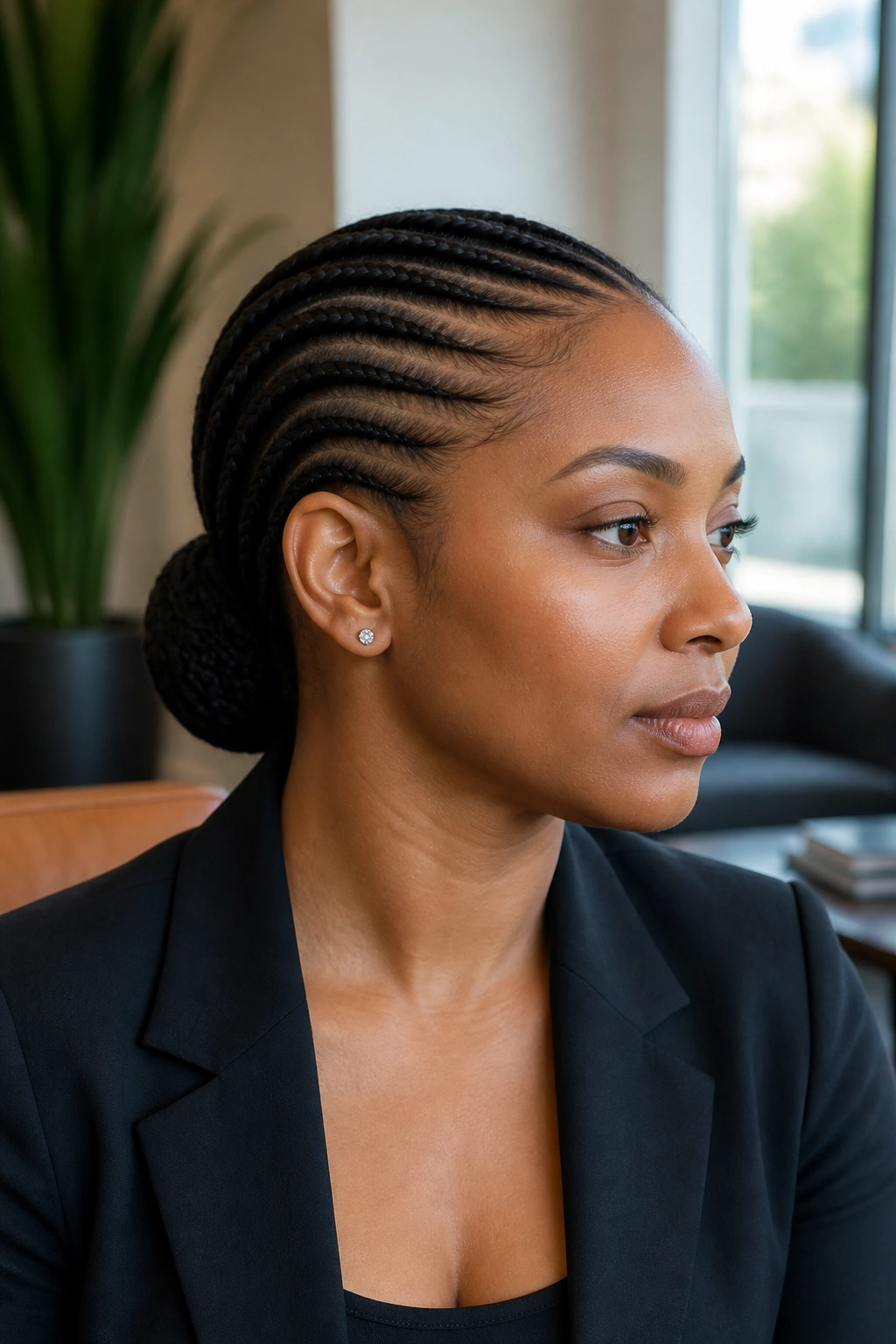
Feed-in cornrows are the style you choose when you want the braid base to stay small and smooth. The hair starts with a tiny grip at the root, then extra hair is added little by little so the braid grows fuller without a chunky lump at the front. Finished with a low bun, the whole look feels tidy and intentional.
This version works well for formal days, office settings, and anywhere you want the nape of your neck clear. It also keeps the ends tucked away, which helps if you hate braids brushing your collar. The bun can sit right at the nape for a softer finish, or just above it if you want the shape to lift the face a little.
What to ask for
- Small, smooth feed-ins at the front so the braid does not start too thick.
- A bun that sits low and flat, not a puff of loose ends.
- Enough length in the added hair to wrap the bun securely.
- A gentle hold at the hairline, especially if your edges are fragile.
Tip: A low bun looks cleaner when the last braid is wrapped close to the scalp instead of stacked high and loose.
3. Side-Swept Cornrows That Swing to One Side
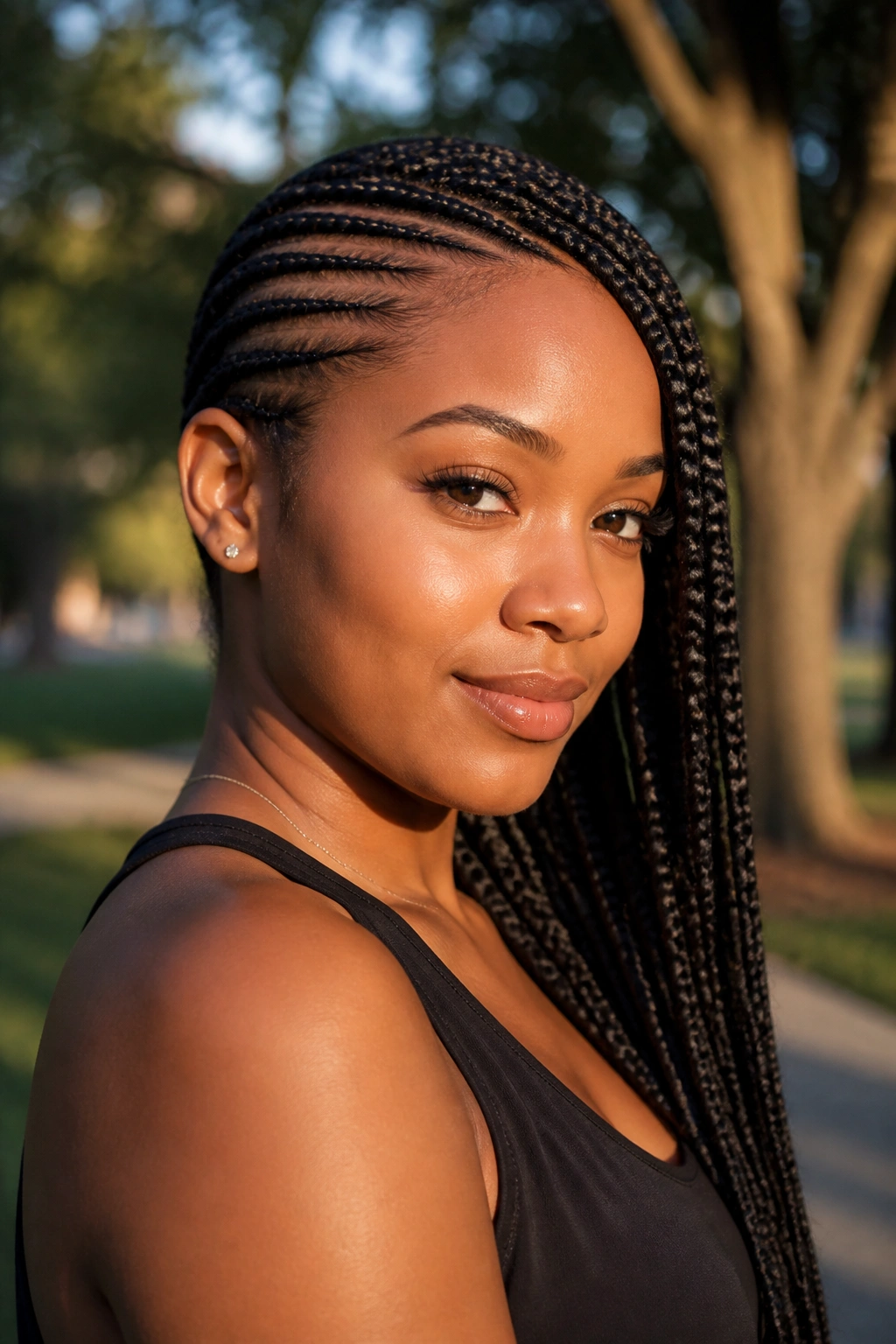
Why do side-swept cornrows flatter so many faces? Because the diagonal line softens everything. A straight center can be sharp and formal; a braid pattern that slides toward one side feels a little more relaxed and a little more flattering around the temples.
This style is good when you want movement without leaving hair loose. The rows usually begin near one side of the forehead and travel across the head in long, clean lines. It has a nice effect on round faces, but honestly, it can work on most face shapes if the parting is clean and the braids are not pulled too hard.
How to wear it
Start the braid direction from the side that feels most natural to your part. That matters more than people think. If the rows fight the way your hair wants to fall, the style can feel stiff no matter how neat it is.
A small tuck behind one ear gives the style shape. Leave the other side fuller if you want contrast. Easy.
4. Stitch Cornrows with Crisp Part Lines

Stitch cornrows are for people who like the scalp pattern to be part of the look, not just the braids themselves. The part lines appear clean and almost drawn on, which makes the whole style look sharp from a few feet away and even sharper up close.
The difference comes from how the braid is built. Instead of blending hair in loosely, the braider creates visible sections that look like tiny horizontal stitches along the braid base. It takes a steady hand, and it shows. That is why the style feels so structured. There is nothing messy about it.
If you want stitch braids, be honest about your hair density. Thin sections can look sleek, but they also show scalp more quickly. Thick sections give the braid more body, though they can take longer to install. And yes, part precision matters. A rat-tail comb with a fine tip is not optional here.
One-line warning: too much gel will make stitch braids look sticky, not clean.
5. Ghana Braids with a Raised, Fuller Look
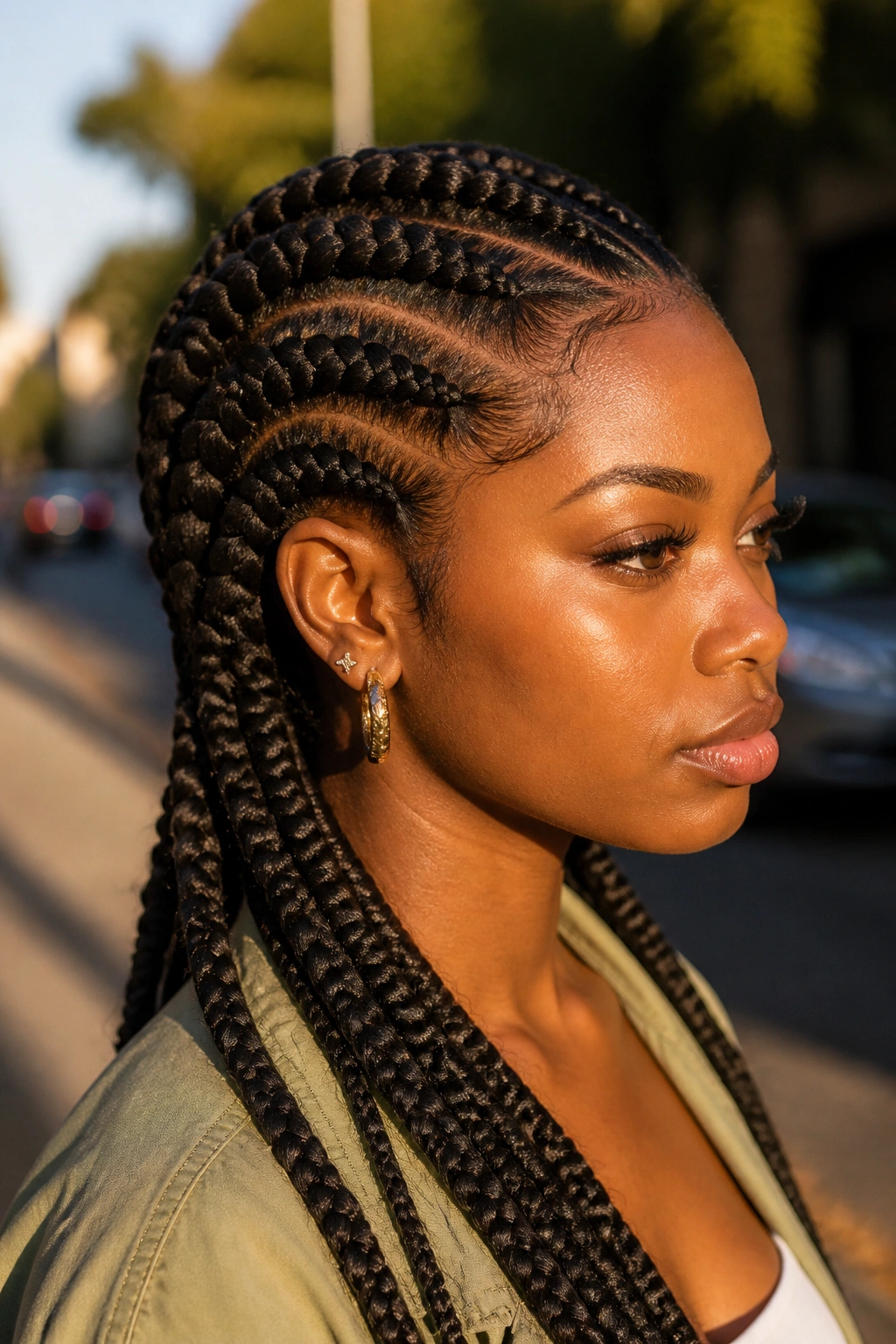
Ghana braids are the thicker cousin in the cornrow family. They sit a little higher off the scalp and build more body as they move back, which gives them that fuller, raised look people love when they want something bold but still neat.
Unlike tiny rows that disappear into the scalp, Ghana braids make their shape visible from the start. They are especially good if your hair is dense and you want a style that shows volume without needing a mountain of added hair. The braid pattern can run straight back, curve, or sweep to one side, and the finish still feels grounded.
Why they stand out
- The braid base is thicker, so the style reads from farther away.
- The shape holds well on dense natural hair.
- They work nicely with beads, cuffs, or a simple ponytail finish.
- They can look dressy without requiring a complicated pattern.
I prefer Ghana braids when the wearer wants presence. They do not whisper. They show up.
6. Two Jumbo Cornrows with a Clean Center Part

Two jumbo cornrows are the kind of style people underestimate until they try them. They are quick, practical, and surprisingly elegant when the center part is clean and the lines are straight. Sometimes less really is more.
This style is especially useful for long days or active days. Fewer braids mean less installation time and less scalp tension across multiple rows, which is part of why people come back to it again and again. The look can be finished with the ends hanging long, tucked under, or wrapped into small knots if you want a tighter silhouette.
A good center part matters here. If it drifts even a little, the whole style can feel off. A small amount of shine spray on the finished braid lengths helps the hair look smooth, but keep it away from the roots. Roots need breathing room, not product buildup.
Simple. Effective. Hard to mess up when done right.
7. Crown Halo Cornrows Wrapped Around the Head
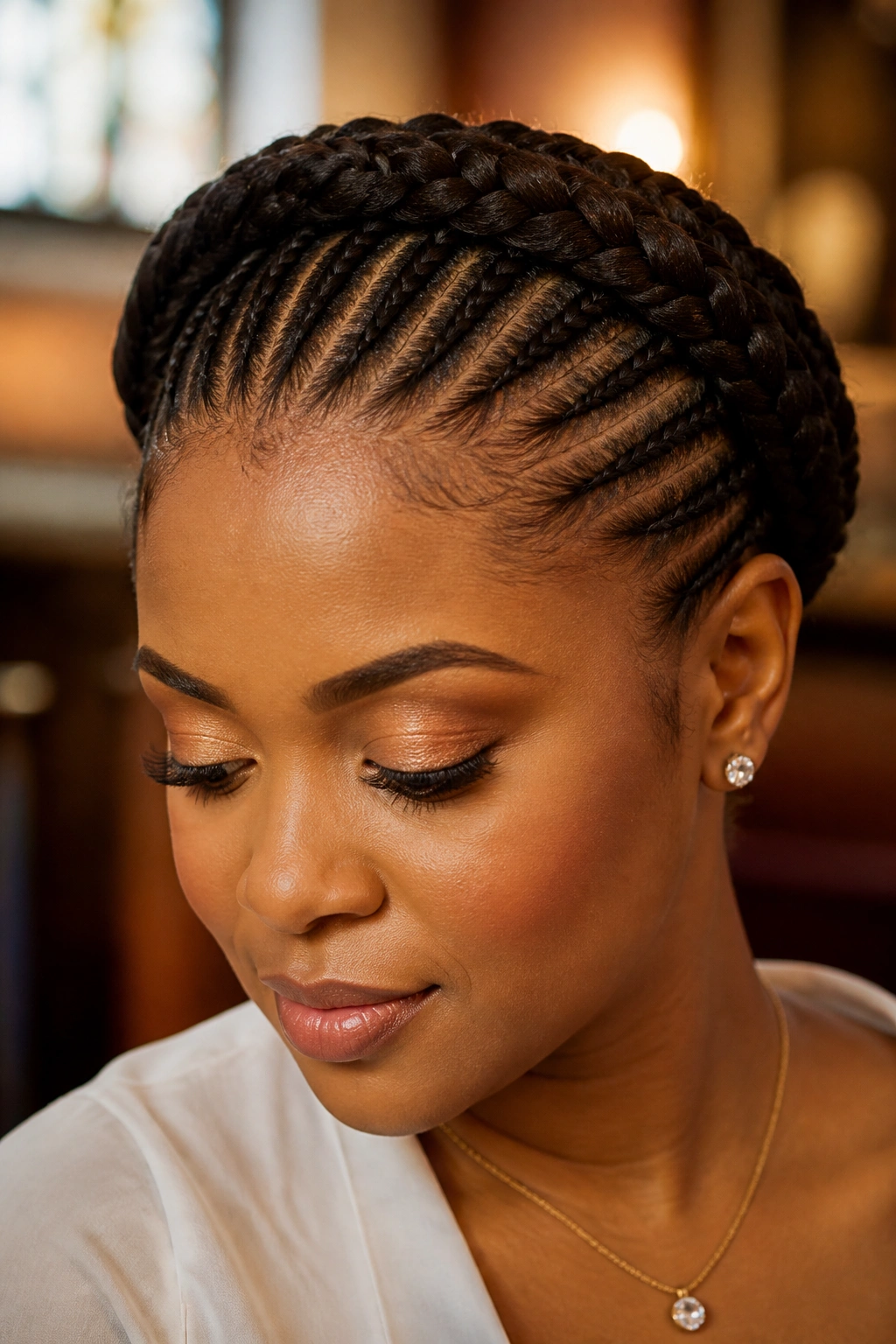
A crown halo is one of those styles that looks like it took all day, even when the parting is actually straightforward. The braid travels around the perimeter of the head like a ring, which makes the face look framed and the whole style feel lifted.
This works well for special events, church, portraits, and days when you want your hair to be the first thing people notice. It also keeps the front and sides protected, which is a nice bonus if your edges get irritated by repeated pulling. The center can be left smooth, braided in, or tucked into a low finish depending on how full you want the crown to appear.
What makes the shape work
The braid should follow the curve of the head, not fight it. That sounds obvious, but it is where a lot of halo styles go wrong. If the braid line sits too far out, the crown looks bulky. Too close, and the braid loses its shape.
A few hair pins at the back help the finish stay put. That part is boring. Necessary, though.
8. Zigzag Part Cornrows for a Graphic Scalp Pattern

Zigzag parts change everything. The braids themselves can be plain, but the scalp pattern gives the style energy. It looks sharp, playful, and just a little rebellious in the best way.
This is a smart choice when you want the parting to do some of the talking. The zigzag line breaks up the usual straight part and adds movement before the braid even starts. It also works well on medium-length hair because the design stays visible without needing long hanging lengths to carry the style.
Keep these details in mind
- Ask for the zigzag to be drawn with even spacing.
- Keep the braid size consistent so the part pattern stays the star.
- Use this style when you have enough sitting time, because the parting takes patience.
- Skip heavy product near the scalp; it can blur the design fast.
A clean zigzag looks best when the parts are sharp and the braids are not overcrowded. Messy execution kills the whole thing.
9. Cornrows Feeding into a High Puff
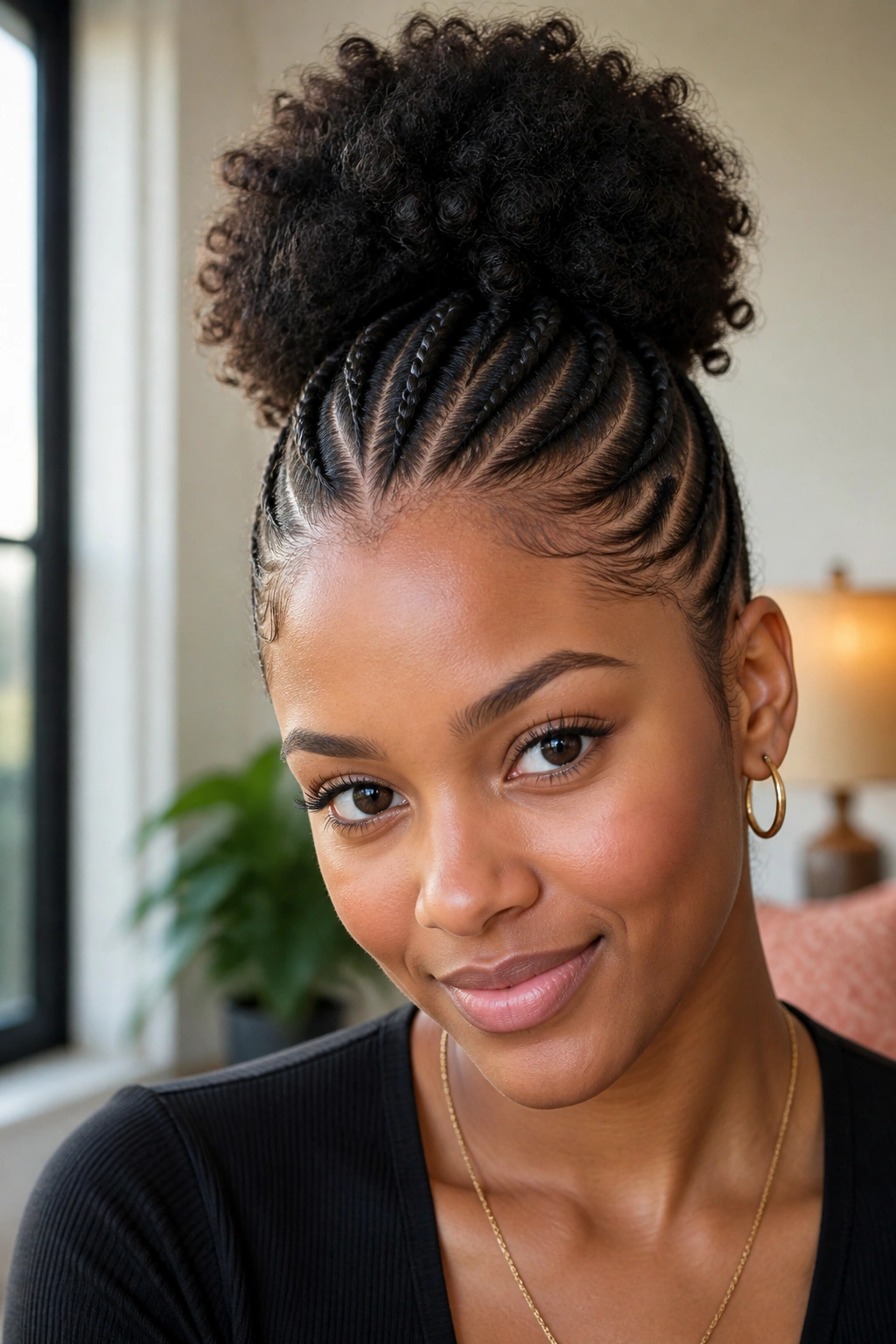
Want the front neat and the back soft? This is the answer. Cornrows can run from the hairline back toward the crown, then stop where your natural hair is gathered into a high puff. The result gives you structure up front and a fuller, softer shape at the back.
It is a good choice if you like the look of braided front rows but still want to show off texture. The puff can sit high and rounded, or a little lower if you want a calmer shape. The important thing is that the base holding the puff should not be too tight. A stretched band can help, but the scalp should never feel squeezed.
Why it works so well
The braided front keeps your hair out of your face. The puff brings height. Together, they make the style feel balanced without locking every strand away.
This one is also easy to dress up. A pair of hoops, a bold lip, and you are done. No extra effort required.
10. Lemonade Braids for Black Women Who Want Side-Swept Length

Lemonade braids are side-swept, long, and a little dramatic in a way that still feels wearable. They move in one direction, usually with a deep side part, so the whole style has a strong line across the head and a lot of length flowing over one shoulder.
This style works when you want the look of long braids without a pile of hair hanging on both sides. It keeps one side of the neck more open and gives the face room to show. The braid pattern can be thin and sleek or medium-sized and fuller, depending on how much weight you want on your head.
A small note from experience: the side with more braid bulk can feel heavier by the second day if the sections are too large. Keep that in mind if you wear your hair up a lot. And if the ends are long, they should be sealed cleanly so they do not fray and start looking fuzzy too early.
It is a strong style. No question about it.
11. Beaded Cornrows with Lightweight Ends
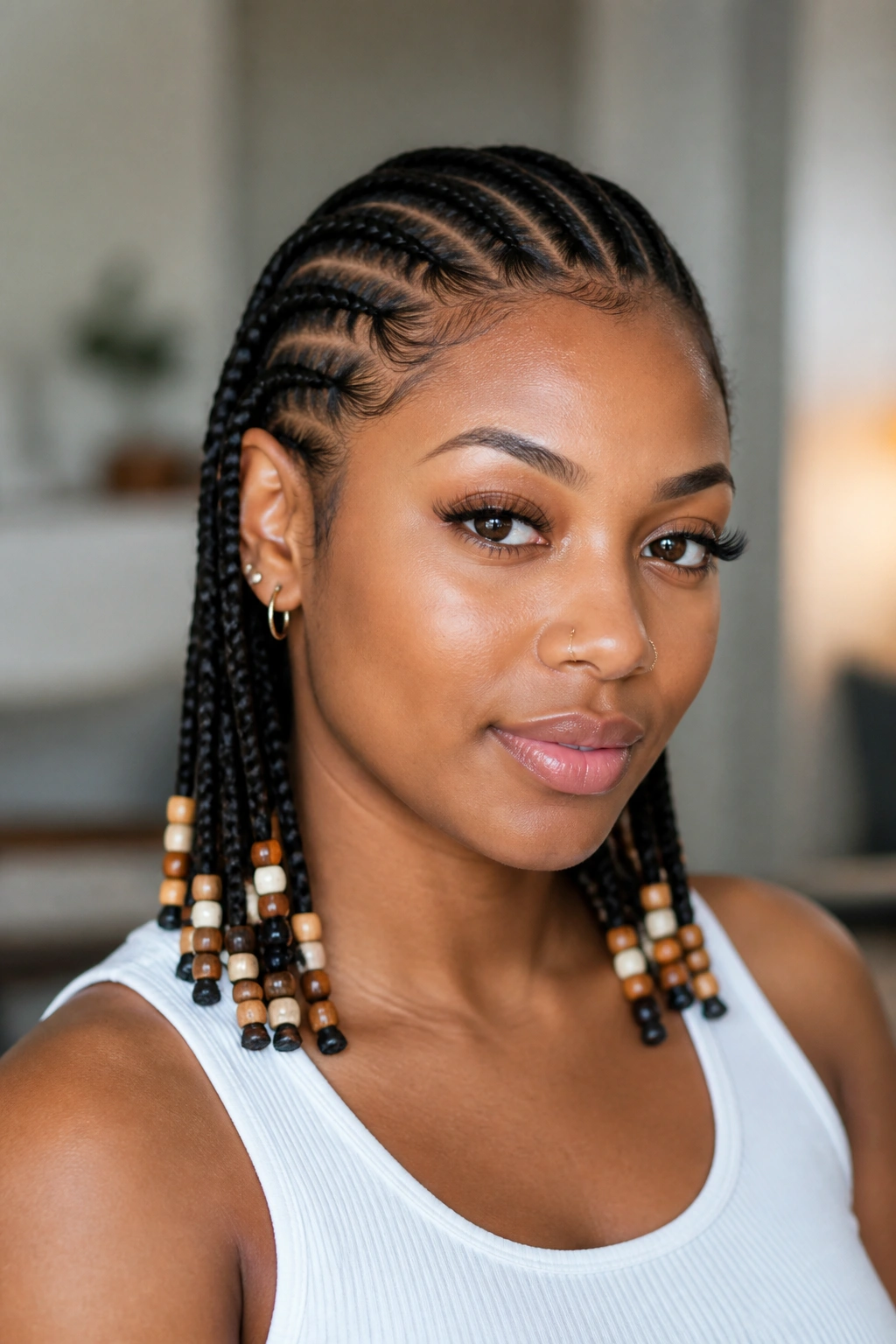
Beads change the mood fast. They add sound, movement, and a little personality to cornrows that might otherwise feel plain. The trick is using lightweight beads, not heavy ones that drag on the ends and make the braids feel tired by lunchtime.
This style can lean playful or grown, depending on the bead color and placement. Clear beads feel clean and simple. Wooden beads have warmth. Matte black looks sharper. The style works best when the beads are placed only at the ends, because too many accessories along the length start to look crowded.
A few practical details
- Use beads with smooth holes so they do not snag the braid ends.
- Match bead size to braid size; tiny braids need smaller beads.
- Keep the ends even if you want the beaded line to fall neatly.
- Check the weight before adding a full set, especially on fine hair.
Beaded cornrows are also one of those styles that can make a very simple braid set feel intentional. That matters more than people admit.
12. Chin-Length Cornrow Bob

A cornrow bob gives you braid structure without a ton of length. The rows stop around the chin or jaw, which keeps the style neat and gives the face a clean frame. It is a nice option when long braids feel too heavy but you still want the braided look.
The shape is the real selling point. Shorter ends sit closer to the head, so the style moves less and feels lighter. It also draws attention upward, which can make your cheekbones and jawline stand out more. If the braids are a little thicker, the bob looks modern and strong. If they are finer, the finish feels softer.
I like this style for people who are tired of braids brushing their shoulders. It is less annoying in jackets, scarves, and high collars. That may sound small, but once you have spent a week fighting braid ends in your coat zipper, you will care a lot about it.
13. Half-Up, Half-Down Cornrows
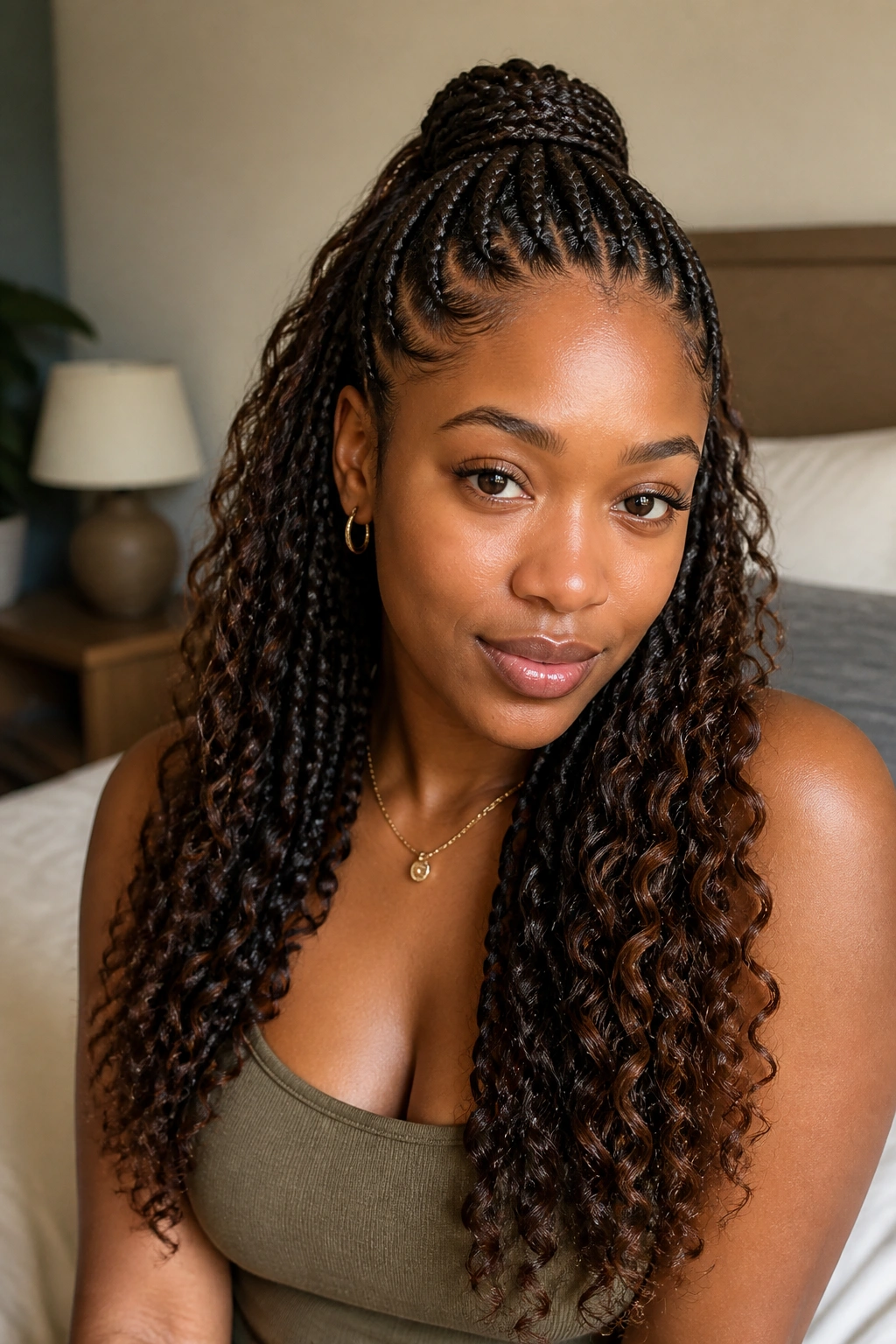
Half-up, half-down cornrows give you the neatness of braids and the softness of leaving some length free. The top section is braided and secured, while the lower section falls loose or gets styled with curls, twists, or straight lengths.
The appeal is obvious once you wear it. Your face stays open, but the style still has movement. It is a smart pick for people who do not want all of their hair pinned up or fully cornrowed. The top rows can be straight back, side-swept, or patterned, depending on how much detail you want.
How to make it look balanced
The top should be tight enough to hold, but not so tight that the crown starts to ache. The lower half should feel intentional, not like the braider stopped halfway through and forgot to finish.
A ribbon, a few cuffs, or one strong braid at the center can make the style feel finished. Tiny details matter here.
14. Triangle Part Cornrows
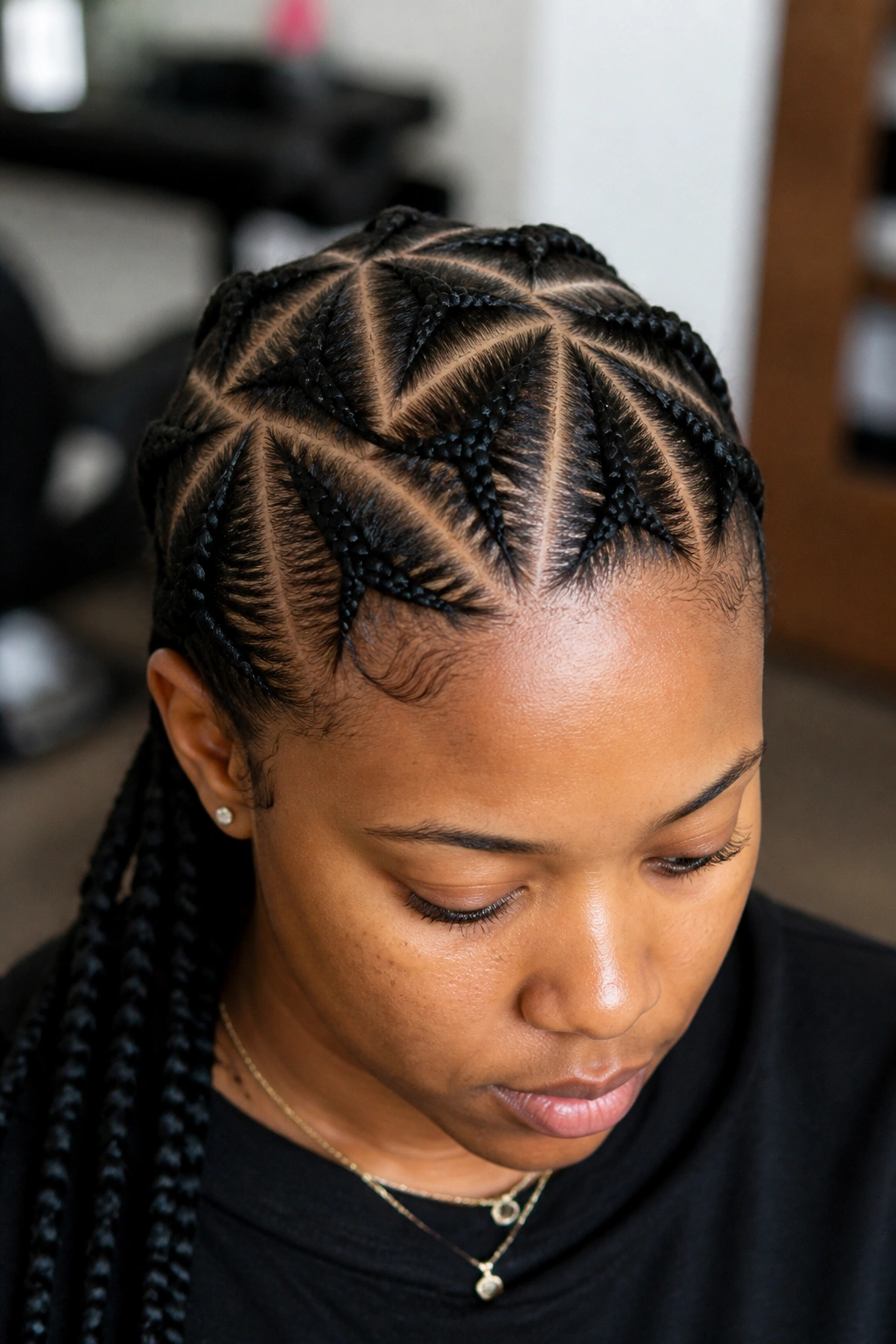
Triangle parts are a small change with a big visual payoff. Instead of the usual square or straight sections, the scalp is divided into triangles, which makes the whole style look sharper and a little more geometric.
This is a good choice when you want something different without changing the basic braid style too much. The braids themselves can be standard rows, feed-ins, or larger sections. The part shape is the star. Triangle parting also plays well with small to medium braid sizes because the pattern reads more clearly when there are enough sections to show it off.
What to ask the braider
- Keep the triangles even in size.
- Use clean points so the shape does not look muddy.
- Avoid making the sections too tiny if your hairline is sensitive.
- Ask for a part map before braiding starts if you care about symmetry.
It is one of those designs that rewards patience. Rushed triangle parts look sloppy fast.
15. Cornrows Pulled into a Braided Bun

A braided bun gives you the discipline of cornrows and the neat finish of an updo. The rows pull the hair back toward one gathered point, where everything is wrapped into a bun at the crown or nape.
This is one of my favorite styles for formal settings because it stays out of the way and still looks polished without trying too hard. The bun can be low and compact, which feels understated, or higher and fuller if you want more lift. The base braids should lead into the bun smoothly, not bunch up awkwardly right before the finish.
Best when: you need your neck clear, your braids off your shoulders, and your hair to stay put for hours.
A few bobby pins can make the bun feel secure, but too many pins can turn the finish into a little nest. Use enough to hold the shape. Not more.
16. Side-Part Feed-In Braids

A side part changes the whole mood of feed-in cornrows. Instead of splitting the head down the middle, the part starts off to one side and lets the braids fall in a more flattering, face-framing direction.
This style is useful when a center part feels too severe or too symmetrical for your features. Side parts can soften a square jaw, give round faces more length, and make room for a dramatic earring or makeup look. The braids themselves can run straight back from the part or angle across the head depending on how much movement you want.
The cleaner the part, the better the result. A deep side part that is slightly crooked will be obvious the whole time you wear it. That is one of those annoying braid truths nobody wants to hear. Still true.
I would pick this style for anyone who wants a grown look without a stiff finish.
17. Curved Cornrow Designs with Swooping Rows

Curved cornrows are where braid work starts to look like art. The rows swoop, bend, and arc across the scalp instead of moving in one straight line, which gives the style a softer, more customized look.
This style needs a steady hand. A good curve should feel intentional, not wobbly. The braids can spiral inward, move in soft S-shapes, or wrap around a central section. On the right head, it looks incredible. On a rushed appointment, it can turn into a crooked mess fast, so I would only ask for it if the braider is comfortable with detailed parting.
What makes it different
- It shifts focus from length to pattern.
- It works well when you want the scalp design to stand out.
- It can be paired with buns, ponytails, or loose ends.
- It usually takes longer than straight-back rows.
Curved designs are not for everyone. They are for the people who care about the part map as much as the braid itself.
18. Cornrow Updo with Wrapped Ends

An updo with wrapped ends keeps the whole style compact and neat. The cornrows travel upward or backward, then the lengths are tucked, wrapped, or pinned into a shaped finish at the top or back of the head.
This is a strong choice when you want the hair off your shoulders and the ends completely hidden. It feels clean. It also works well for events where you do not want loose braid tails moving around every time you turn your head. The wrapped finish can be smooth and simple or fuller and more sculpted, depending on how much hair you use.
A smooth nape makes a big difference here. If the base is messy, the updo reads messy. If the base is clean, the whole style looks deliberate. A few decorative pins or one hair cuff can be enough. You do not need much.
19. Micro Cornrows for a Fine, Detailed Finish

Micro cornrows are tiny, detailed, and time-consuming. They create a very fine pattern across the scalp, which can look delicate and neat when the sectioning is even and the tension stays light enough.
This style is a good fit when you want a longer-lasting braid set with lots of visual detail. It can also give you more flexibility for later styling because all those small rows can be gathered, pinned, or shaped in different ways. The tradeoff is time. Micro cornrows take patience to install, and they should never be used as an excuse to pull the hair too tightly at the roots.
What to watch for
- Tiny does not mean better if the hairline is fragile.
- The braid should feel secure, not sharp.
- Parting has to stay consistent across the whole head.
- Scalp access matters, so do not make every section too crowded.
They look beautiful when done well, but they are not a casual appointment. Plan for that.
20. Jumbo Cornrows That Install Fast

Jumbo cornrows are the blunt, confident version of the style. Fewer parts, bigger rows, faster install. That is the trade. If you want a look that reads clearly from across the room and does not ask for a long braiding session, this is the lane.
They work well on thick hair because the larger sections hold shape nicely and give the braids enough body. On finer hair, jumbo braids can still look good, but the parts need to be neat or the style can feel loose at the base. The upside is easy styling. The downside is that they may loosen or shift sooner than smaller braids if the base was not secured well.
Good choice when: time is short, you want less sitting, and you prefer a bold braid line over tiny detail.
A little shine on the finished braid lengths helps here, but skip anything greasy at the scalp. Heavy roots make big braids look dull fast.
21. Cornrows with Curly Ends
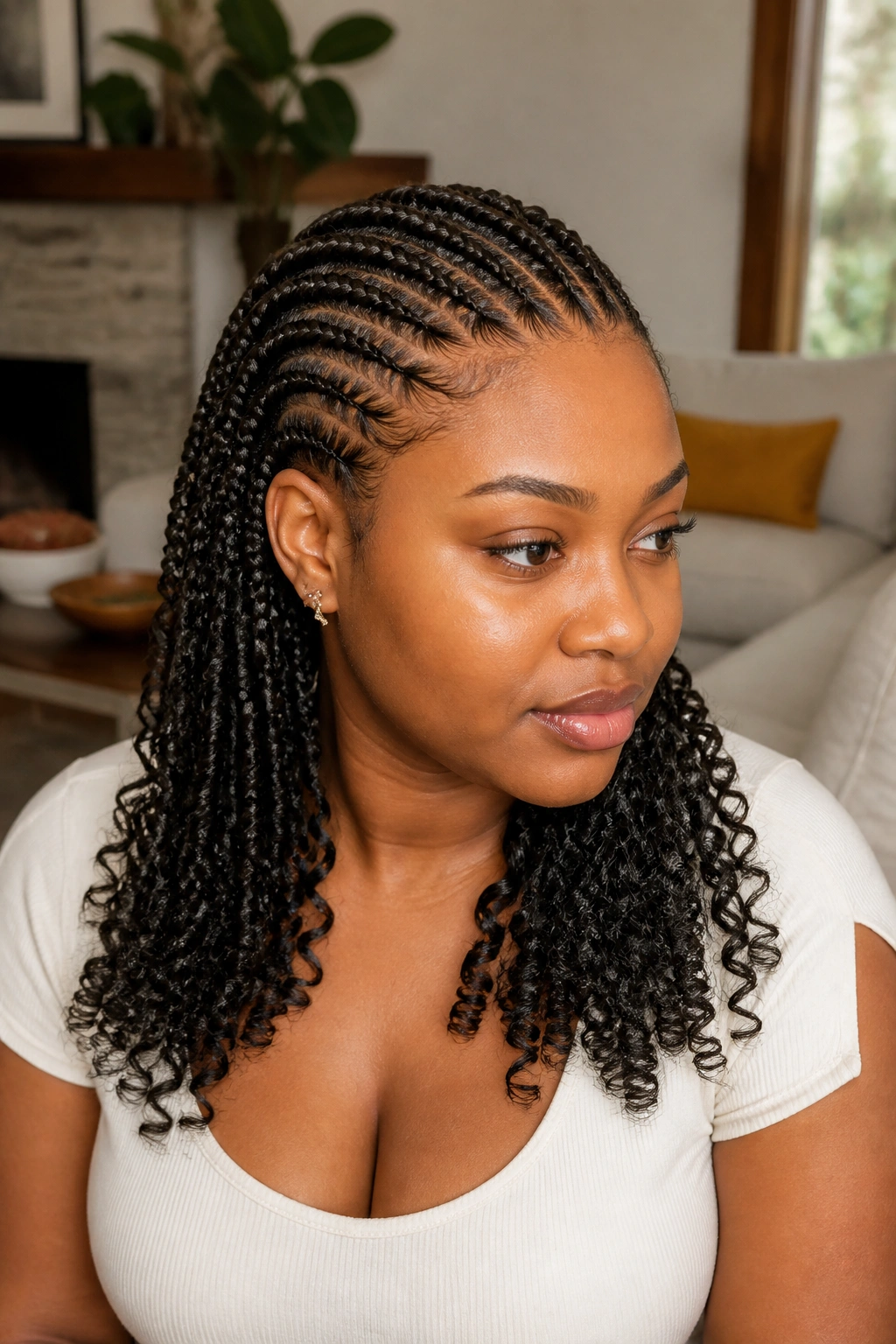
Cornrows with curly ends soften the whole style. The top stays neat and braided, while the ends open up into curls, coils, or waves that add movement and a little softness around the shoulders.
This is a smart option when you want braids to feel less severe. The contrast matters. Sleek at the root, loose at the bottom. That mix keeps the look from feeling too stiff. It also works well for people who like a braided style but still want some texture to show.
If extensions are used, the ends can be left loose or set into curls by the braider. If the hair is your own, the length has to be there to hold the shape, so this version works better on longer natural hair or with added length. Keep the curls separate with your fingers rather than brushing them out. A brush will flatten the whole finish and ruin the shape.
22. Heart-Part Cornrows
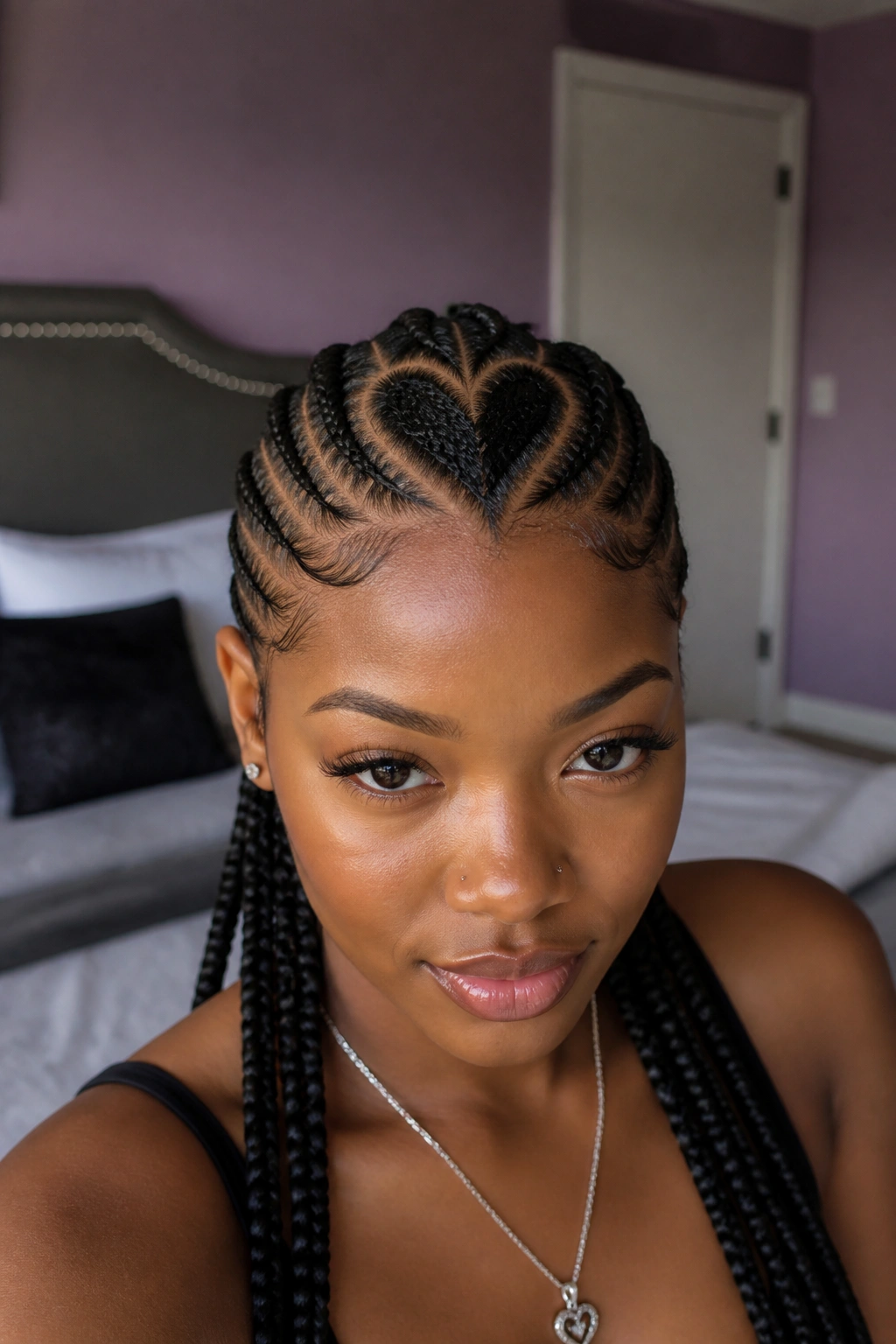
Heart-part cornrows are playful without being childish when they are done with care. The parting forms a heart or a heart-like shape near the front or crown, and the braids follow the outline in a way that makes the scalp design the main event.
This style is a favorite for celebrations, photo days, and anyone who likes a little personality in their braid work. It can be built with small rows for a detailed finish or with larger braids if you want the heart shape to read more clearly from a distance. Either way, the parting has to be precise. A lopsided heart looks accidental, and that is not the vibe.
Why people ask for it
- It gives a familiar braid style a custom look.
- It works well with bows, cuffs, or beads.
- It can be tucked into a ponytail or bun later.
- It makes a simple style feel special without adding loose hair.
This is the kind of design that gets compliments from people who notice hair.
23. Deep Side Part Cornrows with Face-Framing Balance
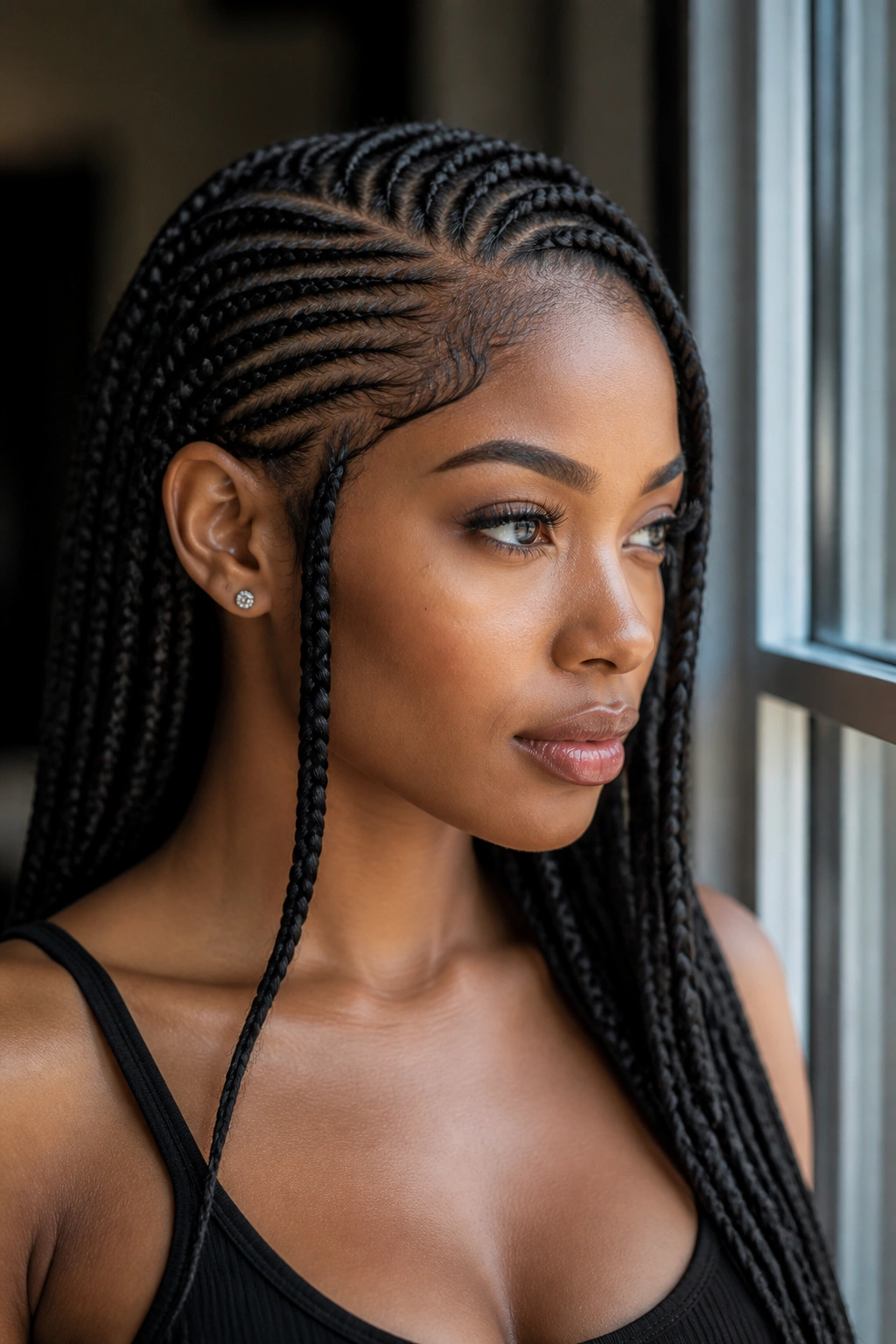
A deep side part gives cornrows a strong visual lean. Most of the braid weight falls to one side, which creates a line that feels dramatic but still neat. It is a good pick if a center part makes your face look too even or too long.
The best part about this style is how easy it is to adjust the mood. Keep the rows close and sleek for a cleaner finish. Leave a little softness near the front for a more relaxed look. You can also tuck one side behind the ear and let the other side lead. That small move changes the shape a lot.
This is different from side-swept braids that travel across the head. Here, the part itself is the statement. The rows can still run straight back; they just start from a deeper split. If you like asymmetry, this is a strong choice.
24. Cornrow Mohawk with Braided Sides
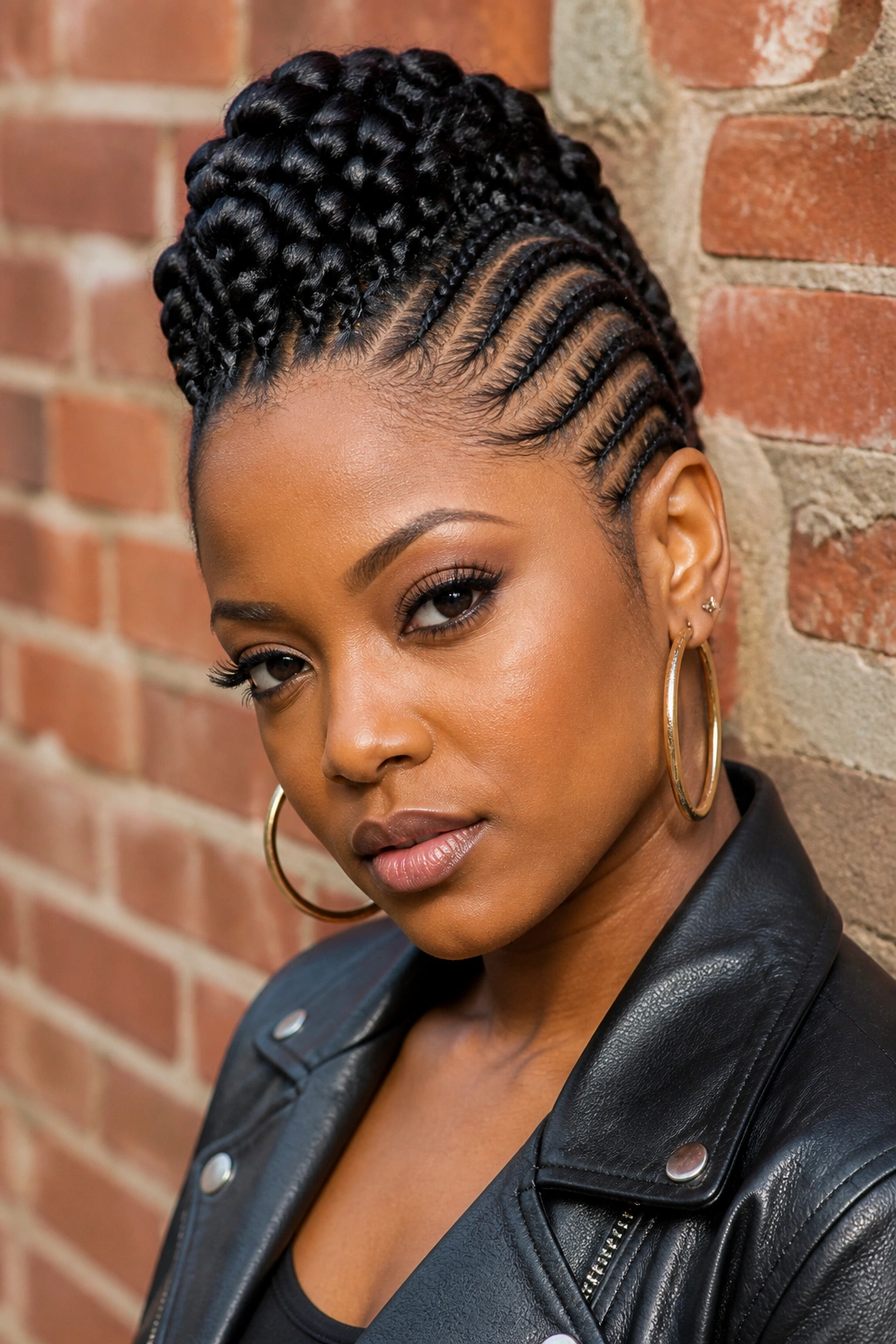
A cornrow mohawk has edge without needing loose hair everywhere. The sides are braided or slicked close, while the center section stays higher and fuller, so the whole shape points upward.
It is a bold style, no question. The good kind of bold. The center strip can be made of larger cornrows, feed-ins, or a gathered braided ridge, depending on how much height you want. The sides should stay neat and close to the scalp so the middle section really stands out.
What to think about before asking for it
- The contrast between sides and center is the whole point.
- It works well when you want a strong shape for events or photos.
- It can feel heavier on the center line if too much hair is packed there.
- A tight side braid can irritate the hairline, so the tension has to stay sensible.
This is not a quiet style. It has attitude built in.
25. Simple Everyday Braided Rows for Black Women
Sometimes the smartest cornrow style is the plain one. Simple everyday braided rows give you a clean finish, a low-maintenance routine, and a style that does not ask for a lot of extra handling. Straight lines, even size, comfortable tension. That is the whole point.
This is the style I would hand to someone who wants the most wear out of their braids with the least nonsense. The parts do not need to be decorative. The braid pattern does not need to be complicated. What matters is that the rows sit flat, move with the head, and feel comfortable enough to wear for days without that constant itch of regret. A neat row set can look better than a fancy design done badly. Easy call.
If you want one braid style to keep in rotation, make it this one.
It is also the best starting point if you are new to cornrows. Once you know how your scalp feels in a simple row set, you can decide whether you want more shape, more height, or more decoration next time.
Final Thoughts
Good cornrows are not a test of how much tension you can stand. They are a hairstyle, and the style should work with your hairline, your density, and the way you actually live. If a braid looks sharp but leaves you counting the minutes until you can take it down, it was not a win.
The styles with the cleanest look usually come down to three things: decent parting, a braid size that matches your hair, and a finish that does not pull the scalp into submission. Fancy shapes are nice. Comfortable wear is nicer.
Pick the version that fits your week, not the one that only looks good in a photo. Your scalp will tell you the truth long before anybody else does.
