



A good set of feed-in braid hairstyles for Black women does two jobs at once: it gives you a sharp look, and it keeps your hair tucked away with less bulk at the root. That second part matters more than people admit. A braid can look pretty on day one and still be a headache by day three if the feed-in method is done too tight, too heavy, or with parts that fight your natural growth pattern.
The whole point of the feed-in technique is to add extension hair little by little, so the braid starts small and grows fuller as it moves down. That softer start is why feed-in styles often look cleaner around the hairline than old-school cornrows with one thick lump of hair shoved in at the beginning. The style can feel sleek, soft, bold, or dramatic, depending on the parting and the finish. Same technique. Different mood.
And that’s where the fun starts. Some versions sit close to the scalp and keep life easy for work, school, or gym days. Others pull the braids into ponytails, buns, curls, beads, or sharp geometric parts that turn the whole style into a statement. The right choice usually comes down to how much time you want to spend in the chair, how much weight your scalp can handle, and whether you want something low-key or eye-catching.
1. Classic Straight-Back Feed-In Cornrows

Straight-back feed-in cornrows are the style people come back to when they want something neat, calm, and not fussy. There’s a reason they never leave the conversation. They keep the hair off your face, show off clean parting, and let the braid pattern do the talking without extra extras.
Why the classic version still wins
The best thing about this style is the balance between simplicity and polish. You can wear it with hoop earrings and a plain tee, or dress it up with glossed lips and a sharp jacket. It lands in that useful middle ground where you do not have to think hard about it.
If your scalp gets tender easily, this is one of the easier feed-in braid hairstyles to ask for because the braid direction is predictable and the tension can stay even from front to back. Ask for medium-sized sections and keep the feed-ins smooth, not lumpy.
- Best for low-maintenance wear
- Easy to tuck under a scarf at night
- Works well with active days and long errands
- Looks clean in a center or off-center part
My take: if you only want one reliable feed-in braid style in rotation, start here. It earns its keep.
2. Middle-Part Feed-In Braids

A middle part changes everything. The whole style feels more symmetrical, a little sharper, and a lot more intentional, even when the braids themselves are plain. If you like a face-framing look that feels tidy rather than busy, this is the one I’d point you toward first.
The middle part also gives the braids a natural visual anchor. Your eyes go straight down the center, which makes the style feel balanced on round, oval, and heart-shaped faces. It’s a good choice when you want the braids to do their job without stealing the entire show.
The key is precision. If the center part is crooked, the whole style looks off. If the feed-in pieces are added too fast, the braids puff in the wrong places and lose that sleek root line. A clean middle part with medium feed-in sections creates a calm, strong look that works just as well with bare skin and no makeup as it does with a full face.
I like this version for people who want something neat but not severe. It has structure without looking stiff.
3. Side-Swept Feed-In Braids

Why do side-swept feed-in braids feel softer than straight-back styles? Because they move the eye across the head instead of straight down it. That small change gives the face a little curve, which can be flattering if you want the braids to feel less rigid.
The braid pattern usually starts on one side and travels diagonally across the scalp, or it gathers into a sweep that lands over one shoulder. That shape does a nice job of softening strong jawlines and adding motion to thicker hair textures. It also gives you something to play with if you like wearing one side tucked behind the ear and the other side loose.
How to wear it
- Keep the braids medium or slim so the sweep doesn’t feel heavy
- Add a few extra inches of length on the heavier side for visual flow
- Wear with a side part and a soft edge brush finish
- Let one braid drape forward if you want more face framing
This style is a little more romantic without going full event hair. It’s one of those looks that can sit in the background or steal the whole day, depending on how you finish it.
4. Feed-In Braids Pulled Into a High Ponytail

Picture this: you walk out with your face open, your neck clear, and a high ponytail swinging every time you turn your head. That’s the appeal here. A feed-in braid ponytail gives you lift, movement, and a neat base, which is a combination I’ve always thought looks especially good on Black women with strong cheekbones or a full brow.
The crown area has to be handled well. If the braids are pulled too tight before they reach the ponytail point, the style starts to feel like a tug-of-war. A good braider will keep the feed-in section smooth, then gather the braids high enough to create that lifted shape without yanking the edges.
I’d ask for this if you want a style that stays off your shoulders and still feels dressed up. It’s practical, sure, but it also has a little attitude. The ponytail can be blunt at the ends, curled, or wrapped with one braid for a cleaner finish.
A high ponytail like this is one of the easiest ways to make feed-in braids feel more energetic. It moves.
5. Low Feed-In Braided Bun
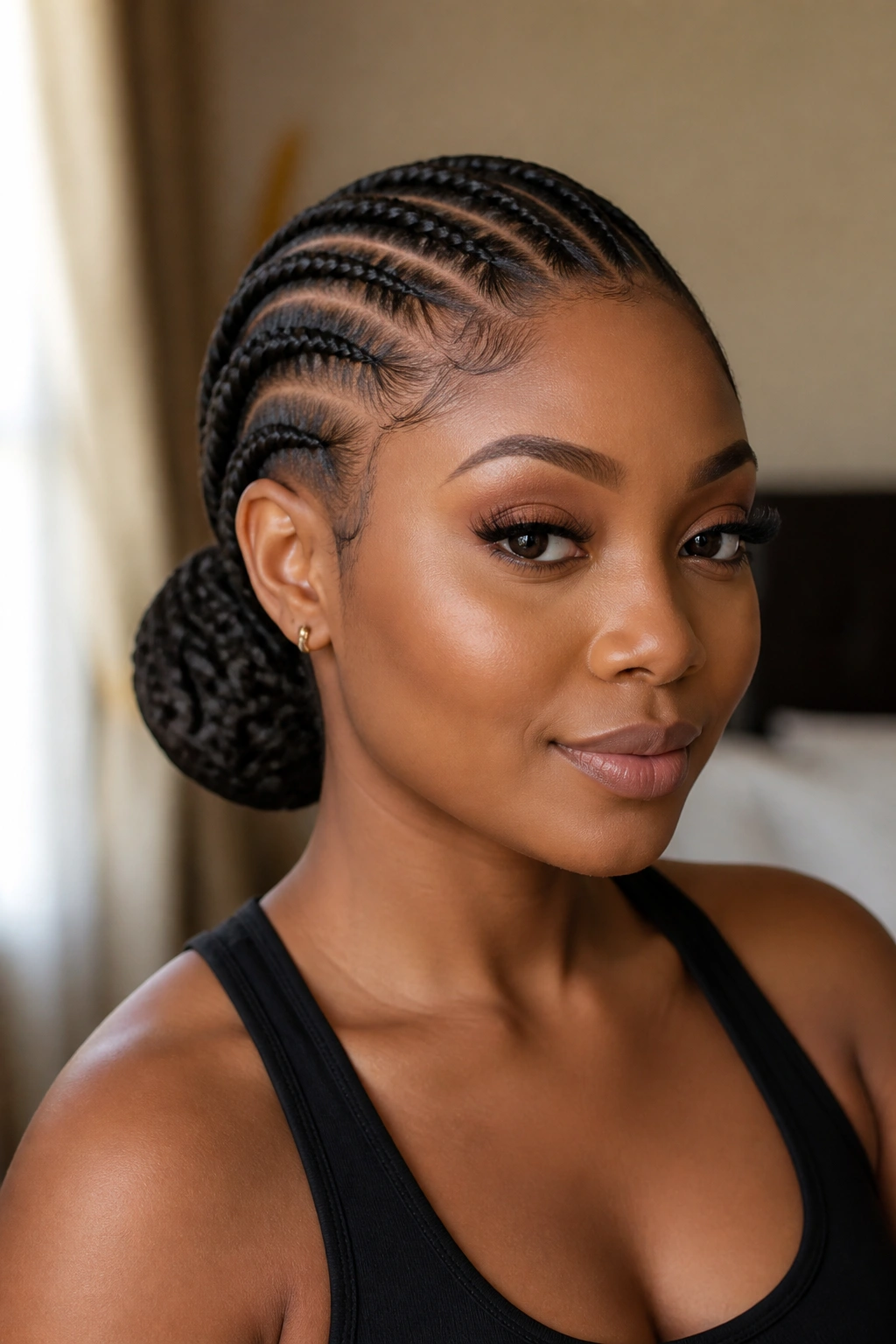
A low bun is the quiet overachiever of braid styles. It looks polished at work, looks graceful at events, and doesn’t fight with coat collars, scarves, or headphones. If high ponytails make your scalp feel stretched, this version usually behaves better.
The braids flow back from the hairline and gather low at the nape, where they can be twisted or pinned into a bun. I prefer this version when the goal is neatness over drama. The bun keeps the ends tucked in, which also helps the style feel less heavy by the end of the week.
A low bun works especially well with medium-thick braids because the shape shows up clearly without turning into a giant knot. If the bun gets too bulky, the clean line disappears. Keep the base snug, not tight, and use a few discreet pins if the braids want to slip.
Honestly, this is one of those styles that looks more expensive than it is. Not because it costs more, but because the lines are calm and controlled.
6. Jumbo Feed-In Braids
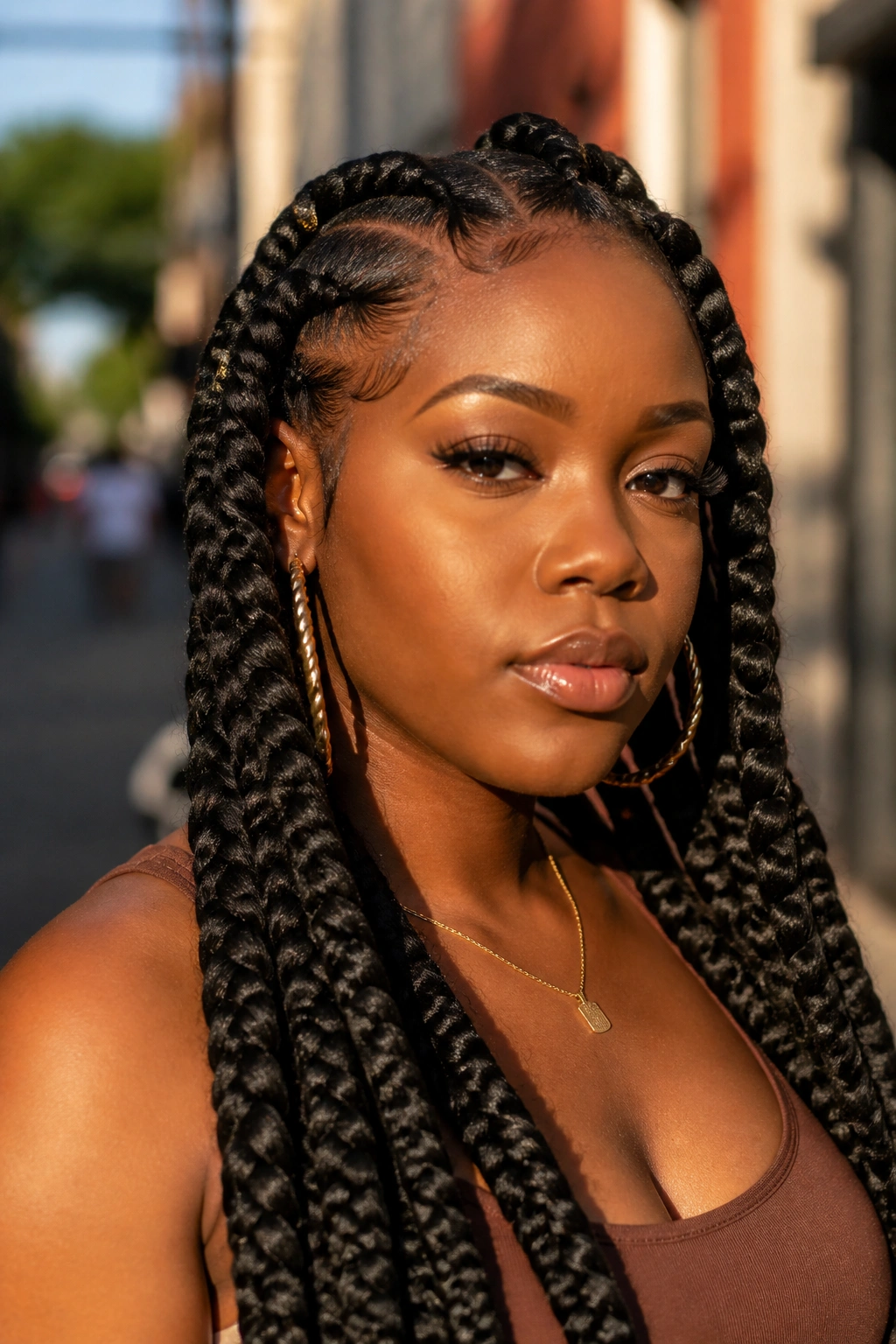
Jumbo feed-in braids are for people who want a bigger braid with less sitting time. Fewer parts, thicker sections, faster install. That’s the deal. And when they’re done well, they look bold without needing extra decoration.
The catch is weight. Jumbo braids can drag if they’re installed too close to the hairline or if the extensions are too dense. That’s why the feed-in part matters so much here: the braid should start light and build gradually, instead of showing up like a heavy rope from the first inch.
I like this style for weekends, short trips, or any stretch when you want your hair done but you do not want a chair session that eats the whole day. It’s also a good pick if you like a fuller braid silhouette around the face and temples.
What makes it stand out is the visual confidence. Jumbo braids read from across the room. They’re not shy, and they should not pretend to be.
7. Slim Stitch-Style Feed-In Braids

Slim stitch-style feed-in braids are for the detail people. The parting is crisp, the rows are narrow, and the braid pattern has that neat, almost drawn-on look that catches the eye because the lines are so clean. If you love a precise finish, this is a strong choice.
Why does it take so long? Because every row has to stay even. A slight wobble shows more in slim braids than in thicker ones, and the feed-in process has to be controlled so the braids stay flat at the scalp before they start building length. That means the braider is working slowly on purpose, not because they’re struggling.
How to get the most from it
A silk or satin scarf at night matters here more than people think. Slim braids show frizz faster, especially at the front. A quick wrap keeps the parting cleaner for longer.
This style also gives you room to play with design if you want to add one or two curved rows near the temple. Tiny changes stand out.
8. Feed-In Braids With Curly Ends
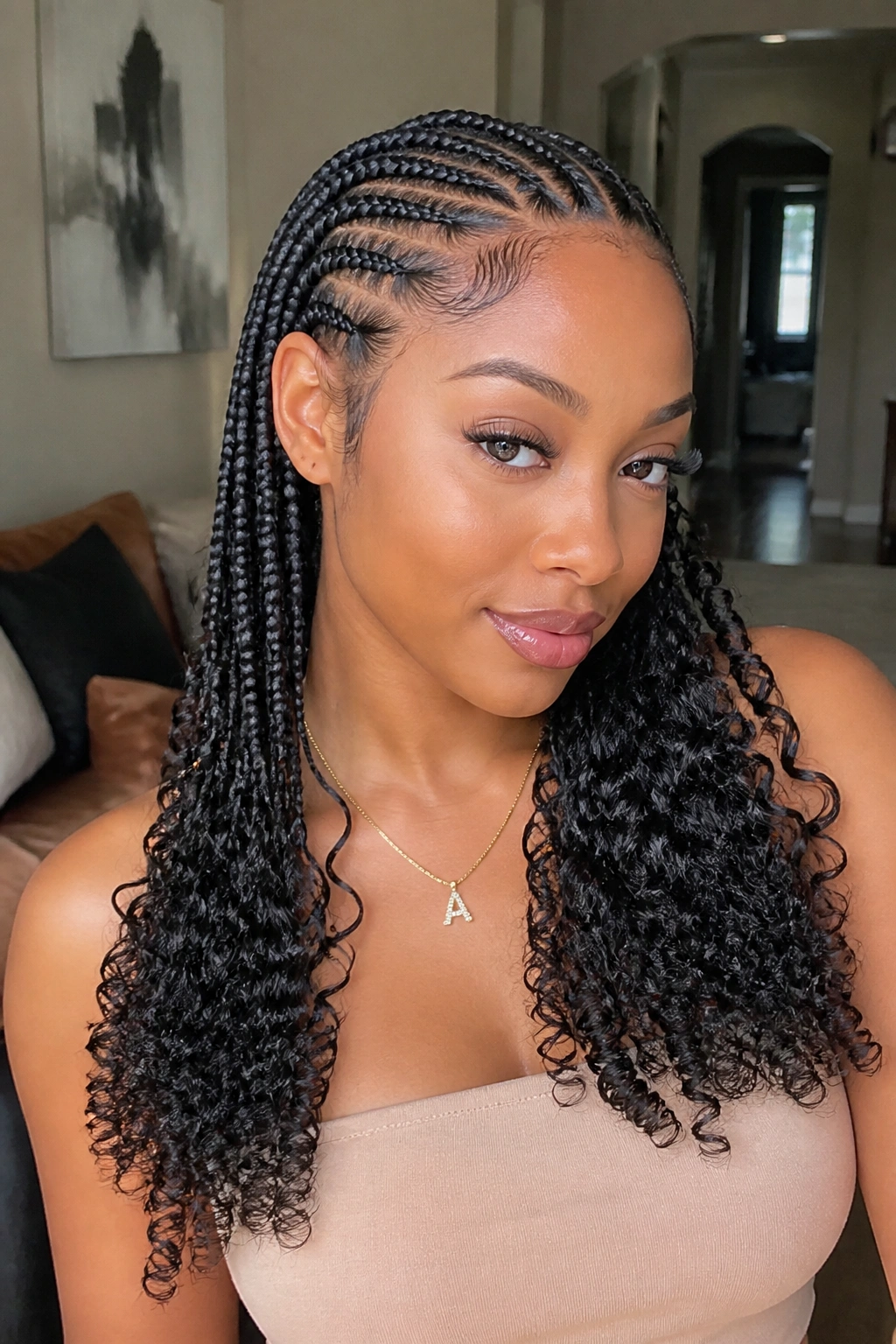
Braids with curly ends soften the whole look. Instead of stopping at a blunt tail, the braid transitions into loose curls or spiral pieces that move when you walk. That little change can make feed-in braids feel lighter and less severe, which is handy if you like protective styles but do not want the finish to feel too rigid.
The curl at the bottom can be tight, loose, or somewhere in between. Tight curls give a more polished finish. Loose curls feel softer and a little more casual. Either way, the contrast between braided roots and textured ends gives the style more shape.
This is one of my favorite options when someone wants length without the heavy look of long, straight extensions. The curls break up the line in a good way. They also make the style look fresh even when the braid pattern is simple.
A small warning: curly ends need a bit more care at night. They tangle faster if you sleep on them rough. Pineapple them lightly, wrap them, and don’t go to bed with them rubbing against a cotton pillowcase.
9. Feed-In Braids With Beads

Beads change the rhythm of a braid style. You hear them before you fully see them, and that’s half the charm. On feed-in braids, they work best when the braid pattern is simple enough to let the beads matter.
The trick is restraint. A few well-placed beads near the ends can look sharp; too many can turn the style noisy and heavy. I like wooden beads for a warmer look, clear or frosted beads when you want something lighter, and black beads when the goal is clean and understated.
What to look for
- Beads that slide on securely but don’t crush the braid
- Lightweight pieces if your braids are long
- Rounded edges so they don’t snag the extension hair
- Enough room at the ends so the braid still moves
This style feels playful without losing structure. It works especially well for vacations, concerts, and weekends when you want the braids to do a little more talking.
The sound matters too. Small details can change the whole mood of the style.
10. Feed-In Braids With Gold Cuffs

Gold cuffs bring a little shine to feed-in braids without asking for a full accessory moment. They sit neatly on the braid, usually in pairs or small groups, and give the style a finished look that feels deliberate. Not flashy. Just sharp.
What I like about cuffs is that they play well with medium-sized braids. On very thin braids, they can look busy. On very thick braids, they may disappear unless you use larger pieces. Medium braids give the metal enough space to show without crowding the pattern.
If you want the style to feel a bit dressier, place the cuffs closer to the ends. If you want them to act like tiny focal points, use them higher up the braid, near the mid-length. That small shift changes the whole read of the style.
This option also works when you want to freshen up braids that are already installed. Sometimes all a style needs is one or two metal accents. That’s it.
11. Feed-In Braids With a Zigzag Part

A zigzag part is the kind of detail people notice twice. First they see the braid style, then they catch the parting, and that second look is where it gets interesting. The pattern adds motion before the braids even start moving.
The parting itself has to be clean. A messy zigzag looks accidental, which is not the goal. You want a deliberate line that breaks the scalp into sharp angles while still letting the feed-in braid sit flat at the root. That balance is what makes the style feel clever instead of fussy.
Why the pattern matters
- It adds visual texture at the scalp
- It works well with straight-back or side-swept braids
- It gives a simple braid style more personality
- It hides minor imperfections better than a dead-straight part
This is a good pick if you get bored with plain rows but do not want the whole head to look complicated. The zigzag gives you movement in a way that still feels wearable.
I’d call this one low-key playful. It has edge, but not the loud kind.
12. Feed-In Braided Mohawk

A braided mohawk makes a statement fast. The sides are pulled back or braided tight, while the center section stays fuller and higher, creating a ridge that runs from front to back. It’s bold, sure, but it’s also practical because the hair stays secured and off the face.
This style works best when the center braid pattern has enough height to show the shape. If the middle sits too flat, you lose the mohawk effect. A good braider will keep the center section lifted just enough to make the silhouette stand out without turning it into a helmet.
The mohawk shape is also a smart option if you want something that reads strong from the front and the side. It has a clean edge, which pairs well with sharp brows, hoops, or a structured outfit. It can be dressed up, but it doesn’t need help.
If you like styles that feel a little more fearless, this is a solid one to keep in mind. It’s not shy, and that is the point.
13. Tribal-Inspired Feed-In Braids

Tribal-inspired feed-in braids usually mix braid sizes, parting shapes, and decorative touches in a way that feels layered and personal. The style can include a few slim feed-ins near the hairline, a larger braid through the center, or accent pieces that change the rhythm across the head. Done well, it feels rich, not crowded.
The best versions keep one idea as the anchor. Maybe that’s the center braid. Maybe it’s the bead work. Maybe it’s the row pattern. Without an anchor, the style can drift into visual clutter, and that’s where people get frustrated in the chair.
I like this style for people who want something more expressive than standard straight-backs. It gives the braider room to build shape and lets you wear the style like an accessory. That said, it needs a clear plan before the comb touches the scalp.
A strong tribal-inspired look should feel intentional from the first row. If every section fights for attention, the style loses its pulse.
14. Triangle-Part Feed-In Braids
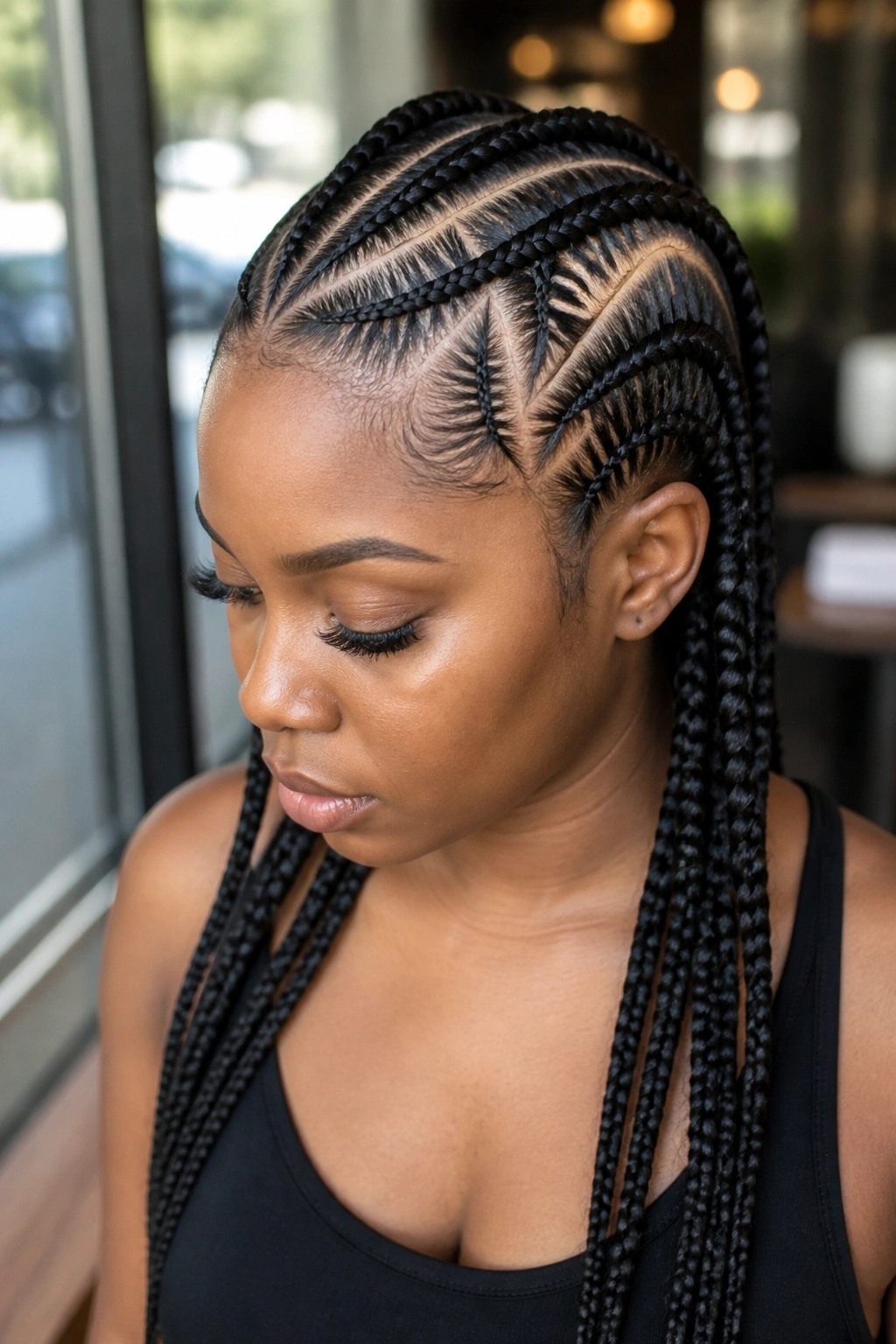
Triangle parts give feed-in braids a sharper, almost graphic feel. Instead of the usual square or rectangular sections, the scalp pattern opens up into triangles that make the style look more sculpted. It sounds like a small change. It is not. The whole head reads differently.
This is one of those styles where the parting matters almost as much as the braid itself. Triangle parts can make medium braids look more detailed and slim braids look more dramatic. They also help break up large areas of scalp, which gives the style a bit more depth when the hair is pulled back.
A few things to know
- Triangle sections take longer to map out
- The parts need to be even, or the pattern looks off
- The style shines when the braid size stays consistent
- A clean edge line helps the geometry stand out
I’d pick this if you like structure and a touch of edge. It feels modern without needing color or accessories to carry it.
15. Feed-In Braided Crown

A braided crown wraps around the head like a halo, which sounds delicate but usually looks quite strong in person. The braid path curves around the scalp and meets at the back or side, giving the style a circular finish that feels elegant without being stiff.
The crown shape is more demanding than it looks. The braid has to stay even as it curves, which means the feed-in sections need careful control around the ears and nape. If the tension gets uneven, the braid starts to cave in at the curve, and the whole effect weakens.
How to wear it
You can leave the rest of the hair tucked in for a smooth crown, or let a few ends trail out for a softer finish. Both work. The cleaner version feels formal. The looser version feels easier to wear for everyday life.
This is the style I’d choose for anyone who likes a grown, polished look but does not want a bun. It frames the face in a flattering way and keeps the hair secure without feeling plain.
16. Half-Up, Half-Down Feed-In Braids

Half-up, half-down feed-in braids give you the best of both worlds. The top section is pulled back, lifted, or pinned into a small bun or ponytail, while the rest hangs loose. That split makes the style feel relaxed and put together at the same time, which is why it stays in heavy rotation.
The half-up portion helps with face-framing and keeps the front from feeling crowded. The loose section gives you length and movement, which matters if you want the braids to swing when you walk. It also makes the style less heavy on the scalp than an all-up version.
I like this style for long weekends, casual events, and any day when you want to look done without feeling overdone. It plays well with braids that end in curls, but straight ends look fine too.
If you want a small upgrade, wrap one braid around the base of the top section. It cleans up the shape fast. Tiny change. Big payoff.
17. Waist-Length Feed-In Braids
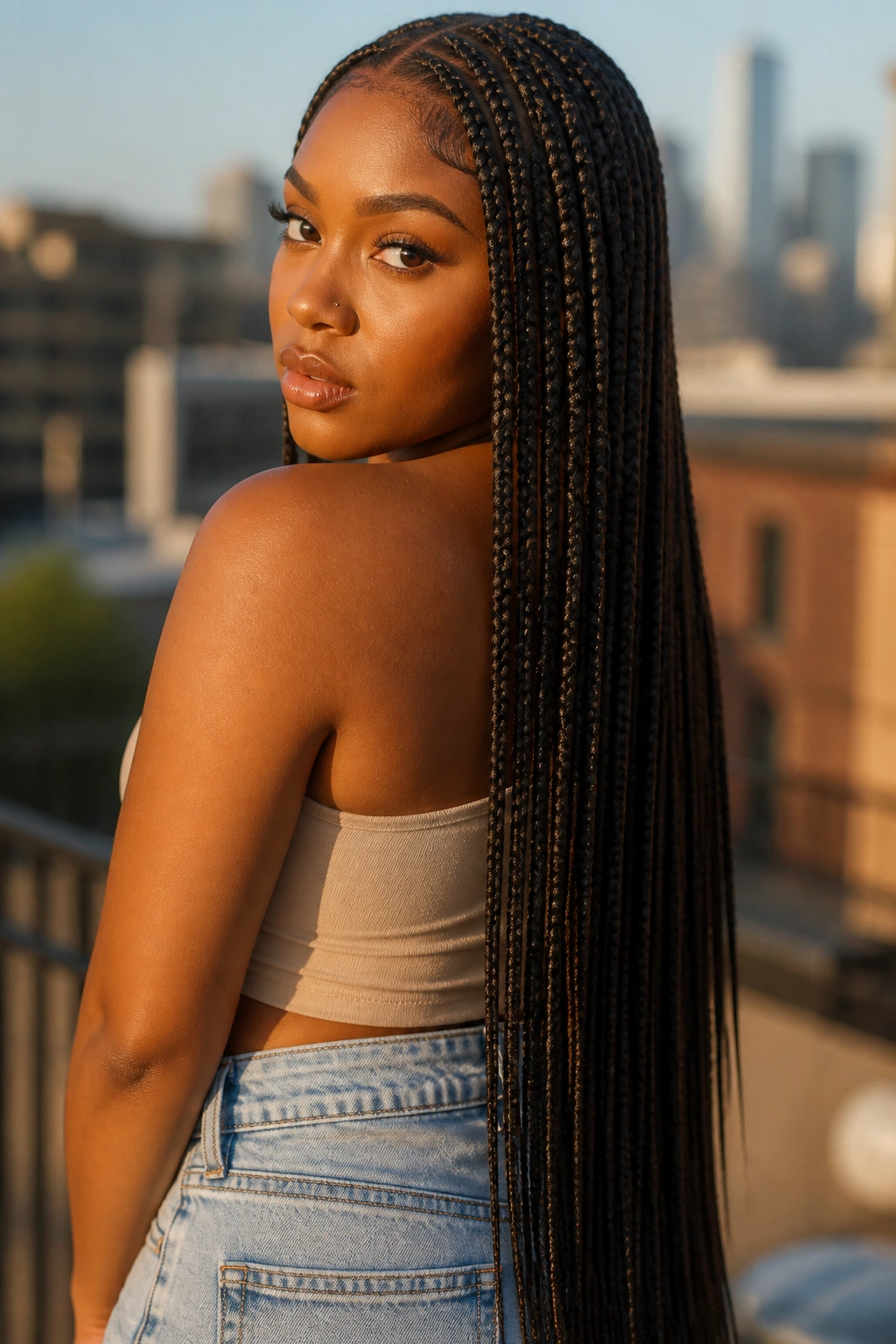
Waist-length feed-in braids are dramatic, and I mean that in the old-fashioned sense of the word. They bring weight, movement, and a little swagger. If you love the feeling of length brushing your back or catching on the edge of a jacket, this is the lane.
The downside is obvious: the longer the braids, the more your scalp has to carry. That’s why part size and feed-in control matter so much here. Skinny roots with heavy extension hair attached too quickly will tug in a way you’ll feel by the end of the day. A clean feed, gradual build, and sensible extension weight make the difference.
This style is best for people who are happy to keep up with wrapping, oiling the scalp lightly, and detangling the ends with care. It looks stunning when fresh, but it also asks for a bit more maintenance than a shoulder-length set.
Still, if you want length that makes an entrance, this is one of the strongest choices in the feed-in braid family.
18. Colored Feed-In Braids

Colored feed-in braids are the easiest way to make a braid style feel personal without changing the whole structure. You can go with burgundy, honey brown, copper, platinum, or a soft ombré that starts dark at the root and warms up through the length. The braid pattern stays the same. The mood changes completely.
Unlike accessories, color becomes part of the style itself. That means the shade needs to work with your skin tone, your wardrobe, and how much contrast you want near the face. A deep burgundy reads rich and quiet. A warm brown blend looks sunlit. Blonde tones pull attention fast and can make the braid lines stand out more sharply.
Best for: anyone who wants a standard feed-in braid pattern with a little personality.
Watch for: colors that clash with your edges or make the scalp look harsher than it is. Some shades are gorgeous in the package and too loud once they’re installed.
If you want the safest route, start with a black-to-brown blend or a subtle copper accent. It keeps the style flexible and easier to wear with everything else in your closet. And if you’re trying color for the first time, that low-contrast route usually feels less like a leap and more like a smart experiment.
