


Some braid styles look polished for one photo and fall apart the second you turn your head. Lemonade braid hairstyles for Black women are different. They sweep to one side, sit close to the scalp, and keep their shape long enough to make them worth the chair time in the first place.
The appeal is bigger than the Beyoncé reference most people know. A good lemonade braid style can protect your hair, frame your face, and save you from daily heat styling. It can also go soft, sharp, romantic, or loud depending on the parting, the length, and what you do with the ends. Clean parts matter. So does tension. Hair should look styled, not strained.
And that balance is where the best versions live. Jumbo braids save time and give you shape. Tiny feed-ins feel lighter and look sleek from every angle. Curly ends soften the whole thing. A bun or bob changes the mood fast. The trick is picking a version that fits your hair, your schedule, and how much styling you want to do after the braids are in.
1. Classic Side-Swept Lemonade Braids

This is the version most people picture first, and for good reason. Classic side-swept lemonade braids have a clean diagonal line, braids that stay close to the scalp, and a sweep that pulls everything to one side without looking stiff.
Why It Still Works
The shape does a lot of the work for you. A deep side sweep can make the face look a little longer, and the diagonal lines create movement even when the hair itself is still. That matters more than people think. Braids can look flat if the parting is dull. Here, the angle carries the style.
Ask for even braid size, a neat side part, and clean scalp spacing. Most versions look best with medium-sized sections, roughly 1/2 inch to 3/4 inch wide, so the braids read clearly without getting bulky. If the parts are too wide, the style loses that sleek pull.
What To Tell Your Braider
- Start the braids with a clear side part.
- Keep the braids directed toward one side from the crown down.
- Leave the ends long enough to move, usually past the shoulder.
- Keep the front line tidy so the style doesn’t collapse after a few days.
Best tip: ask for the front braids to be the neatest part of the whole style. People notice the hairline first.
2. Jumbo Lemonade Braids With a Bold Side Sweep

Fewer braids. Bigger shape. That is the whole appeal here. Jumbo lemonade braids are the version to choose when you want the style to feel strong and graphic instead of delicate.
They are faster to install than tiny braids, which is a relief if you do not want to spend half a day in the chair. The braids also sit with more body, so they show off thick hair and extension hair in a way that reads from across the room. That said, jumbo braids need careful parting. If the sections drift or the roots look uneven, the whole style can look rushed.
This version works especially well when the ends are finished with a slight curl or a blunt seal. Straight, long ends can feel a little heavy on jumbo braids. A soft finish gives the style more bounce and keeps the weight from dragging the look down.
Best for: thick hair, busy weeks, and anyone who wants a strong braid pattern without dozens of tiny rows.
3. Small Feed-In Lemonade Braids

Why do the tiny ones look so clean? Because small feed-in lemonade braids start light at the root and build gradually, so the scalp line stays smooth instead of bulky.
What Makes Them Different
Feed-in braiding hides the point where extra hair gets added, and that makes the braids look like they grow right out of the scalp. The smaller the braid, the more that effect shows. It is a good choice if you want a sleek style that feels less heavy around the edges and neck.
These braids also last well when the parting is tidy and the braider keeps the tension even. Too tight is still too tight, no matter how pretty the pattern is. But when the roots are clean and the braids are narrow, the style has a finished look that holds up for days without much fuss.
How To Wear It
- Pair it with long lengths if you want drama.
- Keep the ends sealed, dipped, or lightly curled.
- Choose this if you like a lighter feel on your scalp.
- Use a satin scarf at night so the tiny braids do not frizz at the crown.
Quick note: this is one of the better versions if you want the parting to be the star.
4. Curved-Part Lemonade Braids

A straight part is fine. A curved part is where the style starts to feel custom. Instead of a flat line, the cornrow sections bend and flow, which gives the whole head a softer shape.
What the Curves Change
Curved parts do two things at once. They break up the rigid geometry of traditional braids, and they make the braid path feel more sculpted. On rounder or fuller faces, that curve can be especially flattering because it softens the line without losing structure.
This style looks best when the curves are intentional, not wobbly. Wavy parts that are too loose can look accidental. The cleanest versions use broad, smooth arcs that guide the eye from the hairline toward the side sweep.
A braider who is good with parting can make this look far more expensive than it sounds. The braid itself may be simple, but the parting pattern carries the visual weight. That is the part people remember.
What To Ask For
- Smooth curved cornrow parts from the front toward one side.
- Medium braid thickness so the pattern stays visible.
- A clean front edge with no jagged turns.
- Long ends if you want the curves to contrast with movement.
5. Lemonade Braids Pulled Into a Low Bun
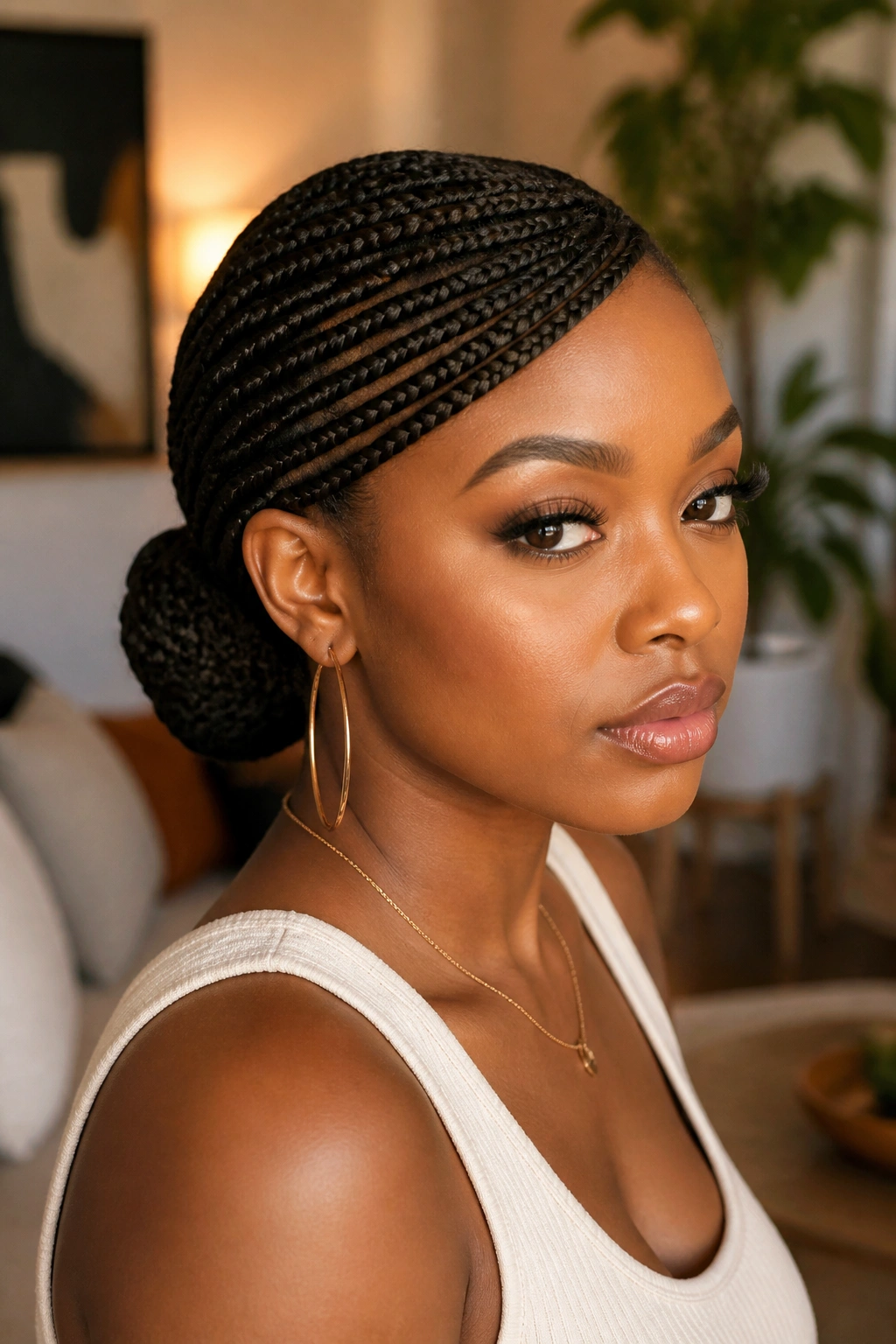
A low bun changes the whole mood. Lemonade braids into a low bun feel more polished and a little more formal, but they still keep the side-swept identity that makes the style recognizable.
This one is smart if you need your hair off your neck. Hot rooms, long days, travel, and dressy events all make this version more useful than people expect. The bun also shortens the visual length, which can be helpful if you love the braid pattern but do not want hair hanging down your back.
The finish matters here. The bun should look tucked, not smashed. A loose wrap with a visible braid coil usually looks better than a hard knot. If the ends are folded neatly under the bun and secured with pins that hide inside the braid mass, the style stays clean without looking overworked.
Hairline details matter even more with this version. A crisp side sweep and smooth edges make the bun feel intentional instead of like an afterthought. Small difference. Big payoff.
6. Lemonade Braids With Curly Ends

Straight ends are tidy. Curly ends are softer. That is the real choice here, and it changes the mood of the whole style.
This version works when you want movement at the shoulders or lower back without losing the structure of the cornrows. The braids stay disciplined at the scalp, then loosen at the ends with curls, waves, or ropey coils. It gives the style a little bounce and takes the edge off a very sharp braid pattern.
The curls can be done with extension hair, flexi rods, or heatless set curls depending on the finish you want. Loose curls read soft and romantic. Tighter curls make the style feel fuller. Either way, the contrast between the neat root and the airy end is what makes this version worth trying.
Best When You Want
- A softer finish for weddings, dinners, or photos.
- More movement around the chest and shoulders.
- A style that feels less severe than sealed ends.
- A braid look that still has shape when you turn your head.
7. Triangle-Part Lemonade Braids
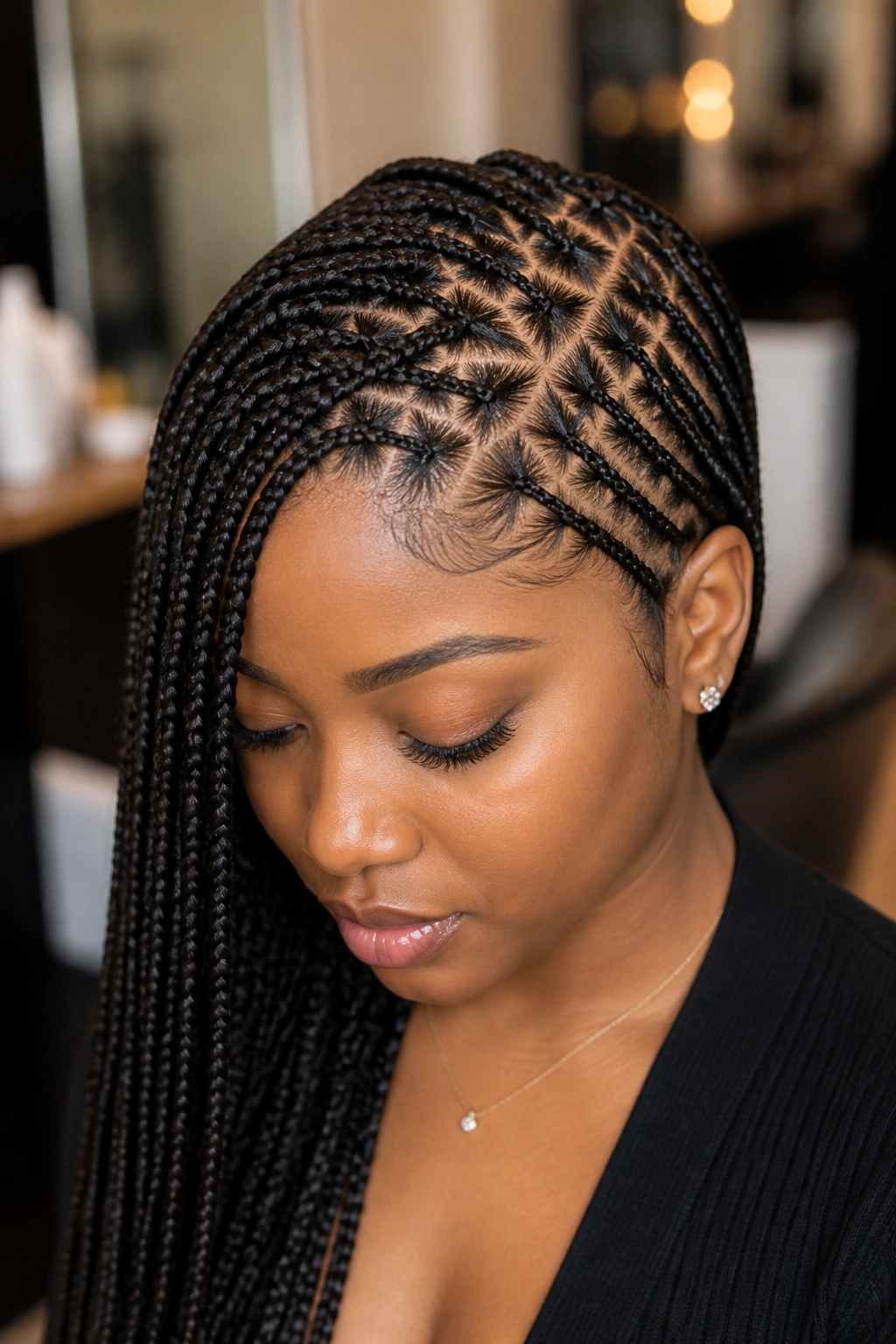
The parting is the hairstyle here. Triangle-part lemonade braids turn the scalp into the main visual detail, and the result feels sharper than standard square sections.
Why the Shape Matters
Triangles change the way the braids catch the eye. Instead of rows that look expected, the sections create a more layered pattern across the head. The braid itself can stay simple. The parting does the heavy lifting.
This is the version for someone who likes clean geometry. It looks especially good when the braids are medium or small, because the part shapes stay visible between the rows. If the braids are too thick, the triangles get buried and the effect fades fast.
How To Ask For It
- Tell the braider you want triangle sections, not square parts.
- Keep the braid size medium so the parting still shows.
- Use a crisp side sweep so the shape has room to breathe.
- Keep the finish sleek, because this style looks best when the scalp work is clear.
Small warning: triangle parts take more patience. They are worth it, but not if the sections get sloppy halfway through.
8. Half-Up, Half-Down Lemonade Braids

Picture the neat side sweep at the top, then a little lift in the middle, then braids falling free below. That is the charm of half-up, half-down lemonade braids.
This style is useful when you want movement without giving up control. The top half can be gathered into a ponytail, mini bun, or wrapped knot, while the rest hangs loose. It keeps hair off the face and still leaves length visible, which is a nice middle ground if you cannot decide between an updo and a down style.
The half-up section also gives you somewhere to place accessories without crowding the whole braid pattern. A small cuff, a wrapped band, or even a braided knot works better here than on an already busy style.
Where It Fits Best
- Busy work days.
- Casual weekends.
- Gym-to-dinner hair.
- Anyone who wants the braid length but not all the weight at the crown.
A clean part at the top keeps this version from looking messy. That part is doing more than it seems.
9. Lemonade Braids With Beads

Do beads make lemonade braids look childish? Not when they are placed with some restraint. Lemonade braids with beads can feel grown, sharp, and very intentional.
The trick is weight and placement. A row of beads at every end can get noisy fast, especially on long braids. A few clusters near the bottom or just on the outer rows usually looks better. You want the beads to frame the style, not fight with the braid pattern.
Wood beads give a softer look. Clear or gold-tinted beads feel dressier. Matte black beads keep things understated. The braid itself stays the same, but the finish changes the tone in a way that is easy to read.
Good Places To Put Beads
- On the braids closest to the face.
- On the last 2 to 3 inches of selected ends.
- On one side only, if you want a cleaner layout.
- Mixed with cuffs if you like texture.
Best tip: do not load every braid with beads. A few well-placed pieces look smarter than a full rack of hardware.
10. Color-Blocked Lemonade Braids

You do not need a full dye job to change the feel of a style. Color-blocked lemonade braids use extension hair in more than one shade, and that alone can change everything.
What Color Does Here
A black-to-burgundy braid feels richer and heavier. Honey blonde near the front lightens the face. Copper or auburn reads warm and bright. Even a single accent braid placed close to the hairline can change the whole look without making it loud.
The best color-blocked styles keep the tones deliberate. Random streaks can look busy. A planned placement, though, gives the braid sweep a sense of depth, especially when the hair moves and different shades catch the light at different angles.
This is also one of the easiest ways to make lemonade braids feel personal. You do not have to go full contrast. Sometimes one warm section on the top row is enough.
A Few Strong Combos
- Black and burgundy for a rich finish.
- Jet black and honey blonde for high contrast.
- Brown and copper for a warm, soft look.
- Dark roots with lighter ends for visible dimension.
11. Lemonade Braids With Gold Cuffs

Gold cuffs do not change the structure. They change the mood. Lemonade braids with gold cuffs feel a little more dressed up, a little more finished, and a lot less plain.
Compared with beads, cuffs are lighter and more controlled. You can place one near the front braid, add a few near the ends, or build a repeating pattern along one side. That makes them a good choice when you want shine without extra weight.
The placement should feel spaced, not crowded. Two or three cuffs can say enough. Ten can start to look busy unless the rest of the style is very simple. A clean side sweep with a few gold accents works because the shine follows the line of the braid.
Where Cuffs Look Best
- Near the front braid for a face-framing detail.
- At the ends of a few long braids.
- On one side only for a cleaner visual break.
- Mixed with a single bead or two if you want contrast.
Tiny detail: cuffs look best when they are pressed snug, not dangling loose.
12. Goddess Lemonade Braids

What if you want the side sweep but not the hard edge? Goddess lemonade braids are the softer answer. They mix braid structure with loose curly pieces, and that changes the whole feel.
The texture is the point. Instead of every strand staying contained, some of the hair falls in wavy or curly pieces that break up the line of the braid. That makes the style look fuller and more romantic, especially when the curls are left around the face or woven into the tail ends.
This is not the cleanest version, and that is exactly why people like it. It has more movement, more softness, and a little less severity around the scalp. If you want a razor-sharp braid pattern, skip this one. If you want the braids to feel airy and a little less formal, it fits.
A side part still anchors the style. Without that, the look can drift into loose boho territory. The lemonade shape is what keeps it grounded.
13. Stitch Lemonade Braids

Stitch lemonade braids are for people who want the scalp pattern to look crisp enough to notice from a few steps away. The sections are defined with a sharper line, almost like a stitched path running across the head.
What Makes Them Sharp
The line between each braid is usually cleaner and more visible than in a softer feed-in style. That makes the rows feel graphic. The effect is strongest when the braids are small to medium and the parts are exact. If the sections are uneven, the whole point disappears.
This style can look especially neat on fresh hair because the contrast between the parts and the braid row is so clear. It also pairs well with low-shine products at the root. Too much product can make the section lines look greasy instead of crisp.
How To Wear It
- Keep the side sweep strong and visible.
- Ask for narrow, even section lines.
- Choose small or medium braids so the stitch detail shows.
- Use accessories sparingly; the braid pattern should stay in charge.
Best for: anyone who likes a sharper, more architectural look.
14. Side Ponytail Lemonade Braids

This one is for people who want the braids out of the way but still want movement. Side ponytail lemonade braids keep the side sweep and gather the length into one controlled tail.
The ponytail sits low or mid-side, depending on how the braids are installed. A low placement feels smoother and more polished. A higher side ponytail has more bounce and can look a little younger or more playful. Both work. The difference is mostly mood.
A wrapped base helps a lot here. If one braid is used to cover the elastic, the ponytail looks finished instead of tossed together. The ponytail itself can stay straight, curled, or slightly twisted for texture.
Best Styling Moment
- Long days when loose hair would get in the way.
- Events where you want the side sweep but not a full down style.
- Looks that need a little lift at the back without losing the braid pattern.
This version moves nicely when you walk. That matters more than it sounds like it should.
15. Lemonade Braids in a Bob Length

Long braids get the attention. Bob-length lemonade braids get the comfort. They stop around the jawline, chin, or collarbone, and that changes the whole experience.
The first thing you notice is the weight. Or rather, the lack of it. A shorter braid can feel easier on the neck, faster to dry after washing, and less annoying when you sleep. That makes this version especially useful if you like braids but hate dragging hair down your back all day.
The shape also looks sharp with strong cheekbones or a defined jaw, because the ends stop right where the face line matters most. Add a side sweep and the cut feels modern without trying too hard.
A bob is also easier to keep neat. Fewer long ends means fewer tangles and less friction on coats, scarves, and seatbacks. Small thing. Big relief.
16. Braided Mohawk Lemonade Braids

Lemonade braids do not have to stay soft. Braided mohawk lemonade braids push the side sweep into something more dramatic by lifting the braids toward a central ridge or fuller top section.
This version gives you height without losing the braid structure. The sides stay sleek, but the middle has more presence, which creates a stronger silhouette. If the classic style is a smooth line, this one is a statement.
The shape works best when the braids on the sides are directed tightly enough to show the contrast. The center section can be thicker, longer, or gathered into a raised row. You get a sharper profile from the front and a more sculpted look from the side.
It is not the quietest option. Good. It should not be.
Why People Pick It
- It looks bold without needing loose hair everywhere.
- The center ridge adds height.
- It works well for events where you want the braids to do the talking.
- It can be dressed up with cuffs or left clean for a harder edge.
17. Zigzag-Part Lemonade Braids

Are zigzag parts over the top? Sometimes. That is the point. Zigzag-part lemonade braids turn the scalp into a pattern, and the pattern is what makes the style interesting.
How The Parting Changes The Look
Instead of straight lines or smooth curves, the parting shifts in sharp angles. That gives the braid base a little visual surprise before the braids even start moving to the side. It works especially well on medium-sized braids, where the parting still has room to show.
This style can look busy if the parts are too close together or if the braids themselves are too thick. The cleanest versions keep the braid size consistent and let the zigzag do the talking. You do not need extra accessories here. The scalp pattern is already making the point.
How To Keep It Clean
- Stick with one clear zigzag rhythm.
- Keep the rest of the style simple.
- Use medium braids, not huge ones.
- Avoid piling on beads and cuffs at the same time.
Best for: people who want lemonade braids with a sharper, more playful twist.
18. Mixed-Size Lemonade Braids

Uniform braids can look a little stiff. Mixed-size lemonade braids fix that by blending thick and thin rows so the style feels more alive.
The contrast gives your eyes something to follow. A thicker braid near the front can frame the face, while slimmer braids behind it keep the shape from getting bulky. That mix also helps the style feel less repetitive. One braid leads into the next without everything looking stamped out of the same mold.
This version is useful if you have different density zones on your head, which happens more often than people admit. The front can handle one size, the crown another, and the back a third. A braider who knows how to balance that will make the whole style look intentional rather than uneven.
Best Places for the Bigger Braids
- Along the outer sweep near the face.
- At the base of a bun or ponytail.
- In the center ridge of a mohawk-inspired style.
- As alternating rows with slimmer braids for contrast.
The style works because it breaks the rhythm a little. Not every braid has to match. That is the whole charm.
19. Lemonade Braids With Curly Face-Framing Pieces
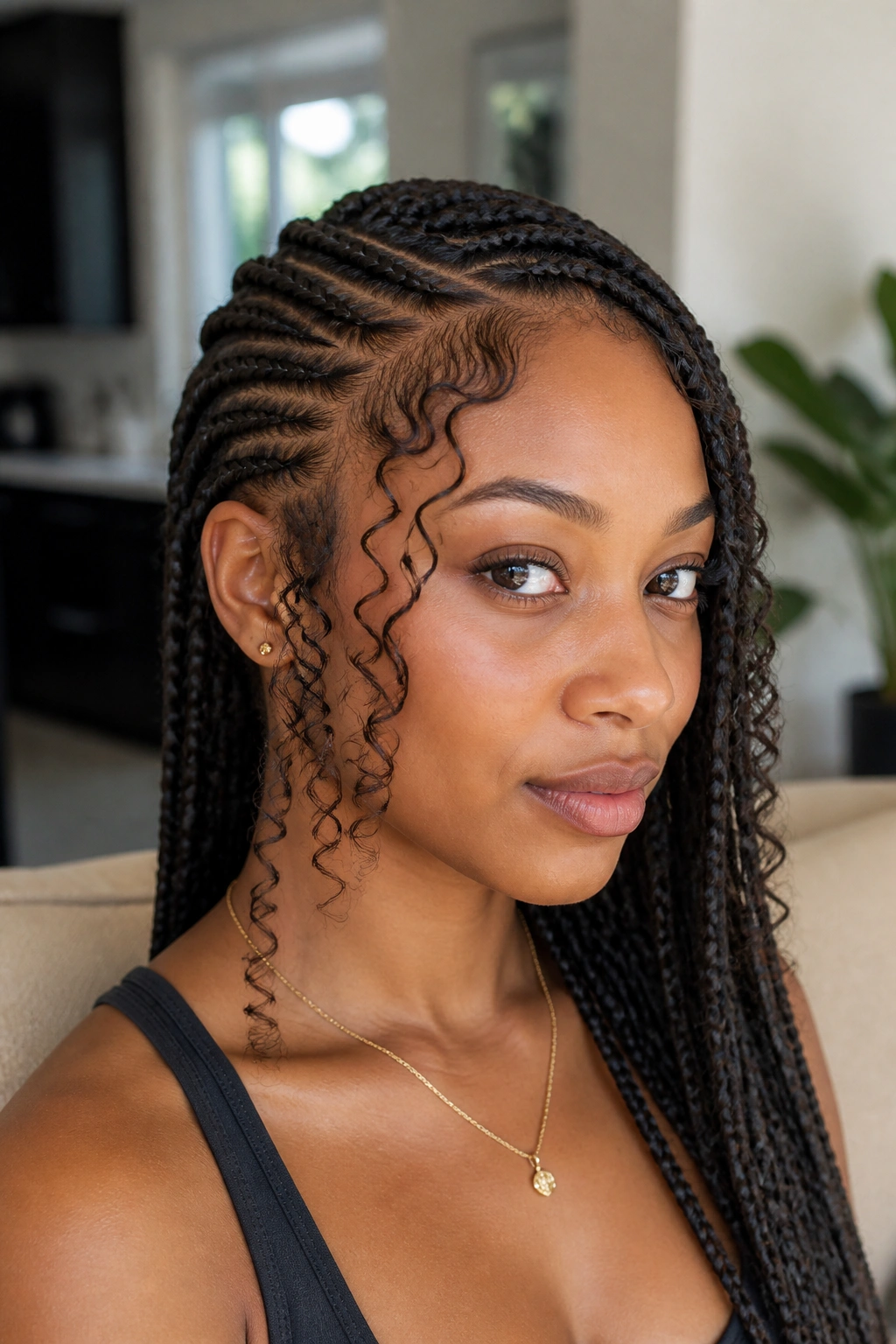
A few loose curls near the face can change everything. Lemonade braids with curly face-framing pieces soften the side sweep and keep the look from feeling too locked down.
This is one of those styles that works best when restraint is used. A couple of well-placed curls near the temples or cheeks can lighten the whole face. Too many curls, though, and the braid pattern gets lost. The balance matters.
The face-framing pieces can be left loose or set with flexi rods if you want a cleaner curl shape. They should look like they belong to the style, not like they escaped by accident. That means enough product to keep the curl together, but not so much that it turns sticky.
This version is especially nice if you like braids but still want some softness around the cheekbone and jaw.
Small Details That Help
- Keep the curls close to the front.
- Let the rest of the braids stay sleek.
- Match the curl size to the braid length.
- Use a light hold product so the pieces do not clump.
20. Sculpted Side Chignon Lemonade Braids
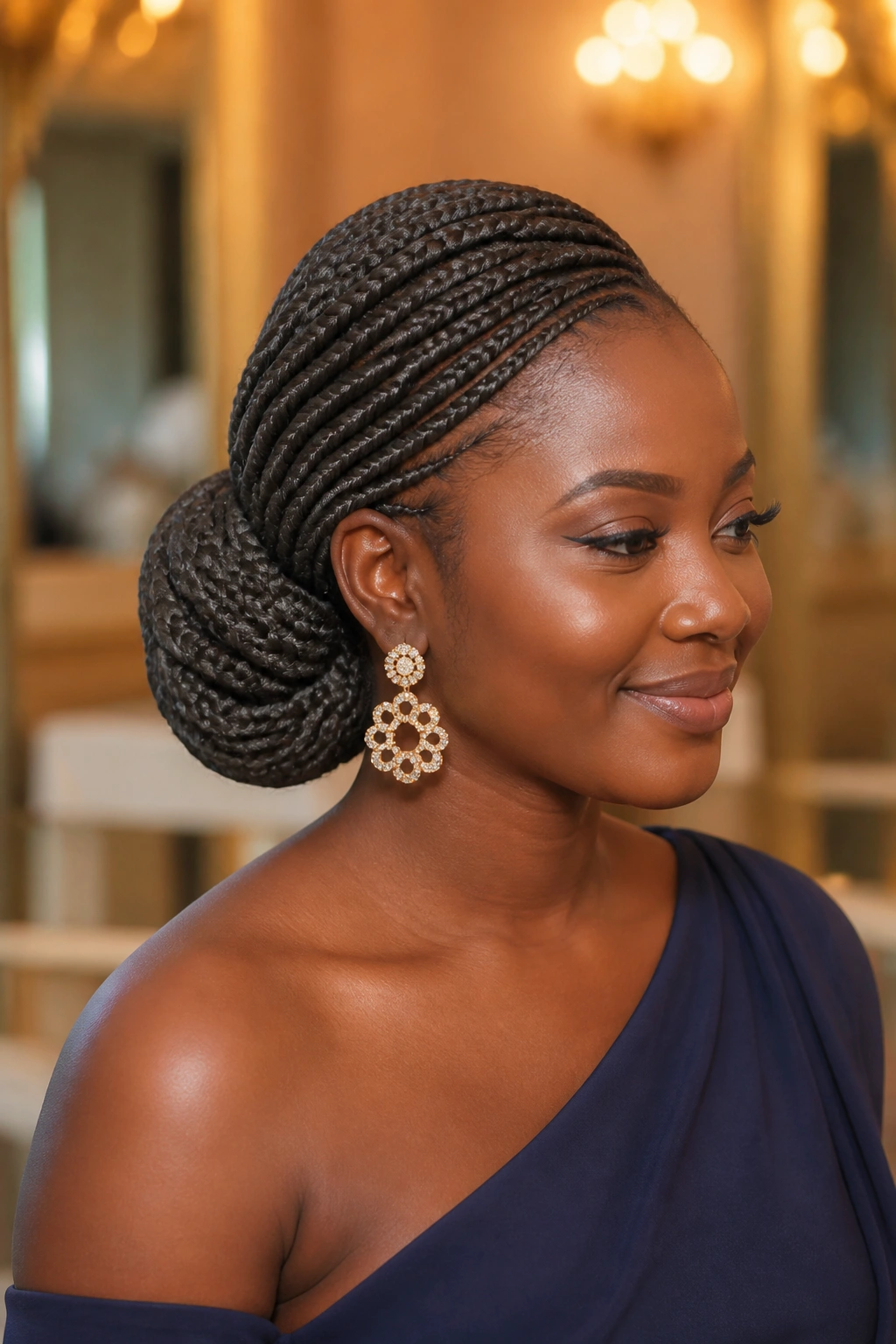
A side chignon gives lemonade braids a formal finish without losing their shape. Sculpted side chignon lemonade braids pull the length into a polished knot or roll off to one side, which makes them useful for weddings, graduations, dinners, and any moment where loose braids feel like too much hair.
The base still matters. You want the side sweep to stay visible, even after the length is tucked. That contrast is what keeps the style from looking like a basic bun. A chignon sits a little more sculpted than a low bun, so it works best when the braid ends are wrapped tightly and pinned cleanly underneath.
This version loves neat edges and good parting. It also likes a little shine. A light sheen spray on the braid lengths can make the shape read more finished, but skip heavy buildup. The style should look smooth, not slick in a greasy way.
If you want one style that can move from dressy to refined without changing the braid pattern, this is the one I’d point to first. It has the poise of an updo and the personality of lemonade braids, which is a nice place to end.
The best lemonade braid styles are the ones that fit your life without fighting your hair. Some days call for a bob. Some call for cuffs, curls, or a side ponytail. And sometimes the cleanest option is still the strongest one.