



A shag haircut can do a lot more for hair after 40 than a blunt cut ever will. It brings movement back, loosens up heavy ends, and keeps hair from hanging there like it’s politely waiting for permission.
That matters because hair often changes in sneaky ways. Strands may get finer, some areas can feel coarser, and the crown can flatten while the ends go puffy or frayed. A good shag does not fight those changes. It works with them.
Too many people ask for “shaggy” and end up with something chopped up and hard to live with. The usual mistake is too much razor work around the face, not enough shape through the back, and bangs cut so short they become the whole problem. A real shag has control built into it. Messy is not the same thing as flattering.
These 20 shag haircuts lean in different directions — soft, edgy, curly, polished, low-maintenance — so you can match the cut to your hair instead of dressing up a haircut that never quite suited you. Start with the one that looks like it would behave on a normal day, in normal weather, with normal styling patience.
1. Soft Collarbone Shag with Curtain Bangs
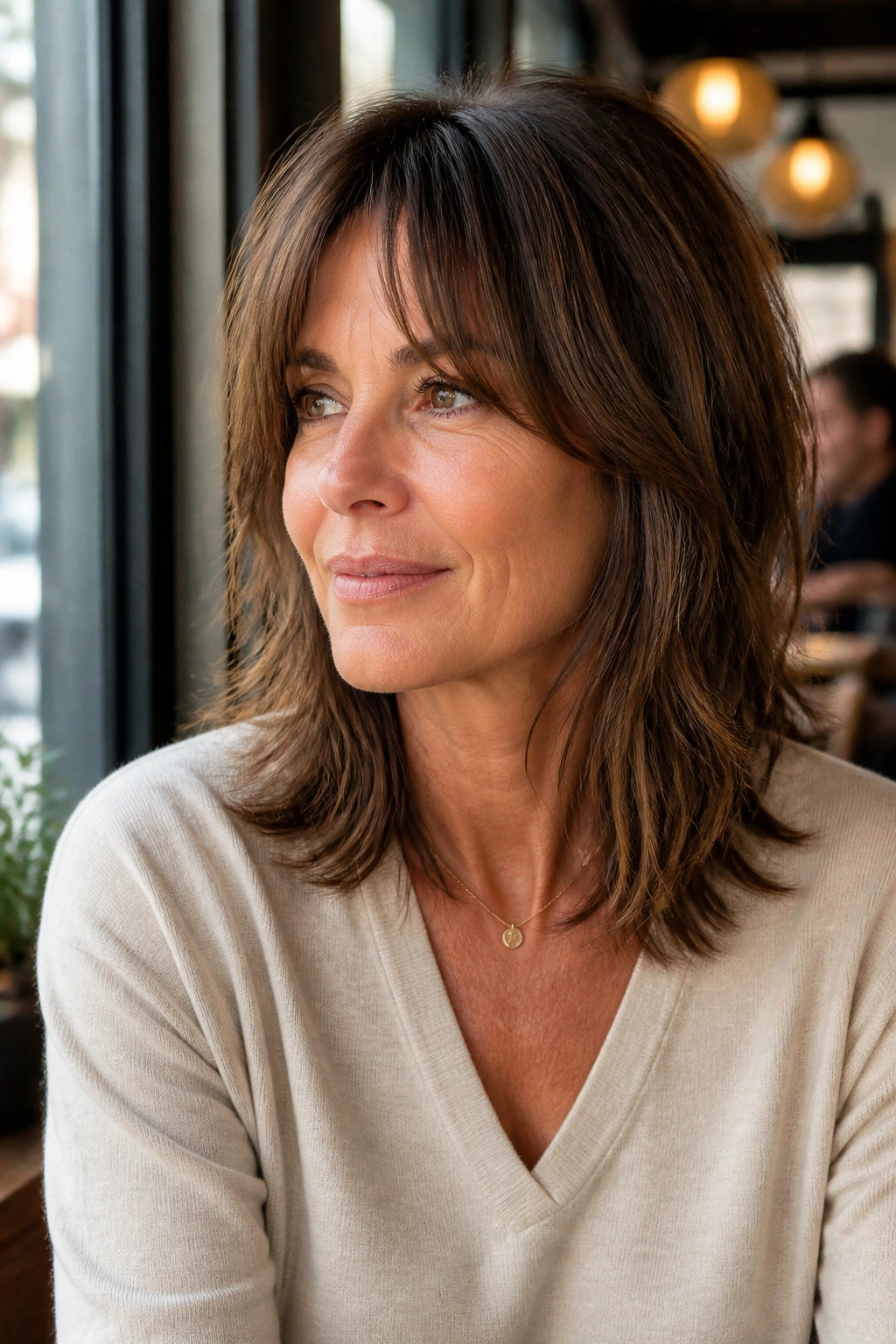
This is the shag I recommend most often when someone wants movement but does not want to lose length. The collarbone is one of the smartest places for a cut to land because it gives hair enough weight to stay calm, while the layers keep it from going flat at the sides.
Why It Works
Curtain bangs split the difference between fringe and no fringe. They soften the forehead, pull attention toward the eyes, and blend into the rest of the cut instead of sitting on top of it like a separate event.
The layer placement matters here. Ask for the shortest face-framing pieces to start around the cheekbone, then let the rest fall to the collarbone or just below. That keeps the shape airy without making the bottom look thin.
What to Ask Your Stylist For
- Curtain bangs that can be tucked behind the ears when you do not want them in your face.
- Long layers that begin around the cheekbone and continue through the mid-lengths.
- A soft, blunt-ish perimeter so the ends still look full.
- Light texturing, not aggressive thinning, especially if your hair is fine.
Pro tip: If your hair tends to collapse at the crown, keep the top layers longer than you think you need. Tiny, short layers there can make the top puff and the bottom disappear.
2. Chin-Length Shag Bob with Piecey Ends
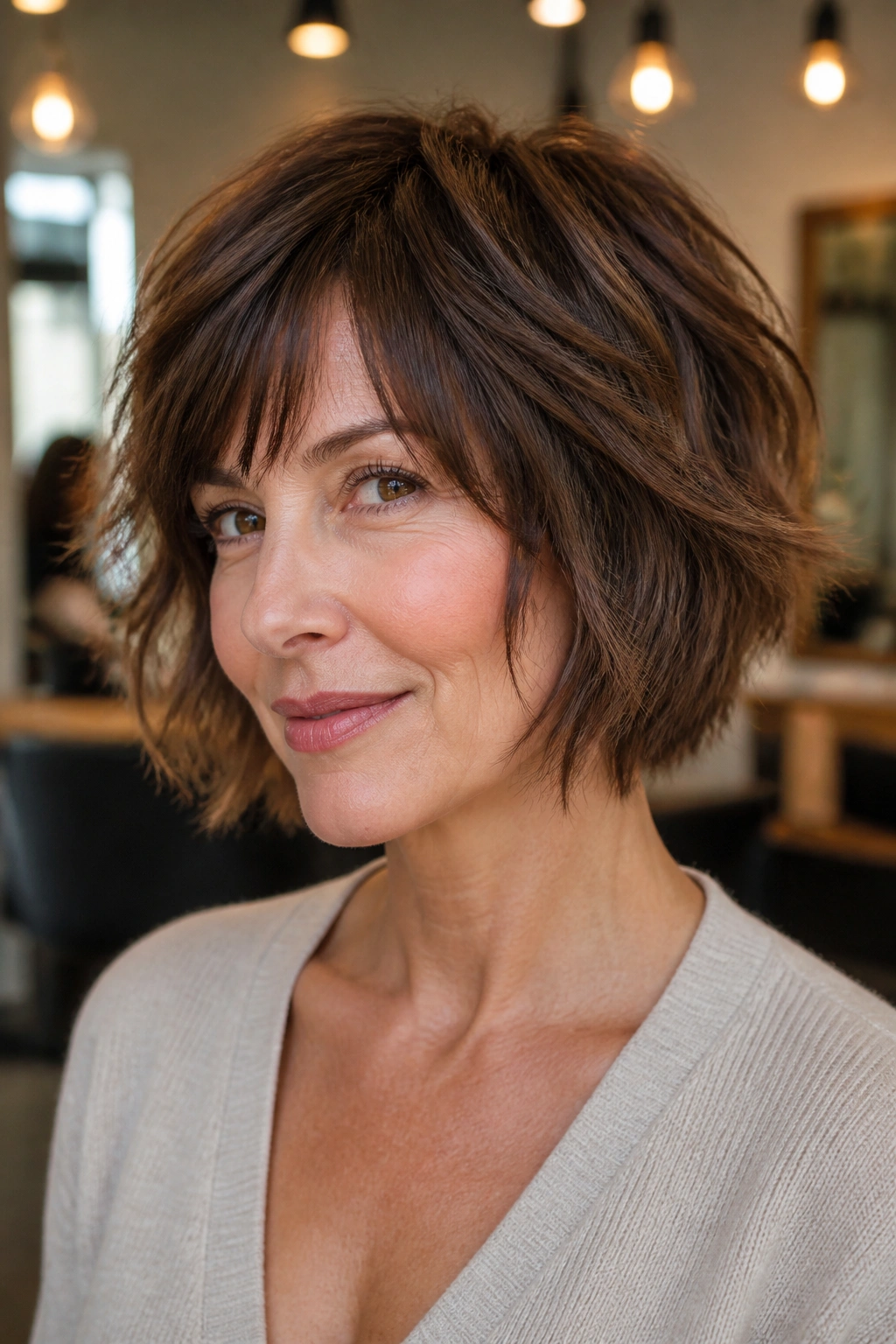
This is the cut for women who are done dragging heavy hair around their shoulders. Chin-length shag bobs have attitude, but they are also practical. The line at the jaw gives structure, and the choppy ends stop the whole thing from looking like a standard bob that grew a little restless.
A chin-length version works especially well if your hair is naturally straight to slightly wavy. The cut gives it enough movement to look styled, even when you only rough-dry it with your fingers. That’s the part I like. It doesn’t ask for much.
The best version keeps the ends piecey, not shredded. There’s a difference. Piecey means the hair separates a little, so it has texture and lightness. Shredded means the cut has been thinned too much and starts looking wispy in bad ways, especially if the hair is dense or has frizz.
If you wear glasses, this shape is often a gift. It keeps the weight above the frame line, so your hair and your glasses are not fighting for the same space around your face.
3. Long Feathered Shag with Airy Layers
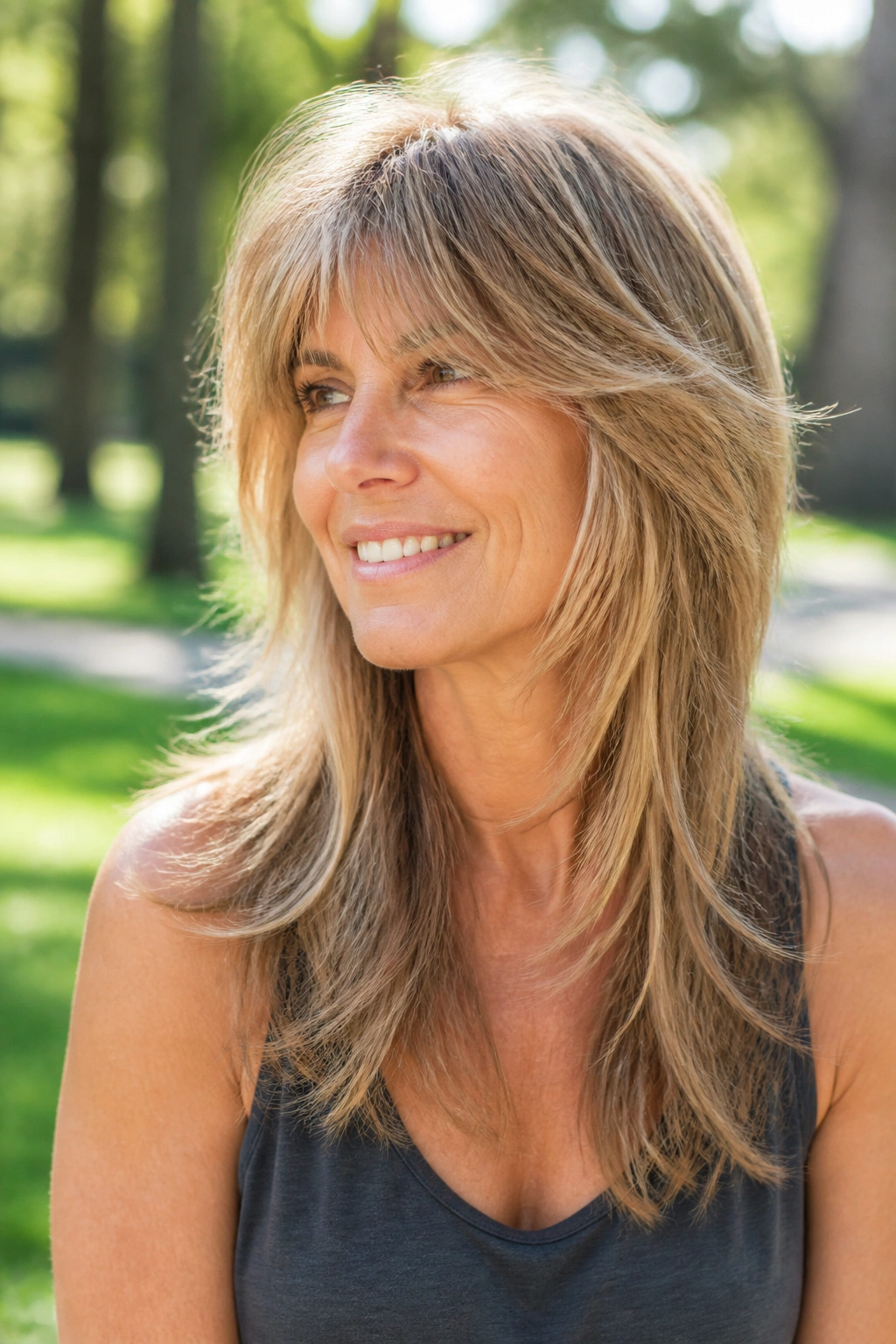
Can long hair still look light after 40? Yes, if the layers are feathered with some restraint. A long shag keeps the length people love, but removes that heavy, drooping feeling that can make longer hair look tired.
The trick is to place the layers where they can move. The shortest ones should frame the face and then drift through the lengths, but not start so high that the whole shape becomes stringy. I like this cut on hair that naturally bends a little, because the feathering gives the waves somewhere to go.
How to Style It
Use a round brush only at the front if you want a polished finish. The rest can be rough-dried with a lightweight mousse and a little finger-twisting at the ends. If you have a wave, let it live. Fighting it usually makes the cut look more work than it is worth.
- Best for: medium to thick hair.
- Styling time: 10 to 15 minutes with a blow-dryer, less if you air-dry.
- Ask for: face-framing layers that begin at the cheekbone and a soft interior shape.
Keep the last two inches a little fuller. That’s what makes the hair swing instead of fray.
4. Curly Shag with Rounded Volume
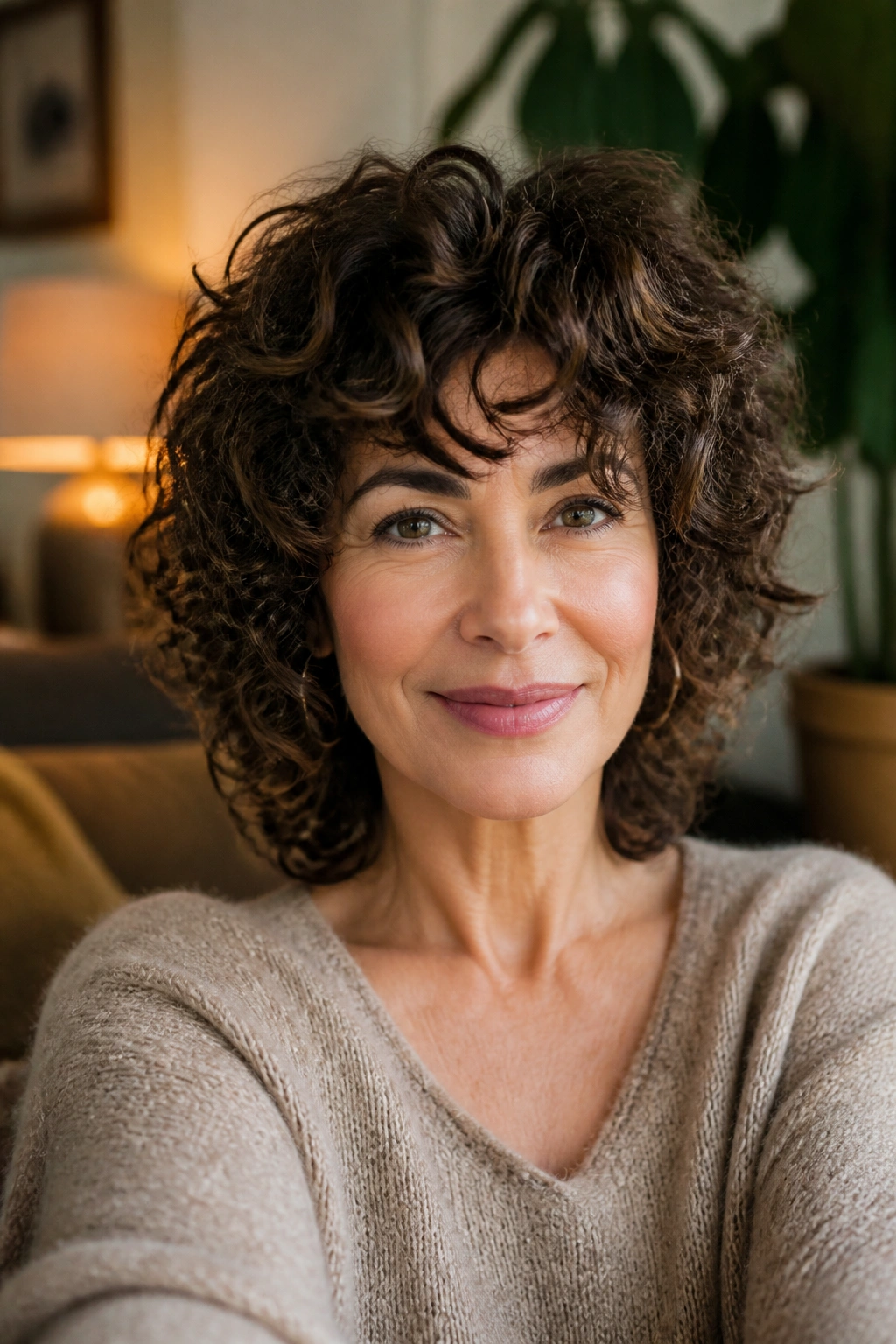
I have seen too many curly cuts turn into triangles because someone was too cautious with the layers. A curly shag is the fix when curls are heavy at the bottom but flat at the root, which happens more often than people admit.
The best curly shag is cut to follow the curl pattern, not stretched-out hair. When curls spring back, they should stack into a rounded shape around the head, with enough room at the crown and enough length at the sides to avoid the mushroom effect. That balance is the whole game.
Key Details That Matter
- Dry-cutting usually gives the cleanest result on curls, because the stylist can see how each curl actually sits.
- Layer lengths should vary enough to let curls separate, but not so much that the ends turn sparse.
- A soft fringe can work if it sits just at the brow or slightly below it.
- Avoid heavy thinning shears if your curls are dry or fragile; they can make the shape frizzier instead of lighter.
The best curly shag looks alive on day one and even better on day two. That’s the real test.
5. Razored Pixie Shag with Side Fringe
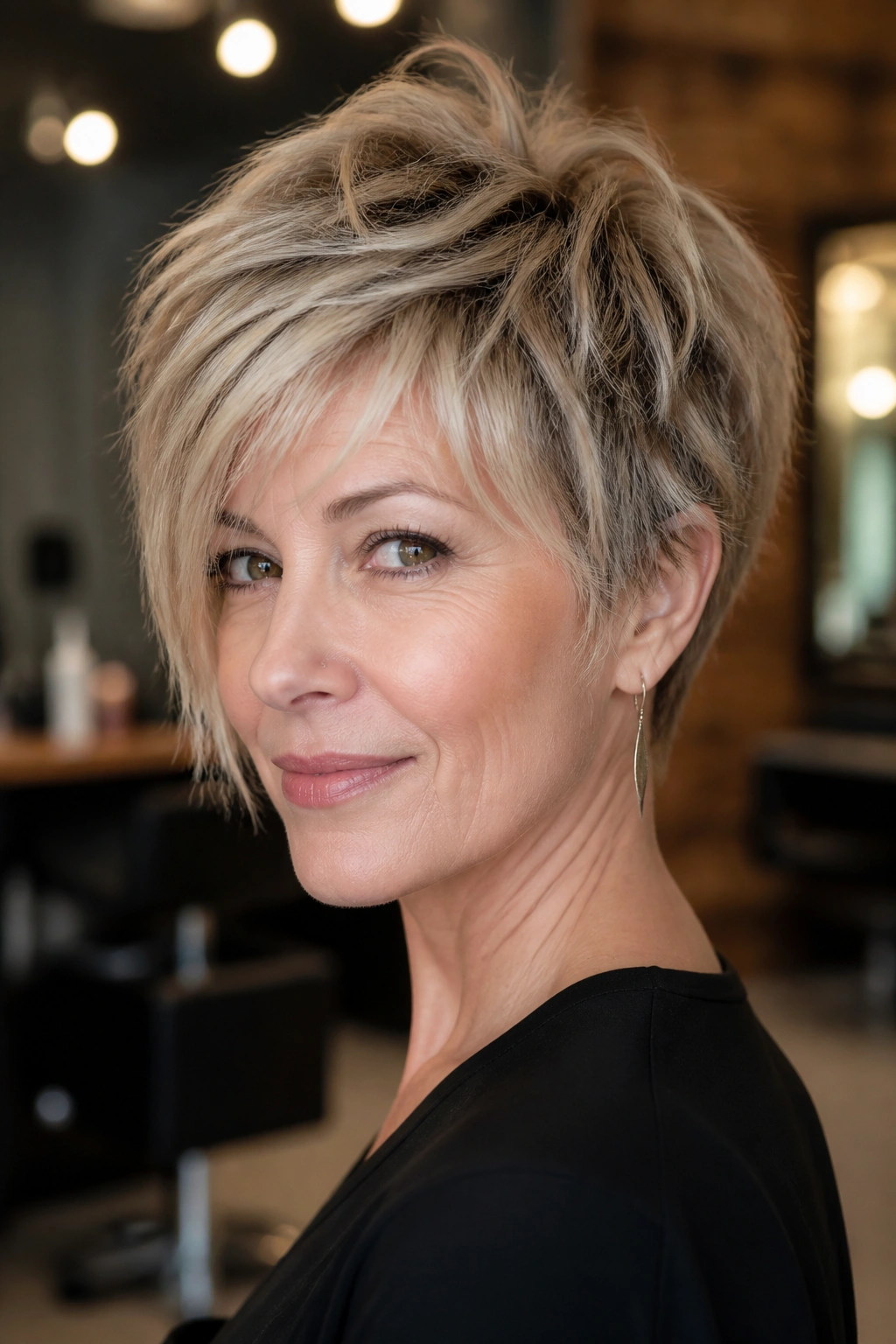
A pixie shag is not a pixie with a bad haircut layered on top of it. It’s a short cut with more movement, more edge, and less helmet-like stiffness than the standard crop. If you want short hair but hate the severe, close-to-the-head feel of a classic pixie, this is the version to ask about.
Unlike a traditional pixie, the shaggy version keeps a little extra length through the crown and fringe. That gives the cut some swing, especially when you push the front to one side. A side fringe also softens the face in a way a hard, straight bang never does.
This cut works best if your hair dries fast and you don’t mind spending a minute with paste or texture cream. It’s not high maintenance, but it does need a hand. The shape comes from the styling as much as the cut.
I like this one on women with strong cheekbones or a long neck. It shows those features off without screaming for attention.
6. Modern Wolf Cut with Sweeping Fringe
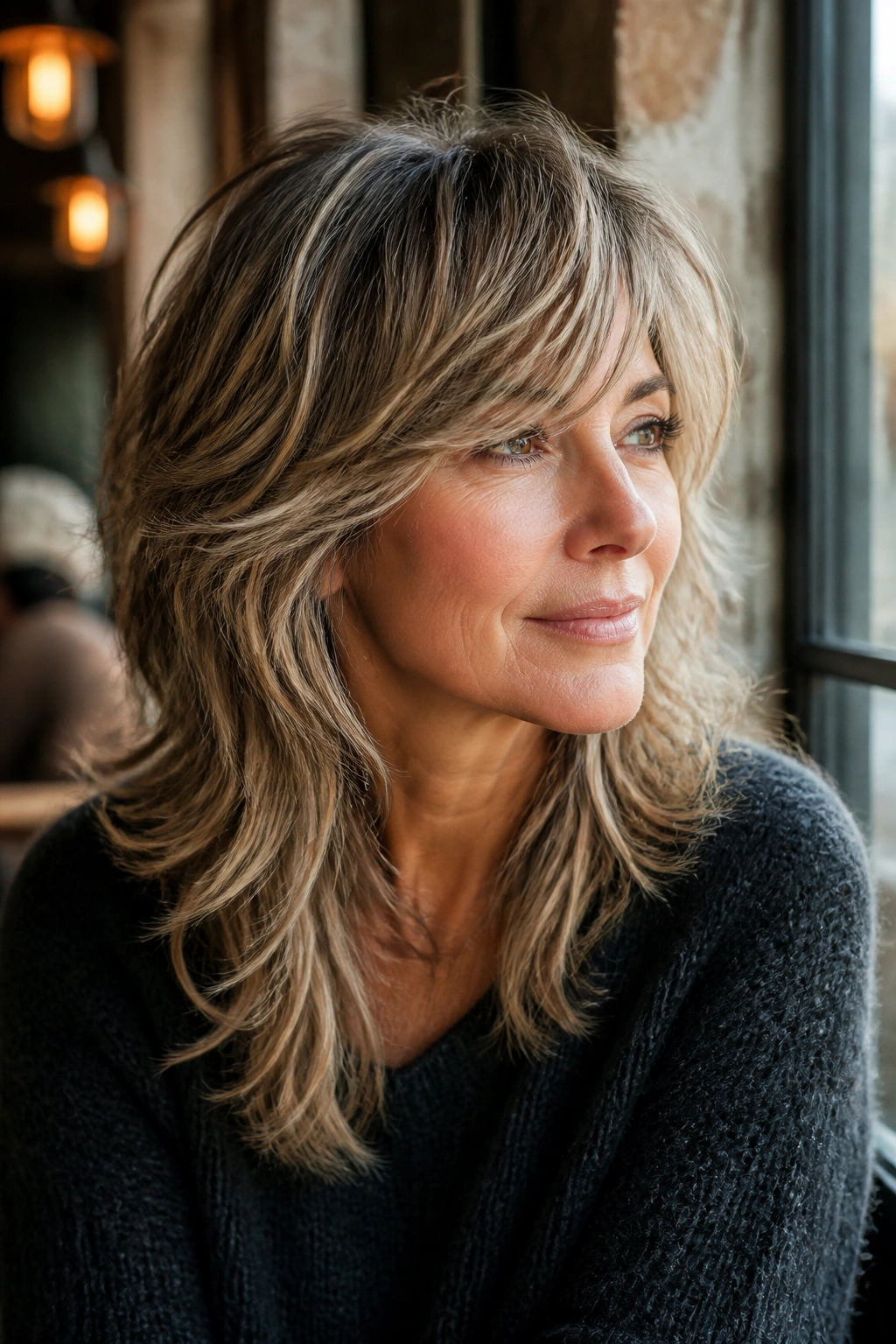
This is the cut with the most attitude, and I mean that in a good way. A modern wolf cut borrows from the shag and the mullet, but when it’s done well, it feels less rebellious and more smartly messy.
The top sits shorter, the layers break up the bulk, and the fringe sweeps across the forehead instead of sitting there like a blunt slab. That sweep matters. It keeps the cut from looking too severe and gives you a little softness around the eyes.
What I love most is the built-in movement. Even when the hair is not freshly styled, the shape still has a little lift at the crown and some swing through the back. It looks better with a bit of texture spray than with glossy, rigid styling. That’s the whole point.
But there’s a catch. If the top is cut too short and the ends too long, the cut starts to feel disconnected. Ask for a soft transition from crown to lengths. You want edge, not costume.
7. Shoulder-Length Shag with Face-Framing Layers
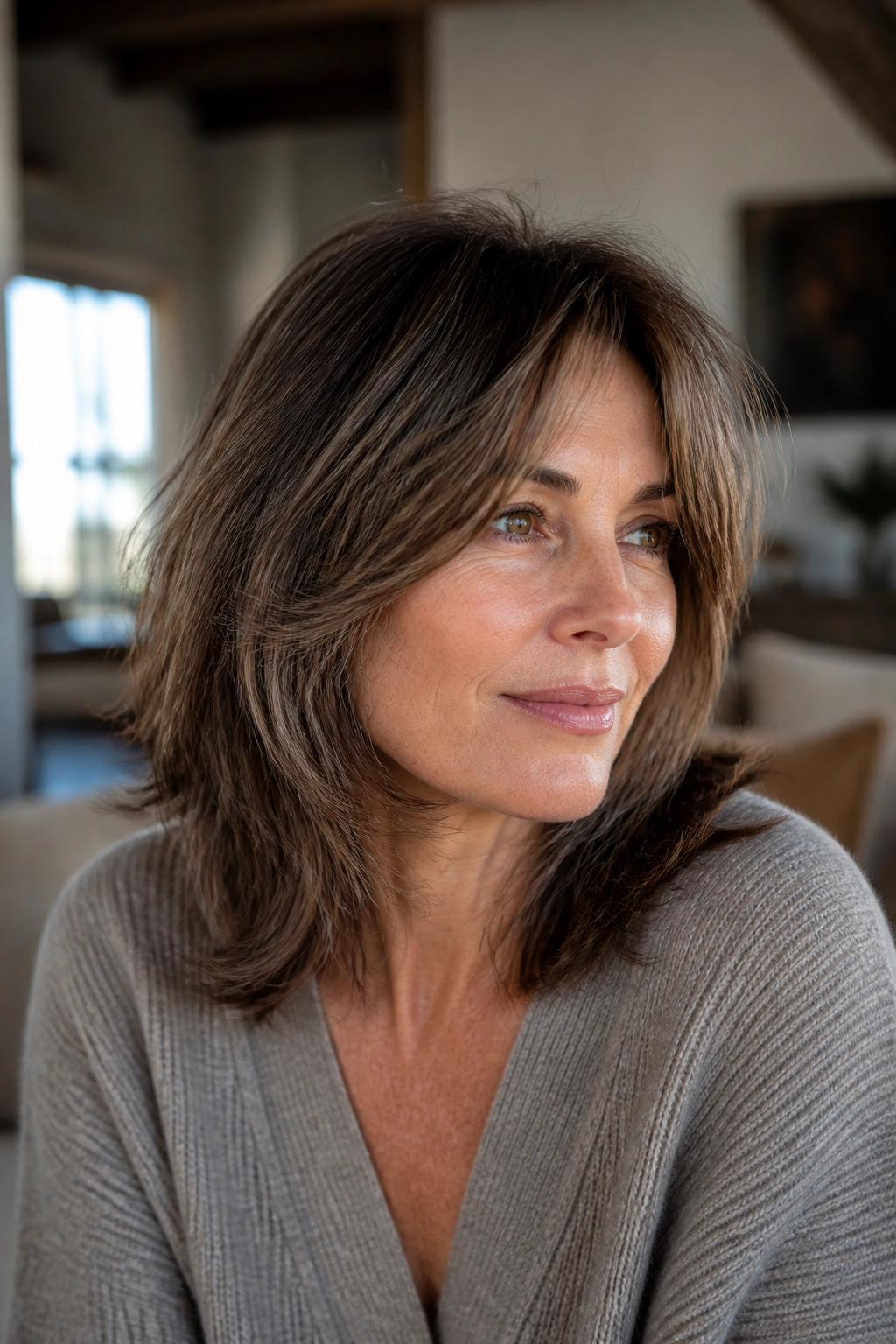
Why do so many stylists keep coming back to shoulder length? Because it is one of the few lengths that lets hair move without making it work too hard. A shoulder-length shag sits in that sweet spot where the ends still look full, but the layers can do some real lifting.
The face-framing pieces should land around the cheekbone or jaw, depending on how much softness you want. Cheekbone length gives a little more lift. Jaw length gives a calmer, slightly sleeker feel. I prefer the cheekbone version on round or heart-shaped faces because it opens things up without overexposing the forehead.
What to Watch For
A shoulder-length shag can get too fluffy if the layers are stacked too high on the sides. That is the part most people miss. The haircut should move, yes, but it should still sit with some shape around the shoulders.
If you blow-dry, use a medium round brush and bend only the front sections away from the face. The back does not need to be perfect. In fact, it usually looks better when it isn’t.
8. Silver Shag with Wispy Bangs
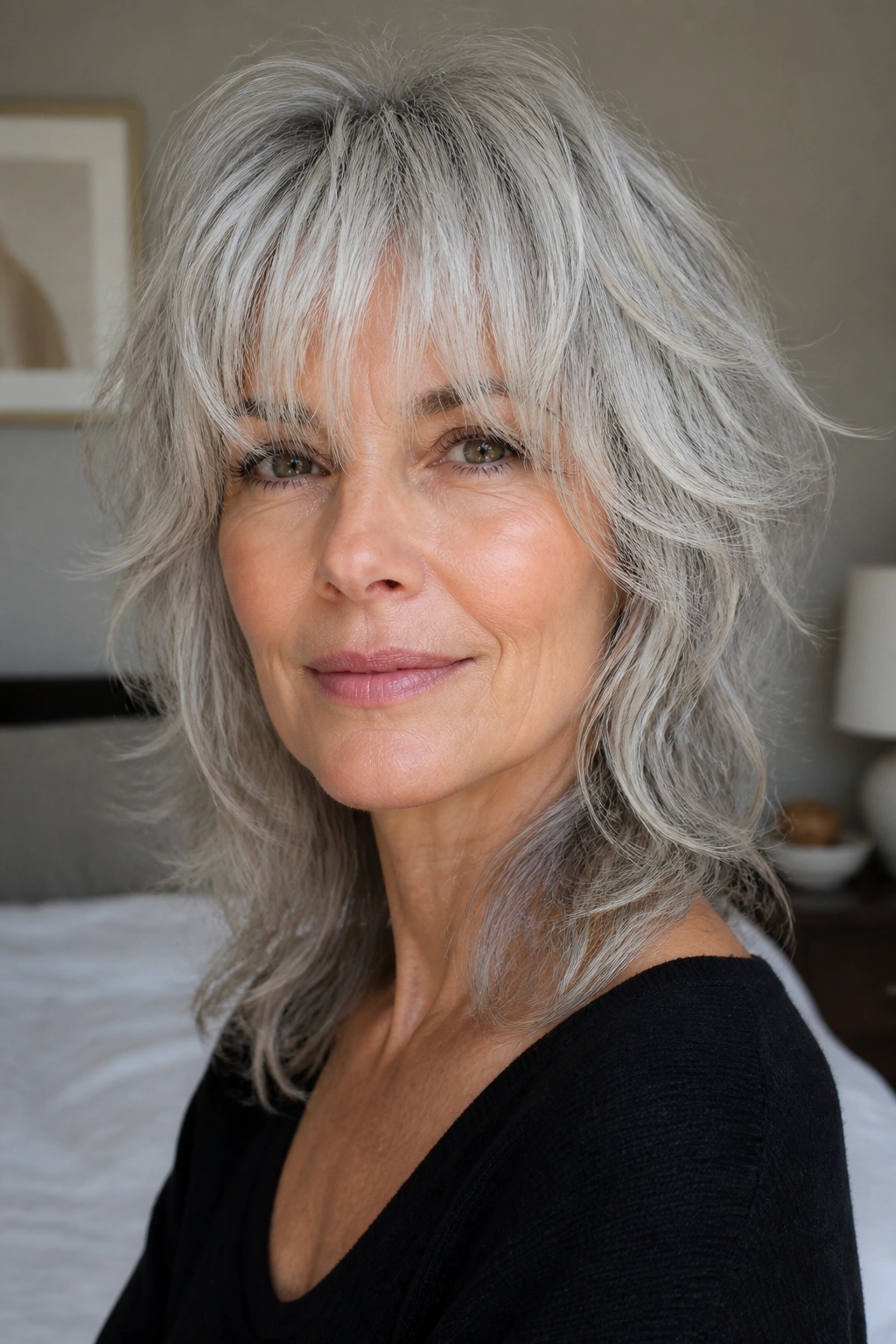
Silver hair has its own personality. It can look crisp and bright, or it can go wiry and flat at the same time, which is why a shag can help so much. The layers give the color room to show up, and the wispy bangs keep the front from feeling heavy.
The texture of gray or silver hair often changes more than people expect. Some pieces come in coarse, some stay fine, and the mix can be annoying. A shag that is too heavily layered can make that texture look puffy. A softer approach usually works better.
Wispy bangs are a good fit because they blur the forehead without creating a hard line. They also soften the contrast between silver strands and skin tone, which can be useful if your hair has gone a little brighter around the face than it is in the back.
I like silver shags most when the layers are kept long enough to move, but not so long that the hair hangs limp. The best result looks fresh, not overworked. That is harder to get than it sounds.
9. Mid-Length Shag for Fine Hair
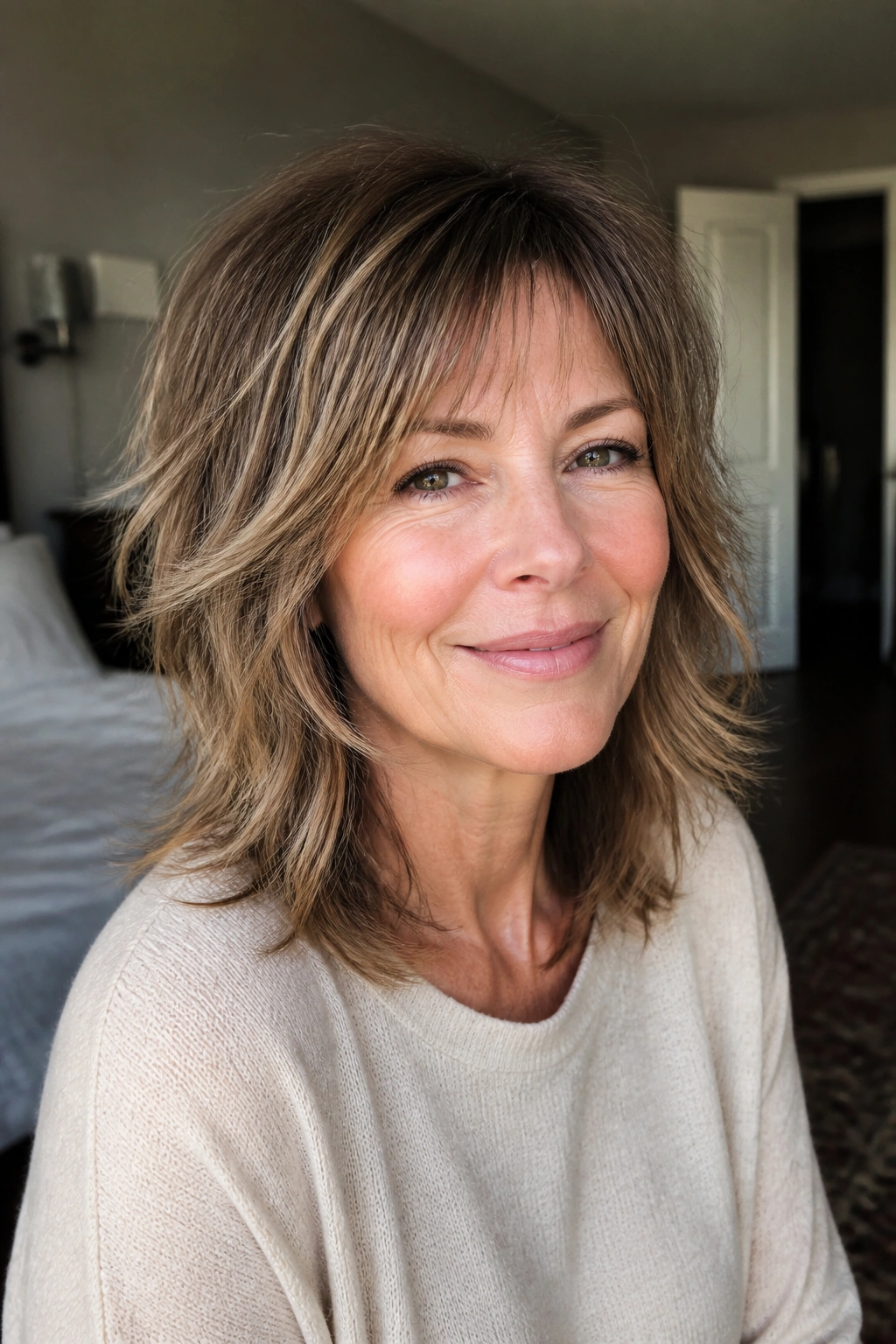
Fine hair needs a careful hand. Too many short layers and it starts to look thin at the ends, which is exactly what you do not want. A mid-length shag can be brilliant here, but only if the layers are placed to build lift instead of remove too much mass.
What Gives It Lift
The best version uses longer layers that start below the cheekbone and build softness through the interior. That keeps the outline full while giving the roots a chance to breathe. A little bend at the ends helps too, because fine hair can look limp when it hangs straight and flat.
What to Avoid
- Short crown layers that make the top stick up.
- Over-thinning at the ends.
- Too much razor work, which can leave the hair airy in the wrong way.
- Heavy creams that drag the roots down.
A root-lifting mousse and a round brush can do more for this cut than a drawer full of fancy products. Dry the roots first, lift at the crown, then let the mid-lengths settle naturally. That keeps the haircut looking like hair, not fluff.
10. Thick-Hair Shag with Internal Layers
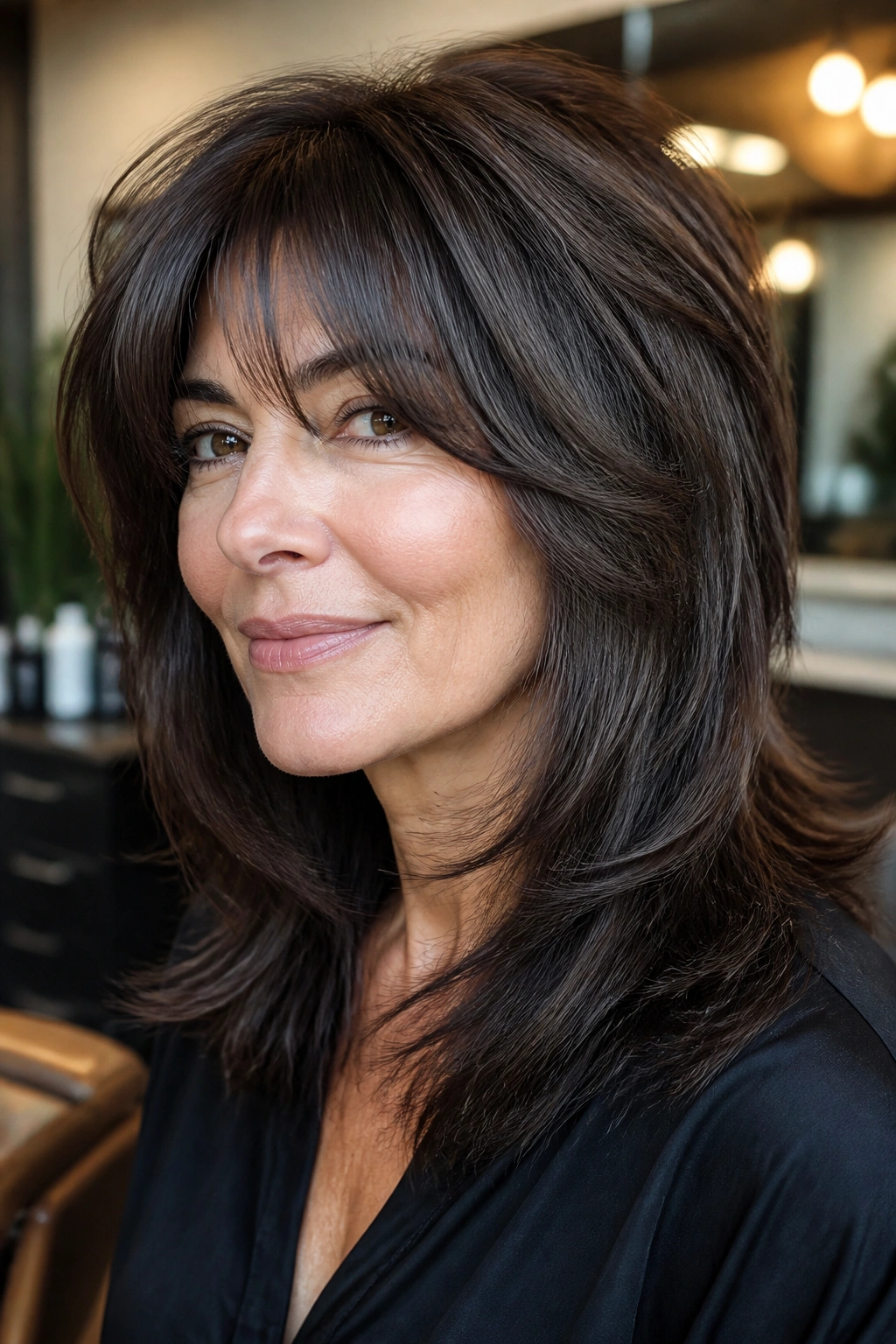
Thick hair needs weight removed, but not in a way that makes the shape fall apart. That’s why internal layers matter. They take bulk out from inside the haircut, which keeps the surface smooth and the ends from turning into a shelf.
A lot of people with dense hair are told to get “layers,” and then they end up with a haircut that looks big for the first week and fuzzy by the third. The problem is usually visible layering on the outside. Thick hair often looks better when the weight is hidden inside the cut instead.
Ask for the heaviest bulk removal to happen through the middle third of the head, not just around the crown. That lets the hair lie better around the neck and shoulders. The silhouette stays clean. The movement stays soft.
I think this is one of the most underrated shag variations for women over 40 because it solves a practical problem. Heavy hair can feel hot, stiff, and annoying. Internal layers make it easier to live with, without making it look thin.
11. Shaggy Lob with Bottleneck Bangs
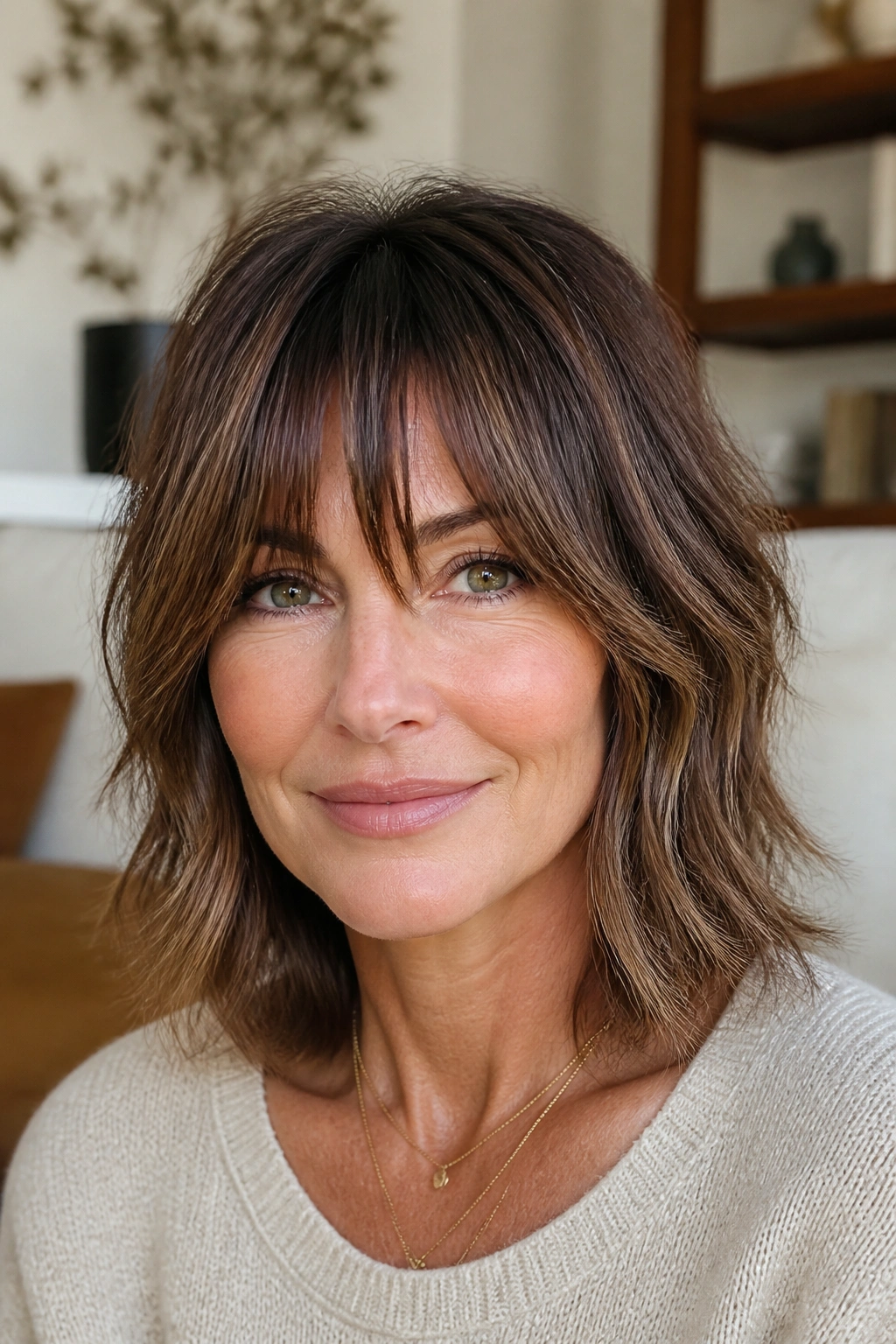
If you like the feel of a bob but hate the hard line that comes with it, the shaggy lob is the safer bet. It sits a little longer than a classic bob, usually around the collarbone, and the bottleneck bangs give it a more modern face frame than straight fringe ever could.
What Bottleneck Bangs Do
They are narrow at the top, then open a little as they drop toward the cheekbones. That shape matters because it gives you forehead coverage without closing off the face. It also grows out more gracefully than blunt bangs, which is a relief if you do not want to book trims all the time.
A shaggy lob is especially good if your hair sits somewhere between straight and wavy. The length keeps it from puffing up too much, and the layers prevent it from feeling blocky.
One thing I like here: it looks polished even when the styling is casual. That is rare. A quick bend with a flat iron or a blow-dry with a large brush is usually enough.
12. Air-Dried Wavy Shag
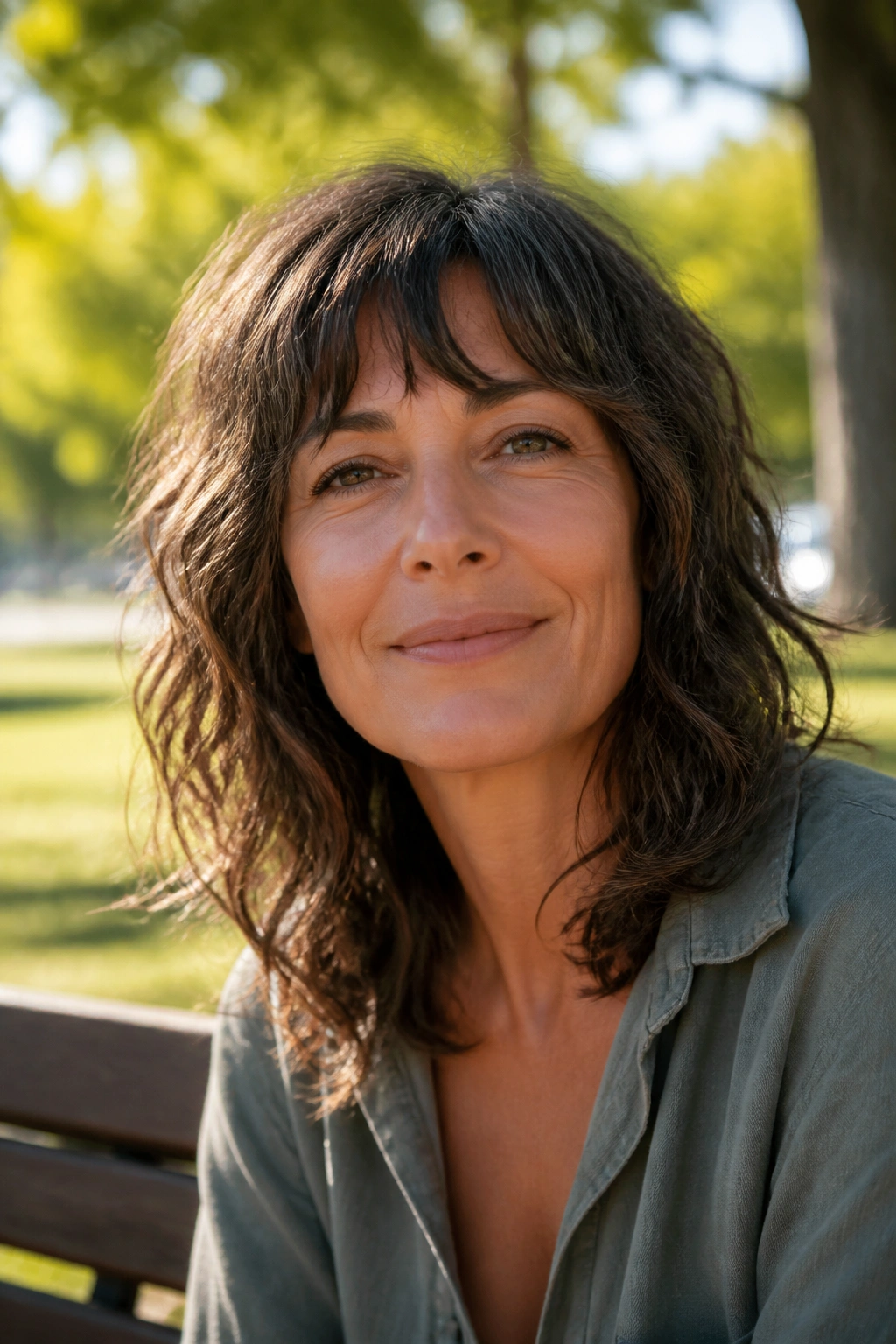
This is the haircut for people who don’t want to fight their own hair every morning. An air-dried wavy shag works because the layers encourage movement instead of trying to force a sleek finish that never lasts.
The cut should be shaped with the wave pattern in mind. If the hair is cut too bluntly, the wave can puff out or flip in strange places. If it is over-layered, it can go frizzy at the ends. Somewhere in the middle is where this cut lives best.
I like to think of it as a haircut that rewards patience but does not demand perfection. Scrunch in a light cream, twist a few front pieces around your fingers, and leave the rest alone while it dries. Touching it too much is usually what ruins the finish.
This shag is especially good for women who want hair that looks a little undone in a controlled way. Not messy. Just relaxed enough that it doesn’t look like it fought the brush and lost.
13. Side-Swept Fringe Shag
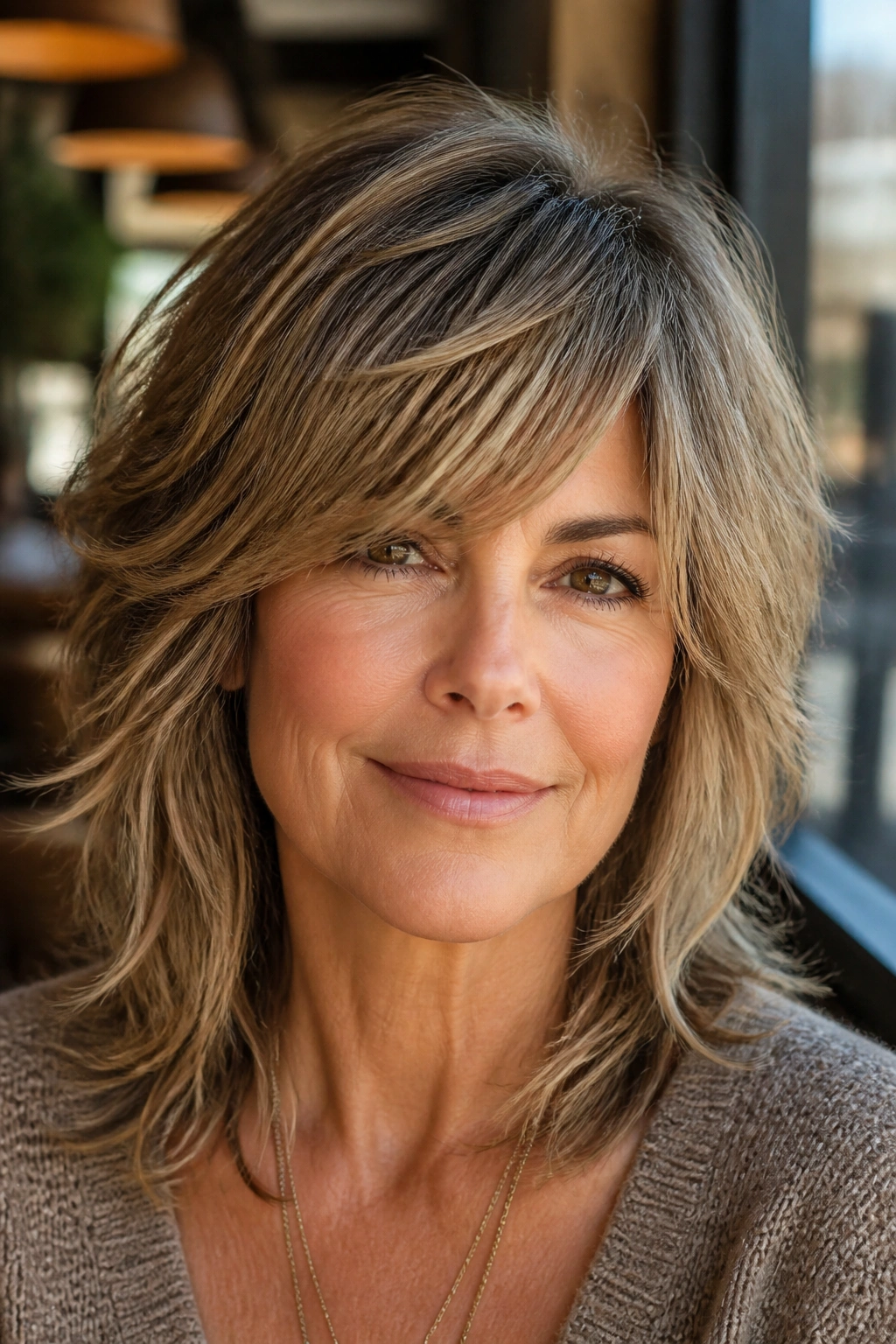
A side-swept fringe can rescue a shag that feels too open at the front. It softens the hairline, covers a little forehead, and works well for anyone who wants bangs without the maintenance of a full fringe.
It also solves a real problem for some faces: symmetry that feels too blunt. A side fringe breaks up a straight-on frame and lets the layers move diagonally across the face. That diagonal line is flattering in a way people often notice but can’t always explain.
Good Reasons to Pick It
- You wear glasses and want the bangs to work around the frame.
- You have a cowlick that fights center-part curtain bangs.
- You want less forehead coverage than straight fringe gives.
- You like easy grow-out, because side-swept bangs are forgiving.
The best side fringe is not a helmet. It should look like part of the haircut, not a separate strip of hair attached to the front. A little texture at the ends helps it blend.
14. French-Girl Shag with Soft Texture

The French-girl version of a shag is softer than the punkier cuts people sometimes picture. It still has movement, but the lines are gentler, the texture is more brushed-out, and the whole thing leans a little undone without looking rough.
Unlike a sharper wolf cut, this one keeps the ends softer and the layers more blended. The face frame matters, but it does not need to scream for attention. If you like a haircut that looks better after a few hours of wear, this is the lane.
It suits straight to wavy hair especially well because those textures can hold a little bend without collapsing. The cut wants a natural finish — a bit of air-dry, a bit of finger-tousling, maybe a pass with a large barrel iron on the front sections if you’re going out.
I tend to recommend this one to women who want polish without stiffness. It’s not fussy. It just has enough shape to look considered.
15. Textured Mullet-Shag Hybrid
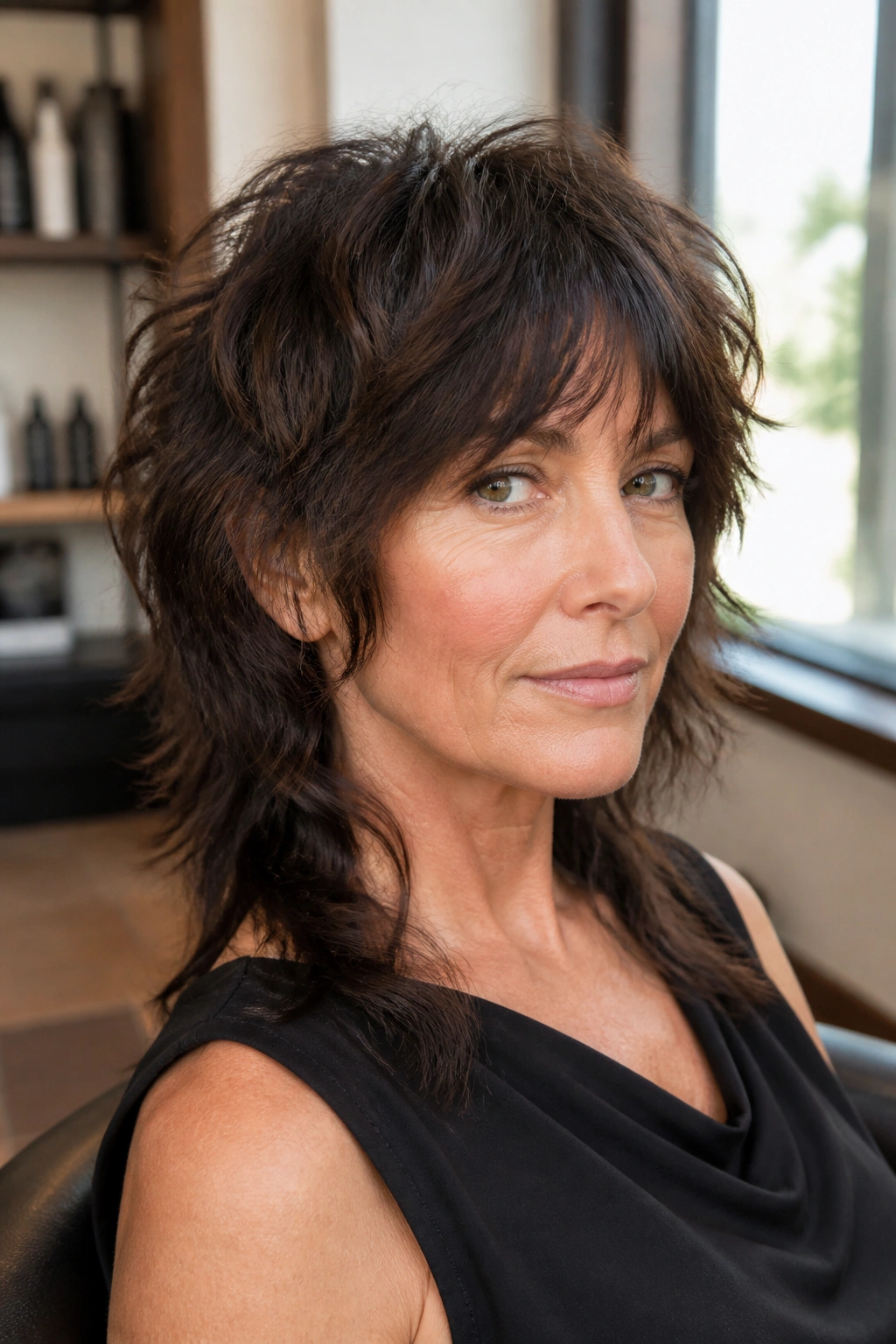
Yes, this is the edgier one. And no, it does not have to look extreme. A textured mullet-shag hybrid keeps the front and crown lighter, then leaves a little more length in the back for a modern, slightly rebellious shape.
How to Keep It Wearable
The key is softness around the face. If the front gets too short or too disconnected, the cut starts to feel costume-like. Ask for a gentle transition from the front layers into the longer back, with the nape sitting below the collar line rather than shouting from the room.
This style works best when the texture is part of the cut, not piled on with product. A matte paste or lightweight cream is usually enough. Too much shine can make the difference between layers look harsher than intended.
- Best for: medium to thick hair with some natural movement.
- Avoid if: you want one simple, tidy shape every day.
- Ask for: soft fringe, lifted crown, and a back section that keeps enough length to balance the front.
The point is not shock value. The point is shape with personality.
16. Invisible-Layer Shag for Straight Hair
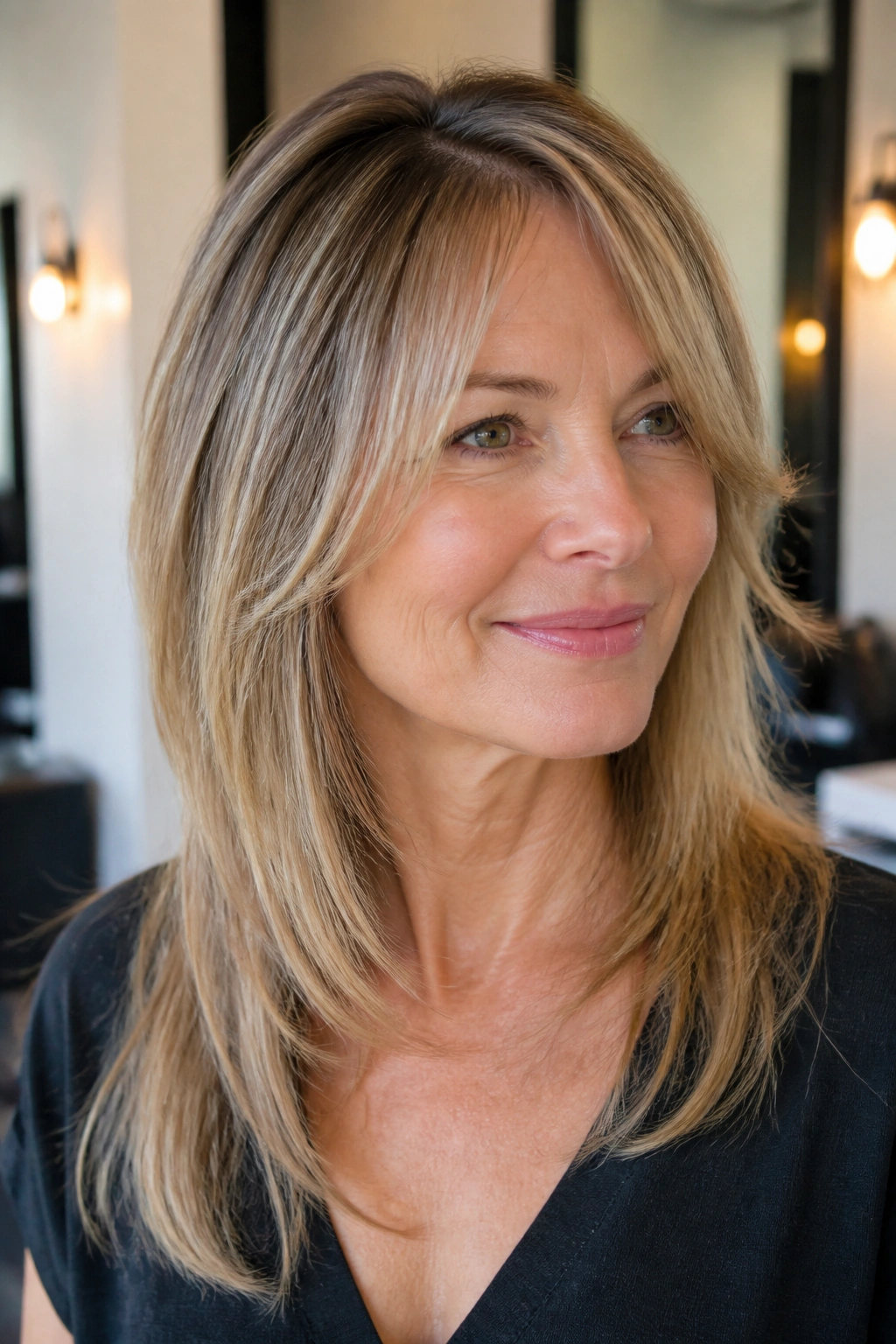
Straight hair can be the hardest texture to shag well, because it shows every cut line. That is why invisible layers are so useful. They remove weight and create movement without broadcasting every layer to the eye.
A good invisible-layer shag keeps the outer surface cleaner than people expect. The movement comes from what’s underneath. That means you get bend and lift without those obvious stepped layers that can make straight hair look choppy in the wrong way.
This is one of my favorite choices for hair that falls flat by noon. The crown can be given a touch of internal lift, while the sides stay smooth enough to tuck behind the ears. That combination is understated in the best sense.
Use a large round brush or a flat brush with a slight bend at the ends. The goal is not curl. It is life. And a little root lift spray at the front goes a long way.
17. Medium Curly Shag with Deva-Cut Shape
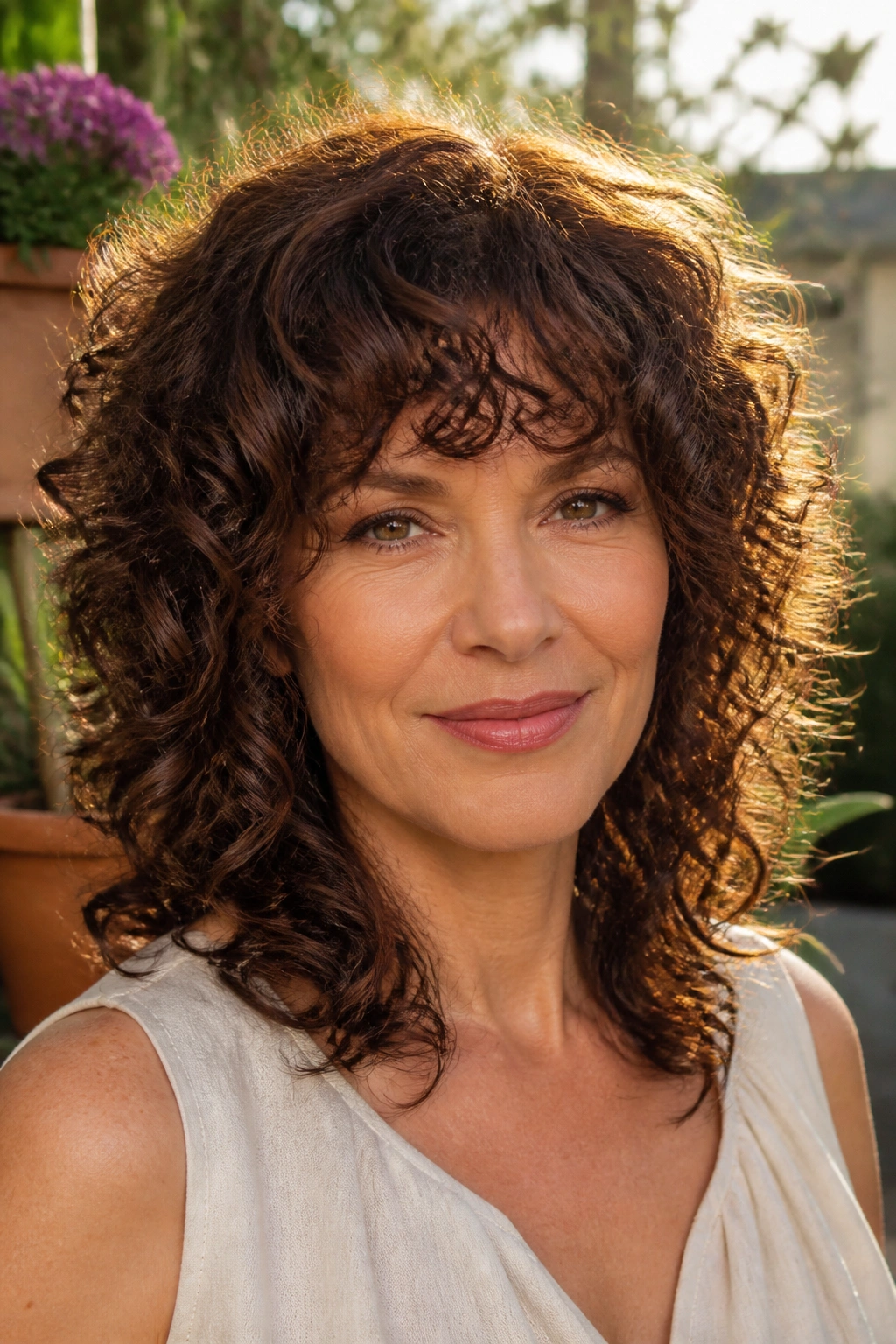
Curly hair cut in a shag shape works best when it is cut for the curl, not for a blown-out version of the curl. That is why a Deva-Cut approach often makes sense here. Each curl is shaped where it lives, so the haircut sits naturally when it dries.
Shape
The medium-length version gives curls room to spring without crowding the shoulders. Too short and the shape can balloon. Too long and the curls may weigh themselves down. Mid-length hits a useful middle ground.
Drying
Let the curls dry with a little support, not a lot of product caked on top of them. A light cream or gel, scrunched in section by section, is usually enough. If the cut is right, the curls should look separated and lively rather than crispy or clumped.
Common Mistake
The biggest mistake is stretching curls too much while cutting or styling. Once the hair springs back, the layers end up in the wrong place. That is how you get weird gaps. A curly shag should look like it belongs to the curl pattern you actually have, not the one you wish you had.
18. Feathered Shag with Long Ends
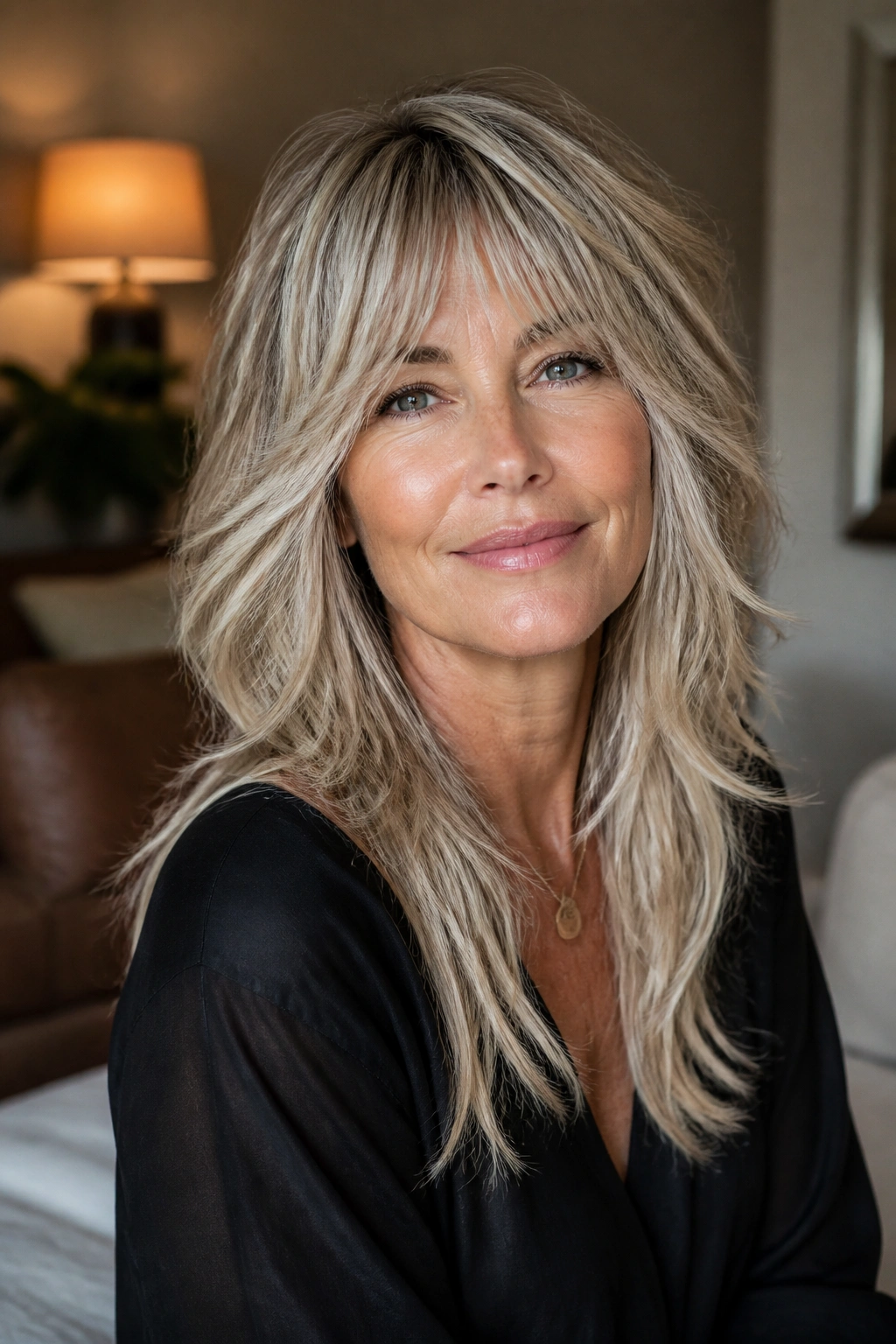
A feathered shag with long ends is the polished cousin in the shag family. It still has texture, but the layers are smoother and the perimeter stays long enough to feel deliberate.
I like this cut when someone wants movement without a lot of visible choppiness. It gives the hair a softer swing around the shoulders and keeps the ends from looking thin. If you wear earrings, necklaces, or glasses, the long-feathered shape sits around those details nicely instead of competing with them.
It’s also a smart cut for women who want to keep some length through the back. The feathering does the lightening. The long ends keep the hair from feeling too fractured. That balance is what makes it feel grown-up without feeling stiff.
The styling is straightforward. A quick blow-dry with the front sections turned away from the face usually does enough. You do not need to make every layer behave. A little variation is part of the charm.
19. Asymmetrical Shag with Deep Side Part
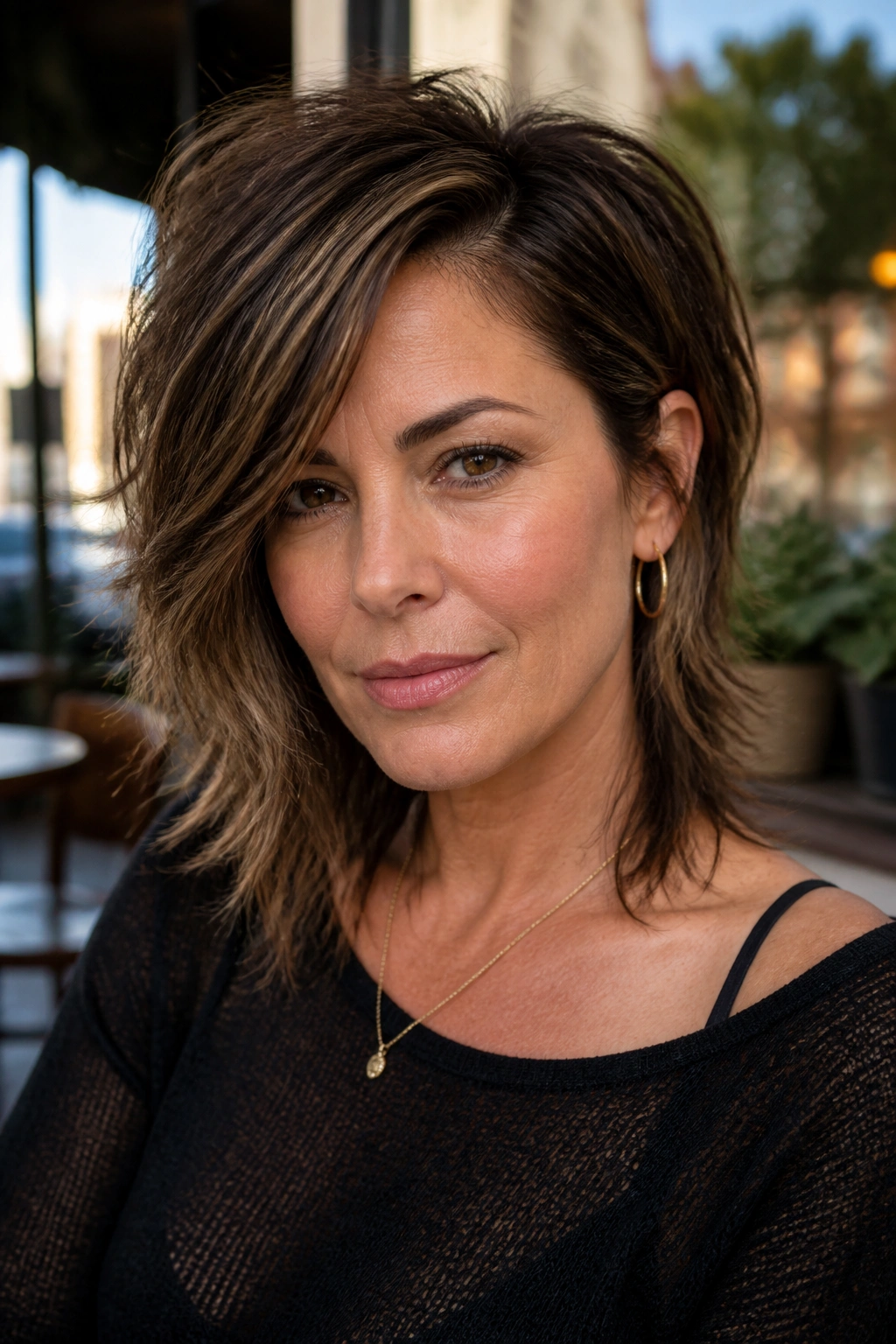
An asymmetrical shag is a good answer when your face has strong angles or your hair naturally parts unevenly anyway. One side can skim the cheekbone while the other drops closer to the jaw, which gives the haircut a little tension and a lot of shape.
The deep side part is what makes it work. It creates volume on one side and a cleaner fall on the other, so the haircut does not feel flat. I like this version on medium-density hair because the asymmetry shows up without needing extreme styling.
Keep the difference subtle. About 1 to 2 inches of visual difference between sides is often enough. More than that can start to feel fussy unless the rest of the cut is very intentional.
This is one of those haircuts that looks different every time you tuck it behind the ear. Good. That little flexibility is the point.
20. Low-Maintenance Grow-Out Shag
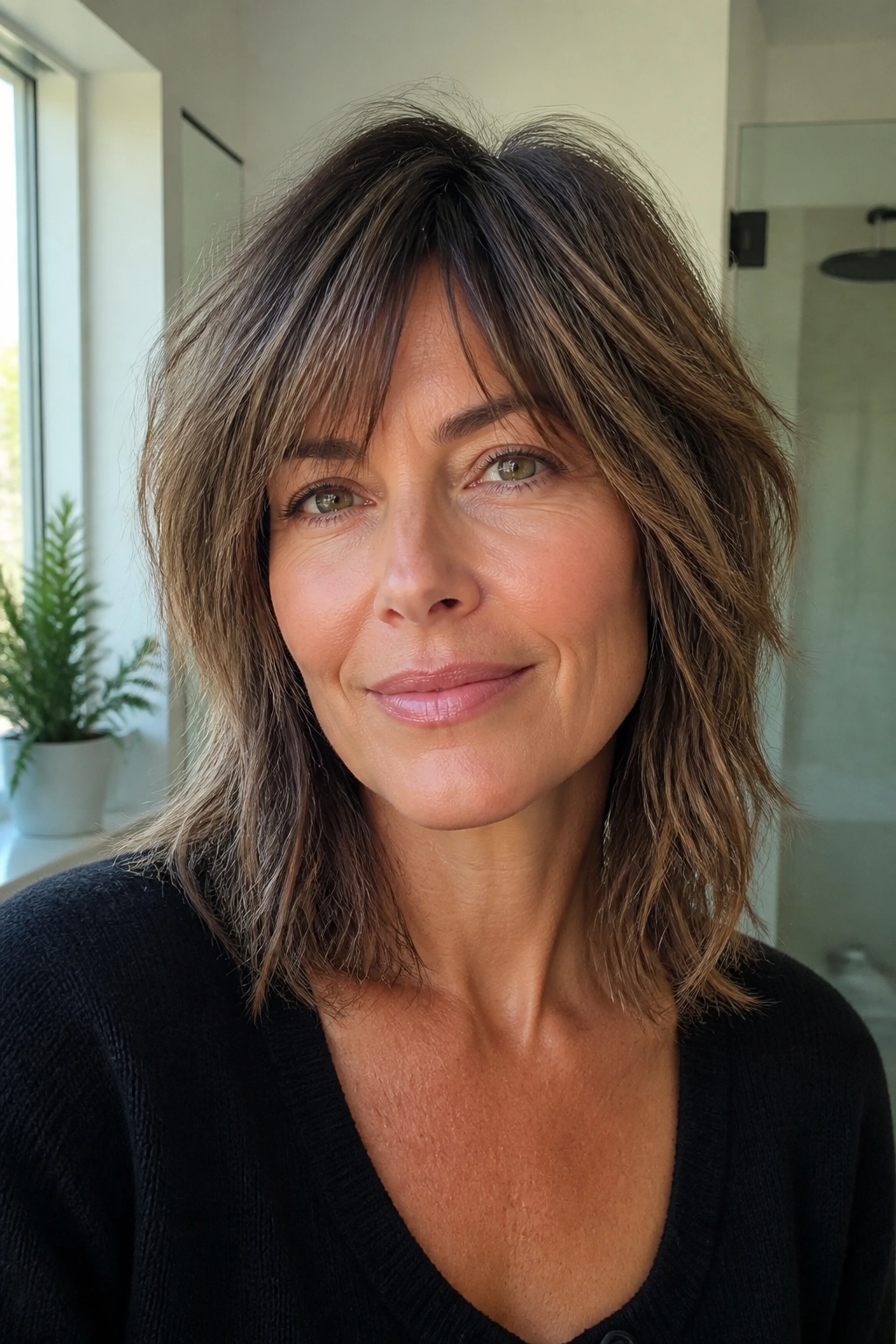
What if you want a shag that still looks decent six, eight, or even twelve weeks later? This is the one. A grow-out friendly shag keeps the layers soft, the fringe flexible, and the perimeter long enough that the cut does not fall apart between trims.
The trick is to avoid extremes. No ultra-short crown, no razor-heavy ends, no bangs that need weekly babysitting. Ask for shoulder-to-collarbone length, long internal layers, and a face frame that can blend into the rest of the hair even after it settles a little.
This is the style I would point a busy person toward first. It works with the way hair naturally drops over time, which is the whole secret. A haircut that still looks like a haircut after it grows a bit is worth more than a dramatic one that needs constant rescue.
If you want one final rule, make it this: the best shag is the one your hair can wear without a fight. Not the most dramatic one. Not the shortest one. The one that still feels like you when you walk out the door and when you catch yourself in a mirror three days later.
