



A good wavy long shag haircut does not sit still, and that is exactly why it works. The layers move when you walk. The fringe falls a little differently every time you tuck your hair behind an ear. And on waves, that little bit of unpredictability looks expensive in the best sense — not polished-to-death, not flat, not helmet-like.
The catch is that a shag can go wrong fast. Too many layers and the ends start looking stringy. Too little shaping and you get a heavy curtain that swallows your wave pattern. The sweet spot is a cut that respects your texture, keeps enough weight in the length, and still gives you air around the face and crown. That balance matters more on wavy hair than people think.
Long shags are especially good for women who want movement without losing the feeling of having hair. You still get length to braid, pin up, or throw over one shoulder. You also get the rougher, lived-in shape that makes waves look intentional instead of “I let my hair dry and hoped for the best.” Small difference. Big payoff.
The trick is picking the right version for your density, face shape, and tolerance for styling. Some long shag haircuts lean soft and feminine. Others have a little wolf-cut edge. A few are built to keep thick hair from turning into a triangle. The details decide everything, and that’s where the good cuts separate themselves from the regrettable ones.
1. Soft Face-Framing Shag for Wavy Hair
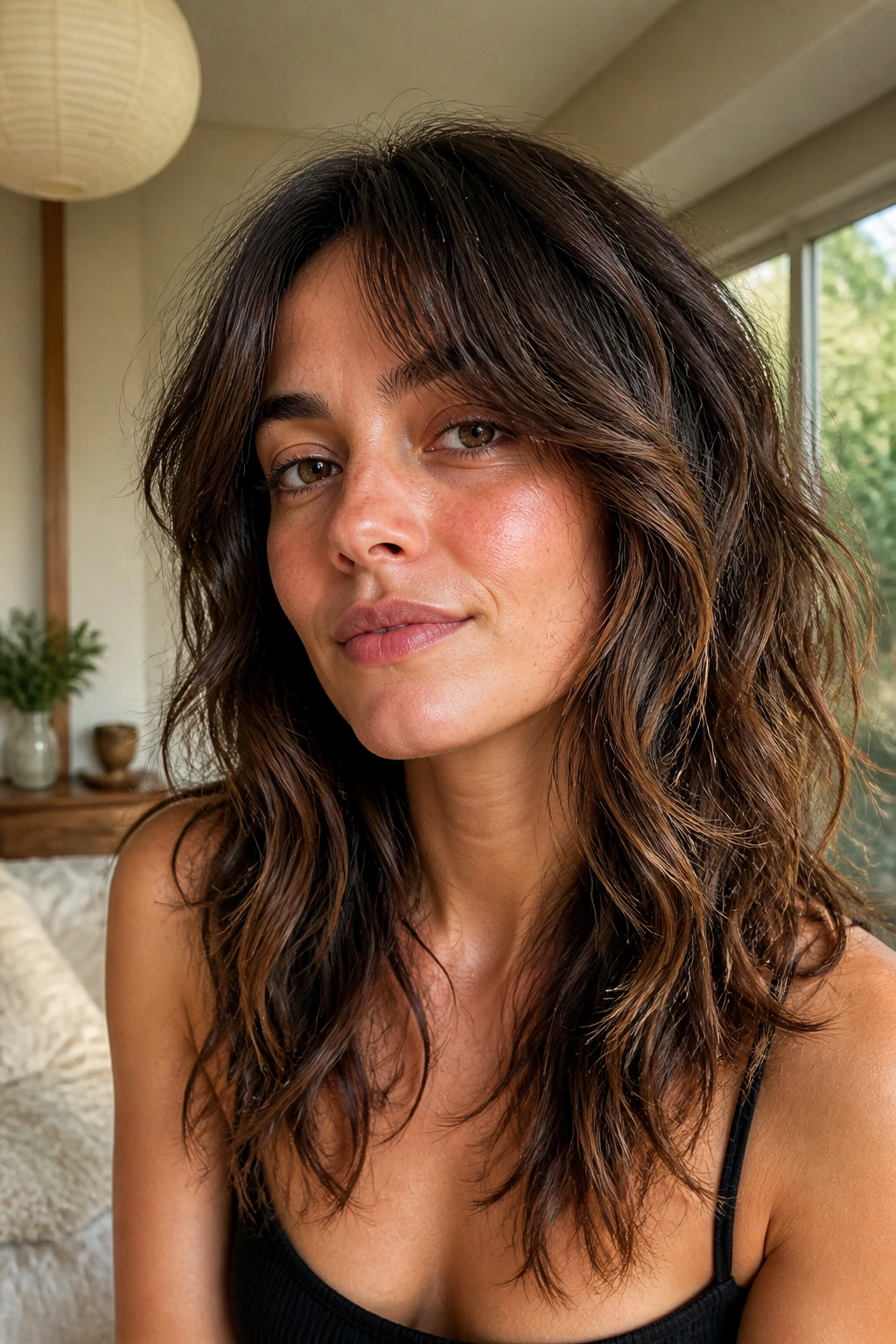
This is the easiest long shag to wear if you want movement without drama. The shape starts with long face-framing layers around the cheekbones and jaw, then keeps most of the length intact through the back. It gives waves room to bend instead of hanging in one heavy sheet.
What makes it work is restraint. The layers should whisper, not shout. Ask for a soft, rounded front that opens around the face, plus subtle internal layering through the mid-lengths. That keeps the silhouette from feeling chopped up, which is the mistake I see most often with first-time shag cuts.
Why it flatters wavy hair
- The front layers catch natural bend and make it look fuller.
- The lower length stays thick enough to keep the style feminine.
- It grows out cleanly, so you are not back at the salon every few weeks.
A touch of mousse at the roots and a diffuser are usually enough. If you air-dry, scrunch in a light cream and leave the ends alone. They do not need much.
Best for: medium-density waves, oval faces, and anyone who wants a shag without the punkier edges.
2. Curtain Bang Shag With Long Waves
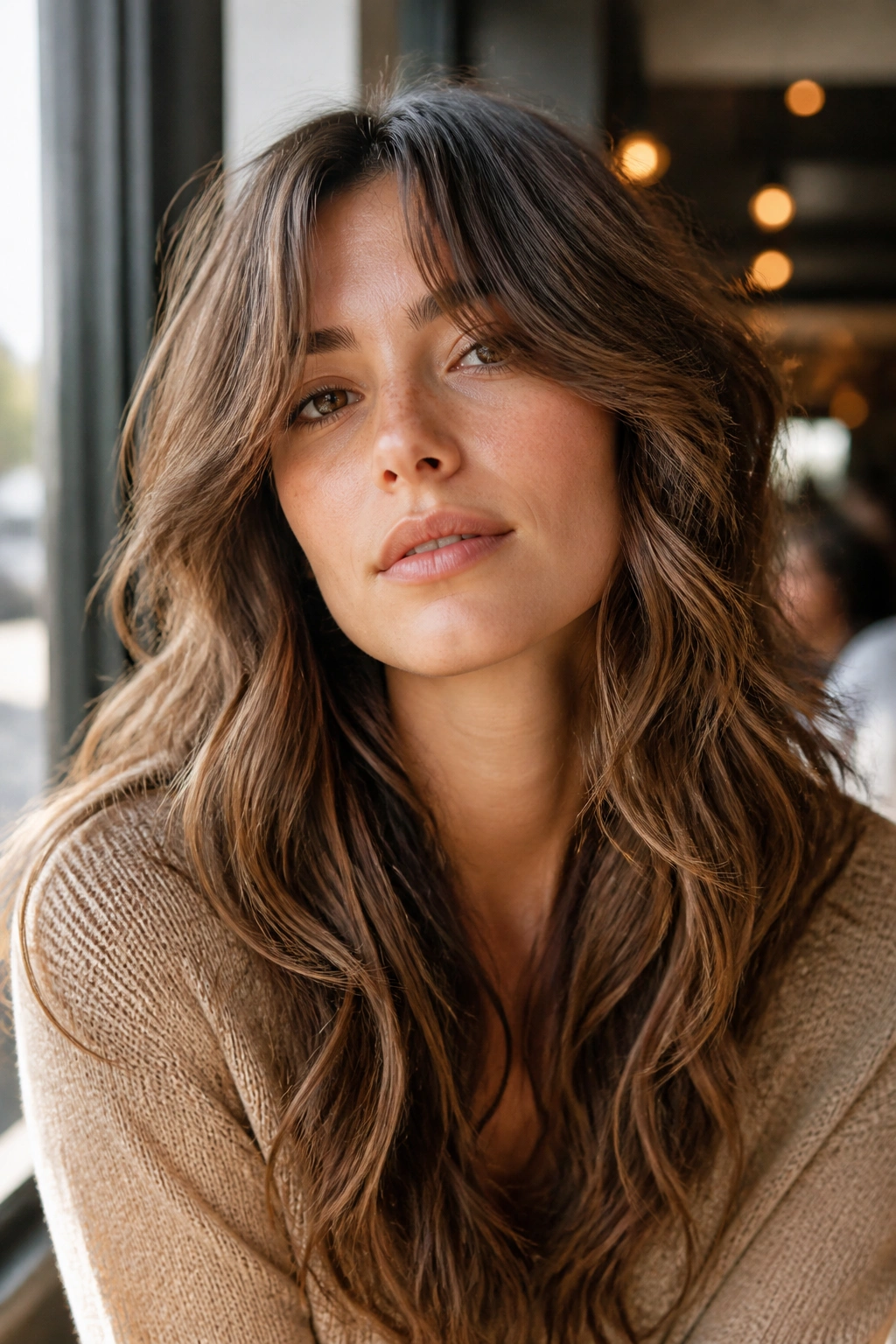
Why do curtain bangs keep showing up on long shag haircuts? Because they solve a common problem: waves can make the front of the hair feel heavy, and curtain bangs break that weight up without taking away length.
The bang should land somewhere between the brow and cheekbone when dry, though wavy hair often springs a little shorter. That matters. If your stylist cuts them too short, the front can jump up and sit like a shelf. Nobody wants that. Ask for a longer starting point and let the shape settle over a few weeks.
How to style it
A round brush works, but you do not need a salon blowout every morning. Dry the bangs side to side with a vent brush, then bend the ends away from the face with your fingers. If you like a lived-in finish, let the rest of the hair air-dry and keep the fringe slightly smoother for contrast.
The appeal here is the balance. The bangs frame your eyes, the layers keep the length light, and the whole cut looks expensive even when the styling is minimal. That’s a rare combination.
3. The Long Wolf-Edge Shag
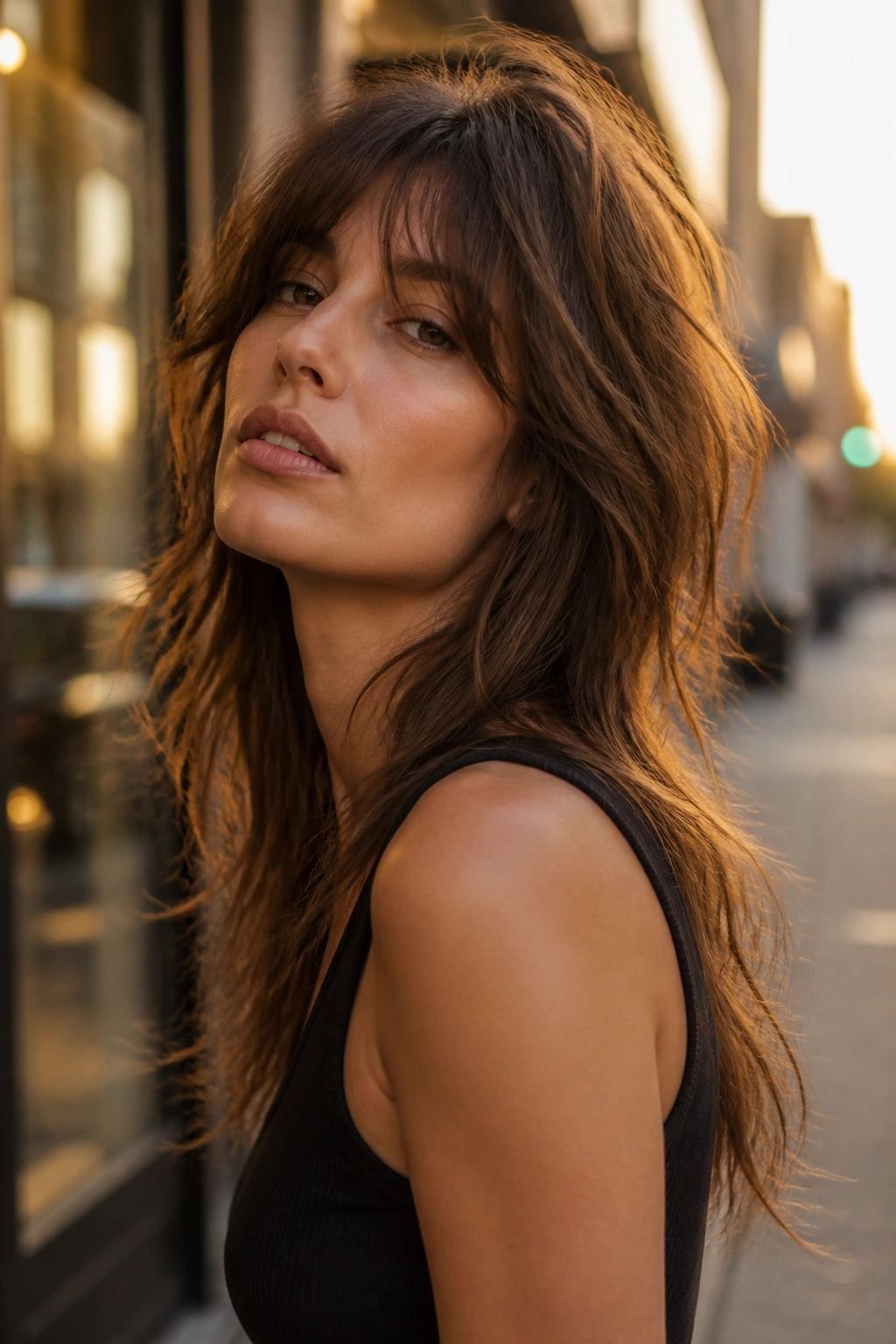
This is the most attitude-heavy cut in the group, and I mean that in a good way. A long wolf-edge shag keeps more height at the crown, shorter movement near the top, and a longer tail through the back, so the overall shape feels a little wild without turning into a full-on mullet.
It works because it gives wavy hair a job to do. The crown gets lift, the side pieces kick out, and the ends keep their length. On thick hair, that can be a relief. On finer waves, it can be a bit much unless the layers are handled carefully.
Ask your stylist for:
- Shorter internal layers at the crown
- Soft, connected sides instead of a hard disconnect
- Length left below the shoulders
- Texture on the ends, but not heavy thinning
I like this cut on women who dress a little casually and do not mind hair with personality. It looks best when it’s a little imperfect. Fresh from a flat iron? Not the point. A bit tousled, a bit undone, much better.
4. Feathered Boho Shag With Loose Waves
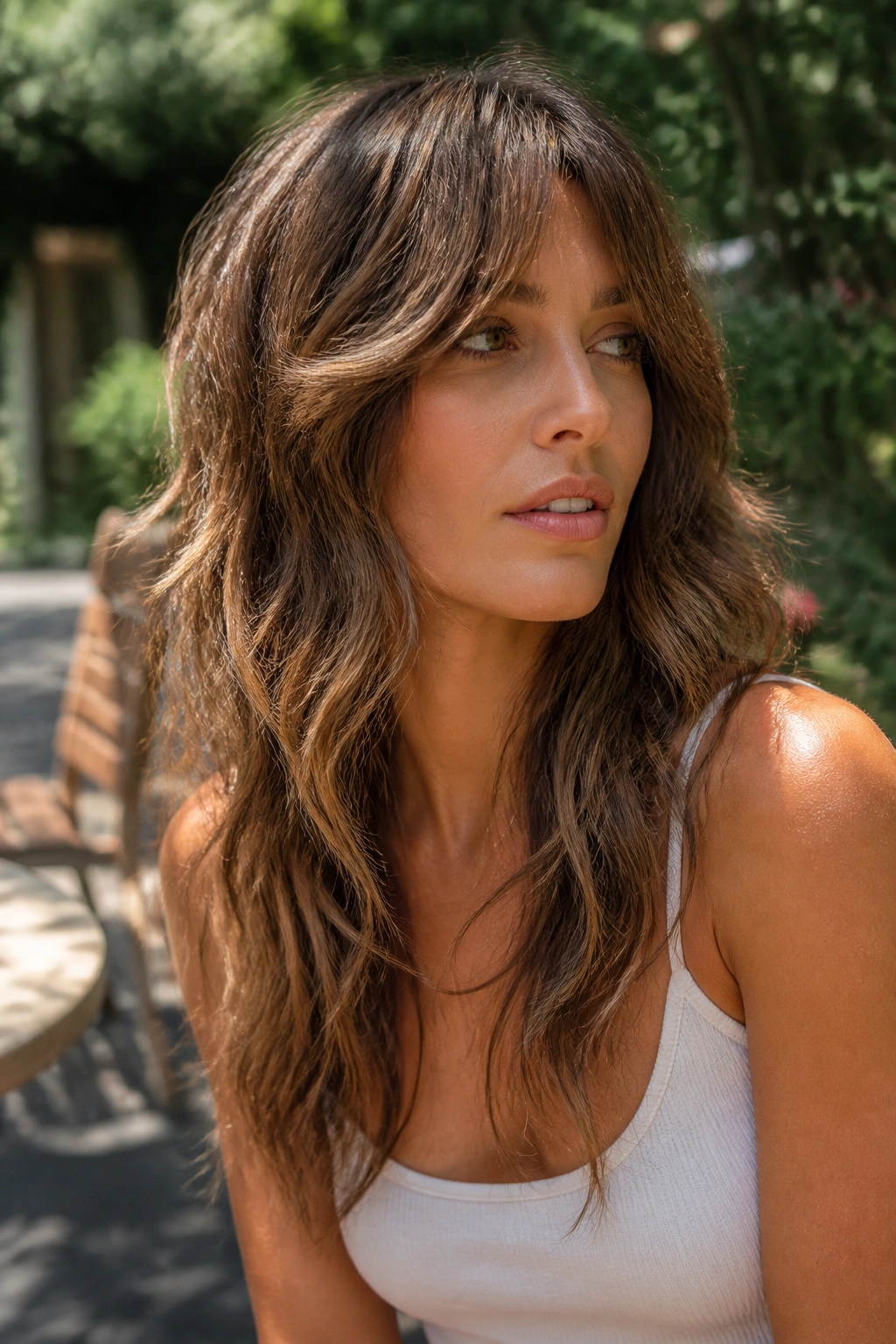
Picture hair that moves when you turn your head. That’s the feeling here.
A feathered boho shag is softer than a wolf cut and less choppy than a classic rock-inspired shag. The layers are sliced so the ends taper and flick out, which gives long wavy hair that soft, airy look people usually try to fake with curling irons. If your hair tends to hang heavy or flatten at the sides, this shape helps a lot.
The style suits women who like a romantic finish. Think soft sweaters, gold hoops, maybe a little bit of texture spray. It is not fussy. That’s the charm. The cut itself does most of the visual work.
The one thing to watch: if your stylist over-feathers the ends, the bottom can look wispy in a bad way. Ask for movement through the mids and just enough texture at the perimeter to keep the line alive. You want lift, not scraps.
A center or off-center part both work here. I’d pick this cut for medium-to-thick waves that need a gentler shape.
5. Razored Beach Shag With Airy Ends
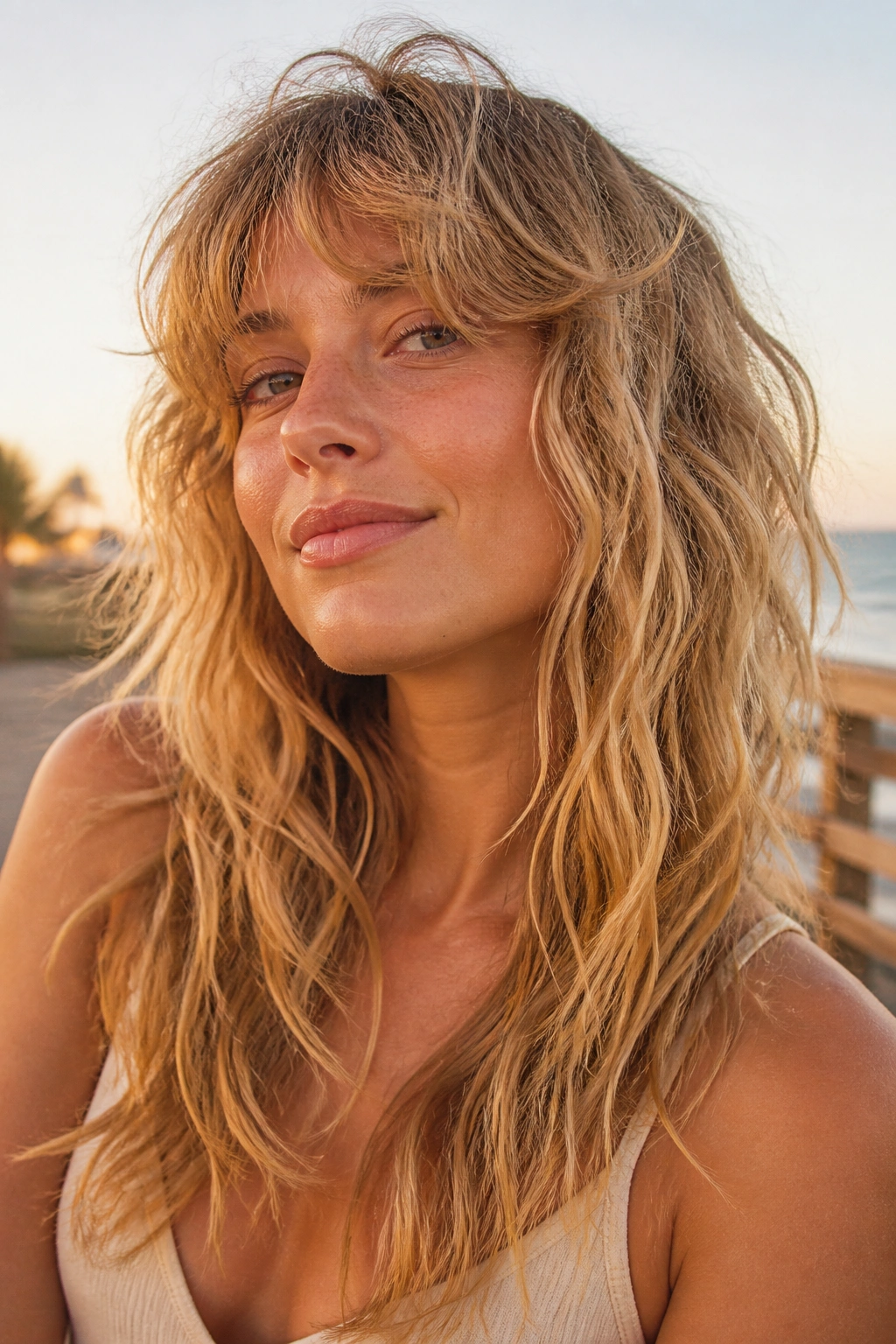
A razor cut changes the whole mood of long shag haircuts. The ends feel lighter, the layers separate a little more, and the final look reads as breezy instead of heavy. On wavy hair, that separation can be lovely.
The best razored beach shag keeps the interior soft while carving out the outer shape. That means you still have movement, but the hair does not collapse into a single block. The texture shows up more clearly when the hair dries, especially if you scrunch in a salt spray or a light curl cream.
What to ask for
- Soft razor work through the ends only
- Layering that follows the wave pattern
- Less weight at the sides if your hair puffs out there
- No over-thinning near the bottom
This is not the cut I’d choose for very fine hair that breaks easily. Razor work can make delicate ends look frayed if the stylist gets too aggressive. On healthy, medium-texture waves, though, it has a relaxed, beachy finish that feels easy without looking lazy.
6. Bottleneck Bang Shag With Long Layers
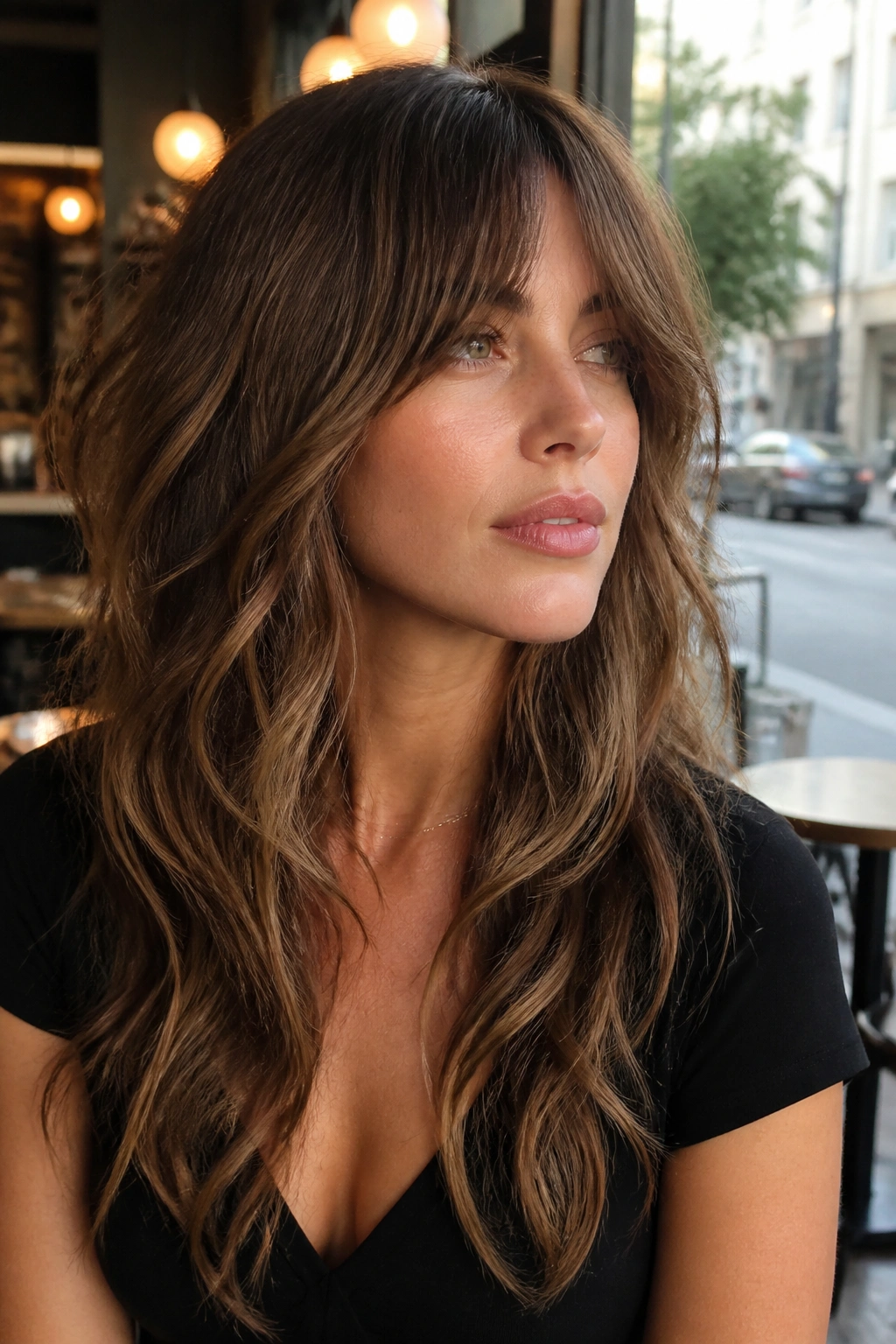
Bottleneck bangs are a small detail with a big effect. They start narrow in the center, then open out toward the cheekbones, which gives a long shag a more sculpted front.
Unlike curtain bangs, which can sometimes look broad and very soft, bottleneck bangs feel a little more tailored. They frame the eyes first, then melt into the side layers. That makes them a smart choice if you want fringe without a full bang commitment.
What makes them different
- The center is shorter and narrower
- The sides are longer and feather into the haircut
- The shape works nicely with loose waves and a middle part
If you wear glasses, this can be a sweet spot. The bangs stay out of the lenses better than a blunt fringe, and the side pieces keep the face from looking overcovered. If you have a longer face, the shape helps shorten the visual distance between forehead and chin without making the haircut feel heavy.
I’d pair bottleneck bangs with a long shag that keeps plenty of length through the back. The contrast is what makes it interesting.
7. Invisible Layer Shag for Fuller Ends
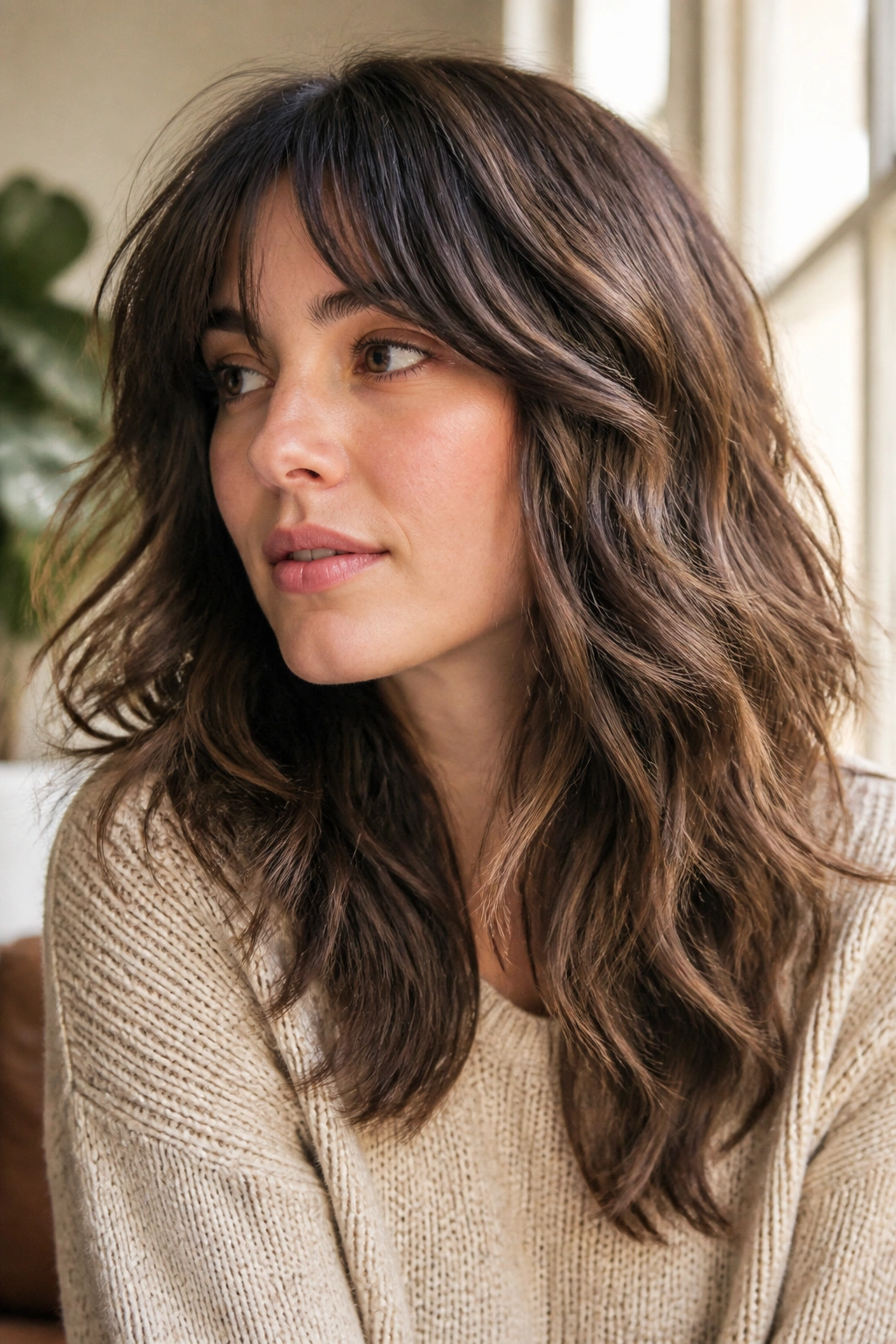
What if you want movement but refuse to give up density? Then this is the version to look at.
An invisible layer shag keeps the outer line fuller and hides most of the layering inside the haircut. You still get lift and movement, but the ends stay thick enough to make the whole style look rich. It is one of the smartest choices for women with medium-fine waves who feel nervous about losing too much hair shape.
How to use it
Tell your stylist you want internal layers, not a visibly chopped outline. The wave pattern should still have room to bend, but the perimeter should look intentionally solid. That way, the haircut does not turn see-through when it dries.
You can air-dry this cut with a light leave-in and get a clean result. Or use a diffuser for a little more root lift. Either way, the goal is not maximum texture. It is controlled movement. That distinction matters.
This is the shag for people who like the idea of a shag more than the full roughness of one. Quiet. But not boring.
8. Flipped-End Retro Shag
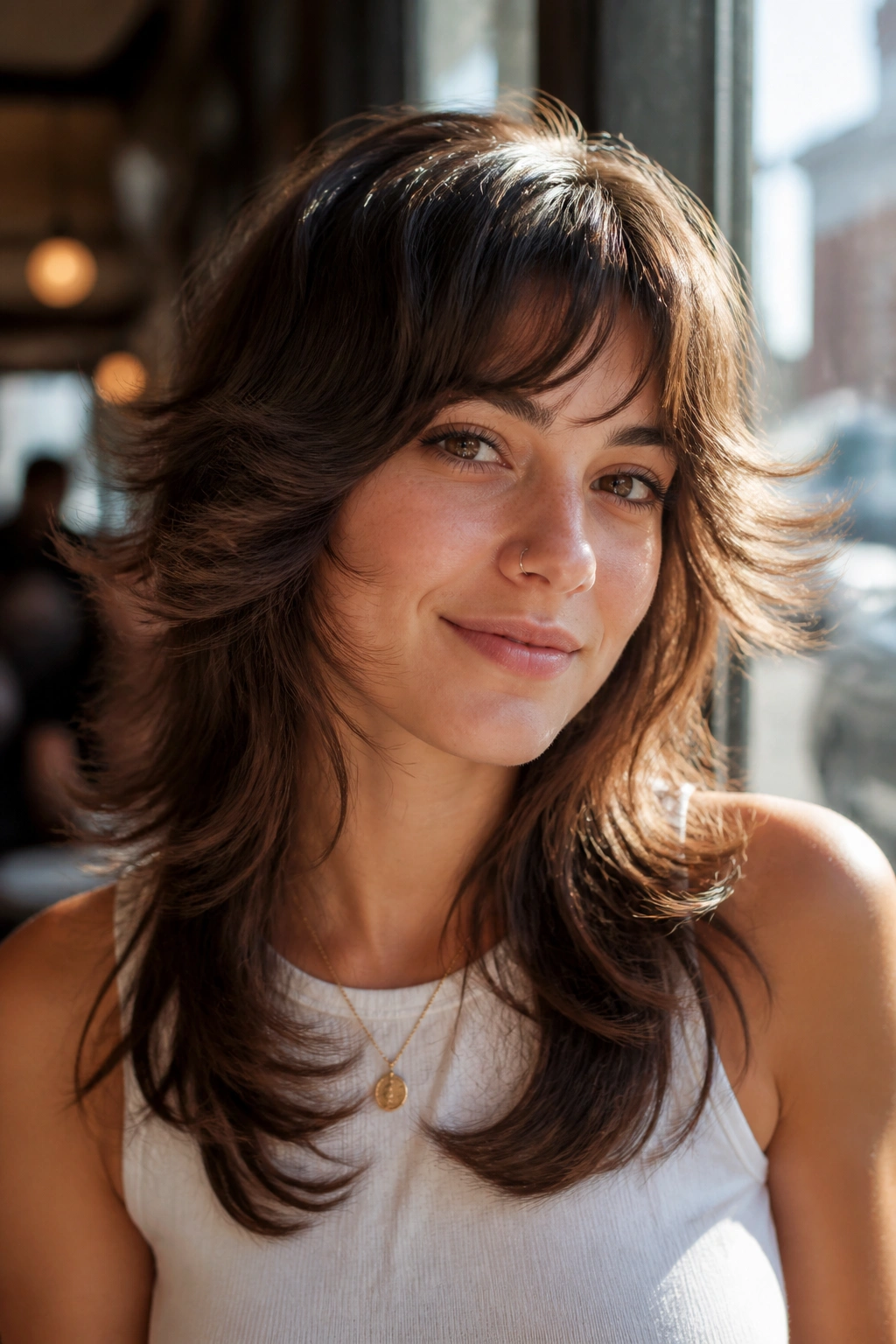
The ends here do a little flip, and that tiny motion changes the whole haircut. On wavy hair, the flipped-end retro shag feels playful, almost a little ‘70s, without looking like a costume.
The shape usually keeps the top layers softer and the lower layers slightly separated, so the ends turn out instead of tucking under. A round brush, medium-barrel hot brush, or even a quick bend with a flat iron can bring the style to life. If your hair already has a natural flick, even better.
Small styling details that matter
- Blow-dry the ends away from the face
- Use a 1 to 1.25-inch round brush for the front
- Keep the crown lifted, not flat
- Finish with a light spray, not a sticky one
This cut is fun on longer faces because the outward movement widens the visual shape a little. It also looks good with a deep side part if you want more drama. The whole point is movement, though, so don’t pin it down too tightly. Let it swing.
9. Shag Mullet Hybrid With Long Waves
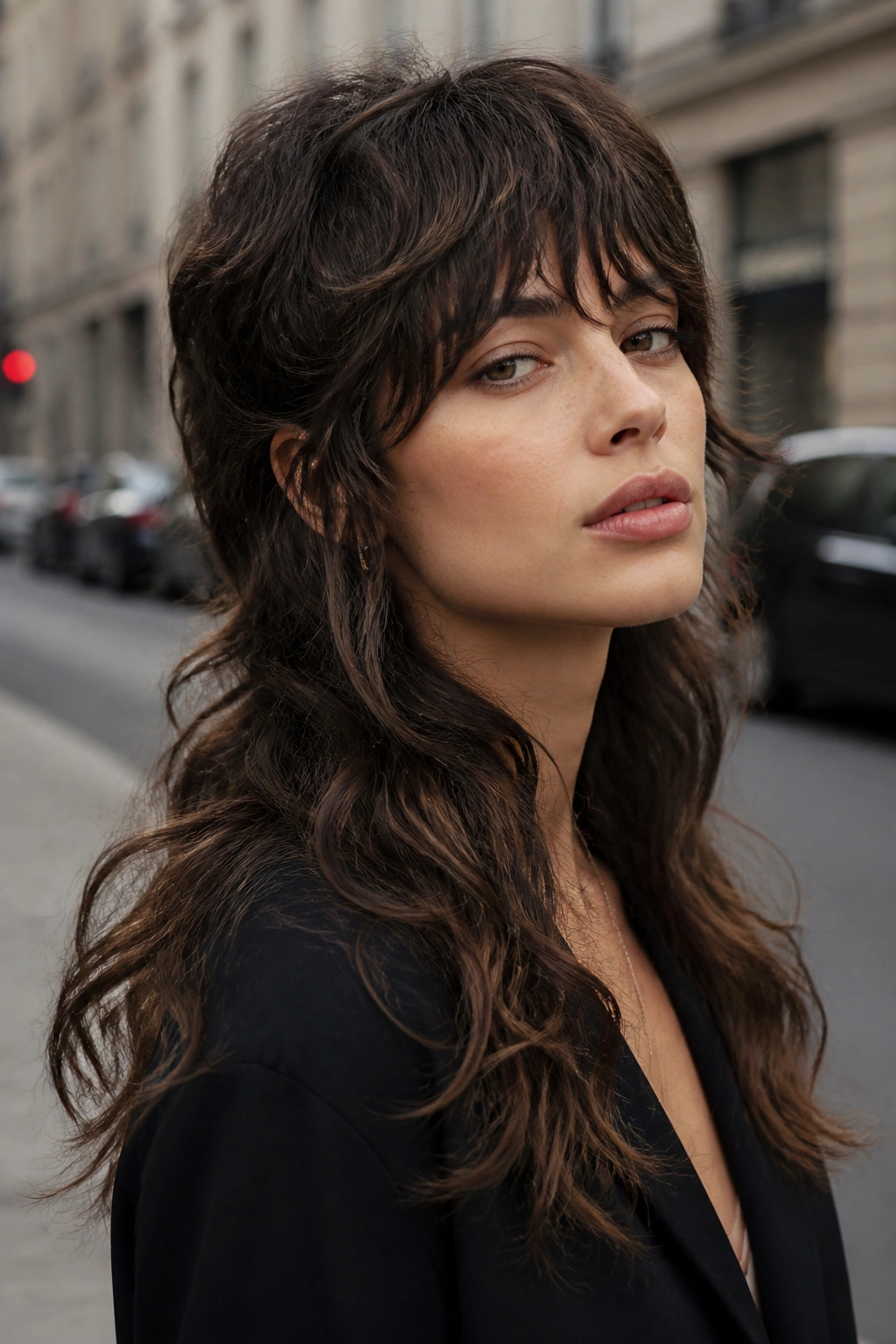
This one is not shy. If you want hair that says something before you do, the shag mullet hybrid gets the job done.
The difference between this and a standard shag is the contrast. The crown and upper layers are shorter and more active, while the back keeps a longer tail. On wavy hair, that contrast creates shape fast. It can be sharp, edgy, and oddly flattering when it’s cut with enough softness around the face.
Some women worry a mullet shape will look too severe. Fair concern. The fix is softer blending at the sides and a longer fringe or cheekbone frame in front. You want the edge without the hard lines.
I would not call this a low-commitment haircut. It has personality. It also grows out into a pretty good shag if the layers are blended well, so the awkward phase is shorter than people expect.
Best for women who like a little rebellion in their haircut and do not mind hair that gets noticed.
10. Thick-Hair Shag That Lifts at the Crown
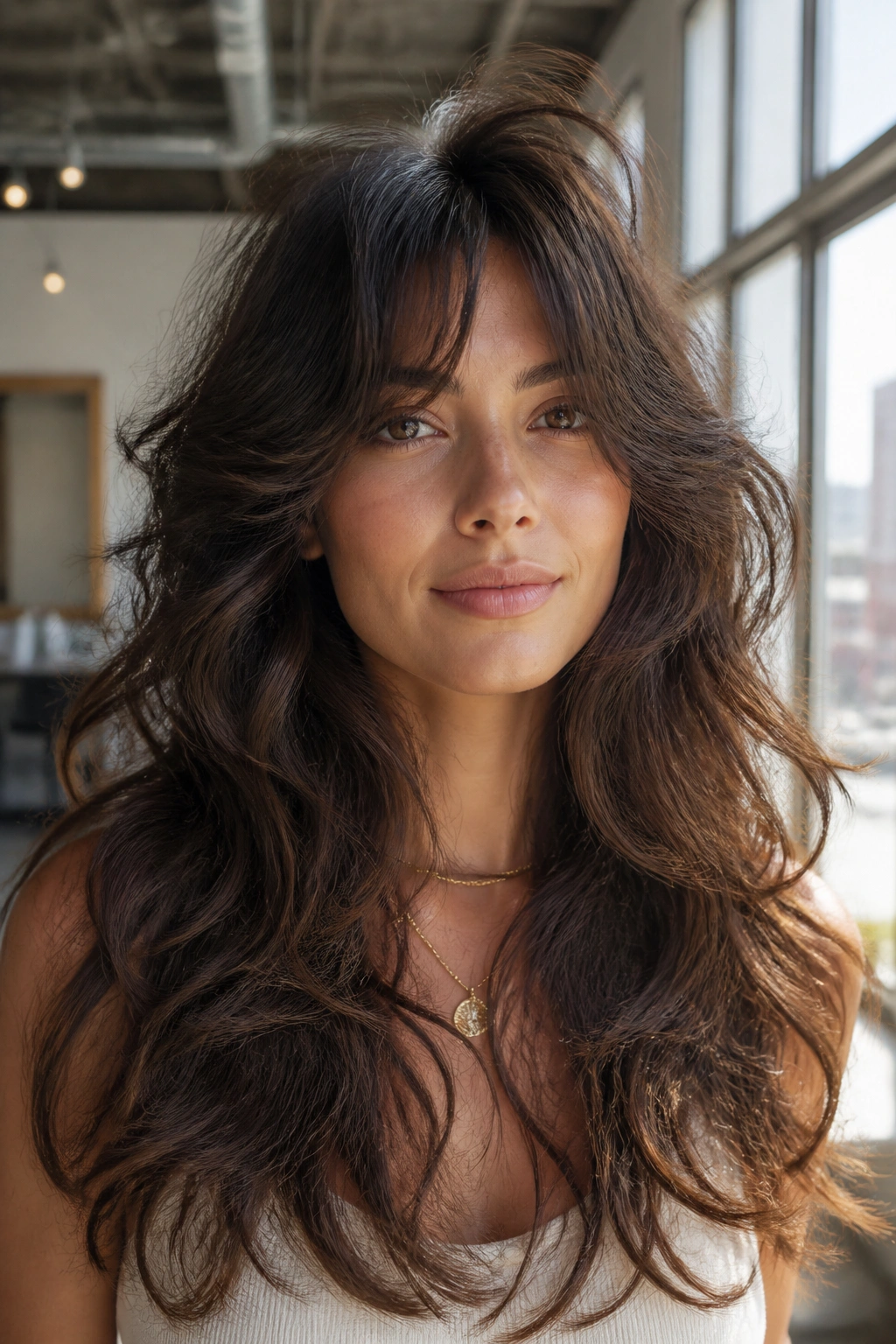
Heavy waves can look gorgeous in a long shag, but they can also get bulky fast. A thick-hair shag fixes that by removing weight in the right places — not everywhere, and that’s where a lot of cuts go wrong.
If your hair turns into a triangle by noon, the crown probably needs movement and the sides need better balance. Ask for interior debulking around the mid-lengths and a few carefully placed shorter layers near the top. The goal is shape, not a pile of thin ends.
What to ask for at the salon
- Weight removal through the interior, not the perimeter
- Longer layers that keep the outline full
- Soft texturizing around the ears if the sides puff out
- A face frame that opens the front without over-thinning it
Thick hair also loves this cut because it shows off the wave pattern instead of hiding it. The hair feels lighter on your neck, and the styling time usually drops a little. Not always. But often enough that you notice.
If your strands are coarse, a cream with slip can keep the ends from looking dry after a diffuser session.
11. Fine-Hair Shag With Gentle Layers
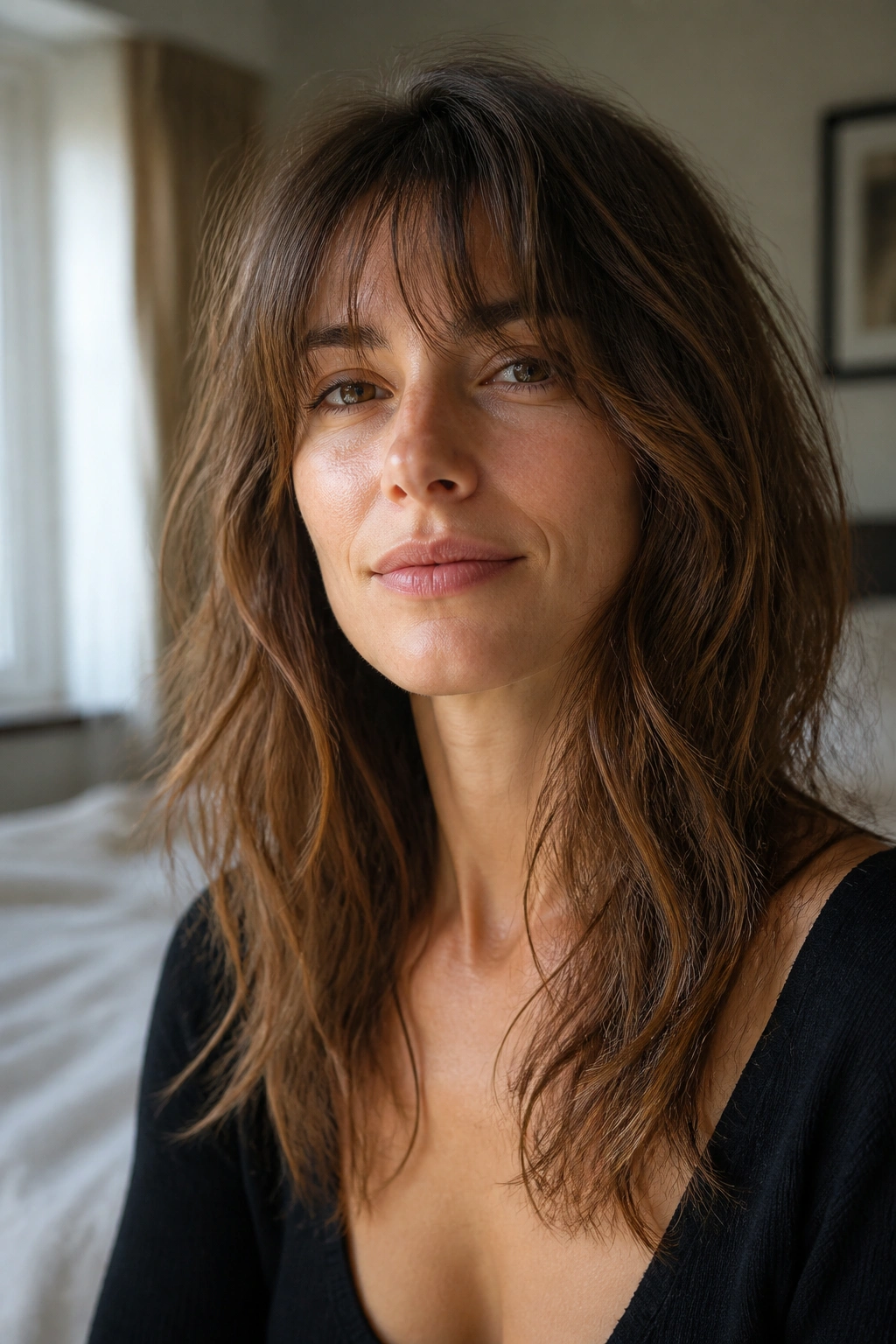
Fine waves need a careful hand. Too much layering and the hair starts to look sparse at the ends, which defeats the point of growing it long.
This version keeps the outline a touch stronger and uses smaller layers to create movement without losing the shape. I prefer it when the longest pieces still read as a line, even if the top has lift. That keeps the haircut from going flat at the bottom, which is the first thing fine hair does when it’s overcut.
Why it’s a better fit than a heavily layered shag
- The length still looks full
- The layers add lift without creating holes
- Styling is simpler, because the haircut already has structure
A root mousse or volumizing foam helps here. Use a small amount, not a fistful. Then rough-dry with your fingers or use a diffuser on low heat. Fine wavy hair can get frizzy if you overhandle it, so keep your hands out of it once the shape starts to set.
This is one of those cuts where less is more. A good stylist knows that. A bored stylist usually does not.
12. Curly-Wavy Shag for Mixed Texture
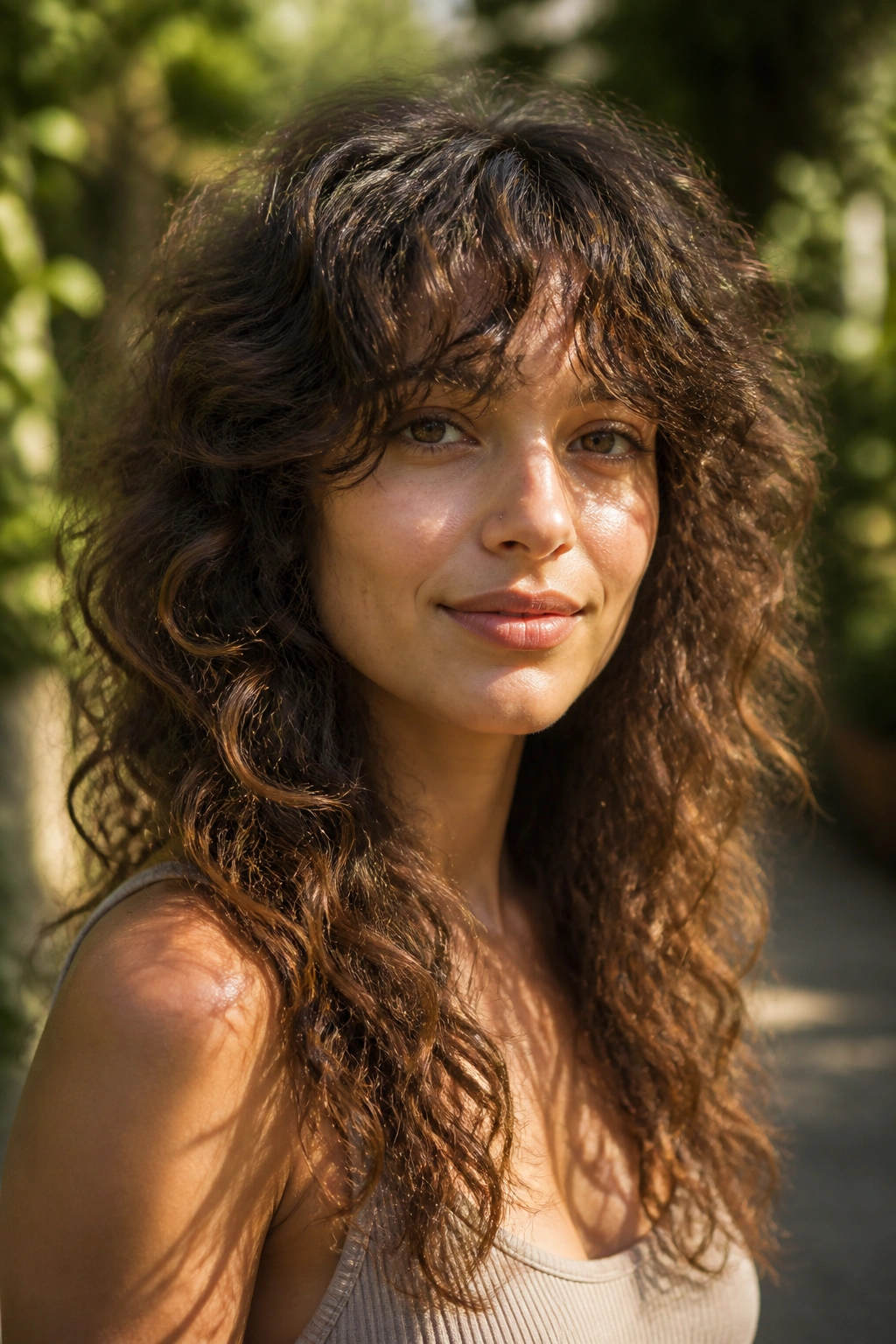
Mixed texture hair deserves its own haircut. A wave that turns curly in humid air is not the same as a loose S-bend that stays fairly calm, and a long shag should respect that difference.
The best curly-wavy shag is often cut with the natural texture in mind, not against it. That might mean cutting it dry or at least making the final shape while the hair sits in its real pattern. If your stylist pulls every strand straight and cuts a neat line, the shape may look fine in the chair and strange once it dries.
You want layers that encourage the curl pockets to stack without causing the perimeter to break apart. That means a slightly longer front, enough weight at the ends, and a crown that is shaped rather than thinned into oblivion.
A lot of women with mixed texture are told to “just get layers.” That advice is too vague to be useful. The placement matters. So does the amount of hair removed. So does where the waves tighten up.
It’s a beautiful cut when done well. And a headache when it’s not.
13. Center-Part Shag With Cheekbone Layers
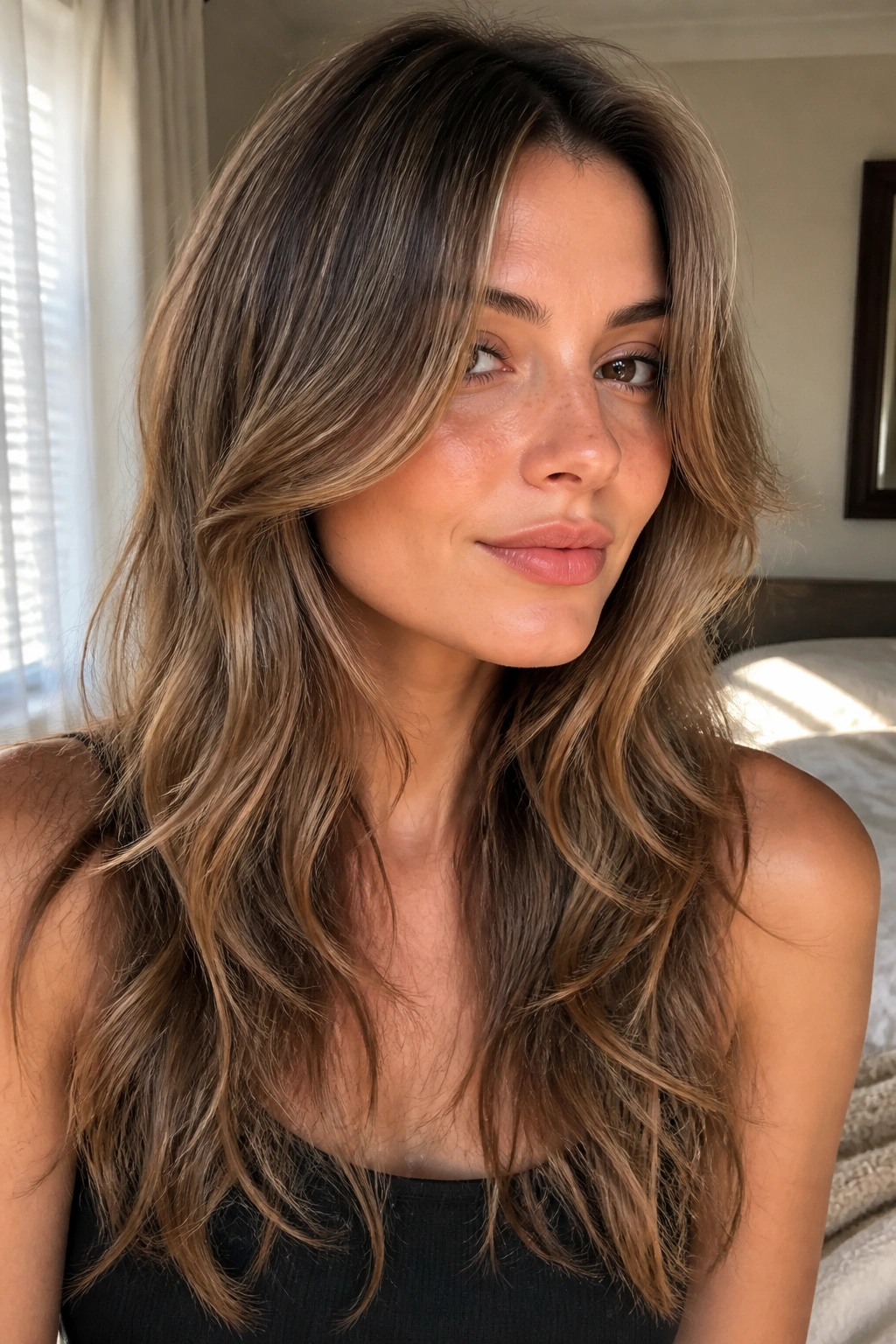
A center part can make a shag feel cleaner and more modern without losing any softness.
The trick is to use the front layers to frame the cheekbones instead of the chin. That gives the face a little lift and keeps the style from falling straight down. On wavy long hair, the symmetry of a center part makes the texture feel deliberate, not messy.
Why this version works
The middle part keeps both sides balanced, which is helpful if your waves tend to lean heavier on one side. It also lets the face frame do more work. If the shortest pieces land around the cheekbones, your eyes get a natural frame and the haircut feels connected from top to bottom.
I like this shape on oval, heart, and diamond faces. It’s neat without being strict. The waves can still move, but the part keeps the silhouette calm.
If your hair has a cowlick at the front, don’t fight it too hard. You may need a soft off-center part for a few weeks while the fringe learns its place. Hair remembers. Sometimes annoyingly.
14. Side-Part Glam Shag With Soft Volume
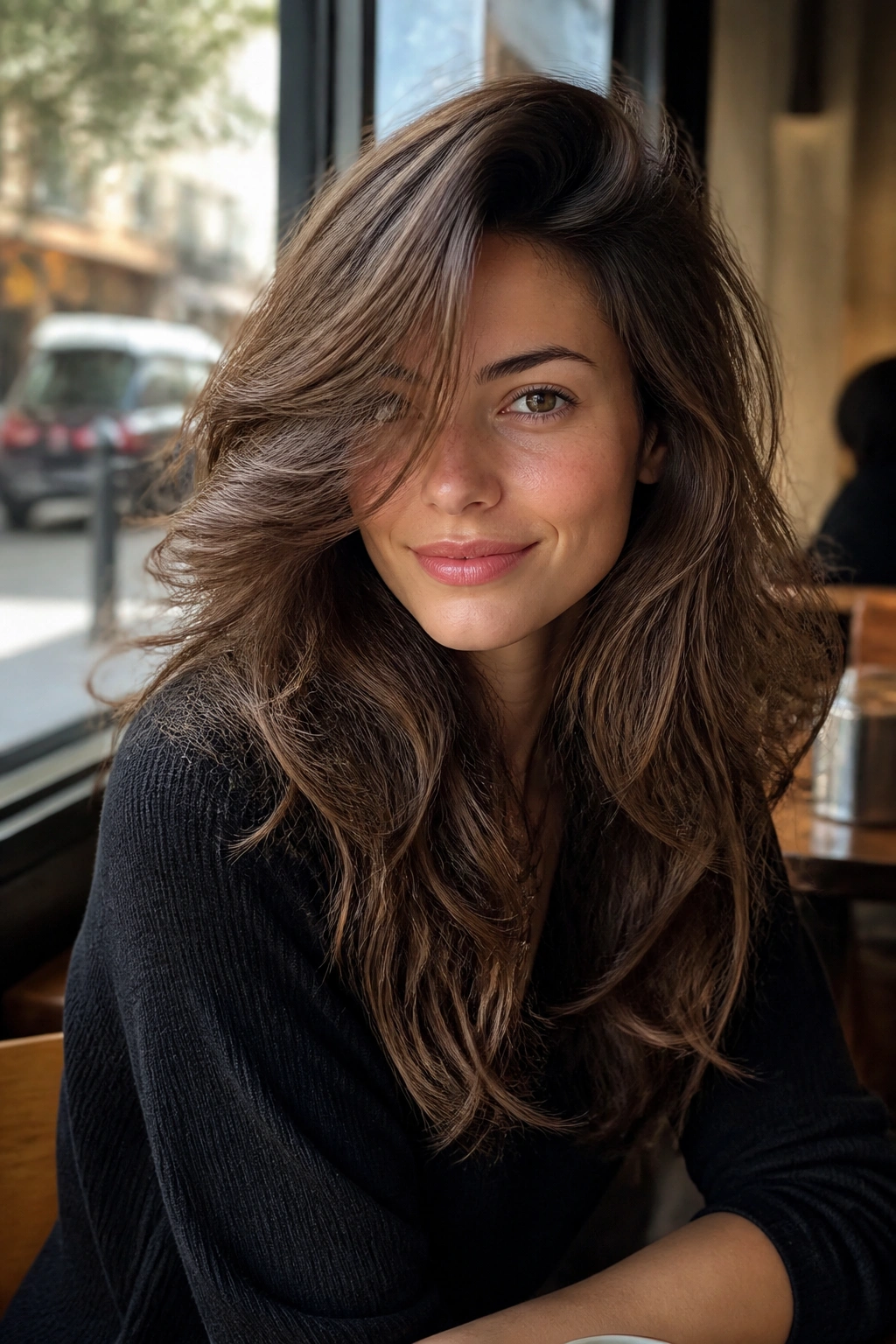
A deep side part changes the mood fast. One minute the haircut feels relaxed; the next it has a little old-Hollywood bend to it.
This is the shag for women who want more lift at the root and a sweep across the forehead. The side part pushes the wave pattern into a softer arc, which can be helpful if your face feels long or if you like a little asymmetry. It also makes long layers look richer because one side falls forward and the other side opens up.
A deep side-part shag does not need a lot of product. Sometimes the best look is just a clean root, a loose bend, and a clip while the hair sets. If you want polish, use a medium barrel iron only on the front sections and leave the rest natural. That blend of touched and untouched hair gives the style some life.
This shape works especially well when you want a haircut that can flip between casual and dressed up. That kind of flexibility is hard to beat.
15. Lived-In Long Bang Shag
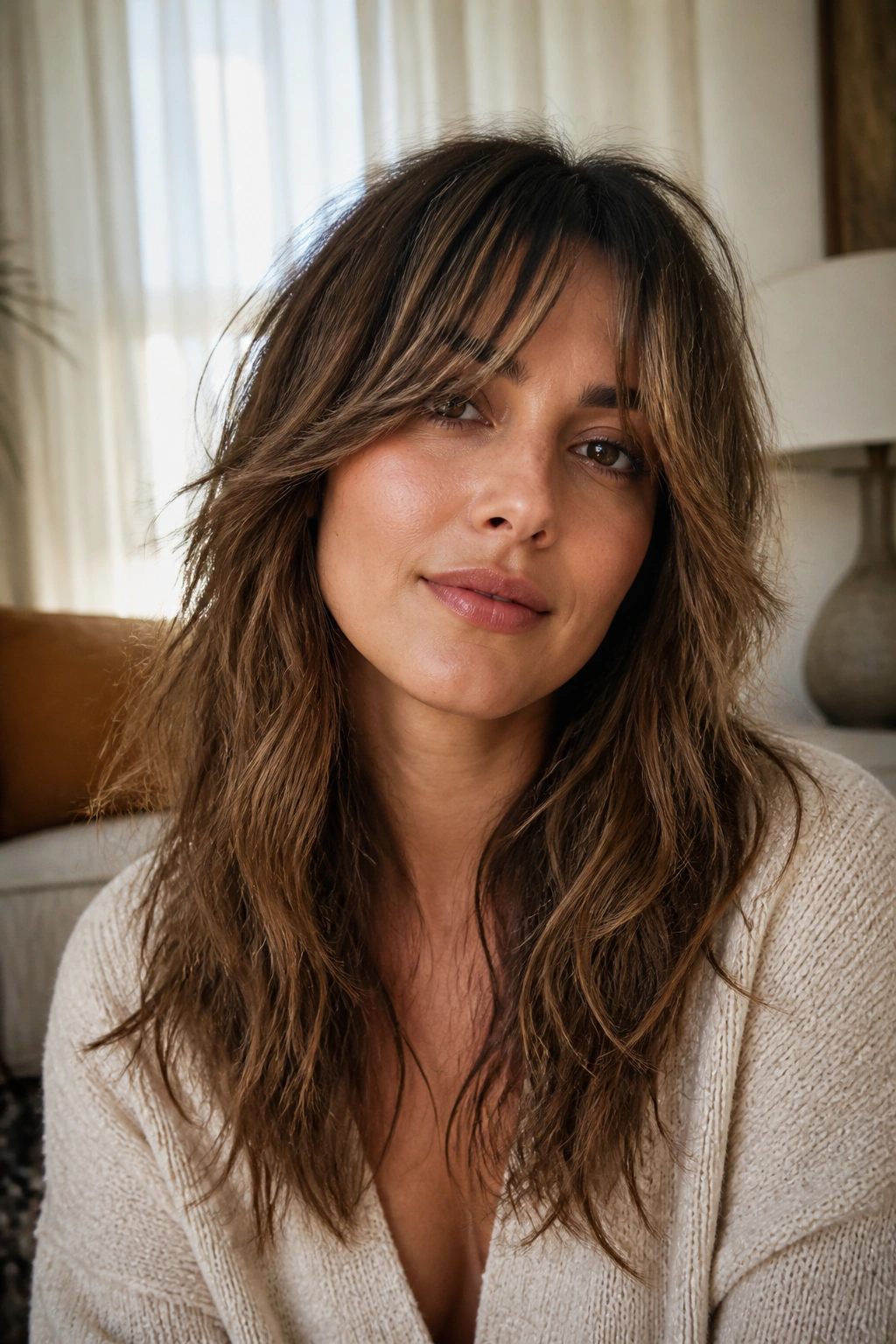
This may be the easiest shag on the list to grow out.
The lived-in long bang shag keeps the fringe long enough to push to the side, split in the middle, or tuck back on lazy days. The layers are soft, the front is flexible, and the whole haircut tends to age well between salon visits. That matters more than people admit.
What to tell your stylist
- Keep the fringe below the brows or longer
- Blend the face frame into the rest of the cut
- Avoid overly short crown layers
- Leave enough weight at the ends for a soft finish
The beauty of this cut is that it does not demand a full styling routine. A quick bend with a diffuser, a little mousse, and maybe one pass with a curling wand on the front pieces is enough. If your life is busy, this is the kind of haircut that keeps up.
Some shags shout. This one mutters stylishly from across the room.
16. U-Shaped Perimeter Shag With Long Movement
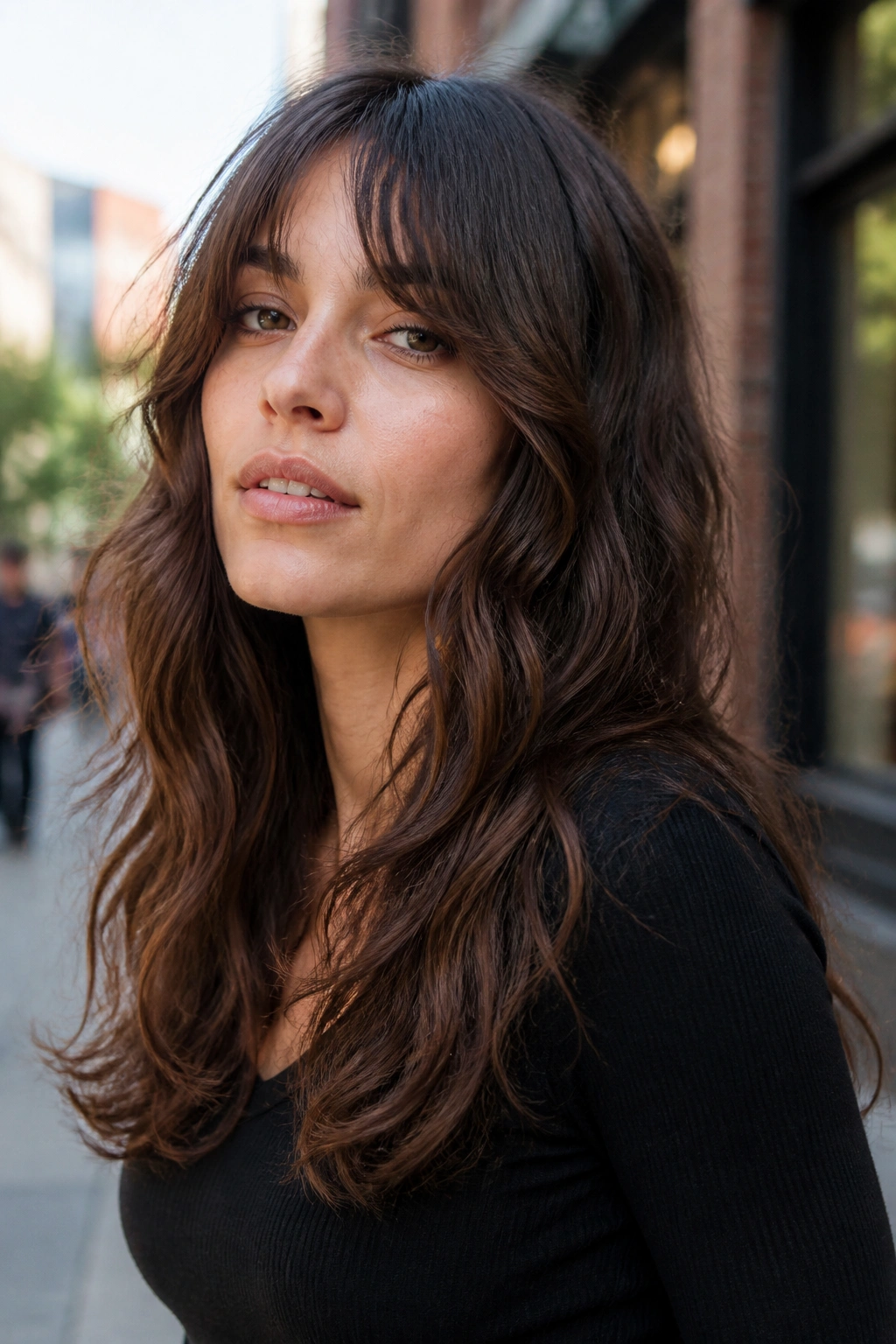
A U-shaped perimeter keeps the ends looking full, which is exactly what some long shag haircuts need.
Unlike more razored versions, this one protects the length in back and lets the layering happen inside the shape. The result is softer from the side and richer from the rear. If you like long hair to still look like long hair, this is a smart direction.
The U shape also helps waves fall in a more graceful curtain rather than a blunt block. That can matter a lot on dense hair, where the ends can look heavy if they’re cut straight across. A rounded perimeter softens that line without losing the feeling of length.
This is one of my favorite options for women who want a polished version of a shag. It has movement. It has softness. It still feels grown-up.
And it plays nicely with updos, which a lot of layered cuts do not. That’s a practical bonus people forget until they need a quick clip and a coffee run.
17. Airy Razor Shag With Piecey Waves
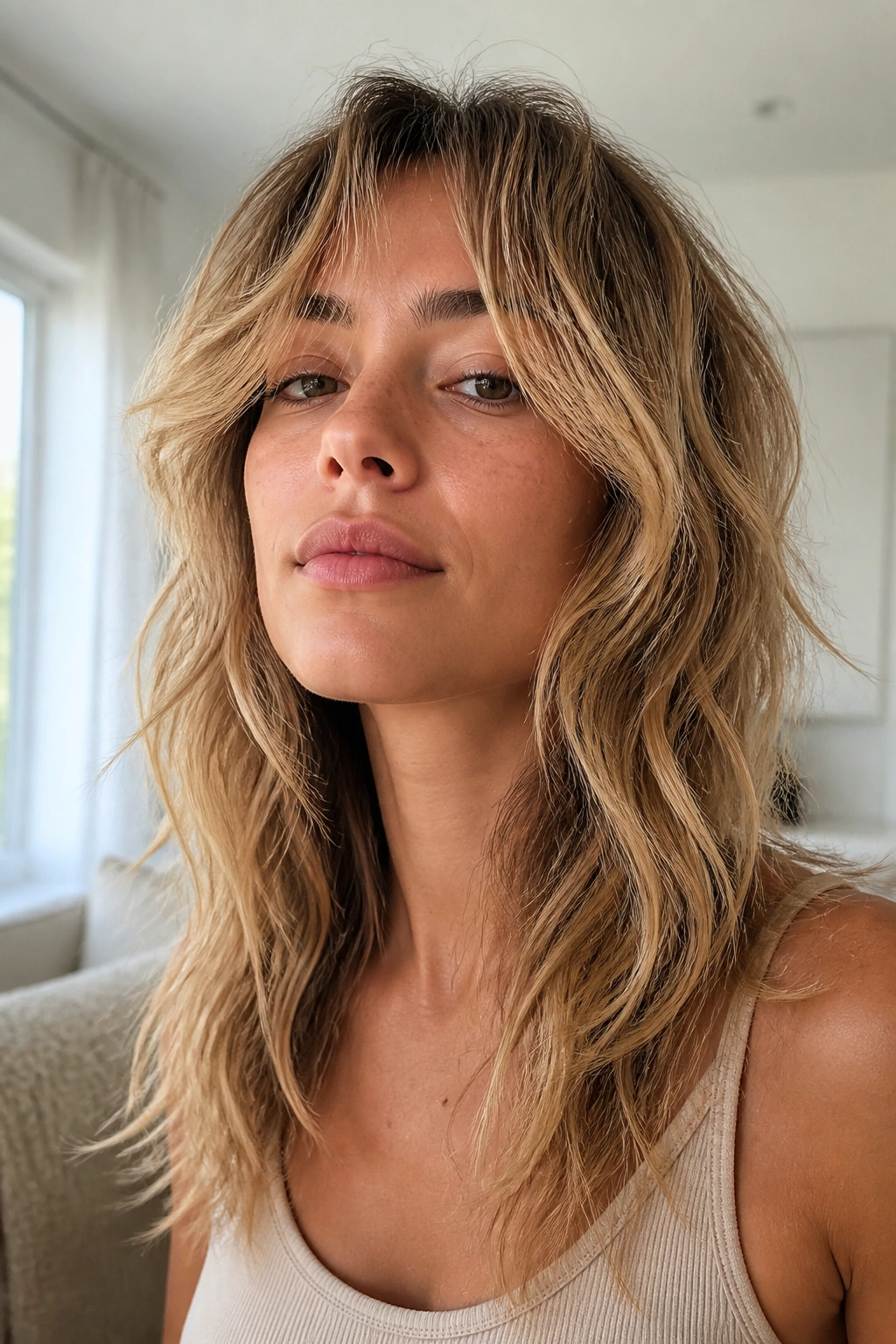
Can a razor cut and long hair get along? Yes — if the hair is healthy and the stylist has a light hand.
An airy razor shag works best when the goal is separation. The layers look piecey, the ends feel light, and the waves show off a bit more texture after drying. If your hair is naturally medium or coarse, this cut can make it feel much more responsive to styling.
How to use it
A small amount of styling cream goes on damp hair, then a diffuser helps the pieces set without smashing the pattern. If you prefer heat styling, use a round brush on the front and leave the rest rougher. That mix keeps the haircut from looking too uniform.
What you want to avoid is over-razoring fine or fragile hair. The ends can start looking see-through, and the whole cut loses strength. On stronger wavy hair, though, the finish can be airy in a way scissors alone sometimes miss.
It’s a strong choice if you love texture and do not mind a haircut with a little edge to it.
18. Soft Wolf Cut for Long Wavy Hair
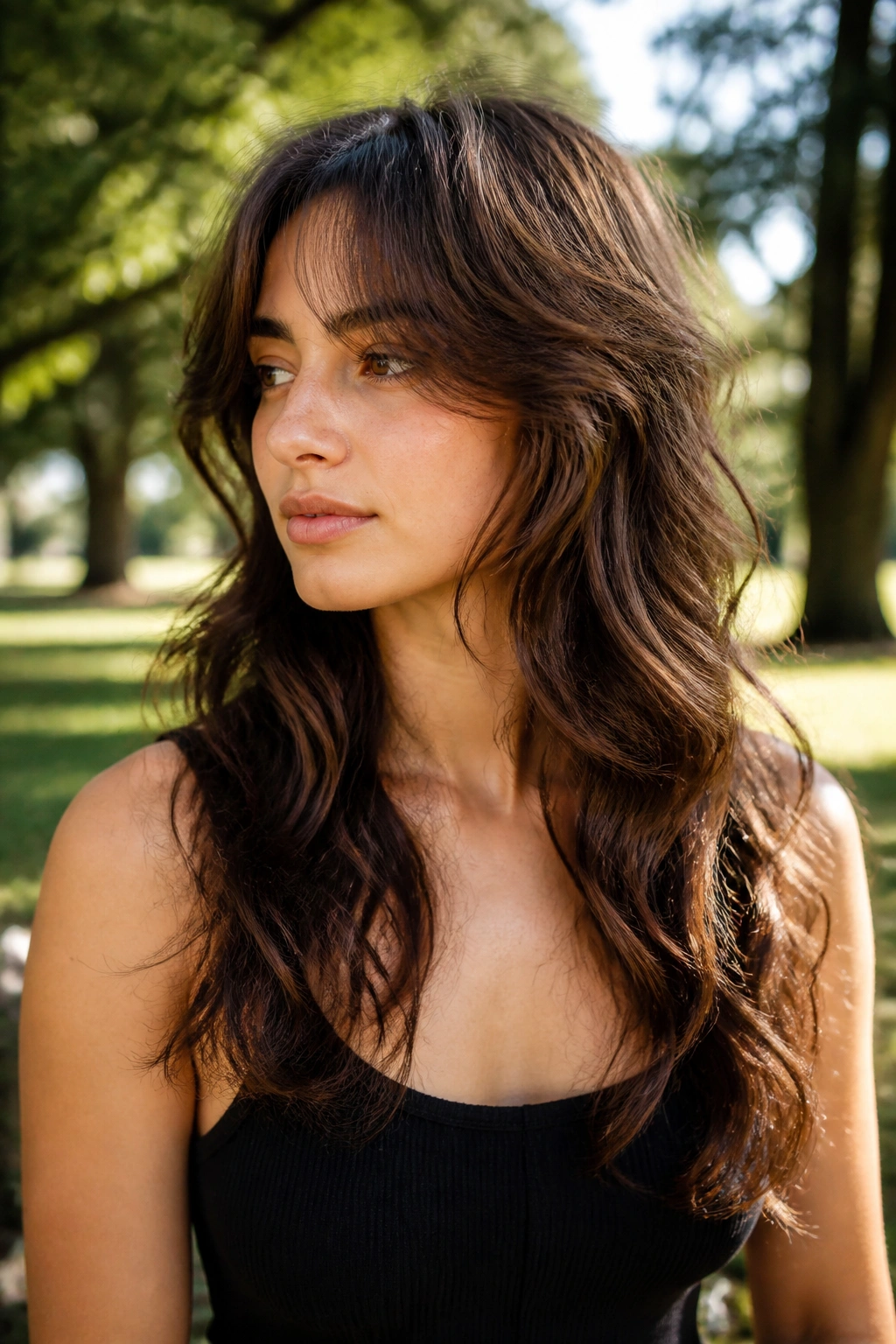
The soft wolf cut is what I’d recommend to someone who likes the idea of a wolf cut but does not want the full bite.
It keeps the crown and face a bit shorter, but the difference between the top and bottom is gentler. That makes it easier to wear on long wavy hair because the shape still feels feminine and wearable, not too spiky or disconnected. You get the lifted top, the airy sides, and a length that still feels like yours.
The best version has a rounded fringe or long curtain bang, plus layers that taper down the head instead of stopping abruptly. That smooths out the transition and makes the haircut easier to style on ordinary mornings.
If you want something that sits between shag, mullet, and long layered cut, this is the one. It’s probably the most flexible finish in the bunch, which is why so many women end up circling back to it after trying sharper shapes. The hair moves. The outline stays readable. Good enough for me.
Final Thoughts
The best long shag for wavy hair is the one that respects your texture instead of fighting it. Some women need volume at the crown. Some need fullness at the ends. Some want bangs that frame the eyes, and others want the whole cut to feel softer and longer. Those are not minor differences. They change the haircut.
If you’re taking photos to the salon, bring two. One should show the overall shape you want. The other should show the fringe or face frame. Stylists can work with that much better than vague words like “shaggy” or “piecey,” which mean about twelve different things depending on who is hearing them.
And if you are torn between two versions, choose the one that will still look good after the first wash. That’s the haircut that earns its keep.
