



A short shag haircut does not whisper. It has bite, broken ends, and enough movement that it looks better after a bus ride than after a perfectly polished blowout.
That is why short shag haircuts for edgy women keep hanging around in salons and on real people’s heads instead of disappearing after a photo shoot. The cut does a lot of the work for you. A shorter crown, a little lift around the cheekbones, and a fringe that sits slightly off-center can carry more attitude than a shelf full of styling products.
The mistake people make is thinking “shag” means “more layers, more better.” Not true. On short hair, too many layers can turn the shape fuzzy in a bad way, especially if the ends are already fine. The good versions have a plan: a stronger outline, texture where it matters, and movement that looks deliberate even when it’s a little messy.
Some of these cuts lean punk. Some are softer and more wearable. All of them have edge, and all of them can work without turning your morning into a styling project.
1. Choppy Micro Shag
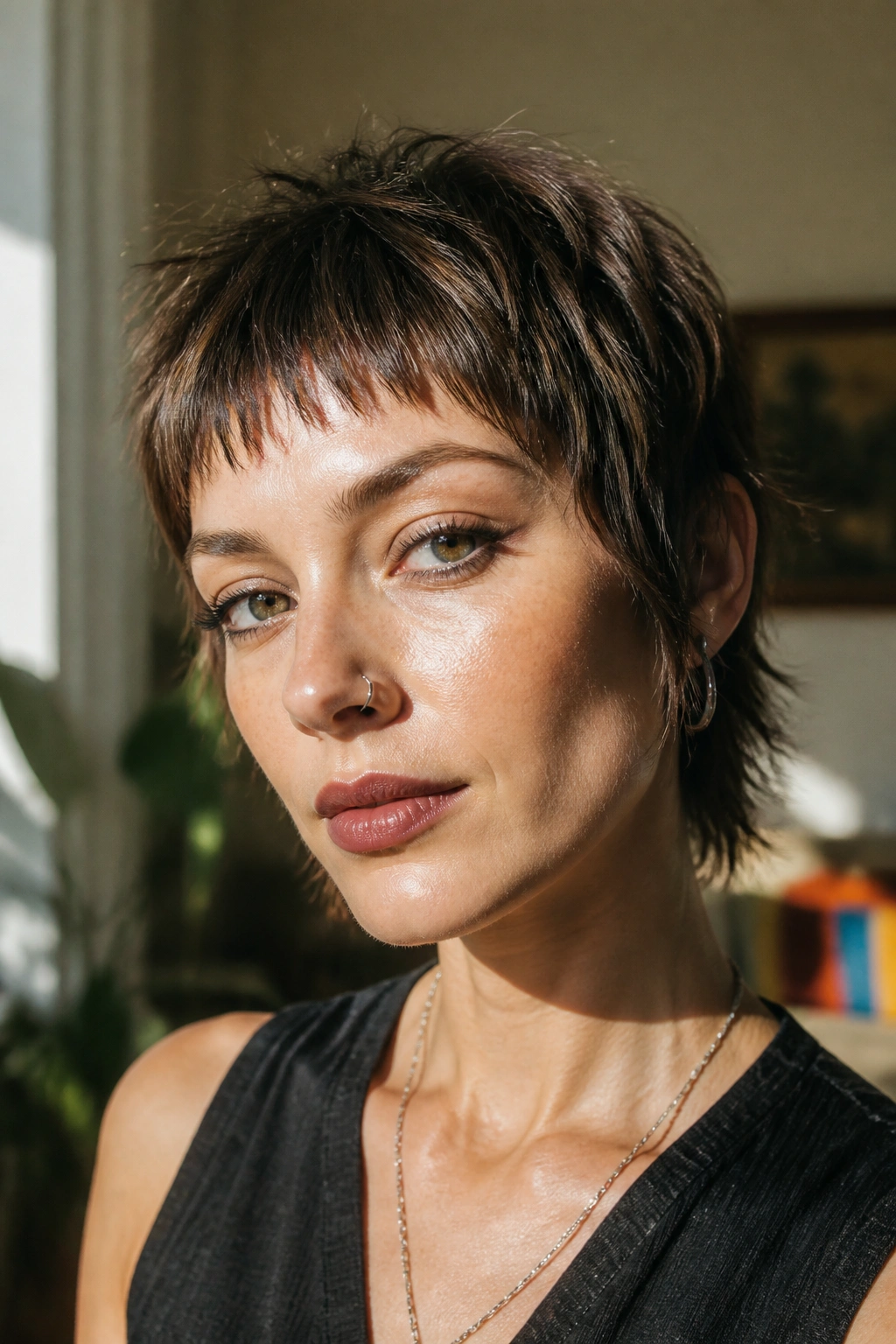
A choppy micro shag is the shortest, punchiest version on this list. It sits close to the head, but it never feels flat because the whole point is broken-up texture — not tidy little sections that behave themselves.
Why It Works on Short Hair
At this length, the eye notices silhouette first. A micro shag keeps the top airy and the edges uneven, so the haircut moves even when you do almost nothing to it. The crown gets a little lift, the sides stay soft, and the whole cut reads as intentional without looking overworked.
It also solves that awkward “helmet” problem short cuts can get. You know the one. The hair sits like a cap, and no amount of finger-fluffing fixes it. A micro shag avoids that by keeping the perimeter light and the interior choppy.
Quick Shaping Notes
- Best on fine to medium hair that needs movement fast.
- Ask for point-cut ends and short internal layers.
- Keep the fringe light and broken, not blunt and heavy.
- Style with a small amount of mousse on damp roots, then rough-dry with your fingers.
Pro tip: skip heavy oil on the ends. It kills the texture in about ten minutes.
2. Curtain-Bang Short Shag

Curtain bangs are the easiest way to soften a short shag without taking away its edge. They split the front open, frame the face, and make the haircut feel a little cooler, a little less severe, and a lot easier to grow out.
A lot of people think curtain bangs belong only with longer cuts. They don’t. On a short shag, they give the top shape and keep the front from looking too chopped or too boxy. If the bangs start around the cheekbone and taper toward the jaw, the cut gets that lived-in swing that makes shag haircuts feel expensive even when they’re not fussy.
I especially like this version on people who want movement but do not want a full fringe sitting in their eyes all day. The center opens just enough to show some forehead, which keeps the cut from feeling heavy. It also works nicely with glasses, because the fringe can bend around the frame instead of fighting it.
A quick blow-dry on the front pieces helps. Wrap each side around a medium round brush for 20 or 30 seconds, then let the rest dry loose. That little bit of front shaping matters more than people think.
3. Razor-Cut Jawline Shag
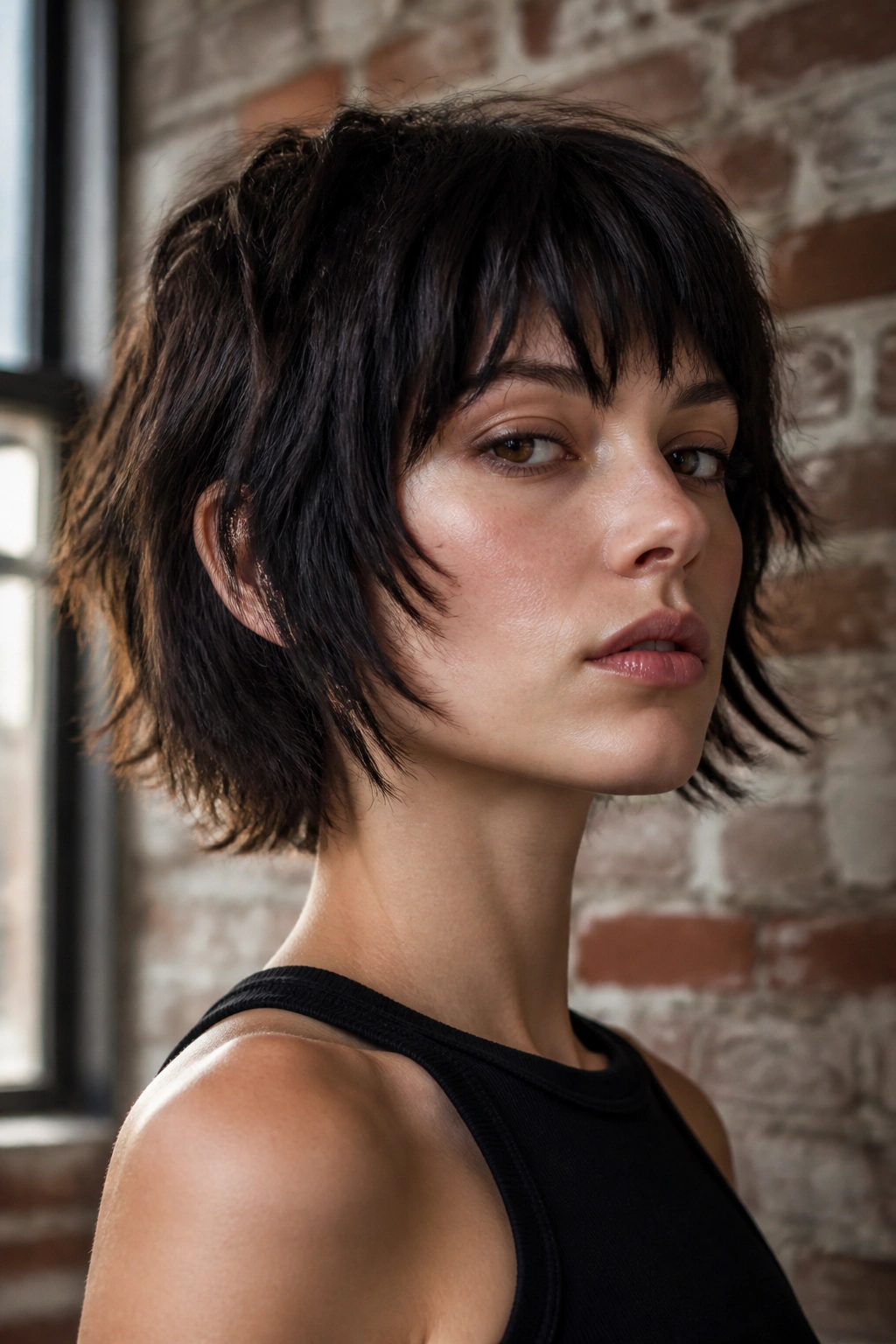
Why does a razor-cut shag look sharper than a scissor-cut one? Because the blade removes weight in a softer, feathered way, and on short hair that makes the whole perimeter look lighter and more jagged at the same time.
This cut sits beautifully around the jaw. The line is there, but it is not blunt. Instead, the ends melt into one another with a sort of broken edge that works especially well if your hair is thick, coarse, or prone to puffing out at the sides. You get shape without the bulky mushroom effect.
How to Ask for It
Ask your stylist for razor detailing at the ends, not a heavy thinning job. Those are not the same thing, and the difference matters. You want controlled texture at the perimeter and enough internal weight to keep the cut from fraying.
Also ask for the shortest pieces to land around the jawline or just below it. That keeps the face framed without turning the haircut into a mini mullet by accident. A good razor shag should look sharp in motion, not shredded into bits.
Watch for this: if your hair is very fine already, too much razoring can make the ends look wispy fast. In that case, a scissor-shag with point-cut edges is the safer move.
4. Curly Short Shag
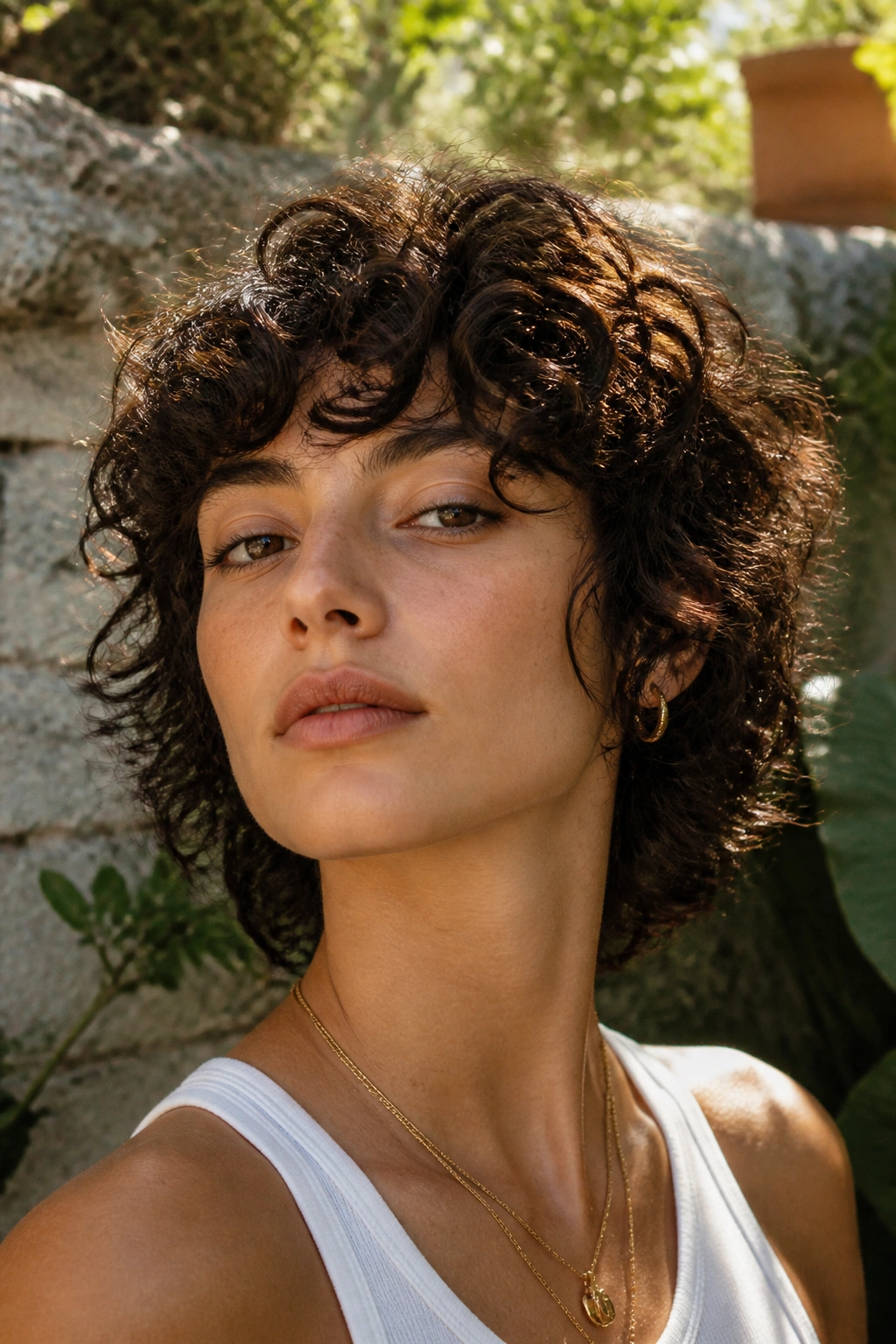
If your curls swell the second they dry, this is the cut that gives you some peace. A curly short shag keeps the shape open instead of forcing your texture into a triangle, which is a problem curly-haired people know too well.
The best version is usually dry-cut. That matters. Curly hair changes so much as it dries that cutting it wet can leave the layers too short once the shrinkage kicks in. With a short shag, you want the stylist to see the curl pattern as it lives in real life, not as it looks stretched out and wet under the chair lights.
What Makes It Work
- The top stays a little longer so the shape has room to bounce.
- Face-framing pieces hit around the cheekbone or lip.
- Layers are placed where the curls need space, not everywhere.
- A diffuser on low heat keeps the curl pattern from getting blasted into fuzz.
This cut shines when you stop trying to make every curl behave the same way. Let the top be a little looser. Let the perimeter do its own thing. The charm comes from that uneven, springy finish, not from perfection.
One good sign? The haircut still looks interesting on day two.
5. Pixie Shag
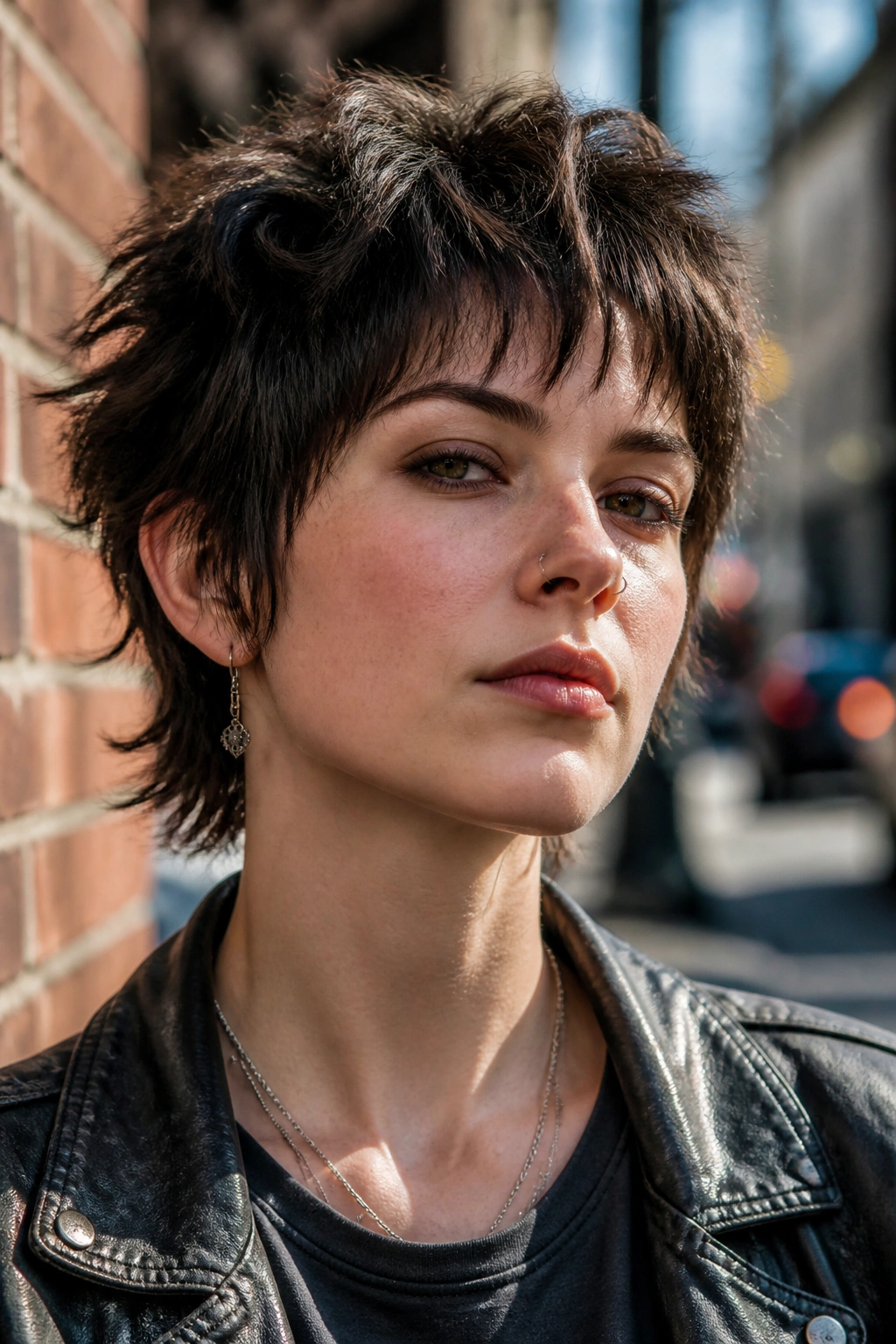
The pixie shag is the cut people underestimate until they see it moving. It borrows the close shape of a pixie, then breaks that neatness apart with shaggy layers, so the result feels tougher, cooler, and less precious.
This is a good option if you want very short hair but hate the idea of a fully polished pixie. The top stays piecey. The sides can be tight without looking severe. And the fringe, even when it is short, has room to fall a little messy across the forehead or temple.
Flat, tidy, and overdone is the enemy here.
A pixie shag also grows out better than a lot of cropped cuts because the extra texture buys you time. Instead of hitting that awkward “I need a haircut right now” stage in a week and a half, it usually softens into a different shape that still feels cool. That is one reason I like it for people who want edge but do not want a salon appointment every few weeks.
Use a pea-sized amount of matte paste, warm it in your hands, and pinch the top pieces upward. Don’t comb it smooth. The charm is in the roughness.
6. Wolfy Shag Bob
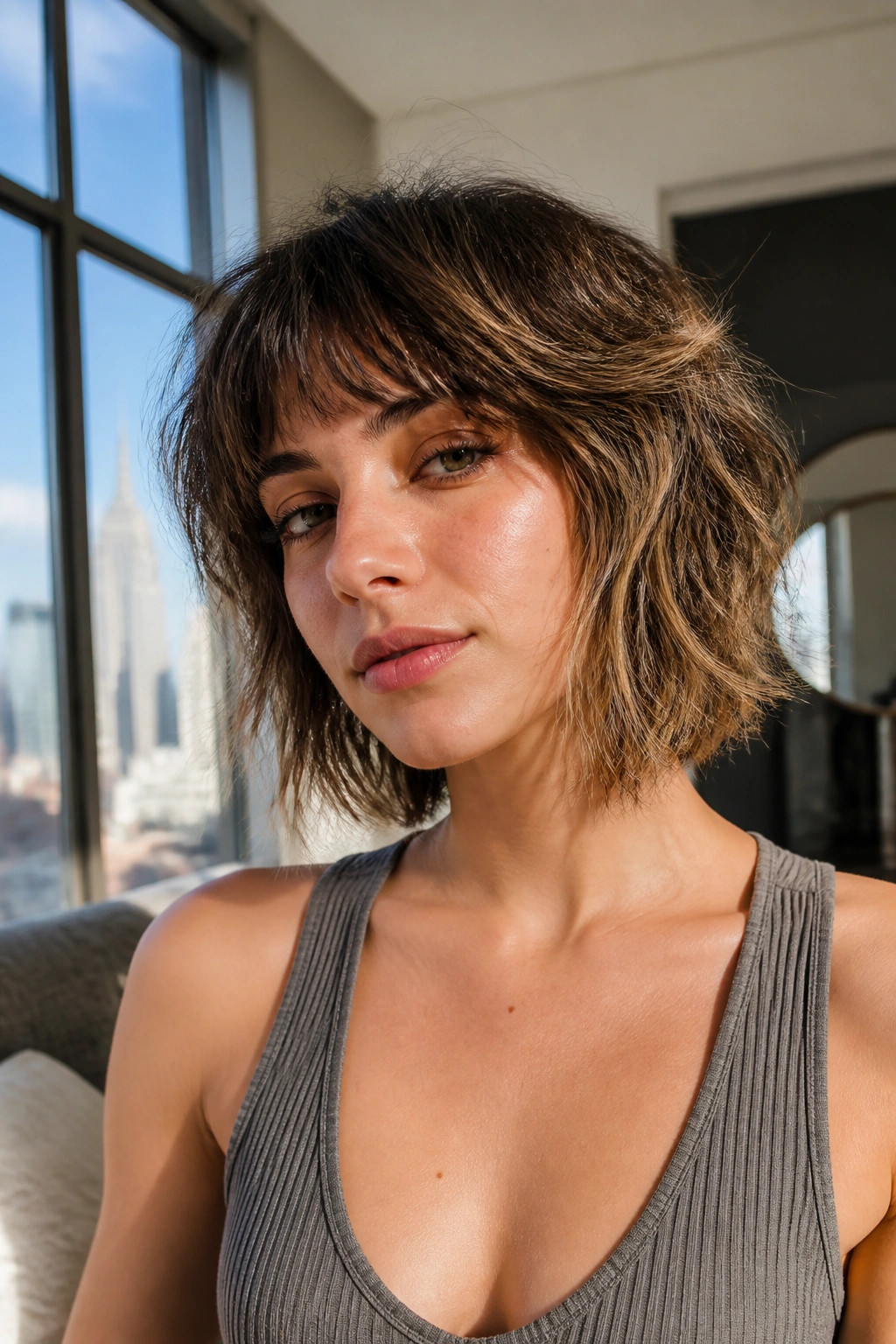
A wolfy shag bob is not just a bob with a moodier name. The difference is in the layers. A classic bob sits cleaner and heavier through the outline, while the wolfy version breaks the shape up so the crown feels lifted and the ends feel lighter.
That shift matters if you like short hair but dislike anything that sits too tidy around the jaw. The wolfy shag bob has a little more chaos in the top and a little more movement through the sides. It usually lands somewhere between the chin and the neck, which keeps it wearable but still gives it enough edge to stand apart from a standard bob.
It works best when the back isn’t too blunt. A stacked or slightly tapered nape can help, but the key is that the layers stay visible when the hair moves. If the cut looks the same from every angle, it is missing the point.
This is the one I’d recommend to someone who wants shape without going full mullet. It keeps the outline strong, but it refuses to stay boring. That balance is the whole reason it keeps showing up on people who like a sharp haircut but still want some softness around the face.
7. Piecey Side-Bang Shag
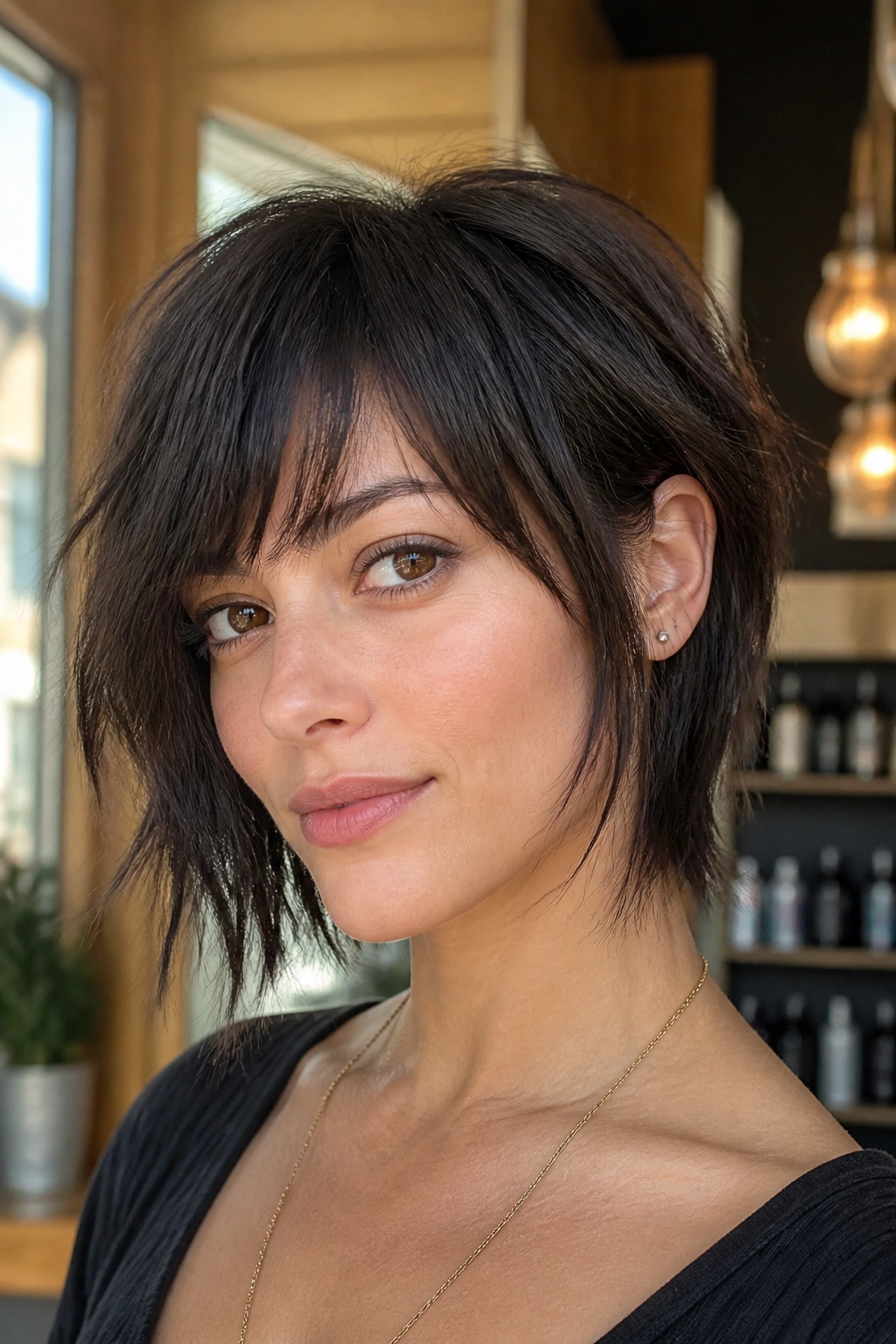
Side bangs can make a short shag feel less rebellious, but they also make it more wearable. The diagonal line pulls the eye across the face, which is useful if you want movement without committing to a full fringe.
Where the Fringe Sits
The sweet spot is usually just below the brow and brushing toward the cheekbone. Too short, and it can look like an afterthought. Too long, and it starts behaving like a grown-out bang instead of part of the cut. The best side-bang shag has enough length to tuck behind one ear and enough texture to fall forward when you want it to.
This shape is a good pick if your face feels long or narrow, because the side sweep adds width where you want it. It can also balance a strong jaw without making the haircut soft in a boring way.
Styling Notes
- Blow-dry the bangs first so they set in the right direction.
- Use a light cream or lotion, not a heavy cream.
- Finger-comb the top instead of brushing it flat.
- Keep the ends broken and uneven, especially around the temple.
Small warning: if you load it up with hairspray, the whole thing can go stiff fast. Better to keep it touchable and let the pieces separate a little.
8. Tapered Nape Shag
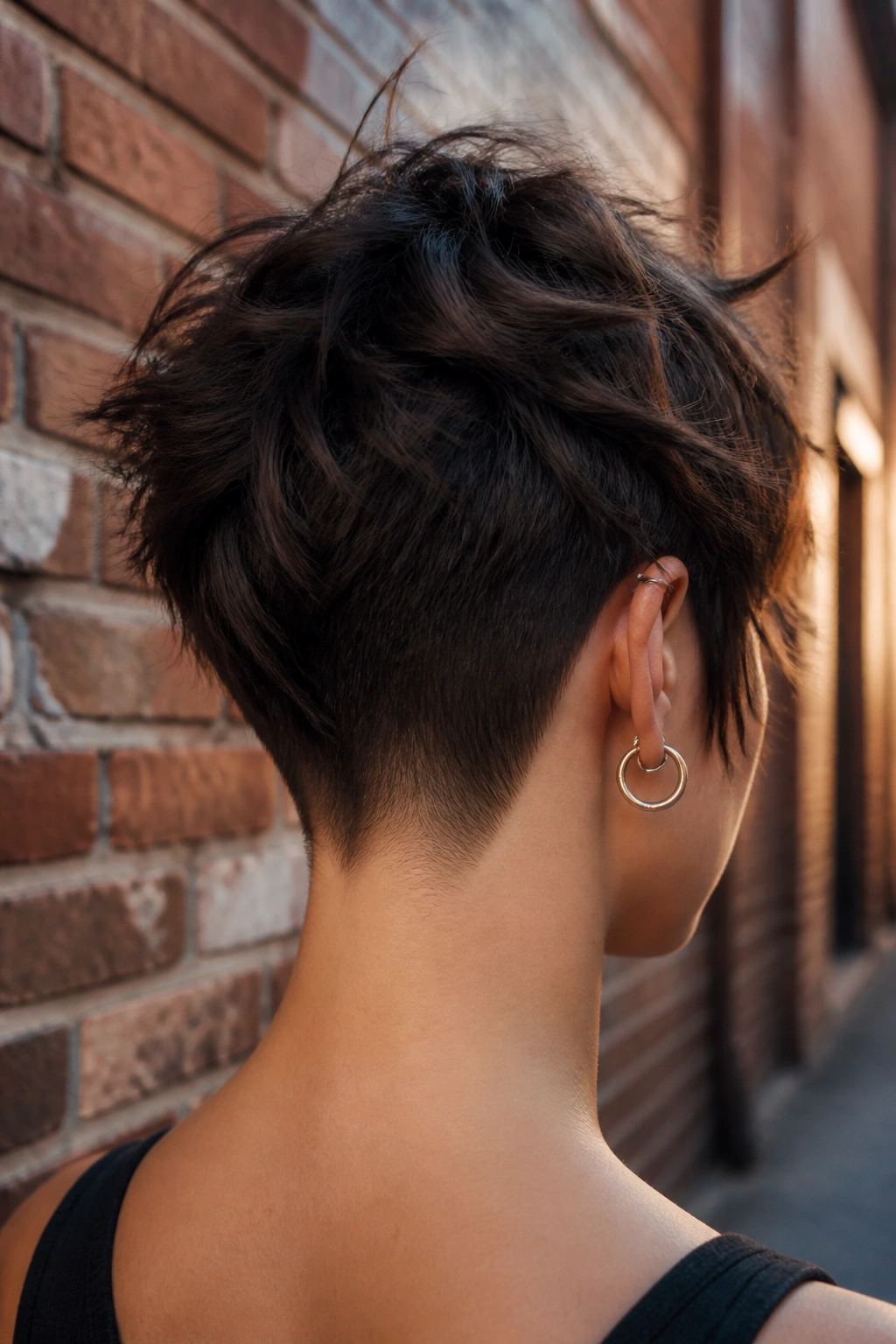
The nape is where this cut earns its sharpness. A tapered nape shag keeps the back clean and close while the top and sides stay rougher, so the haircut has contrast without screaming for attention.
This shape is especially good if you wear collars, necklaces, or jackets with a high neck. The close nape makes the head shape look neat from behind, and the messier top keeps it from feeling too controlled. It gives a nice little flash of structure every time you turn your head.
It is also a smart move for thick hair. A lot of thick-haired people end up with too much bulk at the back of the head, and a tapered nape cuts that down without stripping the whole haircut apart. If you want the sides to stay softer, the taper can be concentrated low, around the hairline, rather than carved aggressively up the head.
You do need upkeep. Not constant upkeep, but enough to matter. The nape loses its shape fastest, so a cleanup every few weeks keeps the silhouette crisp. If you let it grow too long, the whole cut starts to lose its edge.
9. Bixie Shag
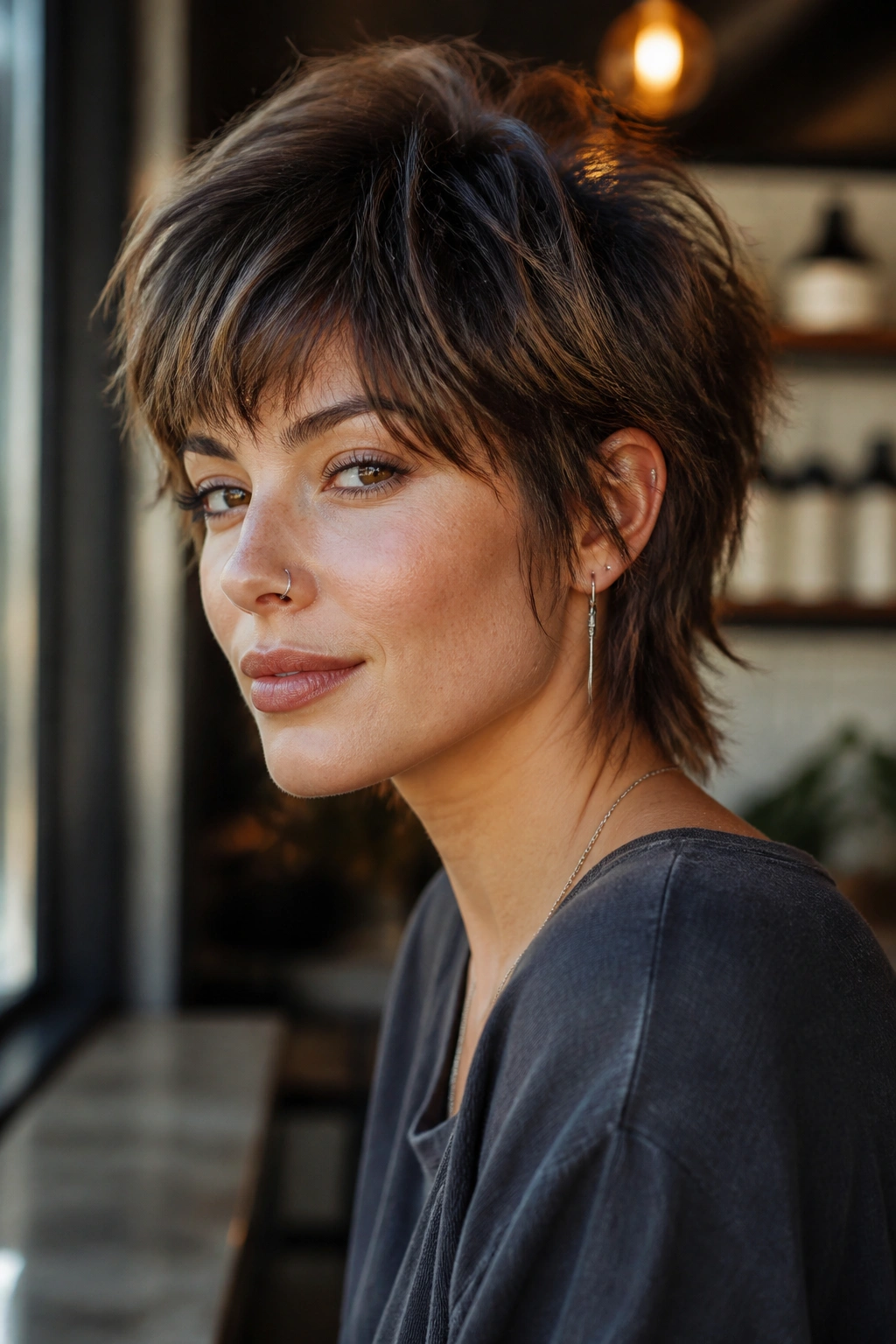
What happens when a bob and a pixie stop arguing? You get a bixie shag.
This cut lives in the in-between zone, which is exactly why so many people like it. It is short enough to feel fresh, but there is more length than a classic pixie, and more texture than a blunt bob. That makes it useful if you are growing out a shorter cut or if you just want something that sits right in the middle and refuses to be polite.
How to Style the Middle Length
The bixie shag needs lift at the roots. Not a lot. Just enough. A mousse at the crown, then a quick rough-dry with your fingers, usually does the job. If the front starts to collapse, flip the part slightly off-center and let one side fall closer to the face.
It is a good haircut for people who like to tuck one side behind the ear and leave the other side messy. That asymmetry gives the cut personality without making it look overdesigned.
A bixie shag looks best when the top has some separation. If it all blends into one smooth sheet, you lose the point. Pinch a few pieces dry, break them up with a small dab of paste, and leave the edges imperfect. That roughness is doing the work.
10. Heavy Fringe Rebel Shag
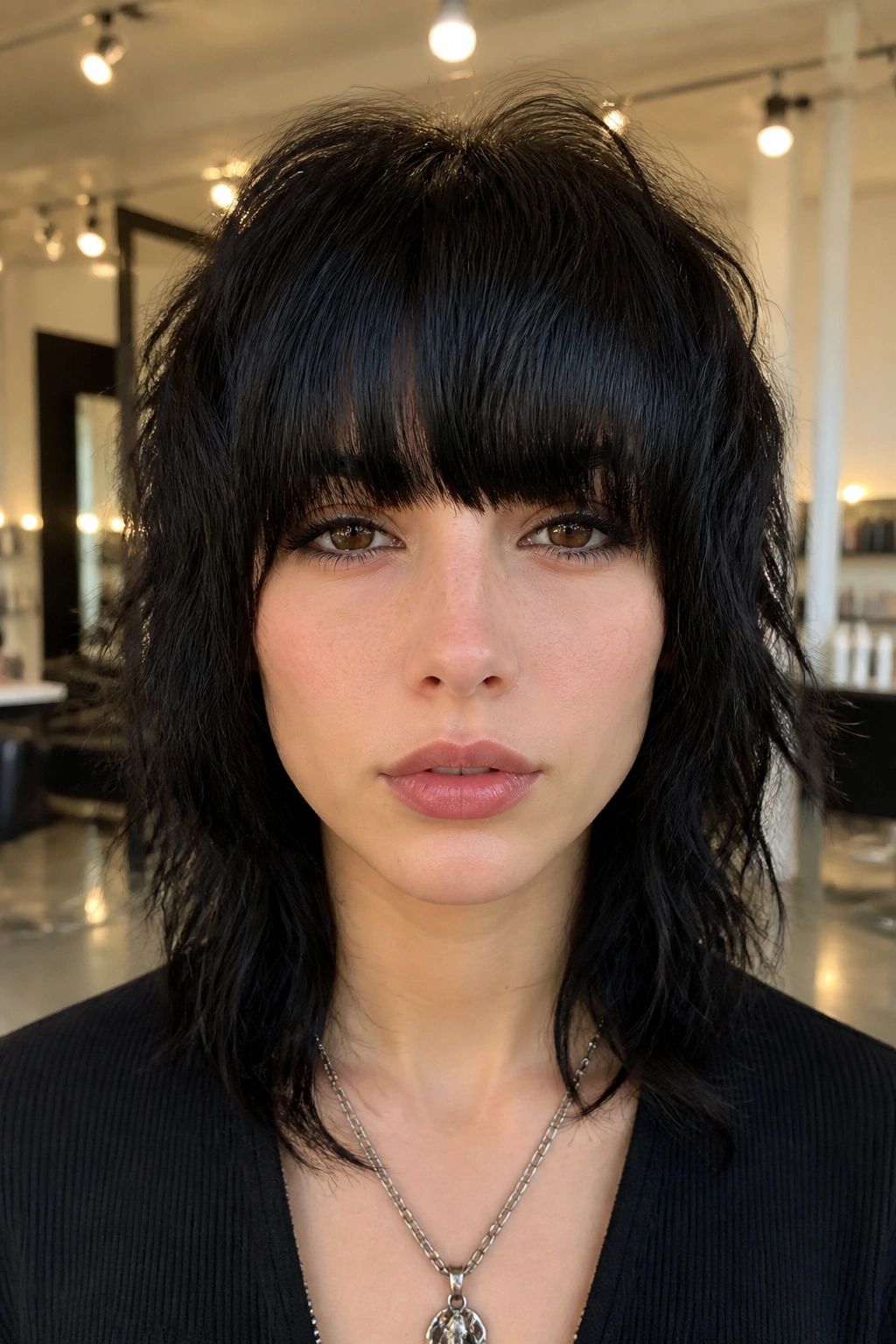
If you want the haircut to do the attitude for you, this is the one. A heavy fringe rebel shag puts a solid strip of hair across the forehead, then breaks the rest of the cut into shaggy layers so the fringe feels bold instead of heavy.
The key is balance. A dense fringe needs enough texture elsewhere that the haircut doesn’t turn helmet-like. The sides should stay loose, and the crown should have some lift so the bangs can be the focal point instead of the whole story. Done well, this shape pulls attention straight to the eyes.
What to Ask for
- A fringe that sits at or just below the brows.
- Texture through the rest of the cut so the front doesn’t look like a solid wall.
- Length at the temples that softens the transition.
- A little extra room around the crown for lift.
This cut is not for someone who hates touching their bangs in the morning. You will probably need to separate them with your fingers, blot away any forehead moisture, and carry dry shampoo if your hair gets limp fast. Still, the payoff is strong. Heavy fringe with a short shag has a real face-framing effect, and it gives even simple clothes a little more edge.
11. Undercut Shag
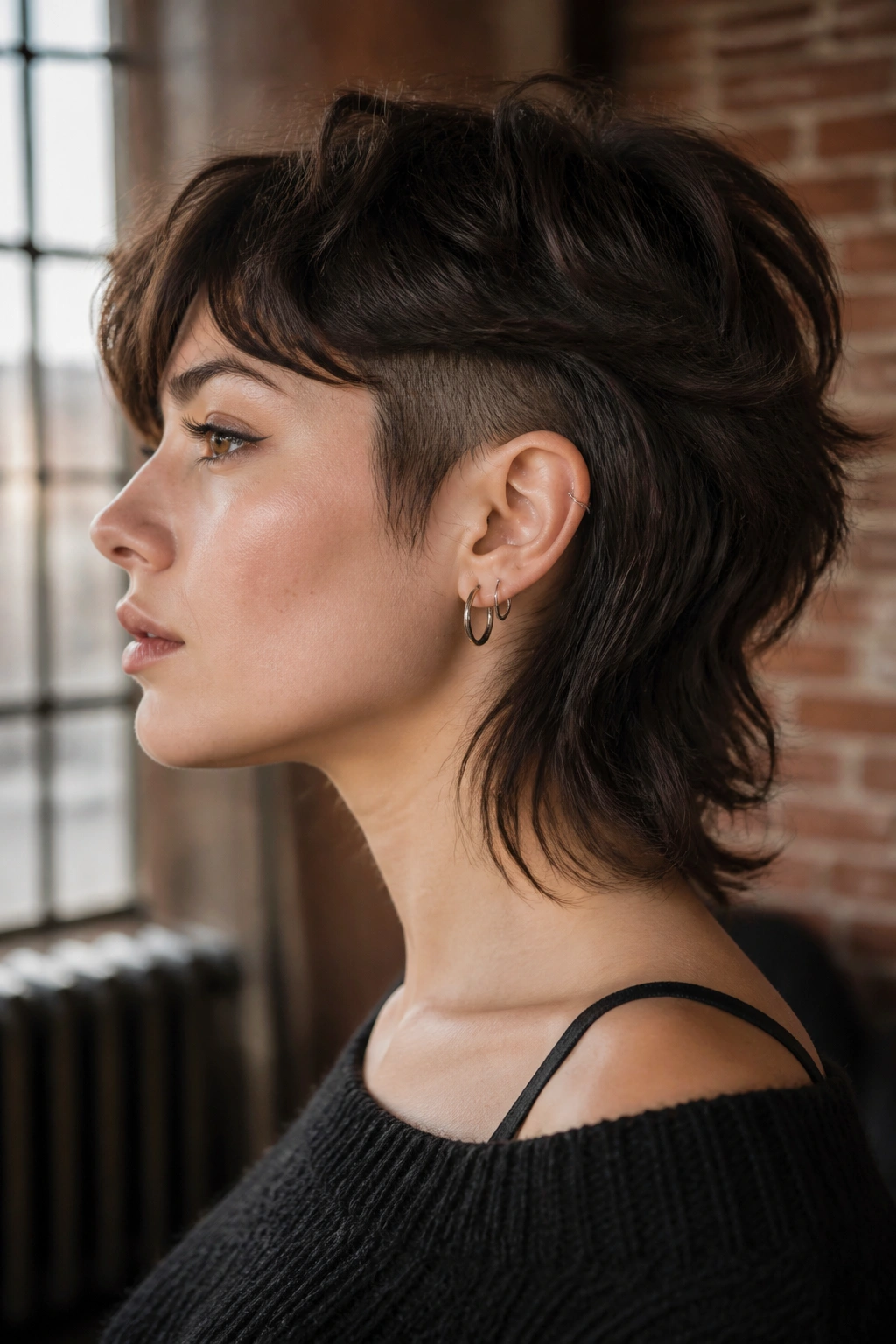
An undercut shag is the bluntest tool in the box, and I mean that in a good way. It removes bulk where the hair hides most of it, then leaves the top loose, uneven, and full of movement. The contrast is what makes it interesting.
This cut is a gift for thick hair that puffs out at the sides or gets too wide at the nape. A hidden undercut behind the ear or low at the back can make the whole shape sit closer to the head without forcing the top to go flat. You still get the shag texture, but the base is cleaner and easier to handle.
It is not subtle.
That is part of the appeal. If you like a little drama in your haircut and you don’t mind people noticing the shape when you turn your head, it can be a lot of fun. If you prefer softness everywhere, this probably isn’t your cut.
The trick is to keep the top layered enough that it falls naturally over the shorter sections. A matte cream or light paste works better than anything shiny. You want separation, not slickness. And because the undercut grows out fast, regular cleanups matter if you want the shape to stay sharp.
12. Airy Thin-Hair Shag
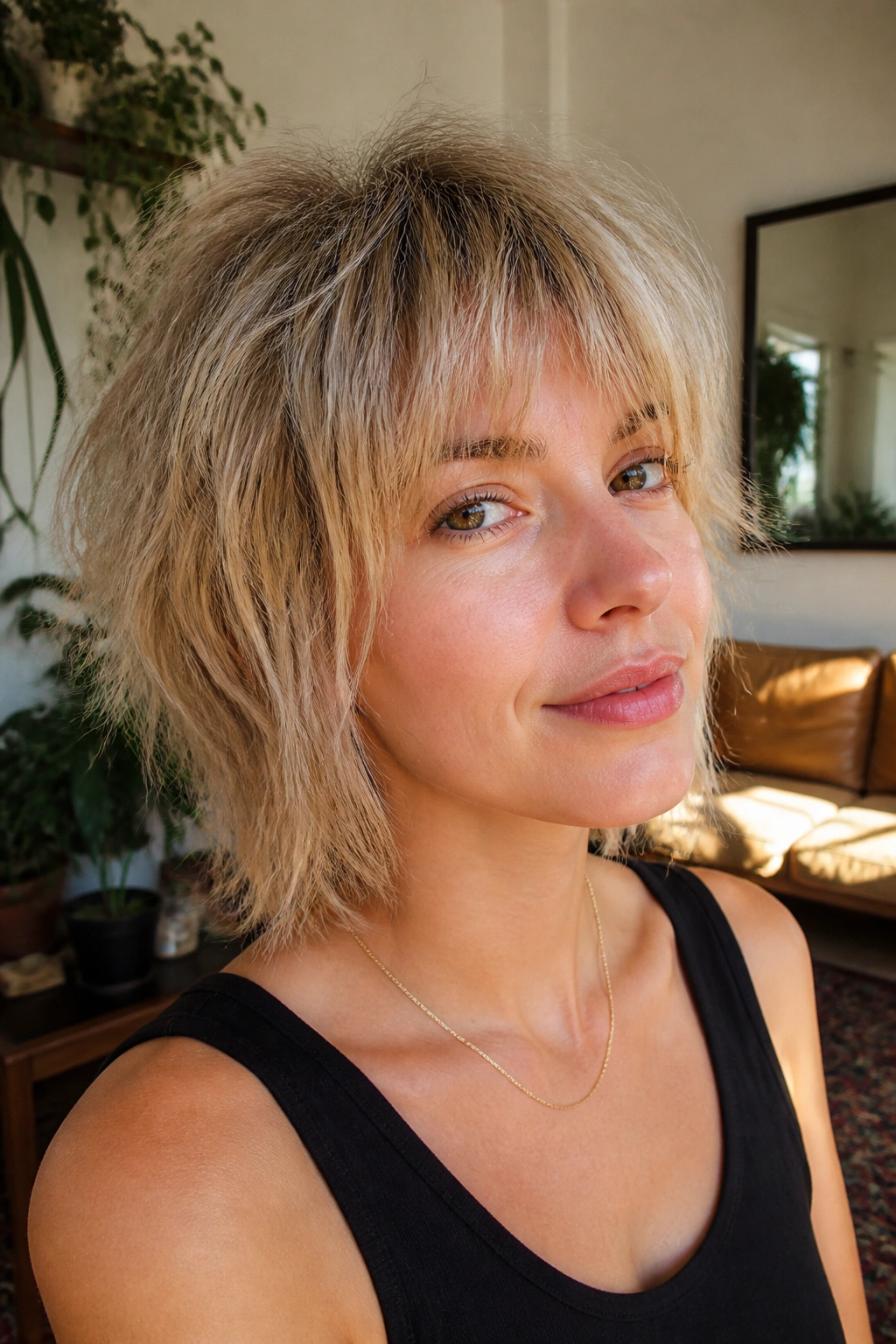
Thin hair usually gets blamed for looking flat, but the real problem is often the cut. A blunt lob can make fine hair look like a single sheet. A light shag, handled well, can make it look fuller by breaking the shape into moving parts.
The danger is over-layering. That is where thin hair gets hurt. Too many short pieces and the ends start to look see-through, which is the opposite of what you want. The better approach is a soft crown lift, a little face framing, and just enough texture to stop the hair from lying dead against the head.
Why It Beats a Blunt Lob
A blunt lob can look thick on paper, but on fine hair it often sits too still. An airy shag gives the impression of body because the top lifts and the ends move separately. You don’t need huge layers. You need smart ones.
This is also a nice choice if your hair falls limp by midday. A small puff of root spray, a round brush at the crown, and a few broken pieces around the face can change the whole feel. Keep heavy cream away from the roots. That part matters more than people think.
If your hair is fine but not wispy, this cut is especially good. It gives texture without exposing too much scalp, which is the line you want to respect.
13. Micro Mullet Shag
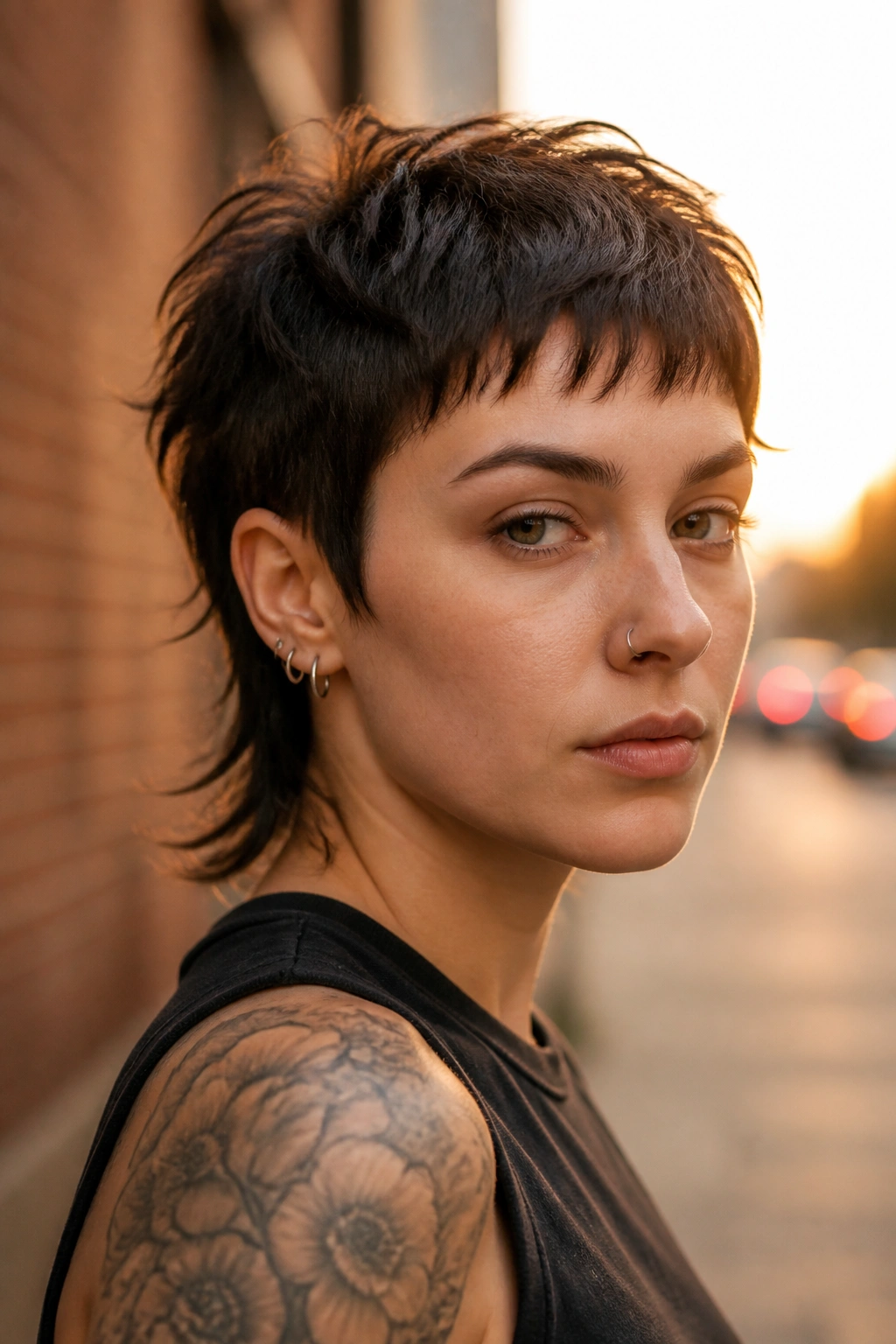
The difference is in the back. A micro mullet shag keeps the front and sides short and textured, then leaves just enough length in the nape to hint at a mullet without turning the whole haircut into a costume.
That slight length shift is what gives it edge. The front can be choppy and piecey, the crown can sit a little higher, and the back can trail just enough to make the silhouette feel deliberate. It looks sharp with texture, and it looks even better when the ends are not perfectly aligned.
What Makes It Different
- Shorter around the face and temples.
- A little more length through the nape.
- Broken texture on top instead of smooth layering.
- Enough disconnect to read as bold, not just messy.
This cut is a strong choice if you like clothes with some structure — leather, sharp jackets, boots, that sort of thing — because the haircut holds its own next to a strong outfit. It also works if you want something that is clearly not a standard bob or pixie. The shape announces itself without needing a bright color to carry it.
Ask your stylist for a soft transition between the short front and longer back if you want it wearable. If you want it sharper, keep the difference more obvious. Either way, the vibe is the point.
14. Shaggy Crop with Baby Bangs

Baby bangs are not polite. That is the point.
A shaggy crop with baby bangs gives you a short fringe that sits above the brows, then keeps the rest of the cut chopped and loose so it feels art-school sharp instead of dated. This is a strong look. It shows the forehead, opens up the face, and makes earrings, brows, and makeup part of the haircut’s whole effect.
The best version keeps the top slightly broken up so the fringe doesn’t feel like a hard line sitting on a solid block of hair. You want some softness around the temples and enough texture in the crown that the crop feels alive. If everything is too neat, the bangs become the only thing people see.
This cut does need commitment. Baby bangs grow fast, and the line can start to feel awkward if you let them slip too far into the brows. But if you like a haircut that carries personality on its own, the maintenance is part of the deal.
It is also one of the easiest cuts to style on lazy mornings. A quick rough-dry, a little pinch at the fringe, and you are done. No round brush obsession. No fight with a polished finish. That alone will sell it to plenty of people.
15. Soft Goth Shag
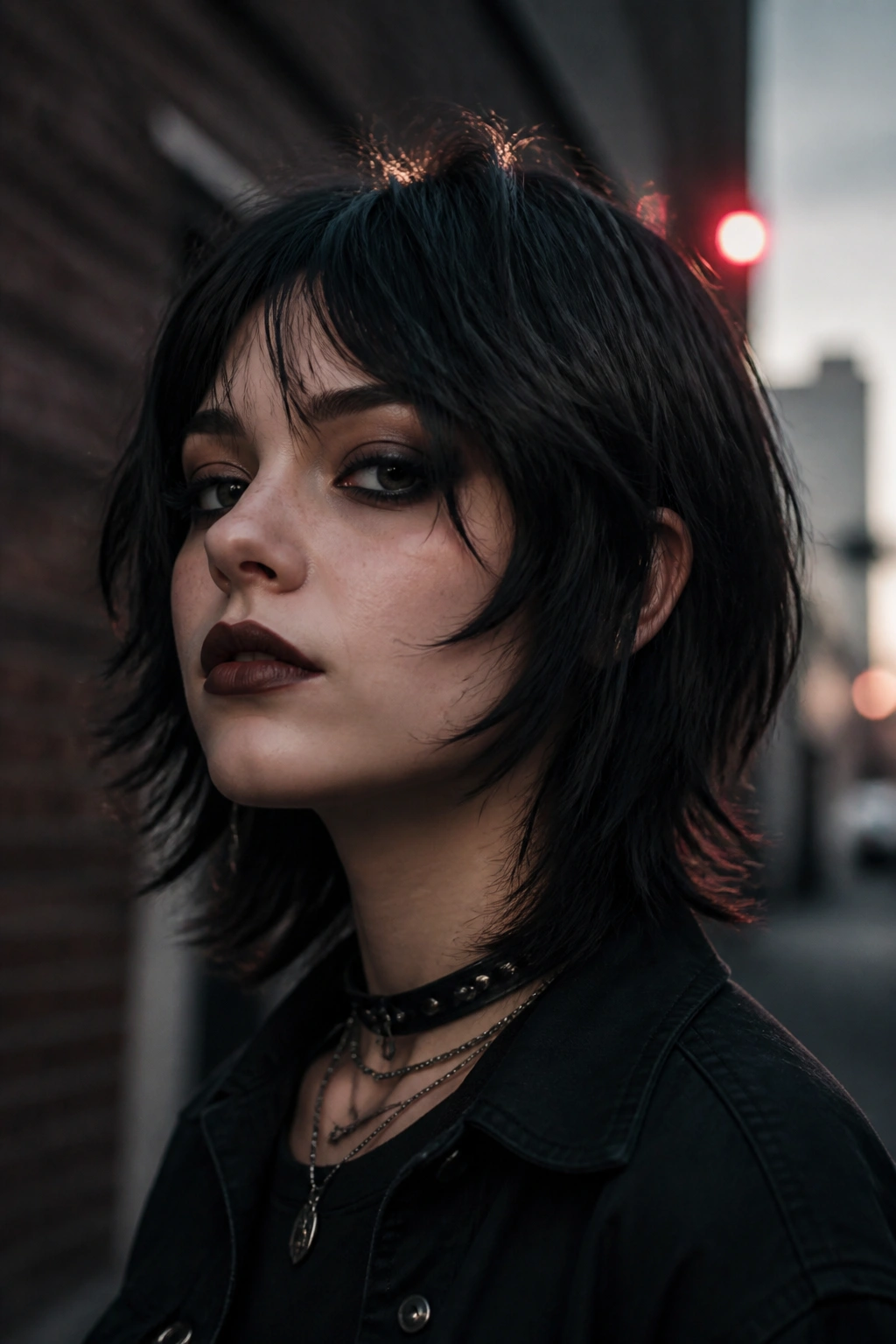
Can a shag be soft and still read dark? Absolutely.
A soft goth shag leans on shape rather than color. The layers are smoky and face-framing, the fringe splits a little instead of sitting like a curtain, and the whole cut keeps a slightly moody outline without going harsh. It is one of the prettiest ways to wear short shag haircuts for edgy women because it blends edge with some actual softness around the face.
The trick is in the balance. You want enough texture at the crown to keep the cut alive, enough length around the cheekbones to make the face look sculpted, and enough irregularity at the ends that the style never feels too neat. If you do color it dark, the texture reads even stronger. If you keep it lighter, the shape still does the work.
A tiny amount of shine cream on the mids can make this cut look expensive, but keep it away from the roots. The top needs a little lift. Flatten it, and the mood disappears. Let the fringe split on its own and let the ends move around your jaw. That is where the whole look lives.
And that is the whole trick, really: shape first, mood second.
