



A long shag mullet haircut can look soft enough for a coffee run and sharp enough for a basement show, and that swing is exactly why it keeps hanging around. The shape has a strange little magic trick built into it: short, face-framing layers up top; length left in the back; and enough uneven texture to make hair move even when you barely touch it.
It is not one haircut. It’s a whole family.
Some versions lean airy and pretty, with curtain bangs and blended layers that fall around the cheekbones. Others go rougher, with razor-cut ends and a heavy crown that feels almost snarled in the best way. The difference usually comes down to where the shortest layer starts, how much weight is left through the ends, and whether the fringe is soft, blunt, or barely there. Get those three pieces wrong, and the cut can look fuzzy instead of cool.
The good versions are deliberate. The bad ones look like someone got impatient halfway through.
So the real job here is not to copy a photo blindly. It’s to pick the long shag mullet haircut ideas that fit your hair texture, your face shape, and the amount of styling you’re willing to do before breakfast. Some of these cuts want a round brush and five extra minutes. Others are made to dry on their own and still look like they meant it.
1. Soft Curtain Fringe Long Shag Mullet

This is the most forgiving place to start if you want the long shag mullet look without going straight into full chaos. The curtain fringe softens the front, while the back keeps enough length to hold the mullet shape. It reads layered and lived-in, not harsh.
Why it flatters so many faces
The fringe usually starts somewhere around the bridge of the nose and opens out toward the cheekbones. That little split in the center helps the haircut frame the face instead of boxing it in. On medium-density hair, it gives movement without exposing every strand.
A soft curtain version also grows out in a nicer way than a blunt fringe. You are not stuck with a hard line for months. The layers simply slide into a messier, more relaxed shape as they grow.
- Best for: straight to wavy hair with some natural bend.
- Ask for: cheekbone-length face-framing pieces and a blended back length that sits below the shoulders.
- Style with: a small round brush and a light mist of texture spray, not a heavy wax.
- Avoid: cutting the fringe too short at the center, which can make the whole cut feel disconnected.
Pro tip: keep the shortest layer just long enough to tuck behind one ear. That tiny bit of flexibility makes the whole cut easier to live with.
2. Curly Long Shag Mullet
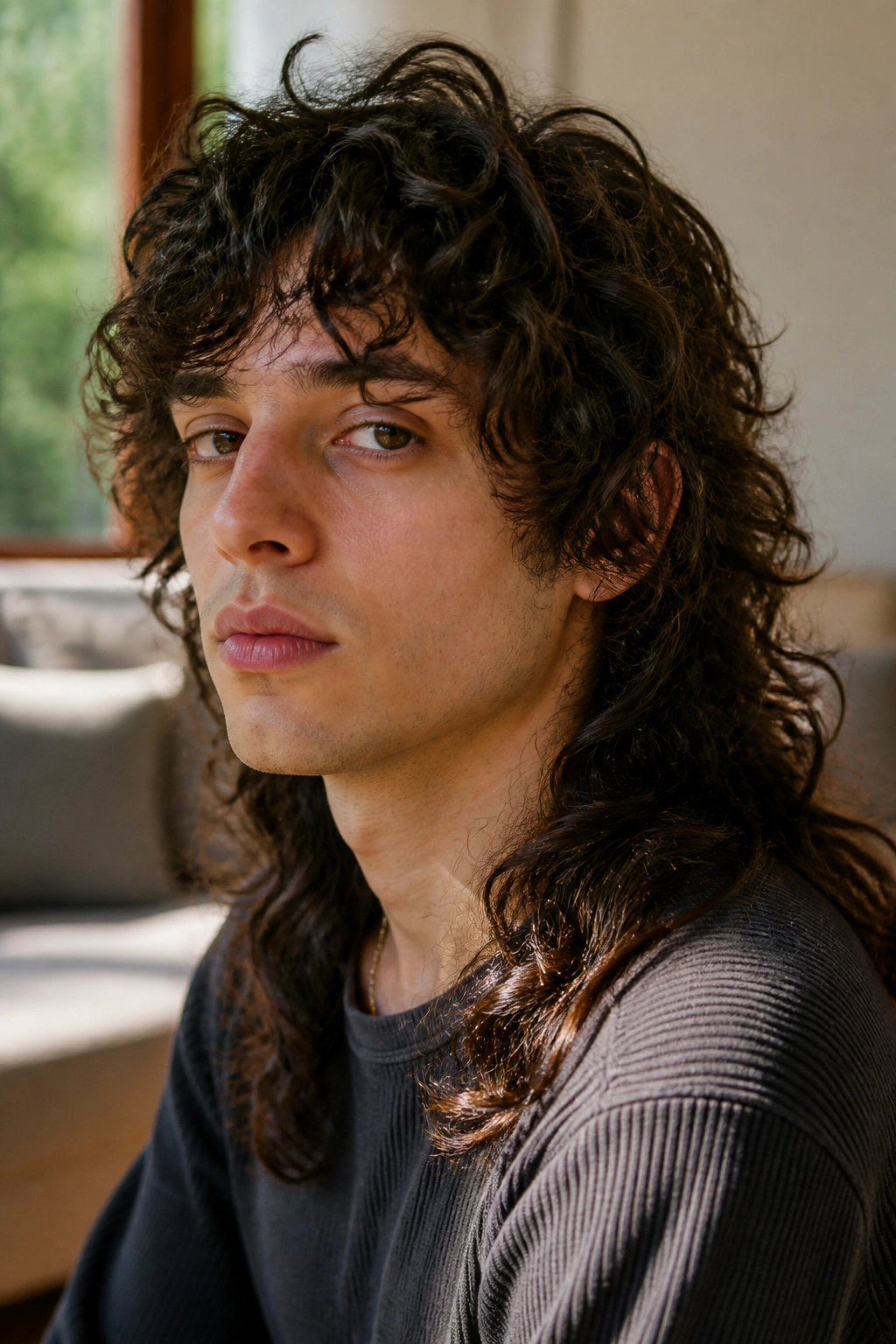
Why do curly hair and a shag mullet work so well together? Because curls already want movement, and this cut gives them a shape that does not fight back. The layers let the curl pattern lift at the crown while the longer back keeps the silhouette from puffing out into a triangle.
The trick is restraint. Too many short layers can make curls spring up higher than you planned, especially around the top and sides. A good curly shag mullet is built with the curl’s shrinkage in mind, which means the cut should look almost a little long when wet. That is not a mistake. It is the point.
I like this version best when the front pieces are dry-cut or trimmed while the curl pattern is visible. You want the stylist to see how the hair actually falls. Otherwise the cut can end up choppy in the wrong places.
How to wear it
Use a curl cream on soaking-wet hair, then scrunch in a light mousse at the roots. Diffuse on low heat until the roots feel dry and the ends still have a little give. If the curls are tighter, let the hair cool before fluffing it out with your fingers.
No brushing once it dries. Seriously. That is how you turn a good cut into a frizz cloud.
3. Razor-Cut Wolfy Long Shag Mullet
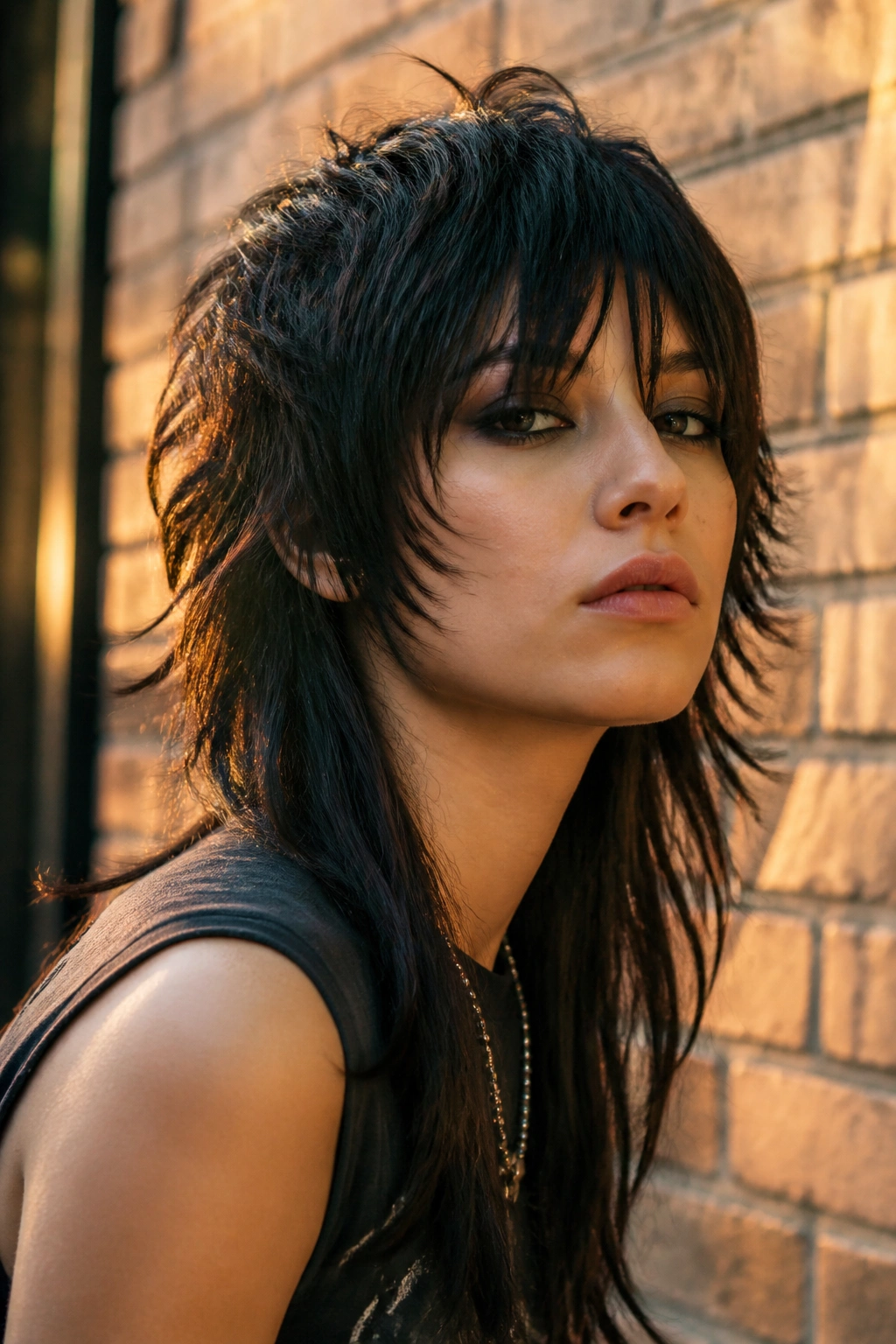
A razor-cut shag mullet is not the polite choice. It has more edge, more separation, and a sharper outline through the ends, which is exactly why people with dense straight or wavy hair keep asking for it. The razor takes weight out fast, so the layers drop with that feathered, almost broken-up look that a scissor cut does not always give you.
What makes it different
The crown usually gets short, piece-y layers. The sides fall in streaks instead of smooth sheets. The back still holds length, but the ends look sliced rather than blunt. That difference matters, because it changes how the haircut moves when you walk, tilt your head, or tuck it behind one ear.
This version loves texture paste, dry shampoo, and a quick rough-dry with your hands. It does not need polished curls or a careful blowout. In fact, too much smoothing takes the life out of it.
- Best for: thick or coarse hair that needs bulk removed.
- Ask for: razor detailing around the perimeter and visible separation through the top.
- Style with: a pea-sized amount of matte paste warmed between your palms.
- Skip: heavy oils and glossy serums, which can make the shape collapse.
If you want the haircut to feel a little dangerous, this is the one.
4. Long Shag Mullet with Bottleneck Bangs

Can bangs be soft and still make a statement? Bottleneck bangs say yes. They sit narrow near the center of the forehead, then open wider as they slide toward the temples, which gives the front of a long shag mullet a clean shape without making it feel heavy.
That shape is useful because it works with both straight and slightly wavy hair. The shorter center draws attention to the eyes, while the longer sides melt into the front layers. You get a frame, but not a wall.
I also like bottleneck bangs because they are easier to grow out than a blunt fringe. When they start getting long, they turn into face-framing pieces instead of looking awkward. That makes the haircut feel less like a commitment trap.
Styling notes that matter
Blow-dry the center first, then direct the outer pieces away from the face with a brush or your fingers. A tiny dab of smoothing cream on the ends is enough. If you load the bangs with product, they separate in chunky little strings and stop looking soft.
This cut works well when the rest of the layers stay airy. Heavy ends will fight the bangs.
5. Sleek Straight Long Shag Mullet
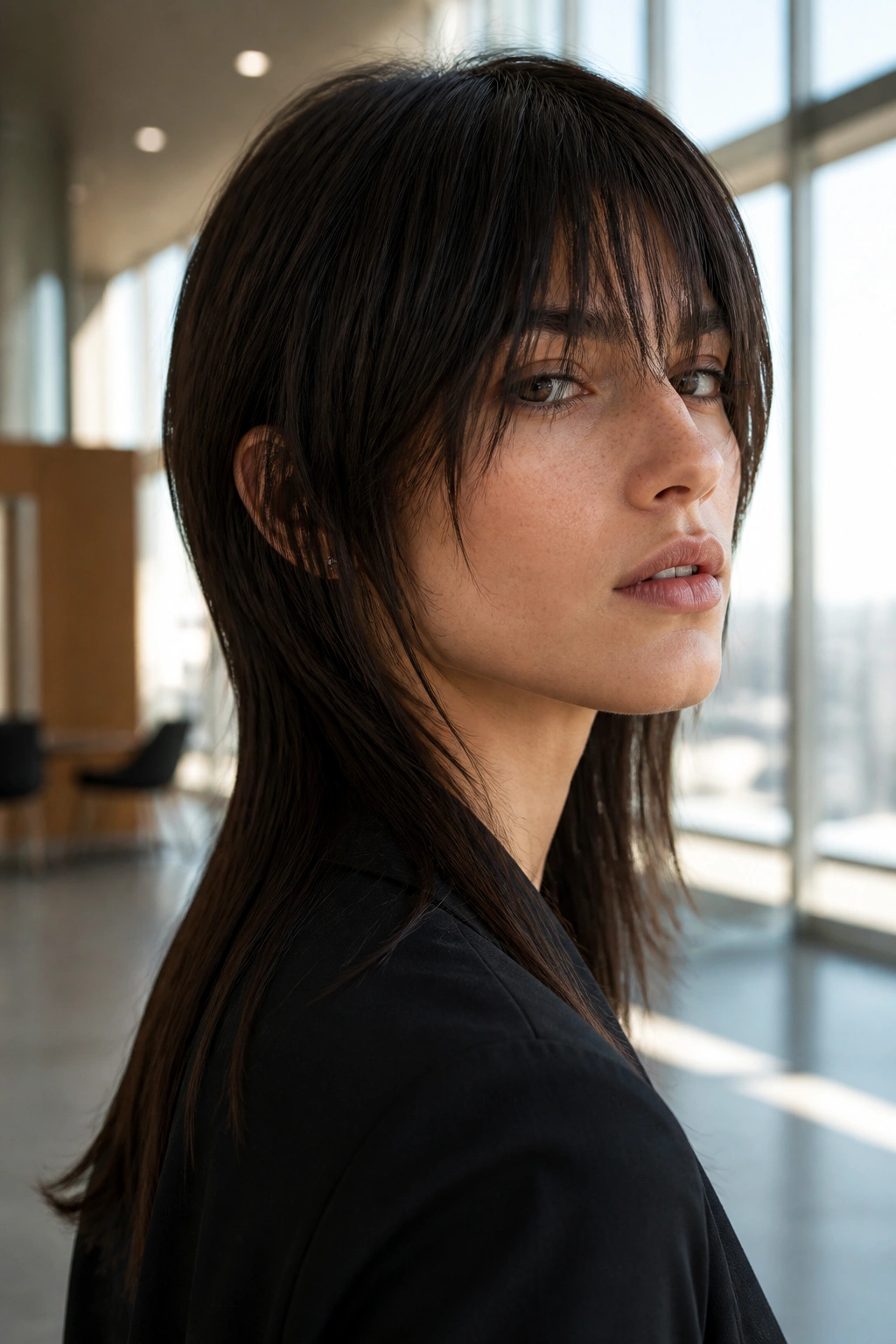
A straight-haired shag mullet can look expensive in a very plain, unfussy way when the layers are cut with restraint. The shape is still there, but the finish is smoother. Think long face-framing layers, a soft crown, and a back that sits neatly instead of exploding into texture.
This is the version for people who like movement but do not want to look like they slept in a wind tunnel. The haircut depends more on clean sectioning than on rough styling, so the edges should be connected well. If the layers are too short or too jagged, straight hair shows every mistake.
The style is especially good when you want the mullet shape to feel a little sharper under office lights or on a night out. It does not need to scream. It just needs a good blowout or a pass with a flat iron at a moderate heat setting, plus heat protectant from roots to ends.
What to ask for
- Longer layers around the cheekbones.
- A soft crown with some lift, not a huge chop.
- Ends that are textured enough to move, but not shredded.
- A back length that keeps the silhouette visible.
Straight hair is honest hair. It tells on bad cutting. So this version has to be tidy.
6. Beachy Wavy Long Shag Mullet
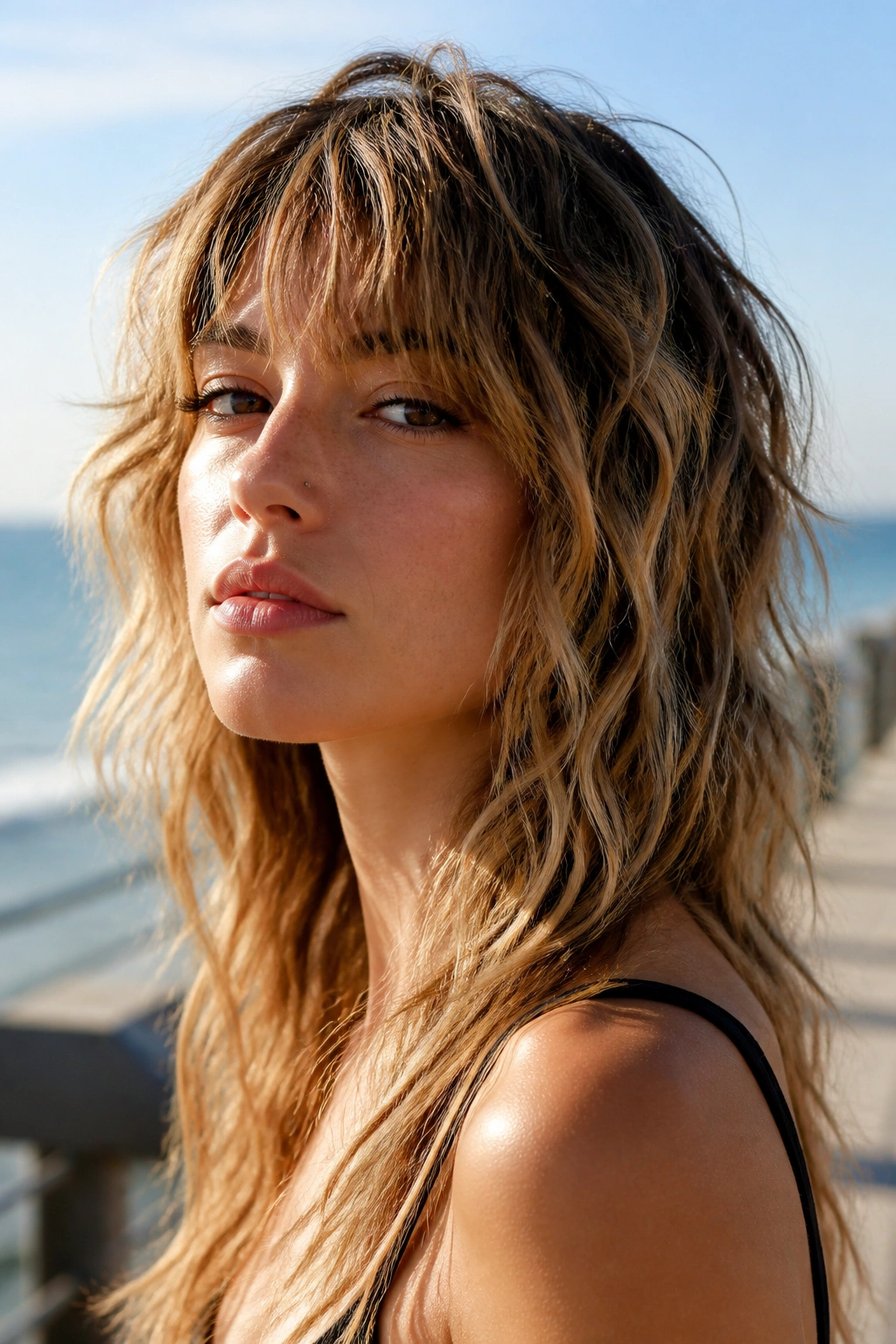
The best beachy shag mullet feels like hair that dried after a swim and a long drive with the windows down. That loose, piece-y finish is the whole point. It should look undone, but not accidental.
Wavy hair gives this cut an easy advantage because the layers catch and bend without much fight. The front pieces fall around the face in a soft arc, the crown lifts a little, and the back keeps enough length to make the shape read as a mullet instead of a standard layered cut. You get movement from root to tip.
A little product goes a long way here. A salt spray can help, but only if your hair is not already dry. On drier hair, a lightweight mousse or a curl cream with a thin texture tends to work better. Scrunch it in, twist a few pieces around your fingers, then stop touching it. That last part matters more than people think.
One-sentence truth: overworking beach waves ruins beach waves.
If you want the look to last past lunch, leave the roots alone while the hair dries and do not overbrush the ends once they set.
7. Long Shag Mullet with Heavy Fringe
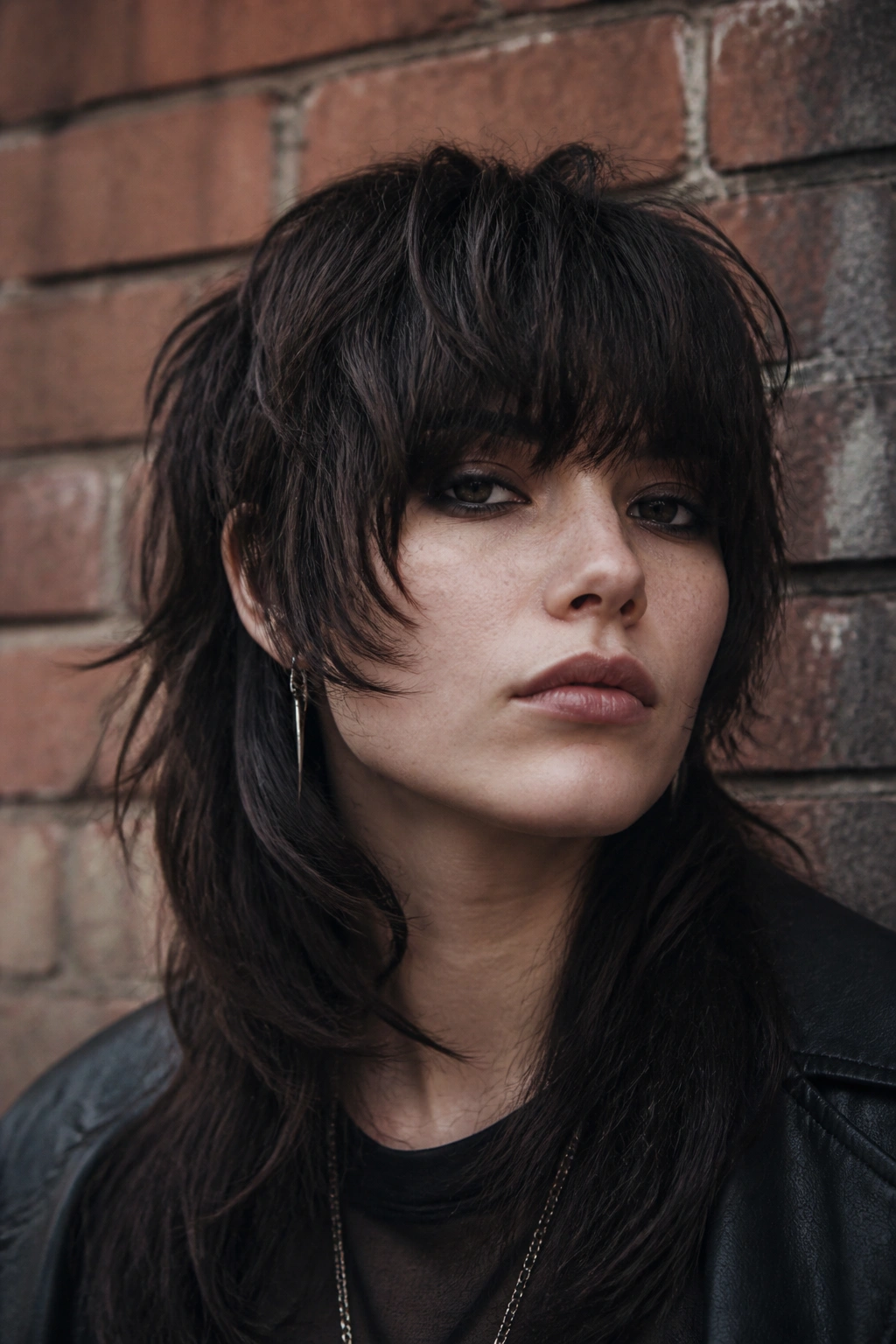
A heavy fringe changes the whole haircut. Instead of the front fading softly into layers, the bangs become the first thing you notice, and the rest of the shag mullet has to support that weight. The result can feel dramatic, moody, and a little retro in a good way.
This shape works especially well if you have a longer forehead or you like the feeling of a haircut that frames the eyes hard. The fringe should sit thick enough to make a statement, but not so dense that it closes off the face. The sides need to stay feathered so the front does not turn boxy.
What to watch for
- The fringe needs regular trimming, usually every 4 to 6 weeks.
- Blow-drying from side to side helps prevent a flat shelf.
- A round brush gives the bangs a bend; a flat brush makes them sit too hard.
- If your hair is very fine, a heavy fringe can eat up too much density.
This is not a lazy haircut. It looks better when the bangs are shaped with intention. But when it lands right, it has a strong, graphic feel that softer versions do not.
8. Long Shag Mullet for Round Faces
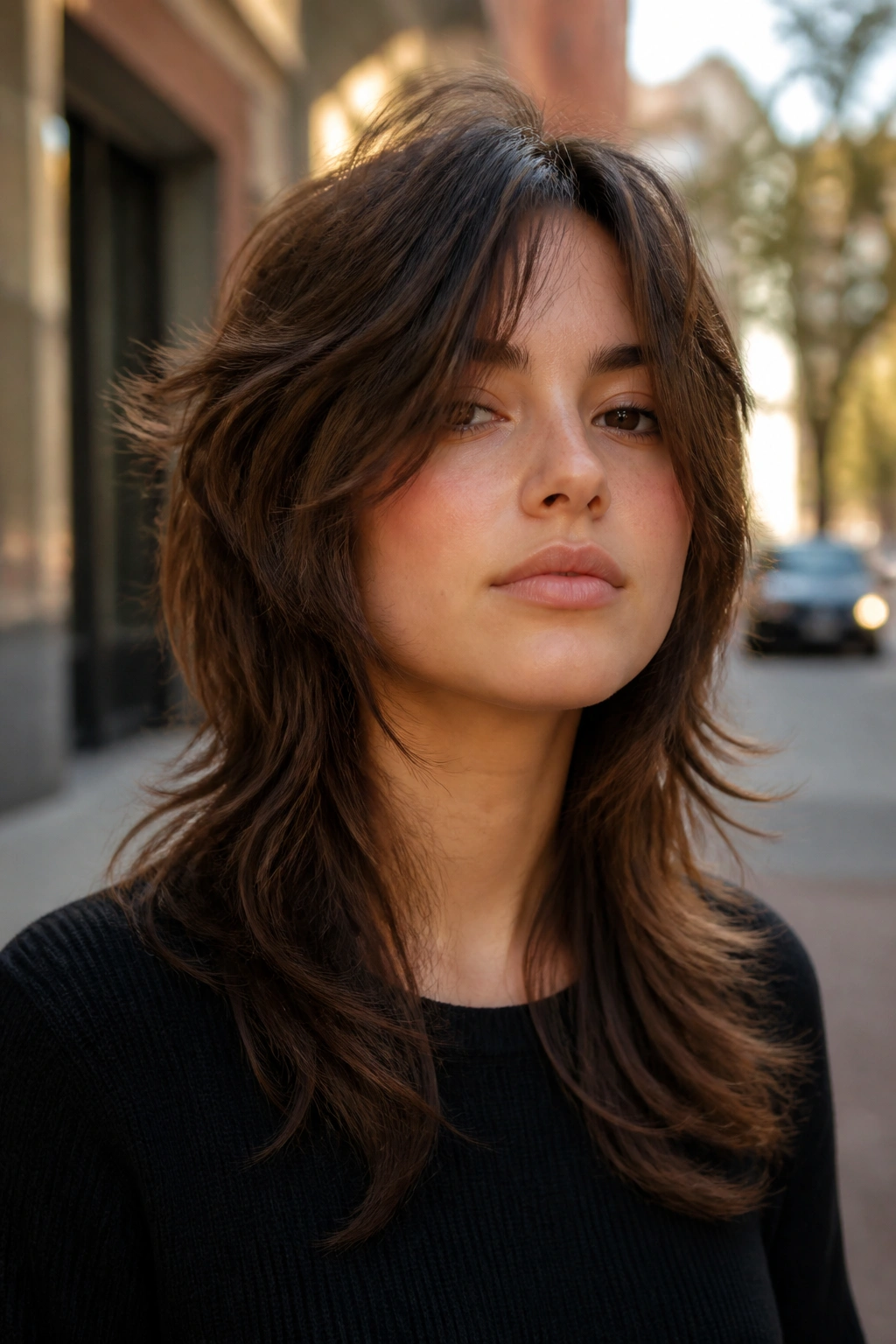
Does a shag mullet work on a round face? Yes, if the layers are placed with some care. The goal is not to add width right at the cheeks. The goal is to pull the eye downward and create a longer line through the face.
That usually means keeping the shortest layers a little lower than people expect. Pieces that start around the chin or just below it can slim the sides without making the face look narrow in a weird way. The crown can still have lift, but the shape should not balloon outward at cheek level.
What the cut should do
The haircut should lengthen, not widen. That is the whole game.
- Keep volume higher at the crown.
- Let the front pieces fall past the cheekbone.
- Leave the back long enough to create a vertical line.
- Avoid a blunt, widest-at-the-cheek finish.
A side part can help here, though it does not need to be extreme. Even a soft off-center part changes how the layers fall. If the cut has bangs, the fringe should stay light and moveable, not heavy and straight across.
This is one of those styles that rewards a good consultation. Bring the right photo, and be honest about where your hair tends to puff out.
9. Long Shag Mullet with Micro Bangs
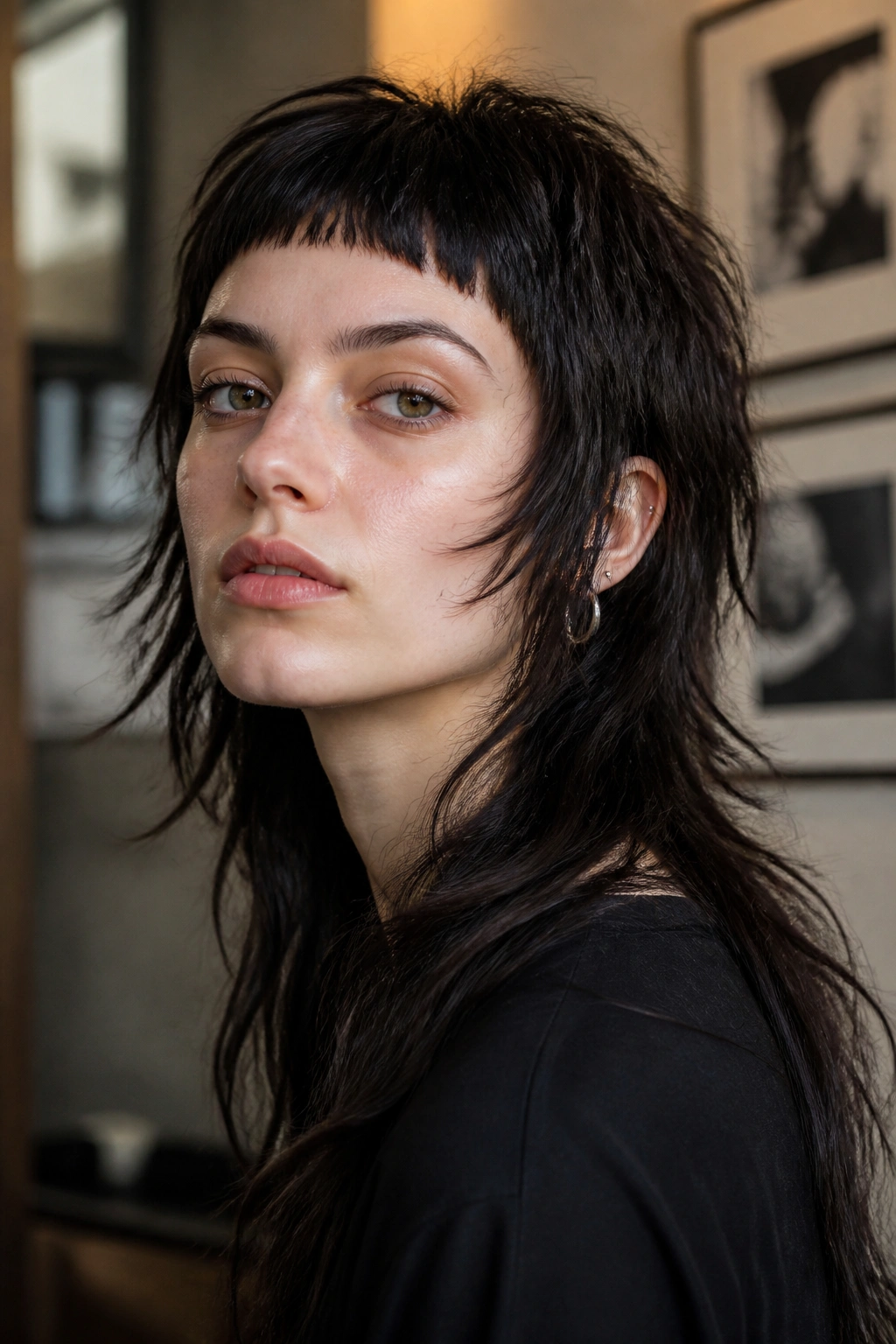
If you want people to notice the haircut before they notice the outfit, micro bangs do that job fast. They sit high on the forehead and create a sharp contrast with the long, shaggy layers around the face and the length in the back. The whole cut becomes more graphic.
This version is not subtle. It can look playful, arty, or a little punk depending on how the rest of the hair is styled. The back should stay visibly long so the short fringe does not feel random. That contrast is the point, and it needs to be deliberate.
The catch is maintenance. Micro bangs grow out fast. They can sit oddly within a couple of weeks if you ignore them, and they tend to need a trim sooner than curtain bangs or bottleneck bangs. If you are not willing to keep up with that, choose a softer fringe instead.
One neat trick: style the bangs with almost no product. A tiny bit of texture cream or dry balm is enough. Heavy product makes them sit flat and lose their crisp shape.
This cut is for people who want the front to feel sharp and the back to stay loose. That tension is what makes it work.
10. Copper-Color Long Shag Mullet with Choppy Ends
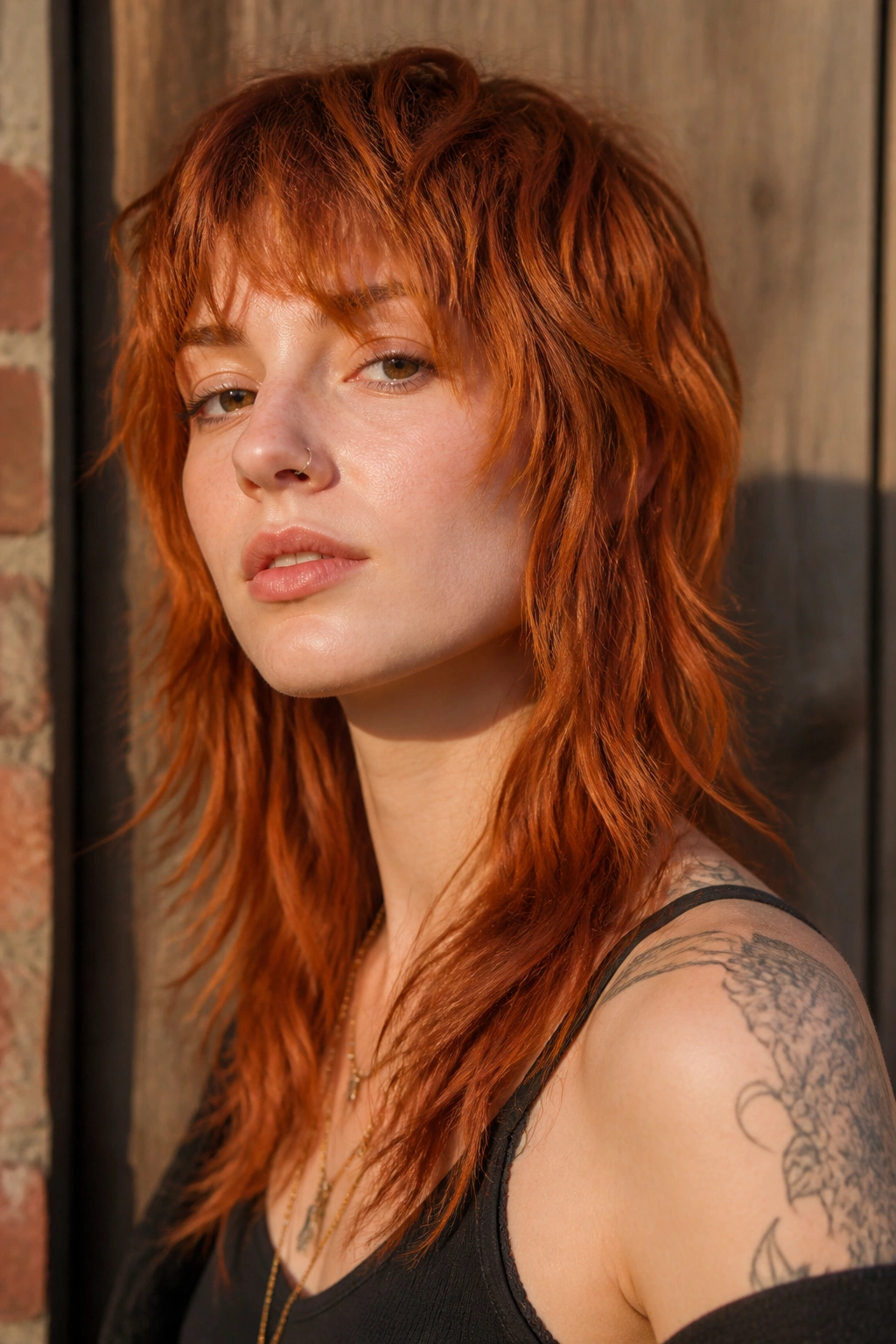
Color and cut do not live separate lives here. A copper shade, whether it is soft auburn or a brighter burnished tone, makes the layers in a long shag mullet read much more clearly because the light catches every bend and edge. Choppy ends look richer when the color has depth.
The reason this pairing works is simple: textured hair reflects color in broken lines. The cut creates the shape, and the color makes the shape obvious from across the room. On one-length hair, copper can look smooth and pretty. On a shag mullet, it looks more alive.
Good reasons to try it
- Copper warms up pale skin and gives darker complexions a glowing contrast.
- Choppy layers show off tonal variation, even in a single-process color.
- Slightly darker roots keep the style from looking flat as it grows out.
- Glossing treatments help the ends stay shiny instead of rough.
This is a strong choice if your hair tends to look dull in layered cuts. Warm color wakes the texture up. It also makes the haircut feel less severe, which helps if you like edge but not full punk energy.
One practical note: choppy ends need conditioning. Dry ends make the color look dusty.
11. Low-Maintenance Air-Dry Long Shag Mullet

Not everyone wants a haircut that demands a full styling routine. Some people want to wash, scrunch, and leave. That is where a low-maintenance air-dry shag mullet earns its place.
The cut needs enough internal layering to encourage bend, but not so much that it falls apart without heat. The front pieces should be long enough to settle naturally around the face. The back should keep a bit of weight so the shape does not explode into frizz on humid days.
How to make it behave
- Apply a leave-in conditioner to damp hair, focusing on the mid-lengths and ends.
- Work in a light mousse at the roots if your hair is fine or flat.
- Scrunch the ends upward with a microfiber towel, not a rough bath towel.
- Let the hair dry without touching it for the first 20 minutes.
- Break up only the pieces that dry too stiff.
That tiny bit of structure helps a lot. Air-dry cuts usually fail when the layers are too short or too thinned out, because the hair loses its shape before it dries. A good version keeps enough length to settle on its own.
If you hate heat tools, start here. Just be honest with the stylist about it.
12. Retro 70s Long Shag Mullet
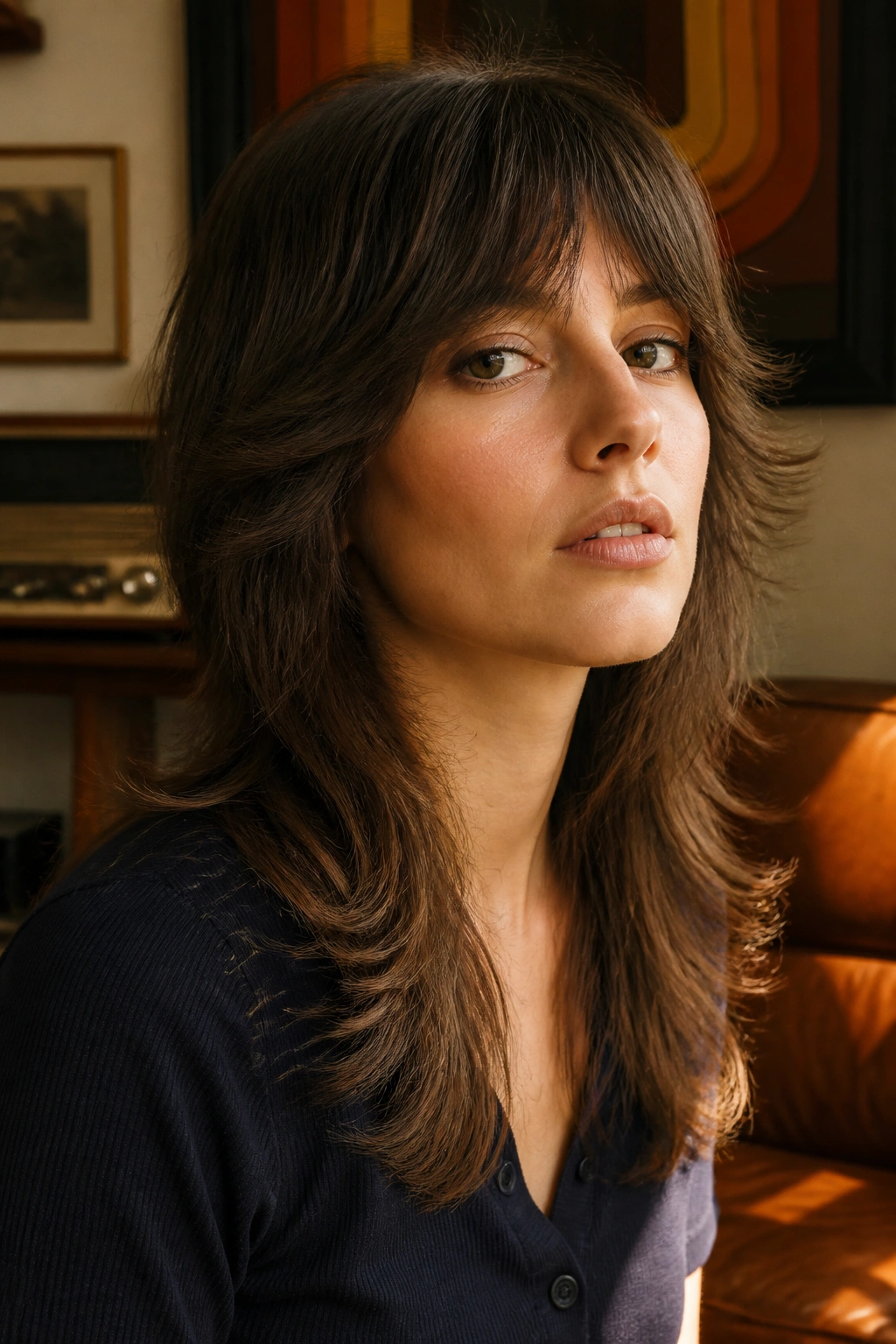
The retro version leans softer than the harsher shag-mullet hybrids people wear with leather jackets and heavy eyeliner. It has feathered layers, a little flip at the ends, and a rounded crown that feels borrowed from old glamour shots. I like this one because it has shape without aggression.
A center part works well, but a deep side part can make it feel more lived-in. The key is the blowout. You want the ends to flick out slightly, not stick straight down. A medium round brush and a blow-dryer nozzle do most of the work. Roll the front away from the face and let the back curve just a little.
There is a reason this cut keeps coming back: it flatters hair that wants to hold movement, and it adds body to lengths that would otherwise hang flat. It also gives you that soft, throwback silhouette without needing to go full costume.
One sentence, because it deserves one: it looks best when it is not overpracticed.
Leave a little imperfection in it. That is where the charm lives.
13. Punk-Inspired Long Shag Mullet
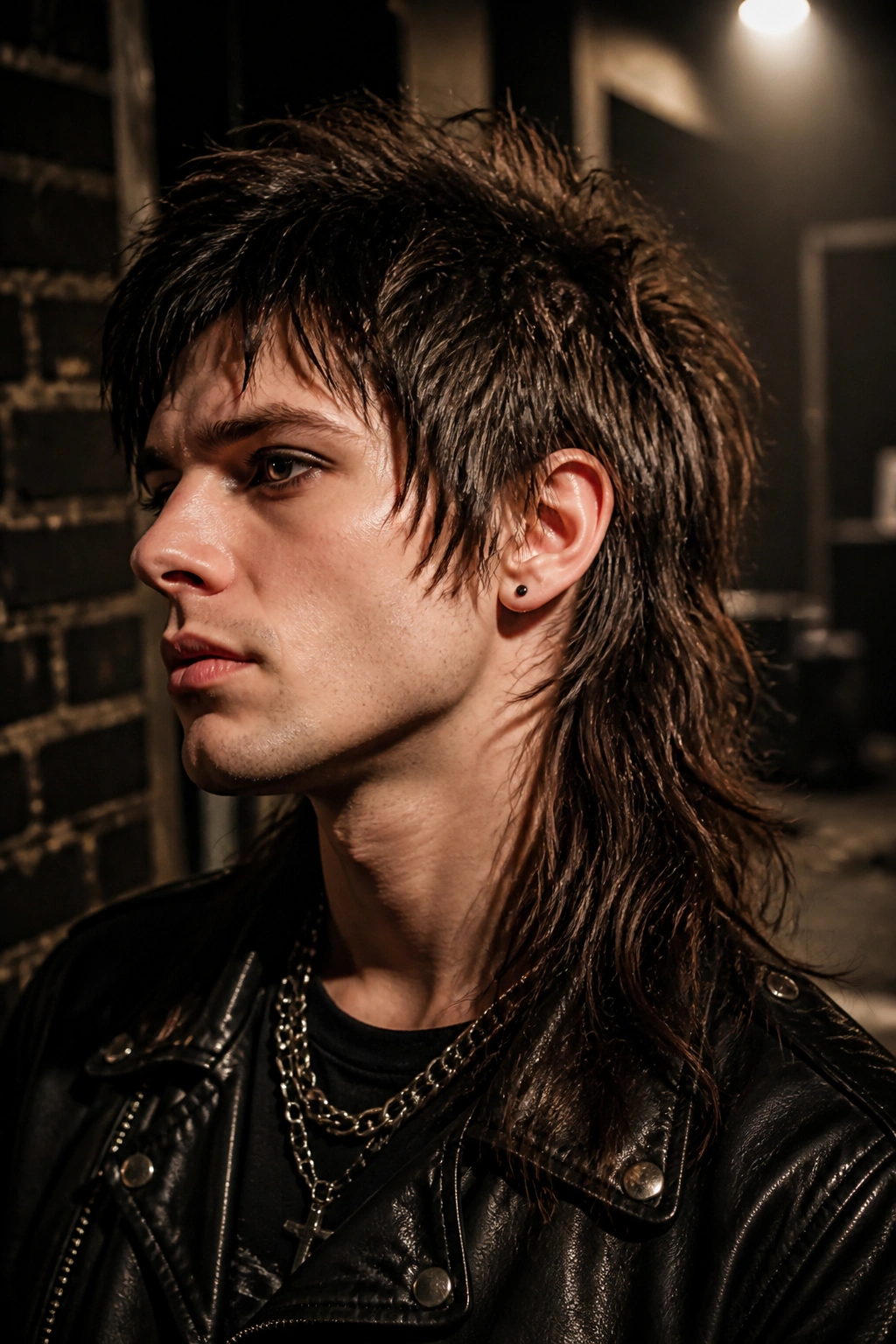
A punk-inspired shag mullet is sharper, meaner, and less interested in being pretty. The silhouette usually leans asymmetrical, with shorter crown layers, heavily textured sides, and a back that drops long enough to read as a mullet from across the room. It is the version for people who want their haircut to have an opinion.
The best part is how forgiving the style can be once the cut is right. If the structure is strong, you can rough-dry it, toss in a matte paste, and leave the ends a little broken up. That broken finish is not a flaw here. It is the texture.
Pieces that make it work
- Razor detailing through the ends.
- A slightly off-center part.
- Optional undercut or very short side panels.
- Strong contrast between the top layers and the back length.
- Matte products instead of glossy ones.
This cut does not love softness. It looks better with shape and tension. If your hair is thick, it can handle that. If it is fine, the style can still work, but the layers have to be kept longer so the hair does not disappear into wisps.
Use this version when you want the haircut to carry the attitude for you. It does that part well.
14. Fine Hair Long Shag Mullet

Fine hair can wear a shag mullet, but the cut has to be handled carefully. Too many short layers will steal density, and once that happens, the hair starts to look sparse instead of airy. The trick is to keep the layers long enough to show movement without cutting away the body you actually need.
That means the crown should get lift, not holes. The front should be feathered, not chopped into tiny bits. The back can still stay long and tapered, which helps the whole shape feel fuller from top to bottom.
How to style it without flattening it
- Use a root-lifting mousse on damp hair.
- Blow-dry the roots first, lifting them with your fingers.
- Keep conditioner off the crown so it does not collapse.
- Finish with a light dry texturizer, not a heavy cream.
Fine hair usually looks best when the ends are not too see-through. Ask for point-cutting rather than aggressive thinning. That keeps the line soft but still preserves the edge of the haircut. A little extra length in the back helps too, because fine hair can vanish if the tail gets cut too short.
This is the version that proves the cut is not only for big, thick heads of hair. It can work on finer strands. It just needs restraint.
15. Thick Hair Long Shag Mullet with a Long Tapered Tail
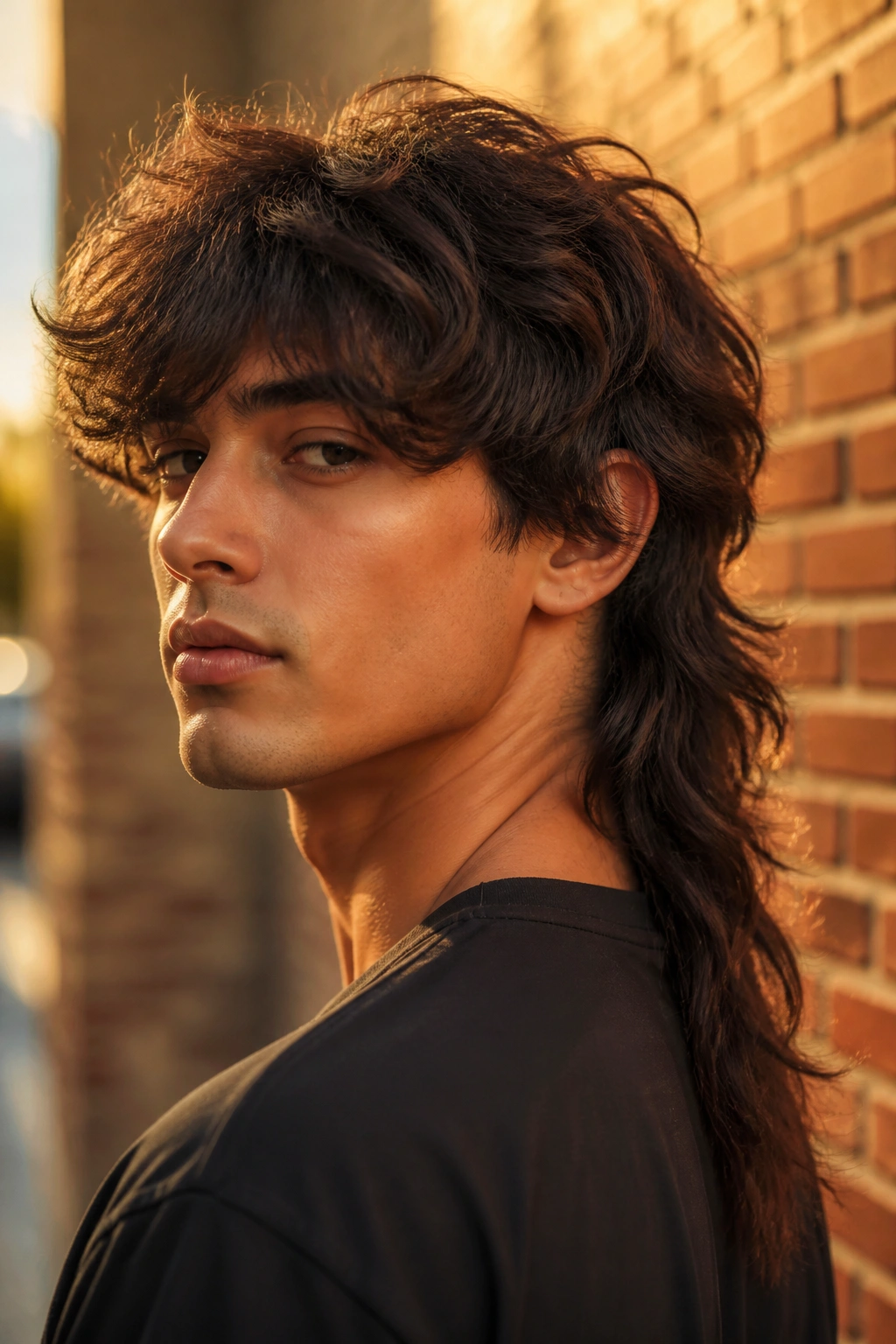
Thick hair loves a long shag mullet when the shape is built to remove bulk from the inside instead of hacking away at the perimeter. That distinction matters. If the outside line is chopped too hard, thick hair can puff into a pyramid. If the interior is cleaned out well, the cut moves.
The long tapered tail gives the style its mullet character without making the back feel heavy and draggy. I like this version because it keeps length where you can still enjoy it, while the crown and sides get enough reduction to stop the whole shape from sitting like a helmet. The best cuts here use a mix of slide cutting, point cutting, and careful layering so the hair falls in pieces rather than one solid mass.
A thick-haired shag mullet also holds a style longer than fine hair does. You can rough-dry it, add a little curl with a large iron, or wear it almost straight and still keep the shape. That flexibility is the reward for dealing with all that density in the chair.
If you have thick hair, do not let anyone thin the ends to the point of frizz. Ask for weight removal inside the shape and a clean, tapered finish at the back. Then keep up with trims every 8 to 10 weeks so the outline stays sharp instead of fuzzy.
This version ages well, grows out well, and still looks good when you have not had time to fuss with it. That is about as useful as a haircut gets.
