



A short haircut can say more than a foot of hair ever could. That’s especially true with queer short hairstyles, where the point is rarely just convenience. It’s about signal. Clean lines, cropped sides, broken texture, a blunt fringe, a little chaos on top—those details tell people something before you’ve even spoken.
What makes short queer haircuts so satisfying is the range. A buzz cut can read severe, sexy, tender, or flat-out defiant depending on the fade and the shape at the temples. A pixie can feel sharp without losing softness. A mullet can be sly instead of retro cosplay. Same length category. Totally different energy.
And the boring advice people give about short hair—“just keep it simple”—usually misses the whole point. The best short cuts are rarely simple. They’re deliberate. They pay attention to the head shape, the growth pattern at the crown, the way hair sits behind the ear, and whether the neck line is clean or left a little messy on purpose. Bring a photo, sure, but also say what you want the haircut to signal. That part matters.
Some of these styles lean masc, some femme, some sit right in the middle and look better there. All of them can read bold if they’re cut with intention. The fun part is that bold does not have to mean loud every day. Sometimes it’s a razor-sharp line. Sometimes it’s soft curls with a hard fade. The range is the whole appeal.
1. Buzz Cut With a Sharp Temple Fade
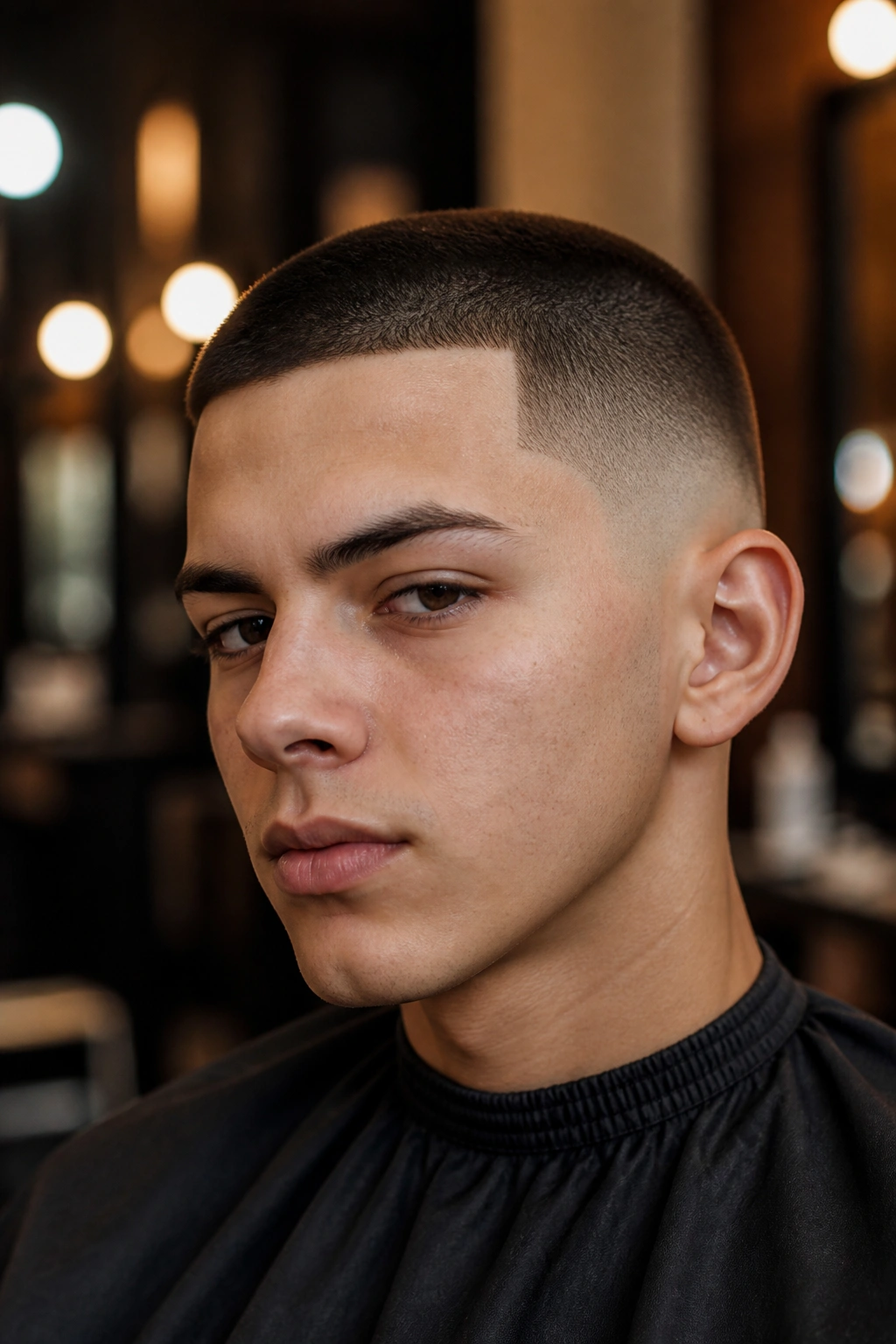
A buzz cut with a temple fade is pure confidence. No curtain of hair to hide behind, no extra fluff, no apology. When the sides taper neatly into the top, the whole head looks more sculpted, and that clean shift near the temples does a lot of work for such a small detail.
Why the Shape Hits So Hard
The temple fade pulls the eye upward and makes the face look more open. It also gives the cut a finished edge, which matters because a one-length buzz can drift into “I gave up” territory if the shape isn’t controlled. A good fade keeps it looking intentional.
- Ask for the top to stay around 1/8 to 1/2 inch if you want the classic close-cropped feel.
- Request a low or mid temple fade if you want the sides to soften into the top instead of disappearing completely.
- Keep the neckline squared or gently rounded, depending on whether you want a sharper or softer read.
- Use a tiny amount of matte moisturizer or scalp oil so the cut doesn’t look dry under bright light.
Best tip: if your hair grows in a strong swirl at the crown, tell the barber before they clip anything. That swirl will show up fast at this length.
2. Textured Crop With Choppy Fringe
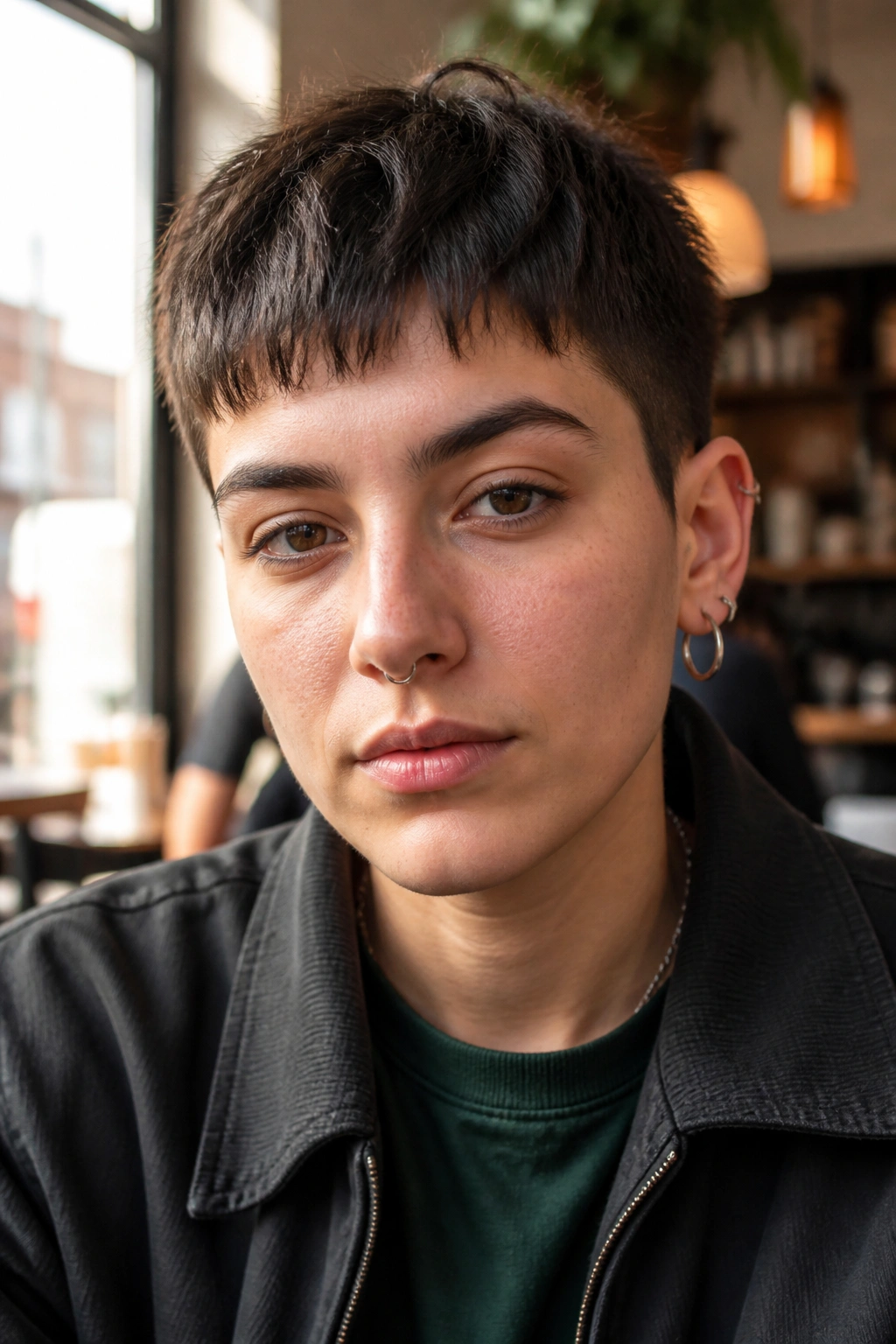
Why does a textured crop work so well on short queer hair? Because it keeps the edges tidy while letting the top look a little unruly. That mix is the sweet spot. The fringe gives you shape around the eyes, and the chopped layers keep the top from lying flat like a helmet.
The cut usually works best when the top is left with about 1.5 to 2.5 inches, then cut with point texturing so the ends don’t stack into a hard block. A blunt crop can look severe, which is fine if that’s what you want. Choppy texture softens it just enough to feel wearable every day.
How to Style It Without Making It Puffy
Work a pea-sized bit of matte paste between your palms, then press it into the top from back to front. Don’t rake it too much. That’s how you lose the piecey shape and end up with one flat sheet of hair.
A blow-dryer can help if your fringe flips the wrong way. Aim the air forward, then pinch a few strands across the forehead while they’re still warm. It’s a small move. It changes everything.
3. Pixie Cut With Long Side Sweeps
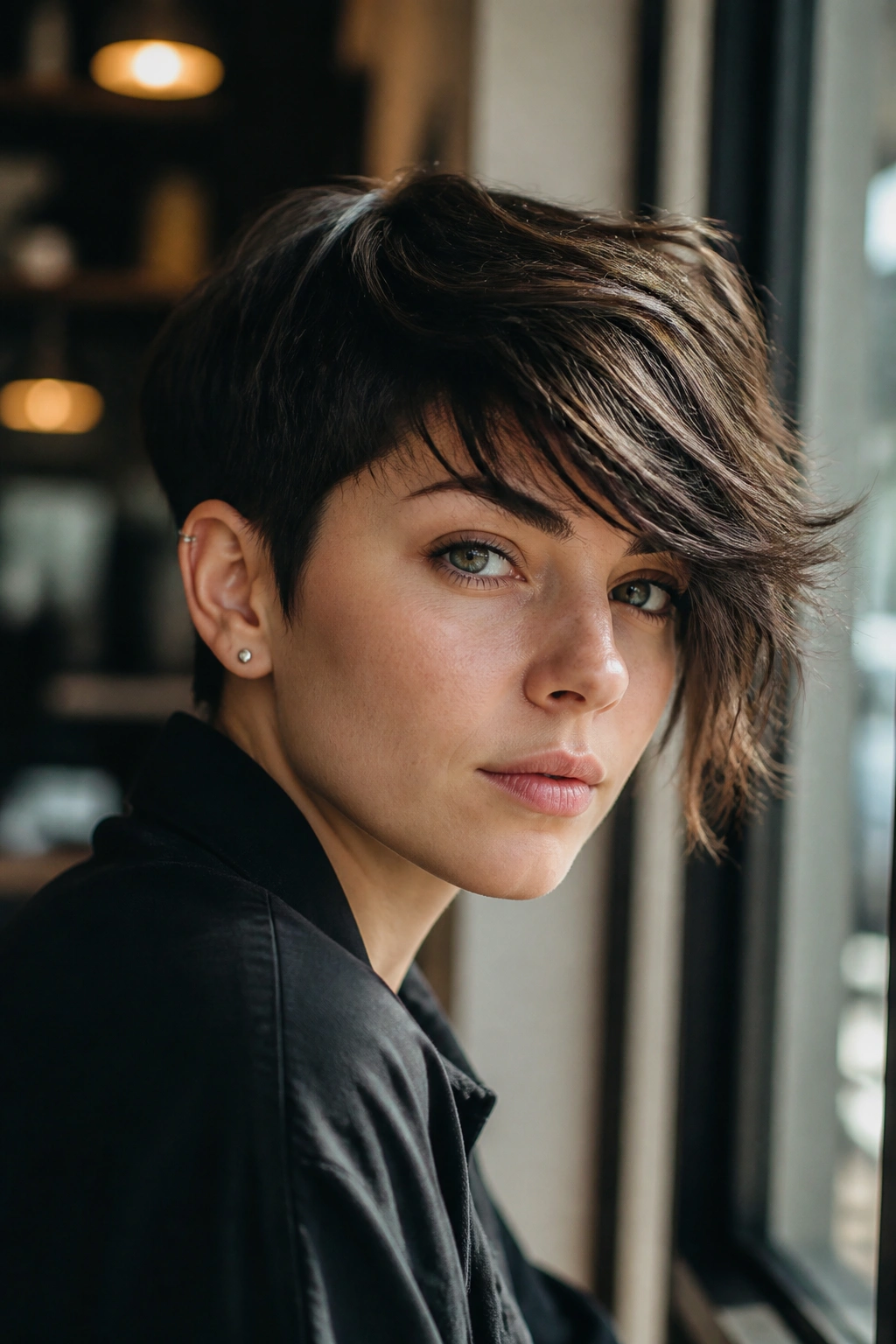
A pixie with long side sweeps is one of those cuts that looks simple until you see it in motion. Then it gets interesting. The short back keeps the neckline clean, while the longer front sections give you room to soften the face or sharpen it, depending on how you part it.
This cut is especially good if you like having options without growing everything out. Tuck one side behind the ear and it feels neat. Sweep the top forward and it gets flirtier and more graphic. A good pixie lives in that in-between space.
What Makes It Work
The front pieces usually need to stay longer than people expect. Think 3 to 4 inches around the fringe and crown, with the back clipped shorter so the silhouette doesn’t balloon out. The contrast is the point.
If your hair is fine, ask for a little internal layering so the top doesn’t collapse by noon. If your hair is thick, a stylist can thin the bulk with shears instead of taking off too much length. That keeps the sweep but drops the weight.
One sentence, really: this cut needs movement, not bulk.
4. Short Mullet With Soft Layers
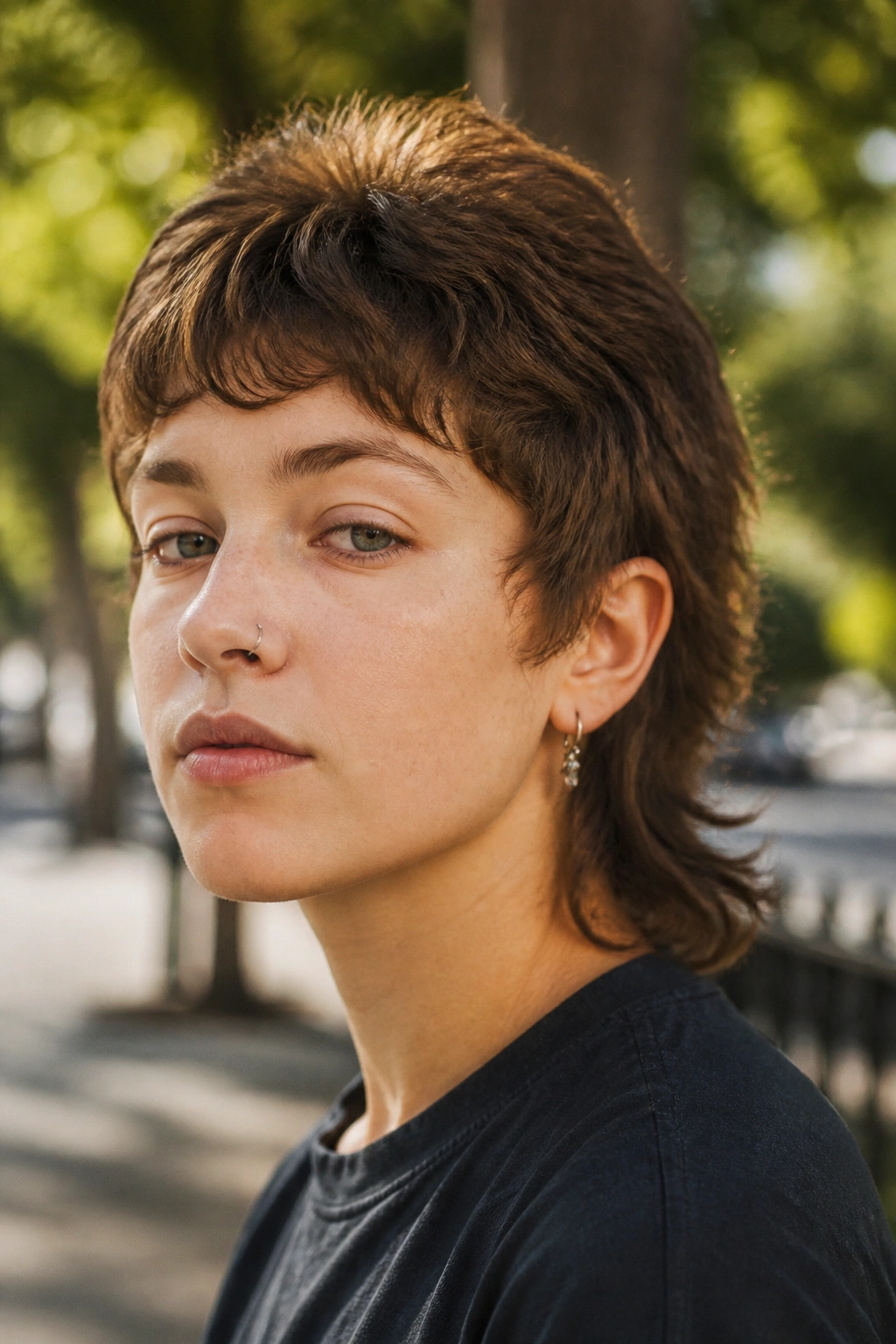
A short mullet is not a joke haircut. Not when it’s done well. The front stays tidy, the sides stay slim, and the back carries just enough length to make the whole shape feel sly. It’s one of the most expressive short queer hairstyles because it refuses to choose one mood.
The Details That Keep It From Looking Like a Costume
- Keep the crown a little longer so the top can blend into the back.
- Ask for tapered sides, not a hard shelf, unless you want a much sharper finish.
- Leave the nape a touch longer so the back has movement when you turn.
- Use light styling cream or salt spray if you want it to sit loose instead of sculpted.
A lot of people think a mullet has to be aggressively edgy. It doesn’t. A softer version can look almost romantic, especially if the texture is wavy or curly. The cut matters more than the attitude, and that’s a relief.
If you want the style to read queer without shouting, this is a good one. It has history. It has bite. It also looks excellent when it’s slightly imperfect, which is half the fun anyway.
5. Curly High Fade That Keeps the Top Big
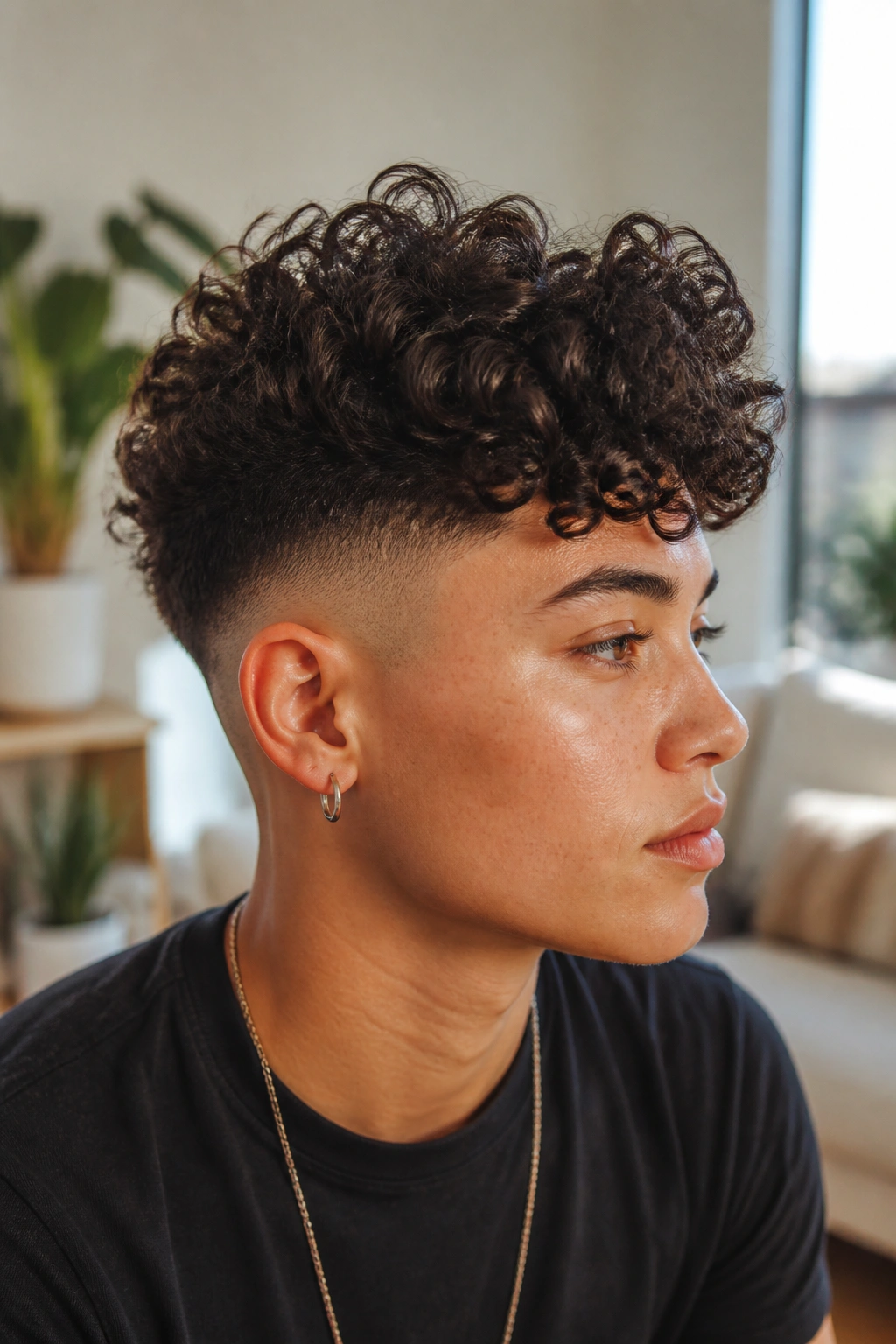
The first thing you notice is volume. Then you notice the clean fade below it. That contrast—big curls above, tight sides below—is why this cut lands so well. It gives curly hair a shape that feels deliberate instead of wide and shapeless.
Curly hair has shrinkage, which means the length you see wet is not the length you get dry. That matters here. A top that looks “short enough” in the sink can shrink into a tiny puff once it dries, and then the proportions are off. Leave enough length on top for the curls to spring.
A good starting point is often 3 to 5 inches on top, depending on curl tightness. Use leave-in conditioner first, then a curl cream or light gel. Scrunch it upward. Let it dry with a diffuser on low heat if you want lift without frizz.
Do not crush the curls flat with heavy product. The shape needs air.
6. Undercut Pixie With a Hidden Edge
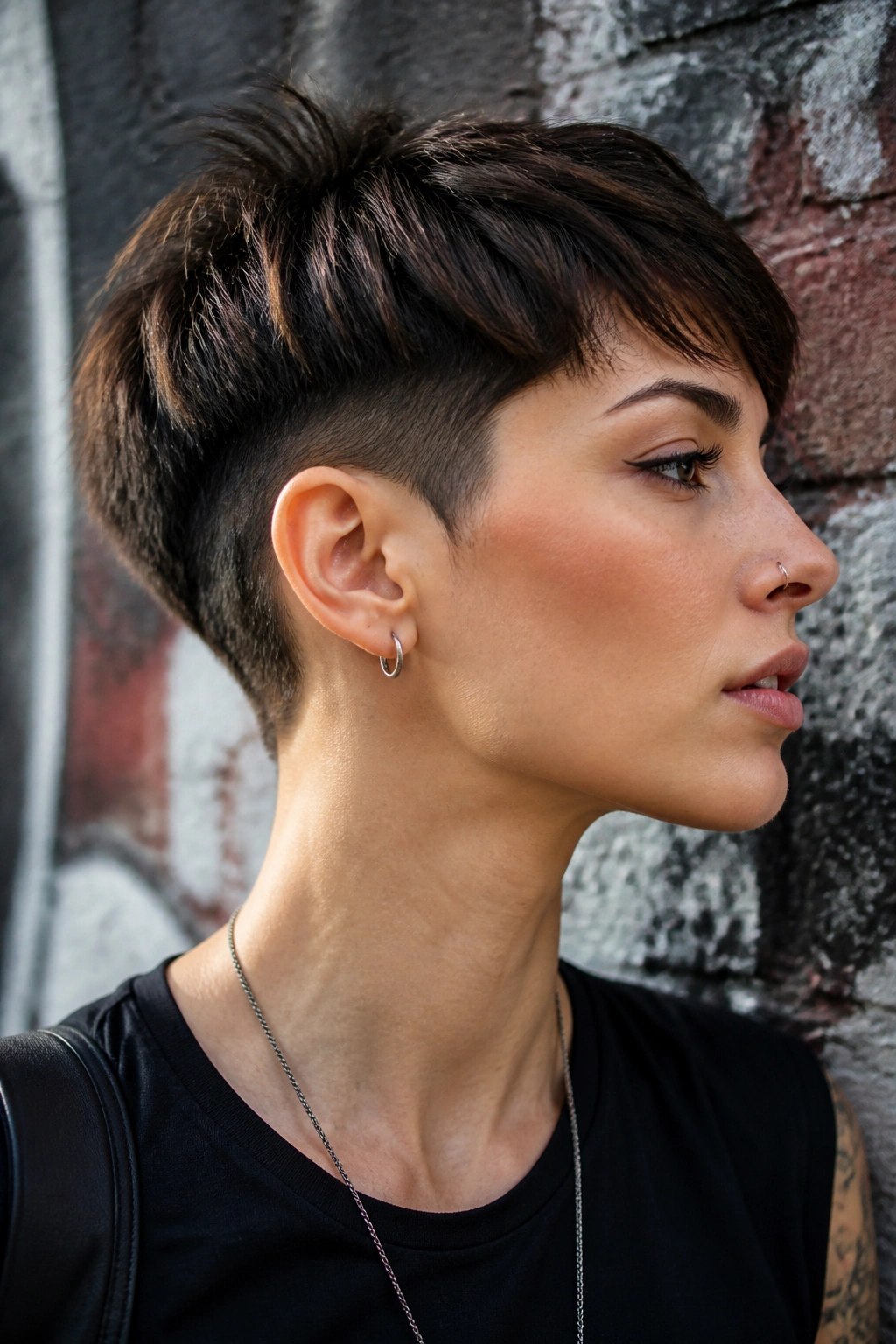
Unlike a classic pixie, this version keeps one surprise tucked underneath. The top can look polished and almost sweet at first glance, then you turn your head and there’s a shaved section or close-clipped underlayer waiting there. That contrast is the whole point.
It’s a good cut if you want something that can play in two directions. From the front, it can look neat enough for a dressier outfit. From the side, it looks sharper and a little rebellious. That makes it one of the most flexible queer short haircuts around.
What to Ask For
Ask for the top to stay around 2 to 3 inches, then take the underlayer down very short—sometimes to the skin, sometimes with a #1 or #2 guard if you want it softer. The hidden section can sit behind one ear, along one side, or around the nape.
This cut works best when the top has enough texture to move away from the head. A little bend in the hair helps. Straight hair can do it too, but it usually needs a bit of root lift spray or a quick blow-dry at the crown.
And yes, the grow-out takes patience. But while it’s fresh, it has real edge.
7. Modern Bowl Cut With Blunt Lines
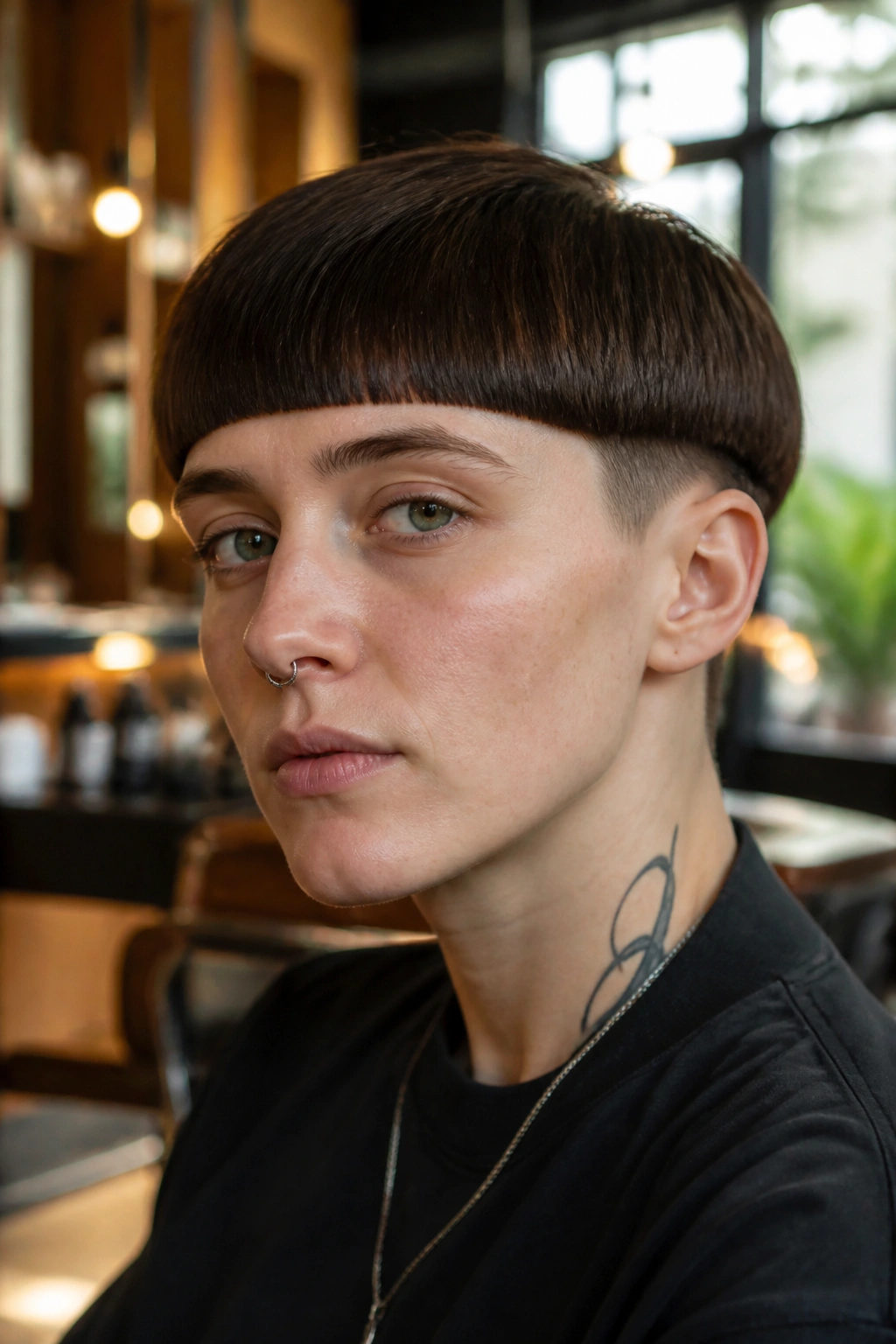
A bowl cut can look expensive when the line is clean. That’s the part people miss. The old-school version went too round and too heavy; the modern one plays with weight, fringe length, and the way the sides hug the head. Get those three things right and the whole cut feels cool instead of childish.
The Shape Is the Story
The perimeter should be crisp, but not helmet-hard. You want the fringe to sit somewhere between eyebrow-grazing and just above the lashes, depending on how dramatic you want the frame. The sides can be a little softer so the cut doesn’t become a perfect circle unless that’s the goal.
- Ask for a blunt outer line with soft internal texture.
- Keep the fringe straight across if you want a graphic look.
- Leave the nape snug and tidy so the shape doesn’t flare.
- Trim it often, because this cut loses its edge fast once it starts to grow.
This is one of those styles that looks best on someone willing to commit. Half-hearted bowl cuts look like accidents. Clean ones look like art. There’s no middle ground, which is maybe why I like them.
8. Side-Part Crop With a Hard Part
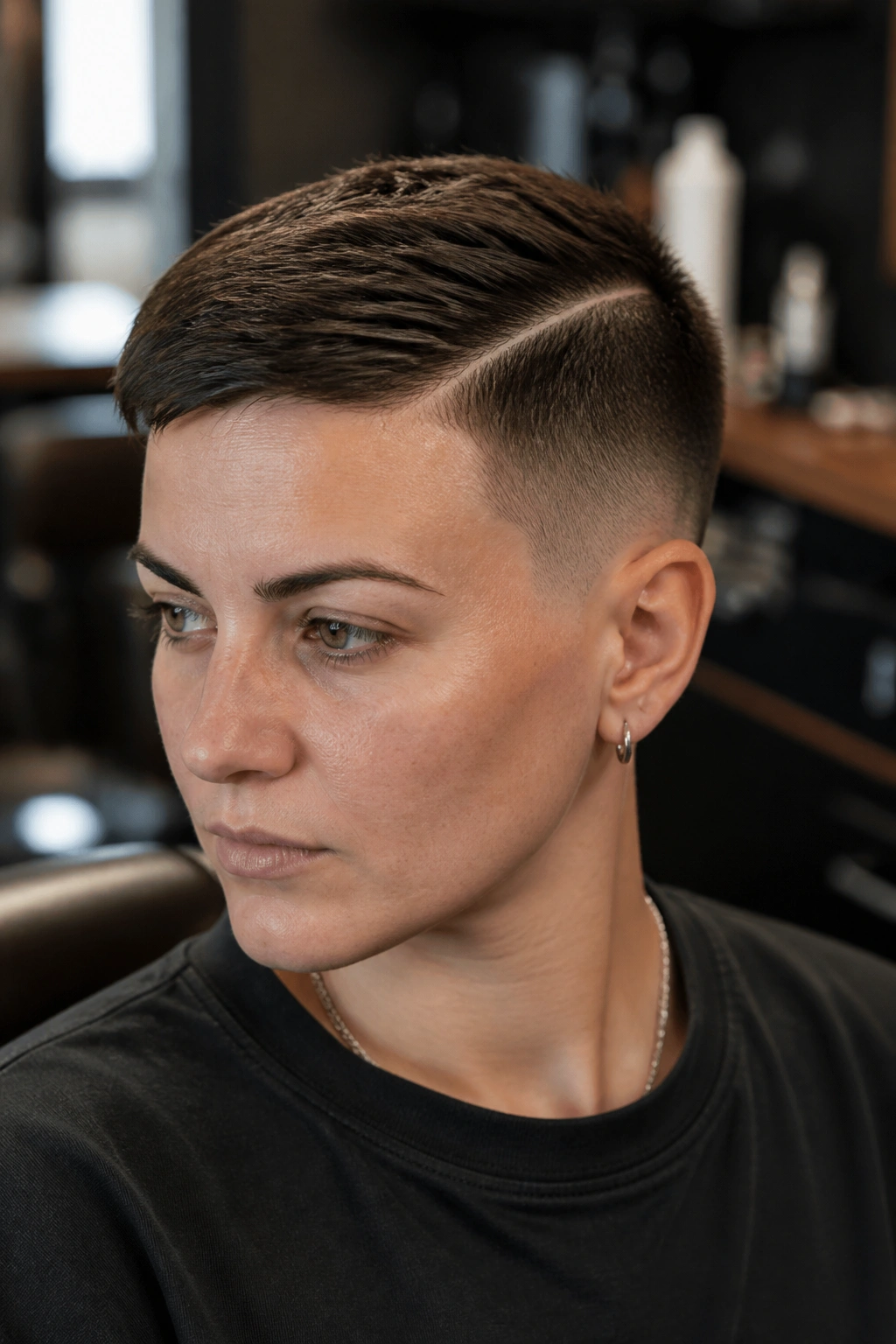
A side-part crop is the easiest way to look deliberate in five minutes. The hard part gives the haircut structure, and the short top keeps it easy to manage. It’s sharp without being fussy, which is a rare balance.
How to Ask for the Part
Tell the barber whether you want the part etched in or just strongly defined by the cut. Those are not the same thing. A true hard part is clipped into the scalp, while a soft part is built through length and styling.
Usually, the top only needs to stay around 1.5 to 3 inches. The sides can taper low or medium, depending on whether you want the silhouette to feel tidy or more dramatic. A comb and a light pomade are enough for most days.
This cut can read masc, femme, or just plain polished depending on how you wear it. Slick it close for a crisp finish. Brush it forward a little if you want the part to feel less formal. Either way, the structure does the heavy lifting.
9. Micro Shag With Feathered Ends
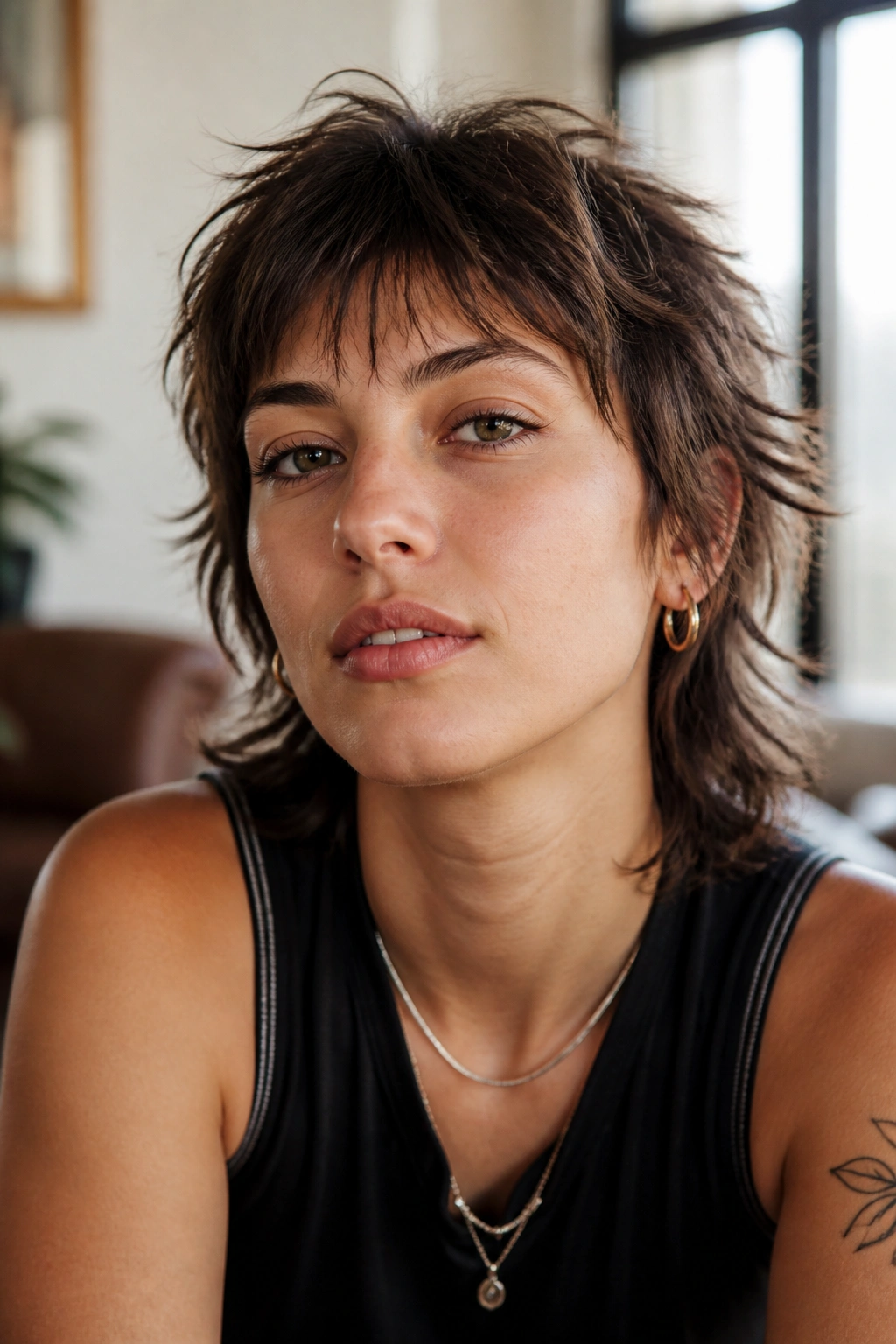
I keep coming back to the micro shag because it doesn’t punish you for having a messy day. The cut already expects movement, so it looks better when pieces flip out a little and the crown isn’t perfectly in place. That’s rare. Most short styles want obedience.
The trick is in the layers. Shorter pieces around the crown keep the top from going flat, while feathered ends break up the outline around the jaw and ears. You get shape without heaviness, which is exactly why the cut works on straight, wavy, and lightly curly hair.
If you hate the look of a stiff, sculpted haircut, this is your friend. It reads lived-in on purpose.
A Small Styling Note
Use a tiny bit of cream on damp hair, then scrunch the ends rather than coating the whole head. Too much product makes the feathering collapse. A diffuser helps if the hair has wave or curl. Air-drying works too, though it can leave a little more frizz. That’s fine here. It belongs.
10. Tapered Afro With a Clean Nape
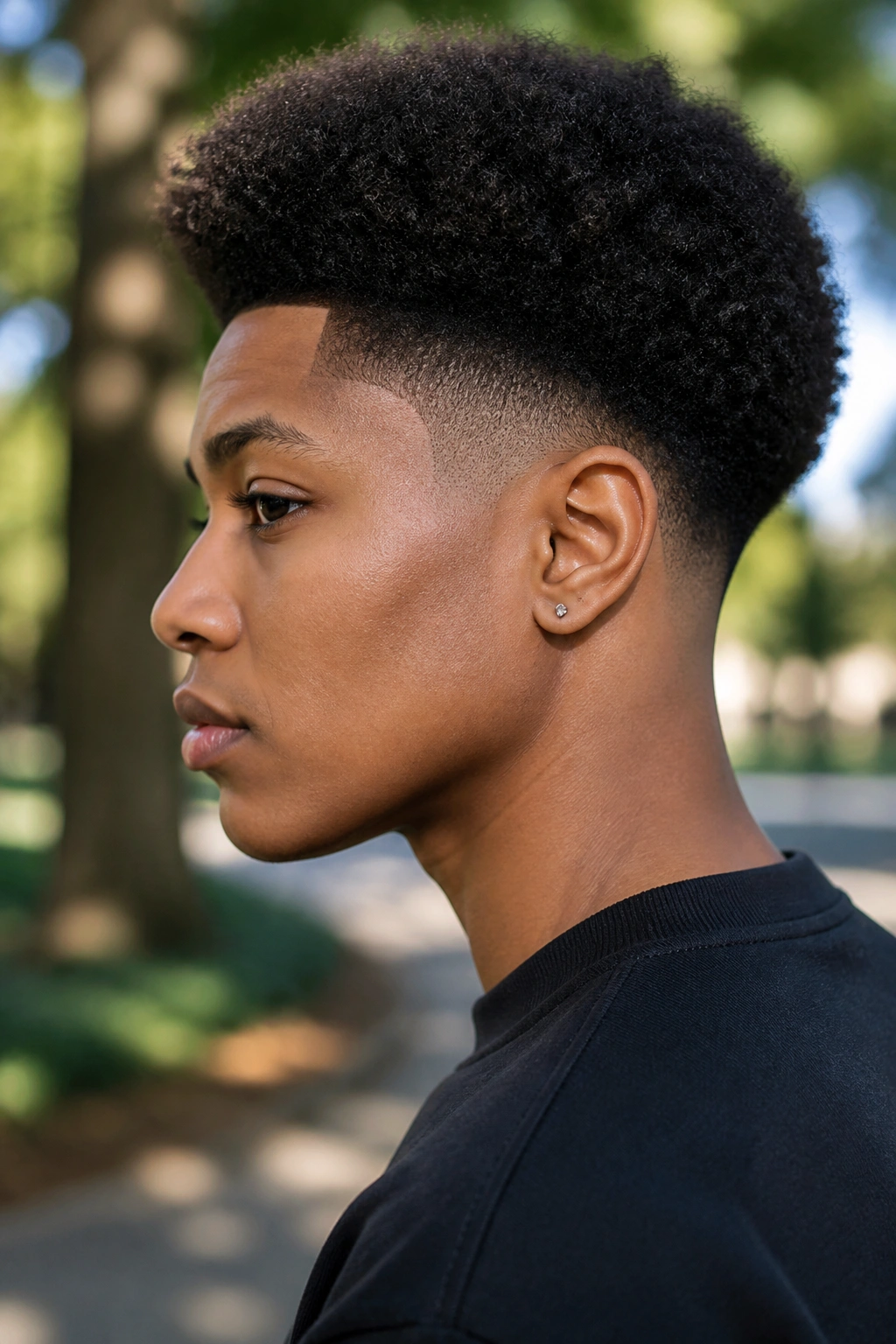
Want height without adding more length? This is the move. A tapered afro keeps the sides and nape clean so the shape rises upward instead of spreading out too wide. That makes the whole cut feel sharper and more intentional, especially on shorter natural hair.
The haircut works because it respects the natural texture instead of flattening it. You still get the softness and volume of coils, but the taper gives the silhouette a cleaner edge. A good line-up around the forehead and temples helps, too, though it should still look like hair, not a stencil.
How to Keep the Shape Alive
A wide-tooth comb or pick can lift the root without tearing the curl pattern. Moisture matters here. Use a leave-in conditioner or a light butter, then seal only if your hair actually needs it. If the product sits on top and makes the hair feel greasy, it’s too heavy.
Ask your barber to leave enough length on top that the curl pattern can show. Too short, and the shape turns fuzzy. Too long, and the taper gets lost. The balance sits somewhere in the middle.
This cut has presence. That’s why it works.
11. Burst Fade Mohawk for Short Hair

The burst fade mohawk is for the days you want your hair to look like it has somewhere to be. The fade curves around the ear, the center strip stays longer, and the whole thing looks lively without needing a ton of length. It’s dramatic, but not costume-y.
What to Tell the Barber
- Keep the center strip about 2 to 4 inches if you want it to stand up with product.
- Ask for a burst fade around the ear, not a straight drop fade.
- Leave enough length at the front so you can spike, curl, or brush it forward.
- Use a strong but flexible product if you want movement instead of a crunchy shell.
This cut does best with hair that has some natural bend, but straight hair can hold it too if you work with blow-dry heat and a decent styling cream. The key is not overloading the top. A mohawk loses its shape fast when it gets buried in product.
I like this cut because it has an edge without needing a lot of ceremony. It says what it says and gets on with the day.
12. Dyed Buzz Cut in a Single Loud Shade

Bleach and a buzz cut is a sharp combo, and that’s because the hair stops competing with the color. The shape stays simple, so the shade gets all the attention. A solid copper, navy, electric red, platinum, or deep violet can turn a plain crop into something that feels like a statement piece.
The real win here is contrast. Short hair shows scalp and skin more openly, which means the color sits right against the face and changes the whole mood. A buzz in one loud shade can read playful, punk, elegant, or all three at once.
What to Watch For
Bleached short hair still needs care, even if the length is tiny. Scalp dryness shows faster here, and color fade can make the look muddy if you ignore it. A sulfate-free shampoo, cool water, and a simple conditioner go a long way. If the color is vivid, a pigmented mask can help keep it from washing out too fast.
This style is bold in the simplest possible way. No tricks. No layers. Just color doing all the work.
13. Asymmetrical Bob That Skims the Jaw

Why does a difference of half an inch matter so much? Because asymmetry changes the whole read of the haircut. An asymmetrical bob—one side skimming the jaw, the other a touch shorter or longer—creates movement even when the hair is still. That’s why it feels so alive.
The cut works best when the longer side lands somewhere around the chin or jawline and the shorter side opens up the face. If the difference is too extreme, it can get costume-y fast. If it’s too small, you lose the point. The sweet spot is usually obvious once you see it in the mirror.
The Shape Game
A deep side part can push the asymmetry further. So can a tucked side behind the ear. Straight hair makes the angles read crisply, while wavy hair softens them. Both are good. Neither is wrong.
I’d ask for blunt ends if you want the bob to feel sharper, or softer point-cut ends if you want it to breathe a little. Either way, this cut gives a shorter length a surprising amount of attitude.
14. Frohawk With Tapered Sides

The frohawk works because it turns texture into a shape instead of trying to flatten it into something polite. The sides taper close, the center ridge keeps height, and the whole haircut reads confident without needing a lot of length.
That center line can be narrow or broad. Narrow looks tighter and more graphic. Broader gives you more volume and a softer silhouette. If your curls or coils already spring upward, you’re halfway there before the products even come out.
Styling Moves That Help
Use a curl sponge, a pick, or just your fingers depending on how defined you want the texture. A little gel at the edges can keep the outline clean, but the middle should still look touchable. Too much smoothing kills the shape.
This is one of those styles that looks best when the fade is fresh. The contrast between the tight sides and the raised center is what gives it life. Once the sides grow out too much, the whole thing loses that clean, lifted profile.
15. French Crop With a Heavy Fringe

What makes a French crop stay crisp? The fringe does the work. That heavy front line creates the shape, while the short sides and trimmed back keep everything from spreading out. It’s a compact cut, which is why it looks so good on people who want polish without fuss.
How to Wear It
The top usually stays short—often around 1 to 2 inches—while the fringe sits forward and slightly down. The barber can texture the top or leave it blunt, depending on how tidy or rough you want it to feel. A blunt version looks more graphic. A choppier one feels softer and more lived-in.
- Use a matte clay if you want separation.
- Use a light cream if your hair is fine and tends to vanish when dry.
- Dry the fringe forward so it falls where you want it.
- Avoid heavy shine products unless you want a slick finish.
This cut is a good one for people who want to look put together without spending time on it. And honestly, that’s half the appeal.
16. Short Locs With Shaved Sides
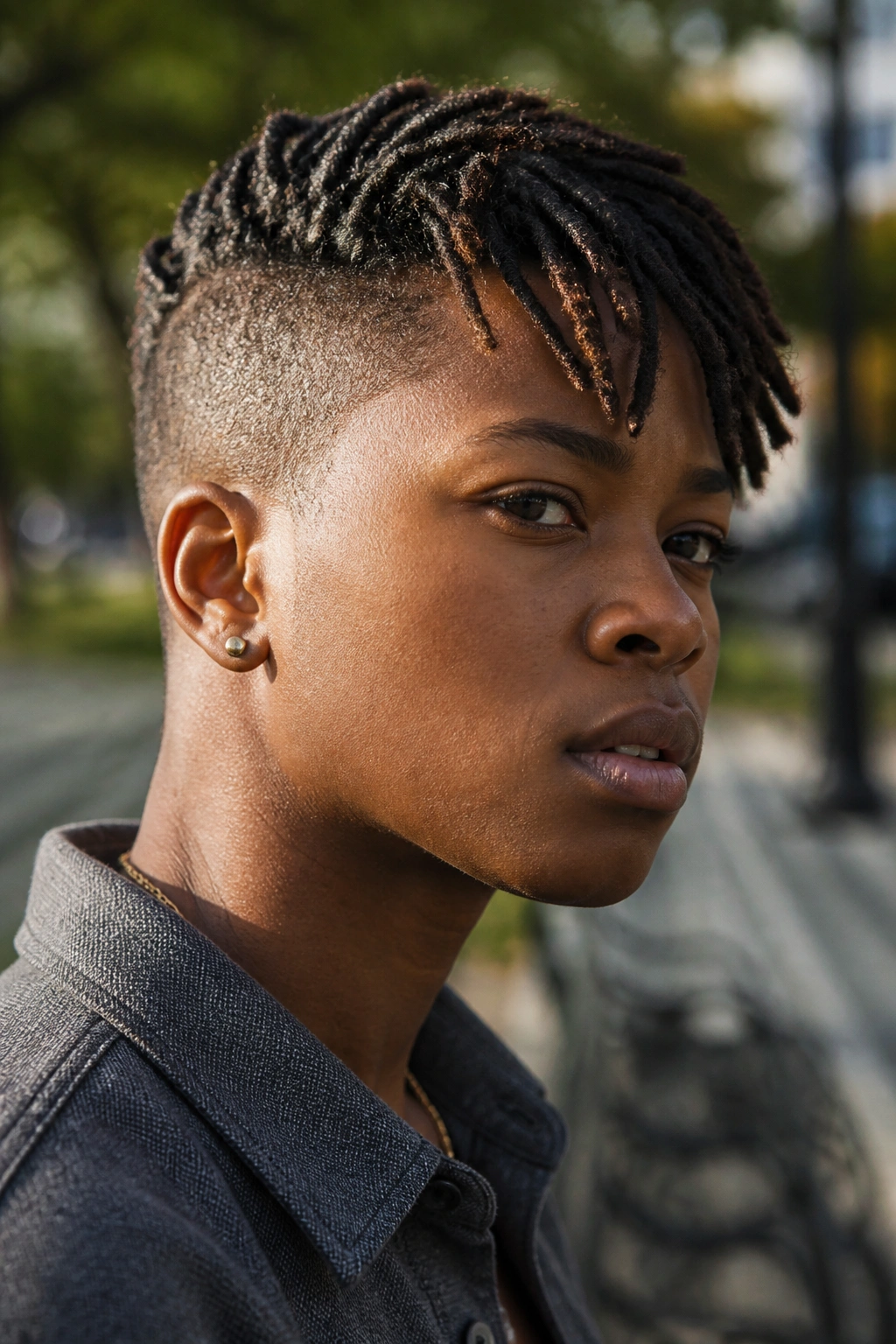
Short locs have weight, even when they’re cropped close. The texture carries shape all on its own, and once you add shaved sides, the result gets graphic fast. The contrast between the locs and the clean underlayer is what makes this style pop.
It can be a quiet cut or a loud one. Leave the locs a little longer on top and the silhouette starts to rise. Keep the sides tight and the face opens up. Either way, the haircut feels deliberate because the difference in texture is doing the talking.
What to Ask For
Tell your stylist or loctician how much of the side you want gone. A low shave keeps the style softer. A higher shave makes the top more dramatic. The nape can be cleaned up too, which helps the shape stay neat even when the locs themselves are a bit undone.
A short loc style also gives you room to play with color at the tips, beads, or a side pattern if that’s your thing. The base shape is already strong. Small details matter more than people think.
17. Curly Pixie With Baby Bangs

Baby bangs do not have to read cute. On a curly pixie, they can look sharp, deliberate, and a little strange in the best way. The short fringe opens the face while the curls keep the top from feeling flat or severe. It’s a good mix.
Curly hair shrinks, so baby bangs need to be cut with that in mind. If the stylist cuts them wet and too short, they can spring up higher than you wanted. A dry cut or a cautious approach works better here. Let the curls show where they actually land before anything gets taken off.
This cut suits people who want short hair but don’t want the whole head cropped to the same level. The fringe gives the cut personality. The pixie shape keeps it wearable.
One more thing: this style looks best when the bangs are slightly uneven. Too perfect and it gets fussy. A little irregularity keeps it alive.
18. Disconnected Undercut With Natural Curls
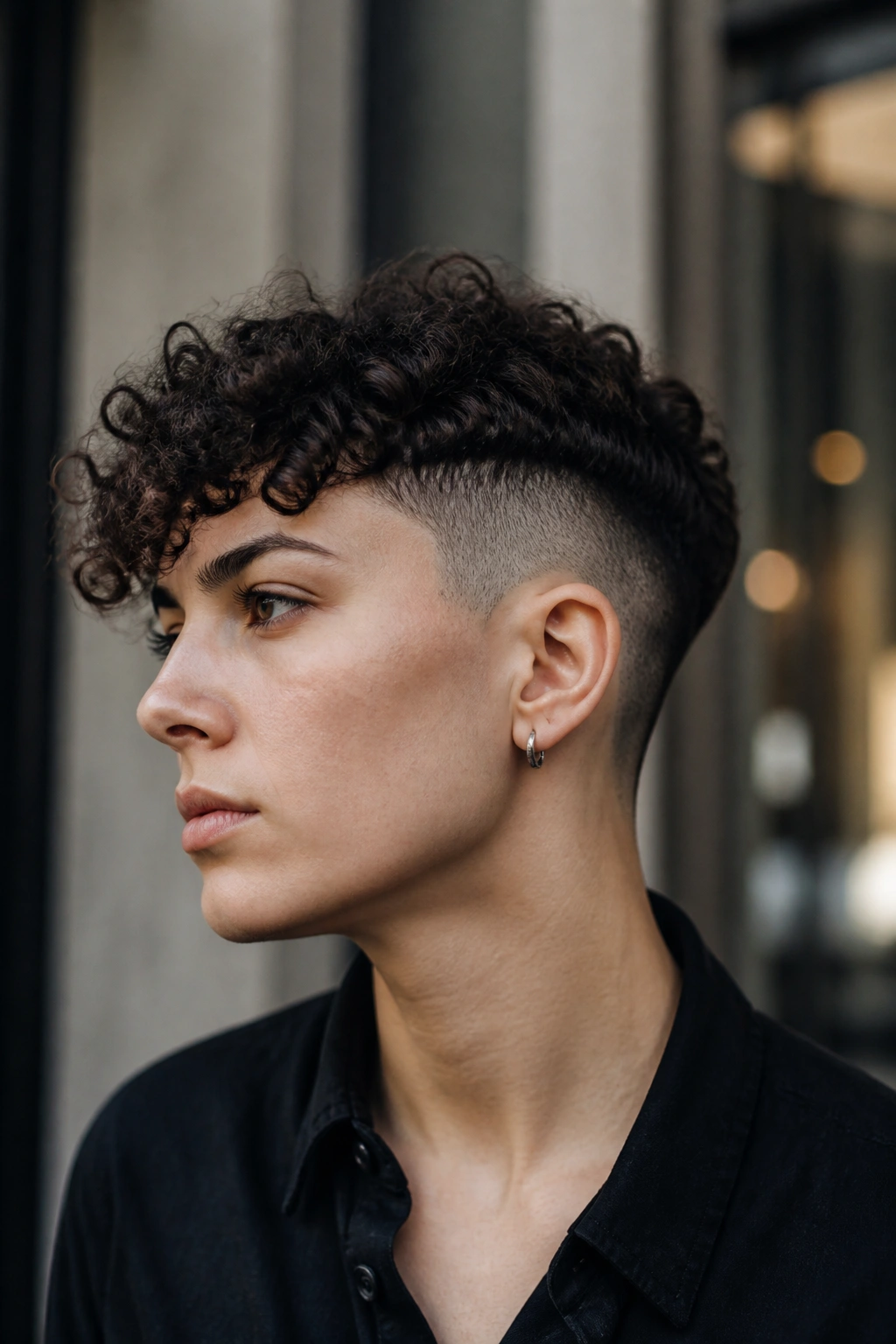
A disconnected undercut changes the whole silhouette. Instead of a gentle fade, you get a visible jump from the short sides to the longer top. On natural curls, that jump can look bold in a way that feels clean rather than chaotic.
What Makes It Different
A classic undercut tries to blend. This one does not. The hard break is the point. The top might sit 4 to 6 inches long, while the sides stay much shorter, sometimes shaved. That contrast gives the curls room to fall without losing the outline.
Who It Suits Best
- People who want curls with a strong shape.
- Folks who like wearing hair pushed to one side or forward.
- Anyone who wants a cut that still looks good when it’s a little grown out.
If your curls are dense, this cut can prevent the “triangle” effect that happens when the bottom gets too wide. If your curls are loose, it adds punch. Either way, it gives the hair a shape that feels graphic without forcing it into a fake curl pattern.
19. Ear-Length Shaggy Bob With Movement

When a bob starts looking too neat, shagging it up fixes the problem. That’s the appeal here. An ear-length shaggy bob keeps the length short enough to feel easy, but the broken layers around the ears and jaw keep it from turning stiff.
This cut has a nice looseness to it. It can look polished on a good hair day and a little disheveled on a busy one, which is honestly part of the charm. The face-framing pieces soften the outline, while the back stays compact enough that the whole thing still reads short.
If your hair is straight, the layers can create swing. If it’s wavy, the cut gets movement for free. If it’s curly, the shorter length keeps the shape from puffing out too much.
I’d choose this one for someone growing out a pixie or trimming down a bob that feels too heavy. It sits right in that middle zone where nothing is overworked.
20. Soft Wolf Cut for Short Hair
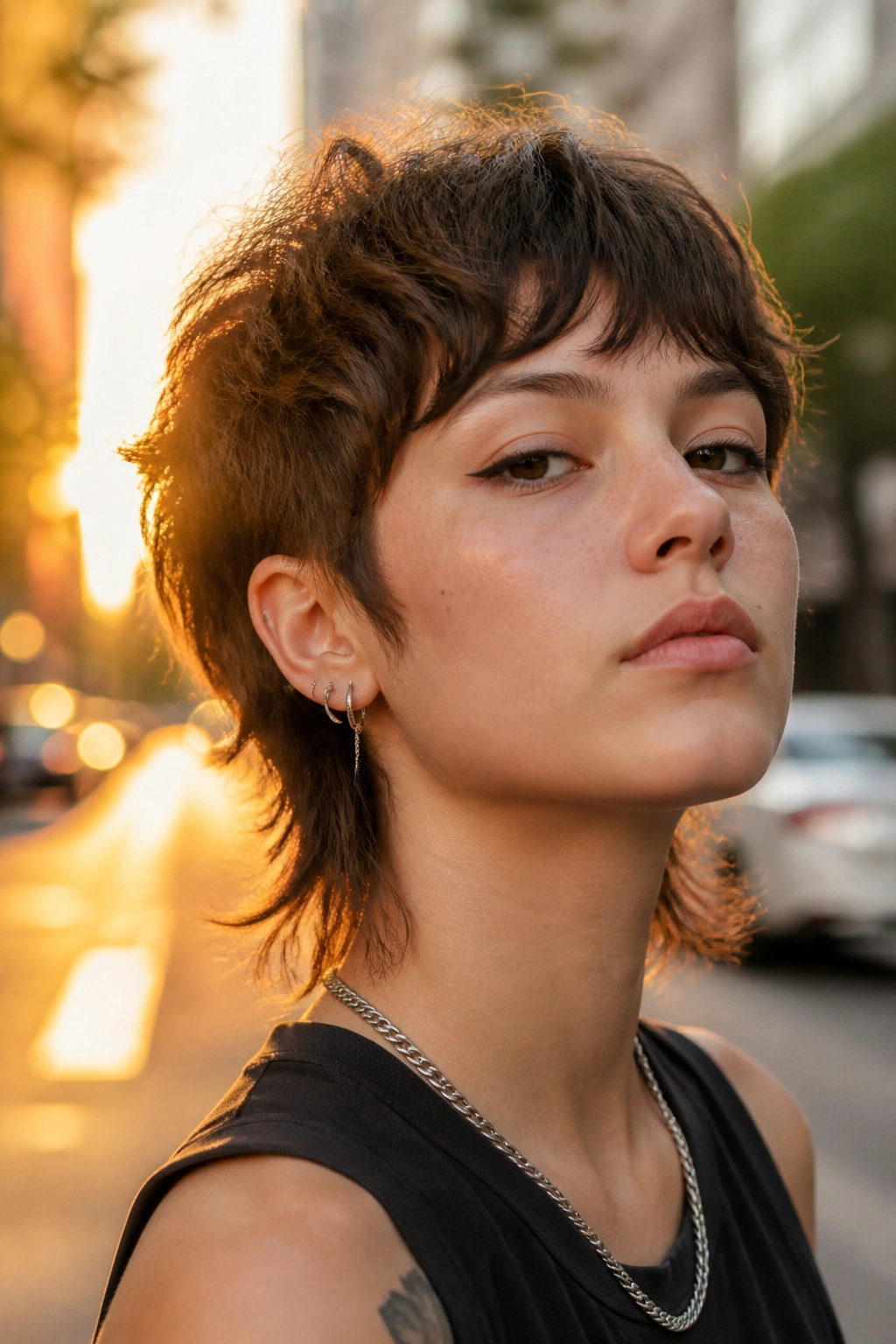
A short wolf cut is the one I recommend when someone wants chaos with control. It has the shag’s crown lift, the mullet’s longer back, and enough short layers around the face to keep the shape from feeling bulky. Done well, it looks loose and a little wild without ever collapsing into mess.
Why It Works on Short Lengths
The crown layers lift the hair off the head, which gives the style its energy. The fringe can be wispy or heavier, depending on how much face framing you want. The back stays a touch longer so the silhouette doesn’t turn into a plain crop.
How to Style It Without Killing the Shape
Use a light mousse or sea salt spray on damp hair, then scrunch and let it dry with a little movement. If the ends go too fuzzy, a small dab of cream on the very tips can calm them down. Don’t overthink it. This cut looks better when it’s not forced into perfect order.
A short wolf cut is especially good if you like your hair to feel a little feral but still intentional. That’s a real category. And it has a devoted audience for a reason.
Final Thoughts
Short hair has range, and queer short hairstyles prove it every time. A cropped cut can read soft, hard, elegant, odd, flirty, or all of those at once if the shape is right. The trick is not length alone. It’s the line at the temple, the weight at the crown, the way the fringe lands, the way the neck is cleaned up or left a little rough.
If you’re bringing one of these looks to a stylist, bring more than a photo. Say what you want the haircut to do. Open the face. Sharpen the jaw. Show the ears. Keep the curls up high. Leave one side heavier. Those are the details that make a short haircut feel personal instead of generic.
And if you’re stuck between two options, pick the one with the clearer shape. Hair grows back. Bad vagueness lasts longer than a bold cut ever will.
