



Fine, thin hair has a cruel habit of looking flatter the moment you step away from the mirror.
The right hairstyles for fine thin hair do one of two things: they make the ends look denser, or they create shape where the eye wants to see more body. That sounds simple, but it’s the difference between hair that feels limp by lunch and hair that holds its line all day.
One detail matters more than people think: fine hair and thin hair are not the same thing. Fine hair refers to the width of each strand, while thin hair refers to how much hair you have on your head. You can have both, one, or neither. That’s why the cuts and styles below lean on blunt edges, smart parts, strategic volume, and a little bit of texture rather than loads of layers that seem helpful in the chair and then fall apart at home.
I keep coming back to the same rule with this kind of hair: shape beats fluff every time. A clean perimeter, a lifted root, or a tucked style can do more than a heavy round-brush blowout that collapses by dinner. And yes, some of these looks are short, some are shoulder-skimming, and some are just styling tricks you can use on your current cut. The good ones earn their place because they make hair look fuller from the front, the side, and even in a bad breeze.
1. Blunt Chin-Length Bob
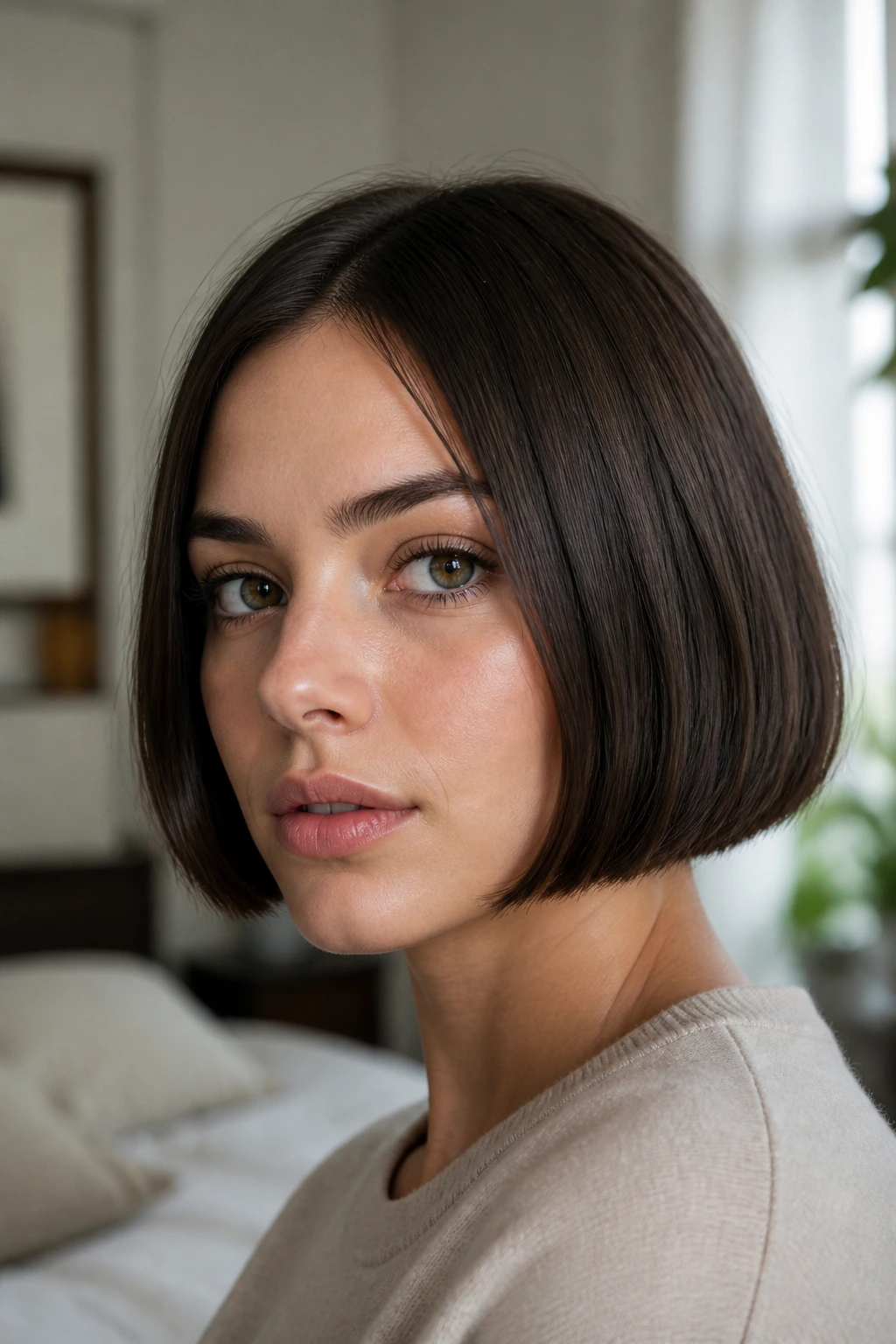
A blunt chin-length bob is the haircut I reach for first when fine hair needs to look denser without begging for constant styling. The straight edge at the bottom gives the eye a solid line to follow, and that line makes the whole shape feel fuller. No wispy ends. No over-thinned perimeter.
Why It Works
A blunt edge keeps every strand working together instead of scattering into a see-through tail. Chin length is a sweet spot because it lifts the hair away from the shoulders, where longer fine hair often gets pulled flat. If your hair flips out a little at the ends, even better. That tiny bit of movement can keep the cut from feeling stiff.
Quick Styling Notes
- Ask for minimal layering and a blunt hemline.
- Use a root-lift mousse before blow-drying.
- Finish with a 1-inch round brush or a flat brush if your hair is straight.
- Keep serum off the roots; a drop on the ends is enough.
Pro tip: If your hair is especially sparse at the front, tuck one side behind the ear and leave the other side loose. That small asymmetry helps the bob look thicker than a perfectly even part ever will.
2. Collarbone Lob with Soft Waves
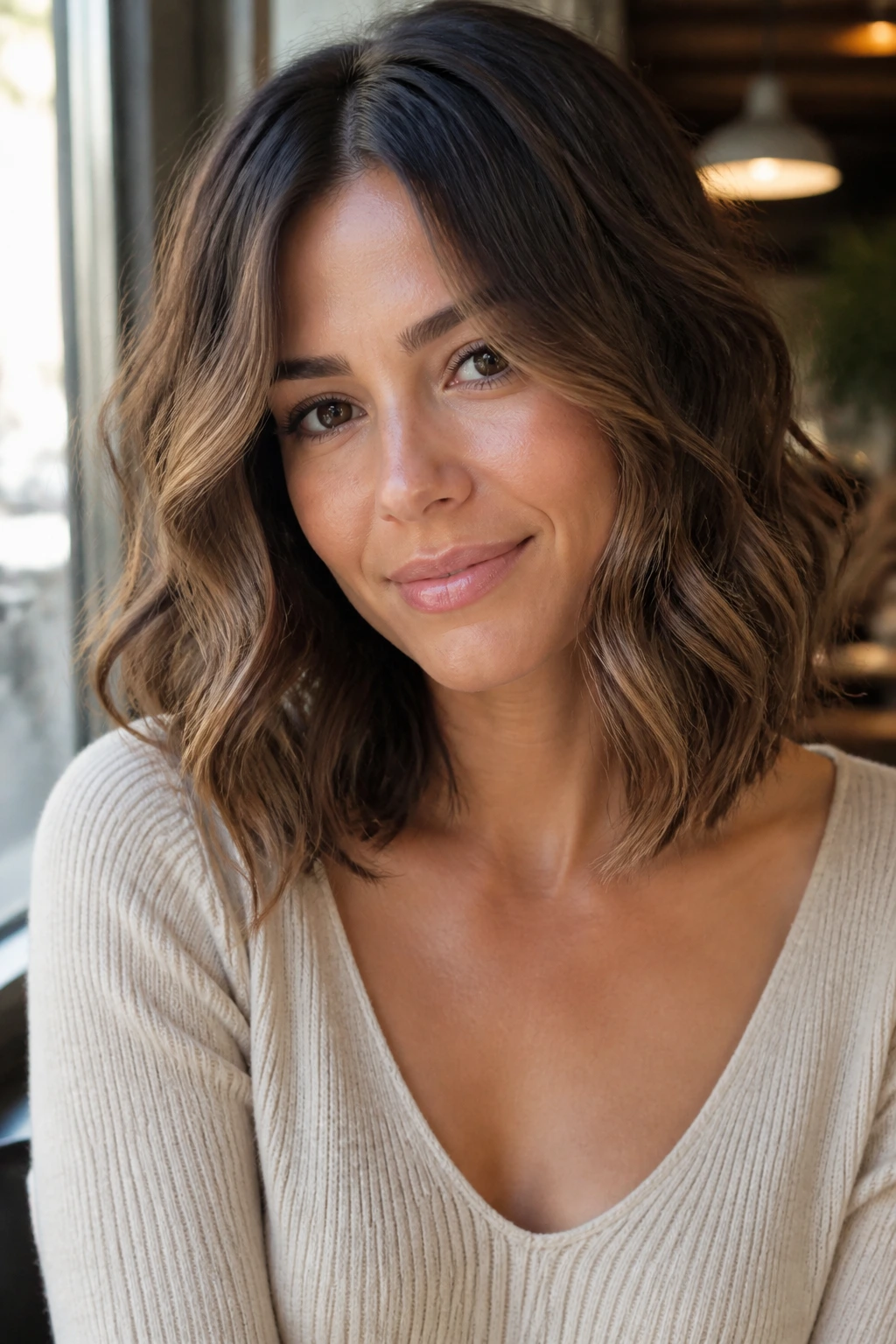
Why does a collarbone lob work so well on fine hair? Because it gives you enough length to feel soft, but not so much that gravity wins the whole day. The cut sits in that useful middle ground where a little bend at the ends creates body instead of stringiness.
The trick is to keep the waves loose. Tight curls often separate too much on fine strands and make the hair look smaller, not bigger. A 1.25-inch curling iron, used only from mid-length to the last inch or so, gives a bend that looks fuller and more relaxed. Then you shake it out with your fingers, not a brush. A brush can be rude to this style.
If you want this look to last, spray a light mist of texturizing spray into the mid-lengths before curling. That gives the iron something to hold onto, and it keeps the bend from dropping too fast. The result is soft, touchable movement that still has a bit of backbone. That matters.
3. French Bob with Micro Fringe
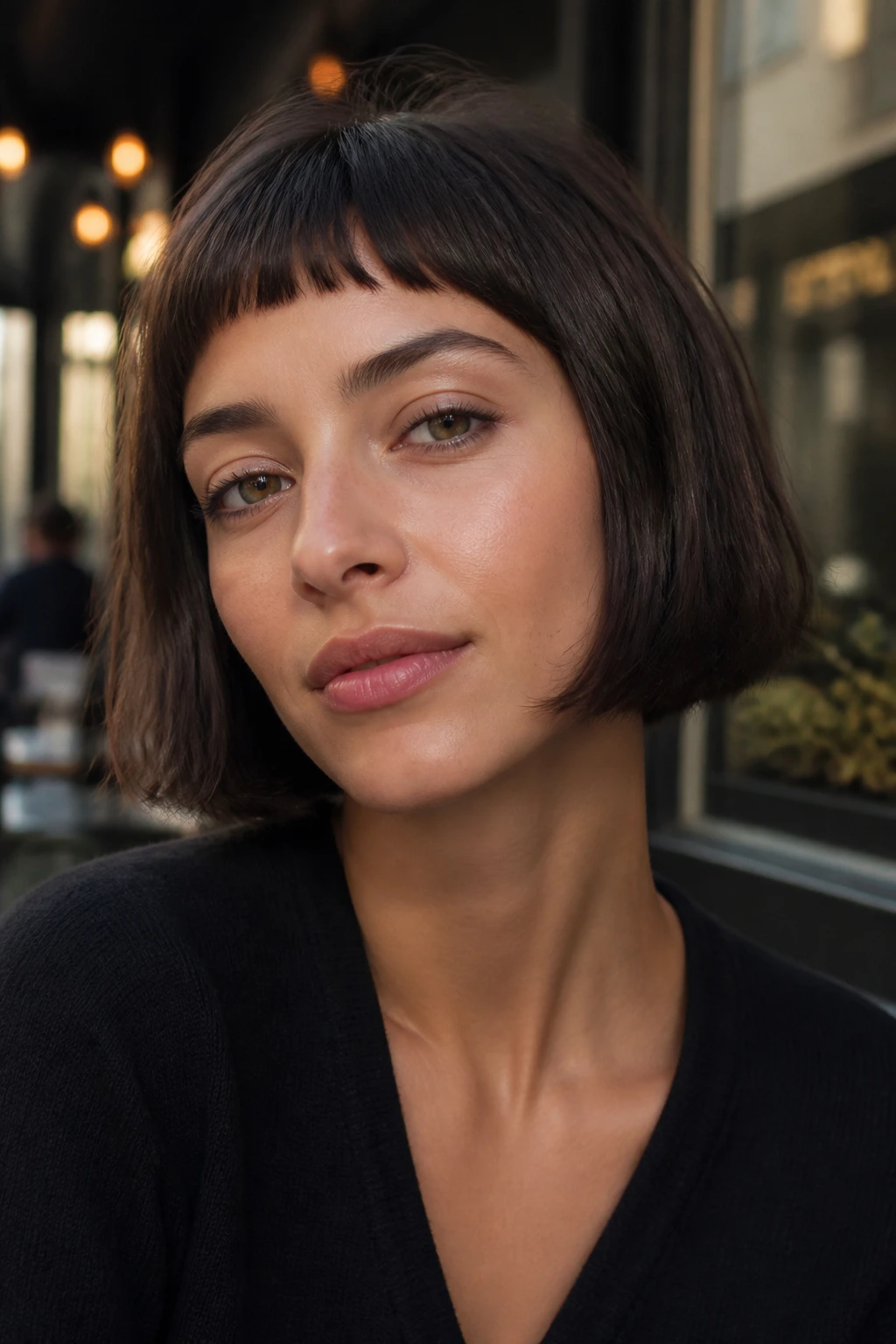
A French bob can look expensive on fine hair because it refuses to hide what the hair actually wants to do. It sits short, usually around the jawline, and makes the ends look denser by keeping them all in one strong line. Add a micro fringe or a very airy fringe, and the whole shape feels sharp in a good way.
What Makes It Different
This cut works best when the texture is straight to softly wavy. If the hair is pin-straight, the bob looks crisp. If it has a little natural bend, it looks effortless without trying to fake volume. The fringe does a lot of work here, too. A short fringe opens the face and draws attention upward, which helps if the crown tends to lie flat.
How to Wear It
- Blow-dry with a small round brush.
- Keep the ends tucked under slightly.
- Use a pea-sized amount of styling cream, not a heavy balm.
- Let the fringe sit soft and a little piecey.
The one caution: a micro fringe is unforgiving if your hairline is sparse or your forehead needs more coverage. In that case, a wispy curtain fringe does the same job with less drama.
4. Pixie Cut with a Long Crown
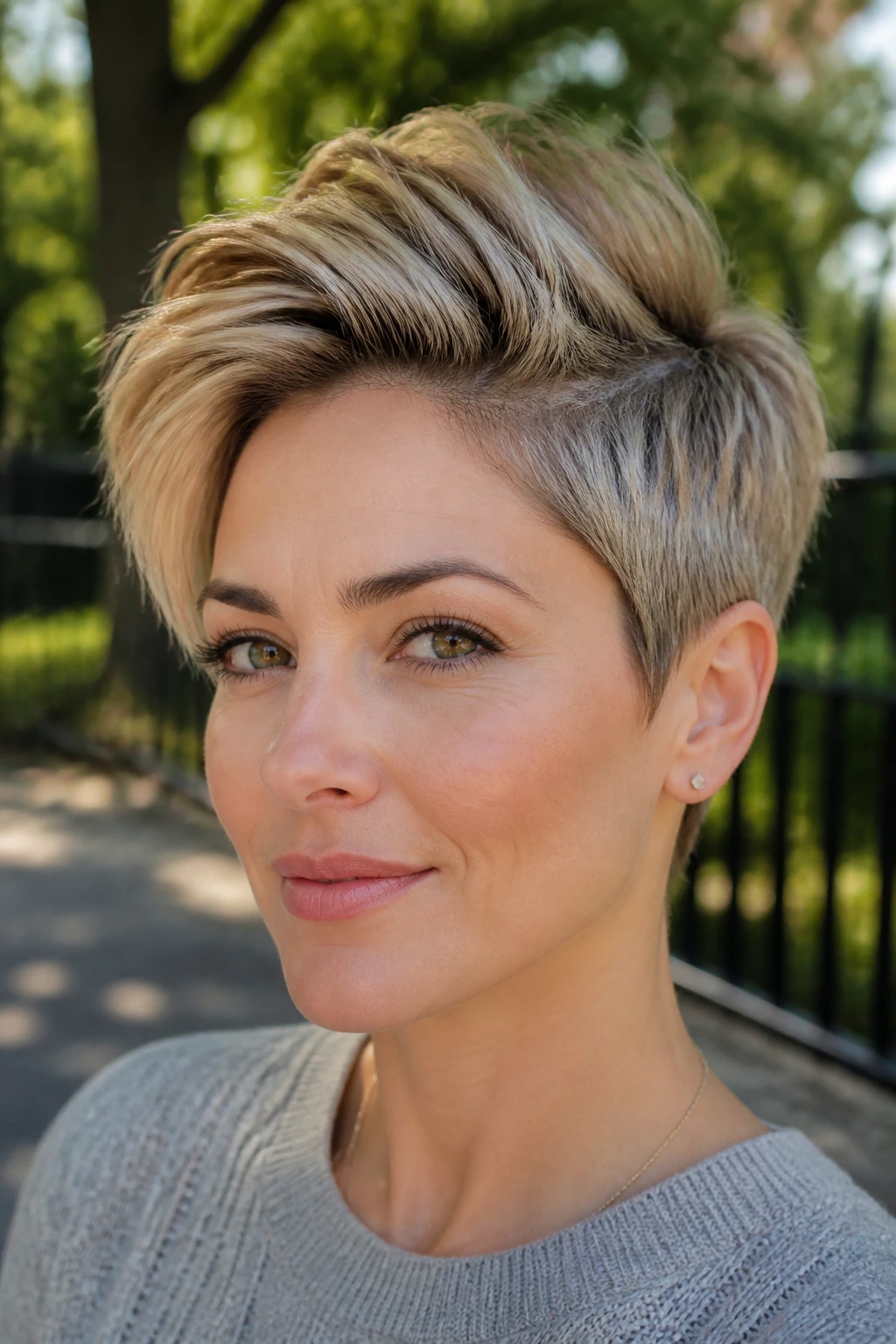
A pixie cut is not a surrender. It is often the smartest answer for hair that needs movement and lift but refuses to grow into fullness. The secret is keeping the sides neat and leaving more length through the crown, because that top section is where you can fake the most volume with the least effort.
When the crown is cut a little longer, you can push it up, sweep it forward, or pinch it with matte paste so it stands away from the scalp. That creates height. And height matters. Fine hair lying flat against the head is what makes it look sparse; fine hair with a lifted crown suddenly looks intentional.
What to Ask For
- Shorter sides and nape
- 2 to 3 inches of length through the crown
- Soft texture on top, not razor-thin ends
- A side sweep if you want a gentler finish
The best part is speed. A pixie with a long crown can be styled in minutes. It’s one of the few cuts that looks polished even when you barely touch it.
5. Deep Side-Part Blowout
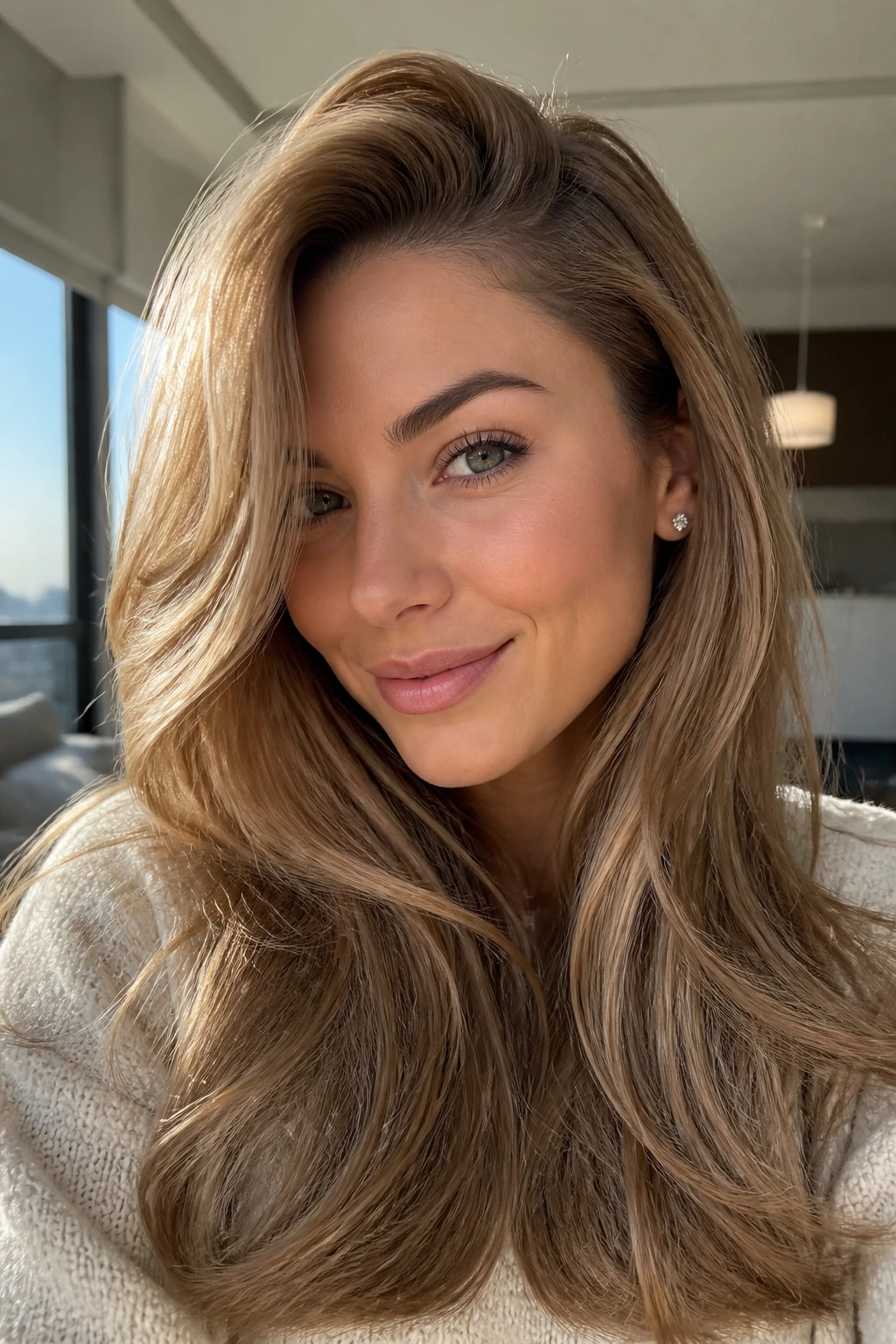
A deep side part can give fine hair more drama than a whole drawer full of styling tools. The reason is simple: shifting the part creates instant lift at the roots, and the heavier side gives the illusion of density where the hair would otherwise split open.
Start with mousse at the roots and a heat protectant through the lengths. Then blow-dry the hair in the opposite direction from where you plan to wear it, which helps set the root lift before you move it back. Use a round brush to bend the ends under slightly, not to create a giant curl. Giant curls on fine hair can look a bit too perfect and lose shape fast.
The final move is small, but it matters. Flip the part back to the deep side while the hair is still warm, then let it cool there. That little reset helps the roots hold their new shape. One side will fall forward more than the other, and that imbalance is exactly what makes the hair look fuller.
6. Curtain Bangs with Shoulder-Length Layers

Curtain bangs are one of the few fringe styles that can help fine hair instead of fighting it. They part softly at the center or just off-center, so they do not cut a hard line across the forehead. That softer shape keeps the front from looking heavy, which is often the problem with blunt bangs on low-density hair.
The shoulder-length cut underneath should stay fairly clean. Too many short layers around the face can make the ends feel thin and disconnected. I prefer layers that start below the cheekbone and blend into the rest of the cut. That way, the bangs frame the face while the length still has enough weight to sit well.
How to Style It
Use a round brush to bend the bangs away from the face, then let them drop back into place with a little movement. A touch of light cream or spray wax at the ends keeps the curtain pieces from separating too much. If you want more fullness at the crown, dry the roots from side to side before you smooth the front.
This is a good cut if you like softness. It does not shout.
7. Sleek Low Bun with Crown Lift

A low bun can make fine hair look thicker than leaving it loose, which sounds backward until you see it in a mirror. Loose fine hair often shows the ends too much. A compact bun hides that weakness and puts the focus on the shape near the face and crown instead.
Why It Works
The bun should sit low at the nape and stay small enough that it does not expose every missing strand. The lift comes from the crown, not from making the bun huge. A tiny bit of teasing at the roots, or even a puff of volumizing spray at the crown, is enough. Then smooth the top layer lightly so it does not look stiff.
Good Details to Use
- Tease a 1-inch strip at the crown.
- Secure the bun with two pins, not one.
- Leave the front a little soft.
- Wrap a small section of hair around the elastic if the length allows.
The mistake is flattening the top too hard. If you press every strand against the head, the bun may look neat, but the overall style loses the little lift that gives it life.
8. Half-Up Twist

What if you want some length and some lift? A half-up twist is the answer I keep handing to people with flat roots and soft ends. It pulls only the top section back, which leaves the lower hair free to move while the top gets a bit of shape.
The twist should start just above the temples, not from the very front hairline. That keeps the style from dragging the face downward. Twist each side loosely, bring them together at the back of the crown, and pin them so the top section sits slightly raised. If you have day-old hair, even better. A little grit helps the twist hold.
A half-up twist works especially well on collarbone-length hair and longer lobs because it creates a visible change in shape without needing much hair to begin with. You can wear it with soft waves, straight hair, or even a subtle bend at the ends. It never needs to be perfect. In fact, perfect usually looks thinner.
9. Bubble Ponytail
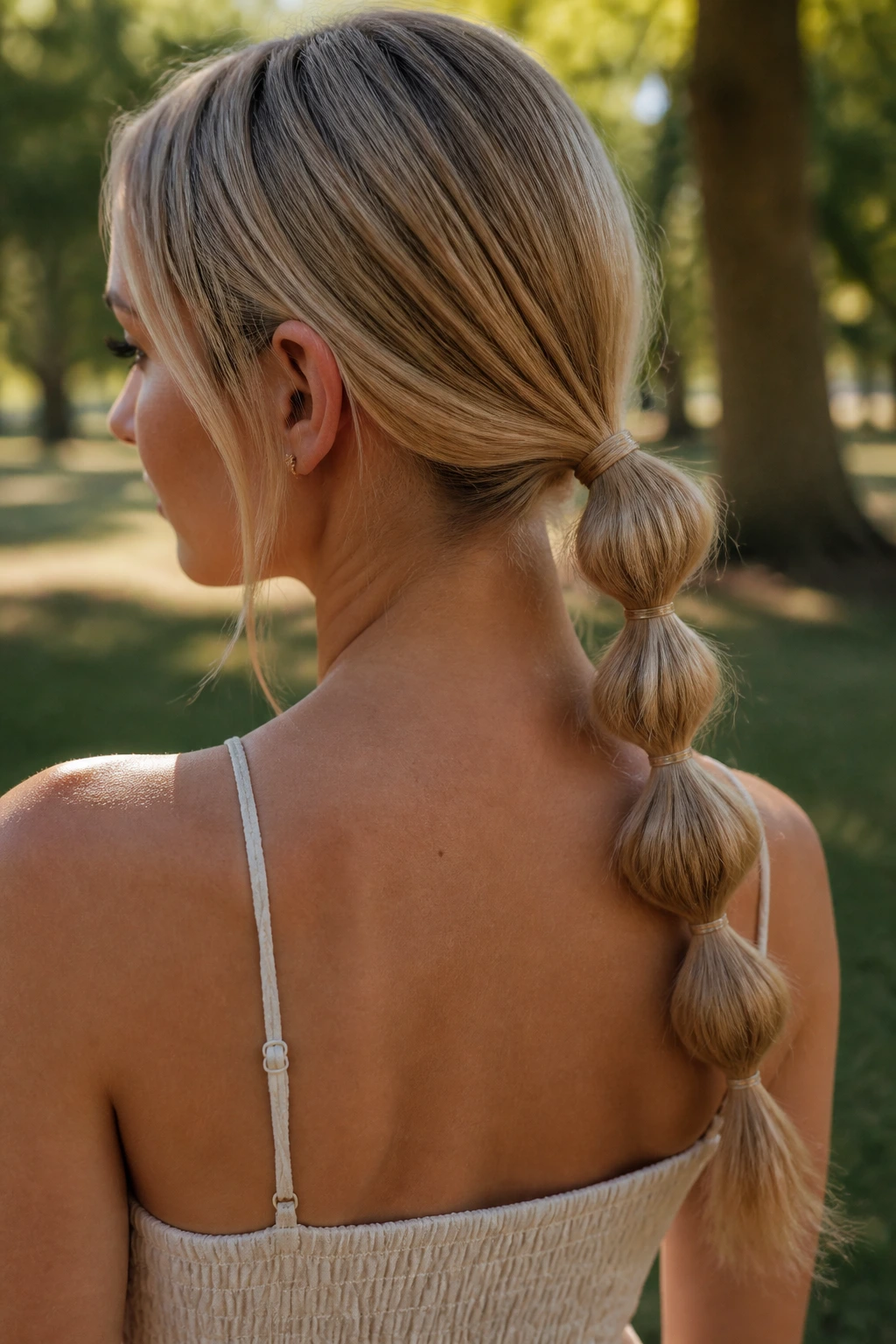
A bubble ponytail is one of those styles that makes thin hair look fuller by breaking up the line of the ponytail. Instead of one skinny tail hanging straight down, you get a row of rounded sections that read as volume. Clever, honestly. A little mechanical, sure, but effective.
Start with a ponytail at the nape or slightly higher. Then add small elastics every 2 to 3 inches down the length. Gently tug each section outward so it forms a bubble. You do not need to stretch it much; even a modest puff changes the silhouette. If your hair is very straight, add a touch of texturizing spray first so the bubbles stay separated.
What to Watch For
- Use clear or hair-colored elastics.
- Keep the bubbles even in size.
- Don’t over-tighten the base.
- Leave a few face-framing pieces loose if you want it softer.
This style is especially kind to medium-length hair, where a regular ponytail can look a little sad. The bubbles interrupt that skinny line and make the whole thing feel deliberate.
10. Messy Top Knot with Loose Ends

A messy top knot works because it stops pretending the hair is fuller than it is. That honesty helps. Instead of forcing a polished bun that exposes every gap, the top knot uses texture, looseness, and a little controlled chaos to make the hair look more abundant.
The best version starts with some grit in the hair. Dry shampoo at the roots, a spritz of texturizing spray through the lengths, and a quick rough-dry if the hair was freshly washed. Then gather it high, twist it loosely, and pin the knot wide rather than tight. A knot that sits a little broader gives the impression of more hair. A tiny tight knot does the opposite.
Leave a few pieces out around the temples and nape if you want the style to feel less severe. That softens the face and keeps the top knot from looking like a last-minute fix. It’s a fast hairstyle, yes, but when it’s done well, it looks like a choice.
11. Soft Shag
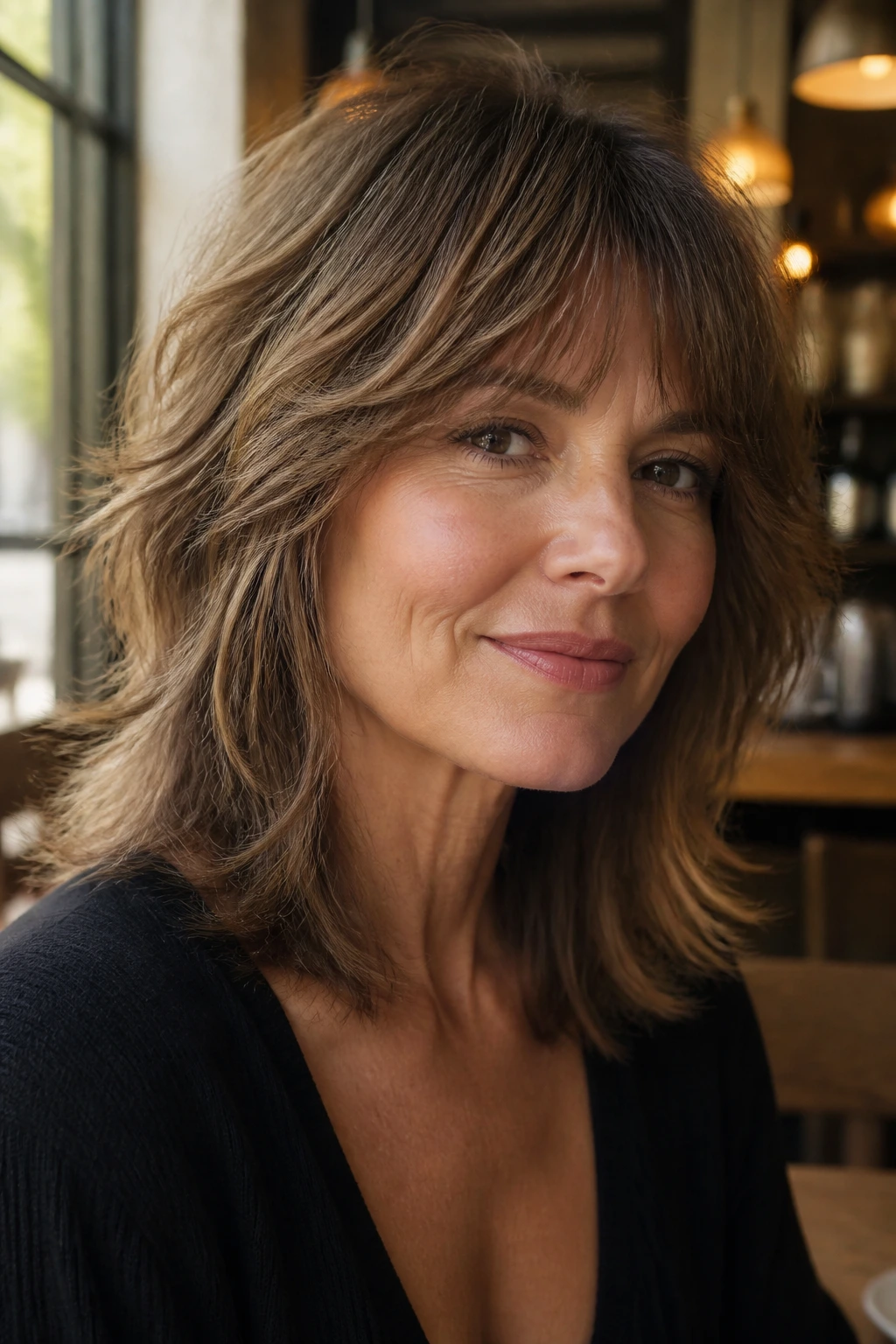
A good shag should move. It should not fray, and it should never look like the layers were attacked with scissors and optimism. On fine hair, the right shag is all about softness through the edges and enough length left in the perimeter to keep the shape from disappearing.
The problem with a bad shag is obvious. Too many short layers can leave the ends see-through. That is the opposite of what most people want. A better version keeps the layers low and blended, often starting around the cheekbone or lower, so the cut has shape without losing weight. If your hair is straight, a shag can still work, but it usually needs a bit of bend from a blow-dryer or curling wand.
I like this style most on hair that has a little natural wave. The texture helps the layers sit into each other. On pin-straight hair, the look can go flat unless you use mousse and a diffuser or rough-dry the roots. If you want movement more than sleekness, the shag earns its place.
12. Asymmetrical Side-Swept Bob
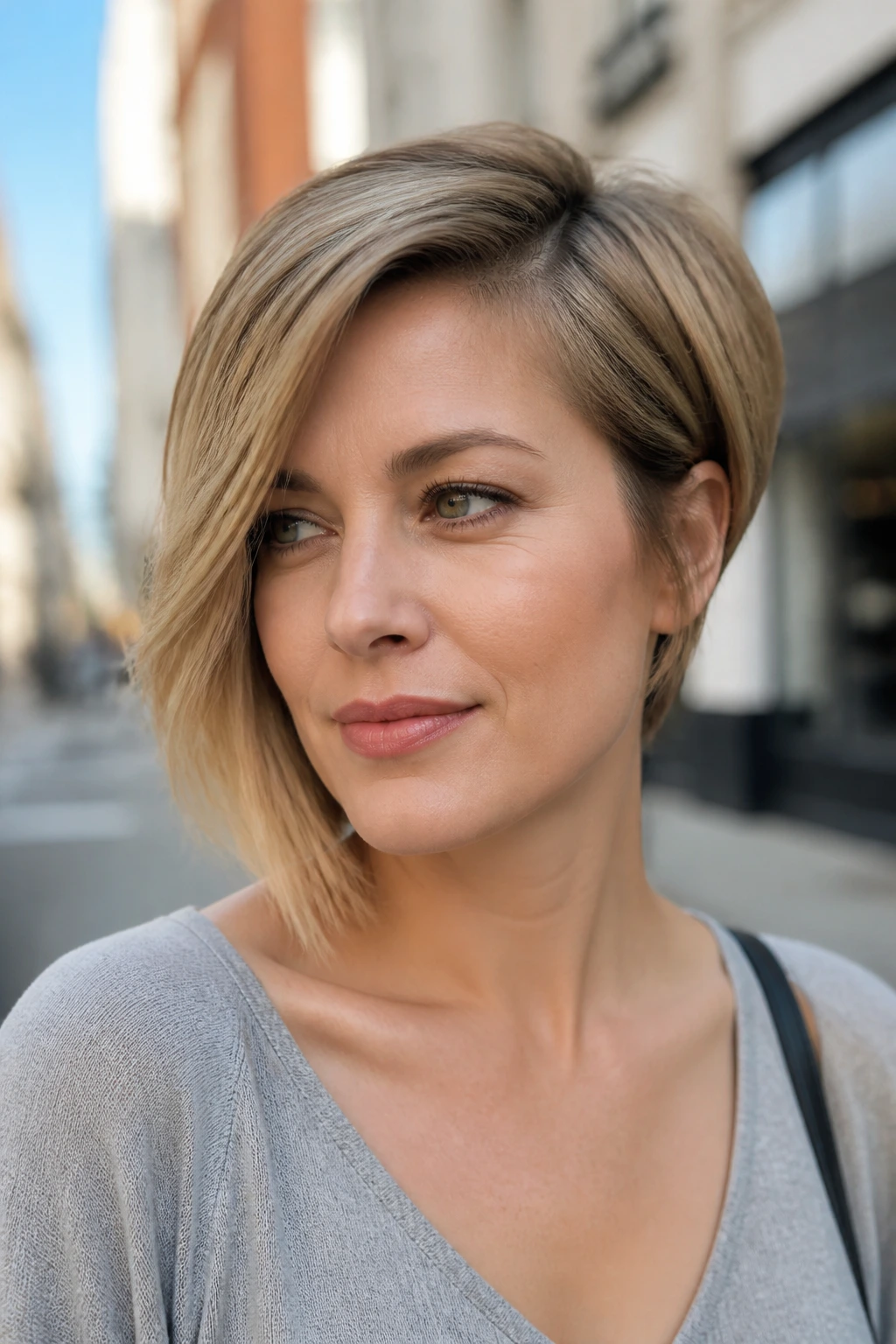
A center part can be brutal on fine hair because it exposes the scalp line too cleanly. An asymmetrical bob does the opposite. One side sits just a touch longer, and the side part throws more weight to one side, which gives the whole haircut a fuller reading from the front.
This style is subtle. You do not need a dramatic angle to get the effect. Even a difference of half an inch to an inch can change the shape enough to make the hair feel thicker. The longer side can skim the cheek or jaw, while the shorter side tucks a little closer. That imbalance creates movement without losing the clean look that fine hair often needs.
It’s a nice choice if you want something modern but not fussy. Straight hair makes the angle crisp. Soft bends make it feel less formal. Either way, the asymmetry keeps the eye moving, and that movement is doing some of the heavy lifting for you.
13. Tucked-Behind-the-Ears Lob
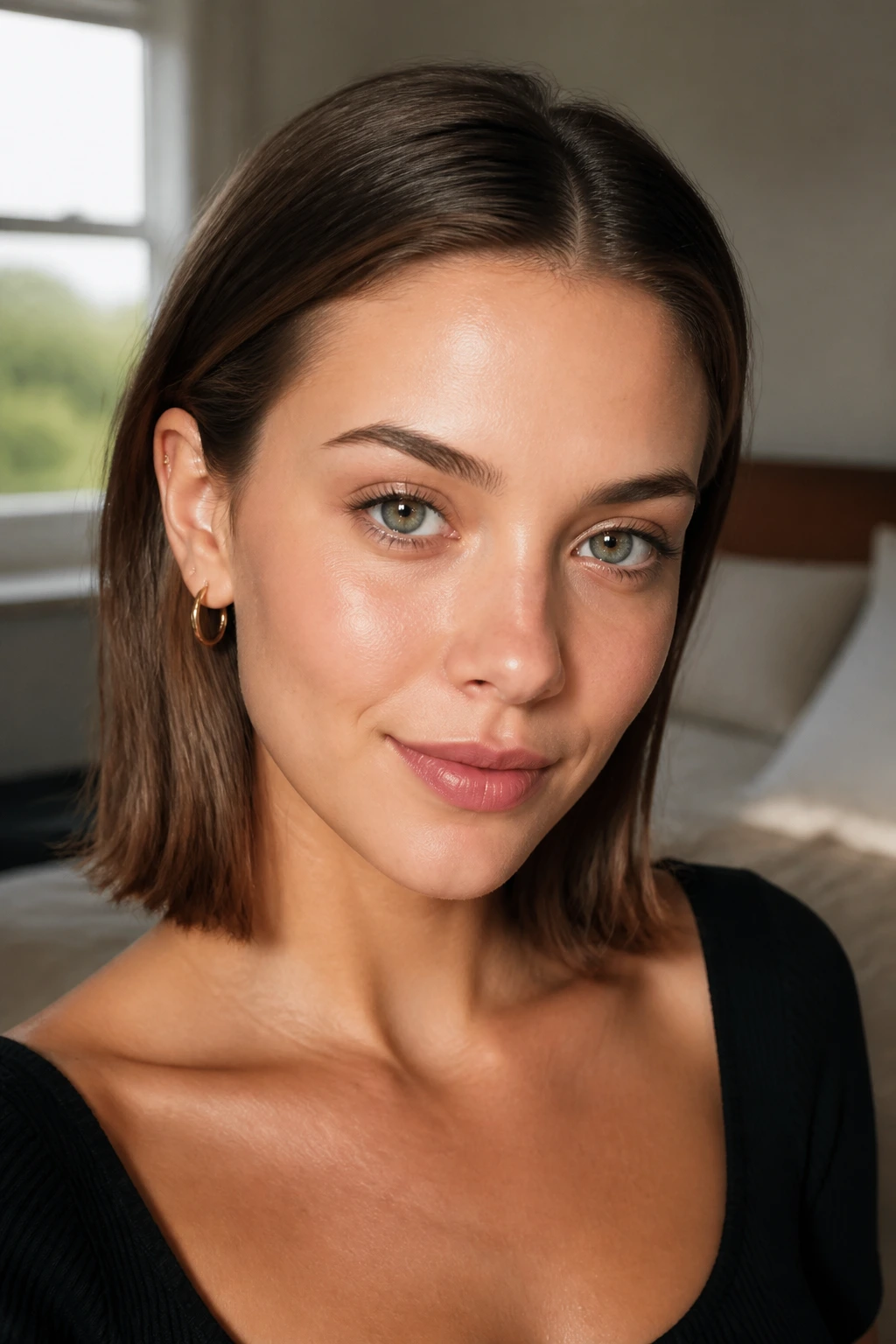
Tucking the front pieces behind the ears sounds almost too easy to count as a hairstyle, but on fine hair it can change the whole mood. It opens the face, shows a bit of cheekbone, and keeps the front from hanging like a curtain of not-much-hair.
Why It Works
A collarbone-length lob gives enough length to tuck, but not so much that it drags downward. Keep a soft bend through the mid-lengths and a slight lift at the roots, then tuck only the front 2 to 3 inches behind the ears. That tiny reveal on the sides makes the rest of the hair look more compact and fuller.
How to Get the Most From It
- Add a light spray of root lift near the crown.
- Bend the ends inward with a round brush or flat iron.
- Use small pins if the tuck slides out.
- Wear earrings if you like them; they help the style feel finished.
This is one of those looks that feels clean without being stiff. A little tuck goes a long way.
14. Blunt Shoulder Cut with Minimal Layers
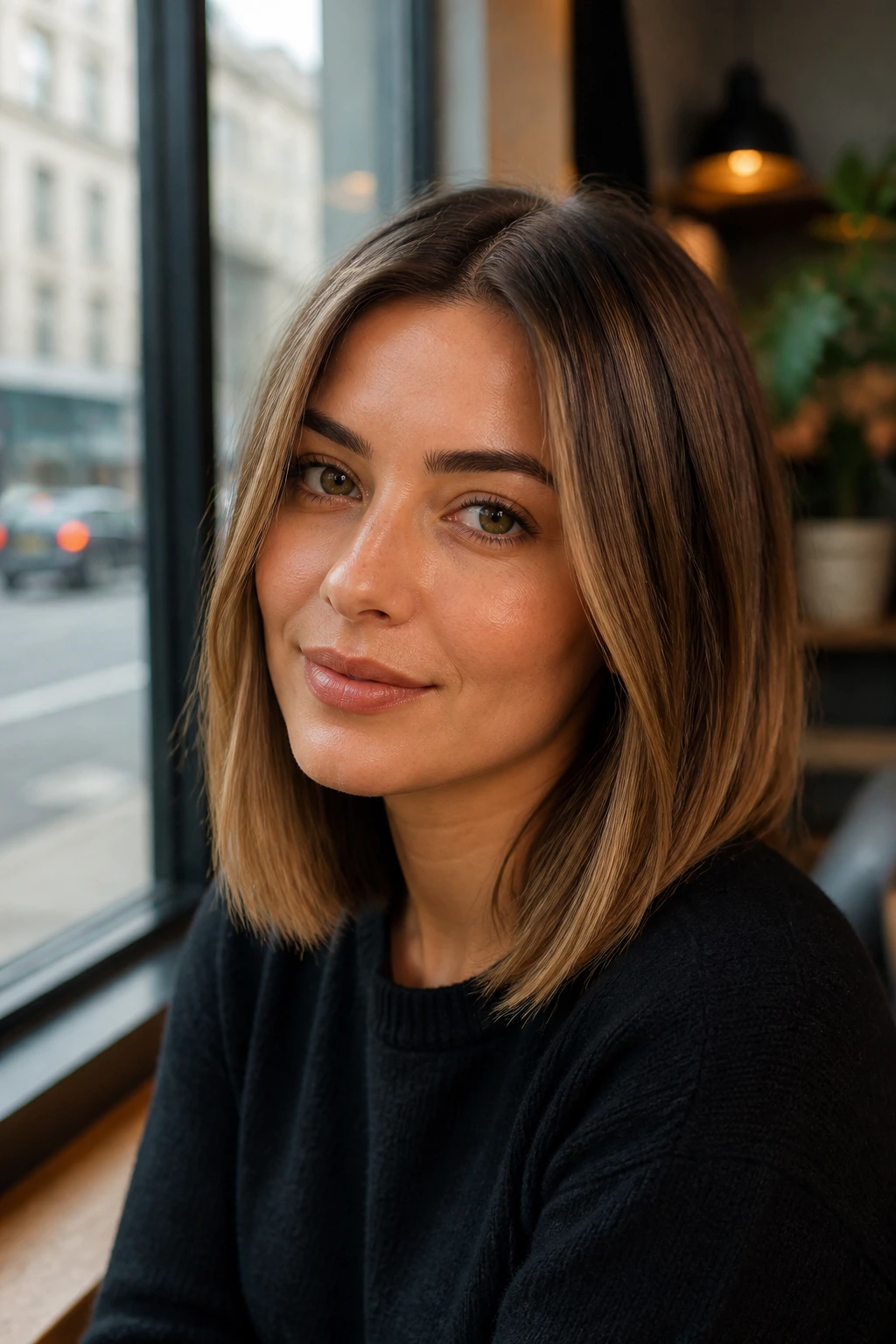
Shoulder-length hair can be tricky for fine strands because it sits in that awkward zone where it is neither short enough to bounce nor long enough to feel naturally heavy. The fix is a blunt shoulder cut with very light layering, if any. The perimeter stays strong, and the hair keeps enough weight to lie together instead of splitting apart.
A lot of people ask for layers because they want movement. I get it. But on low-density hair, too many layers near the shoulders can make the ends look shredded. A cleaner line at the bottom often gives a better result, especially if you like to wear the hair straight or with a soft bend under the ends.
If you want shape, ask for tiny internal layers or soft face framing rather than a full layered cut. That keeps the silhouette intact. Then style it with a blow-dry that curves the ends slightly under or outward. The point is to keep the shape full, not busy.
15. Braided Crown
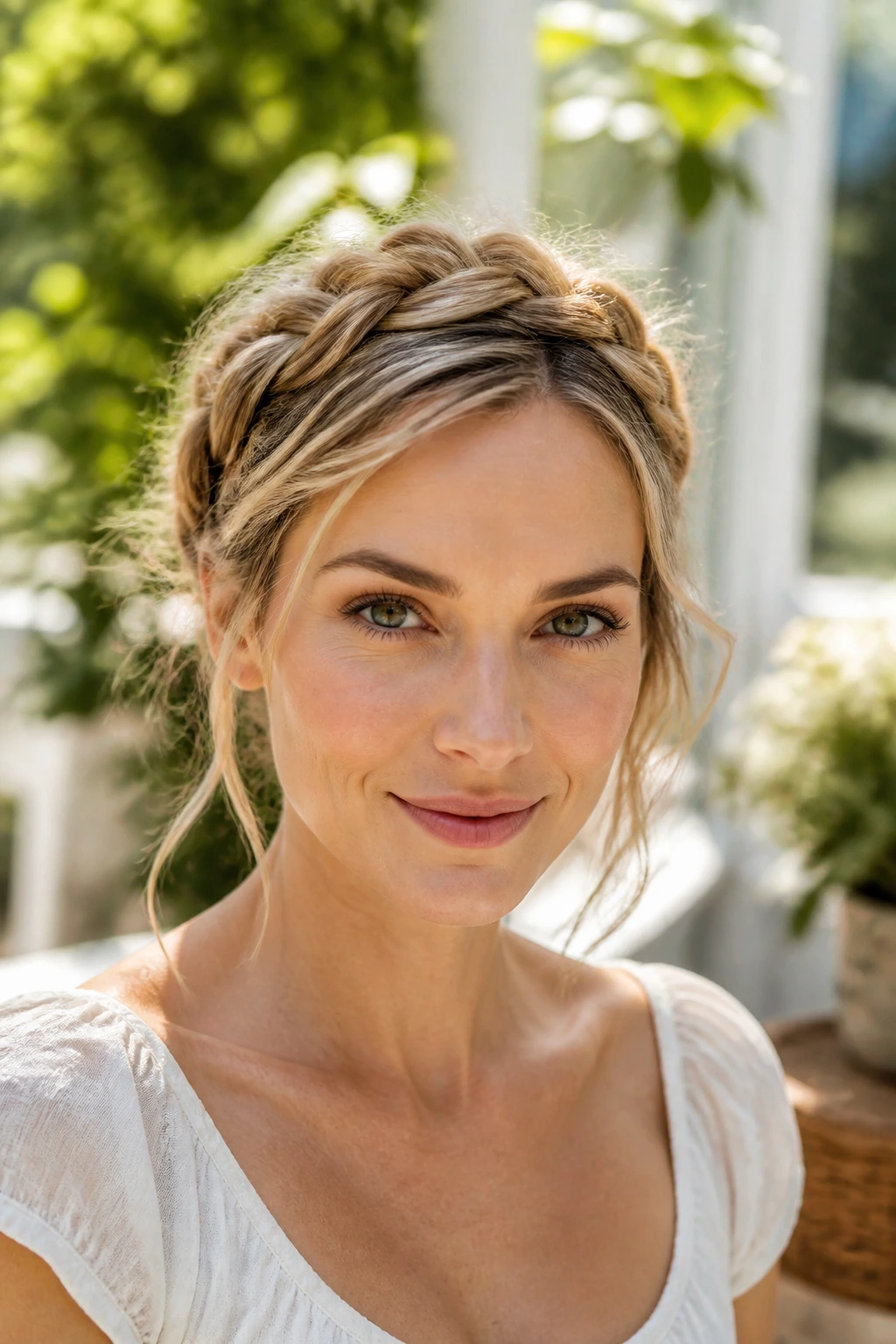
A braided crown is one of my favorite ways to make fine hair look more finished on second-day texture. The braid itself creates a visible line across the head, and that line makes the hair seem intentional even when the roots are starting to go limp.
What to Expect
A French braid or Dutch braid from one temple across the crown works well, but the braid should not be pulled tight. Tight braids expose the scalp and can make the hair look thinner. Looser braids, then gently widened with your fingers, give the braid a softer, thicker body. That little widening step is worth the extra minute.
Quick Details That Help
- Start with a light texture spray or dry shampoo.
- Braid along the hairline, not too far back.
- Gently pancake the braid after tying it off.
- Pin the tail underneath the rest of the hair.
This style is better than many people expect for weddings, dinners, or any day you want to look like you tried without spending forever in front of a mirror. It has shape. That’s the whole point.
16. Wrapped Low Ponytail

A wrapped low ponytail turns a plain elastic into a cleaner, fuller-looking style. The wrap hides the base, which is where thin ponytails often look most fragile, and the low placement keeps the length from pulling the face down.
Start with a soft side or center part, then gather the hair at the nape. Leave a bit of lift at the crown before you secure it. Don’t flatten that top section; the crown needs air. Once the ponytail is tied, take a small section from underneath and wrap it around the elastic. Pin it discreetly under the tail. That one move makes the style look more polished and slightly thicker, because the base no longer broadcasts how much hair is there.
If your ends are sparse, curl just the last few inches under with a large iron or flat iron. A blunt-ish end on the tail reads denser than thin ends left to dangle straight. Small detail. Big payoff.
17. Claw-Clip French Twist
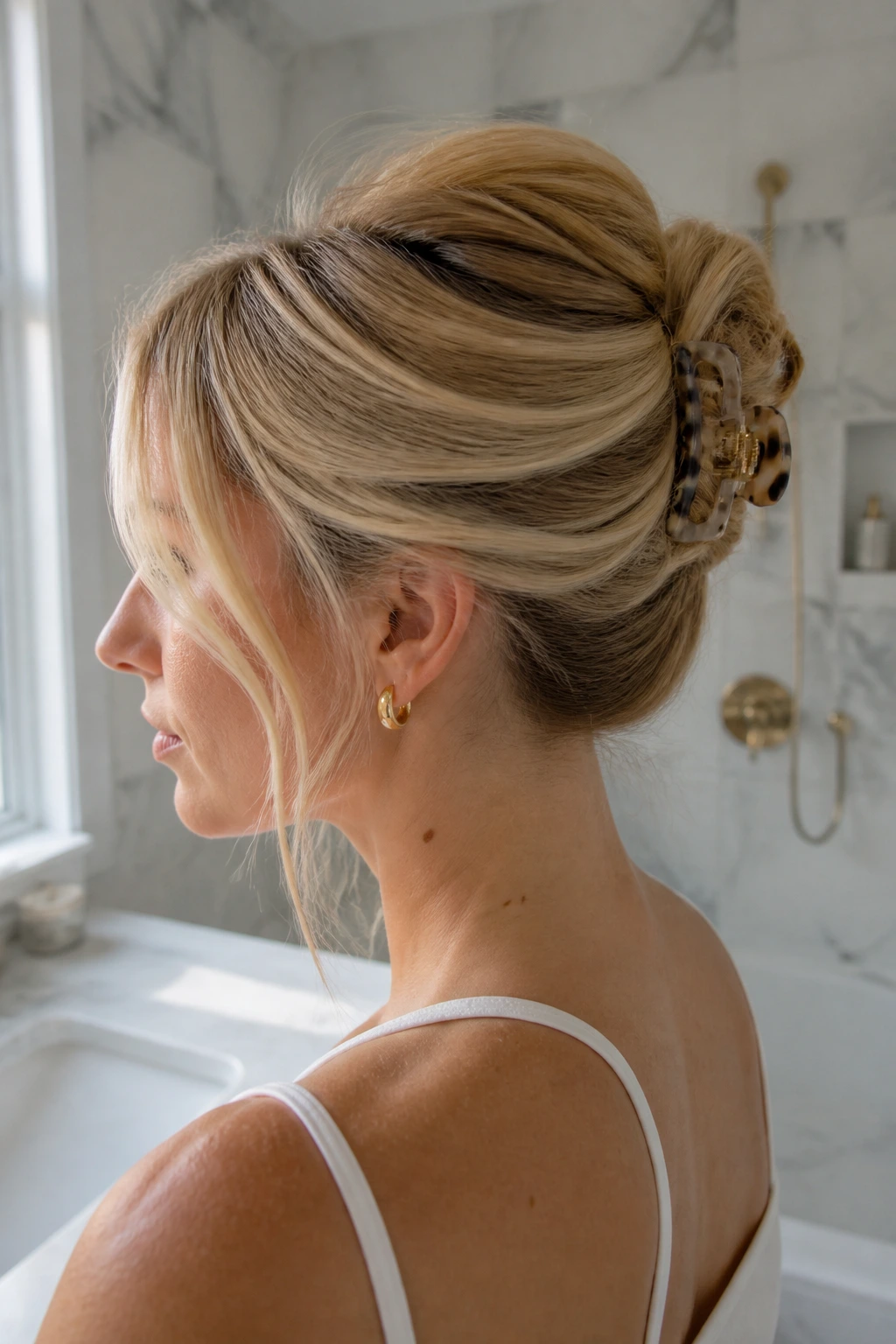
Fine hair and claw clips actually get along better than many people assume. The trick is not to cram every strand into the clip and hope for the best. Instead, twist the hair upward, fold the ends in, and let the crown keep a little lift before you clamp it.
A French twist made with a claw clip works best on medium-length hair, or long hair that’s been slightly textured with dry shampoo. Slippery hair can slide right out. A little grit solves that. Once the hair has some hold, the twist can sit snugly without looking overworked. And it’s fast. That matters on days when you want the hair off your neck but still want shape at the top.
Choose a clip with teeth that grip without digging in. Tiny clips can be cute but useless on fine hair. Large, curved clips hold better, especially if the hair is layered. The style should look folded, not smashed.
18. Vintage Finger Waves
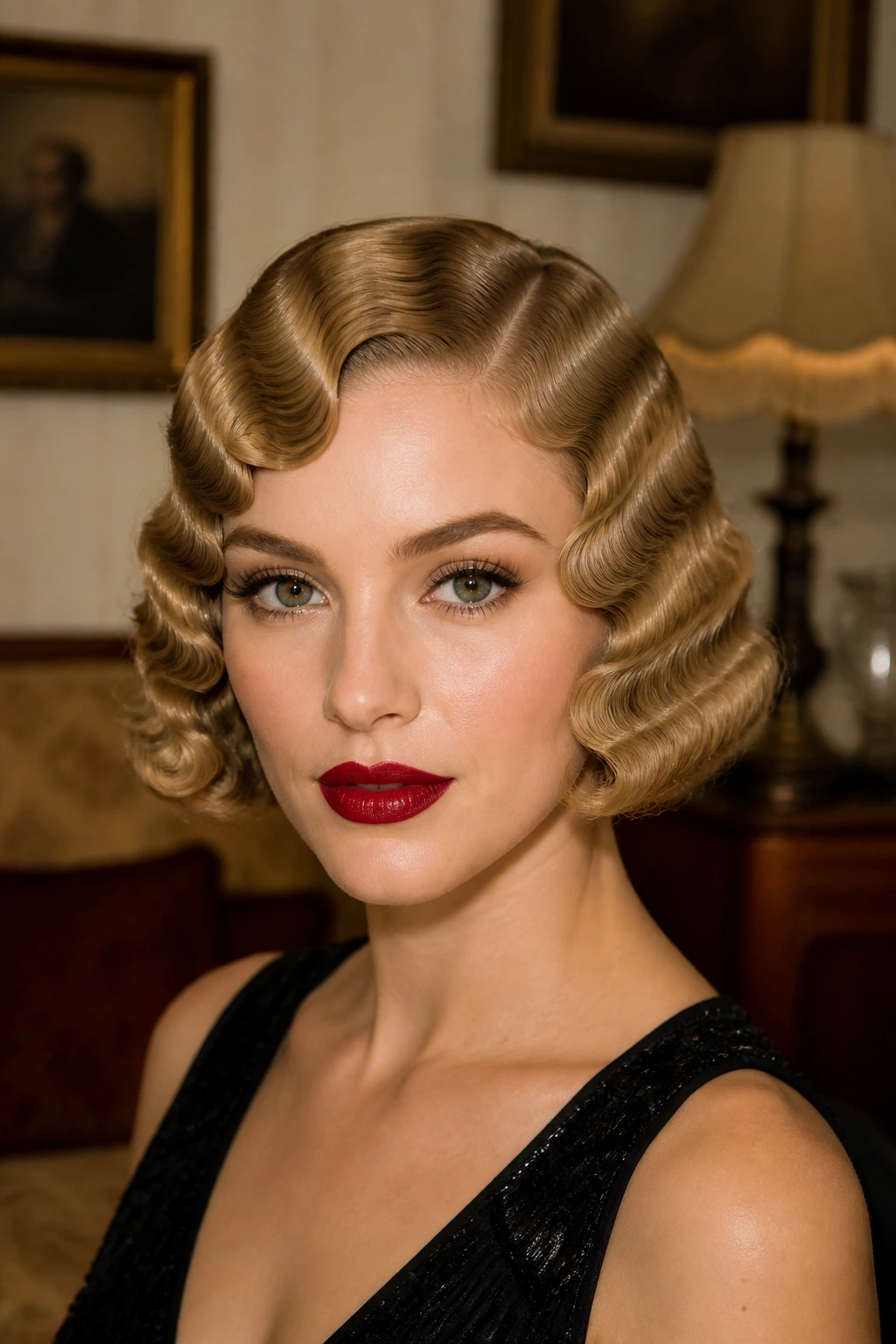
Finger waves are a strong choice when you want fine hair to look denser in a formal, sculpted way. Unlike loose curls, which can separate and shrink the appearance of the hair, finger waves use smooth ridges that sit close together and read as controlled fullness.
This style usually works best on shorter lengths or a bob, though shoulder-length hair can do it too if you are patient. You’ll need setting lotion or gel, clips, and enough drying time to let the shape lock in. That part is not glamorous. It’s the boring bit. But once the waves are set, the finish is elegant and the hair looks far more structured than it would with random bends.
Finger waves shine when the hair is naturally fine and straight because the pattern holds well and the shine looks clean. They are not the fastest style on this list, and they do demand some patience, but for events, photos, or any moment when you want the hair to feel shaped rather than merely styled, they are hard to beat.
19. Side-Swept Pixie-Bob
A side-swept pixie-bob sits between a short pixie and a longer bob, which makes it useful for hair that wants lift but still needs a little length around the face. The side sweep gives movement, and the shorter back keeps the cut from dragging down the crown.
How to Get the Most From It
A deep side part helps the front section fall in a thicker-looking sheet. The shorter side can tuck behind the ear, while the longer side brushes the cheek. That unevenness gives the style shape without making it look choppy. Use a light mousse at the roots and blow-dry the top section forward first, then sweep it over. That little change in direction gives the crown a push.
Why It Helps Fine Hair
- The short back removes weight.
- The longer front creates softness.
- The side part adds instant height.
- The shape looks good air-dried or blown out.
This is a nice option if a full pixie feels too short but a bob feels a little too flat. It splits the difference in a smart way.
20. Flipped-Out Shoulder-Length Blowout
A shoulder-length blowout with flipped-out ends is a clean way to make fine hair look bouncy without relying on curls that fall apart. The outward bend at the ends creates a little visual width, and that extra width matters more than people realize.
Use a medium round brush and direct the ends away from the face as you dry. Then hit the brushed section with a cool shot while it’s still curled around the brush. That helps set the flip. The shape should look soft, not retro in a costume-y way. A light flip at the shoulders gives the hair some swing and keeps it from hanging straight down.
This style is especially useful when the hair is layered only a little or not at all. The flip gives movement to a blunt cut without thinning out the outline. If your hair tends to go limp fast, keep a small can of flexible-hold spray nearby. A heavy spray will crush the ends, and that defeats the point.
21. Low Chignon with Face-Framing Pieces
Can a low chignon work on fine thin hair? Yes, if you keep the knot compact and leave two soft pieces in front. That front softness makes the style feel deliberate, and the compact bun avoids the problem of trying to make a huge bun out of hair that does not want to be huge.
The best version sits at the nape and folds inward rather than ballooning outward. A little texture at the roots helps the chignon stay put, but the outside should still look smooth. Then pull out a pair of fine face-framing pieces around the temples or cheekbones. Those strands are small, but they change the whole balance of the hairstyle.
This is a good choice for formal events, work dinners, or any day you want polish without a lot of effort. The compact shape keeps the hair looking neat, and the face-framing pieces stop it from feeling severe. It’s tidy. It’s not boring.
22. Faux Bob with Hidden Pins
A faux bob is a smart trick when you want the look of a fuller, shorter cut without committing to scissors. Fine hair often looks healthier when it is tucked into a shorter silhouette, especially if the ends are a little thin or tired.
What Makes It Work
Start with hair that has some bend, either from soft waves or a quick curl through the mid-lengths. Then tuck the ends under at the nape and pin them flat so the outer layer falls over the hidden pins. The result is a shape that lands somewhere between a bob and a tucked-up style. It looks deliberate, not fake, as long as the ends are hidden cleanly.
A Few Details That Matter
- Use bobby pins that match your hair color.
- Keep the outer layer smooth but not tight.
- Leave a small amount of volume at the crown.
- Works best on hair with a bit of day-old texture.
A faux bob is one of those styles that surprises people. It gives fine hair a fuller outline because the eye sees the shape first and the hidden length second. That’s the trick.
Final Thoughts
Fine hair does not need to be bullied into looking bigger. It usually looks better when the shape is clean and the styling is selective.
Blunt edges, lifted roots, tucked ends, and smart parts do more than heavy layering ever will. If one of these looks feels too polished for your life, pick the version that asks for the least maintenance and make that your regular one. The best hairstyle is the one that still looks decent after a normal morning, a windy walk, and a few hours of existing.
And yes, a little texture spray helps. A lot less than people think, though.
