



Straight hair can be gorgeous, but it has one stubborn habit: it shows every ounce of weight. A heavy cut collapses. A bad part flattens. Even clean hair can look a little too calm, which is a polite way of saying it lies down and stays there.
That’s why the best hairstyles for straight hair that add body usually do two things at once. They build lift near the roots, and they give the ends a shape that keeps the eye moving. You do not need giant curls or a thousand products. You need smarter lines, better placement, and a little bit of tension in the right places.
I’ve always thought straight hair looks best when it has some attitude. Not frizz. Not mess. Just enough bend, lift, and swing to keep it from reading as flat from every angle. A collarbone bob, a side part, a half-up twist, a rolled blowout — each one changes how light lands on the hair and how much space the style takes up around the head.
Flat hair is not a fate. It’s a styling problem, and it has a long list of good fixes.
1. Blunt Collarbone Bob for Straight Hair
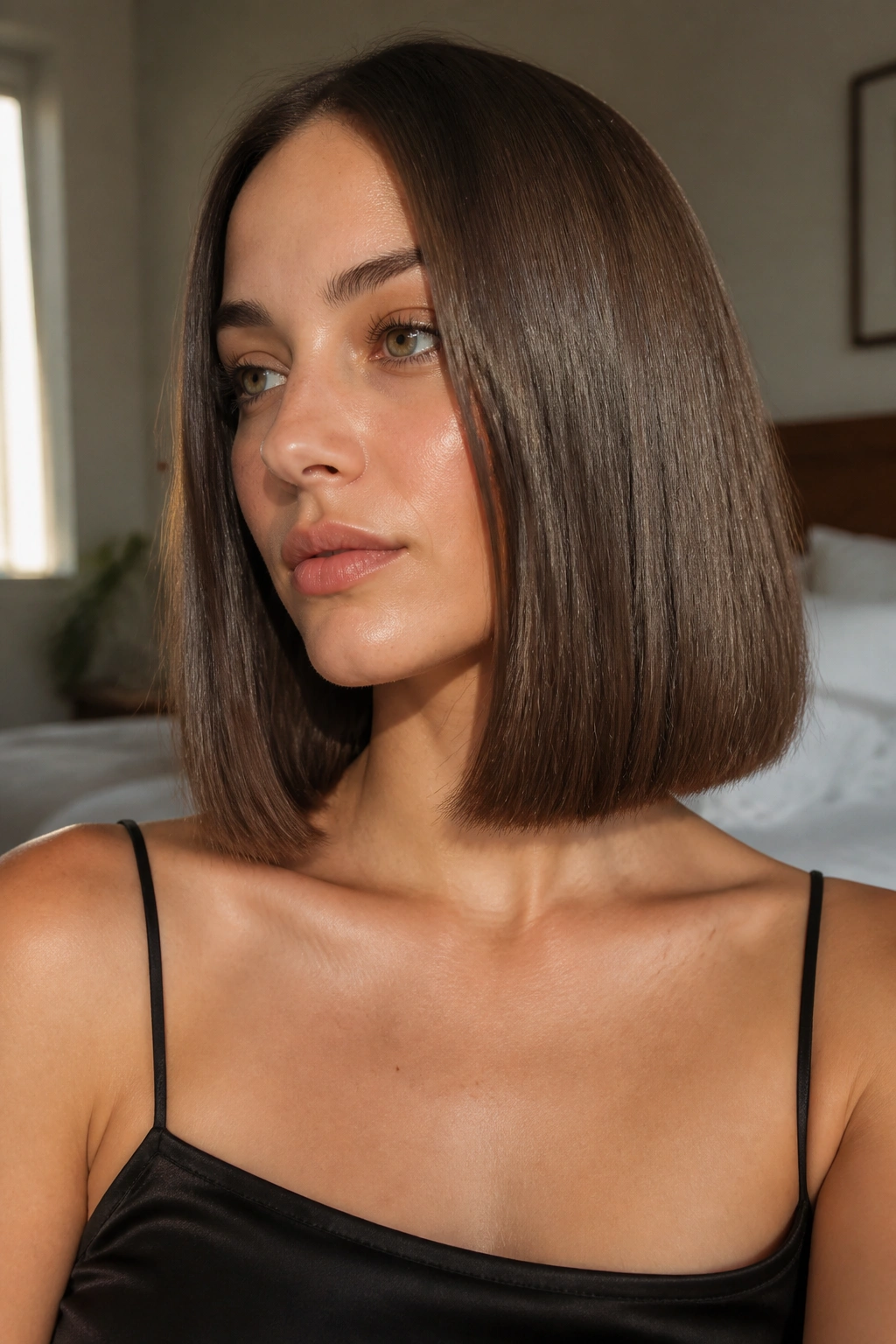
A blunt collarbone bob is one of those cuts that makes straight hair look denser before you even pick up a brush. The clean line at the bottom gives the eye a solid edge to follow, and collarbone length is long enough to move without dragging the whole style down. Shorter than that, and straight hair can start to puff at the wrong spots. Longer than that, and the weight often wins.
The trick is the perimeter. Ask for a blunt line with only a little internal texturizing, if any. Too much thinning can leave the ends stringy, which defeats the whole point. On fine straight hair, I like this cut best when the ends skim the collarbone and turn in or out just a touch.
Why It Works
The bob creates a visual shelf. Hair that stops at one strong point looks fuller than hair that tapers away in wisps. That is especially true when you tuck one side behind the ear or add a deep side part. Tiny changes, big payoff.
A quick round-brush pass under the ends can make the shape feel even thicker. No need to curl it. Just give the bottom a soft bend and let the line do the rest.
2. Long Layers with Face-Framing Pieces
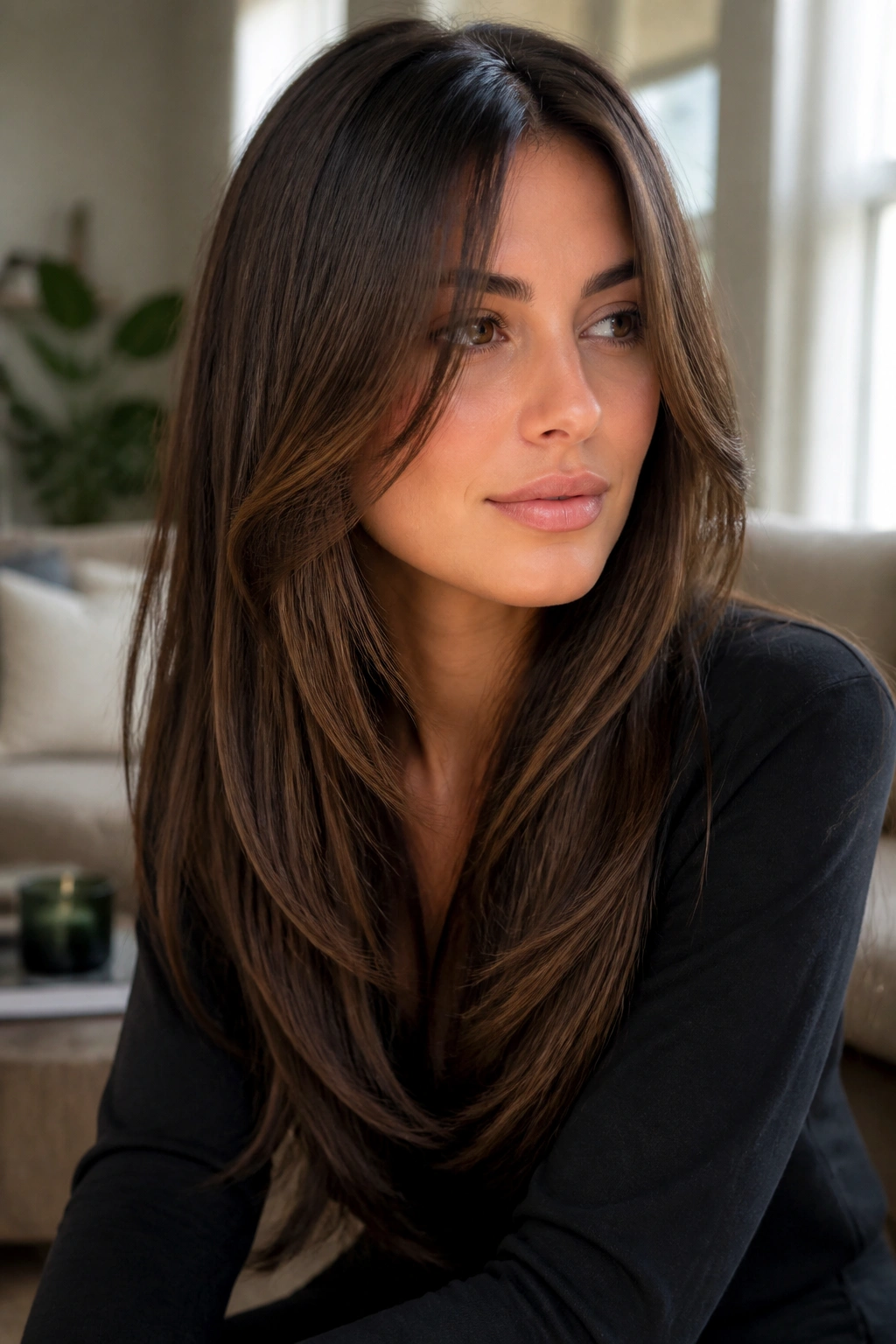
Long straight hair can look beautiful, but if every strand is the same length, it tends to hang like a curtain. Long layers solve that without taking away the length people actually want to keep. The shape stays soft. The body gets better. That’s the whole appeal.
Face-framing pieces matter here more than most people think. If they start around the cheekbone or jaw, they break up the flatness near the front and keep the hair from sitting like one heavy sheet. Longer layers through the back stop the ends from feeling blunt in a heavy, old-fashioned way.
Where the Layers Should Start
Too high, and the cut can get choppy fast. Too low, and nothing changes. The sweet spot is usually somewhere below the chin for most medium-length straight hair, with the heaviest weight removed from the middle and lower sections.
- Ask for soft, long layers, not short choppy ones.
- Keep the face-framing pieces around cheekbone to jaw length if you want instant movement.
- Blow-dry the front sections away from the face for a wider, fuller shape.
- If your hair is very fine, skip aggressive thinning shears.
This cut works best when the ends still look thick. That detail matters more than the layer count itself.
3. Curtain Bangs and a Center Part
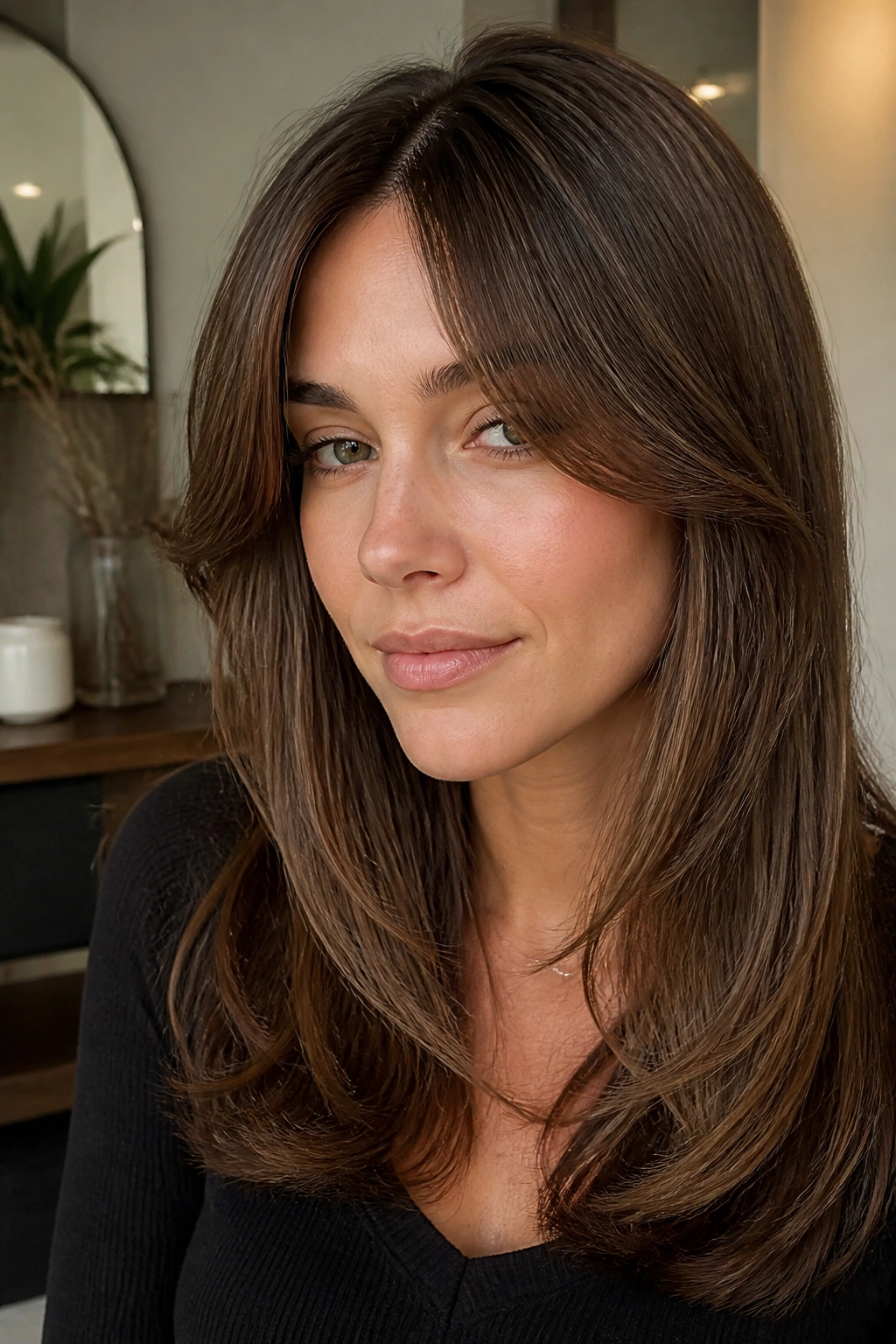
Why do curtain bangs work so well on straight hair? Because they give the front of the style a shape even when the rest of the hair is lying flat. They open the face, create width at the forehead, and keep the top from looking like one smooth, featureless plane.
A center part can feel risky on very straight hair, since it tends to split the head in a neat little line. Curtain bangs interrupt that. They spill to both sides, which adds softness and makes the hair around the crown feel a little more lifted by comparison.
How to Wear Them
The bangs need a bend, not a curl. I like a medium round brush or a small blow-dry brush, working the fringe away from the face while it’s still warm. Let them cool in that shape. That cooling step matters more than most people realize.
Curtain bangs are also forgiving on second-day hair, which is a nice bonus. A tiny mist of water and a quick brush-through can wake them up fast. They’re not fussy, but they do ask for trims. If you let them grow too long, they lose the airy effect and start collapsing into the cheek.
4. Deep Side Part with Root Lift
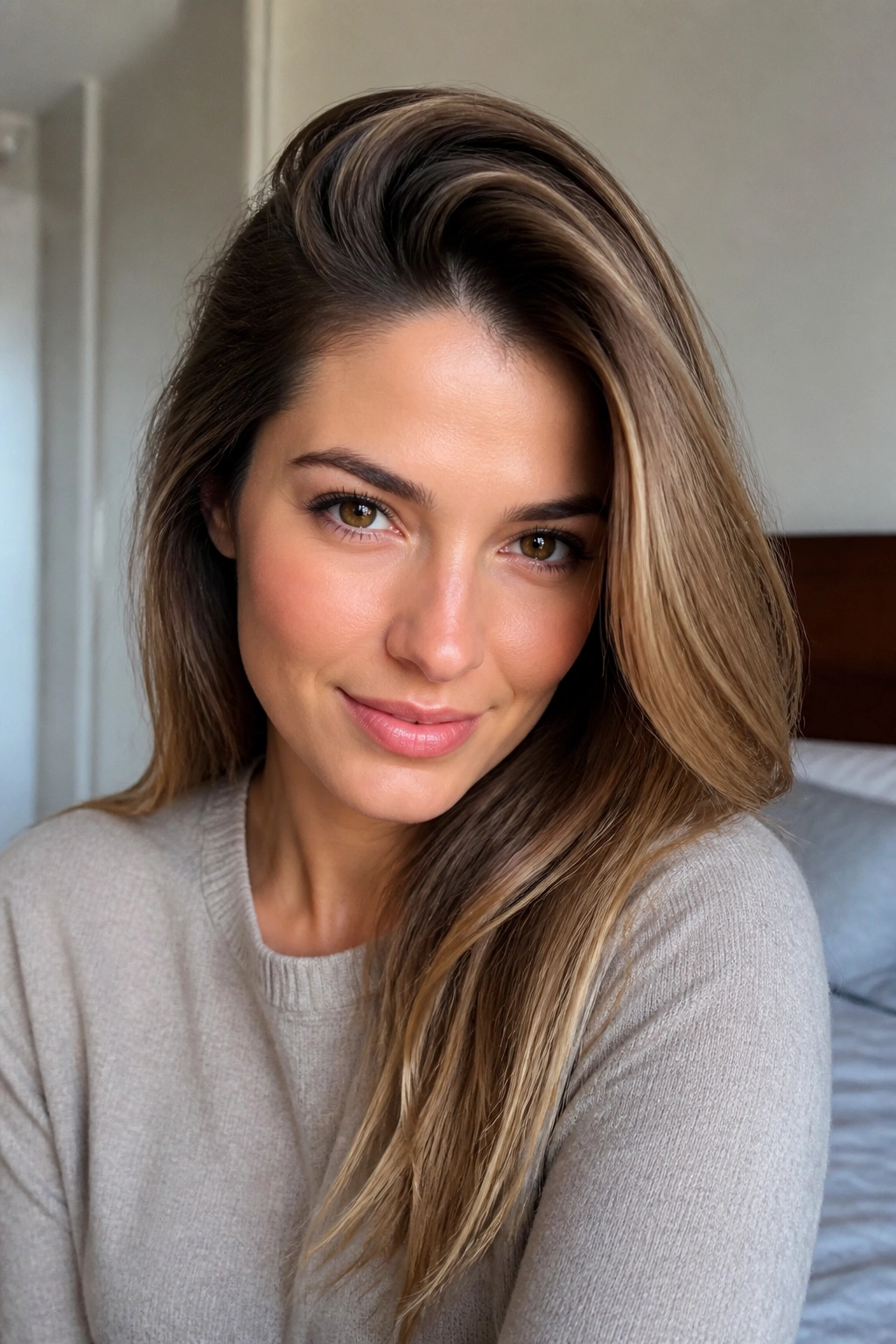
A deep side part is the oldest body trick in the book, and it still works because it changes the way the hair falls at the scalp. Straight hair hates being forced into perfect symmetry. Shift the part off-center, and one side gets instant height while the other side creates a fuller-looking drape across the face.
Picture flat hair that’s been wearing the same middle part for months. One quick switch, and the whole head looks different. Not dramatic in a costume way. Just fuller, softer, and a little more alive.
What Makes It Look Better
Clip the heavier side at the roots for five to ten minutes after drying, or pin it up while you finish makeup. That bend at the root is what keeps the lift from disappearing by lunch.
- Best on shoulder-length to long straight hair
- Works well with blunt cuts, lob cuts, and long layers
- Looks stronger when one side is tucked behind the ear
- Gains extra lift with a light root spray or dry shampoo at the part
Some styles need ten products. This one doesn’t. It needs direction, a little hold, and the nerve to break the habit of the center part.
5. Round-Brush Blowout with Curved Ends
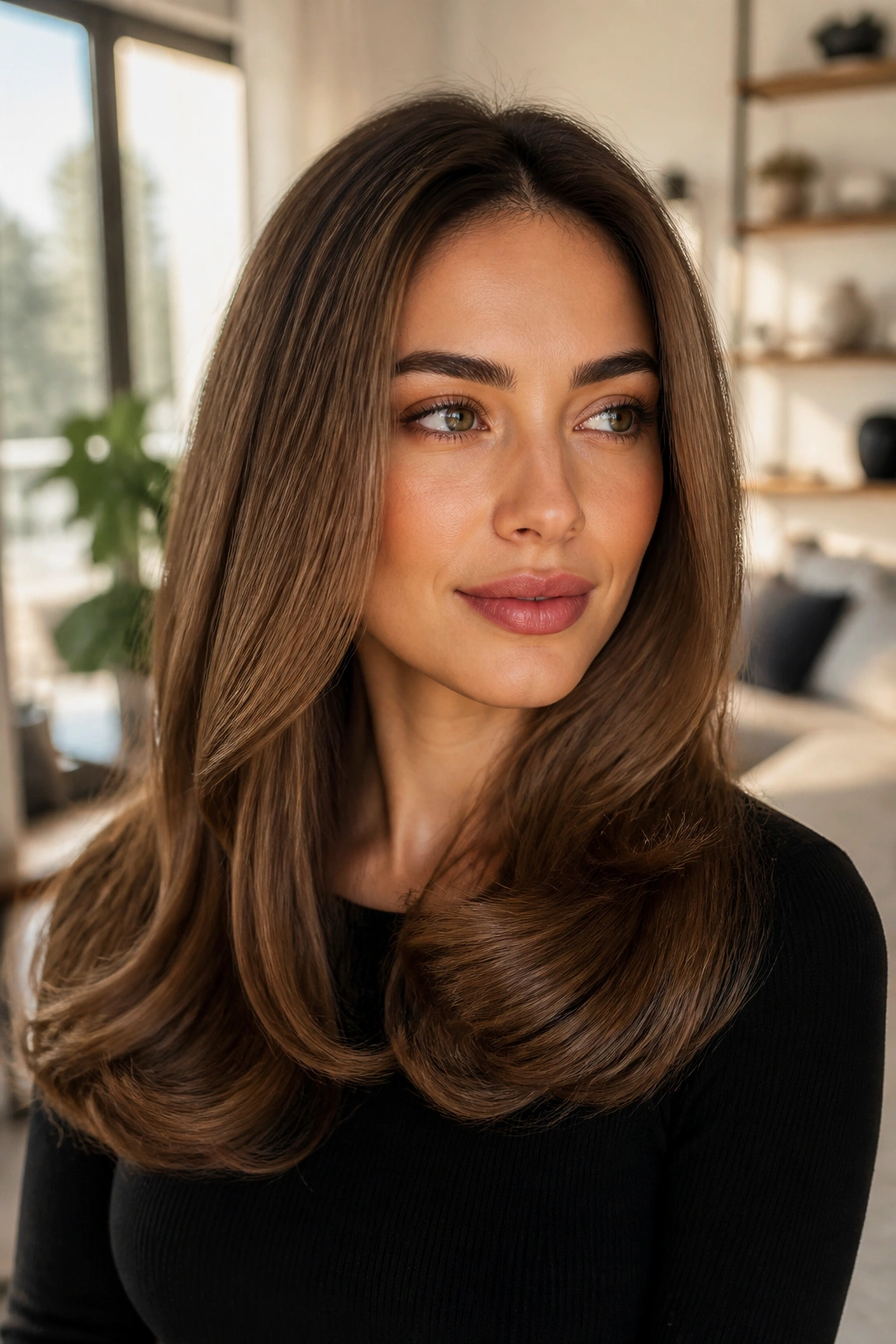
A proper round-brush blowout can make straight hair look like it suddenly remembered it has shape. The point is not to chase curls. The point is to create soft fullness from root to end, with a little curve at the bottom so the hair doesn’t hang in a dead line.
Use a medium round brush — about 1.5 to 2 inches if your hair is mid-length — and work in sections no wider than the brush itself. Direct the nozzle of the dryer downward through the mid-lengths, then roll the ends under or out. That bit at the bottom gives the whole style motion.
One thing people get wrong: they stop too early. The roots need tension while drying, or the body vanishes in twenty minutes. Pull the section up and away from the head, hit it with heat, and let it cool on the brush for a few seconds before you release it.
Flat roots are the enemy. The blowout fixes that by training the hair to hold a little lift where it counts.
6. Half-Up Crown Lift
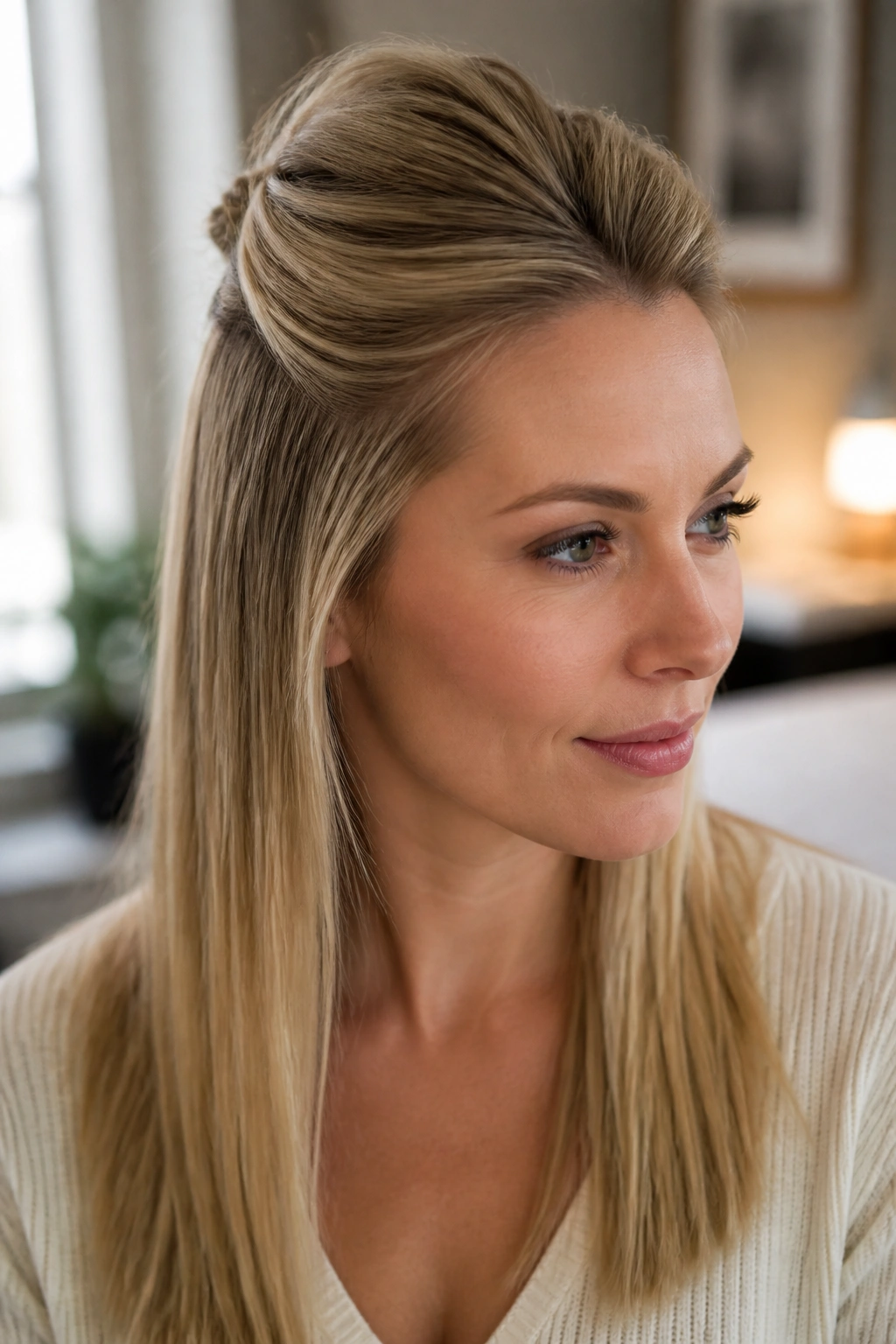
The half-up style is unfairly underrated for straight hair. It takes the top section, lifts it away from the scalp, and leaves the rest down so the length still does its thing. That means you get height at the crown without sacrificing movement through the ends.
I like this one when hair is too clean and too soft. You know the feeling — it looks freshly washed, but the top sits so close to the head that it almost disappears. A half-up lift solves that in about two minutes.
What to Tease and What to Leave Alone
Don’t go after the whole crown like you’re building a beehive. Just lift the top section from temple to temple, tease the underside once or twice with a fine comb, and secure it with a small claw clip or barrette.
The bottom half should stay smooth. That contrast is what gives the style body. If everything gets puffed up, it starts to feel heavy instead of airy.
A tiny bent piece at the front, near the temples, softens the look. Leave it if your hair is fine and slippery. It helps more than a perfect, polished finish ever will.
7. Low Ponytail with a Puffed Base
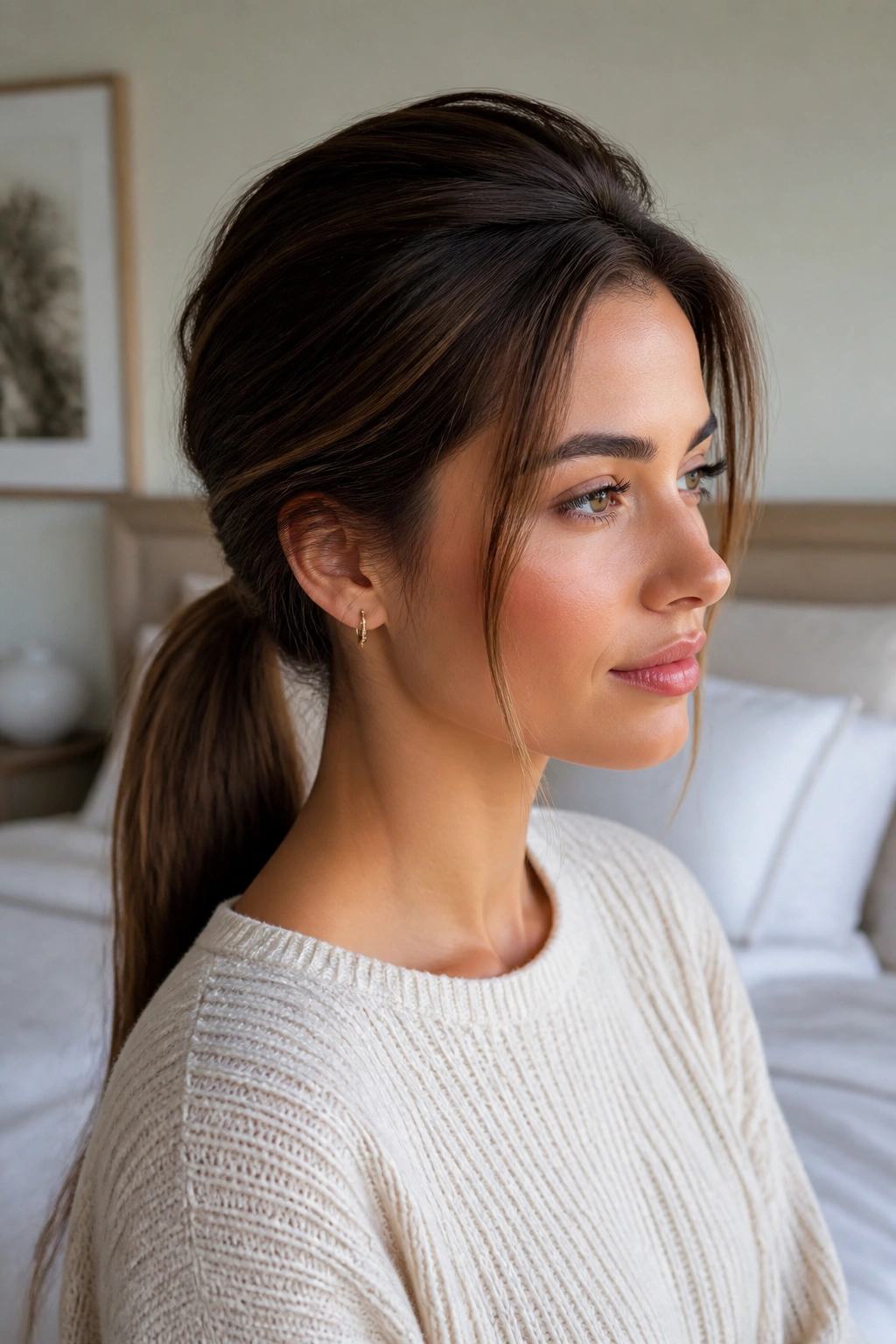
Low ponytails can be boring, but they do not have to be flat. If you build a little volume at the crown before tying the hair back, the ponytail suddenly looks intentional instead of lazy. That small puff at the base changes the entire profile.
The main mistake is pulling the hair back too tightly from the hairline. That gives a sleek, severe look, which can be elegant but doesn’t add body. A better version keeps some lift at the roots and lets the ponytail sit a touch loosely at the nape.
A Small Detail Makes the Difference
Wrap a one-inch section of hair around the elastic to hide it, then tug gently at the crown with your fingertips. Not the ponytail itself — the crown. That’s where the fullness lives.
- Works well with second-day straight hair
- Looks fuller if the elastic sits just above the nape
- Best for medium to long lengths
- Needs only a light mist of flexible-hold spray
The low ponytail is one of those styles that benefits from a little mess. Clean lines up top, movement underneath. That’s the sweet spot.
8. High Ponytail with Wrap and Tease
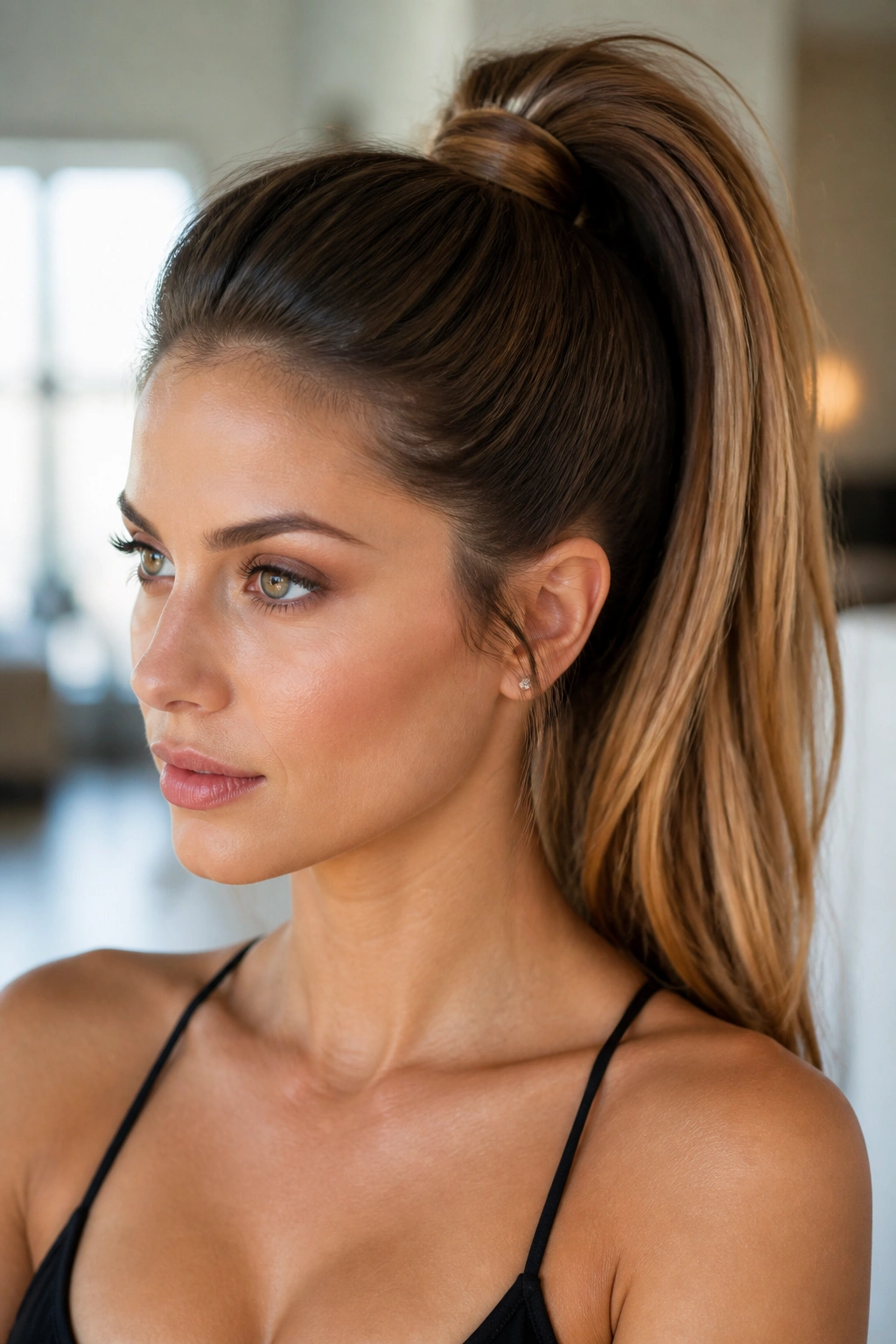
A high ponytail sounds simple, but on straight hair it can go flat fast if the base sits too low or the crown gets smoothed down too hard. The fix is to place the ponytail high enough to lift the face and then build a bit of height underneath the elastic before you tighten it.
That teasing step does not need to be dramatic. Two or three gentle backcombs under the top layer is enough. Keep the outer surface smooth, because you want fullness, not visible knots.
The wrapped strand around the elastic helps too. It gives the style a finished look, but it also adds a little visual thickness right where the hair gathers. Strange as it sounds, that tiny wrapped section makes the whole ponytail feel heavier and fuller.
This one is especially good if your hair is long and pin-straight. The height at the crown balances the length at the back so the hair doesn’t drag your features downward.
9. Shoulder-Grazing Lob with Invisible Layers
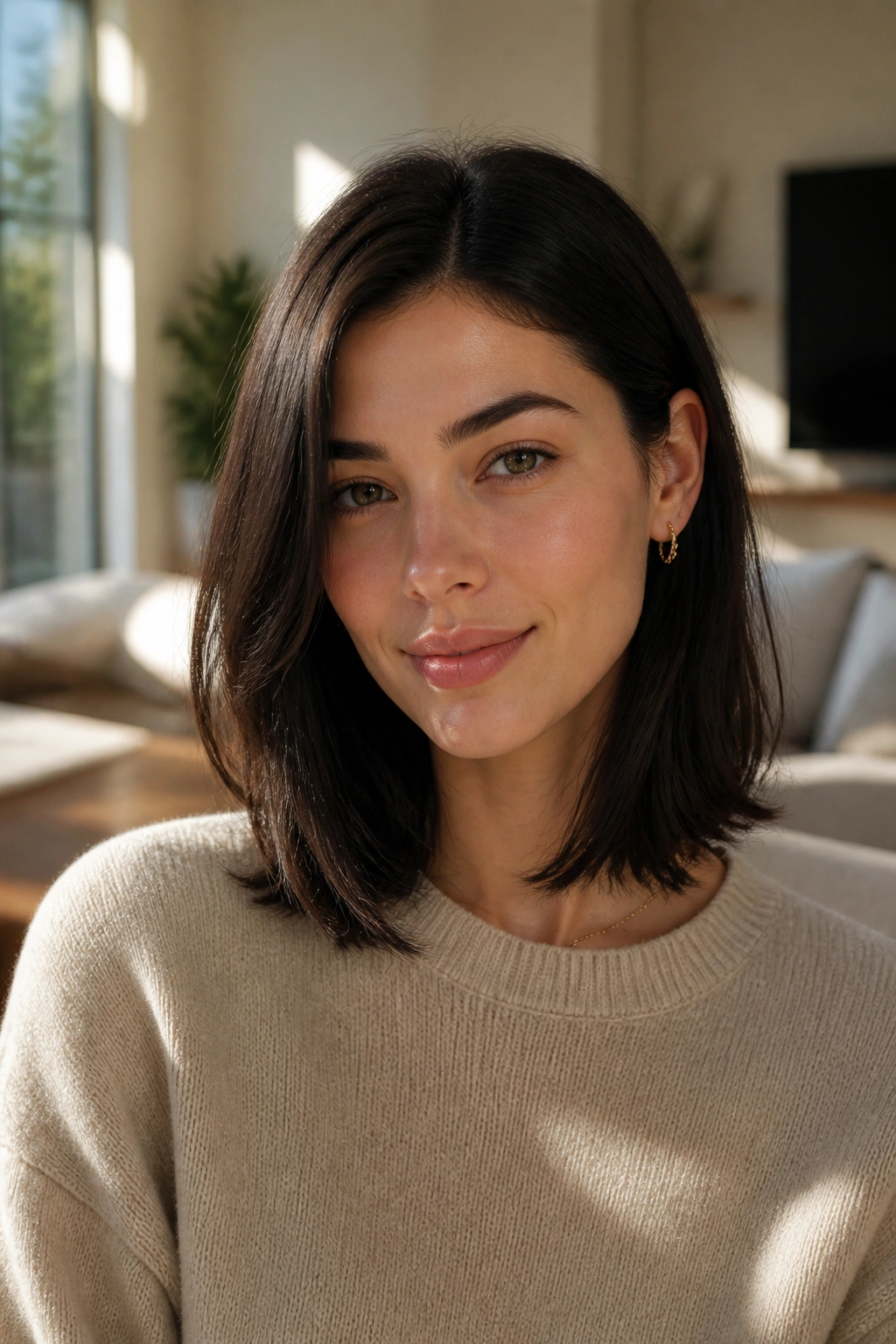
Can a haircut add body without looking layered? Absolutely. A shoulder-grazing lob with invisible layers is one of the smartest choices for straight hair because it keeps a clean outer line while removing enough weight inside to help the hair move.
The layers stay hidden under the top sheet of hair, so you don’t get that chopped-up look. Instead, the surface still looks sleek, but the shape swings a little more when you turn your head. It is a very civilized kind of fullness.
Why It’s a Good Middle Ground
If your hair is fine, this cut gives you lift without losing too much length. If your hair is thick, it removes the bulky triangle effect that can happen when straight hair gets too heavy at the bottom.
A lob also plays nicely with a side part, a tuck behind one ear, or a quick bend with a flat iron. You can wear it straight and still get body. That’s what makes it such a solid everyday choice.
It’s the kind of cut that looks expensive when it’s clean. Not flashy. Just smart.
10. Soft Flat-Iron Waves
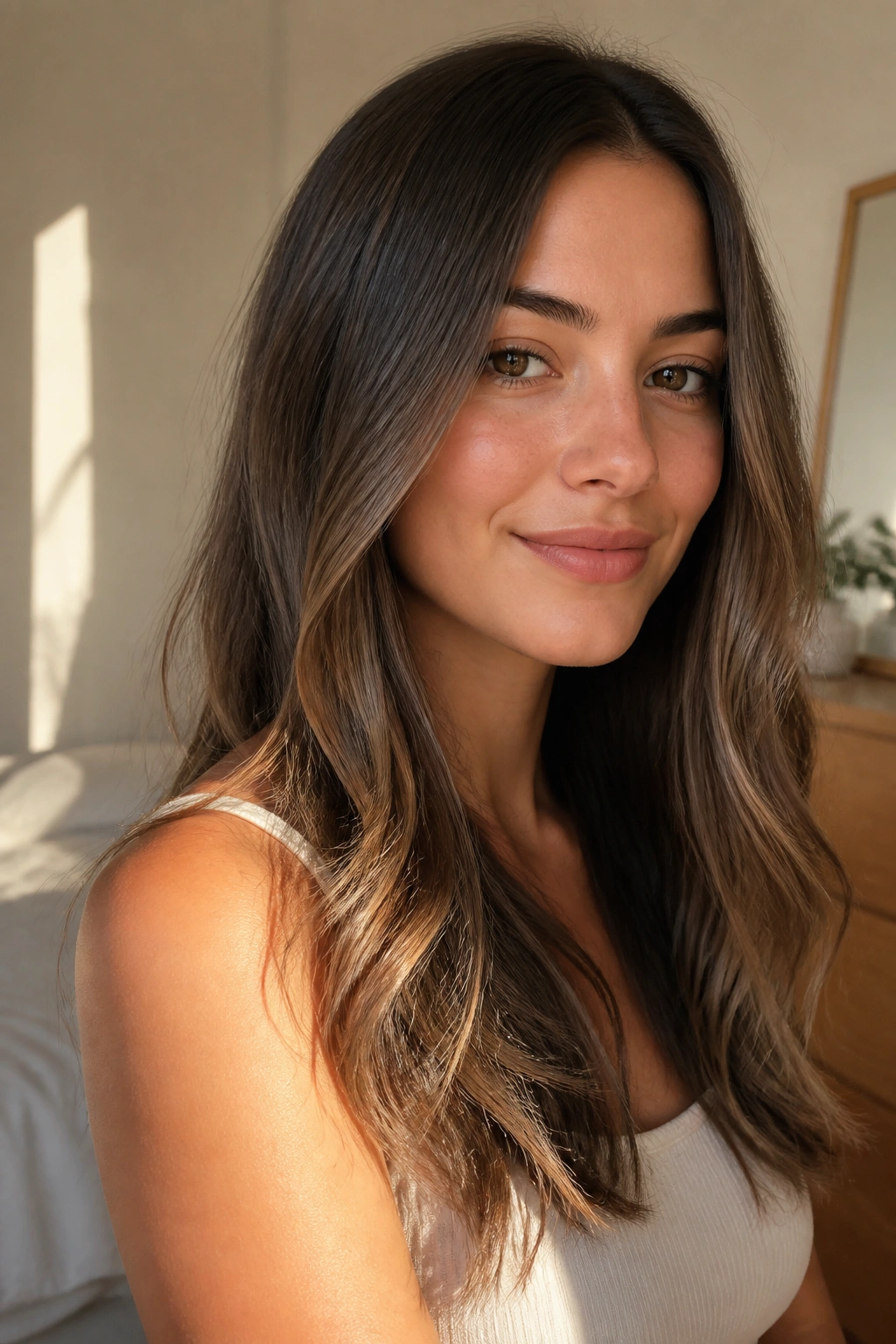
Flat-iron waves are one of the few ways to add movement to straight hair without making it look overtly curled. The trick is to create bends, not ringlets. Hair that keeps a mostly straight shape with a few loose S-curves looks fuller because it no longer falls in one stiff line.
Use a one-inch flat iron and take medium sections. Clamp near the root, twist the iron away from the face, then glide a few inches and switch direction. Leave the last inch or so out. If the ends stay too curled, the style can look dated. If they stay too straight, the wave disappears.
How to Keep Them Looking Soft
Brush through the waves with fingers or a wide-tooth comb once they cool. That loosens the pattern and makes the shape feel airier.
- Keep the sections roughly 1 to 1.5 inches wide
- Alternate wave direction for a looser finish
- Stop heat at the last 1 inch of the ends
- Finish with a light texturizing mist, not heavy oil
I like this style on hair that tends to collapse at the sides. The wave gives the illusion of more hair than is actually there. Simple. Effective. Slightly deceptive, which is probably why people love it.
11. Bubble Braid with Loosened Sections
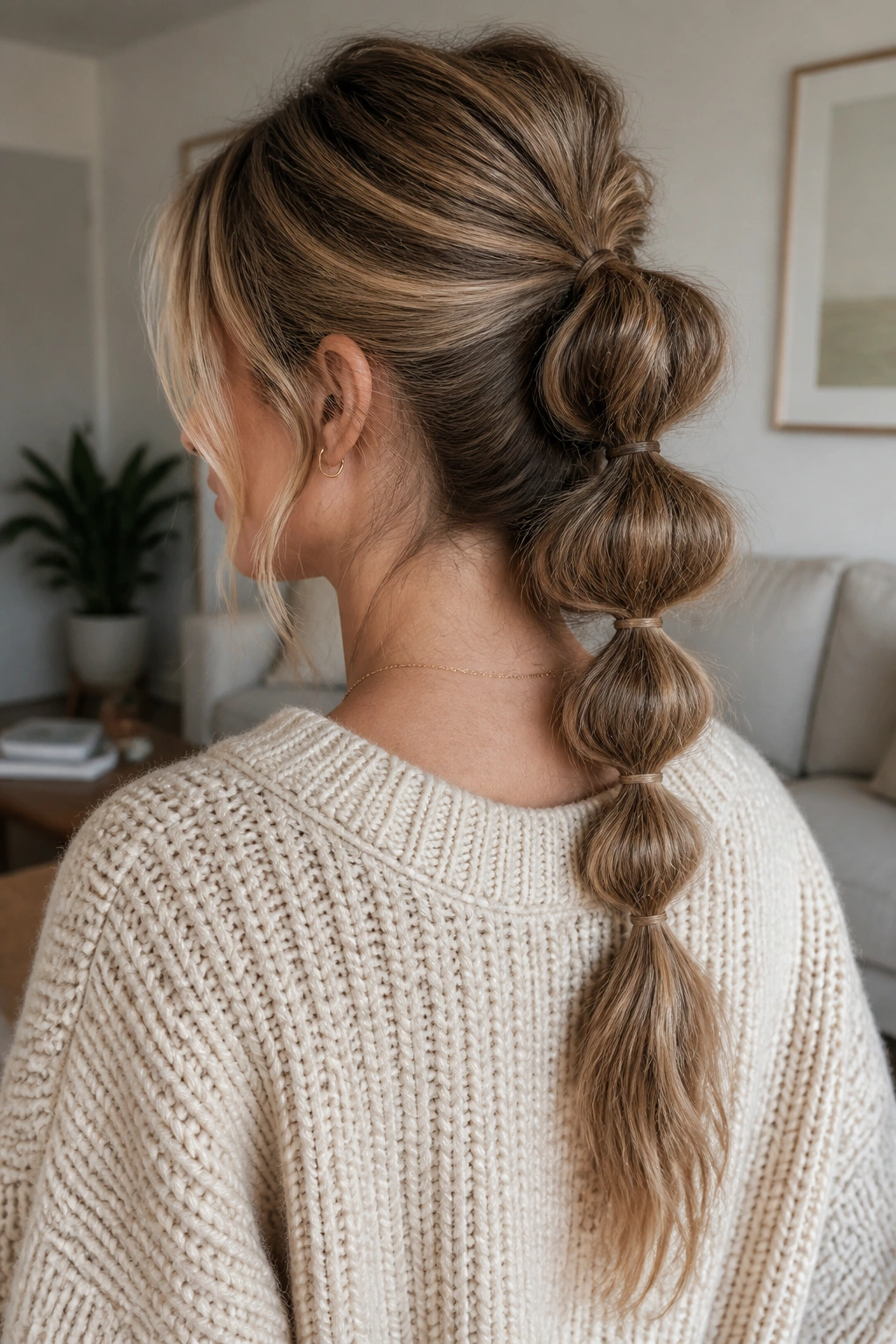
A bubble braid is one of those styles that sounds playful and ends up being surprisingly useful for straight hair. Every elastic creates another puffed section, so the braid gets shape even if the hair texture itself is smooth and slippery. It’s a body trick disguised as a cute hairstyle.
The best version starts with a low ponytail or a half-up section. Add clear elastics every 2 to 3 inches, then tug the hair between each elastic outward until the “bubble” gets round. Don’t yank from the top only. Pull from the sides too, or the shape looks lopsided.
What to Watch For
If the hair is freshly washed and too silky, the bubbles can slide. A little texture spray at the mid-lengths helps the elastics hold without slipping.
- Best on medium to long straight hair
- Easier with clear mini elastics
- Looks fuller when the bubbles are slightly uneven
- Works for school, work, or weekends without much fuss
This one is good when you want body but do not want heat. That alone makes it worth keeping around.
12. Claw-Clip French Twist
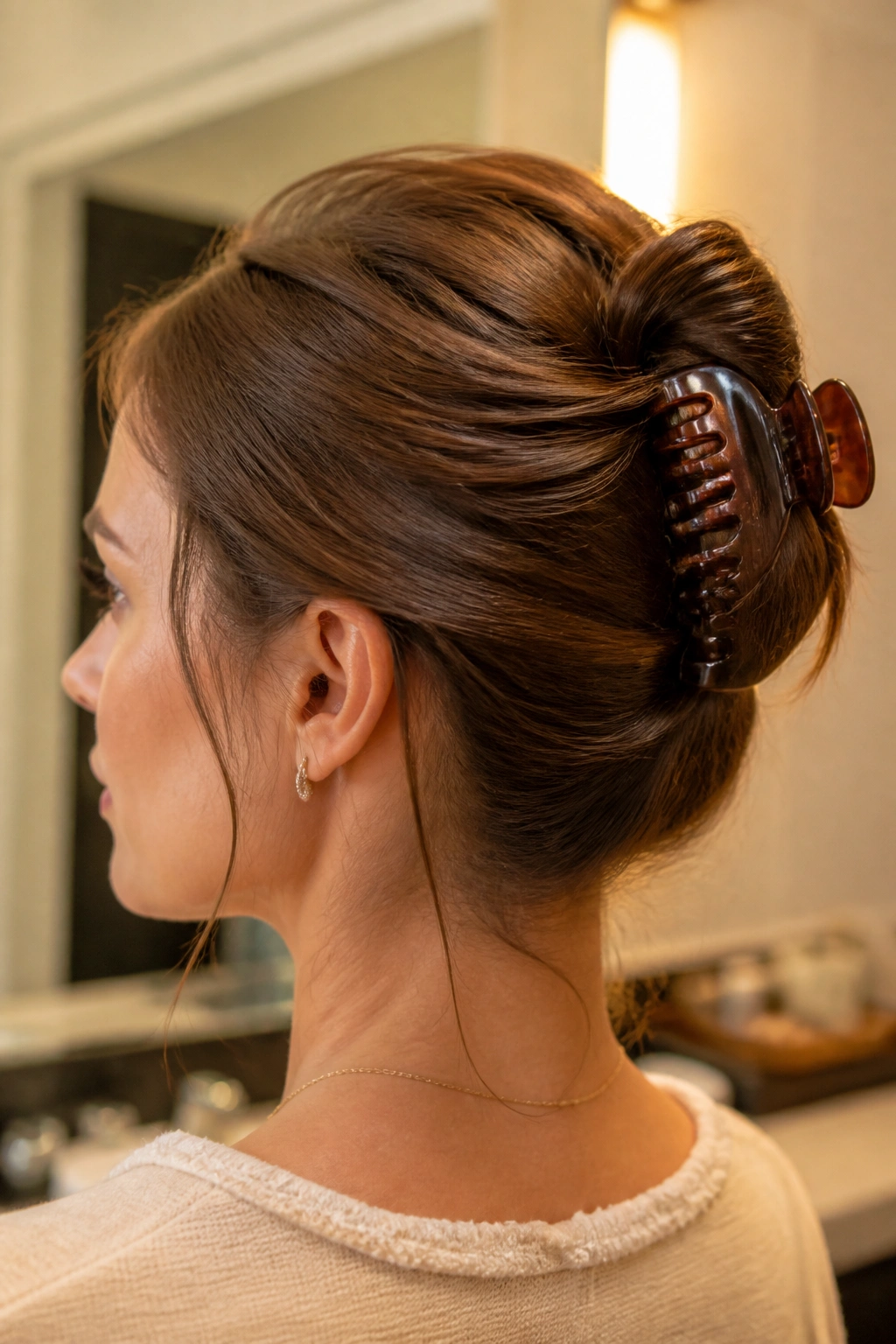
A claw-clip French twist gives straight hair shape by folding it upward instead of letting it hang downward. That upward motion creates instant lift at the back of the head, which is half the battle with flat hair. The rest is just making the twist look loose enough to have life.
You gather the hair at the back, twist it upward, tuck the ends under, and secure it with a clip that actually grips. Tiny clips are cute until the hair slips out an hour later. Use one with enough teeth to catch the twist properly.
The best thing about this style is the tension at the crown. It should feel snug, not painful. If it’s too tight, the top goes slick and flat again. If it’s too loose, the whole twist sags.
This one tends to work especially well on hair with a bit of day-two grip. Fresh, clean straight hair can be too slippery. Give it some texture first, and the twist holds much better.
13. Messy Top Knot with Loose Face Pieces
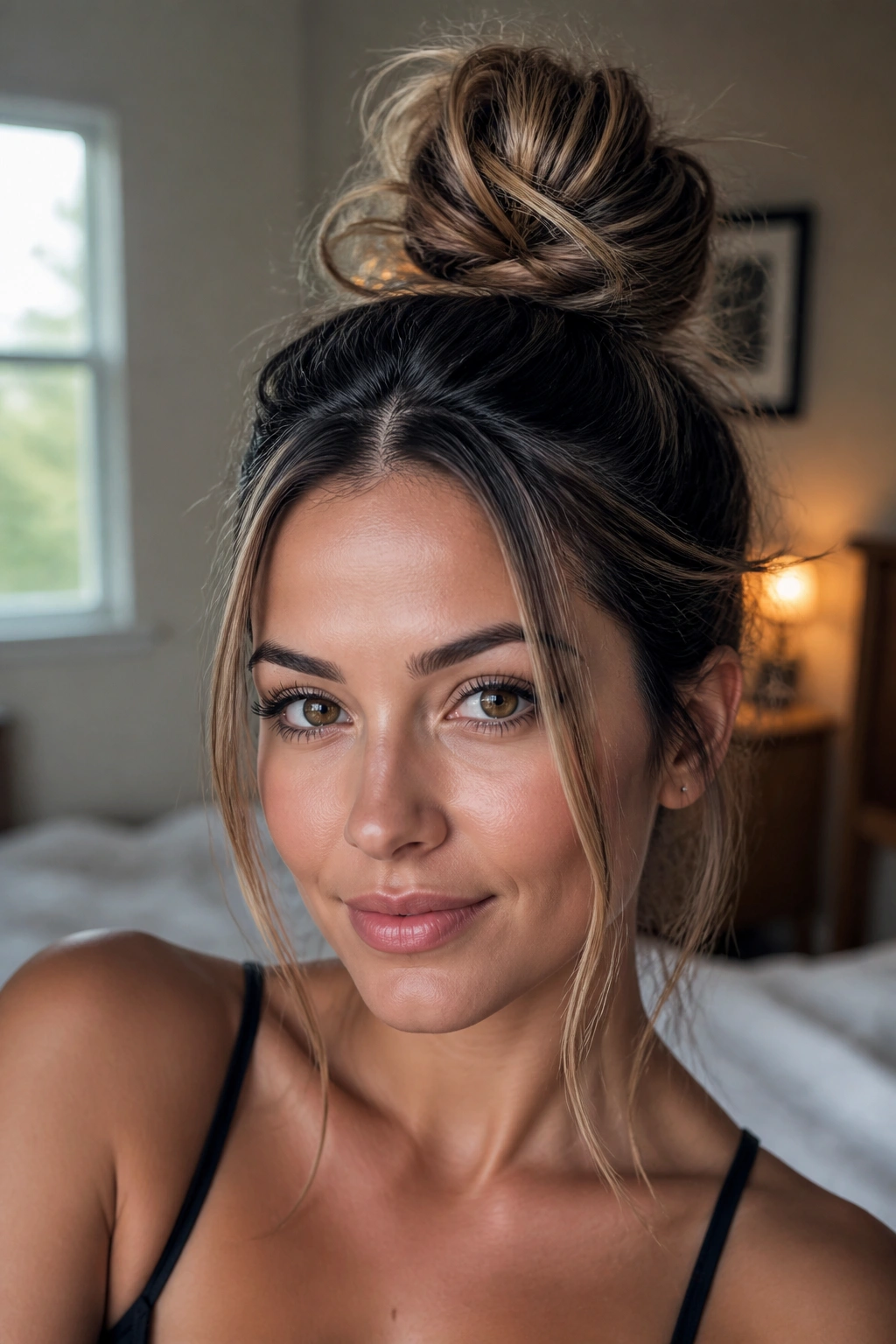
A top knot can add body if you build it high enough and stop trying to make it perfect. That’s the whole lesson. Straight hair loves to go smooth, so a knot that sits flat on the crown can look small and tired. Pull it up, fluff the base, and let a few pieces stay loose.
The lift starts before the knot goes in. Push the hair a little forward at the crown, secure the ponytail high, then twist it into a bun. Tug the bun outward once it’s pinned. Not too much. Just enough to make it round rather than tight.
How to Keep It from Looking Tiny
Leave two face-framing pieces out before you gather the hair. Those pieces soften the face and make the bun feel less severe.
The knot should sit like it has room to breathe. If every strand is slicked down, the style loses body fast. A few flyaways are fine. Actually, they help. This is one of the rare times where a little imperfection makes the whole thing better.
14. Velcro Roller Set for Crown Lift
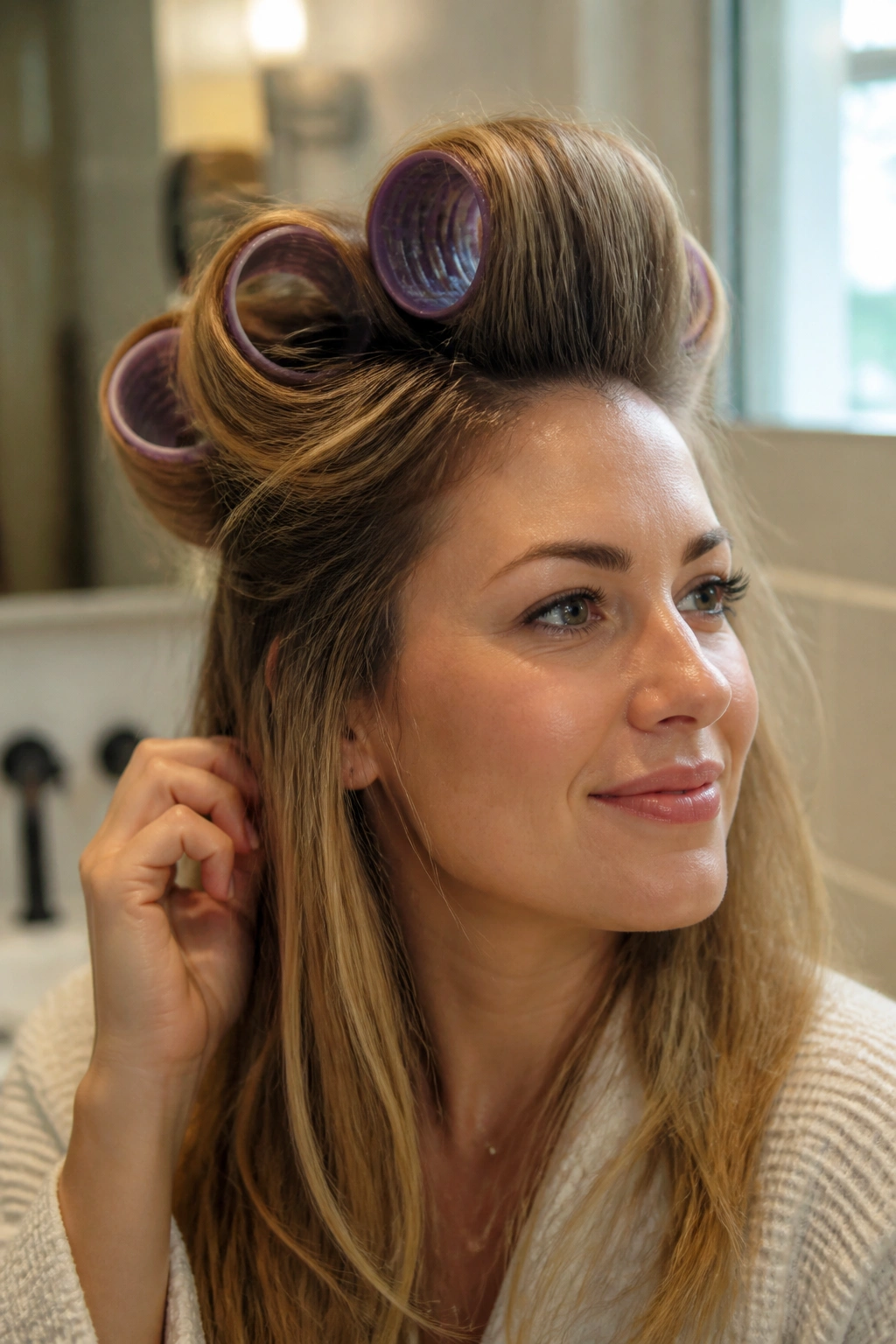
Velcro rollers are old-school in the best possible way. They lift straight hair from the root, shape the ends, and give the crown the kind of lift that no amount of finger fluffing can fake. If your hair falls flat the minute you leave the bathroom, rollers are worth the extra ten minutes.
Use larger rollers — about 1.5 to 2 inches — at the top and crown, then smaller ones near the front if you want more bend. Roll the hair up and away from the face, clip if needed, and let the rollers cool fully before removing them. Warm hair does not hold shape well. Cool hair does.
The result is not a tight curl. It’s a fuller foundation. Hair looks like it has been set, which is a very different thing from looking curled. That subtle difference matters if you want body without too much texture.
I’d pick this for events, workdays with a little extra time, or any morning when your straight hair needs a reset and a little dignity.
15. Half-Up Braided Crown
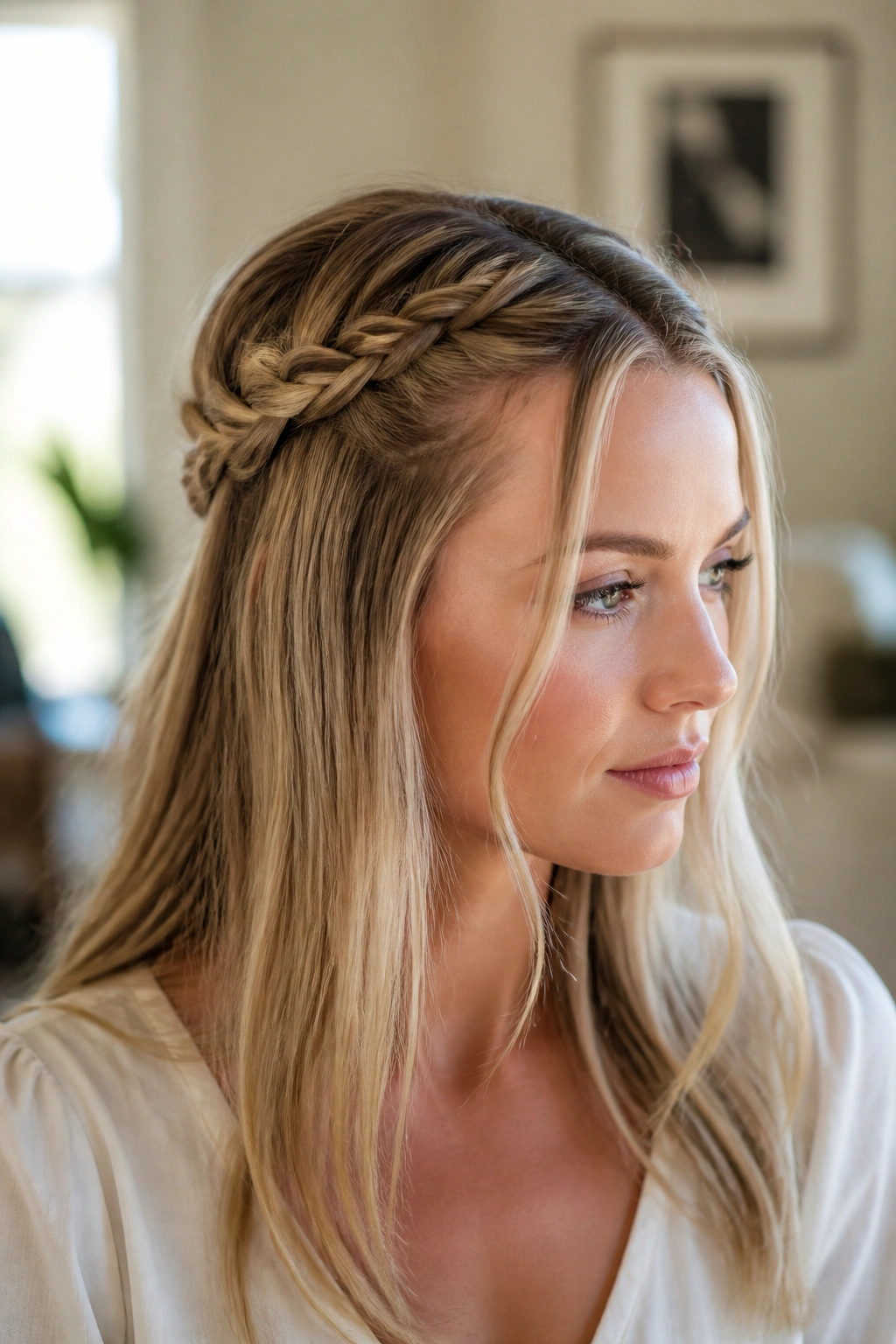
A half-up braided crown gives straight hair texture right where it needs it most: across the top. Unlike a full braid, which can pull all the hair into one line, this style keeps the lower lengths loose and lets the braid act like a frame rather than a cage.
Start with two small sections near the temples, braid each one back, and pin them together or across the back of the head. Keep the braids a little loose so they have width. Tight braids can look skinny on straight hair, which is not the goal here.
What Makes It Different
The braid adds ridges and shadow. That alone creates the feeling of thickness. Straight hair loves a little texture because it breaks up the shine and gives the eye something to follow.
It’s also one of the better styles for hair that is growing out in awkward stages. The braid handles those in-between pieces without making a big deal out of them. And honestly, that’s half the charm.
If you want more lift, tug the braid gently after pinning. Just a little. Enough to widen it, not enough to unravel the whole thing.
16. Flipped-Out Ends
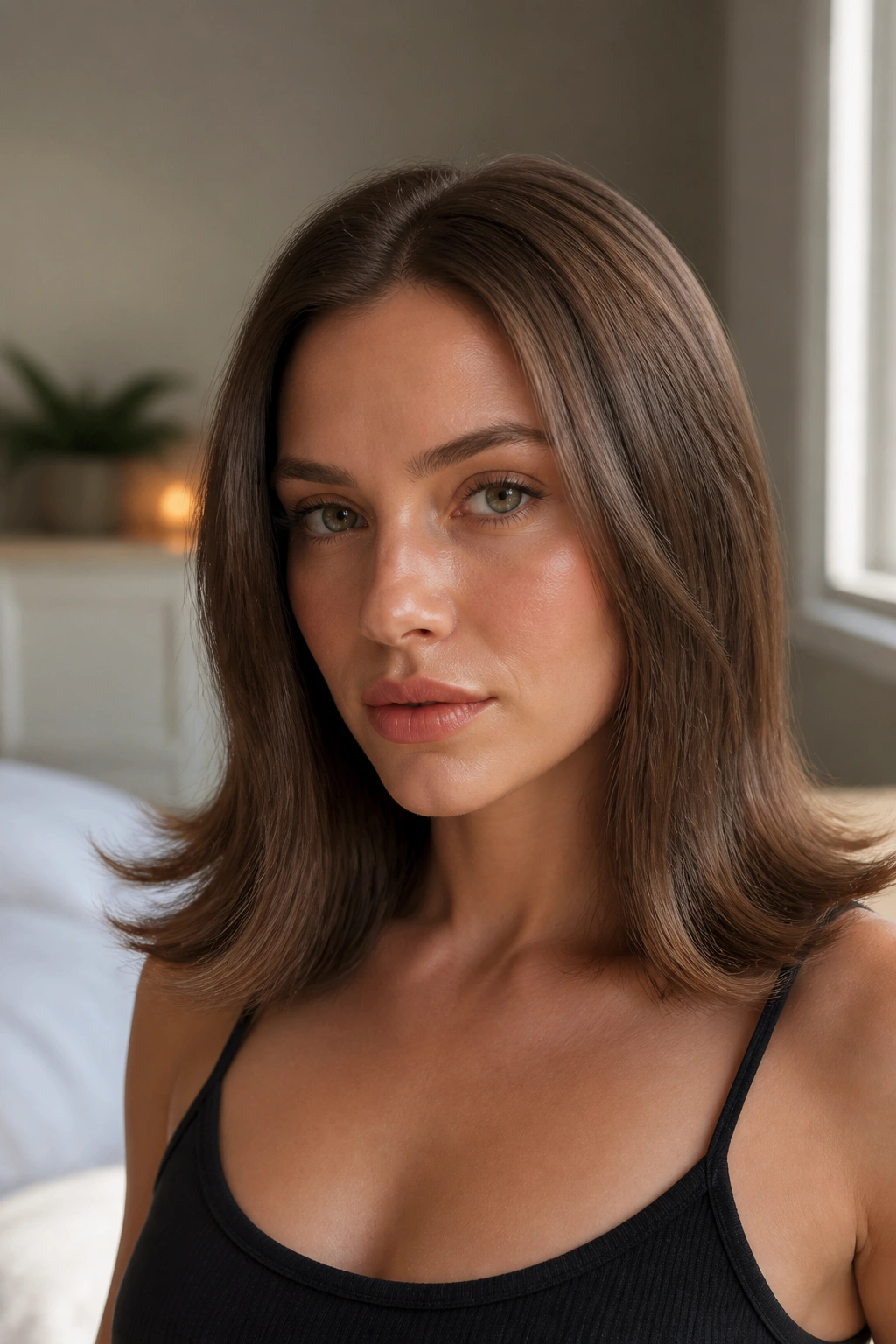
Flipped-out ends bring straight hair out of its slump fast. The style keeps the length straight through the middle, then kicks the last inch or two outward so the finish feels lively instead of heavy. It has a little retro energy, sure, but that’s not why it works. It works because the flip gives the eye a stop point.
A flat line at the bottom can make straight hair look long and thin. A flip adds width, and width reads as body. That’s the practical side of it.
A Small Trick That Helps
If you use a flat iron, turn the tool outward only at the ends. If you use a round brush, roll the ends away from the neck while blow-drying. Either way, keep the flip soft. Sharp angles can look stiff.
- Best with lob lengths and longer
- Looks fuller when the ends are clean and blunt
- Works well with a center part or side part
- Needs only a light finishing spray at the ends
This is one of those styles that can look casual or polished depending on the finish. That range makes it easy to wear.
17. Soft Shag with Long Layers
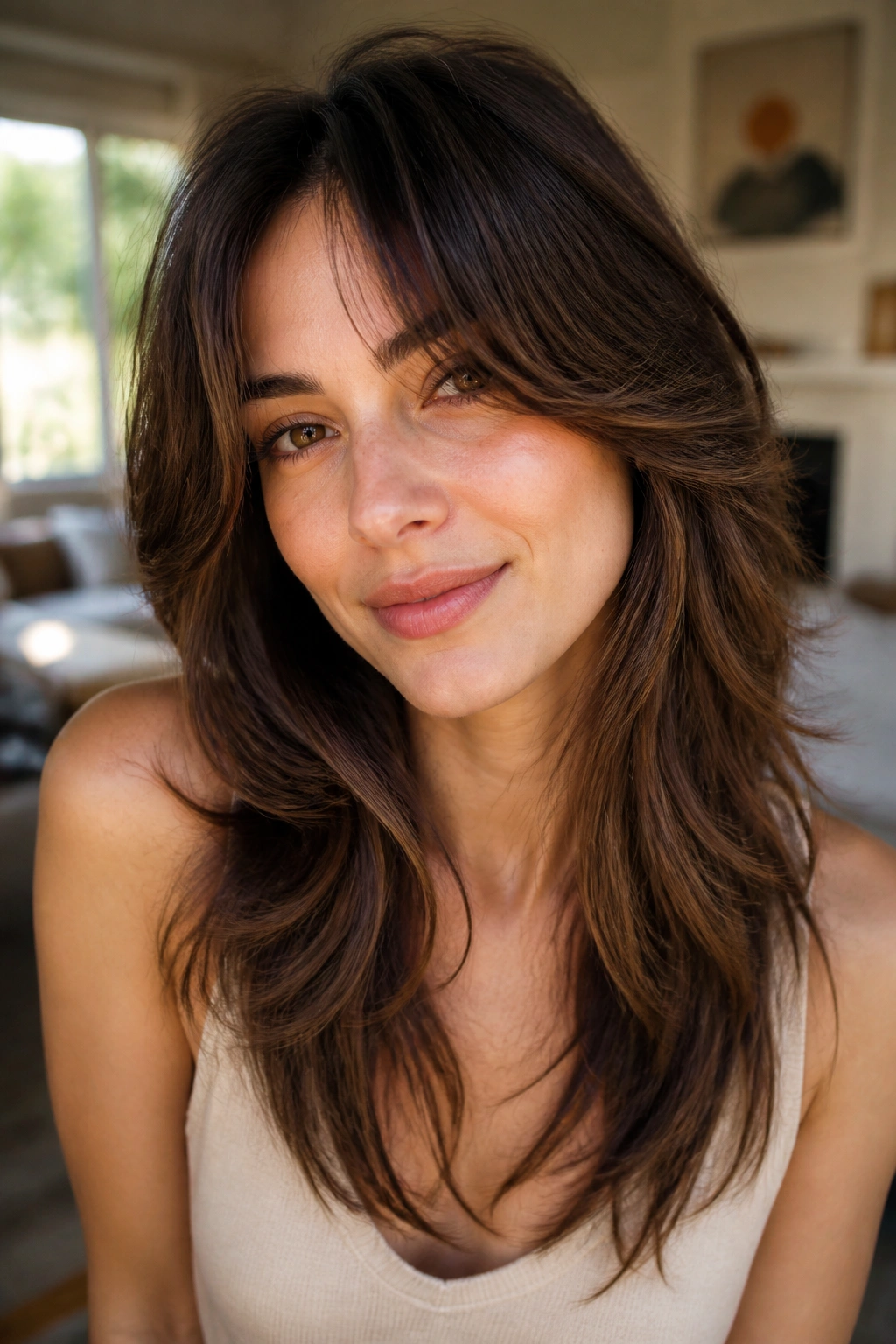
A soft shag is not the same thing as a choppy, overdone cut from a magazine spread. The good version on straight hair keeps the layers long enough to move, with curtain fringe or face-framing pieces that stop the head from looking too square. It adds body by removing weight in places that usually drag the hair down.
The reason it works is simple: straight hair needs interruption. A shag gives it that through movement around the face, a little lift at the crown, and ends that do not fall in one heavy sheet. If your hair is fine, ask for a gentler version with fewer broken pieces. If it is thicker, the layers can be a bit more obvious.
I like this cut on people who want hair that looks full when it moves, not just when it’s first styled. The shape keeps working even when the blowout gets old. That matters more than it sounds like it should.
It’s not a low-maintenance cut. But it pays you back in texture.
18. Faux Bob with Tucked Ends
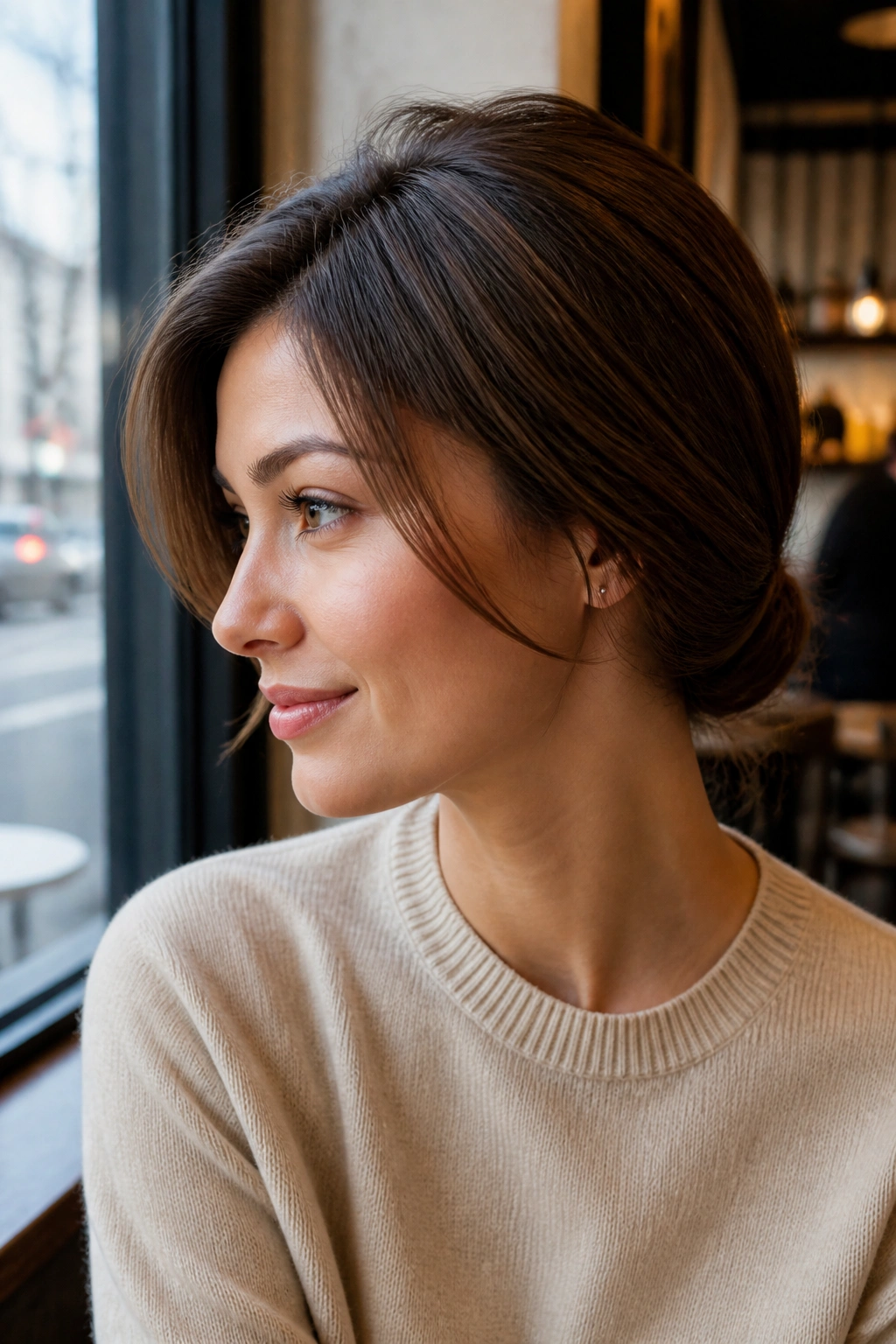
Can straight hair look fuller when it’s shorter than it really is? Yes. The faux bob proves it. By tucking the ends under and pinning them at the nape, you create the illusion of a shorter, thicker shape with more volume around the face.
This style works best when the hair has at least shoulder length. Gather the bottom section, roll or tuck the ends inward, then pin them securely beneath the outer layer. Leave the top a little loose so it doesn’t lie flat against the scalp. That soft looseness is what gives the style its body.
A side part helps here, because it lets one side drape a bit heavier while the tucked portion stays hidden. The shape ends up looking fuller than it really is. Slightly sneaky. Very useful.
What to Watch For
Make sure the pins are hidden under the outer layer, or the style starts to read as a pinned-up hack instead of a polished faux bob.
If your hair is super silky, a little texturizing spray or dry shampoo at the mid-lengths makes the tuck stay put. Without that grip, pins can slide, and nobody wants to be fixing a fake bob all evening.
19. Twin Mini Braids with Loose Length
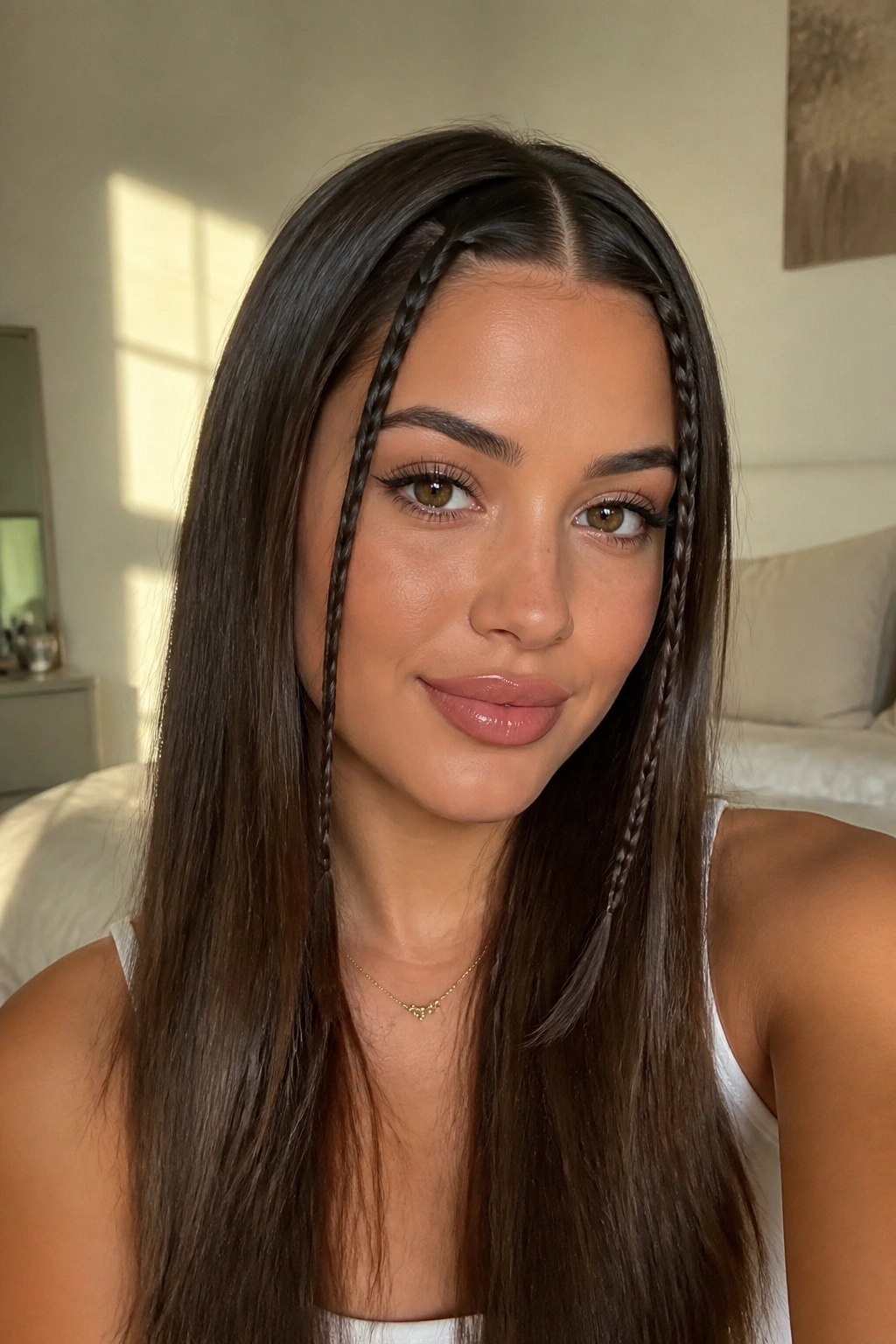
Two tiny braids near the front can do more for straight hair than a whole head of styling sometimes can. They break up the flat front section, add texture near the face, and create a little height simply because the hair is no longer hanging in one straight curtain.
This is a good move when you want body without changing the rest of the style. Leave the main lengths down and smooth, then braid only small sections at the temples or just behind the ears. Pin them back or leave them loose. Either version adds something the eye notices right away.
The contrast matters. Straight lengths beside small braids look fuller than straight lengths alone, because the texture creates shadows and thickness near the front. You can wear this with a lob, with longer hair, even with a half-up style if you want a bit more shape.
It is a tiny detail. Tiny details often do the heavy lifting.
20. Voluminous Sleek Bun with a Lifted Crown
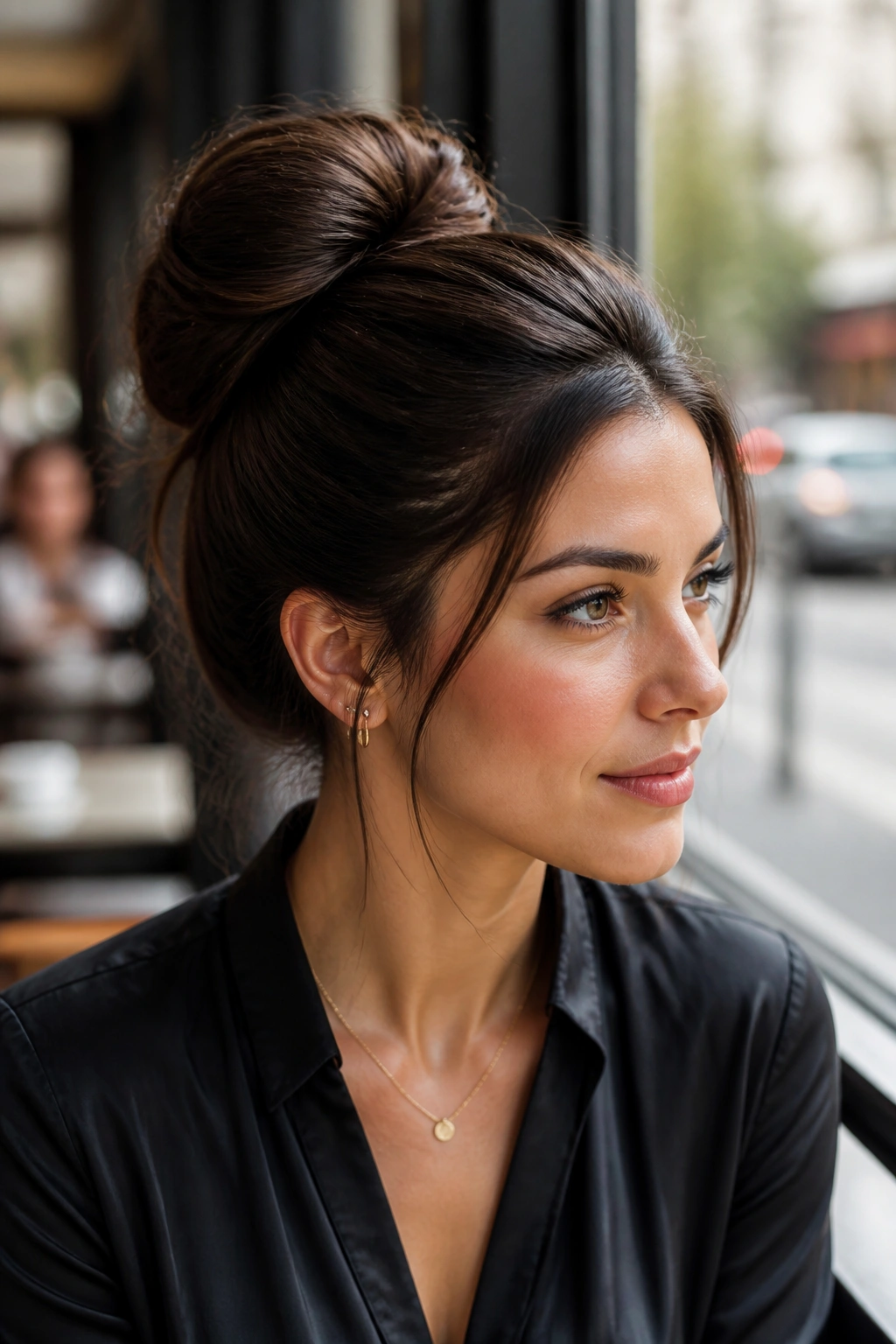
A sleek bun usually sounds like the opposite of body, but that depends on how you build it. If you keep the crown lifted before you gather the hair, smooth only the sides, and let the bun sit a little higher than the nape, the whole style reads fuller and more sculpted.
The biggest mistake is flattening the top too hard. That gives you a neat bun and a very small-looking head shape. Better to keep a touch of loft at the crown, then twist the bun loosely enough that it has width rather than a tight little knot.
This style is useful when your straight hair is too clean, too long, or too heavy to wear down. It pulls the face up, opens the neckline, and still leaves the style with some presence. If you want extra body, leave out a few soft pieces around the hairline. Not too many. Just enough to stop the bun from looking severe.
Some hairstyles add body by making hair bigger. This one does it by making the shape smarter.
