



Thick hair can look fantastic in the chair and then feel like a small labor project the minute you wash it at home. It’s heavy. It swells. It hangs onto shape in one place and refuses to cooperate in another.
The right haircuts for thick hair women wear well are not about shrinking the hair into submission. That approach usually backfires. Good cutting makes the density work for you: the weight lands where you want it, the outline stays clean, and the hair moves instead of sitting there like a solid block.
I’ve seen thick hair ruined by too many short layers near the crown, and I’ve seen it saved by one smart blunt line and a few careful pieces around the face. That difference is bigger than most people expect. Thick strands can hold structure beautifully, but they also punish sloppy layering fast.
So the real question is simple: do you want to remove bulk, add movement, keep length, or make styling easier? Once you know which job the haircut needs to do, the choices get a lot sharper—and a lot more useful.
1. Long Layers That Keep Thick Hair Moving
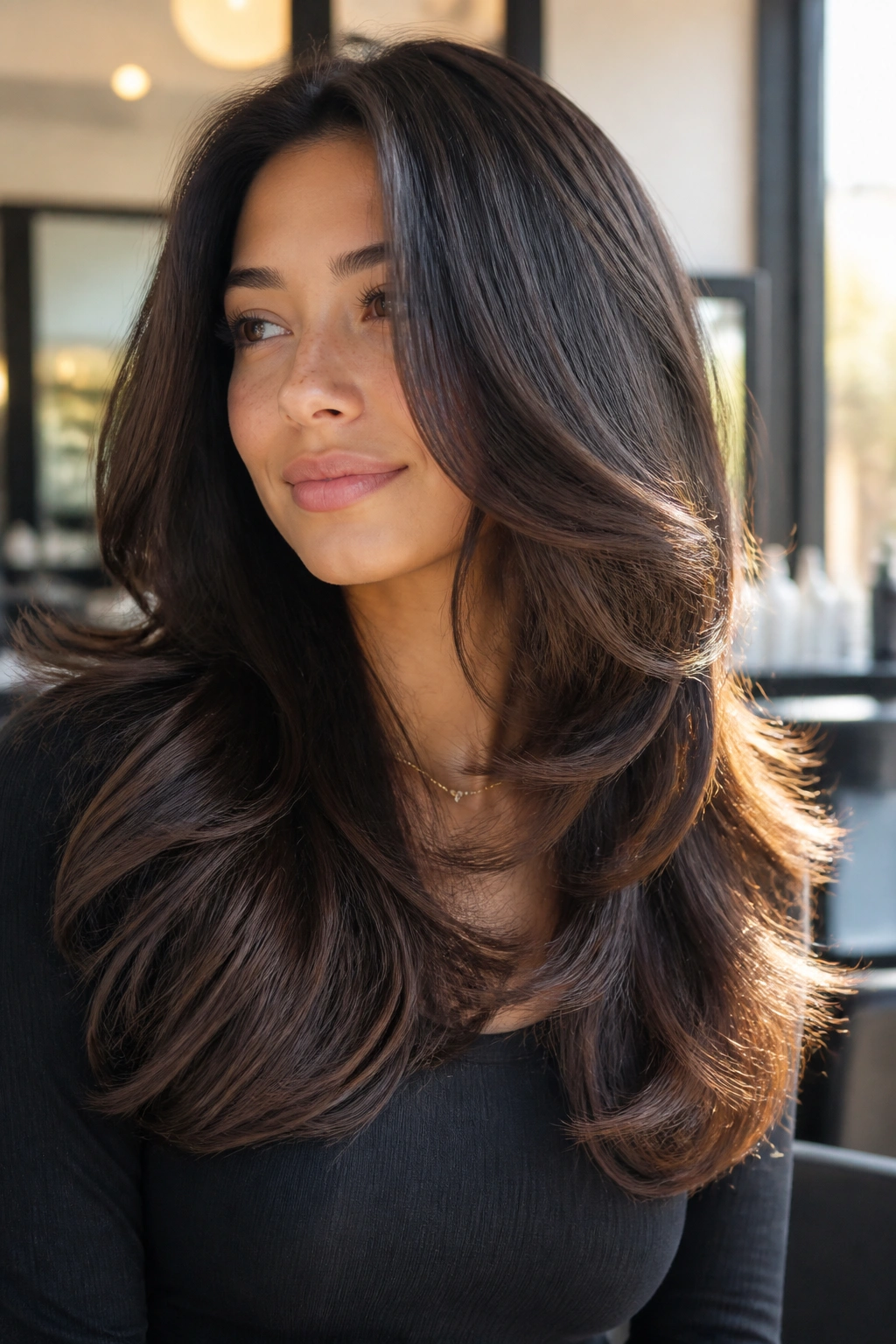
Long layers are the safest place to start if you love your length but hate the heavy, blocky feel that thick hair can get at the ends. The trick is keeping the shortest layers long enough to matter. Short layers at the top can make thick hair puff out in odd places; long layers usually give you movement without turning the shape into a triangle.
Why It Works
Ask for layers that start below the chin or around the collarbone, not up near the cheekbones unless you want a lot of lift. That keeps the weight balanced and stops the top from collapsing under its own density. Point-cut ends can soften the outline too, but the line should still feel full.
If your hair is straight or only slightly wavy, long layers are especially kind. They let the hair swing instead of hanging like a curtain. If your hair is coarse, this cut also makes blow-drying less of a chore because the air moves through faster.
- Best for keeping length
- Good if you wear a ponytail often
- Works with blowouts, waves, or air-drying
- Ask for subtle internal removal, not aggressive thinning
Pro tip: bring photos of your hair both freshly blown out and air-dried. Thick hair changes shape a lot, and your stylist needs to see both versions.
2. The Blunt Lob That Makes Thick Hair Look Clean
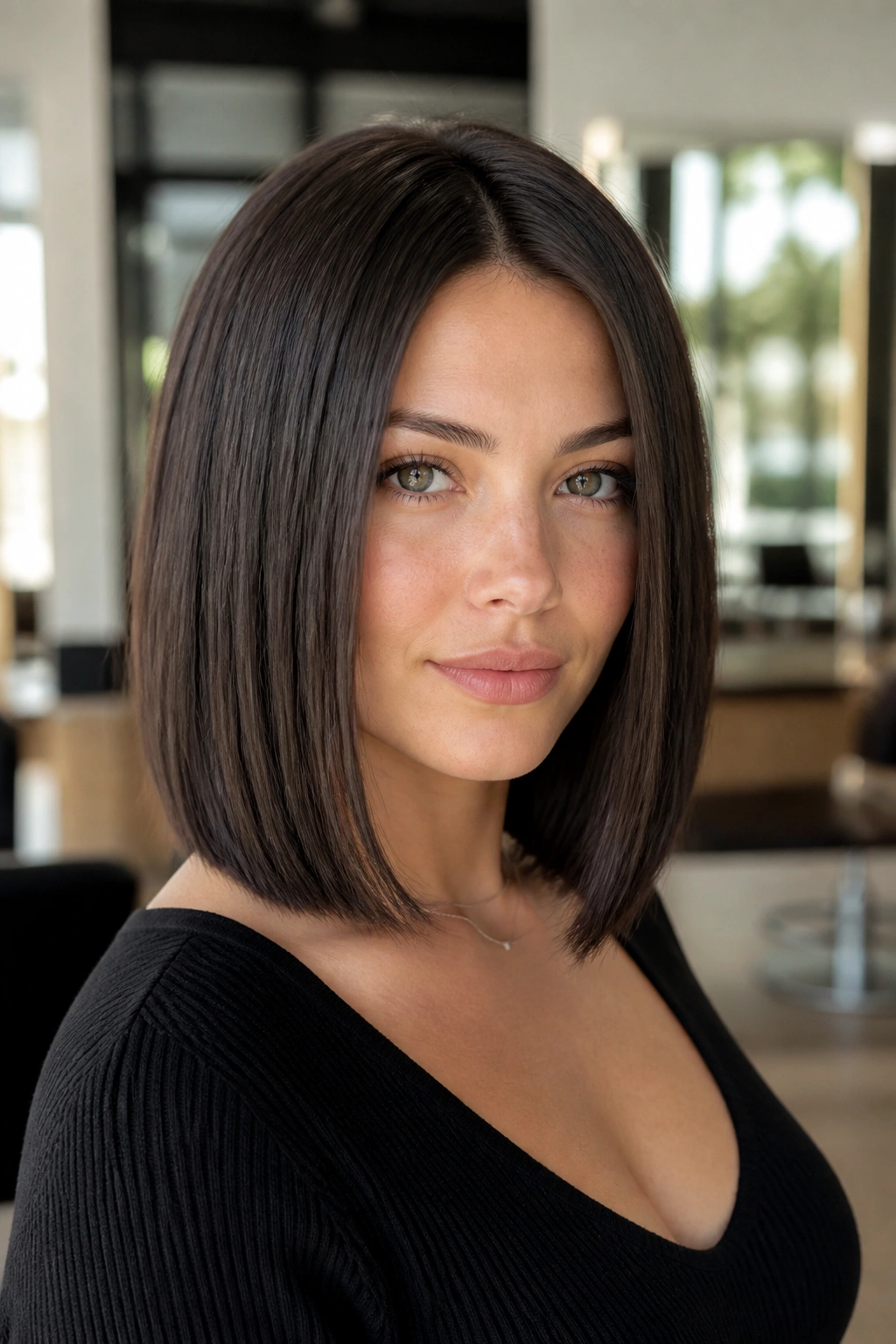
Why does a blunt lob work so well on thick hair? Because it gives the hair a clear edge. No fluff at the bottom. No soft drift into nothing. Just a strong line that makes density look polished instead of bulky.
A lob that lands between the collarbone and the top of the shoulders is a sweet spot for a lot of thick-haired women. It feels short enough to lighten the load, but it still leaves enough length for a low bun or a quick clip-up. The blunt edge does the heavy lifting, and that matters. Thick hair often looks better when the cut is decisive.
This style is especially good if you like a sleek finish. It can be worn straight, tucked behind the ears, or bent slightly with a flat iron for a softer edge. The one catch: it needs regular trims. Once the ends start to fray, the clean line loses its whole point.
If your hair grows fast or you hate the “poof at the bottom” look, this is a smart cut. It’s one of those styles that looks expensive without trying hard. Plain and blunt. That’s the magic.
3. The Butterfly Cut for Long Hair With Lift
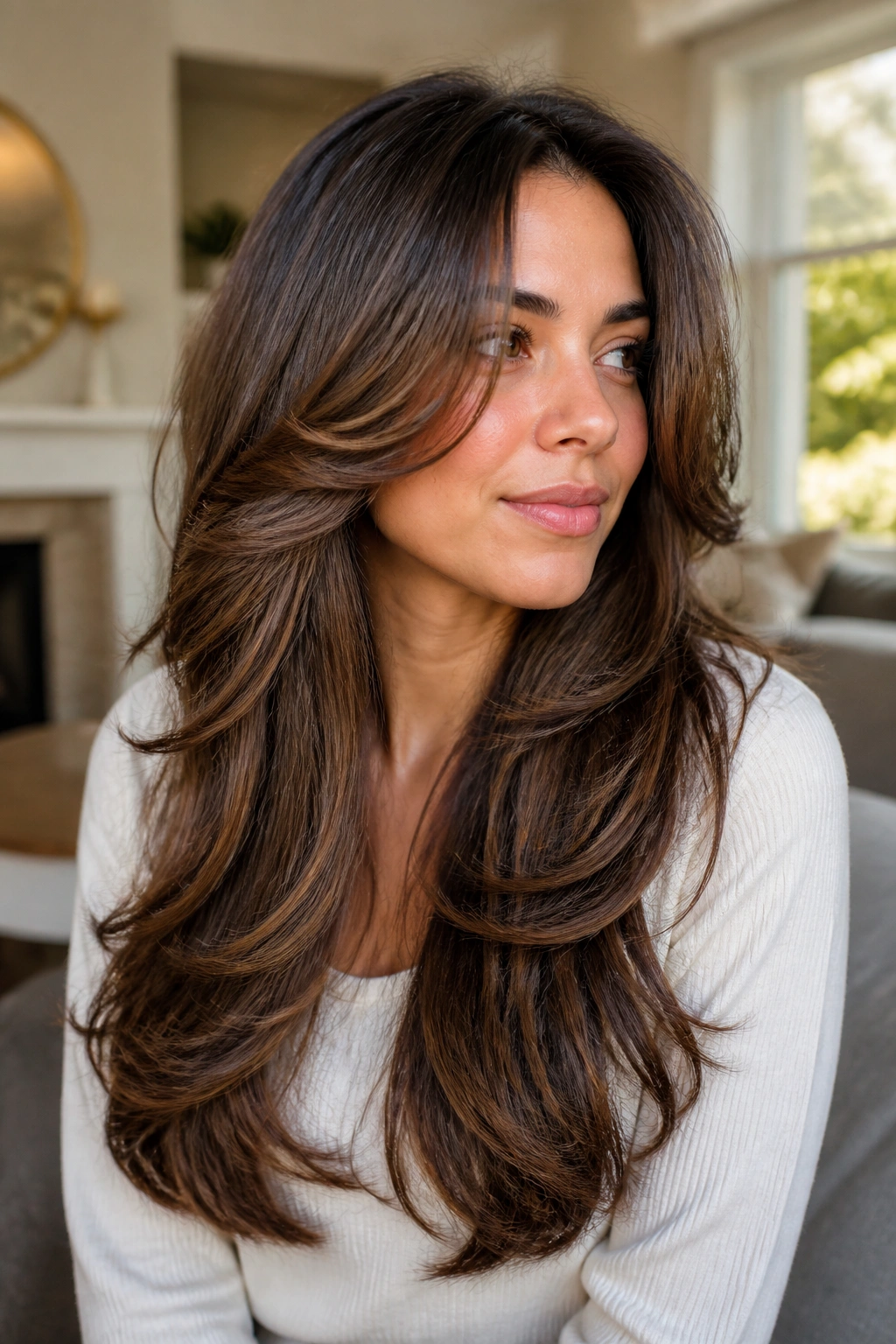
A butterfly cut is what happens when you want the drama of layers without giving up your long length. It’s built around shorter face-framing sections that blend into much longer layers underneath, so the top moves and the bottom stays full. On thick hair, that balance is gold.
I like this cut for people who say, “I want shape, but I do not want to feel like I lost six inches.” Fair ask. The shorter pieces around the face make blowouts look bouncy, and the long base keeps the cut from feeling thin. It can be gorgeous on hair that falls straight but still has enough body to hold a bend.
A few details matter here:
- Keep the shortest face frame around the cheekbone to jawline
- Leave the back layers long enough to keep weight at the ends
- Use a round brush or large Velcro rollers for the best shape
- Avoid choppy over-layering if your hair already expands in humidity
The cut works because it lets thick hair feel lighter without looking wispy. That’s a rare combination, and people keep coming back to it for a reason.
4. The Angled Bob That Shifts Weight Forward
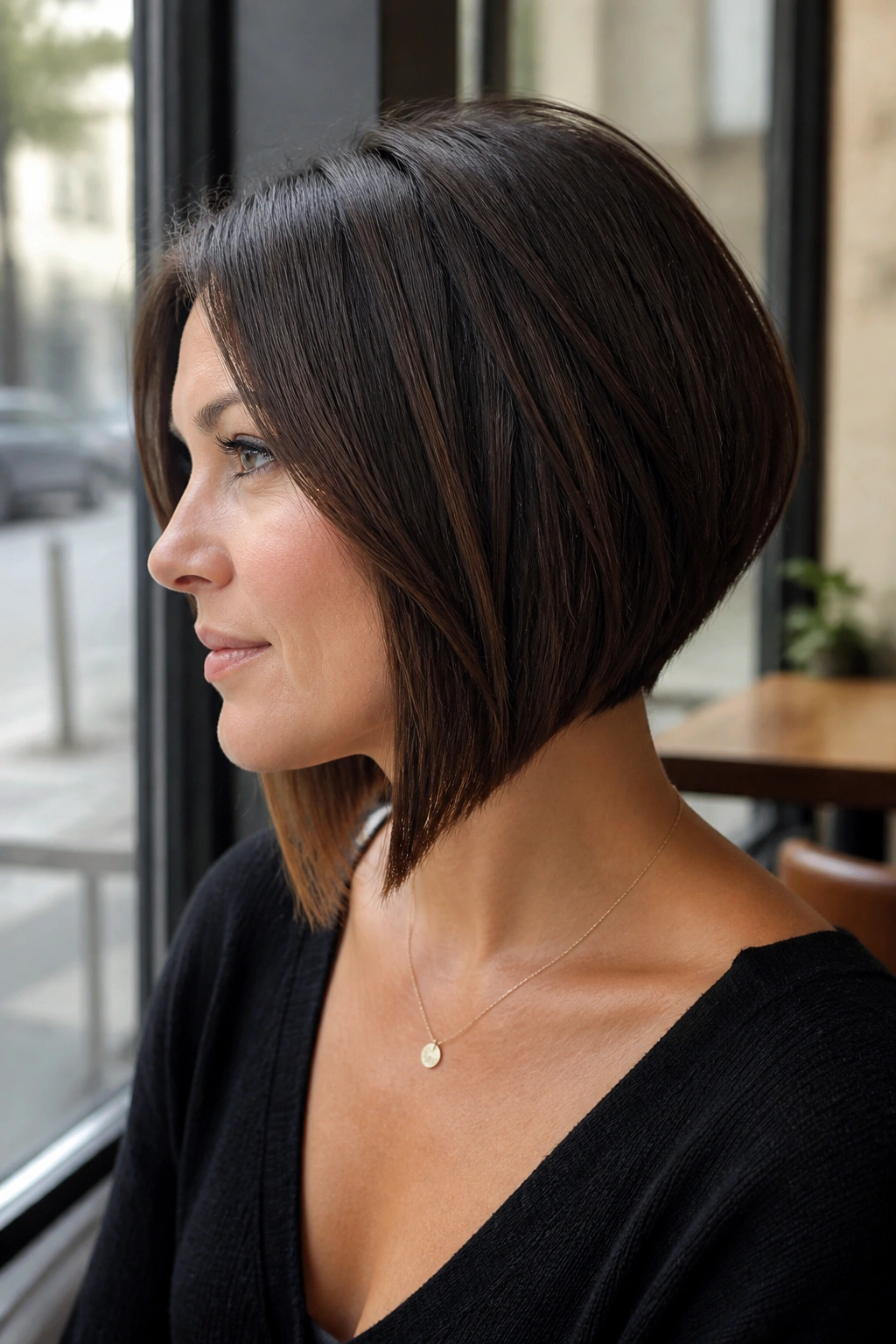
An angled bob is a little bit sharp, a little bit chic, and very good at handling thick hair that piles up in the back. The shorter nape and longer front create a forward slope, which takes some of the visual bulk off the neckline and puts the focus near the jaw.
That shape does two useful things at once. It keeps the back from mushrooming, and it gives the front enough length to tuck, swing, or curve under. If your hair gets wide at the sides, the angle helps narrow that look. If your face shape needs a little framing, even better.
The cut does ask for upkeep. A sloppy angled bob loses its clean line fast, and then it starts to look more like an accident than a decision. Keep the angle moderate if you want easy styling. A dramatic front-heavy bob is fun, but it needs more blow-drying and a steadier hand with the flat iron.
This is a strong pick for thick hair that has a lot of body and a little attitude. It looks especially good when the ends are tucked inward just enough to show the shape.
5. A Soft Shag When You Want Texture, Not Bulk

Is a shag always a good idea for thick hair? No. A bad shag can turn heavy hair into a puffball in about ten minutes. A soft shag, though, can be a lifesaver when the layers are placed with some restraint.
What Makes It Different
The modern version keeps the top lighter and the ends textured, but it stops short of shredding the hair to bits. That matters. Thick hair already brings plenty of density; the job is to shape it, not strip it bare. Ask for longer, controlled layers and a fringe or face frame that suits your forehead and cheekbones.
How to Wear It
This cut likes a little mess. Air-drying with cream or a light mousse works well, and a diffuser can give the waves a more separated look. If your hair is stick-straight, the shag can still work, but it will need some styling to show off the layers. No free lunch there.
The best shag on thick hair feels lived-in, not overworked. If the layers are too short, the whole head can balloon. Keep the perimeter a little fuller and the texture a little looser, and the shape starts behaving.
6. The U-Shape Cut for Full, Heavy Length
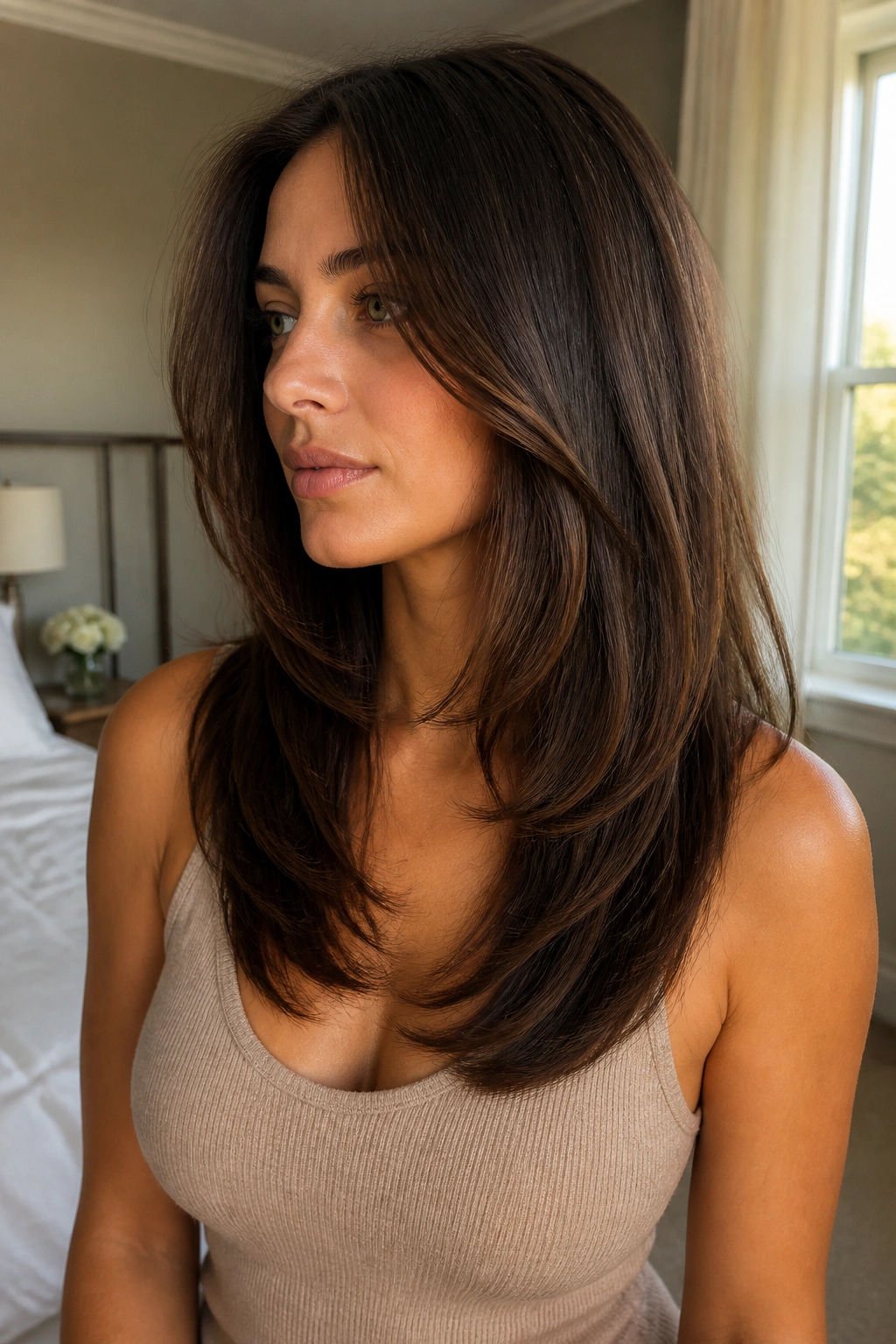
A U-shape cut is one of my favorite options for thick hair that needs movement but still wants to look long and rich. The outline curves gently upward near the front, then drops lower in the back, which keeps the silhouette soft instead of boxy.
That shape is especially helpful if your hair gets dense through the mid-lengths. A straight-across hemline can make thick hair look blunt in the wrong way, like a shelf. The U-shape breaks that up. It gives the hair a natural fall, which can be flattering when you wear it down most of the time.
What I like most is how forgiving it is. A U-shape can be worn smooth, waved, curled, or just air-dried with a little leave-in cream. It does not demand a perfect styling routine to look decent. That’s useful when your hair already takes more time than average.
If you have a lot of length and do not want a dramatic change, this is one of the easiest cuts to live with. It keeps the fullness where you want it and softens the outline where you don’t.
7. Curtain Bangs With Long Layers
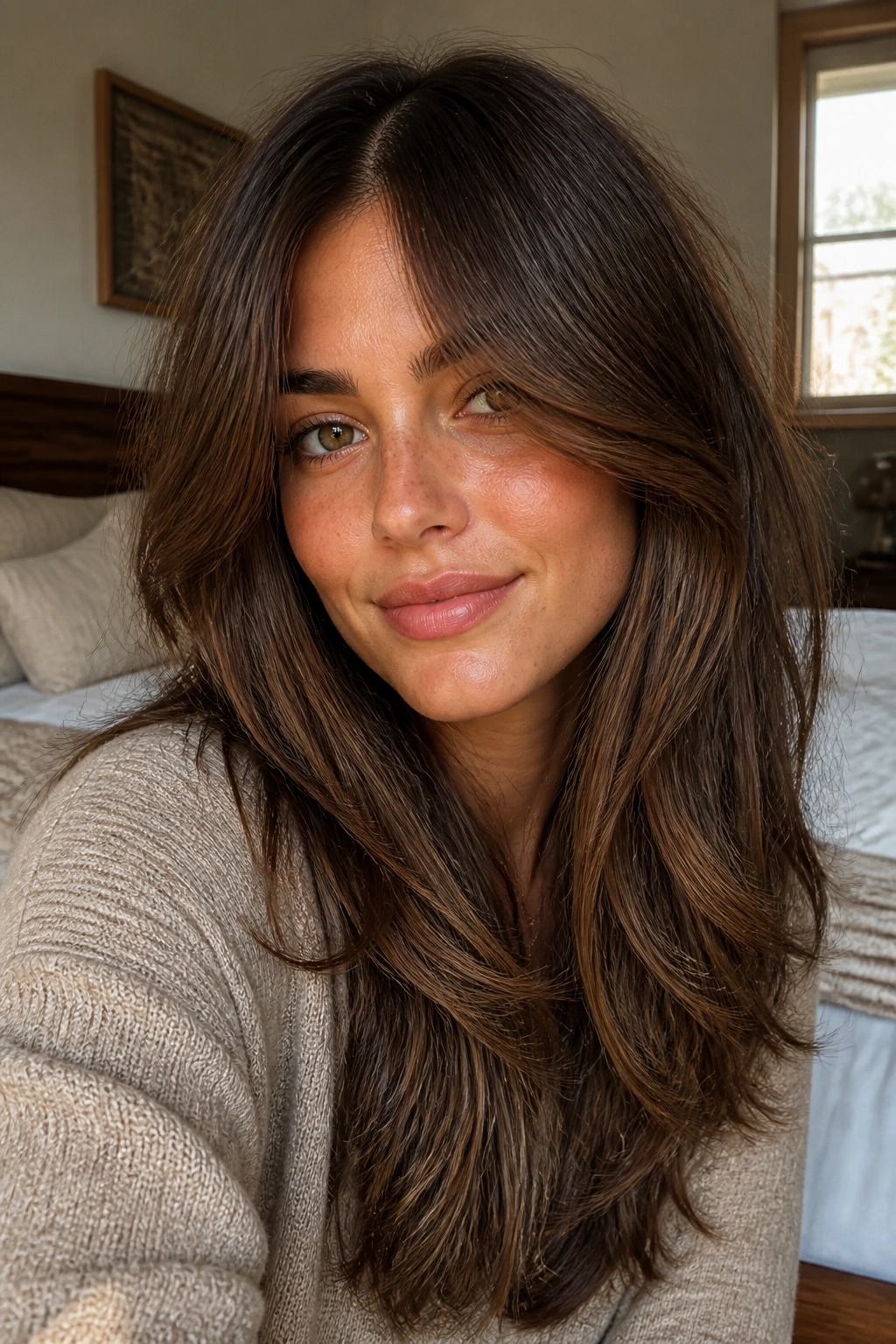
Curtain bangs are a clever way to change your look without committing to a full fringe. On thick hair, they help pull attention toward the face while breaking up all that density across the front. The rest of the hair can stay long and layered, so you get movement without losing the comfort of length.
The trick is placement. Thick hair can make bangs feel bulky if they’re cut too heavy. Ask for pieces that open in the center and sweep toward the cheekbones, not a blunt curtain that sits like a slab. A good curtain bang should move when you turn your head.
- Best when the shortest pieces hit around the eyebrow to cheekbone
- Needs a quick round-brush blow-dry or hot brush
- Works well with ponytails and clipped-back styles
- Can soften a strong jawline or a long face
The maintenance is real. Bangs need trims more often than the rest of the cut, and thick hair will not pretend otherwise. Still, this combo is one of the easiest ways to freshen long hair without a dramatic chop.
8. The Textured Pixie That Uses Density as an Asset
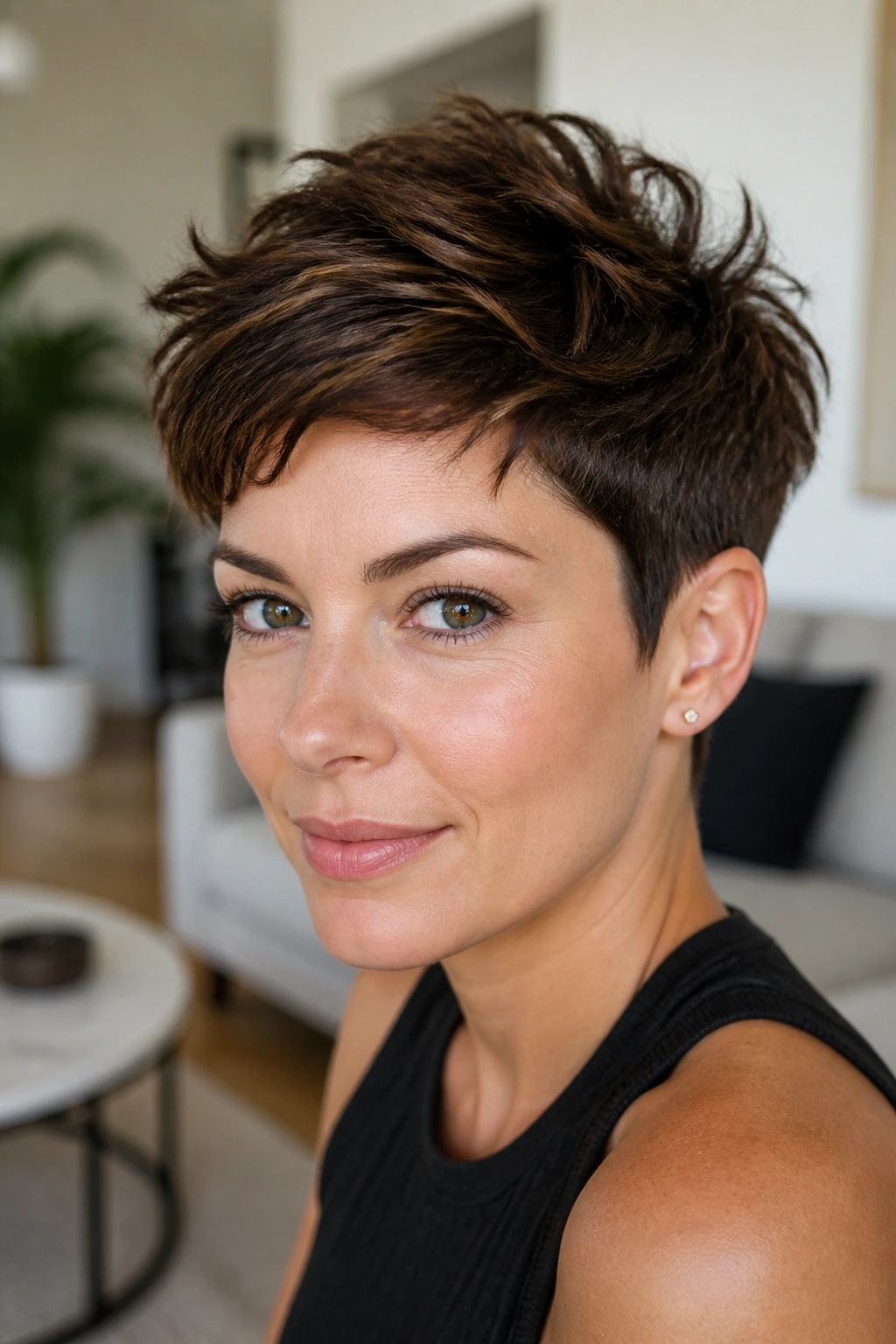
A pixie on thick hair can look sharper than a pixie on fine hair. That may sound backward, but it’s true. The density gives the cut shape, and the cut gives the density somewhere to go.
The danger is bulk around the ears and nape. If the stylist leaves too much weight there, the pixie turns helmet-like. A good thick-hair pixie takes that down carefully and keeps the top piecey, not puffy. You want movement on top and clean edges around the sides.
This cut is for someone who likes quick styling. A touch of matte paste, a little finger raking, maybe a blow-dry in the front if you want lift. Done. It is not a fussy style, which is part of the appeal. You can wake up, rough it out, and still look intentional.
It also grows out in stages. Some people love that. Some do not. If you want a cut that gives your face more room and your routine less time, the pixie is hard to beat. If you hate frequent salon visits, think twice.
9. The Collarbone Cut With Invisible Layers
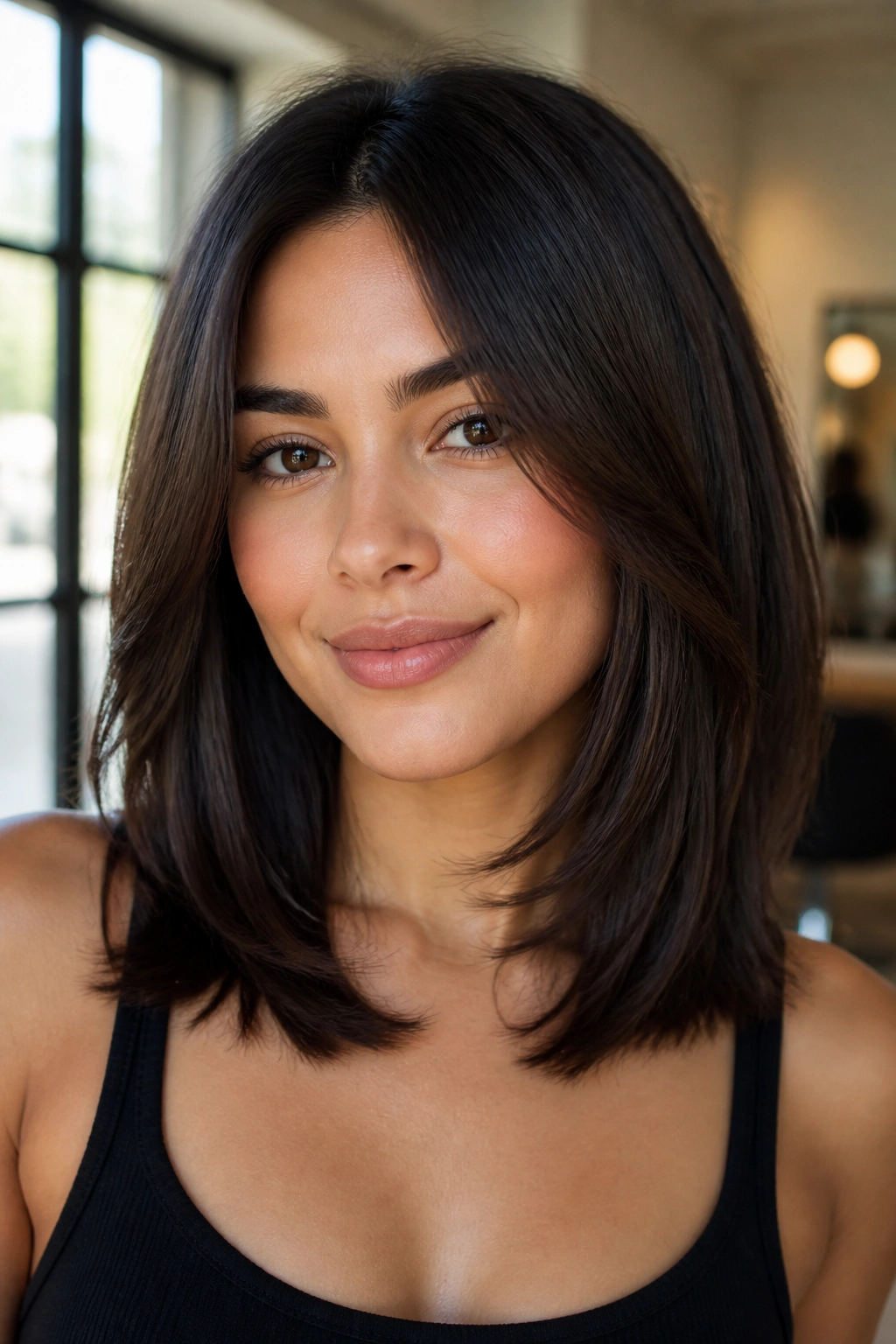
What are invisible layers? They’re layers hidden inside the cut instead of carved into the top like a visible staircase. On thick hair, that matters because the outside shape stays full while the inside gets some breathing room.
Why Stylists Reach for It
This cut is good when you want movement but do not want to see obvious layering. The top stays smooth. The ends stay thick. The weight comes out from underneath, which helps the hair sit better without looking choppy. It’s one of the smarter choices for women who want a clean silhouette with less bulk.
How to Style It
A medium round brush or a wide paddle brush works well. Blow-dry the roots first, then smooth the ends so the shape stays tidy. If you wear your hair wavy, a little cream through the mid-lengths keeps the texture from puffing out. A small amount goes a long way.
This cut is practical. Plain, but in a good way. If you like polished hair and do not want the world to see every layer line, invisible layering is a very good place to live.
10. A Curly Layered Shape That Lets Thick Curls Breathe
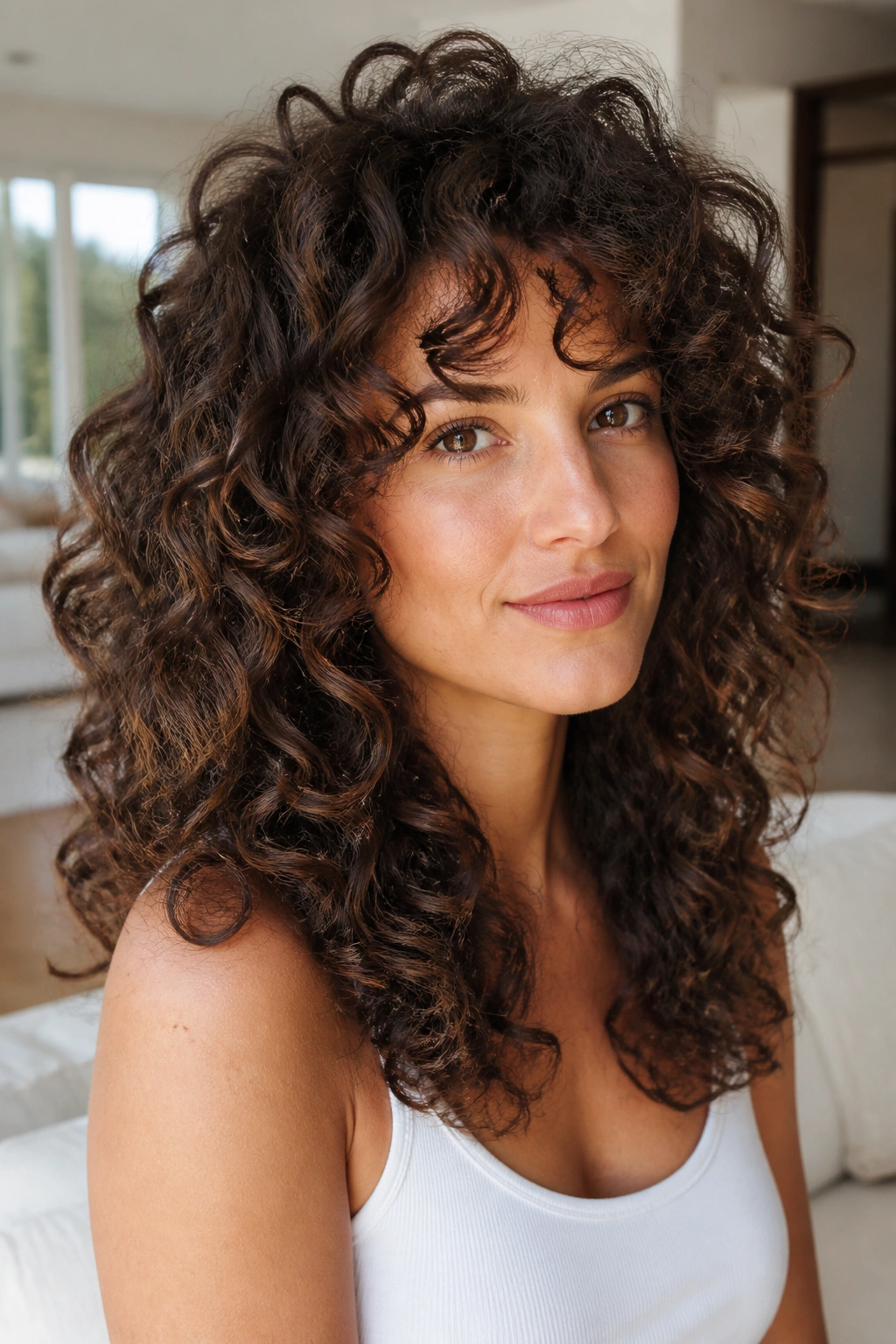
Curly thick hair does not need to be “tamed.” It needs a shape. Without layers, curls can stack up into a triangle that gets wider at the bottom and flatter at the top. With the right cut, that same hair looks springy and balanced.
A good curly cut usually respects the curl pattern instead of fighting it. Some stylists cut it dry so they can see where each curl falls; others work wet and refine it after drying. Either way, the goal is the same: keep the curls grouped in a shape that makes sense. The layers should release some weight, not create holes.
- Ask for layers that follow your curl clump pattern
- Keep face-framing pieces long enough to avoid springing too short
- Avoid over-thinning if your curls frizz easily
- Build the style with leave-in conditioner and a diffuser
This is one of those cuts where the wrong hand can make a mess fast. But with the right shape, thick curls look plush, defined, and honestly gorgeous without much convincing.
11. The Wolf Cut for Thick Hair That Wants Edge

The wolf cut is not shy. It sits between a shag and a mullet, which means it uses a lot of layering near the crown and softer length through the back. On thick hair, that creates lift up top and a tapered, lived-in finish underneath.
That extra height is what makes it different from a softer layered cut. A wolf cut has more attitude. It can look amazing on wavy or slightly curly hair because the texture helps the layers separate instead of lying in one heavy sheet. Straight thick hair can wear it too, but it usually needs more styling to show the shape.
The catch is overdoing it. If the layers are cut too short, the hair can expand in all the wrong spots. Thick hair already has volume to spare. The best wolf cut controls that volume instead of trying to multiply it.
If you like a style that feels a little rough around the edges—in a good way—this one can be fun. It is not the quiet choice. It’s the haircut you pick when you want the hair to have a point of view.
12. The Deep Side-Part Midi Cut That Cheats the Eye

A deep side part can do more for thick hair than people give it credit for. It shifts the weight, lifts one side, and breaks up the sameness that sometimes makes dense hair feel too heavy. Add a midi-length cut, and the whole thing starts to look more controlled.
This is a smart choice if your hair feels bulky at the center part but great when it gets some sweep. A side part creates asymmetry, which is useful on thick hair because it keeps the style from reading as one solid mass. The length should usually sit between the shoulders and collarbone so the ends still have enough swing.
It also plays well with simple styling. A blowout brush, a bit of root lift, and a soft bend at the ends are usually enough. If your hair tends to fall flat on one side, the deep part can wake it up without requiring a whole new cut.
Not every woman wants dramatic layers. Some just want the hair to move a little better. This cut does that quietly.
13. The One-Length Cut That Makes Thick Hair Look Luxurious
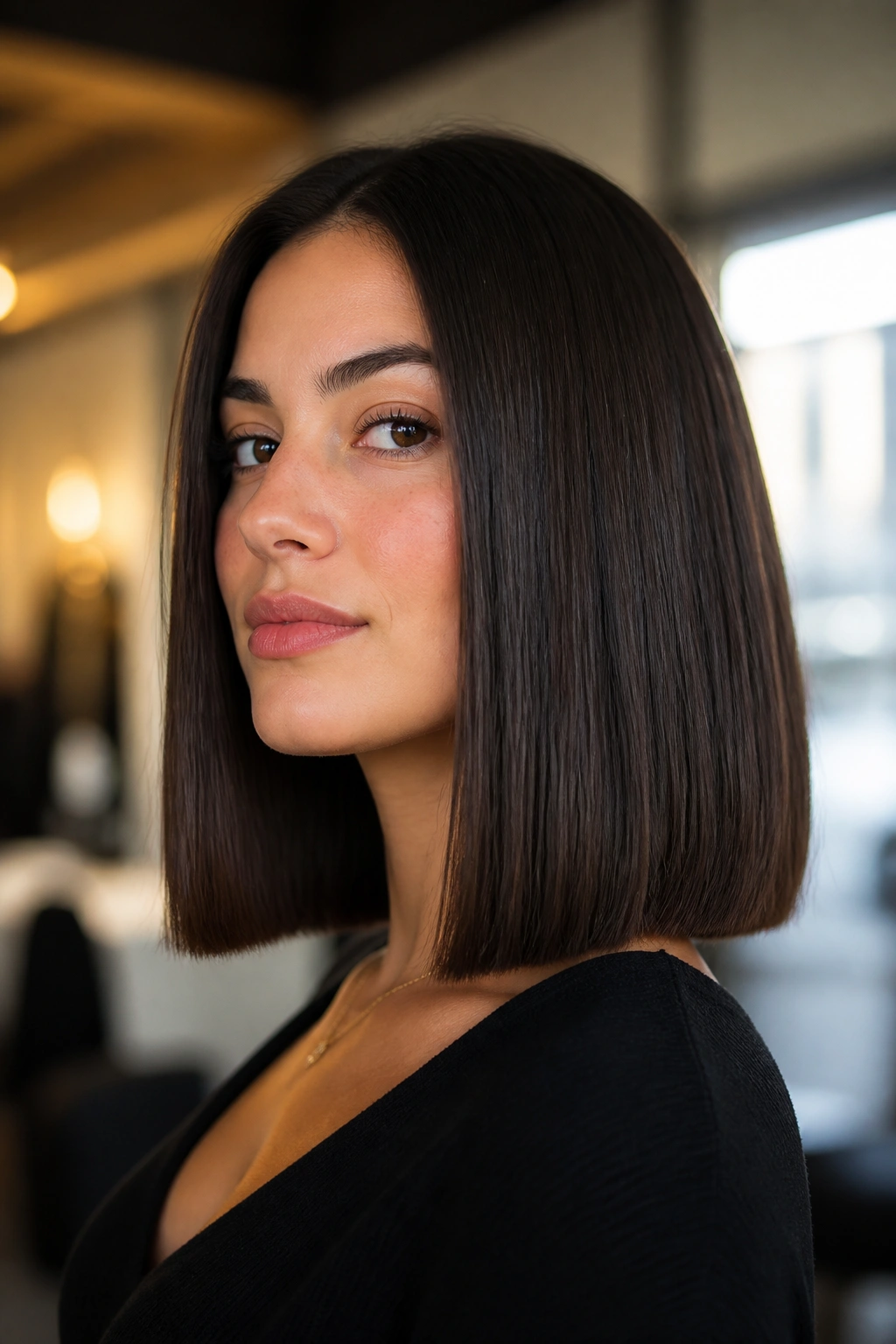
Unlike layered cuts, a one-length cut keeps the perimeter solid and the shape heavy in the best possible way. Thick hair can carry that line with confidence. In fact, density is what makes the blunt edge look rich instead of stringy.
This style works best when the hair is healthy enough to show off the ends. If the cut is below the shoulders, the weight can create a sleek fall that looks clean and deliberate. If the hair is shorter, a one-length shape can still work, but it needs enough precision to avoid becoming a triangle. Thick hair is not forgiving of lazy lines.
You can wear it straight, tucked, waved, or air-dried with a little smoothing cream. The line gives the hair a strong visual finish, which is useful if you like polished styles more than messy texture. It’s also a good choice if you spend a lot of time with hot tools, since a blunt outline usually looks especially good once it’s smoothed out.
When thick hair is cut blunt and well, it does not look plain. It looks expensive, deliberate, and a little bit severe in the nicest way.
14. The French Bob With Soft Movement

Why does a French bob work so well on thick hair? Because the short length keeps the hair from dragging the face down, and the shape gives the density somewhere stylish to live. It feels crisp. It feels modern. It does not try to hide the hair’s fullness.
How to Get the Right Length
The sweet spot usually lands around the jawline or just below it. Too long, and the cut loses its compact shape. Too short, and the style can feel more like a helmet unless the texture is handled carefully. A little fringe or a soft side sweep can help break up the front.
How to Wear It
Thick hair usually needs a quick bend with a round brush or flat iron to keep the bob from flipping out in odd places. A tiny bit of paste at the ends can keep it piecey. Skip heavy creams; they can make the cut collapse.
A French bob suits people who like a little polish but do not want a high-maintenance routine. It’s neat without feeling stiff. That balance is half the appeal.
15. The Hidden Undercut That Removes Bulk Without Showing Too Much

Sometimes thick hair needs surgery, not style. A hidden undercut can take a huge amount of weight out from underneath without changing the look of the top layer much at all.
This is especially helpful if your hair gets hot and heavy at the nape, or if the underneath section always feels too thick to dry well. The stylist shaves or clips a section low enough that the longer top layer covers it. From the outside, the haircut still looks full. Underneath, it feels much lighter.
- Best for very dense hair at the crown or nape
- Useful if your head feels too hot in a full layer of hair
- Helps buns and ponytails sit flatter
- Grows out, but not invisibly—plan touch-ups
It is not for everyone. Some people hate the idea of shorter hair hidden underneath, and that’s fair. But if you want to keep length and still fix the bulk problem, this is one of the most practical solutions around.
16. Shoulder-Length Flip-Out Layers
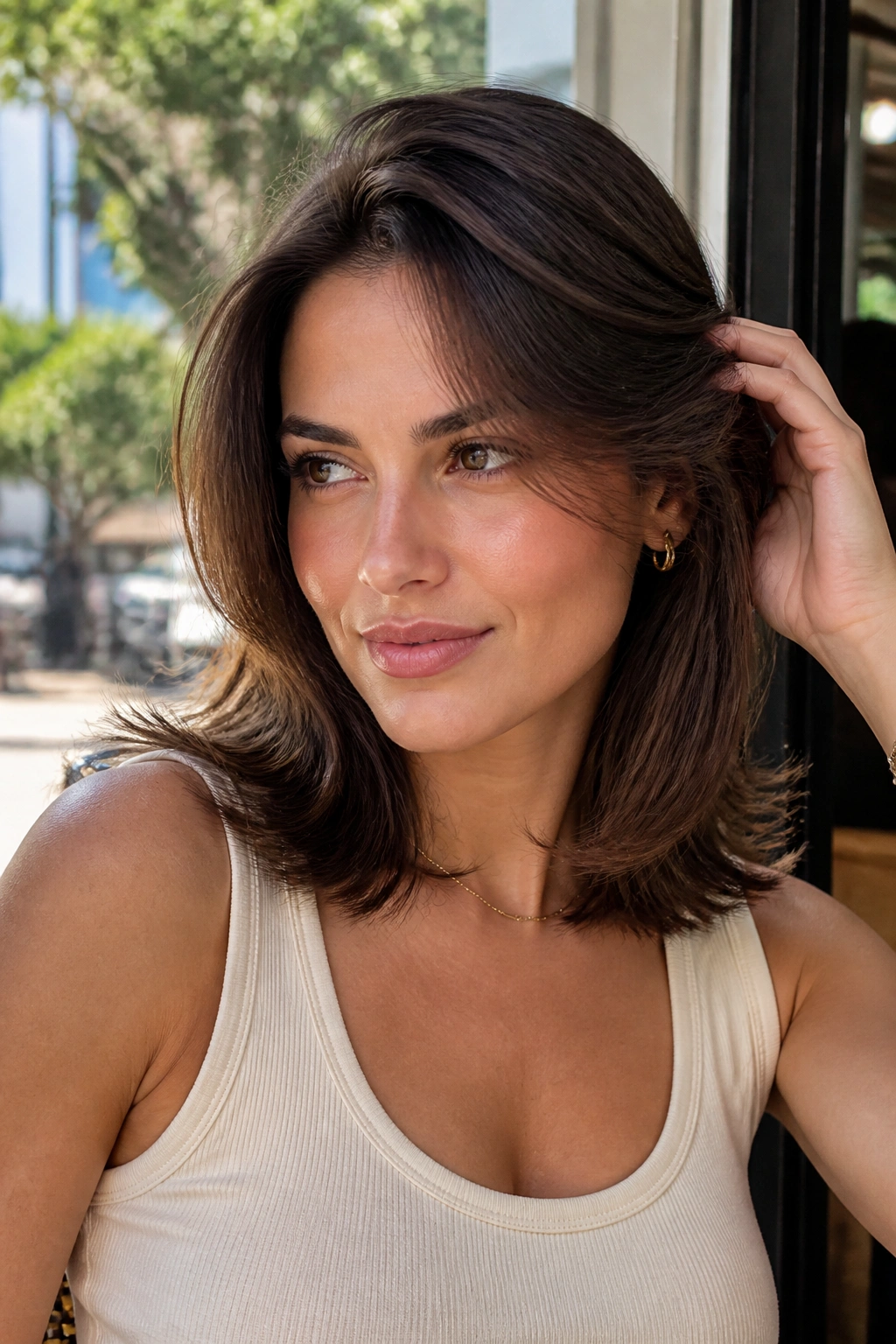
There’s something cheerful about shoulder-length hair that flips out just a little at the ends. On thick hair, that shape can feel lighter than a blunt shoulder cut because the layers encourage movement instead of letting the whole mass sit in one direction.
The look works best when the layers are soft and the ends are shaped with a brush or blow-dry roundness. You do not need corkscrew curls here. Just enough bend to make the outline feel alive. Thick hair naturally holds that flip better than fine hair, which is part of why it looks so good in this length.
This cut suits women who want a bit of bounce without going short. It can read polished in the office and relaxed on the weekend. That’s useful. Some haircuts need a whole personality shift to work; this one doesn’t.
If your hair tends to sit flat at the top and bulky at the bottom, ask for a little internal debulking and a gentle outward finish at the edges. Small change. Big difference.
17. The Bixie for Thick Hair That Needs Fast Styling
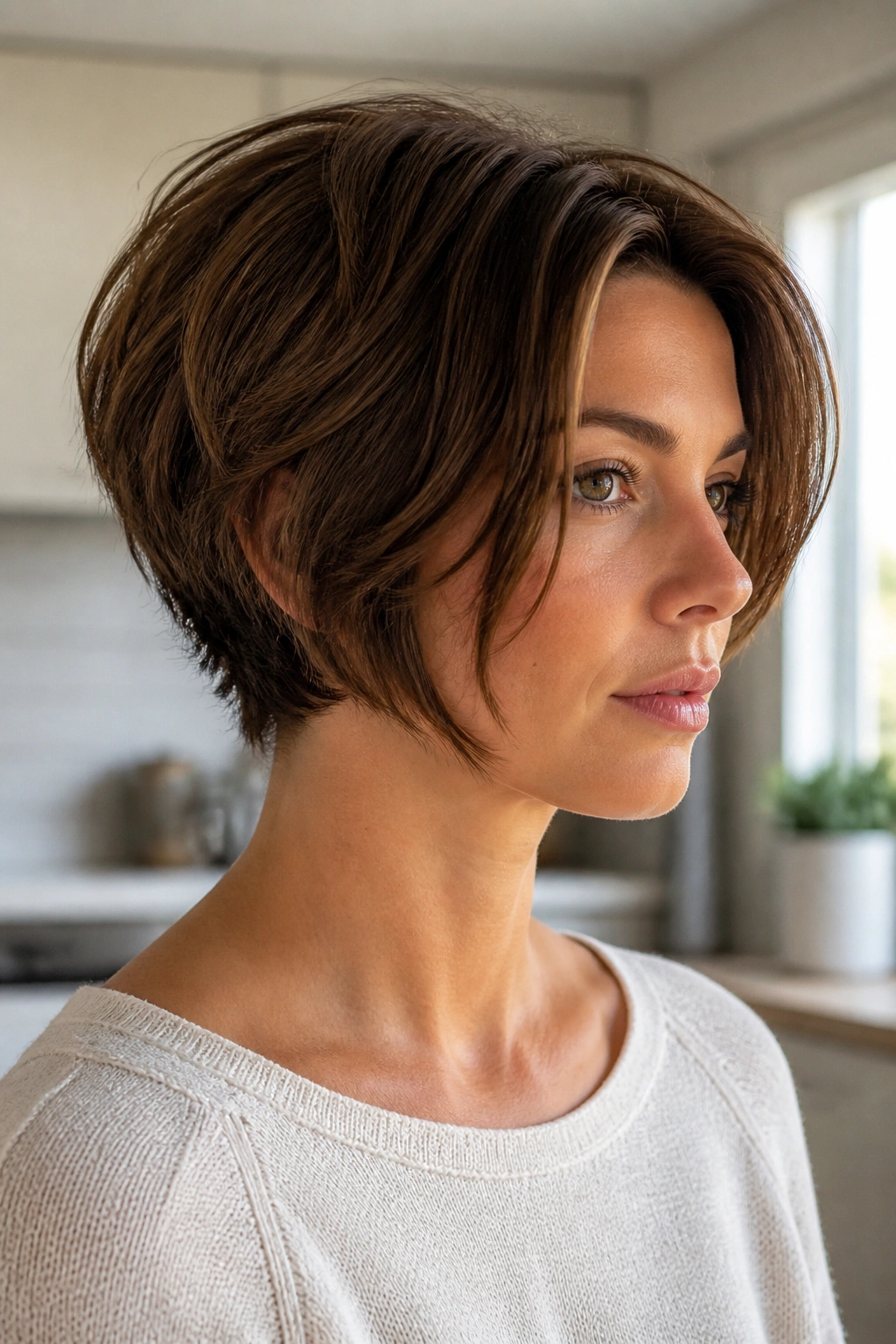
A bixie sits between a bob and a pixie, and thick hair gives it something to hold on to. It’s short, but not too short. Soft, but not floppy. The density helps the shape keep its edges, which is half the reason this cut works.
The back is usually cropped a bit tighter, while the front keeps enough length to tuck behind the ears or sweep across the forehead. That makes the style feel modern without making it severe. On thick hair, the bixie can take a lot of volume out of the routine while still leaving enough hair to play with.
A small amount of styling cream, mousse, or dry texture paste is usually enough. You do not need a lot. Thick hair can make products work harder than you expect, so start light and add only if needed. Too much paste will weigh down the top and kill the shape.
This is a good fit if you want shorter hair that still feels soft around the face. It has personality. It also gets you out the door faster, which is not a minor perk.
18. Feathered Long Layers That Soften the Ends
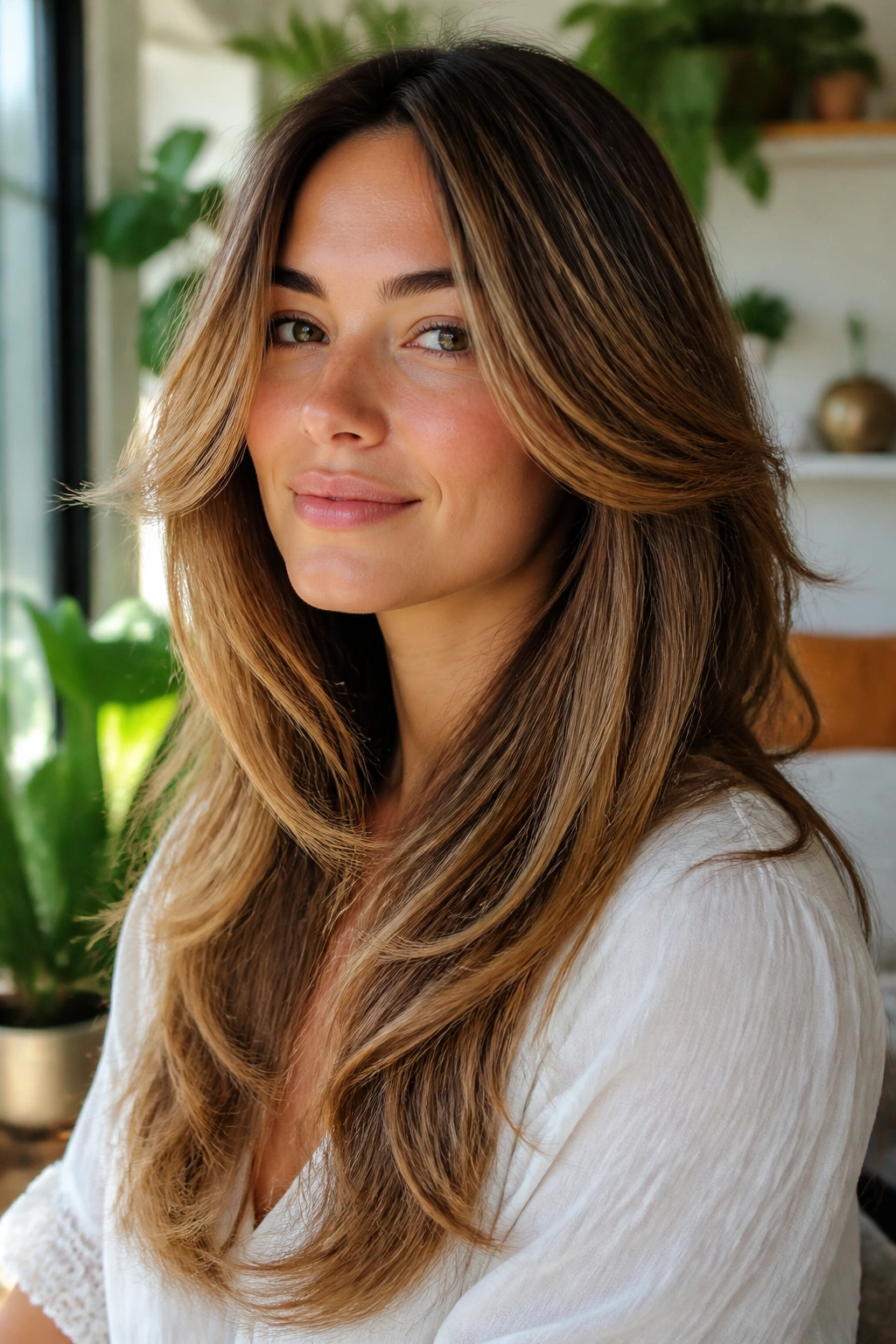
Can feathering work on thick hair? Yes, if the feathers are long and controlled. Short feathered layers can get fluffy fast. Long feathers, placed around the face and lower lengths, can soften the haircut without making it look chopped up.
Best Placement
The better version of this cut keeps the strongest movement around the face, jaw, and lower half of the length. The crown should stay fairly calm. If the top gets too much cutting, thick hair starts to rise instead of fall. That is the mistake people make most often.
What to Avoid
Skip aggressive razor work if your hair frizzes easily. Razor-cut feathering can look soft in the chair and fuzzy by lunch. A scissor cut with careful point cutting usually gives a cleaner result on dense hair.
Feathered layers are a good option if you like a blowout look. They turn the ends into something that moves instead of sitting dead still. For thick hair, that can be a small miracle on its own.
19. The Stacked Bob That Gives Thick Hair Lift at the Back
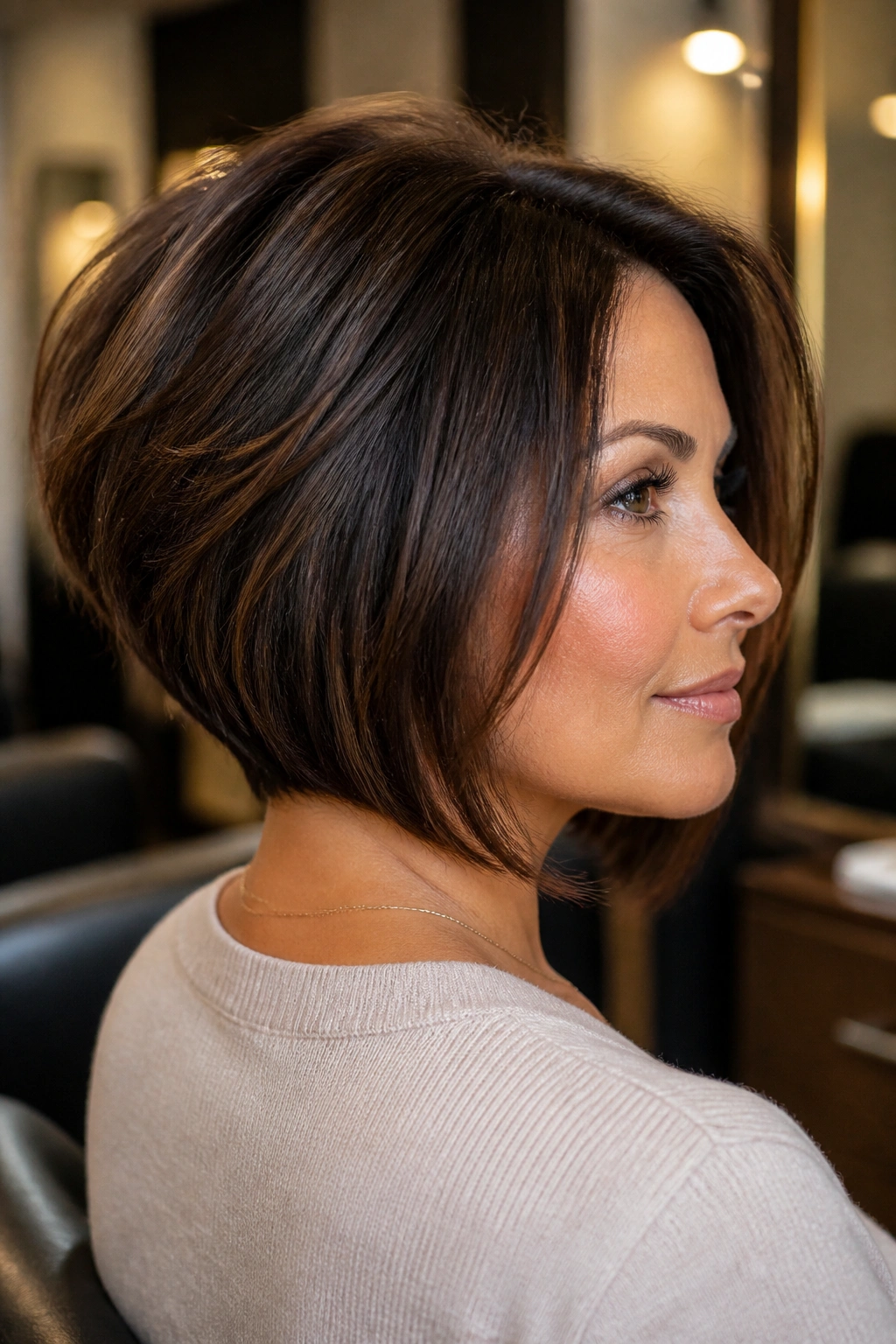
A stacked bob is built for support. The back is cut shorter and layered in a way that creates lift through the nape and crown, while the front stays longer and softer. On thick hair, that shape can feel much lighter than a round bob with no internal structure.
This cut is especially good if your hair tends to sit heavy at the back of the head. The stack lifts the shape off the neck and gives the style a cleaner profile. It also keeps the neckline neat, which is useful if you like polished hair that still has body.
- Great for straight or slightly wavy thick hair
- Needs a good blow-dry to show the stacked shape
- Works well with a side part
- Best when the nape is trimmed cleanly every 6 to 8 weeks
There is a fine line here. Too much stacking can look dated or too stiff. Kept moderate, though, it’s one of the best short cuts for women whose hair likes volume but not chaos.
20. The C-Shape Cut That Curves Around the Face
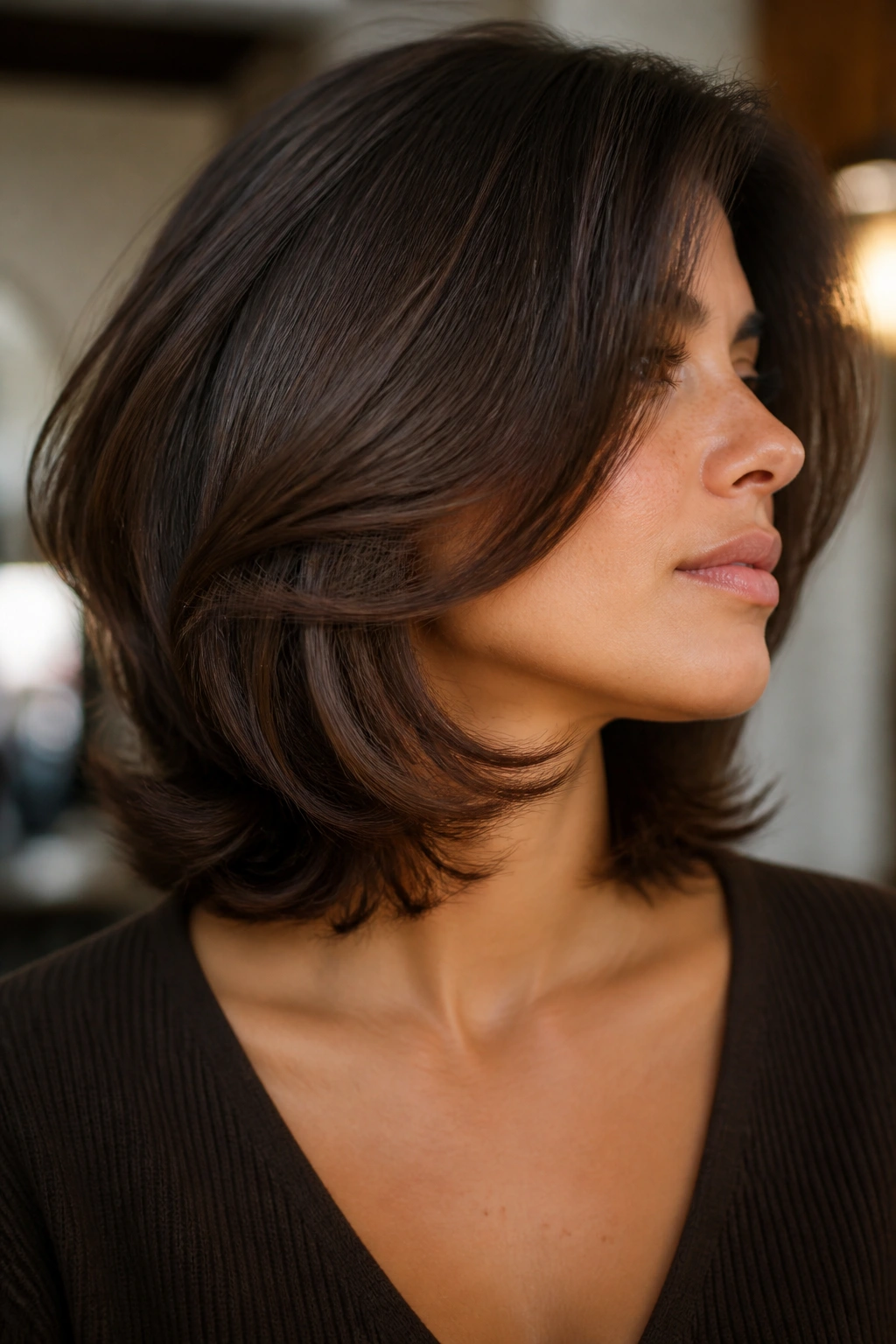
A C-shape cut gives thick hair a softer outline than a blunt line or a sharp V. The front curves gently toward the face, then rounds back into the length, so the whole shape feels smoother and more fluid. It’s a small shift on paper. In real life, it changes how the hair falls.
This cut is a nice middle ground if you like your length but want the edges to feel less heavy. It works especially well when the hair is worn down a lot, since the curved perimeter helps the ends fold instead of spreading out. Thick hair often looks best when the line has a little bend in it, and this is a clean way to get that.
I’d call this a smart cut for women who want movement without a pile of layers. It doesn’t ask for a dramatic style change. It just makes the shape feel better. Bring photos of your hair when it’s straightened and when it’s air-dried, because the curve will sit differently in each case, and your stylist should see both.
Pick the haircut that matches how you actually wear your hair, not how you wish you wore it on a random perfect morning. That’s the part that saves people from bad cuts.
