



Coarse hair is honest hair. It shows you, fast, whether a cut has shape or whether a style is fighting against the grain.
If you keep hunting for coarse hair style ideas that work with texture instead of flattening it, you already know the usual problem: a style looks neat for ten minutes, then the bulk comes back, or the ends puff out, or the whole thing turns into a triangle. The better answer is not to hide the texture. It’s to use it.
That’s the sweet spot with coarse strands. The diameter is wider, the hair tends to feel stronger in the hand, and the shape you build into it tends to stay put longer than it would on finer hair. That’s a gift, honestly. It also means the wrong cut can feel bulky in all the wrong places, so the best looks here are the ones that create clean lines, smart movement, and enough softness around the face.
And yes, there’s a difference between coarse hair and thick hair. Density is about how many strands you have. Coarseness is about the width of each strand. Once you stop treating those two things like the same problem, the styling options get a lot better.
1. The Chin-Length Blunt Bob That Makes Coarse Hair Look Intentional
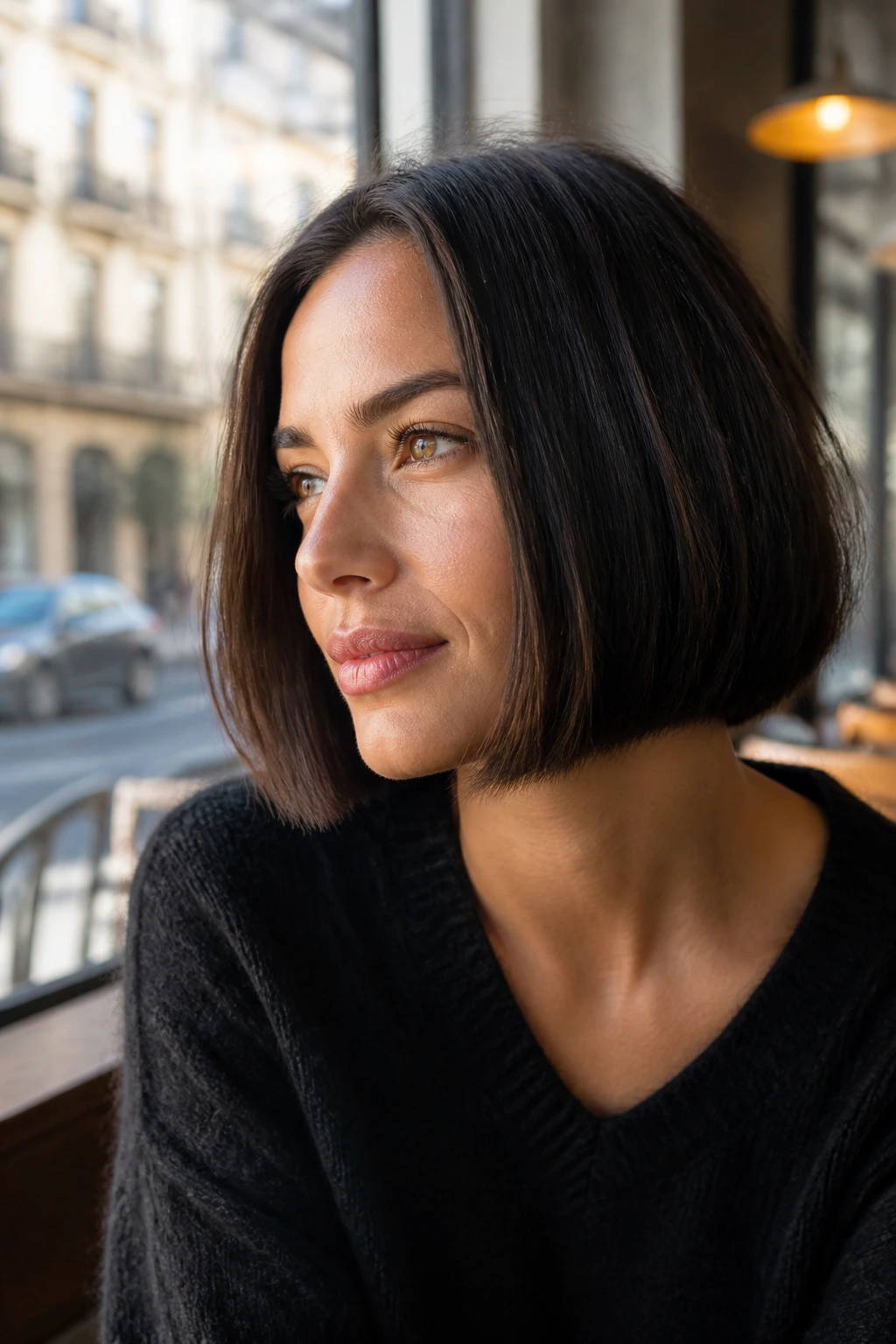
A blunt bob can be glorious on coarse hair. Not delicate, not fussy — glorious. The strong edge lets the hair show off its body instead of turning that body into a blunt puff at the sides.
Why It Works So Well
A chin-length cut gives coarse hair a clear line to sit on. When the perimeter is straight and clean, the eye reads the style as polished, even when the texture itself is a little rough or airy. That’s the trick. You are not trying to make every strand lie flat; you’re giving the bulk somewhere to go.
Ask for minimal internal layering if your hair already has a lot of density. Too many layers can make the cut spring outward in a way that feels triangular, especially if the ends are dry. A little weight at the bottom keeps the shape grounded.
Best details to ask for:
- A blunt perimeter that lands right at the jaw or slightly below it
- Soft texturizing only where the hair is too puffy
- A center part if you want symmetry, or a deep side part if you want more lift
- A quick flat-iron pass only on the top layer if your texture bends too much at the crown
My favorite part: it still looks good on day two. Coarse hair usually holds a bob shape better than people expect.
If your hair has a lot of shrinkage or natural wave, keep the cut a touch longer than chin length. That extra half inch matters. A bob that looks tiny on the salon chair can jump right up once you wash it.
2. Long Layers With Face-Framing Pieces That Keep the Length From Going Heavy

Long coarse hair can look expensive in the best sense of the word — dense, shiny, and strong — but only if the shape is handled well. One heavy curtain of hair often swallows the face. Long layers fix that without stealing the fullness people usually want to keep.
The point isn’t to thin the hair out until it behaves. That’s a waste of good texture. The point is to remove enough weight so the mid-lengths can bend instead of hanging like a block. Done right, the layers create motion when you walk, and the face-framing pieces soften the front without making the cut look choppy.
I like this shape for hair that already has a little wave or bend, because coarse strands can hold a blowout beautifully. Dry it with a round brush, lifting the roots for about 30 seconds per section, then bend the ends under or away from the face. The layers do most of the work for you after that.
A small thing that matters: keep the shortest face-framing pieces below the cheekbone if your jawline is broad or square. That keeps the front from ballooning out right where you don’t want it. If your face is longer, you can go a little shorter and let the front pieces skim the cheek.
This style is one of the easiest coarse hair style ideas to live with because it grows out gracefully. A bad blunt line can start shouting at you after six weeks. Long layers usually just soften.
3. The Curly Shag That Turns Frizz Into Shape
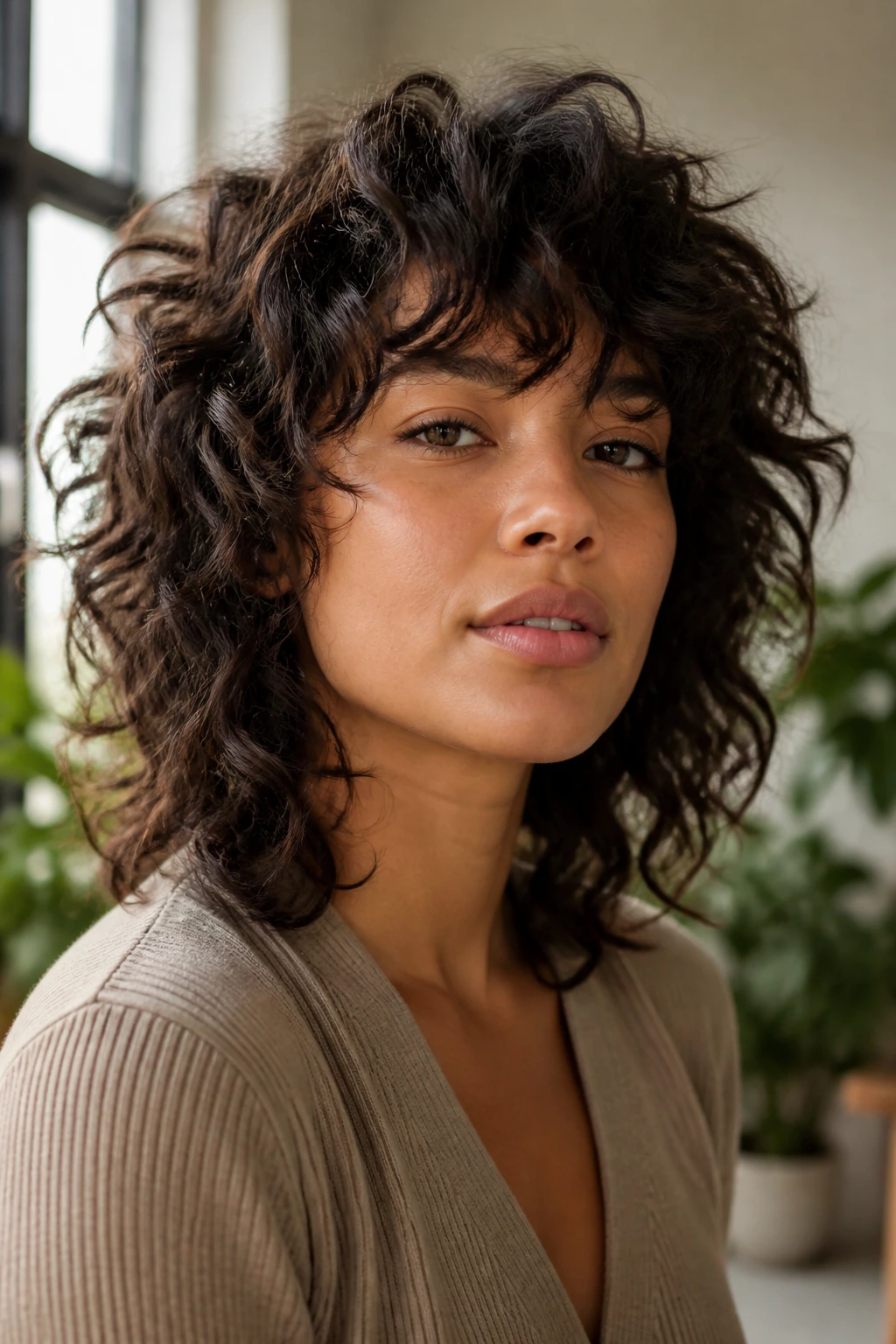
Why does a shag work so well on coarse hair? Because it stops pretending the hair should act like silk.
A good shag uses layers to create air between the sections, which matters a lot when your strands are broad and naturally resistant. Instead of forcing the hair into one solid curtain, the cut lets the texture separate into pieces. That separation is what gives the style its movement. On coarse curls or waves, it can look lively without looking messy.
How to Wear It
Start with damp hair and work in a light leave-in plus a cream that has some slip. You want the hair to feel coated, not drenched. Then scrunch or finger-coil the pieces that need more definition, and leave the rest alone. Too much touching is usually what makes a shag lose its shape.
A diffuser helps if your hair bends or curls, but I would not chase every strand with a brush. That usually ruins the point. Let some pieces fall where they want. A shag looks best when it has a little wildness to it.
This cut is happiest when the layers are cut by someone who understands coarse texture. If the top gets over-layered, you can end up with a halo of short pieces that stick out like they’re trying to escape the room. You want movement, not chaos.
It’s also one of the few cuts that makes second-day hair look better, not worse. That’s not nothing.
4. A Sleek Low Bun That Uses Coarse Hair’s Grip Instead of Fighting It
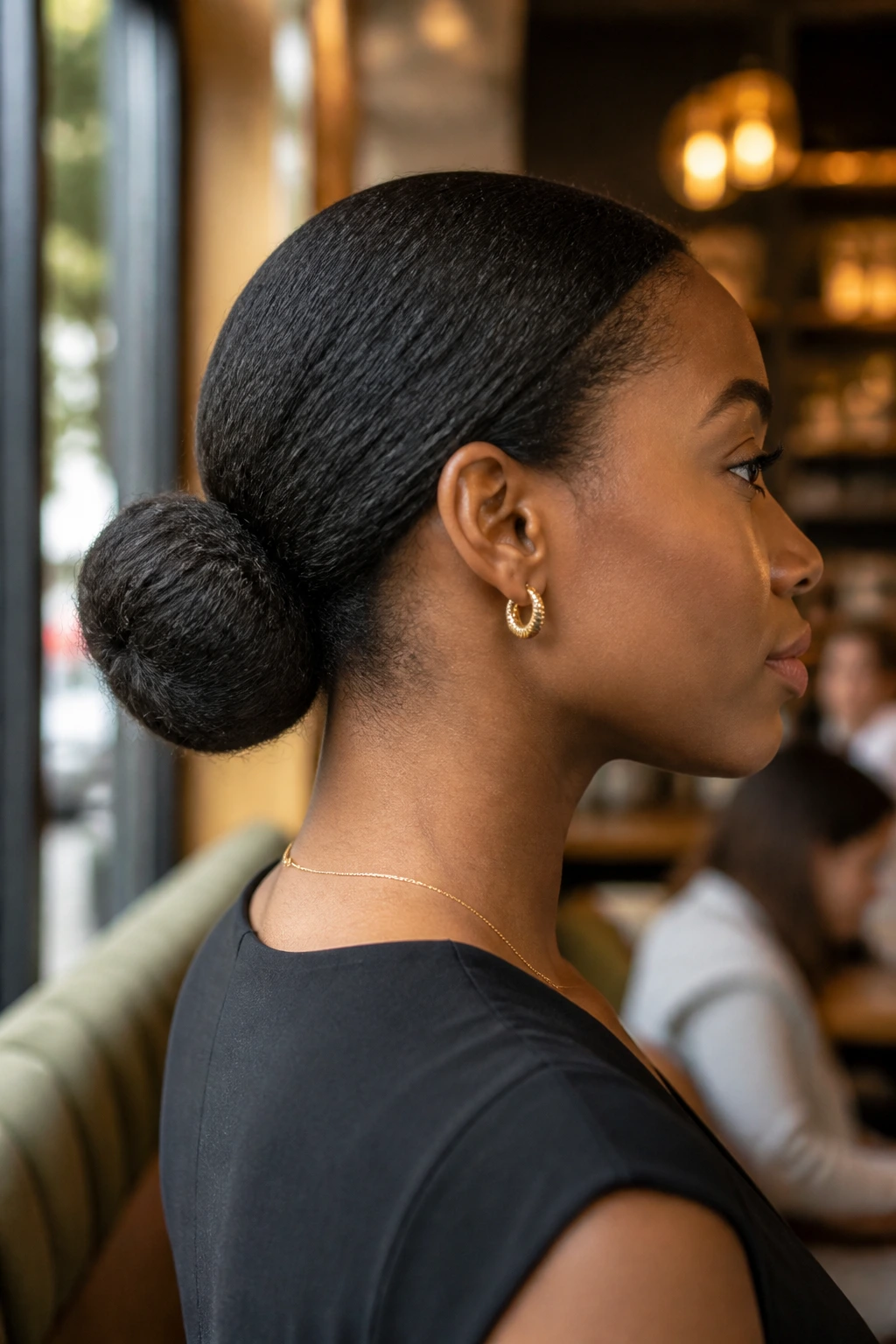
A low bun on coarse hair can look sharp in a way that fine hair sometimes can’t manage. The texture gives the style grip, so pins stay put and the bun has enough bulk to look full without stuffing it with fake volume.
The version I prefer is low and slightly off-center, with a clean side part or middle part and a little softness around the temples. You brush the front smooth, gather the length at the nape, and twist the hair into a compact knot. It does not need to be tiny. In fact, too small a bun can look strained on coarse hair.
What Makes It Work
- Use a boar-bristle brush or a dense smoothing brush to keep the surface neat.
- Secure the base with one strong elastic, then pin the bun in two directions so it doesn’t sag.
- Leave the bun slightly rounded instead of pressing it flat against the head.
- Smooth flyaways with a pea-sized bit of gel or pomade on the palms, not a huge glob.
The real charm here is the contrast: sleek at the top, rich texture in the bun itself. That contrast reads as deliberate. If your hair is very dense, make the bun in two loops rather than one tight wrap. It sits better and feels less like a helmet.
This is the style I’d reach for when I want something clean but not boring. It works for interviews, dinners, school runs, and the kind of day when you want your hair out of your face without looking like you gave up.
5. The High Ponytail That Looks Strong Instead of Strained
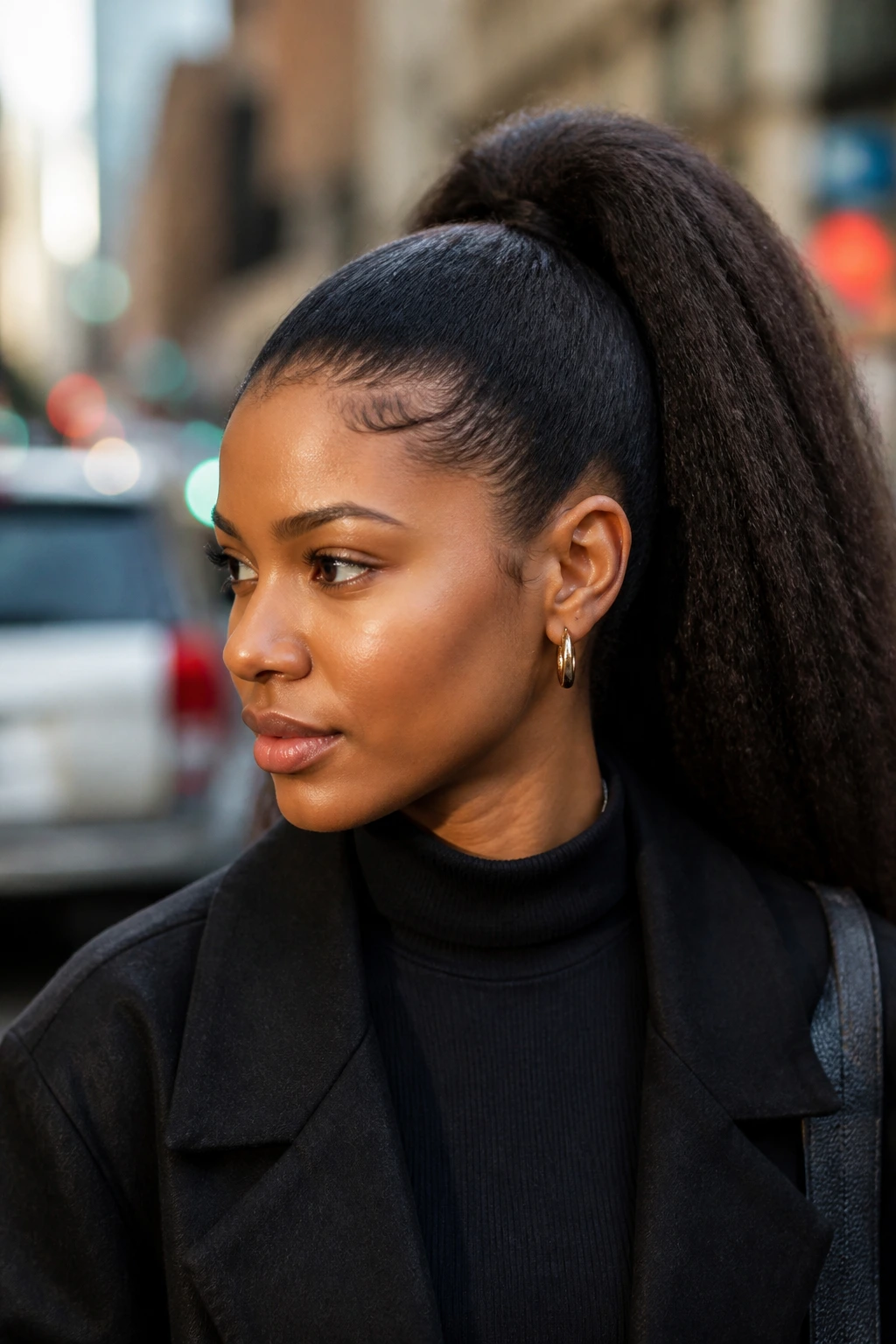
A high ponytail on coarse hair has a kind of attitude to it. Not loud attitude. More like, “I know exactly what I’m doing.”
The reason it works is simple: coarse strands hold their own weight. A high ponytail built on that texture doesn’t collapse the way a softer, finer ponytail can. It stays full at the crown, and the tail itself has enough body to look substantial even when it’s tied back hard.
Start by deciding whether you want the crown sleek or a little lifted. For a polished version, brush the hair back with a tiny bit of styling cream and secure it with one elastic high on the head. Then take a small section of hair from the tail and wrap it around the base to hide the elastic. That one move changes the whole look.
For a more casual version, leave a little lift at the front and gently tug the ponytail at the sides after securing it. Not wildly. Just enough to loosen the shape so it doesn’t feel too severe. Coarse hair can take that kind of shaping without losing the ponytail.
Two elastics stacked one over the other help if your hair is heavy. One elastic alone can slide down by midday, especially if the hair is very dense or long. I also like to backcomb a tiny section at the base before tying it. Tiny, though. Not a nest.
If you want a ponytail that looks expensive without trying too hard, this is it.
6. The Halo Braid That Makes Thick Texture Look Soft Around the Face

A halo braid is one of those styles that looks harder than it is, which is part of its charm. On coarse hair, the braid holds its shape instead of slipping apart after an hour, so the whole crown stays lifted and tidy.
Unlike a skinny braid on smooth hair, a halo braid benefits from a little texture. Coarse strands give it thickness, and that thickness is what makes the braid look full and visible from every angle. If the hair is too clean and slippery, the braid can flatten. If it has a touch of day-old texture, it suddenly behaves.
I like this style for medium to long hair because there’s enough length to wrap around the head without forcing the braid too tight. Keep the braid slightly loose at the front. Tight braiding right at the hairline can pull the look too severe, and nobody needs that. A soft halo should feel like a frame, not a clamp.
It also solves a practical problem. Hair that gets frizzy at the nape can be tucked away and forgotten for the day. That alone makes it worth learning.
If you want a braid that looks neat without needing a perfect blow-dry, this is the one I’d choose first.
7. The Half-Up Claw Clip Twist That Holds Heavy Hair Without Drama
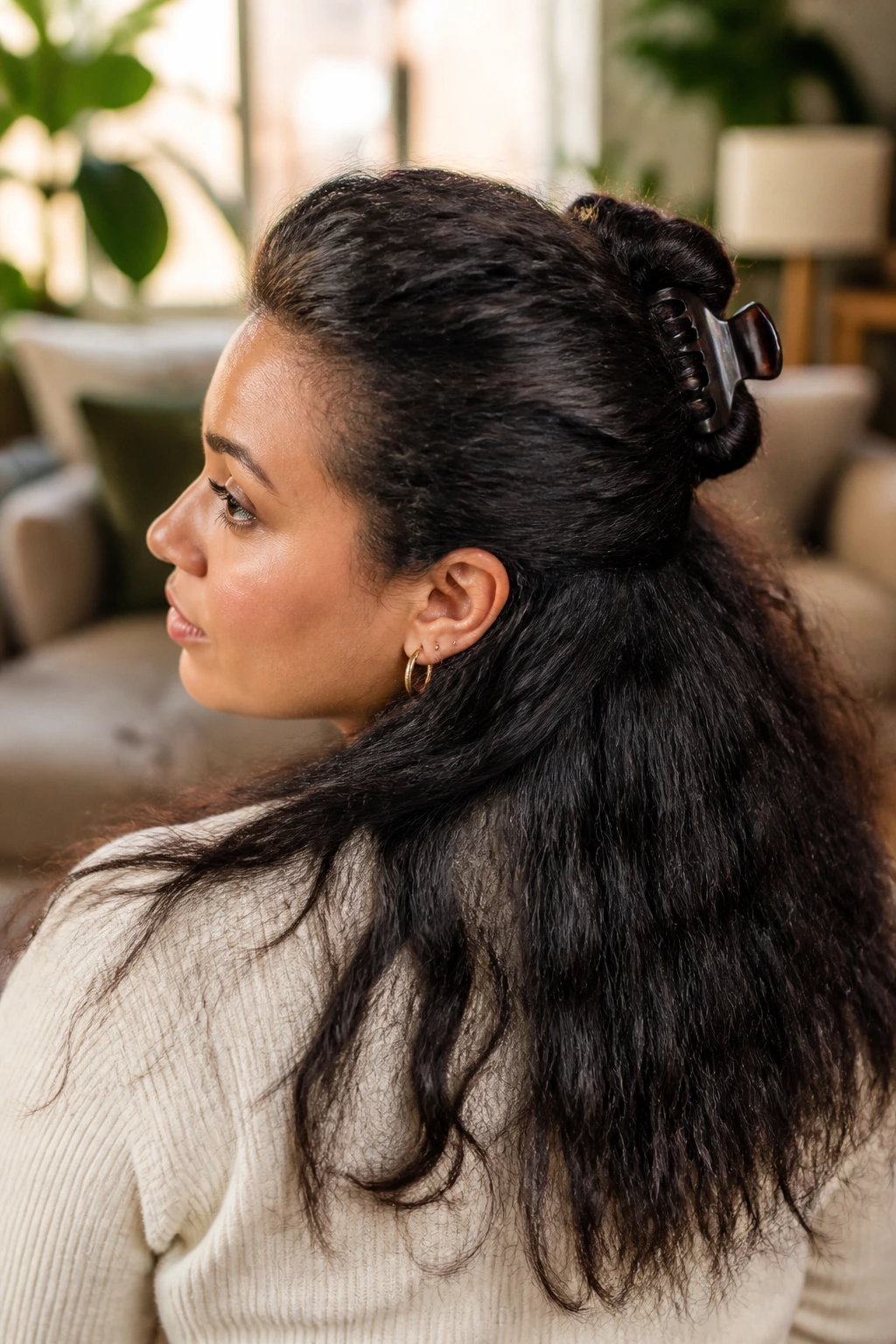
The half-up claw clip twist is the shortcut I keep coming back to for coarse hair. It’s quick. It uses the hair’s own bulk. And when the clip is sized correctly, it feels secure without yanking the scalp.
What Makes It Different
A small claw clip is a bad joke on dense hair. You need one with a wide opening, strong teeth, and enough spring to handle the thickness. Once you have that, the style becomes easy: gather the top half of the hair, twist it once or twice, and tuck the twist upward into the clip. Leave the lower half loose so the texture shows.
The result is relaxed but not sloppy. The top section gets lifted out of the face, and the rest of the hair still does its thing. If your ends are drier than the roots — and coarse hair often is — this style is kind to that mismatch. It doesn’t force the whole head into one polished surface.
Good places to wear it: work-from-home days, errands, lunch plans, and any morning when you want to look awake in under two minutes.
If the clip keeps sliding, don’t keep adding more hair into it. That usually makes it worse. Twist the section a bit tighter, then position the clip closer to the scalp. The grip comes from placement as much as size.
This is not fancy. It is useful. That’s why it works.
8. The Textured Pixie Cut That Puts Coarse Hair Volume to Work

A pixie cut on coarse hair can be fantastic, but only if the cut is done with the right attitude. The goal is not to shave everything down and hope for softness. The goal is to keep enough length on top for shape while using the sides and nape to remove bulk.
Coarse hair gives a pixie real presence. The top can stand up with a little product, and the texture reads as intentional rather than flat. That matters. A thin pixie can look sparse if the hair is too fine, but coarse strands fill out the shape fast.
I’d ask for point-cutting on the top and crown, not aggressive thinning through the whole head. Point-cutting breaks up the ends so the top moves, while blunt removal in the wrong place can leave the cut looking fuzzy. You want clean edges at the nape and ears, then a slightly longer, messier top that can be styled with paste, cream, or a light wax.
A pixie also gives you options. Push the top forward for a soft fringe. Sweep it back for a sharper look. Finger-style it in the morning and move on with your life. That simplicity is part of the appeal.
The only caution: if your hair grows fast or your cowlicks are stubborn, this style asks for regular trimming. Not a punishment. Just reality.
9. The Shoulder-Length Lob With a Deep Side Part

Why does a lob work so well on coarse hair? Because it gives the texture enough room to move without letting the ends get too heavy.
Shoulder length is a sweet spot for a lot of people with coarse strands. The cut has enough length to feel feminine or relaxed, depending on how you style it, but it doesn’t drag the weight all the way down your back. Add a deep side part and the shape wakes up immediately. One side gets lift, the other side falls with a little bend. It’s simple, but it changes the whole balance of the haircut.
How to Style It
Use a blow-dryer with a concentrator nozzle and dry the roots first. That part matters more than people think. If the roots dry flat, the rest of the style often looks tired even when the ends are smooth. Once the roots are set, wrap the mid-lengths around a medium round brush or use a large curling iron to create one soft bend per section.
A side part gives coarse hair a place to break the density. It also helps if one side has a stronger cowlick or if the front tends to puff out. You can tuck one side behind the ear and leave the other side loose. Instant shape.
This is a solid everyday cut because it doesn’t demand perfection. A little wave, a clean bend, a rough-dry finish — all of it works. That’s rare enough to be worth noticing.
If you want a style that looks put together but never too precious, start here.
10. The Twist-Out That Makes Coarse Hair Look Deliberately Textured

A twist-out on coarse hair has a kind of built-in confidence. It doesn’t need to pretend the hair is smoother than it is. It just needs good set, good moisture, and patience.
The style starts when the hair is damp, not soaking. Too much water slows drying and can leave the twists puffy in weird places. Too little water, and the strands won’t clump well. Apply leave-in conditioner first, then a cream or gel that gives some hold, and twist in even sections. Keep the parts clean if you want a more defined result; keep them loose if you want a softer finish.
What to Watch For
- Twist sections that are about 1 to 1½ inches wide for a balanced look.
- Let the hair dry fully before taking anything down. Fully.
- Separate the twists with a little oil on the fingertips so the definition doesn’t fray.
- Stop separating once the shape looks full. Over-pulling kills the curl pattern.
What I like about this style is that it turns texture into the main event. No apology, no flattening, no trying to smooth away the best part of the hair. Coarse strands usually hold the shape well, which means the twist-out can stay defined for longer than you’d expect.
The downside is simple: if you rush the drying, the whole style pays for it. Damp roots plus coarse hair equals puff. Not cute puff, either. More like “I should have waited.”
11. The Tapered Natural Cut That Puts Shape Where It Belongs

A tapered cut can be one of the smartest coarse hair style ideas because it takes advantage of the hair’s natural strength instead of fighting its width. The sides and nape stay shorter, the top keeps height, and the silhouette ends up looking clean without losing personality.
This is a cut with attitude, but not the noisy kind. It frames the face, opens up the neck, and lets the crown do the talking. On coarse curls or coils, the shape can be beautifully balanced because the hair naturally fills out the top. You don’t have to fake volume. It’s already there.
The part that makes this cut work is proportion. If the sides are too long, the shape can drift into a round puff with no direction. If the top is cut too short, you lose the lift that makes a tapered shape so good in the first place. I prefer a little extra length at the crown and a clean fade or close crop around the temples and nape.
It is also a practical cut. You can define the top with curl cream, brush it into a soft wave, or leave it a bit wild and still look intentional. That flexibility matters on busy mornings. Not every style needs a long setup.
If your face is small or heart-shaped, the taper can be especially nice because it keeps the volume where it flatters most. If your hair is very dense, ask for shape first and bulk removal second. That order matters.
12. Box Braids That Let Coarse Hair Rest Without Looking Flat

Box braids make sense on coarse hair for one simple reason: the hair already has enough grip to support clean parting and a braid with structure. The style also gives your daily routine a break, which is no small thing if you’re tired of restyling every morning.
Unlike loose styles, braids put the focus on the parting, the neatness at the scalp, and the size of the braid itself. Medium-size braids are often a sweet spot for coarse hair because they balance weight and movement. Tiny braids can take forever and pull more than they need to. Huge braids can get heavy fast.
I would not push length past the point where the style feels like a workout on your neck. That’s where box braids go from practical to annoying. The braid should feel secure, not like it’s asking your hairline to do a second job.
A little scalp oil goes a long way here, but don’t drench the roots. Too much product can make the parting look shiny in the wrong way and attract lint. Clean sections, neat roots, and enough tension to hold the braid — that’s the formula.
This style is a strong choice if you want to protect ends, cut down on manipulation, and still have something that looks finished. It’s not the most casual option, but it earns its keep.
13. The Bubble Ponytail That Turns Thickness Into a Feature
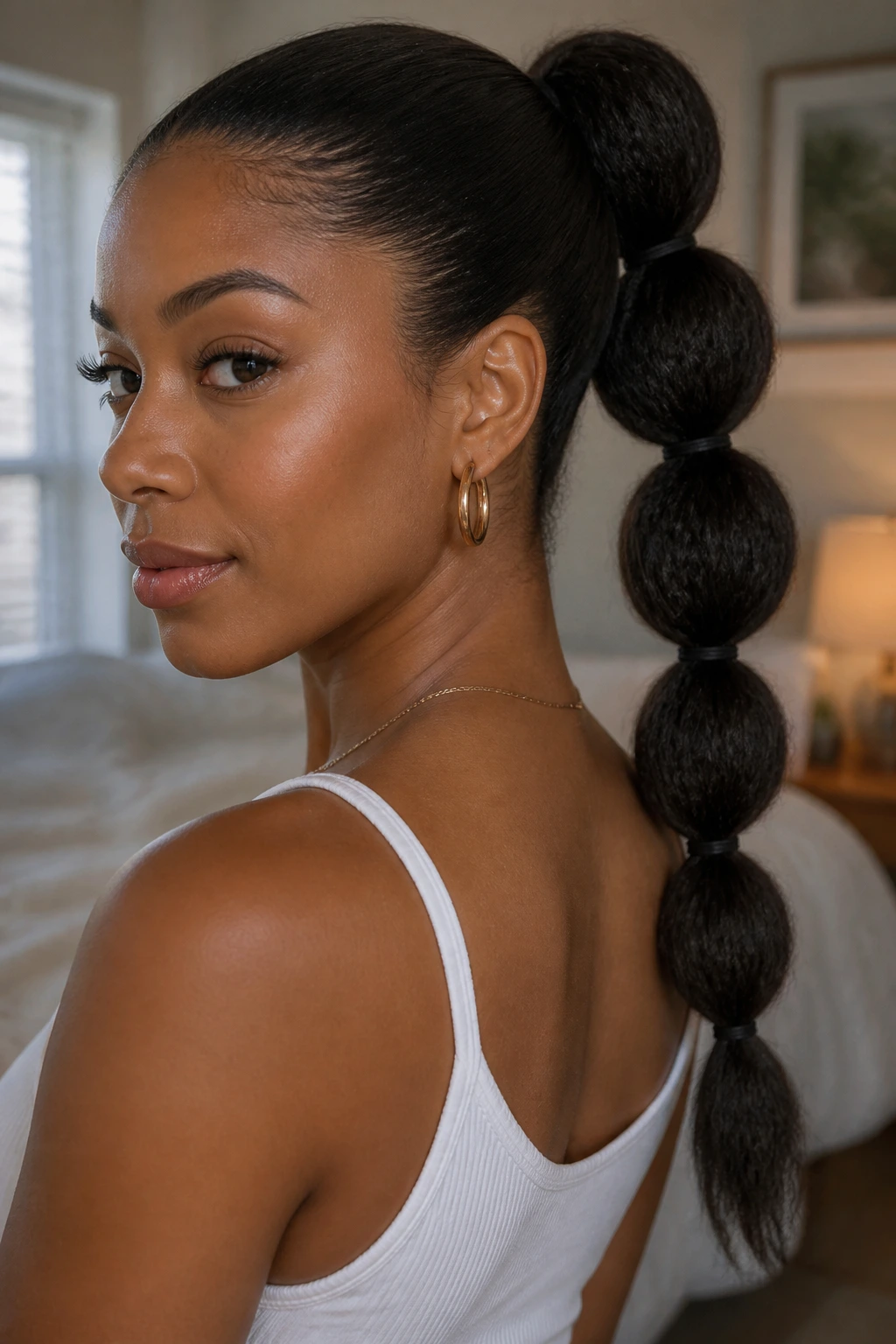
A bubble ponytail is playful, yes, but on coarse hair it also feels smart. The fullness of the strands makes each bubble look round and defined instead of droopy, which means you don’t need a lot of styling product to get the shape.
Why It Works
Start with one ponytail at the back or crown, then add clear elastics every 2 to 3 inches down the length. After that, gently pull each section outward until it puffs into a bubble. The hair’s texture does the rest. Coarse strands tend to hold those rounded sections better because they’re less likely to slide smooth and flat.
If your hair is very long, you can stack three or four bubbles. If it’s shorter, two or three is enough. The style still reads clearly. That’s the nice thing about it. It adapts.
Small detail, big difference: wrap a tiny section of hair around each elastic if you want the style to look more finished. That hides the bands and makes the whole ponytail feel less school-gym, more put-together.
This is the kind of style that works when you want movement without heat. It’s also a good answer for coarse hair that gets frizzy fast, because the elastic sections control the shape while letting the texture stay visible.
If you want something that feels fun but not childish, this is the one to try.
14. The French Bob With Fringe That Brings Coarse Hair Right to the Point

A French bob can be a little bossy, and I mean that as praise. On coarse hair, the shape has enough density to look full around the jaw, while the fringe adds a sharp edge that keeps the style from drifting into softness.
The reason this cut works is that coarse hair gives the bob a presence fine hair often has to fake. The line sits with weight. The fringe can be blunt, soft, or slightly piecey, depending on your forehead and your cowlicks. If the hair around the front grows in stubborn directions, a fringe that’s too short will fight you every morning. Keep it a touch longer and let it bend.
This cut is best when the ends are clean and the bulk is controlled, not thinned to death. The whole charm of a French bob is that it looks decisive. A little roughness at the texture level is fine. Uneven shape is not.
Air-dry it with a small amount of mousse if your hair has wave, or blow it straight with a round brush if you want a smoother finish. Either way, the bob should land with purpose. No fluff at the bottom, no triangle at the temples, no apologizing for the texture. That’s the point.
If you like a haircut that feels a little artistic and a little blunt at the same time, this one does a lot with a small amount of length.
15. The Topknot With Loose Face Pieces That Saves the Day
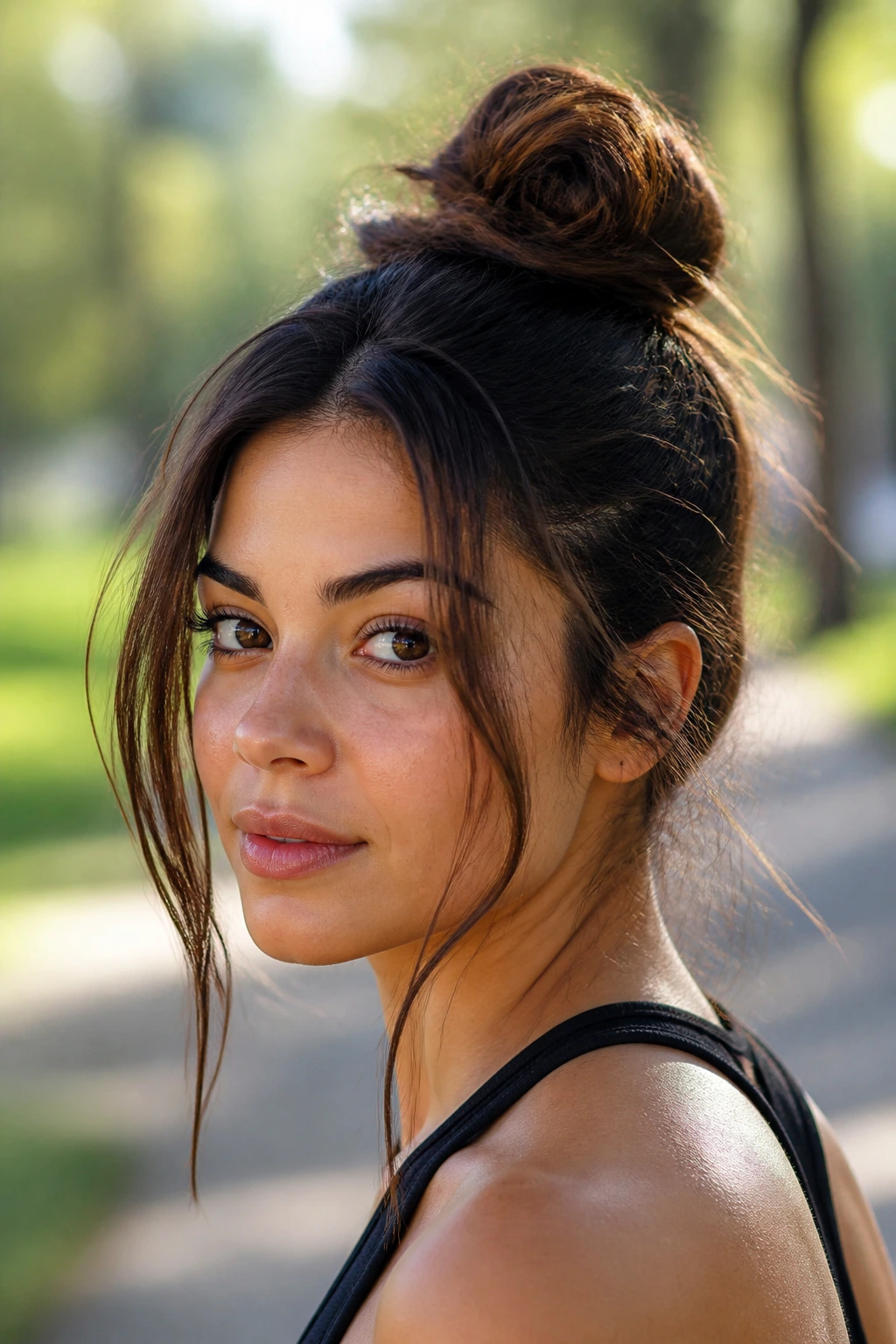
Some mornings call for a style that gets the hair up, out of the way, and still looks like you made a choice. The topknot with loose face pieces is exactly that.
Coarse hair is good at this because it has enough body to build a knot that doesn’t disappear into the head. The trick is not to smooth everything back so hard that the style loses life. Leave the front pieces out, keep a little lift at the crown, and twist the rest into a knot high on the head or just slightly back from it. If your hair is heavy, secure the base with one elastic, then pin the knot in an X pattern so it stays put.
How to Keep It Soft
- Pull out two slim face-framing sections before tying the knot.
- Loosen the crown a little with your fingers after securing the bun.
- Let the knot sit high enough to show the neck, but not so high that it feels wobbly.
- Smooth the edges only where needed; keep some texture visible.
I like this style because it feels honest. It does not pretend your hair woke up easy. It says, “I handled it,” which is often all a good hairstyle needs to say.
If I had to name one coarse hair look that works on rushed mornings, second-day hair, and days when you want something with a little lift, this would be it. Clean enough to look deliberate. Loose enough to feel like hair, not a sculpture.
