



Dealing with 4C hair requires a specific kind of patience and respect for its unique architecture. The tight coils and incredible density are beautiful, but they can also be prone to dryness and breakage if they aren’t handled with care. When you find yourself caught in the cycle of daily manipulation, protective styling becomes more than just a preference—it becomes a survival strategy for your length and overall health.
Protective styles are designed to tuck away the ends, the oldest and most vulnerable part of your hair, while giving your scalp a chance to rest. The goal is simple: minimize the friction, heat, and tension that typically lead to damage. You want a look that lasts for weeks without requiring a mirror and a handful of products every single morning.
The styles highlighted here aren’t just about looking good, though that matters; they are about retention. Whether you have waist-length hair or you are just beginning your natural journey, these structures provide the stability your coils need to thrive. Let’s look at the options available for keeping your hair secure, hydrated, and protected.
1. Classic Box Braids
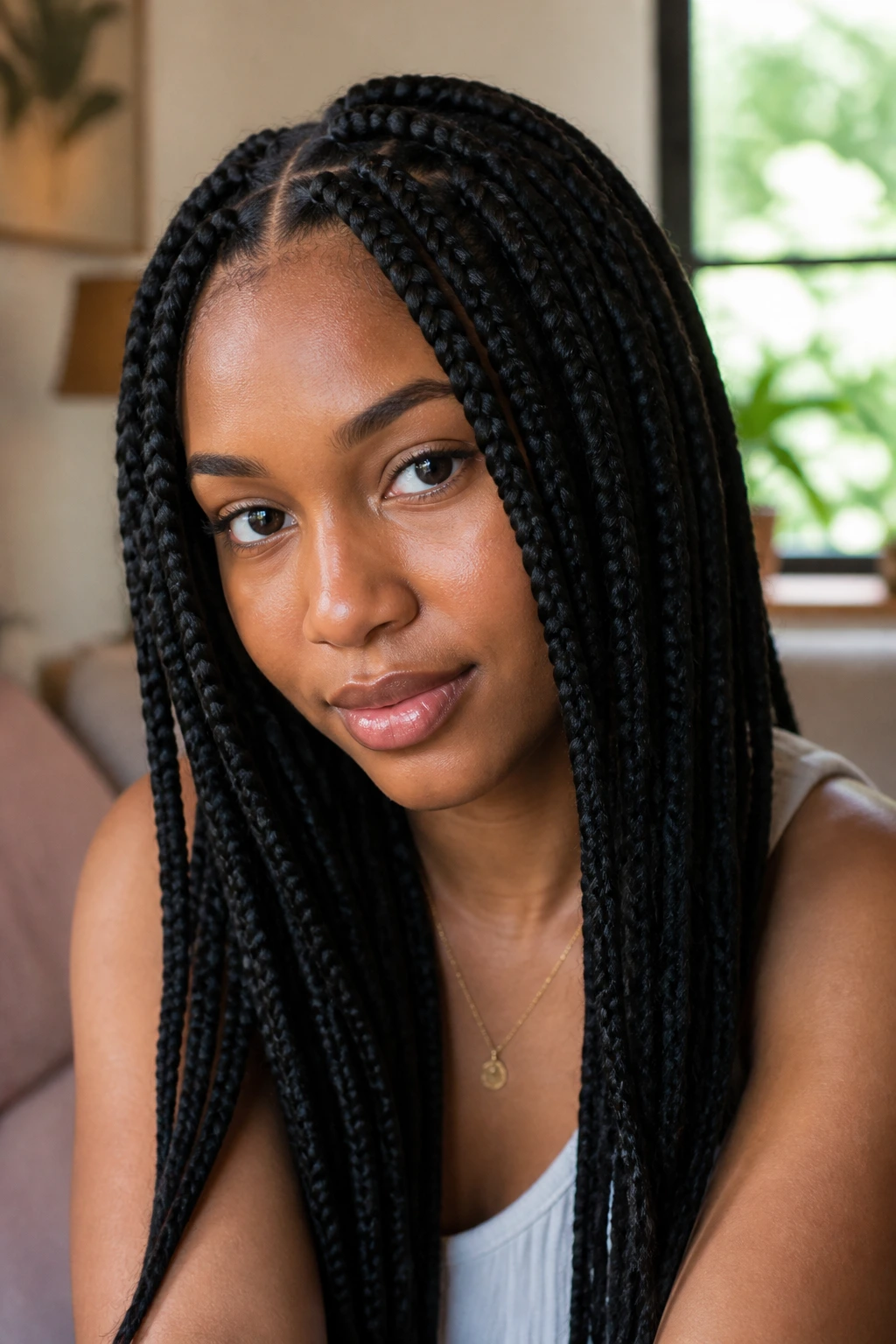
Box braids are the definitive protective style for a reason. They offer a clean, uniform look that protects every single strand from roots to ends. The key here is the base—each section of hair is parted into a neat square or triangle, ensuring there is no tension pulling on any one spot.
Why They Work for 4C Texture
These braids are excellent because they allow for total coverage. You can wash your scalp without disturbing your natural hair, and the synthetic hair used for extensions acts as a barrier against environmental stressors like wind or dry air.
Key Considerations for Installation
- Tension: Ensure the braider does not pull too tightly at the edges.
- Weight: Use high-quality, lightweight kanekalon hair to prevent the style from dragging down your natural hair.
- Moisture: Keep your natural hair moisturized by spritzing a leave-in conditioner mixed with water directly onto the scalp.
Pro tip: Use a crochet needle to gently pull hair through the roots if you choose the box-braid-bob style, which reduces the overall weight on your neck and scalp.
2. Stitch Cornrows
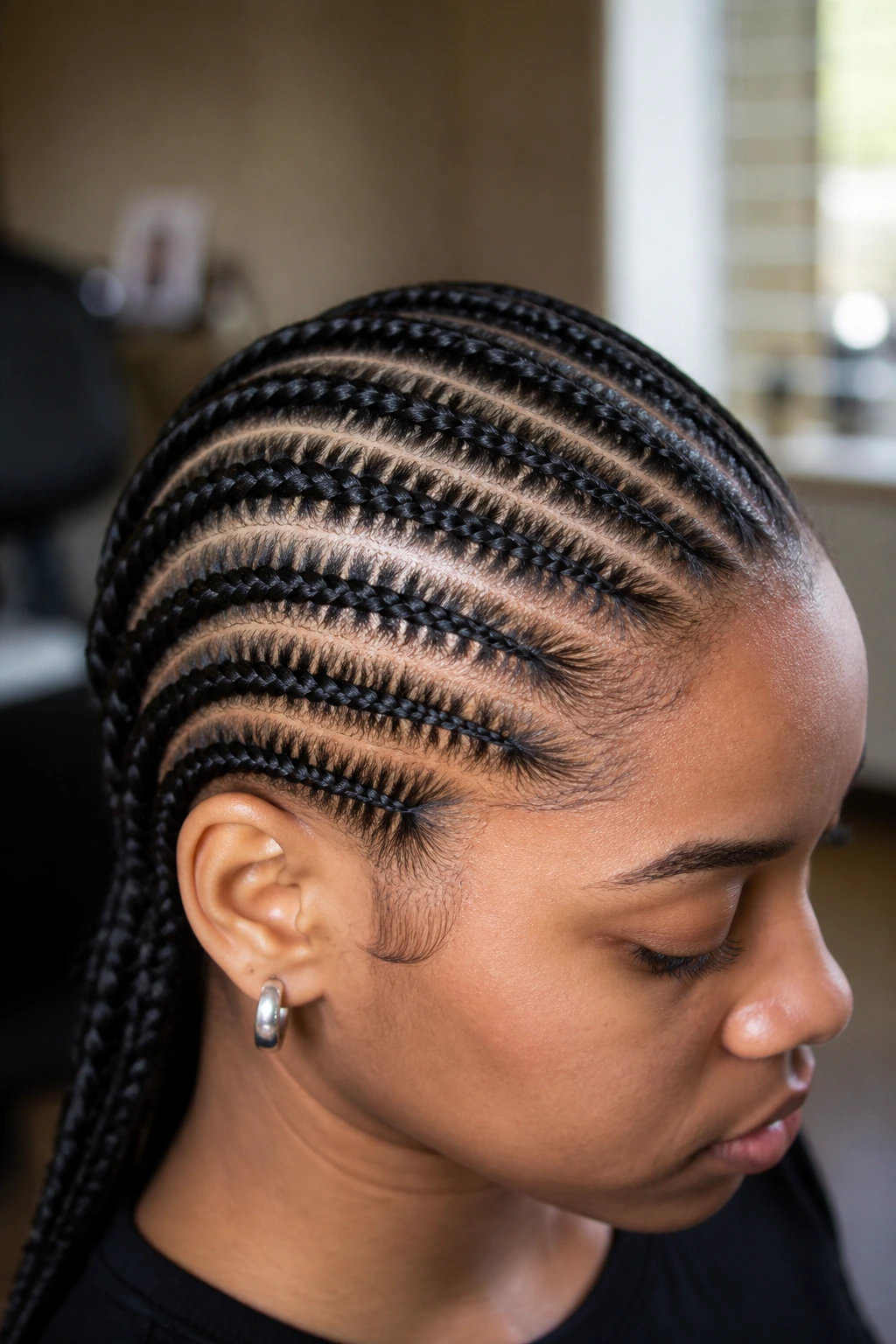
Stitch cornrows have become a standard in the natural hair community because they look incredibly precise and clean. The technique involves adding thin, horizontal lines—”stitches”—as you braid, which creates a distinct, patterned look that lies completely flat against the scalp.
Because this style is so tight to the head, it stays neat for much longer than traditional cornrows. It is a fantastic option if you want to keep your hair protected while maintaining a polished, professional aesthetic. Just be mindful of the tension; because they are so flat, they can easily become too tight if the braider is over-enthusiastic with the feed-in method.
If you are sensitive to tension, ask for “knotless” feed-in techniques. This adds hair gradually, preventing that heavy lump of extension hair at the very beginning of the braid near your hairline.
3. Goddess Braids
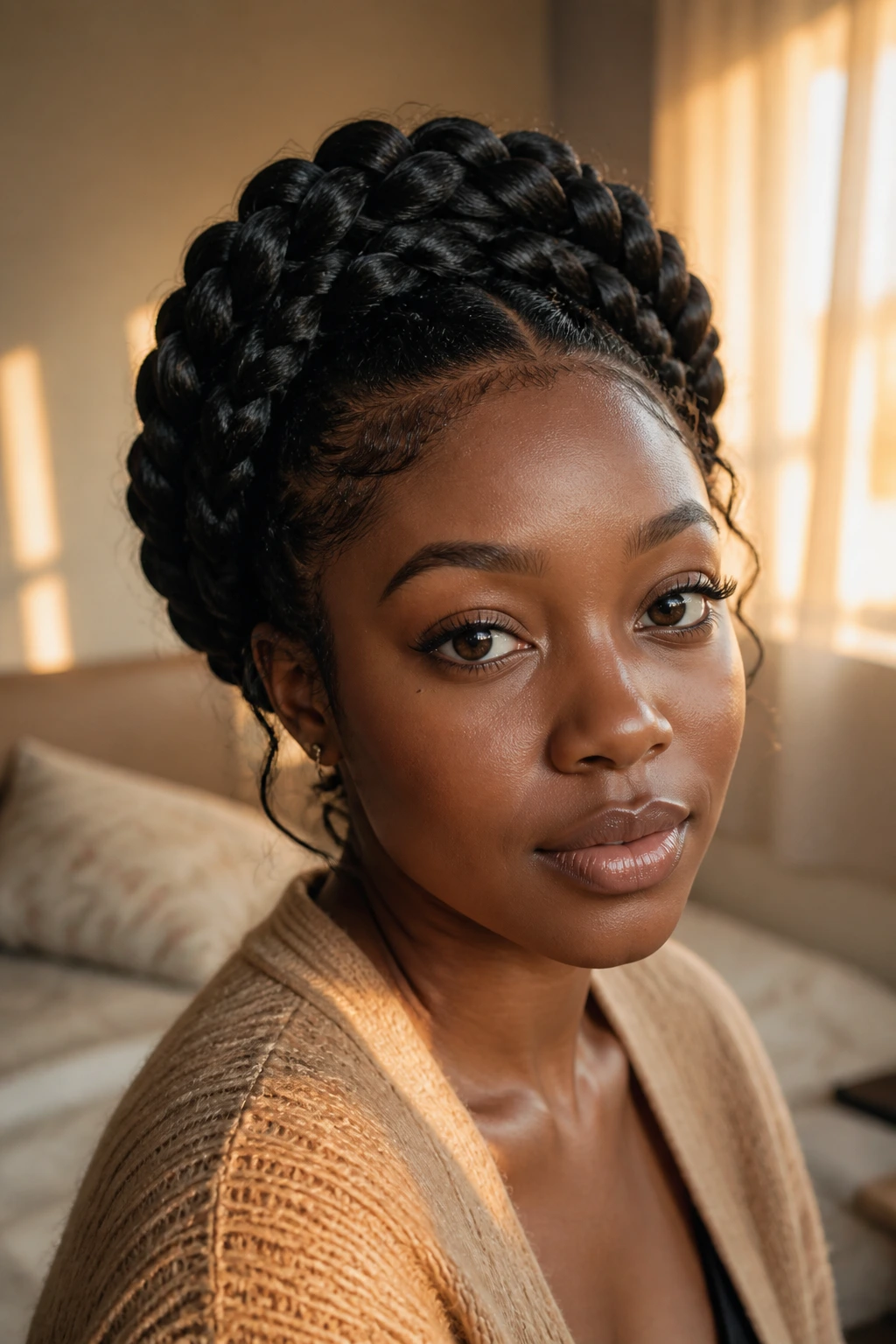
Goddess braids are essentially large, chunky cornrows that are styled in an updo or a halo. They are thicker, softer, and much quicker to install than micro braids or small box braids. They are perfect for those weeks when you just do not have the energy to sit in a chair for eight hours.
The “goddess” effect usually comes from leaving some of the ends curly or adding wavy hair throughout the braid. This adds a softness that standard cornrows lack. You can wear them as a crown, a side-swept style, or two simple braids leading into a bun.
The biggest benefit is the reduced manipulation. Because the braids are large, you are not constantly brushing or styling your hair. You can wrap your head with a silk scarf at night, and your style will look just as good the next morning.
4. Senegalese Twists
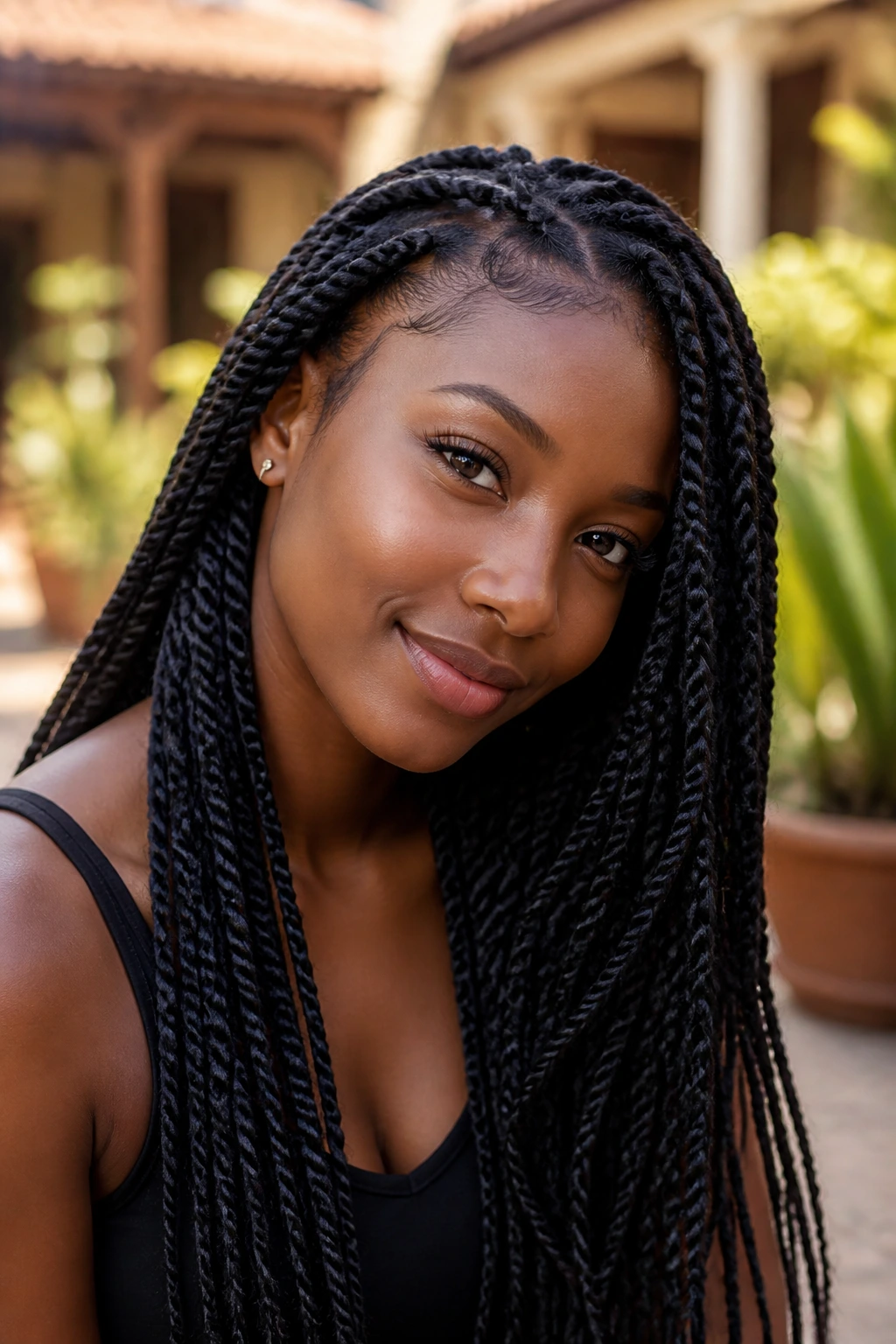
Senegalese twists offer a rope-like, smooth texture that is distinct from the crinkly look of braids. They are created by twisting two strands of synthetic hair around your natural hair. Because of their weight and texture, they tend to swing and move more freely than box braids.
Why They Are Ideal
They are generally easier to take down than braids because you simply unwrap the twist. This makes them a safer choice if you tend to get bored with a style after three or four weeks.
Maintenance Checklist
- Seal your ends: Dip the ends in hot water to keep them from unravelling.
- Scalp care: Use an oil-based scalp spray to keep the skin underneath from drying out while in the twists.
Watch for: Slippage. If your hair is very soft or freshly washed, the twists might slide out. Use a little bit of braiding jam or shea butter at the roots to give the hair more grip.
5. Fulani Braids
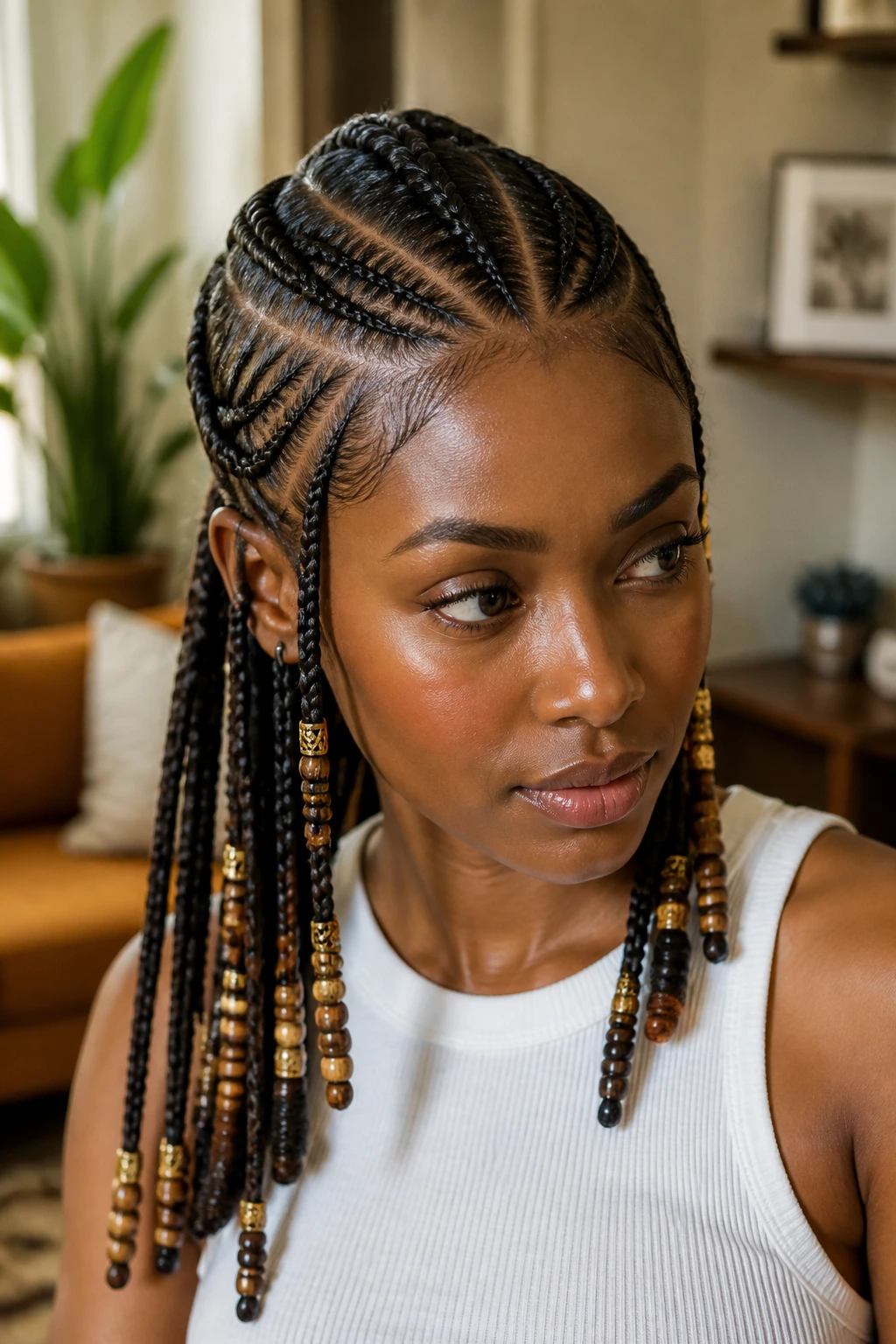
Fulani braids are iconic for their specific pattern—usually a cornrow down the center of the head, braids going toward the ears, and then loose, hanging braids. This style is often adorned with beads or gold cuffs, which gives it a cultural and decorative flair that other protective styles lack.
This style is wonderful for 4C hair because it mixes scalp-exposed cornrows with hanging extensions. You get the benefit of a cornrowed base, which keeps your roots flat, and the versatility of braids that you can pull into a ponytail or leave loose.
The weight distribution is usually very balanced. Since the hair is divided into specific sections, no one part of your scalp feels strained. Just ensure the beads you use aren’t too heavy, or they might pull on your hairline over time.
6. Feed-In Braids
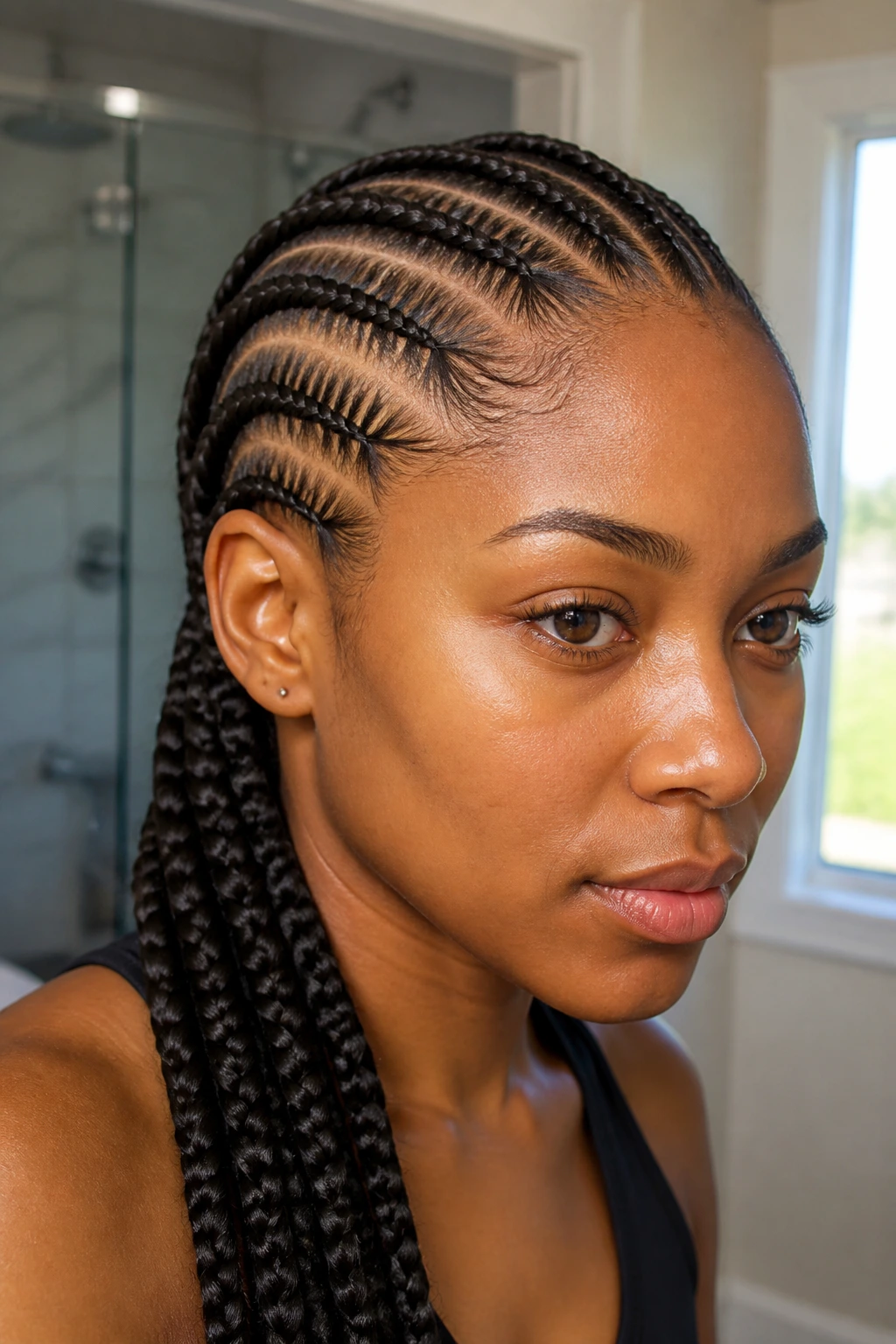
Feed-in braids are a variation of cornrows where synthetic hair is fed into the natural hair braid as you go. This creates a natural-looking start to the braid, making it look as though the braid is growing directly from your scalp.
The Mechanics of the Technique
Unlike traditional cornrows that start with a large knot of hair, feed-in braids start with your own hair. The extension hair is tucked in seamlessly. This removes the “bump” at the hairline, which is a major source of tension for many people with delicate edges.
Where They Excel
They are perfect for people who want to preserve their hairline. If you have fine edges that cannot handle the weight of heavy box braids, feed-ins provide the structure and protection without the trauma.
Key maintenance note: Since the roots are fully exposed, keep your hairline clean. Use a light oil rather than a heavy gel to avoid buildup that clogs the pores along your forehead.
7. Crochet Braids
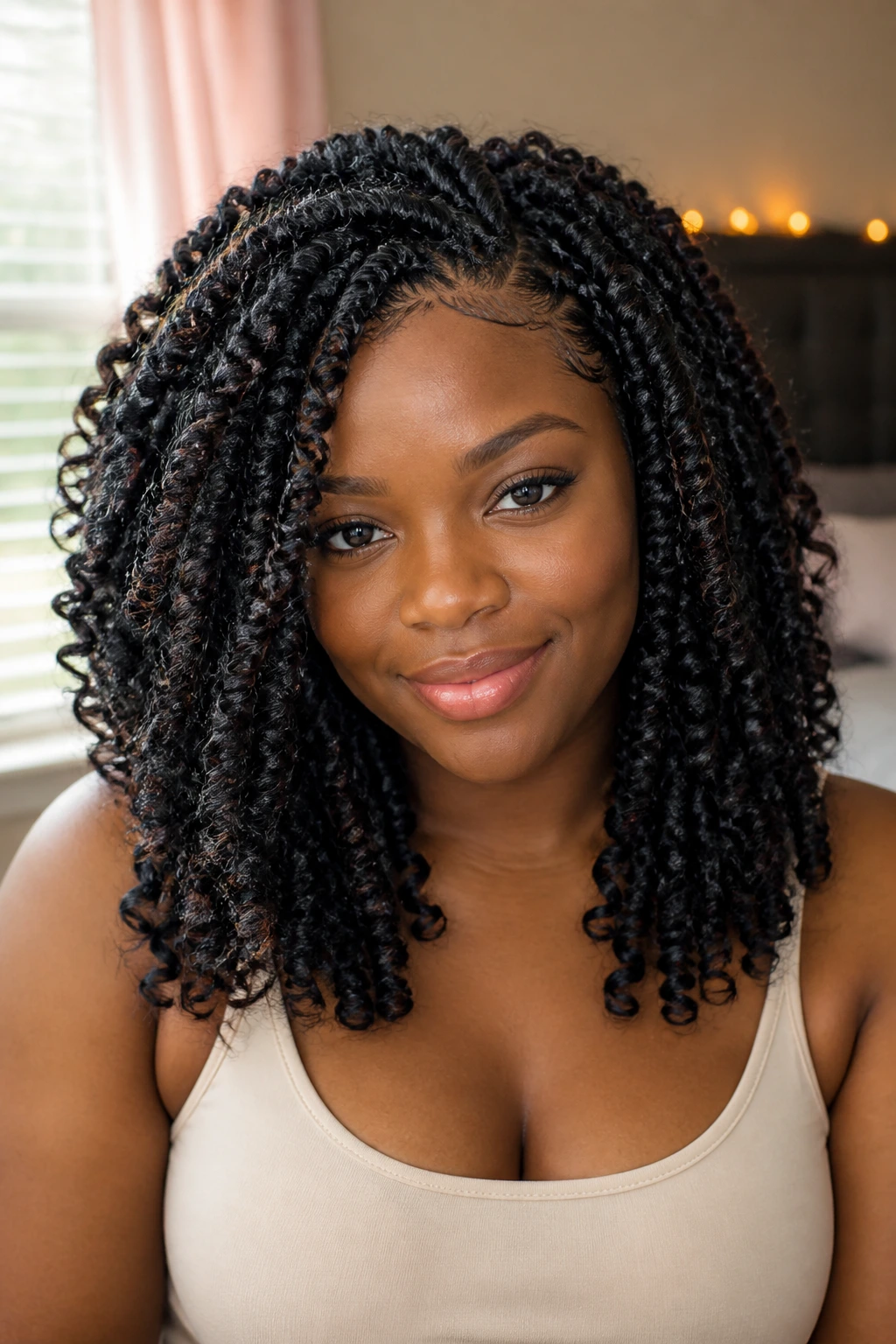
Crochet braids are not a specific braid style, but a method of installation. You cornrow your natural hair back in a pattern, and then use a crochet needle to pull extensions through those cornrows. This is hands-down the fastest way to get a full-head look.
You can use pre-braided, pre-twisted, or curly hair for this. Because your natural hair is braided flat underneath, it remains tucked away and completely protected from the elements.
This is the ultimate low-tension style. If you have fragile hair that breaks easily under the pressure of individual braiding, crochet is your best friend. The installation is quick, and the take-down is even faster.
8. Butterfly Locs
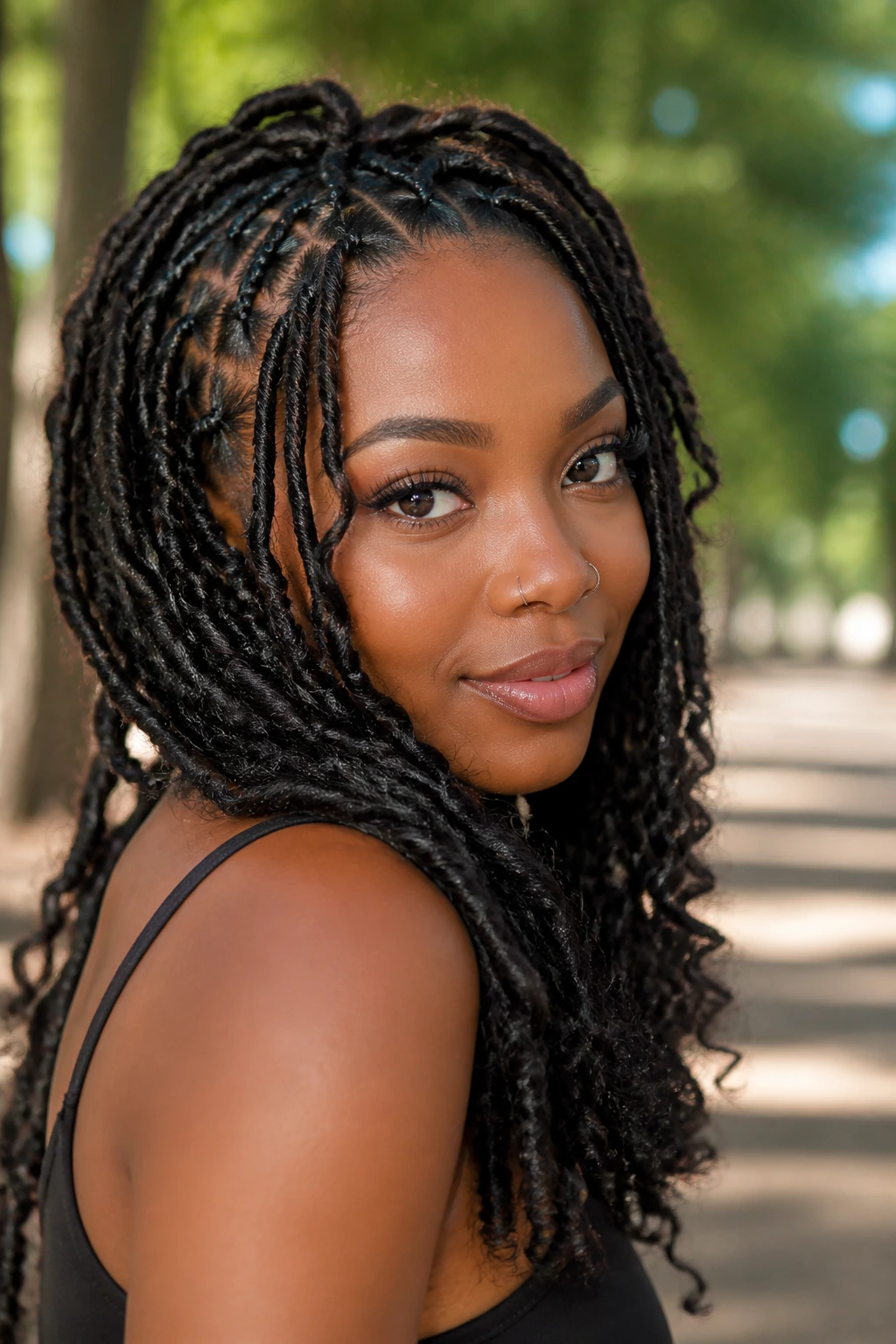
Butterfly locs have gained massive popularity because they create a textured, bohemian look that feels very natural. The technique involves wrapping hair around a braid base to create a “looped” or “distressed” look that makes them appear as if they’ve been in for months.
They are incredibly forgiving. If the wrap isn’t perfectly uniform, it actually adds to the aesthetic. They are soft and lightweight, assuming you use quality faux loc hair.
Because your natural hair is braided underneath, it gets a long break from daily manipulation. Just be aware that because they are a bit bulky, they can hold onto dust or lint if you are not careful about covering them while you sleep or when you are outside.
9. Tribal Braids
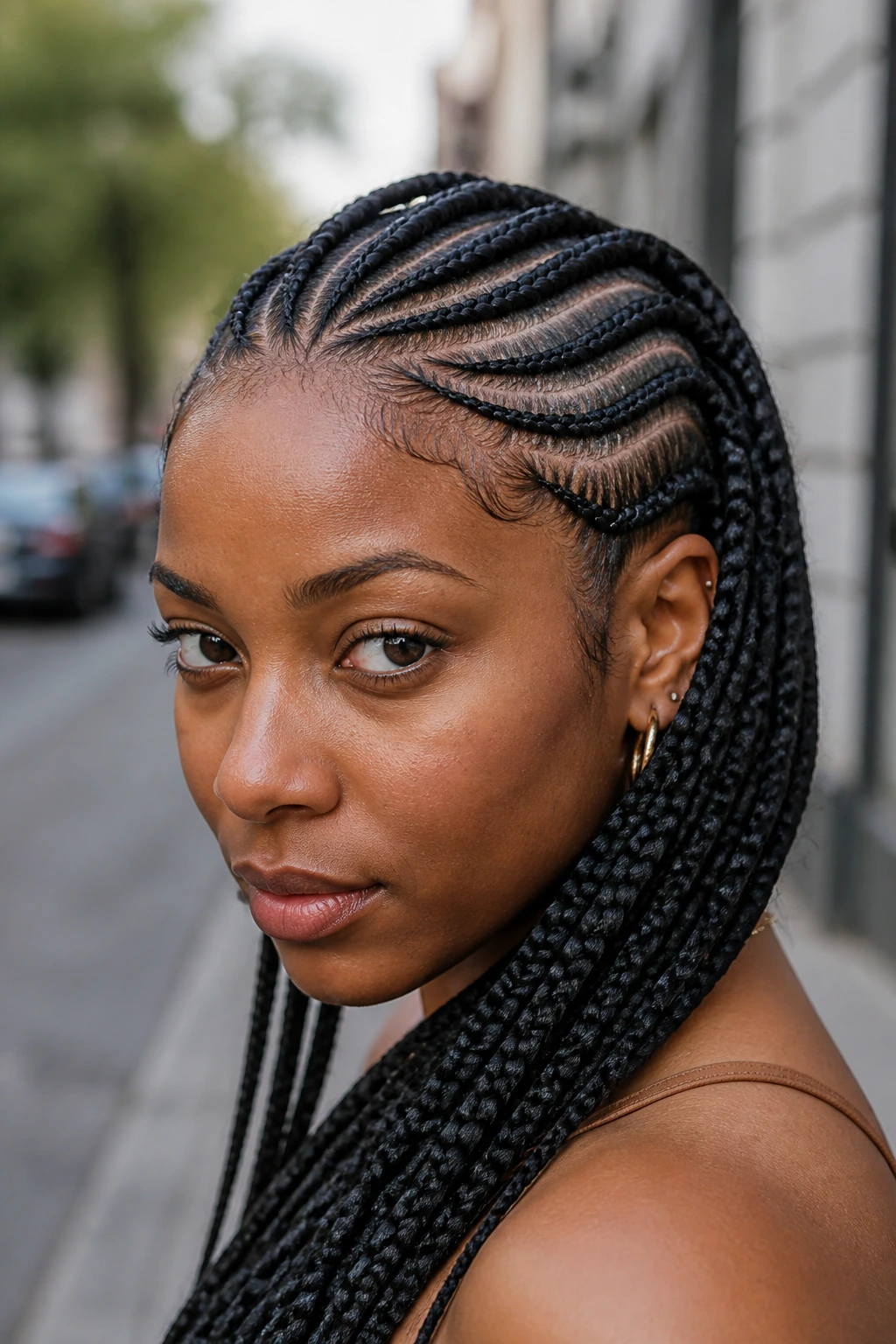
Tribal braids refer to a mix of patterns, often combining cornrows in the front with individual box braids in the back. This style is incredibly versatile because you get the sleekness of cornrows and the movement of individual braids.
You can play with the patterns in the front—zig-zags, straight lines, or curved designs. This allows you to personalize the look based on your face shape.
Because this style is so detailed, it is best for those who want a long-term protective style (6-8 weeks). The intricate patterns keep the scalp neat and provide a solid structure that won’t frizz up quickly. Just make sure your braider doesn’t braid the cornrows too thin, as this can create excessive tension.
10. Flat Twists
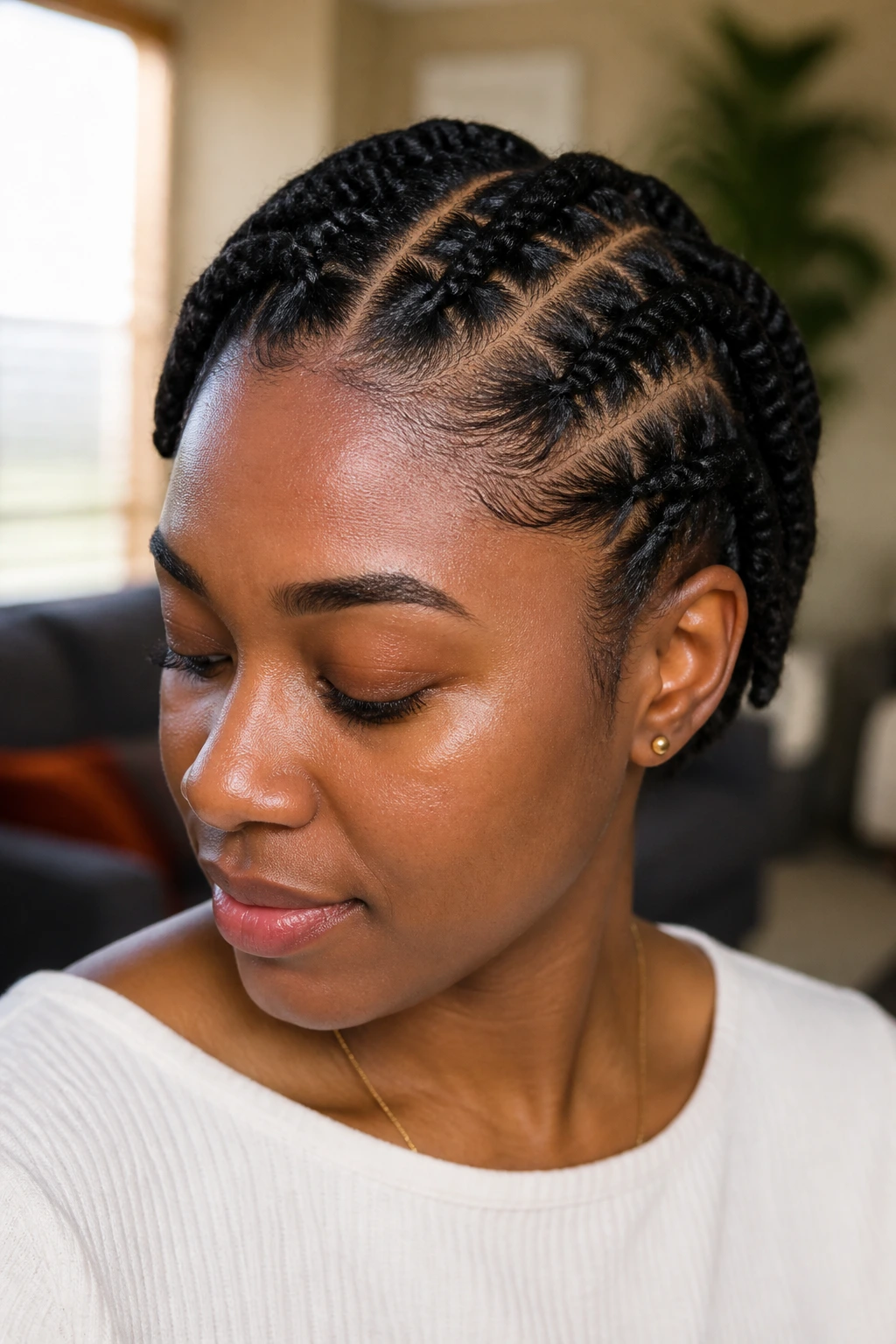
If you are looking for a style that requires no extensions and no extra hair, flat twists are it. They are similar to cornrows but are created by twisting two strands of hair along the scalp instead of braiding three.
This style is excellent for those who want to give their hair a break from the weight of synthetic hair. It is a true “minimalist” protective style. You can create all sorts of patterns, from a simple side-part to an elaborate updo.
How to Make Them Last
- Use a good hold: Use a bit of foam or setting lotion to keep the twists tight.
- Sleep with a silk bonnet: This prevents the twists from getting fuzzy.
- Refresh as needed: If a twist starts to fray after a week, you can easily unravel it and re-twist it with a bit of moisturizer.
11. Bantu Knots with Braided Foundation
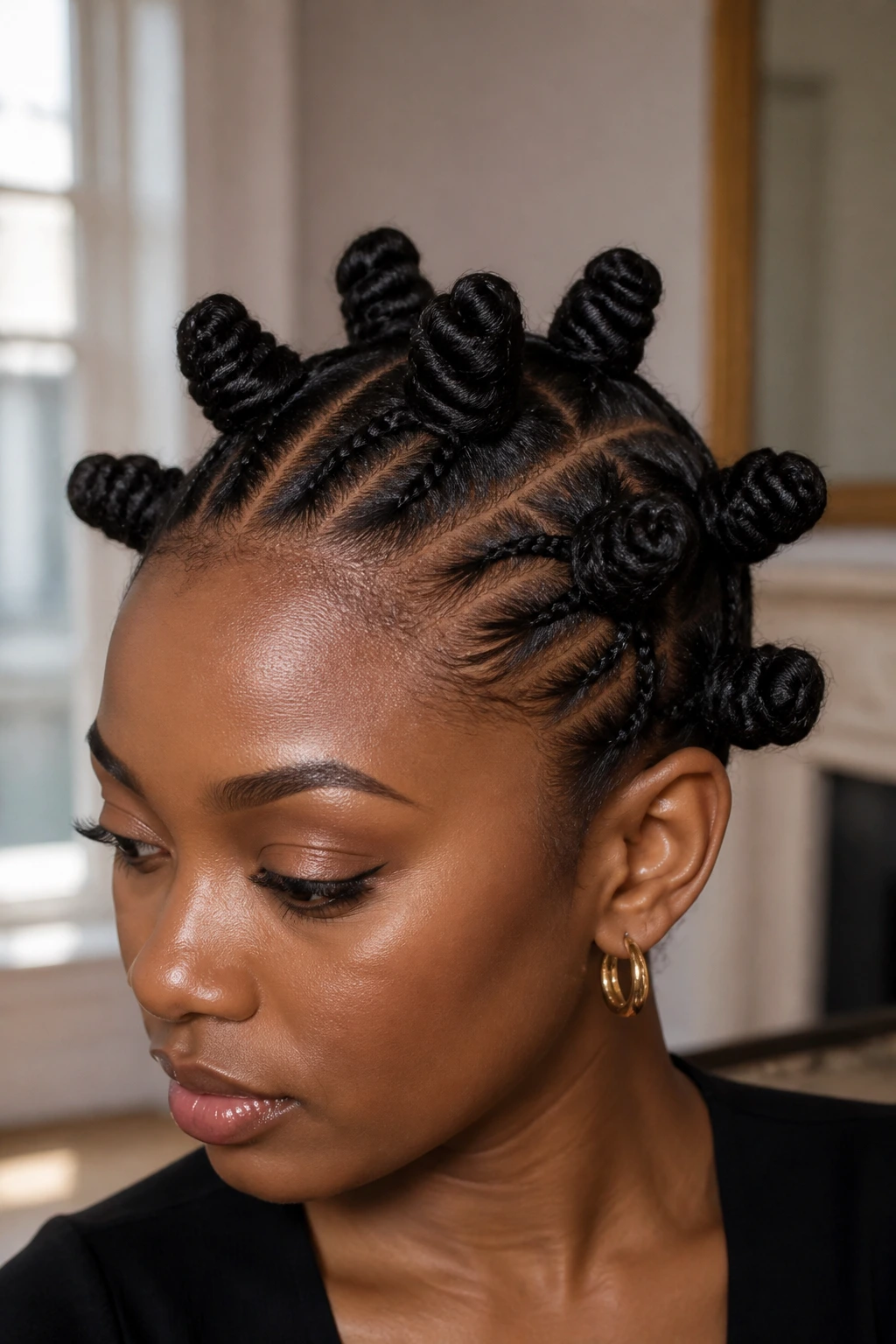
Bantu knots are a great style on their own, but if you want longevity, create a braided foundation first. Cornrow your hair in sections, and then wrap the ends of those braids into knots. This gives the style a secure base that won’t move, and it looks incredibly striking.
This is a very low-tension style for the scalp, provided you don’t braid the foundation too tightly. It is a fantastic option for a formal event or a vacation because it keeps the hair completely off your neck and out of your face.
Because the knots are compact, they don’t catch on your clothes or pillowcase. It is an ideal “set it and forget it” style for a few weeks of low-maintenance hair care.
12. Passion Twists
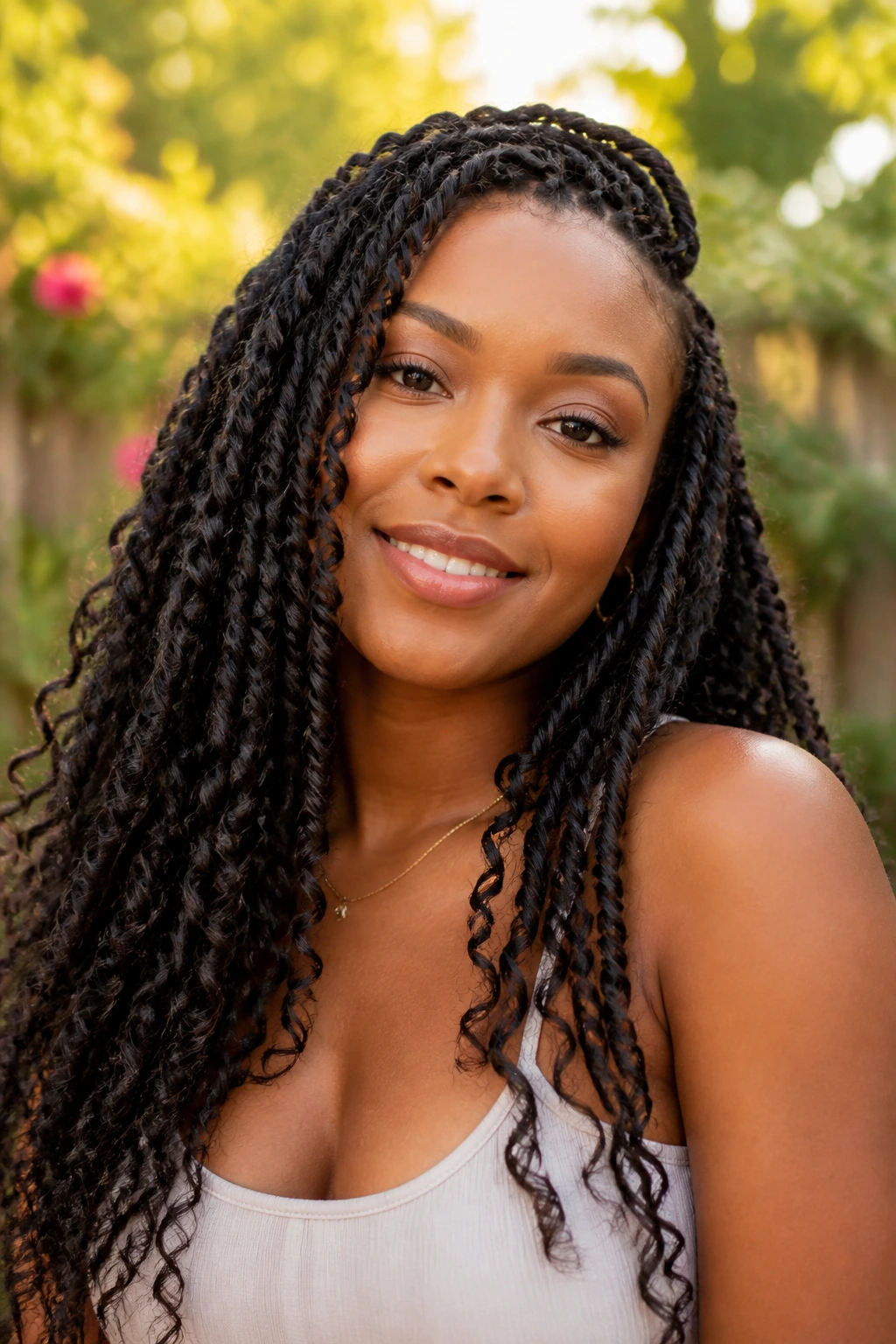
Passion twists are a softer, more “boho” alternative to Senegalese twists. They use a wavy or curly synthetic hair that gives them a messy, effortless vibe. If you dislike the stiff look of box braids, you will likely fall in love with the movement of these.
They look great the longer you wear them. As the hair gets a bit older and slightly frizzier, it actually looks better. This is a huge plus for those who hate the “brand new” look and prefer something that feels more natural and lived-in.
Because they are usually installed using the crochet method or the individual twist method, they don’t put excessive weight on your roots.
13. Yarn Braids
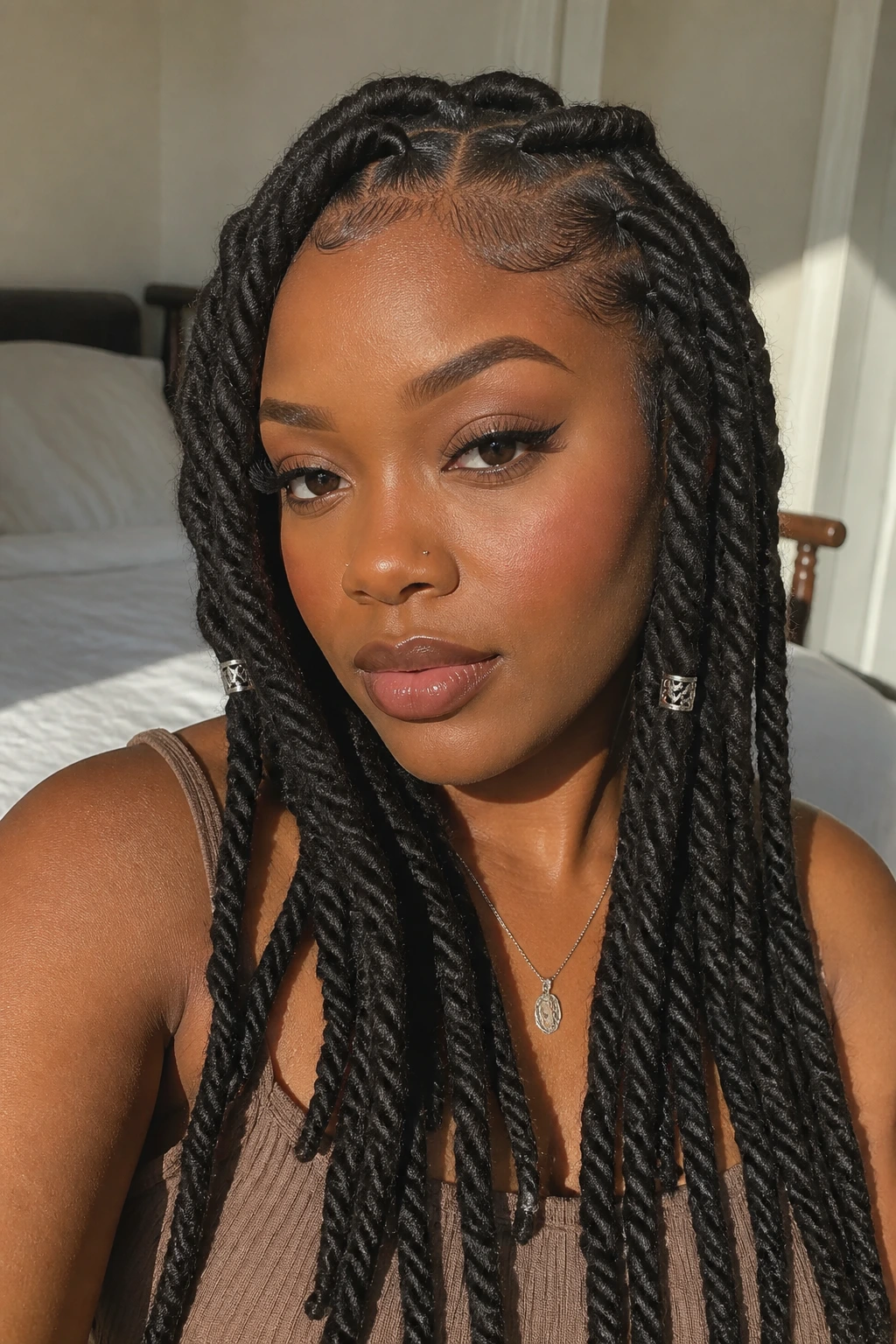
Yarn braids are a vintage-inspired style that uses acrylic yarn instead of synthetic extension hair. They are incredibly lightweight, affordable, and they have a unique, matte texture that looks very earthy and grounded.
One of the best things about yarn is that it doesn’t tangle. Unlike kanekalon hair, which can get matted, yarn stays exactly how you left it. They also don’t require hot water to seal—you just tie a knot at the end.
This style is perfect if you are on a budget or if you have a scalp that is sensitive to the chemicals often found on synthetic braiding hair. Just make sure to wash the yarn before installation to remove any potential residues or dust from the factory.
14. Halo Crown Braid
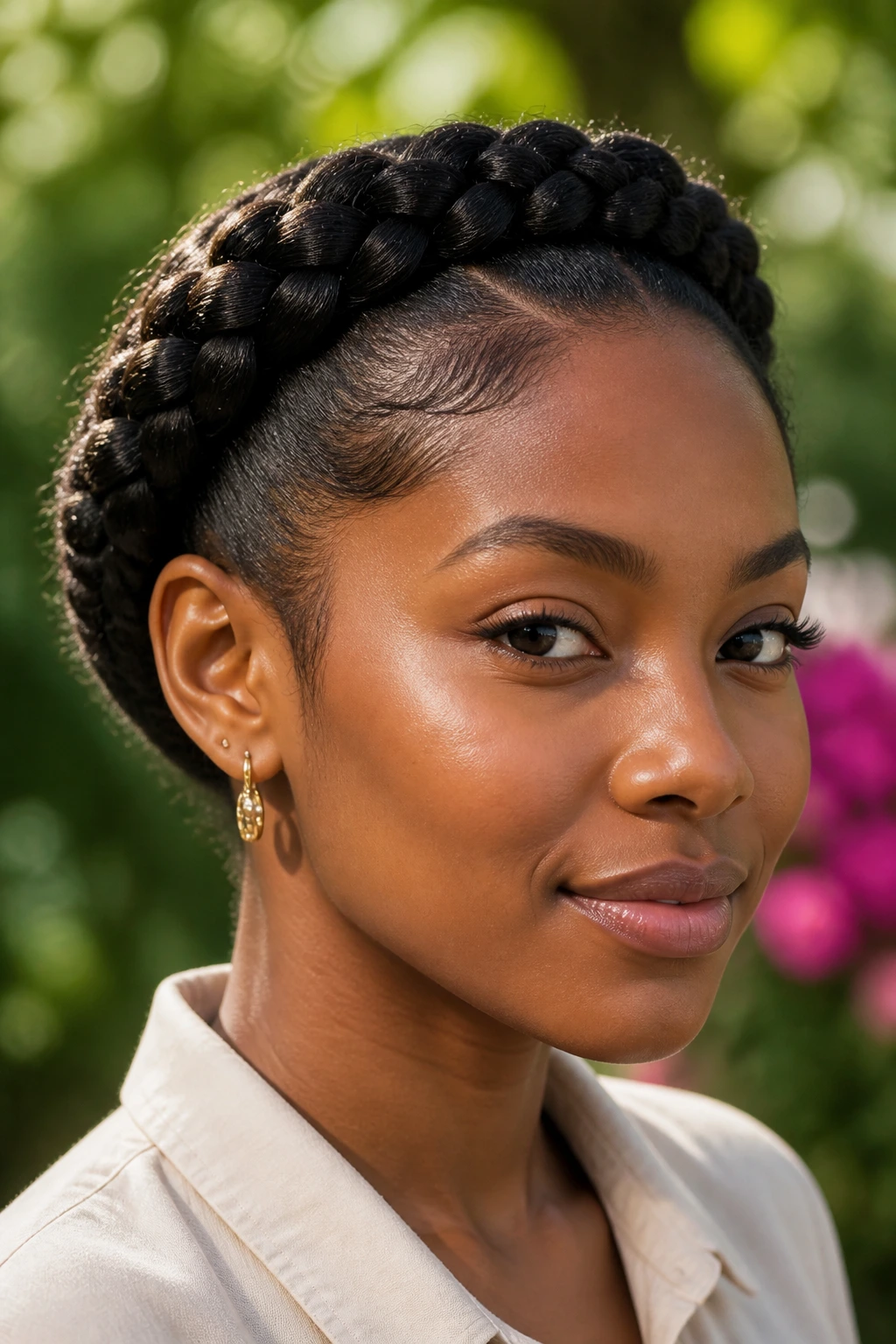
The halo crown braid involves braiding your hair around the perimeter of your head. You can do this with your own hair (if it is long enough) or by incorporating extensions. It is an elegant, sophisticated style that keeps your ends completely tucked away.
It is particularly great for keeping your edges protected because the braid itself acts as a frame, not a pull. If you are doing this with your natural hair, use a light holding pomade to ensure the braid stays smooth.
This is a classic style that never looks out of place, whether you are at work or at a casual brunch. Because the weight is distributed evenly around the crown of your head, it is very comfortable for all-day wear.
15. Havana Twists
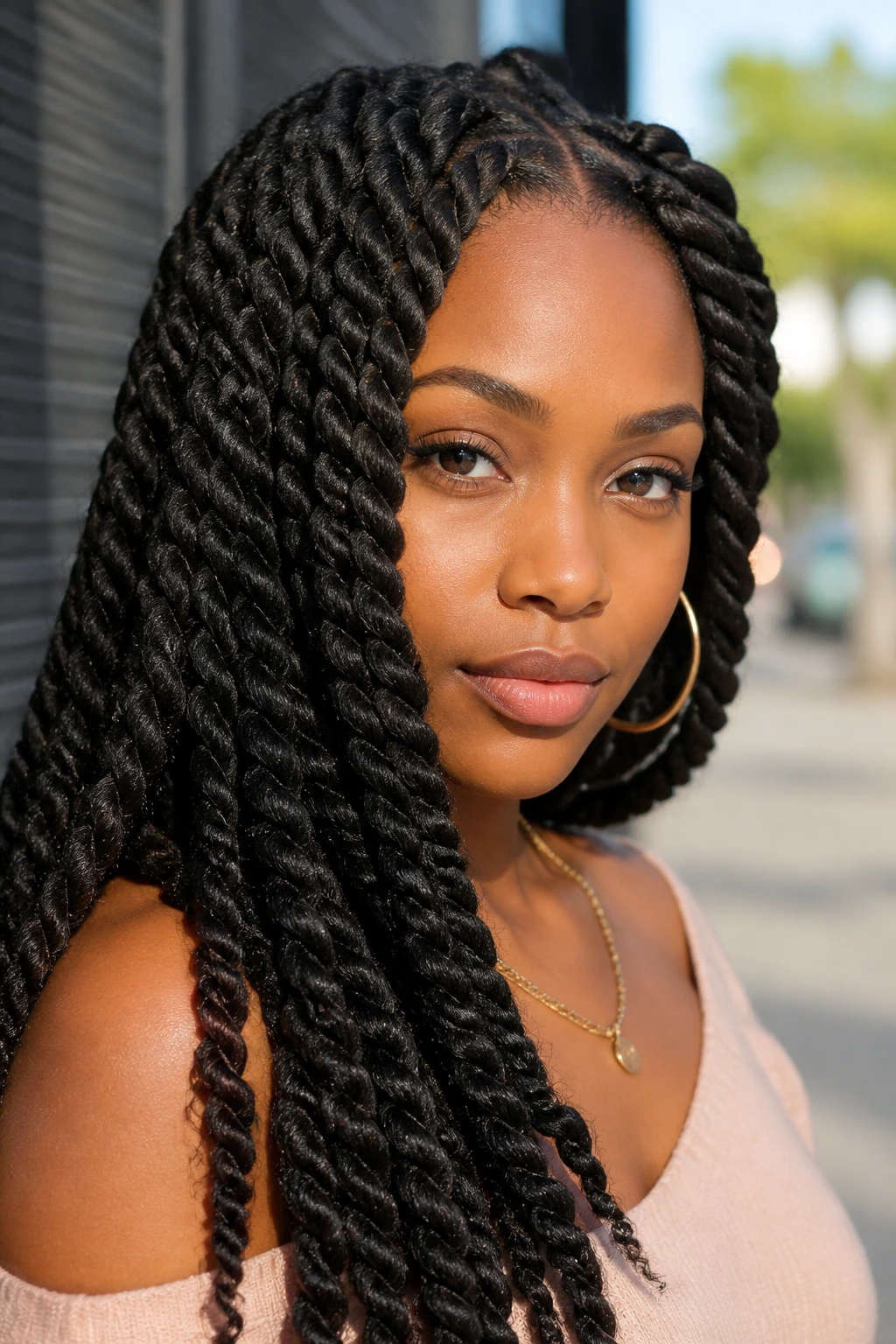
Havana twists are essentially chunky, thicker versions of Senegalese twists. They look like thick ropes of hair. Because they are so large, they are much faster to install than smaller, thinner twists.
The heavy, thick texture provides great protection for 4C hair. Your natural hair is wrapped so thoroughly within the twist that it is shielded from the environment. They also have a very distinct, bold look that makes a statement without needing a lot of styling.
Since they are chunky, they can be heavy if the stylist uses too much hair. Ensure the density of the twists is adjusted to your comfort. You don’t need a hundred of these to look good; fifty is usually enough for a full, voluminous look.
16. Micro Braids
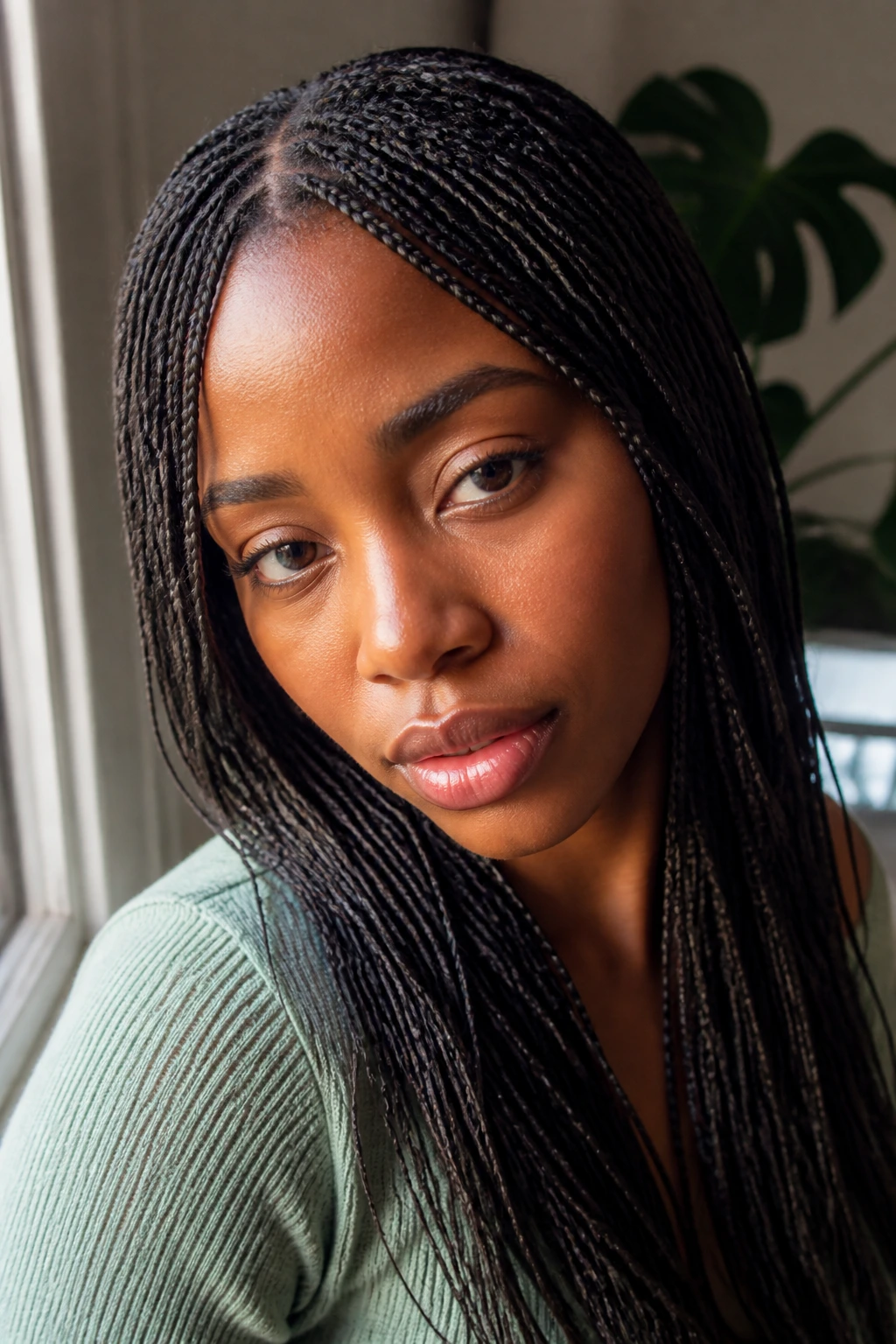
Micro braids are the “tiny but mighty” of the protective style world. They take a long time to install, but the result is a style that looks exactly like your natural hair, just longer and smoother.
These braids are incredibly versatile. You can treat them just like your loose hair—you can curl them, put them in a ponytail, or style them up. Because they are so small, they provide a very realistic, natural-looking volume.
Be very careful with your edges with this style. Because the braids are so small, it is easy for a braider to accidentally pull too much weight onto a small section of hair. If you have fine hair, consider leaving your perimeter out or opting for slightly larger braids at the front.
17. Tree Braids
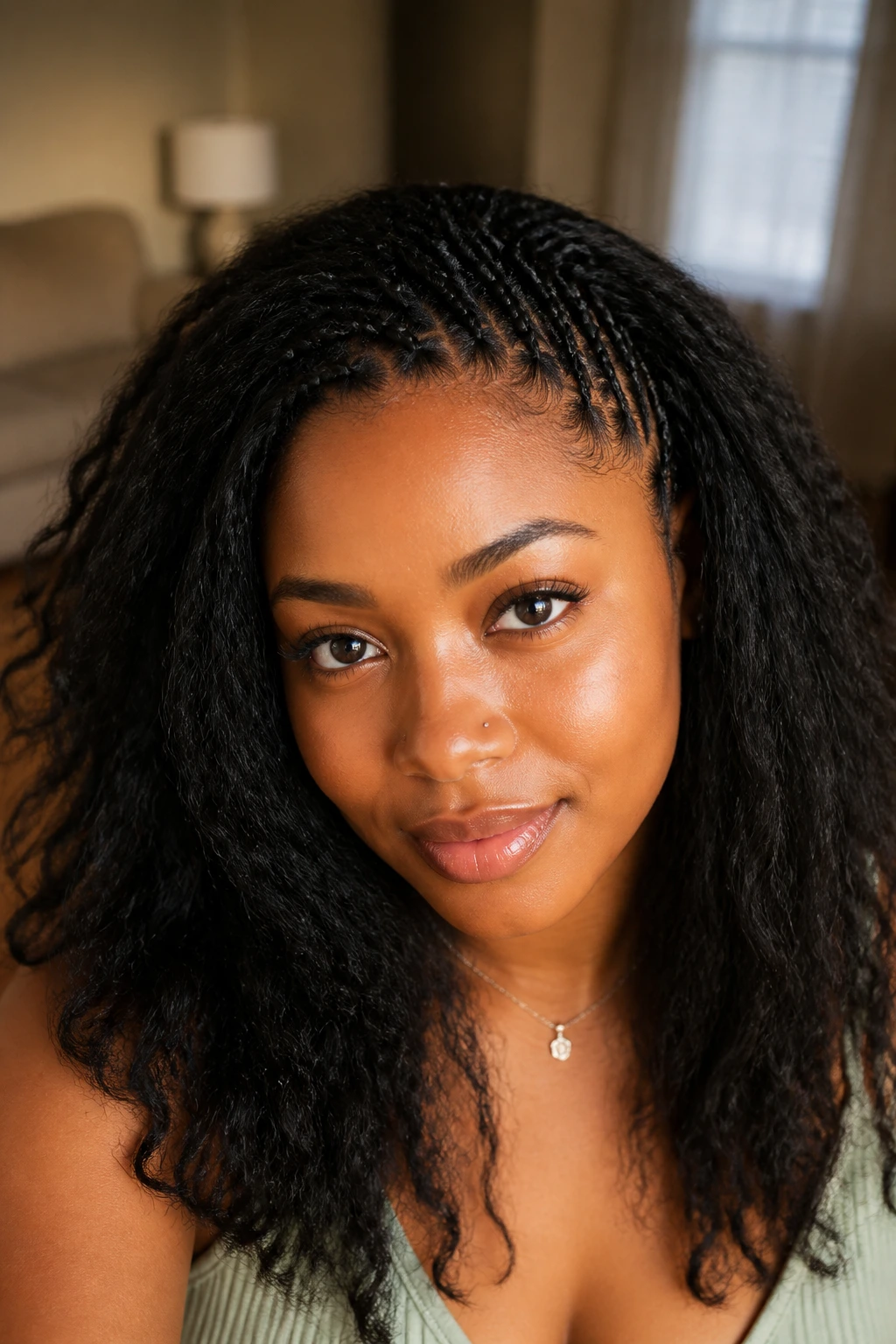
Tree braids are a hybrid style. You start a braid at the scalp, but only for an inch or two, and then you leave the rest of the hair loose. This creates the illusion of a weave, but it is actually braided in.
This style is excellent for those who want the look of loose hair without the constant manipulation of wearing their own curls out. Your hair is safely tucked into the braided roots, protected from breakage, while the loose hair gives you the movement and style you want.
It is a great way to transition if you are used to wearing weaves and want to move toward something that allows more access to your scalp.
18. Lemonade Braids
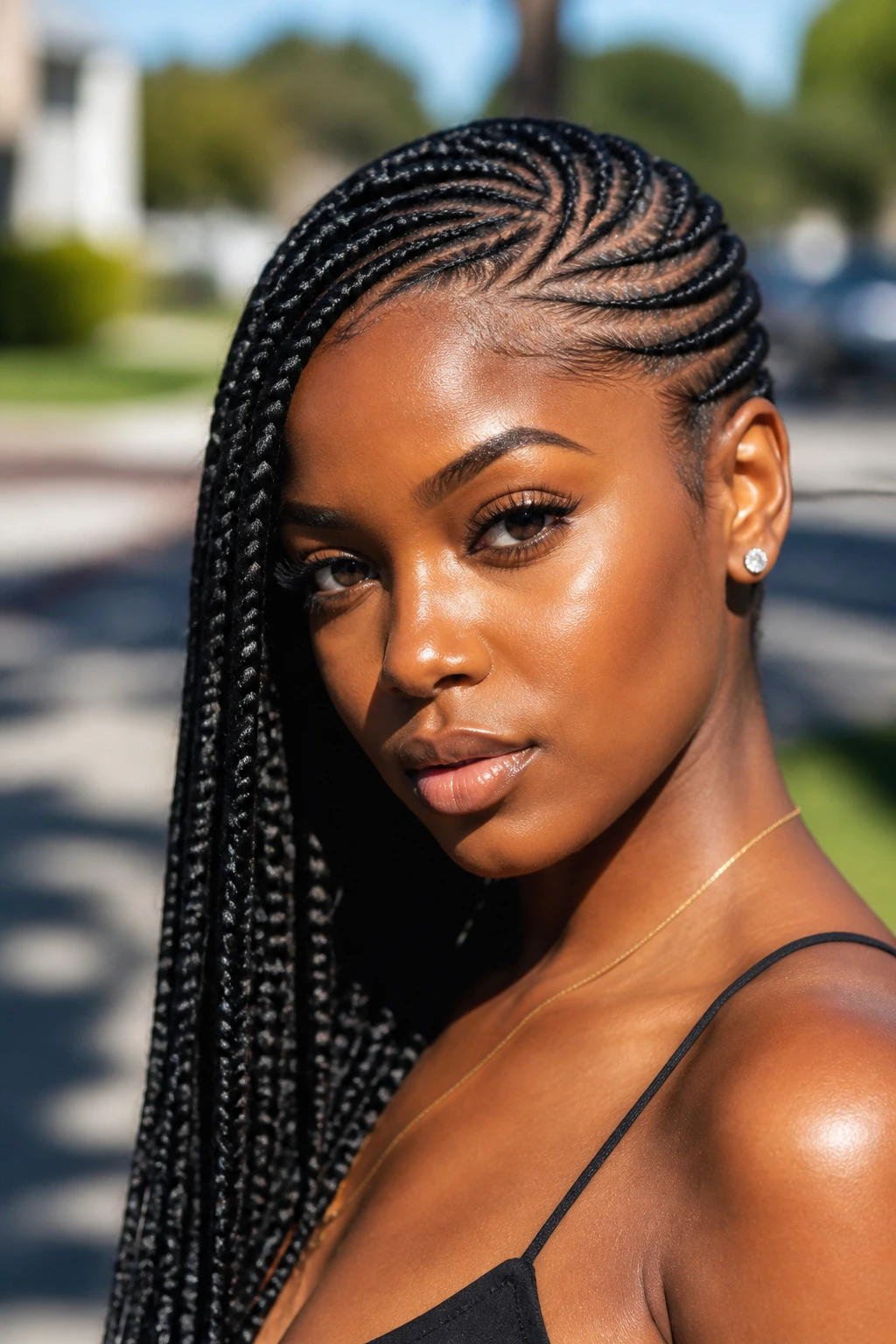
Lemonade braids are side-swept cornrows that typically start from one side of the head and go to the other. They are named after the style featured in a popular visual album, and they have stayed relevant because of their striking, asymmetrical appearance.
These braids are very low-maintenance. Because the hair is pulled to one side, you don’t have to worry about where your part is or how the hair falls in the back. They are incredibly sleek and work well with any hair length, though you will need extensions to get that long, flowing look.
Make sure your braider balances the tension on the side where the braids are gathered. Because all the weight is moving in one direction, the hair at the hairline on the side the braids are “leaning” towards can be vulnerable.
19. Braided Mohawk
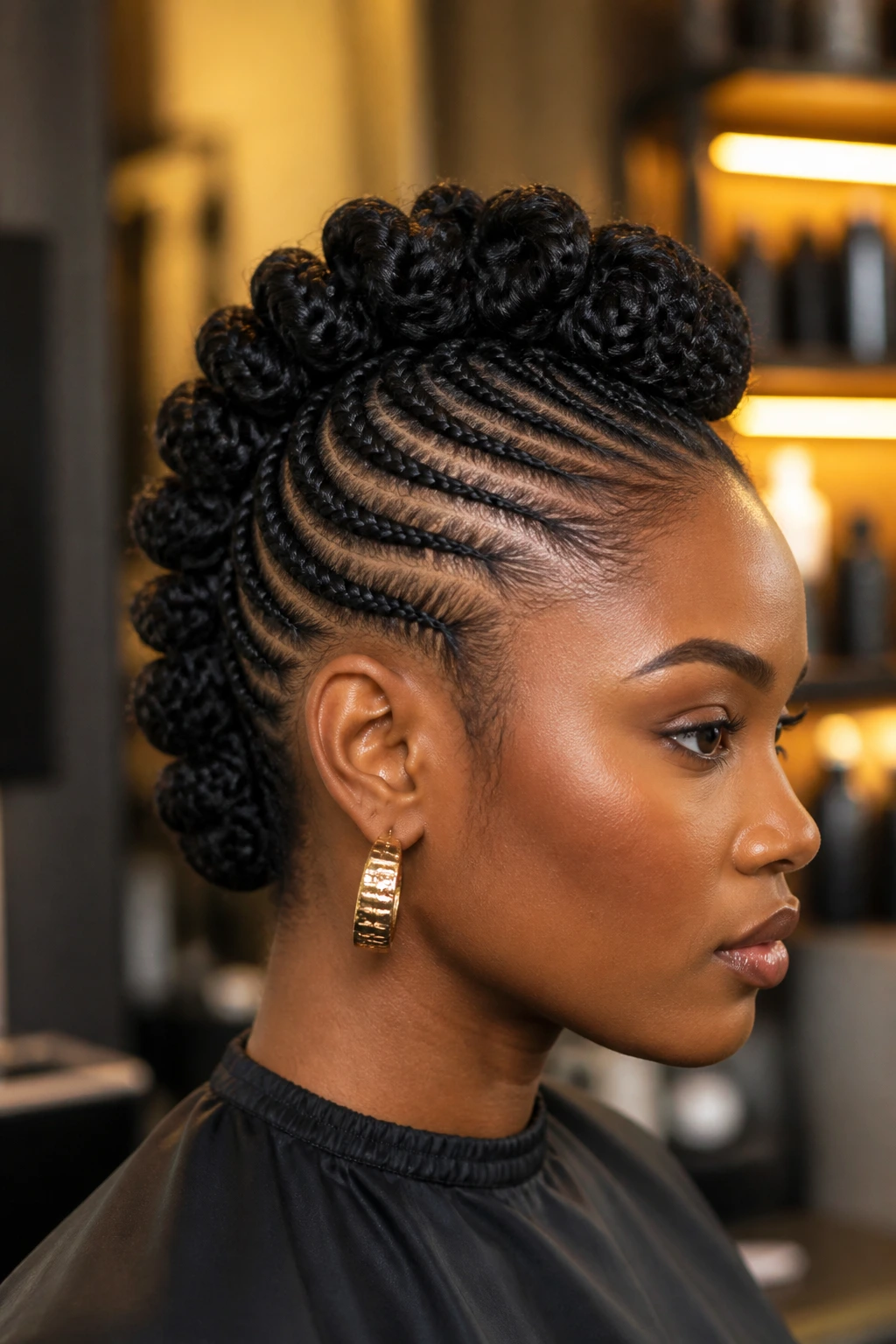
A braided mohawk is a bold style that keeps the sides of your head clean while the center is heavily braided, twisted, or styled with knots. This is perfect for those who want a protective style that isn’t just “long hair hanging down.”
It is a very structured, artistic look. You can use cornrows for the sides and then do larger braids or a flat twist design for the center. It keeps the hair off your neck and provides a unique silhouette that is very easy to manage.
Because the sides are usually braided quite tight to the scalp to get that sleek look, ensure your stylist doesn’t over-tighten the area around the nape of your neck, which is a very sensitive zone for 4C hair.
20. Braided Ponytail
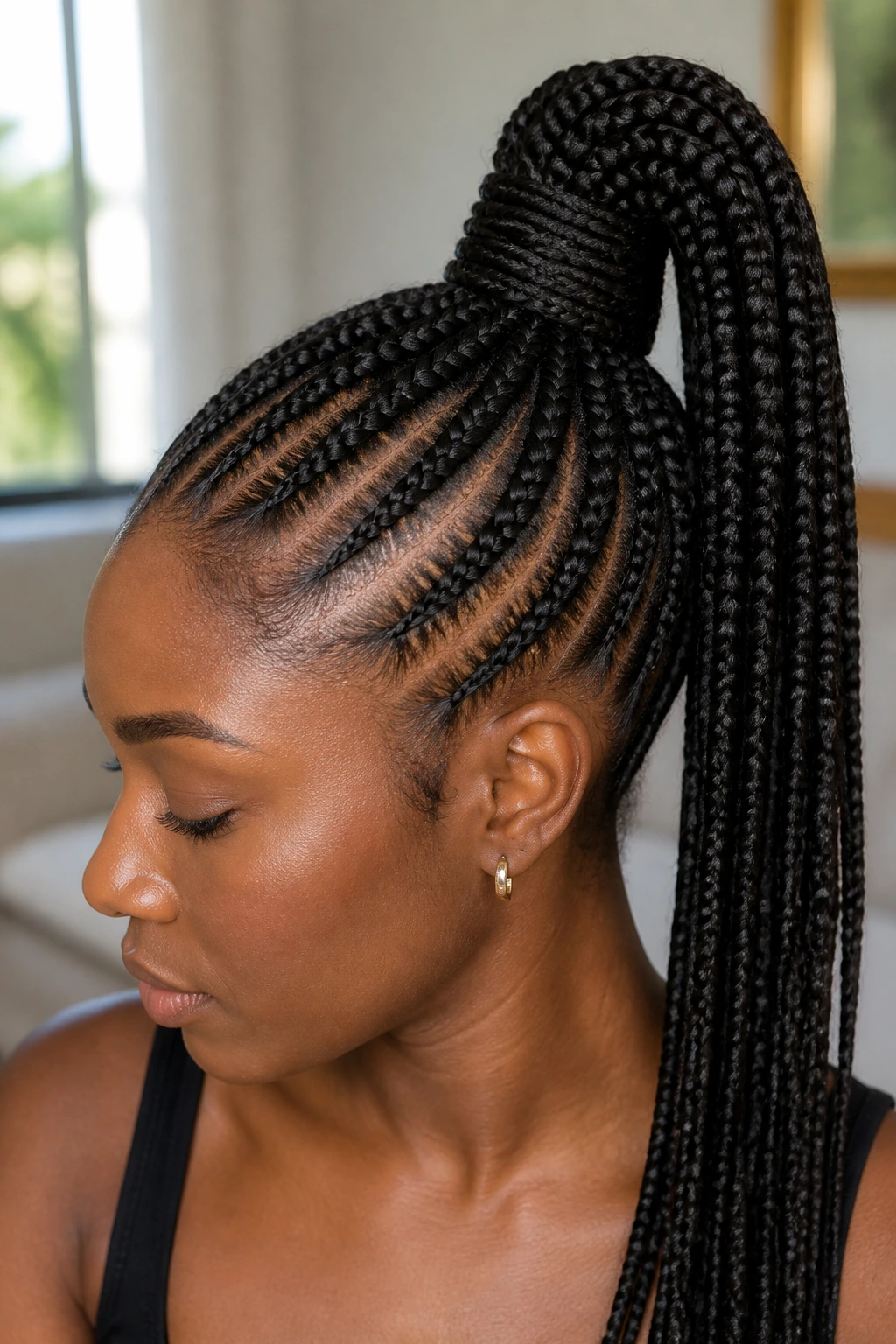
A high braided ponytail is a timeless look that is surprisingly protective. You cornrow the hair toward the center of your head and then attach a long braid (or multiple braids) to the base. This keeps your hair secure and neat while giving you a polished, high-fashion appearance.
The key to a braided ponytail is the base. If you make the ponytail too tight, you will end up with a headache and potential breakage at the edges. Make sure the foundation braids are comfortable and that the extension hair is securely wrapped around the base.
This is a versatile style because you can vary the length of the tail. You can go for a short, chic bob-length ponytail, or an ultra-long, dramatic braid. It keeps your hair tucked away, requires very little maintenance, and looks sophisticated in any setting.
Final Thoughts
The secret to successful protective styling is knowing your own hair. What works for someone with softer curls might be too heavy or too tight for someone with denser, tighter 4C coils. Take the time to observe how your scalp reacts to tension, how your hair handles synthetic extension weight, and how much access you need to your roots for moisturizing.
Never underestimate the power of a break. Even if you love how your hair looks in a protective style, make sure you allow your hair to be free and loose for a period between installs. This lets your scalp breathe, allows for a thorough detangling session, and gives you a chance to reset your moisture levels.
There isn’t a single “best” style for everyone. The best style is the one that protects your hair, keeps you feeling like yourself, and doesn’t require you to spend hours in front of the mirror every morning. Choose the look that fits your lifestyle, and your hair will reward you with growth and health in the long run.
