



Twists are the hairstyle I reach for when natural hair needs to look put together without acting like a full-time job. A good set can be neat enough for work, soft enough for brunch, and secure enough to survive a scarf, a long drive, or a day when your arms are tired and your patience is thin.
The catch is that “twists” is not one look. It’s a whole family. Tiny twists behave one way, chunky twists behave another, and extension-based styles like Marley twists or passion twists have their own rules about weight, shine, and how long they’ll stay neat before the frizz starts talking back.
That’s why twist hairstyles for natural hair are worth knowing in layers, not just as a single category. Part size, twist direction, product choice, and whether your hair is stretched or damp can change the whole outcome. A style that looks polished on dense 4C coils can sit very differently on fine strands or shoulder-length hair.
So I’m not treating this like a random style dump. The goal is to show you the range that actually matters: quick everyday twists, polished updos, long-wear protective styles, and a few twist looks that turn into a good twist-out the next morning. Start with the version that fits your hair and your week. The rest will make a lot more sense after that.
1. Classic Two-Strand Twists
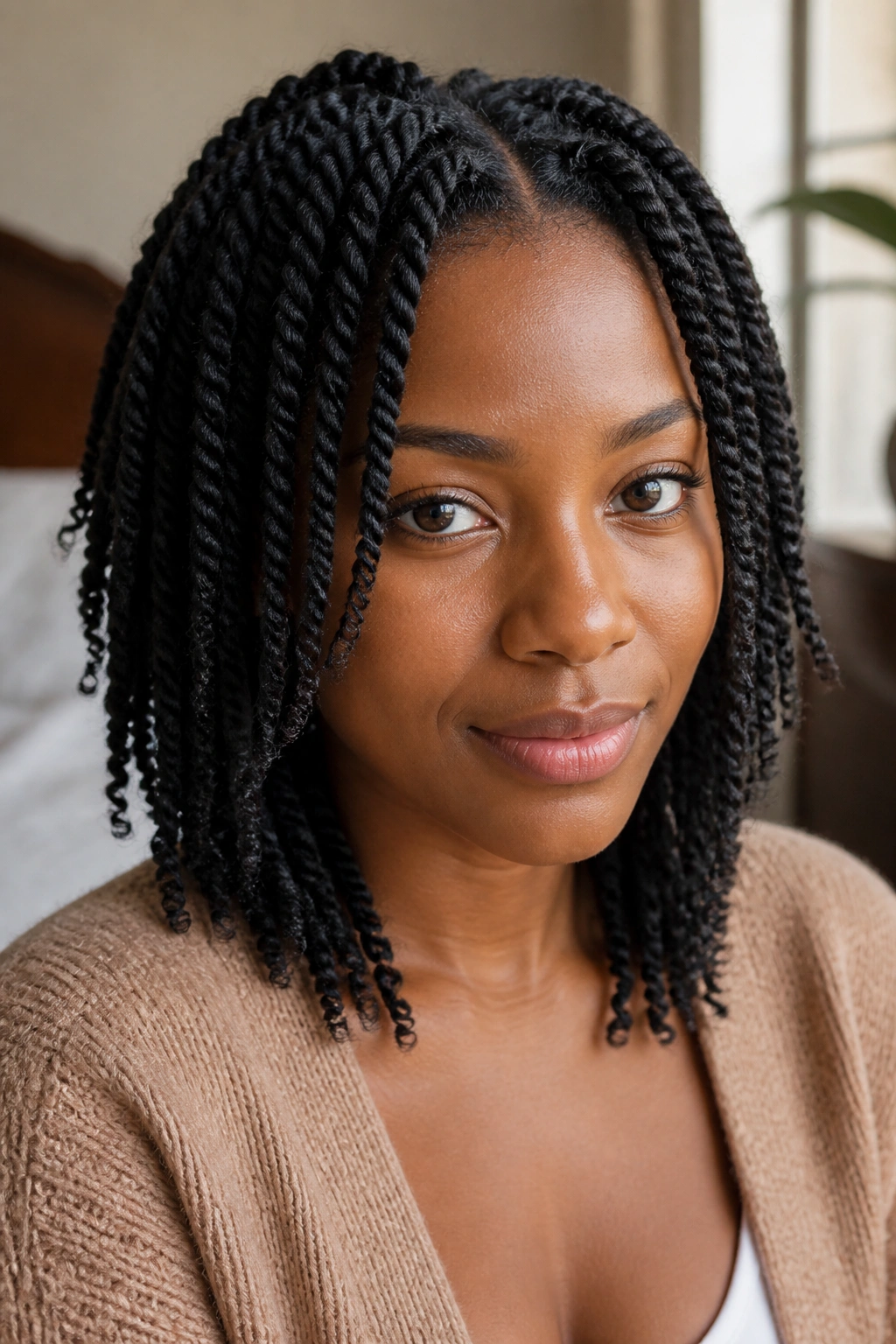
If you only learn one twist style, make it this one. Classic two-strand twists are the backbone of twist hairstyles for natural hair because they’re simple, flexible, and honest about what they do: they keep your hair sectioned, stretched, and tucked away without making the style look stiff.
Why They Stay in Rotation
The cleanest two-strand twists start with hair that has enough slip to separate smoothly. I like them best on damp, detangled hair with a leave-in and a light cream or gel at the ends. That little bit of moisture helps the strands cling to each other instead of puffing apart before you finish the first row.
They also give you options. Wear them as-is for a tidy low-manipulation style, or take them down later for a twist-out with more stretch. That second life is part of the appeal. One install, two looks.
- Best part size: medium sections for a balanced look and decent longevity
- Best prep: detangled, lightly stretched hair with product spread evenly from root to tip
- Typical wear time: about 1 to 2 weeks, depending on your hair and how neatly you sleep
- Best for: everyday wear, low-effort styling, and saving time on the next wash day
Small tip: twist both sections in the same direction, then wrap them around each other in the opposite motion. That keeps the rope shape tighter and cuts down on early unraveling.
2. Mini Twists
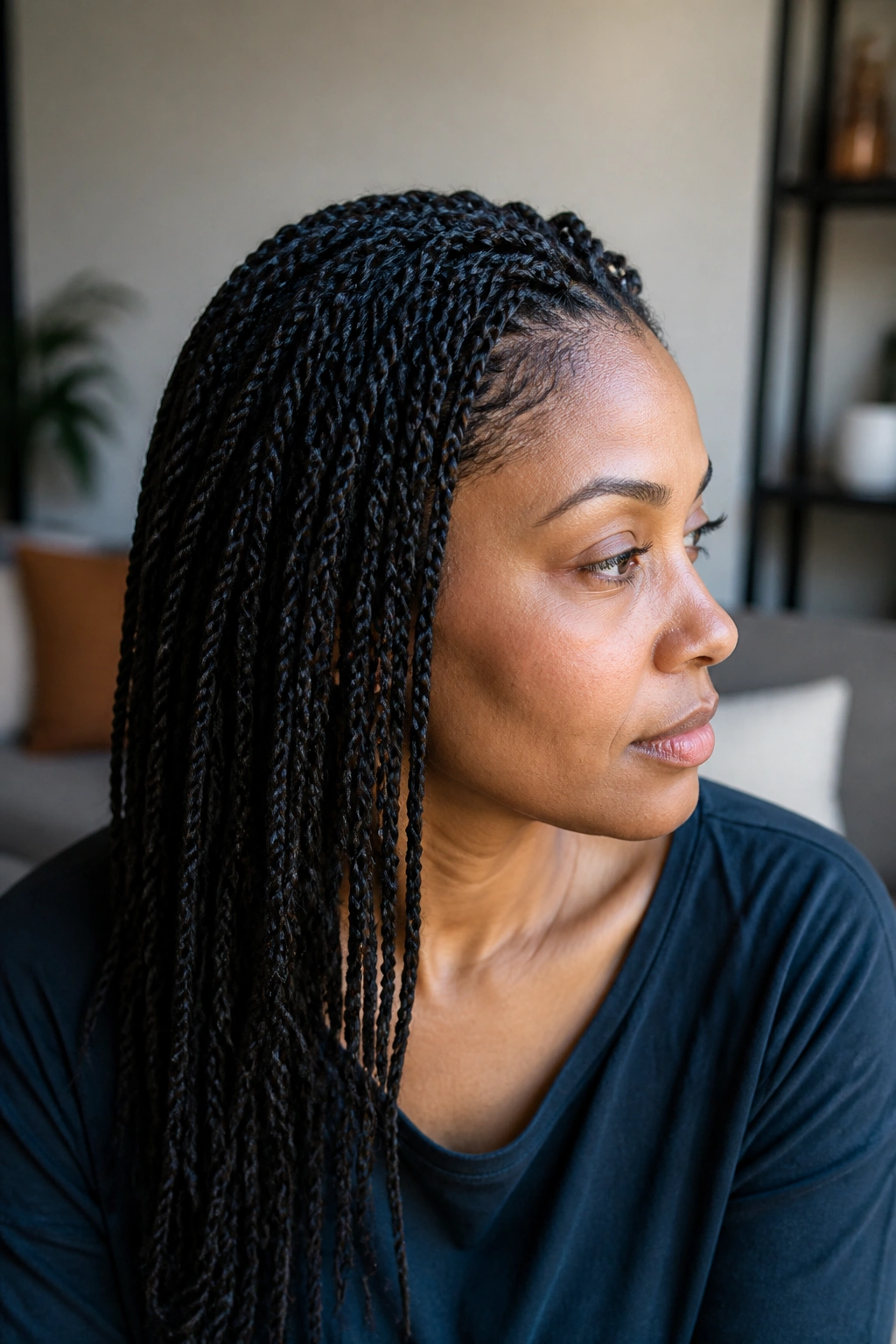
Mini twists are the style people fall in love with after they’ve had one good set and one very long install. They’re tiny, neat, and serious about low manipulation. If your main goal is to keep your hands out of your hair for a while, this is one of the strongest options.
Do not confuse “small” with “easy.” Mini twists take time. A lot of time. The payoff is that they lie flatter, move more naturally, and usually hold shape better than larger twists, especially if your hair is prone to puffing at the roots after a few days.
They’re also useful when you want density without bulk. On finer hair, tiny twists can create the look of fullness without making your head feel crowded. On thicker hair, they can feel like a clean way to organize a lot of texture without flattening it into submission.
The parting matters more here than people expect. If the sections are uneven, mini twists start looking fuzzy fast. If the sections are clean and the tension is gentle, they can look polished for days. A tail comb, clips, and a mirror that lets you check the back are not optional. They’re sanity-saving tools.
3. Chunky Twists
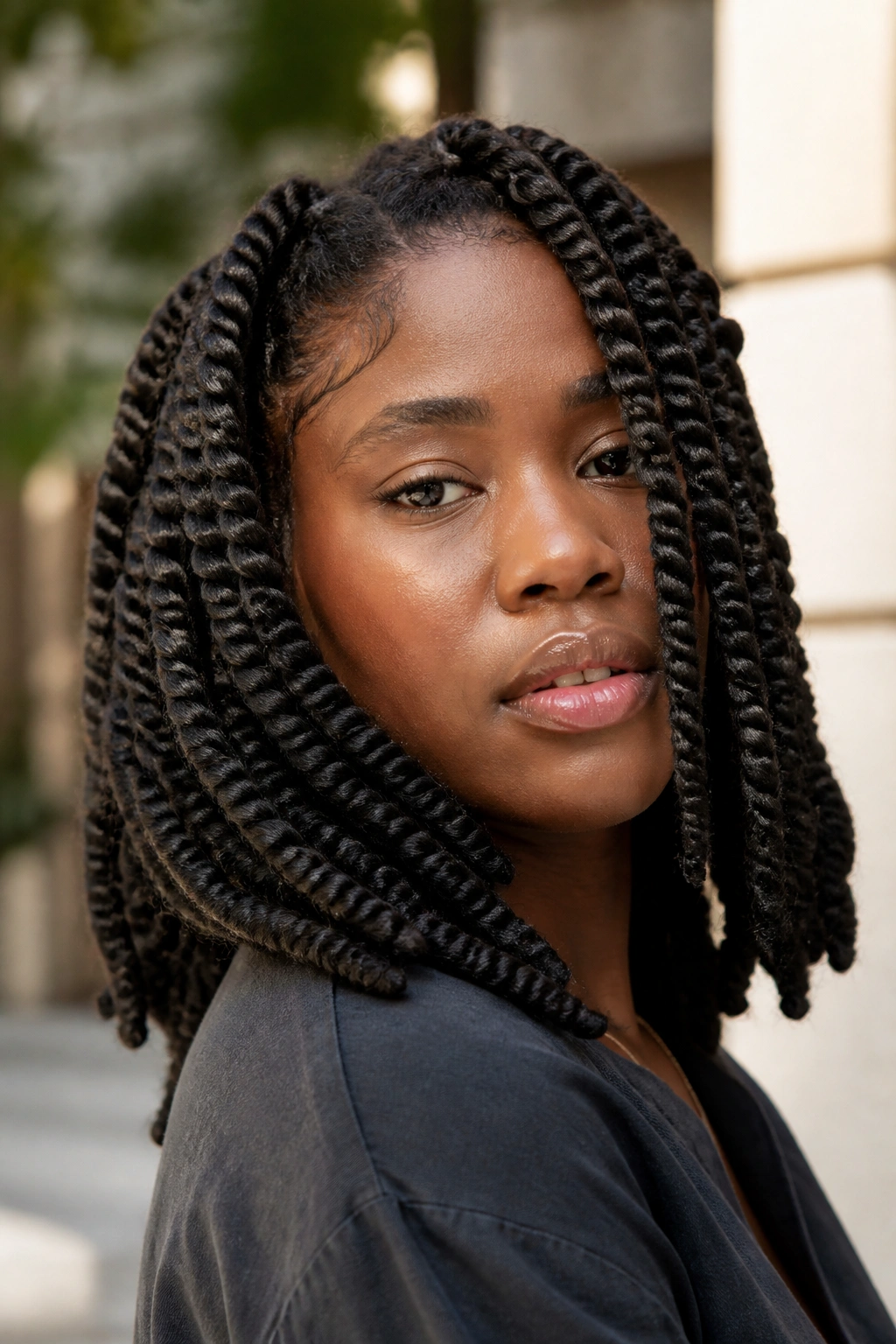
Chunky twists are for the days when you want volume, speed, and a little less fuss. They’re larger than classic two-strand twists, which means you cover more ground with fewer sections and get that plush, full look that reads relaxed rather than severe.
Why Bigger Can Be Better
A lot of people think smaller always means neater. Not true. Chunky twists can look richer and more deliberate, especially on dense hair that naturally wants body. They also place less pressure on the scalp because there are fewer individual sections tugging at the roots.
That said, they do need a steadier hand at the ends. Bigger twists can puff up faster if you skip product or twist loosely at the bottom, and the style can look lopsided if some sections are twice the size of others. That’s where a little patience pays off.
- Good on: thick hair, stretched hair, and anyone who wants fullness without a long install
- Avoid if: you want a super-detailed, grid-like finish
- Styling note: part in clean rows first, then twist each section with a firm but not tight grip
- Finish idea: tuck the ends under with a small curl rod set if you want a softer finish
One thing to watch: chunky twists look their best when the roots are neat. Puffy roots with loose ends can read messy in a hurry.
4. Flat Twists
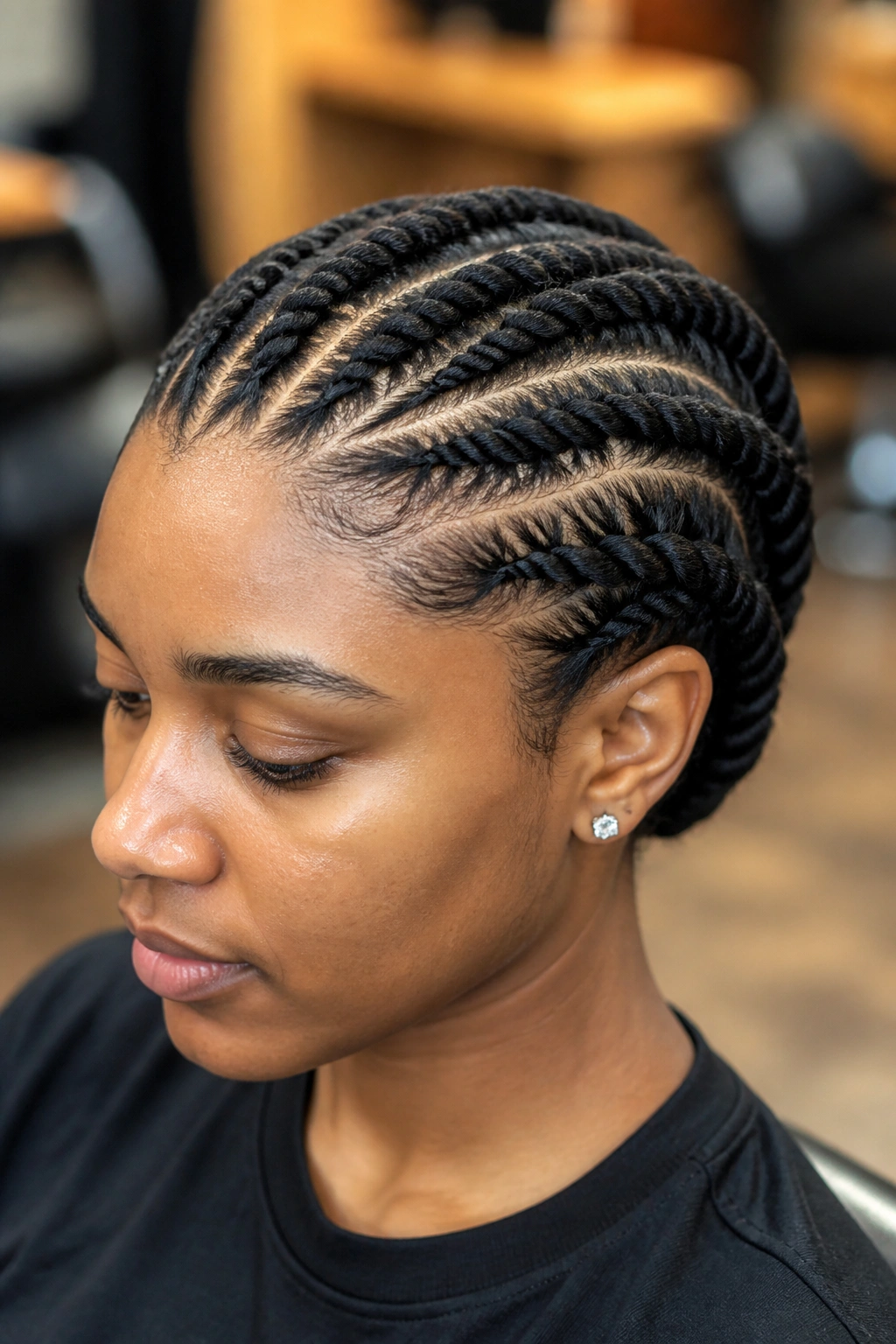
Flat twists are the quiet overachiever of natural-hair styling. They sit close to the scalp, they keep hair controlled, and they do a neat job of stretching the roots without the same bulk you get from hanging twists.
What I like most about flat twists is that they solve two problems at once. You get a style that lays flat enough for helmets, headwraps, wigs, or sleep, and you also get a base that can turn into a twist-out later if you want a little more movement. That kind of usefulness is hard to beat.
The motion is different from hanging twists, though. You’re feeding in hair from the scalp as you go, which means your hands need to stay close to the head. If you pull too hard, the style gets uncomfortable fast. If you keep the tension moderate and the part lines clean, flat twists can look sharp without feeling tight.
A lot of people use flat twists as a prep style before another look. That makes sense. They’re practical, and they make the hair behave.
5. Flat Twist Crown
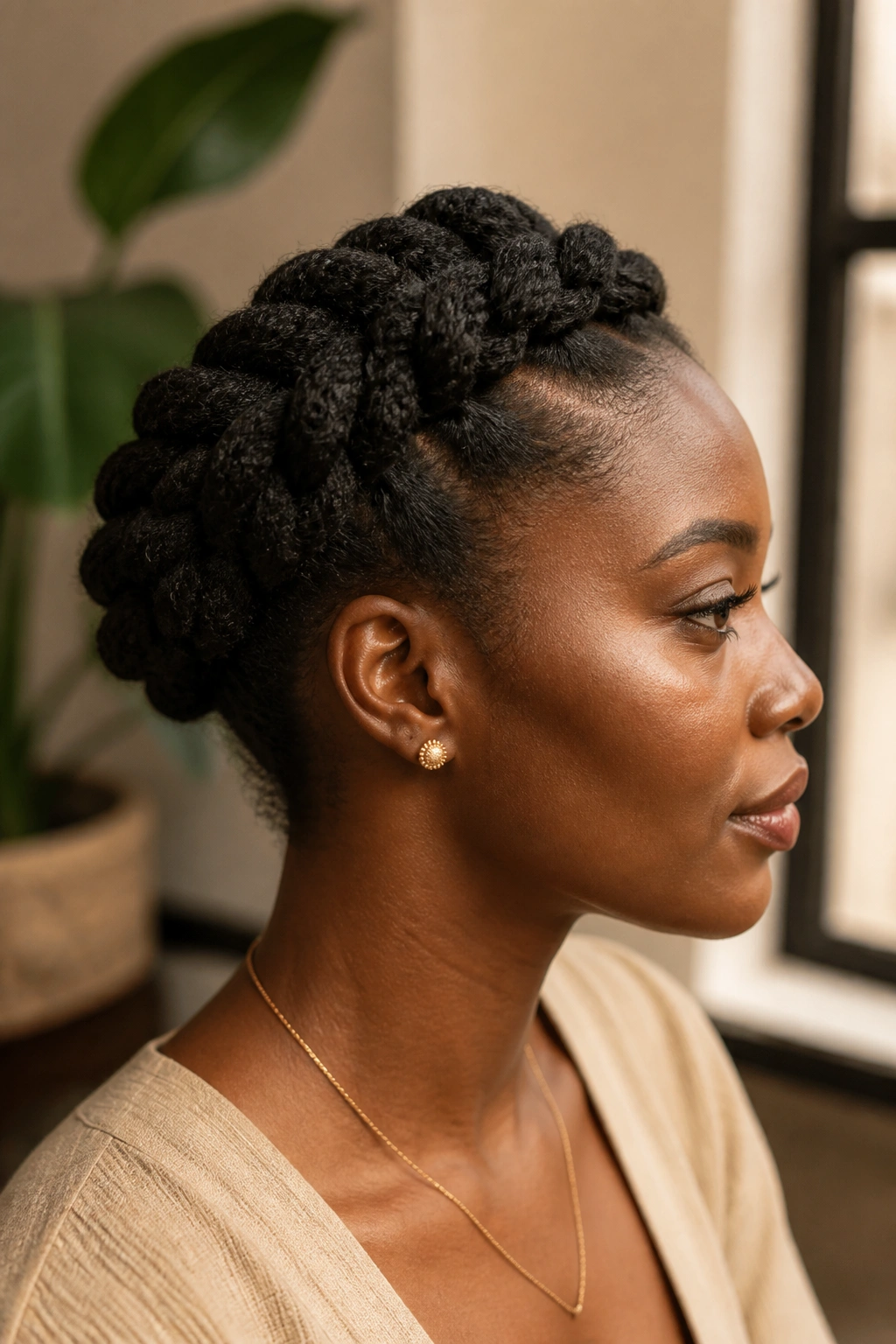
A flat twist crown has a soft, wrapped look that sits around the head like a halo, but less precious and more wearable. It’s one of those styles that can look dressed up with very little extra work, which is exactly why I like it.
The best version starts with a side or center part, then a pair of flat twists that curve around the scalp and meet at the back or side. The shape matters. Too low, and it disappears. Too high, and it can feel awkward around the hairline. The sweet spot is close enough to the scalp to feel secure, but not so tight that your temples start complaining.
This style is especially good when you want your ends tucked away and your face open. It works on stretched hair, twisted hair, or even a second-day twist set that needs a little polish. A few discreet pins can keep the back from slipping out without making the whole thing look overworked.
The crown effect is calm. Not boring. Calm.
And that’s the part people miss. A flat twist crown doesn’t shout. It holds the line.
6. Twist Out
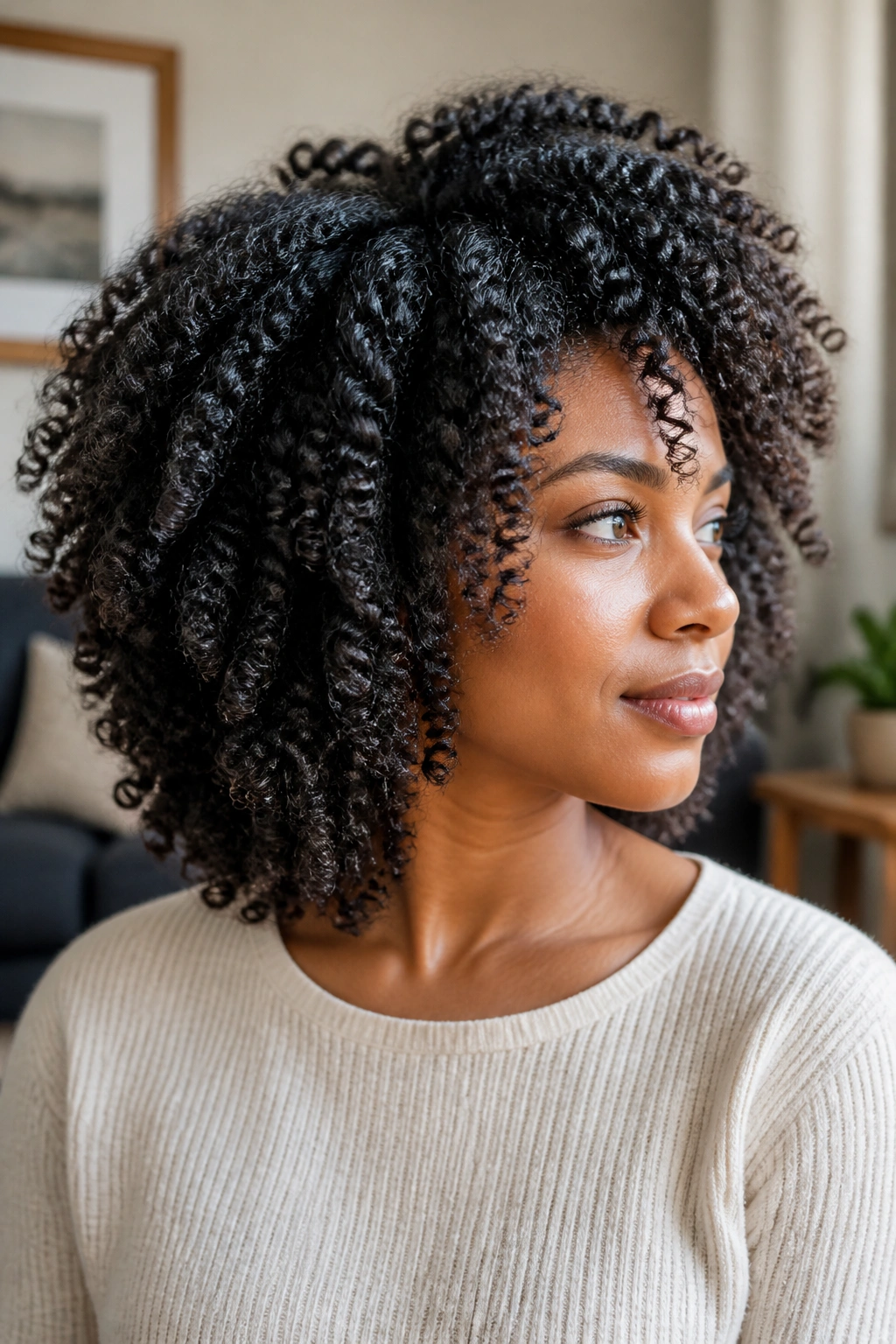
A twist-out is not the same thing as wearing twists, and that distinction matters. The style depends on the set underneath, then the separation and shaping afterward. Done well, it gives you stretch, definition, and movement without the tight spiral look you get from a braid-out or a wash-and-go.
The biggest mistake is taking twists down too soon. Hair that isn’t fully dry will frizz, lose shape, and make you blame the product when the real issue was time. Let the twists dry all the way through, even if that means sleeping with them and taking them down the next day.
How to Keep It Crisp
Use a little oil on your fingertips when unraveling. That reduces friction. Separate each twist gently, then stop. Don’t keep fluffing if you want definition. If you want more volume, pick the roots a little and leave the ends mostly alone.
A twist-out is a style for people who like a softer finish. It can be big, fluffy, and rounded, or it can stay more stretched and defined depending on how much you separate. Both are good. The point is control, not perfection.
Best move: twist on dry or stretched hair if you want a longer-lasting pattern.
7. Half-Up, Half-Down Twists
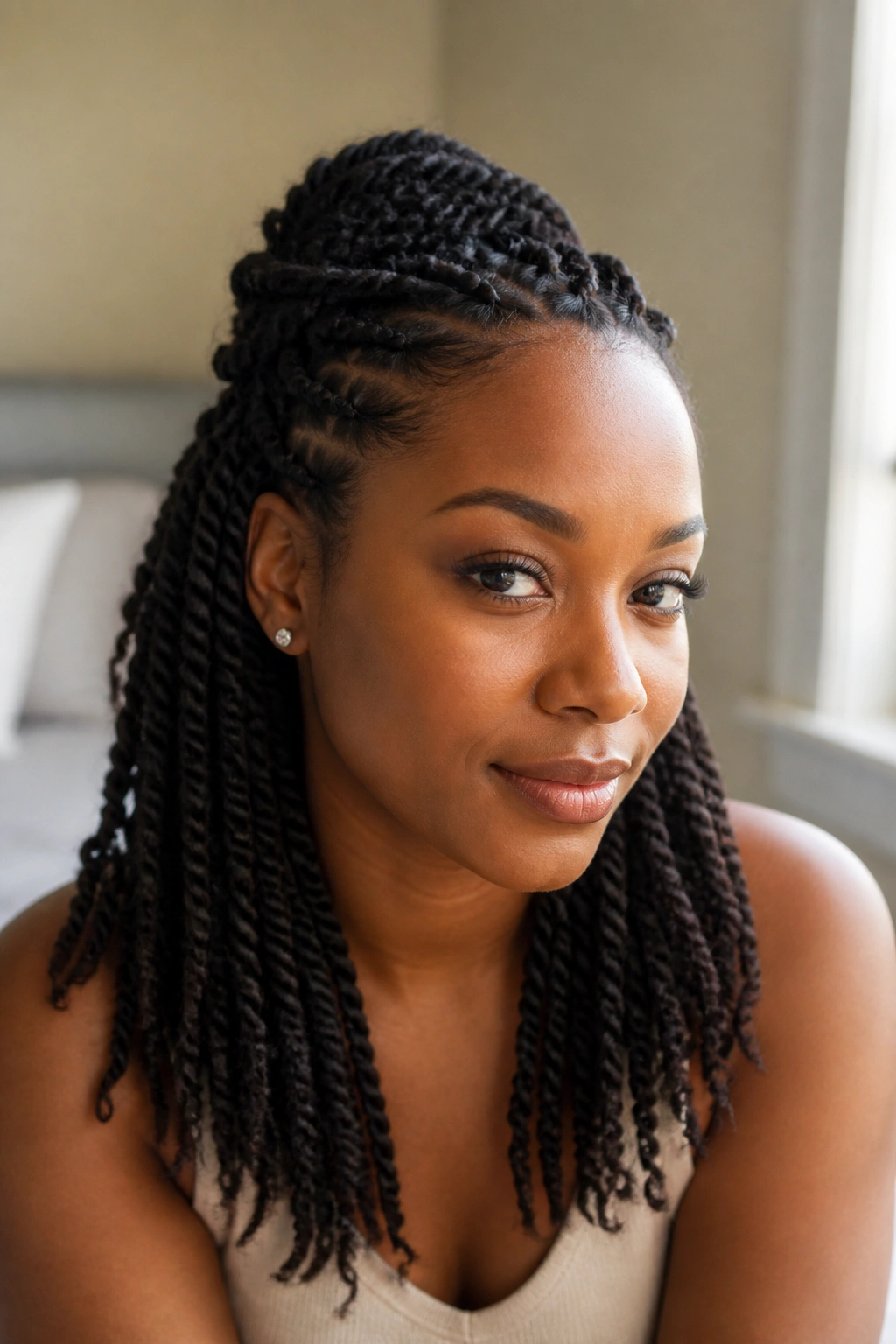
Some styles are useful because they solve an everyday problem. Half-up, half-down twists do exactly that. They keep hair off your face while still letting you keep length and movement in the back, which is a nice middle ground when you do not want a full updo.
I reach for this look when the front needs structure and the ends need freedom. A top section can be gathered into a bun, a small puff, or a clipped twist knot, while the rest stays loose. That split keeps the style from feeling heavy around the edges, which matters if your hair is dense or long.
It also helps with shape. Pulling only the top back creates lift without sacrificing the soft drape in the lower half. On medium and longer hair, that contrast looks better than forcing every strand into the same tight plan.
A deep side part or a center part changes the mood fast. So does leaving two small twists loose around the face. Tiny shift. Big difference.
8. Low Twisted Bun
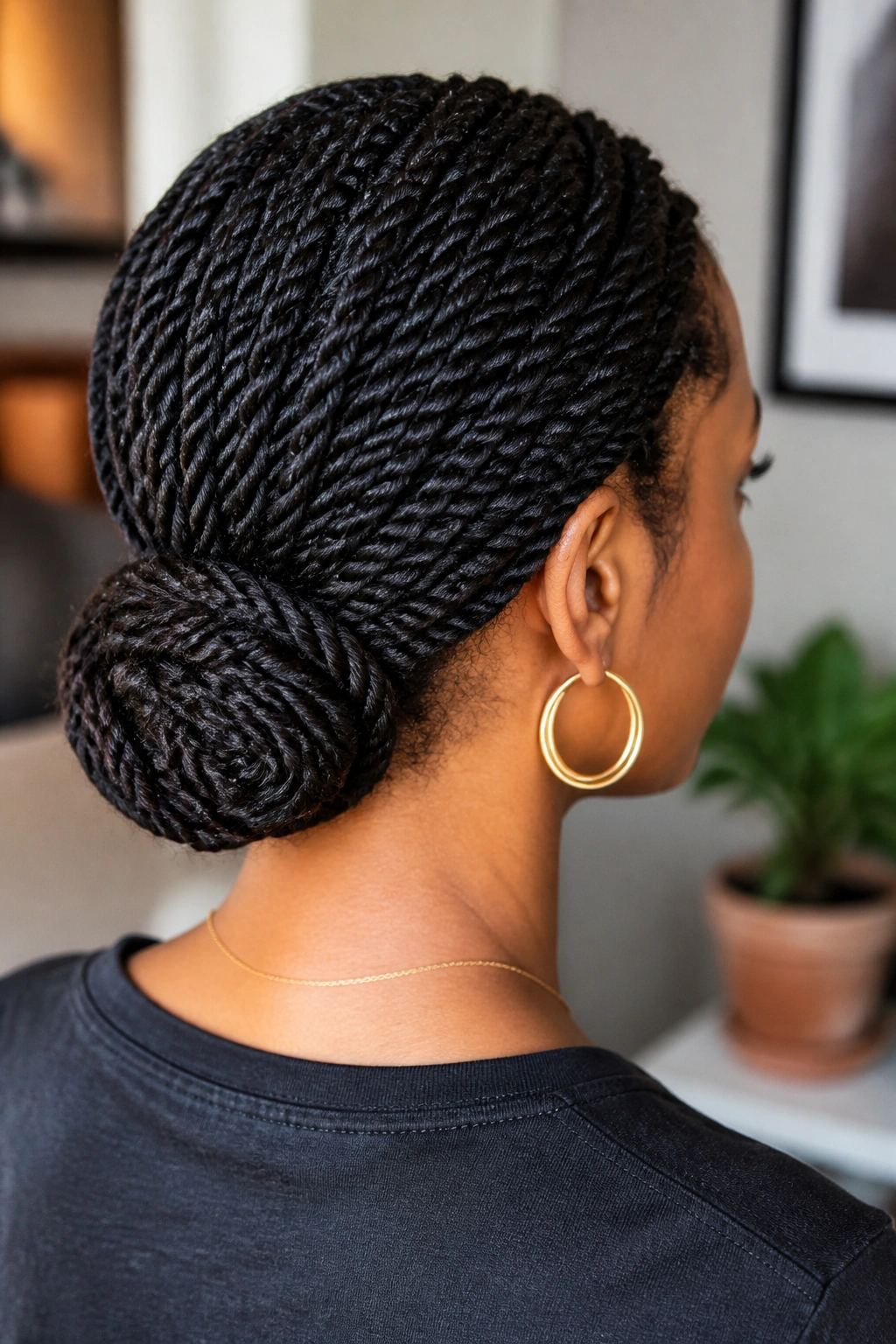
A low twisted bun is one of those styles that can look plain from a distance and polished up close. It sits at the nape, keeps the silhouette neat, and works when you need your hair contained without making it look like you gave up on it.
The trick is in the base. I prefer starting with twists that are already smooth and mostly dry, then gathering them gently at the back with a soft band. From there, the twists are wrapped, tucked, or pinned into a bun shape. No yanking. No tiny elastics that snag the strands and make removal annoying later.
This style is especially useful for days when you need your hair to behave under a coat collar, a blazer, or a scarf. The bun stays out of the way, and the hairline can be kept clean with a little edge control if you like that finished look. If you do not, skip it. A tidy part and a secure bun are enough.
A low bun also hides uneven length nicely. That matters more than people admit.
9. Twisted Ponytail
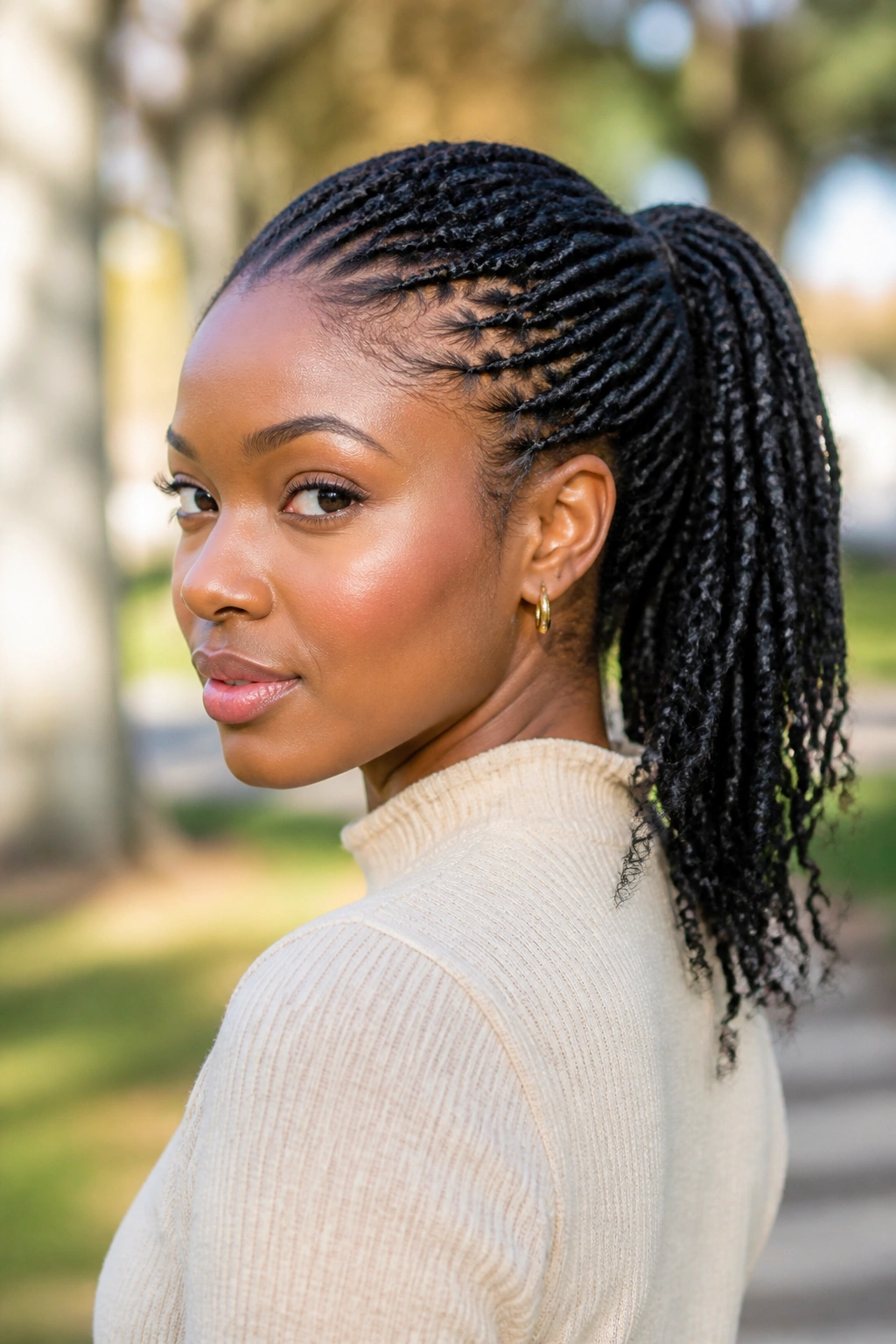
Twisted ponytails are one of my favorite “looks finished, took less time than it should have” styles. They can be high, mid, or low, but the point is the same: the twists pull the eye upward, then the ponytail gives you movement at the ends.
Sleek crown. Soft ends. Easy.
A good twisted ponytail starts with tension that is firm at the base and relaxed toward the length. If the roots are pulled too tight, the style loses the grace it was supposed to have. If the ponytail is too loose, the whole thing slumps and starts looking like an afterthought. Somewhere in the middle is where it behaves.
You can leave the ponytail as hanging twists, wrap it into a small coil, or let the ends stay free and fluffy. That last version gives a softer feel and works well when you want the style to feel less formal. A middle-height ponytail tends to be the most forgiving because it balances shape and comfort.
This is also a good style for scarves, earrings, and necklines that you want to show off.
10. Side-Swept Twists
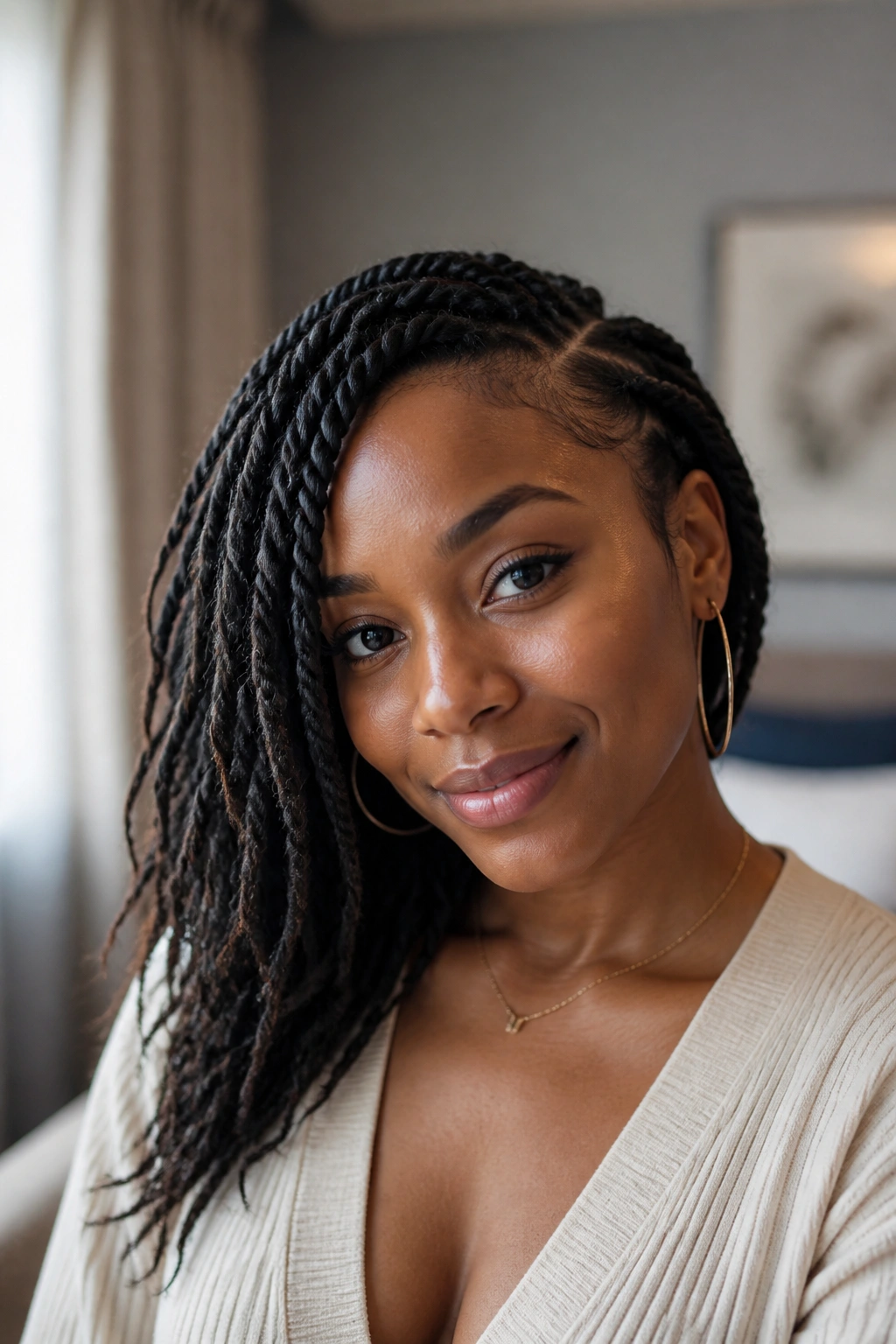
Can a twist style change the shape of your whole face? Yes, absolutely. Side-swept twists shift the weight to one side and create a line that feels softer than a center-framed style. They’re especially good when you want a little drama without going full updo.
The style works best when the part is deep and intentional. Pulling twists across the forehead or letting them fall toward one shoulder changes the balance in a way that can flatter strong cheekbones, shorter necklines, or a haircut that is still growing out. It also gives you a nice way to work with asymmetry instead of fighting it.
Where It Pays Off
- Dressy events: side-swept twists read polished without looking stiff
- Everyday wear: one side tucked back keeps hair out of your face
- Medium lengths: the drape looks fuller when there’s enough length to swing
- Shorter cuts: smaller twists make the side sweep stay in place better
A few pins behind the ear usually do the job. Keep them hidden if you can. Visible pins can be cute, but only when they’re intentional.
11. Twisted Pigtails
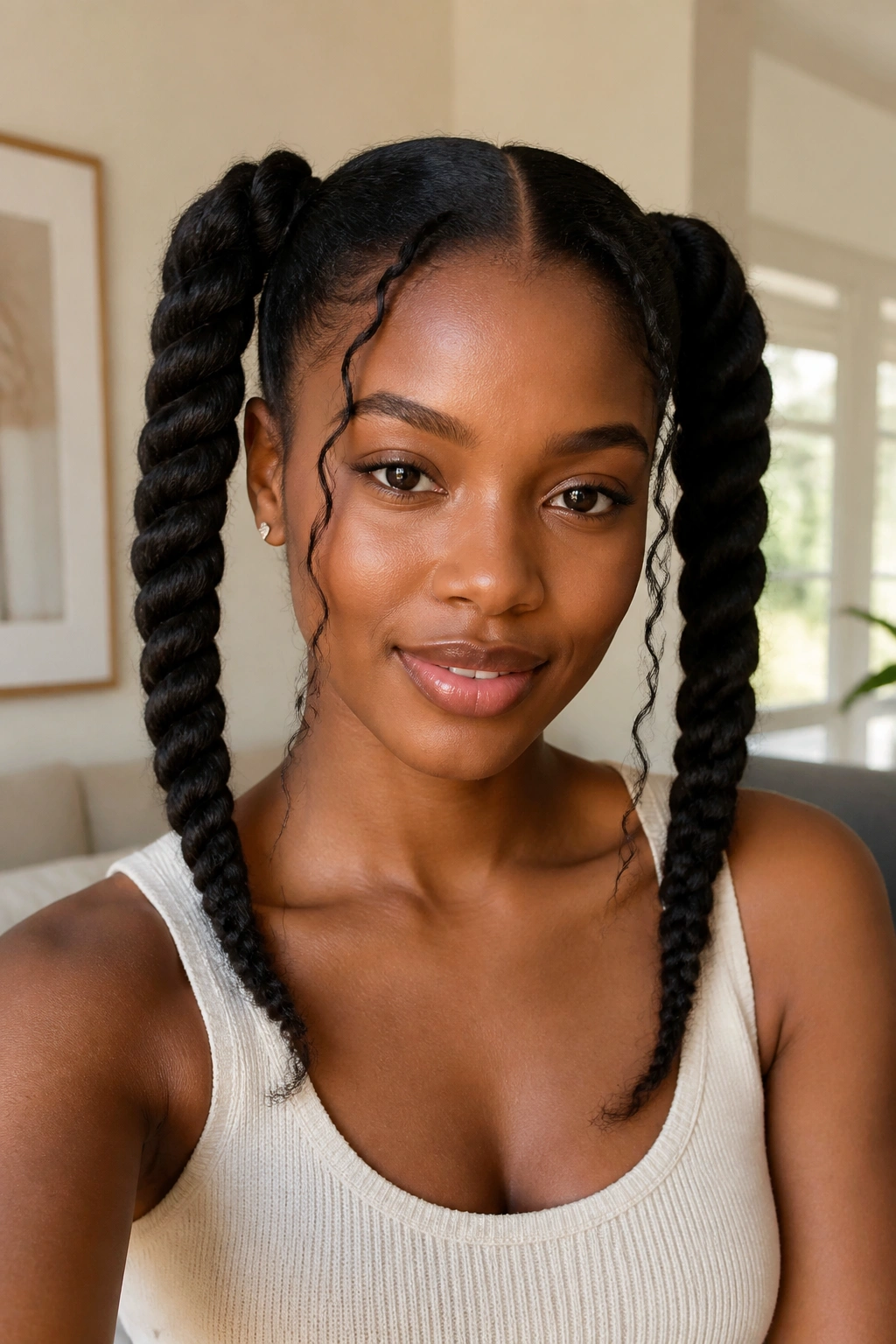
Twisted pigtails are playful without being childish, which is a nicer line to walk than people expect. Two sections, two tails, and a clean middle part can look fresh on adults as easily as they do on kids, especially when the twists are neat and the ends are controlled.
The shape is the whole story here. A center part gives a balanced feel. A side part makes it softer. You can wear the pigtails high for a more spirited look or low for something calmer and easier to sleep in later. Either way, the symmetry does a lot of the work.
If you want the style to feel more intentional, add a ribbon, a cuff, or a tiny bead at the end. Keep the extras light. Heavy decorations drag the twists down and make the base look strained. That’s not the effect you want.
This is one of the best styles for a busy day because it looks planned even when the actual styling window was short. That matters. A lot.
12. Twisted Mohawk
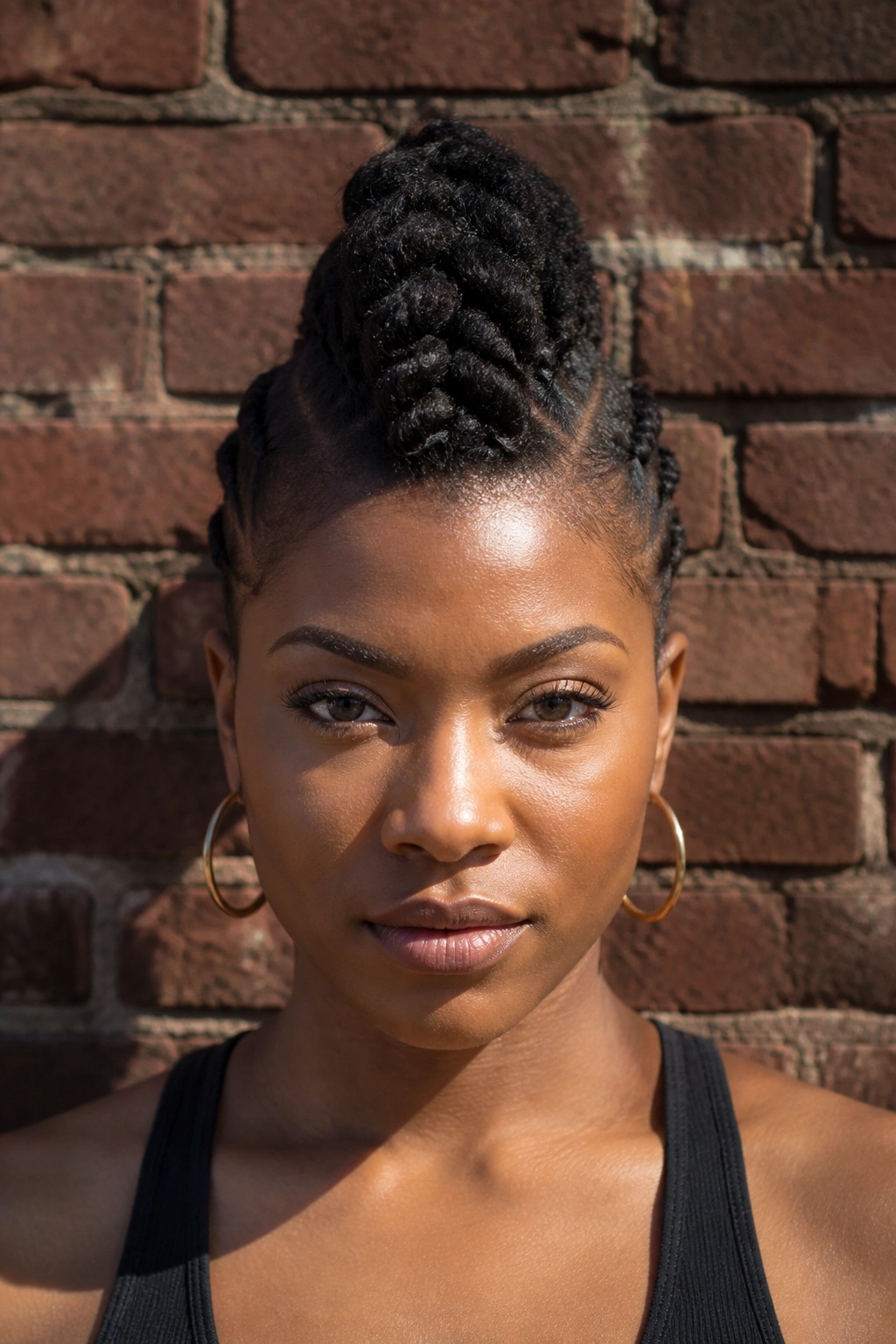
A twisted mohawk is for the days when you want height, shape, and a little edge. It usually means the sides are flat twisted, pinned down, or slicked close, while the middle section stands up in chunky twists or a lifted roll.
It sounds bold because it is. The middle strip becomes the focus, so the rest of the hair needs to stay quiet and controlled. That contrast is what makes the style work. If the sides puff out too much, the mohawk loses its line and turns into a messy middle pile instead of a clean shape.
I like this style on hair with enough density to hold a lifted center. Fine hair can wear it too, but the sections need more support from pins or a firmer base. A little mousse at the roots helps keep flyaways from breaking up the shape.
Wear it when you want your hair to feel deliberate. Not loud for the sake of it. Deliberate.
13. Passion Twists
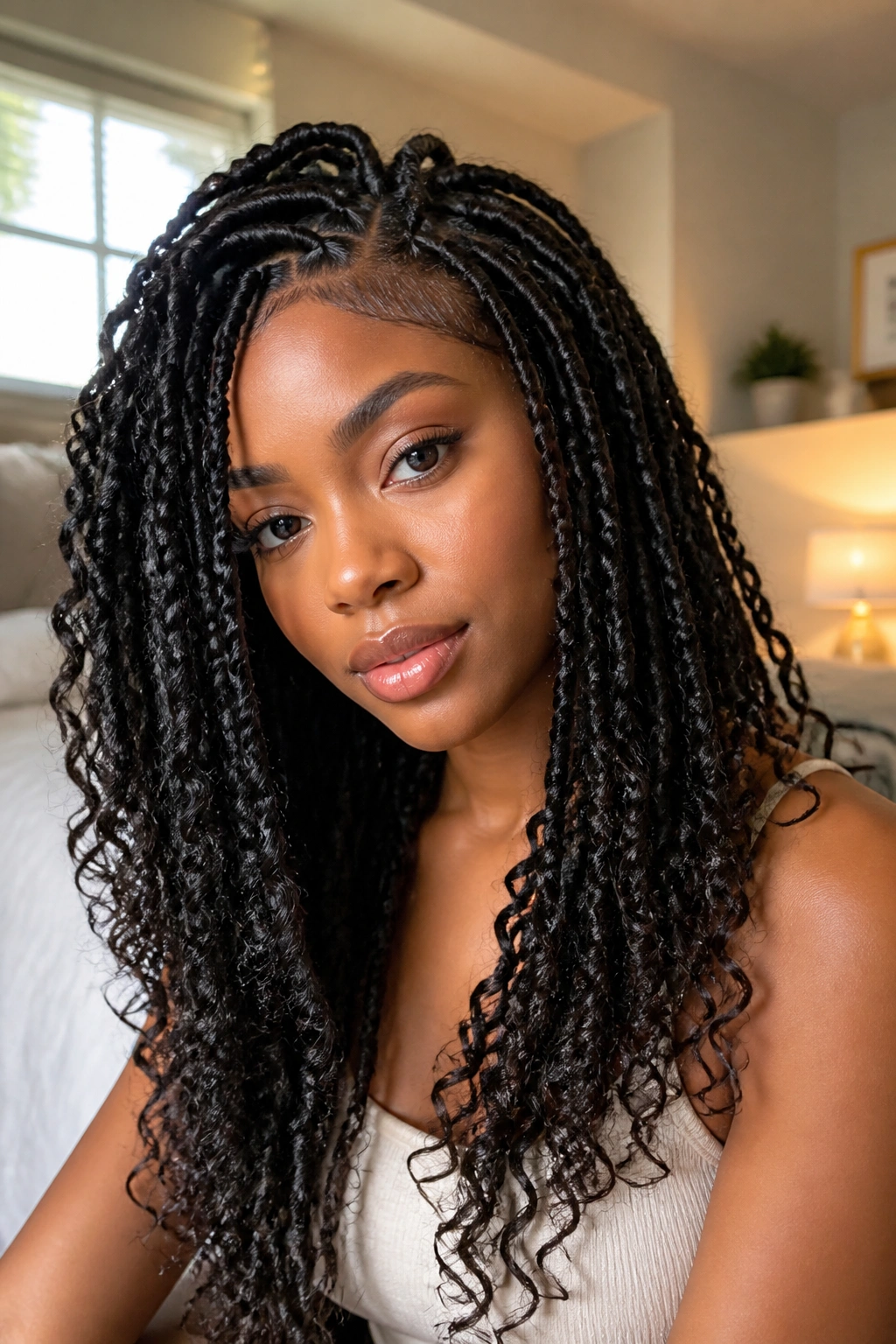
Passion twists have a softer, looser look than classic two-strand twists, and that is the whole point. They’re made with extension hair that gives the style a springy, bohemian finish, often with a more relaxed curl at the ends.
Unlike plain twists, passion twists usually read more textured and a bit less formal. That makes them a good fit if you want a protective style that still feels airy and touched-up, not rigid. The movement is nice. The style sways a little when you walk, which sounds minor until you see how much it changes the vibe.
They do need a gentler hand when you separate them after installation. The fiber can frizz if you rough it up, and sleeping without a satin bonnet will make the ends rough faster than you’d like. If you’ve ever seen a set that started polished and then turned fuzzy around the crown, that’s usually a sleep or care issue, not a style problem.
Passion twists suit people who like soft texture and do not mind a little controlled mess at the edges.
14. Senegalese Twists
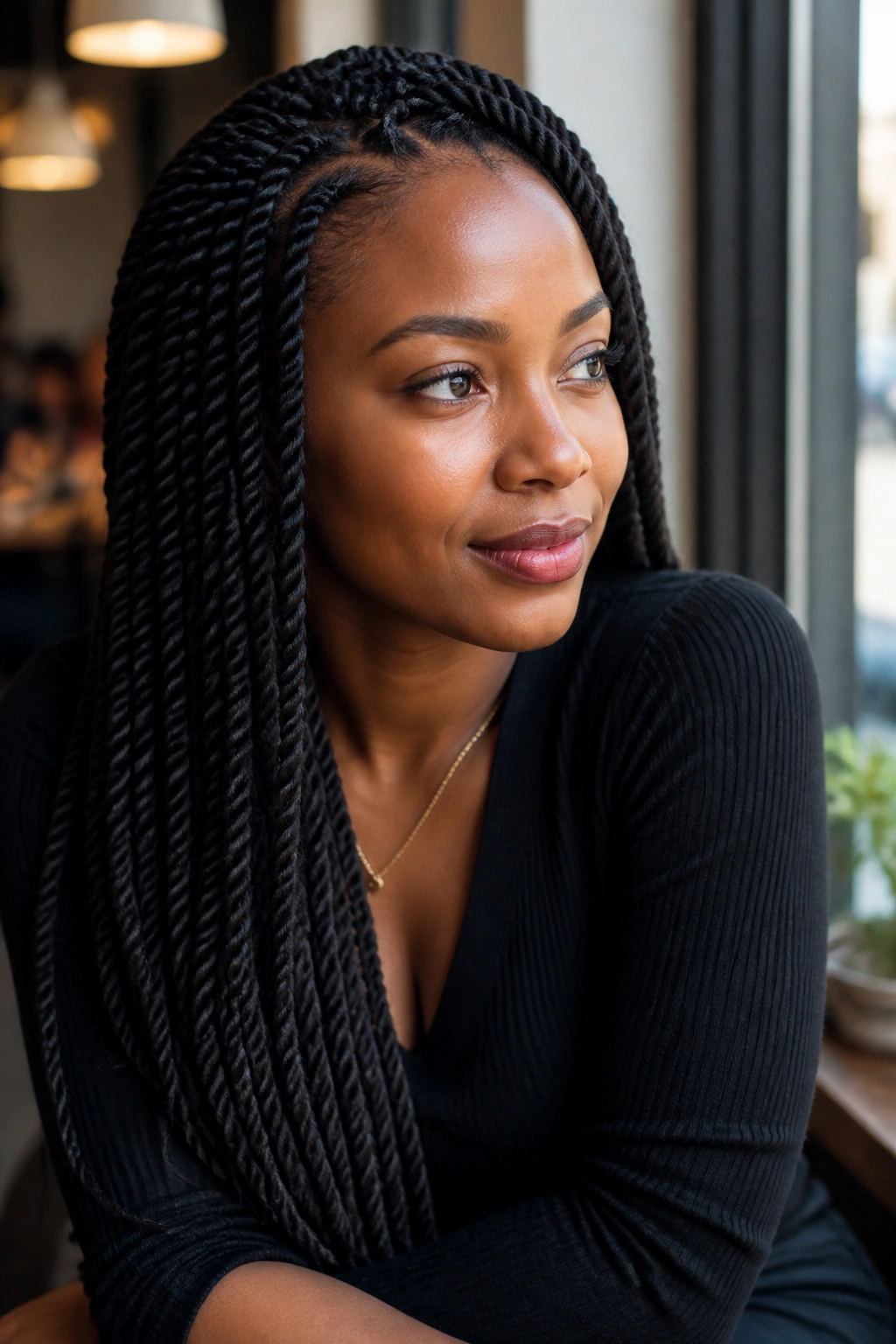
Senegalese twists are the sleek cousins in the twist family. The finish is smoother, the lines are cleaner, and the overall shape tends to look a bit more polished than styles with a rougher fiber texture.
The hand feel is different too. These twists sit more like cords than fluffier rope twists, and that cleaner surface can make the whole style look sharper in photos and in person. I say that carefully because not every style needs a glossy finish, but if that’s the look you want, Senegalese twists deliver it without much drama.
They’re a good choice when you want length and order. They also tend to hold a neat shape well, which makes them useful for people who don’t want the style to get too fuzzy too fast. The tradeoff is that they can feel a bit more slippery during installation, so sectioning and grip matter.
If you like a neat line at the part and a smooth fall from root to end, this one belongs near the top of your list.
15. Marley Twists
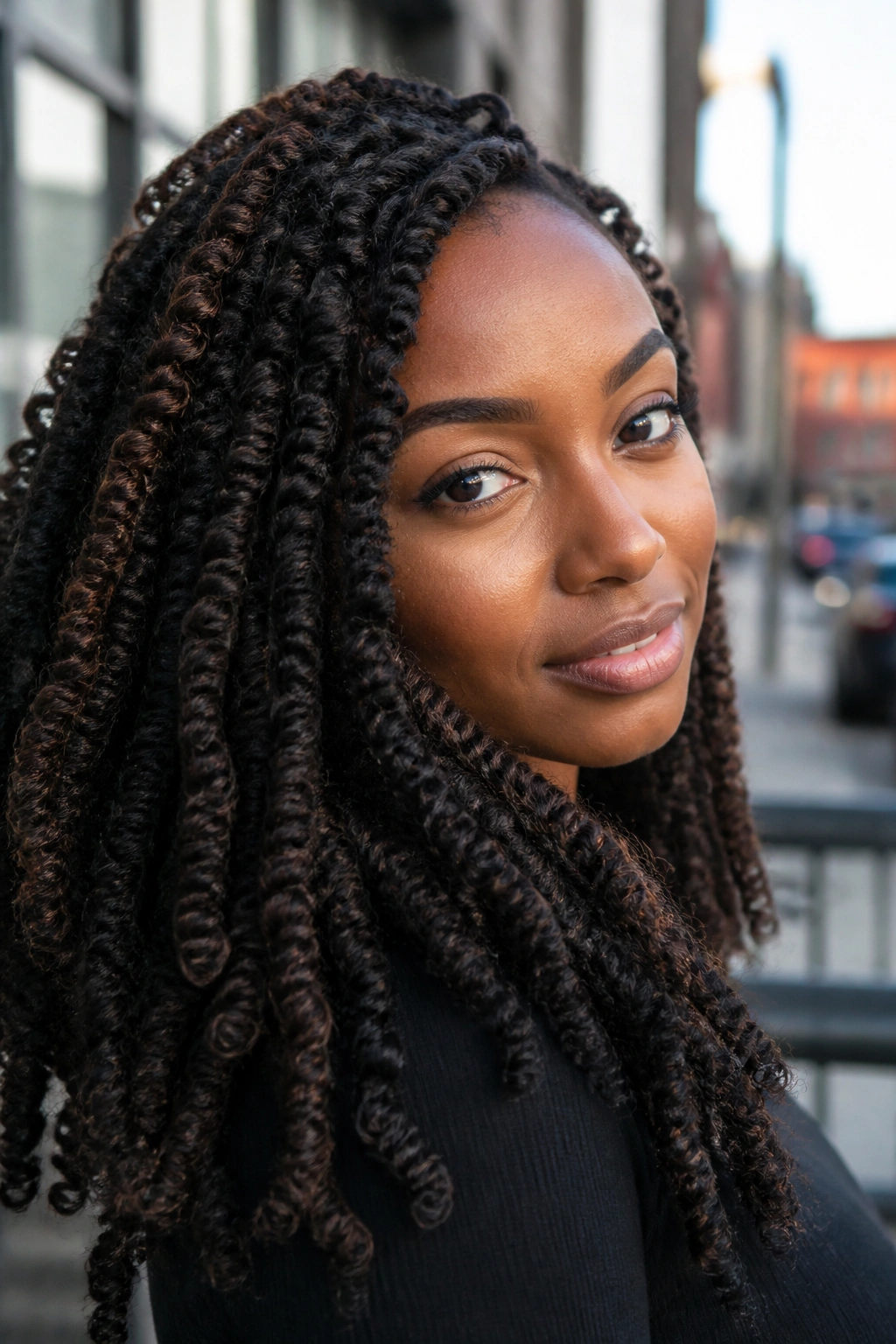
Marley twists have a rougher, more textured finish that blends especially well with natural coils. The texture is matte, a little coarse, and less shiny than Senegalese hair, which gives the style a more grounded look.
That texture is the selling point. It makes the twists look fuller without trying too hard, and it often blends nicely with tighter curl patterns. If your hair has a lot of texture and you want the extension hair to look like it belongs there, Marley twists are one of the easiest places to start.
Who They Suit Best
- People who want a fuller, denser silhouette
- Hair that blends better with textured extension fiber
- Styles that need a softer, less glossy finish
- Medium to long wear when you want shape more than shine
They can feel heavier than some other extension twists, especially if the sections are large. So keep the parts sensible. Overloading one section with too much hair is where comfort starts to go sideways.
I like Marley twists when the goal is texture first, polish second.
16. Havana Twists
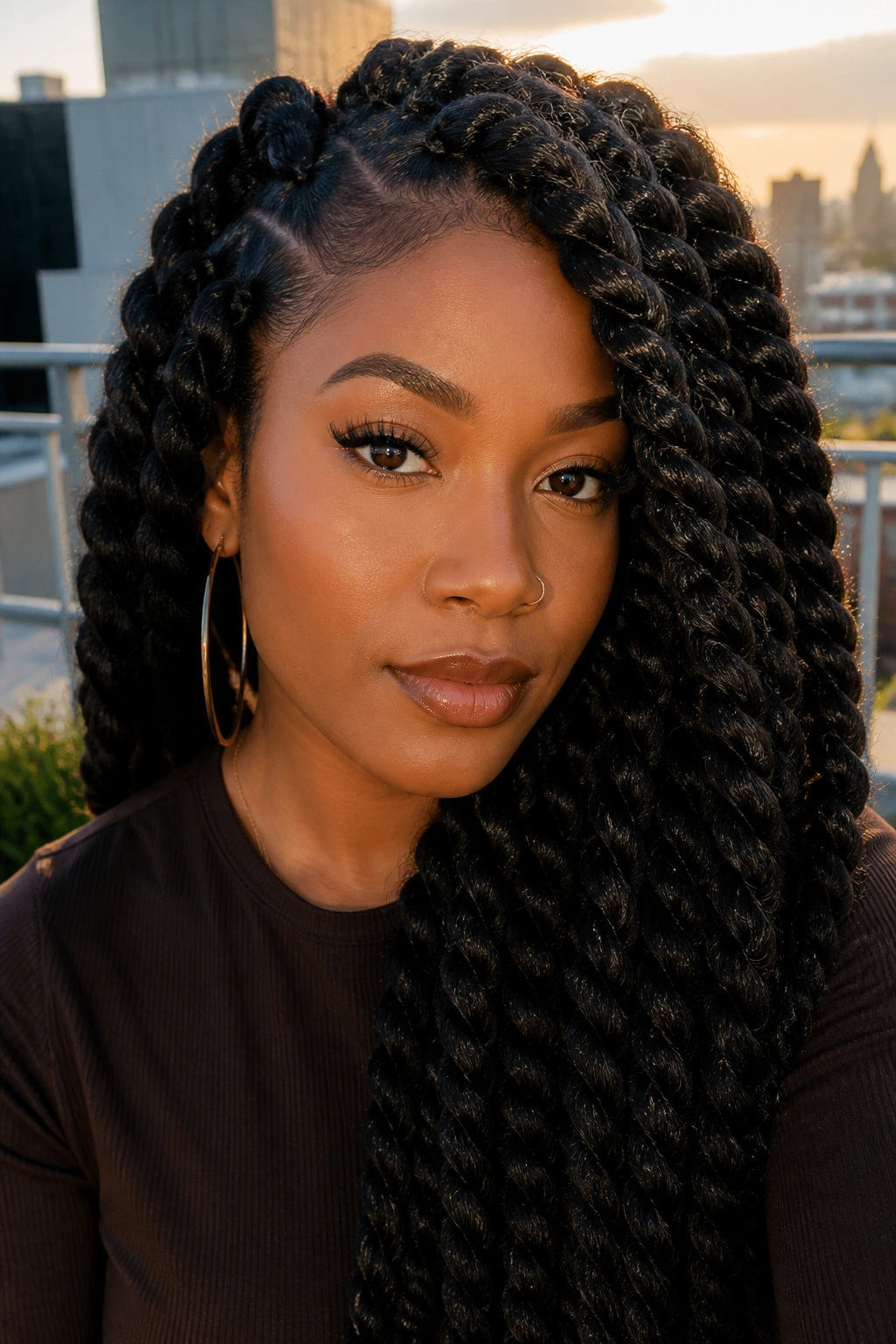
Havana twists are big, chunky, and a little dramatic in the best way. They use thick sections of extension hair, which means the whole style builds fast and the finished look has a plush, full shape that stands out without needing a lot of extra detail.
Are they heavy? They can be, if the sections are too large or the hair is too long. But compared with styles that are tightly packed all the way through, Havana twists often feel more airy than they look. That’s part of the charm. The silhouette is bold, but the style can still move.
This is a smart option when you want a protective style that looks dressed up straight away. It does not need much accessorizing. The size does the talking. It also tends to be friendlier for people who like a faster install than tiny or medium-size twists require.
The best Havana sets have clean roots and rounded ends. If the base is sloppy, the whole thing looks top-heavy. Get the root placement right and the rest usually falls into place.
17. Spring Twists
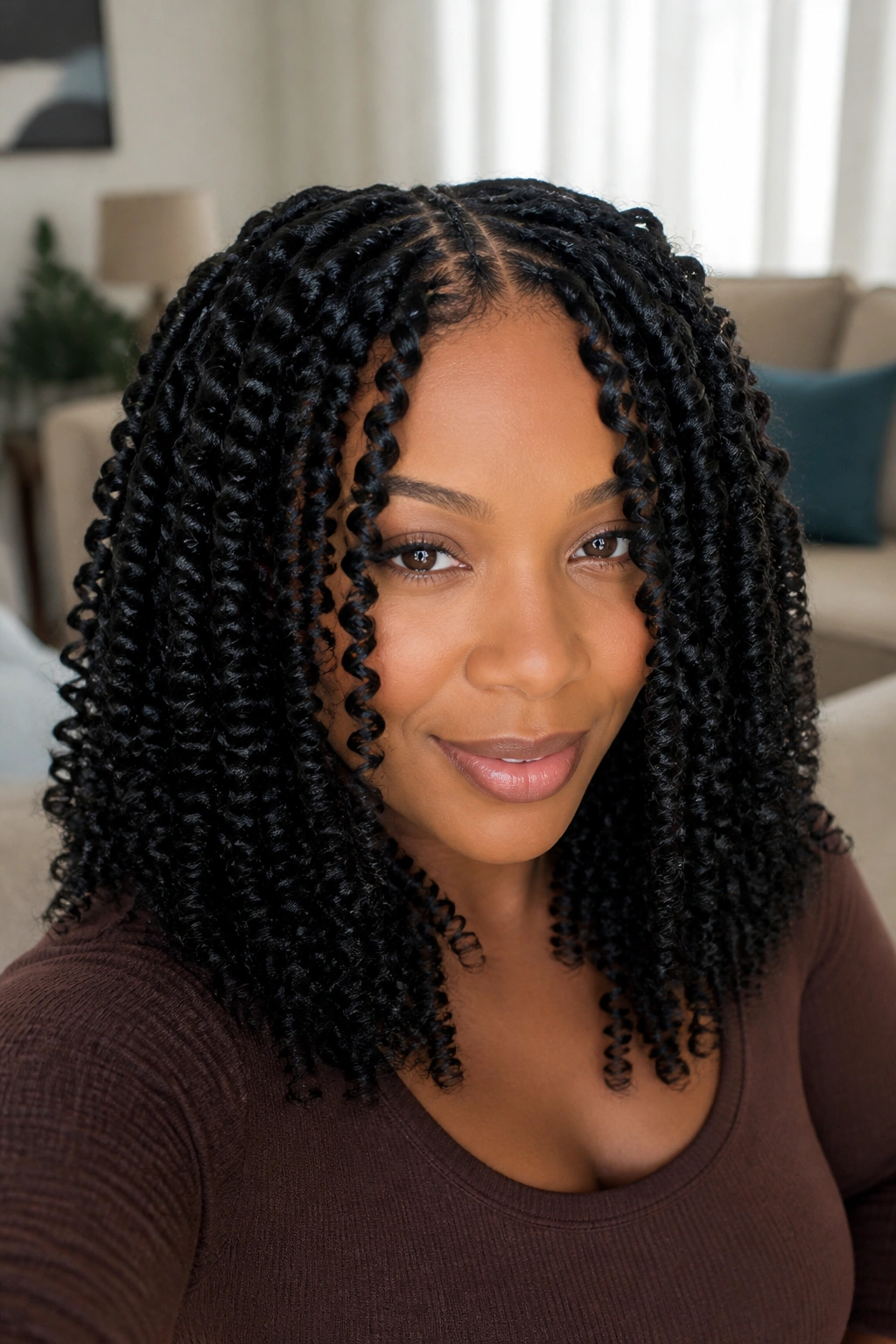
Spring twists have bounce in a way that makes them easy to like. The fiber is usually coiled or springy, so the finished style has a light, playful feel and a texture that moves instead of hanging stiffly.
That motion changes how the style reads. Spring twists can look softer than chunky rope twists and less structured than Senegalese twists. They sit in the middle, which is useful if you want something that looks styled but not rigid. The curls at the ends give them extra life, and they tend to work well when you want the hair to feel a little lighter around the face.
What to Watch For
- Separate gently: rough handling makes the coils frizz fast
- Keep the parts neat: the springy texture draws attention to the root line
- Use light product: too much cream weighs the style down
- Sleep with protection: a satin bonnet keeps the coils from catching
Spring twists are one of those styles that look cheerful without needing much effort after install. That is a good thing. People need more hair that behaves kindly.
18. Rope Twists
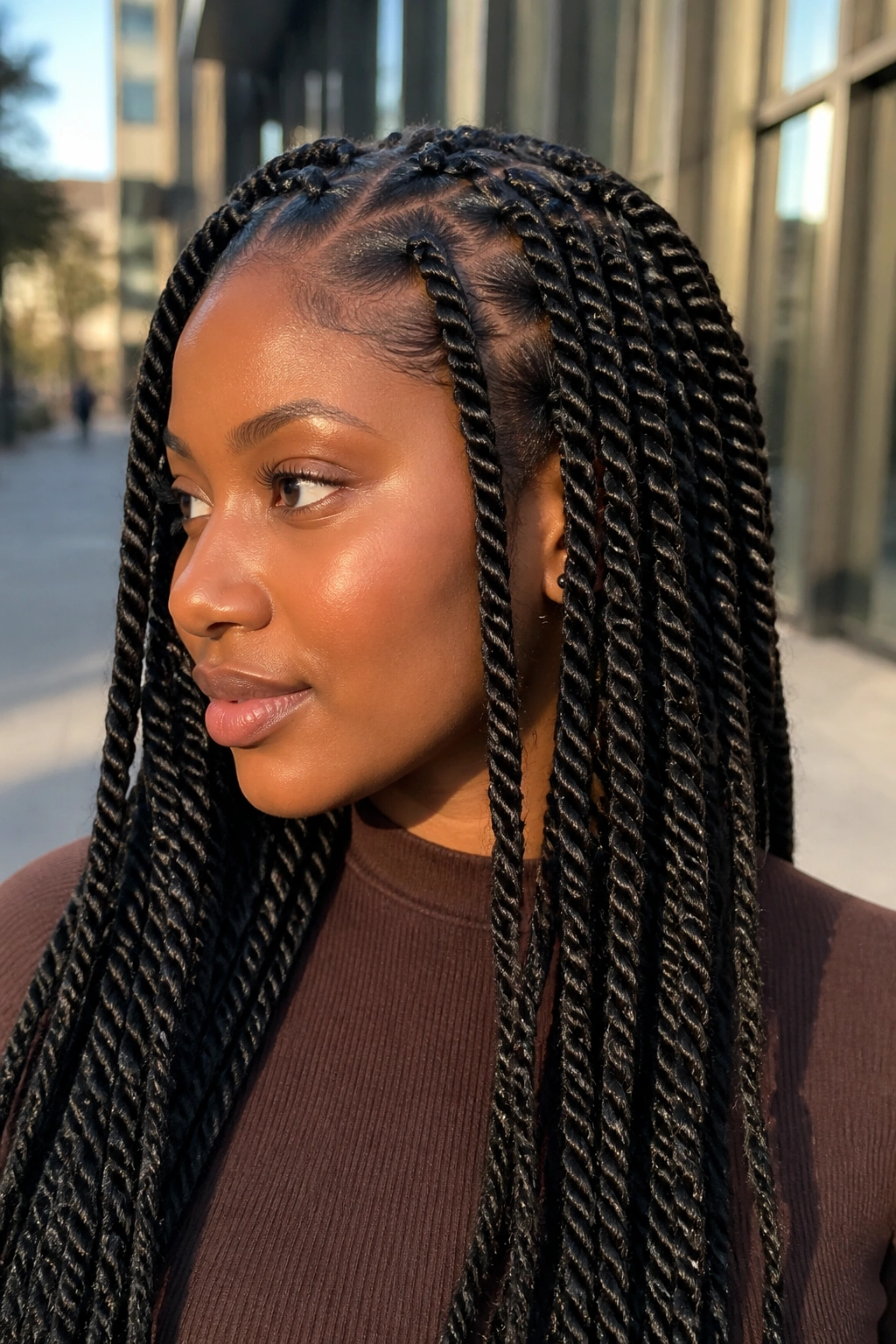
Rope twists are cleaner than a lot of people expect. The rope effect comes from the way the two strands wrap around each other, creating a defined twist that feels tighter and a little more linear than some fluffier styles.
Unlike styles that depend on volume at every point, rope twists look best when the parting is precise and the twist line stays smooth from root to end. That gives them a neat, almost sculpted look. They’re a solid choice if you want your hair to look controlled without being flat.
They also work well when you need a style that stays tidy through movement. If you commute, work out, or just dislike hair falling into your face, rope twists can be a very sensible choice. Not glamorous in the dramatic sense. Sensible in the good way.
A middle part, a side part, or a sleek ponytail base can all change the outcome. The twist itself stays the same; the mood shifts around it.
19. Two-Strand Twist Updo
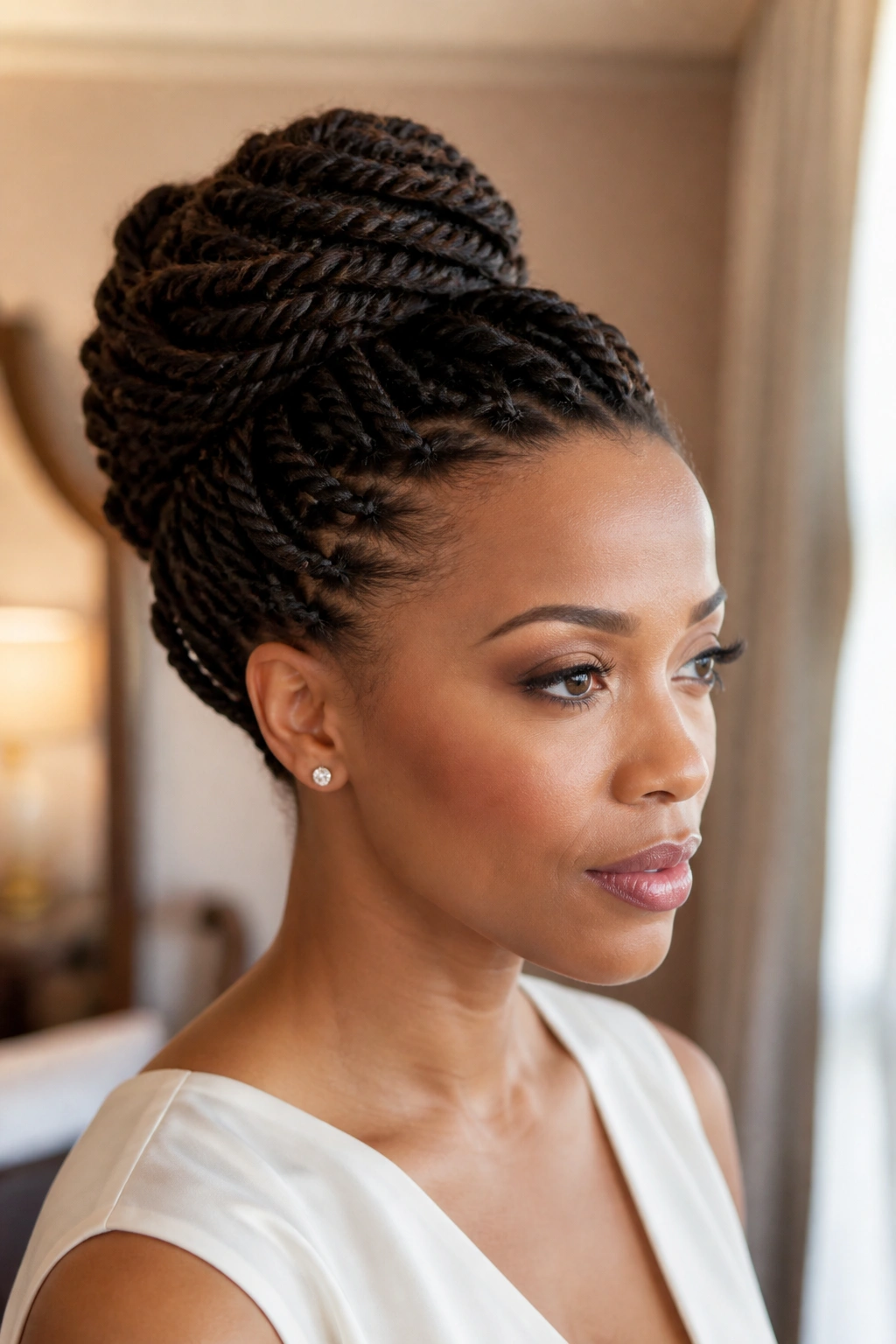
A two-strand twist updo is what happens when twists stop hanging and start building shape. The hair is sectioned, twisted, then pinned into a chignon, French roll, tucked knot, or rolled shape that sits higher on the head.
This is one of the most useful styles for formal wear because it looks intentional without needing a whole separate styling system. Day-old twists often make the best base because they already have some grip and shape. That means the updo can hold better and feel less slippery when you start pinning.
The lines matter here. Keep the sides smooth, leave enough volume at the crown if you want height, and hide the ends as cleanly as possible. If the tucked pieces poke out, the style starts looking unfinished fast.
I like this style for weddings, dinners, and any moment when you want natural hair to look elegant without being overworked. It has structure. It also has a little softness, which is the part that saves it from feeling too severe.
20. Twists with Beads, Cuffs, and Thread
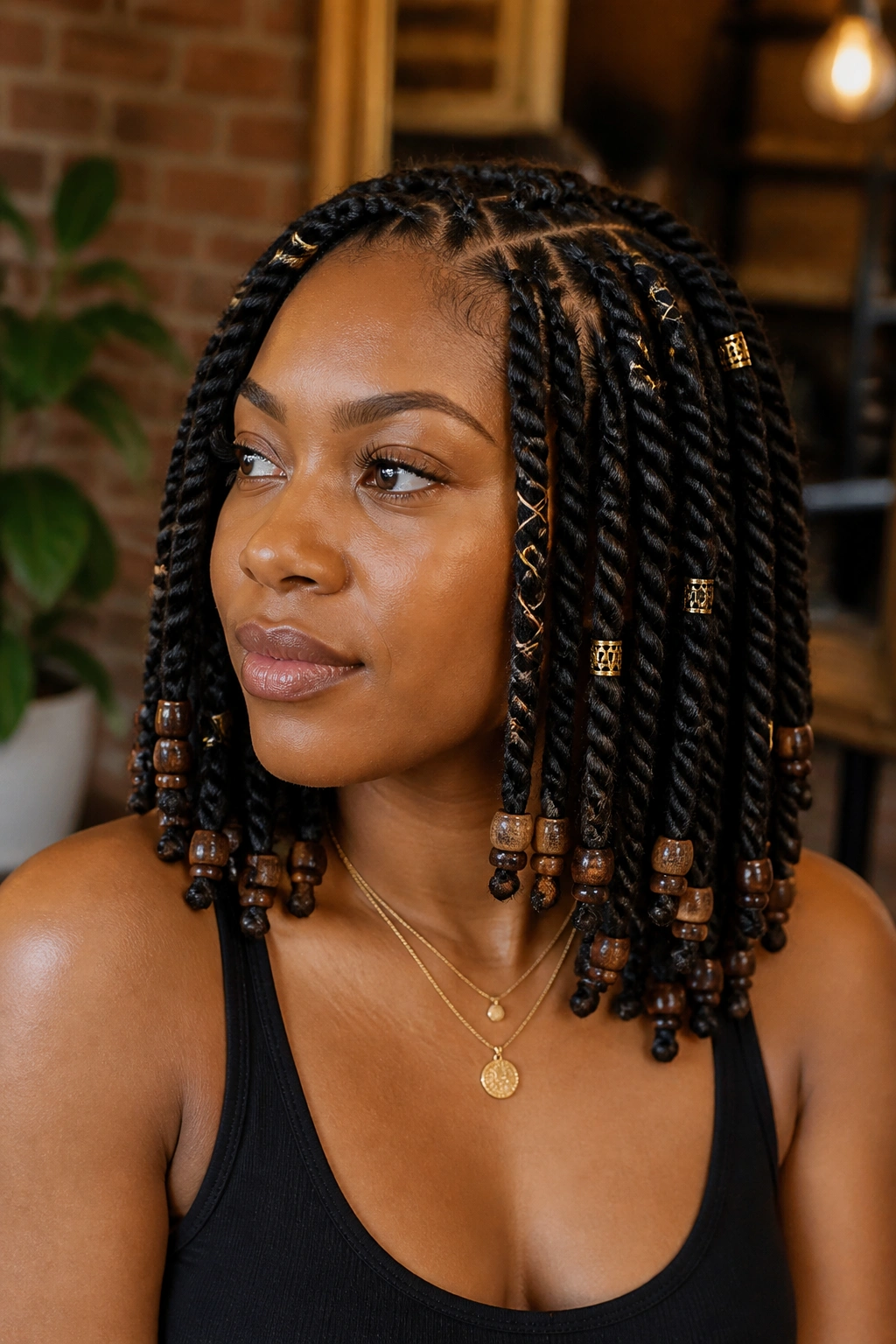
Twists with accessories are where the style starts feeling personal. Wooden beads, gold cuffs, colored thread, shells, and tiny rings can change the mood of a twist set without changing the base structure at all. That’s useful when you want the hair to feel like yours, not like a template.
The accessories need to match the weight of the hair. Light twists can handle a few beads near the ends. Heavier sections can take cuffs or wrapped thread without slumping. Put the weight where the hair can support it, or the style starts pulling strangely at the bottom and shifting around during the day.
A little restraint goes a long way. Too many decorations can turn a clean set into visual noise. One or two details per side often looks better than loading every twist with hardware. I’d rather see a few well-placed cuffs than a hundred little extras fighting each other.
This is also one of the easiest ways to make a familiar twist style feel different. Same base. Different mood.
Final Thoughts
The best twist styles are the ones that match your hair’s texture, your patience, and the amount of time you want to spend in the mirror. A tiny twist set, a flat twist crown, and a chunky Marley look can all live in the same category, but they solve different problems.
That’s the part worth remembering. Twists are not one-size-fits-all, and that is exactly why they stay useful. Pick the style that fits the week you’re having, not the one that only makes sense in a perfect-photo moment.
If you want the easiest place to start, go with classic two-strand twists or a simple flat-twist style. If you want more shape, move into updos or extension twists. Either way, the good versions always have the same thing in common: clean parts, gentle tension, and a finish that lets your natural hair do the talking.
