



A good pixie cut can do more for a face than a pile of makeup ever will.
For women over 40, the right pixie cut styles are not about looking younger. They’re about shape, lift, and control. Hair changes — sometimes it gets finer at the crown, sometimes it grows a little wilder at the temples, sometimes the texture turns grayer and coarser all at once — and a smart pixie works with that instead of fighting it.
I like pixies that leave room for softness. Too much razor work can leave the ends fuzzy. Too much bulk on top can make the whole cut look helmet-like by the second week. The good versions know where to stay neat and where to move a little.
These 20 pixie cut styles for women over 40 cover clean, edgy, soft, polished, and curly shapes. Some are easy enough to air-dry and go. Some need a round brush, a paste, or a little patience. All of them can be adjusted to fit fine hair, thick hair, waves, straight strands, glasses, strong cheekbones, softer jaws, and the woman who wants short hair but still wants options.
1. Classic Tapered Pixie With Soft Nape
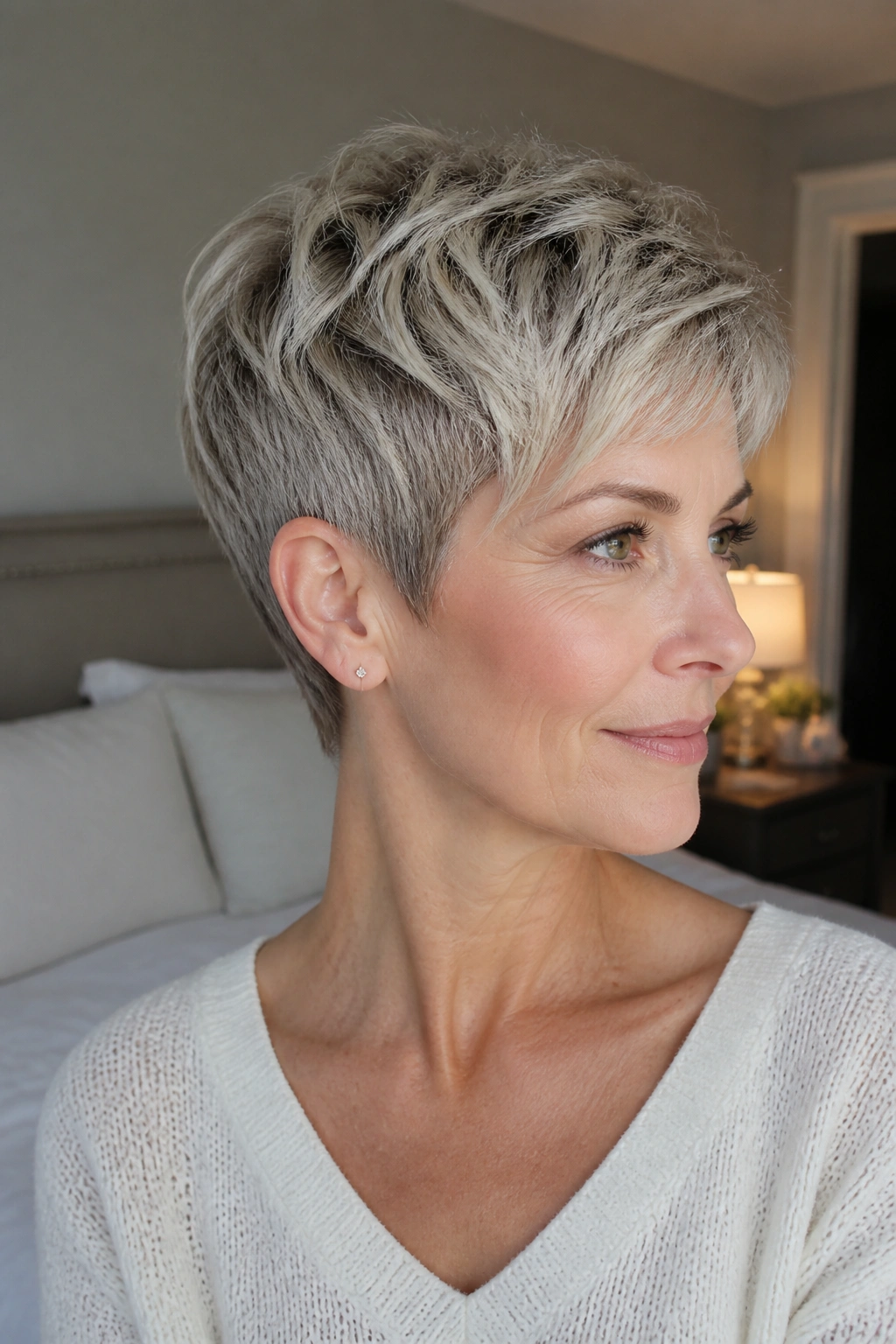
A classic tapered pixie is the easiest place to start if you want short hair that still feels tidy and grown-up. The sides sit close, the nape stays clean, and the top gets just enough length — usually around 1.5 to 3 inches — to keep the cut from looking severe. That shape matters more than people think. It gives the eye a clear line to follow, which is why this cut often makes cheekbones look a little sharper and the neck look longer.
Why the taper matters
A strong taper keeps the haircut from puffing out around the ears. That is the whole trick. If your hair grows out fast or your neckline gets bulky, this style keeps the silhouette neat for longer than a blunt crop does.
It’s a good fit for fine hair because it doesn’t need a lot of density to look finished. It also works for straight or softly wavy hair, which is a nice bonus. A dab of lightweight paste at the ends is usually enough.
- Ask for shorter sides and nape, with soft blending into a longer crown.
- Keep the top textured, not stiff.
- Blow-dry with a small brush if you want lift at the front.
- Use a pea-size amount of matte paste for separation.
Tip: Don’t let the back get boxy. That’s where a lot of tired pixies go wrong.
2. Soft Layered Pixie With Feathered Crown
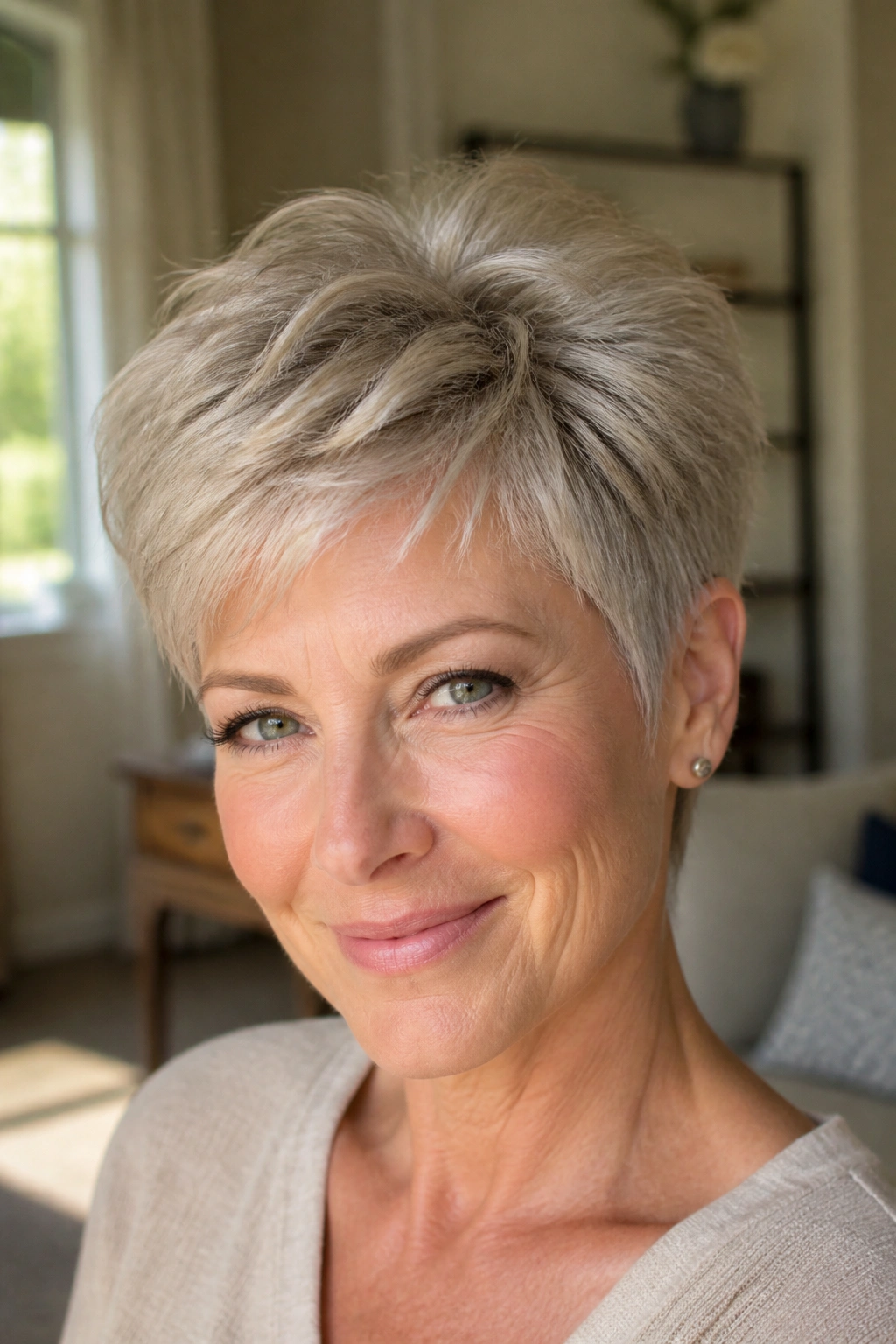
Does your hair lie flat the second it dries? Then a soft layered pixie may be the better move. This version leaves more movement through the crown and uses light layering to stop the cut from sitting like a cap. It’s one of those haircuts that looks easy, but the cut itself has to be handled with care.
The trick is in the crown layers. They should be short enough to lift, but not so short that they stick up in little spikes. I’d ask for soft point-cut layers rather than chunky chops. That keeps the finish airy and prevents the ends from feeling blunt.
How to wear it
A round brush at the roots gives the style enough shape for a clean day look. If you prefer less fuss, work a little volumizing mousse into damp hair and finger-dry it. The result is softer, less “done,” and often more flattering on women who don’t want a hard line around the face.
This cut is especially kind to fine hair, because it creates the look of fullness without asking for a ton of product. It also grows out in a forgiving way. Nice. That matters.
3. Side-Swept Pixie With Long Fringe
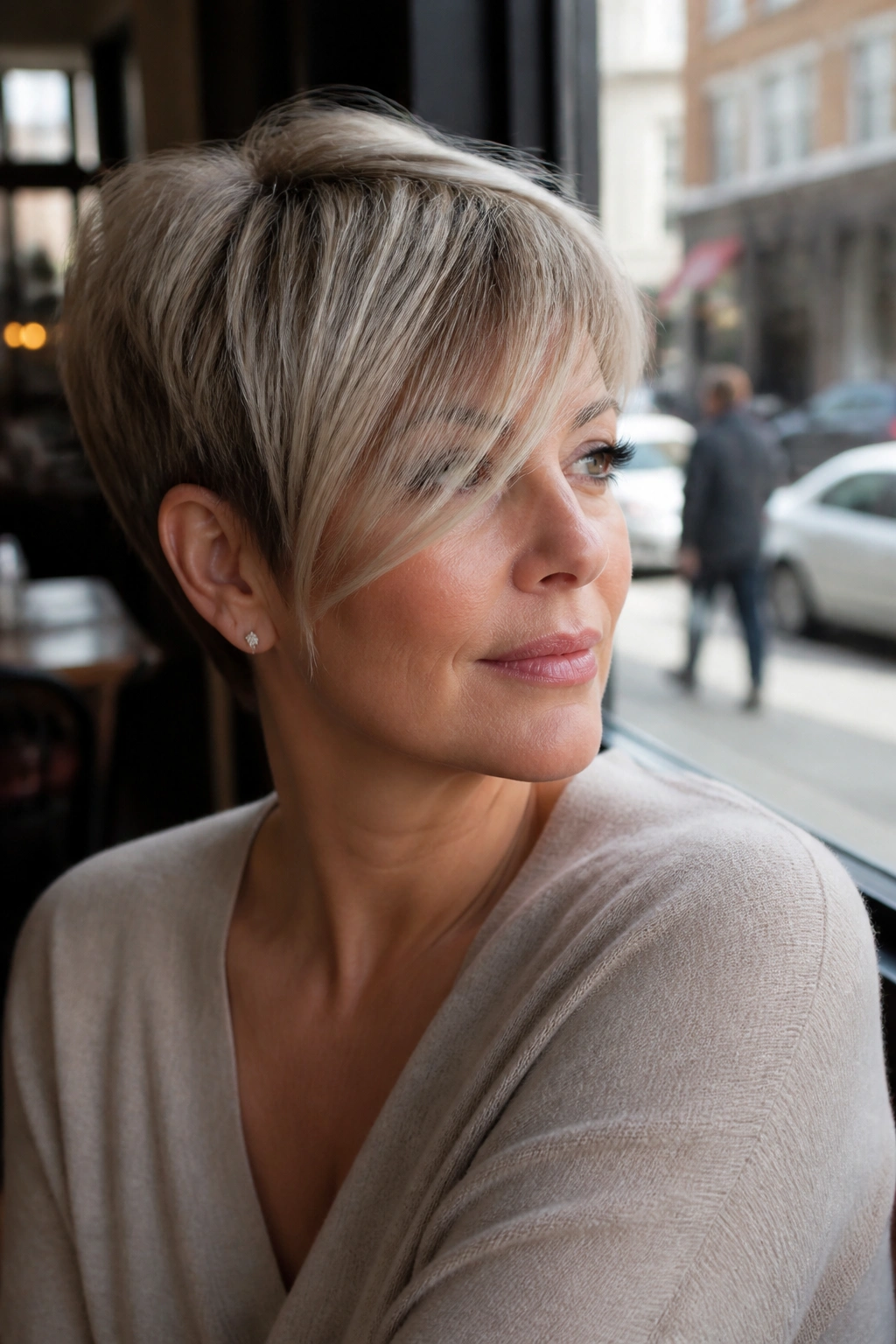
Picture a woman who likes short hair but still wants something to hide behind on days when the forehead feels too open. That’s where a side-swept pixie earns its keep. The longer fringe brushes across the face, usually landing somewhere between the brow and the cheekbone, and it softens the whole cut in one quick move.
The face-framing piece does more than hide a forehead. It breaks up the line of the haircut, which helps balance a strong jaw, a long face, or a narrow chin. I’ve always thought this style works best when the fringe is long enough to move, not so long that it falls in your eyes all day.
- Keep the front at least 2 to 4 inches long, depending on your hair density.
- Part it just off-center for a softer line.
- Use a light cream or spray wax, not heavy gel.
- Blow-dry the fringe in the direction you want it to fall, or it’ll fight you.
The downside? You do need to style the front a little. But if you like a haircut that can look polished with minimal effort, this one has real mileage.
4. Choppy Textured Pixie With Piecey Ends
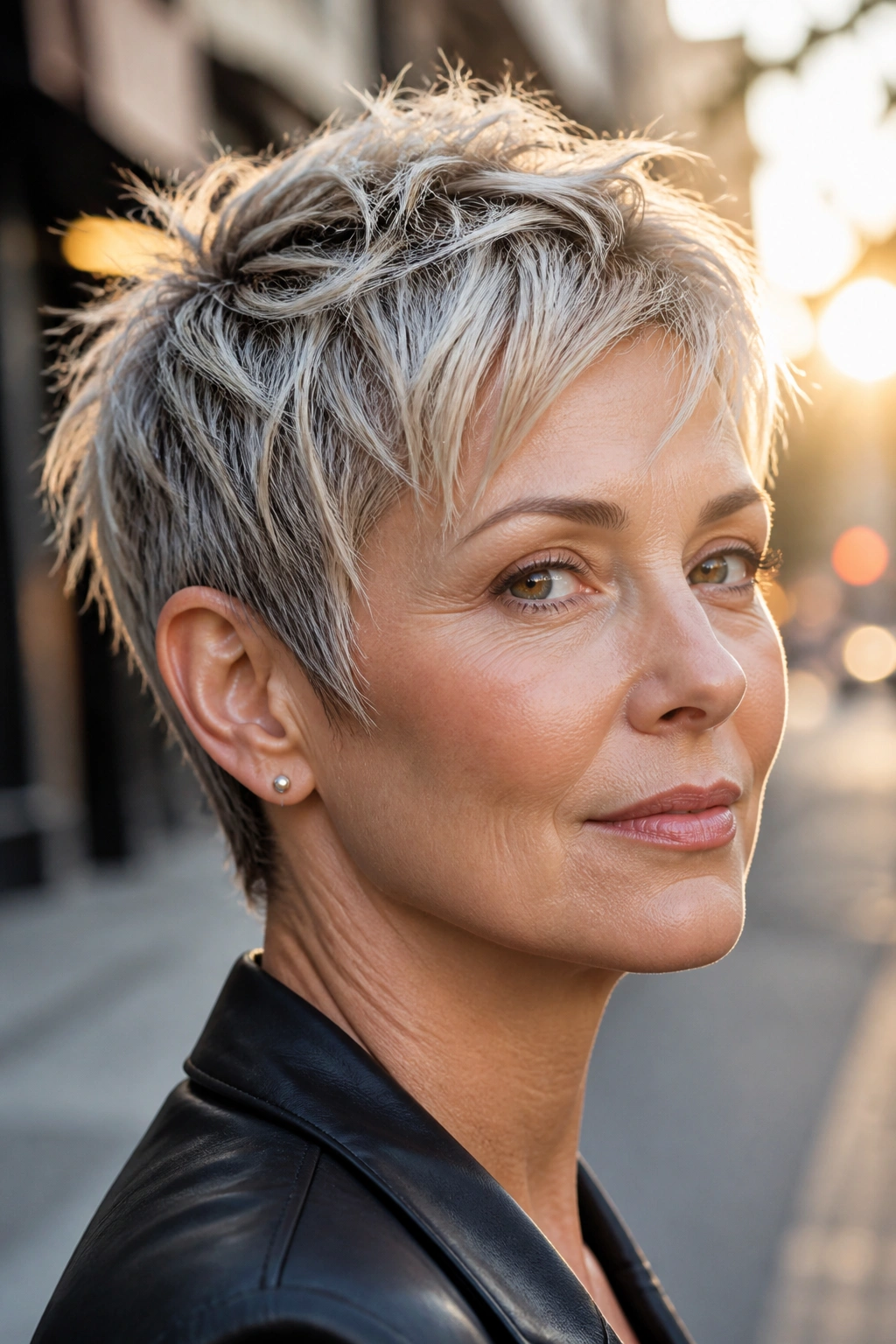
Choppy pixies are for women who don’t want their short hair to behave too politely. The cut relies on uneven ends, staggered layers, and a little separation through the top so the shape feels alive instead of lacquered. It’s not messy. It’s deliberate.
That distinction matters. A truly choppy pixie still has structure at the nape and around the ears, but the top gets sliced into tiny movements rather than one smooth sheet. On thick hair, that keeps the cut from turning heavy. On straight hair, it stops the style from looking flat and dull.
Flat is the enemy here.
I like this style most when it’s finished with a matte paste or a dry texture cream. Work a small amount between your fingertips, pinch a few ends, and leave the rest alone. If you overstyle it, the whole thing turns crunchy. If you understyle it, it can look unfinished. The sweet spot sits right between those two.
For women over 40, this cut has a nice side effect: it takes attention away from any one feature and gives the whole face more energy. It’s a little less neat, a little more lively. Sometimes that’s the whole point.
5. Silver Pixie With Piecey Crown
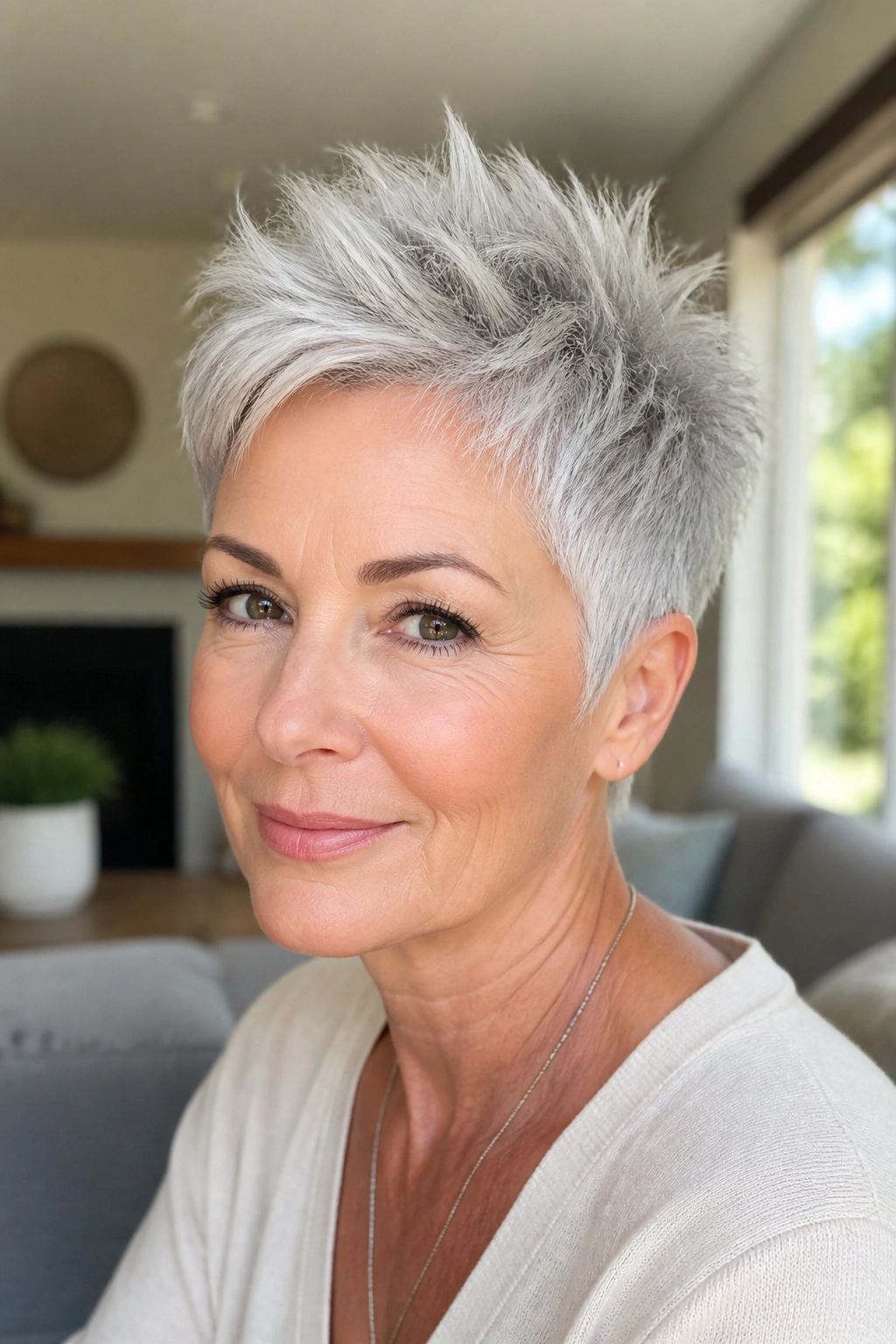
Silver hair changes the rules. The shine is different, the texture shows more, and blunt cuts can start looking harsher than they did before. That’s why a silver pixie with a piecey crown often beats a heavier, one-length crop. The lighter crown gives the color room to move.
Unlike a flat silver crop, this version keeps the top separated and the sides tighter. The contrast makes the silver look intentional instead of accidental. I’ve seen this work especially well on hair that’s gone from mixed gray to mostly silver, because the cut lets the color shifts do some of the work.
What makes it different
The key is not brightness. It’s contrast. Clean sides, soft top, and a little lift at the crown turn gray hair into a feature instead of a phase. Add a small amount of lightweight paste and use your fingertips to define a few strands near the front.
This style is a strong pick if you want the haircut to frame the face but not crowd it. It also plays nicely with strong brows and glasses, which can start to fight with bigger hairstyles. Keep the neckline crisp and the top a touch airy, and the whole look stays fresh.
6. Undercut Pixie With Clean Sides
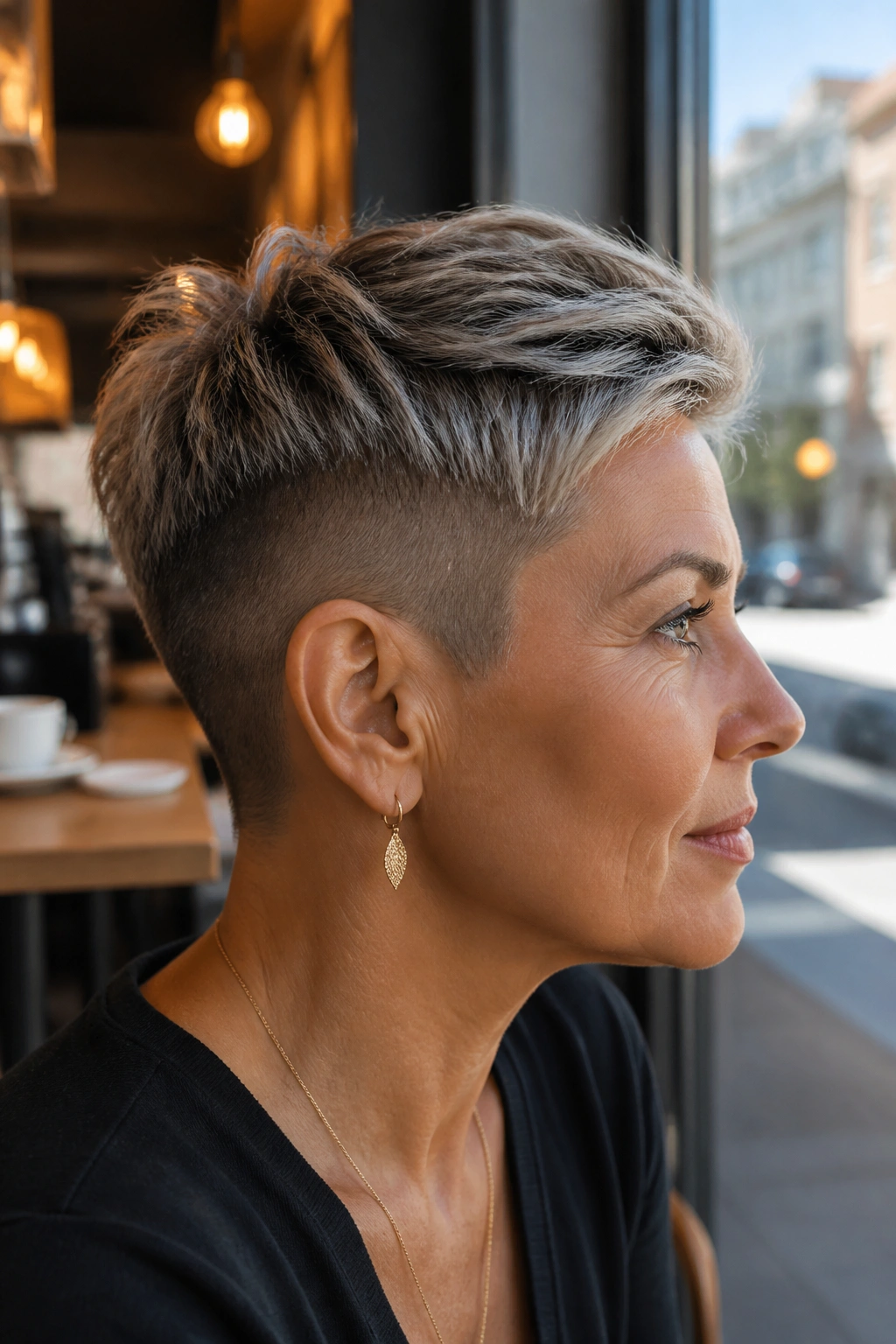
The undercut pixie is the one I recommend when a woman has thick hair and is tired of fighting it. The undercut removes weight from underneath, usually at the nape and lower sides, while the top stays longer and more flexible. That makes the haircut lighter on the head and easier to shape.
What to ask for at the salon
- Keep the undercut tight but not shaved to the skin if you want a softer grow-out.
- Leave enough length on top for side-sweeping or finger styling.
- Ask for internal debulking, not just thinning shears.
- Keep the sideburn area soft if you wear glasses.
This cut can look sharp or soft, depending on how you finish it. A blow-dried smooth top feels clean and modern. A little texture paste pushed through the crown makes it more relaxed.
The main advantage is comfort. Less bulk, less heat, less time with a round brush. That’s not a small thing. And for women over 40 with dense hair, the undercut often solves the problem of a pixie that looks cute for three days and then turns into a helmet.
One warning: If your hair is very fine, a heavy undercut can leave the top looking sparse. Keep the contrast modest.
7. Brushed-Back Pixie With Lift at the Front
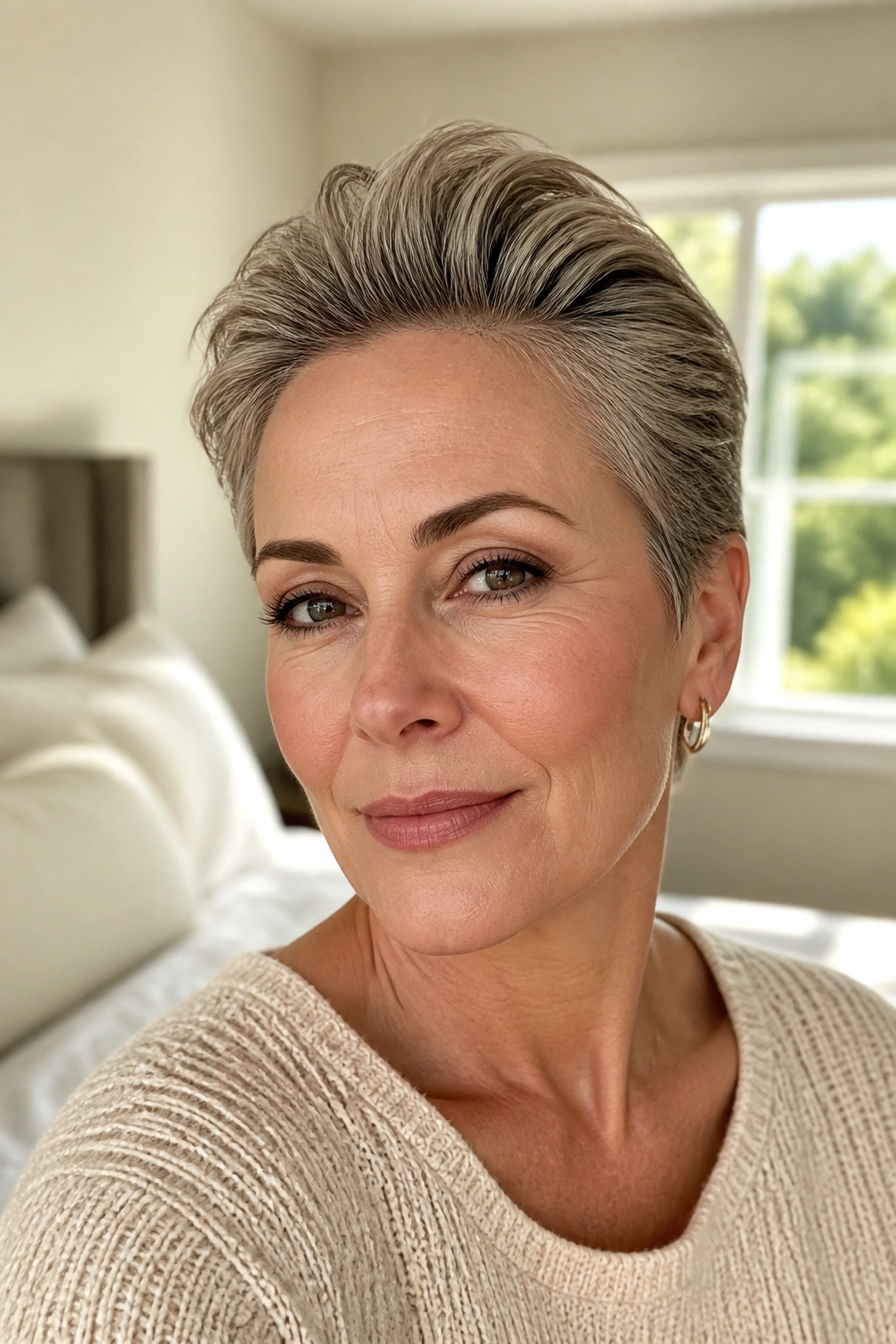
A brushed-back pixie is for the woman who wants her face fully open. No curtain of fringe. No piece falling into the eyes. Just lift, polish, and a clear line around the forehead and temples. It has a confidence to it that I like, especially when the hairline is healthy and the brows are strong.
The style depends on direction. Blow the top backward with a small round brush or a flat brush, then set it with a light cream or soft pomade. You do not want it glued down. You want it to stay up and keep a little air in it.
This one can look too stiff if the product is heavy. That’s the part people miss. A brushed-back pixie should move when you touch it. If it doesn’t, it starts looking dated fast. A touch of shine is fine; wet-looking is not.
It suits women who like a clean neckline, a visible cheekbone, and a haircut that doesn’t hide behind bangs. It’s also a good option if you want to show off earrings or frames. The whole look lands better when the face gets to do the talking.
8. Pixie Bob Hybrid With Soft Length Around the Ears
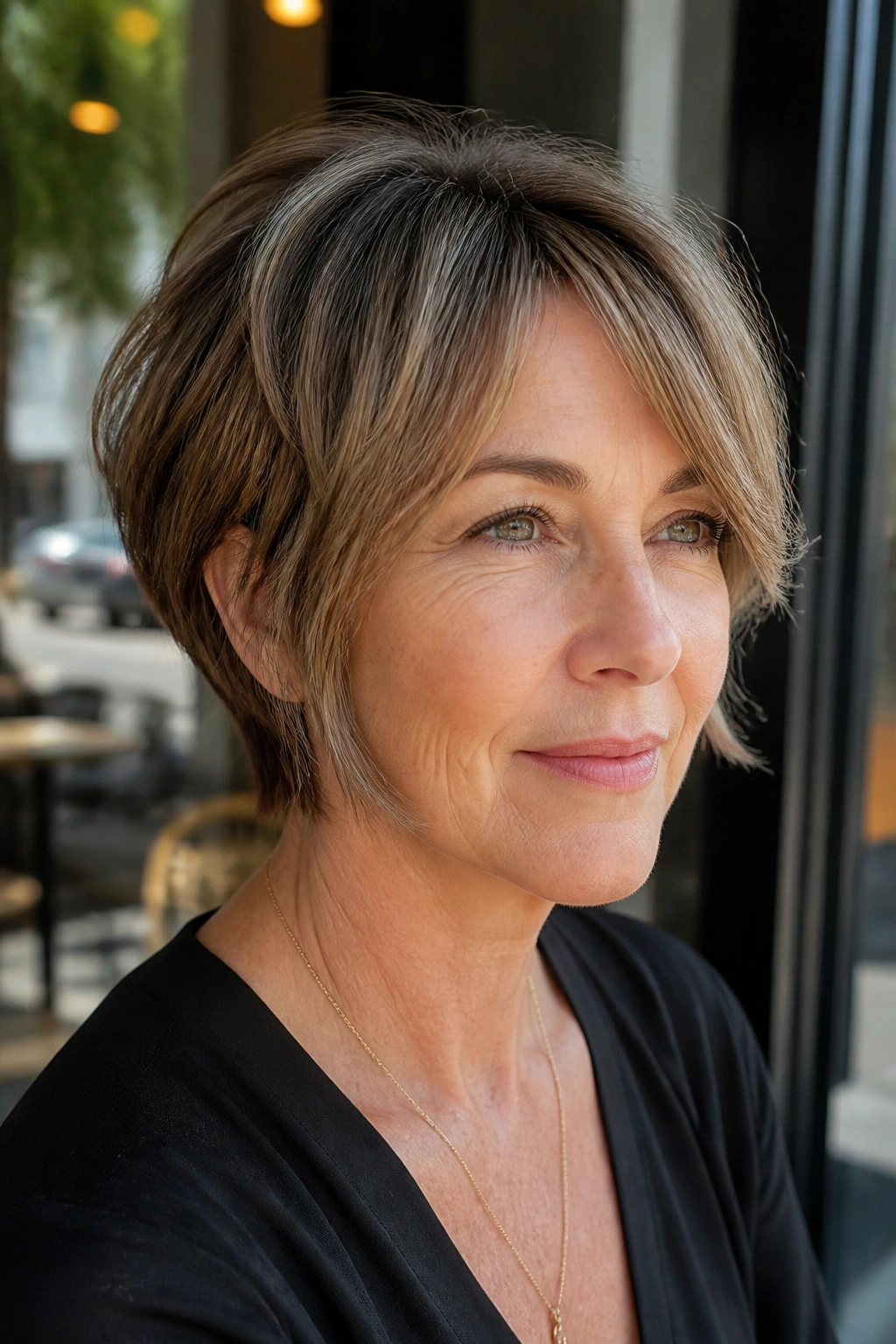
A pixie bob lives in the gap between a short crop and a proper bob, and that’s exactly why so many women keep coming back to it. The edges are longer than a classic pixie, the nape stays trimmed, and the sides often brush the jaw or skim just below the ear. If you’re nervous about going too short, start here.
Why does it work so well? Because it gives you short-hair ease without giving up too much hair around the face. You can tuck it, part it, or push it forward. That flexibility makes it friendly for people who wear glasses or have a face shape that likes a little extra width near the cheek.
How it grows out
The grow-out is less abrupt than a strict pixie, which is a gift if you don’t love salon visits every few weeks. The shape can slip into a short bob as it gets longer, and that transition is easier on most people than the awkward middle stage of a sharper crop.
A light smoothing cream and a blow-dry with a paddle brush are usually enough. Keep the ends clean. If they flare, the hybrid loses its shape fast.
9. Curly Pixie With Defined Ringlets
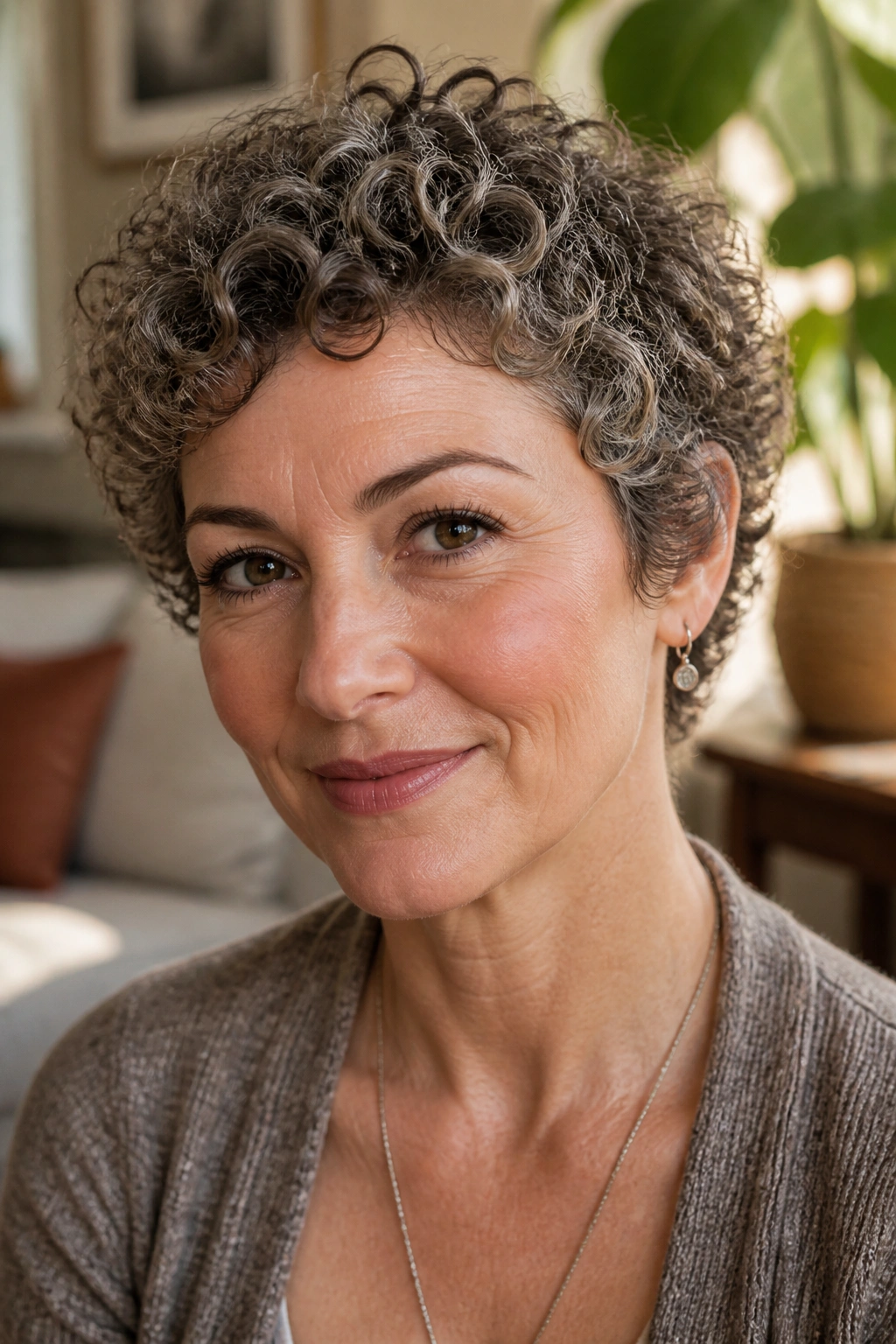
Curly hair and pixies can coexist. They just need a cut that understands shrinkage. A curly pixie is usually cut dry or close to dry so the stylist can see where the curl actually sits, not where it pretends to sit when it’s wet. That detail matters a lot more than people think.
The goal is shape, not control. If the layers are too blunt, curly hair balloons at the sides. If they’re too thinned out, the curls get frizzy and lose their spring. I like a rounded top with shorter sides and a little extra length where the curl pattern needs room to form.
- Ask for a curl-by-curl or curl-aware cut.
- Keep the top slightly longer so the curls stack instead of puffing.
- Use a cream or gel cream on damp hair.
- Diffuse on low heat or let it air-dry with hands off.
The best curly pixies have a little edge around the face and a soft halo up top. They don’t look overcontrolled. They look like the hair was allowed to be itself, which sounds simple until you’ve seen how many bad curly cuts try to fight the curl pattern instead.
10. Feathered Pixie With Light Movement
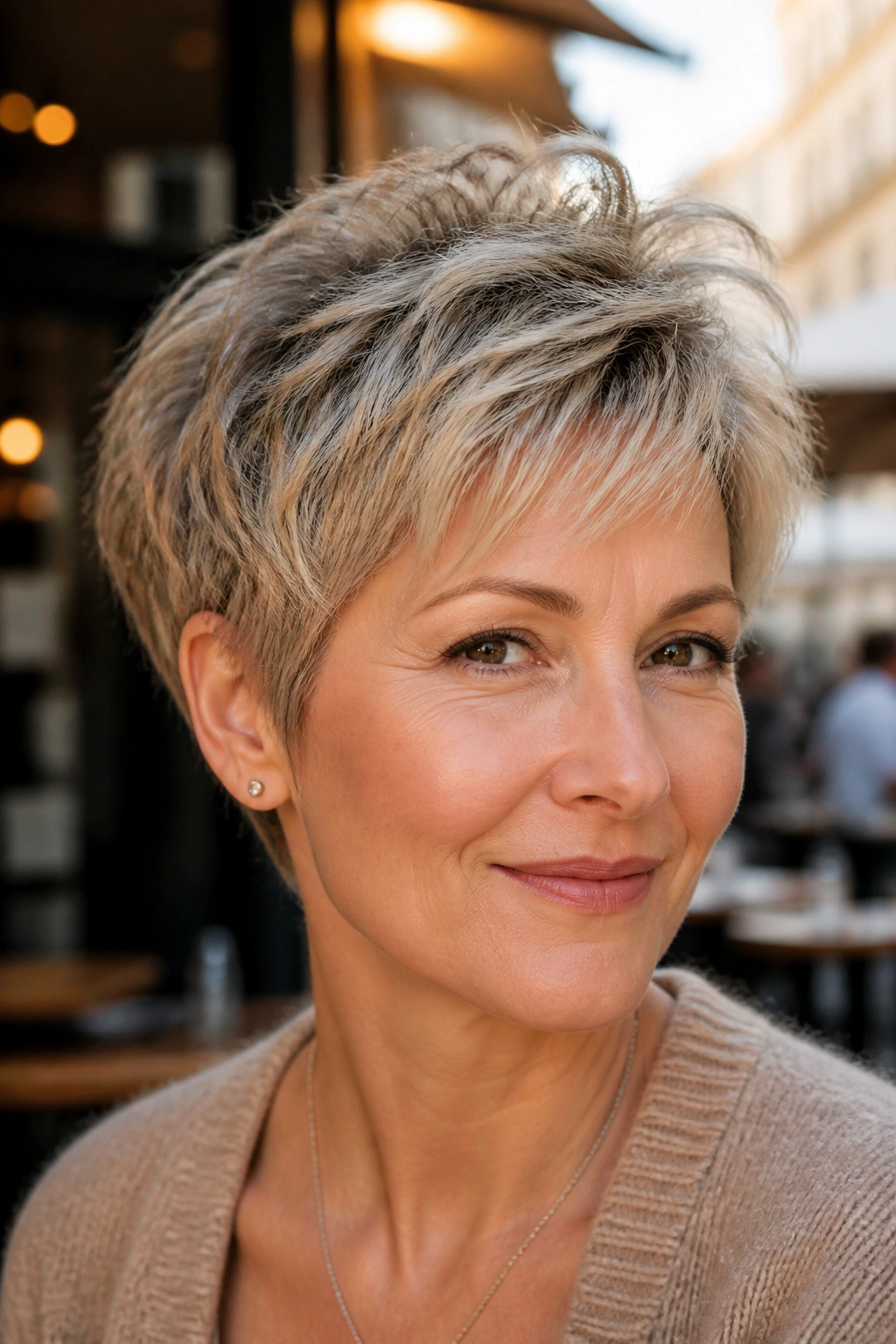
Feathered layers sound old-fashioned until you see them done right. A modern feathered pixie uses soft, tapered ends and light movement through the top to keep the haircut from feeling rigid. It’s a good option if you want a short style that still feels airy.
The reason this cut works so well on women over 40 is that it softens harder features. Strong jaw? It eases the line. Higher forehead? A feathered front can soften the look without covering the face completely. Fine hair likes it too, because the movement gives the illusion of fullness without a lot of bulk.
I prefer feathering when it stays close to the head rather than flipping out at the ends. The old-school version can go too fluffy. The better version keeps the silhouette clean and lets the texture show in small pieces.
A light mousse, dried with fingers, usually gets you there. If you want more polish, a small round brush at the roots will do it. Nothing complicated. Just enough bend to keep the cut from lying flat.
11. Long-Top Pixie With Short Sides
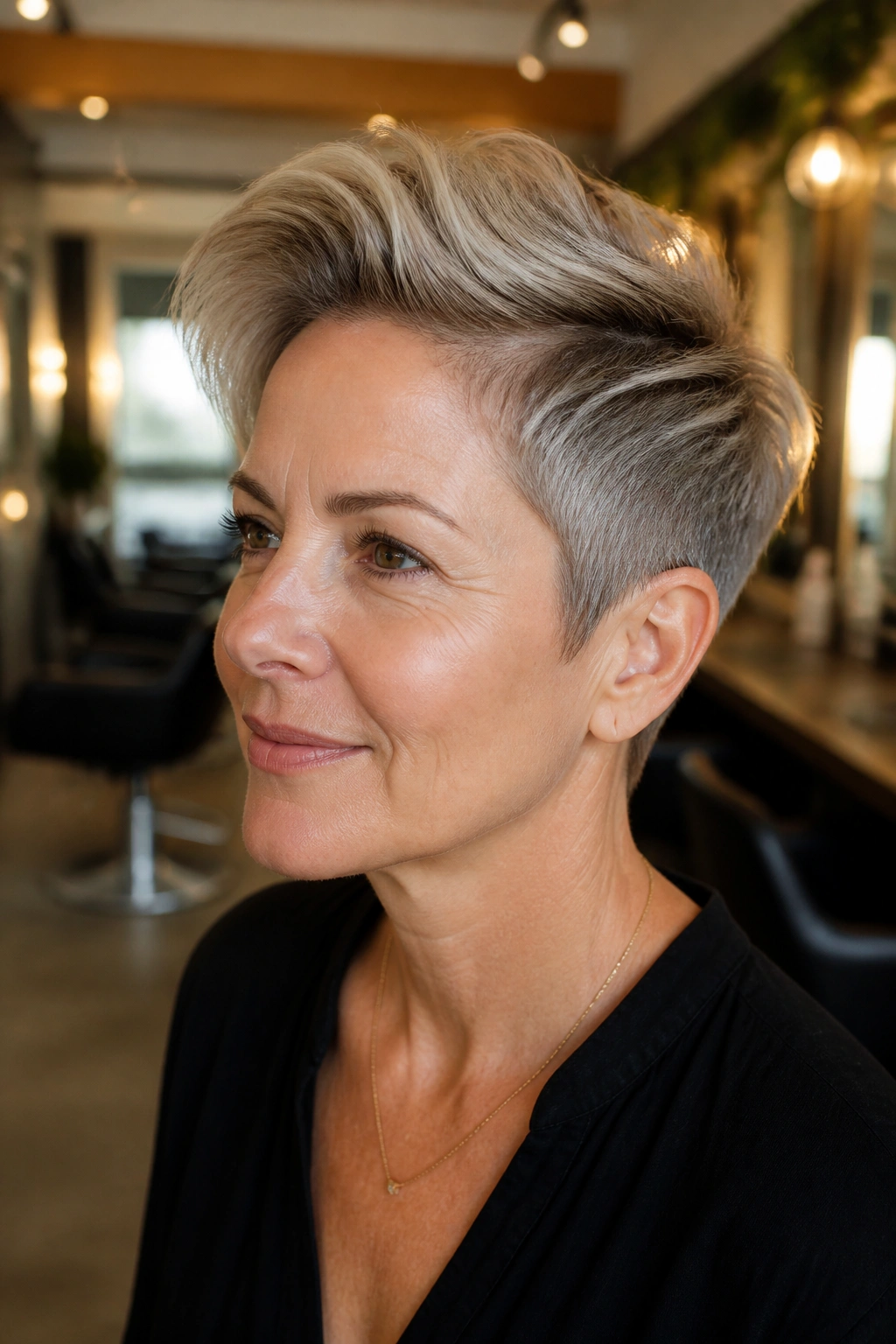
A long-top pixie gives you the most styling room of the group. The top may run 4 to 5 inches, sometimes a little more, while the sides stay trimmed close enough to keep the shape neat. That extra length up top lets you sweep, part, spike, smooth, or tousle the hair depending on the day.
Compared with a tighter crop, this version is more forgiving if you like to change the finish. One day it can look sleek; the next day, rougher and more lived-in. That flexibility makes it a strong pick for women who don’t want one fixed look every morning.
It suits a lot of face shapes, but I especially like it on square or heart-shaped faces, where the longer top helps balance the proportions. Thick hair can hold the shape without much effort. Fine hair can wear it too, though the top needs careful layering so it doesn’t collapse.
The styling trick is simple: decide where the part goes before the hair dries. If you wait until it’s dry, the hair will fight back. It usually does.
12. Asymmetrical Pixie With One Longer Side
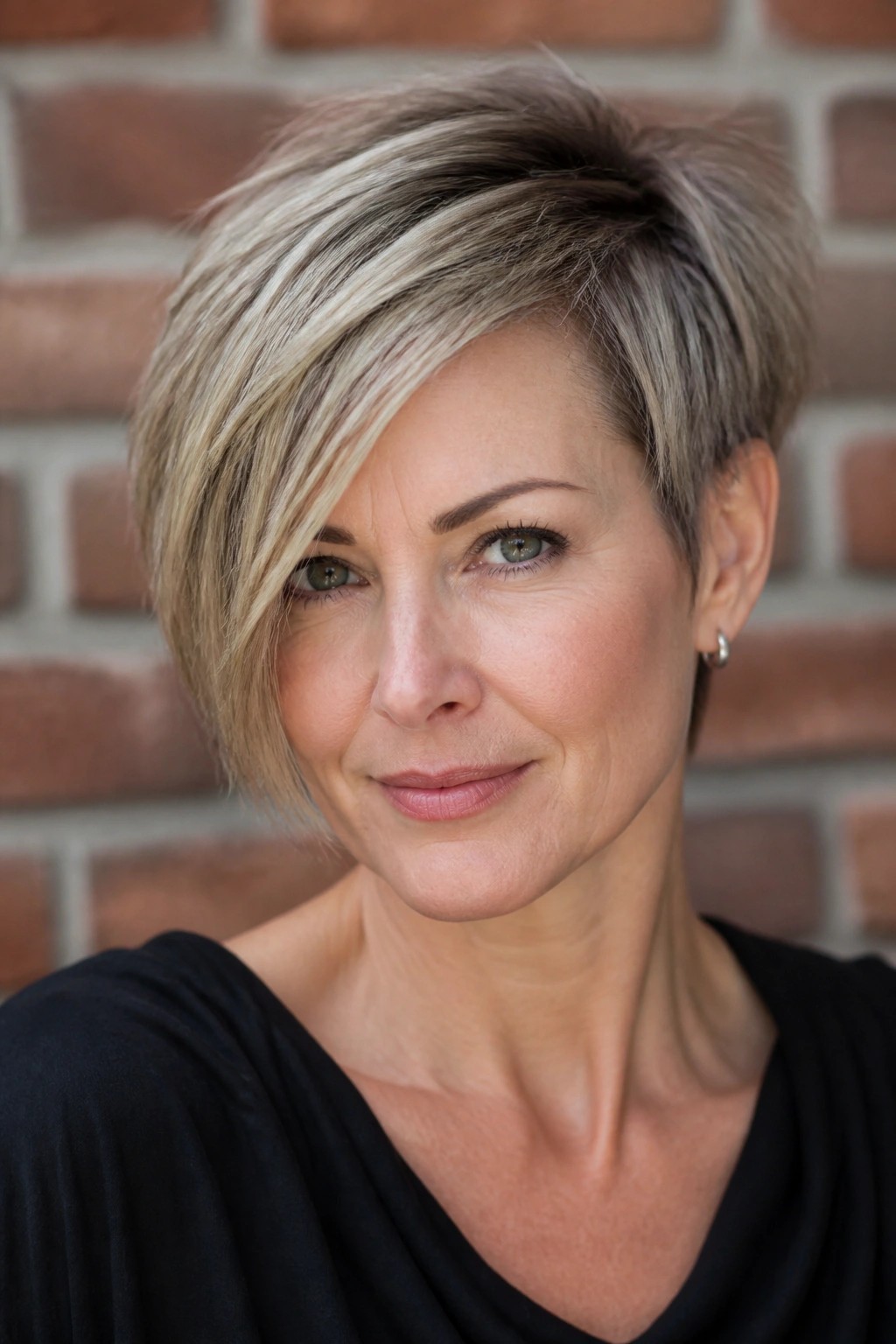
An asymmetrical pixie does the face-shaping work for you. One side stays shorter, the other side keeps more length, and that uneven line can pull the eye exactly where you want it. It’s a smart choice if you want a short cut that doesn’t feel static.
Why the diagonal line matters
The longer side softens the face. The shorter side opens it up. Together, they create motion without needing a lot of styling. That makes this cut useful for women who want something interesting but do not want to spend 20 minutes with a hot tool every morning.
Ask for the longer side to skim the cheekbone, not hang like a bob piece. The shape should still read as a pixie. If the length gets too heavy, the balance disappears. A little side-swept fringe helps tie the two sides together.
- Keep the longer side softly layered, not blunt.
- Use a side part that lands just above the arch of the eyebrow.
- Finish with light wax or cream to show the shape.
- Trim it before the longer side starts folding under.
This cut likes confidence. Not a lot of fuss. Just a clear line and a steady hand.
13. Ear-Tucked Pixie With Clean Edges
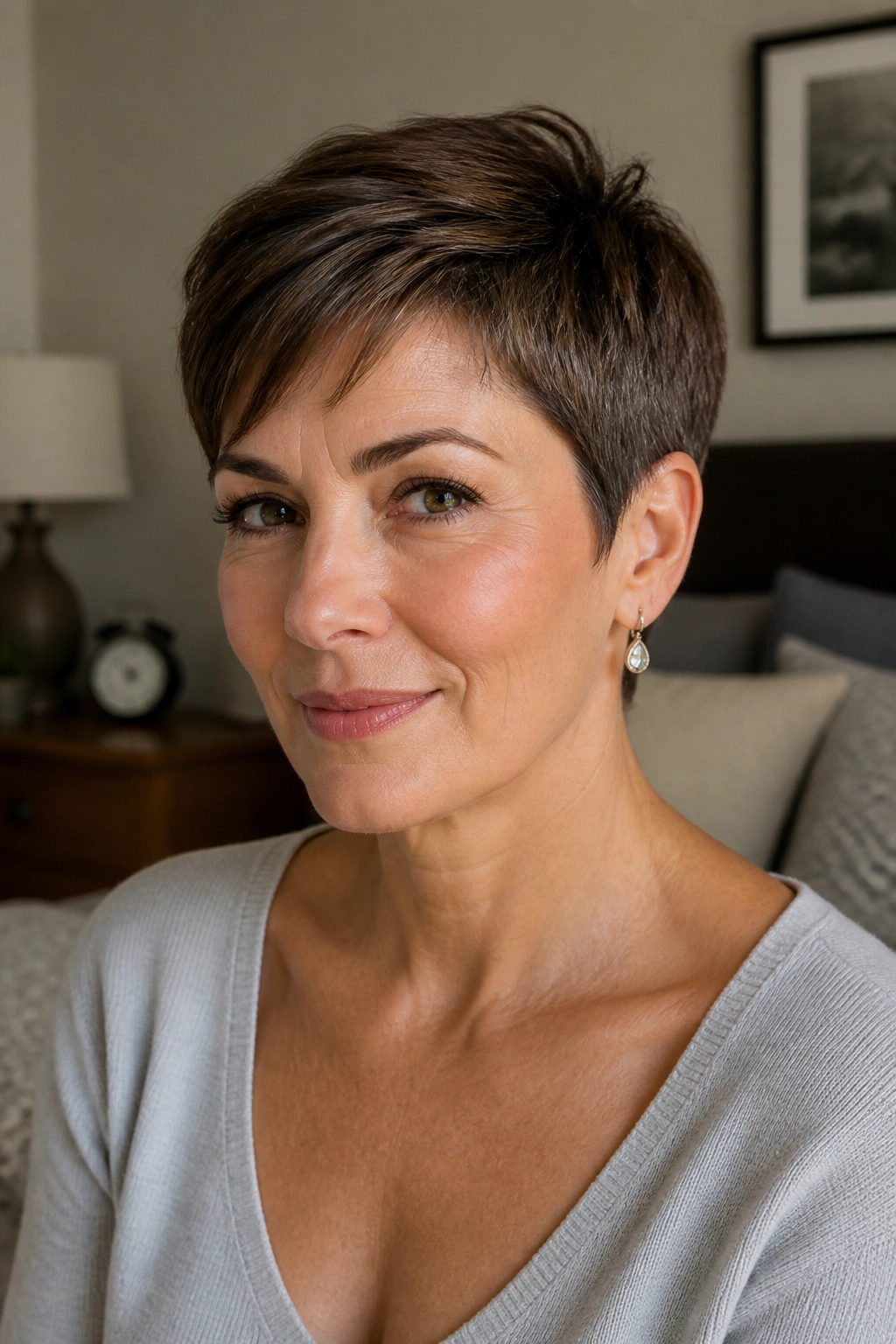
An ear-tucked pixie looks small on paper and sharp in real life. The sides are kept just long enough to tuck behind the ears, which opens the face and gives the haircut a cleaner outline. It’s a quiet style, but not a boring one.
The beauty of this cut is in the little details. The ear tuck shows earrings. It exposes the jaw. It makes the neckline look longer. For women over 40 who want something easy to wear with glasses or jewelry, that matters.
The shape needs to be kept tidy. If the side pieces get too thick, the tuck stops looking neat. If they get too short, the style loses its soft frame. There’s a narrow range where this cut looks its best, and that range is worth aiming for.
I like it on straight or slightly wavy hair, especially when the front is kept a touch longer than the sides. A smoothing cream and a quick blow-dry are usually enough. It’s one of those styles that seems simple until you realize how much face it actually reveals.
14. Spiky Pixie With Lifted Texture
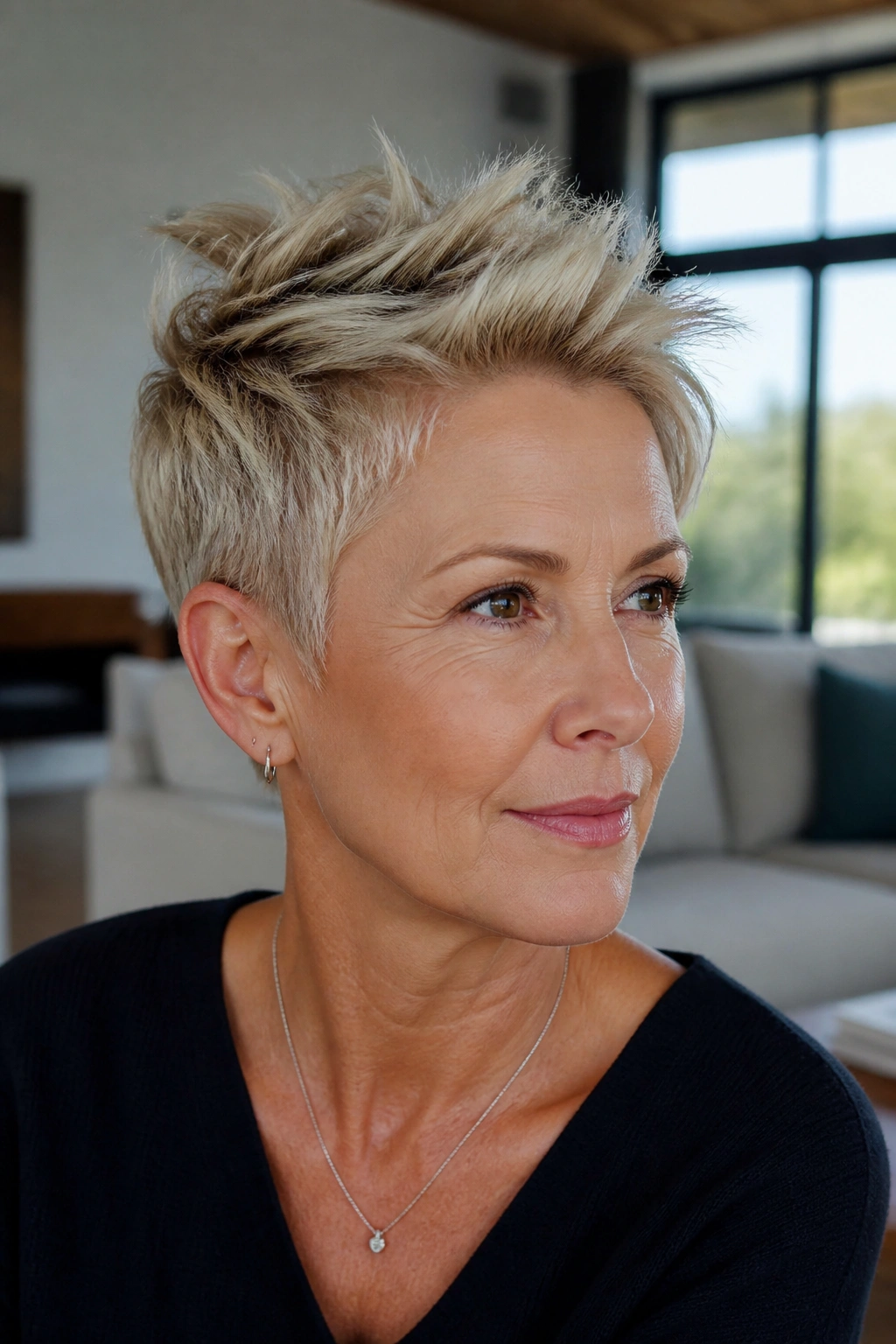
Does “spiky pixie” sound too aggressive? It shouldn’t. The modern version is less punk, more controlled texture. You’re not building tiny horns. You’re nudging the top into pieces so the haircut looks awake.
The method is straightforward. Dry the hair first, then use a tiny amount of paste or clay between your palms and pinch up the top in small sections. Start at the crown. Work forward. Stop before the hair starts to feel sticky. That’s the line.
How to keep it modern
Keep the sides neat and the spikes short. If the whole head stands up, it can feel dated fast. The best version has movement at the crown and a cleaner line at the temples and neckline. That contrast is what makes it work.
This cut is especially good for fine hair that needs lift or for straight hair that tends to lie flat. It can also be a good answer for women who want a little edge without committing to a dramatic undercut. Small, piecey height is enough. More than that and the whole thing starts shouting.
15. French Girl Pixie With Soft Fringe
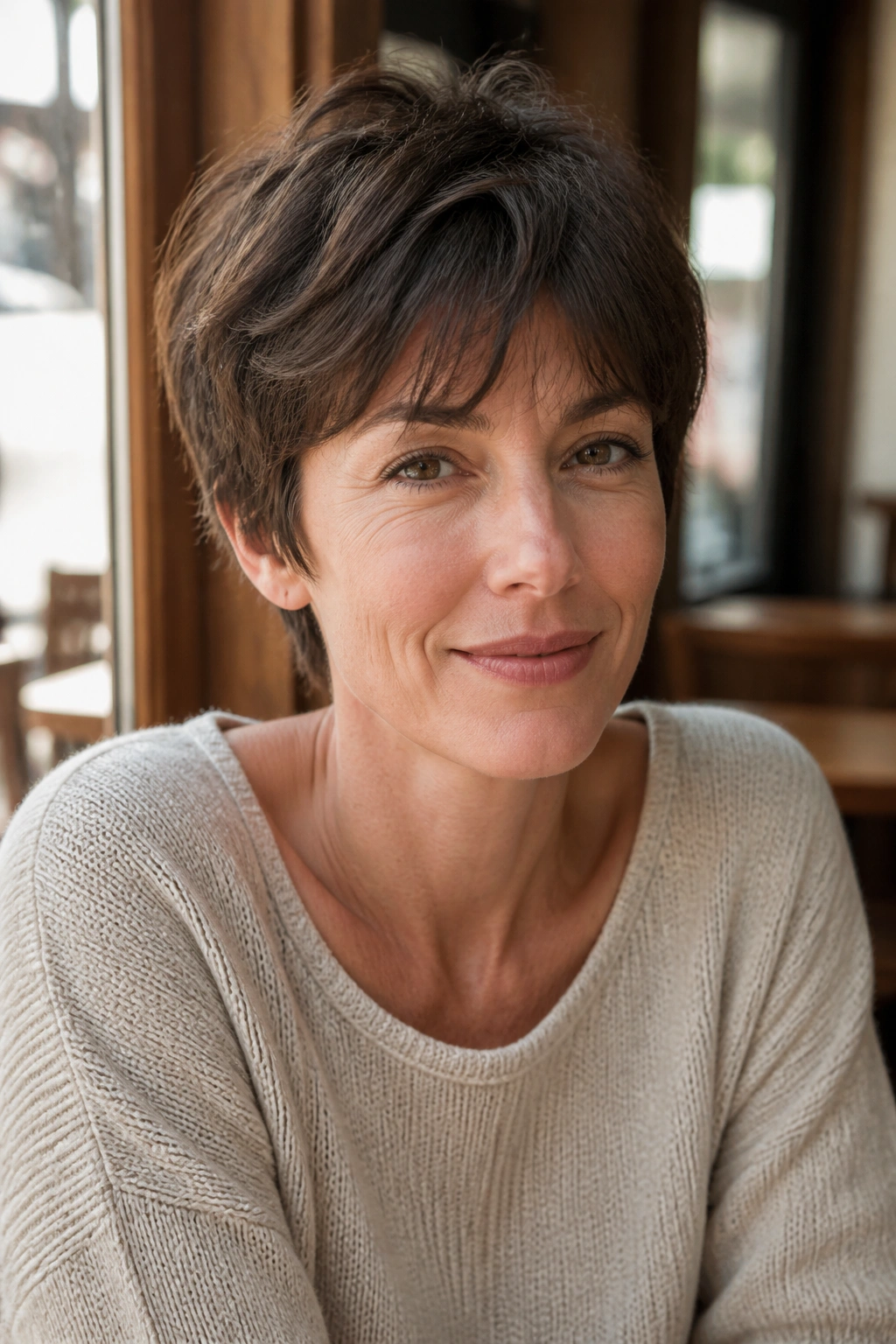
A French girl pixie leans on softness, not sharpness. The fringe is light, the crown has a little bend, and the whole cut feels slightly undone in a way that looks deliberate rather than messy. It’s one of my favorite options for women who want short hair but still want a bit of romance around the face.
The cut usually works best with a fringe that grazes the brows or stops just above them. The sides stay close enough to keep the shape tidy, while the top keeps a touch of irregularity. That irregularity matters. It keeps the style from looking too stiff.
- Ask for soft, broken fringe lines instead of a heavy blunt bang.
- Keep the neck area clean so the softness stays up front.
- Use a light cream or air-dry balm.
- Let a few ends fall where they want; don’t fight every strand.
This style flatters women who like clothes with texture — knits, crisp shirts, simple earrings, that sort of thing. It has a casual charm that works best when you don’t overthink it. Overstyling ruins it. A little imperfection helps.
16. Wispy Bang Pixie That Softens the Forehead
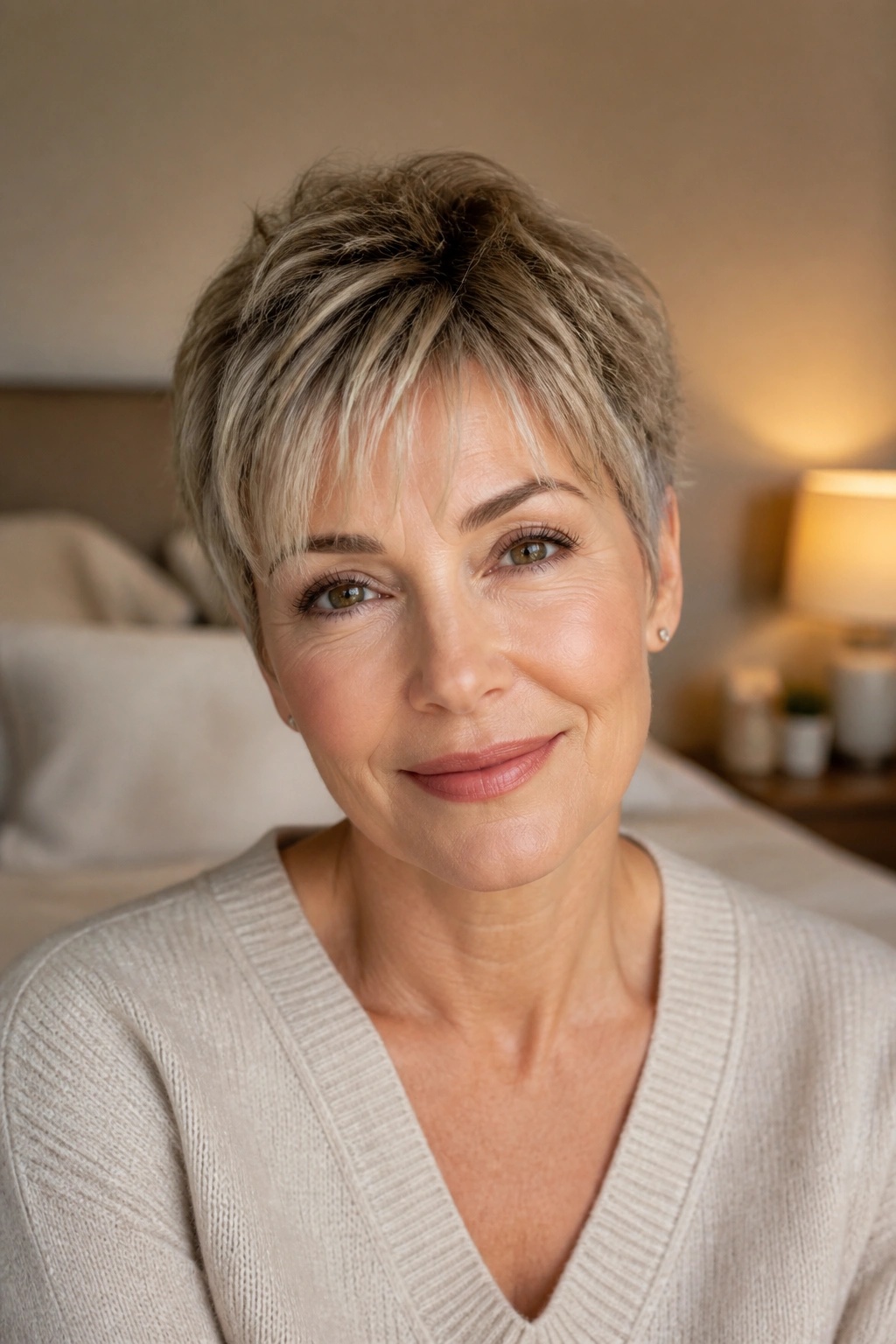
Wispy bangs can rescue a pixie that feels too open in front. They break up the forehead line, soften strong brows, and make a short cut feel less severe. The fringe is the point here — light, narrow, and airy enough to move instead of sitting like a block.
I like this on women who want coverage but not a heavy bang. The strands should be thin enough to separate, so the forehead still peeks through. That keeps the cut from swallowing the face. If the bangs get thick, the whole style can feel older than it needs to.
The rest of the haircut should stay compact. Shorter sides, light crown, and a front that can sweep a little left or right depending on how you dry it. Use a small round brush or even your fingers with a blow-dryer nozzle. That’s enough.
This is one of the few pixies where I’d be picky about trimming. Bangs that are even a half inch too long can start hanging in the eyes and making you annoyed every morning. Annoyed hair is never attractive hair.
17. Salt-and-Pepper Crop With Clean Outline
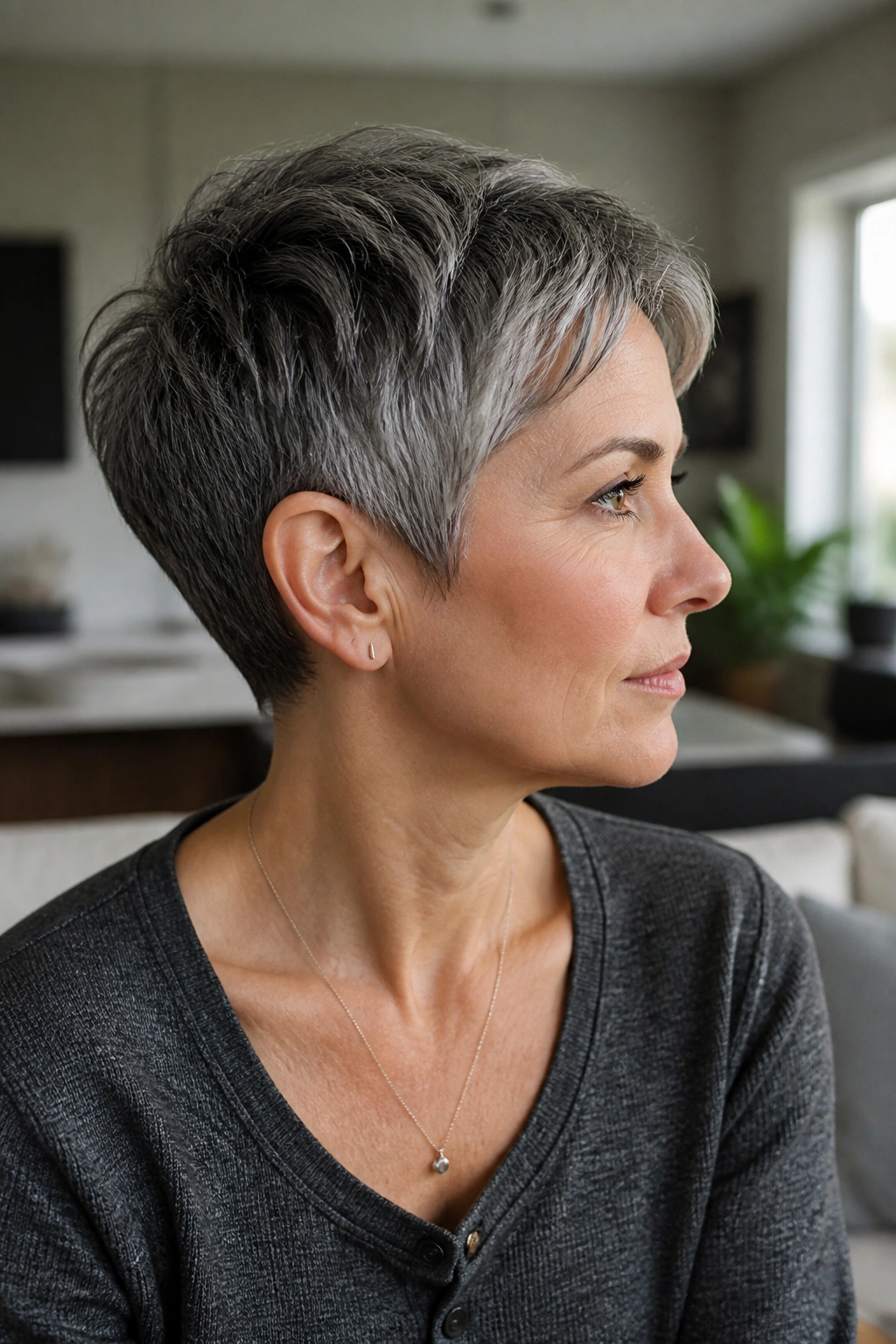
Salt-and-pepper hair looks especially good when the cut is neat and the top isn’t overworked. The contrast between dark and silver strands gives short hair texture on its own, so the haircut doesn’t need a lot of styling drama. A clean outline around the nape and ears keeps the whole thing from looking fuzzy.
Unlike a fully colored pixie that depends on shine or uniform tone, a salt-and-pepper crop benefits from contrast. The mixed tones create depth where colored hair would need product or layers to fake it. That’s why a simple shape can look richer here than a fussy one.
This style suits women who are leaning into natural gray without wanting to look “unstyled.” There’s a difference. Keep the sides controlled, leave the top soft enough to move, and don’t drown it in gloss serum. A little shine is fine. Too much and the gray starts to look greasy instead of bright.
I’d call this a low-drama cut with high payoff. It doesn’t need a lot of fuss, but it does need clean edges. Otherwise the color contrast gets lost.
18. Deep Side Part Pixie With Instant Lift
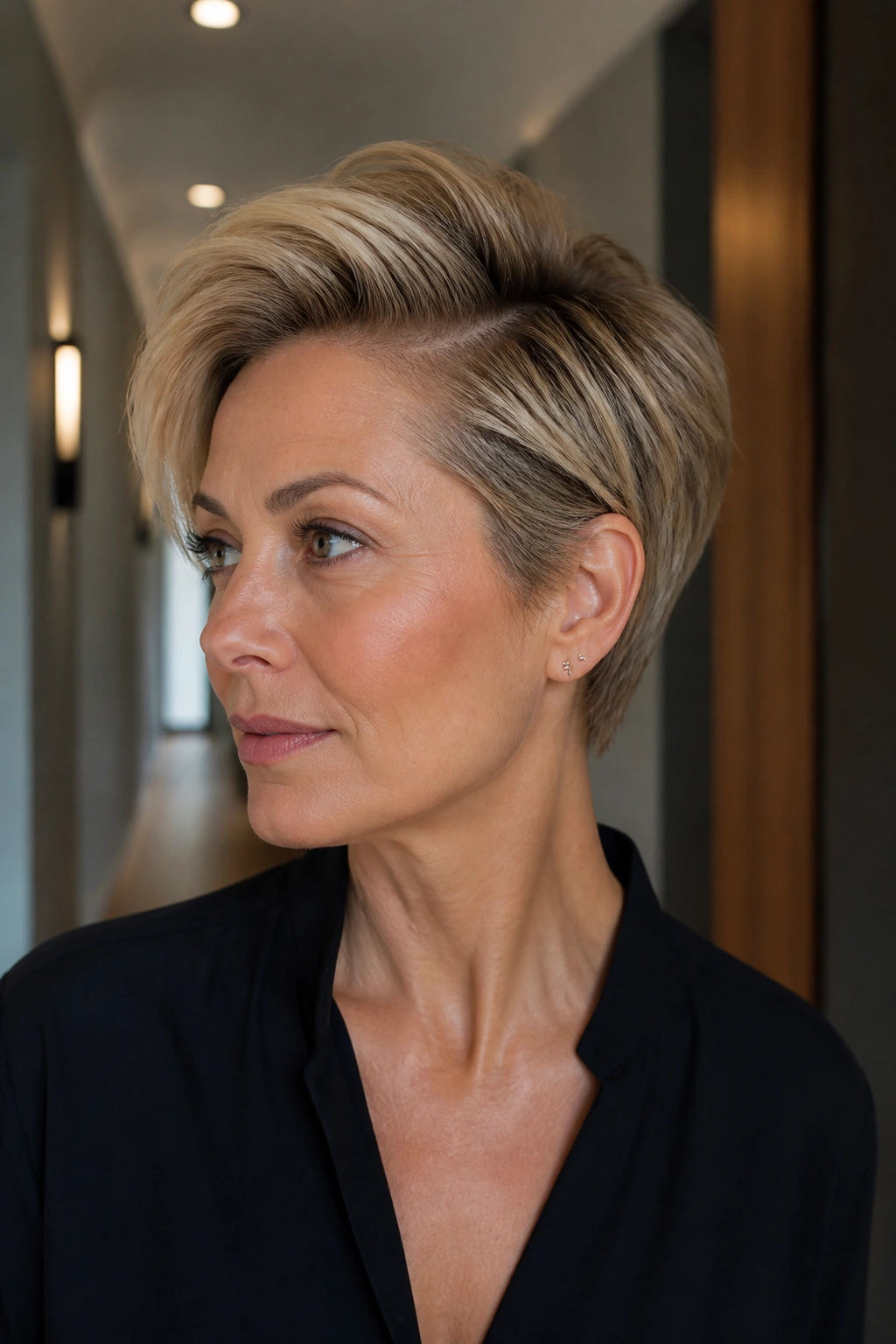
A deep side part can change a pixie more than a new product ever will. Shift the hair over by an inch or two, and the whole cut gets a new line, new lift, and a little bit of asymmetry without any major haircut change. That’s a cheap trick, and I mean that in the best way.
Why the part matters
The part creates height at the root. It also gives the front a chance to sweep across the forehead instead of sitting flat against it. That makes this style a smart pick for fine hair, straight hair, or a face that needs a touch more width near one temple.
- Place the part above the arch of the eyebrow, not dead center.
- Blow-dry the roots in the opposite direction first for lift.
- Use a light root spray if the hair falls flat fast.
- Keep the longer side soft so the line doesn’t turn harsh.
This cut is easy to wear with a blazer, a T-shirt, or a dress. It doesn’t shout. It just looks a little more arranged. Sometimes that’s enough.
19. Soft Mullet Pixie With Length in the Back
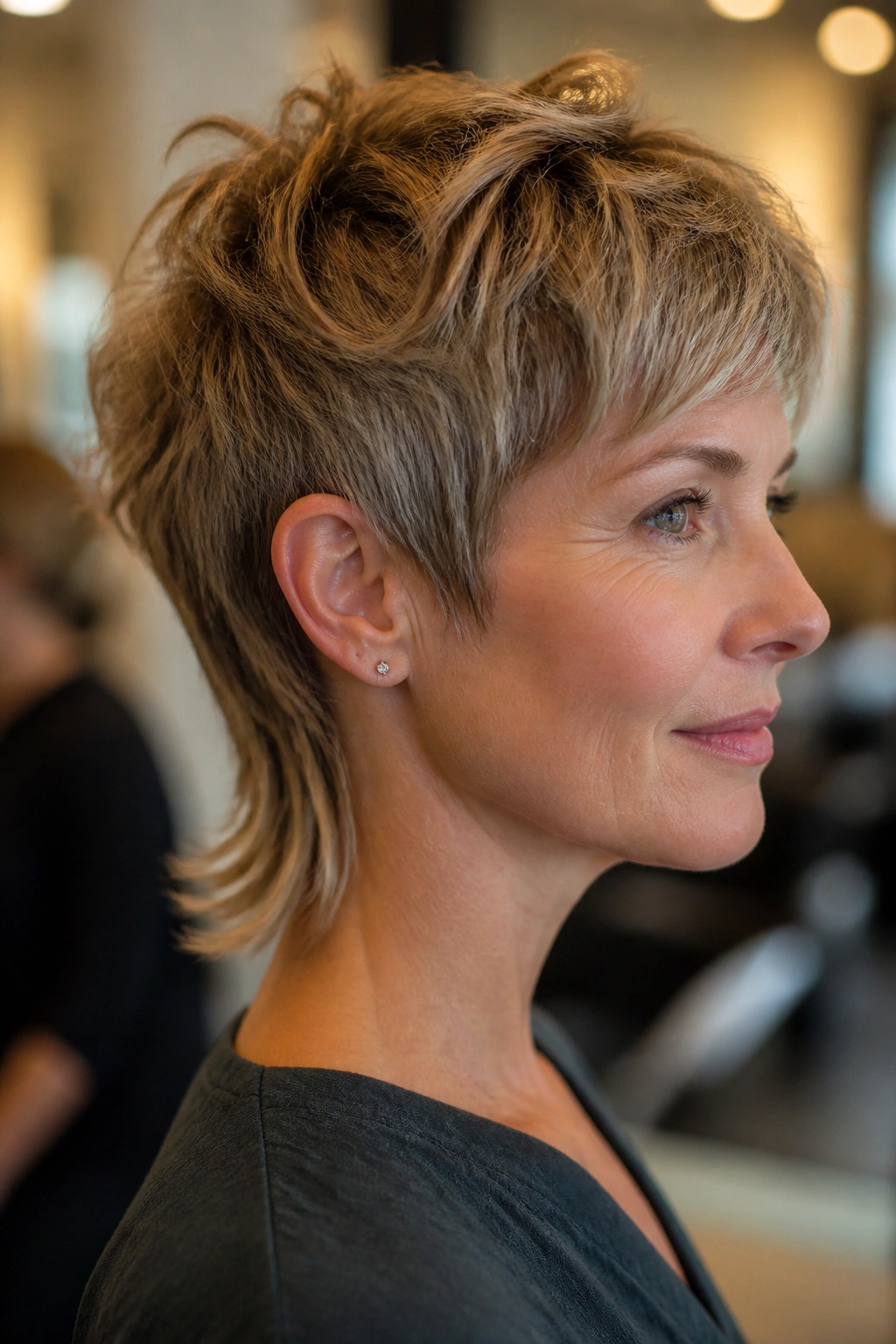
The soft mullet pixie is the one most salons still talk around instead of naming directly. It keeps the top short, the sides slim, and the back a little longer and softer than a standard pixie. Done badly, it looks like a haircut that got interrupted. Done well, it has movement and personality.
I like it for women who want something less neat than a classic crop but not as rebellious as a full shag. The back length gives the neck a soft line, while the front can still frame the face. It’s especially good on wavy hair, because the texture helps connect the layers instead of exposing them.
The key is restraint. The back should be longer, yes, but not stringy. The sides need enough shape to keep the haircut from sliding into a mushroom. And the top should still have some lift so the whole style feels intentional.
This is not the cut I’d recommend if you want a strict, tidy look. It is the cut I’d recommend if you want something with a little bite. There’s a difference.
20. Sleek Glam Pixie With Shine and Shape
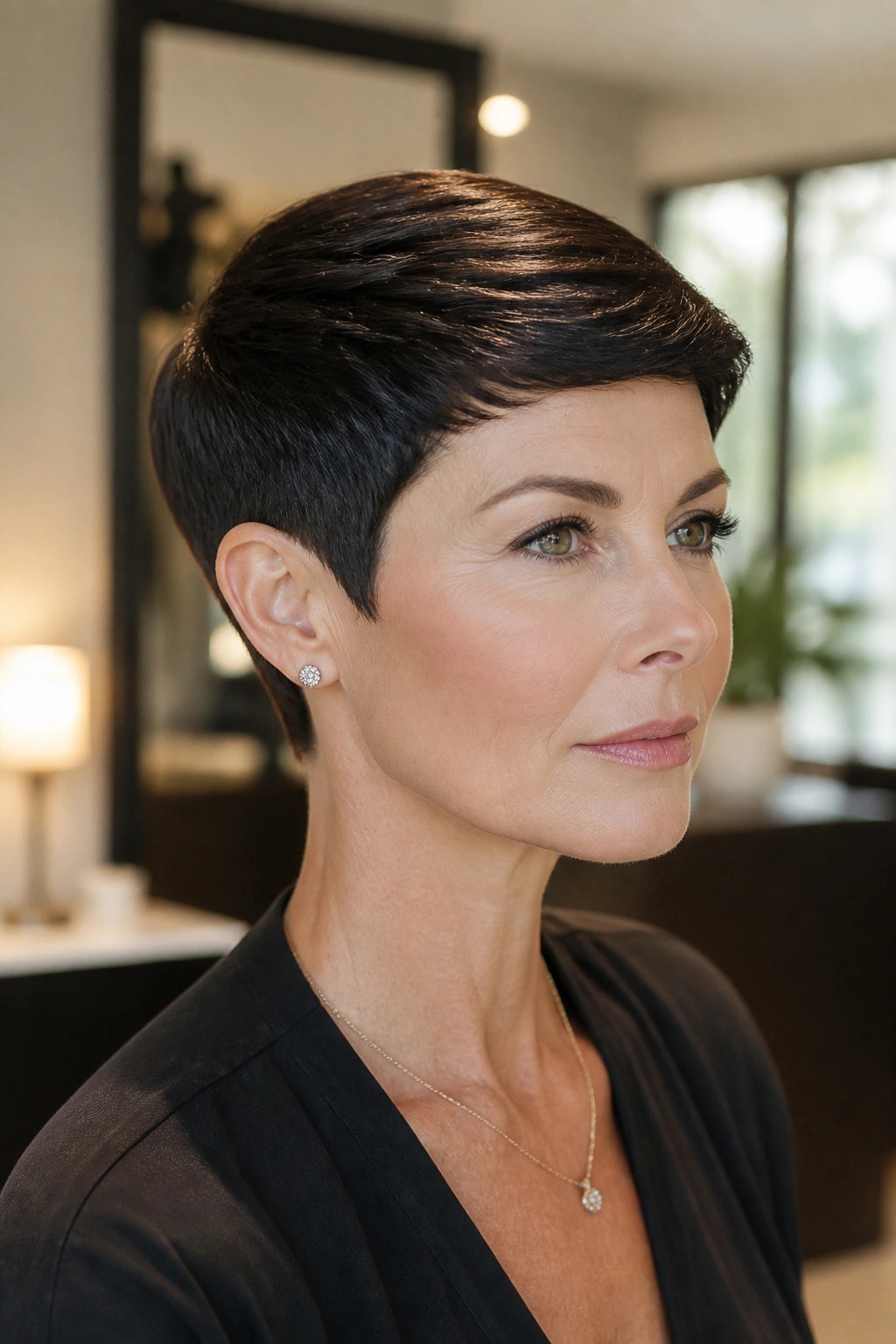
A sleek glam pixie is for the woman who wants short hair to look polished without feeling stiff. The sides are close, the top is smooth, and the finish has a controlled shine rather than a wet, hard shell. It’s the kind of pixie that looks good with earrings, a sharp collar, or a simple black top.
The shape matters more than the gloss. If the haircut is cut well, you don’t need much product to make it look expensive — and by expensive, I mean clean, deliberate, and well kept, not overdone. A flat brush, a blow-dryer, and a light cream are usually enough. Work the front backward or to the side, then press the shape into place with your hands.
This style suits women who like definition. It also flatters silver or dark hair because the smooth surface shows the line of the cut. If you have strong features, the sleek finish tends to frame them instead of competing with them.
A final small thing: keep the neckline crisp. Once the back starts to blur, the whole glam effect drops fast. Short hair has no place to hide.
A pixie works best when it matches the way your hair actually behaves on an average morning, not the way you hope it behaves in a salon chair. That’s the part people skip, then wonder why a cut that looked great on someone else feels wrong on them.
Bring photos, sure. Bring your honest routine too. If you air-dry most days, say so. If you wear glasses, say that. If your crown goes flat by noon, that matters more than whatever the inspiration photo looked like in perfect lighting.
