



A good pixie on a round face doesn’t hide the face. It changes the lines around it. That’s the real trick behind the best pixie haircuts for round faces over 50: they add height, break up width, and keep the cheek area from feeling boxed in.
Age matters here, but not in the tired way people sometimes talk about it. Hair often gets finer, a little drier, or a bit less cooperative around the temples and crown, so the cut has to do more work than it did ten years ago. The wrong pixie can sit flat, flare at the sides, and make the whole face look wider. The right one gives lift, movement, and a bit of edge without asking you to spend half the morning in front of a mirror.
I’m partial to pixies with a little attitude. Not spiky-for-the-sake-of-spiky, and not helmet hair either. A cut should look deliberate even when you finger-comb it in five seconds before running out the door, and it should grow out in a way that still makes sense if your salon appointment gets pushed back a few weeks.
The cuts below all solve the same basic problem in different ways. Some use fringe. Some use crown height. Some lean on texture, others on clean lines. The best one for you is the one that works with your hair’s thickness, your styling tolerance, and the parts of your face you like to show off.
1. Side-Swept Pixie Haircut for Round Faces Over 50
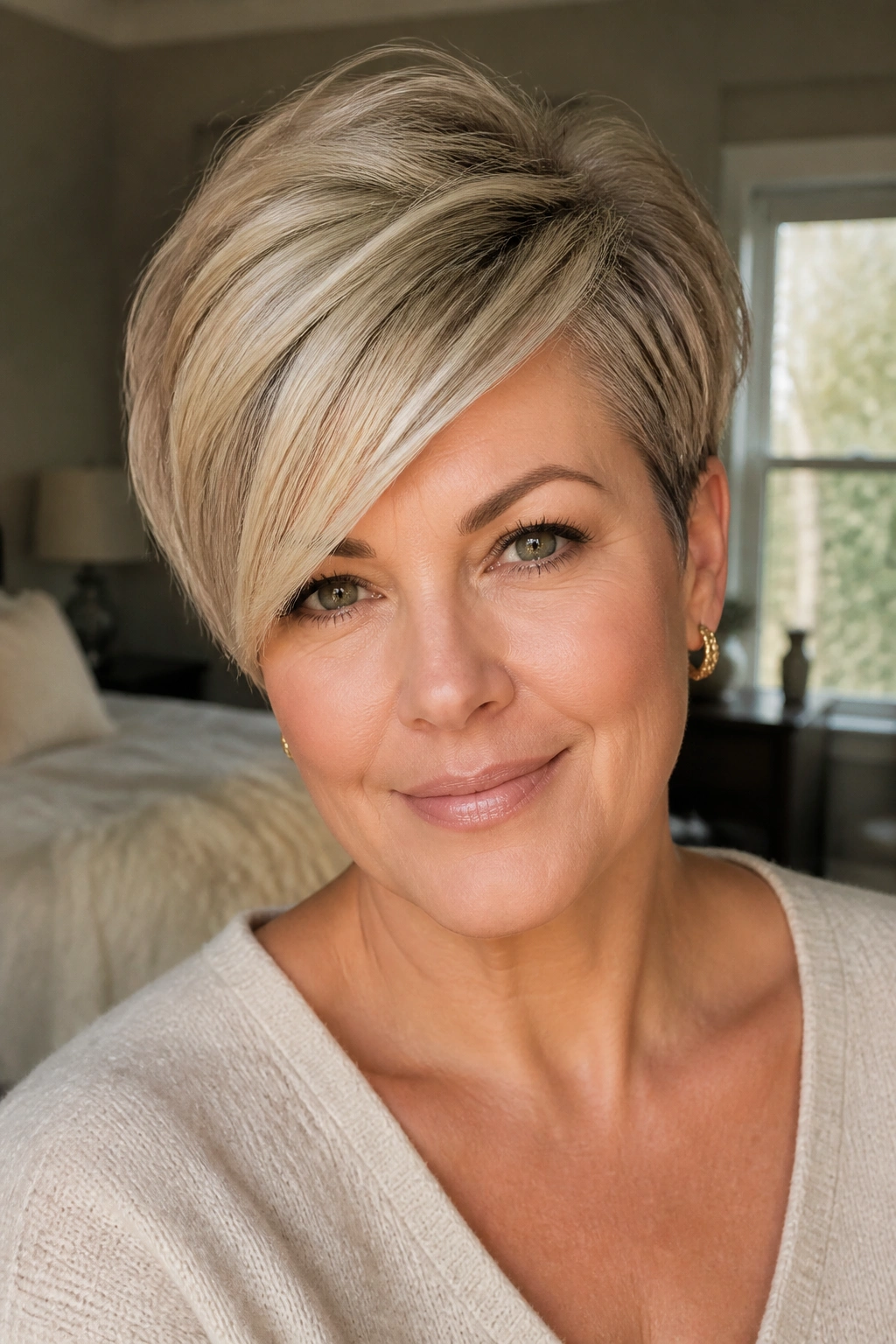
A side-swept pixie is the old reliable of short hair, and I mean that as praise. The diagonal line of the fringe pulls the eye across the face instead of letting it stop at the widest point, which is exactly why this shape flatters a round face so well.
Why It Works
The front pieces should be long enough to skim the brow or sit just below it, while the sides stay close and tidy. That contrast matters. A short, snug side with a soft sweep on top creates a slimmer outline without making the cut feel severe.
Ask for longer layers at the front, tapered sides, and a fringe that can move off-center. If your hair is fine, this is a smart choice because you can build the shape with a little mousse and a round brush, then leave the rest alone. If your hair is thick, the side sweep keeps the style from turning puffy.
One small detail makes a big difference. Don’t let the fringe land in a heavy block.
Best for: softening fuller cheeks, balancing glasses, and giving thin hair a little lift at the front.
Styling tip: blow-dry the fringe from the deeper side of your part toward the opposite brow, then finish with a cool shot so it stays in place without looking stiff.
2. Tapered Pixie with Lift at the Crown
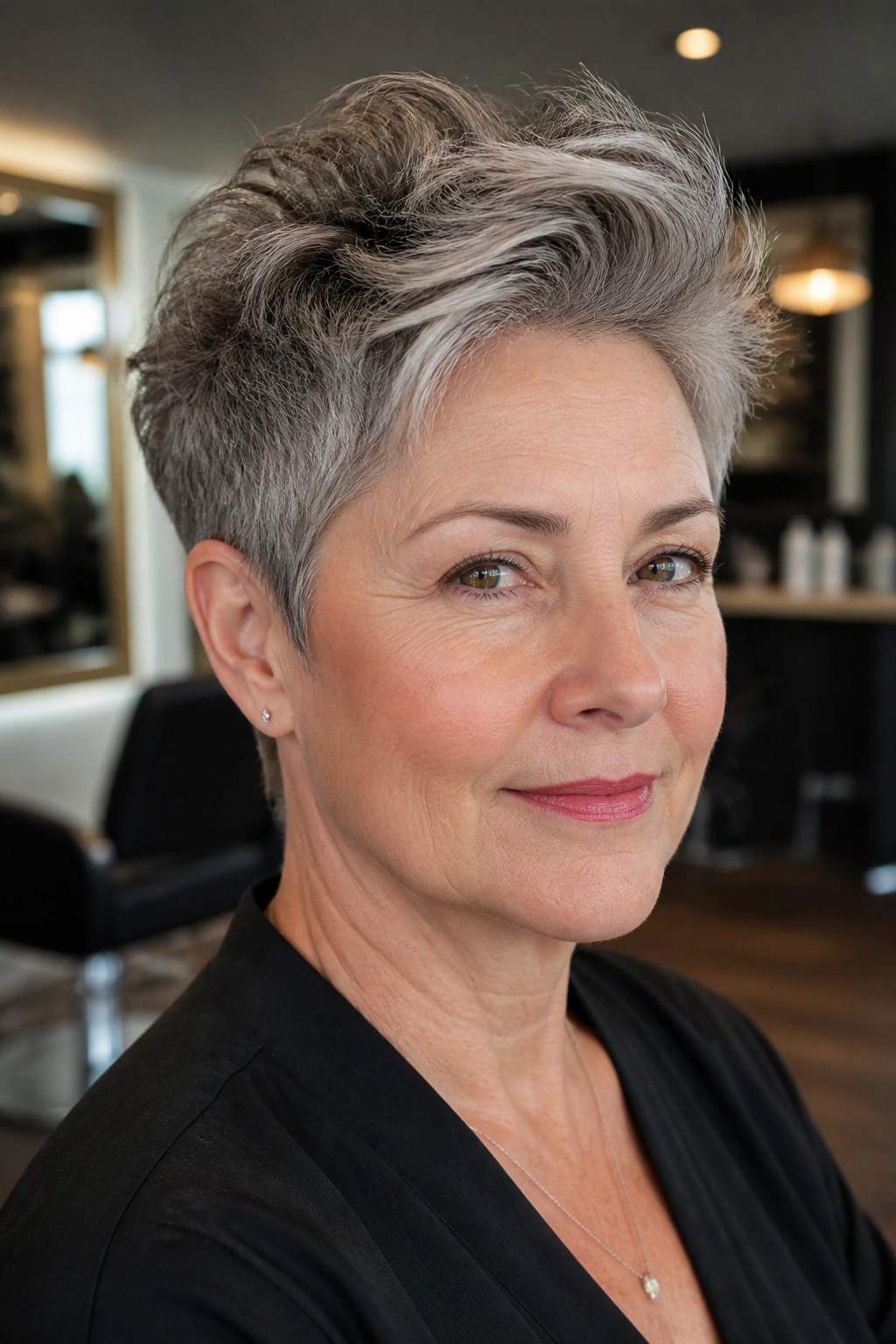
Crown height is underrated. A lot of pixies go wrong because the top gets cropped too close, and the face ends up looking wider than it really is. A tapered pixie with lift at the crown does the opposite: it adds vertical line, which is exactly what a round face likes.
The shape is clean at the nape and around the ears, then softly fuller through the top. That extra inch or two of height near the crown creates a longer silhouette, and it can make the neck look longer too. I like this cut on women with straight or slightly wavy hair, especially if the hair has lost some body and needs help holding shape.
Ask the stylist to keep the sides neat but not shaved down to nothing. Too much contrast can feel harsh. You want a controlled taper, not a military fade.
A little root-lifting spray at the crown goes a long way here. Spray at the roots, not the ends, and blow-dry by lifting sections up with a small brush or your fingers. Flat roots are the enemy. That’s the whole deal.
3. Long Pixie with Ear-Skimming Layers
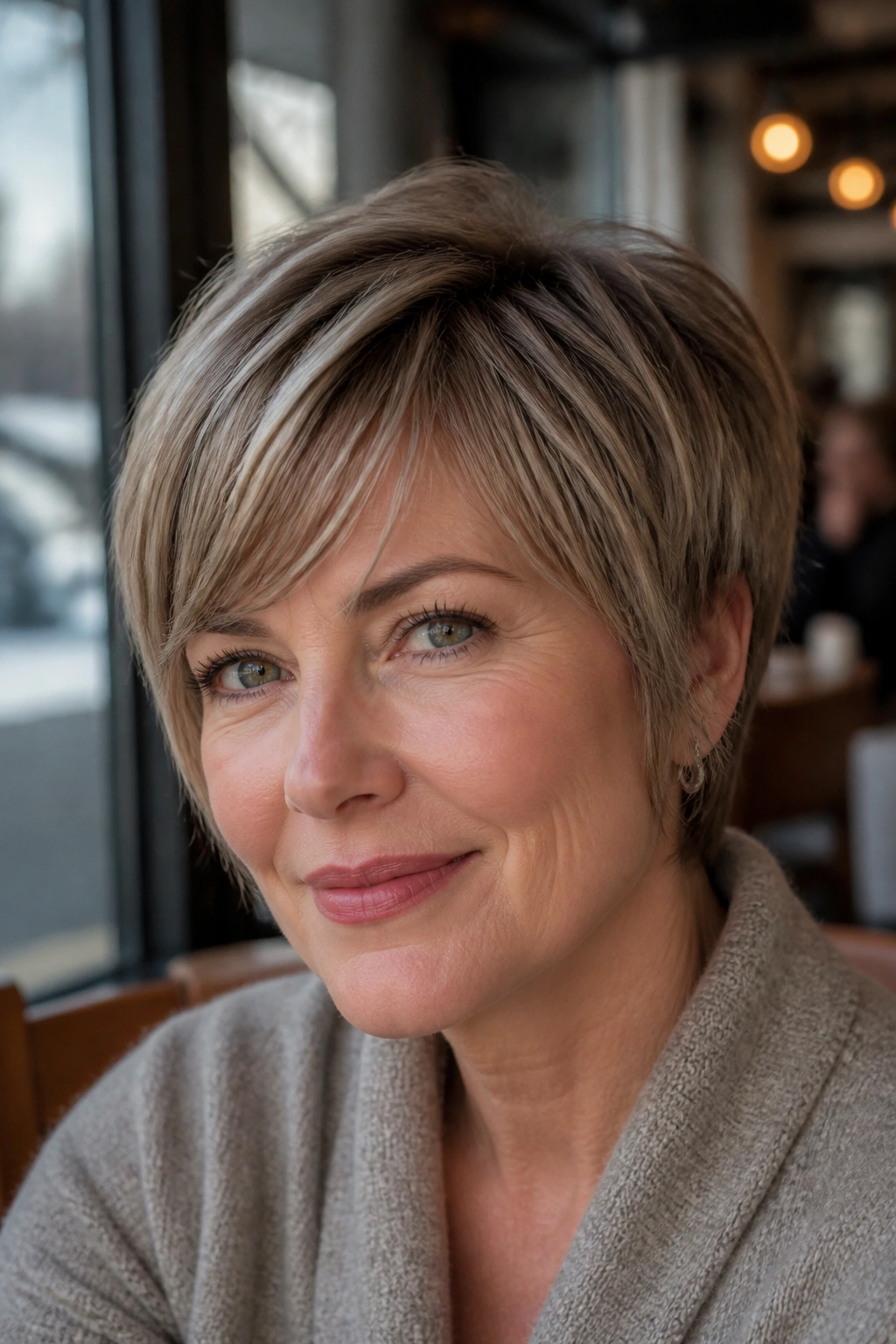
Not everyone wants a very short cut, and honestly, that’s fine. A long pixie with ear-skimming layers gives you the ease of a pixie while keeping enough length around the face to soften roundness and make the grow-out phase less annoying.
This version works well if you’re easing into short hair or if you like tucking one side behind your ear. The pieces near the ears should graze, not cling. That tiny bit of space keeps the cut light. Around the face, the longest front section can stop somewhere between the cheekbone and jawline, which helps stretch the look of the face without hiding it.
What to Ask For
- Longer front pieces that can be tucked or swept forward
- Soft, ear-skimming side layers instead of a blunt clipper-short side
- A lightly tapered nape so the back doesn’t flare out
- Texture through the top so the cut moves instead of sitting like a cap
This is also one of the easiest styles to live with if you wear earrings or glasses. The hair stays short enough to feel fresh, but there’s still enough length to play with. A dab of lightweight cream on the ends keeps the shape piecey without turning it greasy.
4. Choppy Pixie with Piecey Ends
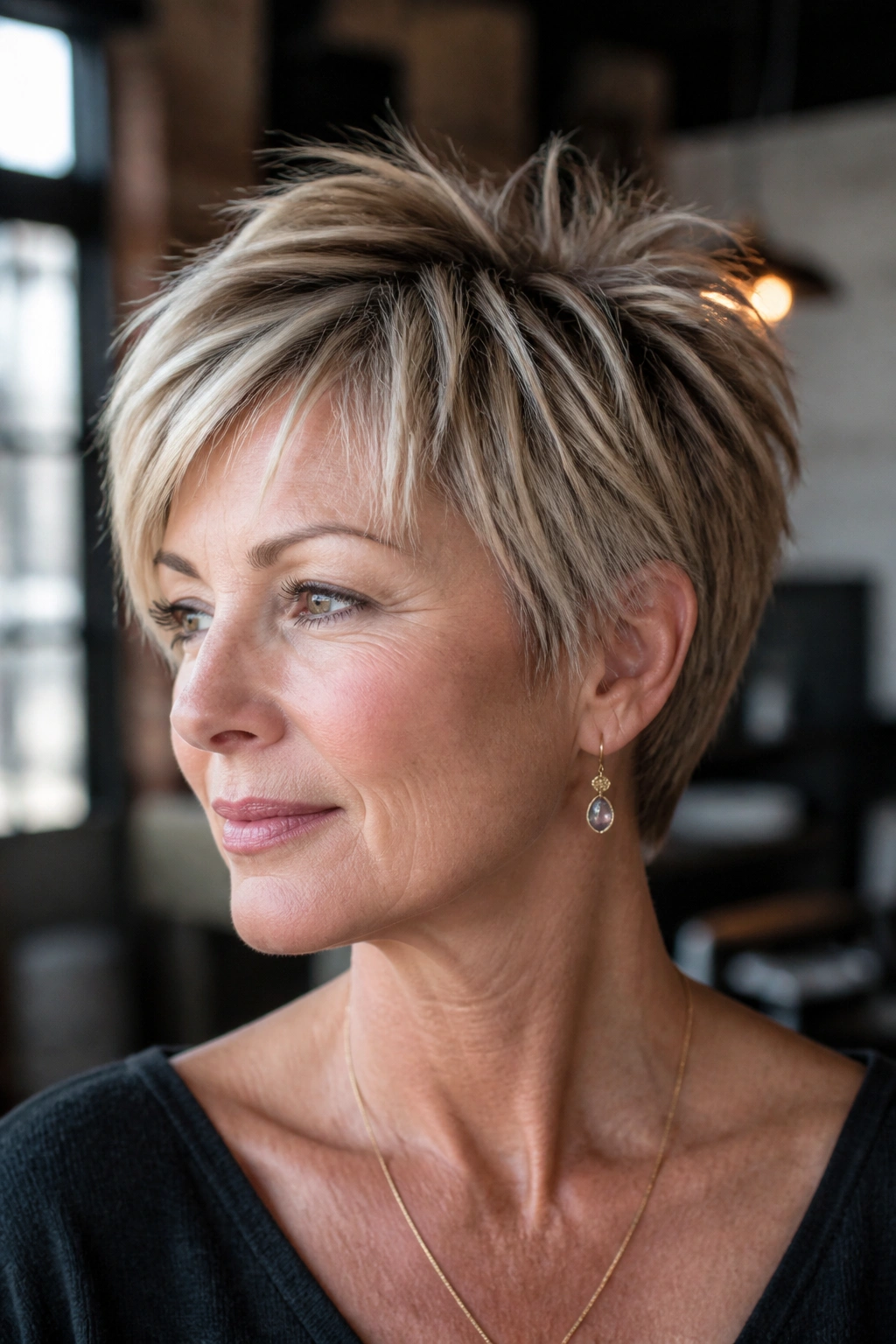
Blunt ends are a trap on round faces. Choppy ends are better. They break up the outline, add motion, and keep the cut from reading as one solid shape, which is exactly what you want when you’re trying to avoid extra width.
This pixie usually has short sides, a little lift at the crown, and ends that look cut with a bit of bite. Not ragged. Just broken up enough to move. It suits straight hair especially well, because straight hair can look too neat too quickly. A few uneven layers stop that polished-but-flat problem.
I like this version for women who don’t want a sweet haircut. It has more edge. It also hides minor cowlicks better than a smooth pixie, because the texture gives those stubborn spots somewhere to go.
Use a matte paste, not a shiny pomade, and work it through the ends with your fingertips. A pea-sized amount is enough for short hair. Too much product makes the pieces stick together and robs the cut of its movement.
5. Asymmetrical Pixie with a Deep Side Part
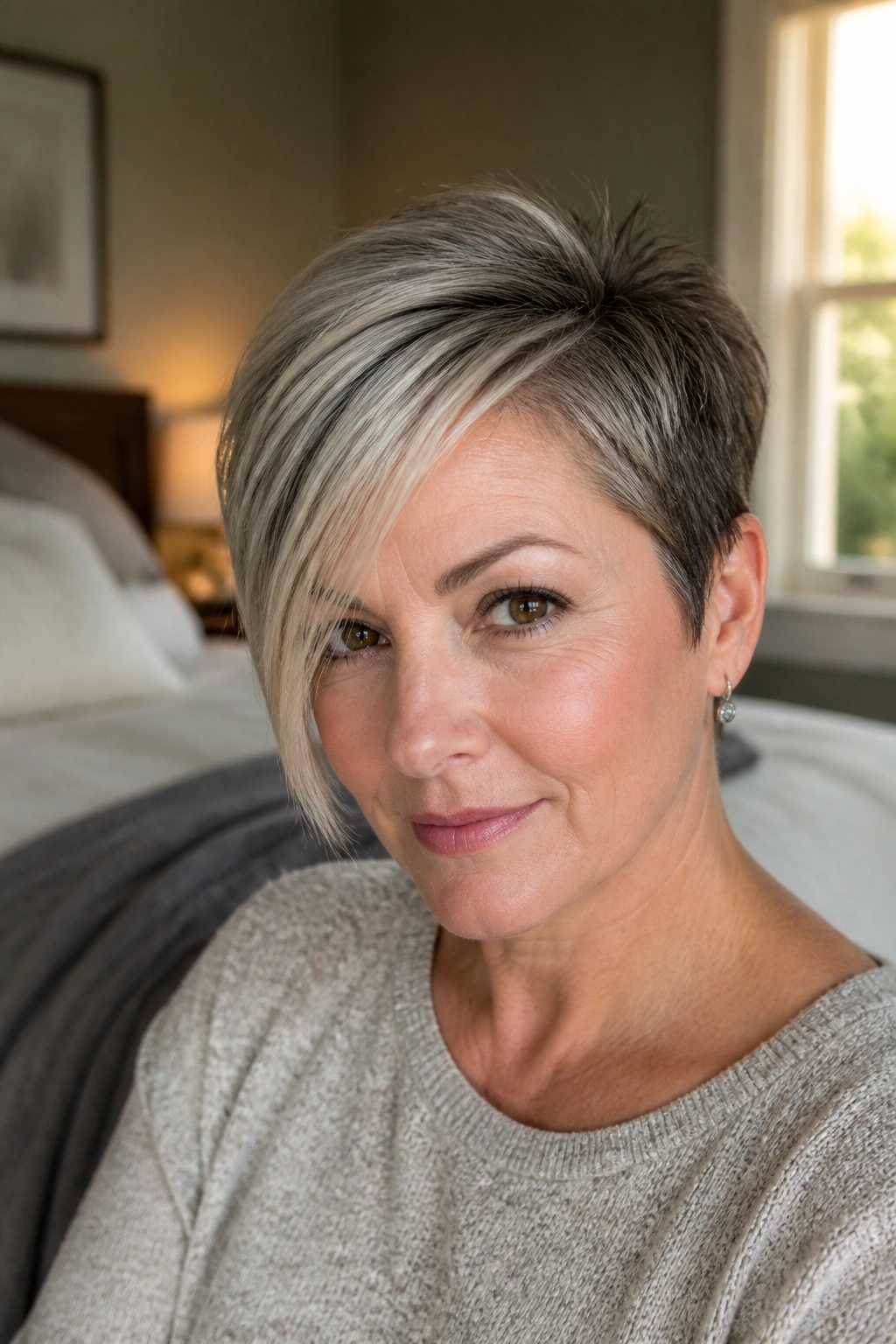
Unlike a symmetrical crop, this one plays with imbalance on purpose. One side stays a little longer, the part sits deeper, and the front falls in a diagonal line that cuts across the face instead of echoing its roundness.
That asymmetry can be flattering in a quiet way. It gives the eye a place to travel. It also lets you keep a bit of softness near one cheek without adding bulk on both sides. If you’ve ever looked in the mirror and felt like a short cut made your face look wider, this shape is often the fix.
A deep side part is doing more work here than people realize. It adds lift at the root on the heavier side, and that lift matters more than a lot of fancy styling tricks. Ask for the longer front side to sit about 1 to 2 inches longer than the shorter side if you want the contrast to show without feeling dramatic.
This cut works especially well with a blow-dry brush and a light-hold spray. Keep the front smooth, keep the crown up, and let the longer side fall naturally. It looks intentional even when it takes ten minutes, which is my kind of haircut.
6. Curly Pixie with Controlled Height
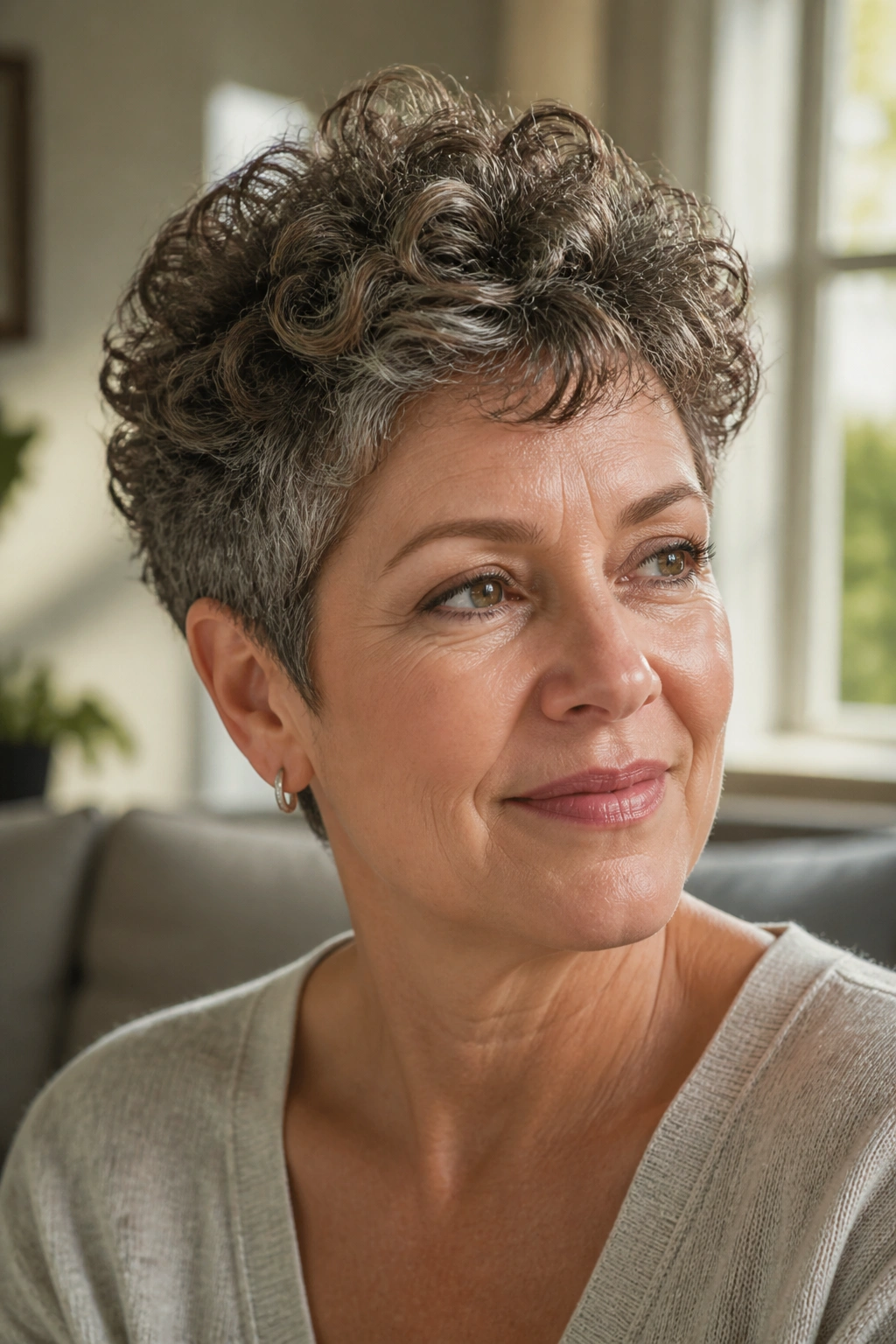
Curls and round faces can be a great match, but only when the cut respects the shape of the curl. A curly pixie should keep the sides tidy and the top slightly taller, so the curls don’t balloon out around the cheeks.
The mistake I see most often is over-layering. Too many short layers can make curls spring outward in every direction. The better move is softer layering, with enough length on top for the curl pattern to form without puffing. A curly pixie should feel airy, not mushroomy.
How to Keep It Flattering
- Leave a little more length at the crown than you think you need.
- Keep the sides close enough to avoid side volume at the cheeks.
- Ask for curl-friendly cutting, ideally on dry hair if your stylist works that way.
- Use a diffuser on low heat and stop before the curls dry into a hard shell.
This cut is lovely when the curl pattern has shape on its own. It also works for women whose hair has gone a bit wavier over time. A small amount of curl cream, scrunched into damp hair, is usually enough. No need to overwork it. Curls hate that.
7. Feathered Pixie with Wispy Layers
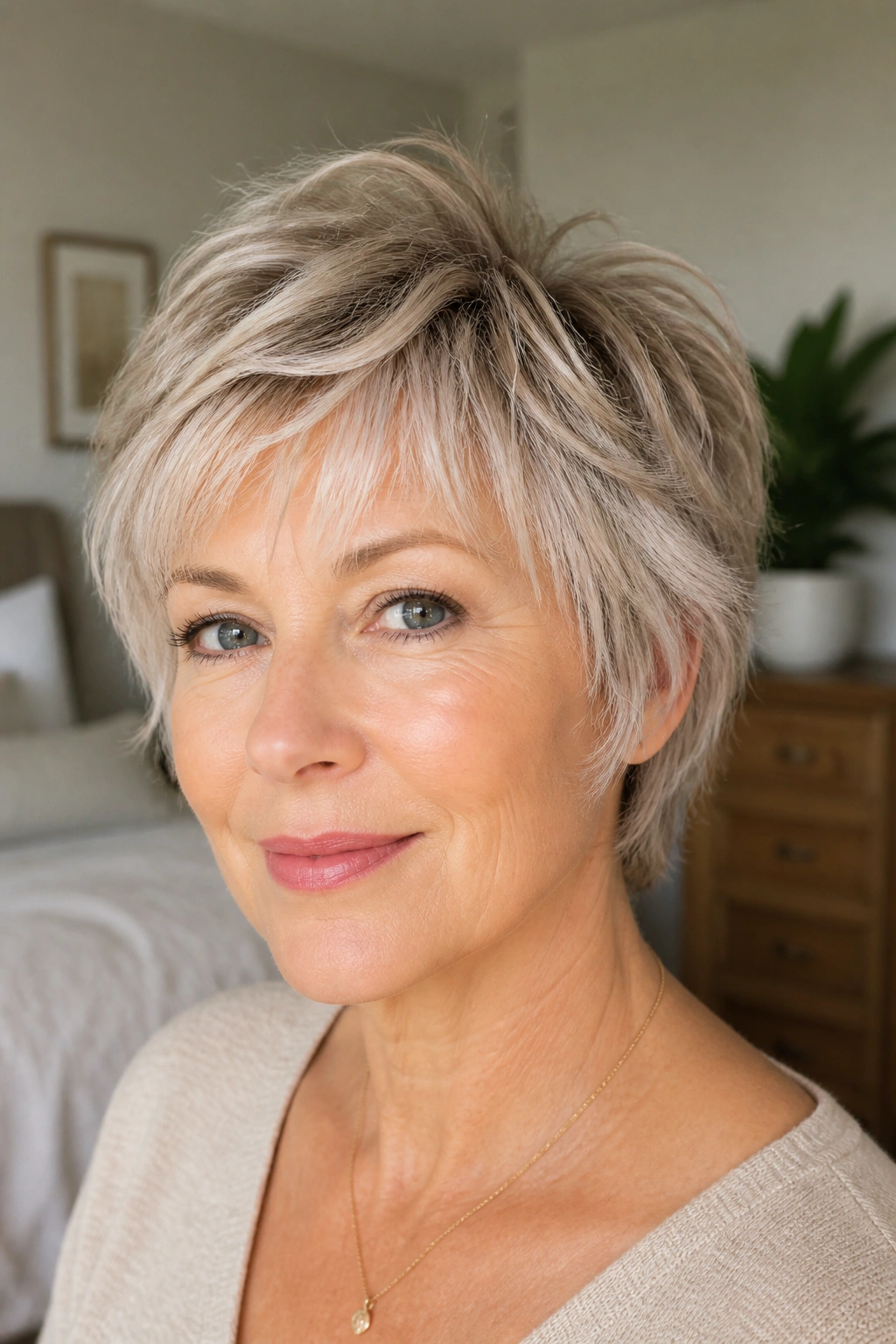
Feathering is one of those old-school techniques that still earns its keep. When it’s done well, it softens the edges of a pixie and gives fine hair the illusion of more body without piling on bulk at the sides.
This shape is especially nice if your hair feels light but sparse around the temples. Wispy layers catch the eye in little shifts, so the haircut looks fuller than it is. The key is to keep the feathering soft near the face and slightly stronger through the top, where you want movement and lift.
I’d avoid a heavily razored version if your hair is already dry or fragile. Feathered does not mean shredded. It should look airy, not thin. That distinction matters more over 50, because hair that has lost density can turn fuzzy fast if the cut is too aggressive.
A lightweight mousse gives this style a bit of memory. Brush it through damp hair, lift the roots with your fingers, and let the ends fall where they want. You’ll get a softer frame around the face and a shape that doesn’t scream for constant attention.
8. Undercut Pixie for Dense Hair
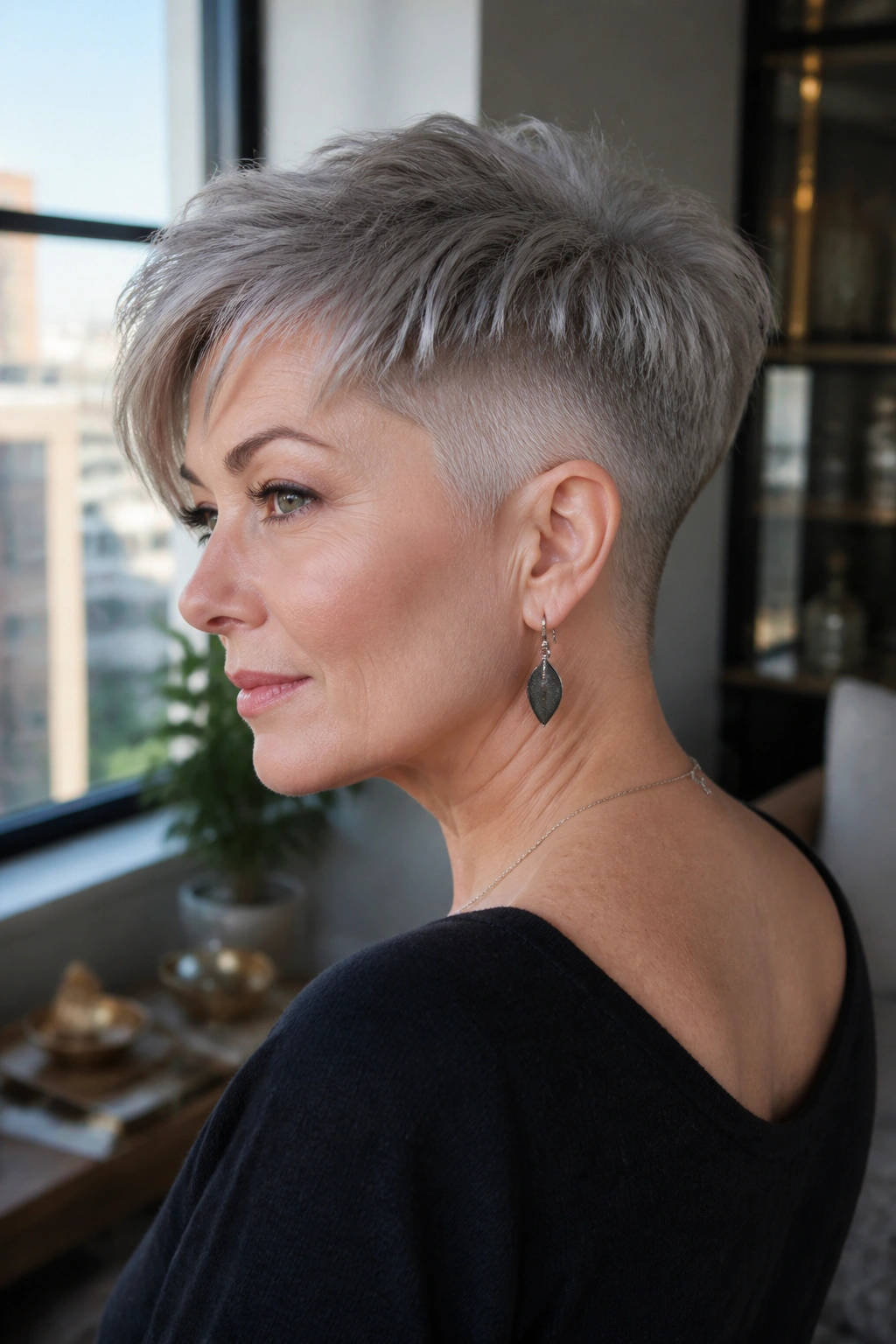
Dense hair can be a blessing and a headache. On a round face, too much bulk at the sides can make the cut feel heavy, so an undercut pixie is a smart way to remove weight where you do not need it.
This is the bolder option in the bunch. The nape or lower sides are clipped shorter, while the top stays longer and more movable. That contrast gives the hair room to sit closer to the head, which is what keeps thick hair from spreading outward. The result feels cleaner, cooler, and easier to dry.
What to Tell Your Stylist
- Remove bulk underneath, especially at the nape and back corners.
- Keep the top long enough to sweep forward or back.
- Blend the transition so it doesn’t look like two different haircuts.
- Leave enough length near the front to keep the face from feeling exposed.
This style is not for everyone. If you want a very soft, rounded outline, it may feel too sharp. But if your hair is thick and you’re tired of it expanding the second humidity hits, it’s a relief. A little styling cream on top and a fast blow-dry is often enough.
9. Pixie Bob Hybrid with Longer Front Pieces
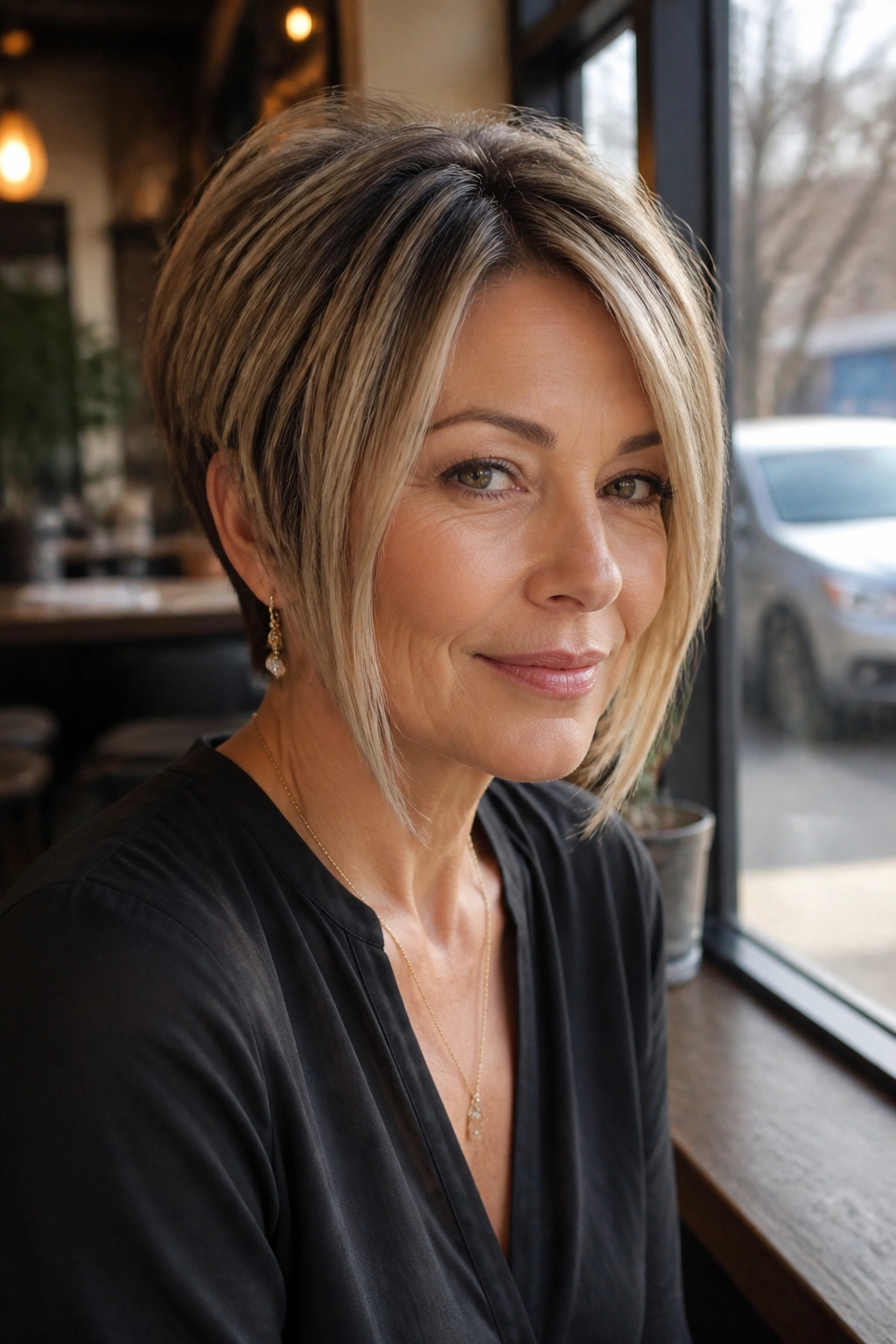
A pixie bob, or bixie if you prefer the nickname, is the compromise cut that earns its keep. It keeps the short back and easy maintenance of a pixie, but the front has enough length to soften the lower half of a round face.
The longer front pieces matter because they fall closer to the jawline, which draws the eye down. That downward line helps lengthen the face visually. It also gives you more options on the days when you want to tuck hair behind one ear or bend the front with a flat iron.
I like this cut for women who aren’t ready to go super short or who want a softer bridge between a bob and a pixie. It’s especially kind to hair that has a little wave, because the movement in the front keeps the shape from feeling boxy.
A center part can work if the front is long enough, but a side part usually flatters a round face more. Keep the ends textured. A blunt, chin-near line can drag the face wider, and that’s the opposite of what you want here.
10. Swept-Back Pixie for a Clean Profile
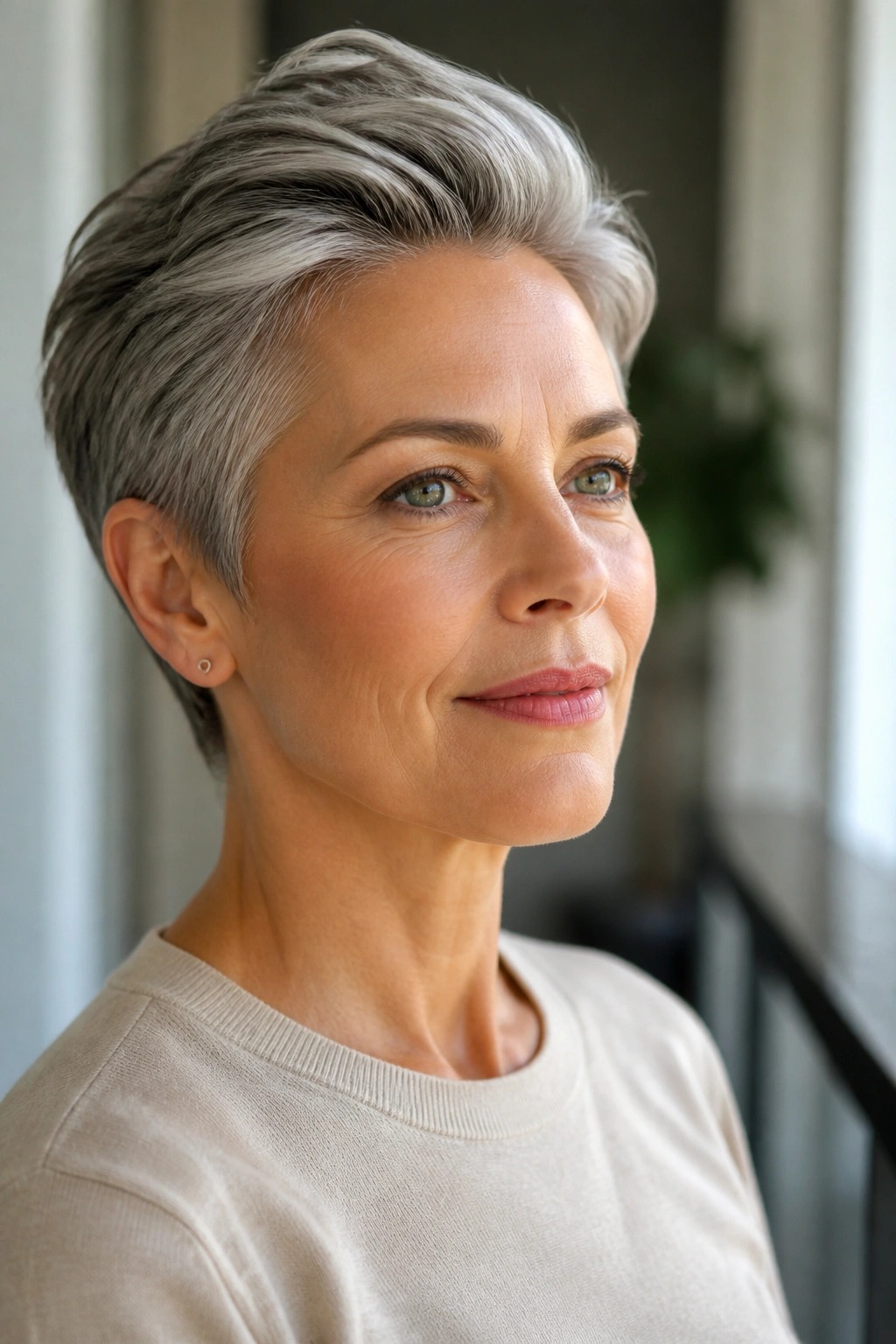
A swept-back pixie gives you a clean face and a clear line at the forehead, but it only works if the crown has enough lift. If the top lies flat, the whole shape can look hard and a little dated. With lift, though, it looks polished in the best way.
This cut suits women who like their earrings to show, or who want the eyes and cheekbones to carry the look. The hair is brushed away from the face, then set with a flexible product so it stays soft rather than shellacked. That softness is what keeps it from looking severe on a round face.
Use a vent brush or your fingers to push the hair back while drying, then finish with a mist of flexible hold spray. Skip heavy gel. It can make the style look wet and narrow in a strange way, which sounds better in theory than it does in a bathroom mirror.
I’d choose this style if you prefer a little elegance with less fuss. It reads neat, but not fussy. And if you wear glasses, it keeps the frames from fighting with the hair.
11. Soft Shag Pixie with Broken-Up Ends
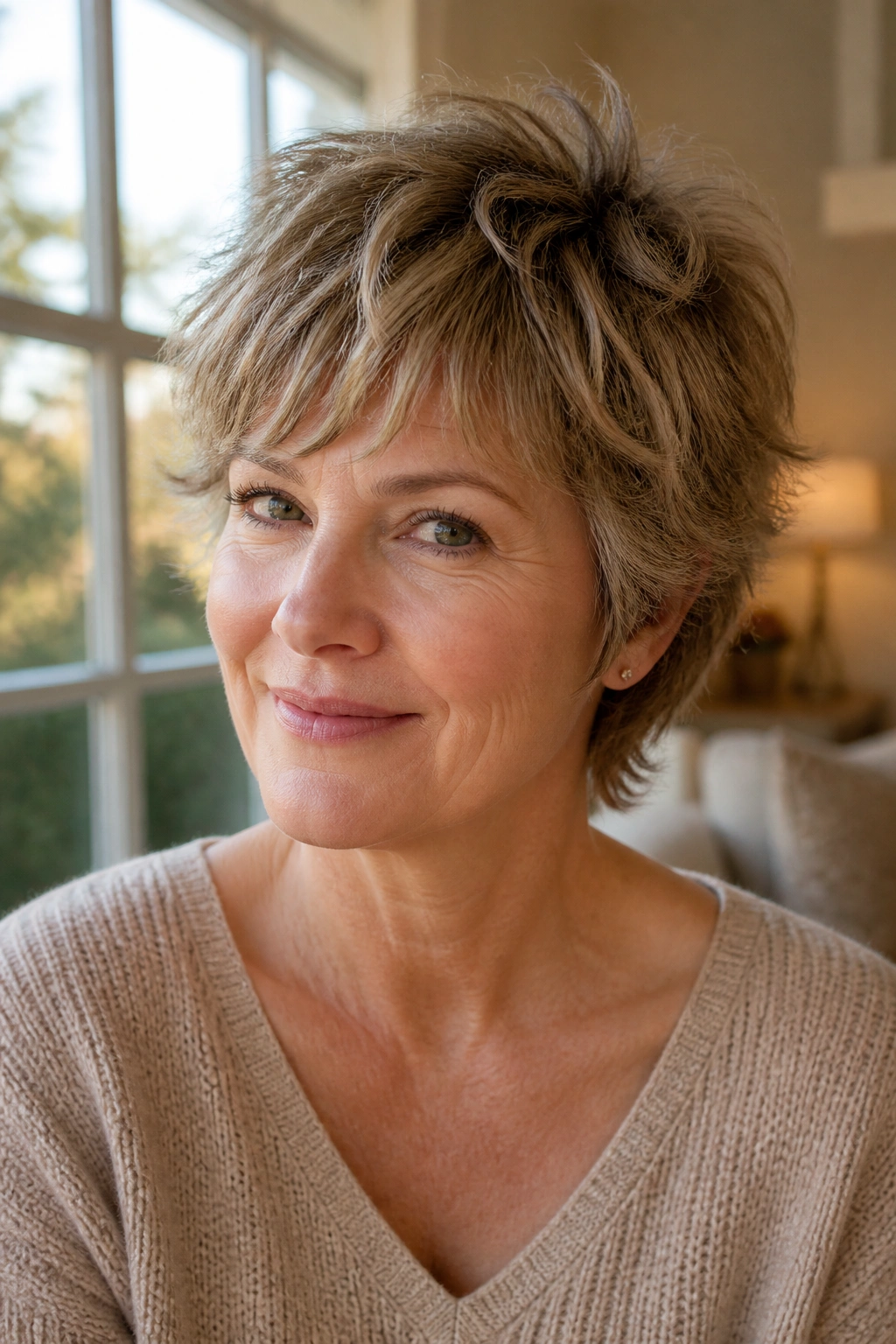
This is the pixie for someone who wants movement more than precision. The soft shag version uses uneven texture, light layering, and a little bit of mess on purpose to keep the face from feeling circular.
The trick is to keep the layers close enough that the haircut still looks like a pixie. You do not want a mini shag mullet situation. The top should have lift, the sides should stay controlled, and the ends should break up in a way that feels casual rather than blunt.
It’s a strong choice for wavy hair, because the natural bend gives the cut a lived-in look without much work. Straight hair can wear it too, but it benefits from a touch of texture spray so the layers don’t collapse.
Tiny pieces do the work.
A soft shag pixie also grows out well, which is a nice bonus if you don’t live in the salon. The shape stays interesting even when it’s a few weeks past its appointment, and that matters more than people admit.
12. Fringe-Forward Pixie with Short Temples
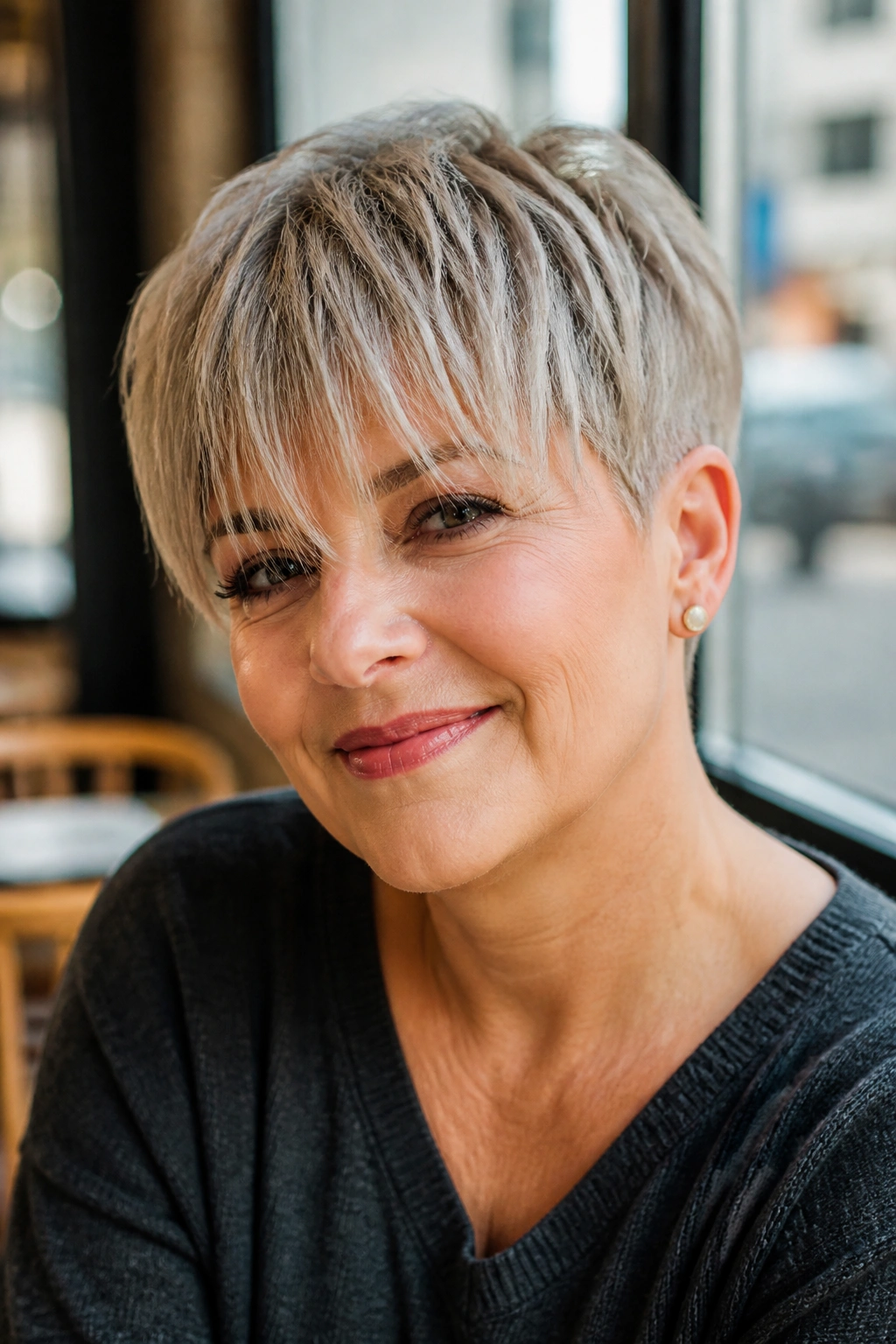
A fringe-forward pixie puts the focus where you want it: across the eyes and upper face, not out at the cheeks. On a round face, that can be a very good thing, as long as the fringe stays light.
The temples should be trimmed close enough to keep the face open, while the fringe falls in soft, broken pieces. A heavy straight-across bang can cut the face in half and make it look shorter, so I’d keep this one airy. Think texture, not curtain.
Best Salon Notes
- Ask for a broken fringe, not a dense block.
- Keep the temples short and neat.
- Leave enough length at the crown to avoid a flat cap shape.
- Point-cut the fringe so it moves when you blink or smile.
This pixie works especially well if you have a larger forehead or like to wear makeup that highlights the eyes. It also plays nicely with side-swept styling, so you can change the feel of the cut without changing the cut itself. That flexibility is part of the appeal.
13. Brushed-Up Pixie with Light Texture
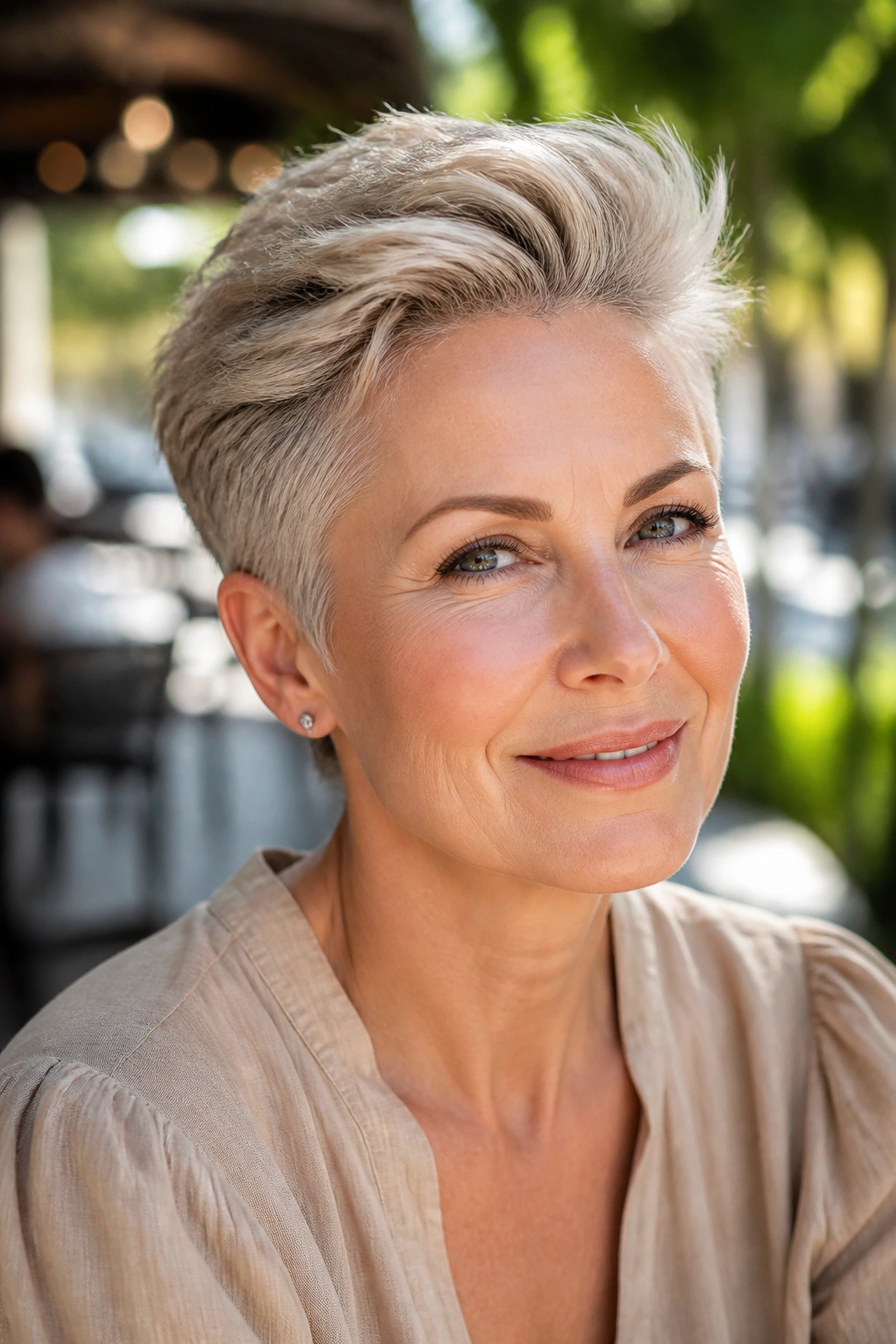
A brushed-up pixie has attitude, but the right version stays soft enough for everyday life. The hair is lifted off the forehead and pushed upward or slightly back, which gives the face more length and opens the features.
I like this cut on straight to slightly wavy hair, especially if the hairline is strong and you don’t mind a style that shows your face fully. The top usually sits around 2 to 3 inches long, while the sides are kept snug. That difference gives the cut its shape.
The styling part is quick. Work a small amount of texture paste between your palms, then rake it through the top with your fingers while the hair is still warm from the blow-dryer. You want lift, not spikes. If the tips stand up like little flags, you’ve used too much product or too much enthusiasm.
Best for: women who want a short cut that feels modern without being fussy.
Watch out for: too much height in the center with flat sides. That can make the face look broader, not slimmer.
14. Tucked Pixie with Elongated Sideburns
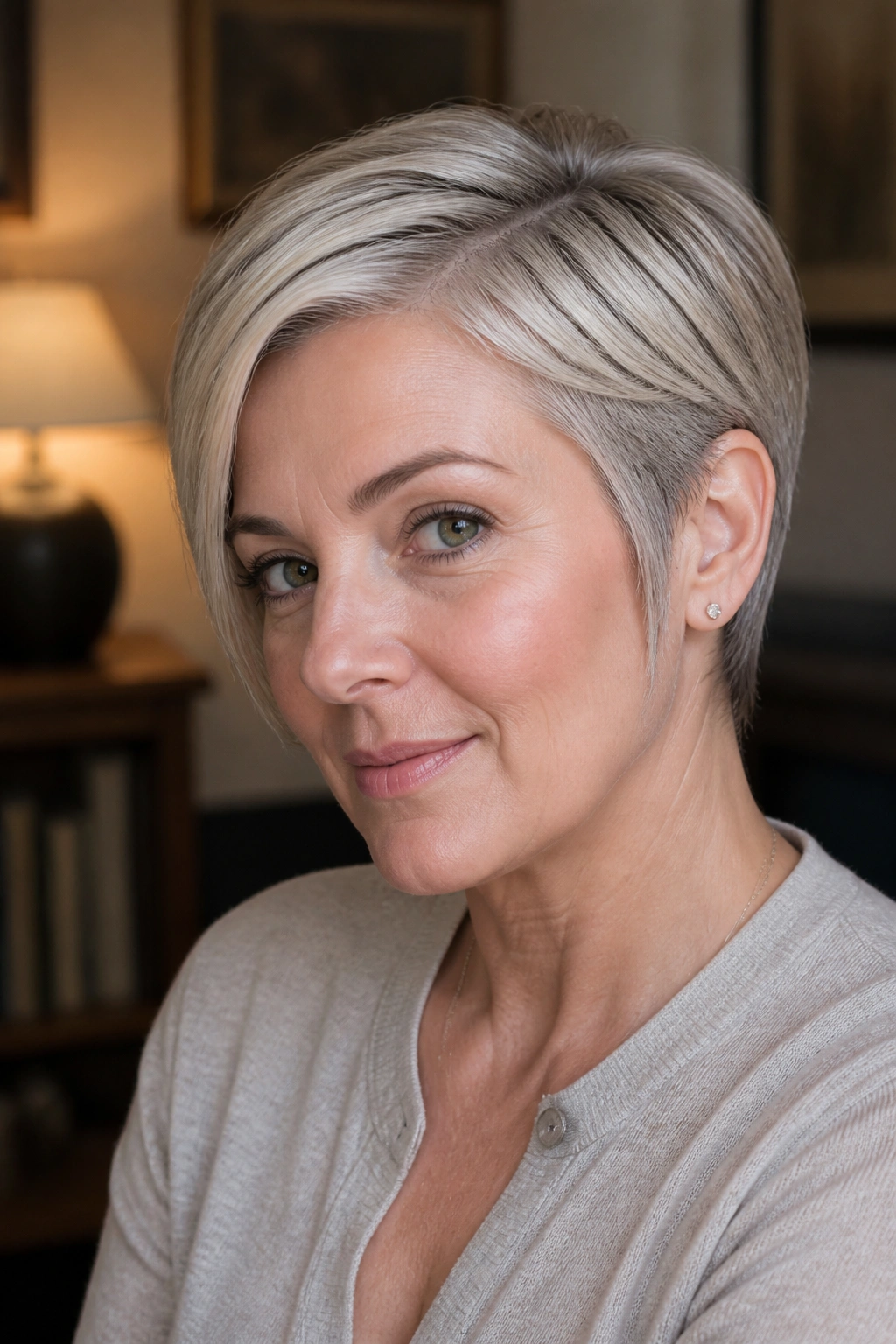
Sideburn length sounds like a tiny thing. It isn’t. On a round face, a bit of length along the sides can act like a visual frame, guiding the eye downward and keeping the cut from feeling too open at the cheeks.
This pixie is shaped so the front and sideburn area have enough length to tuck behind the ear or soften the jawline, while the back stays neat and close. It’s a calm, elegant look. Not flashy. Not trying too hard.
The elongated sideburns are the detail that makes it work. They create a vertical line beside the face, which helps offset roundness without needing a lot of height on top. If you wear glasses or earrings, this cut is especially nice because it leaves room for both.
I’d ask for the sideburns to fall just below the cheekbone or toward the jaw, depending on your face. Too short, and the effect disappears. Too long, and it starts to read more like a bob that got bored and chopped itself off.
15. Soft Nape Pixie with Tapered Back
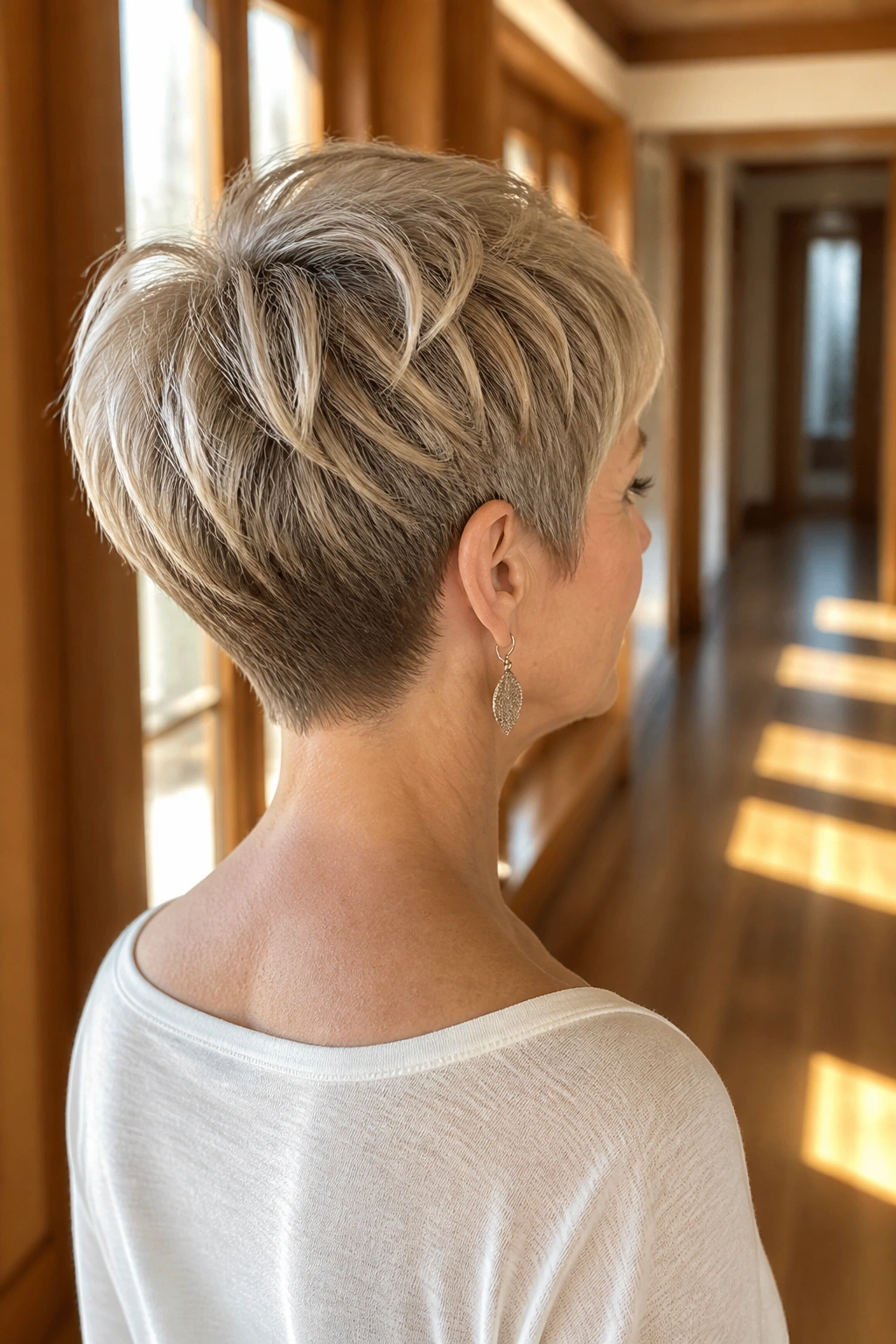
The soft nape pixie is the one I keep coming back to for women who want low maintenance without looking plain. It has a tapered back, a neat nape, and enough softness on top to keep the face from feeling boxed in.
This cut works because it clears the neck and keeps the silhouette narrow at the back, while the top can still carry movement. On a round face, that balance matters. You’re not trying to compete with the face shape; you’re creating a cleaner outline around it.
A soft nape also grows out gracefully. That’s not a throwaway detail. A lot of short cuts look great for ten days and awkward for the next three weeks. This one stays believable longer, which makes the appointment spacing a little less stressful.
If you want something easy to live with, this is a strong final pick. Ask for a tapered back, soft layering at the crown, and a front that can be styled forward or lightly off to the side. It’s neat, practical, and quietly flattering in a way that never feels forced.
