



Soft pixie cuts are the answer when you want short hair that still feels touchable. The wrong pixie can look clipped, rigid, or a little too severe; the soft versions have movement around the temples, a bit of bend at the fringe, and edges that skim instead of carve.
The shape matters more than the length.
A good soft pixie cut usually relies on feathering, a side-swept front, and a neckline that’s neat but not harsh. Those details change everything. A few millimeters in the front can turn a sharp crop into something gentler, especially when the top is left long enough to fall forward in little pieces.
And that is why this style keeps getting reimagined. It works on straight hair, wavy hair, and curls with the right cut line. It can look polished for work, then slightly undone later in the day, which is part of the charm. The trick is choosing the right version for your hair density, face shape, and how much effort you want to spend in the morning.
1. Feathered Crop Pixie
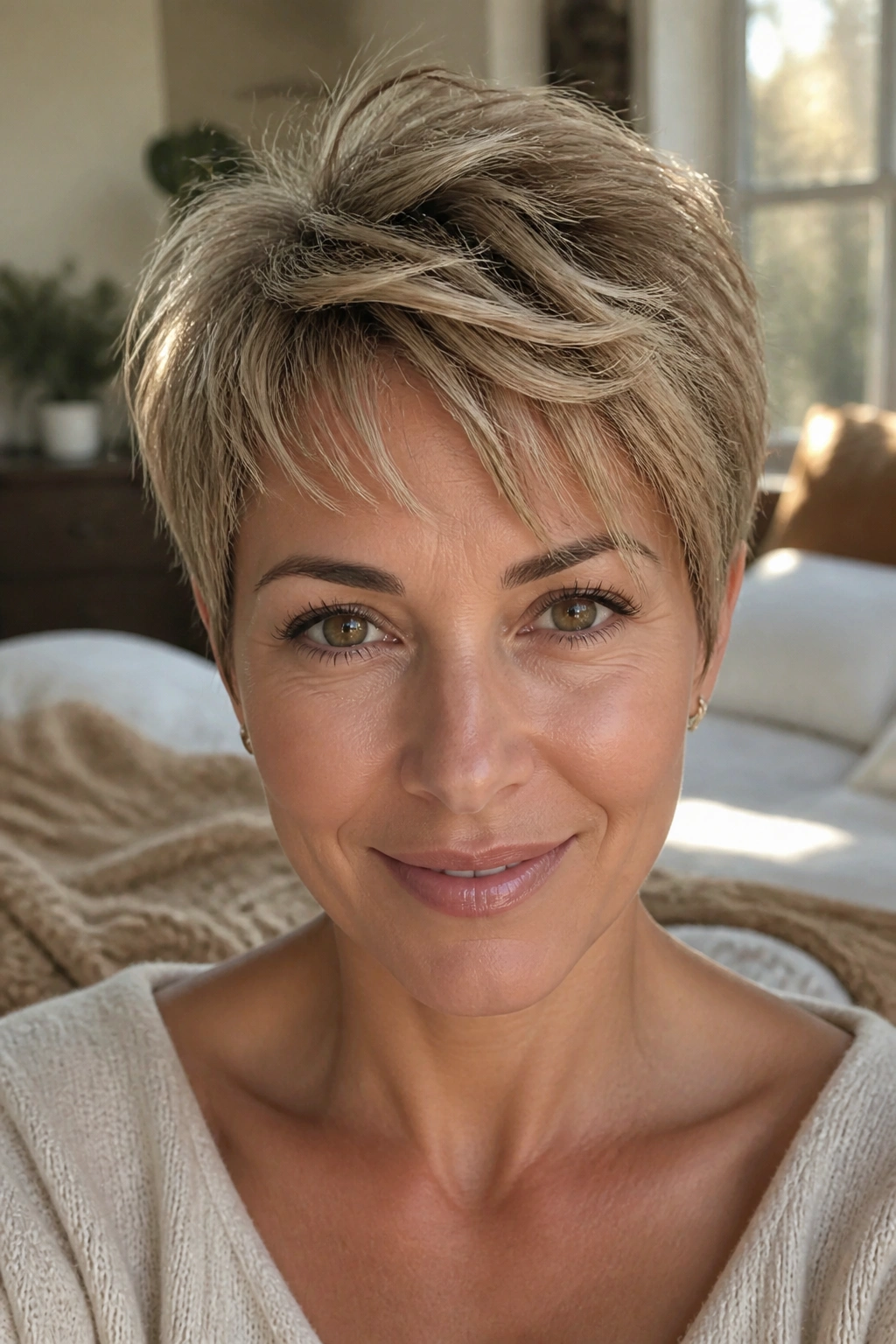
Feathering is the fastest way to soften a pixie. It takes the edge off the outline and gives the cut that airy, brushed-up feel that reads easy instead of строг? no, not that. Easier. More relaxed. Less helmet, more hair.
Why the feathering matters
When the top is cut into light, broken layers, the hair can move. You get lift at the crown, but the ends don’t sit in one blunt line, which is where a lot of short cuts start looking stiff. The best feathered crop pixies keep the sides close and the top a little longer, so the whole shape looks light from every angle.
Ask for soft point cutting through the top and around the temples. A good stylist will know to remove weight in small sections rather than slicing big chunks out of the shape. That’s the difference between airy and choppy.
- Keep the crown about 1.5 to 2.5 inches longer than the sides.
- Ask for the nape to stay tidy, not shaved tight.
- Use a light styling cream or mousse, not a heavy wax.
- Blow-dry with your fingers, then finish with a small round brush if you want a little bend.
Best for: straight to slightly wavy hair that needs movement fast.
2. Side-Swept Soft Pixie Cut
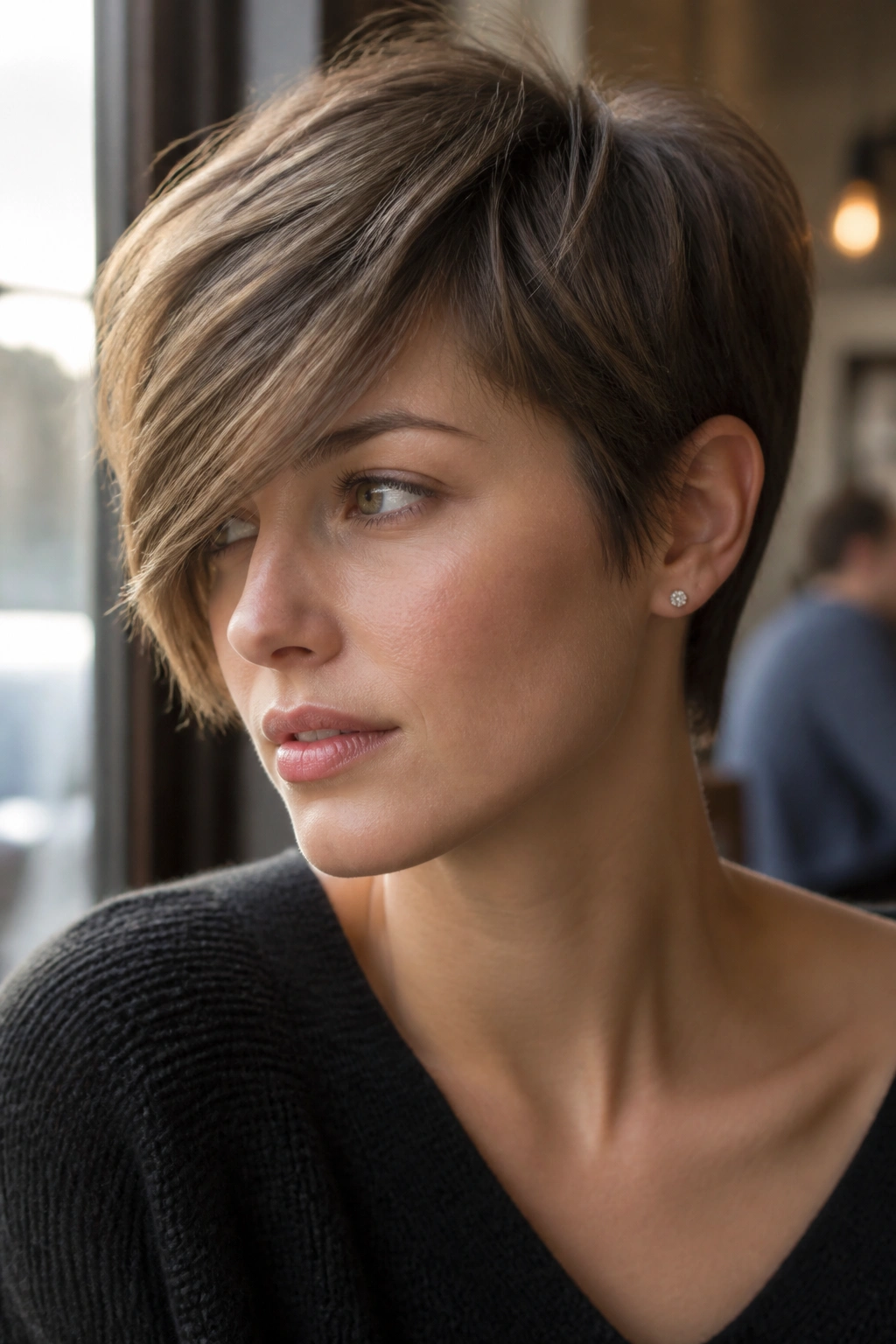
What happens when you want short hair but still want something to fall across your face? A side-swept soft pixie cut solves that problem cleanly. The long fringe does most of the work here, skimming the brow or cheekbone and giving the cut a gentler line.
The fringe matters because it changes the mood. A short, straight fringe can feel crisp and graphic; a longer side sweep feels softer and more lived-in. I like this version for anyone who wants to keep a little mystery around the eyes without turning the whole haircut into a full-on shag.
It also grows out well, which is practical in a way people don’t always talk about. When the front gets a little longer, it still looks intentional. You can tuck it behind one ear on busy days, then bring it forward again with a quick mist of water and a bit of cream.
This one flatters a lot of faces, but it’s especially useful if your forehead feels too open in very short cuts. The side fringe breaks up the space and gives the style a softer frame.
3. Soft Bixie Cut
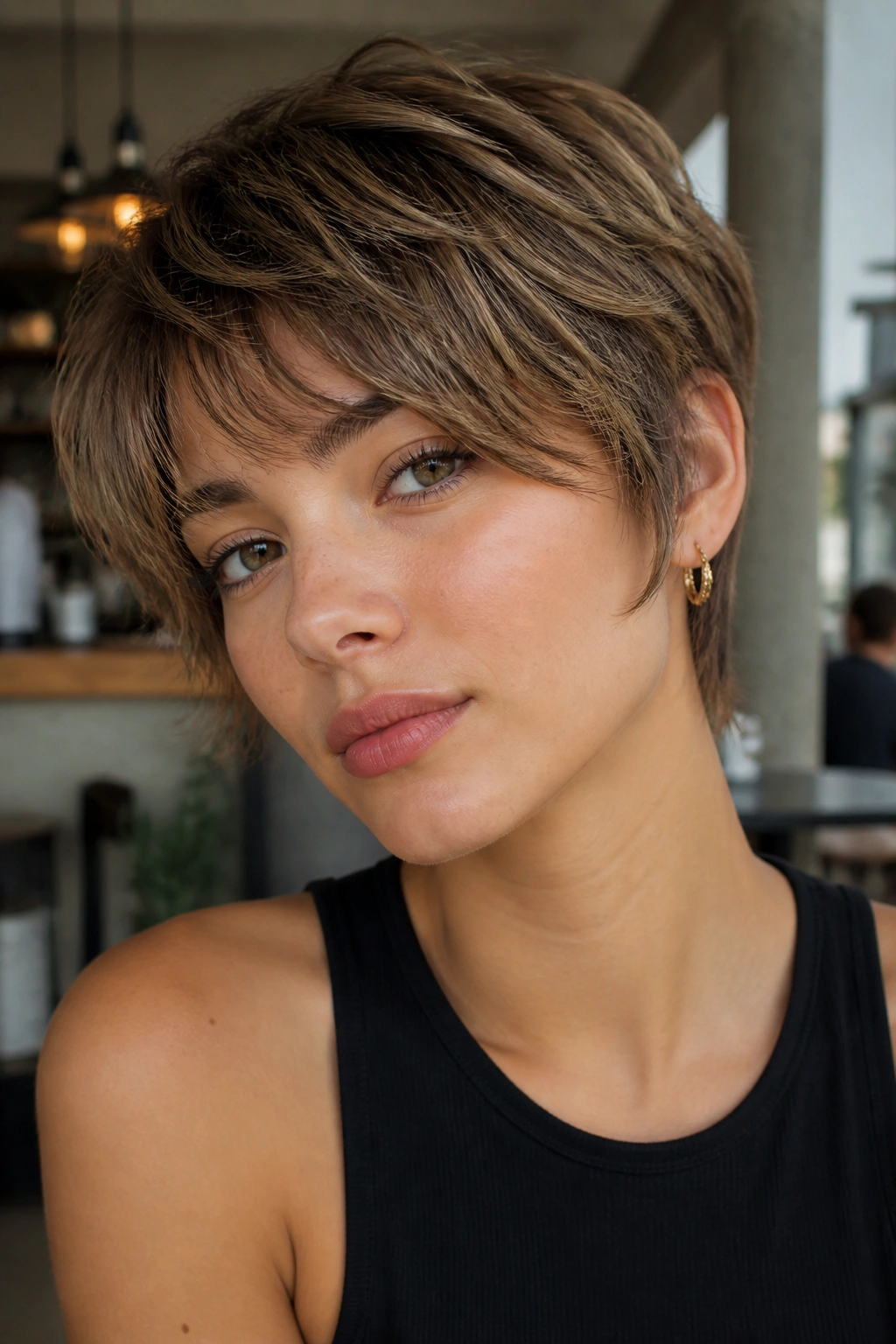
If your hair lives between a bob and a pixie, the bixie is probably the most forgiving place to land. It has the cropped feel of a pixie with just enough length at the sides and nape to keep it from looking severe. That extra inch or two changes the whole silhouette.
What to ask for at the salon
The best soft bixies keep the perimeter loose. You want the top layered enough to move, but not so shredded that the ends start flipping in odd directions. A good cut usually has cheekbone-skimming front pieces and a back that stays close to the neck without hugging it too hard.
- Ask for soft layers through the crown.
- Keep the front long enough to tuck, usually around the jawline or slightly above.
- Leave some length around the ears so the shape doesn’t feel boxy.
- Avoid a blunt, one-length edge at the bottom.
A bixie works especially well if you’re easing into shorter hair or coming out of a longer bob. It gives you the freshness of a cropped cut while still leaving room to style, pin, or smooth pieces into place. That little bit of flexibility matters more than people expect.
4. Curly Pixie with Airy Layers
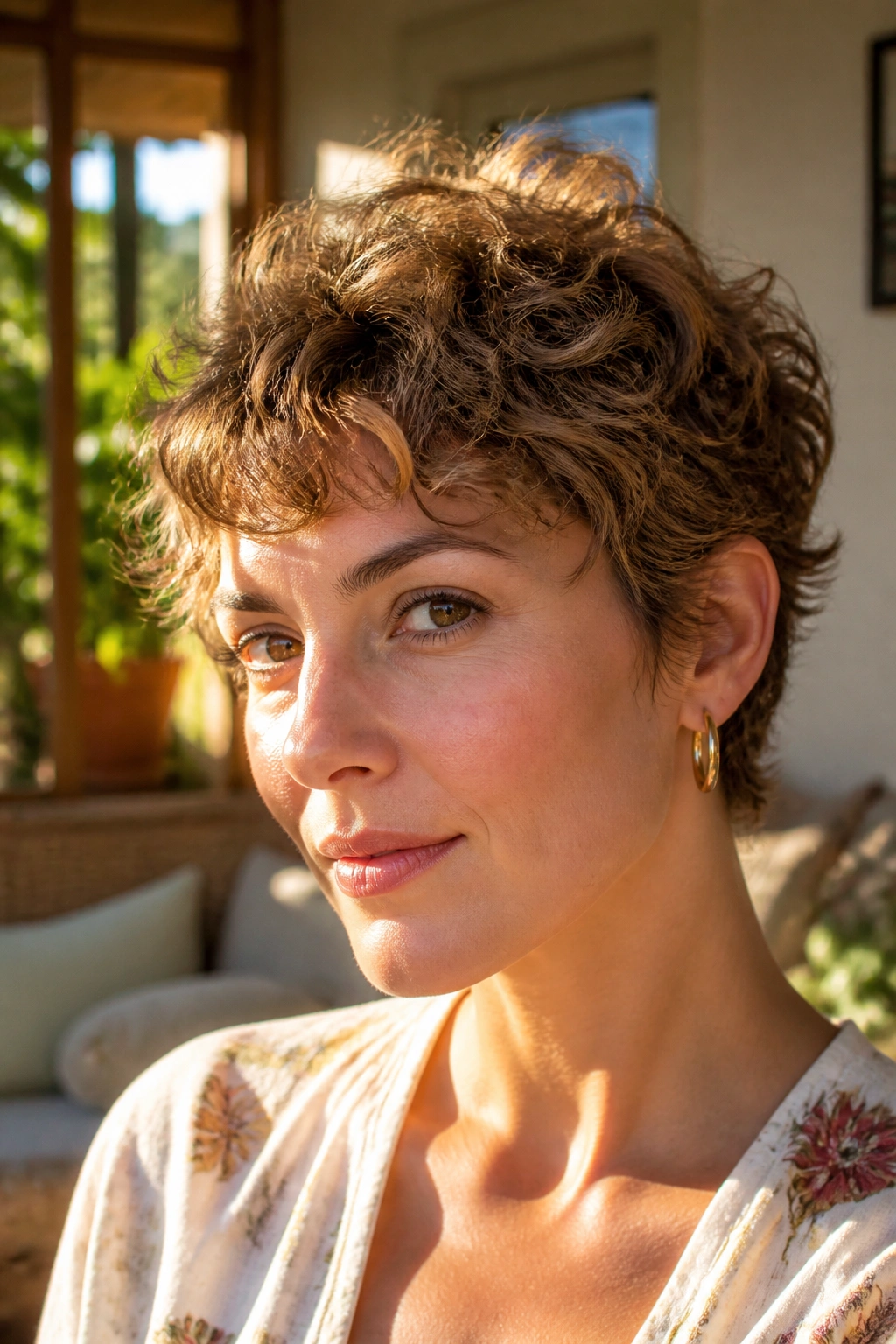
Curly hair does not need to be flattened to look soft. In fact, the best curly pixie cuts usually get softer when the curl pattern is allowed to stay open and a little loose, instead of packed tight against the head.
The key is shape. Curly pixies can go wrong when too much weight is removed from the wrong place, because then the curls pop out in uneven clumps. A better cut leaves room at the top and around the crown, then shapes the sides so they fold in gently. You end up with a halo-like effect rather than a puff.
This style looks especially good when the curls are defined but not crunchy. A small amount of curl cream on damp hair, scrunched in with a microfiber towel, usually does more than a pile of products. And please, no stiff gel helmet unless that is genuinely your thing.
For rounder face shapes, a curly pixie with a little extra height at the crown can be lovely. For narrower faces, a soft curl falling toward the temples can give the cut more body. The real win is that it feels playful, not forced.
5. Tapered Soft Pixie Cut
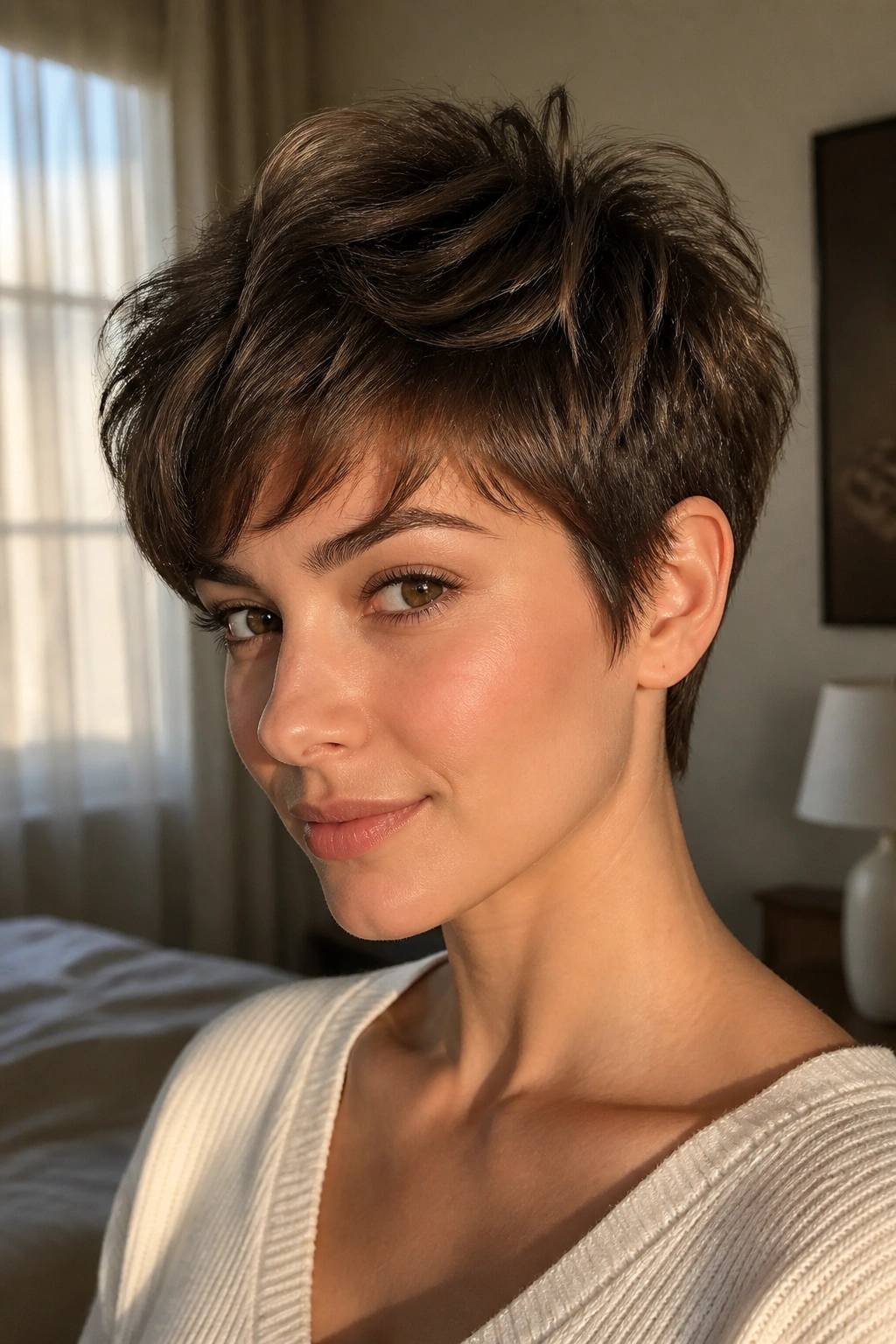
The neckline should feel neat. The crown should feel fluffy. That contrast is what gives a tapered soft pixie cut its charm.
A taper works because it makes the bottom of the haircut look clean while the top still has room to breathe. If the nape is clipped too hard, the cut can turn sharp fast. Leave a whisper of softness around the ears and a little texture through the top, and suddenly the whole thing reads gentler.
Styling the taper without flattening it
A lot of people overstyle this shape. Don’t. Towel-dry the hair until it’s damp, work in a pea-sized amount of mousse, then lift the roots with your fingers as you dry. A diffuser on low heat helps if your hair bends or curls. If it’s straight, a quick blow-dry with a vent brush is enough to keep the taper smooth while the top keeps some movement.
This cut is a nice pick if you like clean lines but don’t want a harsh finish. The shape stays close to the head, yet it doesn’t feel boxed in. That’s a small distinction on paper. On your head, it makes a huge difference.
6. Grown-Out Pixie with Curtain Fringe
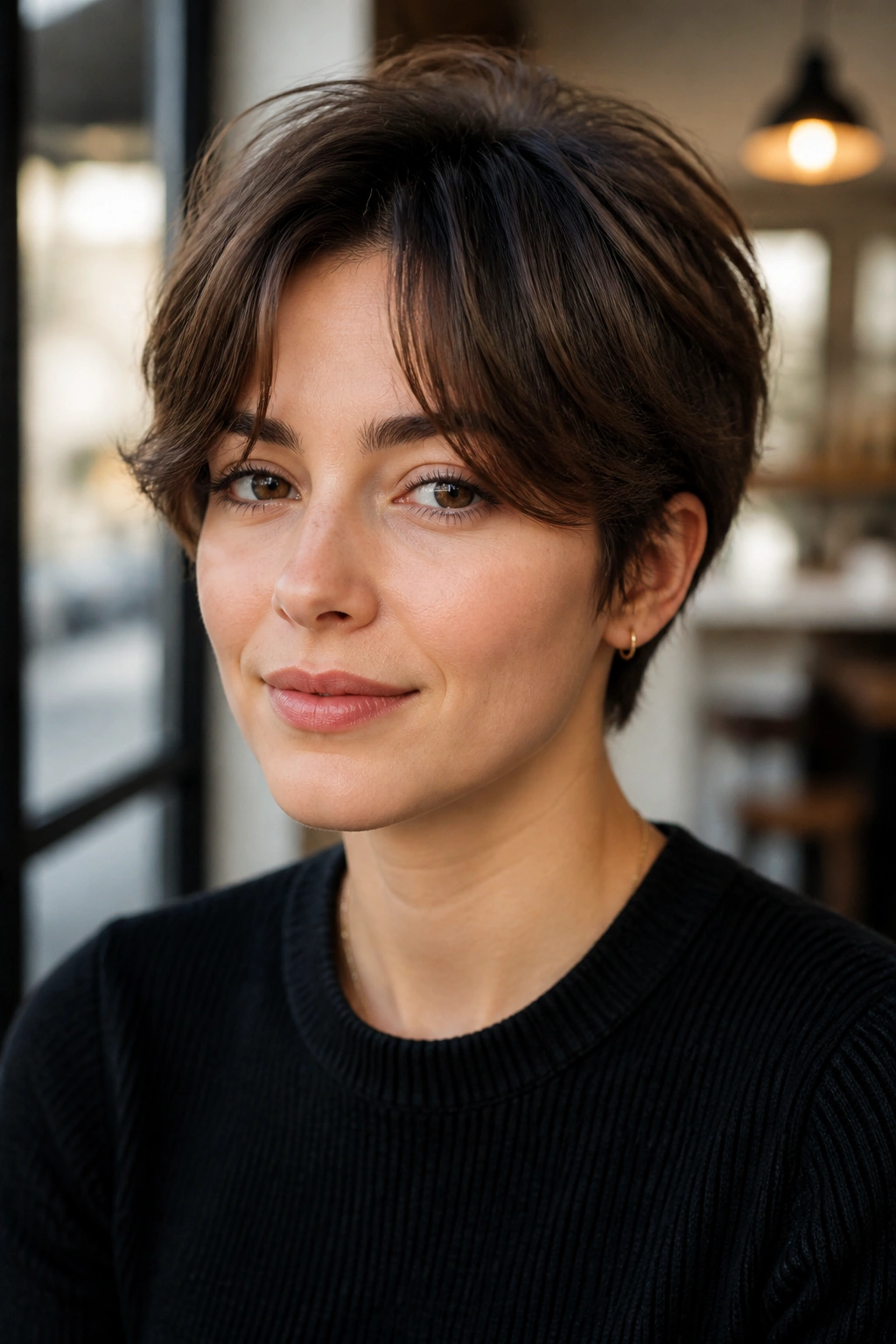
Can a pixie still look deliberate when it’s slightly grown out? Absolutely, if the fringe is doing its job. A grown-out pixie with curtain-like front pieces feels soft because the longest part sits at the front, not the back, so the eye reads movement instead of regrowth.
The charm here is that the cut looks relaxed by design. You keep a bit more length at the temples and front, then let the top fall into a loose center or off-center part. It’s the sort of cut that looks good with a little bend, a little mess, and not much fuss.
How to style the grow-out
Use a round brush or your fingers to push the front pieces away from the face while they dry. That gives the fringe a soft split instead of a heavy curtain. A tiny bit of styling paste on the ends keeps them separated, but don’t coat them. The goal is movement, not piecing every strand into place.
This version is especially useful if you’re between haircuts and want the grow-out to look like a choice. It buys you time, which is a gift in short hair.
7. Shaggy Pixie with Piecey Ends
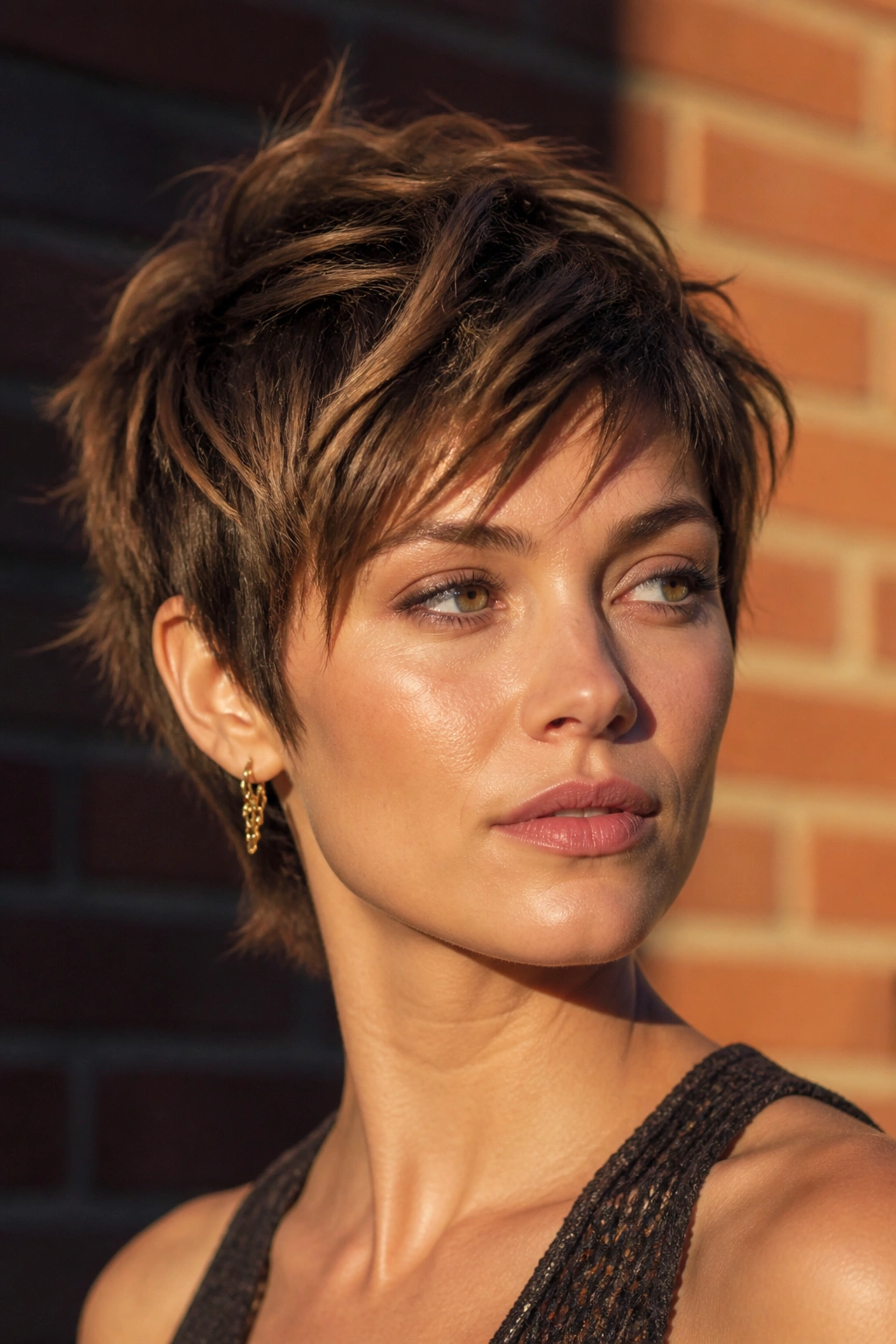
A shaggy pixie is what happens when a haircut stops trying to behave and starts looking interesting. The ends are broken up, the top has texture, and the whole cut gets a little extra swing when you move.
I’ve always liked this version for hair that feels too flat in a tidy crop. The layers create a rougher outline, but the softness comes from the way the pieces separate instead of forming one hard shape. It’s a good trade.
The trick is not to confuse shaggy with messy. You still need structure at the nape and around the ears, or the cut can drift into puffy territory. The best shaggy pixies keep a clean base and let the top do the talking.
- Ask for razor-light or point-cut ends, not blunt chunks.
- Keep a little longer length in the fringe for softness.
- Use a texturizing spray on dry hair, then scrunch the top with your fingers.
- Avoid heavy oils, which can collapse the piecey effect.
The result feels casual in a good way. A little rock-and-roll, but not loud.
8. French-Inspired Pixie
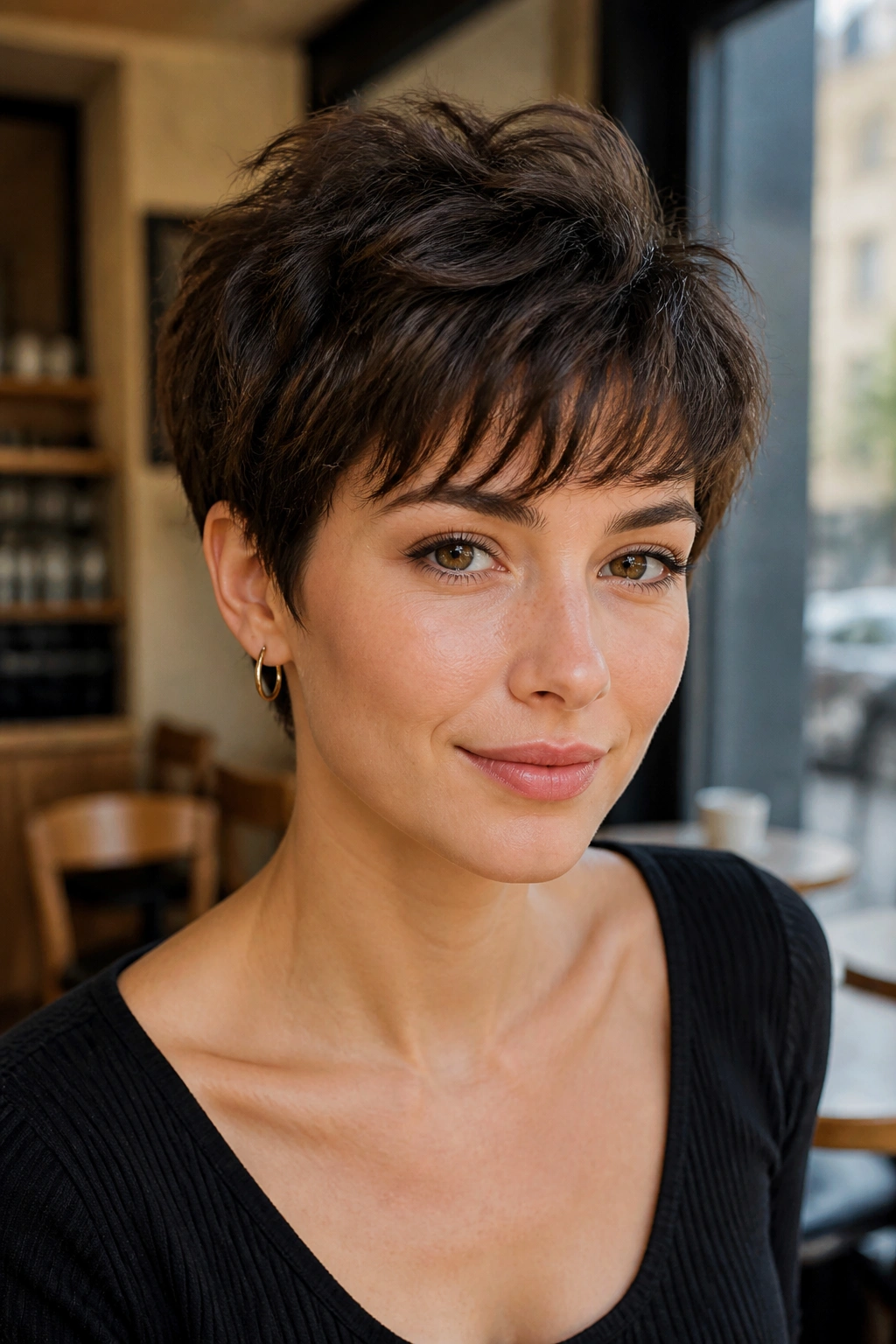
This is the pixie cut for people who want charm more than drama. The French-inspired version leans on understated texture, a slightly imperfect fringe, and a shape that looks better when it is not overworked.
The shortest hair should still have a little give. That’s the whole point. A soft French pixie often keeps the front pieces long enough to graze the brows or cheekbones, while the sides stay snug and the crown has just enough lift to avoid a flat silhouette.
What makes it feel different from a sharper crop is the finish. You don’t need a lot of product. You do need a bit of bend, maybe from air-drying with a touch of mousse or rough-drying with your hands. If the ends are too smooth, it loses the mood. If they’re too broken up, it goes messy fast. The sweet spot lives in between, and yes, that sounds fussy because it is.
This is one of my favorite soft pixie cuts for someone who likes short hair but hates the look of trying too hard. It carries itself nicely. That matters.
9. Asymmetrical Soft Pixie
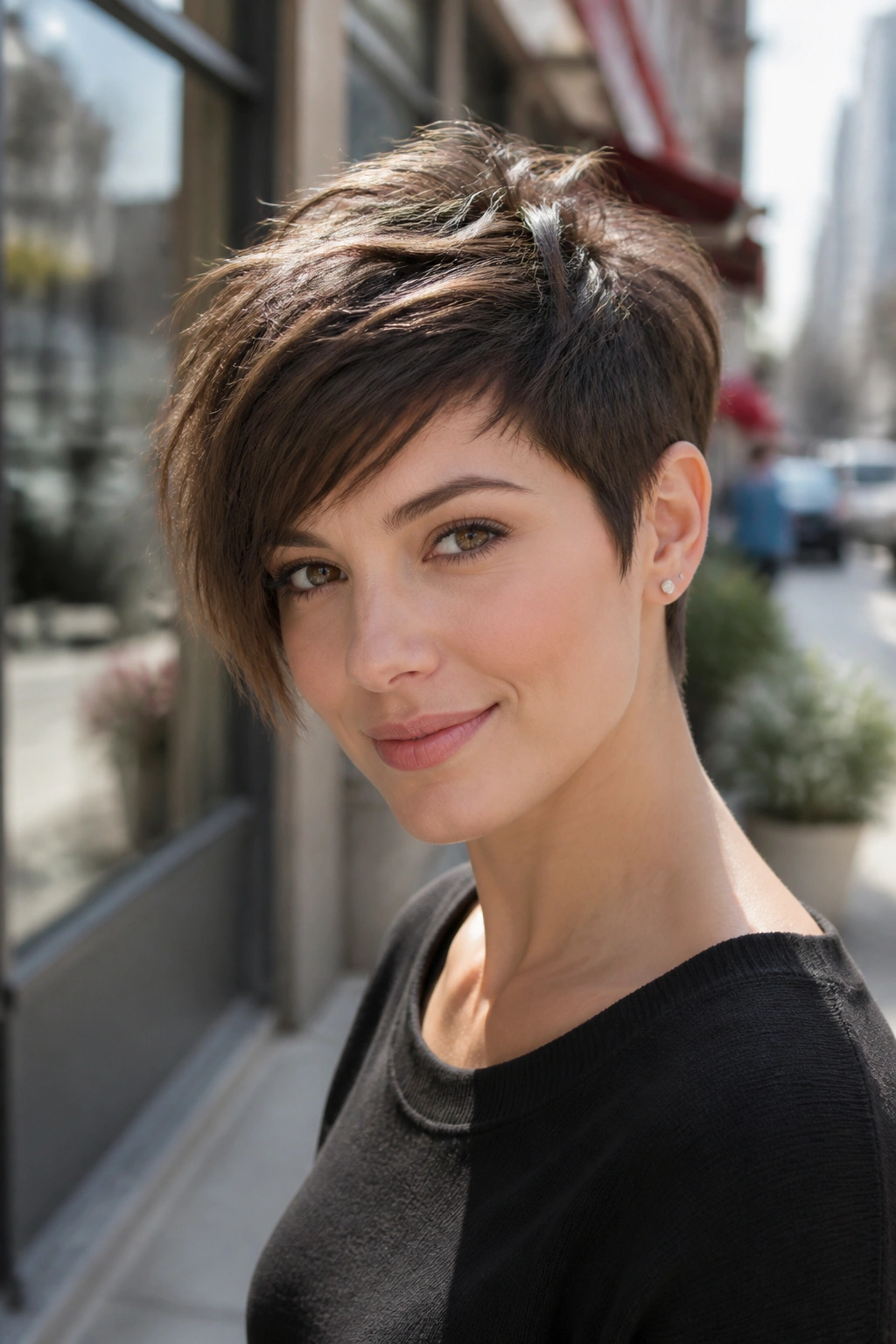
Why does an asymmetrical cut feel softer than a perfectly even one? Because the eye keeps moving. One side sits slightly longer, the fringe falls at an angle, and the whole shape has a gentle pull instead of a blunt stop.
An asymmetrical soft pixie works best when the difference between the two sides is subtle. You do not want a dramatic slash across the face unless you’re going for a sharper look. A small length change — maybe half an inch to an inch — can be enough to shift the mood and make the cut feel more fluid.
Who should try it
If your features are very symmetrical, a slight offset can make the haircut look less rigid. If your hair tends to lie flat on one side, this shape can also help build a bit of visual movement without a ton of product.
Keep the longer side soft around the cheek rather than letting it hang in one heavy panel. That’s where the cut can go wrong. The line should feel bent, not blunt.
A good asymmetrical pixie gives you styling options, too. Part it deeper for a polished look. Push it forward for something softer. Tuck the longer side behind the ear and it changes again.
10. Pixie Bob Hybrid
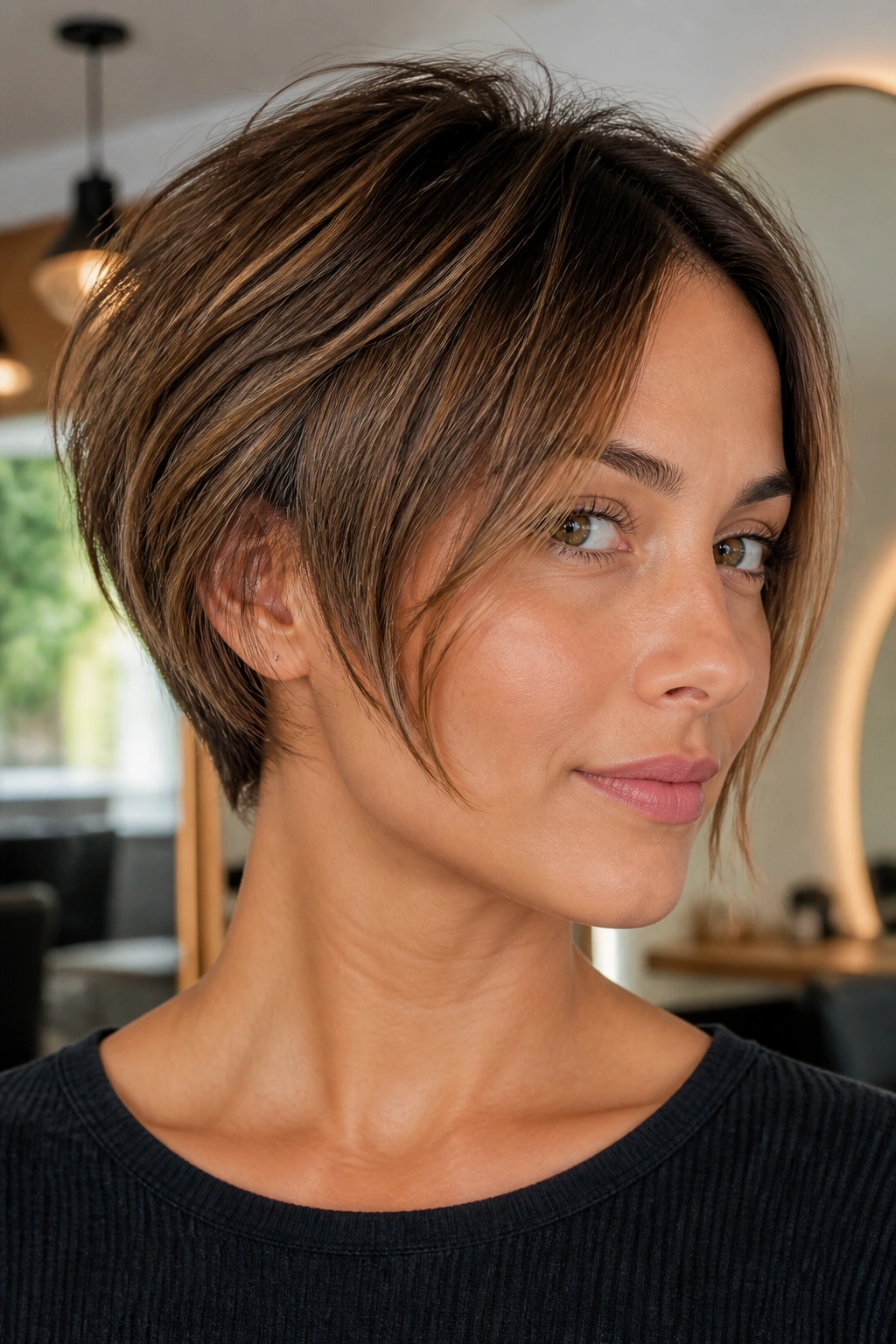
A pixie bob hybrid is exactly what it sounds like: the shortness of a pixie with the face-framing feel of a tiny bob. It’s a smart choice if you want the softness of a longer cut but don’t want hair brushing your neck all day.
The shape usually lands somewhere around the jaw or just above it, with shorter layers at the back and longer pieces in front. That front length is the softening agent. It keeps the cut from feeling too cropped and gives you something to tuck, twist, or sweep aside.
The parts that matter most
- Front pieces should sit near the cheekbone or jawline.
- The back should be tapered enough to keep the neckline clean.
- The top needs movement, not bulk.
- A little bend around the ends makes the whole cut feel less boxy.
This is a good pick for thick hair because it removes weight while keeping shape. Fine hair can wear it too, especially if the top is layered lightly so it doesn’t go limp. I’d call it one of the easiest soft pixie cuts for anyone who wants short hair but isn’t ready to lose the bob feeling completely.
11. Micro-Fringe Pixie with Soft Texture
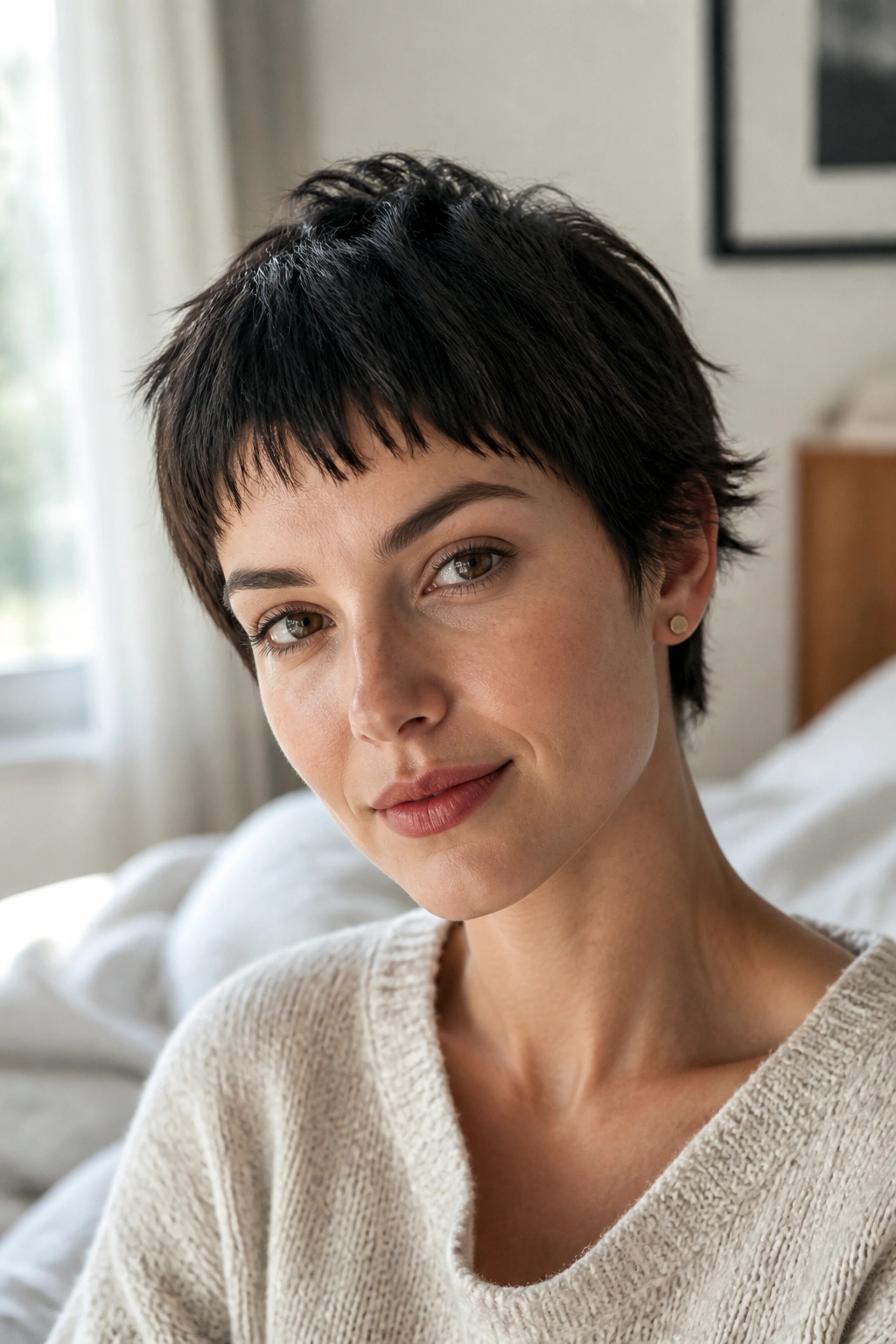
A micro fringe sounds sharp, and often it is. But soften the texture around it, and the whole thing changes. The tiny bang gives the cut personality, while the broken-up top and feathered sides keep it from feeling severe.
The key difference here is contrast. The fringe is short enough to make a statement, but the rest of the shape has enough texture to keep the look friendly. That balance is what saves it. If the top were smooth and flat, the cut would feel more graphic. If the fringe were longer, it would read differently altogether.
This one works best if you like a bit of edge in your haircut but still want a soft finish around the ears and crown. It’s also useful on straight hair, where a micro fringe can sometimes look too precise. Texture breaks that up.
I’d recommend keeping the ends of the fringe slightly uneven — not jagged, just not ruler-straight. That tiny bit of irregularity makes it look less severe and a lot more wearable.
12. Tousled Layered Pixie for Fine Hair
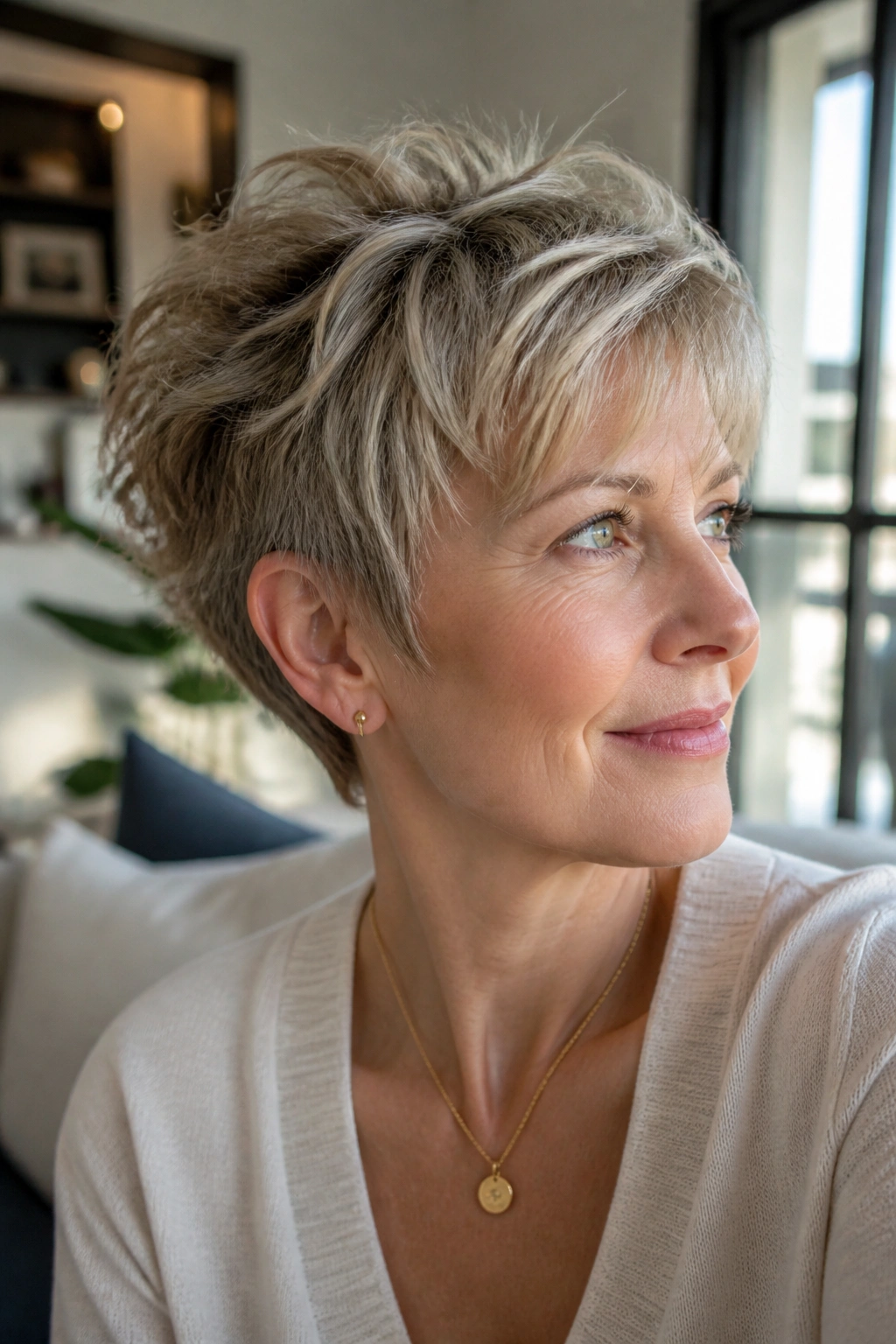
Fine hair loves a cut that gives it a little air. A tousled layered pixie does exactly that, and it does it without asking for a full styling routine every morning.
The hair should feel light at the roots and soft through the ends, almost like it’s been gently shaken loose. Too many layers can make fine hair look sparse, so the trick is to place them where they build shape, not where they strip away too much density. Around the crown, a few well-placed layers make the hair lift. Around the sides, the layers should stay broken enough to move, but not so thin that you can see every scalp line.
A small dab of volumizing mousse at the roots helps more than a thick cream. Blow-dry upside down for a minute or two, then finish upright so the shape settles in the right direction. A little dry texture spray at the end can make the cut look fuller, but use a light hand. Fine hair can go limp or sticky fast.
This is one of those cuts that looks best when it’s not over-styled. Clean, a bit airy, a little undone. That’s the sweet spot.
13. Soft Undercut Pixie
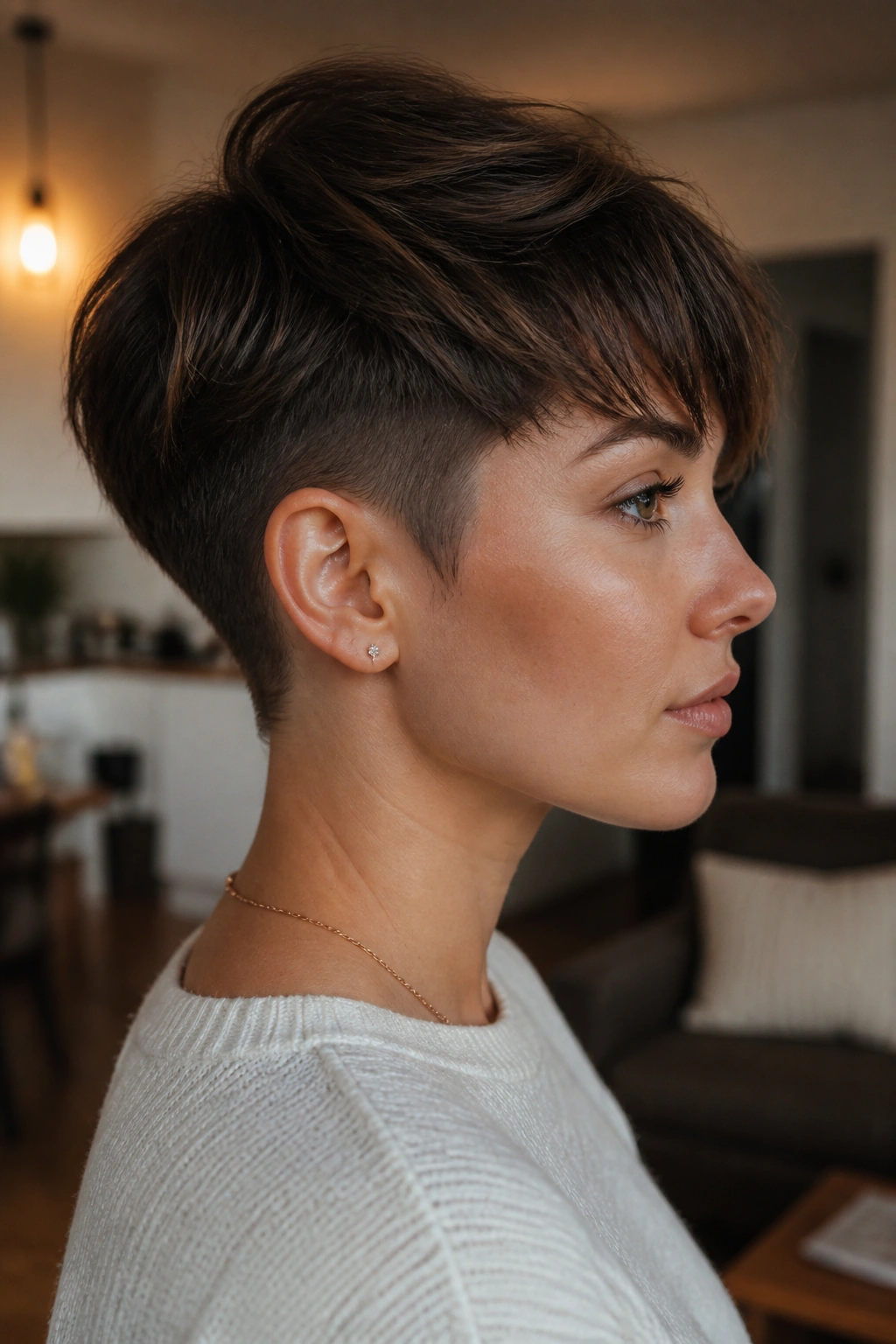
A soft undercut pixie is proof that an undercut doesn’t have to look hard. If the shaved or tightly clipped area stays hidden under longer top layers, the result can be surprisingly gentle.
I’ve seen this work especially well for thick hair that needs weight removed underneath. Without some internal reduction, thick pixies can puff out at the sides and look boxy by midday. The undercut solves that problem quietly. The surface stays soft, the top sits better, and the nape doesn’t fight the rest of the cut.
What makes it feel soft instead of sharp
The top layers need enough length to drape over the shorter section. Around the front, keep the fringe a little longer so the eye lands there first. That pulls the whole style into a softer frame.
- Ask for the undercut to stay subtle and hidden.
- Leave the top layers at least 2 to 3 inches long.
- Use a matte paste if you want separation.
- Skip heavy pomades; they make the cut look slick, not soft.
This is a practical choice for dense hair. It keeps the silhouette neat and gives you room to play on top.
14. Wavy Pixie with Chin-Grazing Pieces
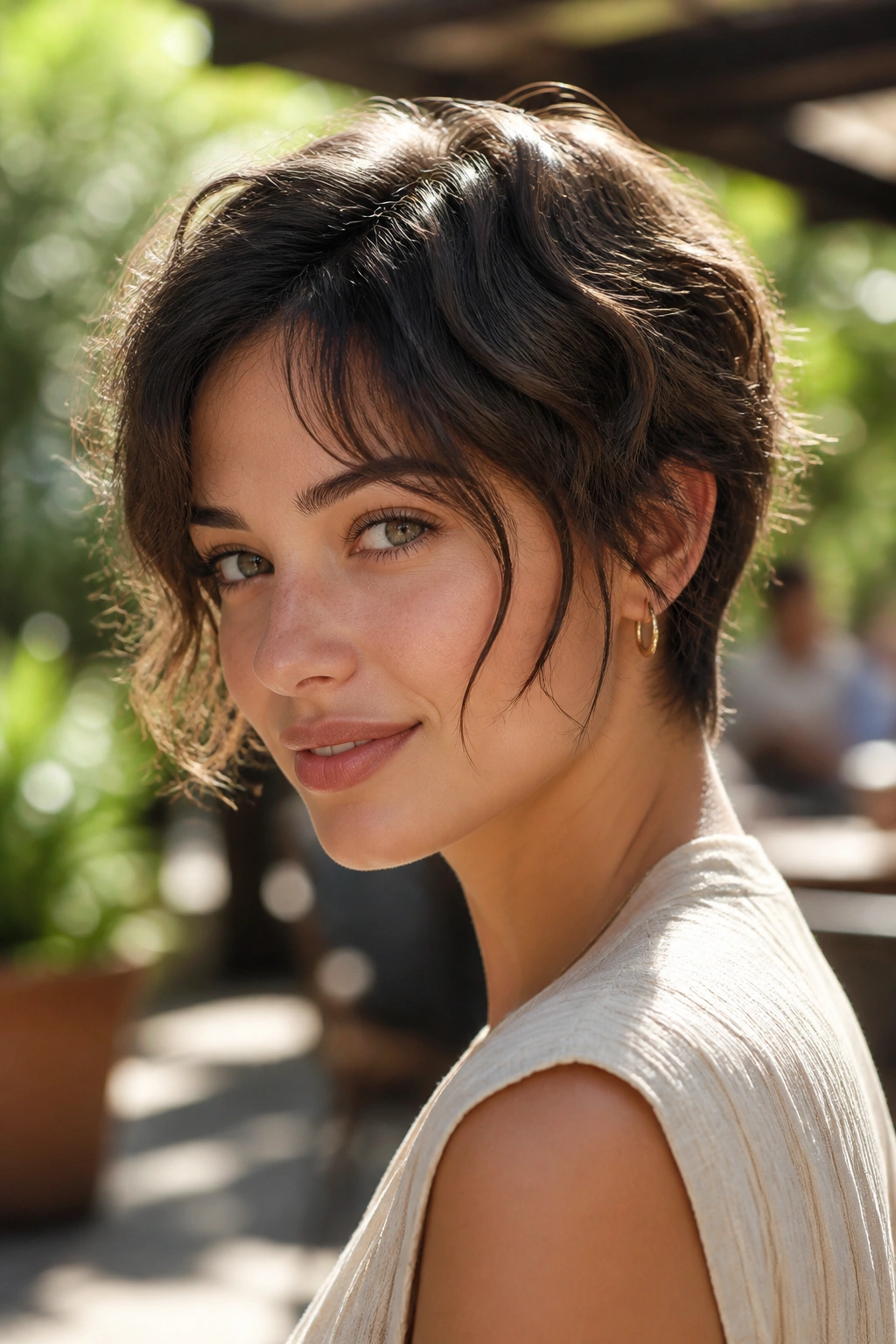
What makes a wavy pixie feel soft is the way the front pieces fall. When they land near the chin or just above it, the haircut stops reading as cropped and starts reading as fluid.
The waves do the heavy lifting here, but the front length matters just as much. If the shortest pieces sit too high, the cut can feel square. If they’re long enough to swing toward the jaw, the shape becomes more relaxed and flattering. It’s a small shift. It changes everything.
How to style the front pieces
Use a dab of curl cream or lightweight mousse on damp hair, then twist the front sections around your fingers as they dry. That helps the waves clump into softer shapes instead of scattering into frizz. If you’ve got stubborn bends, a quick pass with a diffuser on low heat keeps them intact.
This style is especially good if you like a little cheekbone action. The front pieces frame the face in a way that feels easy, not staged. And if you want a bit of polish later, a tucked-behind-the-ear finish works nicely too.
15. Rounded Pixie with Tapered Neckline
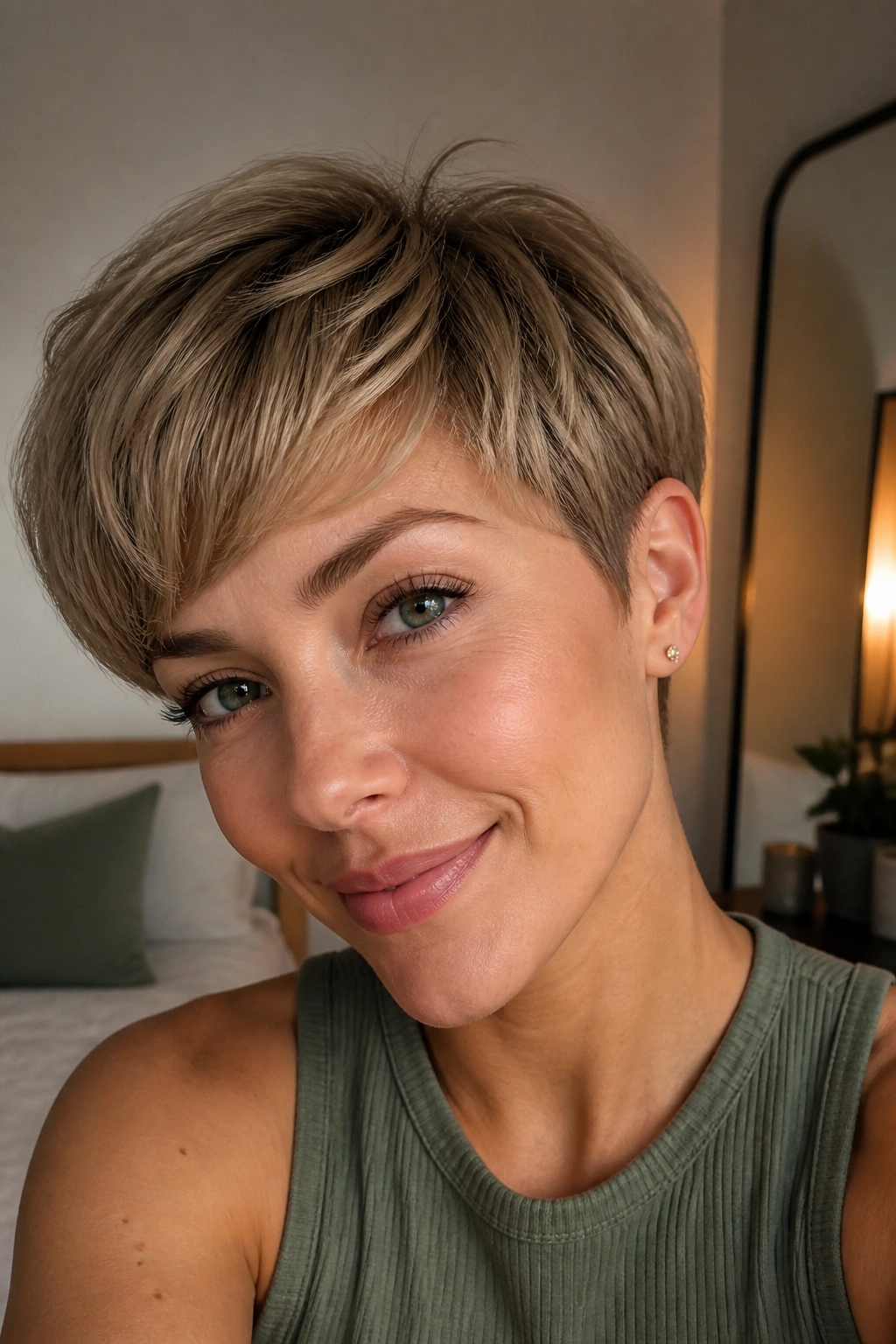
A rounded pixie can look very soft when the neckline stays clean. The rounded shape keeps the top full and curved, while the taper at the neck stops the cut from looking bulky or too mushroom-like.
This is one of those haircuts that sounds simple and then surprises you in the mirror. The curve around the head gives the style a plush feel, almost like the hair is sitting close and cozy instead of chopped flat. That works especially well if your hair has natural body or a slight bend.
The neckline is doing a lot here. Keep it snug, not shaved high, so the lower part of the cut doesn’t fight the roundness above it. Around the ears, leave the edges soft enough to tuck or brush back. The cut should feel controlled, but not rigid.
I like this version on people who want short hair that still has some fullness at the crown. It’s tidy, yes, but not severe. That’s the whole appeal.
16. Choppy Long-Top Pixie
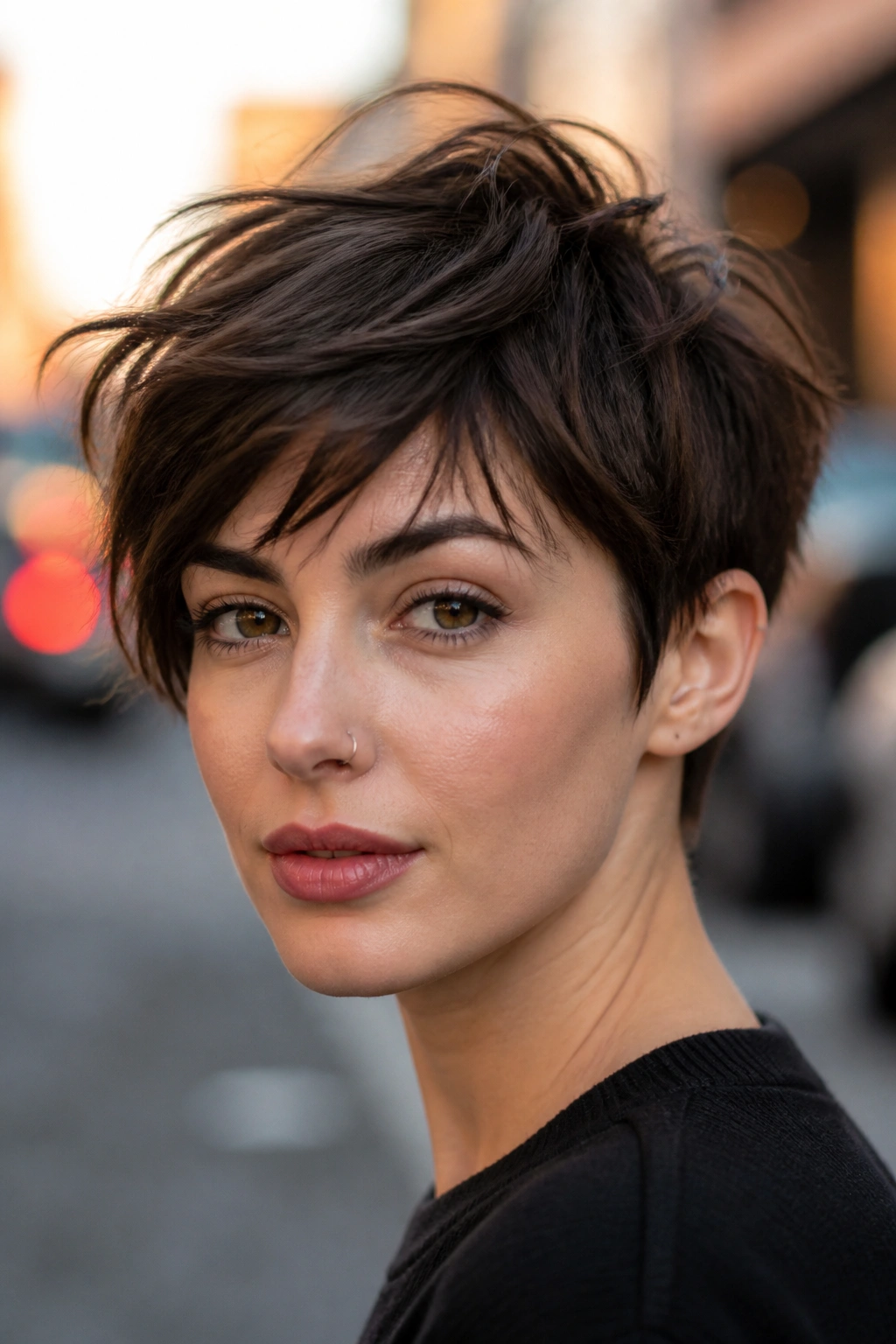
A choppy long-top pixie gives you movement on top and enough softness around the edges to keep the cut from feeling too edgy. It’s one of the best options if you want a little height without going full spiky.
Unlike a classic pixie with an even, close top, this version leaves more length where the hair naturally wants to move. The top can be swept forward, pushed back, or bent to one side, which makes it useful if you like changing your part without changing your whole haircut.
The choppiness matters, but only to a point. Too much chipping away at the ends and the cut starts looking frayed. A better approach is to keep the layers uneven in a controlled way so the hair falls in soft pieces rather than broken strands.
This style suits straight and wavy hair nicely. On straighter hair, the length on top creates the illusion of softness. On wavy hair, it gives the bend somewhere to live. If you want a pixie that can look a little different from one day to the next, this is a solid choice.
17. Ear-Tucked Pixie with Long Sideburns
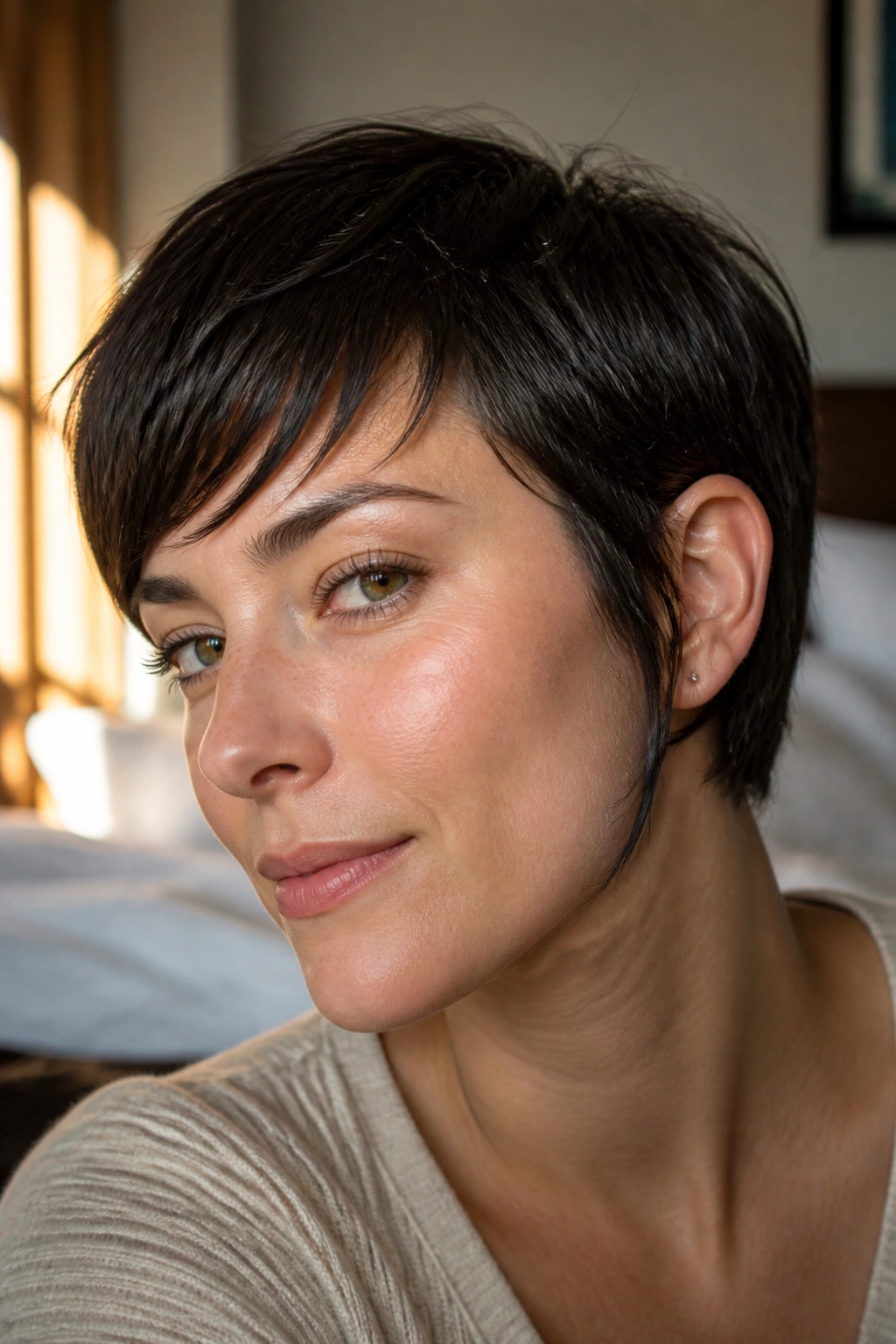
There’s something naturally gentle about a pixie that can be tucked behind the ears. Add longer sideburns, and the cut gets even softer, because the face is framed by little vertical pieces instead of a hard line.
This style works best when the sideburns are left deliberately visible. Not wispy to the point of disappearing, and not thick enough to feel heavy. That narrow in-between zone is what gives the cut its shape. It also makes the haircut easy to change with one move of the hand. Tuck it. Leave it loose. Let one side fall forward. The cut will still make sense.
Details that keep it flattering
- Keep the sideburns around 1 to 1.5 inches long.
- Ask for the ear area to stay soft, not clipped tight.
- Leave enough length at the front to tuck cleanly.
- Use a small amount of styling cream to keep the ends from puffing out.
This is a practical soft pixie for everyday wear. It’s also one of the easiest to live with if you don’t want your haircut announcing itself every time you walk into a room.
18. Soft Grow-Out Pixie
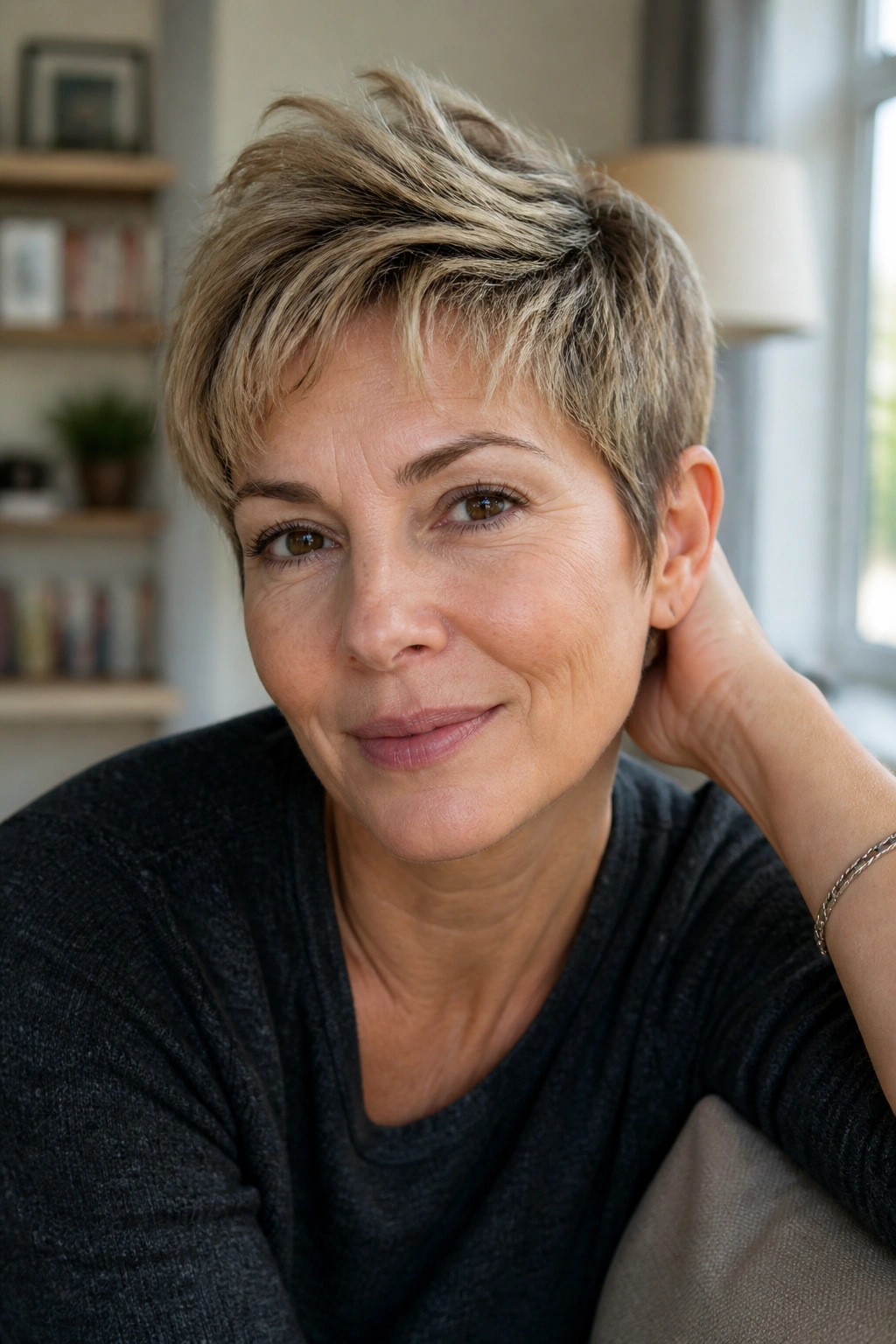
A soft grow-out pixie is the one I’d pick for anyone who wants short hair but does not want to be trapped in a strict maintenance cycle. The shape stays flattering as it lengthens, which is a relief when you’re not in the mood for a trim every few weeks.
The cut usually keeps more length through the fringe and top, then tapers gently at the sides and nape. That means the haircut can shift from true pixie to something closer to a mini shag or bixie without falling apart. It’s a smart shape, and I mean that in the plainest possible way. It just works.
If you want the softest possible finish, keep the front pieces long enough to sweep across the forehead and the crown layered lightly for movement. The grow-out phase can be the prettiest phase if the cut was planned for it from the start. That’s the part people miss. A good short haircut should age well over six to eight weeks, not only on the day you leave the salon.
A soft grow-out pixie is calm, easy, and forgiving. That’s a rare combination, and it’s the reason I keep coming back to it.
