



Thick hair and a pixie cut can be a smart pairing, but only when the shape is cut with some restraint. The best pixie haircuts for thick hair do one thing most bad short cuts never manage: they take out bulk without turning the head into a puffball, a box, or that awkward mushroom shape nobody asked for.
That is the real trick. Thick hair has presence. It holds a line. It also has opinions of its own, especially around the crown, the temples, and the nape. If a cut ignores that weight, the sides stick out, the top swells, and the whole thing looks bigger after a few hours instead of smaller. No one wants that.
A good pixie on dense hair usually needs internal layering, point cutting, or a little undercut work somewhere under the surface. Sometimes it needs a soft fringe. Sometimes it needs a tighter nape. Sometimes it needs both. Dry cutting helps too, because thick hair changes shape the second it loses water and air-dries into its real life form.
So the right pixie is not one look. It’s a decision about where you want softness, where you want contrast, and how much styling you’re willing to do before coffee. Start with that, and the haircut starts making sense.
1. Feathered Pixie for Thick Hair That Stays Airy
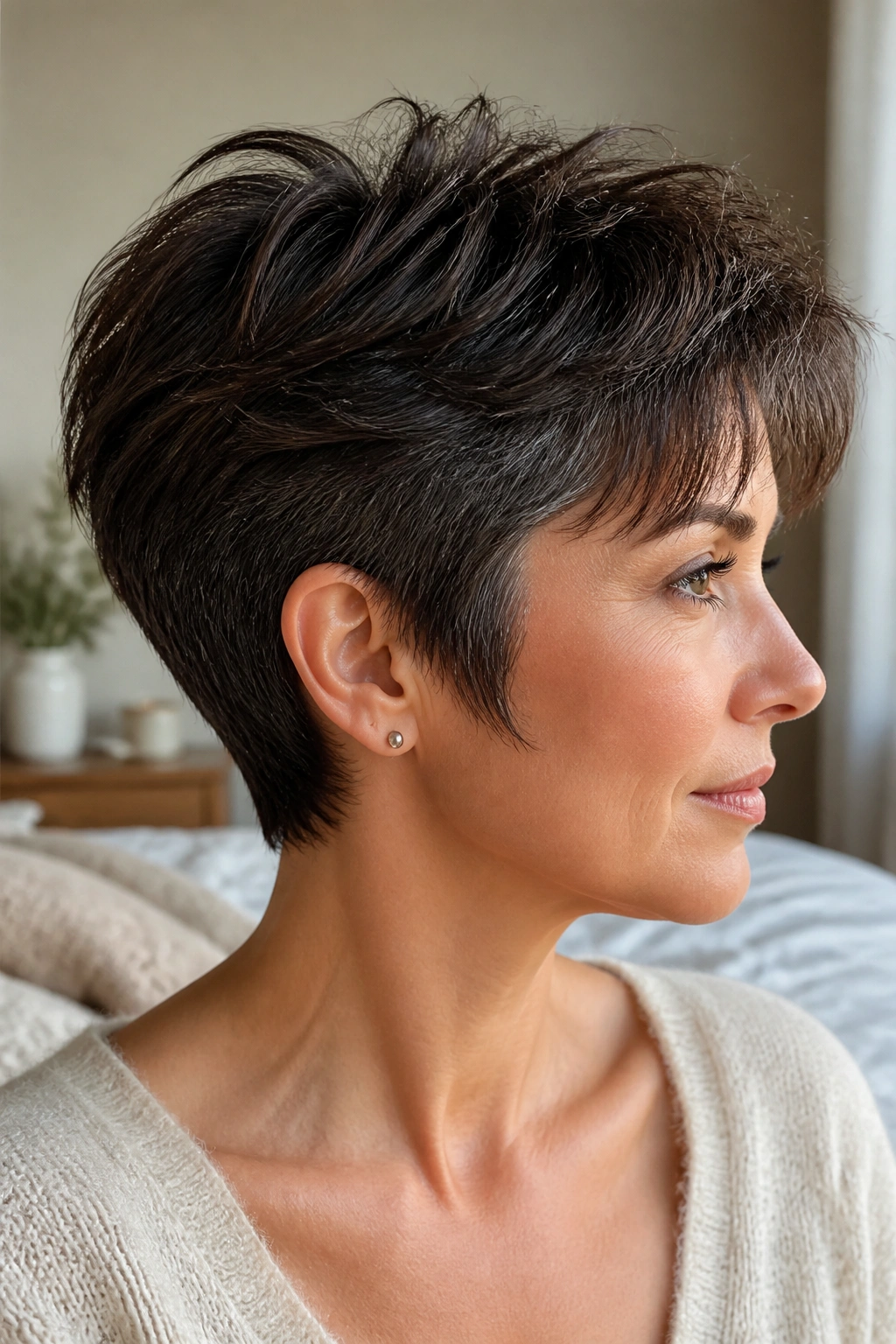
If your hair grows outward the minute it loses its weight, feathering is a sensible first move. A feathered pixie keeps the outline soft while breaking up the density that makes thick hair feel heavy at the sides.
Why the feathering matters
The trick is in the ends. Instead of blunt lines, the stylist snips into the hair at an angle so the perimeter looks lighter and less stacked. That matters a lot around the ears and crown, where thick hair loves to flare out.
Ask for point cutting through the top, soft feathering around the temples, and a tapered nape. Those three details keep the cut from looking blocky. A little mousse at the roots helps, but the real work is done in the haircut itself.
- Point-cut ends to soften the outline.
- Keep the crown layered, not thinned to death.
- Leave enough fringe to brush forward or to the side.
- Dry the hair with your fingers, not a brush, if you want that messy lift.
Best move: take a photo of a feathered pixie from the side, not just the front. The profile tells you whether the shape actually sits close to the head.
2. Tapered Nape Pixie With Clean Edges
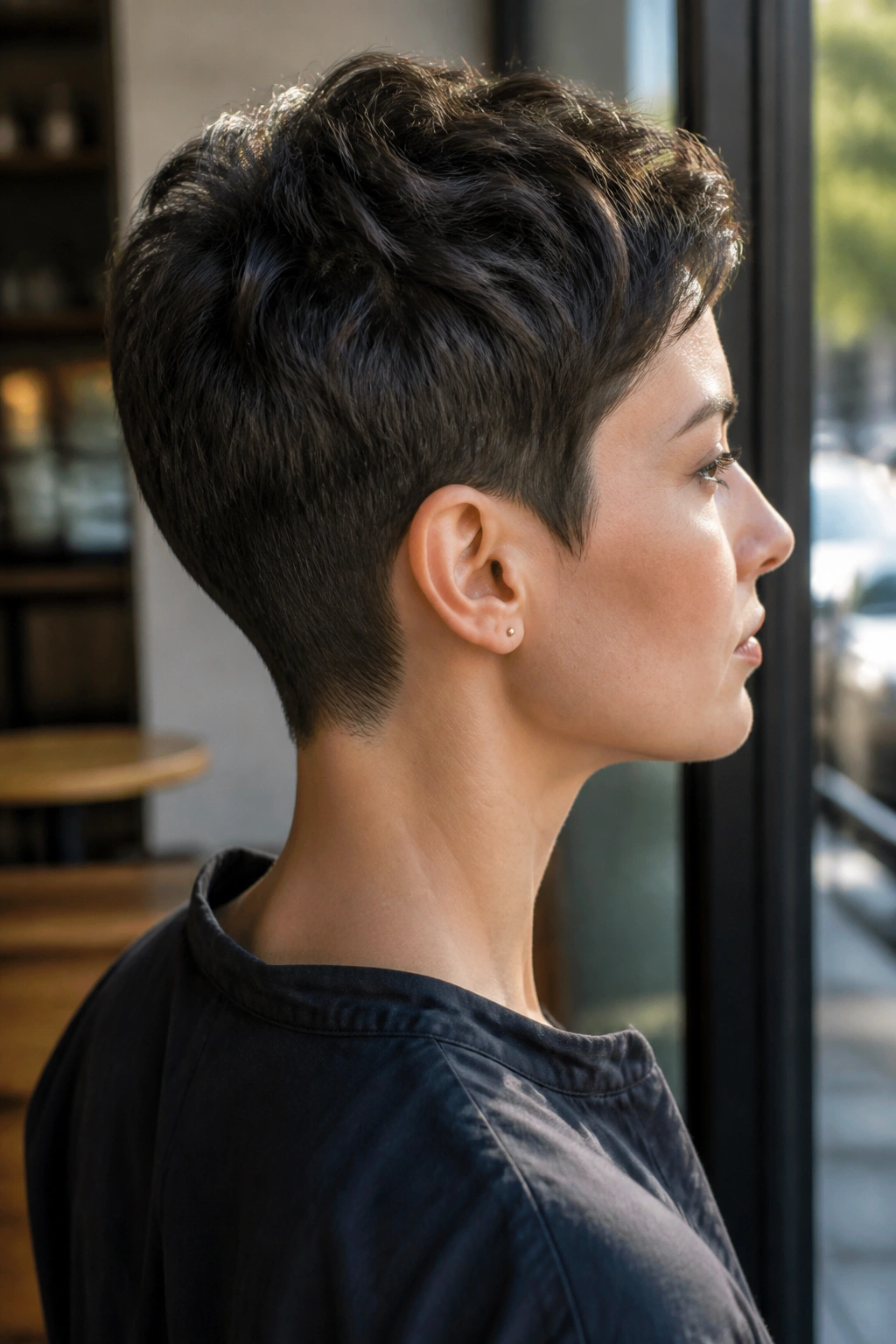
A tight nape changes everything. Thick hair at the back of the head can make a pixie feel bulky from behind, even when the front looks fine. Tapering the neckline fixes that fast.
The cut works because it removes weight where hair usually collects in a little shelf. When the nape is shortened and blended up into the crown, the head reads as neat instead of wide. That’s the part most people notice when they walk away.
I like this version on hair that grows fast and a little coarse. It keeps its shape better between trims than a softer, fluffier crop, and it behaves well under collars, scarves, and jackets. If the back of your hair is the first place that starts to puff up, this is the shape to ask about.
A small detail matters here: the taper should be gradual, not shaved bluntly unless you want obvious contrast. Hard lines can look sharp, but they also grow out with more attitude. Some people love that. Some don’t.
3. Side-Swept Pixie for a Softer Forehead Line
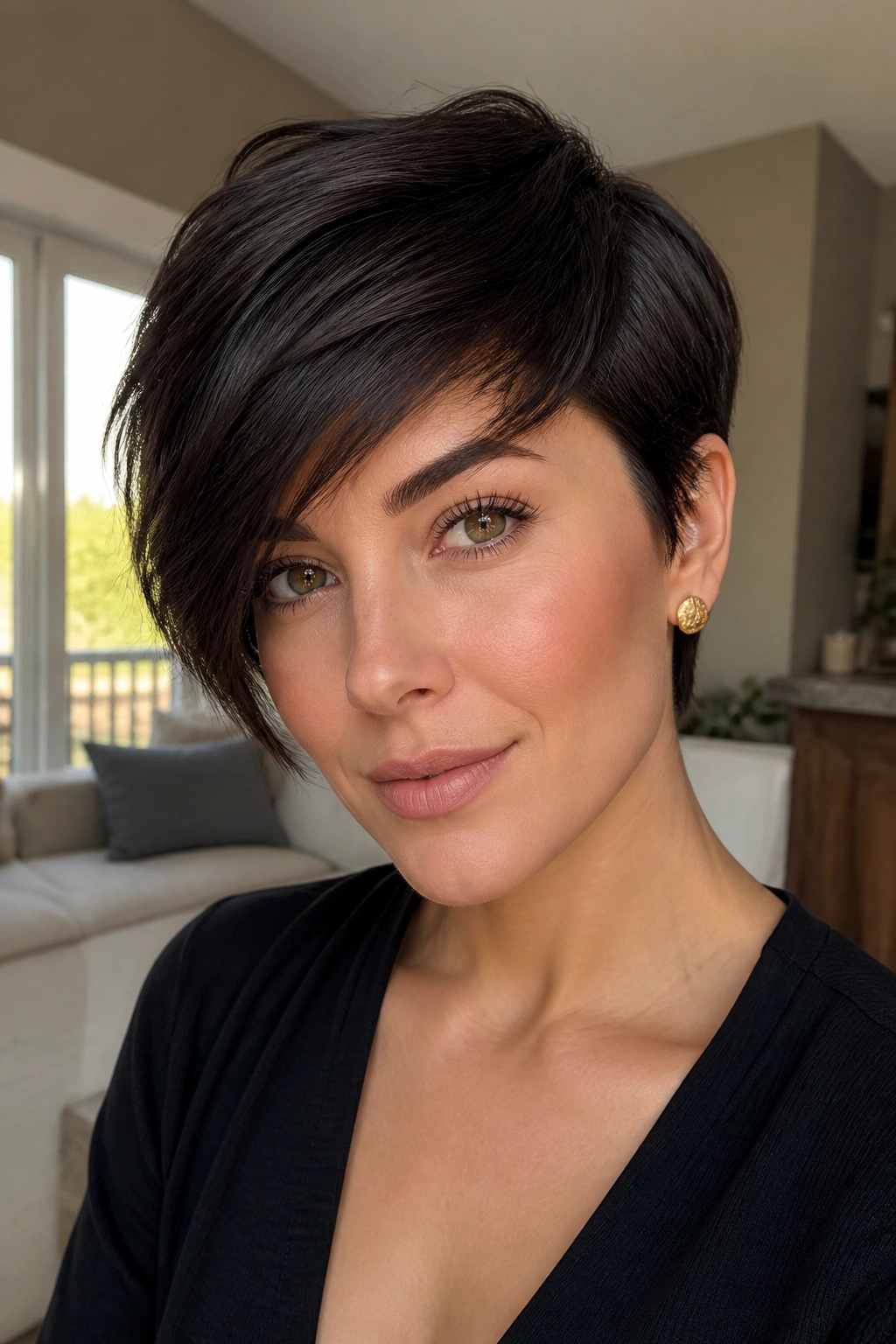
Does thick hair always seem to fight you at the front? A side-swept pixie can calm that down without taking away the density that gives the cut body.
What makes it work
A long diagonal fringe pulls the eye across the face instead of straight up and down. That softens the forehead area, hides a stubborn cowlick or two, and gives the haircut a little movement even when the rest is short. Thick hair is good at holding this shape, which is half the reason it works so well.
The key is balance. If the fringe is too heavy, it will sit like a curtain and swallow the face. If it’s too wispy, it can split apart and look unfinished. The sweet spot is a side-sweep that lands somewhere between the eyebrow and cheekbone.
How to ask for it
- Keep the fringe longer on one side.
- Blend the top into the front so it does not drop like a shelf.
- Leave enough length to tuck behind one ear.
- Use a round brush or fingers, depending on how polished you want it.
A good side-swept pixie should look intentional even on a lazy day. That’s what makes it a strong option for thick hair.
4. Undercut Pixie for Real Contrast
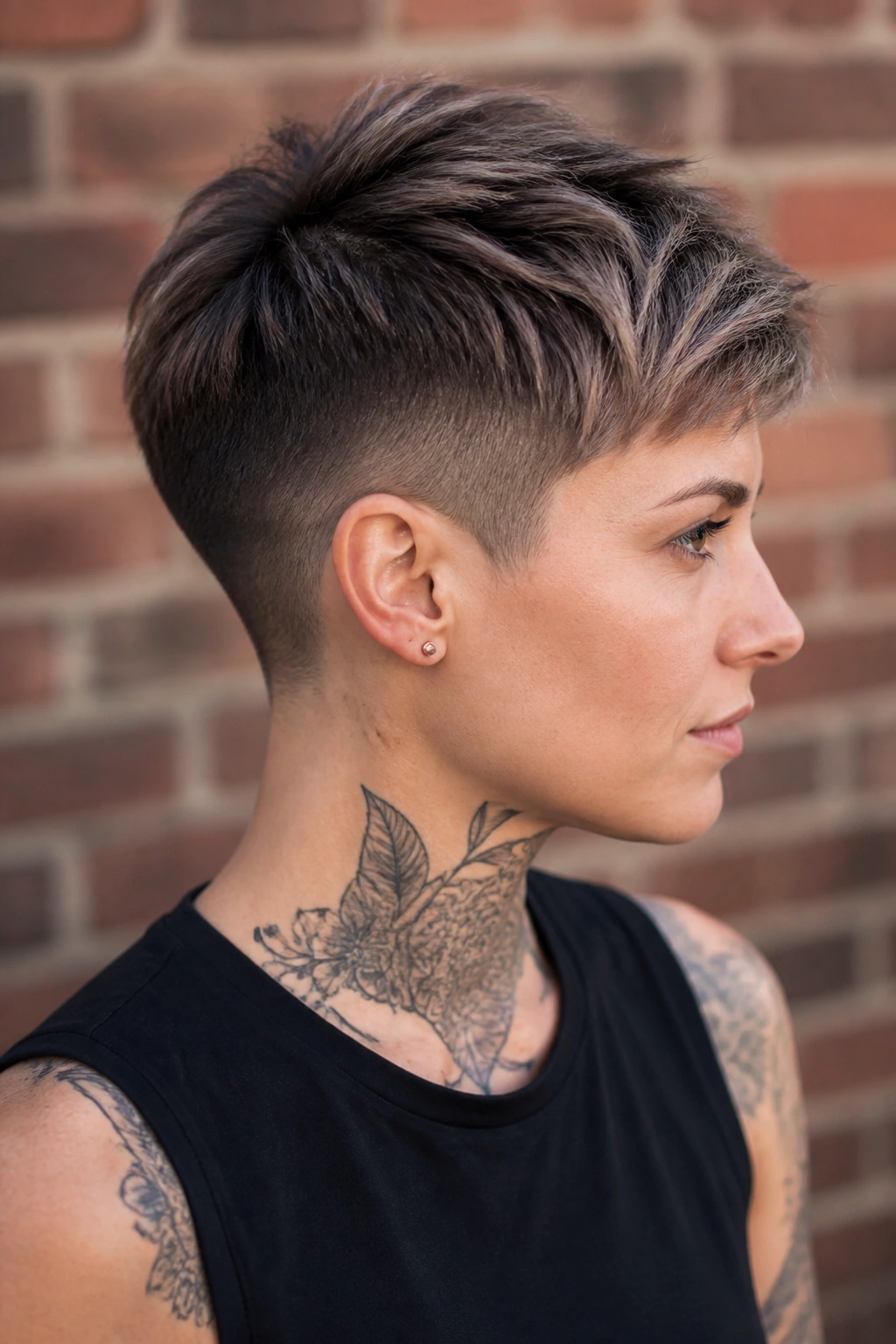
If thick hair keeps puffing out no matter what you do, the undercut is the blunt answer. It removes bulk at the bottom and under the sides, which gives the top room to sit instead of ballooning.
This cut is not subtle, and that is exactly why it works. Dense hair often needs a hidden shortcut underneath the surface. Once the lower section is clipped shorter, the visible top can be left longer, layered, and more interesting. You get shape without all the weight.
It also cuts styling time down. Less hair means less drying, less product, and fewer battles with the back of the head. That said, the regrowth line appears faster than people expect, so you need to be fine with regular cleanups.
This is the version I’d point someone to if they want a pixie that feels modern and slightly tougher. It has edge. It also has logic, which is better.
5. Shaggy Pixie With Messy, Airy Layers
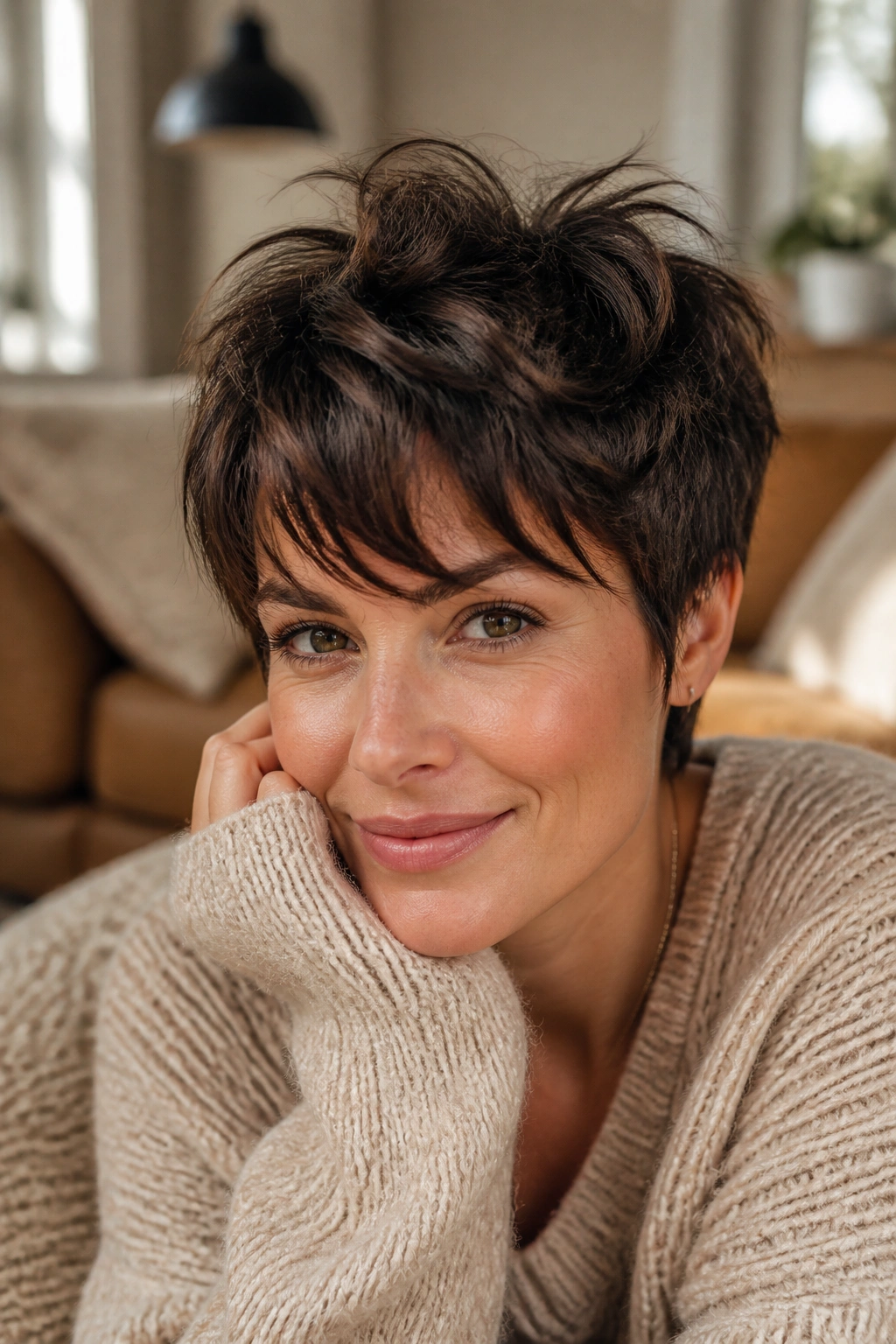
A shaggy pixie is the answer for anyone who likes hair that looks a little lived-in. Thick hair can handle that look because it already has enough body to keep the shape from collapsing.
Why the shag works
The layers are cut to move, not sit still. Instead of one neat outline, you get broken-up lengths through the crown, sides, and fringe. That stops dense hair from reading as one heavy mass. It also gives the cut that slightly wild texture people keep trying to fake with product alone.
The best shaggy pixies are not overloaded with choppy ends. Too much texturizing can make thick hair frizzy at the tips while the bulk stays hidden underneath. Ask for a cut that removes weight inside the shape, not just at the surface.
Styling notes
- Use a pea-sized amount of texturizing paste.
- Scrunch the top with your fingers while the hair is still damp.
- Let some pieces dry in different directions.
- Skip heavy oils unless your hair is coarse and dry.
If you want a pixie that looks better a little mussed up, this is the one.
6. Curly Pixie for Thick Hair That Honors Natural Texture
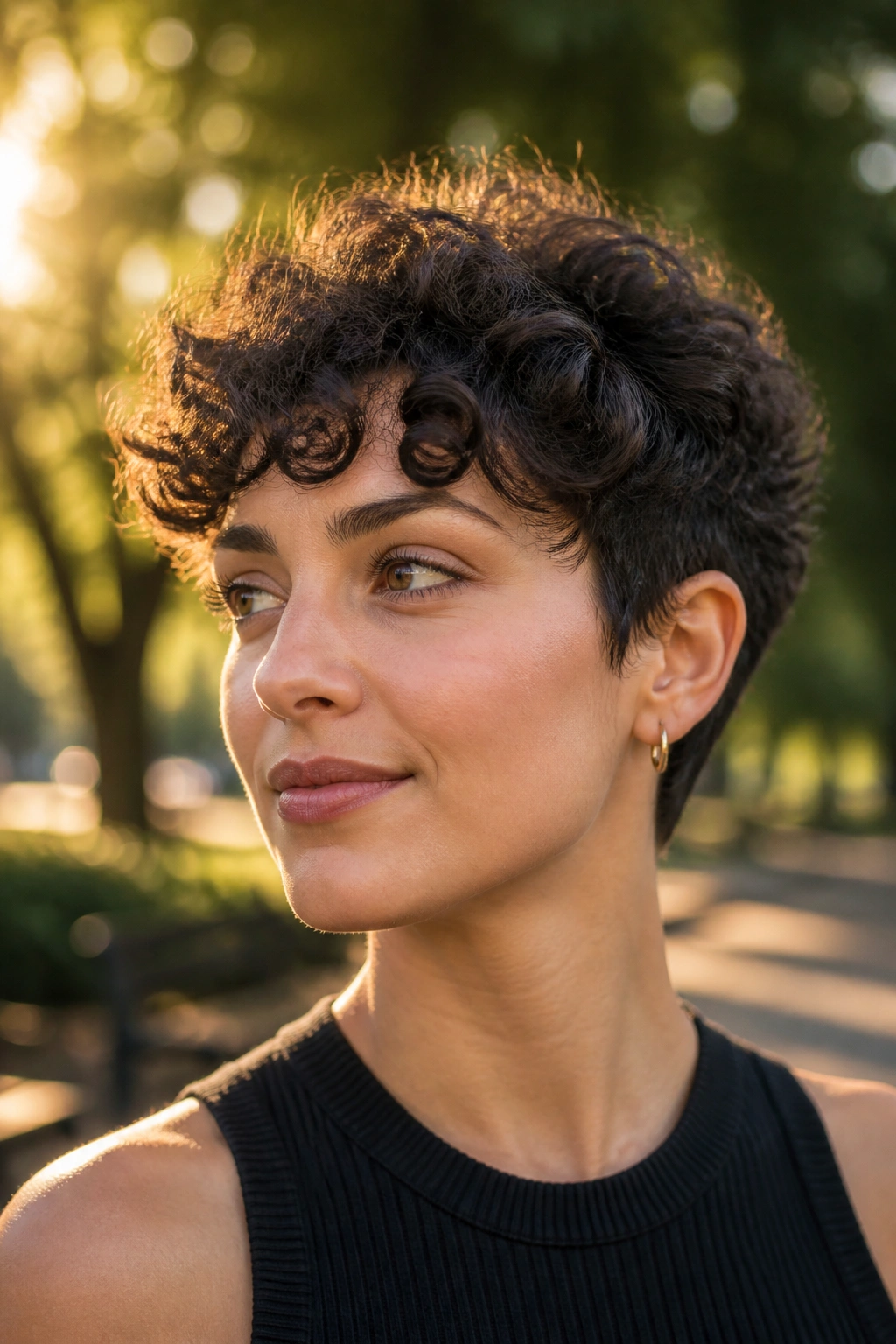
Unlike a straight pixie, a curly pixie has to leave room for the curl to do its own thing. Thick curls and thick waves need space, or they shrink up and bunch together.
That is where this cut shines. The sides stay short enough to control bulk, but the top and front keep enough length for the curls to spring. A good curly pixie does not flatten the pattern. It frames it. That difference matters more than people think.
This style suits hair that has a little bend, a lot of bend, or full ringlets. It also works well if your curl pattern is uneven, because the shorter shape makes patchy texture look deliberate instead of messy. A curl cream and a diffuser help, but the cut is doing the heavy lifting.
Best for: anyone tired of long curly hair taking forever to dry. The pixie version is faster, lighter, and easier on the neck in humid weather.
7. Bixie Cut for Thick Hair That Wants More Length
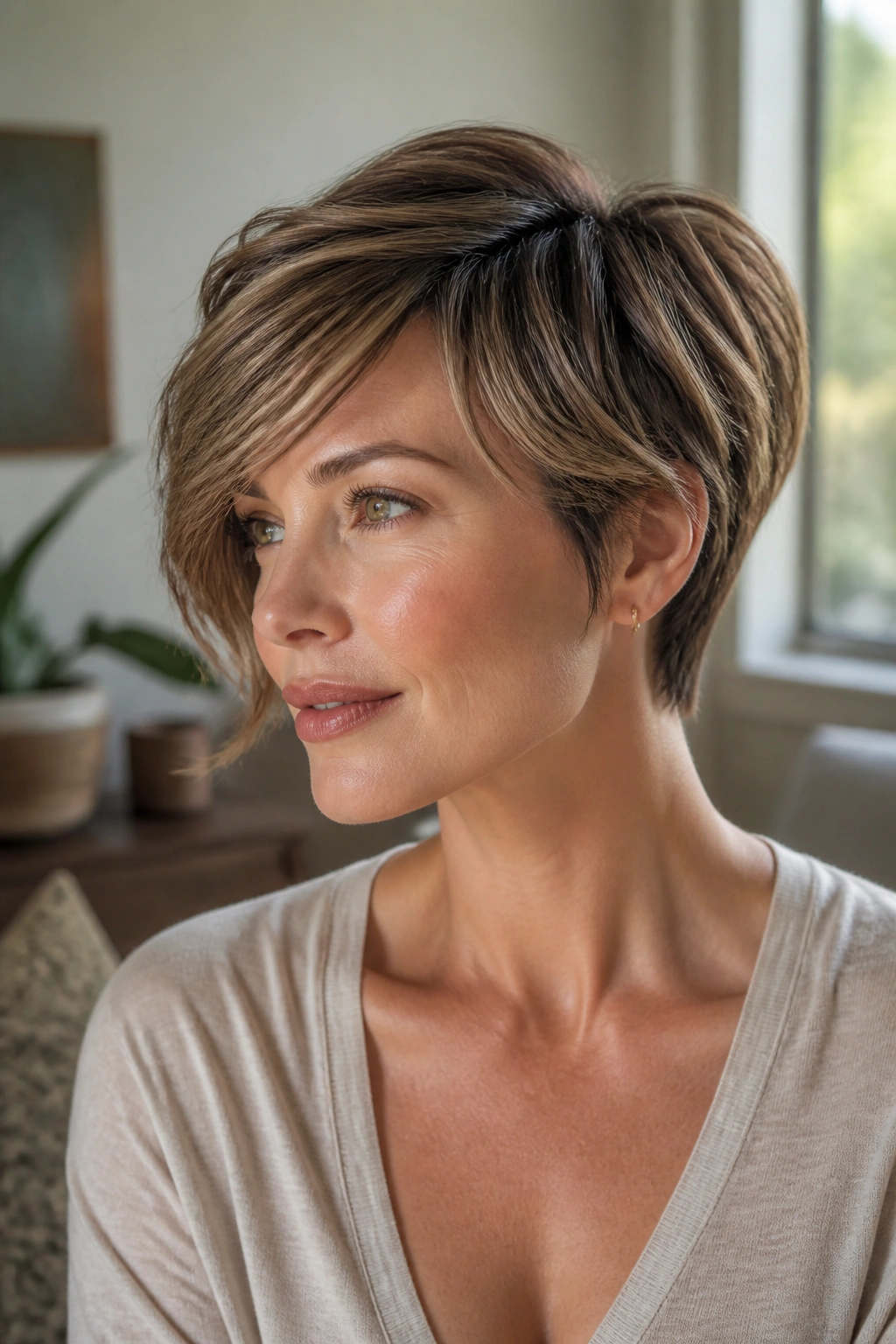
Sometimes the blunt truth is this: you want short hair, but not that short. The bixie sits between a bob and a pixie, and thick hair gives it enough body to hold both identities without looking limp.
I keep coming back to this shape because it is forgiving. The front can skim the jaw, the crown can stay layered, and the back can be shorter so the whole style does not feel heavy. Thick hair makes the bixie feel full rather than flat, which is exactly why it photographs well from the side and front. More important, it grows out without looking like a rescue mission.
What to ask for
- Keep the front long enough to brush under the cheekbone.
- Remove bulk at the nape with subtle tapering.
- Add soft internal layers through the top.
- Leave some weight at the perimeter so the cut still reads as intentional.
A bixie is a good middle step if you want to test shorter hair before going full pixie. It also saves a lot of regret.
8. Choppy Pixie With Piecey Ends
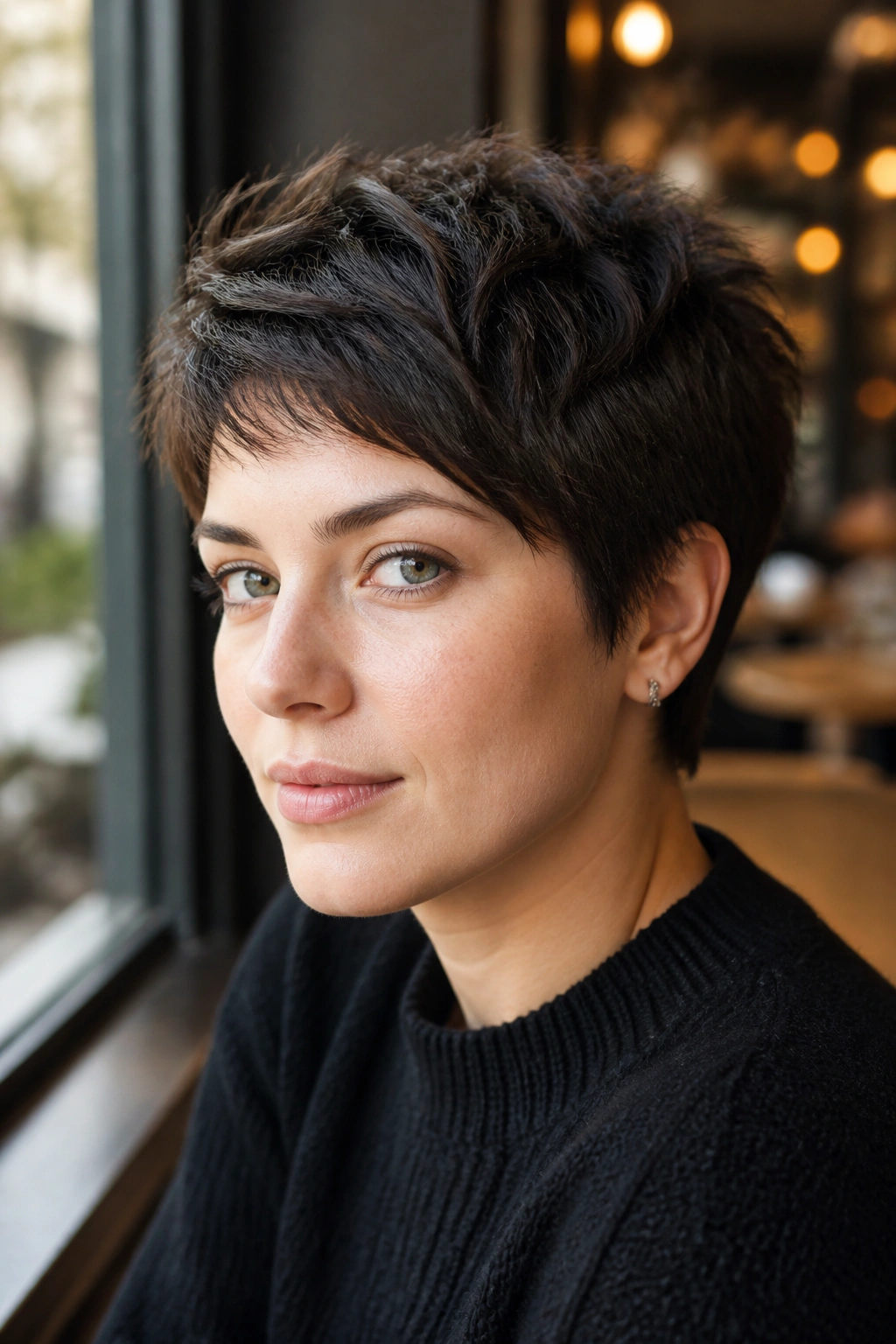
A choppy pixie works best when the ends look deliberately broken up, not hacked apart. Thick hair can carry that texture without falling flat, which is why this cut has so much life in it.
The shape depends on contrast. Shorter pieces around the crown keep the hair lifted, while longer bits near the fringe and temples stop it from feeling too severe. I like this cut on hair that has some natural grit. Fine hair can struggle to hold the piecey effect, but thick hair usually keeps it in place long enough to look good past the first hour.
A matte paste is usually enough. Warm it between your palms, pinch a few top sections, and leave the rest alone. That’s the part people get wrong. If you overwork it, the pieces start to merge together and the cut loses its edge.
One sentence of warning: don’t ask for too many razor-thin ends if your hair is coarse, because you may end up with frizz instead of separation.
9. Long-Top Pixie With Extra Height
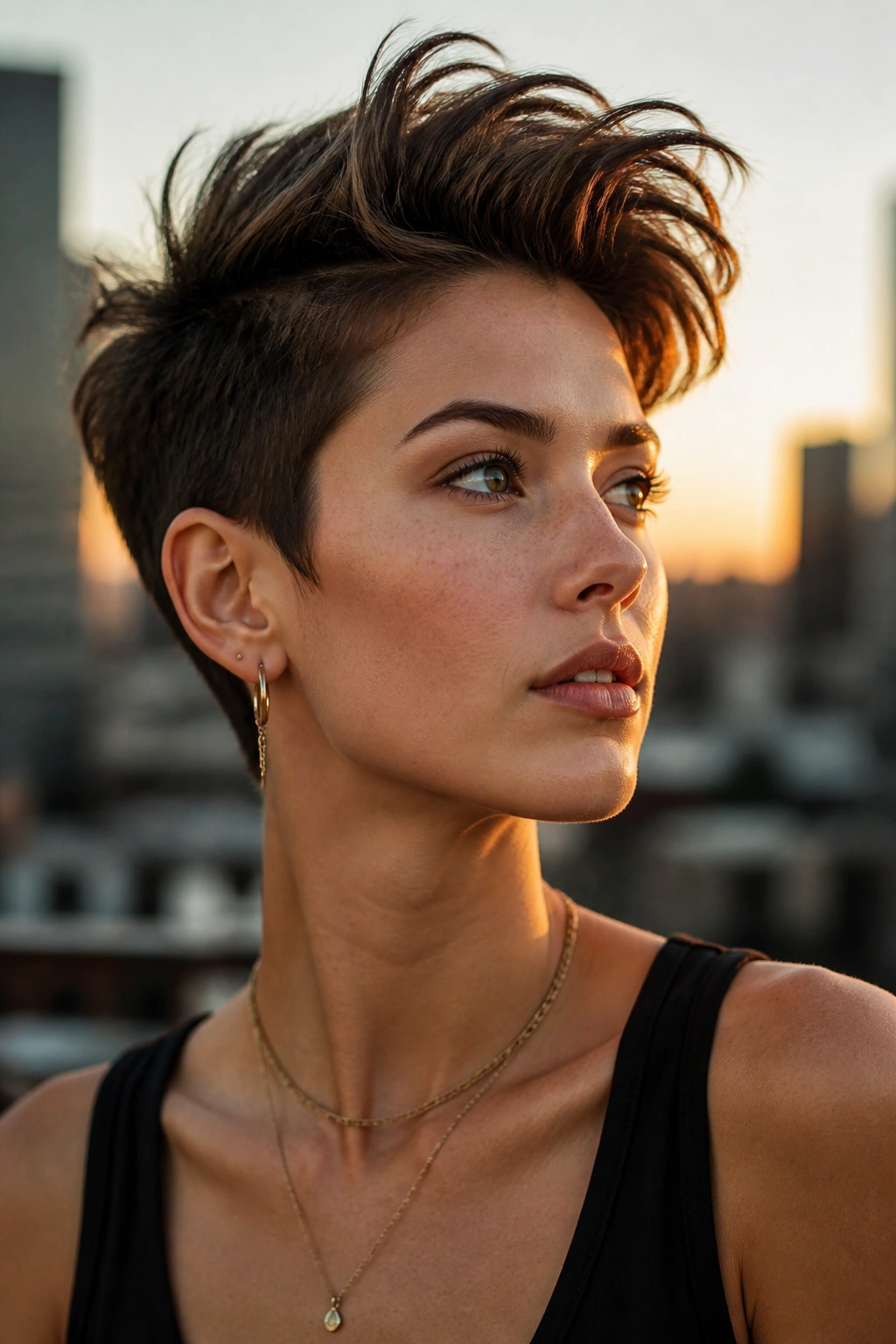
Want height without the mushroom effect? A long-top pixie is the answer. It keeps the sides short and the top long enough to sweep, spike, or bend forward depending on your mood.
Thick hair makes this cut easier to style because there’s enough weight in the top to stay lifted after you blow-dry it. The trick is removing enough density underneath so the top can sit above the head instead of spreading outward. If the crown is too full, the shape tips from tall to puffy in a hurry.
How to style the top
- Blow-dry the roots in the opposite direction of growth.
- Use a root-lifting spray, not a heavy cream.
- Direct the front up and slightly back for height.
- Finish with a light wax at the ends so the shape holds.
This one suits people who like a little drama and do not mind ten minutes with a dryer. It is not fussy, but it does want direction.
10. French Pixie With Short, Soft Bangs
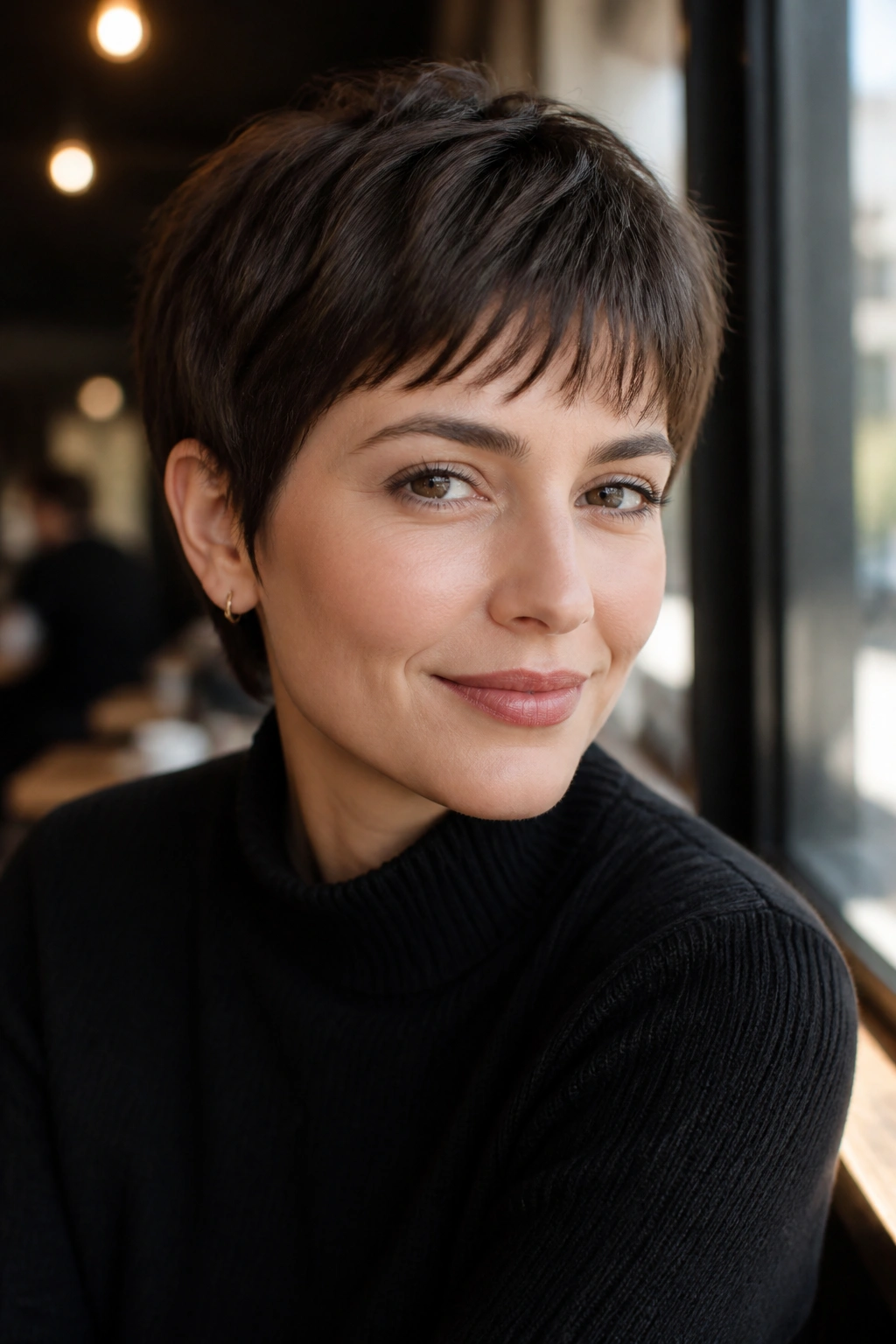
A French pixie looks easy only when the fringe is handled well. On thick hair, that fringe can get heavy fast, so the cut needs soft edges and careful weight removal through the front.
The appeal is the shape around the face. Short bangs sit close to the brow, while the sides stay rounded and neat. The whole thing gives a chic, slightly undone look without trying too hard. Thick hair helps because it gives the front enough density to look full, not stringy.
I would not recommend this version if you hate getting hair trimmed often. The fringe needs regular attention, and if it grows too long, the shape loses its snap. But if you like the feeling of a short front and a clean neckline, it is a sharp choice.
This cut is also a good one for strong eyebrows. The fringe frames them instead of hiding them. Small detail. Big effect.
11. Asymmetrical Pixie With One Longer Side
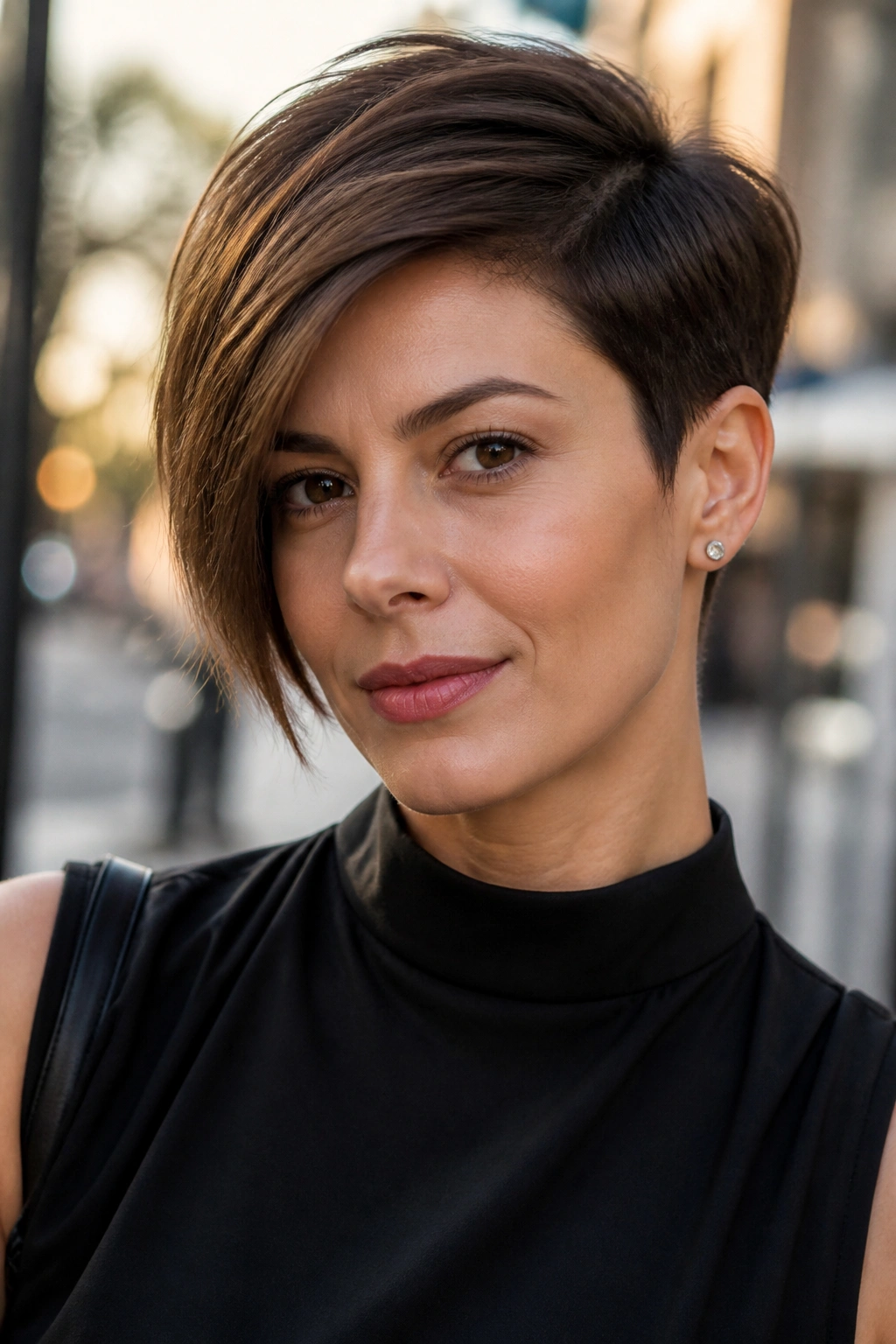
Unlike a balanced pixie, an asymmetrical one lets the weight lean in a single direction. That shift can be a gift for thick hair, because it breaks up the width that dense hair sometimes creates around the head.
One side can brush the jaw while the other sits shorter near the ear. That unevenness gives the style movement right away. It also gives you a built-in styling shortcut, because the longer side can be tucked, swept, or bent forward depending on what the day calls for.
This cut suits people who want something that feels a little less predictable. It is not loud for the sake of being loud. It is practical if your hair naturally parts off-center or if one side of your face feels stronger than the other.
Best use: ask for the longer side to be cut with soft layers, not one blunt slab. The difference matters. A slab can drag the whole cut down, while layered length keeps it light.
12. Rounded Pixie With a Sculpted Crown
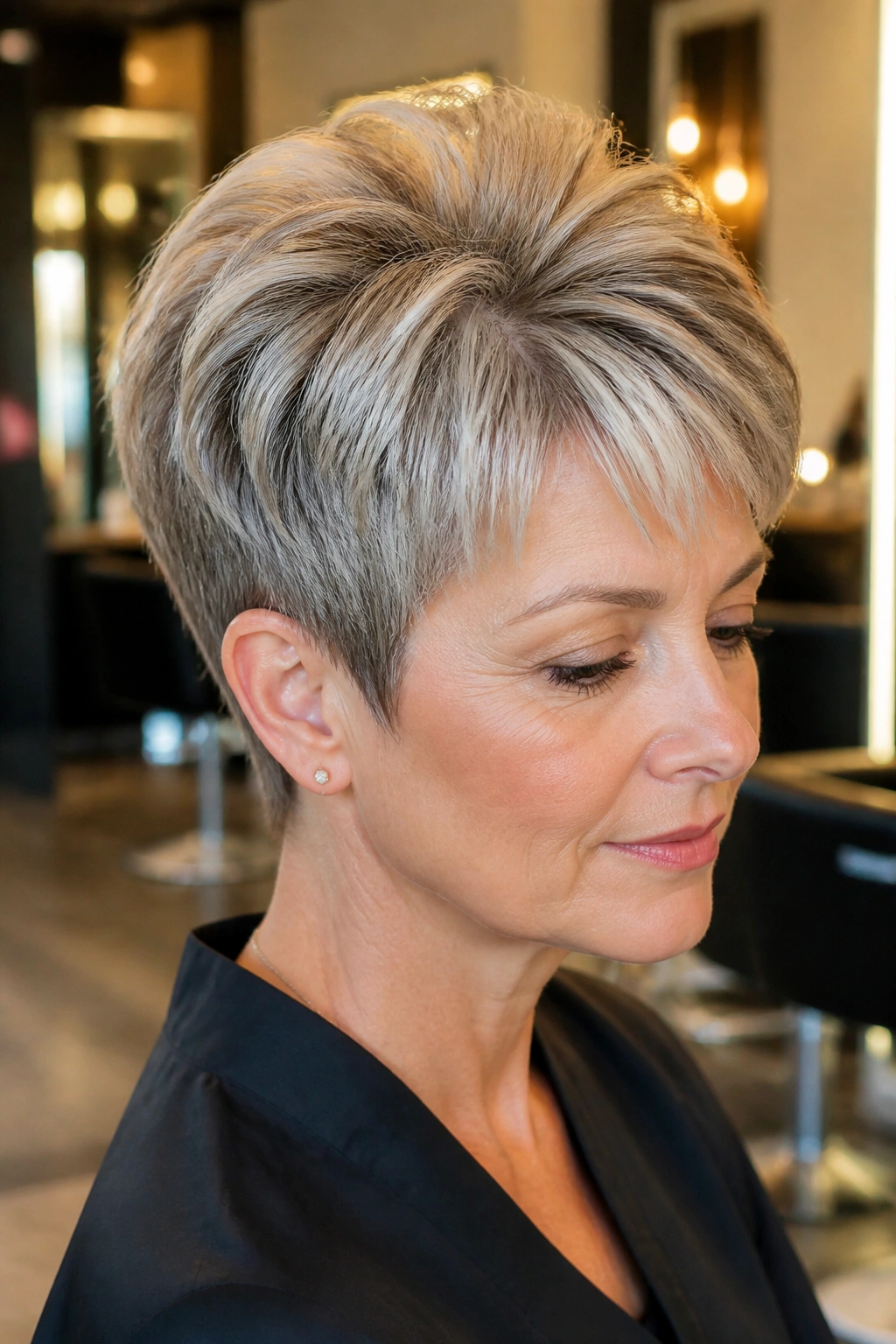
A rounded pixie sounds soft, but thick hair can turn it boxy if the crown is not cut carefully. The shape needs a sculpted top and a trimmed perimeter so it hugs the head instead of sitting on it.
This is one of those cuts that looks simple in photos and takes real skill in the chair. The crown has to be shaped with internal layers so it does not balloon. The sides should curve gently toward the cheekbones, and the nape should stay close. If the balance is right, the head looks neat and compact without feeling harsh.
I like this style on people who want polish. Not stiffness. There’s a difference. The rounded pixie has a little classic glamour to it, especially when the hair is blown smooth and tucked behind one ear.
One caution: if your hair is coarse and resistant, too much roundness can read as a cap. Keep the layering honest, or the cut starts fighting you.
13. Slicked-Back Pixie for Sleek Days
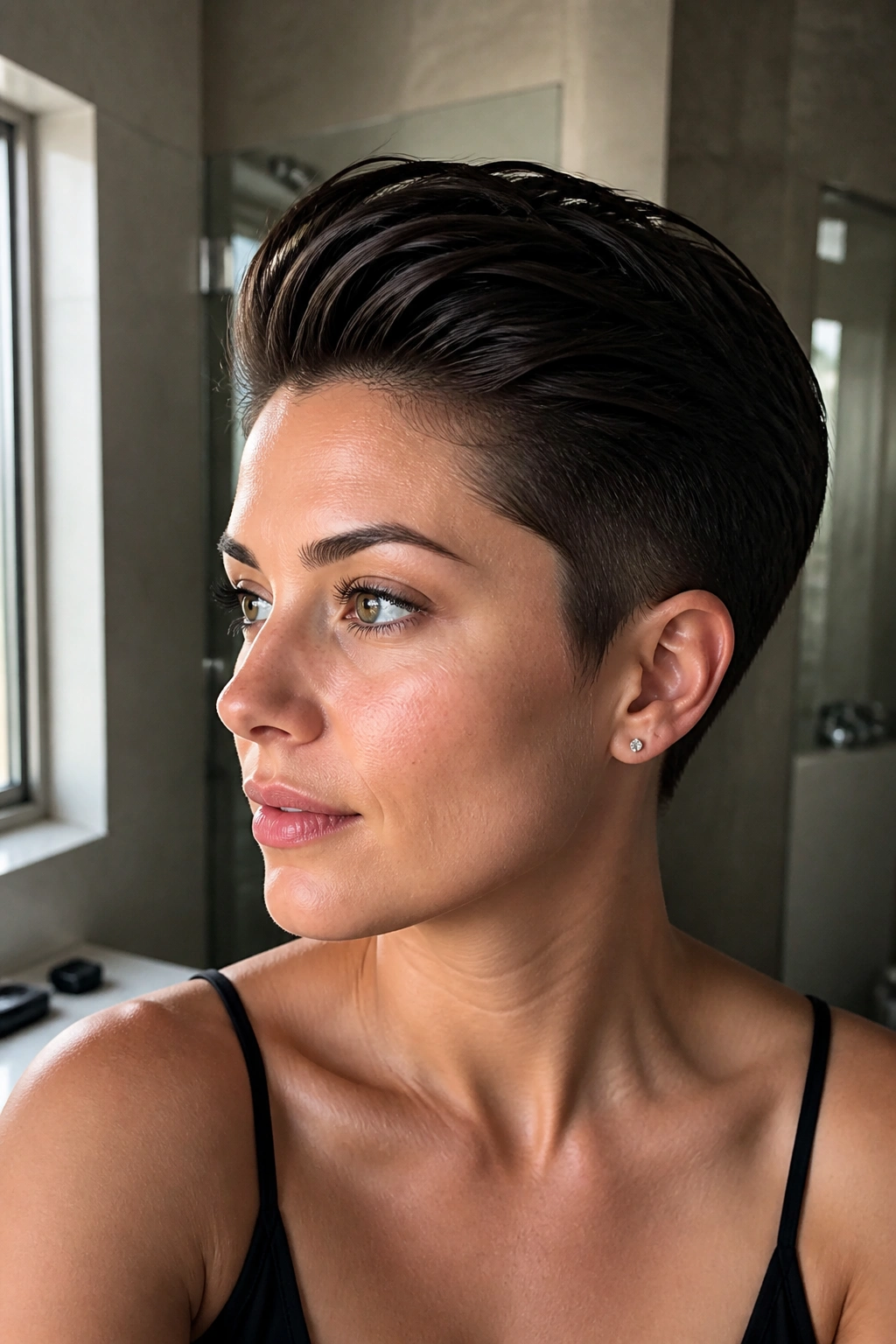
Slicked-back pixies are not just for formal nights or runway photos. On thick hair, they can be one of the easiest ways to control bulk and show off the shape of the cut itself.
The reason it works is simple. Dense hair already has enough body to look full when pushed away from the face. A bit of gel or styling cream turns that fullness into shine and direction. If your pixie has an undercut, this style gets even cleaner because the shorter sides stay close while the top glides back.
I’d use a comb for a more polished finish and fingers for a softer one. Either way, start with damp hair, work the product from front to back, and press the sides down before they dry on their own. Once the texture sets, it is harder to flatten.
This is a good choice when you want low drama in the morning and a sharper look by noon.
14. Spiky Pixie With Grit and Lift
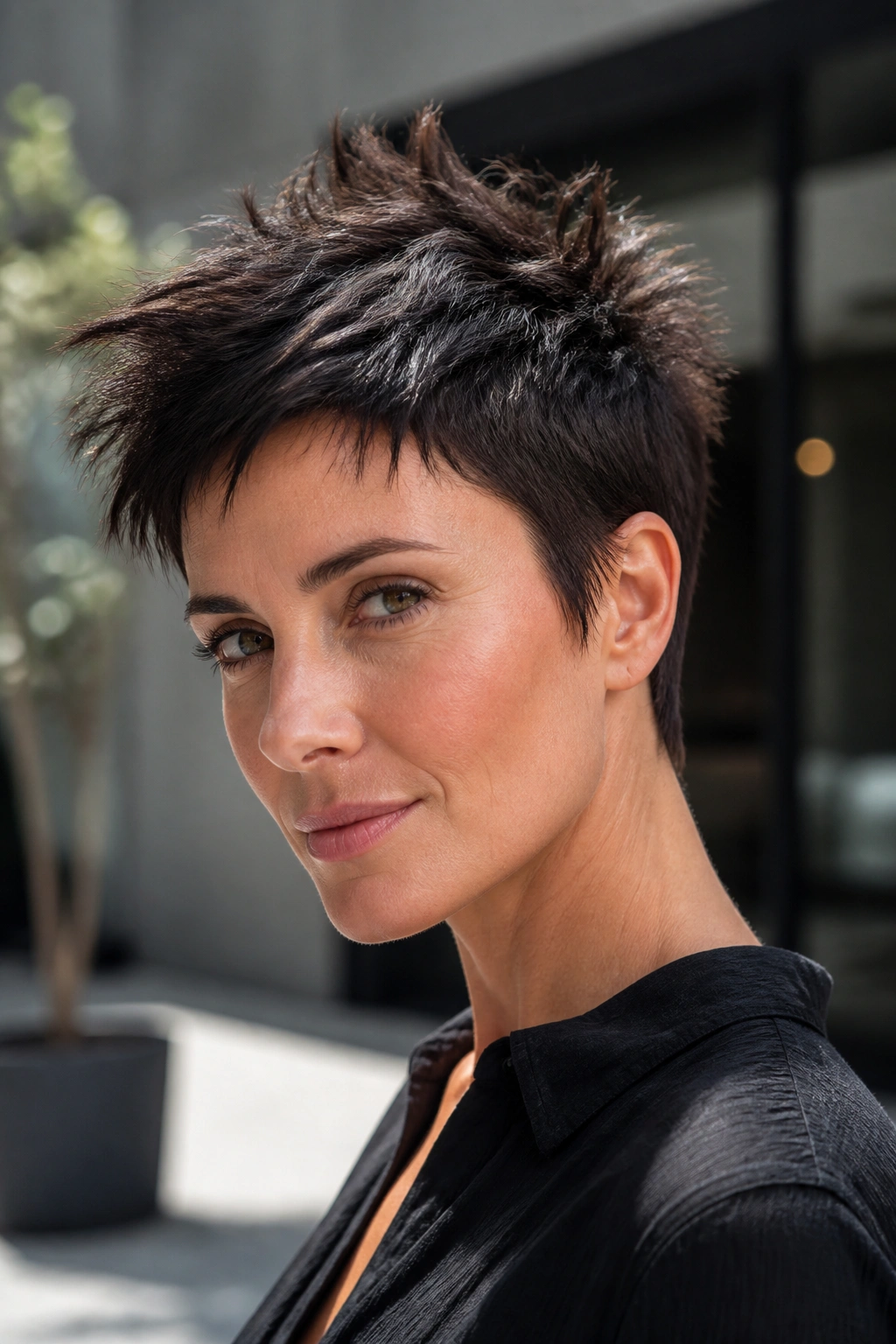
Can thick hair spike without looking like a porcupine? Absolutely, if the cut is short enough and the product is used with a light hand.
The shape depends on short layers and a bit of separation at the top. Thick hair has enough texture to stand up when it is cut into smaller pieces, which means you do not need much product to make it happen. A matte paste or clay works better than shiny gel here, because shine tends to make the spikes fall together.
The best version is not stiff. You want little pieces that point in different directions, especially at the crown and front hairline. That randomness keeps the style from feeling dated or overdone. It also helps if the sides are kept close so the top gets all the attention.
What to watch for
- Don’t overload the paste.
- Keep the pieces uneven.
- Leave enough length to reshape with your fingers.
- Ask for soft point cutting, not razor damage.
A spiky pixie is bold, but it is also practical. Thick hair gives it staying power.
15. Curtain Bang Pixie With a Soft Center Part
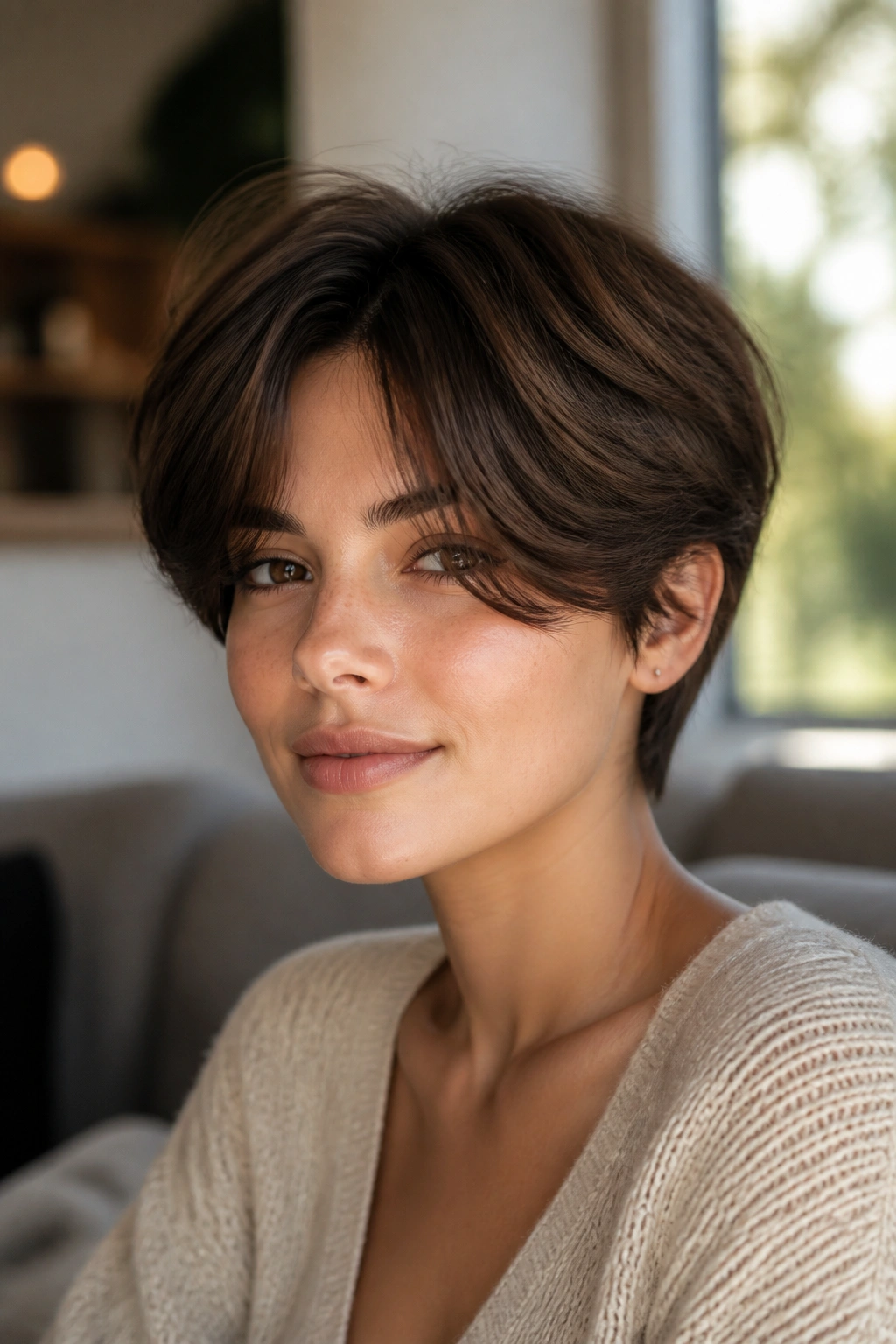
A curtain bang on a pixie sounds unusual at first, then you see how well it softens a face. Thick hair gives the fringe enough body to split down the center without collapsing into stringy bits.
The front falls away from the middle and sweeps toward the cheekbones, which creates a gentle frame around the eyes and jaw. That makes this cut a strong pick if you want a shorter style but do not want the face fully exposed. There is a little softness built in, and that helps when thick hair feels too solid in other cuts.
Why the fringe matters
The curtain shape takes the weight off the center of the forehead and spreads it outward. That can balance a strong jaw, a wider brow, or just a face that likes a bit more movement around the front. Use a round brush or a quick bend with a flat iron if your hair resists the split.
It is a small change, but it makes the haircut feel less severe.
16. Micro Fringe Pixie for a Sharp Brow Line
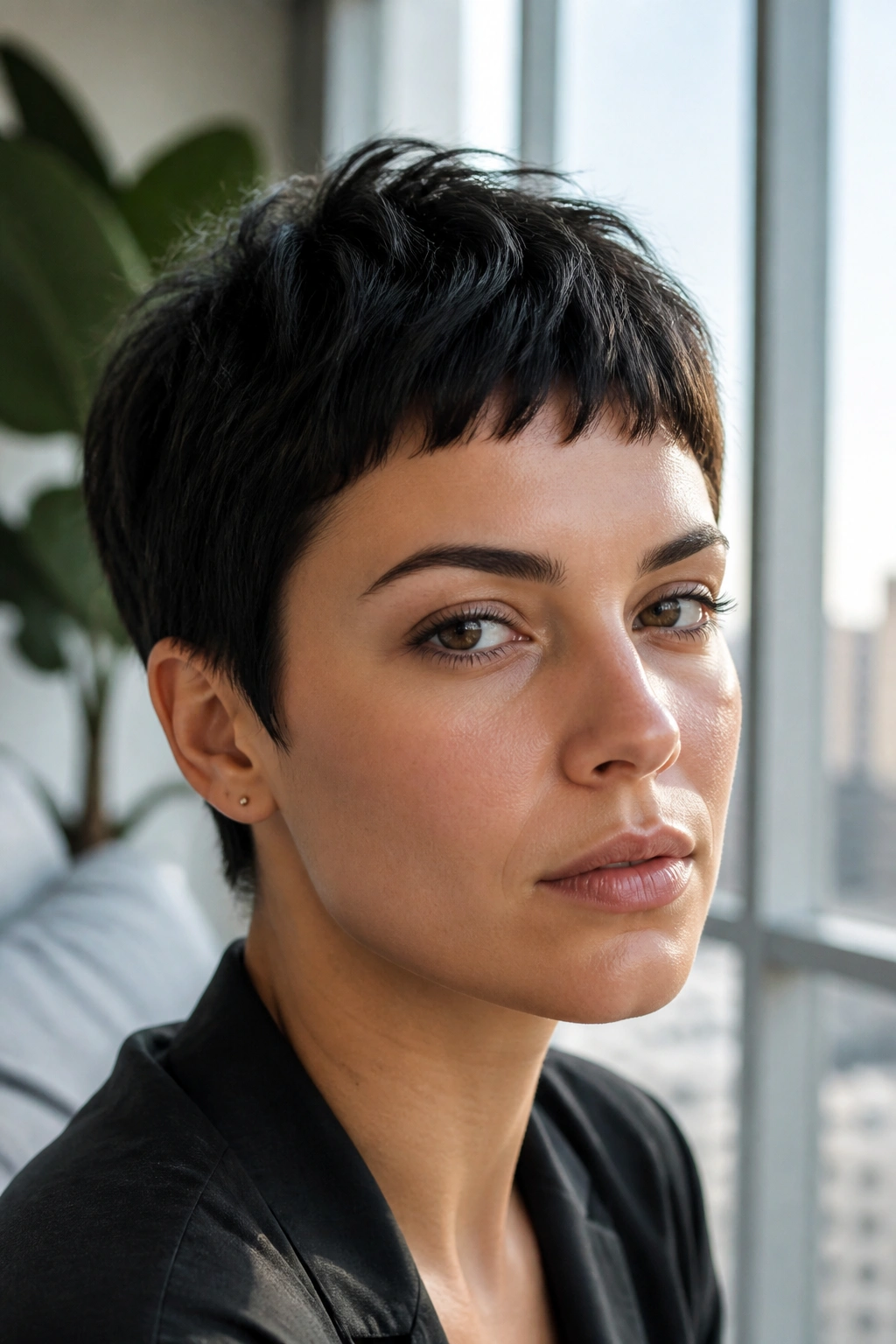
A micro fringe is not for the timid. It puts the focus straight on the eyes and brows, which is a big part of why it looks so clean on thick hair when the cut is done well.
The fringe sits much shorter than a normal bang, so the rest of the pixie has to support it. That usually means careful layering through the top and some weight control at the temples. If the sides are too full, the micro fringe can look disconnected in a bad way. If the balance is right, it looks intentional and a little graphic.
I like this cut on straight or slightly wavy thick hair, because the fringe stays crisp longer. Curly texture can do it too, but it needs a different hand and more upkeep. Either way, this is not a wash-and-forget shape. The fringe will ask for trims.
It suits strong features and people who want a cut with attitude. That’s the honest version.
17. Layered Crown Pixie That Removes Bulk Up Top
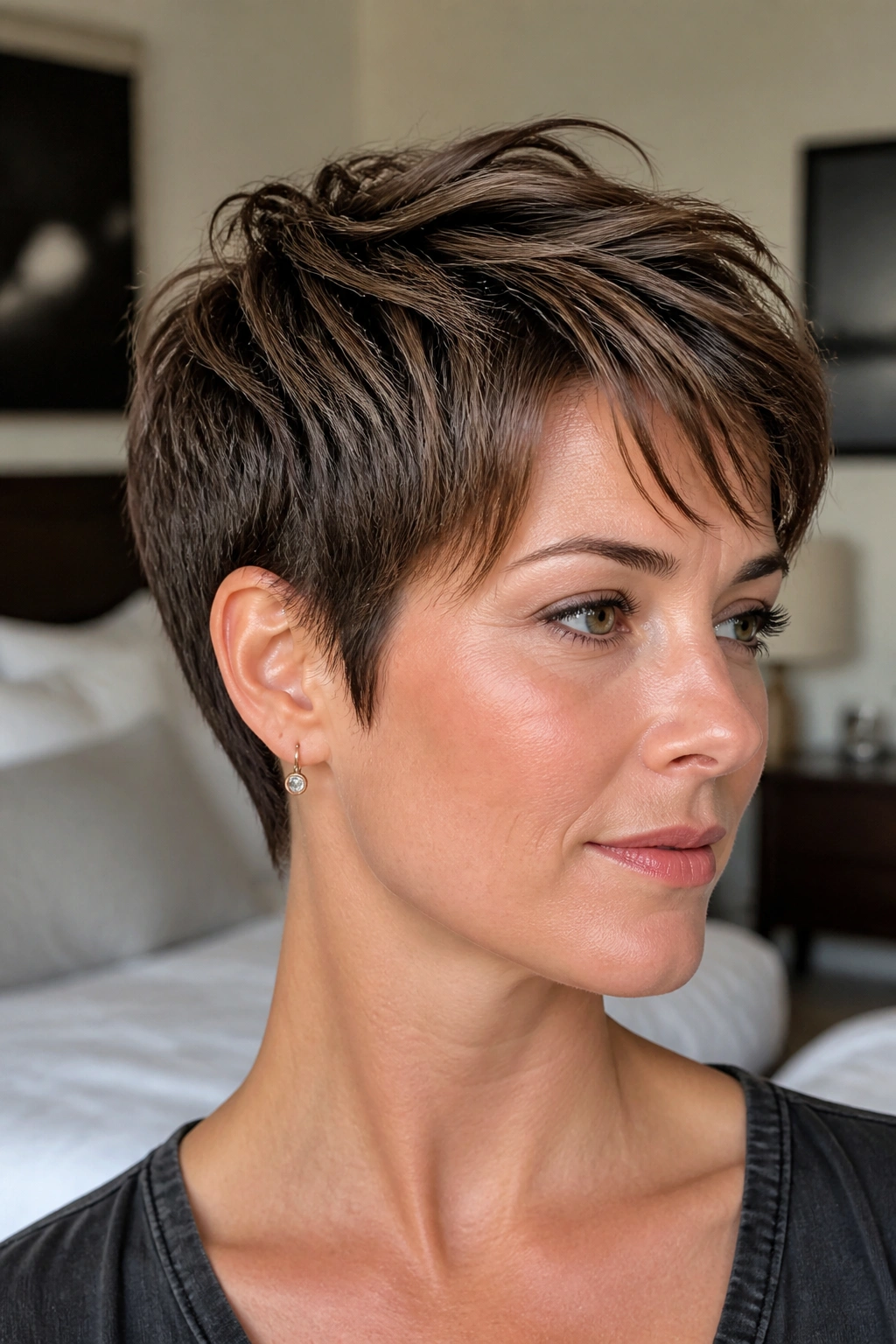
A lot of thick-hair pixies fail at the crown. The top is left too heavy, and the whole cut starts to lift like a cap. A layered crown pixie fixes that by taking weight out before the shape gets too tall.
This cut sits somewhere between a classic pixie and a cropped shag. The crown layers are shorter and more mobile, which keeps the top from sitting in one heavy block. The sides can still stay soft and neat, but the real point is upper-head control. That’s what stops the puff.
It’s a good fit if your hair grows straight out at the scalp or if the crown has a cowlick that never behaves. The layers can be arranged to work with the swirl instead of against it. You may still need a blow-dryer on certain mornings, but the cut gives you a better starting point.
If you want one detail to ask for, say this: shorter internal layers at the crown, not just shorter surface pieces. That distinction matters more than most people realize.
18. Ear-Grazing Pixie With Tucked Sides
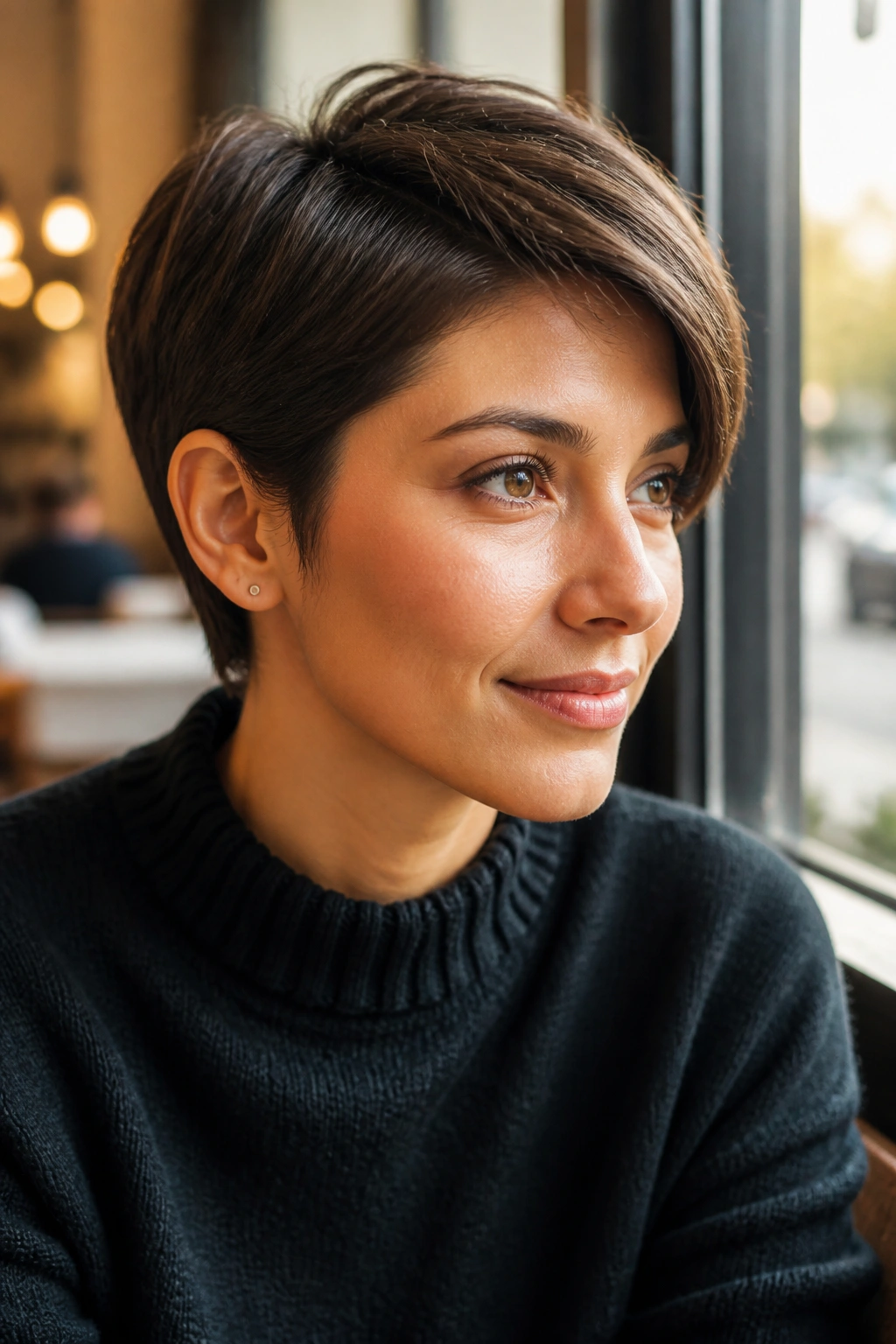
Ear-grazing sides can soften thick hair in a way that longer sideburns sometimes do not. They break up the solid outline right where the face meets the cut.
I like this style because it creates a little movement around the ears without adding bulk. The hair can be tucked, clipped back, or left to skim the top of the ear. It gives the pixie a neat, almost tailored feel while keeping the top free to carry the style.
Small details that change the look
- Keep the side length just below the ear edge.
- Taper the sideburn area so it does not puff.
- Leave the top a touch longer for balance.
- Use a light cream if your hair tends to frizz at the temples.
This is a sneaky-good option for people who want short hair that still feels soft. It also works well with glasses, which can be a problem area for thicker cuts.
No helmet shape here. That’s the point.
19. Mini Mullet Pixie With a Longer Back
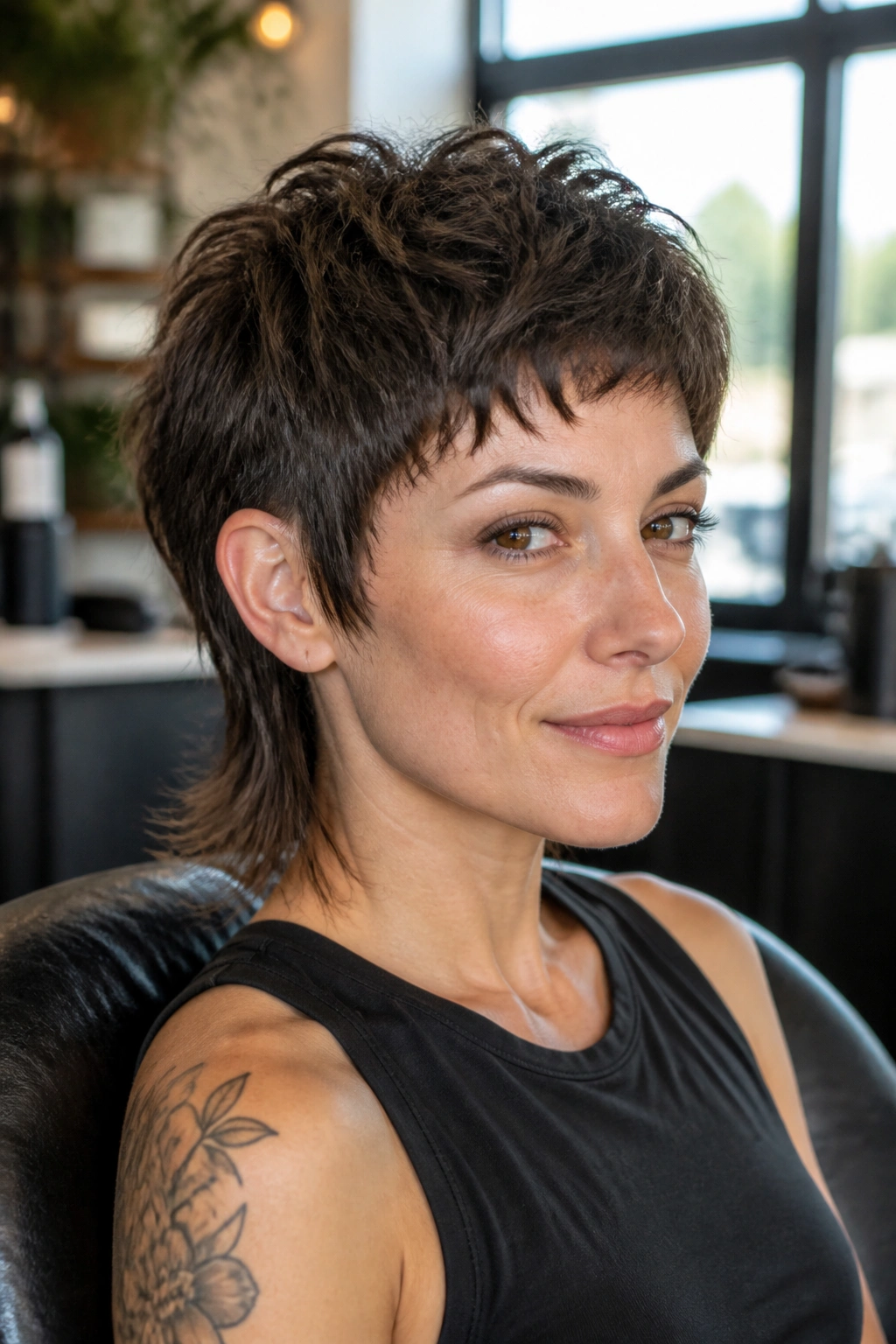
A mini mullet pixie sounds bolder than it really is. On thick hair, the longer back can actually make the cut easier to wear, because it helps the shape taper instead of bulking up evenly all the way around.
The front and sides stay short, while the back keeps a little extra length at the nape. That contrast gives the haircut movement and keeps it from feeling too neat or too severe. It also lets thick hair keep some of its own personality, which is part of why people like this shape in the first place.
This one is not for someone who wants a polished, classic crop. It has a touch of edge. But if your hair is dense and you want a pixie that looks modern without needing perfect styling, it earns its keep.
The best version keeps the transition gradual enough that the back feels intentional, not forgotten. That’s where a lot of cuts go wrong.
20. Disconnected Pixie With a Bold Step Between Sections
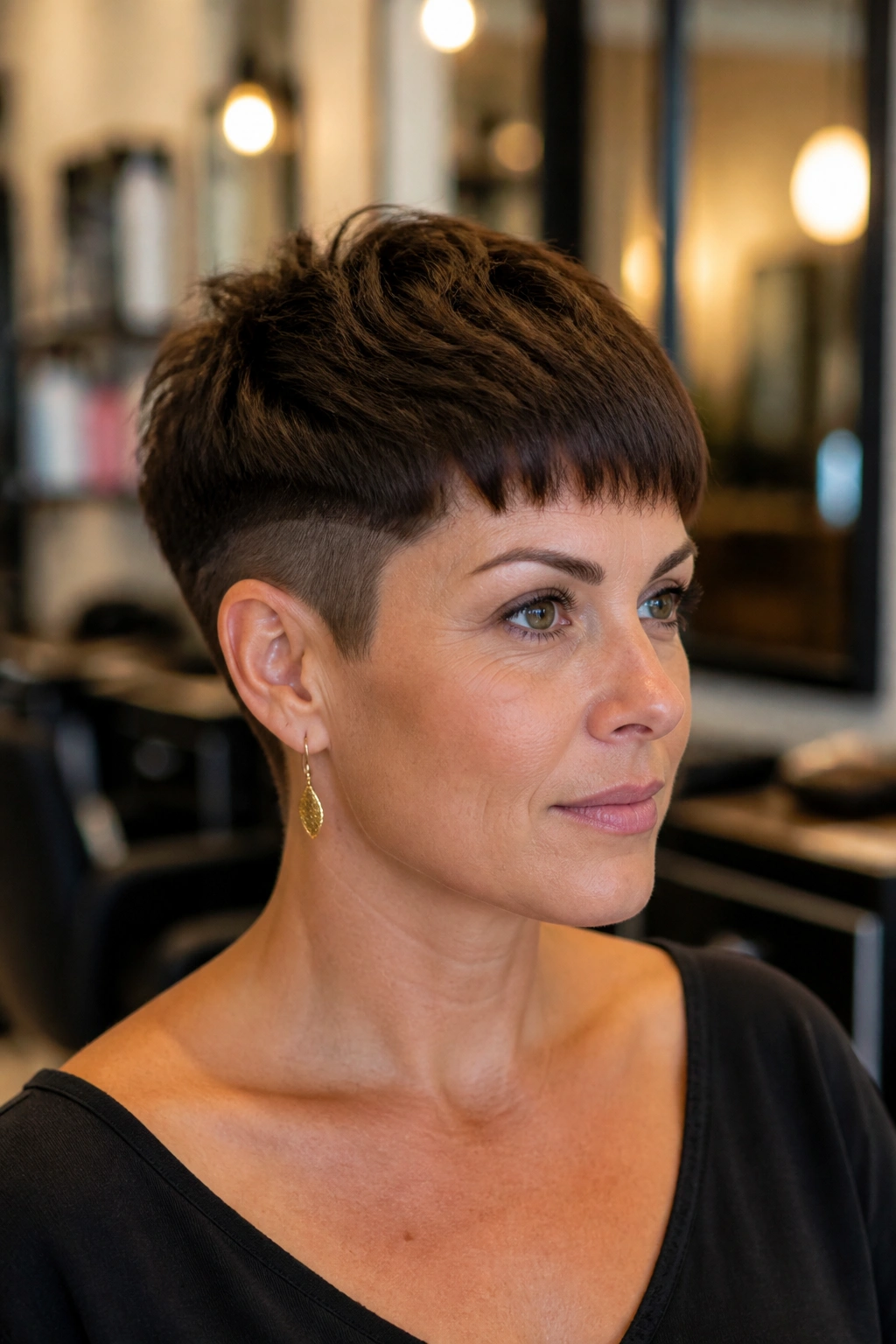
A disconnected pixie is one of the smartest options for very dense hair. It removes bulk by making the lengths intentionally different, instead of trying to blend everything into one uniform shape.
That hard shift between the top and sides gives the cut a sharper read. Thick hair handles that contrast well because there is enough body to support the longer top while the clipped or shortened lower sections keep the head from getting too wide. It can look edgy, sure, but it is also a practical volume solution.
This is the haircut I’d suggest for someone who likes clipper work or wants a shape that feels a little tougher around the edges. It does need a stylist who understands where to stop blending. Too much blending can erase the point of the cut.
The upside is easy styling. The top gets attention, the bottom stays tidy, and the whole thing has structure even when you barely touch it.
21. Wash-and-Go Pixie for Thick Hair
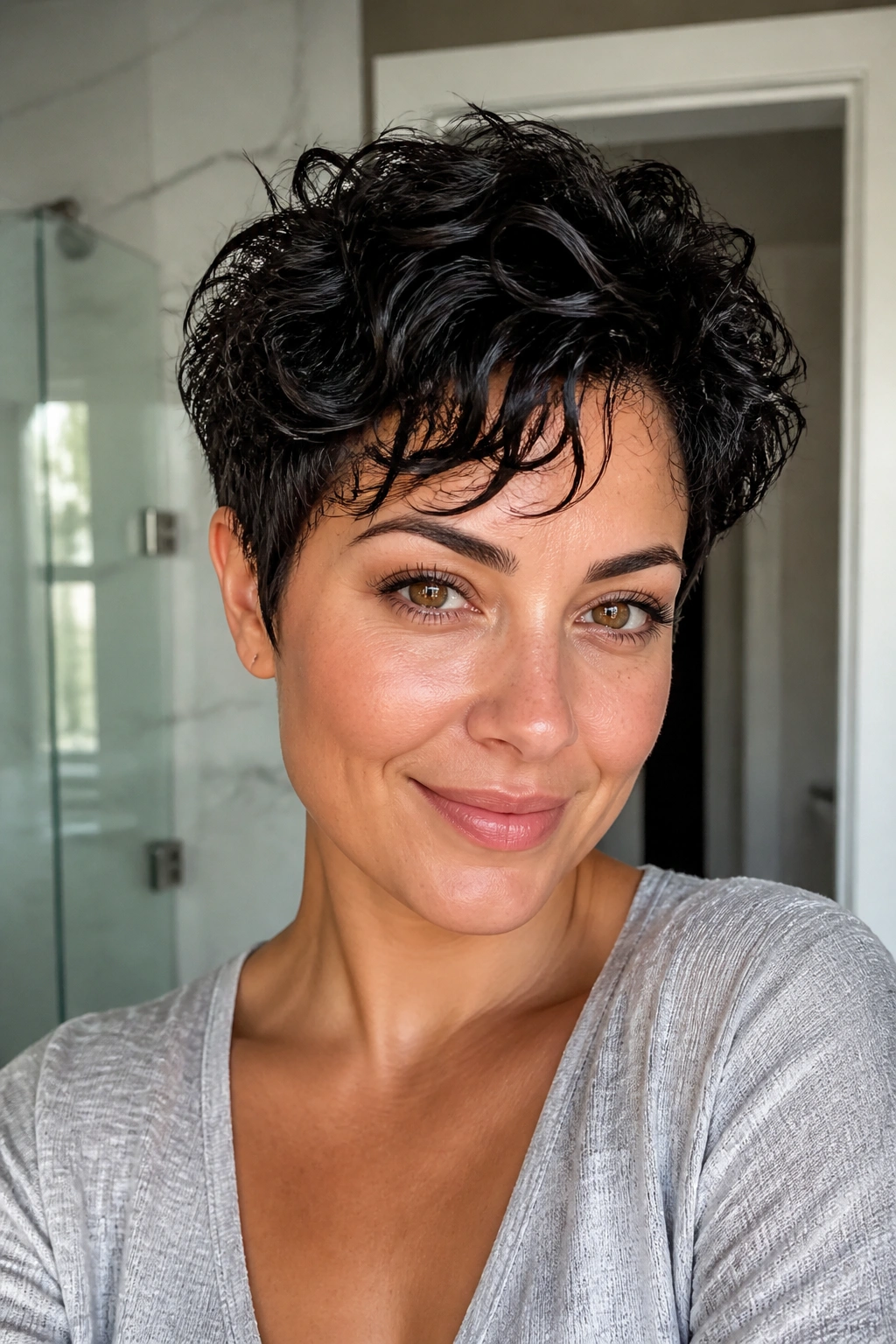
A wash-and-go pixie is not lazy. It is honest. If your thick hair already has movement and you do not want to spend twenty minutes fixing it every morning, this is the cut that respects your time.
The haircut has to do the work here. That means balanced layering, a smart fringe, and enough removal of bulk that the shape falls into place without a fight. Thick hair is actually a good candidate for this because it does not need artificial fullness. It already has it.
What makes it realistic
- Use a light leave-in on damp hair.
- Scrunch the top with your hands.
- Let the natural texture dry without too much combing.
- Keep the perimeter trimmed so it doesn’t spread outward.
This style is the one I’d recommend to someone who wants short hair for comfort, not for endless styling experiments. It still looks deliberate. It just does not demand a lot from you before breakfast.
22. Soft Pixie for Thick Hair With Sweeping Side Layers
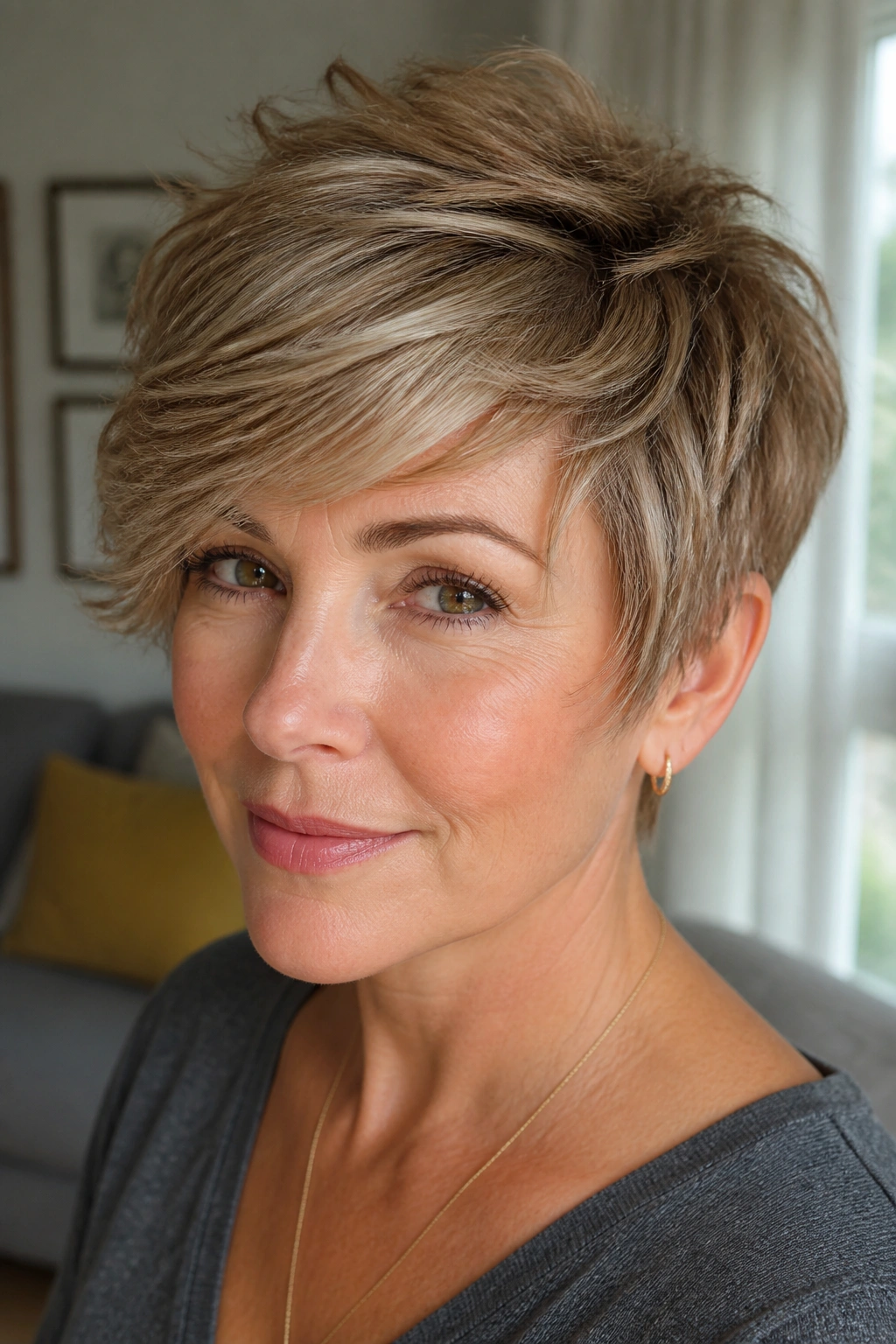
A soft pixie with sweeping side layers is the easiest place to land if you want short hair that still feels gentle around the face. Thick hair makes the layers hold their shape, so the cut keeps its softness instead of going flat.
The front can brush across the forehead or slide toward the cheekbone, while the back stays neat enough to keep the silhouette tidy. That balance is the whole appeal. It gives you movement without sharp edges, and it wears well on days when you want the hair to look styled even if you only used your fingers and a little cream.
This is also the most forgiving option in the group. If you are nervous about going too short, or you want a cut that grows out without looking strange at every stage, this is a strong choice. It plays nicely with thick hair because it does not fight the density. It shapes it.
If I were handing someone a single starting point for a first pixie on thick hair, this would be near the top of the stack.
