



Thick hair is generous. It gives you shape, swing, and that heavy, glossy look people try to fake with styling products. It also has a habit of going triangular if the cut is sloppy. A long pixie cut for thick hair sits right in the sweet spot: short enough to feel sharp, long enough to keep movement, and flexible enough to work with the natural bulk instead of fighting it.
The trick is never just “go shorter.” That’s the lazy version, and it usually backfires. The better version keeps length where you want softness—around the fringe, at the temples, through the crown—then removes weight in the places where thick hair stacks up and swallows the shape. If your hair is dense, coarse, or just plain plentiful, the right pixie is less about bravery and more about architecture.
A good cut also changes how your morning goes. Some long pixies need a quick finger-dry and a dab of paste. Others want a round brush, a side part, or a tiny lift at the root so the top doesn’t lie flat. The point is to pick a shape that fits your hair’s actual behavior, not the photo you saw in a salon chair under perfect lighting.
These 20 styles cover the range: soft, sharp, shaggy, polished, edgy, and easygoing. A few lean classic. A few break the rules a little. All of them can handle thick hair without turning into a helmet.
1. Layered Crown Pixie with Tapered Nape
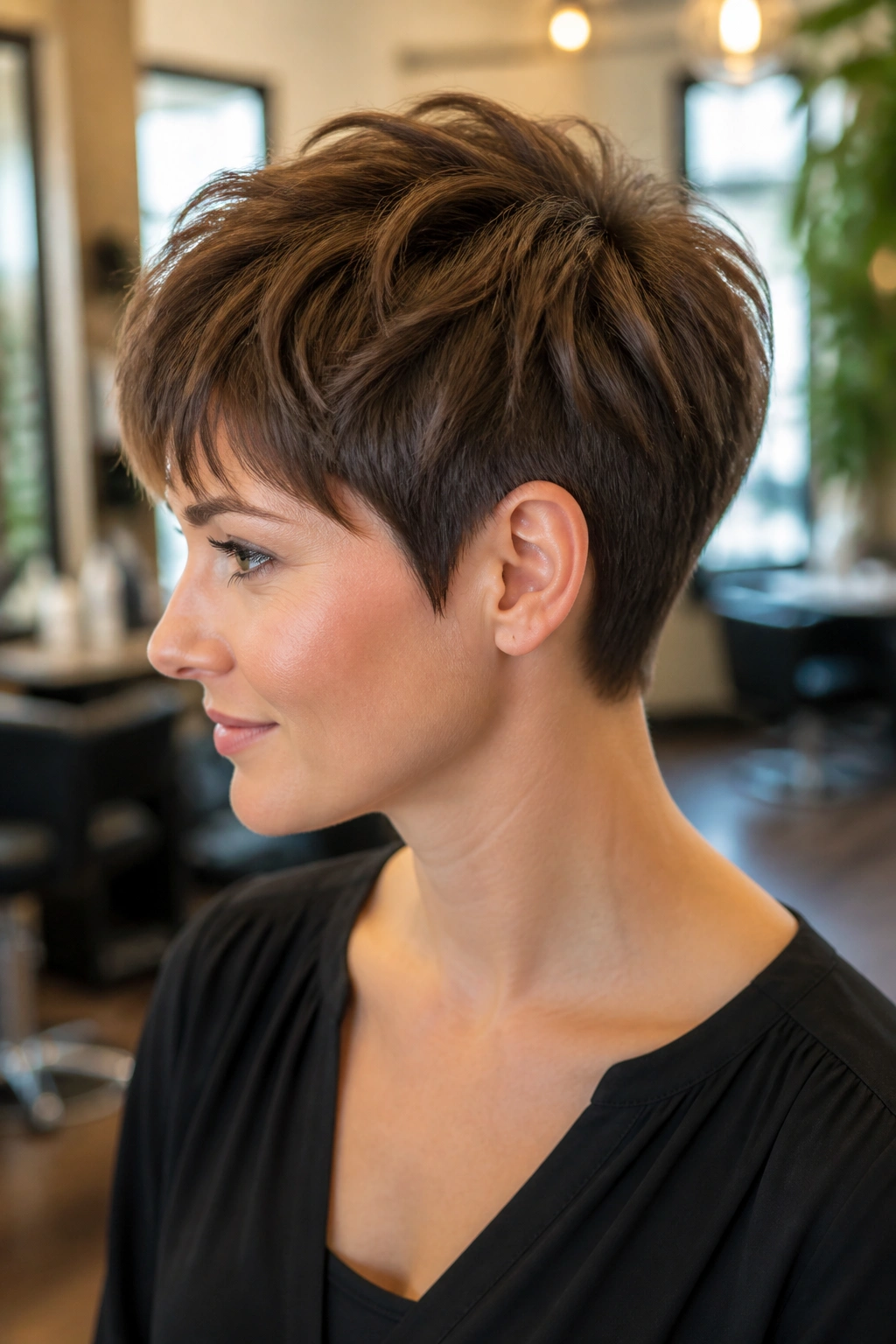
This is the cut I reach for when thick hair feels like it’s wearing you instead of the other way around. The layers sit mostly through the crown, where the bulk usually builds, and the nape gets tapered clean so the back doesn’t puff out.
Why it works on dense hair
The magic is in the balance. You keep enough length on top to get movement, but you don’t leave the crown heavy enough to collapse into a block. That makes this one of the easiest long pixie cuts for thick hair to wear every day.
- Ask for internal layering, not aggressive thinning.
- Keep the front section longer so it can be pushed to either side.
- Let the nape hug the neck for a neat outline.
- Style with a pea-sized amount of cream or paste for control.
Pro tip: If your hair grows out fast at the back, this shape buys you more time between trims. The nape stays tidy longer than a blunt pixie.
2. Side-Swept Fringe Pixie That Softens the Forehead
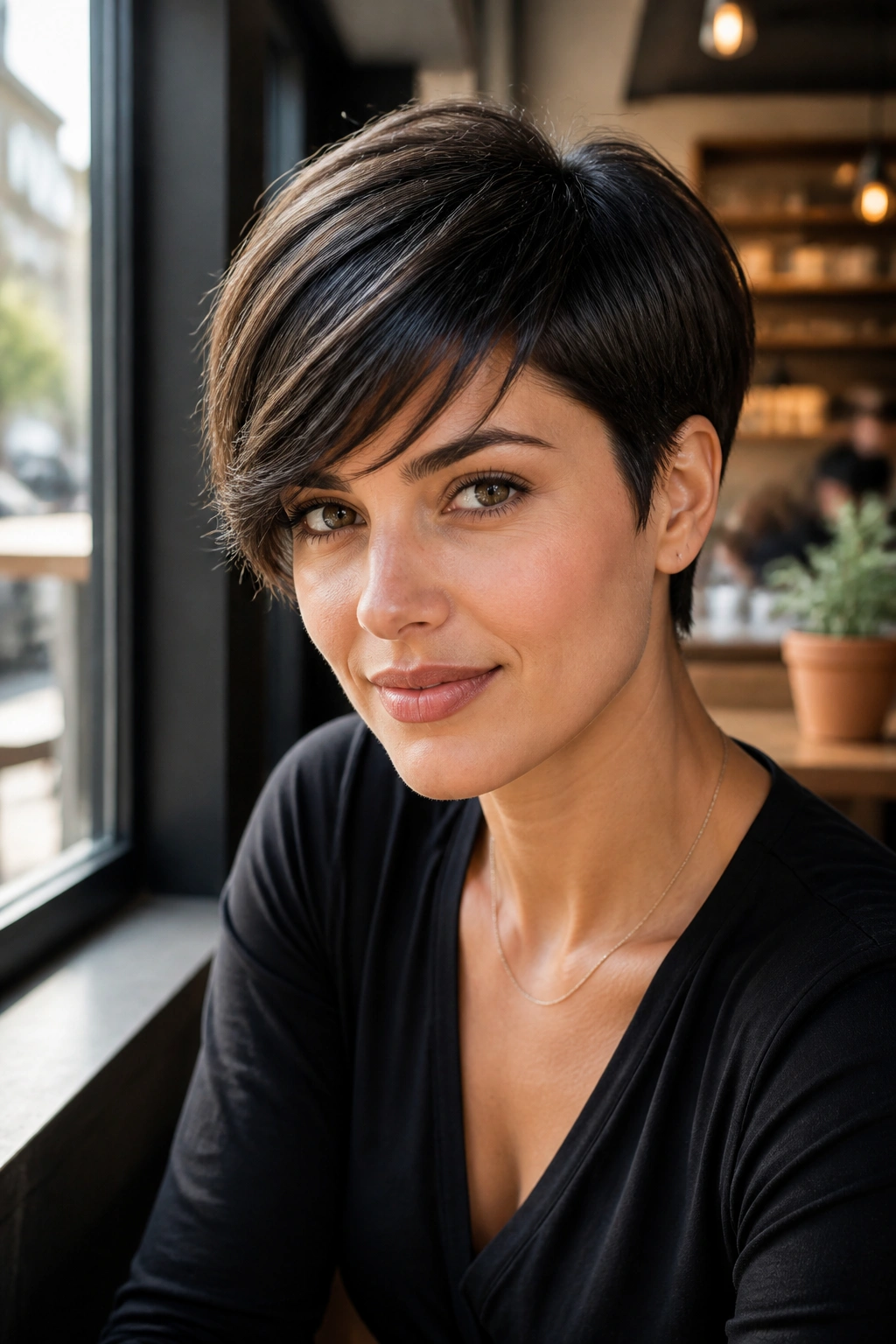
A deep side fringe does more than look pretty. It breaks up the mass of thick hair at the front, which keeps the cut from feeling boxy.
This one is especially good if you like a little face-framing without committing to full bangs. The long sweep across the forehead gives you softness, and the rest of the cut can stay compact enough to avoid that mushroom shape thick hair likes to create when it’s all one length.
I like this version for people who want movement without a lot of styling drama. A quick blow-dry with a small round brush helps the fringe bend the right way, but you can also let it dry with a side part and tuck one side behind the ear. Easy.
If your hairline feels heavy, this cut lightens the whole mood. That’s the real job here.
3. Choppy Shag Pixie with Airy Ends
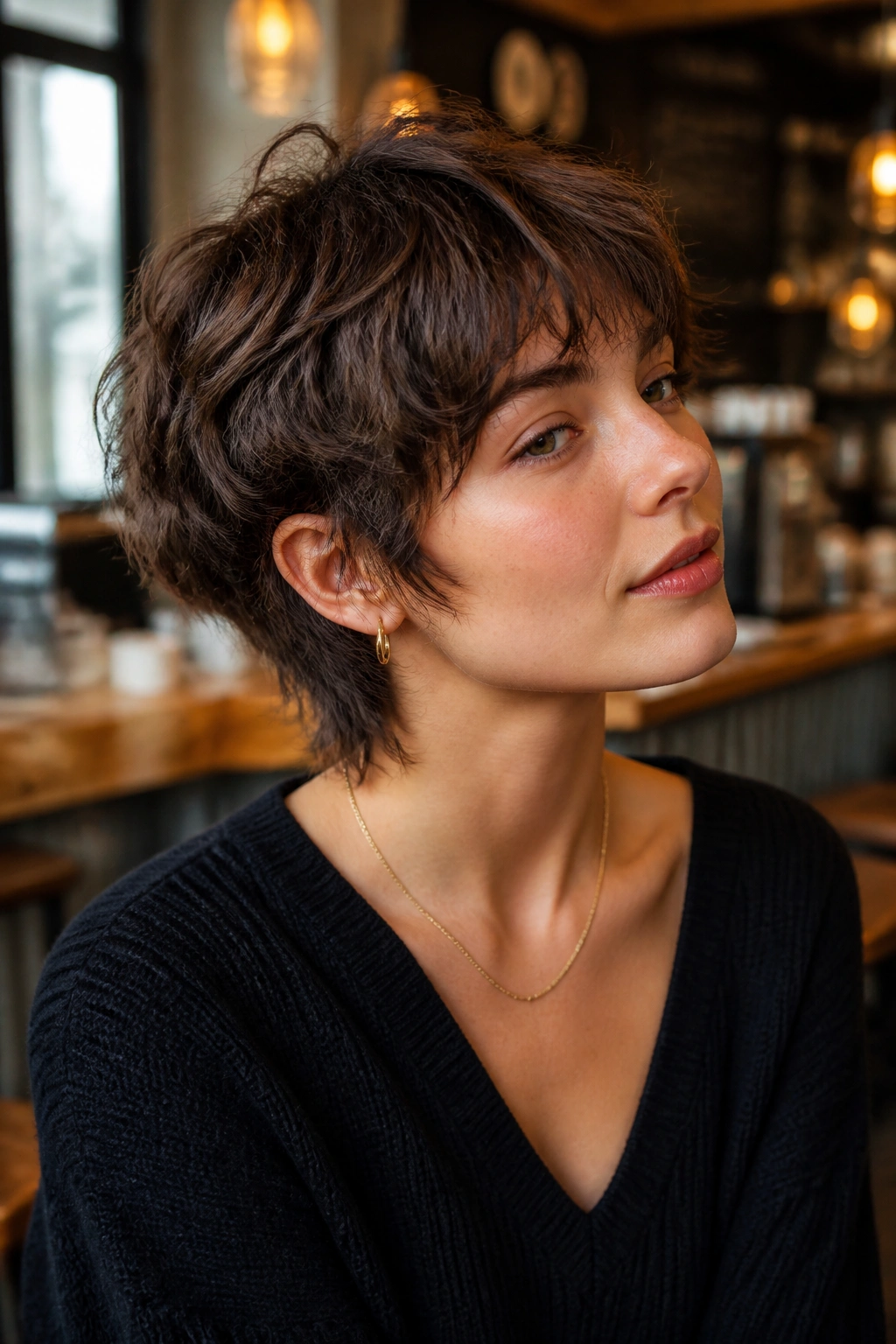
Why does this style work so well on thick hair? Because it refuses to let every strand sit in the same place. The choppy layers interrupt the weight, and that keeps the cut from turning dense at the ends.
How to ask for it
Tell your stylist you want broken-up texture, not feathered fluff. Those are not the same thing. Broken-up texture keeps the edges piecey and modern, while still leaving enough length to show off the shape.
A good choppy shag pixie usually has:
- A longer top section for movement
- A softly tapered back
- Razor-light or point-cut ends
- A fringe that can fall forward, to the side, or both
This cut likes a matte paste or a light texture cream. Work it through dry hair with your fingers, then pinch a few pieces near the front so the shape doesn’t blur together. If you enjoy a slightly messy look that still feels deliberate, this is an easy favorite.
4. Asymmetrical Long Pixie with One Longer Side
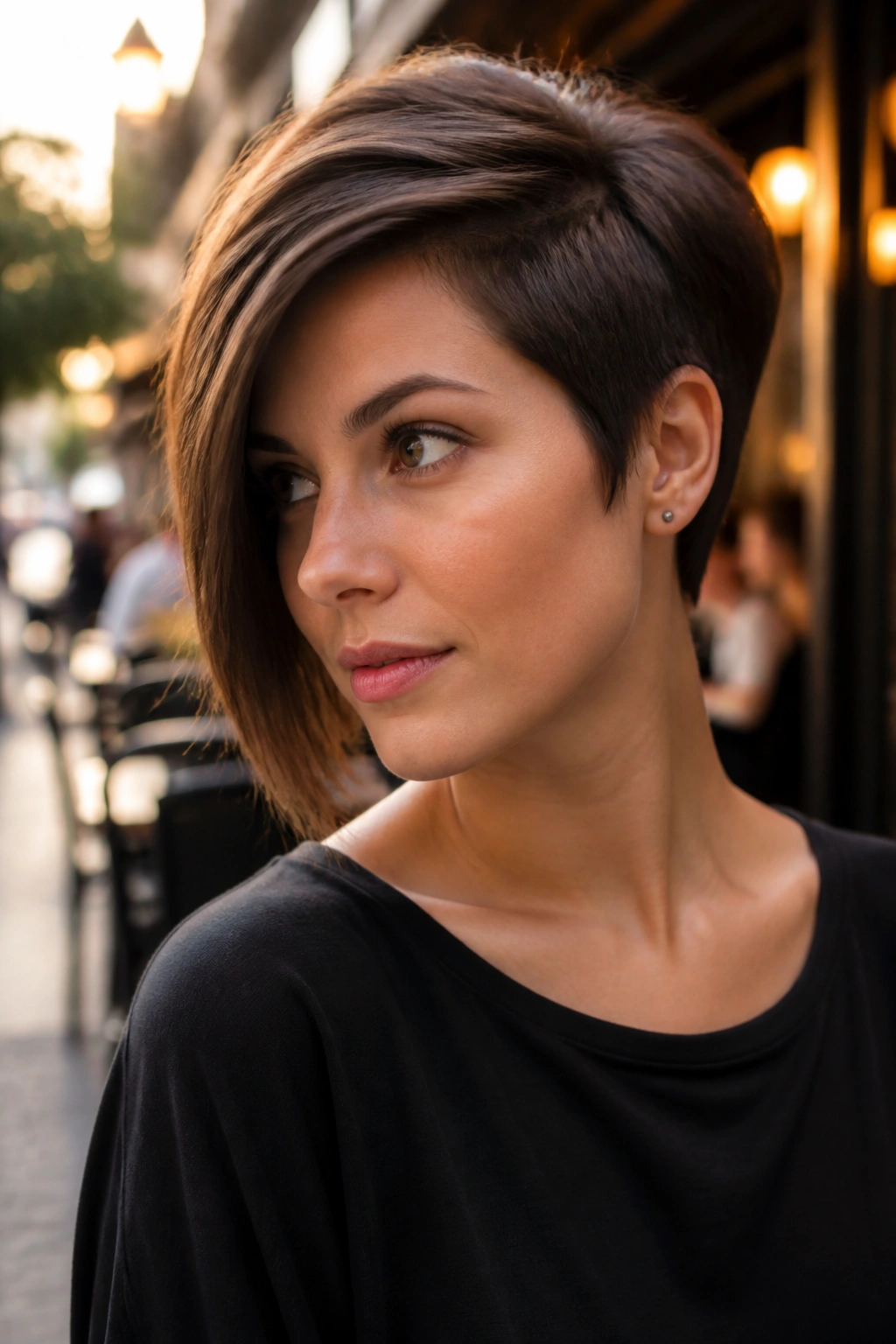
Picture this: one side skims the cheekbone, the other sits shorter and cleaner around the ear. That small difference changes everything. Thick hair suddenly looks intentional instead of bulky.
The asymmetry gives your stylist room to control the weight where it matters. One side can stay sleek and tucked, while the longer side does the softening work. It also gives you a little drama without asking for a full edgy cut. Not bad.
This style is especially handy if one side of your hair always falls flatter or coarser than the other. A longer panel on that side hides the mismatch and makes the whole cut feel more stable. You can wear it with a deep side part for a sharper effect, or let it fall more casually for a softer line.
Best detail to request: keep the longer side blunt enough to hold shape, but not so blunt that it looks like a mini bob. That line matters.
5. Feathered Long Pixie with Soft, Blended Ends
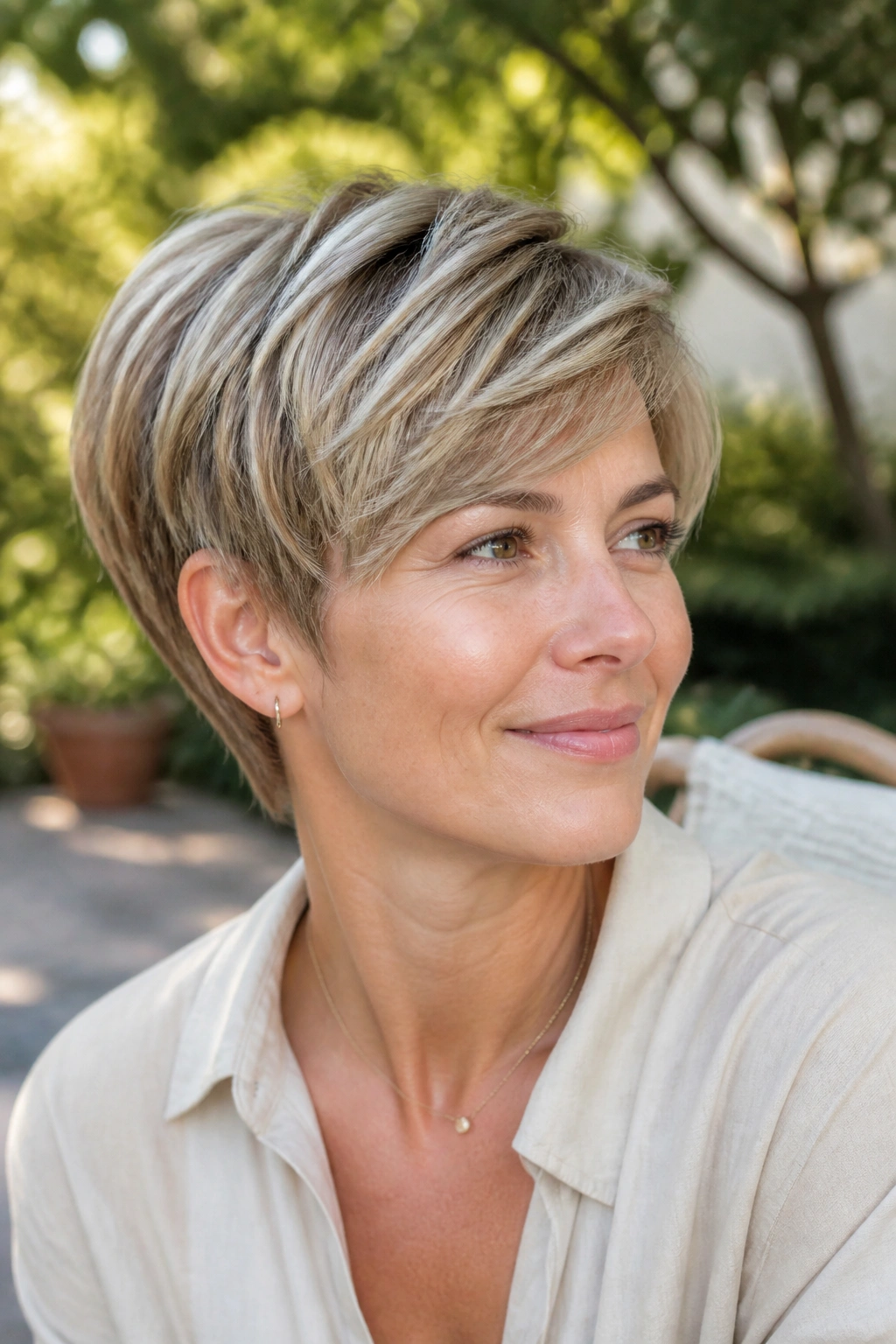
Feathering is one of those old salon words that still earns its keep. On thick hair, it keeps the ends from looking heavy and chopped off all at once.
I like this cut because it moves in a gentler way than a choppy pixie. The layers blend instead of shouting, and that makes the shape easier to wear if you want something polished but not stiff. It’s also a smart choice if your hair has some natural wave, because feathered layers will catch the bend instead of fighting it.
The key is restraint. Too much feathering on coarse hair can make the ends look frayed, which is not the look anyone is chasing here. Ask for soft graduation through the top and sides, with the perimeter left clean enough to keep the style grounded.
This is the pixie I’d choose for someone who wants a light shape without obvious texture lines. It’s subtle. That’s the point.
6. Swept-Back Quiff Pixie with Lift at the Front
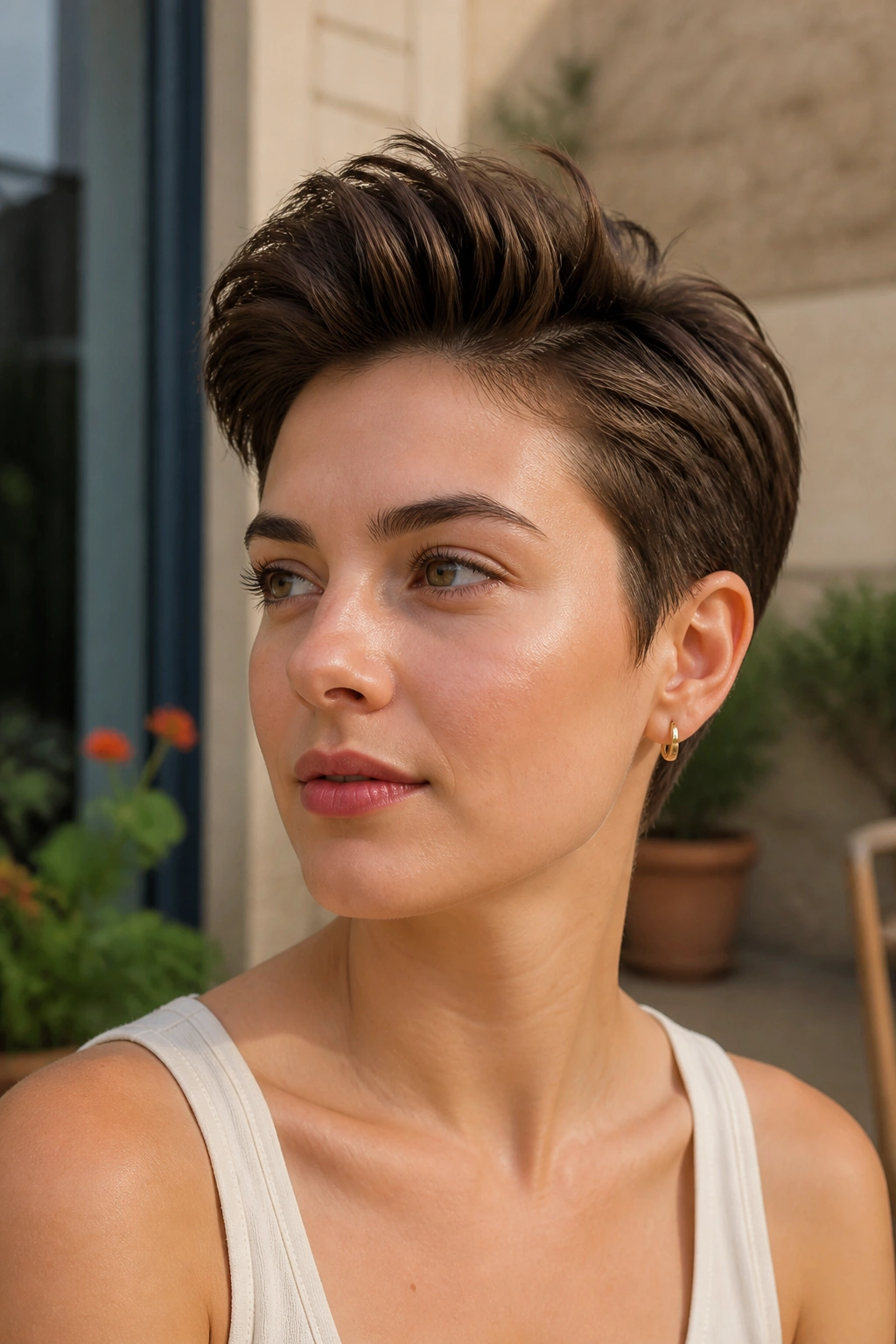
A swept-back quiff changes the whole personality of a thick-hair pixie. Instead of letting the front sit on the forehead, you push it up and back so the cut feels taller and more open.
That makes it a strong choice if your hair tends to fall heavy across the face. It also gives you a little height without needing a lot of product. A root spray, a round brush, and a quick blast at the front are usually enough.
Compared with a side-swept fringe
A side-swept fringe softens. A quiff opens. That’s the real difference.
If you want a romantic, face-framing look, go fringe-first. If you want structure and a little attitude, the quiff is the better move. Thick hair holds this shape well because the density gives the front something to stand on. Fine hair has to work harder.
This version suits strong brows, glasses, and anyone who likes a lifted silhouette. It’s sharp without feeling severe.
7. Undercut Long Pixie with Hidden Bulk Removal
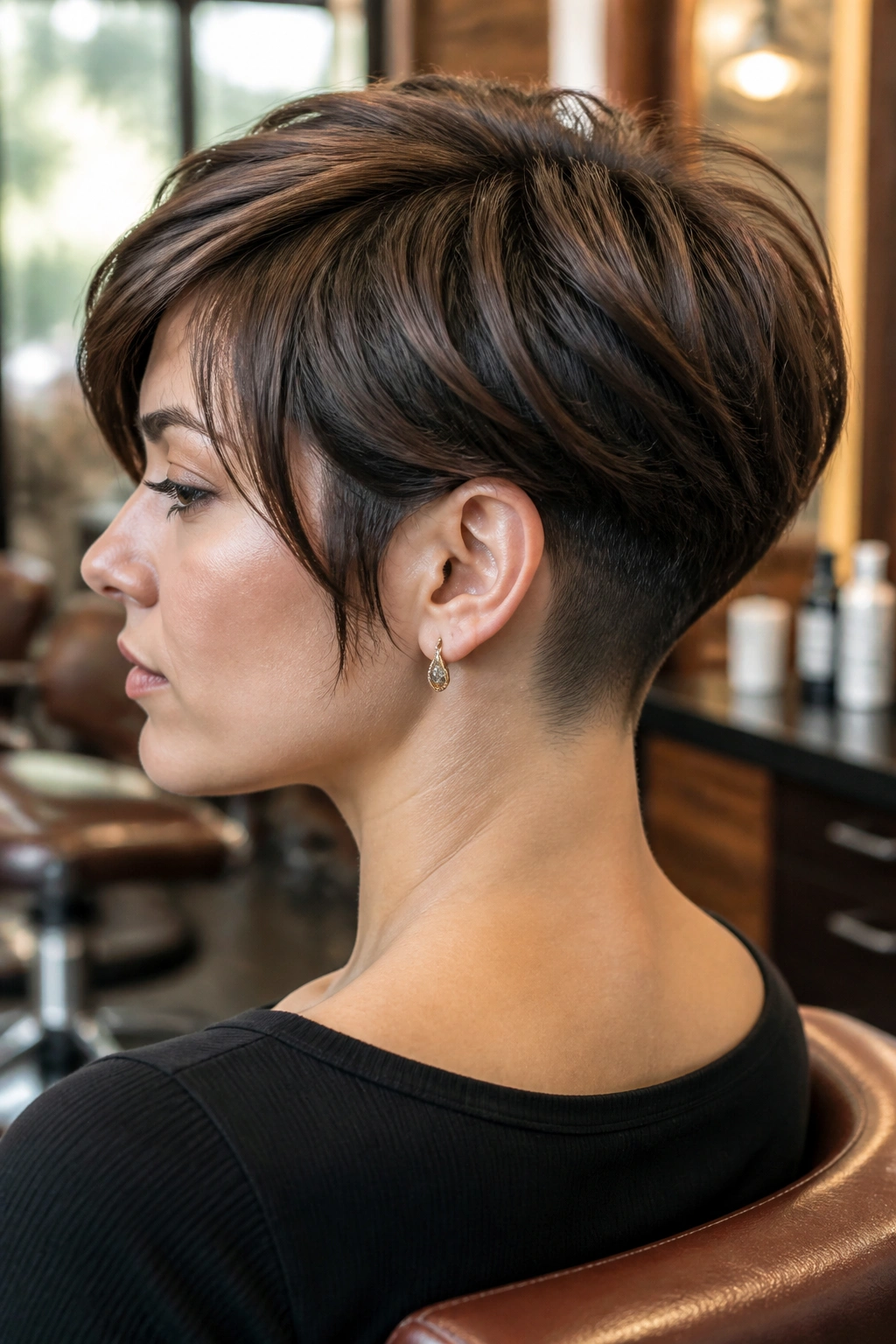
Some thick hair needs a secret. This is that secret.
The top stays long enough to style, but the underneath gets clipped shorter so all that hidden bulk has somewhere to go. From the outside, the cut still reads as a long pixie. Underneath, it behaves better. Much better.
What to ask your stylist for
- A disconnected or lightly disconnected undercut
- Longer top layers that still cover the shorter section
- Clean tapering around the ears and neckline
- Enough length on top to tuck, sweep, or mess up
The best part is how much lighter it feels when you dry it. Thick hair can trap heat and take forever to dry, and an undercut cuts that down fast. It also helps if your head gets hot easily or if you hate that bulky feeling at the back.
I’d skip this if you want a very soft outline. But if you like a little edge and want real relief from density, it’s a clever move.
8. Curly Long Pixie with Shaped Layers
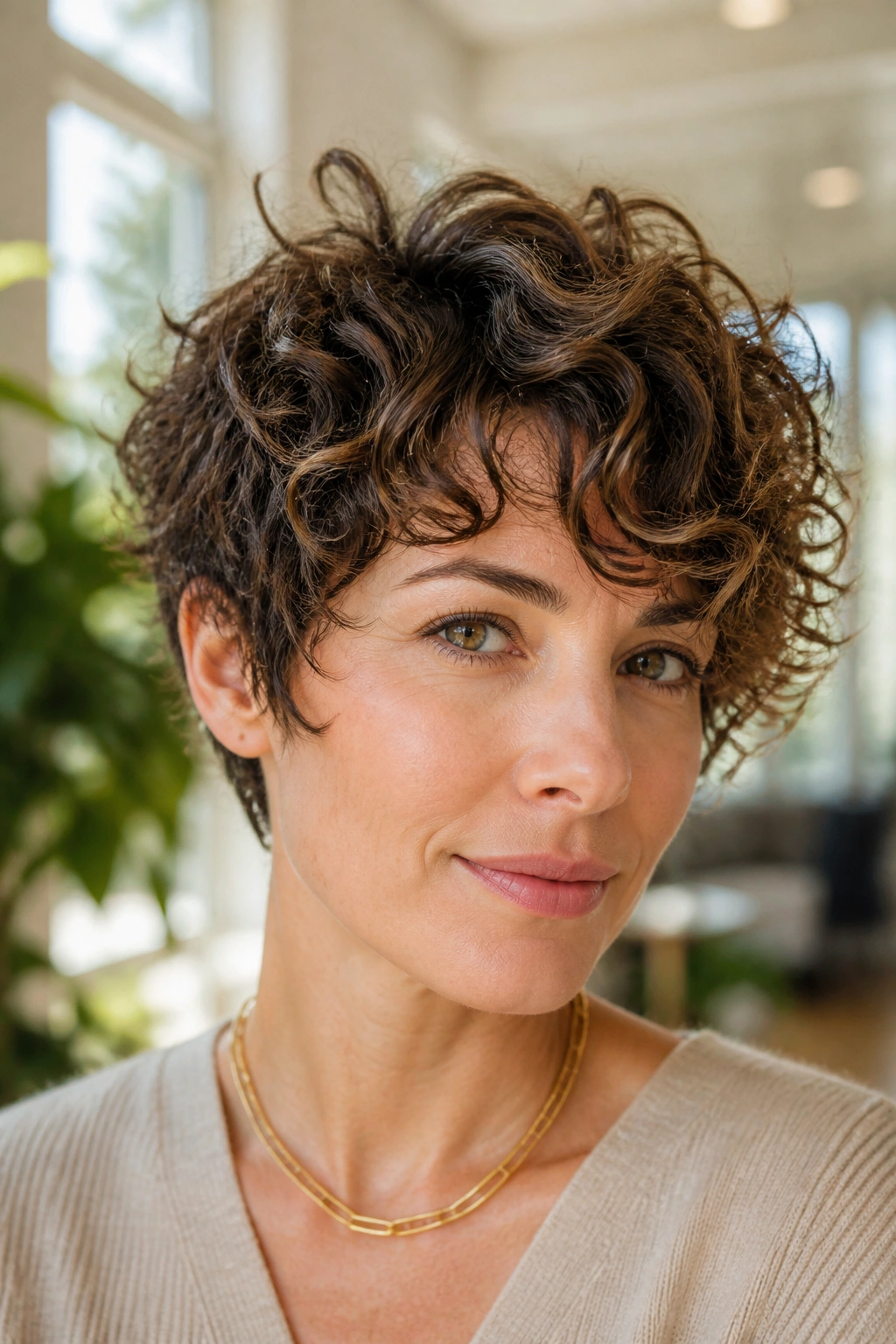
Curly thick hair is its own category, and it deserves its own cut. A long pixie on curls should keep the spring, not crush it.
The best version builds shape around the curl pattern instead of flattening it. That usually means leaving more room through the top and crown, then carving the sides so the silhouette doesn’t widen too much. If the curls are tight, too much length can make the style hang heavy. Too little, and it balloons. The sweet spot sits somewhere in the middle.
A curl-by-curl cut can be worth it here, especially if your hair forms different curl sizes in different sections. The end result looks less like a “fixed” haircut and more like hair that knows where it wants to go.
Use a light gel or curl cream on damp hair, scrunch, and air-dry or diffuse. The shape matters, but the curl pattern matters more.
9. Straight Long Pixie with Piece-y Crown Layers
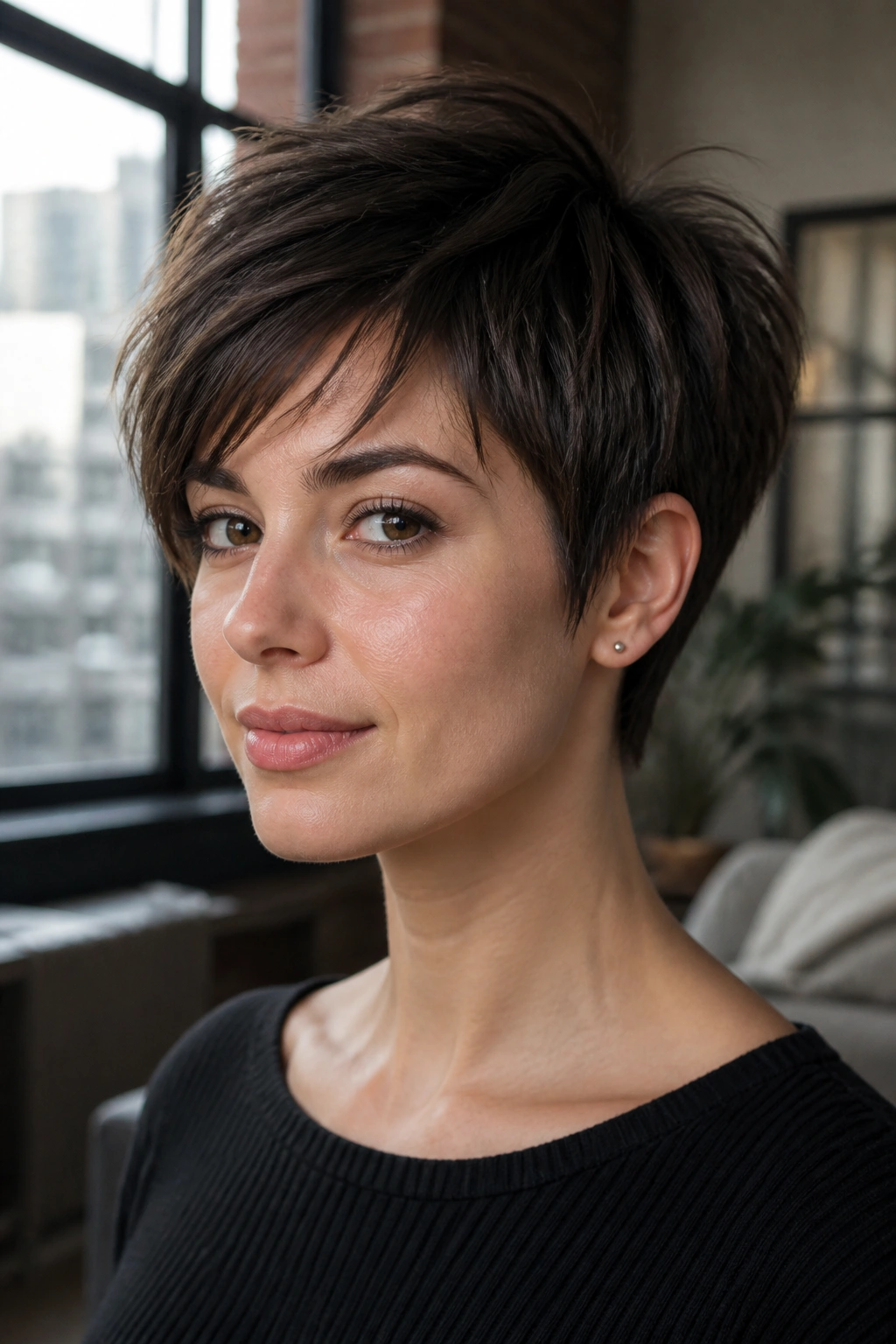
Straight thick hair can look sleek, but it can also go flat and broad in a hurry. This cut handles that by carving little bits of movement into the crown so the top doesn’t sit like a cap.
What makes it different
The pieces are long enough to move, short enough to stay visible. That matters. If the layers are too short, the hair sticks up. If they’re too long, the cut loses the lifted feel and falls back into one heavy sheet.
A piece-y crown works well if you like to style with your hands instead of a brush. Use a little matte clay, twist a few top sections, and let the front fall wherever it wants. The result should look touched, not fussed over.
This is also a solid option if your hair is straight but very dense at the roots. The layers stop the top from lying rigidly in place. You get shape without losing the clean feel of straight hair.
10. Rounded Long Pixie with Soft Perimeter
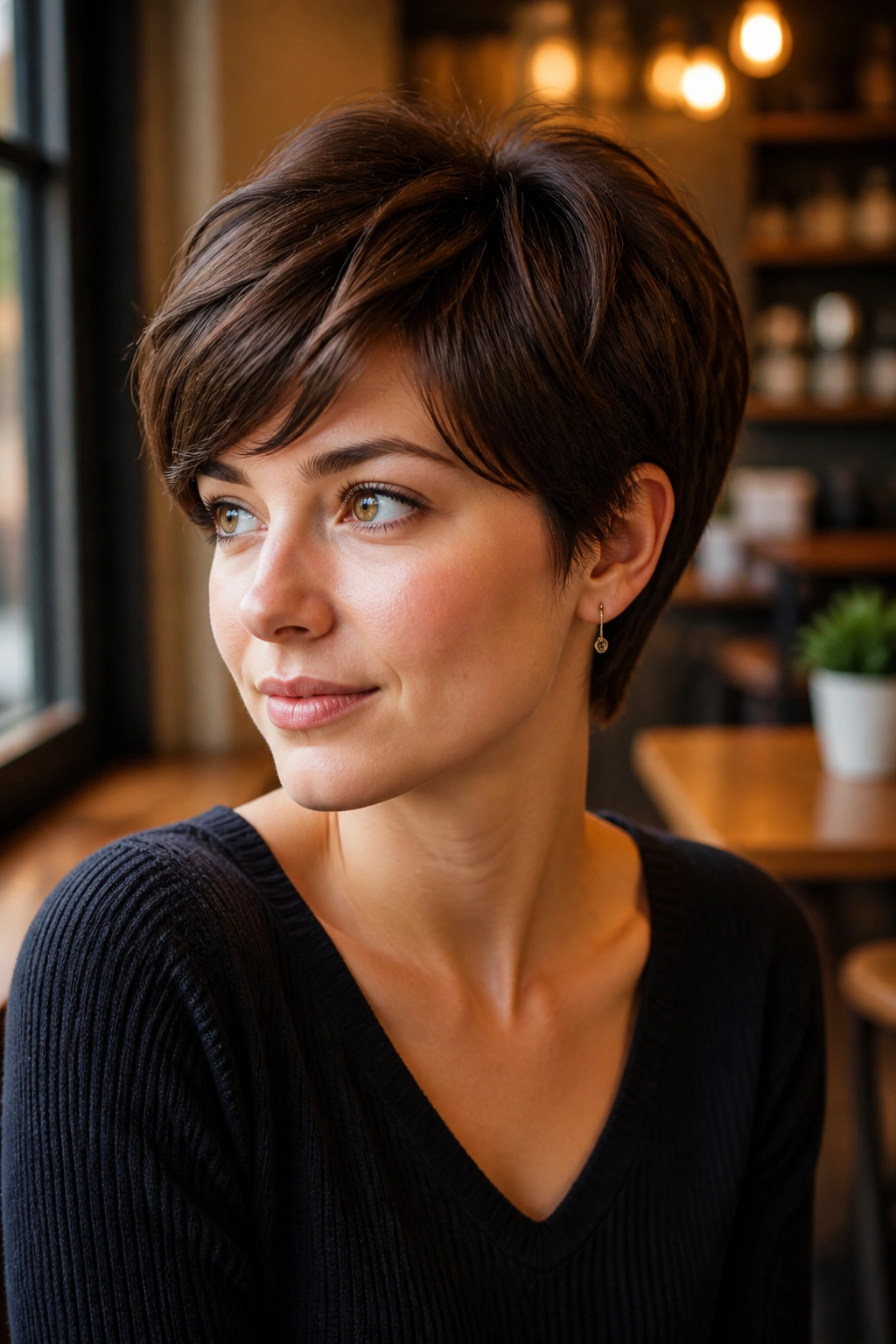
A rounded pixie can be lovely on thick hair when you want softness rather than edge. The outline follows the curve of the head, which keeps the cut from jutting out at the sides.
I think this shape gets ignored because people assume round means dated. Not here. On thick hair, a rounded perimeter can look elegant in a quiet, practical way. It avoids the harsh corners that bulk creates when the cut is too blunt.
The trick is in the silhouette. The top should still have a little lift, and the sides need enough internal weight removed so the shape stays close to the head. You want the curve, not the puff.
This is a good match for people with strong jawlines or anyone who likes a smoother profile. It plays nicely with side parts and soft ear tucks, too.
11. Textured Pixie with Razored Crown and Clean Neckline
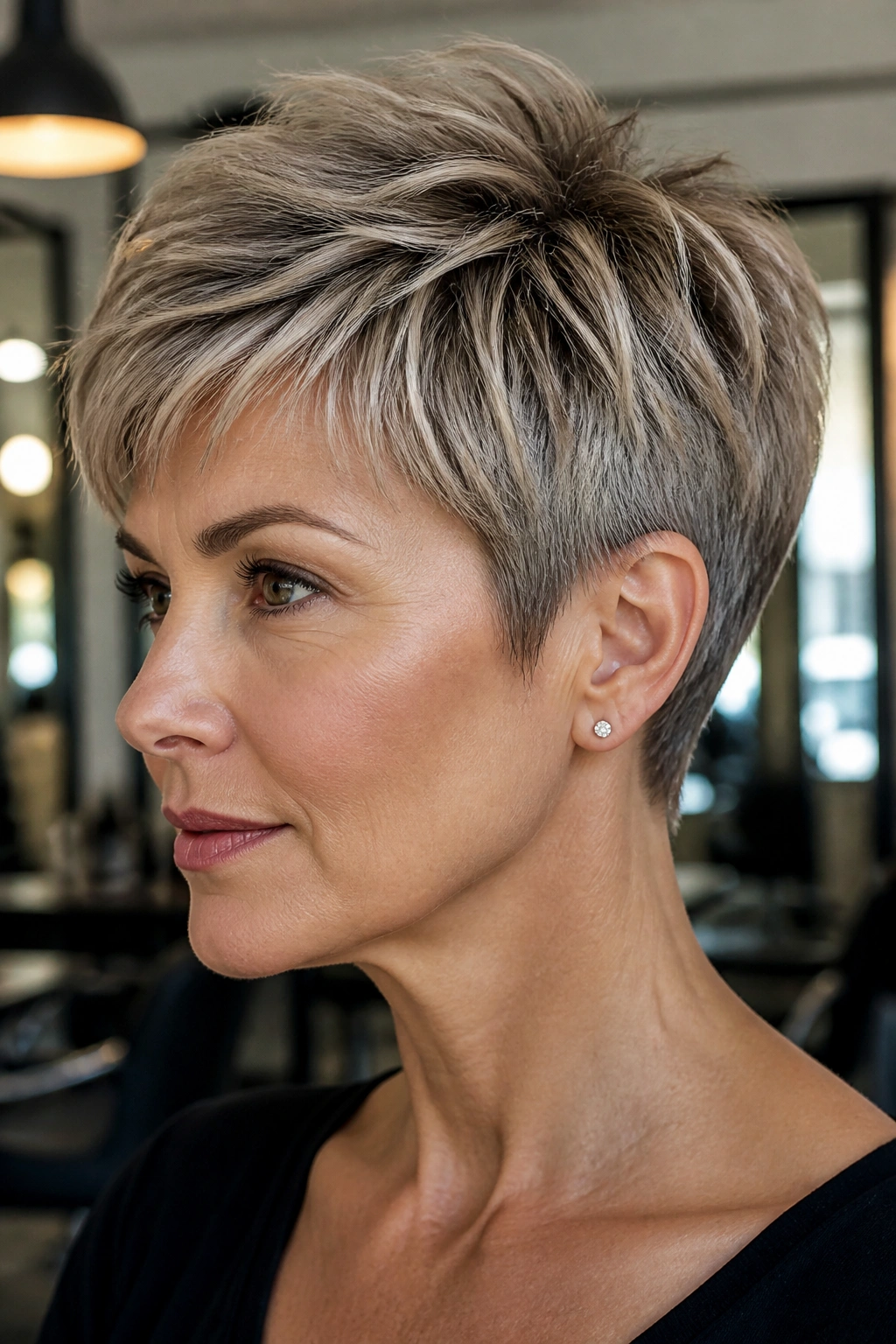
There’s a reason this one shows up in salons so often. Thick hair takes texture well, and a razored crown can break up a lot of mass fast.
The neckline matters here. Keep it clean, even a little sharp, so the cut doesn’t drift into fuzzy territory. Then let the top do the messy work. The contrast between the crisp back and the textured crown gives the style a modern feel without making it severe.
I’m picky about razors on coarse hair, though. Used badly, they can rough up the ends. Used carefully, they make the top lighter and easier to style. That’s a big difference. Ask your stylist how much of the bulk they plan to remove, and where. Blind thinning is a mess. Targeted texture is the move.
This cut is for someone who wants the “I ran my fingers through it and walked out” look, but wants the haircut itself to do most of the work.
12. Ear-Tucked Long Pixie with Long Front Pieces
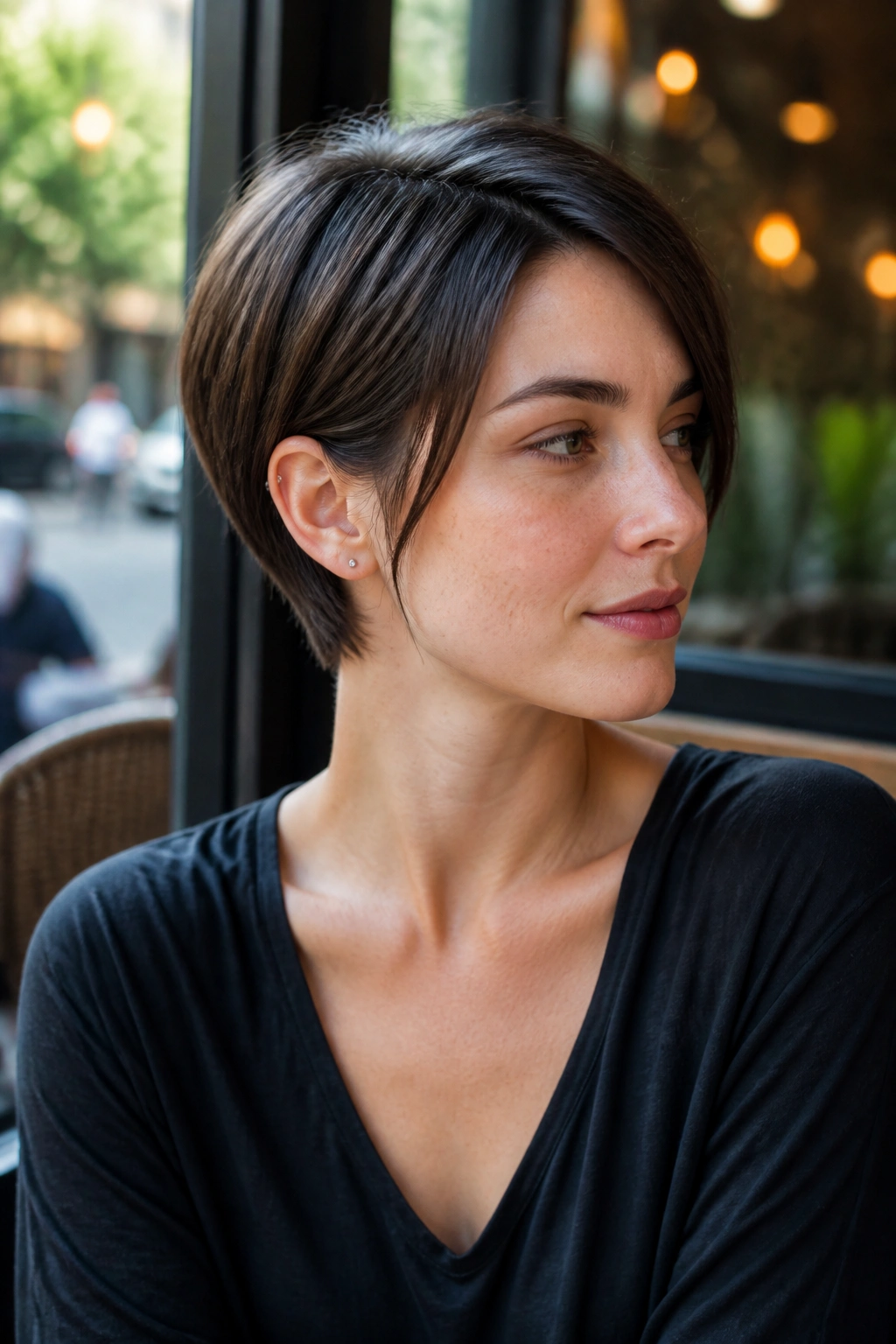
This one is low-drama in the best way. The front pieces stay long enough to tuck behind the ears, which gives thick hair a useful escape route.
When the sides are too full, thick hair can crowd the face. Long front pieces solve that by making the cut feel lighter around the cheeks and jaw. You can wear one side tucked and the other loose, which creates a relaxed asymmetry without a hard cut line.
The beauty of this style is that it changes with the day. Wear it polished for work, then pull a few pieces loose and it turns casual fast. It does not need a lot of product—just enough to keep the front from puffing up.
If your glasses always fight with your haircut, this is a smart option. It leaves space around the ears and keeps the shape neat where frames usually rub.
13. Long Pixie with Curtain Bangs
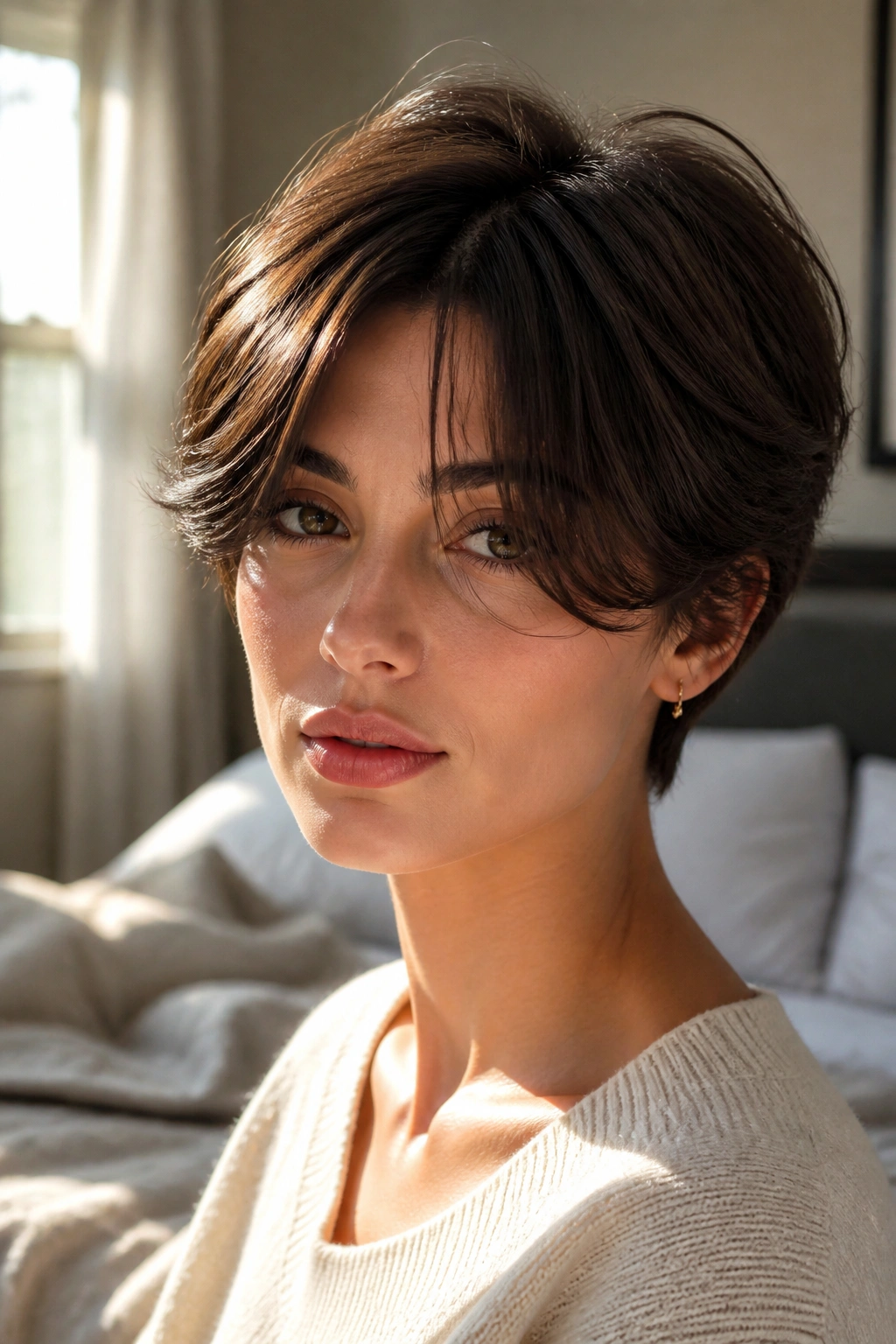
Curtain bangs on thick hair can be gorgeous when they’re cut with enough length to move and enough weight removed to part cleanly in the middle.
Why it works on thick hair
The middle split prevents the front from becoming one heavy block. Each side can bend away from the face, which softens the forehead and keeps the whole cut from feeling dense. The rest of the pixie can stay short and tidy while the front keeps a little drama.
Ask for a fringe that starts near the brows and sweeps down toward the cheekbones. That range gives you enough room to style it different ways. You can blow-dry it with a small round brush for polish, or let it dry naturally for a softer finish.
How to style it
- Blow-dry the fringe forward first, then split it.
- Use a medium round brush if your hair resists bending.
- Keep the product light at the roots.
- Finish with a touch of serum on the ends only.
The whole cut feels approachable, which is probably why people keep coming back to it.
14. Polished Long Pixie with a Deep Side Part
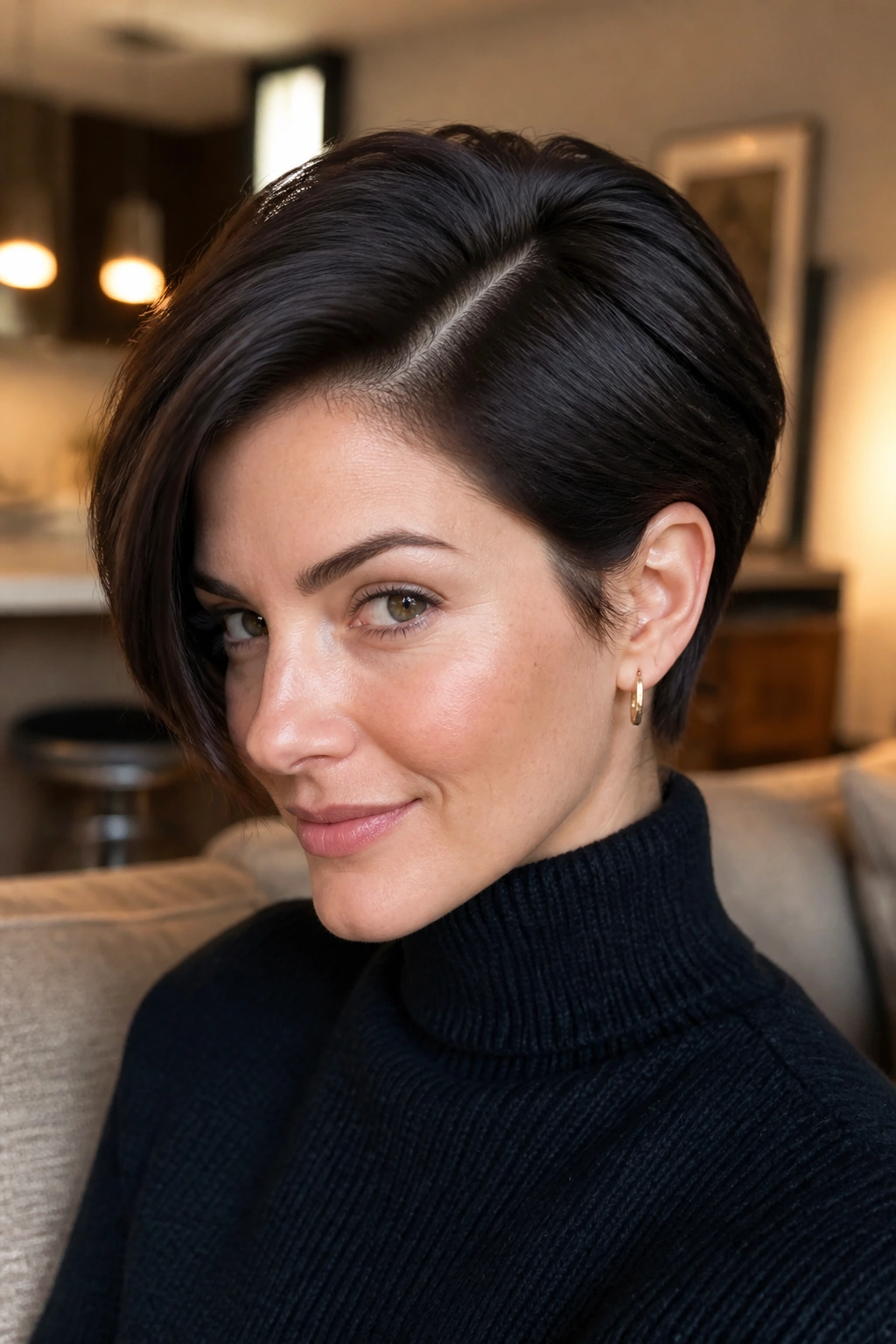
A deep side part gives thick hair direction. That alone fixes more bad pixies than people want to admit.
This version is cleaner and more refined than the messier cuts above. The hair is smoothed to one side, the crown is kept controlled, and the front has enough length to fall in a deliberate line. If you like hair that looks done without looking stiff, this is a strong choice.
I especially like it for thick hair that has a bit of natural shine. A polished side part lets the texture do the work, so you do not need a ton of styling product. A blow-dryer and a paddle brush can get you most of the way there. Finish with a light cream to stop the ends from fraying.
It’s the kind of cut that looks expensive even when the styling is simple. Not because it’s flashy. Because it’s disciplined.
15. Grown-Out Pixie with Shaggy Neck Length
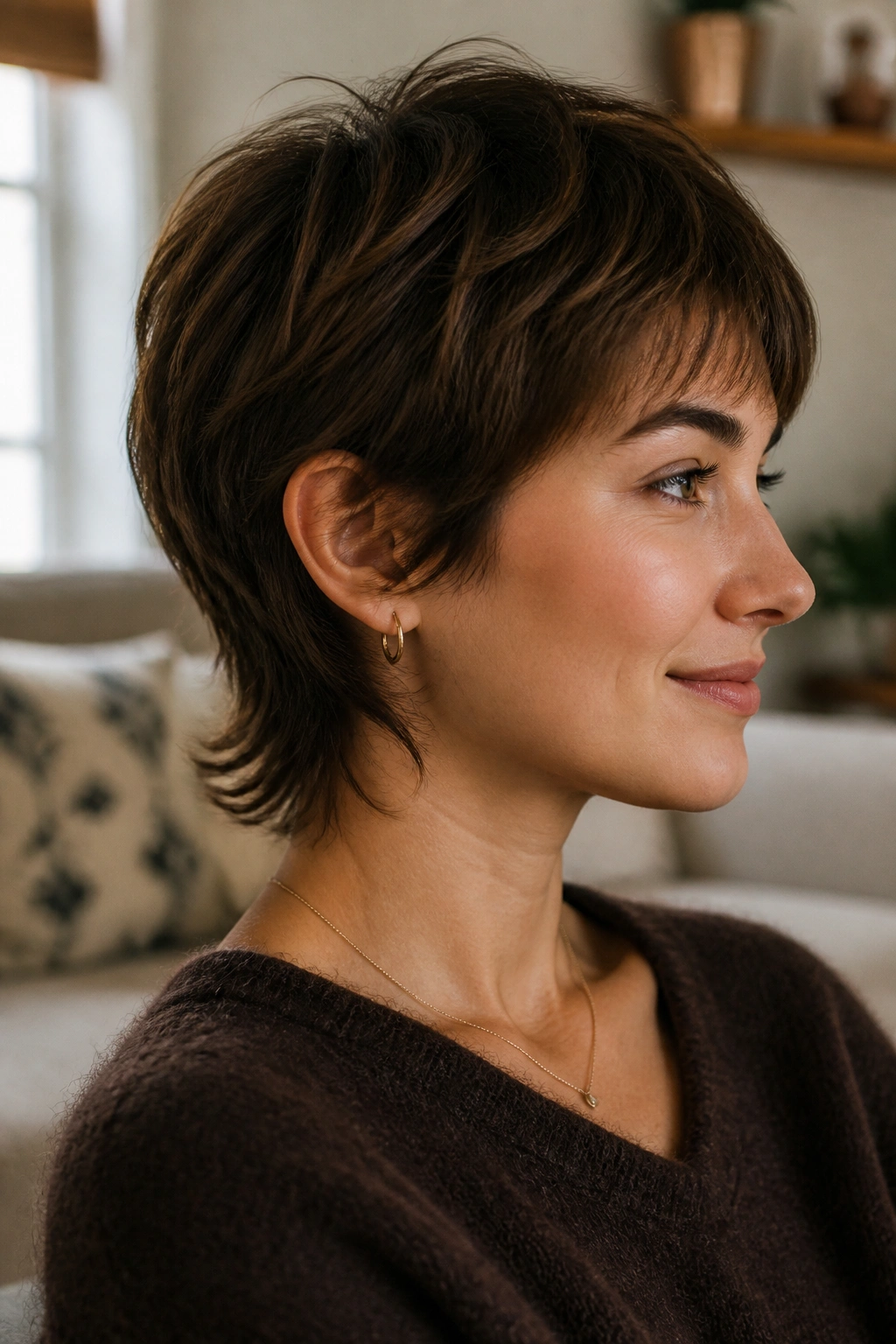
Why fight the grow-out phase when you can build a cut that already knows how to live there?
This version leaves a little more length at the nape and around the ears, so the whole style reads softer and less strict. Thick hair benefits from that extra room, because the hair can move instead of stacking on itself. The shaggy edges make the transition from short to long feel intentional.
What to watch for
- Keep the neckline soft but not sloppy.
- Leave enough length around the temples to frame the face.
- Avoid too much volume at the crown, or it starts to look top-heavy.
- Ask for minimal bluntness at the edge.
This is a smart cut if you don’t love frequent trims. It grows out gracefully, which is rarer than it should be. A lot of pixies look good for three weeks and then fall apart. This one hangs on longer.
16. Bixie-Leaning Long Pixie with Extra Length at the Temples
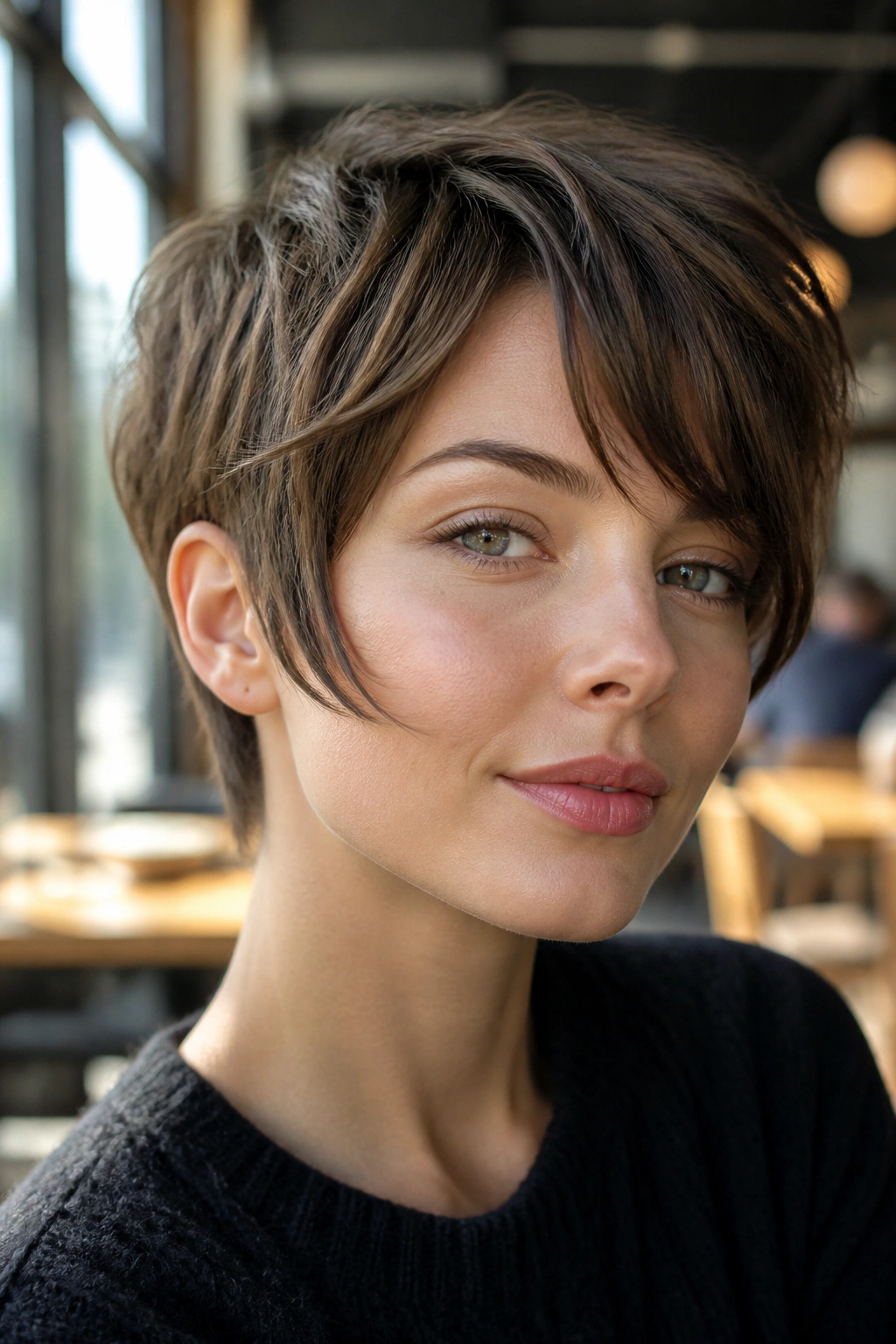
The bixie sits somewhere between a pixie and a bob, and thick hair gives it a nice little body that finer hair usually can’t fake.
The longer temple pieces soften the transition from short to long, which is a real help if you don’t want the haircut to feel abrupt. The back stays compact, the sides carry a little more length, and the top keeps movement. It’s a useful shape if you want to flirt with shorter hair without going full crop.
A bixie-leaning pixie is also forgiving when your hair has a strong wave pattern. The extra length around the temples lets the wave show instead of buckling under too much layering. That matters. A lot of pixies fight texture; this one works with it.
If you want something modern but not too severe, this is a good middle lane. It’s polished enough for work and relaxed enough for weekends.
17. Long Pixie with Micro Fringe and Soft Edges
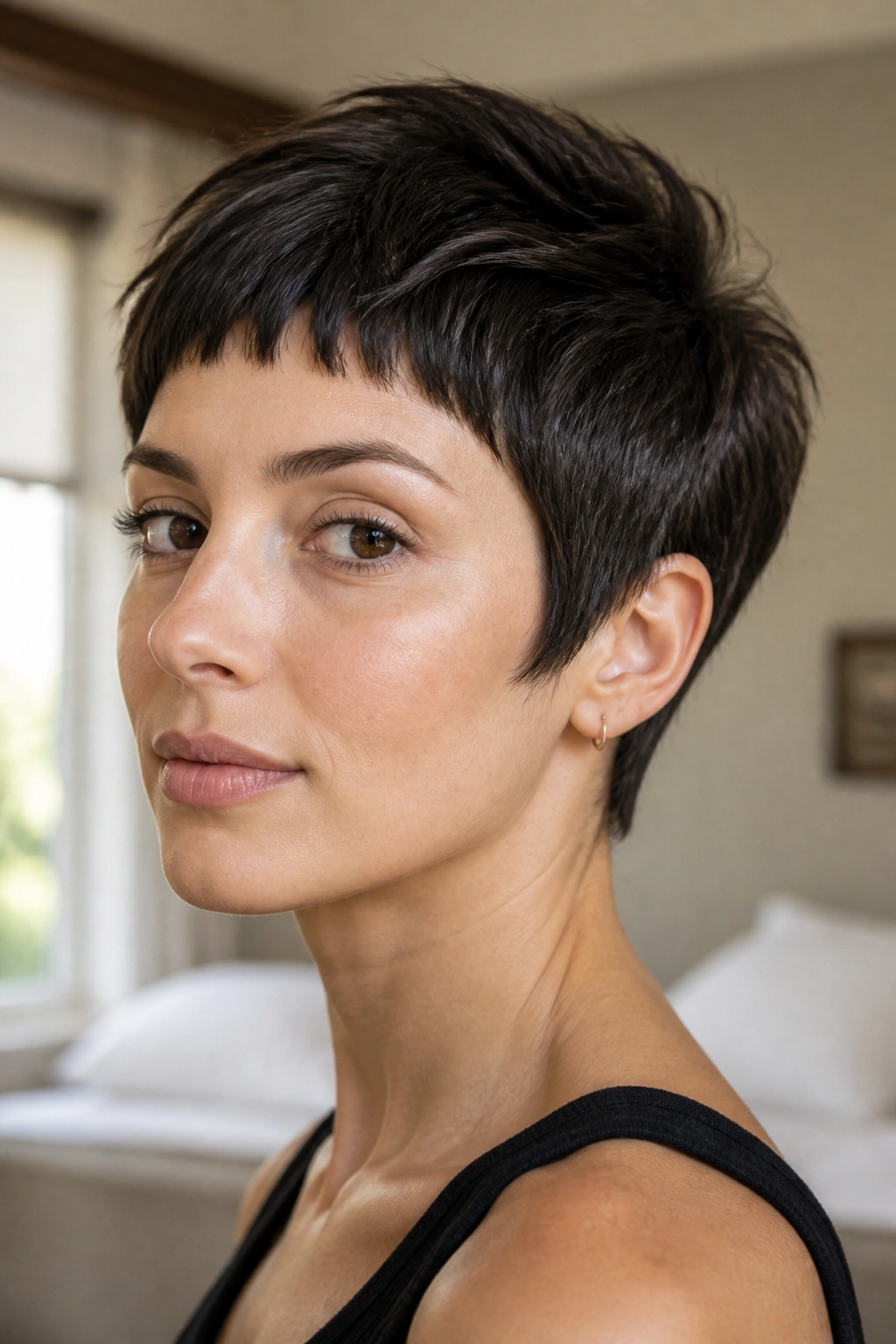
A micro fringe on thick hair is bold, but it can be surprisingly practical when the rest of the cut is soft and controlled.
The short fringe opens the face and keeps the front from swallowing your features. Thick hair often makes a tiny fringe look even sharper, which is part of the appeal. Around it, the sides should stay blended and the top should keep a little height so the cut doesn’t become severe.
The texture question
This style works best when the ends are soft, not blunt. You want contrast between the tiny fringe and the airy body of the cut. If both are hard-edged, the whole thing gets too rigid.
A light styling paste helps separate the top, while the fringe should stay clean and almost bare. If you touch it with too much product, it loses the point. That’s the trap.
I’d choose this cut for someone who likes a little edge and does not mind attention. It’s not loud in a messy way. It just has a point of view.
18. Long Pixie with a Peekaboo Undercut
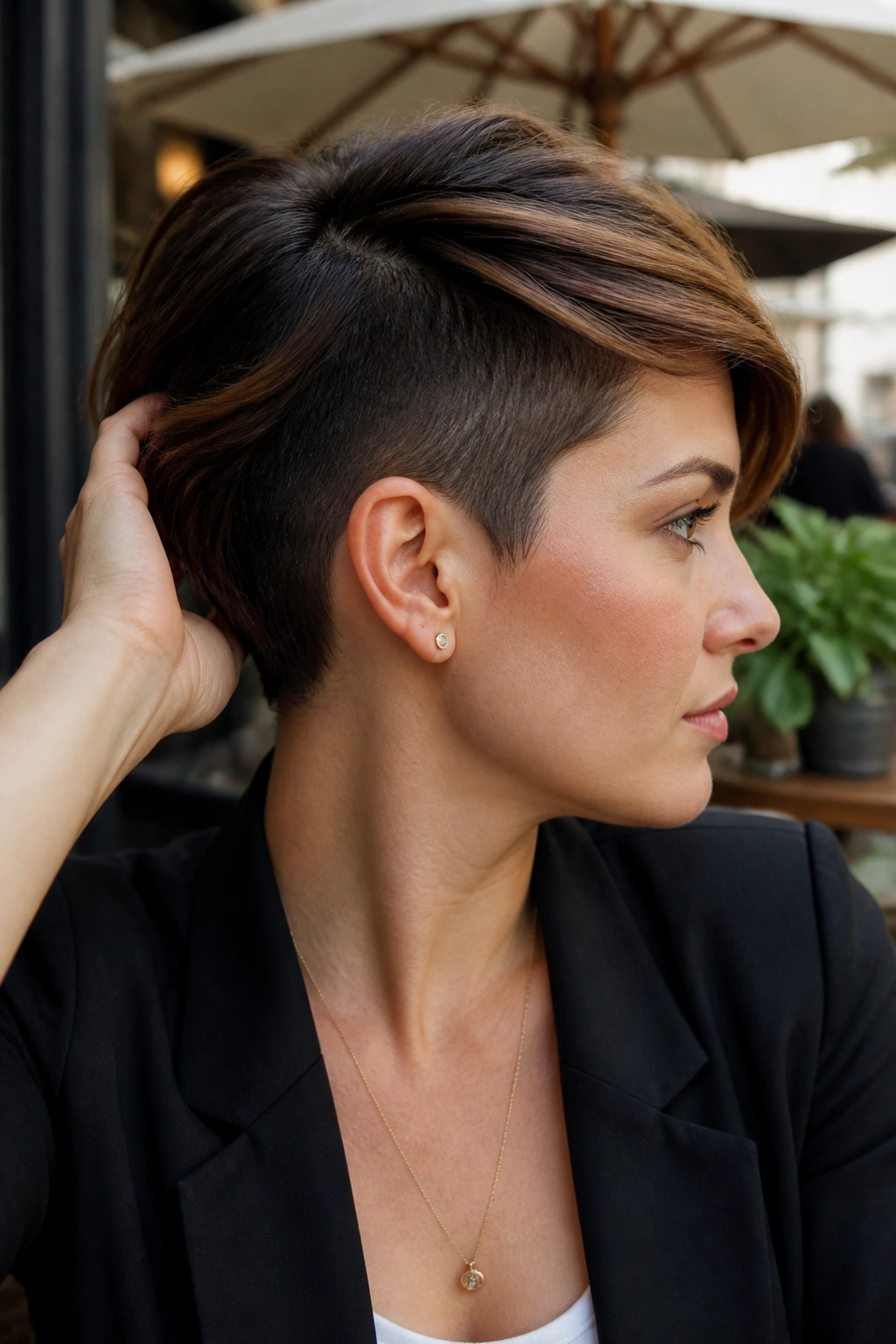
A peekaboo undercut is the quieter cousin of the full undercut. You only remove bulk where it matters, so the cut stays wearable and a little surprising.
Thick hair loves this idea because the hidden shorter section cuts down on weight without changing the outside shape too much. When the top falls over it, the haircut still looks like a long pixie. When you tuck the hair back or sweep it up, the shorter section shows through. Nice little reveal.
This is a good option if you want less bulk but don’t want your haircut to advertise the fact that it’s been thinned out. It also gives you a little flexibility on hot days, since the hidden shorter layer helps the scalp breathe.
If you’re nervous about going too short, this is a safe way to test the waters. The surprise stays underneath.
19. Voluminous Long Pixie with Lifted Roots
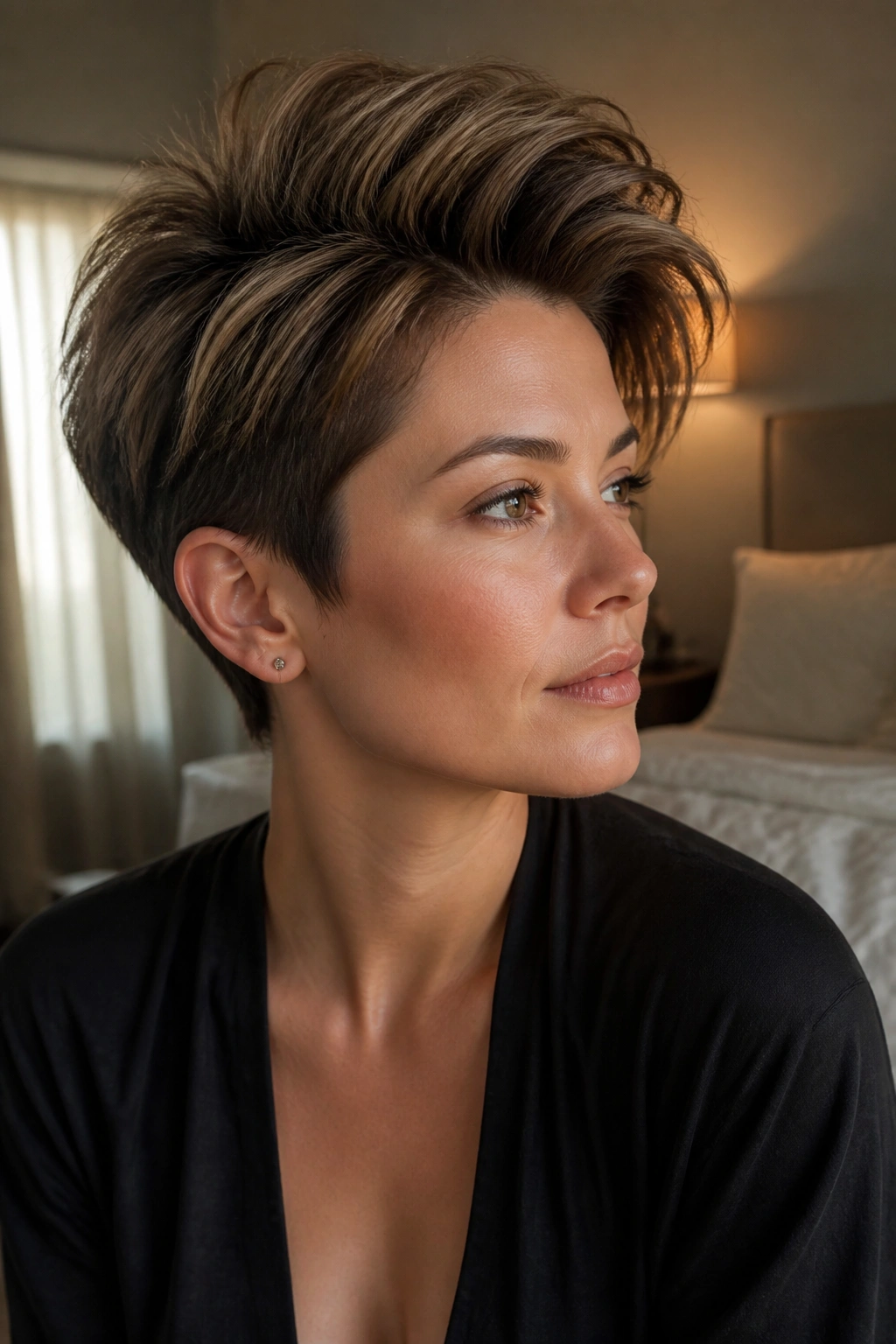
Some thick hair looks best when you stop trying to flatten it. This cut leans into height at the roots and keeps the sides controlled so the volume feels shaped, not wild.
How to get the lift
Start with a root spray or mousse at the crown. Blow-dry the top upward with a small round brush, then direct the sides down and back so the volume stays where you want it. That contrast is the whole point. If everything lifts, the cut balloons. If only the crown lifts, it feels intentional.
This style has a little glamour to it. Not prom-hair glamour. More like you actually enjoy how your hair behaves and decided to work with it. Thick hair can hold this shape better than finer hair because the strands support each other.
If your face likes a little vertical balance, this is a flattering route. It adds height without needing long lengths.
20. Low-Maintenance Long Pixie That Grows Out Well
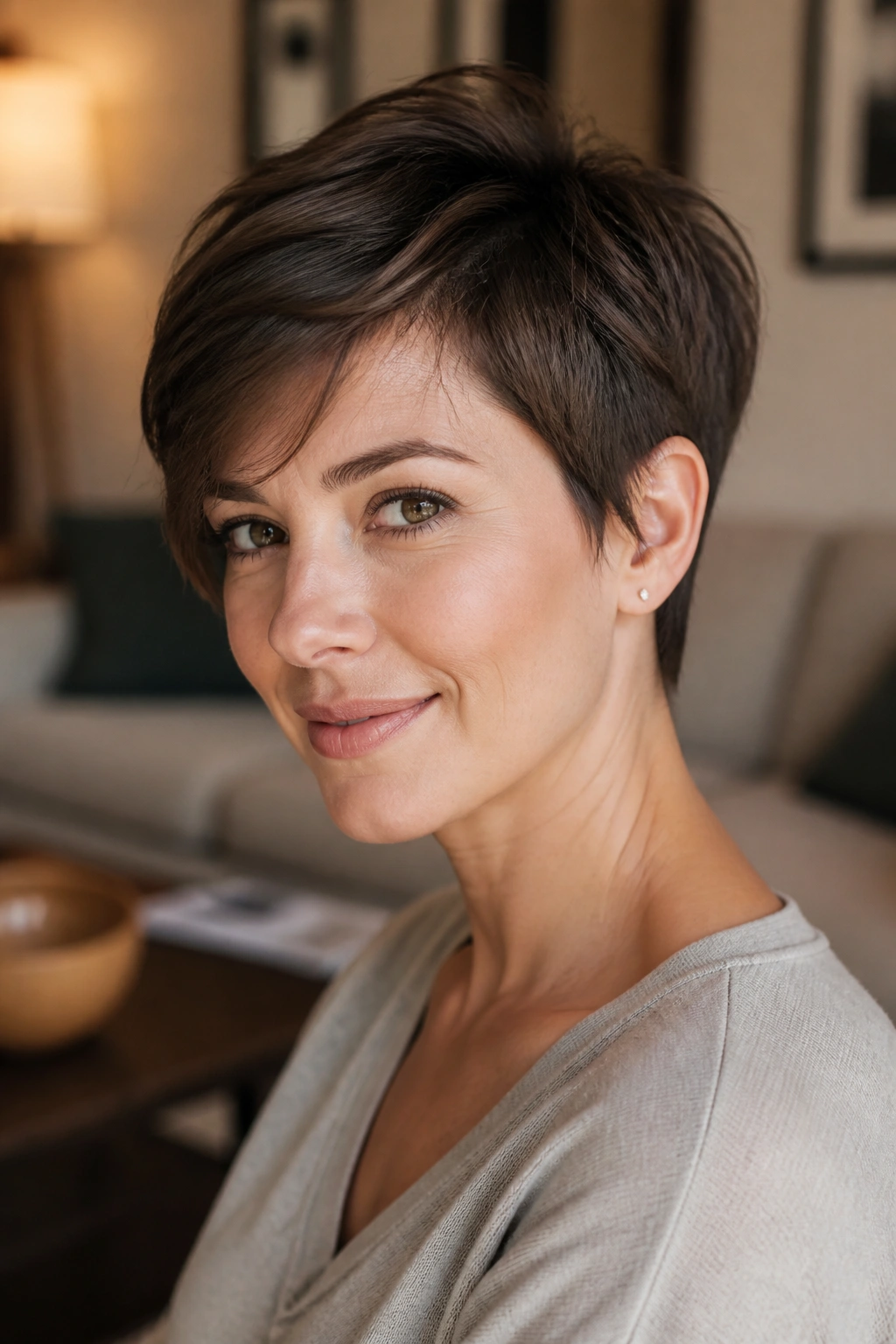
This is the cut for people who do not want to babysit their hair every morning. It keeps the top long enough to style, the sides soft enough to survive grow-out, and the back tidy enough to avoid that awkward puffing stage.
The best version uses gentle layering, not dramatic slicing. That way, when the haircut starts to get longer, it still falls into a shape instead of exploding into a triangle. Thick hair can be unforgiving when it grows, so this matters more than most people realize. A clean neckline and a little extra length around the ears help the style stay useful for longer.
Ask your stylist to leave enough shape that you can wear it straight, wavy, or tucked. That flexibility is the whole point. If one morning you don’t feel like styling, it should still look like a haircut and not like you lost a fight with the bathroom mirror.
If I had to choose one long pixie for thick hair that plays nicely with real life, this would be near the top. It’s not flashy. It’s sensible, which is rarer than glamour and usually more useful.
