



Short hair can go wrong fast. A pixie bob haircut gives you the clean neck line of a pixie and the shape memory of a bob, which is why the cut can look sharp instead of severe when it’s done with a little thought. The difference lives in the details: where the weight sits, how the fringe falls, and whether the back is cut to hug the head or puff out around it.
That matters more than people think. If your hair has a stubborn crown, a flat back, strong cowlicks around the ears, or enough density to make a blunt bob feel heavy, the right pixie bob haircuts can solve all of that without making you look like you borrowed somebody else’s hairstyle. A good short cut should work with your growth pattern, not fight it for six straight weeks.
Bold does not have to mean harsh. A pixie bob can be smooth, piecey, soft, glossy, or a little rebellious, and the best versions still leave enough length to tuck behind one ear or sweep across the forehead when you want to change the mood. The wrong version, though, can feel choppy in a bad way or too neat to have any life in it.
So the game is shape, not just length. And that is where these 20 cuts earn their place.
1. Classic Tapered Pixie Bob
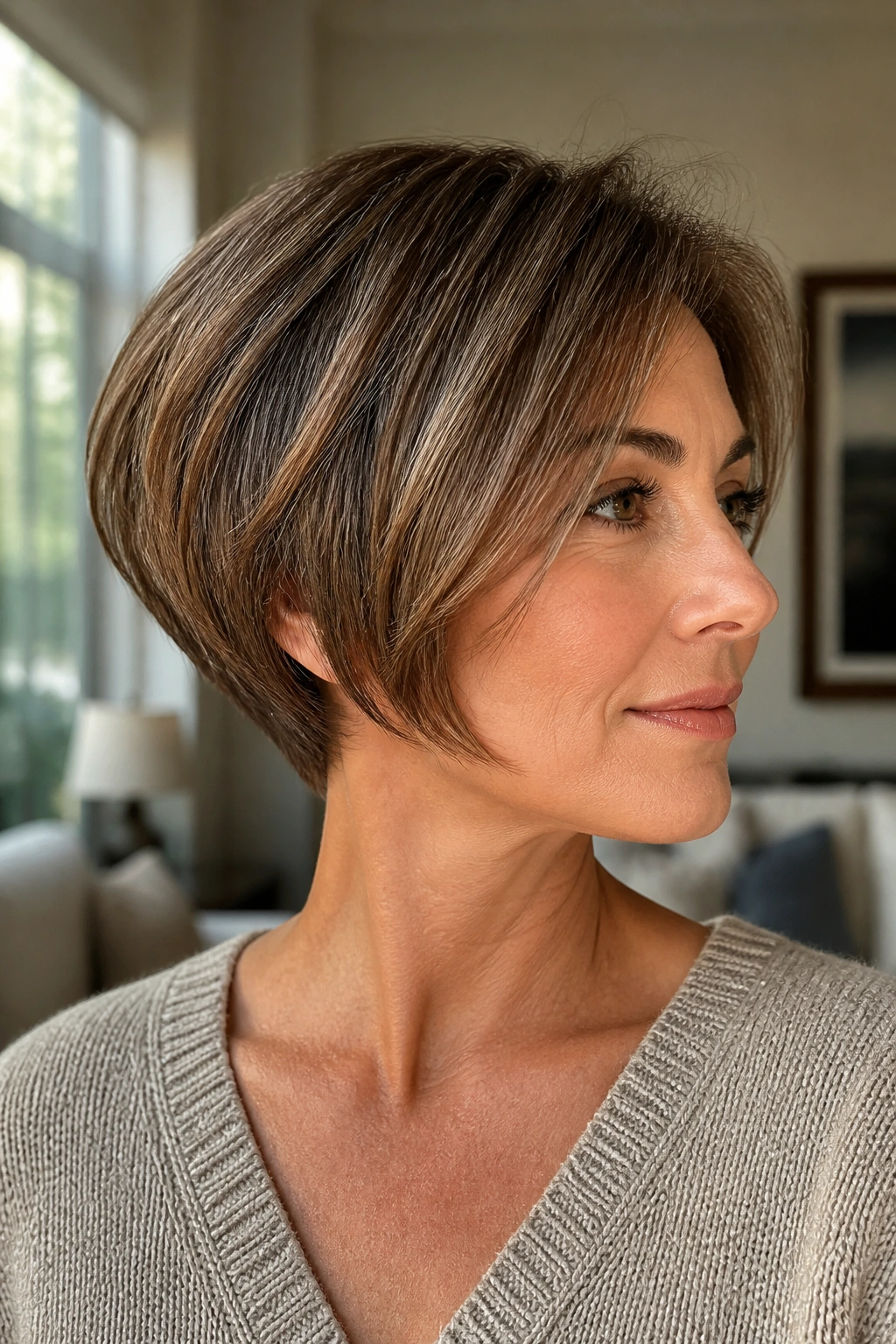
The classic tapered pixie bob is the one I’d point to first when someone wants short hair but does not want the cut to feel drastic. The nape is snug, the sides stay a little longer, and the front usually skims the cheek or jaw so the whole shape keeps a soft swing. It is tidy without being stiff. That matters.
This version works especially well if your hair has a natural bend or a little cowlick at the crown, because the taper lets the stylist build around the growth pattern instead of flattening it. Ask for a clean neckline, soft graduation through the back, and enough length near the temples to tuck the hair if you need to. A round brush and a pea-sized smoothing cream are usually enough.
Best for: straight to slightly wavy hair, anyone who wants easy daily styling, and people who like a polished outline without much drama.
Watch for: a back that’s cut too square. That is where the shape starts to feel boxy.
2. Choppy Pixie Bob with Razored Ends
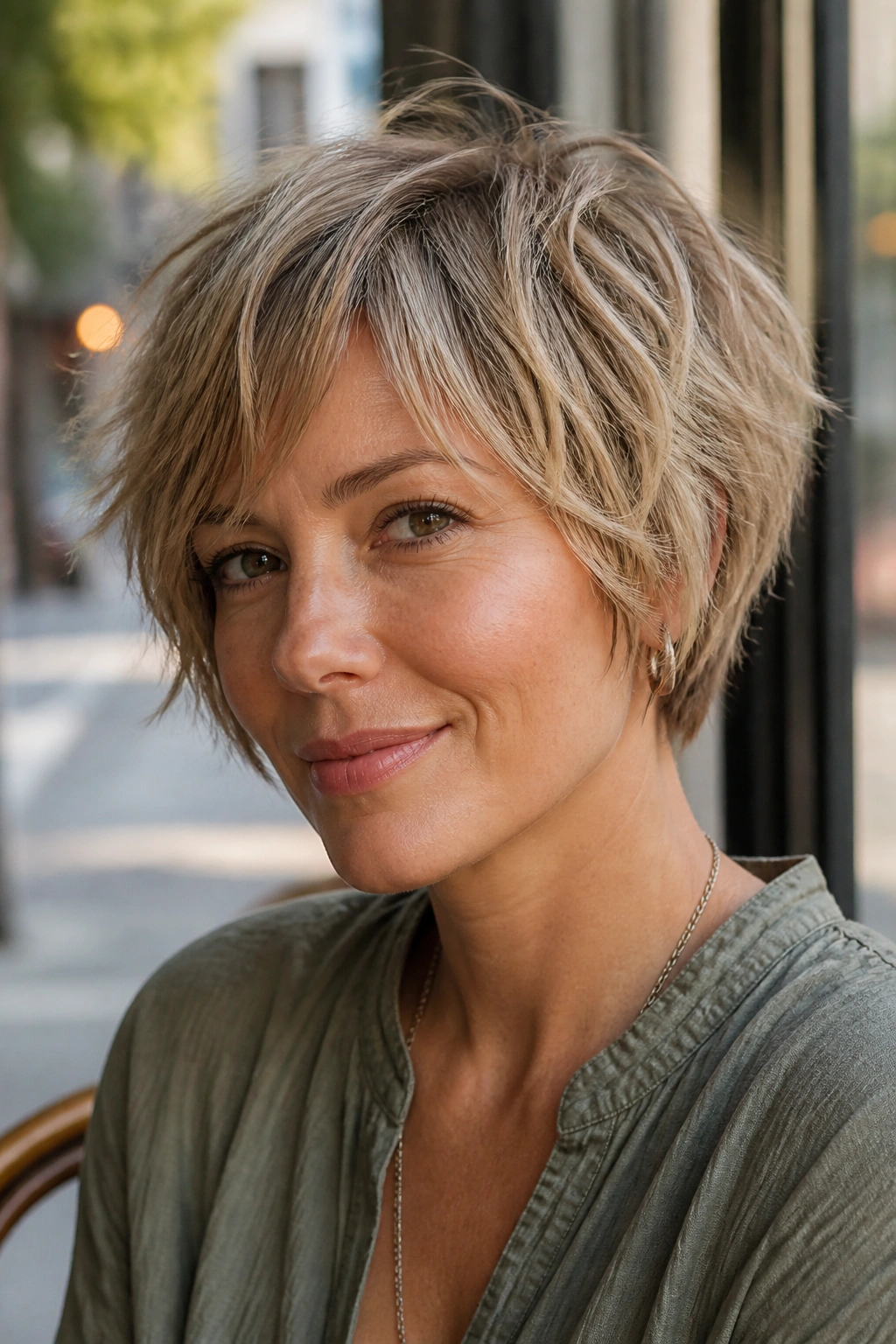
If the classic version is neat, the choppy pixie bob is its louder cousin. The ends are broken up with a razor or point-cutting, so the finish looks piecey instead of heavy. You get movement right away, even on hair that tends to sit flat.
Why the razored edge matters
Razored ends remove bulk from thick hair and keep fine hair from collapsing into one flat sheet. That is the whole trick. The cut opens up around the face and gives the fringe a little separation, which looks good with matte paste, dry texture spray, or even a touch of mousse if your hair needs grip.
- Ask for softly shattered ends, not frayed ones.
- Use a matte paste only at the tips and fringe.
- Skip heavy oils near the roots; they kill the texture fast.
- This shape tends to look best when the crown has a little lift.
Pro tip: if your hair is already fragile from coloring, go easy on the razor. Too much slicing can make the ends look wispy in a bad way.
3. Side-Swept Pixie Bob with Long Fringe
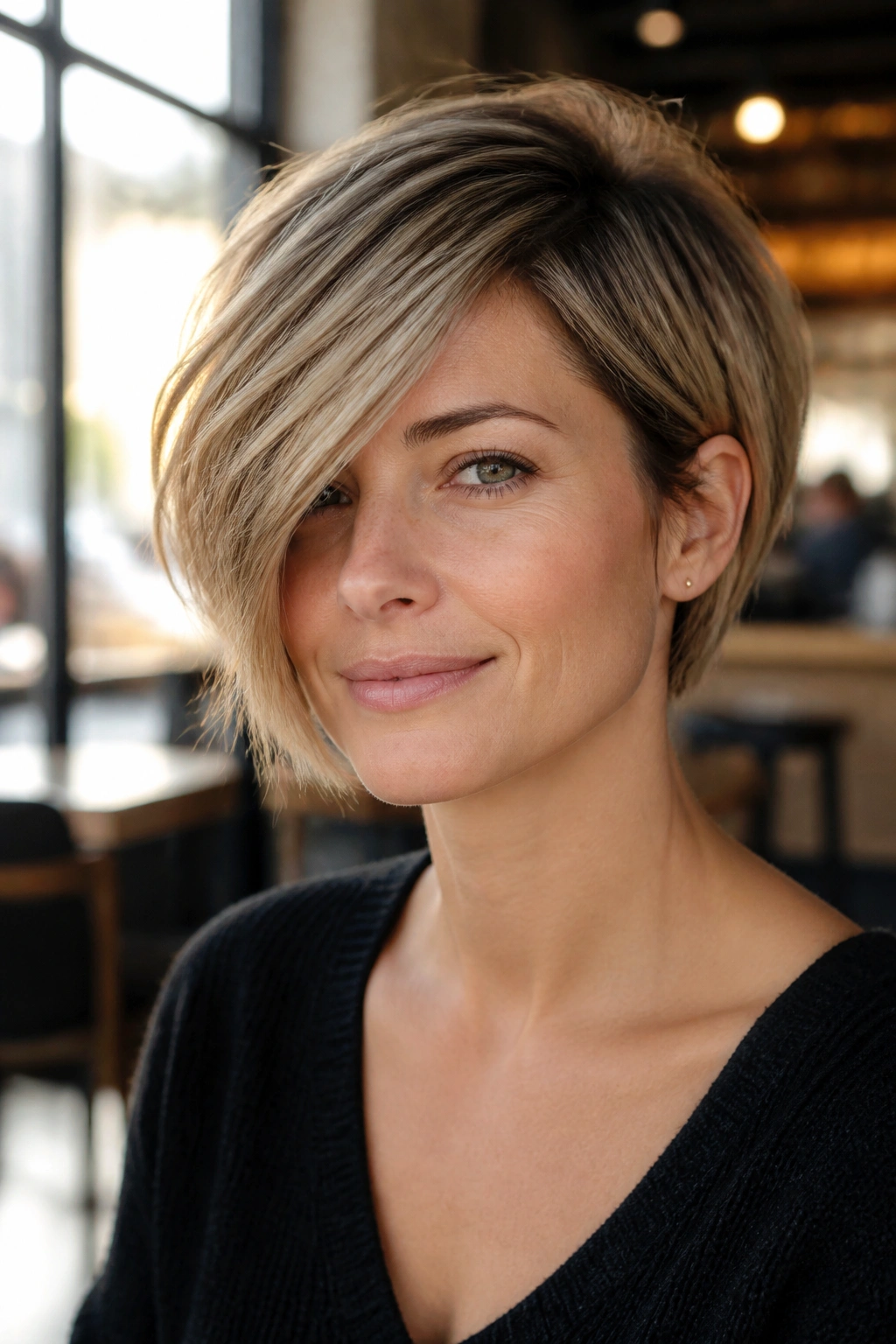
What if you want short hair and still want one side to fall across the forehead? That’s where the side-swept pixie bob comes in. The fringe stays longer, the part sits off-center, and the whole cut gets a softer line across the top of the face.
This is one of those styles that can change its personality depending on how you dry it. Blow it away from the face with a small brush and you get lift. Let it air-dry with a little cream and it settles into something looser, almost casual. Either way, the long fringe is doing a lot of work. It can soften a wide forehead, shorten a long face, or hide a cowlick that keeps pushing bangs in the wrong direction.
How to wear it
A flat iron on low heat can put a gentle bend through the front pieces. Don’t curl them under too hard. That makes the cut look dated, and nobody needs that.
One side of the face. That’s the point.
4. Stacked Pixie Bob with a Rounded Back
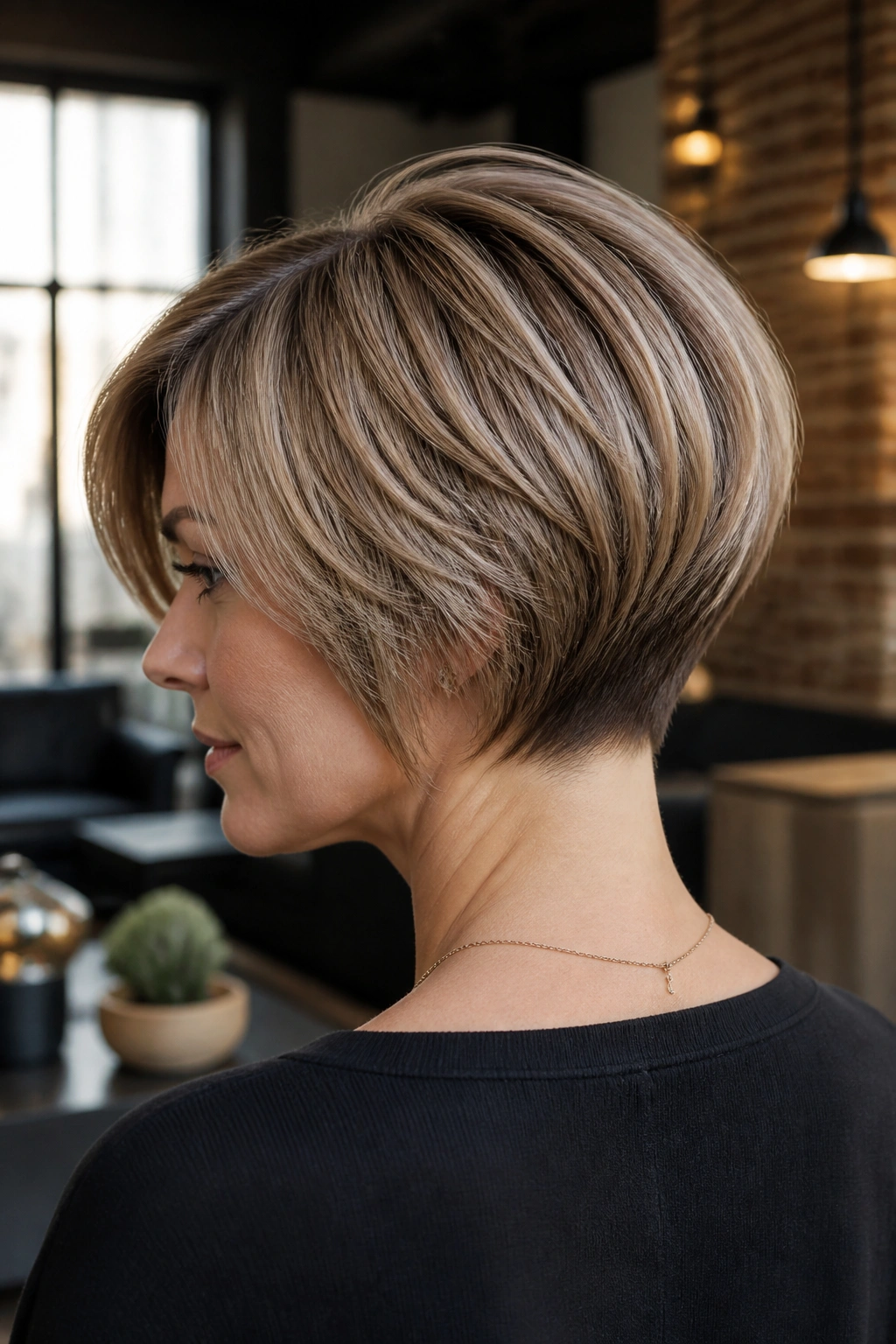
Fine hair loves a stacked back. Thick hair can wear it too, but the stylist has to be careful with the weight line. The stacked pixie bob builds layers at the back of the head so the silhouette rounds out instead of hanging flat, and the result is a shape that looks fuller without needing a lot of product.
The key is balance. If the stack is too steep, the cut can look like a tiny helmet. If it’s too soft, the whole effect disappears. A good stacked pixie bob has a lifted crown, a curved back, and sides that taper neatly toward the jaw. It’s one of the best cuts for making the head look a little more sculpted.
- Ask for graduation through the back, not choppy layers everywhere.
- Keep the sides slightly longer if you want the shape to feel less severe.
- A round brush at the crown helps the stack show.
- Trim every 4 to 6 weeks if you want the line to stay crisp.
A clean neckline helps this one a lot.
5. Asymmetrical Pixie Bob with One Longer Side
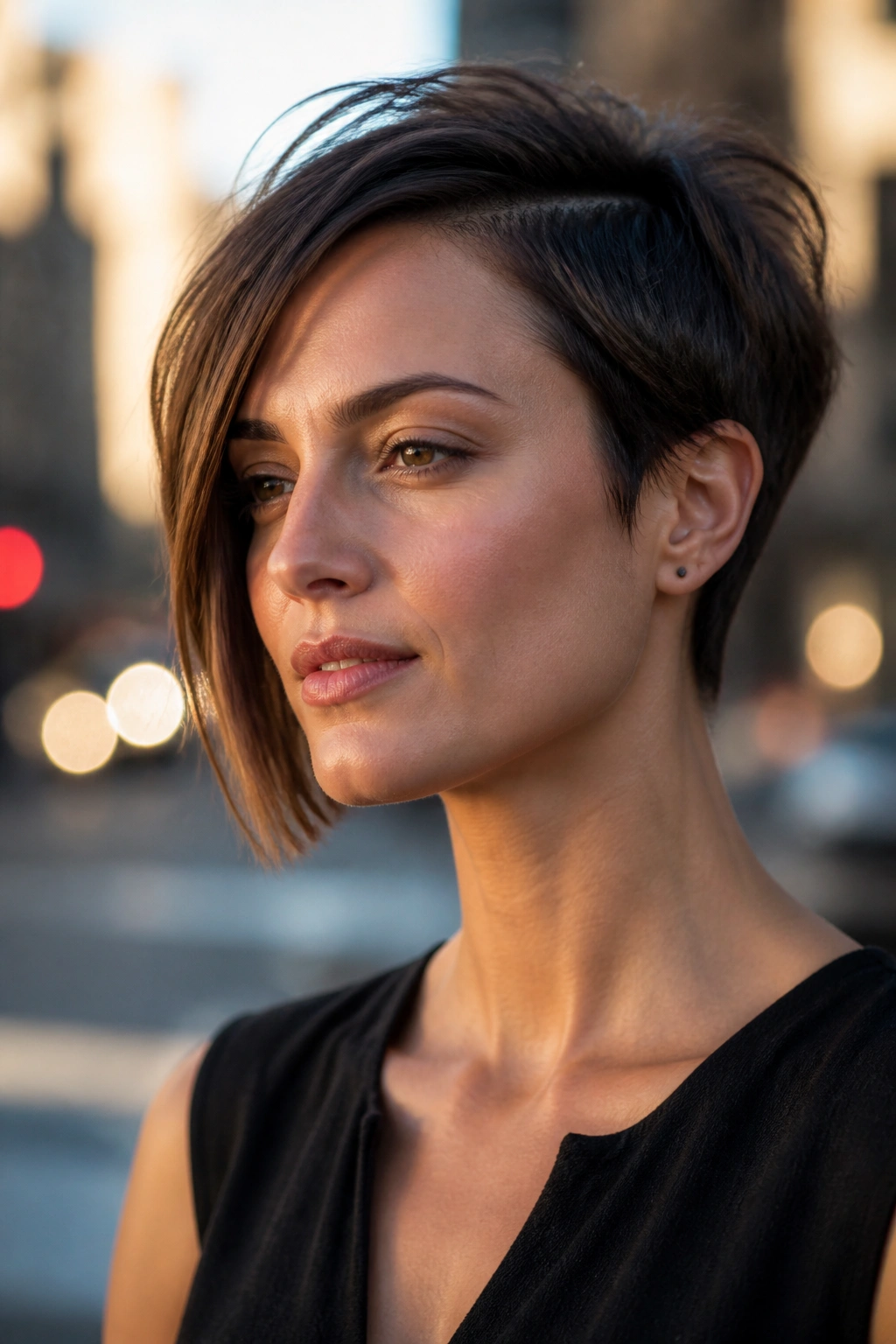
One side at the jaw. The other closer to the ear. That uneven line gives the asymmetrical pixie bob its edge, and it can look especially good when the longer side skims a cheekbone or lands just below the jaw. The shape pulls the eye sideways, which makes it feel deliberate instead of cute.
This cut works well if you like a side part and want the haircut to do some of the talking for you. It also suits strong cheekbones and angular faces, because the longer side softens the hard points a little. If your hair grows in different directions on each side, the asymmetry can hide that instead of fighting it.
A lot of people worry this style will look too dramatic in daily life. It usually does not. With a blow-dry cream and a side tuck, it can read sharp and easy at the same time.
Small warning: keep the difference between the two sides clear. If the lengths are almost the same, the cut loses the whole point.
6. Curly Pixie Bob with Airy Bounce
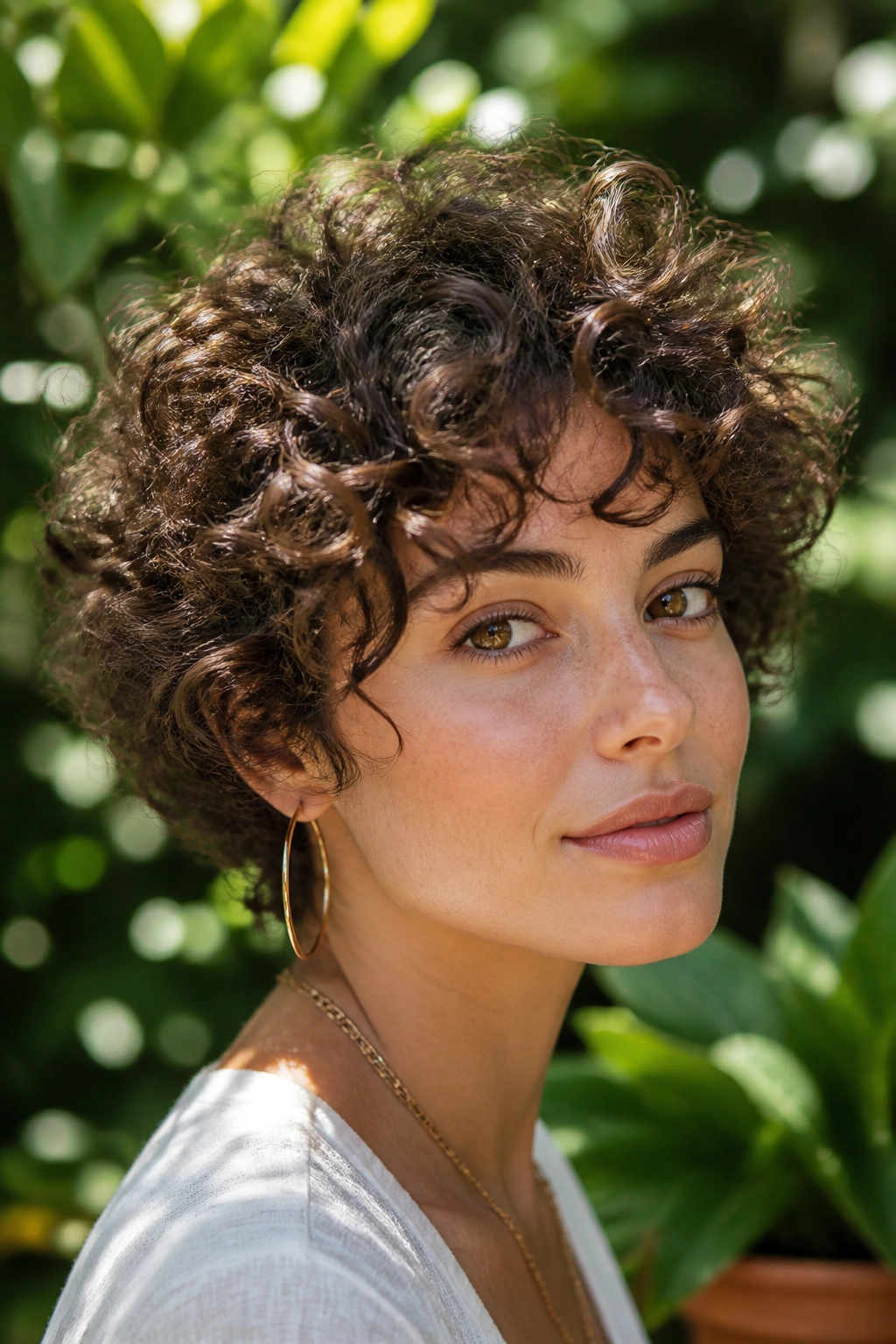
Can curls live happily in a pixie bob? Absolutely, if the shape leaves room for bounce instead of squeezing the curl pattern into a triangle. The best curly pixie bob keeps enough length on top and through the crown so the curls can spring up, while the sides stay tidy and close enough to show the face.
Curl pattern notes
Tighter curls often need a little more length than people expect. If the cut goes too short at the temple, the curl can pop out sideways and widen the shape. Looser curls can wear a shorter bob line, especially if the ends are layered just enough to keep the bulk from stacking up at the bottom.
- Use a curl cream on soaking-wet hair.
- Scrunch with a microfiber towel or cotton T-shirt.
- Diffuse on low heat if you want more lift at the crown.
- Never brush dry curls unless you want a fuzz cloud.
The cut should move when you do. That’s the goal.
7. Feathered Pixie Bob with Soft Layers
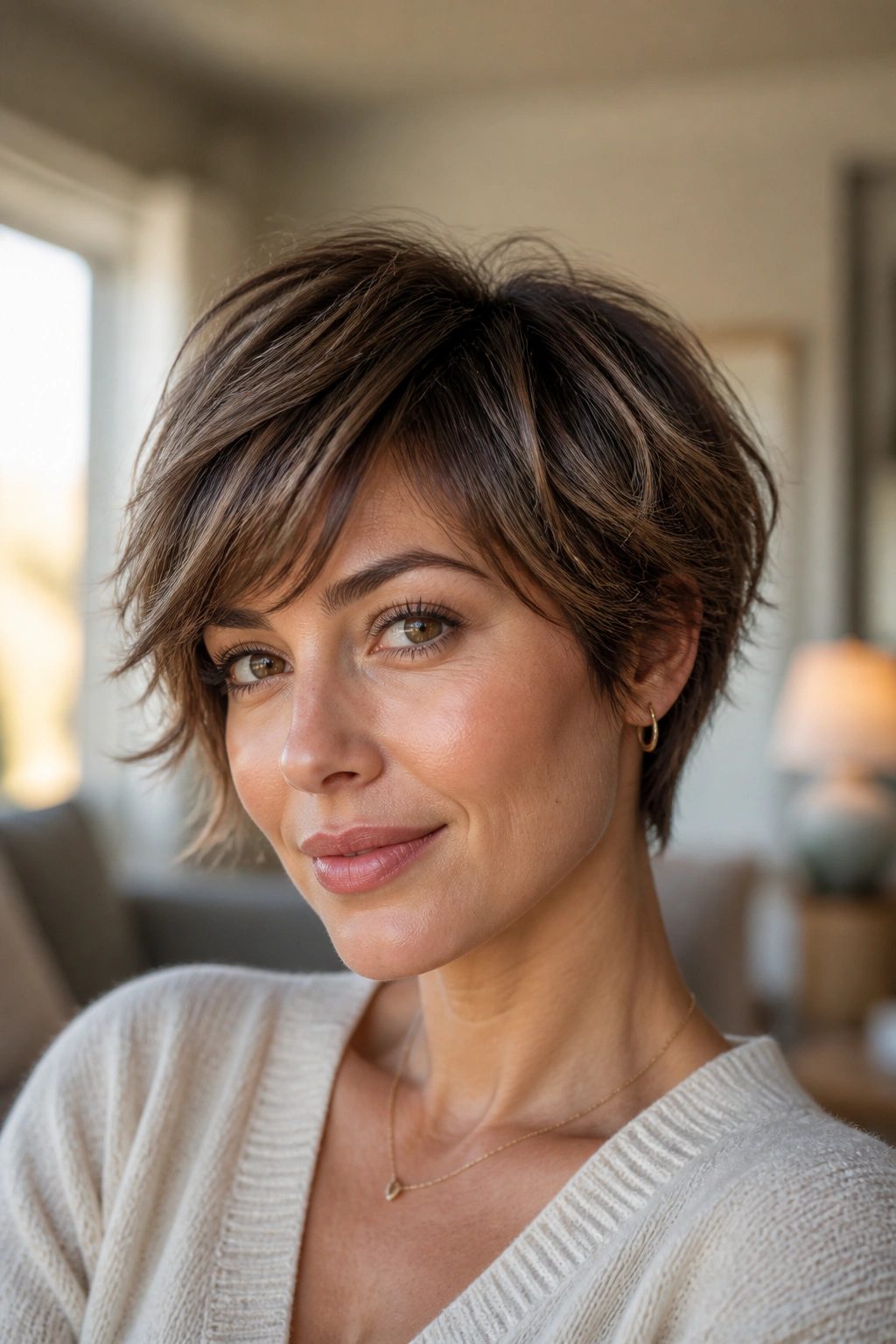
Feathered layers give a pixie bob a light, airy finish that feels softer than a blunt edge and less edgy than a choppy one. The ends flick instead of hanging in one heavy line, and the whole cut gets a little motion around the cheekbones and ears. It’s a good choice if you wear glasses or want the haircut to sit nicely with earrings and necklines.
This is one of those styles that can look expensive without being precious. The layers should be cut so they slide into each other, not stand apart like little steps. That means the stylist needs to watch the crown, the side panels, and the ends together. If the layering is too eager, the hair can disappear on top.
A light blow-dry cream and a medium round brush are enough for most people. You do not need a lot of product here. In fact, too much product makes the feathering collapse.
Soft, but not sleepy. That’s the sweet spot.
8. Undercut Pixie Bob with a Clean Nape
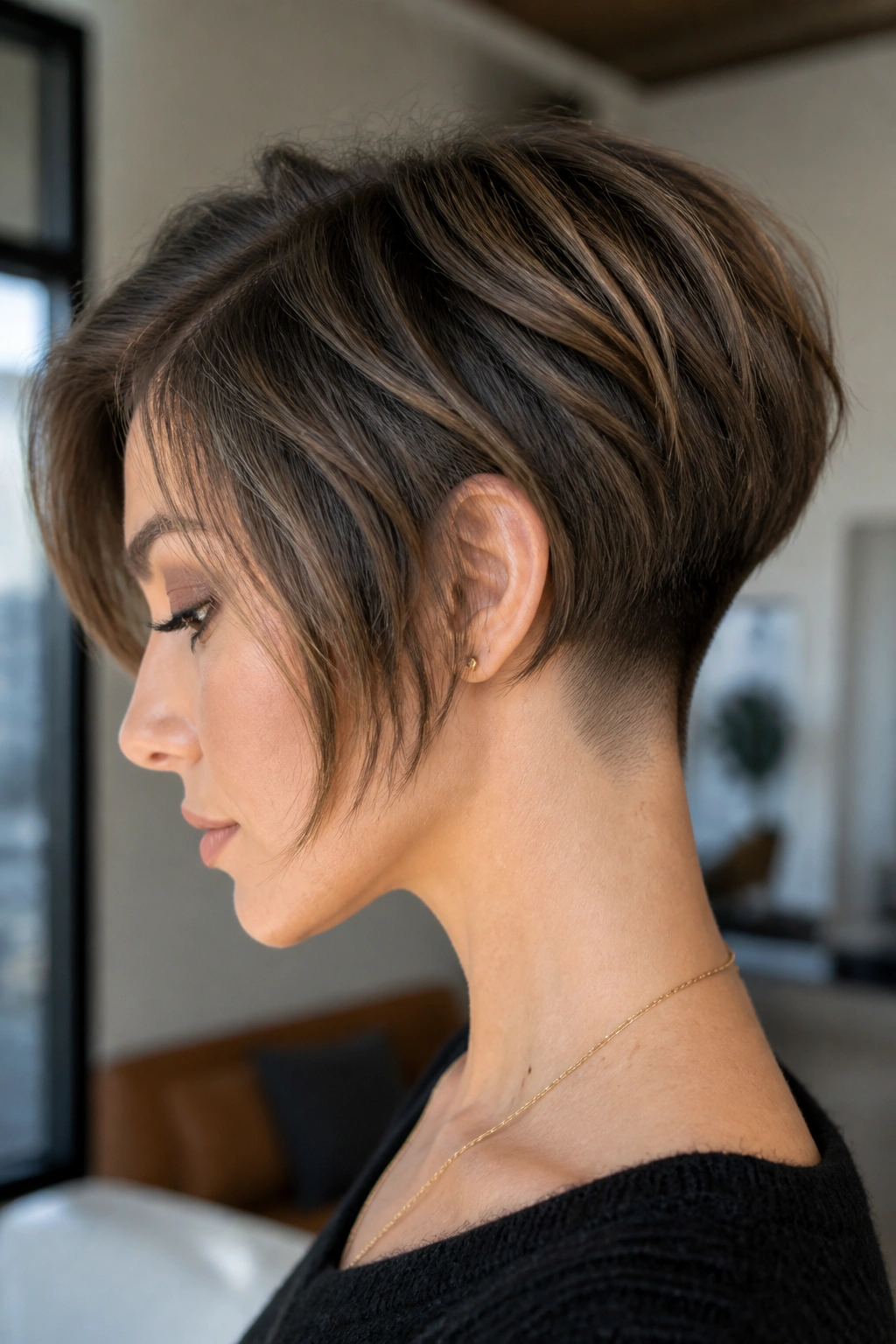
The undercut pixie bob solves one of the most annoying short-hair problems: hair that fuzzes up on the neck and sides after one humid afternoon or one sweaty bus ride. By shaving or clipping out the lower back section, the cut keeps the top layers lighter and makes the outline feel sharp from behind.
That clean nape can be hidden or visible. Hidden undercuts work well if you want a more office-friendly shape that still feels easy when you pull the hair up. Visible undercuts give the haircut a sharper edge and make the contrast between the top and the back much more obvious. Both work. Pick the one that matches how bold you want the cut to read.
- Best if you don’t mind maintenance every 3 to 5 weeks.
- Helpful for thick hair that balloons at the neckline.
- Easier to style in hot weather, since less hair sits against the skin.
- Can grow out awkwardly if the top is left too long and the undercut is ignored.
This one is a commitment. Worth it, though.
9. Blunt Pixie Bob with a Heavy Edge
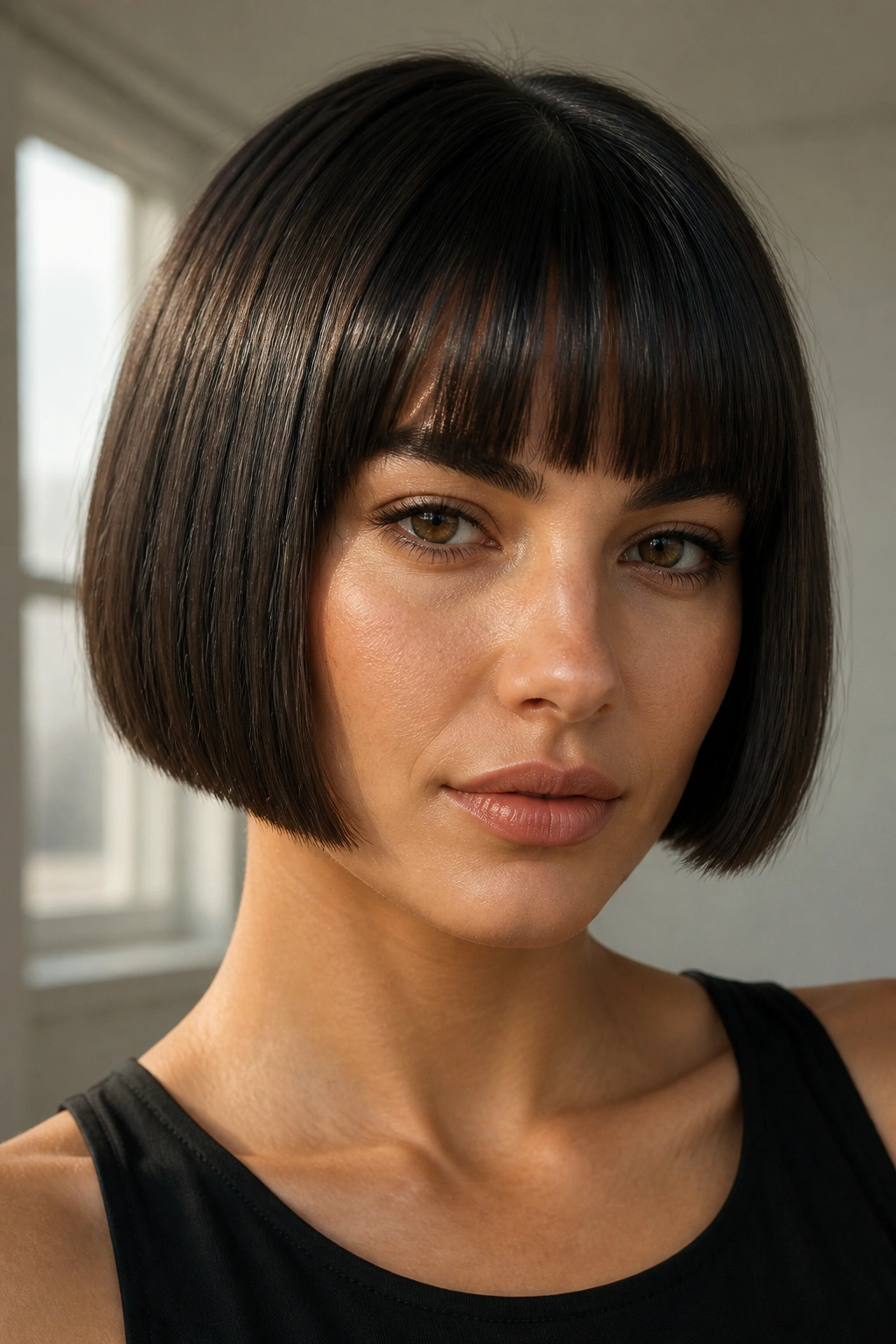
A blunt pixie bob is not shy. The ends land in a firm line, usually around the jaw or just below it, and the shape reads crisp from across the room. There is no broken texture hiding in the edges, which is exactly why the cut can look so strong.
Straight hair loves this version because the line shows cleanly. Slight waves can wear it too, but the hair has to be styled with enough control to keep the edge from puffing out. A smoothing serum, a flat brush, and a little heat at the ends usually do the trick. The goal is a solid outline, not a puffy one.
This cut can make round faces look wider if the shortest point hits right at the fullest part of the cheeks. That is easy to avoid. Let the length drop a touch lower, and the whole thing feels more deliberate.
Sharp yes. Boxy no.
10. Shaggy Pixie Bob with Broken Texture
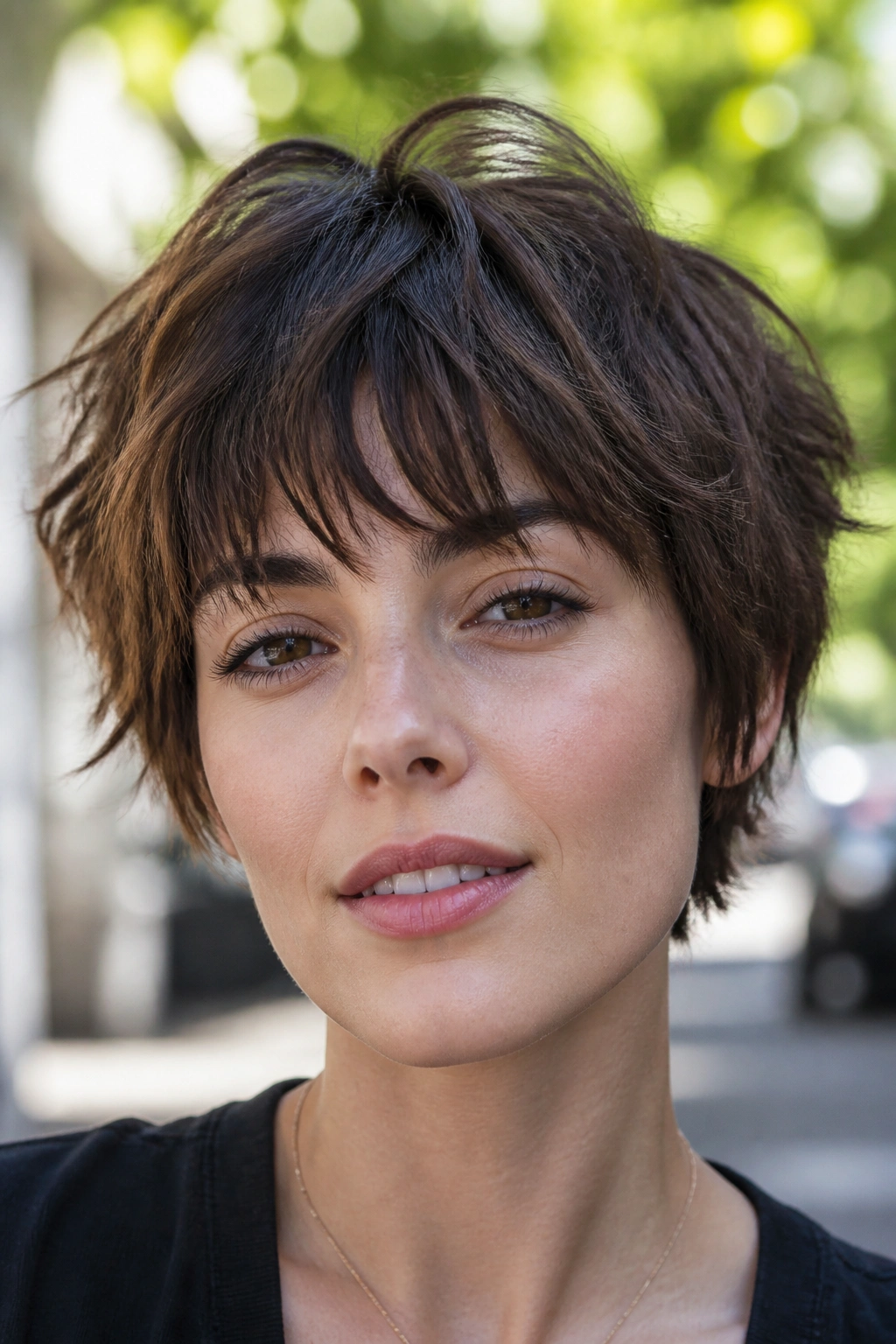
This is the cut for someone who wants hair that looks touched, not lacquered. The shaggy pixie bob uses broken layers, uneven ends, and a looser fringe to create that half-wild, half-styled effect that can be so good when it’s done with restraint. Too much layering and it turns messy. Just enough and it looks effortless in the best way.
What keeps it from reading messy
The perimeter still needs a shape. That is the part a lot of people miss. If the bottom edge is too random, the haircut loses structure and starts to look like it needs a trim. The top can be choppy, the fringe can be ragged, but the outline should still say something on purpose.
- Use dry shampoo at the roots for grip.
- Work a small amount of matte paste through the ends.
- Let the fringe fall in broken pieces instead of combing it flat.
- Keep the back a little tighter so the shag doesn’t swell outward.
This style has attitude. Not drama. Different thing.
11. Wet-Look Pixie Bob with Glossy Finish
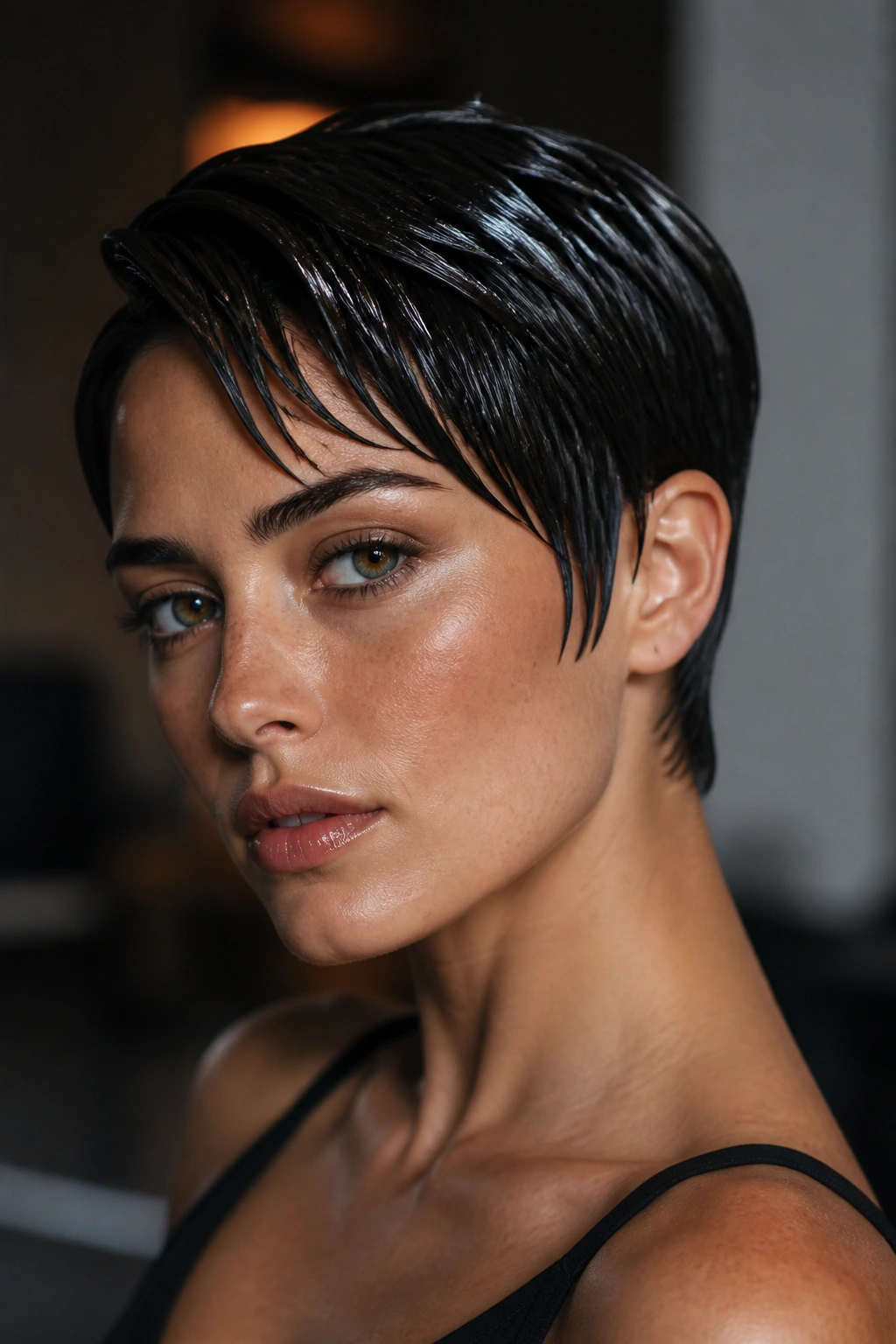
A wet-look pixie bob turns a short cut into something sleeker and harder-edged in seconds. The shape stays close to the head, the sides are combed into place, and the shine makes every part line look intentional. It’s a strong look for evenings, photos, or any day you want to feel a little more put together than usual.
The trick is using enough gel to hold the shape, but not so much that the hair turns crunchy or flakes once it dries. Apply it to damp hair, comb it through from roots to ends, and then decide whether you want a sharp side part or a brushed-back finish. A fine-tooth comb gives cleaner lines. Fingers give a softer result.
I like this style because it does not pretend to be casual. It’s polished, and that’s the whole point.
If you want movement, leave a few front pieces a little looser. If you want edge, slick the sides tighter and keep the crown flat.
12. French-Girl Pixie Bob with Micro Bangs

Can tiny bangs make a pixie bob feel softer? Yes, if the rest of the cut is balanced. Micro bangs bring the eye straight to the forehead and the eyes, while the bob part keeps enough length around the ears and nape so the whole cut doesn’t feel too severe.
This version is lovely on someone who likes strong features showing. It also asks for regular upkeep, because micro bangs grow out faster than people expect. A small trim every 3 to 4 weeks keeps the line clean. Skip that, and the bangs start hanging into the eyes and losing their shape.
Strong cowlicks can be annoying here. So can very thick fringe areas. If the front grows in different directions, the bangs may split instead of lying flat. That is fixable, but it needs a stylist who knows how to work with the front section instead of hacking it short and hoping.
Tiny bangs. Big personality.
13. Wavy Pixie Bob with Tucked Sides
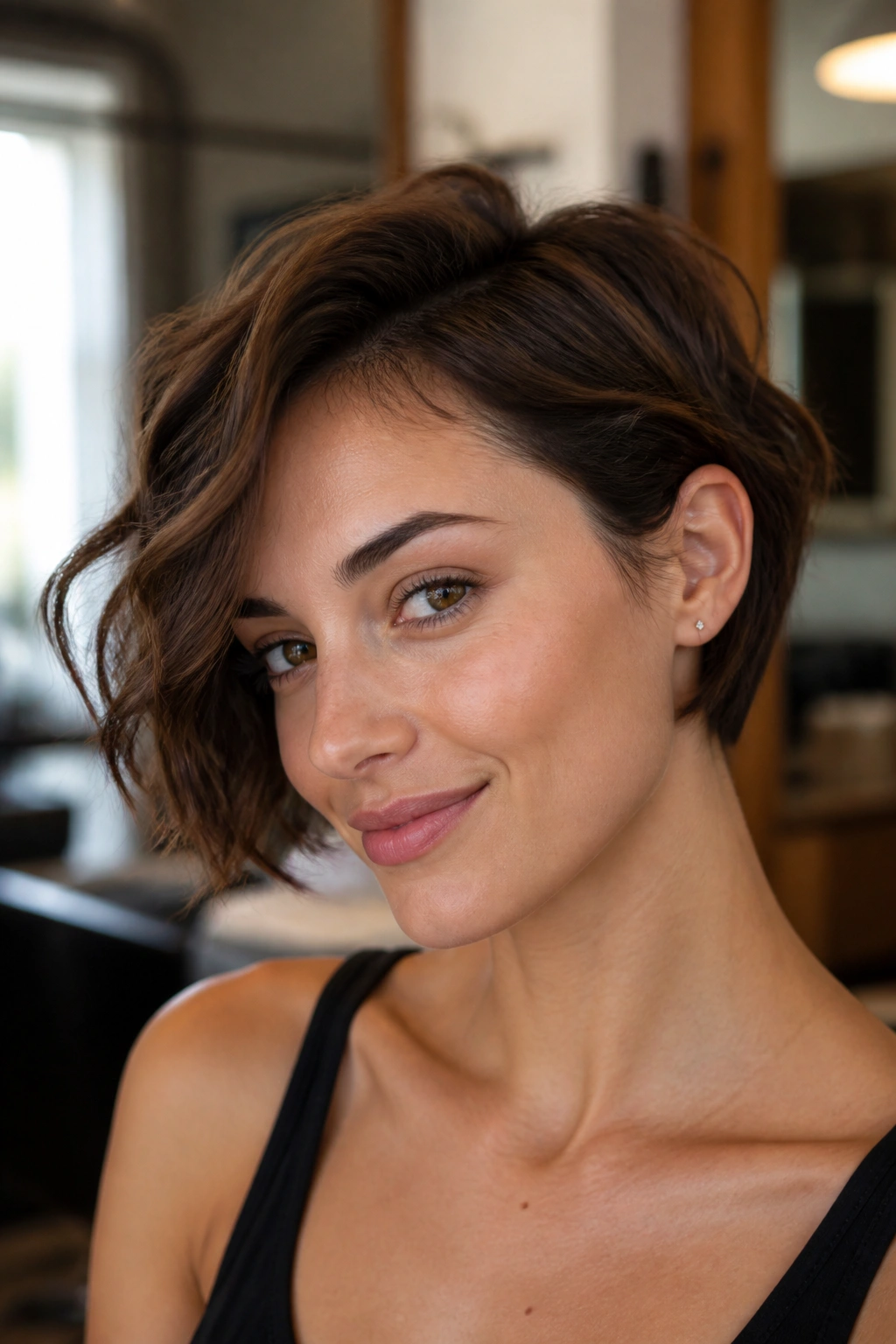
Picture this: loose waves, one side tucked neatly behind the ear, the other side falling forward just enough to keep the haircut from feeling too tidy. That’s the wavy pixie bob with tucked sides, and it has a very easy kind of confidence about it. The natural bend does the heavy lifting.
This cut works well if your hair has a little S-shape in it already. You do not need to force every strand into place. A dab of cream on damp hair, a rough dry with your fingers, and maybe a quick twist with a small iron on the front pieces is usually enough. The tuck behind one ear gives the style structure without making it stiff.
It’s also a good option if you hate spending time on hair but still want it to look thought out. The tucked side shows the jaw. The loose side keeps some softness near the cheek. Simple. Smart.
A little frizz is fine here. It helps the cut feel human.
14. Platinum Pixie Bob with Bright Contrast
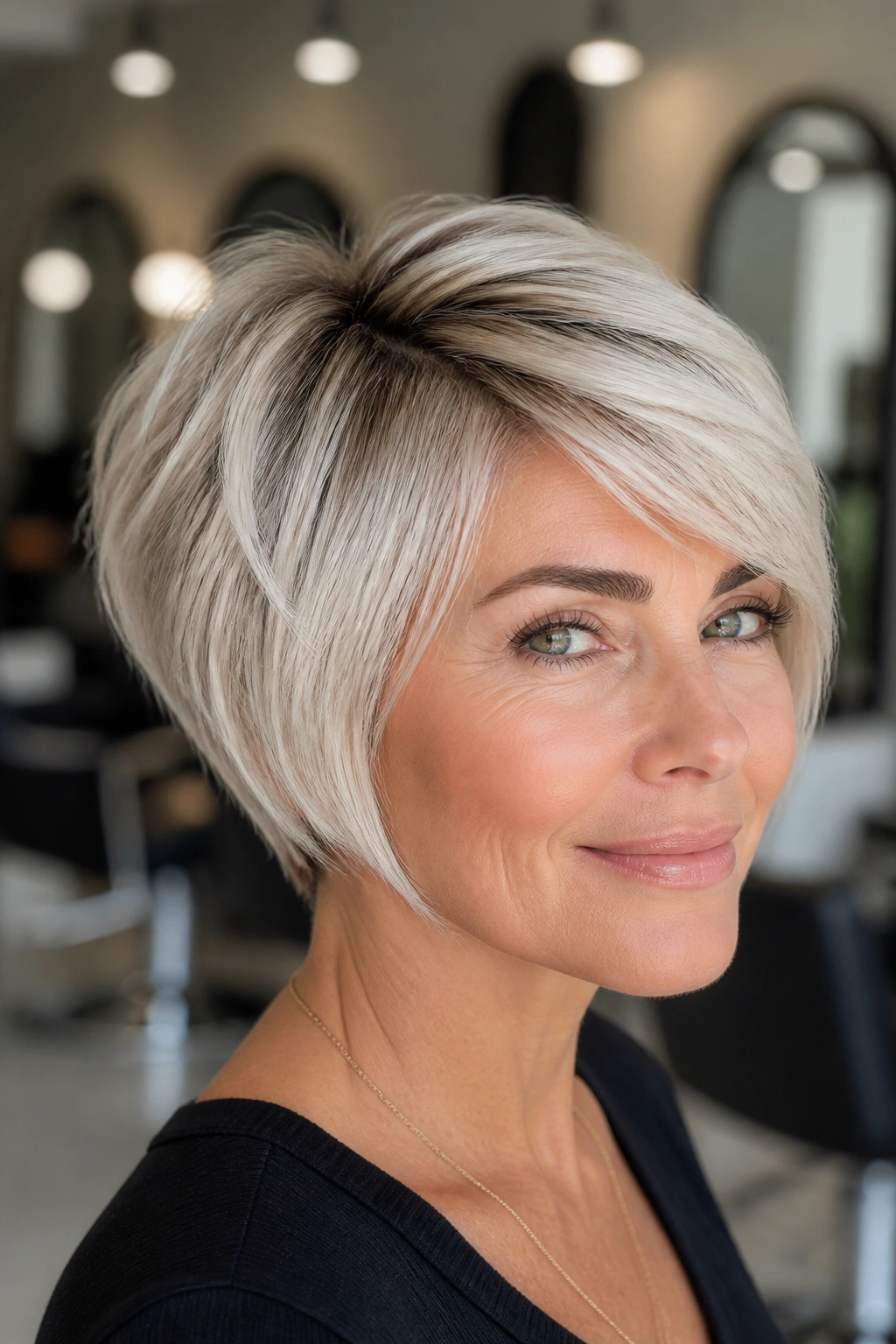
Platinum on a pixie bob is a bold move because short hair shows color shifts fast. Every line, every layer, every little grow-out at the root becomes part of the look. That is exactly why the cut can feel so deliberate. The brightness puts the shape on display.
There’s a catch, though. Platinum needs upkeep, and short hair exposes that upkeep faster than longer styles do. A toner or purple shampoo can help keep the blonde from drifting yellow, and a root smudge can soften the grow-out if you want more time between color appointments. If your hair is already dry, keep heat styling light and use a protectant every time.
- Ask for multi-tonal blonde, not one flat bleach shade.
- Keep the crown a little textured so the cut doesn’t look like a helmet.
- Use a violet cleanser sparingly, about once a week.
- Moisture masks matter here, because bleached ends can go rough fast.
Platinum works best when the shape is clean. Messy color maintenance shows.
15. Copper Pixie Bob with Warm Shine
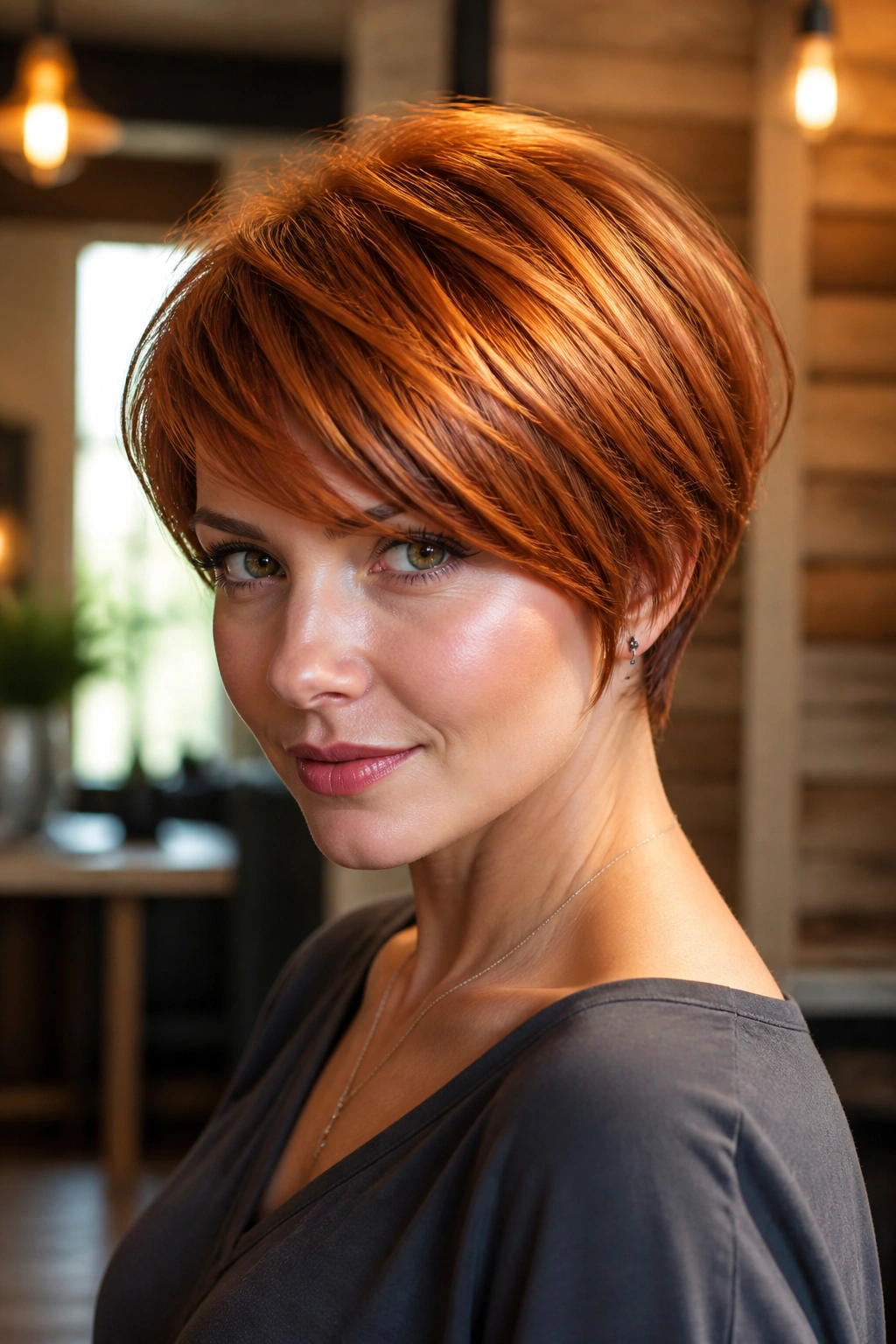
Copper is one of my favorite short-hair colors because it gives a pixie bob a warmer, richer look without needing a lot of styling. The tone can range from soft apricot to deep rust, and the shorter cut lets the color change across the layers instead of sitting in one flat block.
That matters on a pixie bob. The light catches the edges, the fringe, and the crown in slightly different ways, so even a simple style can look dimensional without trying too hard. A darker root can keep the color from looking washed out, and a glossy finish helps the strands read smooth instead of dry.
This shade is also kinder than people think. It can make fine hair look fuller, and it adds warmth to blunt lines that might otherwise feel hard. If your skin leans cool, a copper with a little red-violet in it usually looks cleaner than a bright orange. If your skin is warmer, a golden copper can be gorgeous.
Warm, sharp, and a little alive. That’s the combo.
16. Thick-Hair Pixie Bob with Debulked Layers
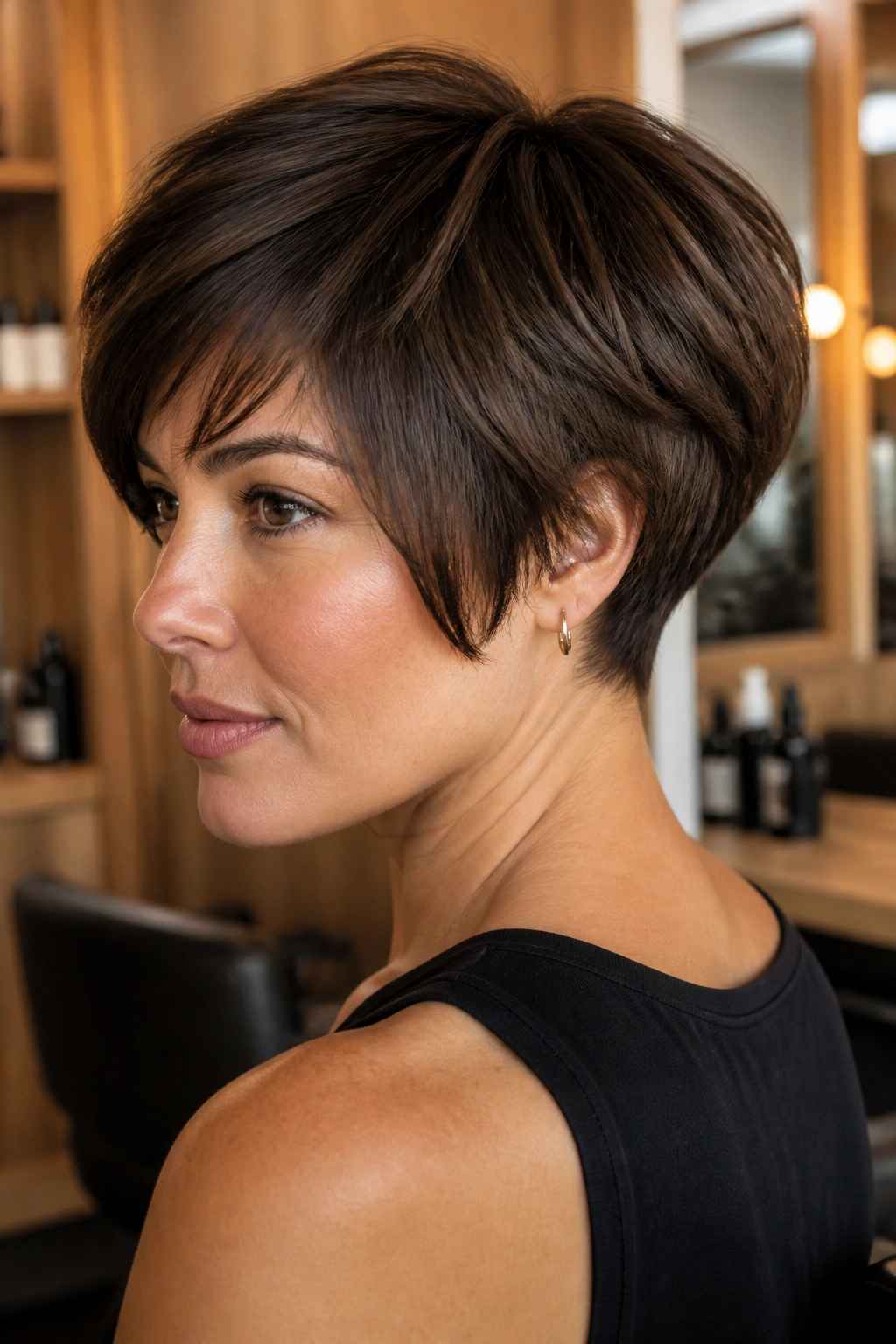
Thick hair needs strategy, not just scissors. A thick-hair pixie bob works when the stylist removes weight from the right places and leaves the outline strong enough to hold shape. If you thin the wrong sections, the hair can puff in the crown and fray at the edges. That is a bad trade.
Where the weight comes out
The best debulking usually happens inside the shape, not on the perimeter. Think crown, upper back, and the bulk behind the ears. The ends stay cleaner so the haircut still has a line, and the top stops behaving like a mushroom the minute the weather turns damp.
- Ask for internal layering instead of aggressive thinning shears.
- Keep the nape tight if your hair grows out wide.
- Use a cream or balm, not a stiff mousse.
- Dry the crown first so the shape sets before the sides swell.
Thick hair can wear a pixie bob beautifully, but only if the cut respects where the density lives. That part matters more than the photo you bring in.
17. Fine-Hair Pixie Bob with Lift at the Crown
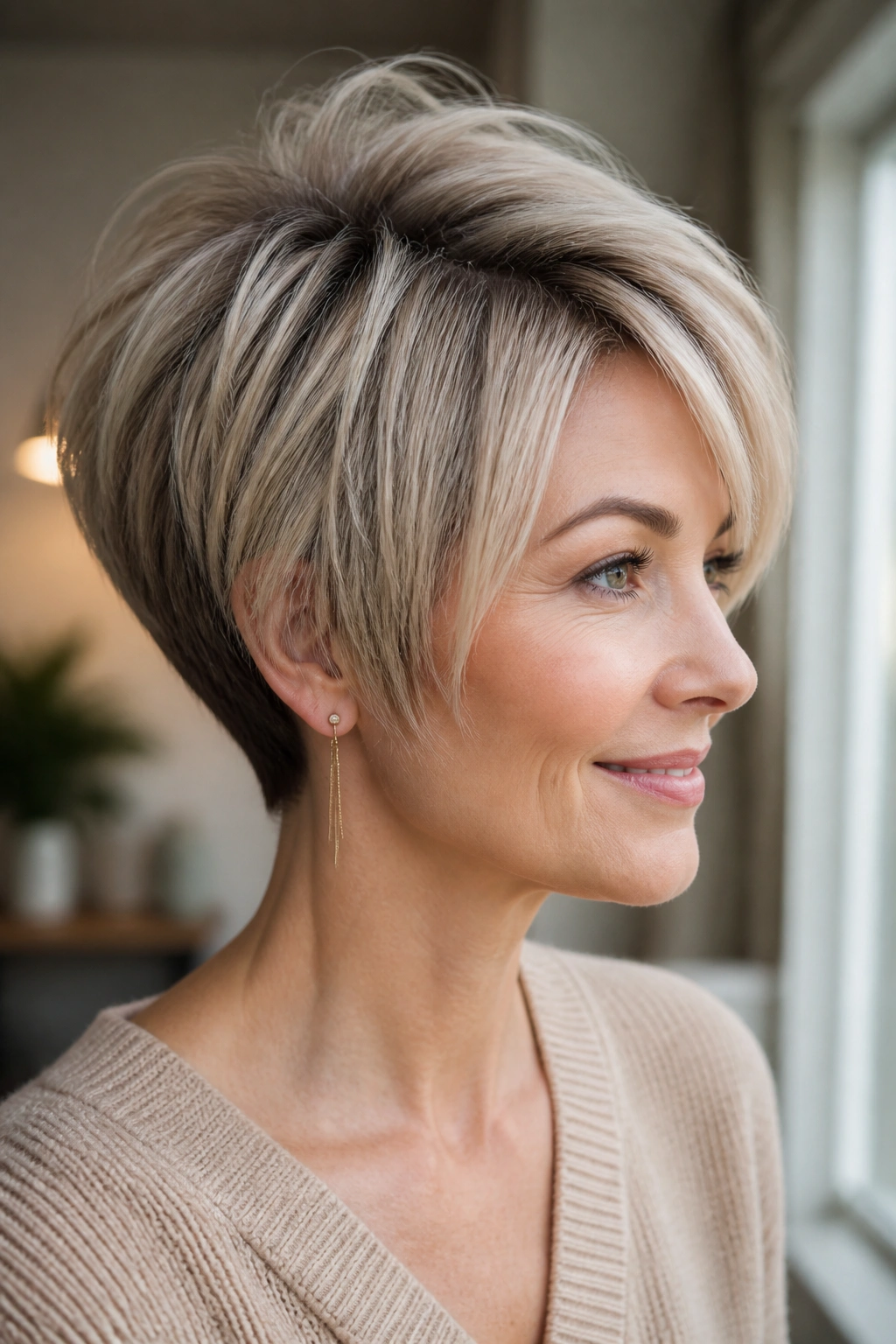
Fine hair does not need more layers everywhere. It needs the right layers in the right place. A fine-hair pixie bob with lift at the crown keeps the back short enough to avoid dragging, then leaves the top with just enough length to puff up a little when you blow-dry it.
The styling part is simple, and it makes a huge difference. Put root-lift mousse at the crown on damp hair, tip your head slightly forward, and dry the roots first. If you have a part you always wear, blow the hair the opposite way for the first minute. That little trick creates lift without teasing. A round brush can add another inch or so of height, which is often enough.
- Keep the back tighter than the front.
- Avoid too much texturizing; fine hair can look thin fast.
- A light spray wax can hold the crown without crunch.
- Ask for a few face-framing pieces, not a lot of layering everywhere.
Small hair can still have shape. You just have to place the weight carefully.
18. Oval-Face Pixie Bob with Soft Balance

Oval faces can wear almost anything, which sounds convenient until you realize a lot of cuts end up looking plain because they lean too hard into symmetry. The oval-face pixie bob that works best usually keeps a little softness at the temples, a bit of length near the cheek, and enough shape at the crown to avoid flattening the face.
A side-swept fringe helps here because it breaks up the length in a gentle way. So does a slightly tucked side or a soft bend at the jaw. The haircut does not need to be severe to feel bold. It just needs enough structure that the face doesn’t disappear inside the hair.
I’d avoid over-trimming the sides into a too-perfect curve. That can make an oval face look longer than it really is. Better to keep a bit of air around the temples and a small amount of movement through the front.
Easy face shape. Still worth choosing carefully.
19. Round-Face Pixie Bob with Height and Length
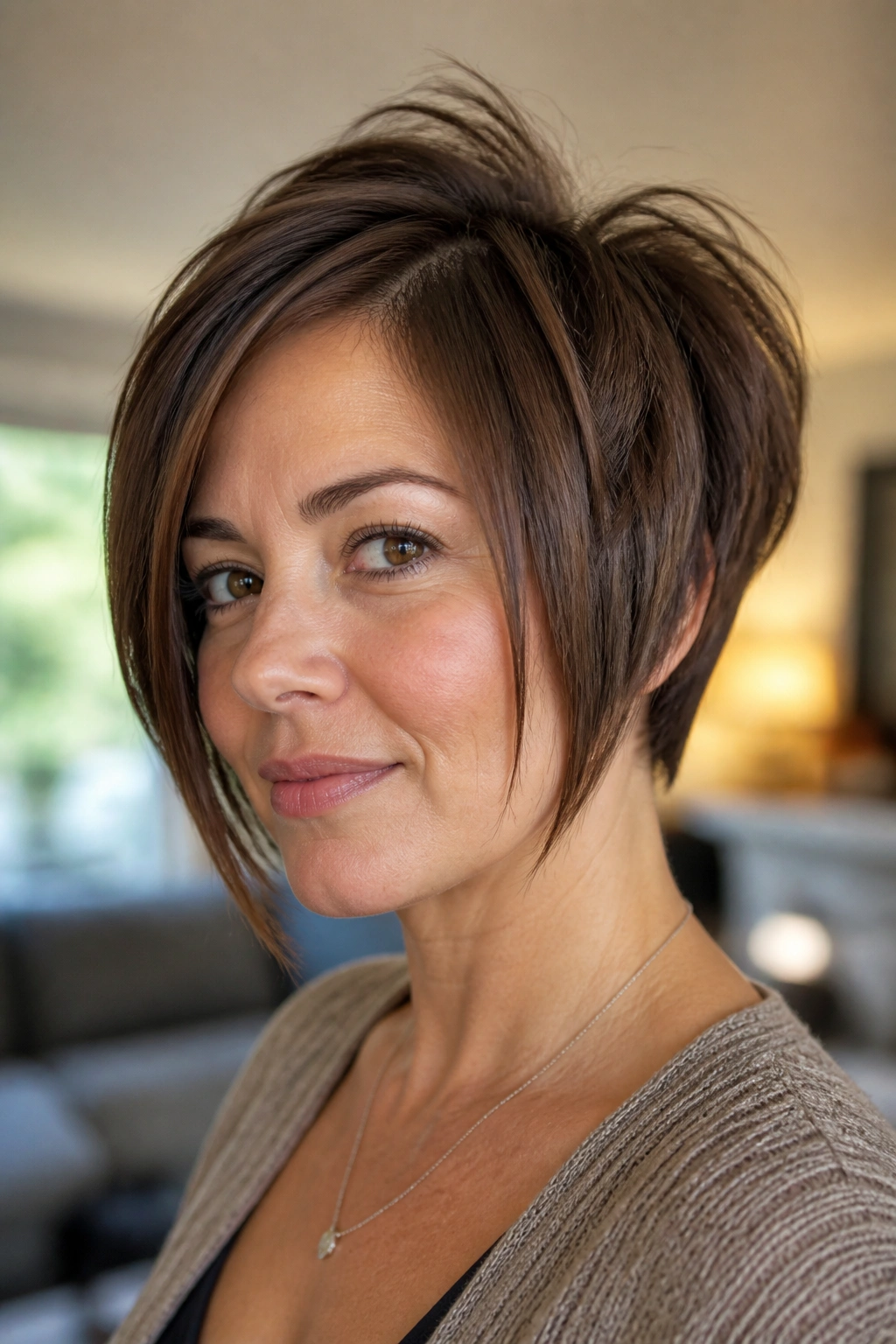
Round faces usually look best in a pixie bob when the cut adds a vertical line somewhere. That might mean height at the crown, longer front pieces, or a side part that pushes the eye upward and across instead of straight out to the widest part of the cheeks. The point is not to hide the face. The point is to shape it.
What to ask for at the salon
Ask for a little lift at the top, not a fluffy crown. Those are different things. Lift is controlled. Fluff is not.
- Keep the sides closer to the head.
- Let the front land below the cheekbone.
- Avoid a blunt line that stops right at the widest part of the face.
- Use a root spray or mousse for height, then set it with a quick blow-dry.
A round face can wear a pixie bob with real edge, but the proportions matter. Too much width at the sides makes the cut feel heavy. A longer front and a tighter back usually solve that fast.
The line should go up, not out.
20. Bold Pixie Bob with a Shaved Nape
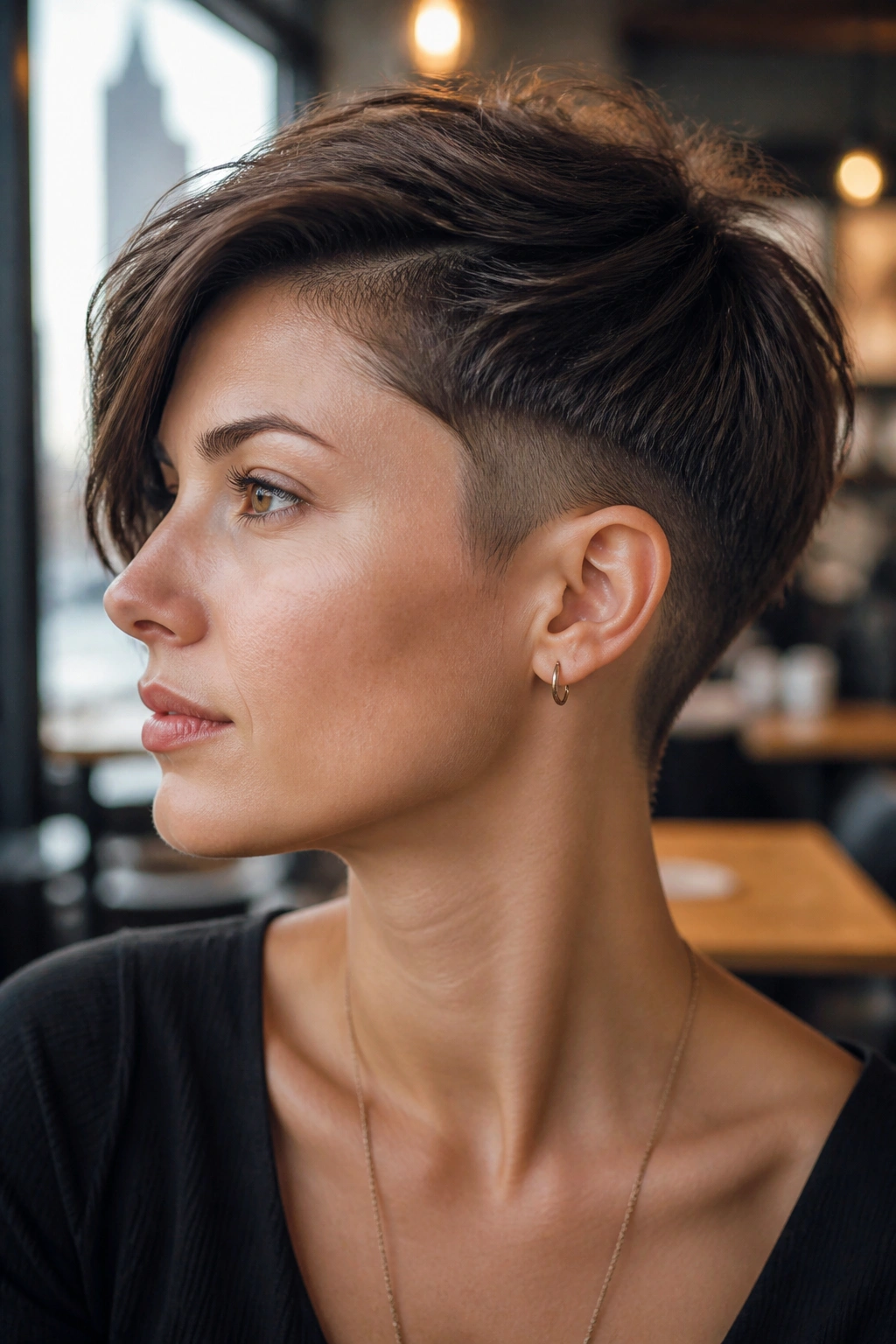
If you want a pixie bob that looks unapologetic from every angle, the shaved-nape version is the one. The top keeps enough length to sweep, spike, or tuck, while the back is clipped close so the neckline looks clean and the silhouette feels sharper than a standard bob. It’s a haircut with opinions.
This style works especially well if you like contrast. Long on top, short underneath. Soft fringe, hard nape. You can wear it sleek with a little pomade, or mess it up with texture spray and let the top pieces fall wherever they want. The surprise is how wearable it can be once the cut is balanced. The shaved section removes weight, so thick hair stops bulking up at the back, and the top can move without dragging.
Maintenance is part of the deal. If you let the nape grow out too far, the whole shape softens fast. That may be fine if you want a gentler look. If you want the edge, keep the trims regular and the neckline neat.
Short hair should say something.
