



Long pixie bob haircuts sit in that sweet middle zone that so many women keep trying to find and rarely name out loud: short enough to feel light, long enough to tuck behind an ear, and shaped enough to look deliberate even when you skip a blow-dry. The cut works because it gives you movement at the crown, softness around the face, and a little bit of swing through the ends. It also avoids the awkward in-between stage that so many short cuts hit when they start growing out.
The difference between a forgettable crop and a great long pixie bob is usually the outline. A clean nape, a longer front, and a bit of internal layering can change the whole mood of the haircut. One version reads polished and sleek. Another feels airy and a little messy in the best way. Another looks sharp enough to make a plain white T-shirt feel styled on purpose.
That flexibility is what makes this cut such a strong choice for straight hair, waves, curls, fine strands, and thick hair that needs shape. It can flatter a round face, soften a square jaw, or make fine hair look fuller without piling on fake volume. The trick is choosing the right version for your hair, your face, and your tolerance for styling tools. Some cuts need a round brush and five minutes. Others need almost nothing besides a dab of cream and a finger-comb.
1. Feathered Long Pixie Bob
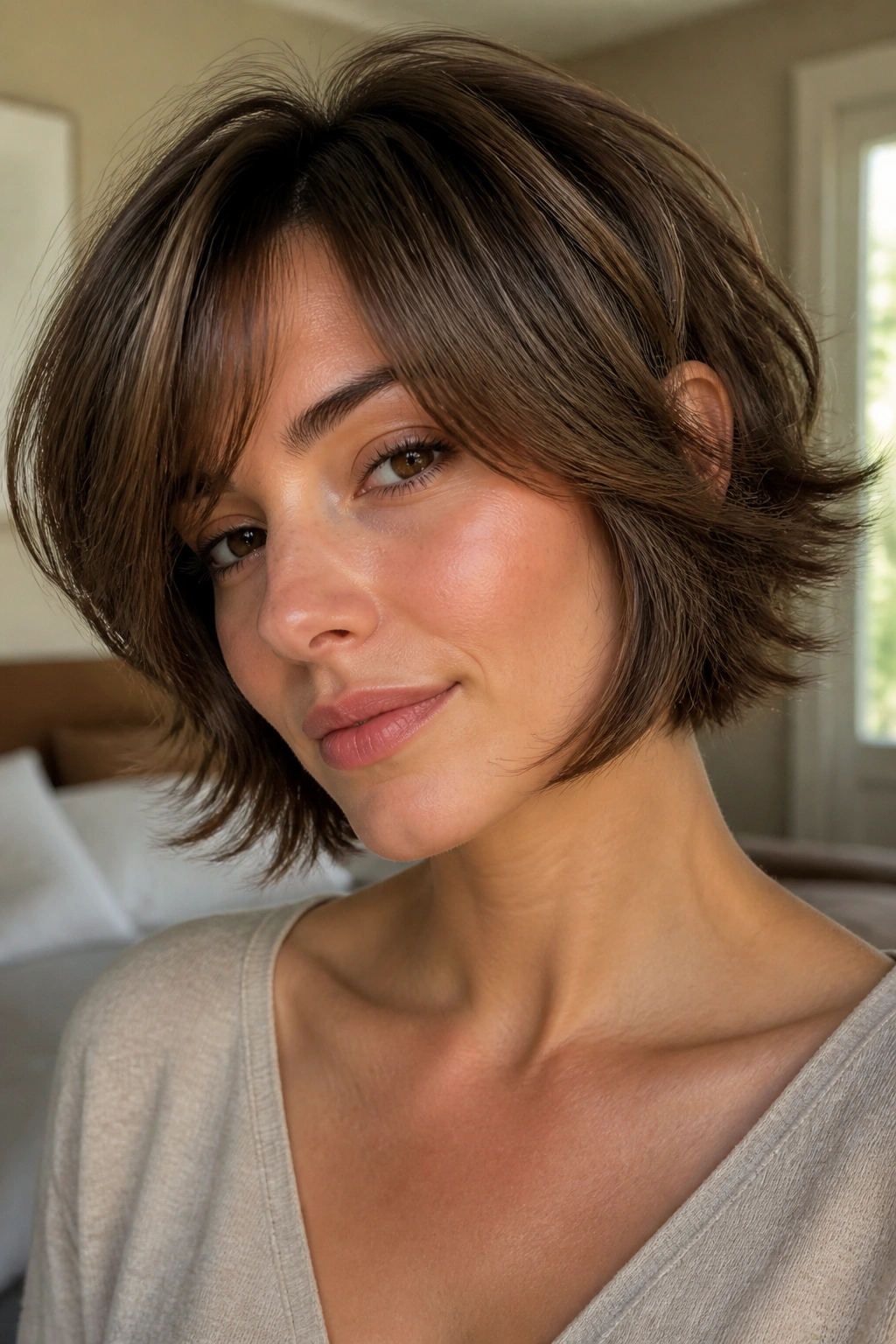
Feathered layers give this cut movement without making it look choppy or thin at the ends. The shape usually sits around the jawline in front and shortens neatly through the back, which keeps the haircut light but still wearable. It’s a good choice if you want softness around the face and don’t love the hard edge that comes with a blunt bob.
Why the feathering matters
Feathering works best when the layers are carved with a light hand, not shredded to pieces. You want the ends to flick away from the cheeks and temple area, not disappear into wisps. If your hair feels heavy around the sides, this is one of the easiest ways to open it up without losing length.
Ask for soft point-cut ends, a slightly shorter nape, and face-framing layers that begin around the mouth or chin. That keeps the cut airy but not stringy. It also grows out without turning into a triangle, which is a nice bonus.
- Keep the front about 1 to 2 inches longer than the back
- Use a small round brush only at the ends
- Ask for layers that remove weight, not density
- Avoid razor cutting if your hair frays easily
Best for: straight to softly wavy hair that needs movement more than volume.
2. Asymmetrical Long Pixie Bob
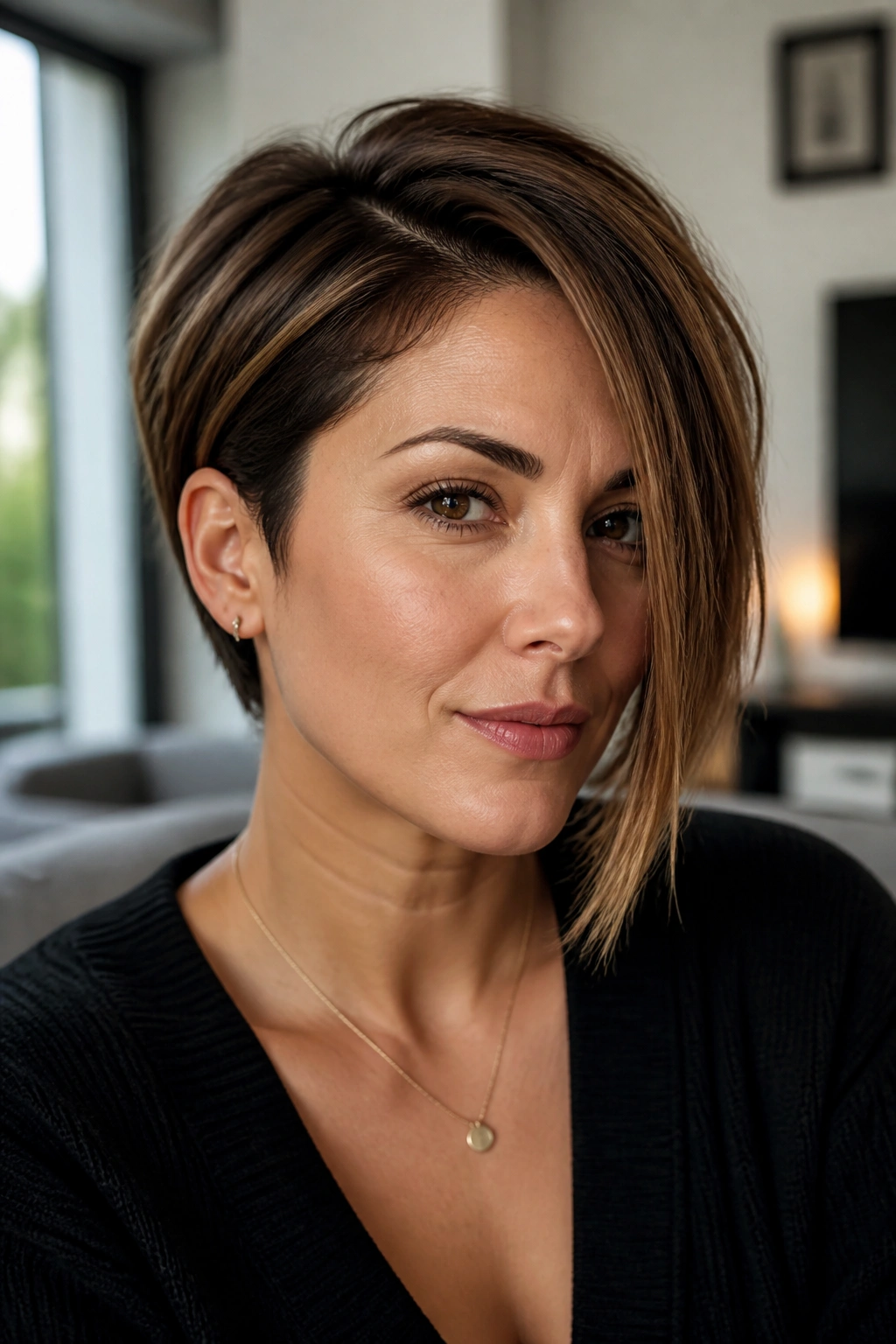
An asymmetrical long pixie bob has a sharper, more editorial feel. One side sits longer than the other, and that small imbalance changes the whole attitude of the cut. It’s not loud, but it does make a statement.
The trick is keeping the difference obvious enough to matter and subtle enough to stay wearable. A gap of about 1 to 2 inches between sides usually does the job. Too little and the shape looks accidental. Too much and you’re in fashion-hair territory, which is fun if that’s what you want, but not exactly low-key.
This version looks especially good when the longer side grazes the jaw and can be tucked behind the ear. It gives you a built-in styling move. One side flat, one side loose. Done.
It also photographs well from the side, which sounds shallow until you realize that a lot of people live in side-profile selfies and mirror checks. Hair is practical and vain at the same time. Both things can be true.
3. Side-Swept Bang Long Pixie Bob
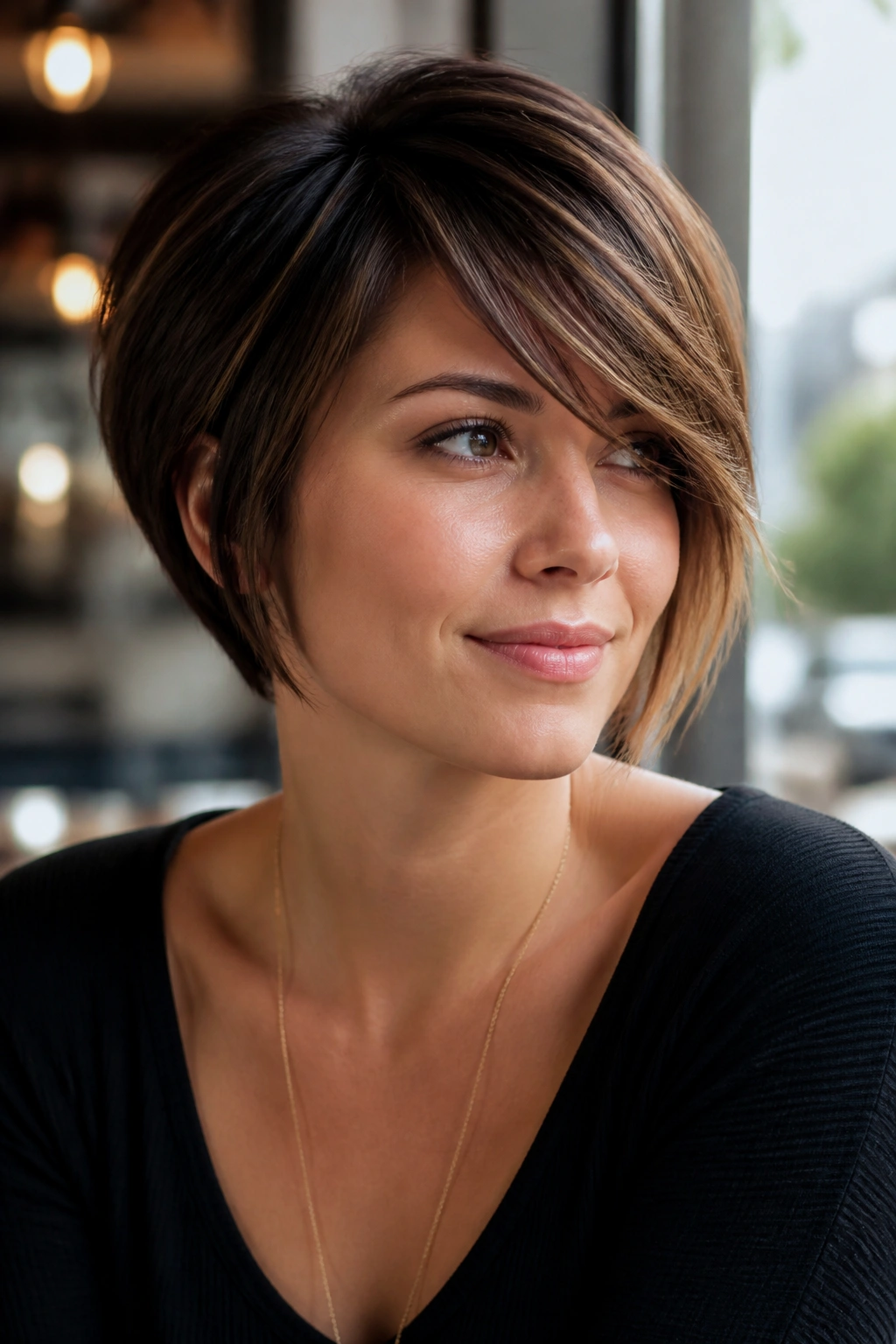
What side-swept bangs do so well is soften the forehead without closing off the face. The fringe slides into the longer front pieces, so the cut feels connected instead of chopped into sections. That matters more than people think.
How to style the sweep
A side-swept fringe works best when it’s long enough to move, not so short that it sticks up after a wash. Aim for a bang area that blends from the part line down toward the cheekbone. If your hair has a cowlick at the front, this is one of the few fringe styles that can still behave without a daily argument.
Blow it in the opposite direction first, then sweep it back over with a brush or fingers. That little trick gives the bang some bend instead of a flat curtain stuck to the forehead. A pea-size amount of cream or mousse is enough; too much and the fringe separates in sad little pieces.
This cut is one I like on women who want softness but not sweetness. There’s a difference. The bang adds movement, while the longer back keeps the shape grown-up rather than precious.
4. Choppy Textured Long Pixie Bob
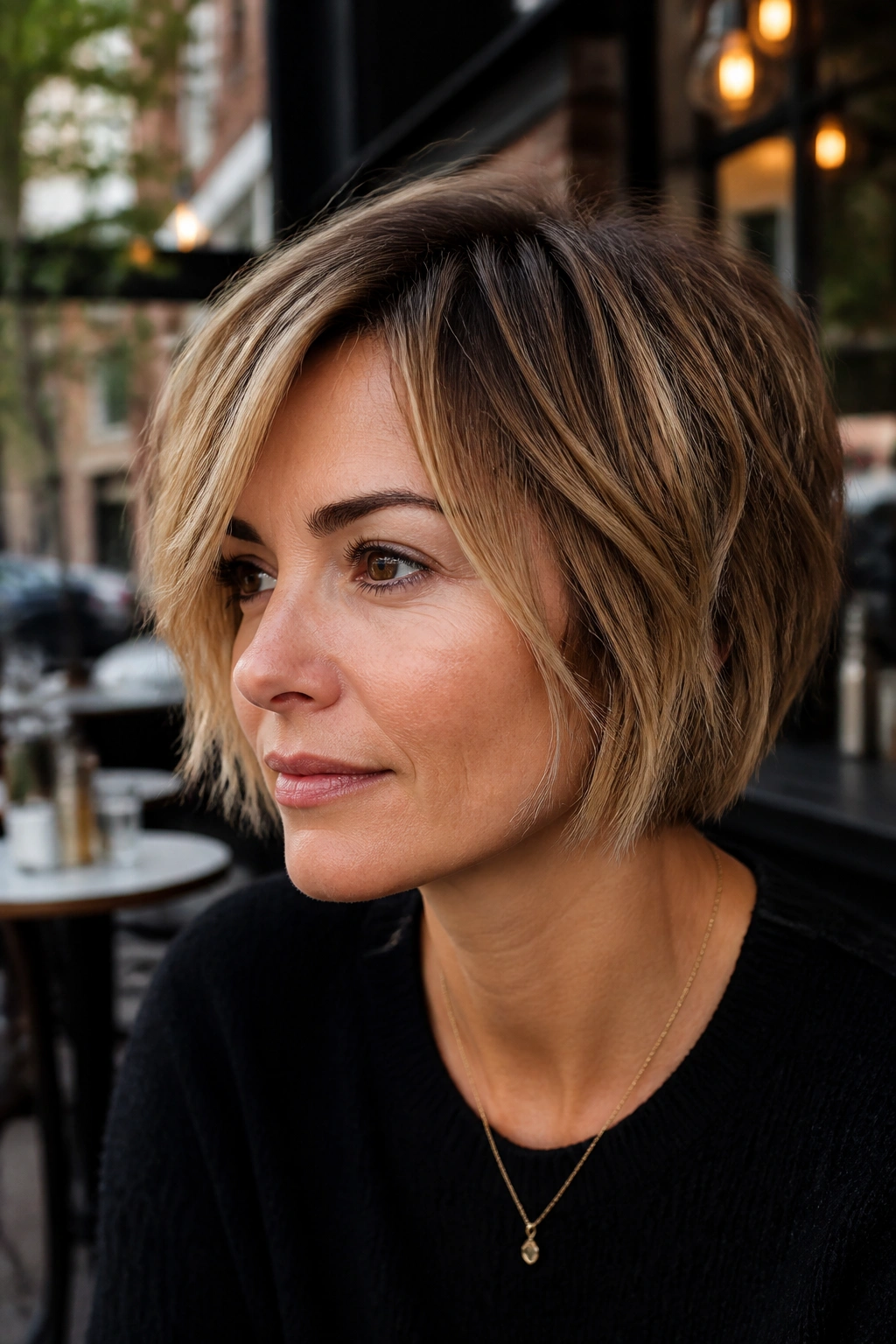
Choppy texture gives the long pixie bob a little grit. Not damage. Not frizz. Texture. The difference matters. Good choppiness looks piecey and lived-in; bad choppiness looks like someone attacked the ends with thinning shears.
This cut works best when the layers are deliberately uneven, with the top pieces slightly longer and the ends lightly broken up. It’s especially useful if your hair falls flat by noon, because the uneven shape creates built-in lift. You can wear it with a matte paste, a touch of sea-salt spray, or just a rough dry and a bend from your fingers.
The style has a casual edge that suits denim, leather, and simple clothes that need a little attitude. It does not need perfect makeup or a polished outfit to make sense. In fact, it often looks better when it is not overdone.
What to watch for:
- Keep the texture at the ends, not all through the crown
- Ask for soft slicing, not heavy thinning
- Use a dry texture spray sparingly at the roots
- Skip heavy oils if you want the separation to stay visible
5. Curly Long Pixie Bob
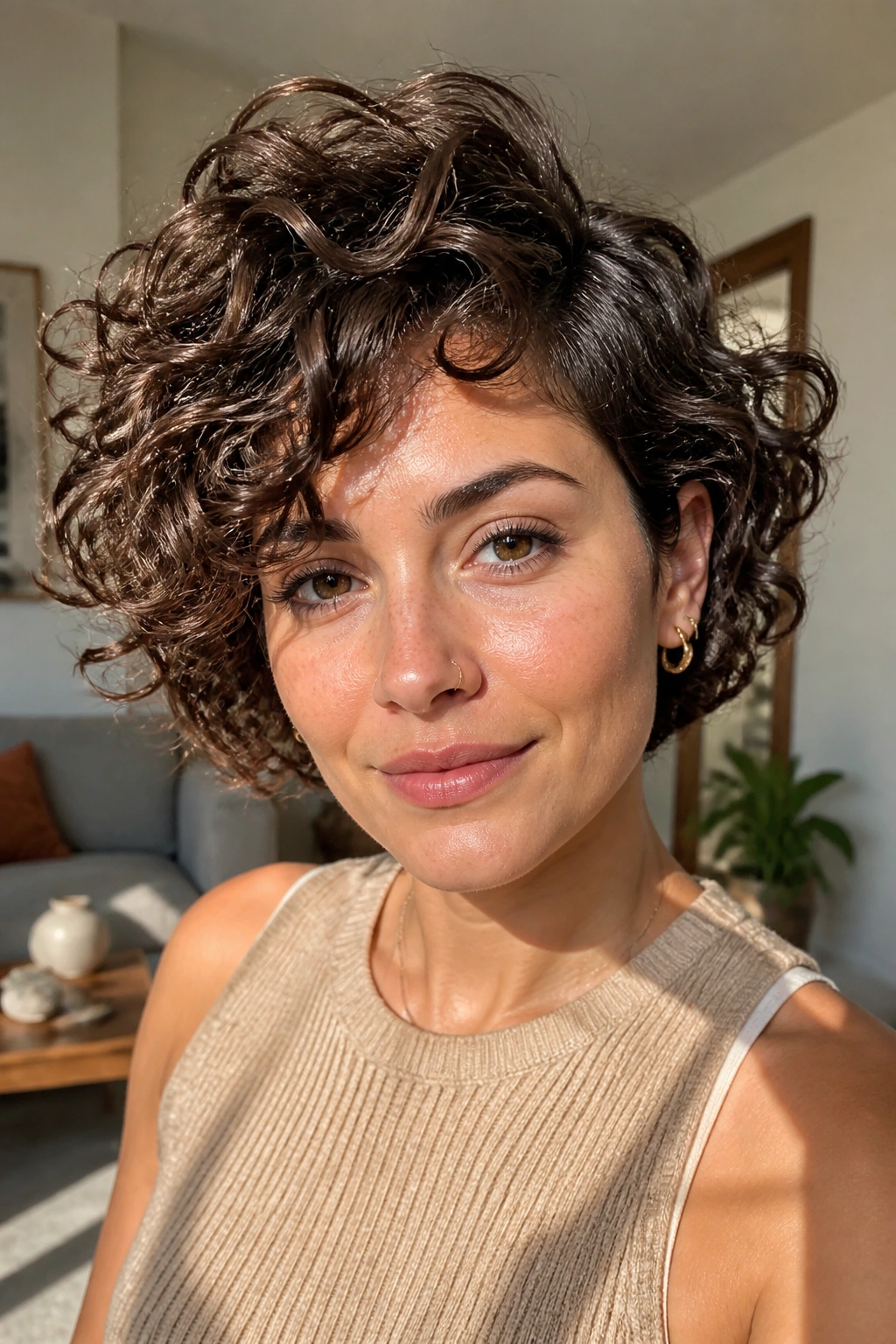
Curly hair can make this cut look expensive in the best way. The shape lands somewhere between a short bob and a grown-out pixie, but the curls do the real work. They create lift, bend, and a little halo of movement that straight hair has to fight for.
The mistake people make with curls is treating them like they should be tamed into one neat line. That usually kills the shape. A better long pixie bob for curls keeps enough length around the crown and sides to let the curl pattern stack naturally. If the curls are tighter, the outline can sit a little higher. If they’re looser, the front can graze the jaw.
A dry cut helps here because curls shrink. A lot. If your stylist cuts curly hair wet without checking how much it springs up, the finished shape can land much shorter than expected. That’s not a small detail; it changes the whole haircut.
Let the front curl pieces fall where they want, and keep the neckline clean. That contrast is what makes the style look balanced.
6. Sleek Tucked-Behind-the-Ear Long Pixie Bob
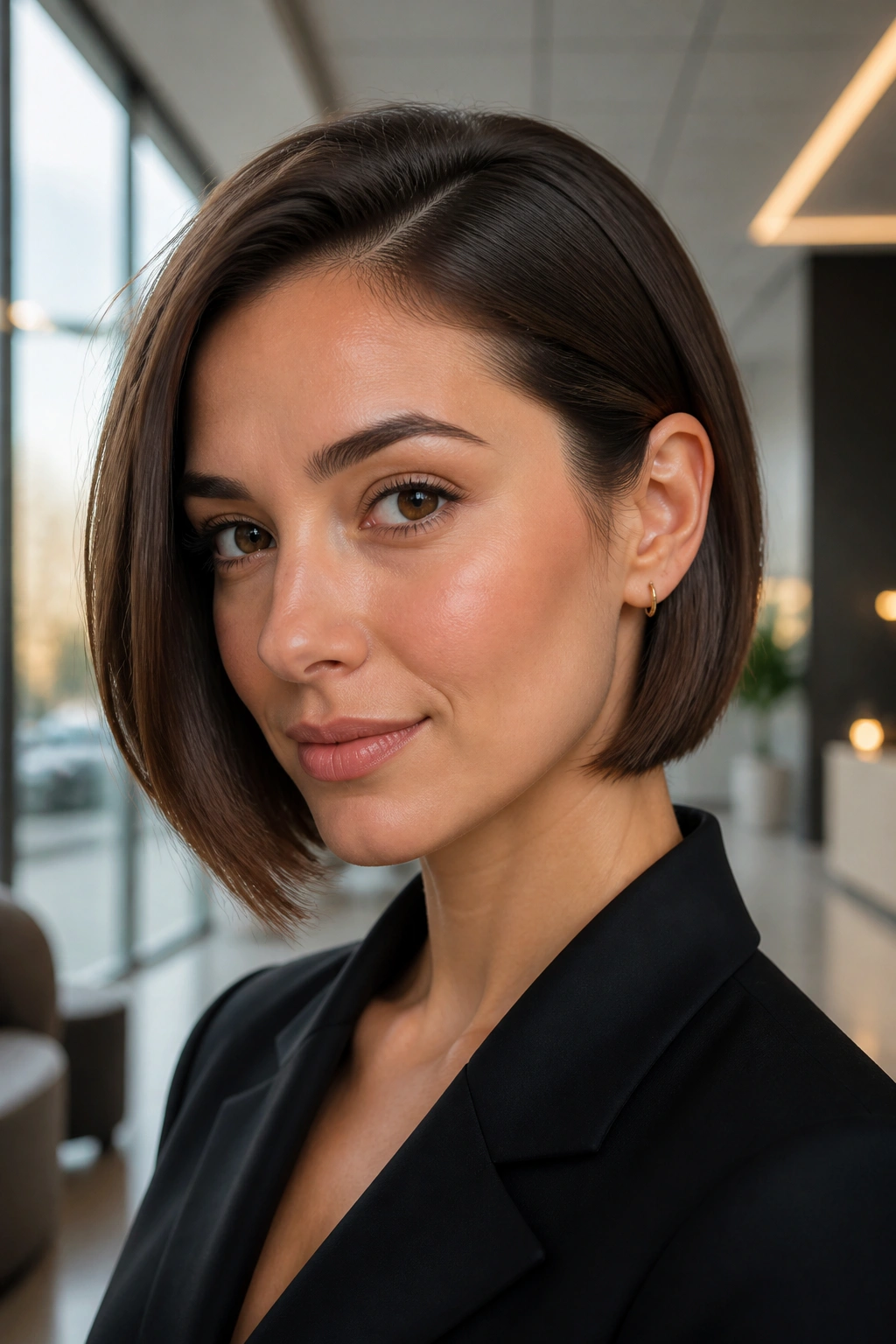
This version is all about restraint. The cut is smooth, the ends are tidy, and one side is often styled behind the ear to show off the jawline or a strong earring. It looks neat without feeling severe.
The sleek shape works best when the ends are cut cleanly and the layers stay minimal. Too many layers and the hair starts to kick out at odd angles. Too much texturizing and the polished effect disappears. You want a surface that reflects light and moves in one direction.
A 1.25-inch flat iron or a round brush with tension is usually enough to bend the ends under just slightly. Finish with a drop of serum on the mid-lengths only. If you put product at the roots, the style loses its lift fast.
This cut is a good pick if you want a more tailored look for work, dinners, or any place where you’d rather not look as though your hair just happened to land correctly on its own.
7. Layered Long Pixie Bob for Fine Hair
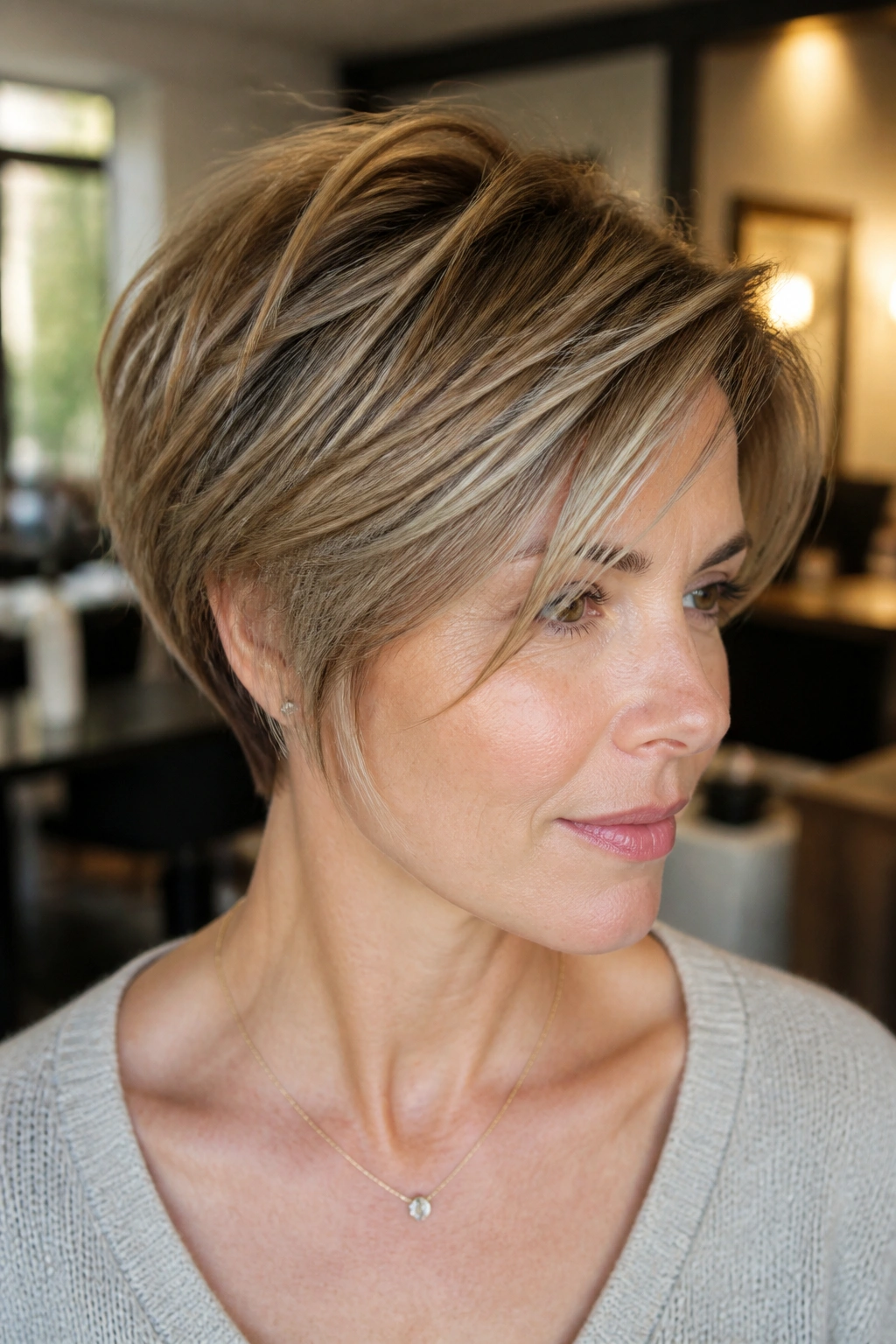
Fine hair needs shape more than it needs bulk, and this haircut gives it exactly that when it is cut well. The goal is not to pile on layers until the ends look see-through. The goal is to keep enough structure at the bottom while adding lift through the crown and sides.
What to ask for
Ask your stylist for internal layers that remove weight without sacrificing the perimeter. That means the outline stays full while the inside gets a little lighter. It’s a small difference on paper and a big difference on your head.
- Keep the ends blunt enough to hold thickness
- Lift the crown with short, controlled layers
- Use a light volumizing mousse at the roots
- Blow-dry with your head flipped only if your hair is not prone to tangling
The best part is that fine hair doesn’t need much to look better in this shape. A little root spray, a round brush, and five minutes can give you more body than a long, dragged-down bob ever will. Just don’t over-layer it. That’s the trap.
8. Undercut Nape Long Pixie Bob
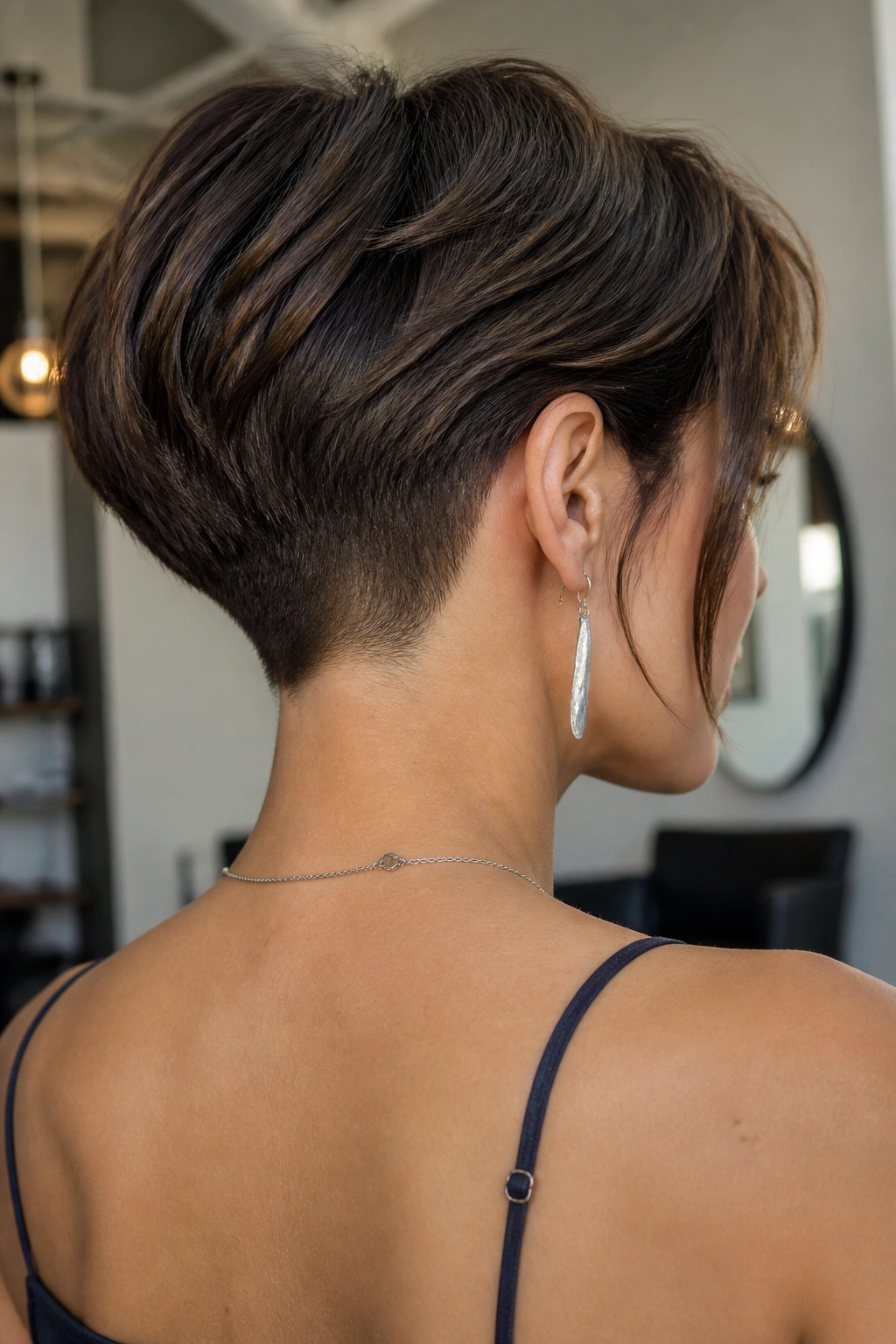
An undercut nape makes the haircut feel sharper and lighter at the same time. The back is clipped shorter underneath, which removes bulk where thick hair tends to puff out. The top and front stay longer, so you still get the softness and movement of a bob-like shape.
This is a strong choice if your hair grows heavy fast or if the nape tends to flip out in humid air. It keeps the neck area neat and makes the rest of the cut sit better. You do give up a little ease in grow-out, though. That’s the trade.
I like this version on women who are done babysitting the back of their hair all day. It looks clean even when the rest is a little loose and undone. And yes, it grows out faster than a fully layered cut, so you’ll want to stay on a regular trim cycle. Not every six weeks, necessarily. But long enough that the undercut doesn’t start showing up where it shouldn’t.
9. Curtain Bang Long Pixie Bob
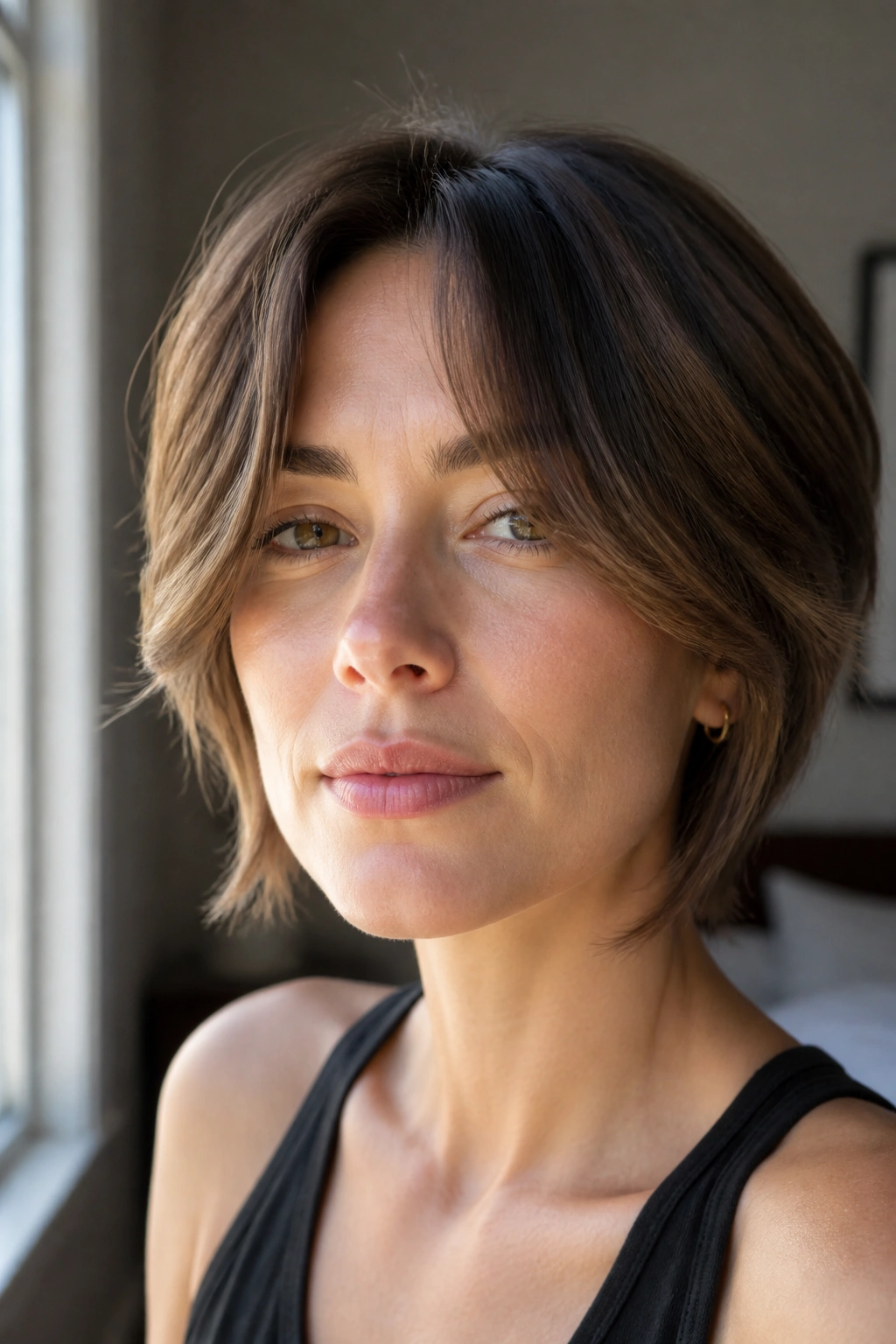
Curtain bangs can make a long pixie bob feel softer and more balanced almost immediately. They split at the center or just off-center, then sweep out toward the temples instead of falling straight down. That shape opens the face and gives the haircut a little movement right where people look first.
How to get the bend right
The fringe should be long enough to tuck into the side layers. If it stops too high, it can feel like a separate piece sitting on top of the haircut. If it’s too long, it loses the lift that makes curtain bangs useful in the first place.
A medium round brush or even a large Velcro roller can help the front curve away from the face. Let it cool in place before touching it. That part matters more than people think. Warm hair has memory for a minute or two; if you brush it out too soon, the bend goes flat.
This version works especially well if you want your forehead softened without covering it completely. It also gives a long pixie bob a little 1970s ease, which sounds like style shorthand until you see it in the mirror and realize it just looks relaxed.
10. Wavy Long Pixie Bob
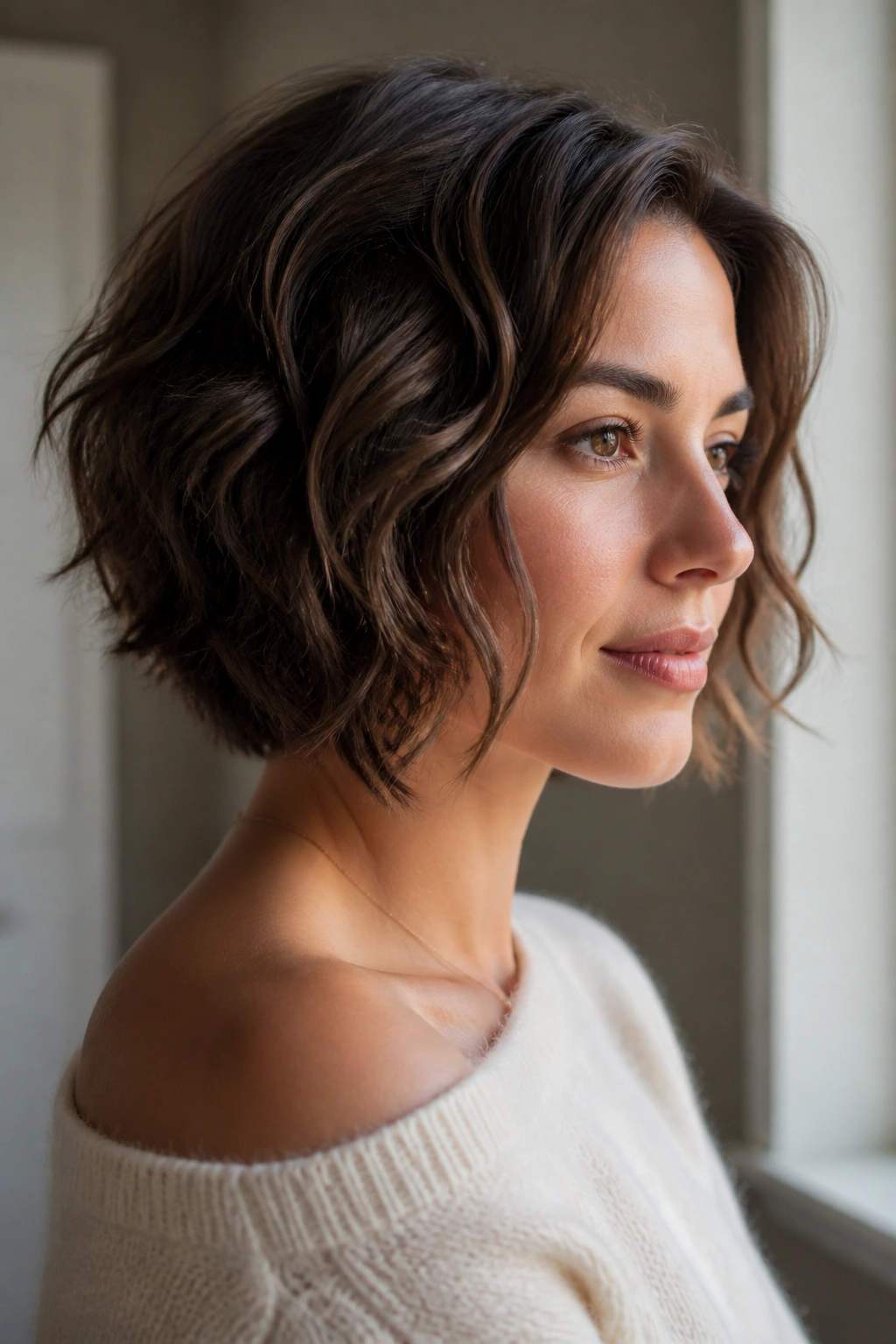
Waves bring this cut to life. The shape sits between polished and undone, and that middle ground is where a lot of women live most of the week whether they admit it or not. The haircut should support the wave pattern, not fight it into a straight line.
A wavy long pixie bob usually looks best when the length hovers around the cheekbone to jawline and the back stays shorter. The wave creates width, so the shape has to stay a little tighter underneath or it can swell out in a way that feels boxy. A few longer face-framing pieces help guide the eye downward.
Use a 1.25-inch curling iron or wand if your waves need help, but leave the last inch out so the ends don’t turn too curly. Alternate the direction of the curls and break them up with your fingers once they cool. Too much brushing and the bend disappears.
The style is friendly, but not lazy-looking. That’s a nice line to walk.
11. Blunt-Edge Long Pixie Bob
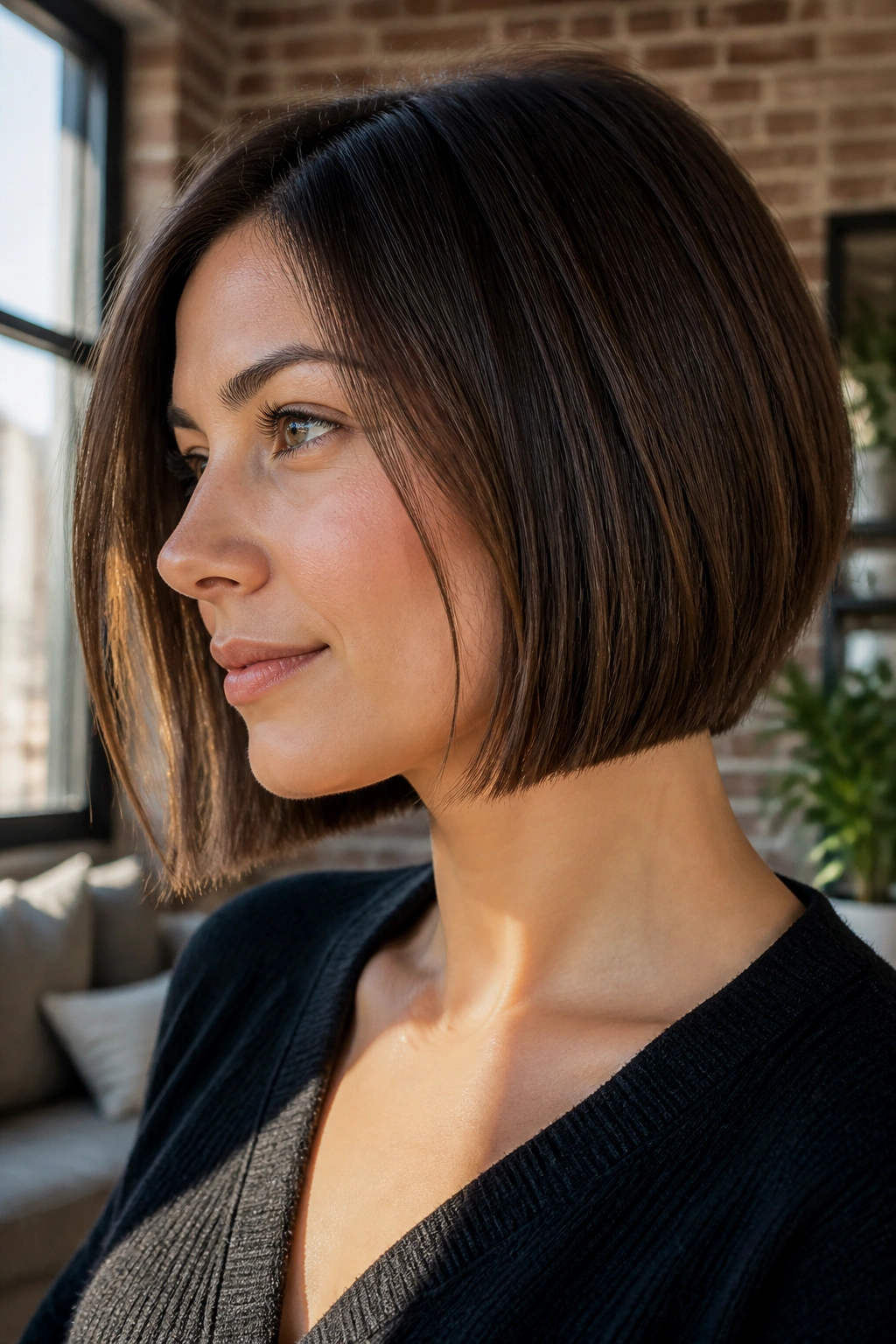
I like a blunt edge on a long pixie bob because it gives the cut a little backbone. The outline looks fuller, the ends look intentional, and the whole style gets a cleaner finish than you’d get from a heavily layered version. If your hair is fine or medium-textured, bluntness can be your friend.
The key is not to confuse blunt with heavy. You still want the nape shorter and the front longer. The difference is in the perimeter. The bottom line should read solid, not wispy. That clean edge makes the haircut hold its shape on day two and sometimes day three if your scalp behaves.
This is a good option if you hate that soft, shaggy look some shorter cuts drift into after a few weeks. A blunt long pixie bob tends to keep its form longer between salon visits. It also looks polished with very little effort, which is useful when your mood is not interested in styling drama.
12. Deep Side Part Long Pixie Bob
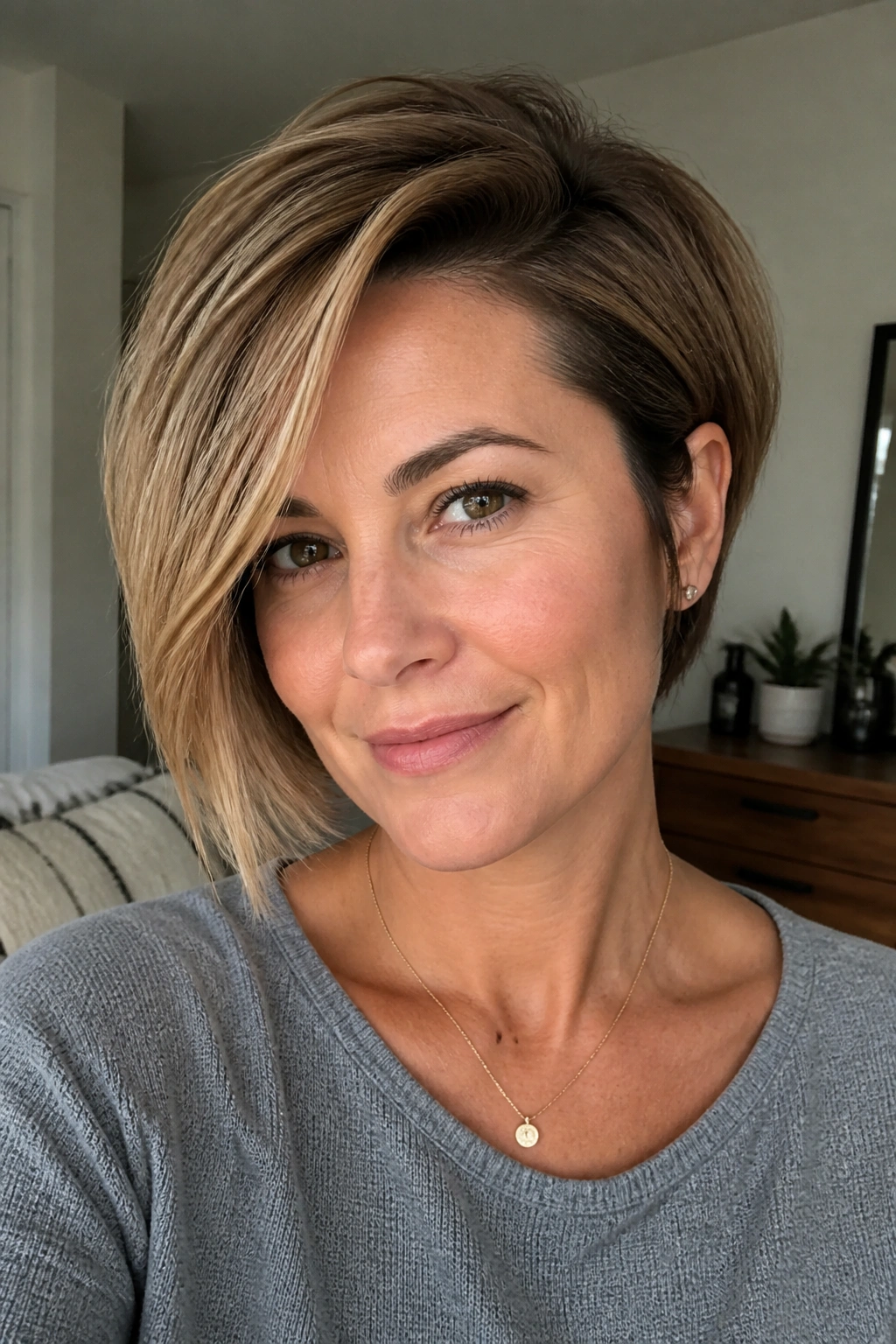
Why does a deep side part matter so much? Because it shifts the whole weight of the haircut to one side and creates instant lift at the crown. That can make a long pixie bob feel thicker, taller, and a little more dramatic without changing the cut itself.
The part works best when you place it where your hair naturally wants to fall, then push it a little farther over than usual. A strong side part can be especially useful on flat hair because it gives you visible height at the roots. That’s free volume. No teasing comb needed.
You can keep the rest of the style sleek or add waves, but the part is the star here. If you want to get fancy, tuck the lighter side behind the ear and let the heavier side frame the cheekbone. That asymmetry gives the face more shape than a center part usually does.
This is one of those small changes that makes a haircut look new without actually cutting anything new. Handy. Cheap, too.
13. Thick Hair Long Pixie Bob with Internal Layers
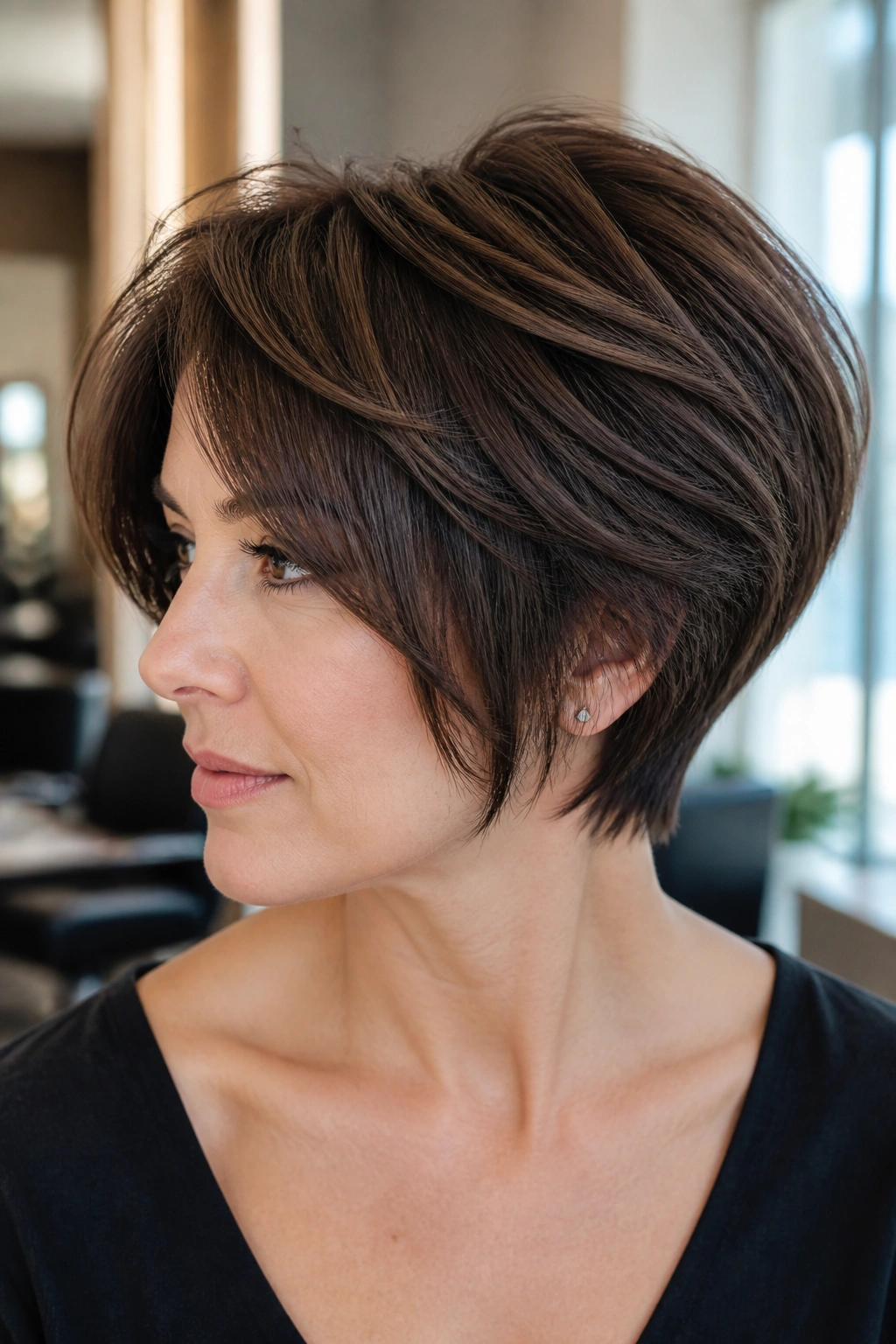
Thick hair can wear this cut beautifully, but only if the bulk is taken out from inside the shape. If the stylist cuts only the outside and leaves all the density underneath, the cut can puff out around the ears and at the back of the head. Nobody needs that triangle.
The part that matters most
Internal layers remove weight where the hair builds up, while the outer edge stays smooth. That means you still get a strong shape, just not a heavy one. The nape can stay neat, the sides can move, and the top won’t sit like a helmet.
Ask for:
- Weight removal through the interior
- A tidy nape that sits close to the neck
- Longer face-framing pieces to keep the front balanced
- Soft texturizing only where the hair is dense
A good long pixie bob on thick hair should move when you shake your head. If it doesn’t, there’s too much weight left in it. Thick hair can take a haircut with personality, but the cutting has to be precise. Casual cutting usually creates bulk in places you do not want it.
14. French-Inspired Long Pixie Bob
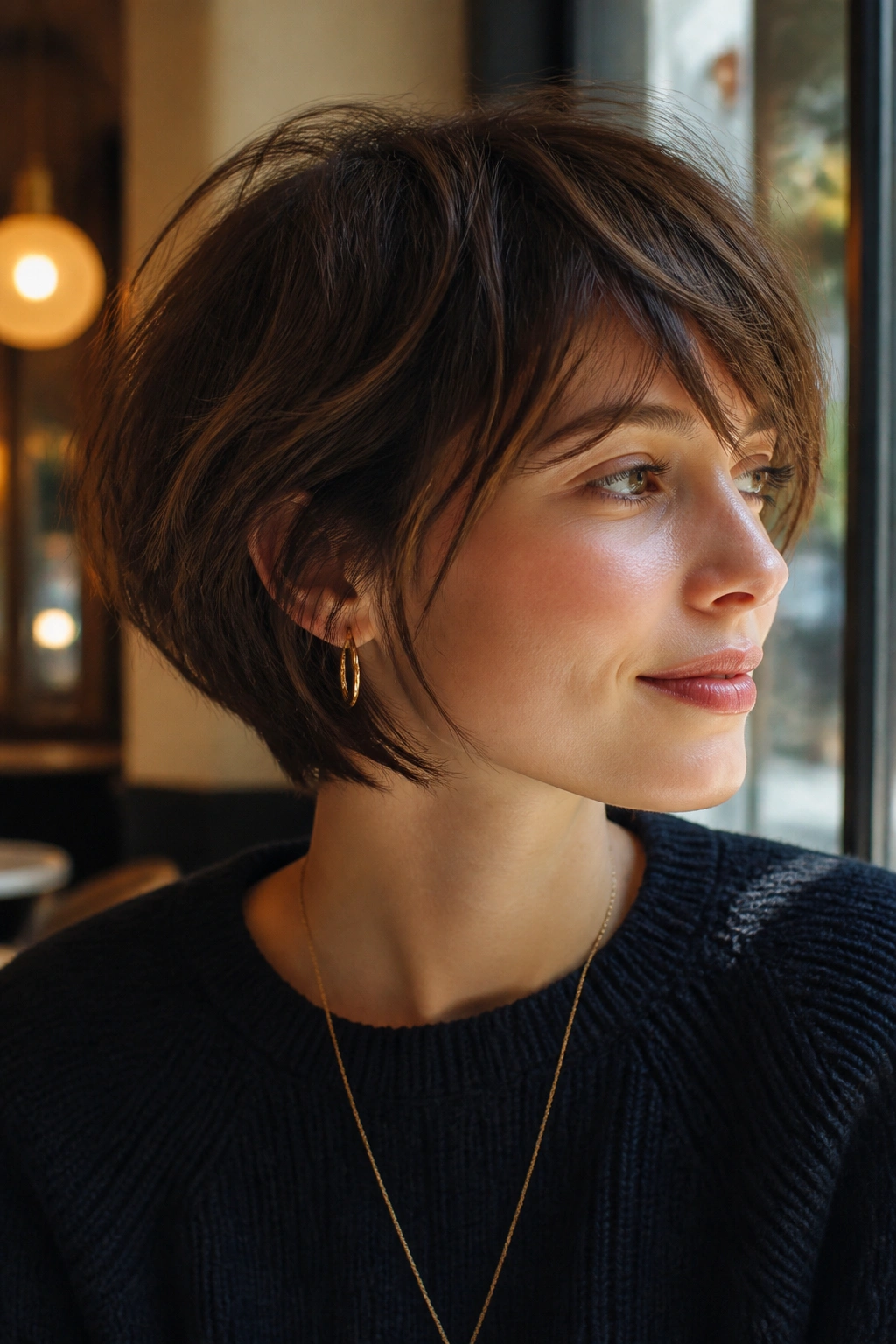
This version leans into ease rather than perfection. The shape is soft, the fringe is a little undone, and the whole thing feels like it was styled with fingers more than tools. That’s not the same as messy. It’s controlled looseness.
A French-inspired long pixie bob usually keeps the crown soft and the ends a little piecey. The bangs, if there are any, should fall in a way that feels accidental but still flattering. The cut often looks best when the hair has a natural bend instead of a hard curl or pin-straight finish.
I’d reach for this one if you like the idea of short hair but don’t want a haircut that demands constant precision. It works nicely with minimal makeup, a striped shirt, a sharp collar, or anything else that lets the hair do a little casual showing off. Keep the product light and the texture imperfect. That is the point.
15. Wispy Fringe Long Pixie Bob
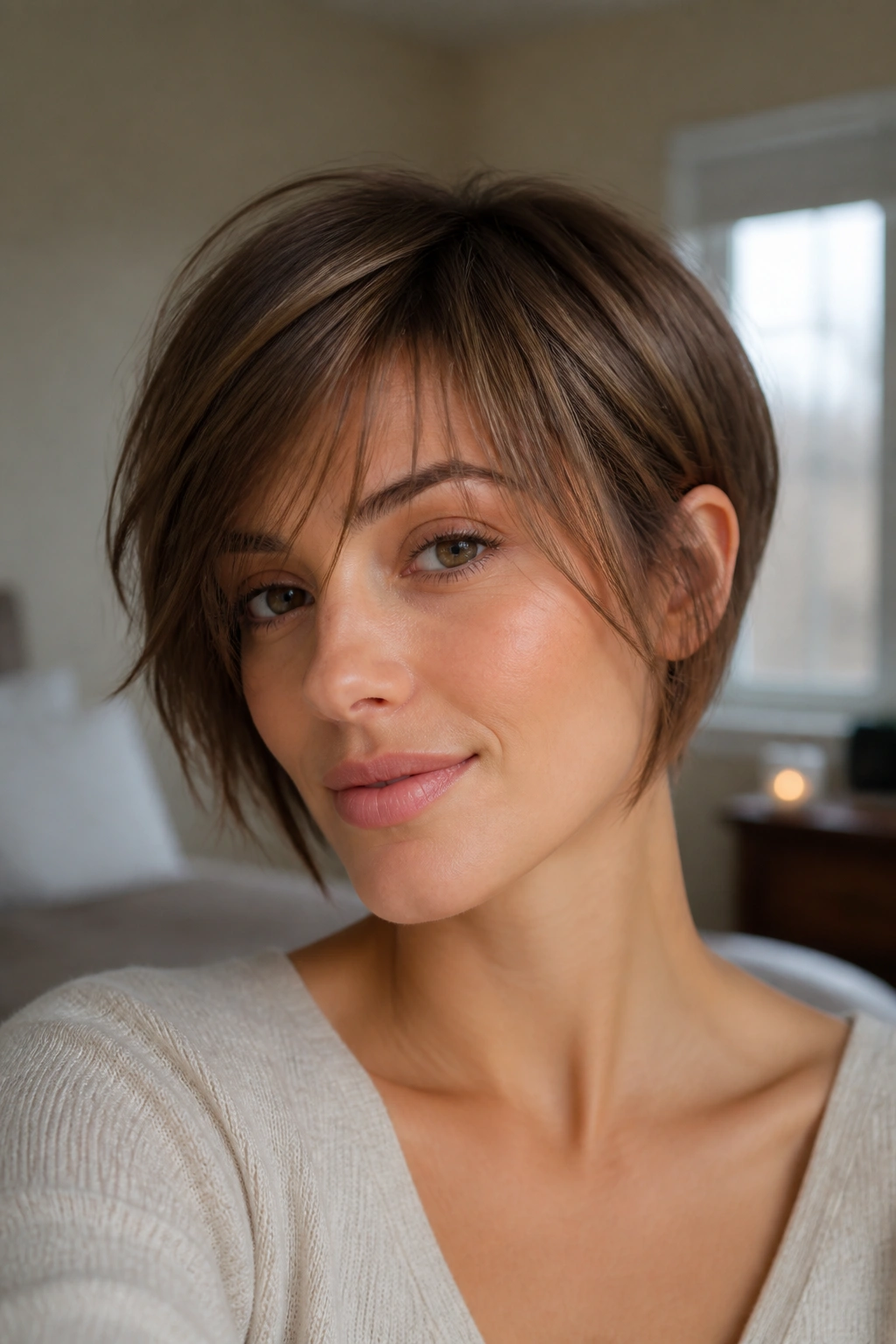
Wispy fringe can take a long pixie bob from practical to soft around the eyes. The fringe is light, broken, and not too dense, which means it frames the face without hiding it. That matters if you want bangs but don’t want the full commitment of a heavy fringe.
The shape works best when the fringe blends into the side pieces instead of hanging as a separate section. A little see-through texture around the brow line can make the haircut feel younger and less rigid. It also grows out more gracefully than blunt bangs, which saves you from that awkward “I need a trim right now” feeling.
Be careful not to over-thin it. Wispy is not the same as sparse. You still want enough hair in the fringe to show up in photos and in real life. A good cut should flutter a little when you move, not vanish.
16. Long Pixie Bob for Round Faces
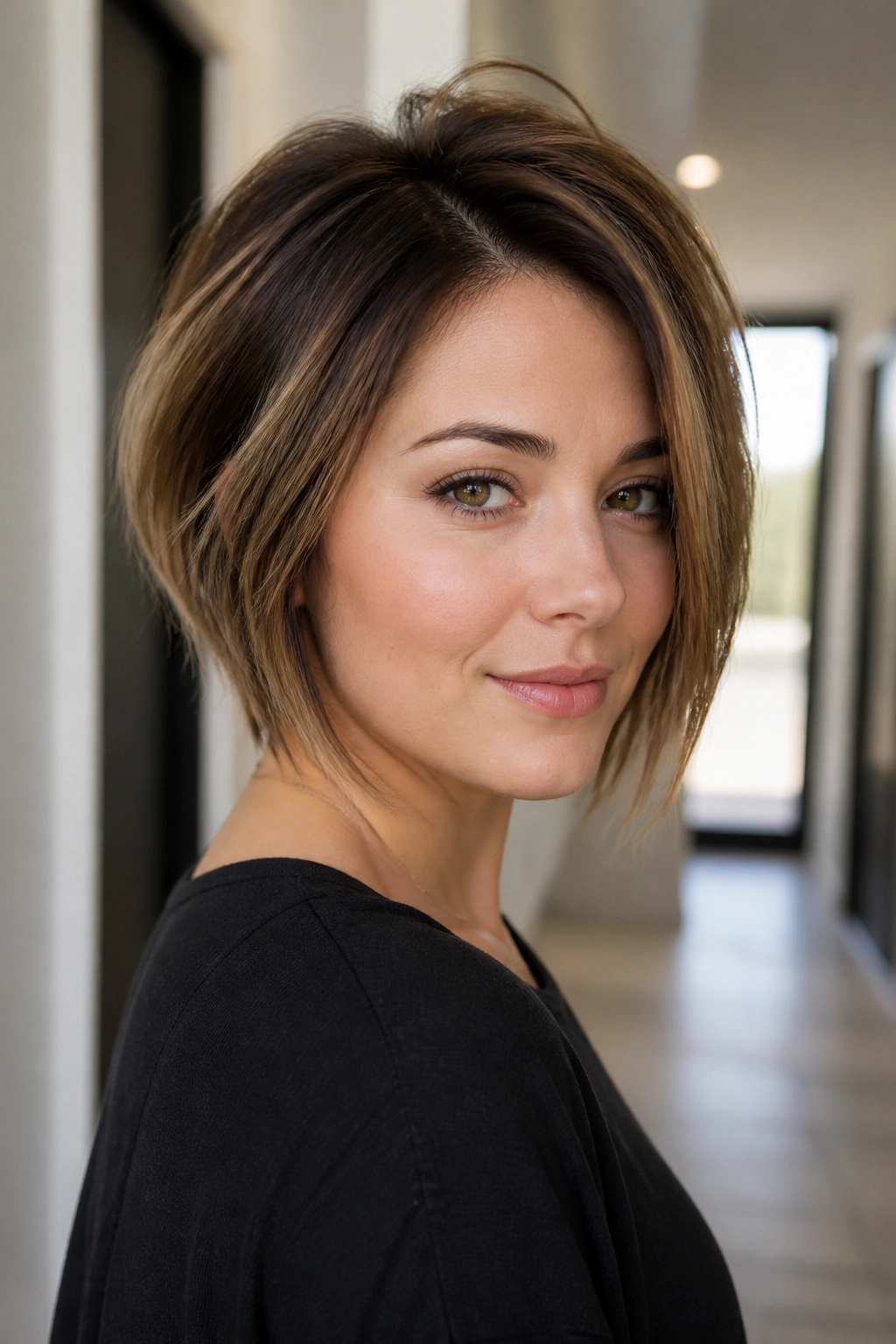
Round faces usually look best in this cut when the hair adds a little height and narrowness, not width. That means avoiding a full, rounded silhouette around the cheeks. The longer front pieces should fall below the widest part of the face, ideally near the jaw or just under it.
A deep side part helps here. So do crown layers that create lift at the top. The idea is to draw the eye upward and slightly downward at the same time. Straight-across bangs can work on some people, but they often shorten the face more than necessary. A side sweep is safer and usually more flattering.
A few shape rules make a big difference:
- Keep volume at the crown, not at the sides
- Let the front pieces go past the cheekbone
- Avoid a puffy, rounded bottom edge
- Use texture near the ends so the cut doesn’t sit like a perfect circle
This version can be very flattering when done well. It just needs the right geometry.
17. Long Pixie Bob for Square Faces
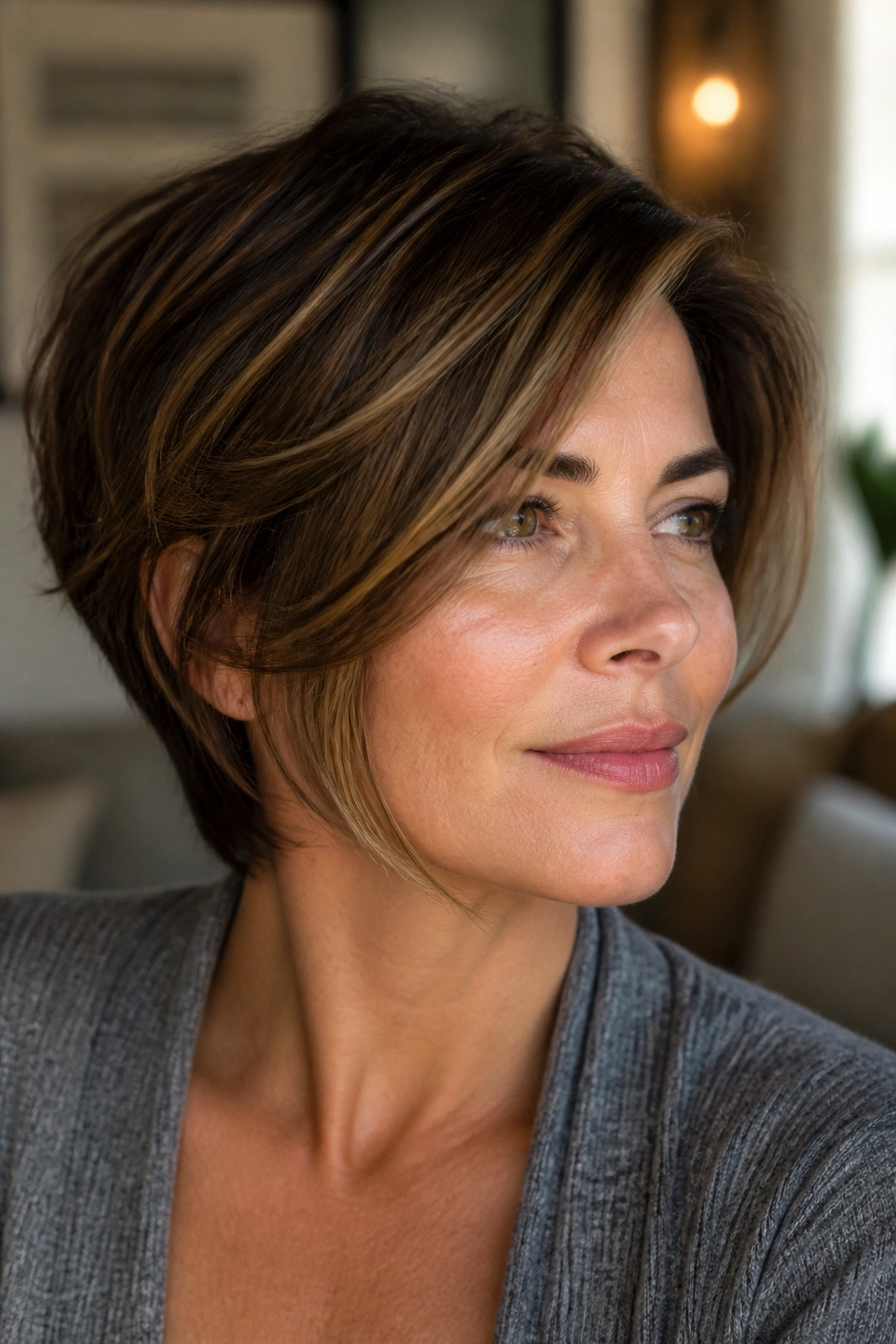
Square faces tend to look great in a long pixie bob when the haircut softens the jawline instead of lining up right on top of it. That means slightly curved ends, side-swept movement, and face-framing layers that hit around the mouth or chin. Harsh lines are the thing to avoid.
A square jaw can handle structure, but it benefits from some bend. Soft layers around the cheeks and temples take the edge off the angles without hiding the bone structure. If the hair is straight, ask for the ends to be beveled inward a little. That tiny curve changes the whole mood.
This is also a cut where texture matters. A little wave or bend stops the shape from looking too boxy. And if you do want a sharper finish, keep it up top and around the back, not right at the jaw. That way the haircut looks clean without feeling hard.
18. Balayage Long Pixie Bob
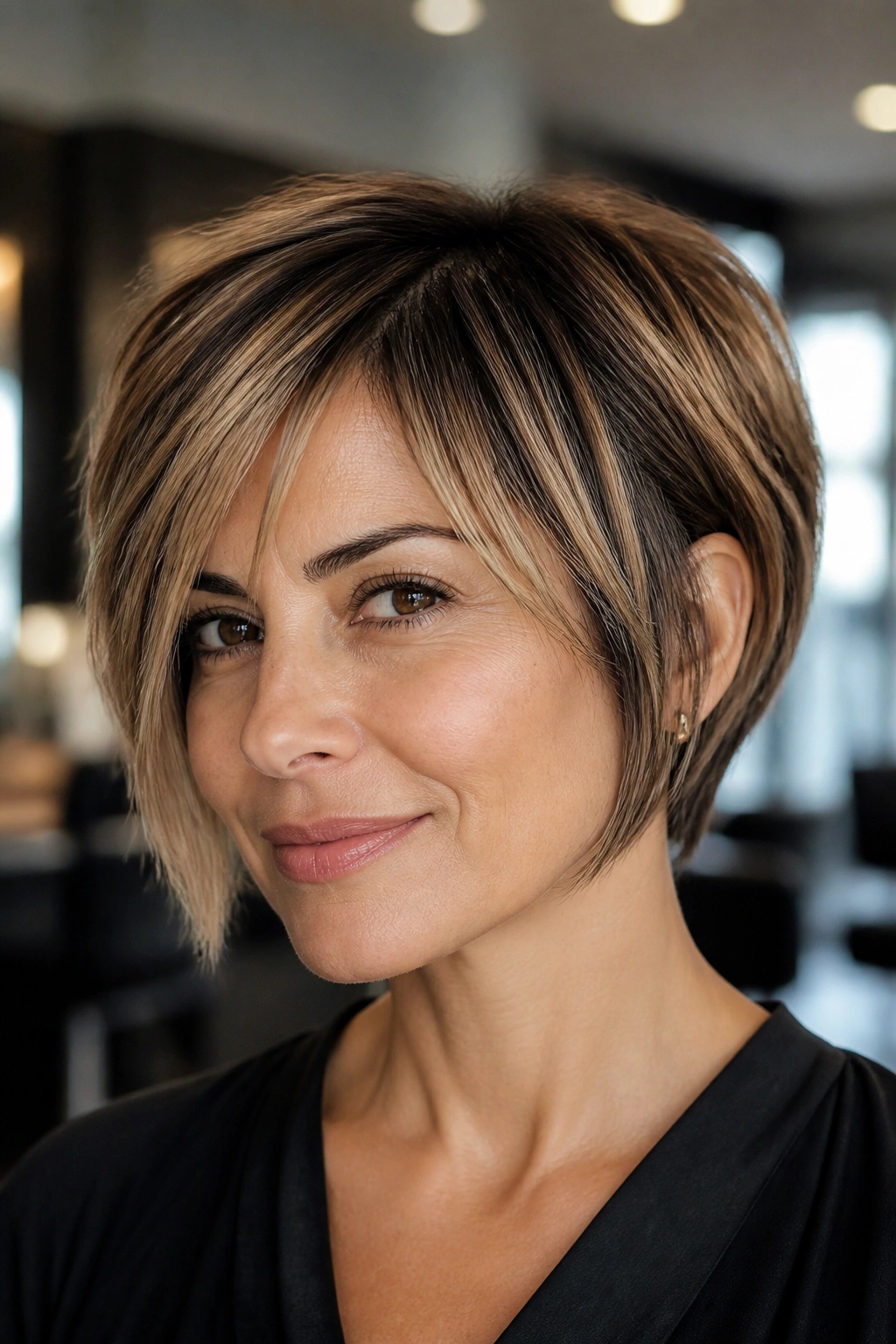
Color changes the haircut more than people expect, and balayage is a smart match for a long pixie bob. The painted highlights create movement in the layers, which is useful because shorter hair can flatten if every section is the same shade. Dimension makes the cut look fuller.
Where the color should land
The brightest pieces usually work best around the fringe, temples, and top layer. That gives the eye something to follow as the hair moves. A darker root area keeps the shape from looking striped or over-lightened.
- Place lighter ribbons near the face
- Keep some depth underneath for contrast
- Use a gloss or toner to prevent brassiness
- Avoid over-lightening the nape if the hair is already fine
This is one of those styles where the haircut and color need to cooperate. If the layers are soft, the color should be soft too. If the cut is sharp, the color can be a touch bolder. Either way, the dimension should help the shape, not fight it.
19. Tapered Neckline Long Pixie Bob
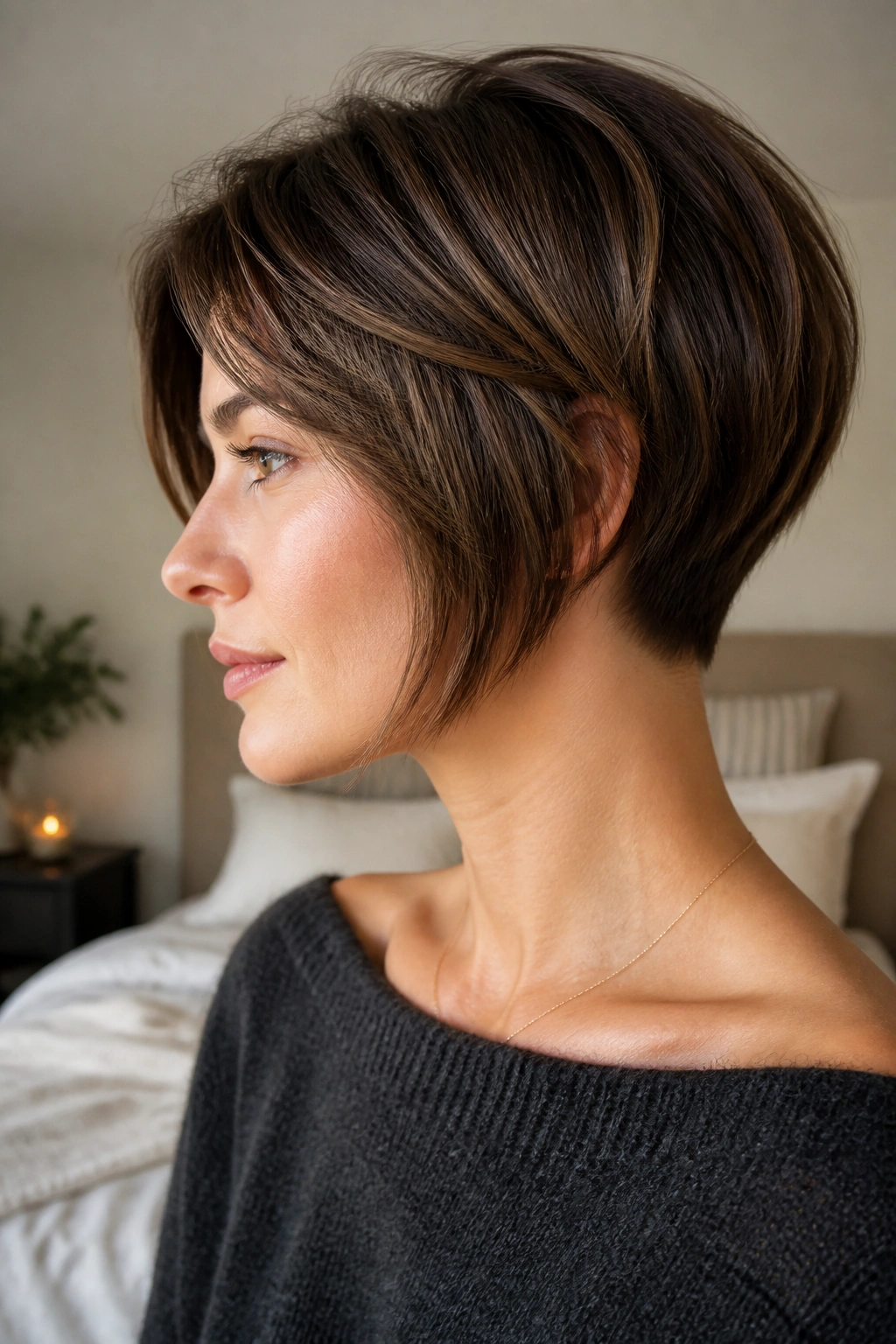
A tapered neckline makes the haircut look finished from every angle, even when the front is loose and relaxed. The back hugs the neck more closely, which gives the whole style a neater outline. It’s a small detail, and it changes the silhouette a lot.
This version is good if you hate that fuzzy, overgrown patch that short hair sometimes gets at the nape. A taper keeps the cut sleek near the collar and helps the back sit better under coats, scarves, and high-neck tops. It also gives the haircut a more tailored shape, which can make casual clothes look sharper.
The front can stay soft and longer while the back does the tidy work. That contrast is why the cut feels modern without needing a lot of drama. If you like hair that behaves around your neck and shoulders, this is the version to ask about.
20. Grow-Out-Friendly Long Pixie Bob
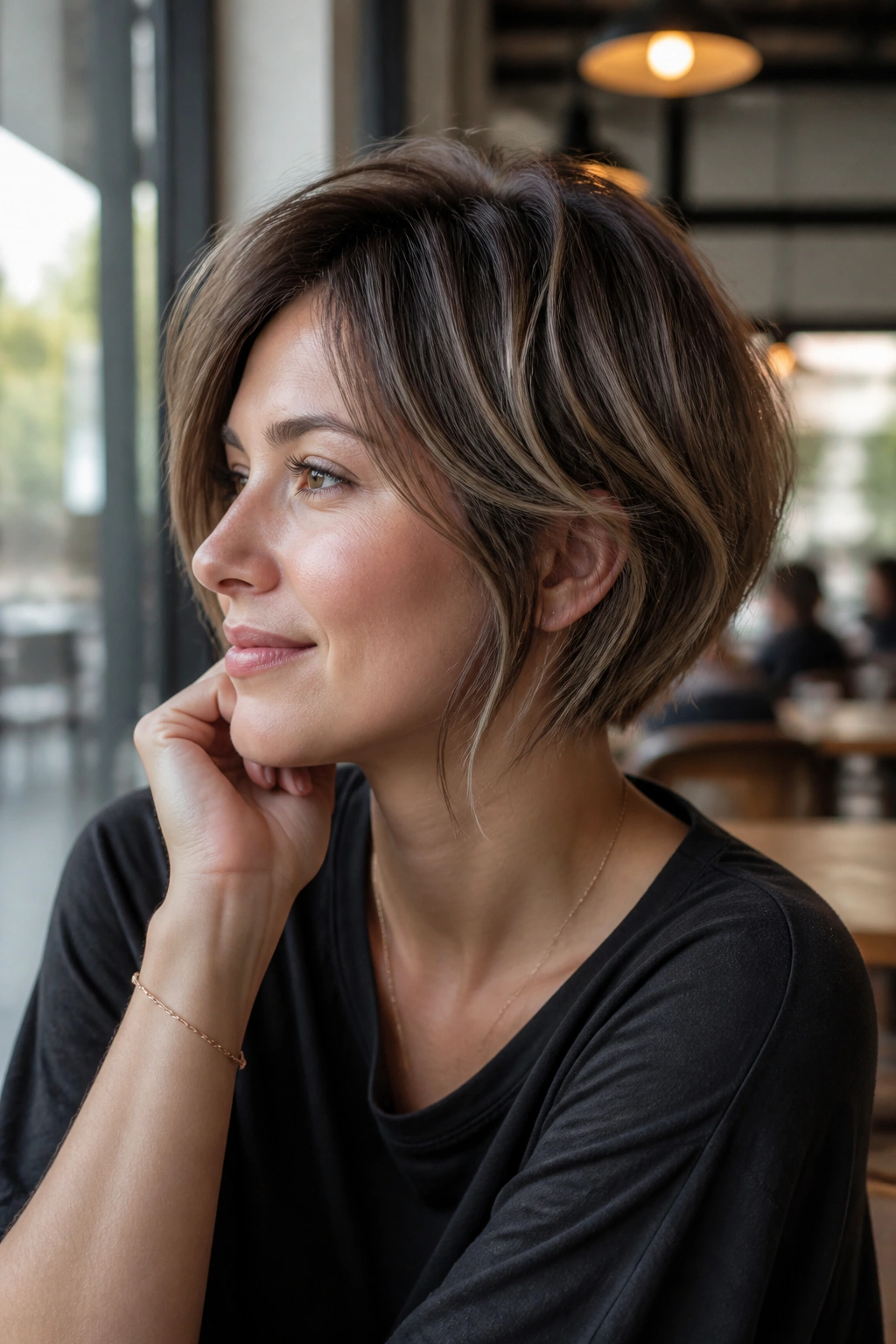
Not every short haircut needs to demand constant attention. A grow-out-friendly long pixie bob is the one I’d point to if you want a shape that still looks decent when you miss a trim by a couple of weeks. The front stays long enough to tuck, the top keeps some movement, and the back doesn’t collapse into a weird shelf.
This cut works because the proportions are forgiving. The nape can stay neat without being shaved down too aggressively, and the sides can blend into a short bob once they grow. That means fewer emergency fixes and less panic the first time you look in the mirror and think, “Hmm, this is getting fluffy.”
If you know you want short hair but not a high-maintenance life, this is the version to keep in mind. It plays nicely with air-drying, second-day texture, and fast morning routines. A little pomade or cream at the ends is usually enough. No need to fuss over it for twenty minutes.
A good long pixie bob should still look intentional after a rushed morning, a damp day, and a week where you didn’t feel like doing much to it. That is the real test.
