



A long pixie haircut can solve that awkward middle ground where your hair is too short for a proper bob and too long to feel light. It keeps movement around the face, but drops enough bulk from the back and sides to make styling easier. Some versions look soft and airy; others look sharp and polished; the bad ones look like someone got impatient with thinning shears.
The difference is in the shape. A good long pixie haircut for women keeps a little length where you want softness — the fringe, the crown, the temples — and removes weight where hair tends to puff out or collapse. That balance is why this cut can flatter straight hair, waves, curls, and fine hair without turning into the same tired cropped shape over and over again.
A lot of people ask for a pixie, then panic when they realize they do not want the super-short, close-to-the-scalp version. Fair enough. The longer pixie solves that problem neatly, because it still feels feminine and flexible without asking you to spend half the morning wrestling with a blow-dryer.
The 15 styles below cover soft, shaggy, sleek, curly, and color-forward versions. Some are easy on busy mornings. Some need a round brush and ten minutes. All of them depend on the same thing: a smart cut that grows out cleanly, not random chopping.
1. Feathered Long Pixie Haircut With Side-Swept Fringe
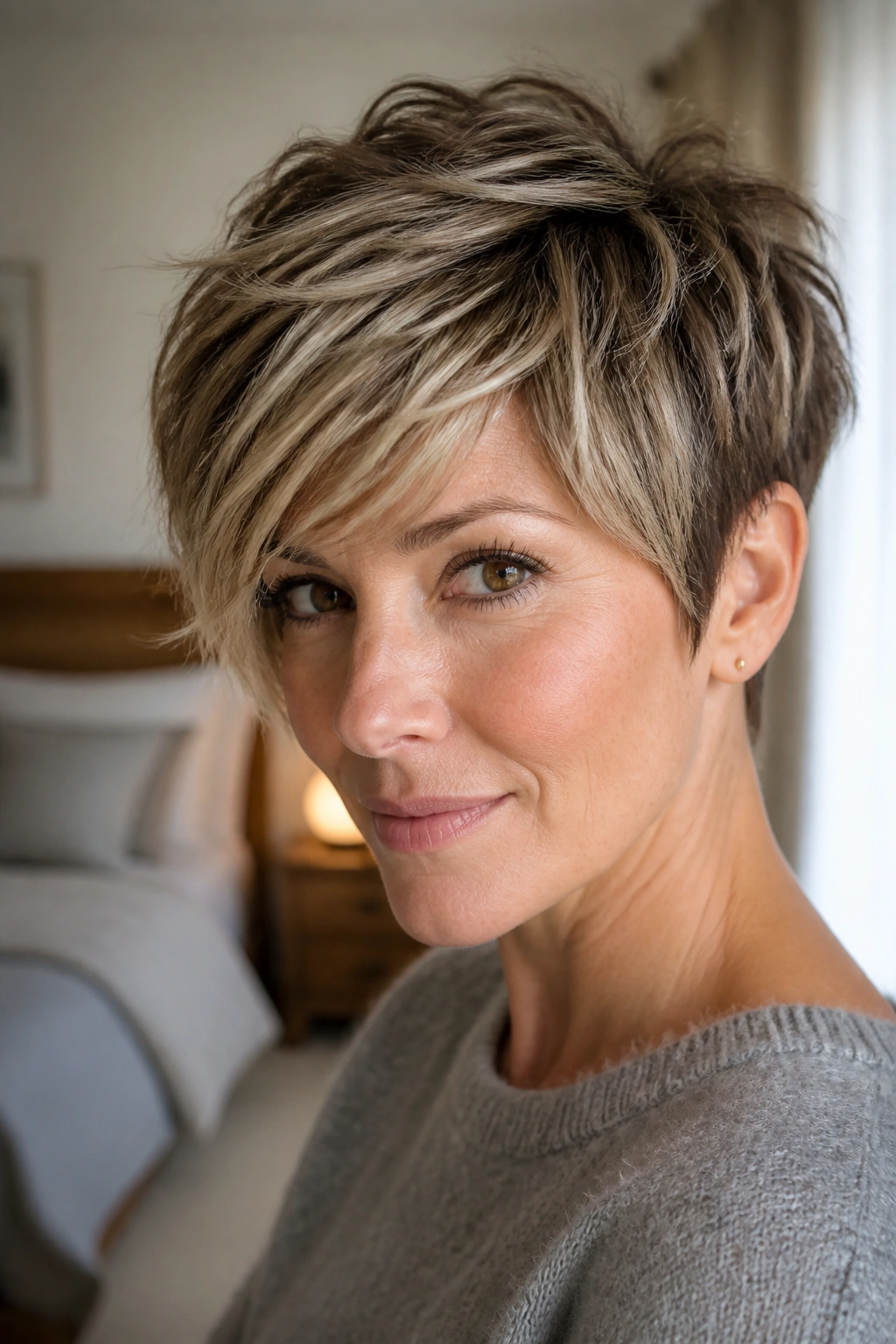
This is the long pixie I recommend when someone says they want short hair, but not too short. The side-swept fringe softens the forehead, the feathered layers keep the shape light, and the ears stay partly covered so the cut feels gentle instead of severe.
Why It Works
The fringe does a lot of the heavy lifting here. When it starts a little shorter near the brow and drifts longer toward the cheekbone, it draws the eye across the face instead of straight up and down. That tiny angle changes the whole mood.
A feathered long pixie also behaves better than a blunt one. Blunt edges can look heavy fast, especially if your hair has any puff at all. Feathering breaks that line so the ends move when you turn your head, which is the whole point.
Ask your stylist for:
- 3 to 4 inches on top
- A side fringe that reaches the cheekbone when brushed forward
- Soft tapering around the temples
- A neat nape with no hard shelf at the back
Best for: round faces, heart-shaped faces, and anyone who wants a softer first step into short hair.
Styling tip: blow-dry the fringe in the opposite direction first, then sweep it over. You get lift at the root without making the front look puffy.
2. Tapered Long Pixie With Crown Volume
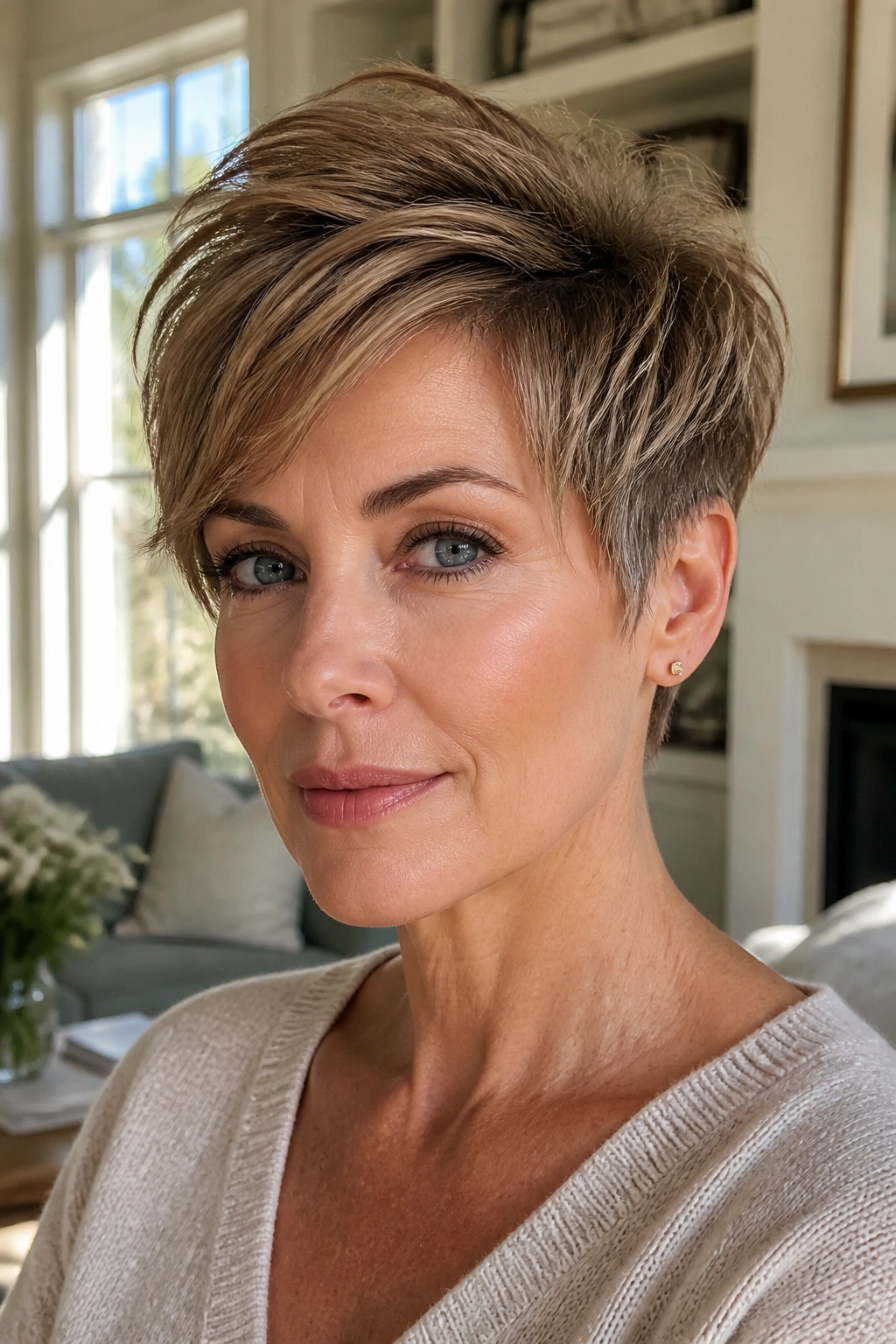
Flat roots ruin a long pixie faster than almost anything else. If your hair lies close to the head and loses shape by noon, a tapered crown-volume cut gives you the lift that short styles need without making the sides too wide.
The magic is in the taper. The sides and back sit closer to the head, while the top stays long enough to bend and lift. That contrast makes the face look longer and the profile look cleaner. It also stops thick hair from mushrooming out at the sides, which is a problem I see all the time in bad pixie cuts.
One sentence can sum it up: the volume belongs at the crown, not at the temples.
Use a root-lift spray or mousse at the roots, then rough-dry with your fingers until the top is about 80 percent dry. Finish with a small round brush if you want more polish, or leave it a little piecey if you like movement. Straight hair gets the biggest boost here, but fine wavy hair does well too because the tapered base keeps the shape from collapsing.
3. Choppy Textured Long Pixie With Razor-Lite Ends
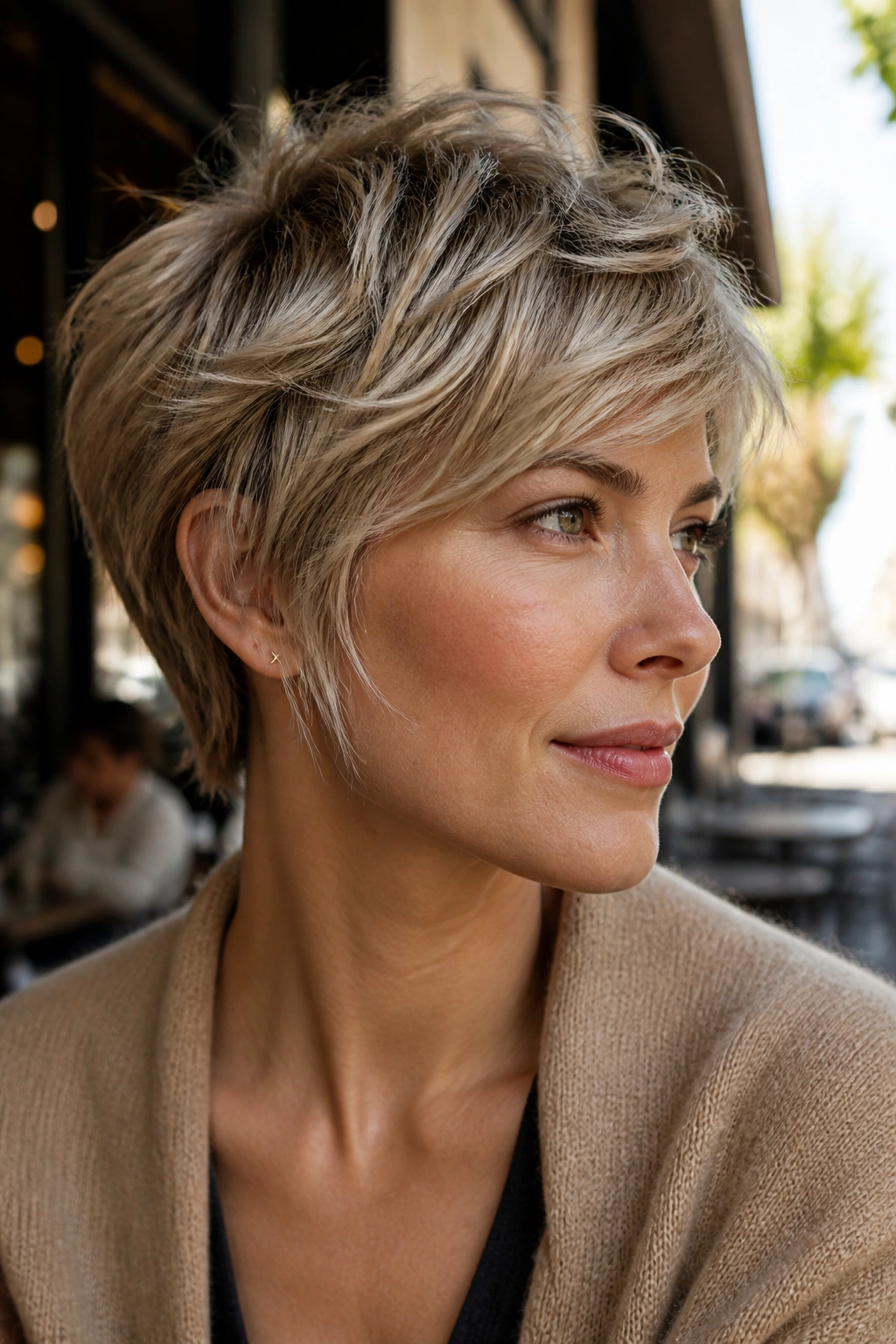
Why does one textured pixie look current and another look like it was cut in a rush? The answer is usually the ends. A choppy long pixie with razor-lite edges has broken-up movement through the top, not just random layers thrown everywhere.
What Makes It Different
The cut should look intentionally uneven in the best possible way. The front pieces may be a touch longer, the crown may have shorter bits that stand up a little, and the sides may have enough softness to tuck behind the ear without fighting you. That irregular line gives the hair a lived-in feel.
It works especially well on hair that is naturally straight or only slightly wavy. Thick, dense hair can take the texture, but the stylist has to remove weight in the right places or the cut starts looking bulky. Fine hair can wear this style too, though I would not over-thin it. Thin hair and aggressive texturizing are not friends.
How to Style It
- Work a pea-sized amount of matte paste through dry hair.
- Twist small sections between your fingers to build separation.
- Lift the crown with your fingertips, not a brush.
- Keep the fringe slightly messy, not perfectly arranged.
My honest take: this is one of the easiest long pixies to wear if you hate fussy styling, but it does need regular trims. Leave it too long and the texture loses its shape fast.
4. Asymmetrical Long Pixie With a Deep Side Part
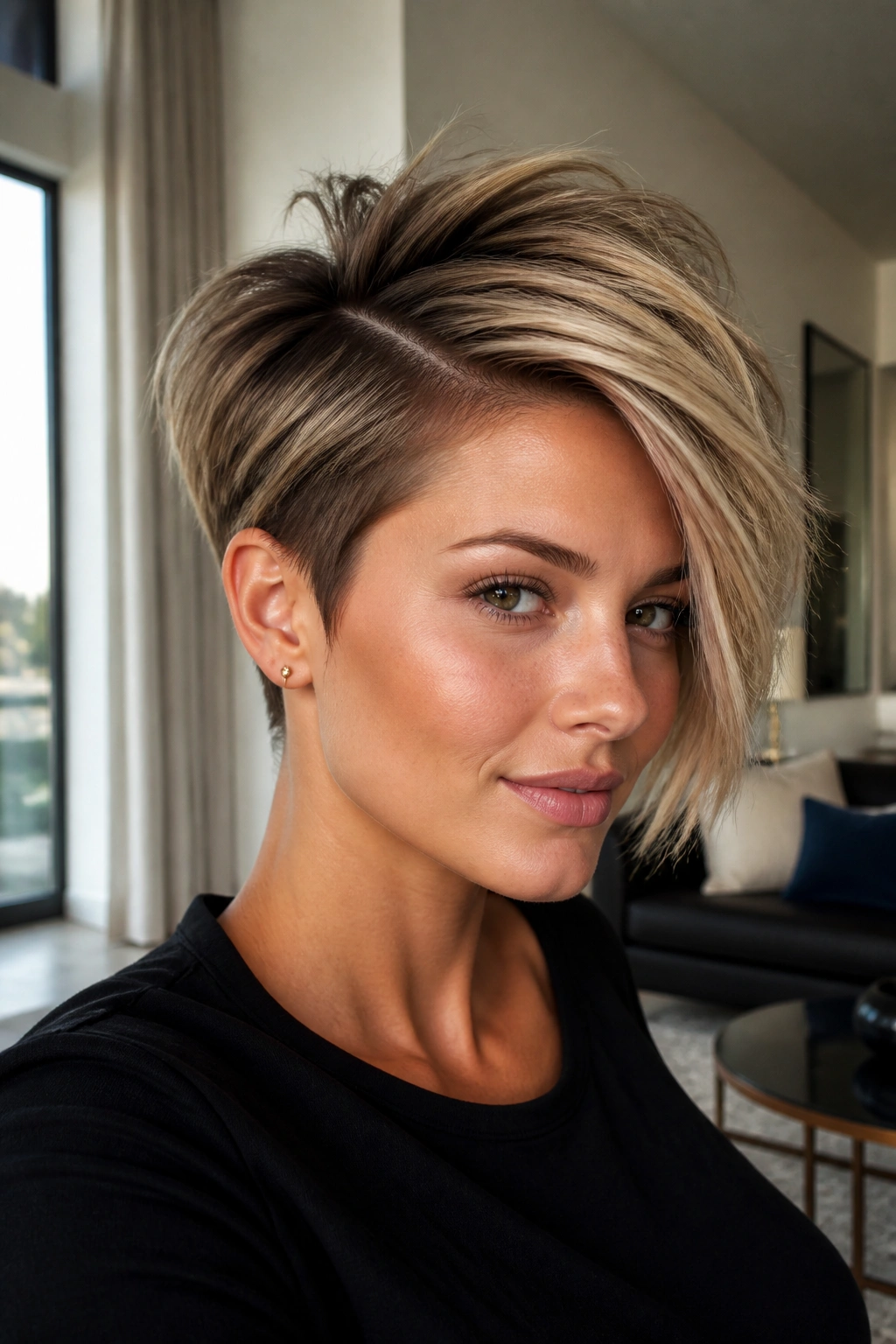
A deep side part changes the face before the haircut even gets a chance to show off. When one side falls longer and the other side sits closer to the ear, the whole cut feels sharper, a little bolder, and much more deliberate.
I like this style on square faces and longer faces because the asymmetry creates a useful break in the outline. One side can skim the cheekbone while the other side stays neat and tucked. That imbalance sounds dramatic on paper, but in real life it often reads as calm and polished.
Who should try it? Someone who wants one strong detail instead of all-over texture.
Salon note: ask for the heavier side to be about 1 to 2 inches longer than the shorter side, not wildly disconnected. If the gap gets too large, the cut stops looking intentional and starts looking fussy.
A deep side part also gives you styling room. You can tuck the shorter side behind the ear, pin it back, or let it curve over the forehead. That flexibility matters on days when you want the haircut to look neat with almost no effort.
5. Long Pixie With Curtain Bangs
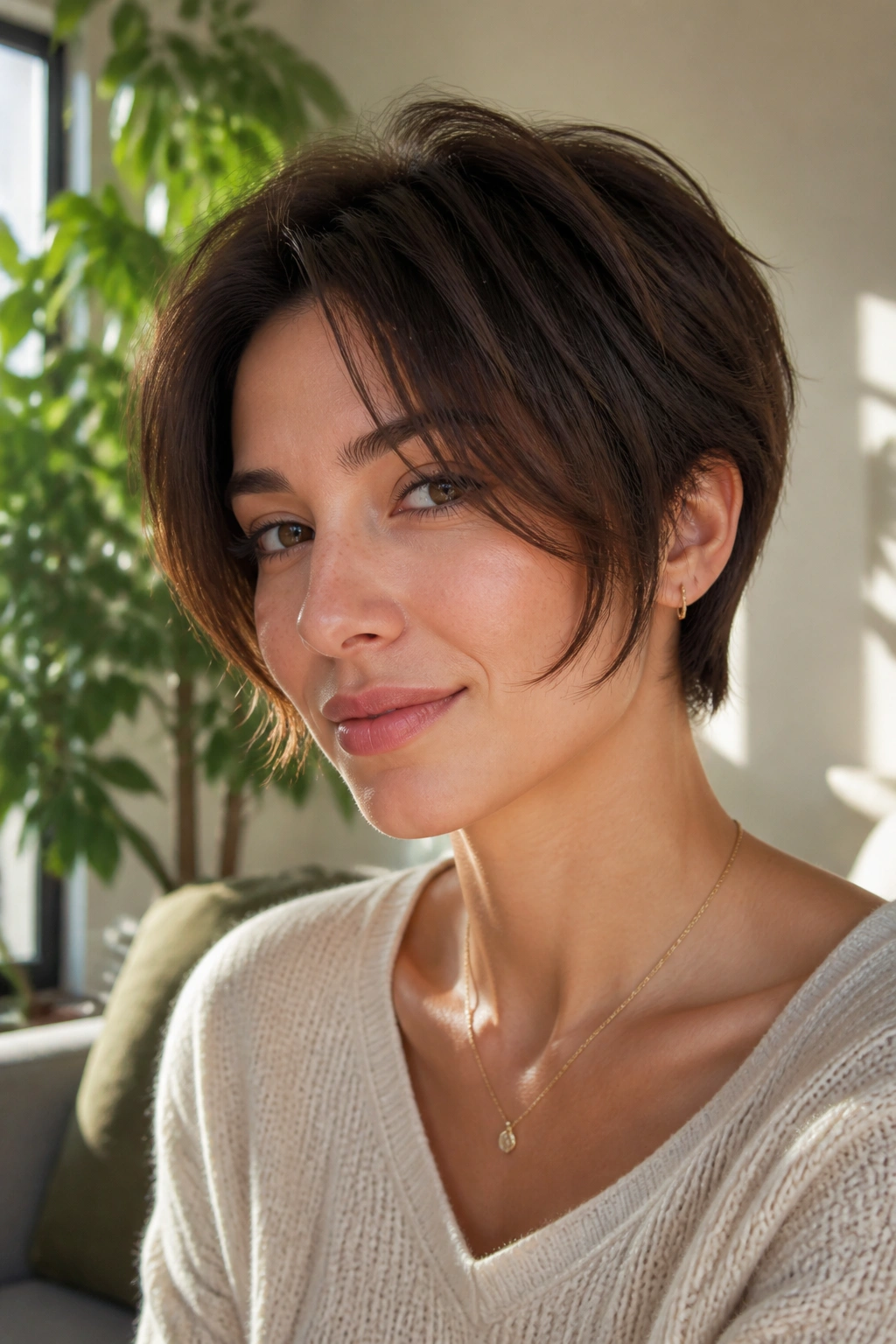
Curtain bangs change the personality of a long pixie in a big way. They soften the forehead, frame the eyes, and blend into the sides so the haircut feels less cropped and more airy.
This is the version I reach for when someone wants the safety net of a fringe without a heavy bang line. Curtain bangs can split in the middle, sweep to each side, or fall more softly with a bend at the cheek. They also help if your forehead feels too exposed in a classic pixie.
The trick is to leave enough length in the front. If the bangs are cut too short, they lose that draped effect and turn into a blunt fringe. A good curtain bang on a long pixie usually starts around the brows and drops longer toward the cheekbones, where it can blend into the side layers.
Blow-dry with a small round brush and direct the front away from the face for a few seconds on each side. That little twist gives the fringe shape without making it stiff. If your hair is wavy, a light cream is enough. If it is straight, a touch of mousse at the roots keeps the front from hanging flat.
6. Sleek Long Pixie Tucked Behind the Ear
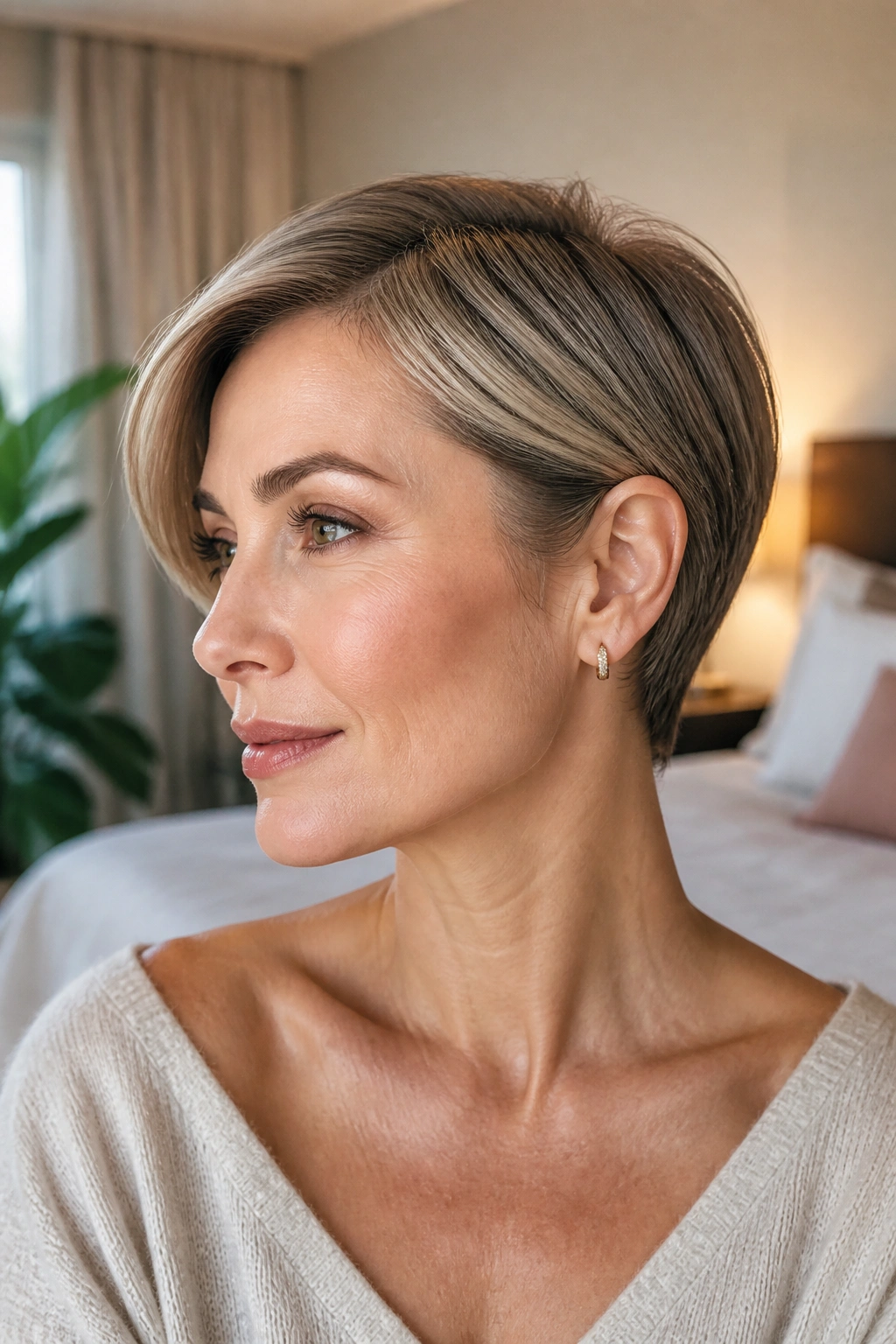
This version is for the person who likes a cleaner line and does not want a lot of visible texture. Unlike shaggy pixies, the sleek long pixie lives on control: smooth sides, a tidy neck, and enough length at the top to tuck one side behind the ear without losing shape.
The cut looks especially sharp on straight hair, but slightly wavy hair can wear it if you keep the surface smooth. A light styling cream or a drop of serum helps the strands lie flat without looking greasy. That matters. Too much product turns a neat pixie into a helmet.
The ear tuck is the whole point. It opens the face, shows off earrings, and lets the haircut feel feminine without leaning into fluff. I also like this style for people who wear glasses, because the frames and the tucked side work together instead of fighting for attention.
If you go this route, ask for clean sideburns and a neckline that hugs the nape. A sleek pixie looks expensive when the edges are tidy. It looks unfinished when the outline is fuzzy.
7. Long Pixie Shag With Wispy Ends
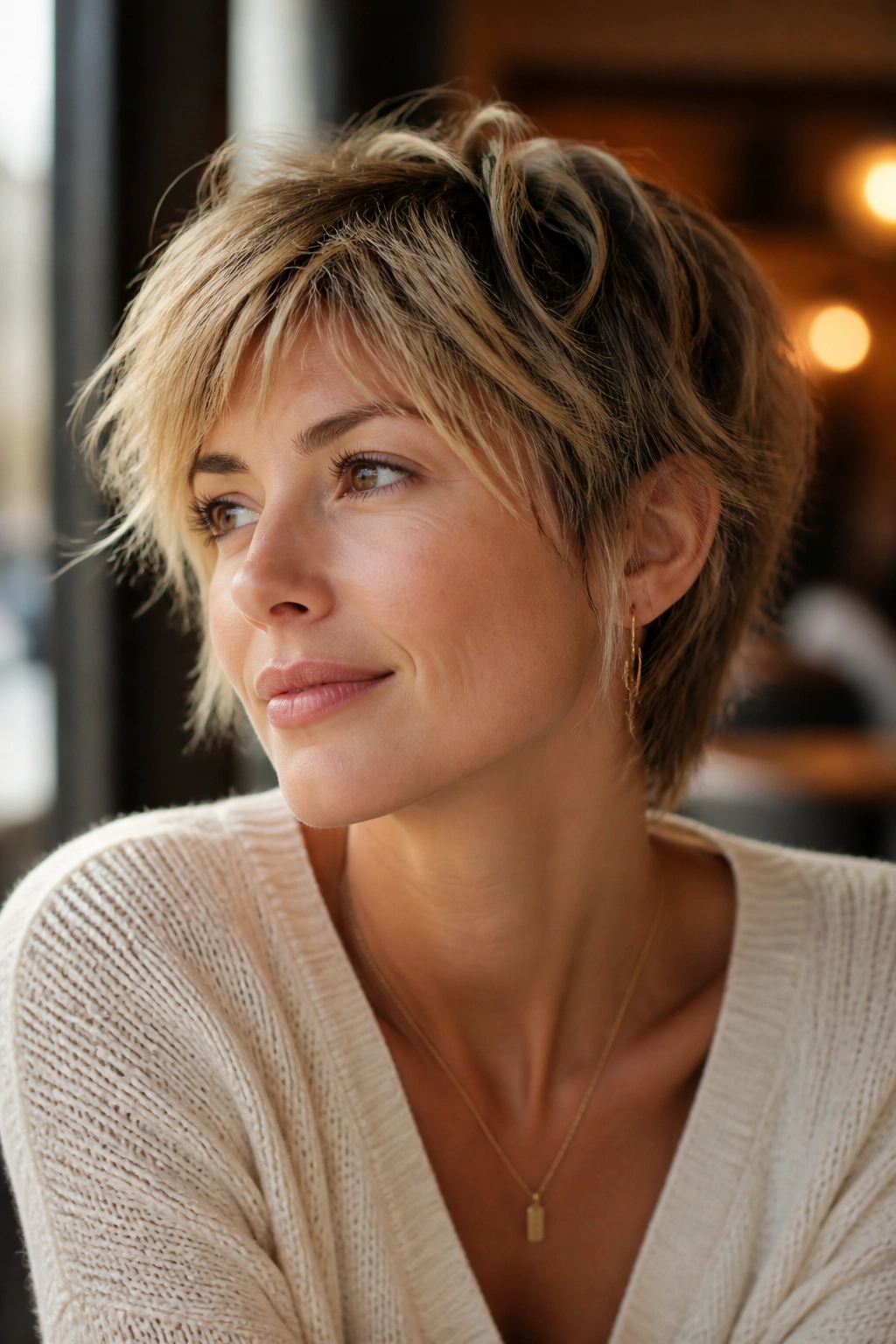
A shaggy long pixie has more attitude than a feathered one. The layers sit in different places, the ends feel airy and broken up, and the whole cut moves in a loose, slightly messy way that works well if you never want your hair to look too done.
What to Ask For
- Interior layers through the crown
- Wispy, not blunt, ends
- A little extra length at the temples
- Soft perimeter lines around the ears and nape
This cut is a gift for wavy hair, because the natural bend helps the layers show up. Straight hair can wear it too, but it usually needs a touch of texturizing spray or a few bends from a small iron. Keep the bends loose. Tight curls on a shaggy pixie can make the shape feel overworked.
Watch the thinning. A shag works because it has air, not because every strand has been attacked with shears. If the stylist removes too much weight, the cut goes fuzzy and loses its shape in a week. The good version looks easy. The bad version looks dry.
8. Long Pixie With an Undercut Nape
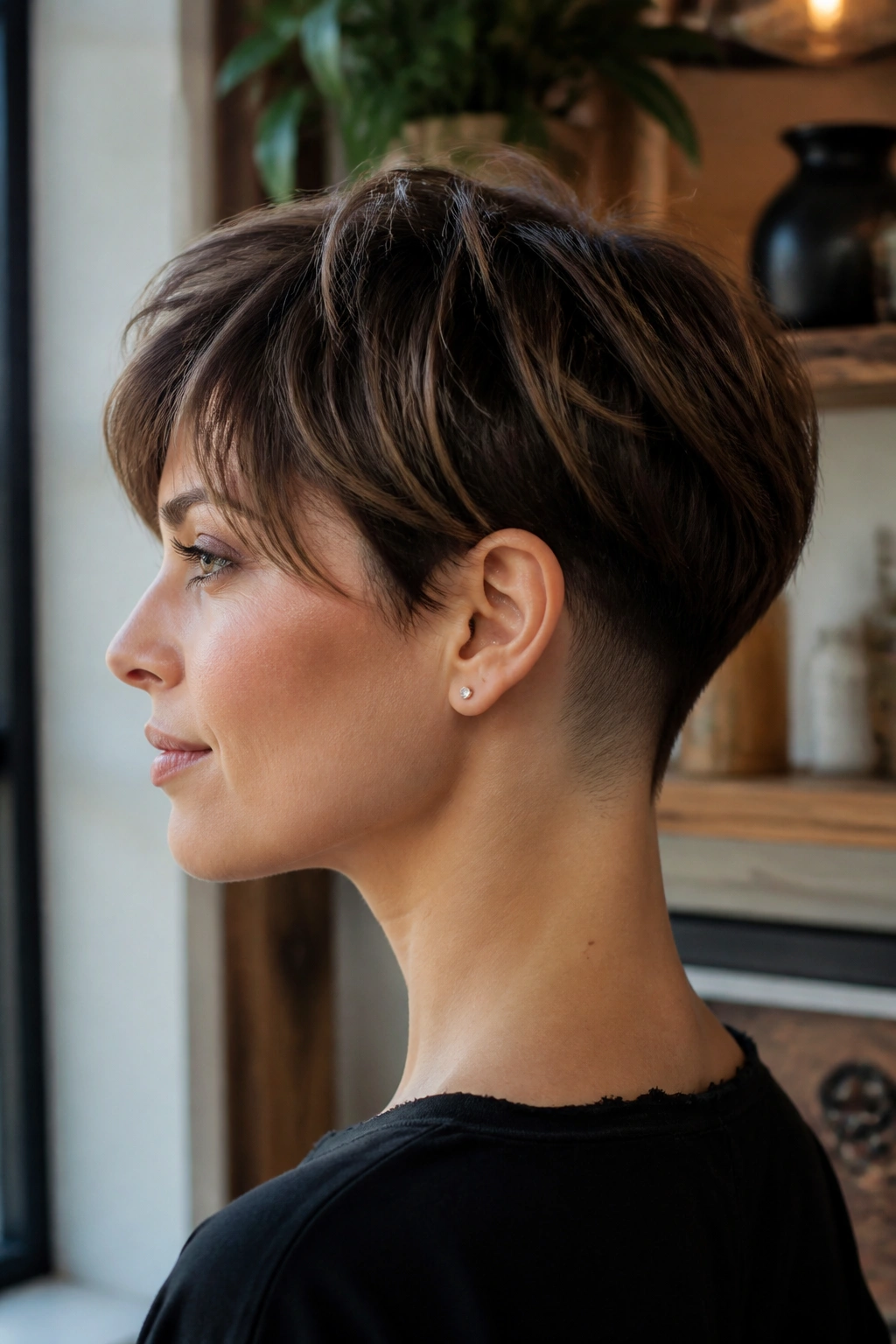
Thick hair at the neckline can be a pain. It sticks out, gets sweaty, and puffs up the second humidity shows up. A long pixie with an undercut nape handles that problem cleanly by removing bulk where you need it most while leaving length on top.
I like this cut for people who want short hair but do not want the back to feel heavy. The undercut can be hidden under longer layers, so the haircut still looks soft from the outside. That makes it a smart choice if you want lower bulk without a visible shaved strip.
The contrast matters here. The top stays long enough to sweep, tousle, or part to one side, while the nape sits close and neat. That gives the head a cleaner shape from behind, which is something many pixie cuts fail at. Front view gets all the attention. Back view is where the truth lives.
A soft clipper taper at the nape usually works better than a hard skin fade unless you want a sharper, more obvious undercut. The grow-out is easier too. You can let the top keep moving while the back catches up.
9. Curly Long Pixie for Natural Texture
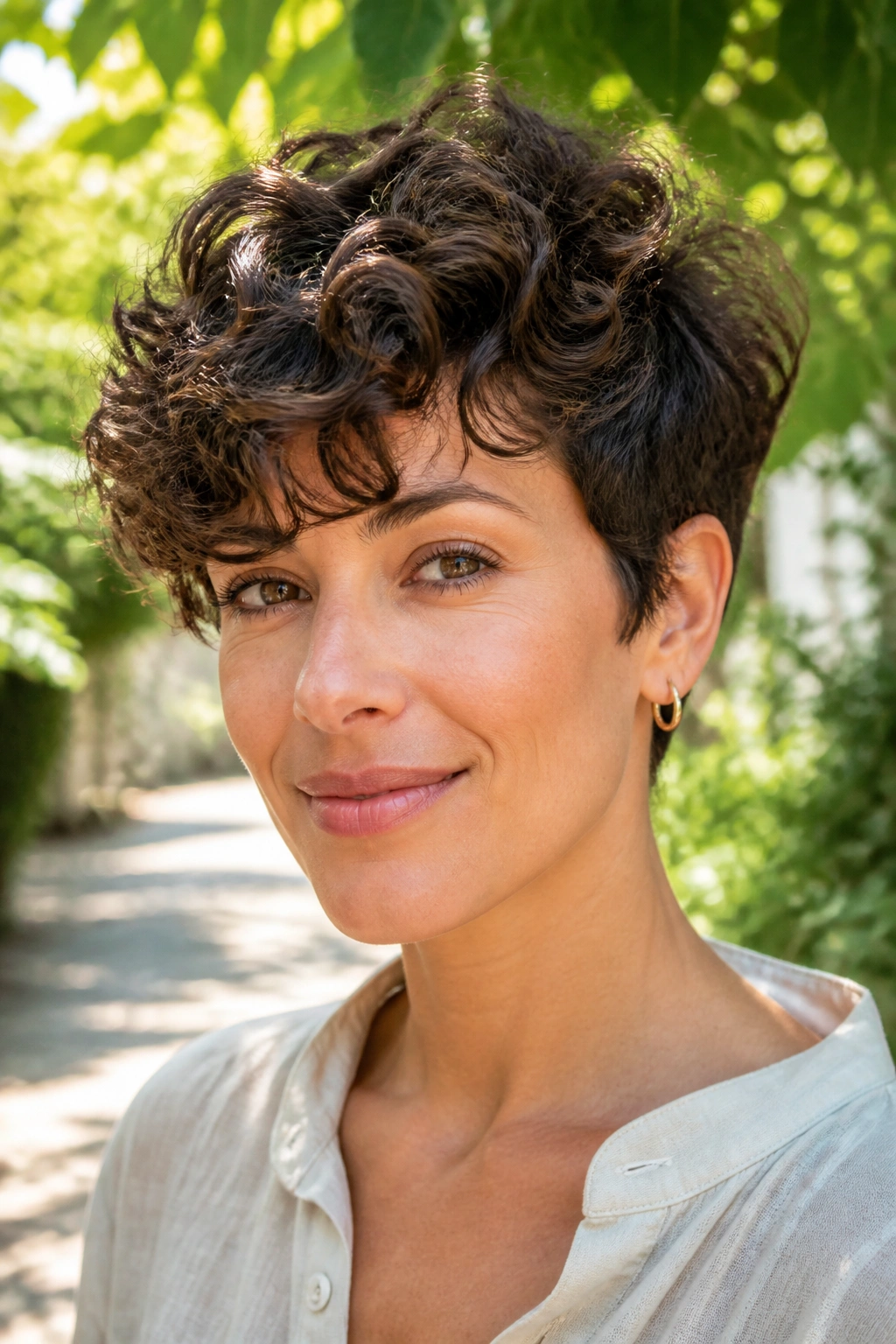
Dry curls are not the problem. Wrong shape is.
A curly long pixie works when the cut follows the curl pattern instead of forcing it into a flat little helmet. That means the top stays long enough to let the curls spring, the sides are trimmed to remove bulk, and the fringe is left a touch longer so it does not shrink into the middle of your forehead.
I strongly prefer this cut to be shaped on dry hair or at least on hair that has been diffused close to its natural state. Curly hair changes a lot as it dries, and a wet cut can fool even a skilled stylist. If the shrinkage is ignored, the result is usually too short in the front and too round at the sides.
Use a leave-in conditioner and a light gel or cream, then diffuse on low heat until the curls feel set but not crunchy. A wide-tooth comb or your fingers are enough for shaping. Brushes can make the top puff out in a way nobody asked for.
This style looks best when the curls are defined but not rigid. A few loose tendrils around the temple or cheekbone make the cut feel softer and more modern.
10. Wavy Long Pixie With Beachy Movement
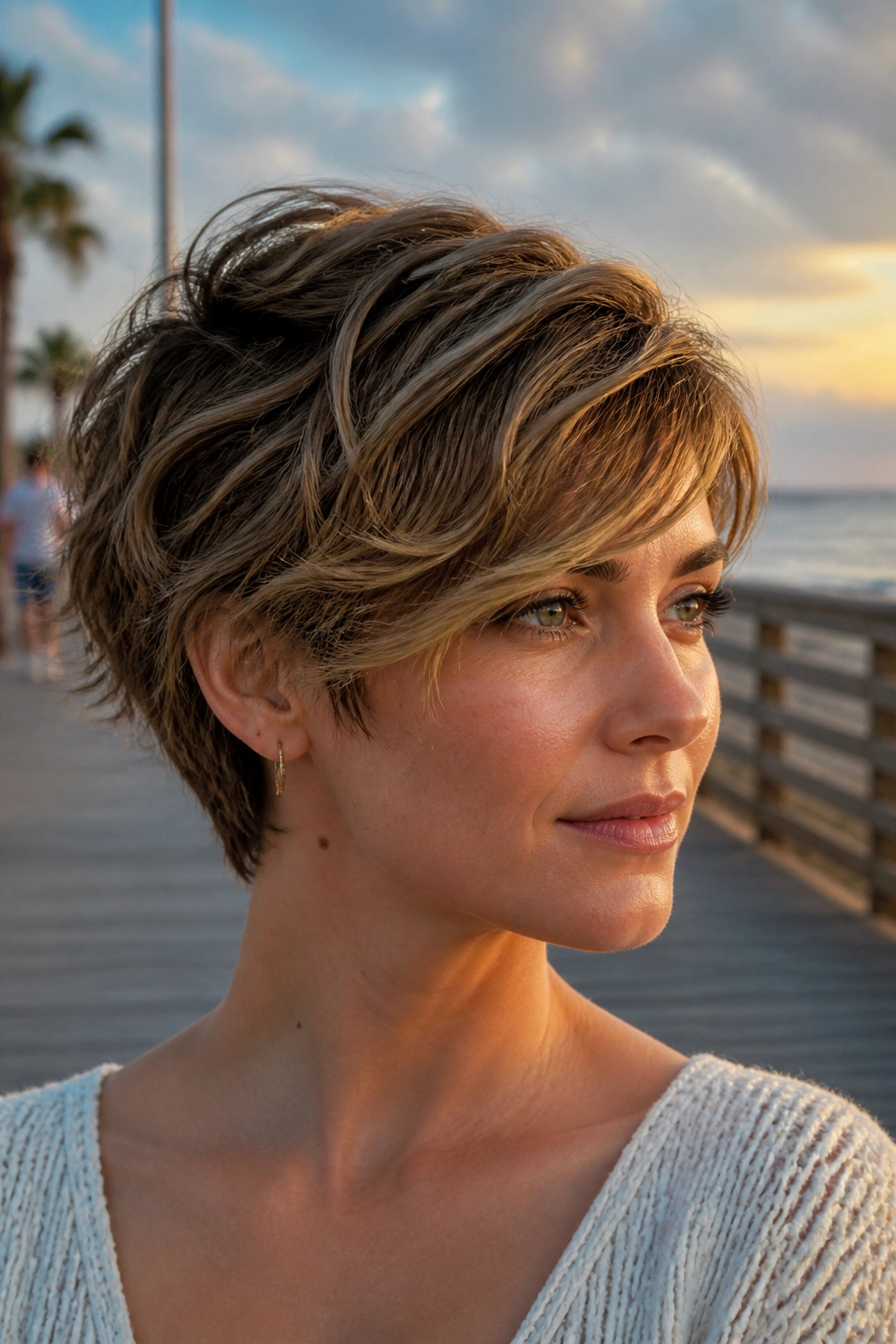
Waves can make a long pixie look easy in the best way. The bend in the hair adds movement on its own, so the cut does not need a lot of heavy layering to feel alive.
Who It Suits
This shape works well if your hair falls somewhere between straight and curly, especially if it has a natural bend that shows up when you air-dry. It also suits people who like a slightly relaxed finish rather than a sharp, buttoned-up one.
The trick is not to over-style it. A beachy long pixie is not supposed to look like you curled every section with perfect intention. That look can age the cut fast. Instead, use a 1-inch iron or a flat iron just on a few pieces near the front and crown, then leave the ends soft.
How to Get the Bend
- Spray a light heat protectant on dry hair.
- Wrap 1-inch sections away from the face for 5 to 8 seconds.
- Leave the last inch of each section out.
- Rake through with your fingers once the hair cools.
A sea-salt spray can help if your waves are limp, but use a light hand. Too much salt spray leaves the hair crunchy and dull, and that is not the mood here. A little mess is fine. Crispness is not.
11. Stacked Back Long Pixie
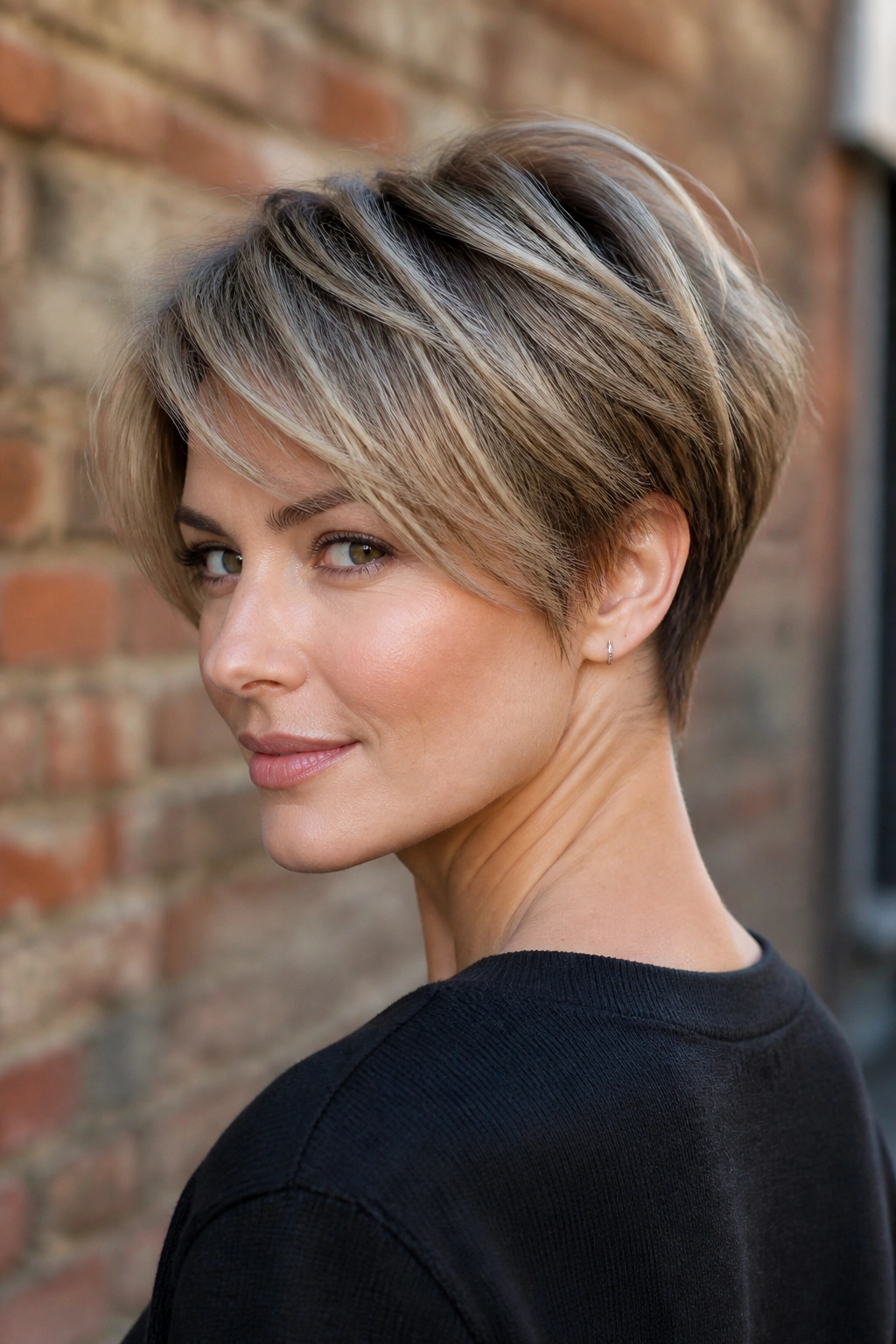
If the back of your head goes flat in photos, this is the cut that fixes it. A stacked back long pixie builds shape through short, graduated layers near the crown and occipital area, so the silhouette lifts instead of dropping straight down.
The stack is subtle when it is done well. You should see a nice curve from the crown to the nape, not a sharp shelf or a chunky ledge. That curve gives the haircut body and helps the top float over the back instead of clinging to it.
This style sits between a cropped pixie and a tiny bob, which is why so many people like it. You get structure in the back, softness around the face, and enough length up top to change the part when you want. It is also a solid choice if your hair naturally flattens at the crown.
One warning: do not over-stack it. Too much graduation makes the head look pointy from the side, and that is hard to hide. The best stacked pixies look rounded, not stiff.
12. Rounded Long Pixie for Fine Hair
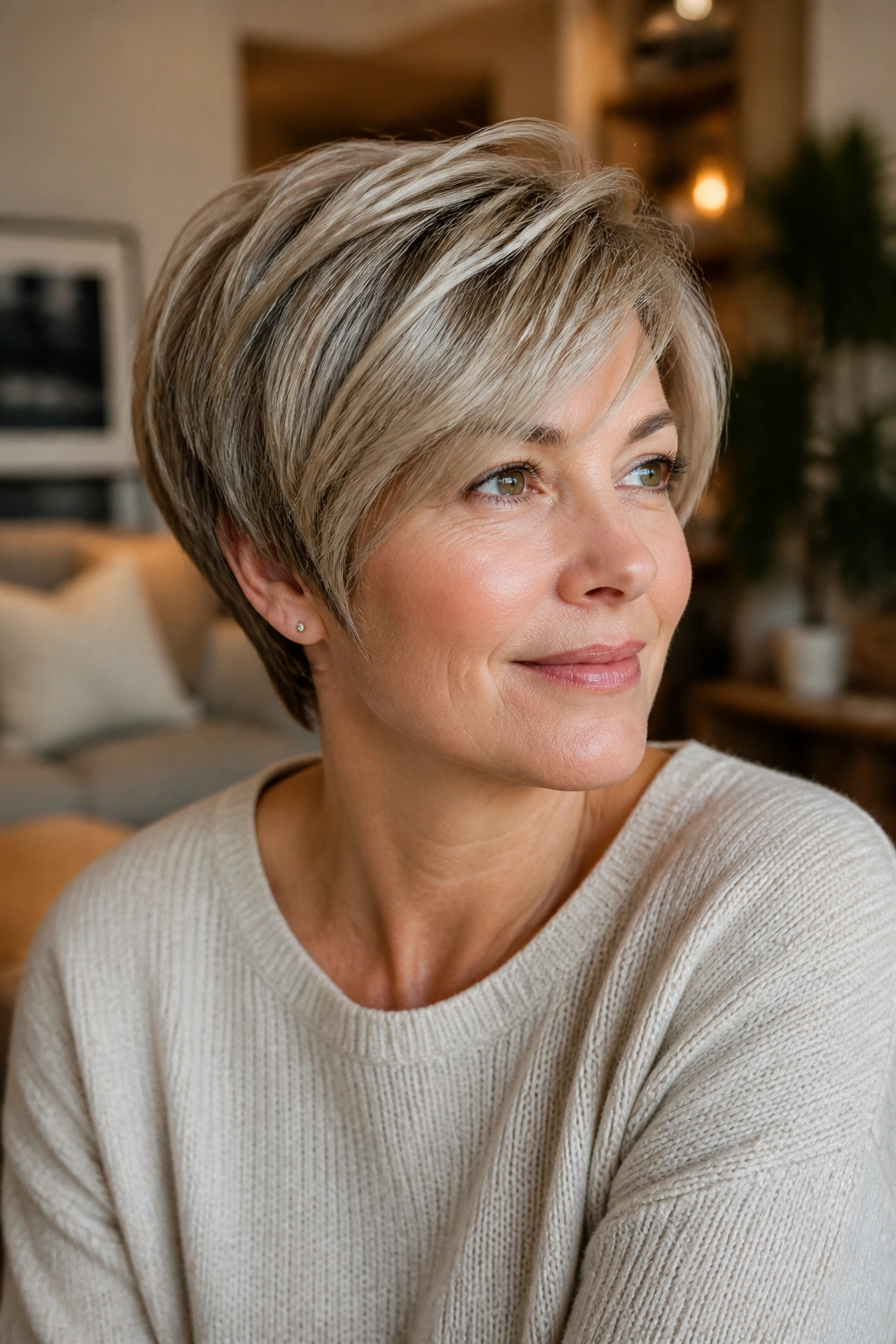
Fine hair needs shape more than it needs drama. A rounded long pixie gives that shape by keeping the outline soft and full, especially around the temples, crown, and upper sides where thin hair usually looks sparse.
This is not the cut for aggressive texturizing. Fine hair loses too much body when every layer gets hacked apart. Instead, the stylist should leave a little weight in the perimeter and use gentle layering inside the shape. That makes the hair look thicker without making it look bulky.
A few details matter a lot here:
- Keep the top around 3 to 4 inches so it can bend.
- Ask for soft, blended layers, not choppy ones.
- Avoid over-thinning around the ears.
- Blow-dry with a small round brush to lift the roots first.
I like a little mousse at the roots and a touch of dry spray at the crown. That gives the style some grit. Fine hair often needs a bit of roughness to hold the shape.
13. Platinum Long Pixie With a Sharp Finish
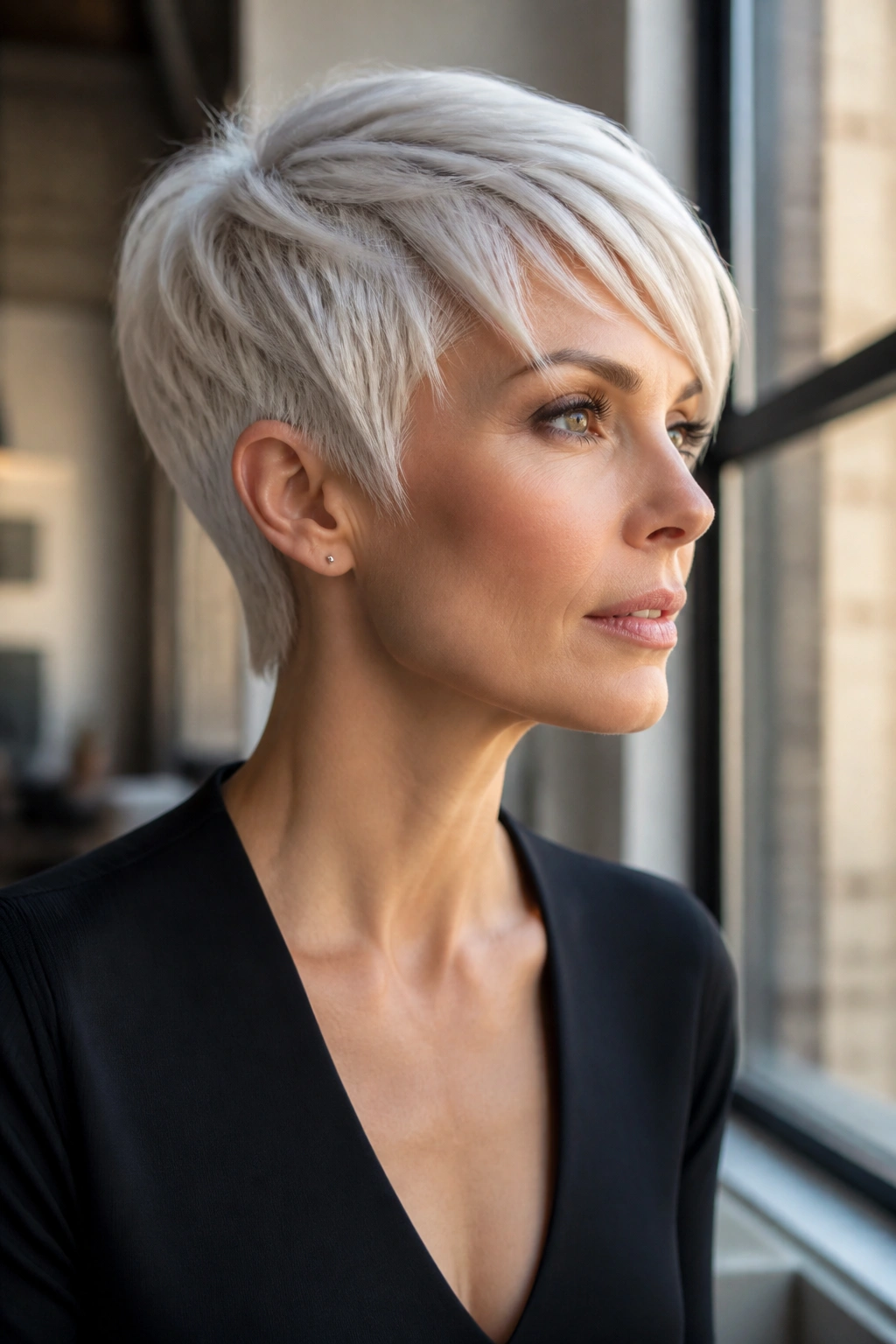
Platinum hair changes a pixie fast. The color makes every edge more visible, which is why this cut looks crisp when it is neat and sloppy when it is not. If you like contrast and clean lines, the platinum long pixie has a strong, clean energy that darker shades do not always show.
What to Know Before You Go Light
Bleached hair needs more care, plain and simple. Dry ends show up faster on short cuts because there is nowhere for damage to hide. That means a platinum pixie needs trims on schedule and a conditioner that actually leaves the hair soft, not coated and waxy.
Tone matters too. A pale yellow platinum can look warm and creamy, while a cooler pearl tone gives the cut a sharper feel. Pick the tone that suits your skin and your wardrobe, because the color sits close to the face and changes the whole impression.
Maintenance Note
Use a purple shampoo once a week or less unless your stylist tells you otherwise. Too much can leave the hair dull or purple-tinted. A light heat protectant is non-negotiable if you use a flat iron or blow-dryer, because dry platinum hair snaps faster than untouched hair.
This is a strong choice if you want the haircut itself to feel like the statement. The color does the loud part. The cut can stay sleek and simple.
14. Dark-Root Balayage Long Pixie
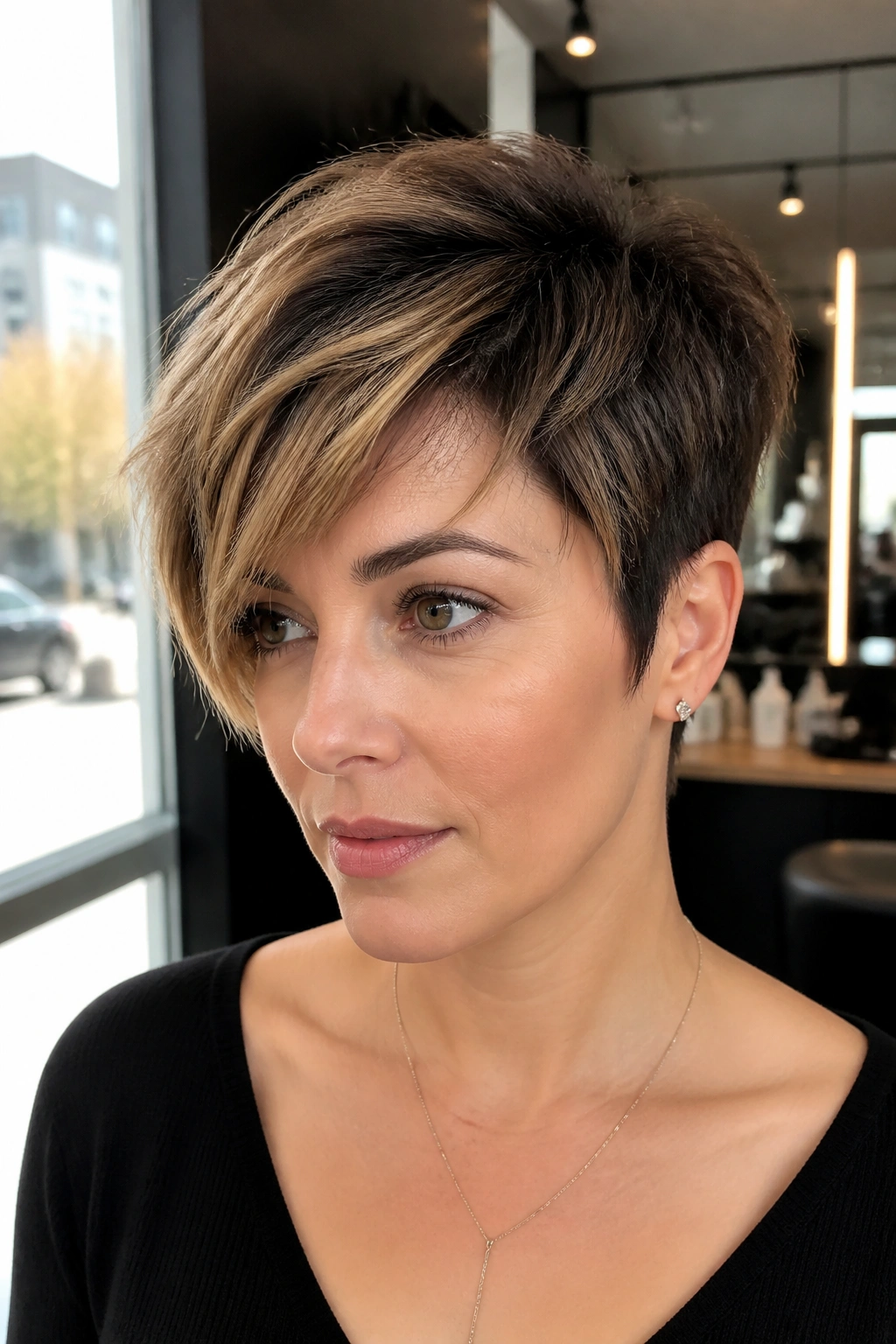
This is the low-drama color version, and I mean that in a good way. A dark root with balayage through the top and fringe gives a long pixie depth, so the layers show up even when the hair is not perfectly styled.
The darker base keeps the cut grounded. The lighter pieces around the crown, fringe, or face create movement without needing a lot of styling product. That contrast matters on shorter hair because highlights catch the shape of the cut. They make the layers easier to read from across the room.
It also grows out better than a solid all-over color. A root shadow softens the transition between salon visits, which is useful if you do not want a harsh line showing every few weeks. If the style leans textured, the color helps the movement stand out. If the style is sleek, the dimension keeps it from looking flat.
I especially like this on long pixies with a side sweep or an elongated fringe. The light pieces can follow the direction of the hair and make the face look framed without stealing the whole show. Quiet? Yes. Boring? Not at all.
15. Long Pixie With Elongated Fringe and Soft Nape
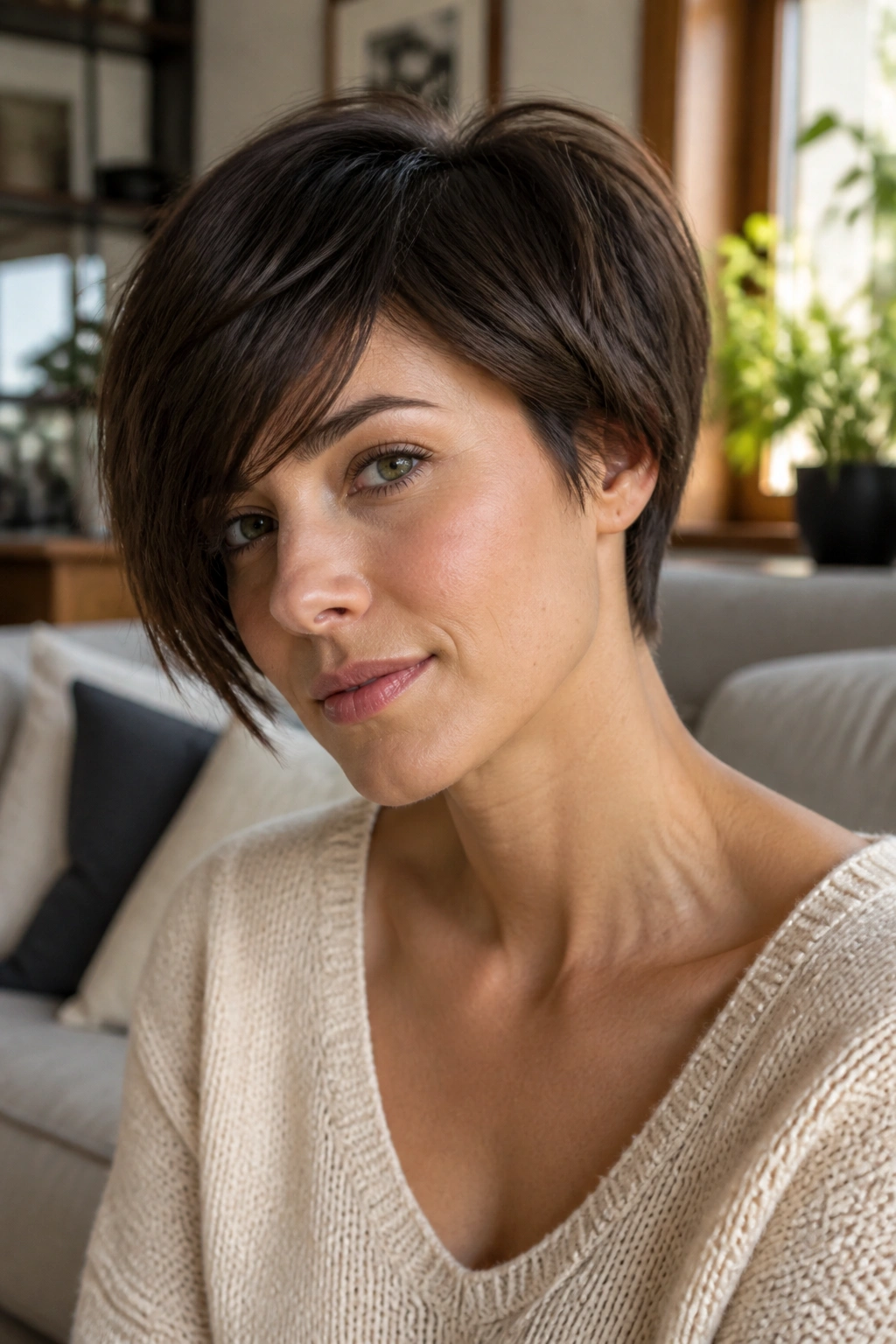
If you are nervous about going short, start here.
This is the most forgiving version of a long pixie. The fringe stays long enough to sweep across the forehead or tuck to the side, and the nape stays soft rather than clipped tight, so the haircut feels feminine without pinning you to one look. You can wear it neat for work, loose for the weekend, or tucked back when you want your earrings to show.
I also like it because it grows out cleanly. When the fringe reaches the cheekbone and the nape hugs the neck instead of stopping in a hard line, the cut can drift toward a short bob without looking awkward in the middle. That matters more than people think. A haircut that grows out well saves you from that annoying stage where nothing sits right.
The best version has a bit of bend through the front and enough softness at the back to keep the shape round. If you want to test-drive long pixie haircuts for women before committing to anything sharper, this is the one I would send you toward first.
It gives you room. That is the point.
