



The right wolf cut can do something strange and useful at the same time: it can make your face read softer, sharper, or more androgynous without locking you into one obvious lane. That’s a big part of why nonbinary wolf cuts keep showing up in salons, barbershops, and bad bathroom mirror selfies that end up looking better than expected. The shape gives you room. The texture does the rest.
What makes the cut work is not mystery. It’s the tension between short, lifted layers at the crown and longer, rougher pieces around the perimeter. Get that balance wrong and you end up with a helmet of uneven hair. Get it right and the whole thing looks deliberate, even when it’s messy in the best possible way.
I like wolf cuts that feel a little rebellious but still wearable. Not costume-y. Not precious. The best ones leave room for your hair texture to do some of the work, which is why the same cut can look sharp on straight hair, shaggy on waves, and almost feral on curls. There’s a lot of personality packed into one haircut.
And yes, the details matter. A half-inch in the fringe, an extra inch in the nape, a different texturizing tool — that’s often the difference between “cool haircut” and “why does this look accidental?” So let’s get into the versions that actually hold up in real life.
1. The Choppy Crown Wolf Cut
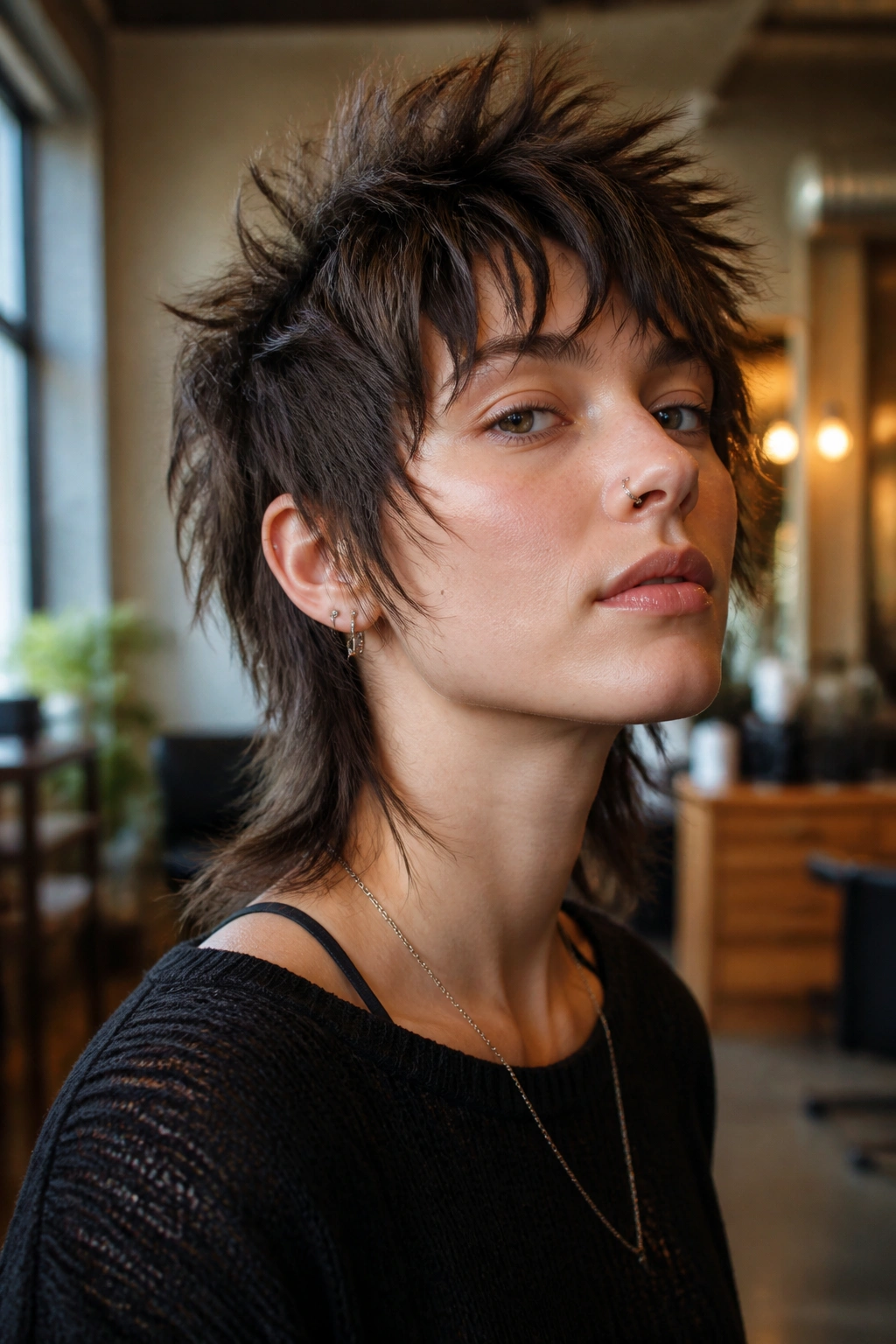
The choppy crown version is the one people picture first, and for good reason. It has that lifted, slightly chaotic top that makes the whole haircut feel alive. The crown sits higher, the ends stay broken up, and the shape reads as cleanly nonbinary because it refuses to settle into a strict masculine or feminine outline.
What Makes the Crown Do So Much
The crown is the engine here. When those upper layers are cut short — usually 2 to 4 inches shorter than the back depending on length — the hair stops lying flat and starts building shape from the root. That little bit of height gives the whole cut attitude. It also keeps the style from collapsing into a plain shag.
What to Ask For at the Salon
- Short, airy layers at the crown so the top lifts instead of sitting heavy.
- Face-framing pieces that start around the cheekbone if you want the front to soften the edges.
- Broken ends, not blunt ones, because blunt edges kill the wolf cut vibe fast.
- A slightly longer nape, usually enough to brush the collar or skim the neck.
- Point cutting or light razor work so the shape looks lived-in, not chopped with a ruler.
Pro tip: bring two photos if you can — one from the front and one from the side. The side view is the one that keeps you from getting a generic shag with a fancy name.
2. The Soft Fringe Wolf Cut
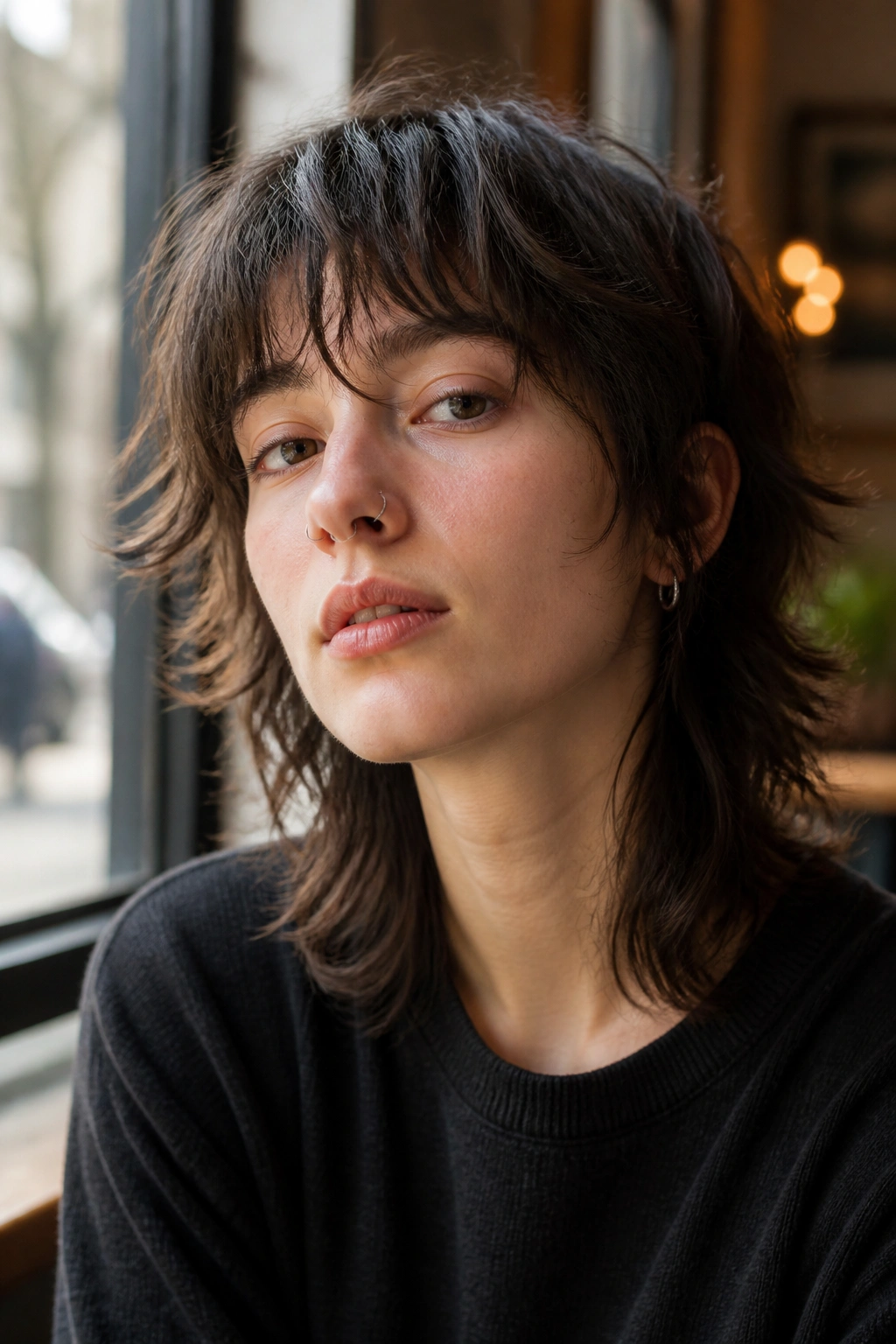
A heavy fringe can turn a wolf cut into something too literal. The soft fringe version keeps the edge, but it gives the front just enough air so the haircut doesn’t feel boxed in. It’s one of my favorite choices for people who want a gender-nonconforming look without a harsh line cutting straight across the face.
The trick is restraint. You want a fringe that lands around brow level or just below, but with broken pieces at the ends so it doesn’t read as a solid curtain. That tiny bit of irregularity changes everything. It makes the haircut feel less staged and more natural, even when the rest of the style is full of texture.
This version works especially well if your hair tends to lie straight near the front and puff up at the sides. A softer fringe keeps the cut from widening the face too much, and it gives you options: forward, tucked, split down the middle, or pushed off to one side when you want a less polished look. I’m fond of that flexibility. It saves you from getting bored.
The best part is that it grows out gracefully. A blunt bang can get annoying fast, but a wispy fringe usually falls into the rest of the cut instead of fighting it. That matters more than people think. Hair that behaves for six weeks is worth more than hair that looks perfect for six days.
3. The Curly Wolf Cut With Lift at the Crown
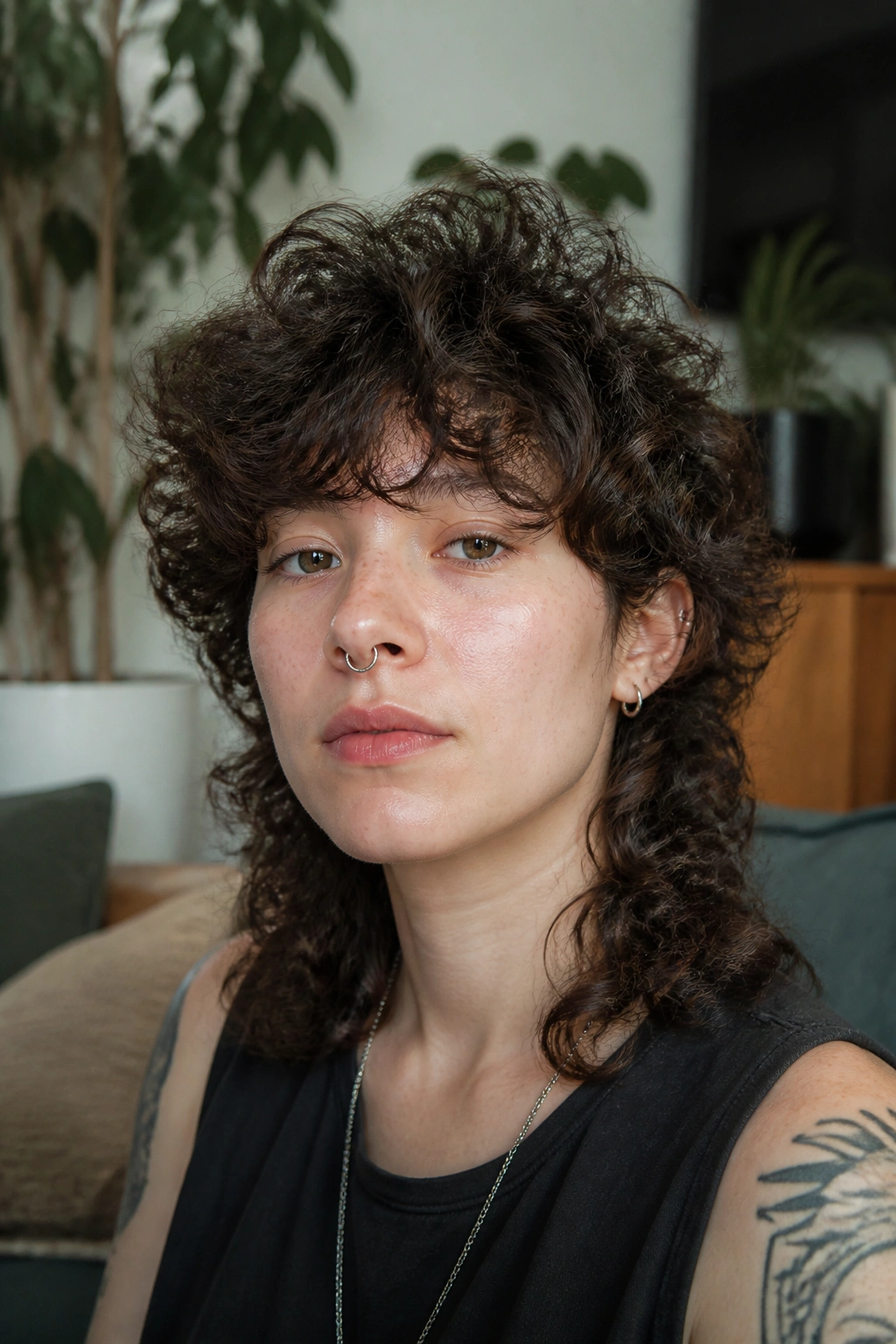
Can a wolf cut work on curls without turning into a triangle? Absolutely, but only if the layers are placed with some care. Curly hair needs the crown opened up and the bulk redistributed, not hacked to pieces. When that’s done right, the cut feels airy at the top and full through the lengths, which is exactly the kind of shape that reads confident rather than stiff.
The biggest mistake with curly wolf cuts is over-layering the mid-lengths. That can leave the hair wide where you do not want width. Better to keep the crown light, shape the front with dry-cutting or curl-by-curl refinement, and let the lower half keep enough weight to support the curl pattern. The result is softer and more controlled, even if the style still has plenty of movement.
How to Style It
- Apply leave-in conditioner to soaking-wet hair so the curls clump instead of frizzing apart.
- Scrunch in a light mousse from roots to mid-lengths, then stop. Don’t rake it through the ends.
- Diffuse on low heat and low speed until the roots are dry and the curls have set.
- Lift the crown with your fingers while drying if you want more height and less roundness.
- Finish with a dab of curl cream on any fluffy pieces that need a bit more definition.
One small thing people miss: curly wolf cuts look best when they are not too perfectly separated. A few joined curls around the fringe and jawline make the shape feel intentional.
4. The Micro-Mullet Wolf Cut
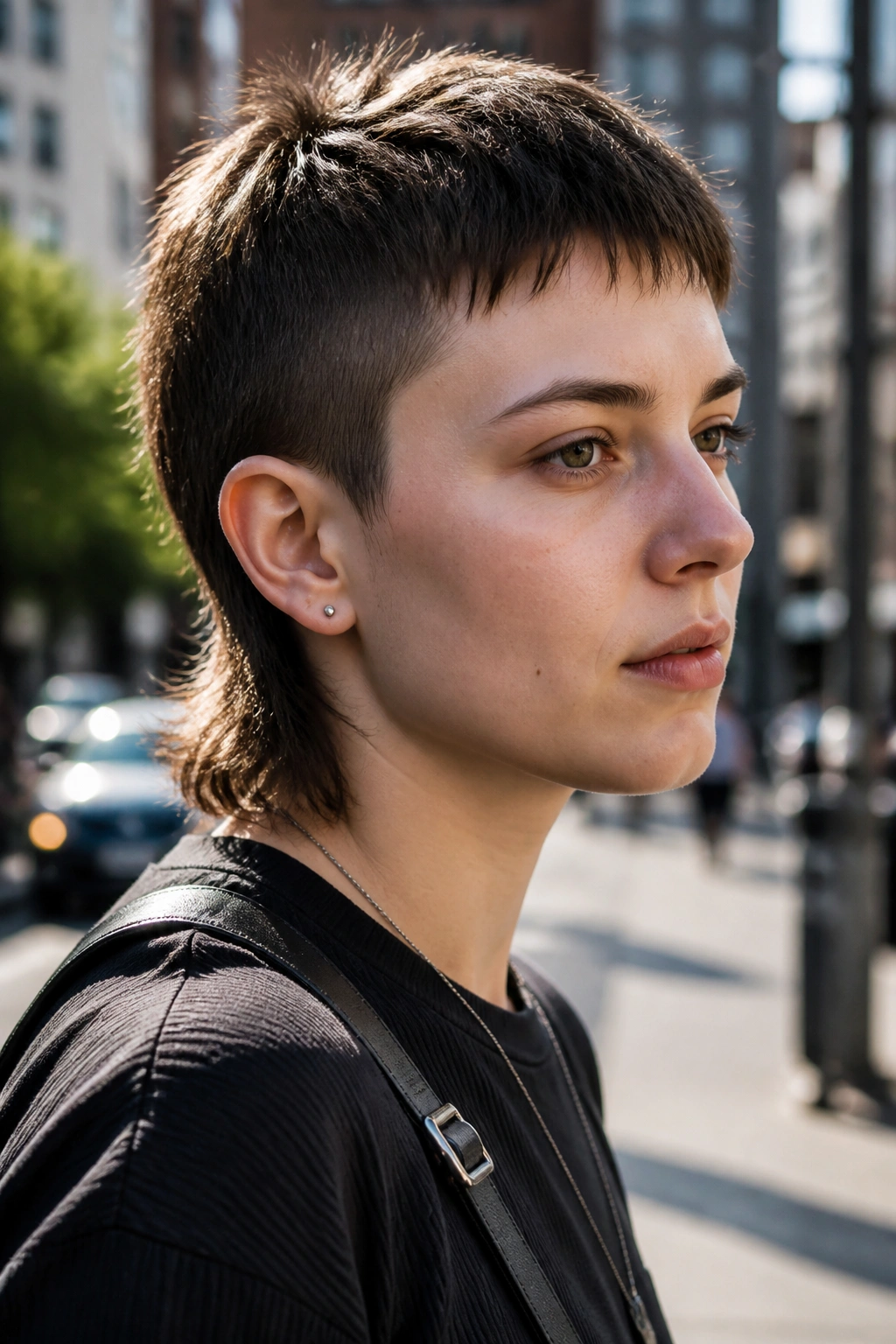
The micro-mullet version is for people who want the wolf cut’s attitude in a tighter, sharper package. The front and sides stay short enough to expose the shape of the face, while the back keeps a little tail of length that signals, very plainly, that this haircut is not trying to be polite. It’s compact. It’s readable. It has a point of view.
Picture someone walking out of the salon with hair that sits close around the ears, lifts at the top, and flicks out at the nape by about 1 to 2 inches. That tiny bit of difference does more than a lot of longer styles. It says the haircut was chosen, not inherited.
Key Details That Make It Work
- Shorter side sections keep the cut from getting boxy.
- A narrow but visible back length gives the mullet reference.
- Textured top layers stop the style from feeling like a helmet.
- Clean neckline edges help the shape read sharp instead of shaggy in a lazy way.
- A little separation around the temples keeps the face open.
The micro-mullet is one of those cuts that looks better when it’s not overstyled. A matte paste, a quick finger dry, and maybe a bit of root lift is enough. If you make it too neat, you lose the charm.
5. The Undercut Wolf Cut
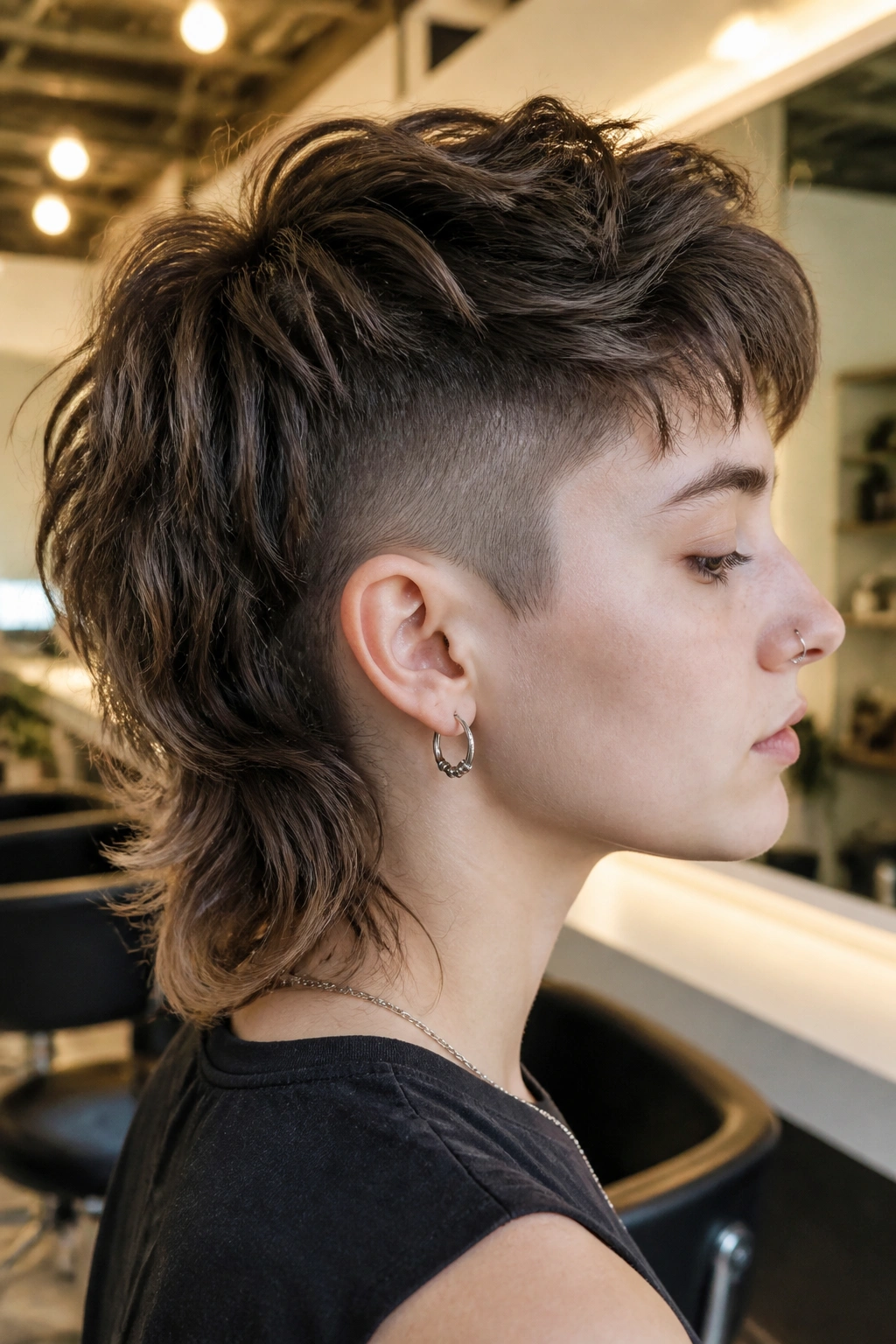
Thick hair and a full wolf cut can get heavy fast. That’s where the undercut version earns its keep. Remove some of the bulk underneath, and the rest of the haircut suddenly has room to move. The top still gives you height. The perimeter still gives you shape. But the whole thing sits lighter on the head, which changes the feel in a big way.
The undercut can be hidden or visible. Hidden is the safer choice if you want options. A clipper guard around #2 or #3 under the top layers removes the bulk without making the cut scream “shaved sides.” Visible is bolder and has more contrast, which works well if you like a sharper, more graphic finish. Either way, the haircut gets a cleaner silhouette.
What I like about this version is that it solves a real problem instead of just looking cool in a photo. Heavy hair can collapse at the nape, puff up around the ears, and turn a wolf cut into a triangle by lunch. An undercut changes that. It buys you shape.
It also grows out better than people expect. Because the longer top layers cover the shorter underneath sections, the grow-out is softer and less awkward than a full clippered style. That’s a practical detail, but it matters when you live with the haircut every day.
6. The Long Layered Wolf Cut
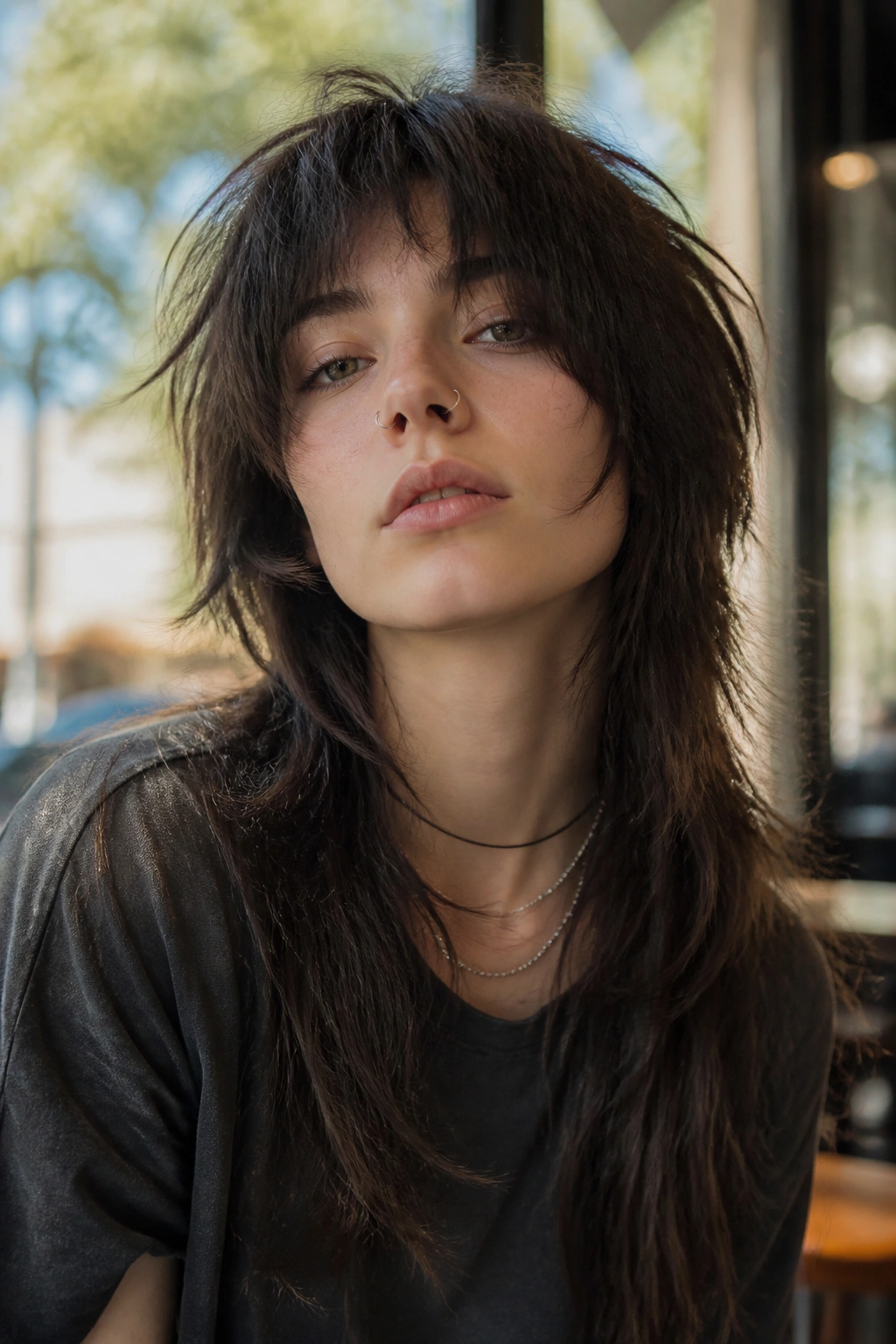
Not everyone wants to lose length, and honestly, they do not have to. The long layered wolf cut keeps the drama up top while preserving length through the bottom half, which makes it a good choice if you want movement without a big chop. It still reads edgy. It just reads a little more controlled.
Compared with shorter wolf cuts, this version depends more on internal layering than on obvious length contrast. The top may sit 2 to 4 inches shorter than the longest pieces, but the overall silhouette stays longer, often past the shoulders. That means you get a softer drift around the face and more room for waves, bends, and loose texture to show up.
This is the one I’d point to if someone says they want a nonbinary haircut but they’re nervous about the commitment. Fair enough. A long wolf cut can still carry the same androgynous energy because the crown is lifted and the ends are broken up. You do not need short hair to avoid looking conventional.
The styling is easier than people assume, too. A round brush at the roots, a light texture spray through the mids, and a few bends created with a flat iron are often enough. Leave the ends a little uneven. That rough finish is part of the charm.
7. The Bleached Money-Piece Wolf Cut
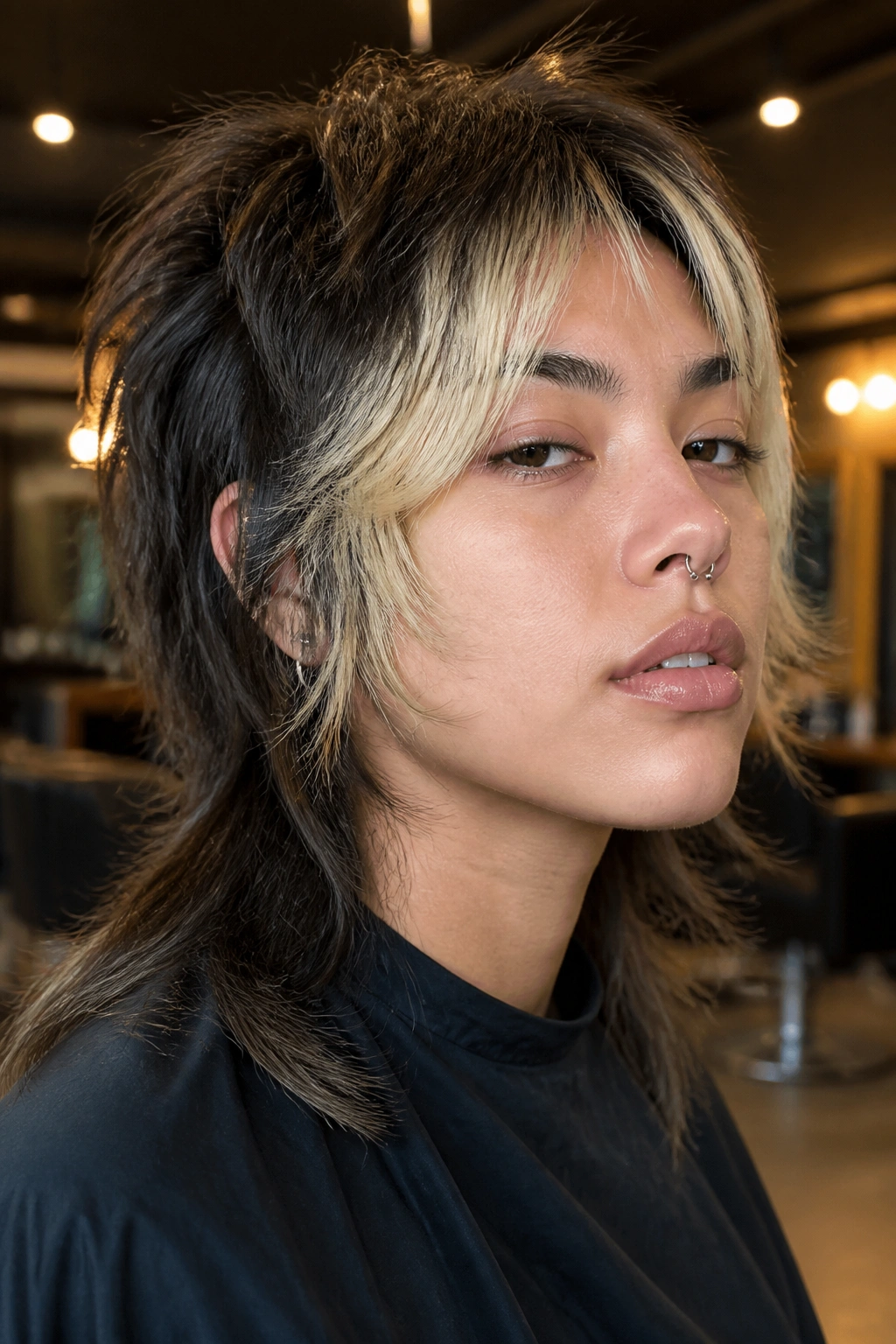
Color changes the read of a haircut fast, and the money-piece version proves it. A lighter front section draws the eye straight to the face, which is useful when you want your hair to frame your features in a sharper, more expressive way. On a wolf cut, that contrast can make the layers look even more deliberate.
The front pieces do the work here. Keep them a shade or two lighter than the rest, and they act like little visual arrows pointing back toward the fringe and cheekbones. If the haircut has movement, the color amplifies it. If the haircut is already sharp, the contrast makes it hit harder. No mystery.
Why the Front Pieces Matter
- They separate the fringe from the rest of the cut, so the layers do not blend into one flat block.
- They brighten the face line, which is useful if the haircut is very dark overall.
- They make the texture easier to see, especially in wavy or layered hair.
- They create a built-in focal point without needing a dramatic full-head color change.
You do not need platinum to get the effect. A warm blonde, silver-beige, or even a lighter copper around the front can work. Keep the roots slightly shadowed if you want less maintenance. That little bit of depth keeps the look from growing out harshly.
8. The Asymmetric Wolf Cut
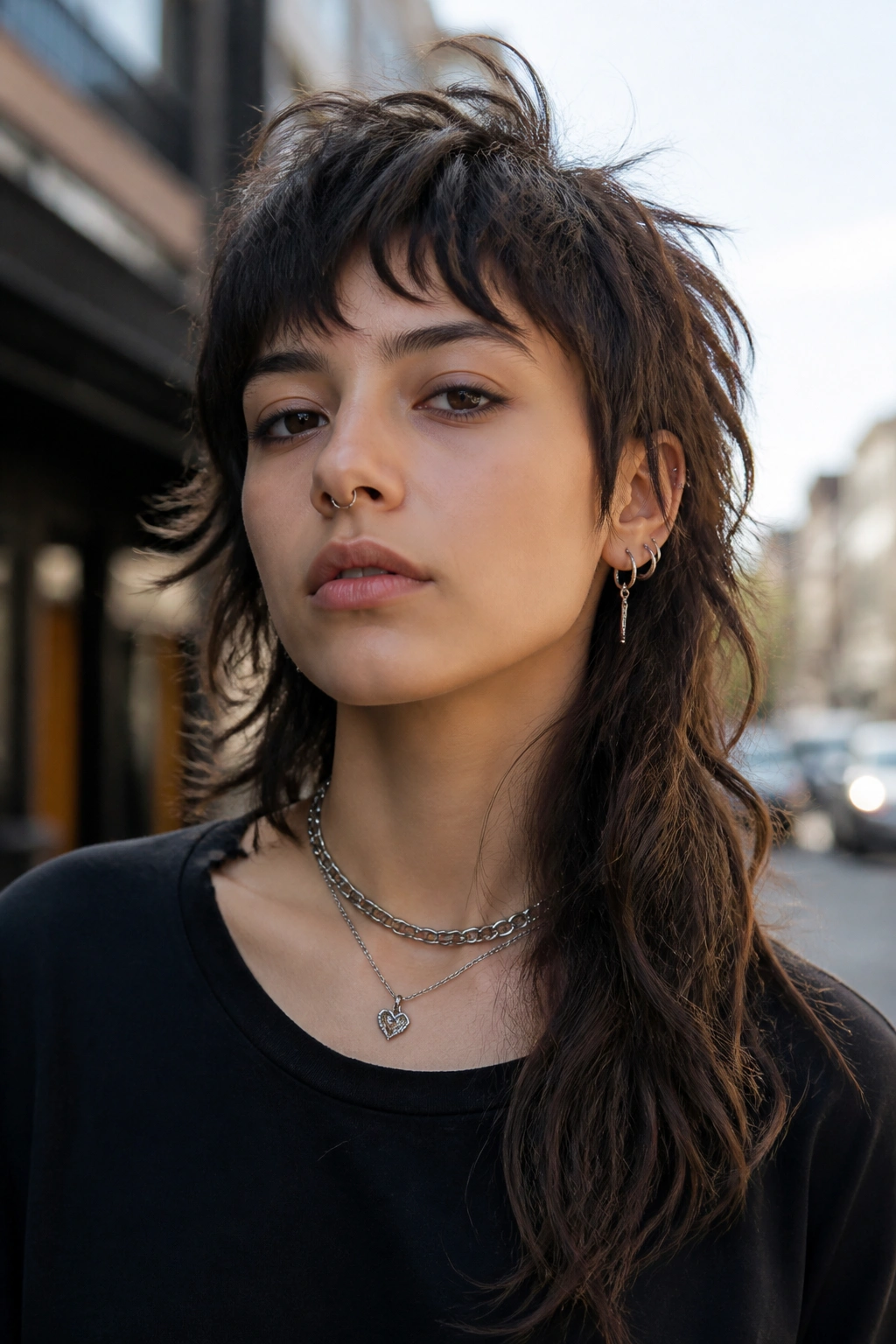
A perfectly even haircut can be boring. The asymmetric wolf cut solves that by shifting one side a little longer, or one side heavier, so the whole shape feels intentionally off-center. That’s the magic. It looks like a decision, not a mistake.
Usually the difference is subtle enough to be wearable: maybe 1 to 2 inches longer on one side, or a fringe that sweeps diagonally across one eye while the other side stays more open. That kind of imbalance gives the cut a sharp edge without needing dramatic shaved sections. It also works beautifully with earrings, glasses, and strong brows, because the asymmetry gives the face something to lean against.
The important thing is control. Too much asymmetry and the haircut starts to feel lopsided in a messy way. Too little and nobody notices. The sweet spot is somewhere in the middle, where the shape feels slightly rebellious but still clean enough that you can wear it to dinner, work, or wherever else you actually go.
I like this version on people who do not want the same silhouette every day. It changes depending on how you part it, tuck it, or dry it. That flexibility is half the fun.
9. The Shaggy Mullet Wolf Cut
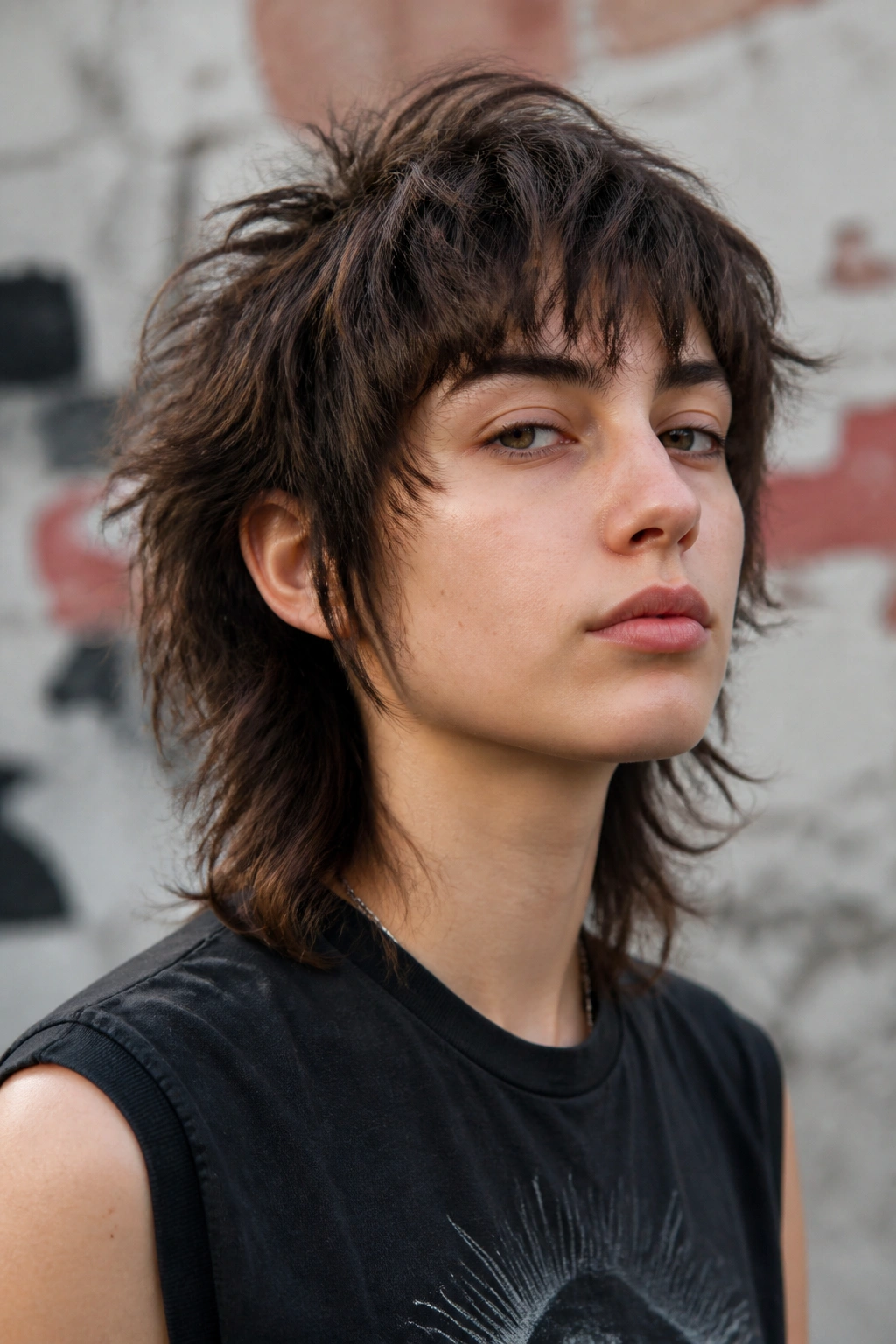
Why does a mullet feel less costume-like when it gets shaggy? Because the texture softens the joke. A crisp mullet can look like a dare. A shaggy mullet wolf cut looks like a choice with some mileage behind it, which is a lot more interesting.
This version keeps the back length visible, but the sides and top are broken up so the haircut flows instead of sitting in separate blocks. The fringe is usually feathery, the crown is lifted, and the lower layers flick out rather than hang straight down. That disconnect between pieces gives the style its bite.
A shaggy mullet wolf cut is one of the strongest choices for someone who wants their hair to send a message before they speak. It reads punk without needing heavy styling, and it has enough movement to stay alive on a windy day or after a long shift. Not every edgy haircut survives actual life. This one usually does.
If you want to make it feel less theatrical, keep the ends soft and the back only a little longer than the front. If you want it louder, push the fringe shorter and let the nape grow a bit more. There’s a range here, which is part of why the style has stuck around.
10. The Air-Dried Wavy Wolf Cut
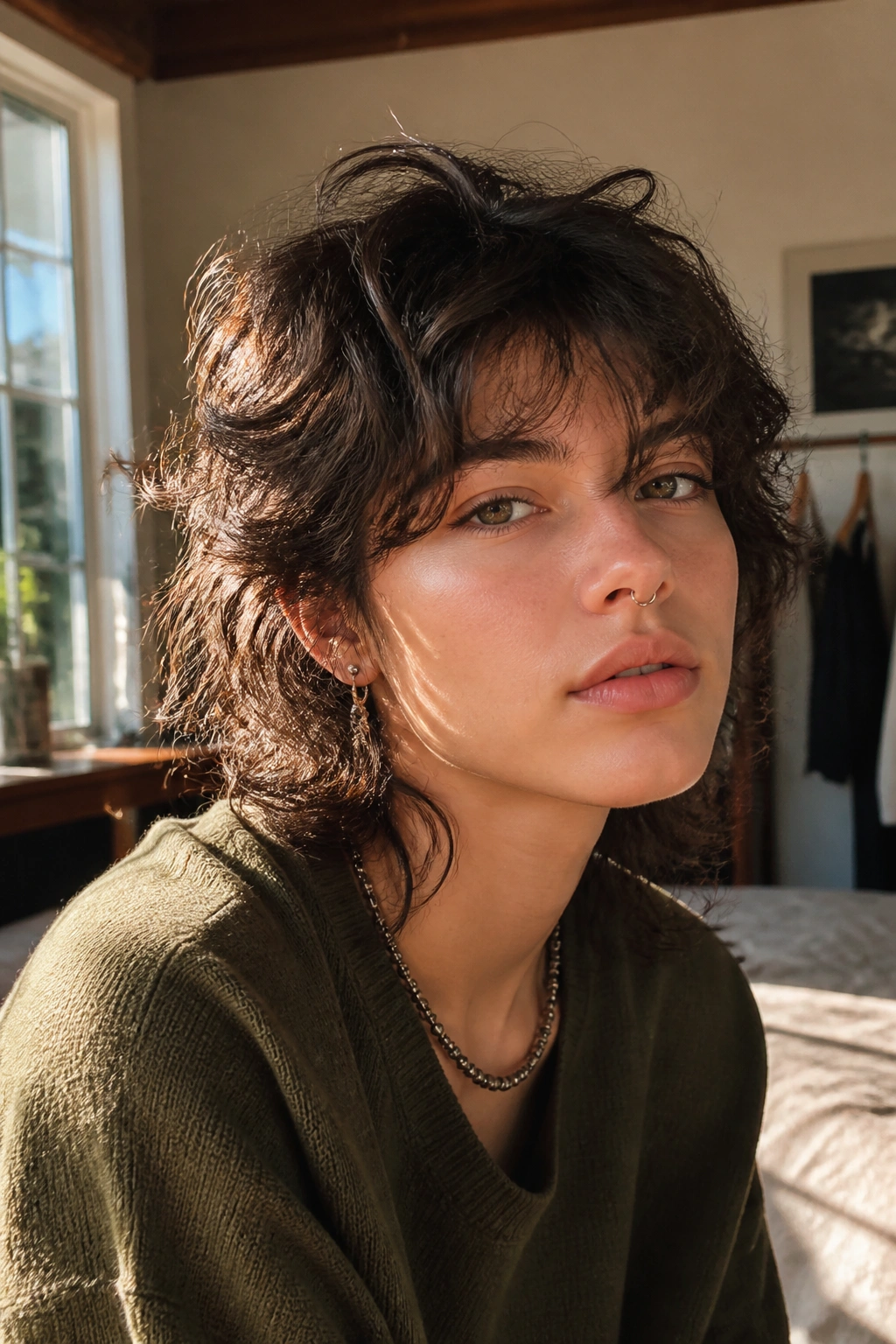
If your hair already bends a little when it dries, this cut is almost unfair. The wave pattern does half the styling for you, and the wolf cut shape gives that movement a place to go. A good air-dried version has loose lift at the roots, piecey ends, and enough roughness to look like you thought about it, even if you did not spend much time in the mirror.
The trick is to cut for the way the hair falls when it’s not being forced. That means layers placed so the natural wave can stack rather than puff. It also means leaving the fringe long enough to split or tuck if one side dries flatter than the other. Small details, big payoff.
How to Get the Bend Without Fussing Over It
- Work a light leave-in through damp hair from mid-lengths to ends.
- Add a small amount of mousse at the roots for lift.
- Scrunch with a microfiber towel or T-shirt instead of rough drying with a bath towel.
- Air-dry until the hair is about 80% dry, then fluff the roots with your fingers.
- Use 1 to 2 drops of lightweight oil only if the ends look dry.
The beauty of this cut is that it rarely needs perfect styling. It wants motion, not precision. If you like hair that looks a little wind-tossed even when you stayed indoors all day, this is an easy place to land.
11. The Razor-Textured Wolf Cut
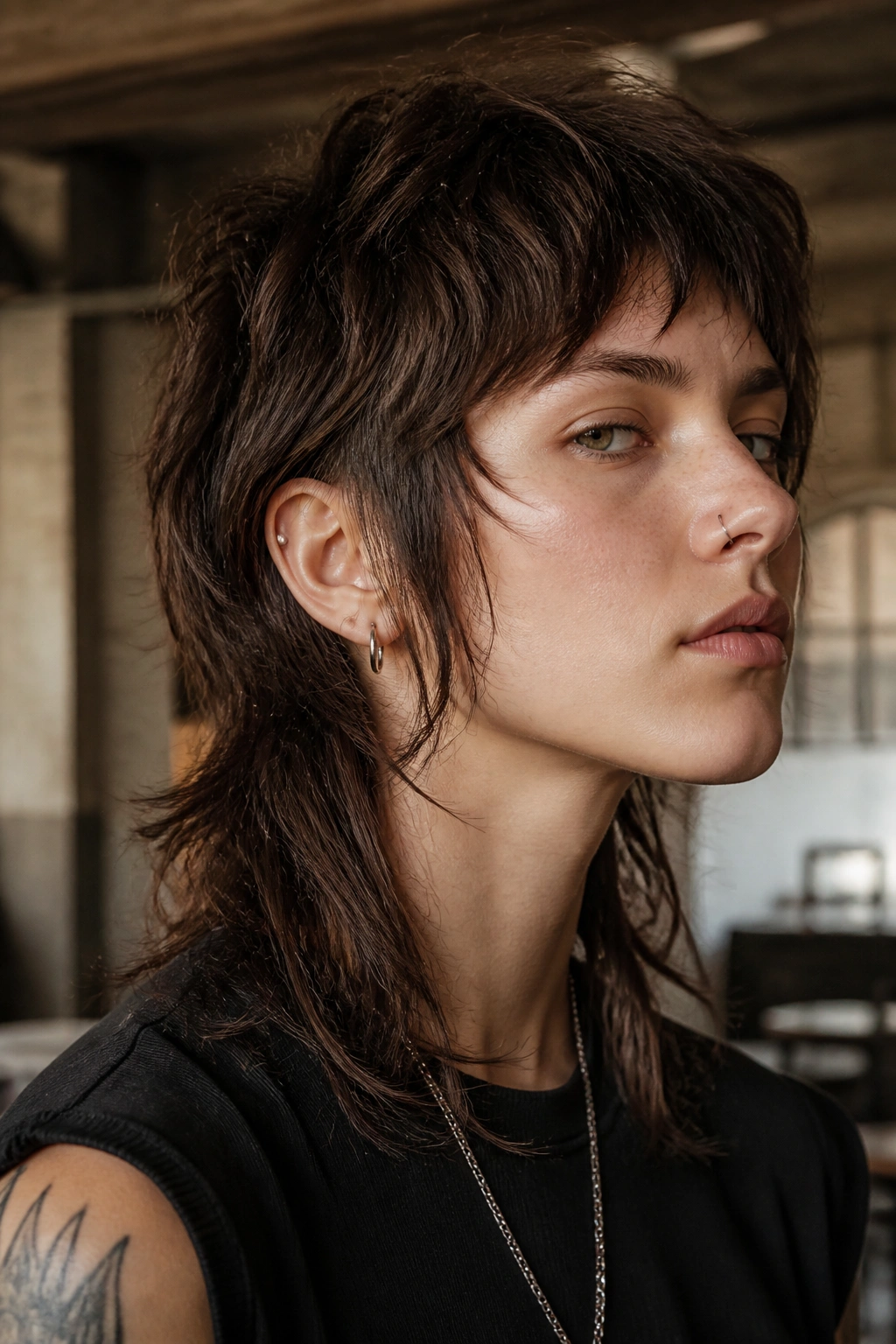
A razor can make a wolf cut feel sharper and softer at the same time, which sounds contradictory until you see it in hair. The edges get feathery, the layers break apart faster, and the whole cut picks up a little grit. It’s a good move when you want the outline to be less chunky and more undone.
Thick straight hair takes this especially well. A razor slices through dense sections so the shape doesn’t sit like a block. Wavy hair can also benefit, though the stylist needs a steady hand so the ends don’t fray too much. Fine hair is the tricky one. Go too far with the razor and you can lose body fast.
What I like about razor texture is the way it changes movement. Scissors can make layers look neat. A razor makes them feel airier, with softer separations that show up when you turn your head. That matters in a wolf cut, because the entire point is movement. The cut should react when you move.
Ask for a razor only if your stylist knows how your hair behaves when it’s dry. That sentence saves a lot of regret. The tool matters, yes, but the hand holding it matters more.
12. The Bowl-Inspired Wolf Cut
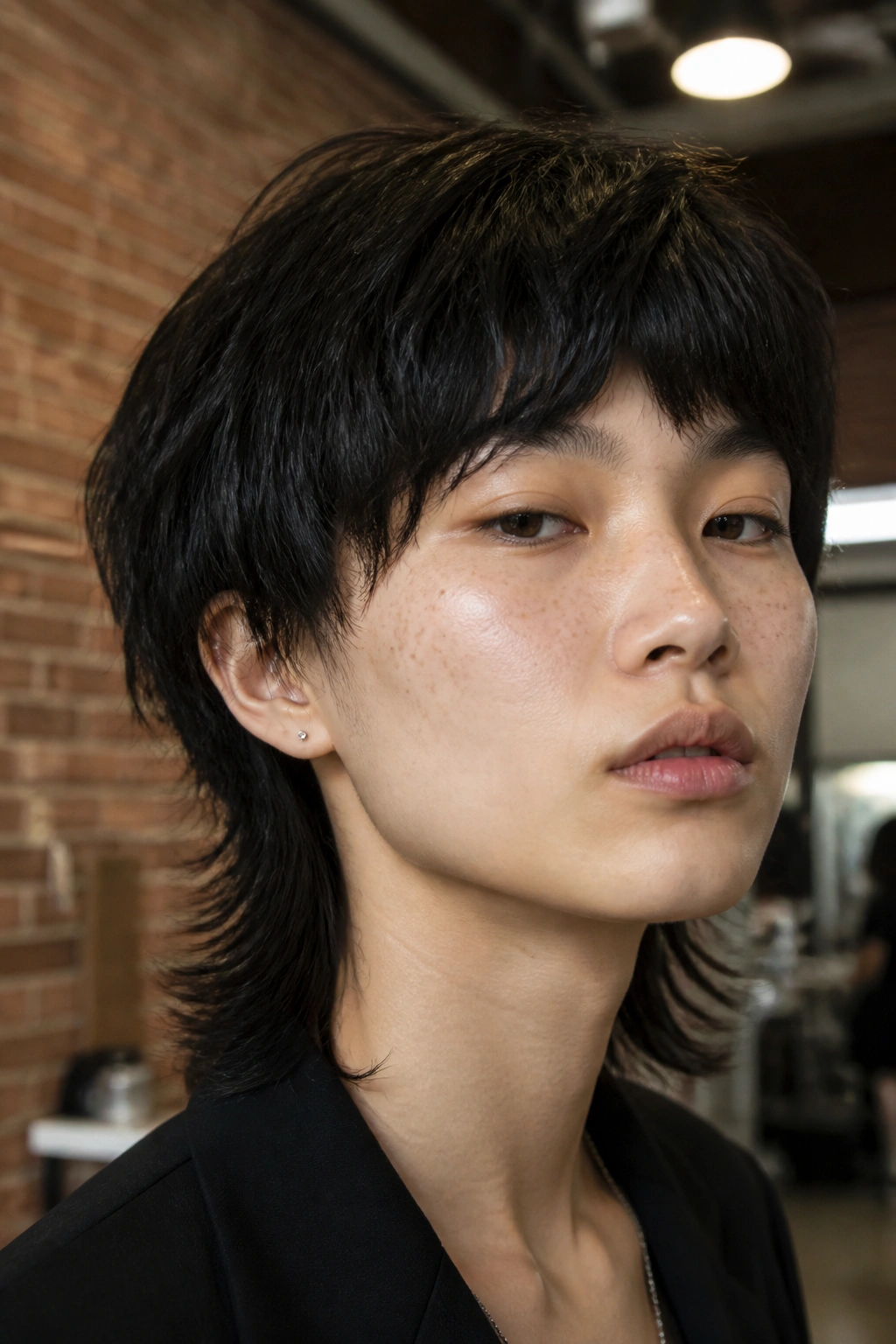
A bowl cut and a wolf cut sound like enemies, but the hybrid between them can be excellent when it’s handled with some taste. The bowl-inspired version keeps a rounded weight through the upper perimeter, then breaks it apart with shaggy layers and a longer, messier back. The result is a little weird, a little sharp, and much more interesting than either cut on its own.
This style works because it plays with expectation. The silhouette starts clean and familiar, then the texture interrupts it. That interruption is the whole point. If the top were perfectly blunt, the haircut would feel nostalgic in a bad way. If the layers were too soft, the bowl reference would disappear. You need both to keep the shape alive.
It suits people who like fashion-forward hair that still looks wearable on an ordinary Tuesday. That’s not easy to find. The rounded top can be especially flattering if you want structure near the crown, while the broken ends keep the face from looking boxed in. The style also photographs differently from every angle, which is half the fun if you enjoy a haircut that changes with a head turn.
I’d keep the color simple here. Strong shape, low-noise color. Let the cut do the talking.
13. The Pixie Wolf Cut Hybrid
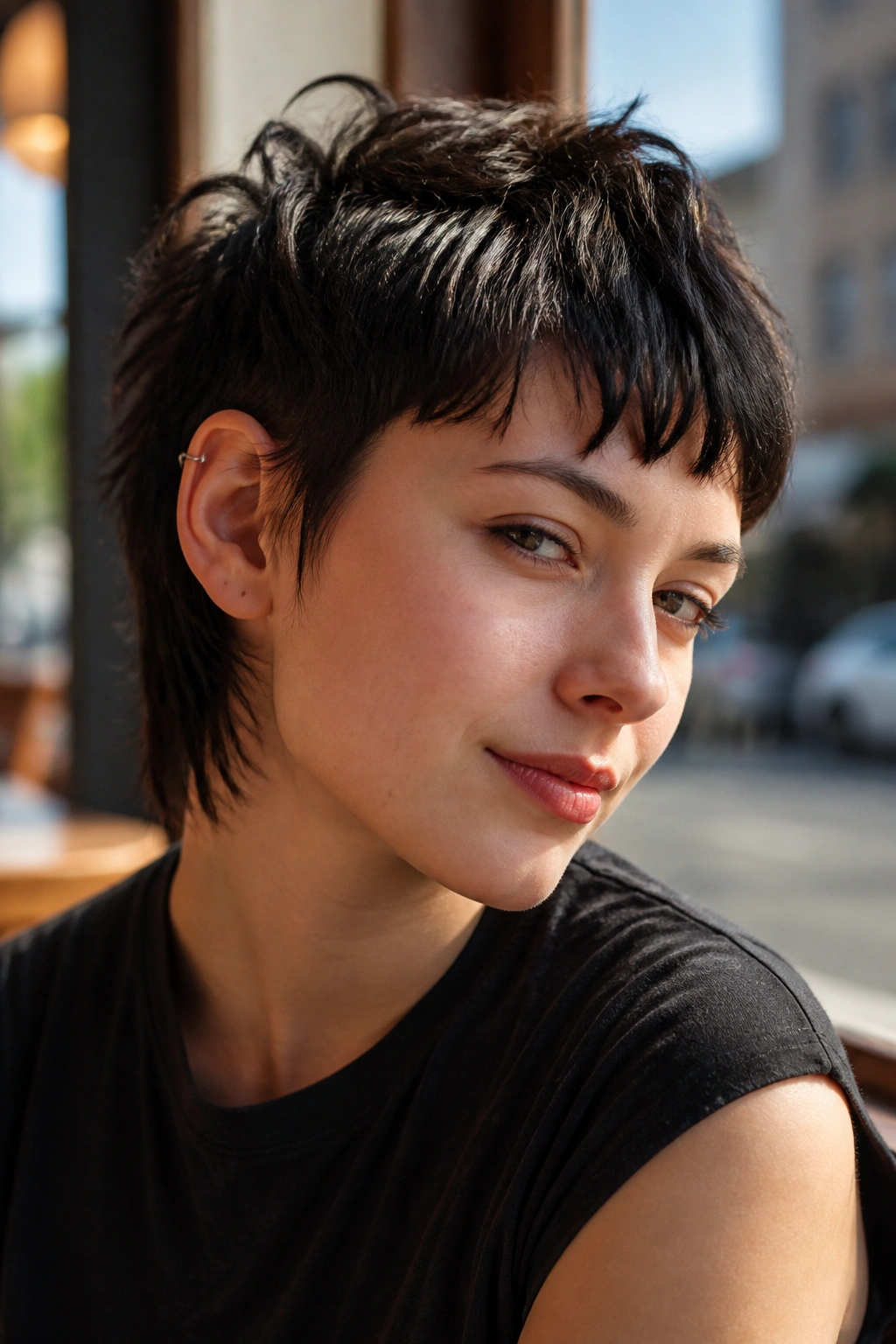
Short hair does not have to mean tidy hair. The pixie wolf cut hybrid keeps the sides close, pushes texture through the top, and leaves enough length in the back or fringe to suggest a wolf shape rather than a traditional pixie. It is tiny, sharp, and a little mischievous.
Think of it as the version for people who want their ears visible and their neck open, but still want some softness around the face. That little bit of longer fringe changes the mood. So does the lifted crown. Without those pieces, the haircut can slide into ordinary short hair territory. With them, it stays interesting.
What to Keep in the Shape
- A short, textured top for lift.
- A narrow fringe or side sweep so the front has movement.
- Tapered sides that stop the cut from looking too round.
- A small tail at the nape or back if you want the mullet note to show.
- Matte styling cream or paste so the finish stays touchable.
This is a good choice if you like low hair around the ears but do not want to lose the wolf cut’s edge. It’s quick to dry, quick to style, and hard to make boring. That alone gives it a lot of value.
14. The Split-Color Wolf Cut
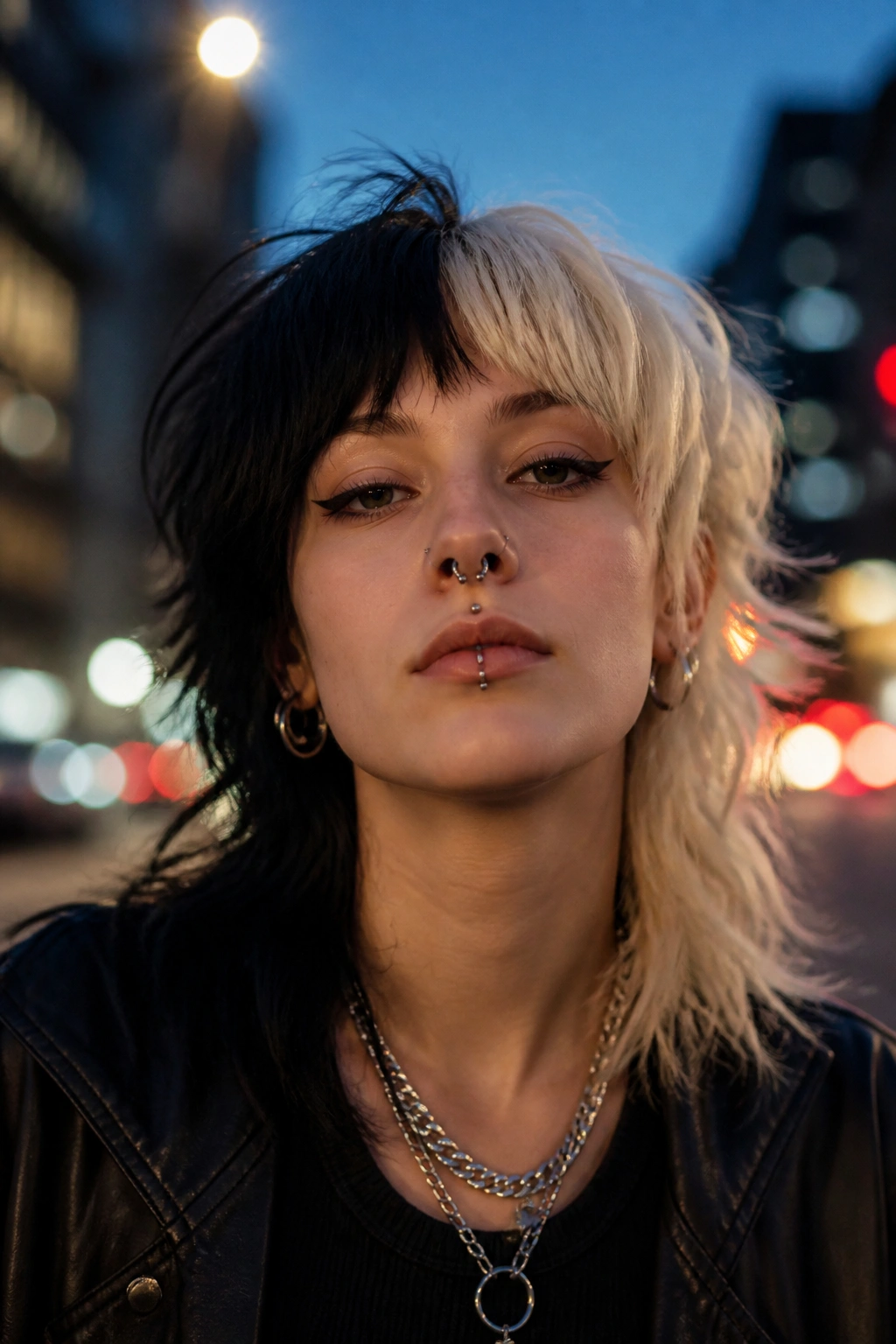
Two-tone color can turn a wolf cut into a statement without changing the cut itself. Split color means the haircut gets a visual divide — left and right, top and bottom, or underlayer and surface — that makes the texture easier to read. If the shape is already choppy, the color makes the choppiness obvious from across the room.
The most common version is a half-and-half split down the head, but that is not the only option. A hidden underlayer in one color and the top in another can be sharper. So can a darker root area with a brighter fringe and temple section. What matters is that the color placement follows the cut, not fights it.
Where to Place the Divide
- Down the center if you want a clean, graphic split.
- Behind one ear and across the nape if you want a quieter reveal.
- Only through the fringe and face frame if you want something easier to maintain.
- On the underlayer if you prefer the color to show only when the hair moves.
- Across the crown and tips if you want the layers to read as separate planes.
This one needs upkeep, no way around it. Color grows out faster than shape. Still, if you want a haircut that does not blend into the background, split color and a wolf cut make a strong pair.
15. The Overgrown Wolf Cut
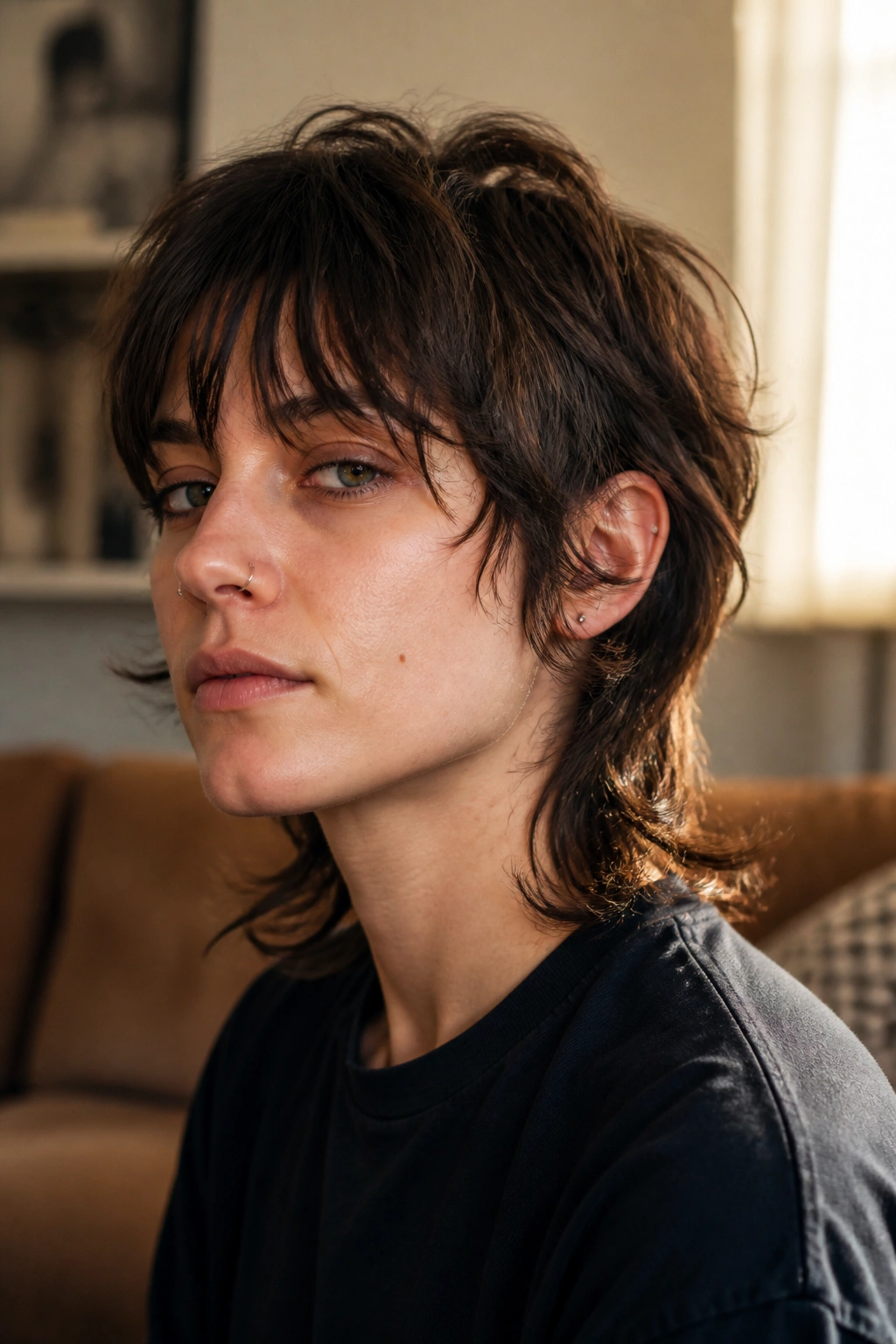
The most wearable wolf cuts are often the ones that look better after they’ve had some time to soften. The overgrown version leans into that. It keeps the crown layered and the ends broken up, but nothing feels over-edited. The shape can stretch a little between trims and still look intentional, which is a gift if you do not want to book a haircut every month.
This version is edged, but in a quieter way. The fringe sits a little longer, the nape is left a little fuzzier, and the layers are blended enough that the haircut moves instead of snapping from one length to another. That means you can wear it messy, brushed out, tucked behind the ears, or flattened down under a hat without losing the basic identity of the cut.
It’s a smart choice for people who want a nonbinary look without a lot of maintenance drama. A fresh chop can be fun. A haircut that still looks good when life gets busy is better.
And if you’re the sort of person who likes a little softness with your edge, this is where the style lands.
Final Thoughts
A wolf cut works best when it looks chosen, not generic. The strongest versions keep some lift at the crown, some breakup at the ends, and enough shape around the face to make the whole thing feel personal. That’s the part people often miss. It is not about copying a photo exactly. It is about getting the structure right, then letting your hair texture do the rest.
If you’re sitting with a stylist, ask for the pieces that matter: crown height, fringe length, nape length, and how much bulk should come out of the sides. Those four things change the haircut more than a dozen vague adjectives ever will.
Bring a couple of photos, yes. Bring one that shows the front, one that shows the side, and if possible one that shows the back. Haircuts are three-dimensional. So is identity, which is why these styles land so well.
