



Micro braid styles for long hair can look delicate from across the room and stubborn up close. The hair’s weight changes everything.
A long braid set has more swing, more drag at the roots, and more chance of puffing out near the nape if the parting is sloppy. That is why the same micro braid pattern that feels neat on mid-length hair can fall flat or look too busy once the length reaches the shoulders and beyond.
The styles that work best usually do one of two things: they either control the length with a smart tuck, or they let the length hang and keep the parting clean enough to hold the shape. The braid itself is only half the job. The part, the finish, and the way the ends sit against a collar matter just as much.
Parting is half the look.
If your hair is long, you have room to play. A center fall can look sleek and calm. A side sweep can soften the whole set. A bun can save your neck on a heavy day. Start with the shape that matches how you actually wear your hair, not just the photo you saved and forgot about.
1. Long Center-Part Micro Braids That Fall Straight Down

The center part is the cleanest place to start. On long hair, micro braids hanging straight down create a column of texture that feels calm, not busy, and the length gives the pattern room to breathe.
Why the Center Part Works
A straight split keeps the shape balanced from forehead to nape, which matters when the braids are fine. If the part wanders, the whole set can look off even when the braids themselves are tight and even. Long hair also makes the ends heavier, so the line reads smoother and less puffy at the shoulders.
- Best for: dense hair, oval faces, and anyone who likes a crisp finish.
- Ask for: pencil-clean parting and even braid size from temple to back.
- Style note: tuck the front layers behind the ears once a day so the roots do not lift.
- Watch for: too much edge gel, which can leave the front shiny in a stiff way.
My take: if you only wear one micro braid pattern for weeks, this is the one that makes the grow-out phase look deliberate instead of messy.
2. Deep Side-Swept Micro Braids That Softly Frame the Face
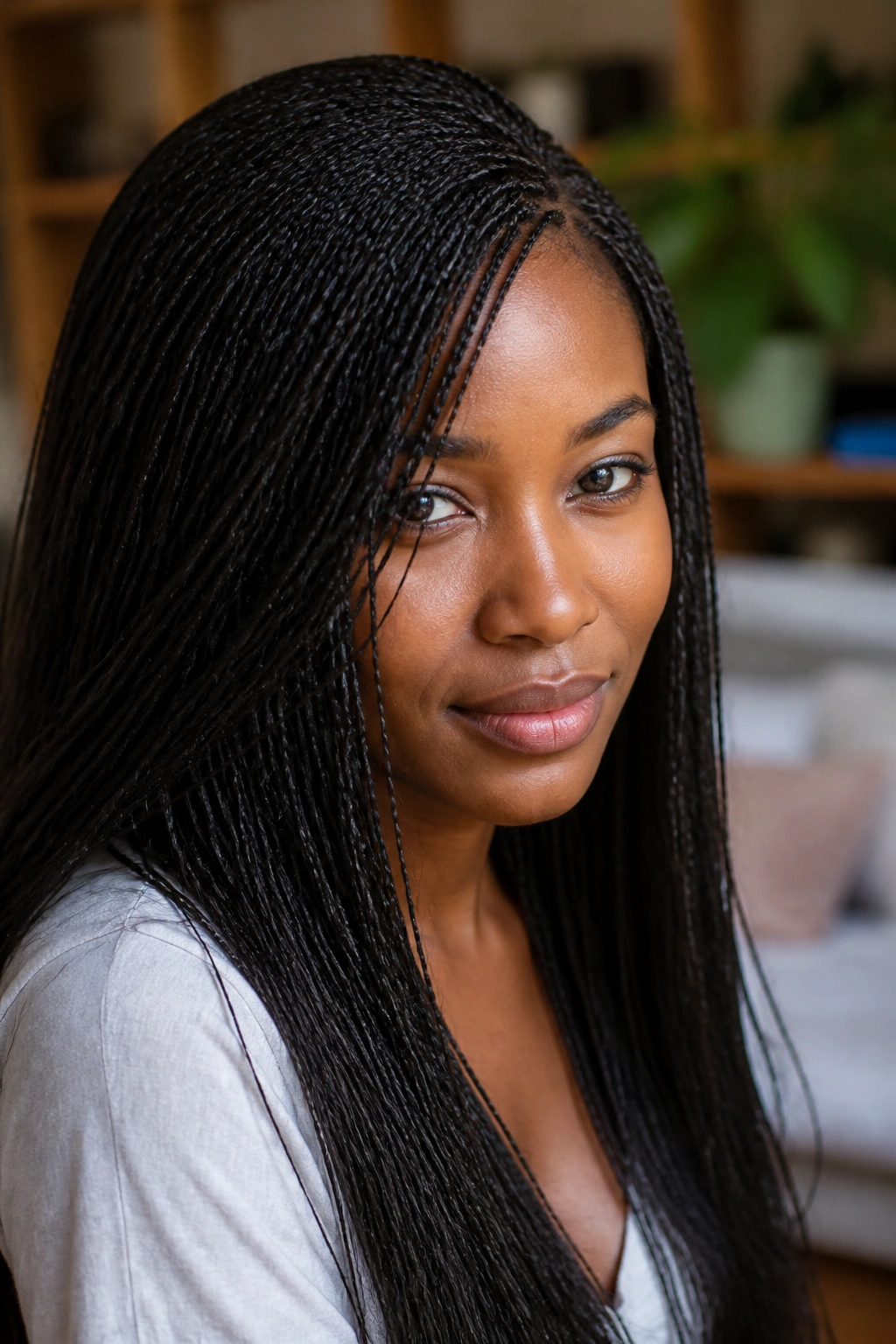
A deep side part is the fastest way to make micro braids on long hair feel softer. It shifts the weight, opens one side of the face, and gives the braids a little motion when they move over the shoulder.
Long lengths can get heavy at the center. A side sweep breaks that slab of hair into a shape that looks lighter without removing any length. If you want earrings to show, this is the one. If you want to hide a slightly grown-out root line, even better.
The part should start near the arch of the brow and slide back in one clean line. Keep the heavier side full and the lighter side tucked behind one ear, or let it drape across the collarbone. Both work. The only thing that does not work is a half-hearted side part that sits almost in the middle. That just looks undecided.
A deep side sweep also gives long hair a little drama without needing extra pieces or clips. It is a good choice when the micro braids are fresh and still a little stiff, because the angle makes the whole set move more naturally.
3. Half-Up Micro Braids With A Small Crown Lift
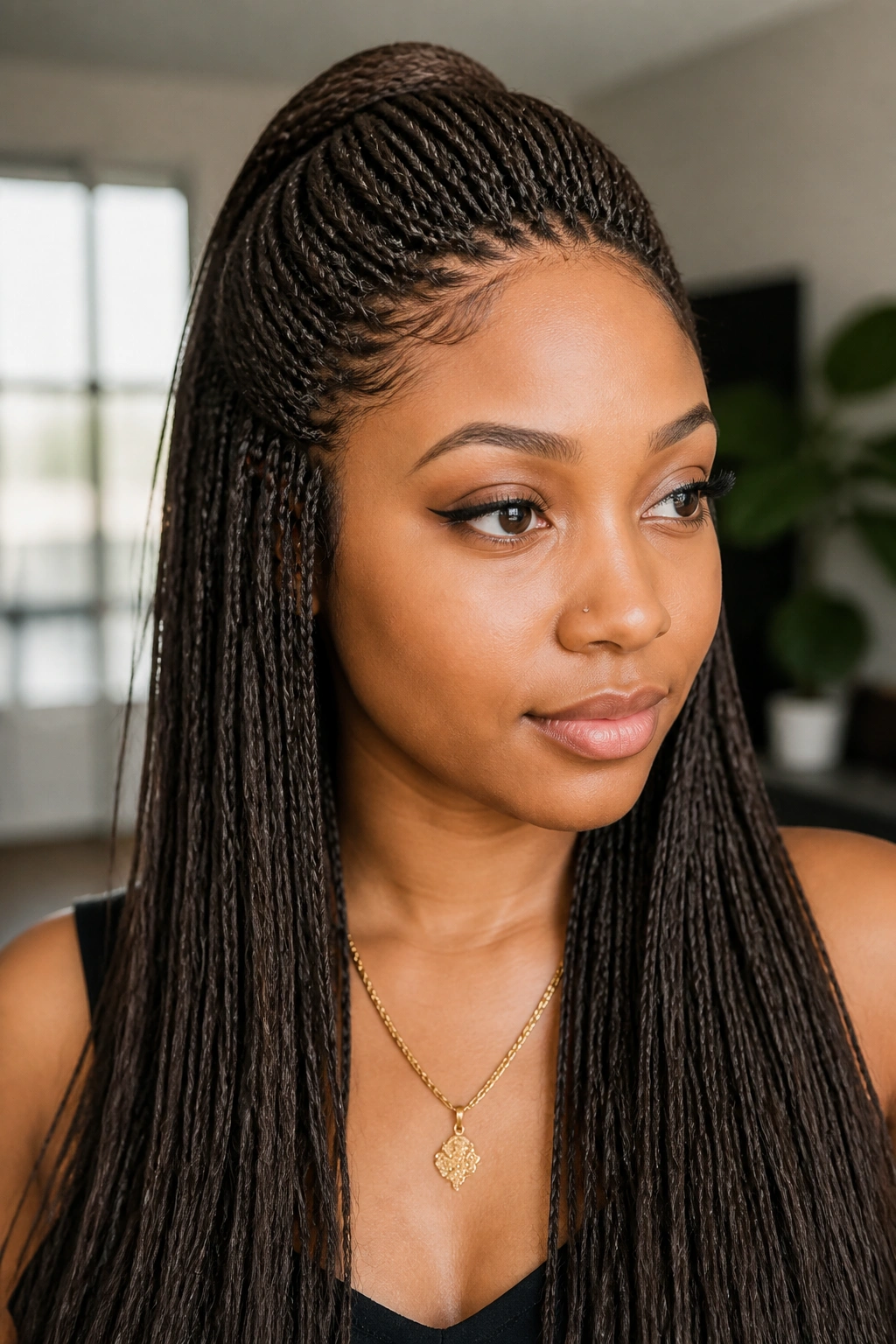
What if you want the length, but not the weight in your face? The half-up crown lift answers that problem neatly. Pulling the top section back keeps the hair off your eyes while the lower braids keep their swing, which is a nice trade on long hair.
How To Wear It
The best version takes only the top third of the braids, not half the head. Too much and the shape gets bulky fast. A small clip, a wrapped elastic, or two crossed pins all work; the point is to keep the crown smooth and let the lower length hang straight.
This one reads polished without trying too hard. It also gives you a place to hide a grown-out root line near the temples if the install has been in for a while. A little edge control at the front can help, but keep it light. Heavy product makes the lifted section sink by noon.
I like this style when the hair needs to stay out of the face but still look long. It has a clean front, a soft back, and no fussy extras. That is why it works.
4. Micro Braids Pulled Into A Low Ponytail

A low ponytail is what I reach for when long micro braids start behaving like a curtain. One elastic at the nape changes everything. Suddenly the length feels contained, the ends stop brushing every zipper in sight, and the whole style looks more intentional.
The ponytail should sit low and relaxed, not tight against the scalp. If you yank it too high, the weight of long braids pulls on the roots and the silhouette turns awkward fast. A wrapped braid around the elastic keeps the finish neat, and a little mousse at the top cuts down the fuzzy halo that can show up after a few days.
- Use a snag-free elastic with a soft cover.
- Leave the ponytail slightly loose so the braids can move.
- Wrap one thin braid around the base to hide the band.
- Let the tail sit over one shoulder if you want a softer line.
Small detail, big payoff: the nape is the first place long micro braids rub against collars and jackets, so this style buys you comfort as well as shape.
5. Micro Braids Coiled Into A Low Bun

A low bun does one thing well: it takes the weight off your neck. On very long hair, that matters more than decoration. A braided bun also shows the braid pattern in a tighter shape, so the texture looks fuller even when the bun is compact.
Keep the bun low and slightly off-center if your hair is dense. A center bun can feel like a helmet when the braid set is thick. A side-set bun, pinned at the nape and tucked under once, feels softer and usually sits better under a scarf or blazer collar.
The danger is over-twisting. Micro braids are already small, and if you wind them too tightly around the base, the bun starts to look hard. A looser coil with 6 to 8 pins gives you a better shape and less strain on the hairline. Good.
If you want a style that survives a full workday, a commute, and a dinner seat with a tall collar, this is the one I would pick without thinking twice.
6. Boho Micro Braids With Loose Curly Ends
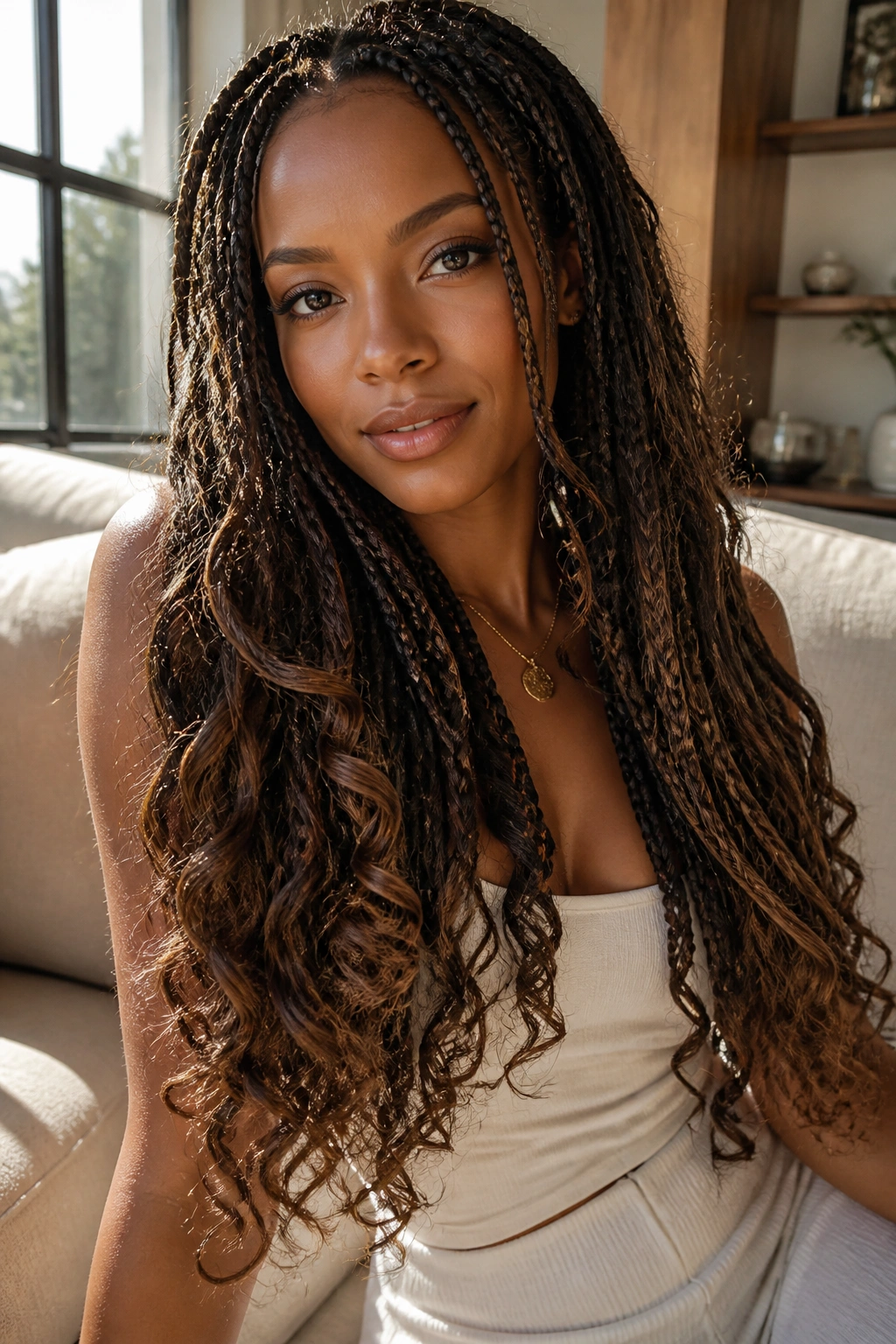
Soft ends change the whole mood. Straight, sealed micro braids can feel sharp; curly or waved ends make the same length look more relaxed and less formal. On long hair, that little bit of texture at the bottom matters more than people expect.
If your own hair is long enough to leave 2 to 4 inches unbraided, set the ends with flexi rods or a small curling wand on low heat after a heat protectant. If you are using added hair, ask for a loose finish rather than a blunt seal. The point is movement, not perfection.
A boho finish works well when you want the braids to sit somewhere between polished and casual. It softens sharp parts, hides tiny frays at the ends, and makes the whole set feel lived-in in a good way. Too much oil kills the curl fast, so keep the finish light.
I like this style for long hair because the length can carry a softer bottom line without looking thin. The loose ends stop the braids from reading too severe. That tiny shift changes the whole look.
7. Triangle-Part Micro Braids With Clean Geometry
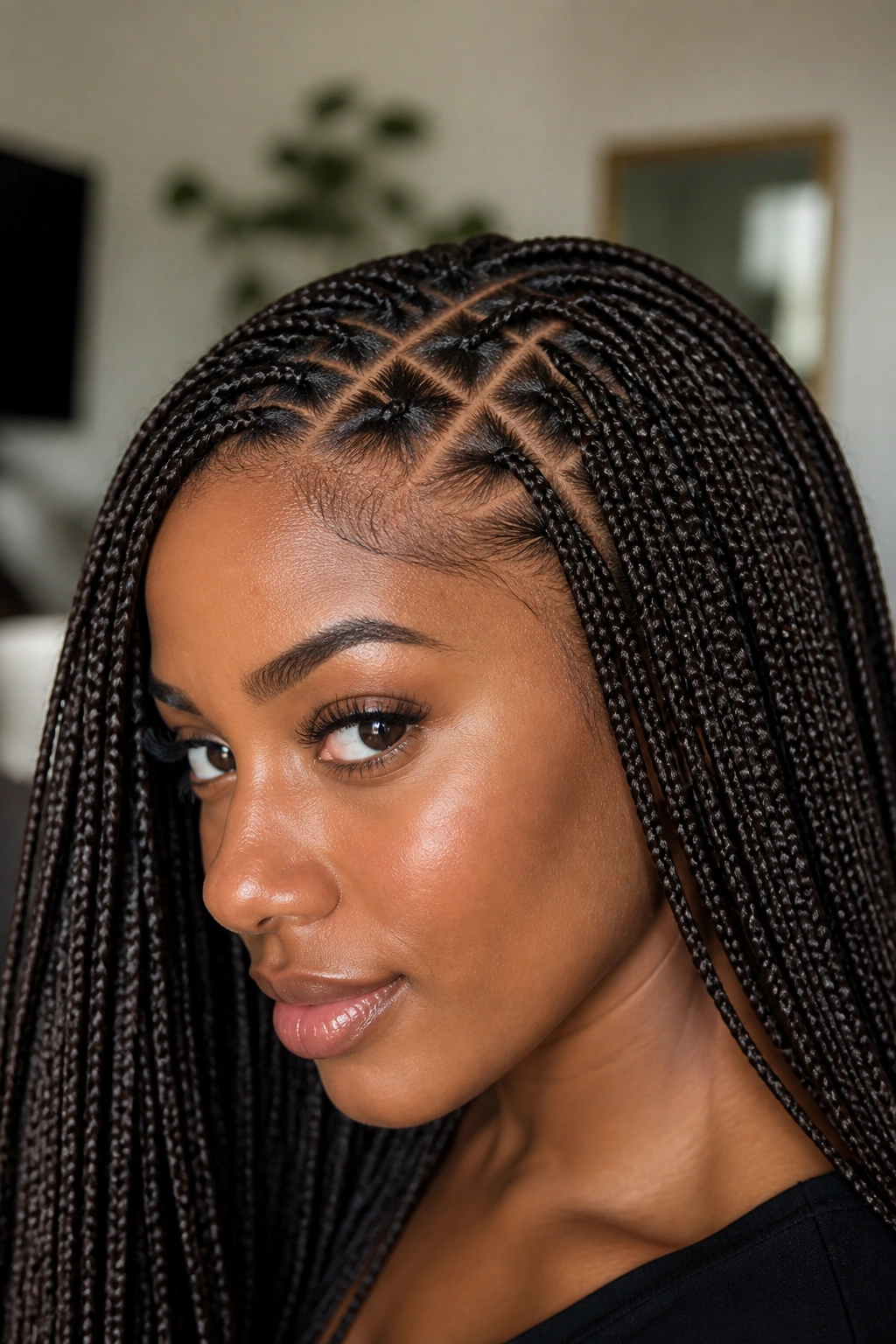
Square parts are fine. Triangle parts look sharper on long hair because they break the grid and stop the scalp from reading like a checkerboard. The triangles also give each braid a slightly different anchor point, which makes the whole set feel less rigid.
Why Triangles Read Better
The shape matters most when the hair is long and heavy. A regular square pattern can feel stiff under all that length, especially if the braids are tiny and numerous. Triangle sections soften the structure while keeping the parts neat enough to hold for weeks.
- Triangle parts sit well on dense hair because they spread the weight.
- They look clean when the braids are worn down or in a low ponytail.
- They help the front rows blend if your hairline is uneven.
- They need careful sectioning around the temples, where mistakes show fast.
Tip: keep the triangles consistent in size for the first few rows, then slightly widen them toward the crown so the back does not look overworked.
This is the style I point people toward when they want the parting to be part of the design, not just a base for the braids.
8. Zigzag Part Micro Braids That Put The Scalp On Display

A zigzag part turns the parting itself into the design. It is a good move when the braids are tiny and the scalp is healthy, because the crisscross line gives the roots more motion than a straight grid ever will.
What Makes It Hold Up
Use the point of a rat-tail comb and keep the zigzag shallow. If the angles are too sharp, the sections get hard to follow and the finish looks fussy instead of neat.
- Best on medium-to-thick hair that can hold a crisp section.
- Works well with a little shine spray across the part, not the whole braid.
- Looks best when the front rows are matched carefully on both sides.
- Needs a calm hand. Rushed zigzags show every wobble.
Tip: keep the angles consistent for the first three rows, then relax the pattern toward the crown so the back does not get too busy.
This style has a little edge to it. Not loud. Just sharp enough to make the parting visible when the braids are worn down or pulled into a ponytail.
9. Face-Framing Micro Braids With Loose Length
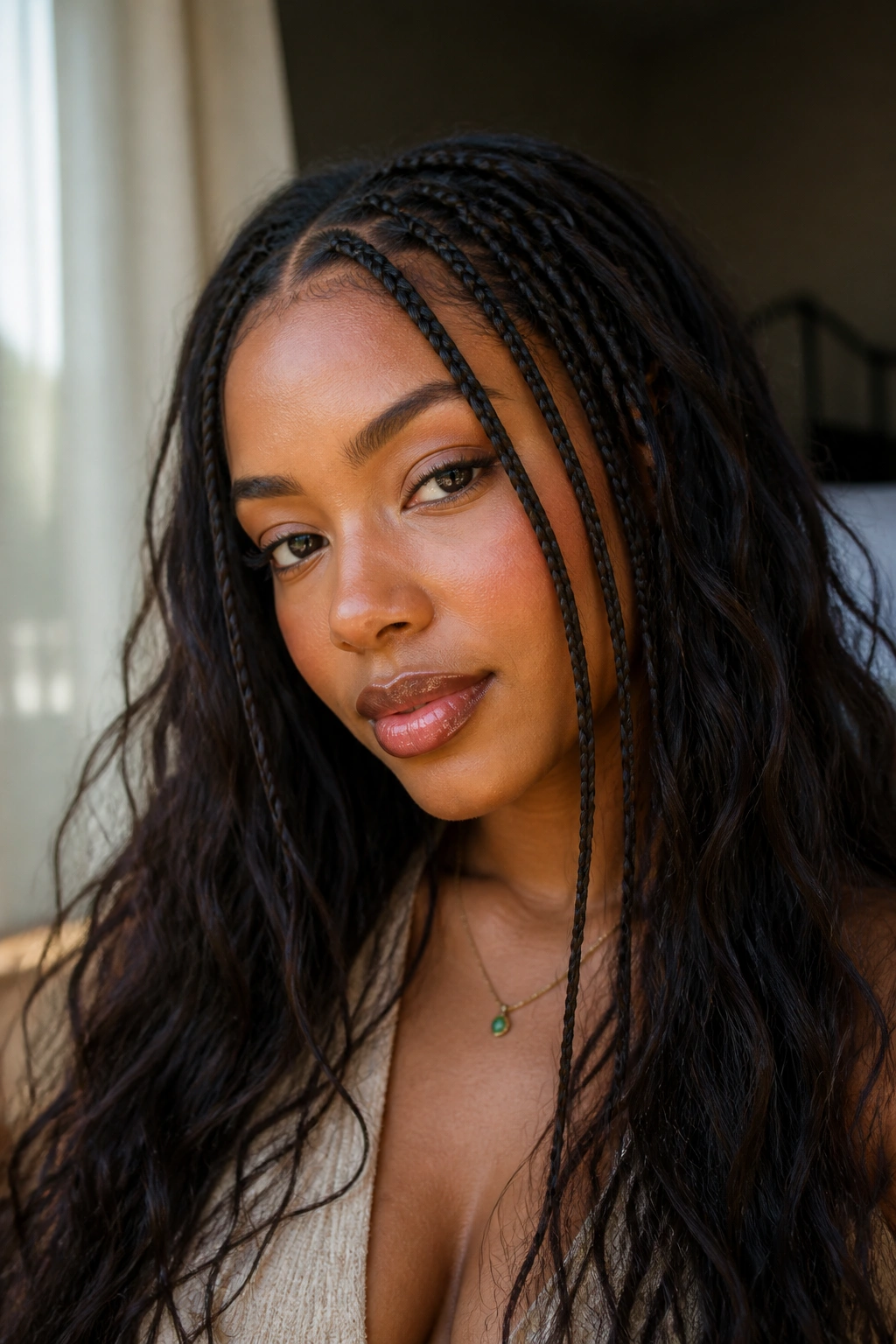
A couple of thin braids near the cheeks can change a whole install. They soften the line of the jaw, pull hair away from the eyes, and give long lengths something to do near the front.
Less is better here.
You do not need a full face of braids to get the effect. Two to four micro braids placed close to the temples are enough. Leave the rest of the hair loose and long, and the front pieces will act like a frame rather than a barrier. If your face is narrow, place them a little farther out. If your forehead is broad, bring them in closer to the part.
This style works well when you want movement but not a full updo. It also helps if the hairline near the front has started to loosen a bit, because the front braids cover that area without creating a heavy edge. A tiny bead at the end can help the pieces sit flat, but keep it restrained. One bead is a choice. Twelve is clutter.
I like this one because it feels easy to wear without giving up the length that makes long micro braids so appealing in the first place.
10. Micro Braids With Beads, Cuffs, And Tiny Rings

Accessories change the whole tone of micro braids on long hair. Beads, cuffs, and small rings catch the eye fast, and because micro braids are so fine, even a little hardware goes a long way.
Start at the ends, not all the way up the braid. That keeps the set from getting heavy near the roots. A few cuffs near the temples can be enough, or a row of clear beads at the bottom can give the length a clean finish. If you stack too many pieces on one braid, the weight starts to tug, and the style loses its swing.
- Put the heaviest accessories on the lower third of the braid.
- Use one accent braid on each side if you want balance.
- Mix one metal finish, not three.
- Keep beads smooth inside, or they snag on clothing fast.
The sound matters too. Beads click when you walk. That can be fun, and it can also get old during a long day. I prefer a few pieces placed with purpose rather than a full bead wall from crown to waist.
11. Micro Braids Twisted Into A Long Rope Ponytail

Unlike a straight ponytail, a rope twist breaks long micro braids into two moving cords. That gives the style more shape and keeps the tail from looking flat against the back.
Gather the braids into a low or mid ponytail first. Then split the tail into two even sections and twist each section in the same direction before wrapping them together in the opposite direction. The twist should look firm but not tight enough to kink the braids. If the tail feels too thick, divide it into three smaller sections and rope them down one after the other.
This style works especially well on long hair because the extra length shows the twist pattern. Shorter braids can lose the effect. Longer braids keep the rope visible from the base all the way down, which makes the look feel deliberate instead of improvised.
It is also a good choice when you want a strong shape without a bun. The rope twist keeps the hair moving, but not in a wild way. Clean. Controlled. No fuss.
12. Micro Braids Sealed Into Soft Curly Ends
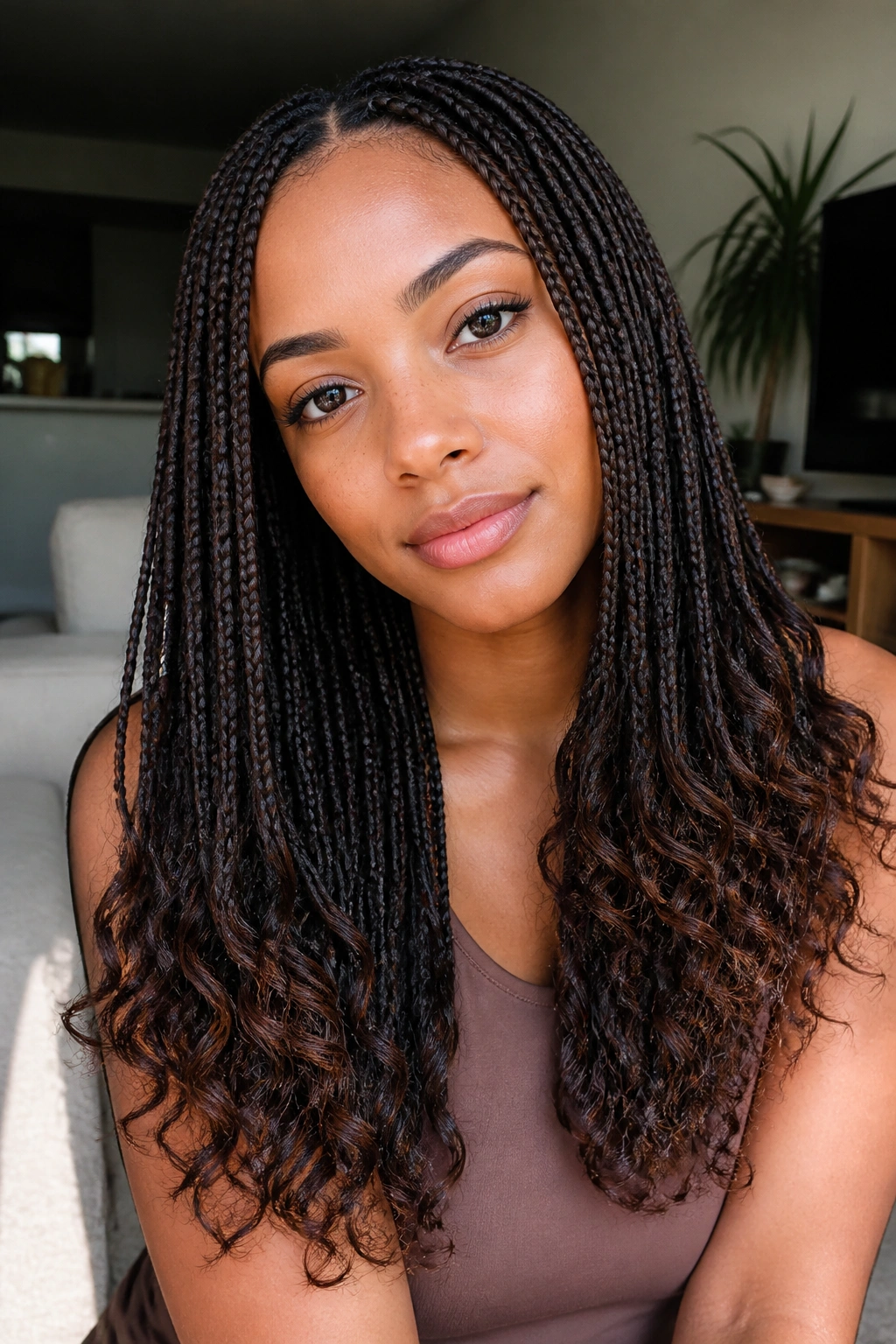
The ends matter more than people want to admit. When micro braids on long hair stop in a blunt line, the whole style can look heavier than it needs to. A soft curl at the bottom changes that in a second.
You can set the ends on flexi rods, roller rods, or a small curling wand if the hair is heat-safe. The curl does not need to be tight. A loose bend, held just enough to keep shape, is often better than ringlets. On long braids, a gentle curve at the bottom gives the eye a place to rest.
The real trick is keeping the curl alive after styling. Sleep with a satin bonnet or scarf, and do not pile the ends under your head. That crushes the shape by morning. A light mist of braid spray on the lengths helps if the ends start to dry out, but skip heavy oils near the curl. They pull the shape down.
This is one of those styles that looks nicer the less you fuss with it. If the curl is soft and the braid line is clean, the whole set feels lighter.
13. Micro Braids Mixed Into A Loose Fishtail Sweep

Picture long micro braids gathered to one side and woven into a loose fishtail. The shape is a little romantic, a little rough around the edges, and much more interesting than a straight hanging tail.
How The Shape Changes
A fishtail uses small crossovers instead of a basic three-strand weave, so it reads more textured. With micro braids, that extra structure helps control the bulk of long hair while still showing off the length. It is especially useful if the braids have started to grow out and the ends need a new job.
- Best worn over one shoulder.
- Use a soft elastic at the nape before starting the fishtail.
- Pull the outer edges slightly apart for width after the braid is finished.
- Keep a few face pieces loose if you want the front to soften.
The look holds better than you’d think because the smaller braids lock into one another. It is a smart choice for dinner, a formal event, or any day when you want long micro braids to feel dressed up without going all the way into a bun.
14. Micro Braids Pinned Into A Low French Roll

A low French roll gives long micro braids a clean, formal shape that feels almost tailored. The length disappears into the twist, but the braid texture still shows at the surface, which is the part that matters.
Start by sweeping the braids back as if you were making a low ponytail. Then tuck the length upward and inward, rolling the hair against the head and pinning as you go. Micro braids make this look fuller than straight hair because the small sections pack together neatly. The roll should feel secure, not pinched flat. If it feels like a brick, loosen it and pin again.
This style sits well under a coat collar or a wide neckline. It also plays nicely with earrings because the nape is clear and the sides stay tucked. I would not wear it if you want a soft, loose feel. That is not what it does. It is cleaner than that.
A few pins hidden in the center keep the roll from sagging. Use enough to hold the shape, then stop. Over-pinning makes the back look stiff.
15. One-Sided Deep Tuck With An Exposed Ear
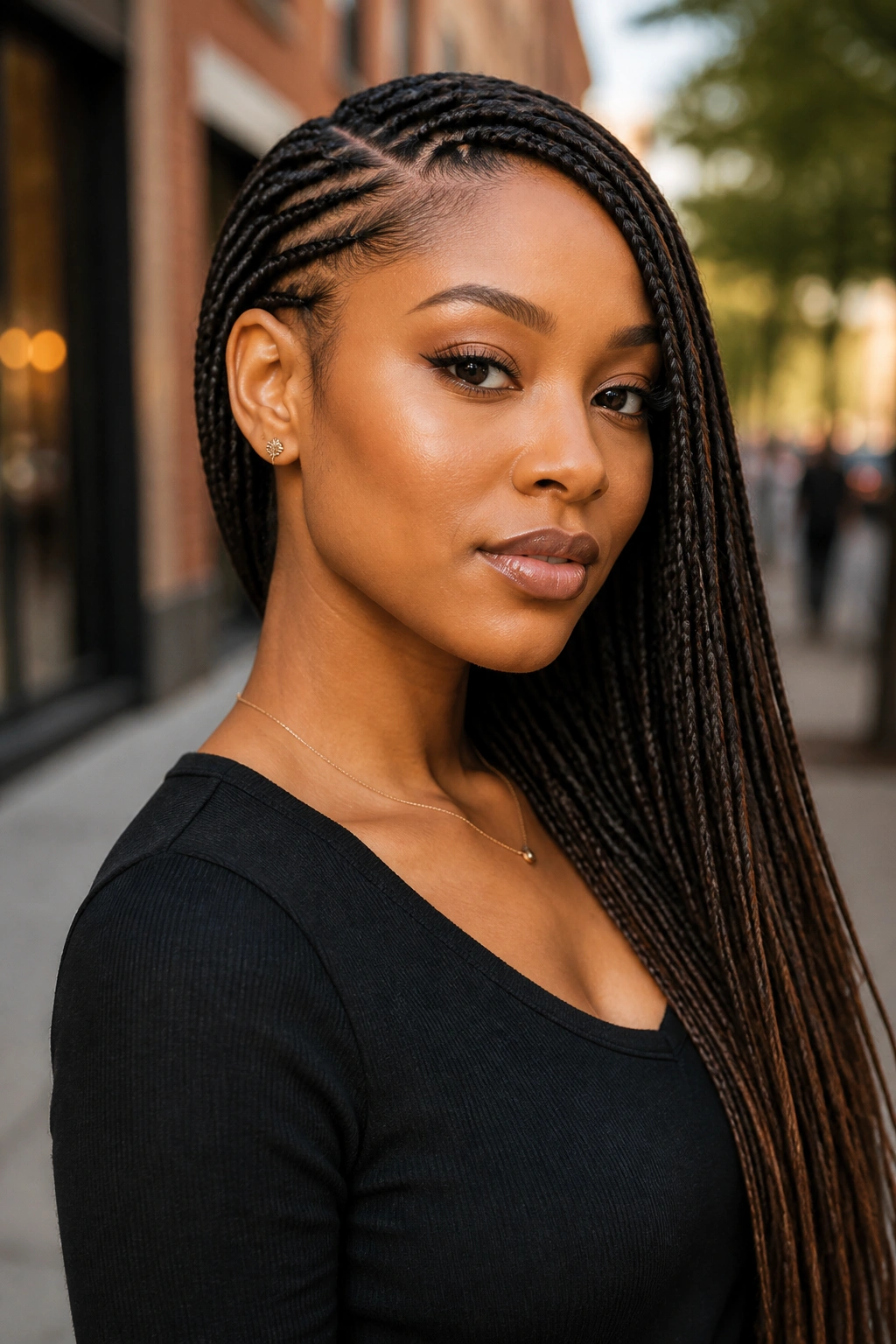
A deep tuck on one side gives long micro braids a sharp asymmetrical line. One side stays sleek and tucked behind the ear; the other side drops across the shoulder and shows the full length. The contrast is the whole point.
This is not the same as a side part. The part can be central, side, or off-center. What changes here is the finish near the face. One ear gets exposed, which makes room for a hoop, a cuff, or even a plain bare line that feels clean in a nice way. The other side keeps the braids moving, so you still get the benefit of length.
This shape works well if your long braids tend to puff near one temple. Tucking that side down hides the problem and gives the style a stronger outline. It is also helpful when you want one side to feel a little shorter without cutting anything.
I like this for days when a full updo feels too serious but leaving everything down feels too much. It lands in the middle and stays there.
16. Layered Micro Braids Over Loose Hair

Not every micro braid style for long hair has to cover the whole head. Layered braids can sit over loose lengths like thin accents, which is a nice move when you want texture without a full install feel.
Where To Place The Braids
Place the braids near the crown, temples, or just above the ears, then leave the bottom lengths loose. A few narrow braids through the top layer can give the hair shape without taking away movement. That mix works especially well on very long hair, because the loose length keeps the style from looking overloaded.
- Use 6 to 10 braids, not 30.
- Keep the loose hair smooth, or the contrast gets messy.
- Braid the front sections a little tighter so they stay put.
- Finish the loose ends with a soft wave or a flat iron bend if you want the texture to match.
This is a good option if you like the idea of micro braids but do not want the full commitment of a head full of them. It looks lighter, takes less time to wear, and still gives the front a detailed finish.
17. Micro Braids Under A Silk Scarf Or Headwrap

A scarf can be part of the outfit, not a way of hiding the hair. On long micro braids, a silk or satin wrap changes the silhouette fast: the crown gets smoother, the edges stay calmer, and the length can either hang free or be tucked into a low fold.
Use a soft scarf with enough width to cover the hairline without flattening the braids into a slick sheet. Fold it into a band, tie it at the nape, and leave the ends hanging, or wrap it around the crown once and tuck the tail under. A printed wrap makes the style more noticeable; a plain satin one keeps the focus on the braid texture.
This is also one of the kinder styles for long-term wear. It reduces rubbing overnight and keeps the front rows from drying out as fast. If your scalp feels tender, a scarf can make a long braid set more bearable for a full day out.
I love this move on days when the braids need a break from weather and friction. It does the practical job first. The style part comes second, which is exactly how it should be.
18. Micro Braids Wrapped With Thread Or Ribbon

Thread gives color without the weight of beads. Ribbon gives softness without making the braid ends clunky. Either one can change the feel of long micro braids in a way that reads personal instead of loud.
Thin embroidery floss works well for tiny wraps around a few braids near the face. Satin ribbon is better for broader accents because it lays flatter and moves more easily. Wrap it around one braid section, knot it neatly, and trim the tail short so it does not catch on clothes. If you are using a rough thread, skip it. Smooth material matters.
The best placement is at the ends or on just a few face-framing braids. Wrapping every braid turns the style into work. A single accent braid near each temple is enough to echo jewelry, a top, or a lip color without making the hair feel crowded.
This style has a handmade feel that I like on long hair. It says you paid attention, but it does not shout about it.
19. Micro Braids Knotted Into Space Buns
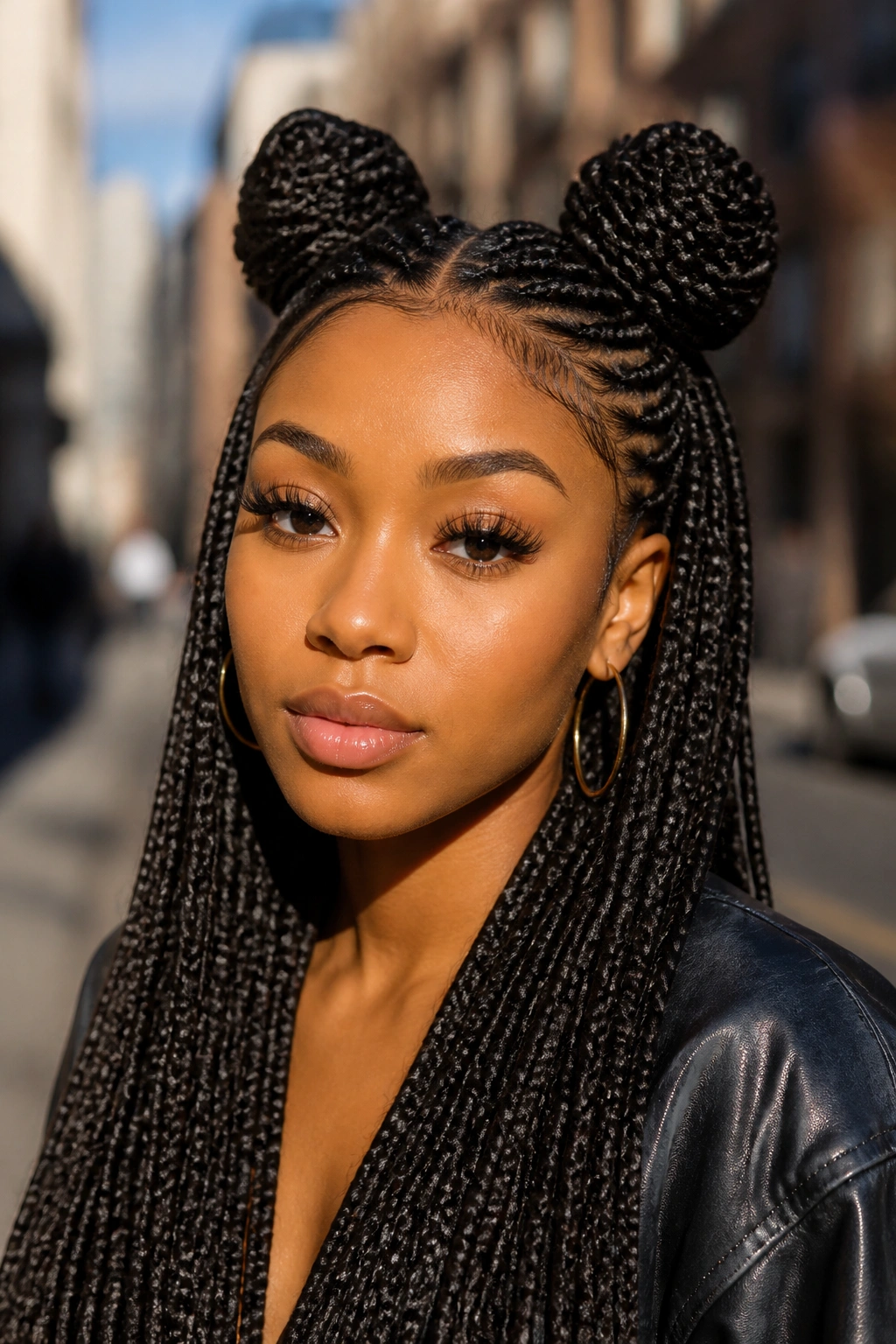
Space buns can sound playful, and they are, but on long micro braids they also solve a practical problem: they take a big amount of hair and split it into two smaller shapes. That makes the style feel lighter right away.
Part the hair down the middle, gather each half high or mid-level, then twist each section into a bun. Keep the buns close to the head if you want a cleaner look, or leave them a little looser if you want the shape to feel softer. Small pins hold better than one giant band, because long braids slide under tension. One bun can be tighter than the other. That is fine, as long as the shape looks balanced from the front.
Leave two thin braids hanging by the face if you want to soften the upper line. Or tuck every end in if you want the cleanest version possible. Both read well.
This one is fun, but it is not childish unless you make it that way. On long hair, the size of the buns gives the style enough weight to feel grown.
20. Waist-Length Micro Braids With A Clean Middle Part
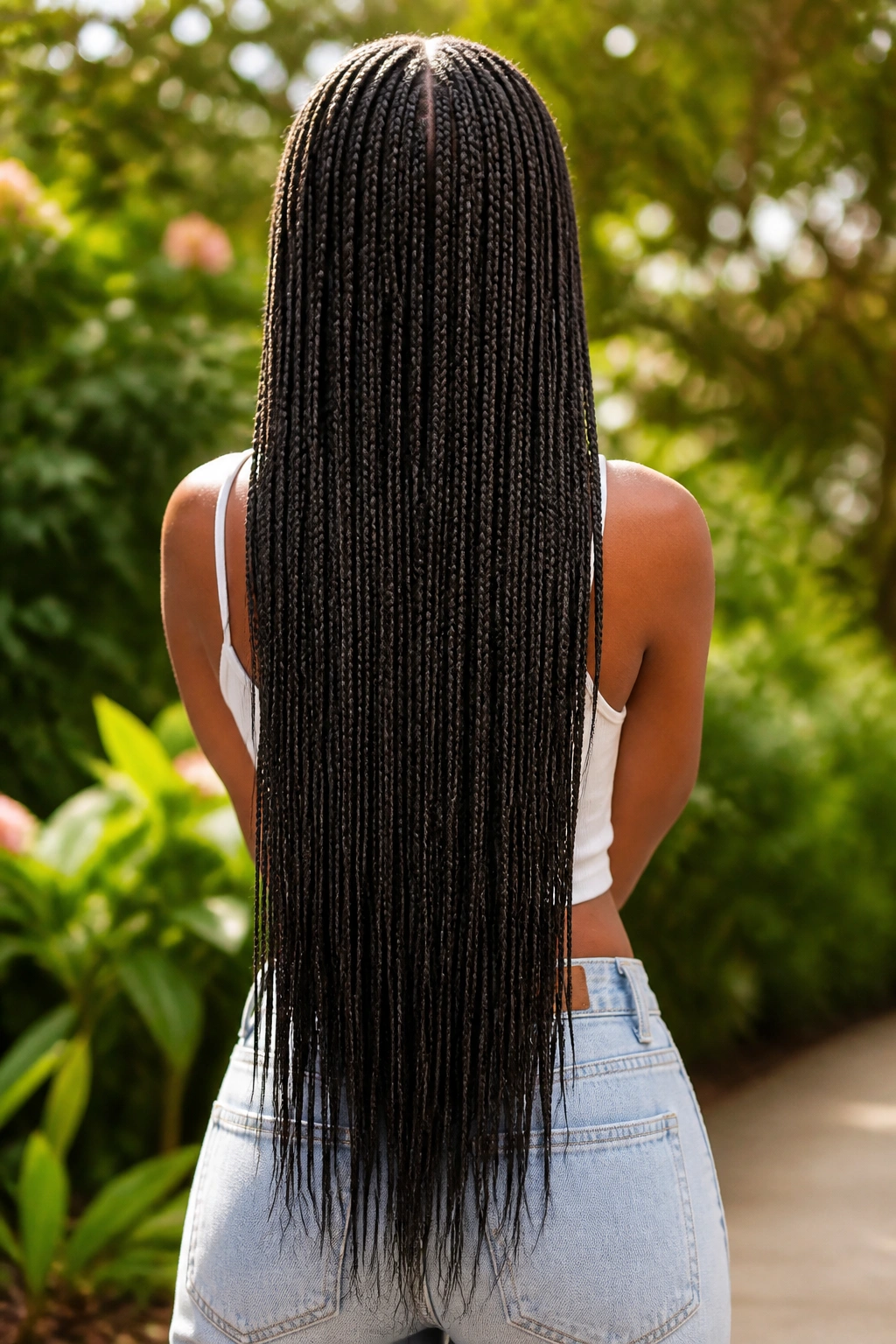
The simplest long-hair look is still the one I trust most when the braids are fresh. A clean middle part and a straight fall down the back show the braid work without extra noise, and on very long hair the length itself becomes the point.
That matters more than people think. When micro braids reach the waist or close to it, the set carries its own rhythm. You do not need cuffs, scarves, or twists to make it interesting. A sharp line at the front, even braid size through the crown, and sealed ends that land at roughly the same point are enough.
If you want the style to last, this is the version to choose when you know you will be wearing coats, hoodies, or shoulder bags a lot. The clean drop sits flat under layers and stays easy to gather into a low ponytail later in the week. A light braid spray on the lengths keeps the finish from turning dry and rough.
And honestly, this is the one that shows whether the install was done well. If the parts are tidy and the weight is balanced, the whole look feels settled in a way that never really gets old. Keep the base neat, keep the tension sane, and let the length do one job at a time.
