



Small braids buy you time.
They also buy you a kind of peace that’s hard to explain until you’ve had a fresh set and a week where your hair stays neat through work, errands, gym sessions, and whatever else the day throws at you. For Black women, that matters in a way glossy braid photos never quite capture. The style has to look good, yes, but it also has to sit right, feel right, and last without turning your scalp into a complaint line.
Tight does not mean neat. That’s one of the first things I wish more people would say out loud.
A small braid set can be beautiful on day one and still be a bad install if the roots are yanked too hard or the parts are rushed. The sweet spot is a style that gives you clean detail, decent movement, and enough flexibility that you can still sleep, wash, and live in it without babysitting every strand.
These are the small braid styles that earn their keep. Some are classic, some lean soft and romantic, and some are sharper and more sculpted. A few are better for low-maintenance weeks, a few are better when you want your parting to do the talking, and all of them can work hard when they’re installed with care.
1. Small Knotless Box Braids

Small knotless box braids are the style I’d point to first if someone asked for a neat set that still feels wearable on day three. The braid starts with your own hair and then gradually feeds in extension hair, so the root does not have that bulky knot sitting on top of the scalp. That little detail changes everything.
The result is lighter, flatter, and easier on the hairline. You still get the clean grid of box braids, but the finish sits more softly, which matters if your edges are fine or your scalp gets tender fast. They also move better. A set that swishes instead of standing at attention tends to age better.
Why the roots feel gentler
Knotless braids spread the weight out instead of dropping it all at one point. That means less pulling at the base, less scalp strain, and less of that stiff, helmet-like feeling you get from a heavy install. The parting can still be sharp. The roots just don’t fight you.
- Best when you want a braid set that feels light at the scalp
- Works well with medium to long natural hair
- Easier to pull into ponytails and buns than thick box braids
- Usually looks softer after the first wash and mousse set
Ask for the smallest size you can actually live with. Tiny knotless braids are gorgeous, but if your hair is dense or your appointment is long, it helps to be honest about how much time and tension you can tolerate.
2. Small Triangle Box Braids

Why do triangle parts change the whole mood? Because the braid size can stay the same, but the geometry underneath makes the whole style look fresher and a little less expected.
Small triangle box braids keep the familiar box-braid shape, yet the parting breaks away from straight rows. The scalp pattern ends up with angles and movement, which gives the style a little more attitude without making it loud. It’s a small change, but you can see it from across the room.
What the parting changes
Triangle sections also help when you want a style that looks thoughtful instead of routine. Straight parts can read polished and classic. Triangle parts read more styled, which is a nice shift if you wear braids often and want one set to feel different without changing the entire braid type.
The style works especially well with gold cuffs, one or two accent rings, or clean beadwork at the ends. That said, the parting alone is enough. You do not need to pile accessories on top of good braids.
- Keeps the same braid size as traditional box braids
- Gives the scalp a more angular pattern
- Looks sharp on center parts and side parts
- Pairs well with knotless or regular feed-in starts
A tiny detail, sure. But tiny details are the point here.
3. Micro Braids

Micro braids are not the style you choose because you want the fastest appointment.
They are for the person who loves tiny detail, soft movement, and a braid set that can look almost woven into the hair from a distance. The finished look is light and fluid, and that’s part of the appeal. Micro braids fall differently from larger braids; they swing, separate, and move with a sort of delicate messiness that bigger braids can’t fake.
The tradeoff is obvious. They take time. A long time. And because the braids are so small, the install has to be clean if you want them to stay neat. Sloppy micro braids are a headache. Good ones are worth the chair time.
One thing people underestimate: micro braids need room to breathe at the roots. If they’re too tight, they can tug harder than they look. If they’re left in too long, they tangle at the nape and around the ends faster than larger braid styles. That’s why I’d only call them low-maintenance if you’re already disciplined about scalp care and gentle detangling.
They’re best when you want movement more than bulk. If you want fullness, go elsewhere. If you want a subtle, almost lace-like finish, micro braids have a loyal following for a reason.
4. Small Feed-In Cornrows
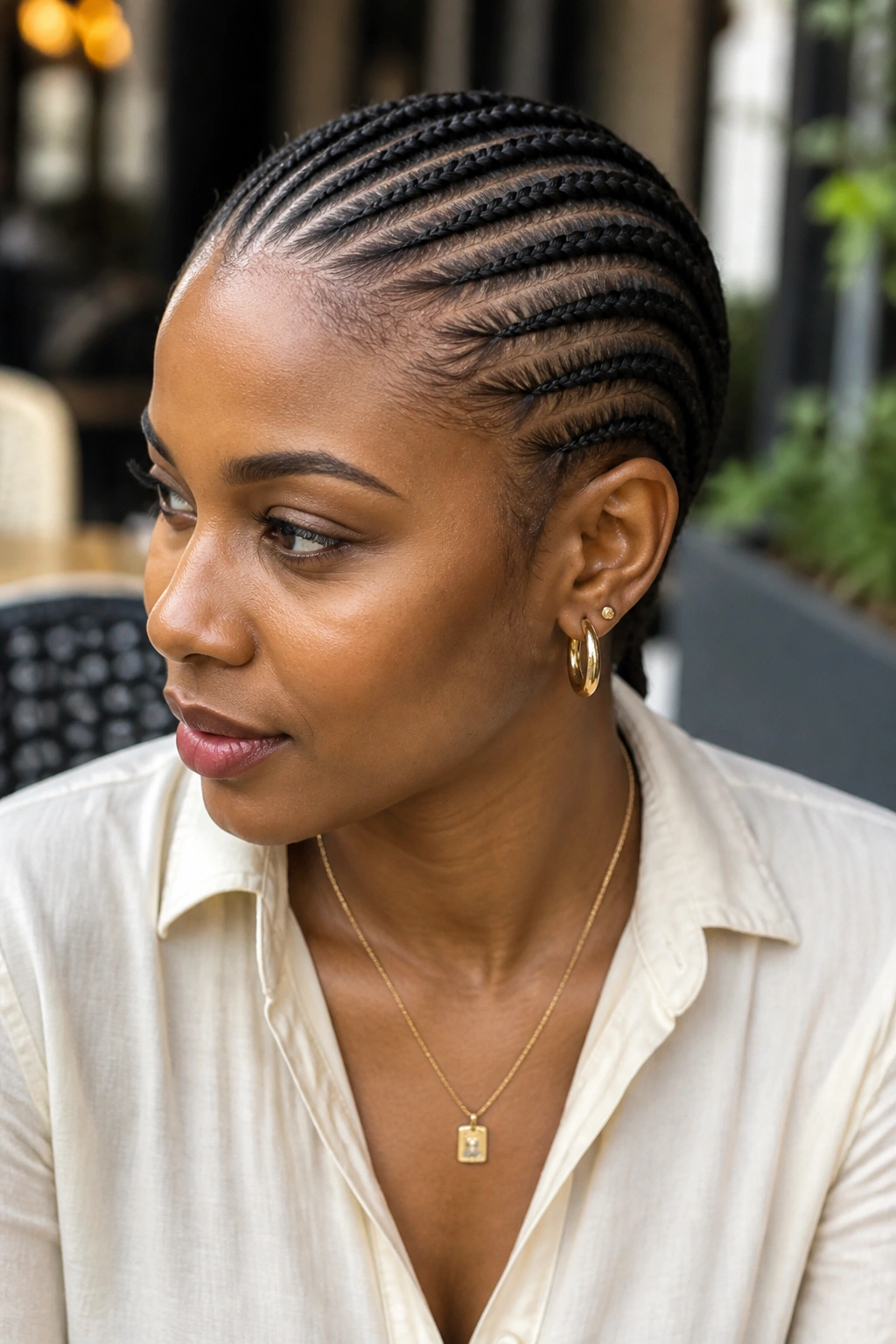
If you work out, wear wigs sometimes, or want a style that lies flat under hats, small feed-in cornrows make sense.
They sit close to the scalp, but the “feed-in” part keeps them from looking thin at the start. Hair is added gradually, so the braid builds smoothly from the root instead of starting with a thick lump. That gives the rows a clean finish without making the front of the style feel heavy.
How to keep the rows clean
The clean look comes from parting first and braiding second. A neat section line matters more than a fancy product here, and a careful hand at the root matters even more. You want the rows to look crisp, not stiff.
- Start on freshly detangled hair
- Use a light styling gel or edge control sparingly at the parts
- Keep the braid size even from front to back
- Wrap with a silk scarf at night so the rows stay flat
Small feed-in cornrows are one of those styles that can look plain in a photo and still be the smartest choice in real life. They’re easy to refresh, easy to accessorize, and easy to turn into something else later. Add a few cuffs. Leave them bare. Pull them into a low bun. They don’t fight back.
5. Small Fulani Braids
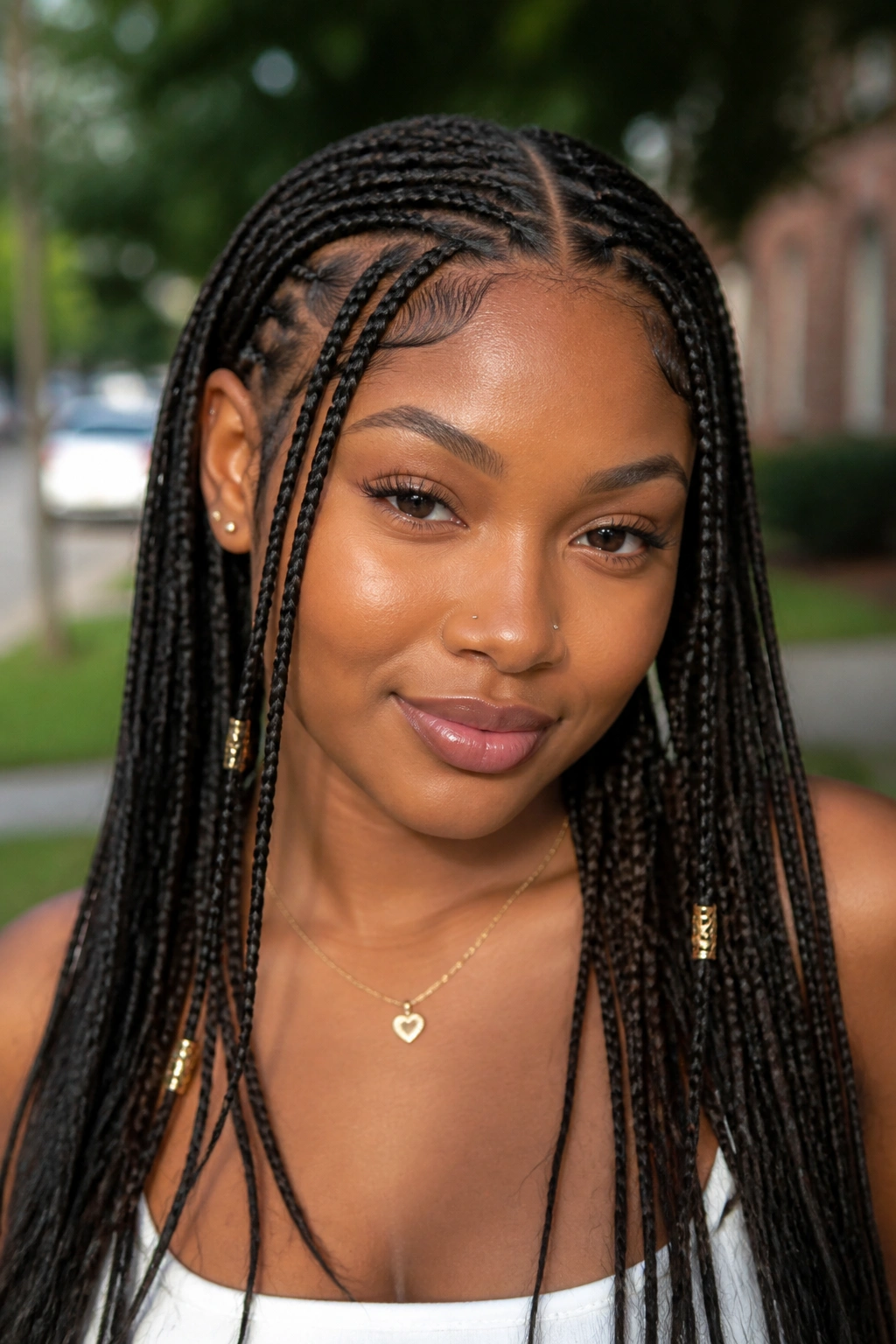
The first thing you notice is the line down the middle, then the side braids start doing the talking.
Small Fulani braids have a built-in sense of structure. You usually get a central braid or parting element, then rows or braids around it that frame the face and scalp in a pattern that feels intentional from every angle. Beads can be part of the look, but they’re not required. Some of the best versions are clean and simple, with the parting doing the heavy lifting.
The appeal is that Fulani braids give you detail without crowding the whole head. You get a focal point near the face, a nice amount of pattern along the scalp, and enough braid movement to keep it from feeling severe. That balance is why the style works on so many face shapes and hair lengths.
A small warning, though: heavy beads can drag the ends down and make a tiny braid set feel tired by day two. Keep the accessories light if your hair is fine or if you know you’ll be wearing the style for a while. A few shell beads or slim cuffs are often enough.
This is one of those styles that looks especially good when the parting is clean and the braids are truly small. If the sections are too chunky, the whole thing loses the elegance that makes it work.
6. Small Lemonade Braids

Small lemonade braids give shape with almost no extra effort.
The diagonal parting is the whole story here. Instead of rows going straight back, the braids sweep to one side, which creates motion before you even touch the length. The style feels sharper than a basic straight-back cornrow set, and that side flow is what makes it stand out.
They are especially useful when you want the scalp pattern to frame the face instead of disappearing into the crown. A small lemonade set can soften a strong jawline, bring attention to cheekbones, and keep the front from looking too boxy. It’s a directional style, not a static one.
The neatest versions leave the braids snug but not pressed flat to the point of discomfort. You want definition, not strain. If the braid line at your temple hurts when you move your face, the install is too tight. Simple as that.
I like this style when someone wants a look that feels stylish without piling on accessories or texture. The braid direction does most of the work. That’s the nice part. No need to overthink it.
7. Small Goddess Braids
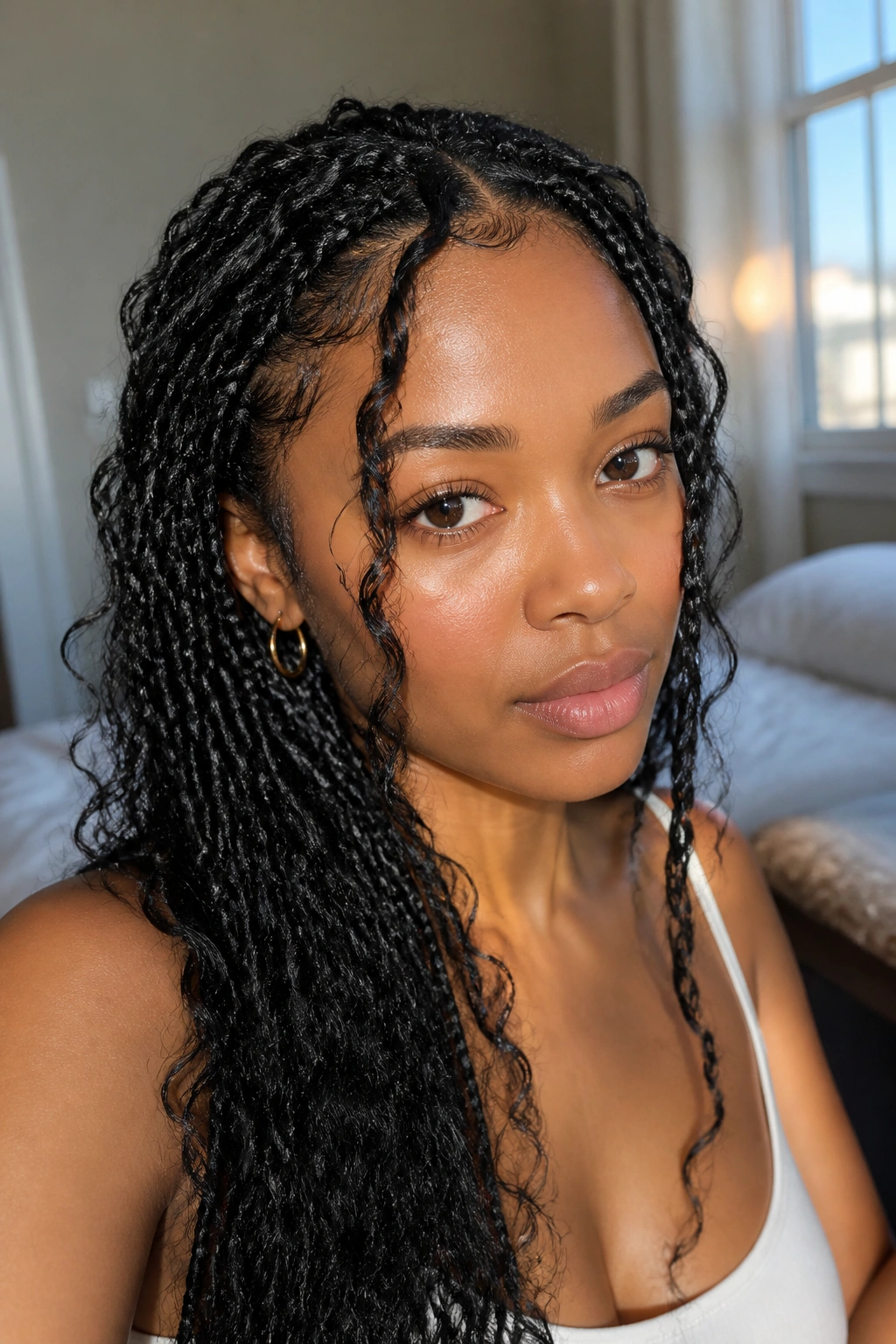
Take a clean set of small braids and leave a few curled pieces loose near the face or through the length, and the whole style softens right away.
That’s the basic charm of small goddess braids. They sit somewhere between sleek and airy. You still get the grid, the braid pattern, and the protective feel, but the added curls keep the style from looking too severe. It’s a good middle ground when you want polish without stiffness.
Loose curls without chaos
The trick is control. Goddess braids are not supposed to look messy in a rushed way; they should look softly broken up on purpose. A few curly strands at the front, a little texture through the length, and maybe a curl or two near the ends can do plenty.
- Use lightweight curly extension pieces so the braids don’t get weighed down
- Refresh the curls with mousse instead of heavy cream
- Keep the loose pieces away from thick scarves that snag
- Avoid piling on oil, which can make the curls limp fast
This style is a favorite for people who like braid sets with some movement around the face. It frames well in photos, yes, but it also feels less rigid when you’re wearing it on an ordinary Tuesday. That matters more than people admit.
8. Small Stitch Braids
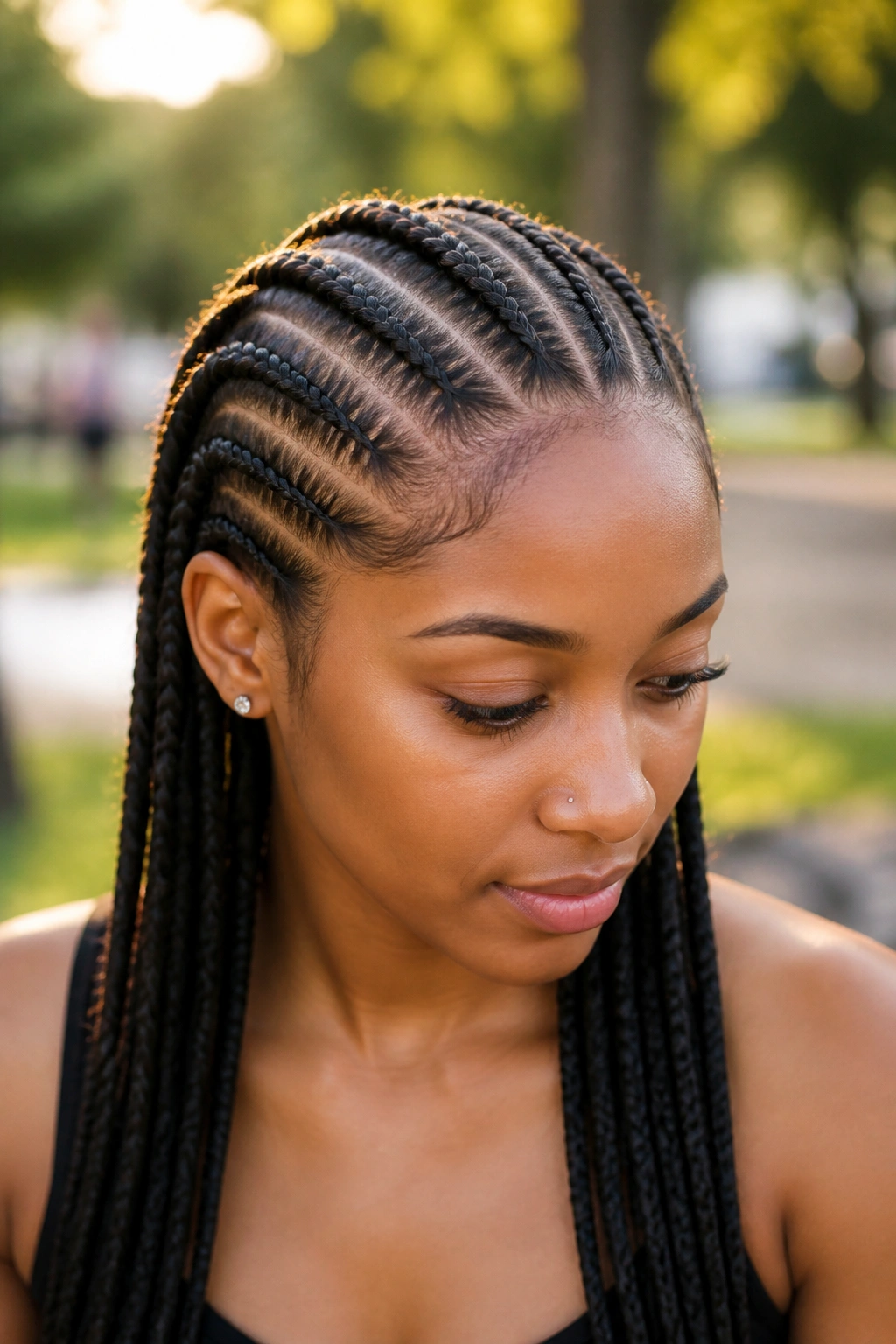
What makes stitch braids look so crisp? The answer is in the parting, not the braid size.
A stitch braid uses neat, separated sections that create a visible “stitch” effect across the scalp before the braid continues down the head. With small stitch braids, that detail becomes even clearer because the rows are tighter and more refined. The result can look sleek, architectural, and almost tailored to the head.
They’re a strong pick when you want your parting to be the star. You can wear them straight back, curved, or mixed into a ponytail base, and the scalp pattern still reads clean. On busy weeks, that kind of structure can feel reassuring. No fluff. No fuss.
How to ask for them
Say you want the rows neat, even, and not too bulky at the root. That’s the practical part. The other part is tension. Stitch braids can look sharp without being painful, and they should.
- Ask for clean parting lines with visible sectioning
- Keep the braid size consistent from row to row
- Request a tension check around the temple and nape areas
- Finish with a light mousse set so the rows stay smooth
If the braid pattern is done well, you can wear stitch braids with almost nothing else. They already bring enough shape on their own.
9. Small Braids With Curly Ends
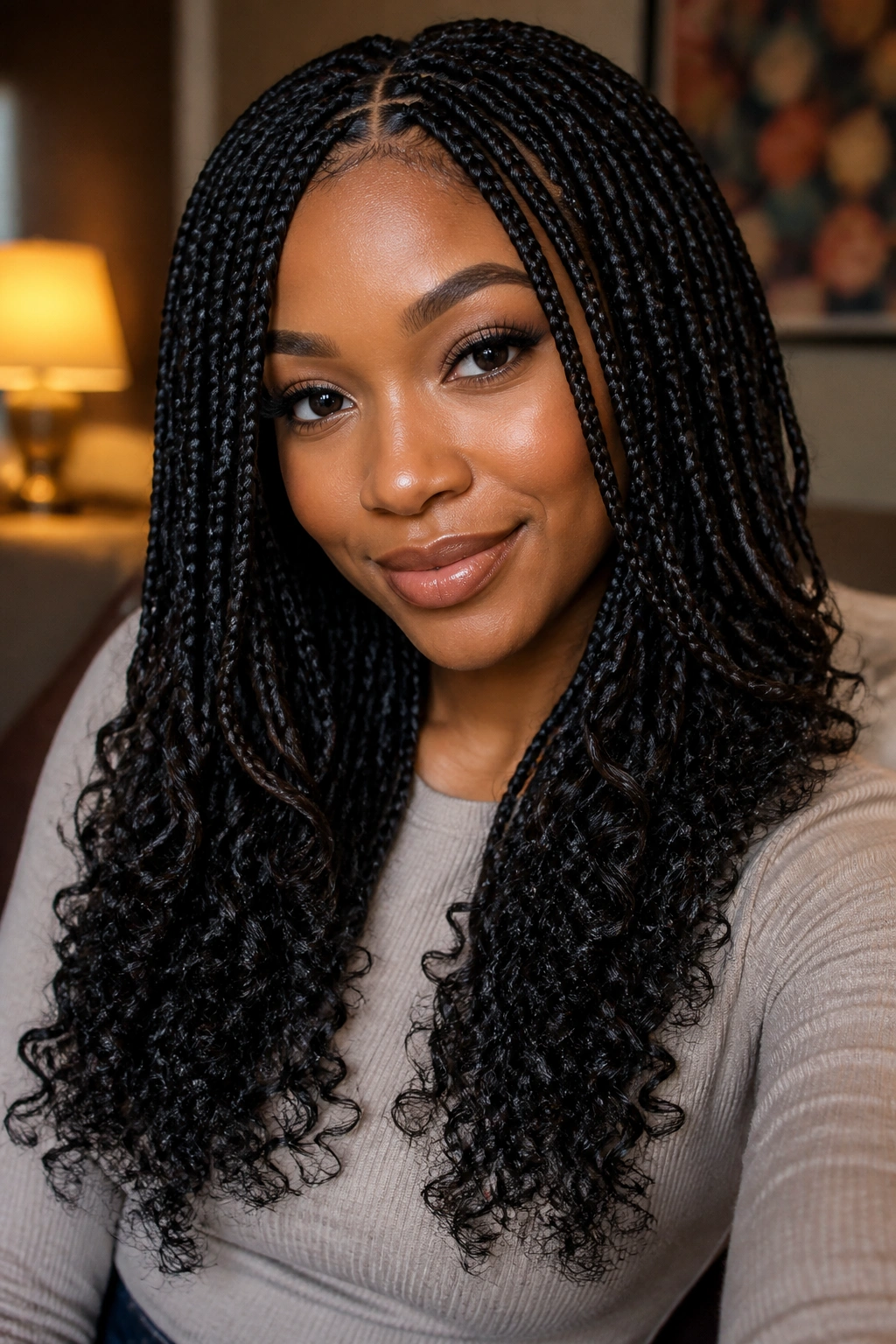
A friend who hates blunt braid ends will usually ask for this style.
Small braids with curly ends keep the braid structure but trade the hard finish for bounce. The ends are left curly, whether that means using pre-curled extension hair, setting the ends with rods, or finishing the braids in a curl pattern that holds shape. The point is simple: the style moves better and looks a little softer at the bottom.
That change matters more than it sounds. Straight ends can make a small braid set feel severe, especially if the braids are long. Curly ends break that line and add a bit of air. They also help if you want the braids to look less boxy at the hem.
A couple of cautions. Curly ends tangle faster than sealed ends, so they need more care at night. Sleep with the ends loose in a braid or pinned up gently, not shoved under your head like an afterthought. And if you use heat to set curls, check that the hair being used can take it safely. Never treat every extension hair the same way.
The look is worth it when you want the braid itself to stay tidy but the finish to feel softer. That tiny curl changes the whole mood.
10. Small Braided Bob
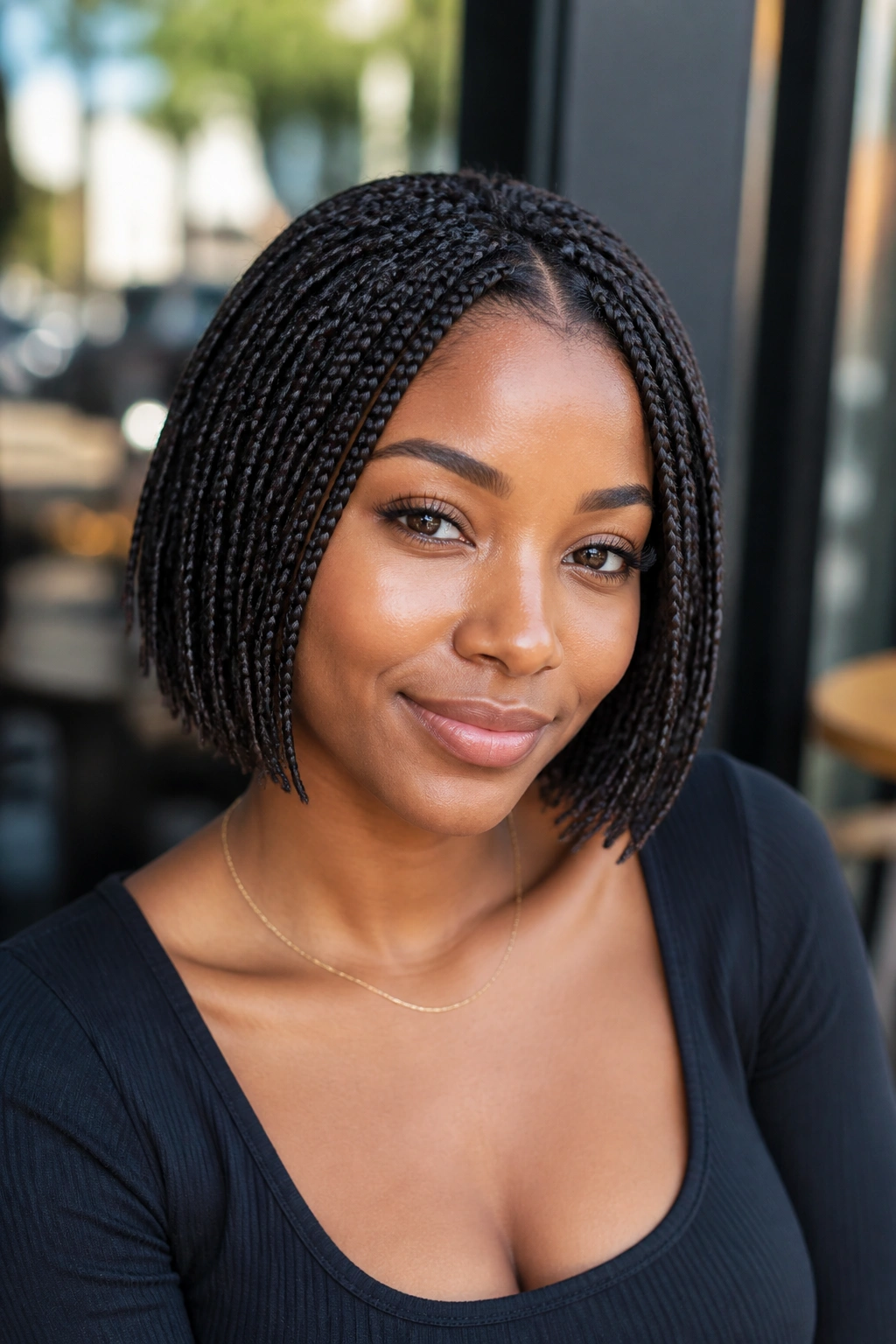
Short braids look even more polished than long ones when the cut lands at the chin or collarbone.
That’s the quiet truth about a small braided bob. Once the length comes up, the whole style feels sharper, lighter, and easier to wear day to day. You lose some of the drama of waist-length braids, sure. You gain speed, comfort, and a neckline that does not get tangled in every scarf and collar you own.
A bob also makes the braid size look more precise. Because the ends sit higher, people notice the parting, the density, and the shape of the line. That can be a good thing if you like detail and a bad thing if your install is uneven. There’s nowhere to hide, which is part of why a braid bob looks so clean when it’s done right.
It’s one of my favorite choices for people who want small braids but do not want to spend the whole day managing them. Wash day is easier. Drying takes less time. Sleep is less annoying. The tradeoff is that you can’t always pile it into the same high styles you’d use with longer braids.
Still, a sharp little bob has a kind of confidence to it. Not loud. Just neat.
11. Small Boho Braids

Boho braids are for the person who wants a little undone texture.
Unlike a very clean knotless set, small boho braids usually include loose curly strands scattered through the length, not just at the ends. That gives the whole style a softer, airier finish. It can look romantic, but it can also look a little wild if the curls are overdone or the pieces are too thick. The sweet spot is controlled looseness.
What to watch for
Boho braids are not the easiest style to keep pristine for a long stretch. Those free pieces tangle. They frizz. They can catch on sweater collars and backpack straps, which is irritating in a way only braid wearers understand.
- Keep a lightweight mousse on hand for the loose curls
- Sleep with a silk bonnet or scarf that covers the ends
- Finger-separate the curls instead of yanking through them
- Don’t overload the style with too many loose pieces
The upside is that boho braids age nicely if you like a lived-in look. They don’t need to be perfect to still look good. In fact, a little softness is the point. If you want a tiny-braid style that leans less polished and more relaxed, this is the lane.
12. Small Half-Up Half-Down Braids
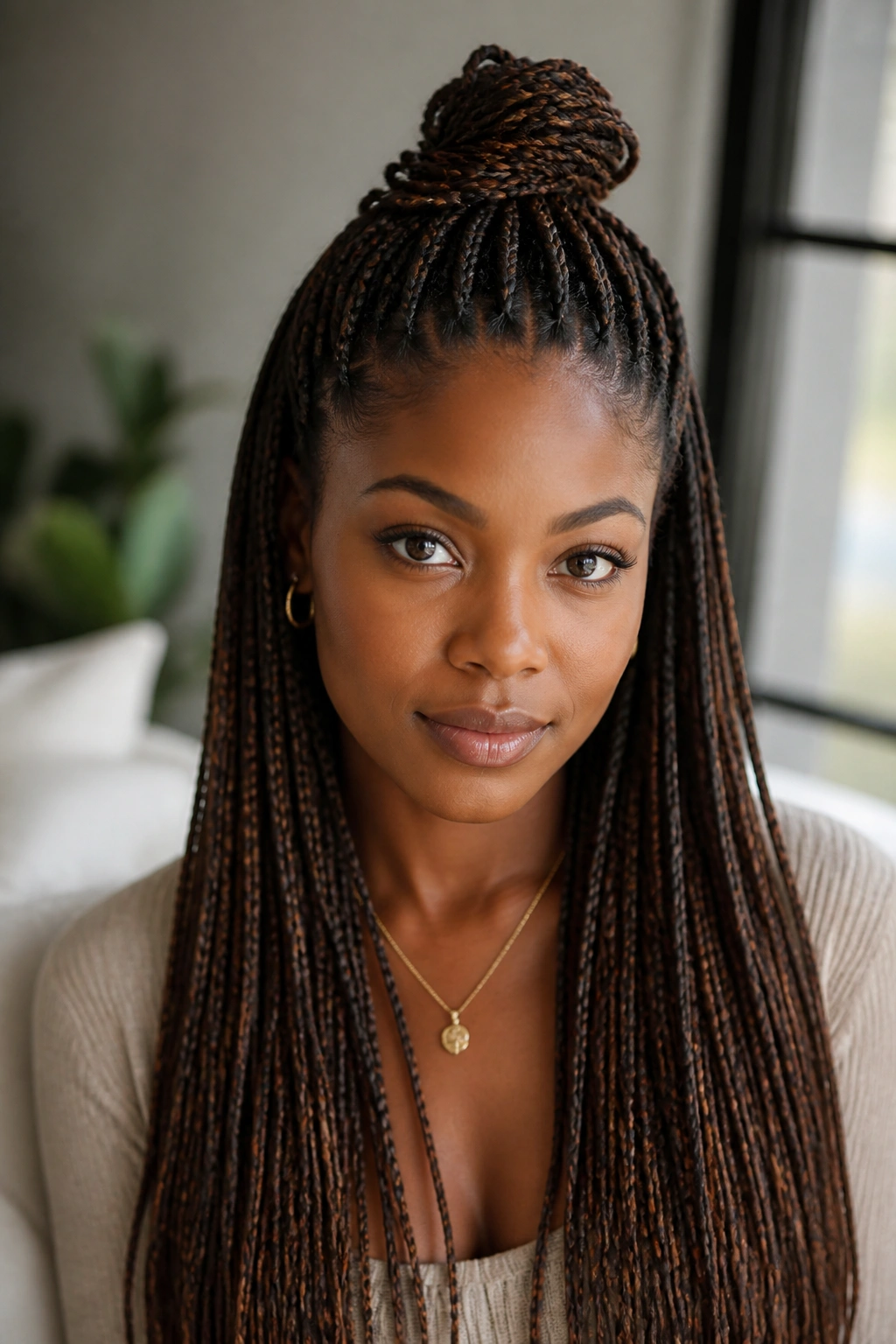
You need your hair out of your face for work, but you still want length on display after hours.
That’s the use case for small half-up half-down braids, and it’s a good one. The base style can be knotless braids, box braids, boho braids, or even micro braids. The styling move is what matters: pull the top section up, leave the rest down, and you get structure with some movement left in the back.
It’s one of the easiest ways to change the mood of braids without redoing the whole head. A top knot makes it playful. A clipped half-up style feels neater. A wrapped section with a few braids left loose can even look dressed up enough for dinner or a wedding guest look.
One thing to keep in mind: don’t pull the top section so tight that the front starts aching by midday. If the hairline is stressed, the style stops being cute fast. Use a soft tie, not a hard yank.
This is a flexible choice, and that’s why people come back to it. You can wear it with hoops, with glasses, with a blazer, or with a sweatshirt and still look like you meant to get dressed.
13. Small High Braided Ponytail
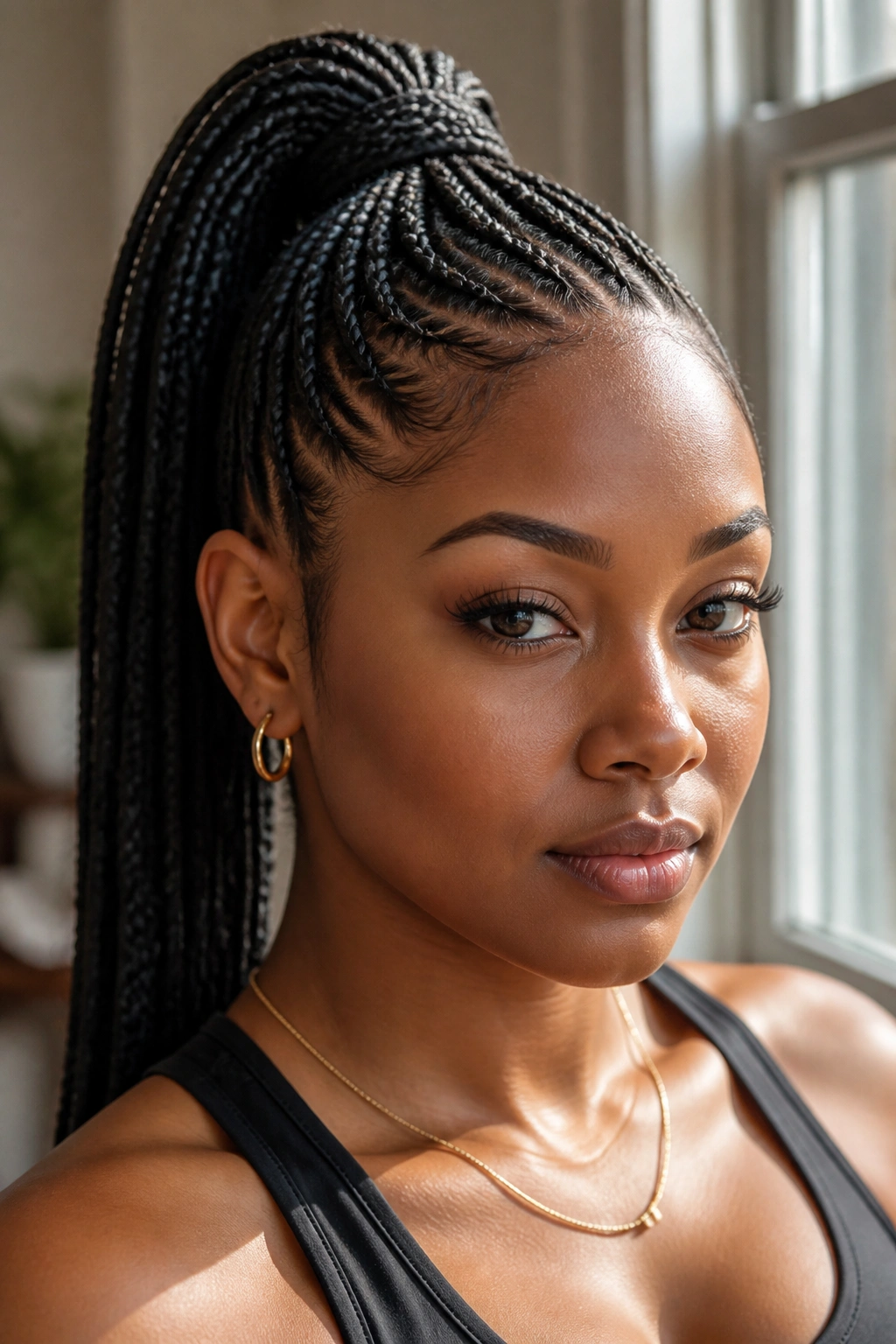
A high braided ponytail can look clean, sporty, and a little formal all at once.
That’s a rare combination, and it’s one reason small braids work so well in this style. The braids gather neatly at the crown or just above it, and the shape draws the eye upward. It can sharpen your profile and keep every strand off your neck, which is a blessing when the weather is warm or your day is packed.
The style only works if the base is secure without being brutal. A ponytail that tugs at the edges all day is a bad bargain. Use a strong but gentle hold, wrap a braid around the base if you want to hide the elastic, and let the ponytail sit high enough to look intentional but not so high that your scalp protests.
Best details to ask for
- Keep the front braids small and even so the ponytail base lies flat
- Use a tie that won’t slip through the braid texture
- Ask for enough length in the back to create movement
- Leave a little slack at the nape if your scalp is sensitive
A high braided ponytail is one of those styles that can look fresh with little effort after the install. It doesn’t need much styling day to day. That is part of the appeal.
14. Small Braided Bun or Updo
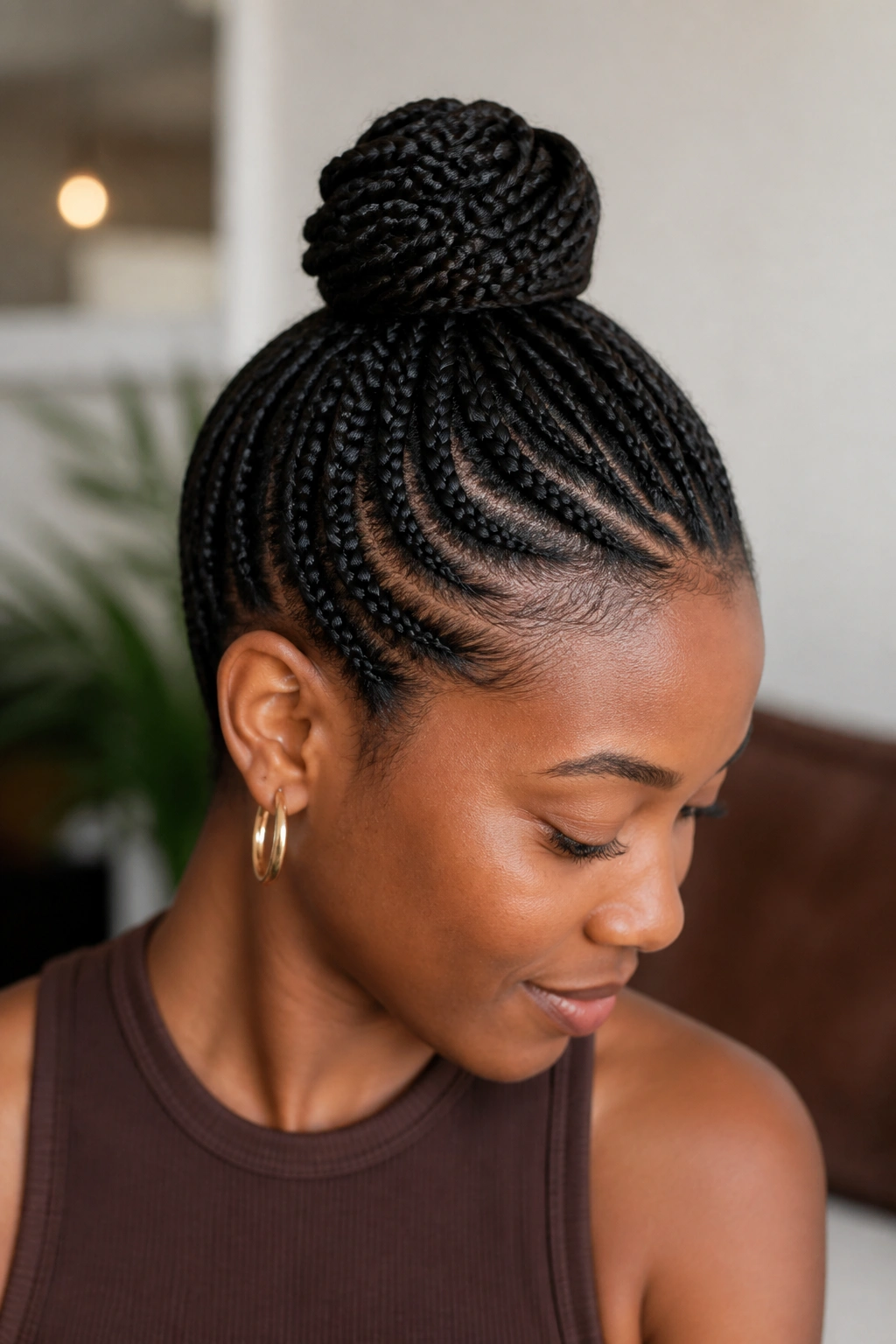
Need your ends tucked away for real?
A small braided bun or updo is where you go when you want the protection to feel obvious. The braids can be gathered into a low bun, a crown-style roll, a top bun, or a pinned shape that sits close to the head. The style keeps the ends hidden, which is useful if you’re trying to reduce rubbing, snagging, or the daily drag of braids brushing your clothes.
The best versions feel neat without looking squeezed. If the bun is too tight, it can give you a headache by lunch. If it’s too loose, it loses shape. There’s a middle ground, and it usually comes down to how many braids you’re trying to tuck and how much length they have.
When an updo makes more sense
An updo is smart when you need the braids off your shoulders, when you’re heading into a formal setting, or when you just want a break from hair touching your neck. It also helps on days when you want to stretch an install a little longer by reducing friction on the ends.
Small braids are especially nice here because they fold and pin more easily than bulky sections. They nest into each other instead of fighting for space. That makes the shape cleaner, and cleaner usually means longer wear.
15. Small Braids With Heart or Geometric Parts
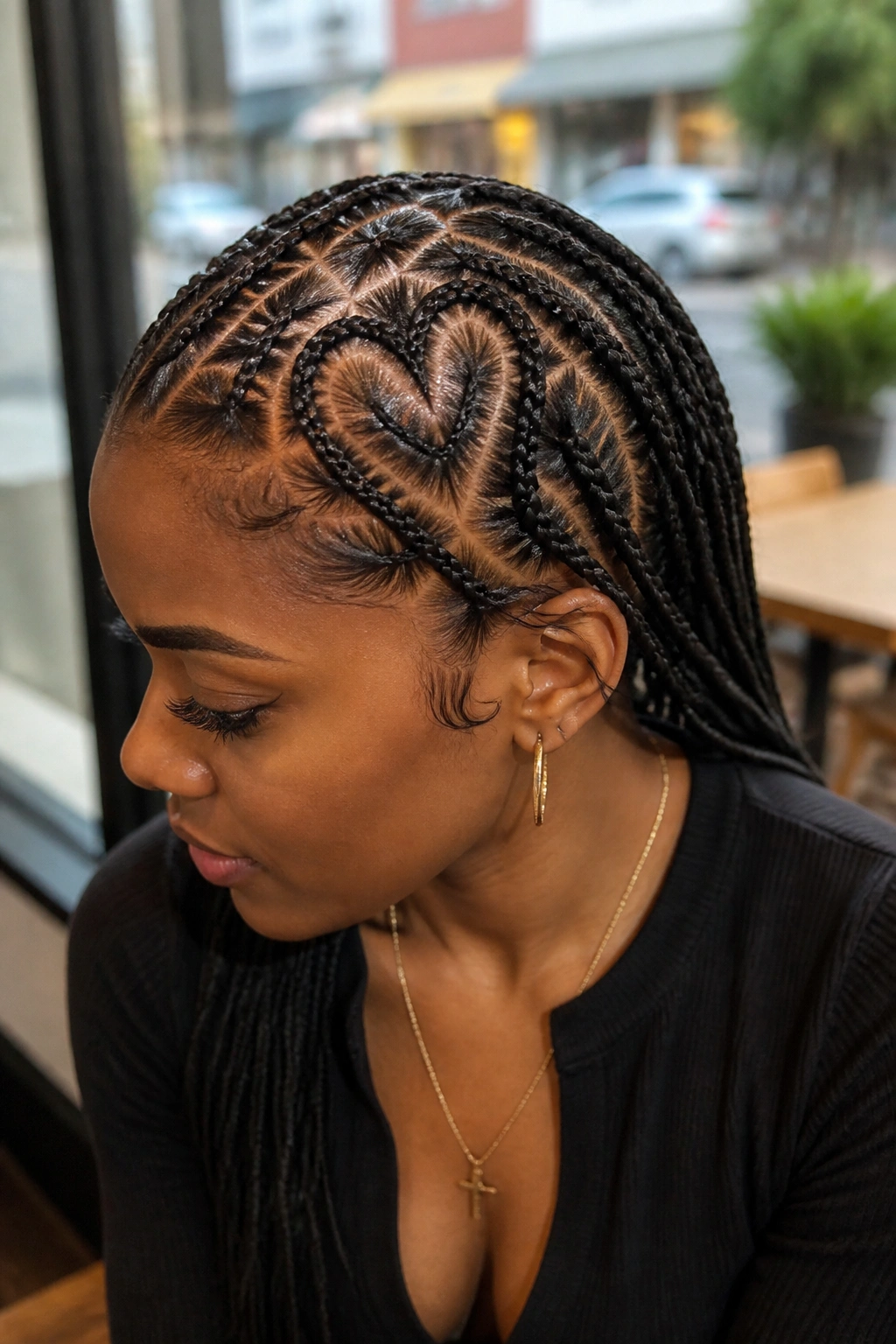
Sometimes the braid itself is plain and the parting carries the personality.
Small braids with heart parts, diamonds, curved lines, zigzags, or other geometric shapes are for the person who wants the scalp design to show. The braids can be knotless, box-shaped, cornrow-based, or stitched, but the real feature is the pattern beneath them. That pattern is what makes the style feel custom instead of standard.
If you like a braid set that looks good from the top down, this is a strong choice. The parting becomes its own design element, which means even a simple style can feel special. A few heart parts around the crown, a diamond in the back, or curved sections that sweep into the rows can change the whole look without changing the braid size at all.
The key is restraint. Too many shapes can turn into visual noise. One or two parting details are usually enough. Ask the braider to map it out first if possible, because once the sections are set, the look is locked in.
For anyone comparing small braid styles for Black women by personality as much as practicality, this one sits near the top for me. It is expressive without being fussy, and that’s a useful line to walk. You get the neatness of small braids, plus a little design work that feels personal instead of generic. That combination tends to age better than a style that is trying too hard on day one.
