



When people look for individual braid styles for Black women, they are usually after more than a pretty photo. They want a style that can handle a busy week, stay neat for more than one day, and still feel light enough that the scalp does not start complaining by the second night.
Braids pull a lot of weight. They can protect your ends, cut down on daily combing, and give your hair a break from heat and manipulation, but only if the install is clean and the tension is sane. That last part matters more than most people want to admit. Tight does not mean neat. Clean parts, balanced weight, and a style that suits your hairline will always matter more than how dramatic the finished look seems on a screen.
The good news is that braid styles are not one big category. Square parts, triangular parts, straight backs, side-swept cornrows, beadwork, curly ends, bob lengths — each one changes the whole feel of the style. Some are better for long wear, some sit flatter under scarves and helmets, and some are just plain easier on tender edges.
So the real question is not whether braids work. They do. The real question is which braid pattern will work for your life, your scalp, and the kind of finish you want people to notice first.
1. Classic Box Braids
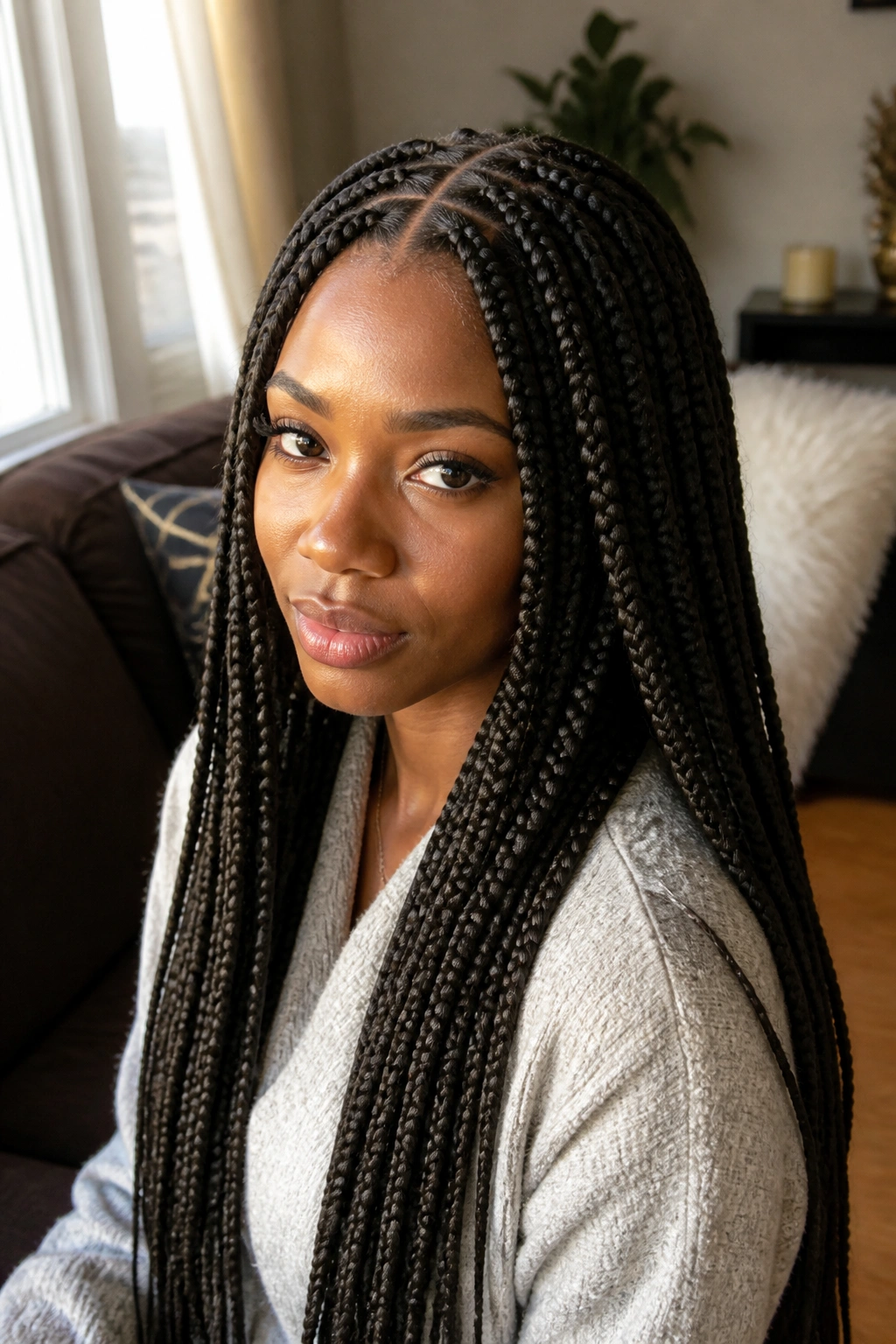
Classic box braids are the style most people picture first, and honestly, there’s a reason they never leave the conversation. The square parting gives the look a tidy rhythm, and the braids themselves can be worn waist-length, shoulder-length, or somewhere in between without losing the point of the style.
There’s a kind of quiet confidence in them. The parts sit in a grid, the braids hang evenly, and the whole look feels orderly without being stiff. If you want something that can be tossed into a bun, worn loose, or folded into a half-up style, box braids give you that room without making you fight the hair every morning.
What Makes Them the Baseline Style
Box braids are often done with synthetic braiding hair, usually pre-stretched to keep the ends smoother and the install a little easier on the fingers. The braid starts with your natural hair and extension hair together, then continues down in a three-strand plait. The parting is the point. If the squares are even, the whole head looks balanced.
Quick Details That Matter
- Best for: medium to long wear, simple styling, and low daily maintenance
- Typical look: square parts with braids that fall cleanly from the scalp
- Nice bonus: easy to gather into a ponytail, bun, or two puffs
- Watch for: braids that feel too heavy near the roots, especially at the front
My take: if you want one braid style that teaches you what you like before you get fancy, start here. It is the reference point.
2. Knotless Braids
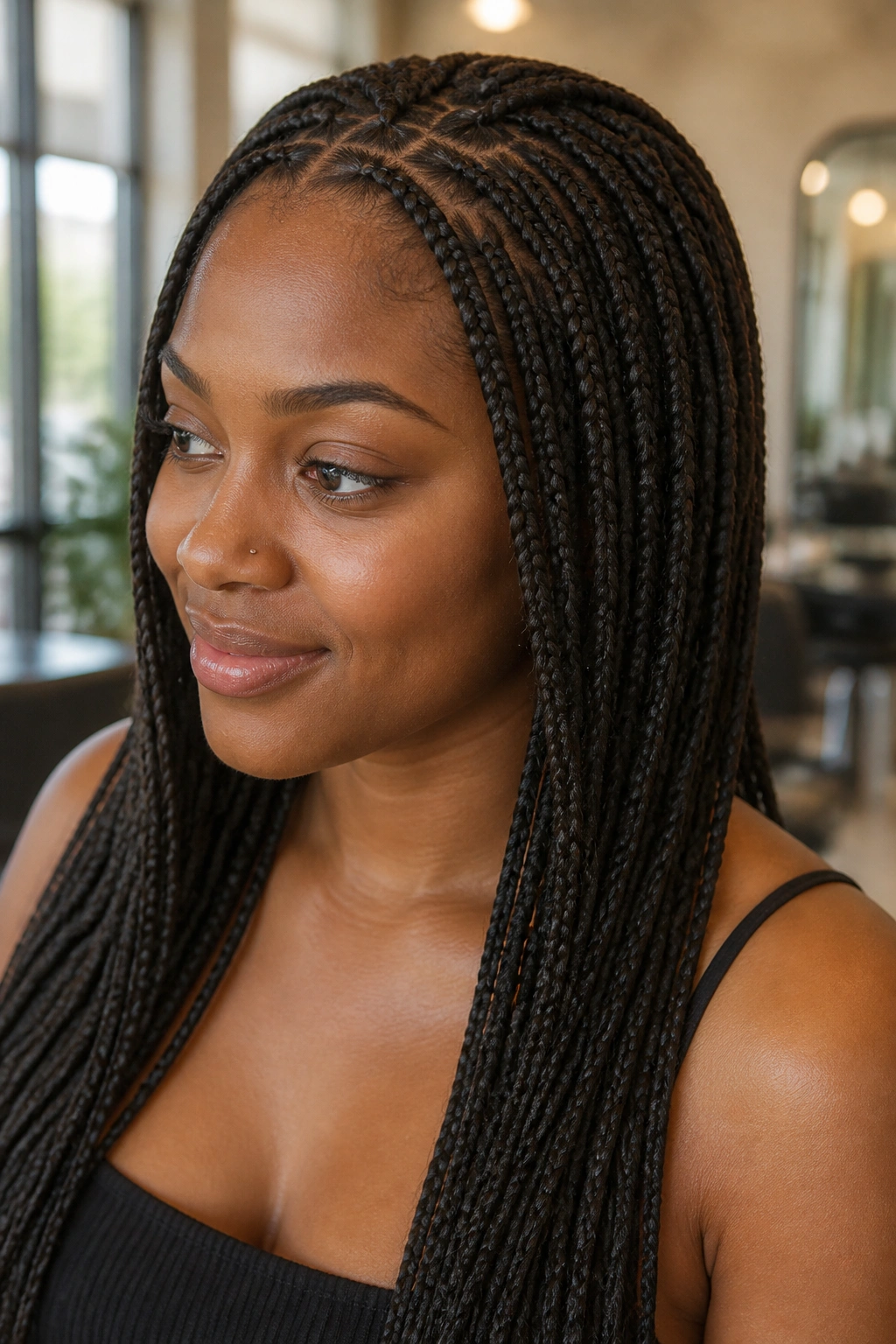
Why do knotless braids feel easier on the head than regular box braids? Because the braid does not begin with a hard knot sitting right on the scalp. The stylist feeds the extension hair in gradually, which makes the root look flatter and often feel lighter. That tiny change makes a bigger difference than people expect.
The result is less bulk at the base and a smoother transition from your natural hair into the braid. If you have a tender scalp, thin edges, or you simply hate the “freshly done but already sore” feeling, knotless braids are the style I’d point to first. They still give you the length and flexibility of box braids, just without that bulky start.
How to Wear Them Well
Knotless braids look especially good when the parts are neat and the braid size matches your face and hair density. Small knotless braids give a softer curtain effect. Medium ones hold shape well without feeling heavy. Jumbo knotless braids are bold, but they demand more from the roots, so the weight balance has to be right.
A few things help here:
What to Tell Your Stylist
- Start with pre-stretched braiding hair for smoother ends
- Keep the root tension light, especially near the temples
- Ask for a size that matches your daily routine, not just the photo
- Sleep with a silk scarf or bonnet so the roots stay calm
Knotless braids are one of those styles that can look polished on day one and still sit nicely when you wake up on day six. That’s the whole appeal.
3. Feed-In Cornrows

Feed-in cornrows are the braid style that proves flat does not have to mean plain. The hair is braided closely to the scalp, and extra hair is added in small amounts as the cornrow moves back. That feeding motion gives the braid a smooth, gradual build instead of a hard lump at the front.
They are especially good when you want a style that lays close, feels controlled, and stays out of your face. Straight-back versions are classic. Curved parts, zigzags, and mixed sizes can make them more playful. The real strength is that they work on a wide range of lengths and can be dressed up with cuffs, thread, or small beads at the ends.
Why the Feed-In Method Matters
The gradual addition of hair helps the braid sit flatter at the scalp, which is one reason feed-in cornrows can feel more wearable for a long day. The style also makes a short-to-medium length look intentional, even if the natural hair underneath would not hang much on its own.
If you like a style that can disappear under a wig cap, a hat, or a helmet, this one is useful. If you want a style that turns heads from the parting alone, that works too.
Best Uses
- gym-friendly wear
- school or work styles
- braided ponytails and buns
- sculpted designs with curved part lines
Tip: ask for the braid size to be matched across the head. Uneven feed-ins are the fastest way to make a sharp style look accidental.
4. Lemonade Braids

Lemonade braids changed the way a lot of people think about side-swept cornrows. Instead of falling straight back, the braids angle to one side, usually with a deep side part that gives the whole style a slanted, face-framing shape. It is the difference between neat and theatrical.
Compared with straight-back cornrows, lemonade braids feel softer around the face because the sweep creates motion before you even move. The side part also changes how earrings, makeup, and even neckline details show up. That may sound small, but a good side part can do real work.
They suit people who want a braid style that looks styled, not just installed. Long braids with a clean sweep make a strong line across the shoulder. Medium lengths can look sharper and lighter. The nice thing is that the style still behaves like a protective style; it keeps the hair organized and tucked, but it doesn’t read as severe.
If you like your braids to have a little attitude, this is where you go.
A lot of stylists add curved feed-ins, swoops at the front, or thin accent braids to keep the look from going flat. That’s the right instinct. Lemonade braids should feel like they are moving even when you’re standing still.
5. Goddess Braids

Goddess braids are the style I recommend when someone wants something fuller, softer, and a little more romantic than a plain cornrow. They’re usually larger than standard braids, and many versions include loose curly pieces or soft ends that break up the heaviness of the plait.
The shape matters here. Big braids sit on the head like a design element, not just a way to hold hair together. They can run straight back, curve around the crown, or sweep into an updo, and they usually give the face a gentler frame than tighter, more geometric styles. The loose pieces help too. They keep the look from getting too rigid.
Why They Feel Different
A goddess braid does not have to be overloaded with curls to work. Even without a lot of added texture, the wider braid size gives a softer edge than a thin cornrow. If you do include curls, keep them controlled and intentional. Too much frizz at the wrong spot can make the style look tired fast.
They are a good pick for someone who likes a braid style that reads elegant without trying too hard. You can wear them to work, to an event, or just because you want your hair to feel finished for a while.
The downside? Heavier goddess braids can pull if the parting is too tight or the braid size is too large for the amount of hair supporting it. Ask for balance, not bulk. Those are not the same thing.
6. Fulani Braids

Fulani braids are one of the few styles that can look minimal and ornate at the same time. The center braid, side braids, and face-framing details give the style a built-in shape, while beads or cuffs add rhythm without needing extra length. Done well, the style looks deliberate from every angle.
A Style With Room to Personalize
What I like most is that Fulani braids are easy to customize without losing the core pattern. Some people wear a single braid down the middle with smaller braids on the sides. Others add beads along the ends, cowrie shells, or tiny accent braids near the hairline. The layout stays recognizable, but the finish becomes your own.
The style works especially well when you want the front of the hair to feel sculpted. It keeps the eyes moving along the parting lines. It also lets you play with symmetry and contrast — one thick center braid, thinner side braids, then a few hanging pieces that break up the structure.
A small caution. Beads and heavy ornaments can drag on the ends if they are too large or placed too low. That can get annoying fast, especially if you wear the style for more than a few days. Keep the decoration intentional and light enough that the braid still swings freely.
Fulani braids have presence. They do not need a lot of extra dressing up to make a point.
7. Stitch Braids
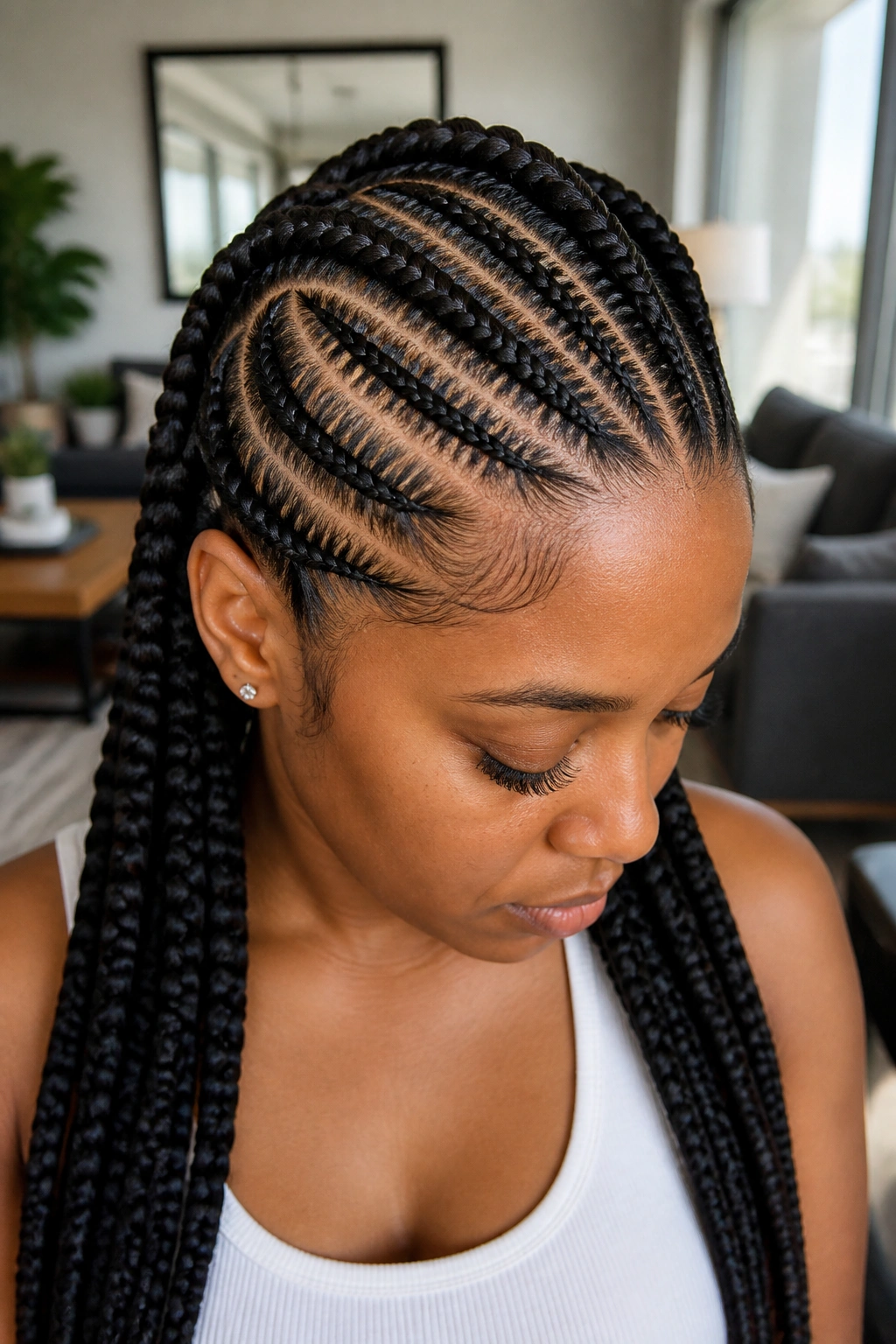
Stitch braids are for people who like their parts sharp enough to draw a straight line. The style gets its name from the clean, segmented look of the parting, which creates little “stitch” marks across the scalp before the braid continues. The result is crisp, almost architectural.
These braids usually sit close to the scalp like cornrows, but the spacing and placement are more graphic. A good stitch braid style looks precise from the front and even more interesting when you see the top. It is a style that benefits from a good rat-tail comb, firm but not reckless hands, and enough gel to hold the sections without making the hair feel glued down.
What to Watch For
- The parts should be even enough to repeat the pattern across the head
- The braid should sit flat, not ride up in little bumps
- Gel should smooth the sections, not leave the scalp greasy and stiff
- The tension should stay comfortable at the nape and around the edges
Stitch braids work well when you want a style that feels polished and modern without being bulky. They also pair nicely with a braided ponytail, long hanging ends, or straight-back rows with a design twist.
One note: if the braids hurt at the root, the styling is wrong. A neat line is not worth a sore head.
8. Triangle Box Braids

Triangle box braids are proof that parting alone can change the mood of a style. The braid itself may be the same old three-strand plait, but the triangular sections make the whole head look sharper and more intentional than square parts. The geometry does the talking.
Ever notice how the same braid can feel completely different just because the parting changed? That is what’s happening here. Triangle parts catch the eye in a softer, less rigid way than boxes, and they make the style look a little less expected. If classic box braids feel too familiar to you, this is a smart swap.
The style also works beautifully when you want your scalp pattern to be part of the finish. A good triangle part can make medium-length braids look more expensive without changing the braid itself. And because the sections are more angular, the braids often move in a more staggered way as you wear them down.
Best When You Want a Small Twist
Triangle box braids make sense if:
- you want classic braids with a more detailed parting pattern
- you like wearing braids loose most of the time
- you want the base of the style to look different without going dramatic
- you’re tired of the same square-grid look
A tiny change. Big payoff.
9. French Curl Braids
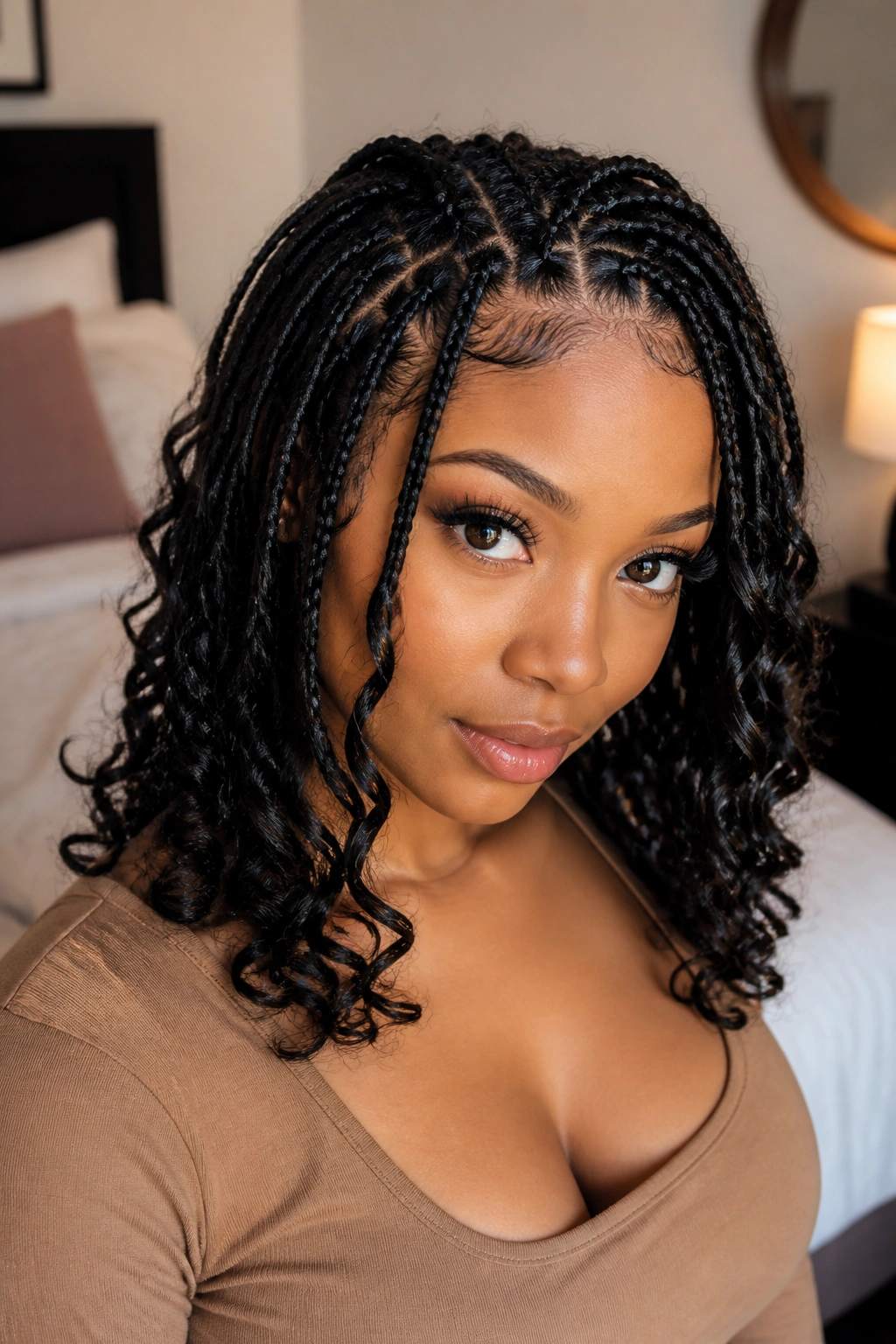
French curl braids are what you get when you want clean braids with a softer ending. Instead of straight synthetic ends, the braids finish in curled, springy tendrils that move as you walk. That single detail changes the whole tone of the style.
The braid itself still gives you that protective feel at the scalp, but the curled finish adds motion and a little bit of softness around the shoulders and chest. It works especially well on medium to long lengths, where the curl pattern has room to fall without getting crushed against the neck. Shorter versions can work too, but the curls need enough length to show their shape.
I like this style because it does not force you to choose between neat and feminine, if those are the words you want to use. You get clean parting, tidy roots, and a finish that moves instead of hanging straight and heavy.
Keep one thing in mind: the curl pattern at the ends needs care. Sleep with it covered, avoid dragging heavy products through the curls, and refresh the ends with a little water mist if they start to flatten. A little neglect here shows fast.
French curl braids look expensive in the best possible way, even when the install is simple.
10. Braided Bob

Braided bobs are the braid style for anyone who likes the idea of braids but does not want all that length hanging around the shoulders. The cut usually lands somewhere between the jawline and the collarbone, and that shorter length changes everything: less weight, less snagging, less hair swinging into your face every five minutes.
Short braids can look cleaner than long ones because the shape is easier to read. The ends sit where you expect them to sit. The neck stays cooler. The whole thing feels a little less demanding. That matters more than people admit, especially if you wear braids at work, at the gym, or under a jacket collar that would otherwise catch on everything.
Who It Suits Best
Braided bobs are a smart pick if you want:
- a lighter feel at the scalp
- faster drying after washing
- less tangling at the ends
- a style that looks put together without much styling
There is also a nice visual effect here. A bob can make the face seem more open because the hair stops before it closes off the neckline. That makes earrings and makeup stand out a bit more, too.
If long braids feel like a commitment but you still want the look, the bob is the honest answer.
11. Ghana Braids

Ghana braids are often mistaken for basic cornrows, but the build is different enough that the finished look has more lift and shape. The braid starts close to the scalp and gradually thickens as more hair is fed in, giving the style a sculpted, almost rope-like profile. It looks smooth, but not flat.
Compared with standard feed-in cornrows, Ghana braids usually feel a little more substantial through the length. That makes them good when you want visible structure without the tiny complexity of micro braids or the loose hang of individual braids. They can run straight back, form curved rows, or sweep into a bun or ponytail.
How They’re Built
- Hair is added gradually as the braid moves back
- The thickness is usually more noticeable than a regular cornrow
- The braid sits raised off the scalp with a rounded shape
- The style can be finished with long ends or tucked neatly
Ghana braids are especially nice when the scalp design itself is part of the look. A few well-placed rows can frame the face and then travel back into a larger braided structure. It is tidy, but not plain.
If you want a braid style that carries a little more visual weight than a standard cornrow without going full box braid, this is a strong middle ground.
12. Micro Braids
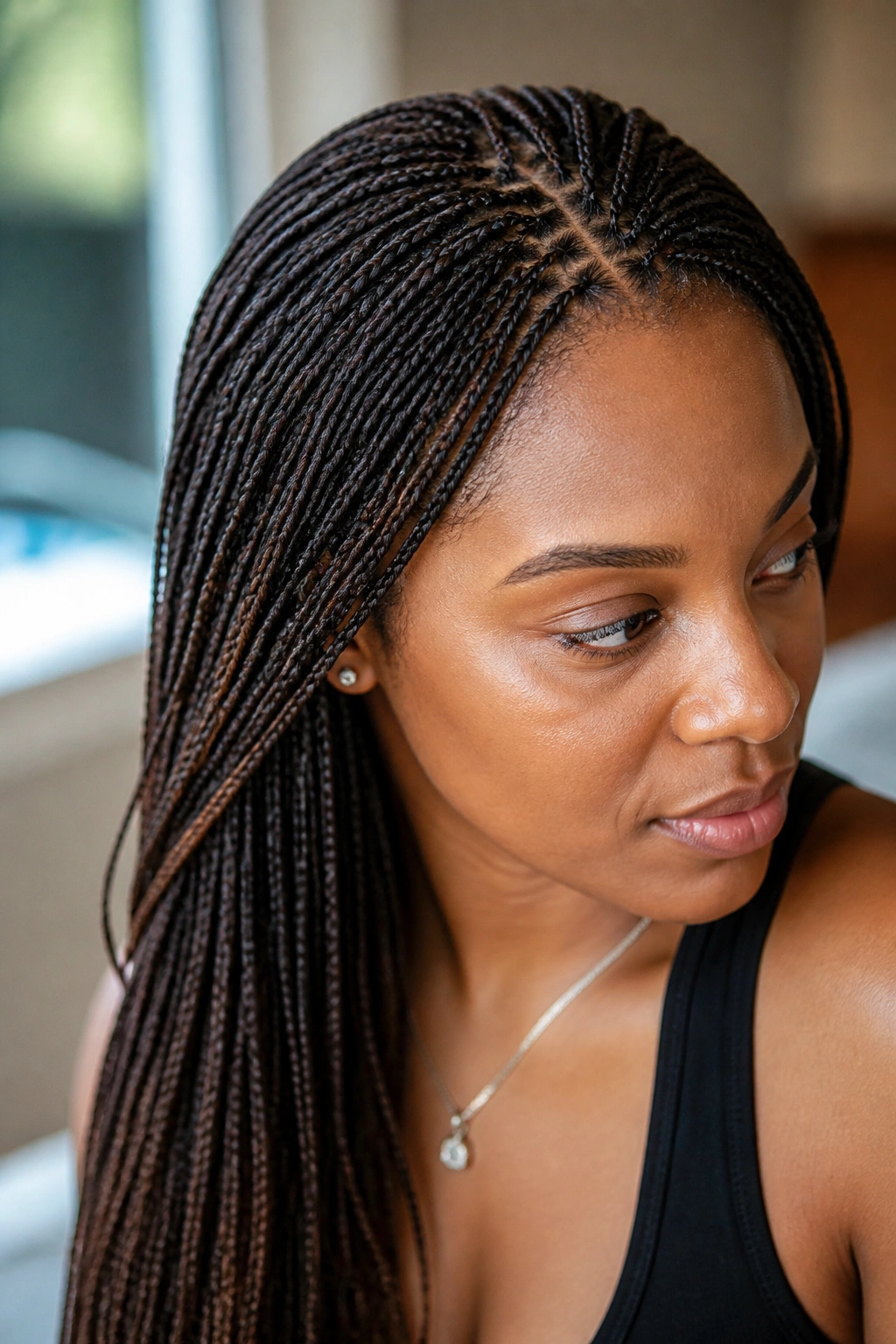
Micro braids are not for the impatient. They’re tiny, and that means the install takes time — often a long, long time — but the payoff is a delicate, almost hair-like finish that moves easily and can be styled in a surprising number of ways. The parts are small, the braids are small, and the overall effect is lighter-looking than chunkier styles.
The upside is obvious once you see them in person. Micro braids can look fluid and elegant, and because each braid is so narrow, the style can be very versatile for updos, side parts, and layered looks. They also tend to give a softer drape than larger braids.
The caution is just as obvious. Small braids can still pull if they are installed too tight, and because there are so many of them, the time in the chair matters. If your scalp gets tired easily, ask yourself whether you want the look of micro braids or the feeling of them. Those two answers are not always the same.
A few practical notes:
- Ask for tension to stay light near the hairline
- Keep your scalp moisturized without soaking the braids
- Cover them at night so the tiny parts do not frizz too fast
- Be realistic about install time and removal time
Micro braids are beautiful when they’re done right. They also ask for patience. A lot of it.
13. Braided Ponytail
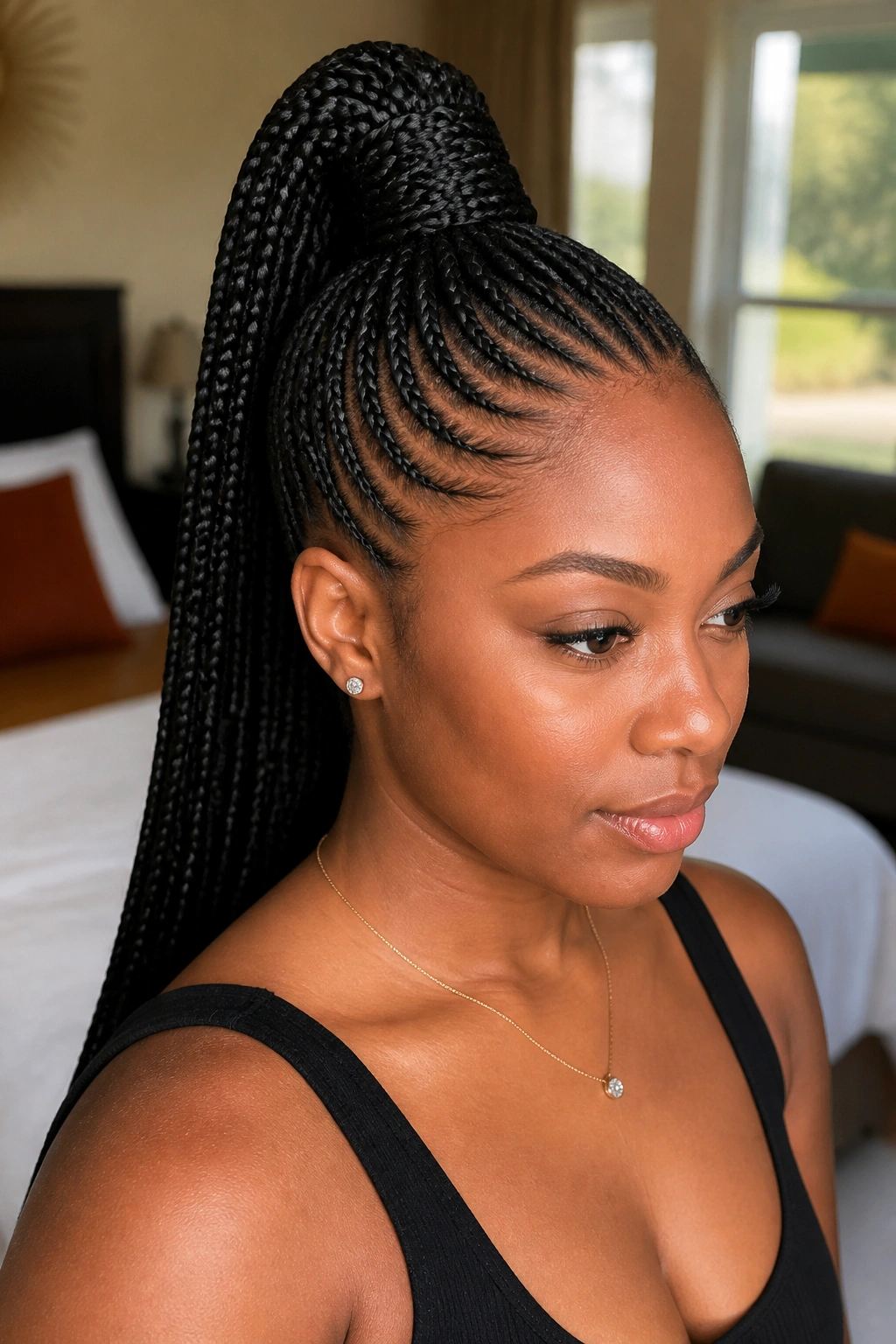
How do you make a ponytail look like a full style instead of an afterthought? Braid it properly and build the base with intention. A braided ponytail can be formed from feed-in cornrows, stitch braids, or individual braids pulled into a high or low tail, and the result is clean, strong, and easy to wear.
The shape matters here. A high ponytail lifts the face and gives the style more drama. A low ponytail feels calmer and often sits better for work, travel, or long days when you do not want hair moving around your shoulders. Either way, the style keeps the hair secured while still letting the braid pattern show.
What Makes the Base Work
The base of the ponytail should be snug, not straining. If the anchor is too tight, the style looks sharp for one hour and then turns into a headache. A good stylist will smooth the hair into the ponytail with enough hold to last, then wrap a section of braid hair around the base so the tie disappears.
That wrapping detail matters more than people think. It takes the style from “pulled back” to “finished.”
Braided ponytails are a smart choice for anyone who wants a style that can move from weekday to event wear without much fuss. They also play well with long earrings, bold necklines, and a face that you want fully visible.
14. Halo Braid
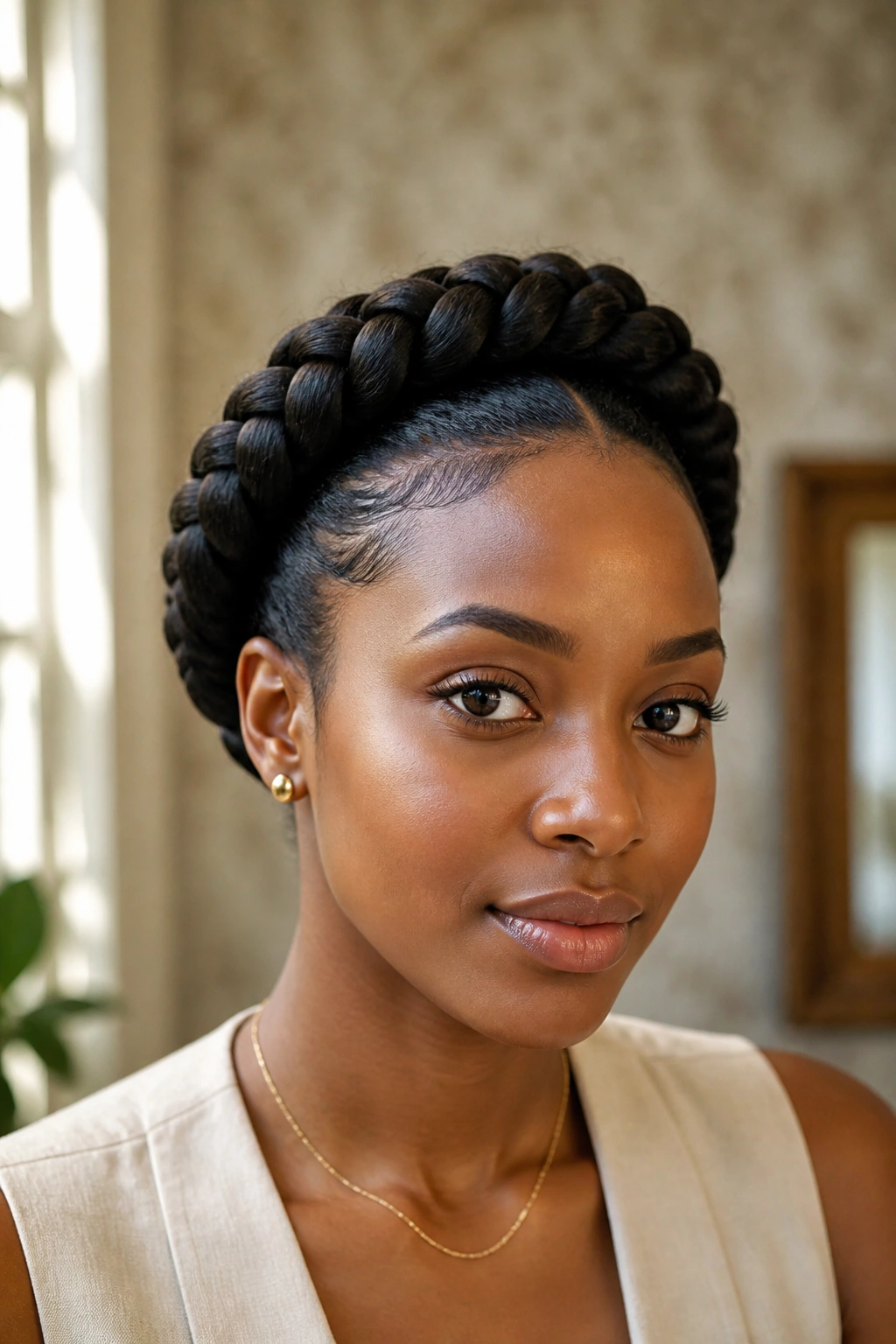
A halo braid is the kind of style that makes people slow down and look twice, because the braid circles the head like a crown. It can be built with natural hair, added hair, or a mix of both, and the finished shape has a neat, wrapped feeling that sits beautifully at the hairline.
I’ve always thought halo braids do one thing better than most styles: they make the head itself look framed. That sounds simple, but it changes how the whole face reads. The braid can sit tight against the scalp or a little higher, depending on the look you want, and the rest of the hair is often tucked away or incorporated into the wrap.
This style is especially handy when you want the neck clear and the hair off the shoulders. It works for formal events, but it also makes sense on ordinary days when you want something secure that does not need constant fixing.
A clean halo braid should feel balanced all the way around. If the front is perfect and the back gets sloppy, the illusion falls apart. The circle is the point. Miss the circle, miss the style.
15. Tribal Braids
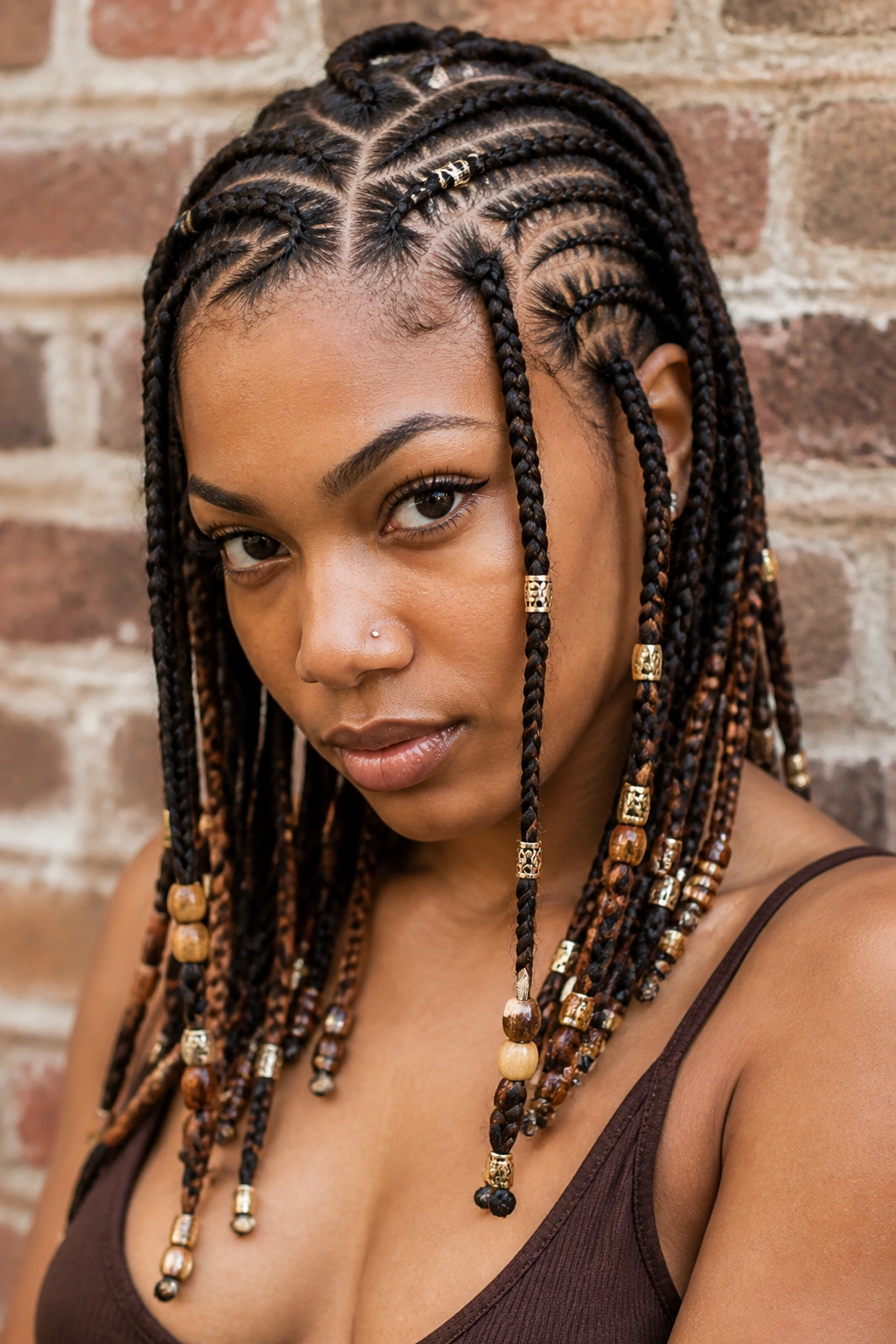
Tribal braids are a mixed-pattern style, which is exactly why they are such a good final pick. The term usually refers to a combination of braid patterns — cornrows, Fulani-inspired lines, box braids, beads, center parts, side parts — arranged in one look that feels personal instead of standard.
People use the term in different ways, so being specific with your stylist helps a lot. If you want a center braid with side accents and beads, say that. If you want a fuller pattern with long hanging ends, say that too. The style works best when the design feels intentional, not thrown together because the word “tribal” was on a mood board.
What to Ask For
- The exact braid map: center part, side braids, or mixed rows
- The braid size you want at the crown and at the nape
- Whether beads, cuffs, or curled ends should be included
- The final length, because that changes the weight fast
Tribal braids give you room to play without losing structure. That is their real strength. You can keep the scalp design clean and still add detail at the ends. You can keep the look simple and still make it feel custom.
If you’re choosing between several styles and you want the most freedom in one install, this is the one I’d put at the top of the list. Bring a photo, talk through the parting, and do not let the design get rushed. The braid pattern is the whole story here.
