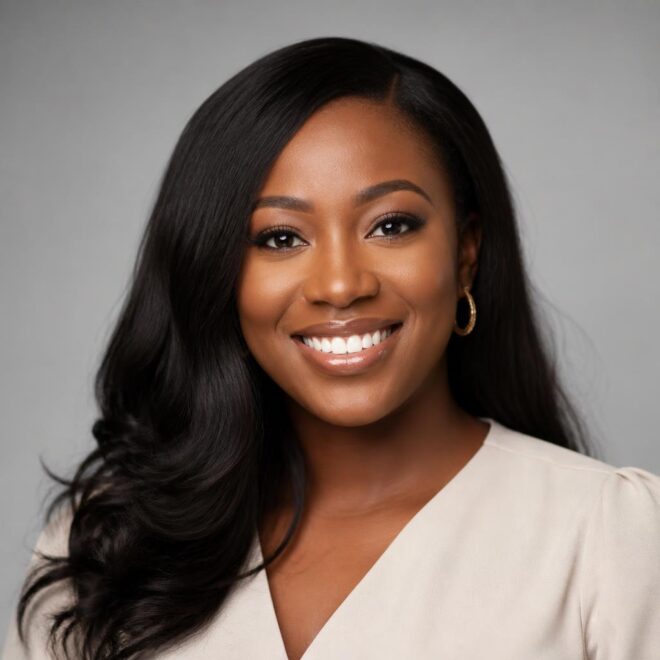


Micro braid hairstyles for Black women are the kind of style that reward patience. The braids are tiny, the install takes time, and the payoff is movement, swing, and a finish that can look dressed up or casual without much fuss.
What I like about micro braids is how flat they sit. They slip under hats, tuck into scarves, and let you shift from a middle part to a ponytail to a low bun without the whole style feeling like it has hit a wall.
The catch is tension. Too much at the hairline and you feel it fast; too little control in the parting and the style can look fuzzy before its time. Good micro braids are a balance of size, neatness, and a light hand, and that balance is what separates a pretty install from one you keep for weeks.
The classic straight-back version is the cleanest place to start.
1. Waist-Length Straight-Back Micro Braids

Waist-length micro braids have a way of making everything else look more put together. The long, even fall gives you that clean curtain effect, and the straight-back direction keeps the face open without stealing attention from your features.
Why the shape works
Long braids move differently from short ones. They swing when you walk, settle neatly over a jacket, and can be tucked behind one shoulder when you want a softer line around the face.
I like this style for anyone who wants a no-drama base. It works with glossed lips and earrings, but it also looks good with a plain tee. That’s the charm.
- Ask for small, even partings so the braids lay flat from the scalp.
- Keep the braid size consistent through the crown, or the length will look uneven in a way that shows up fast.
- Waist length gives you room for ponytails, buns, and side sweeps without running out of hair to work with.
- If you wear blazers or high-neck tops, leave the ends blunt rather than overly wispy; they sit cleaner against fabric.
Tiny tip: If you know you like to wear your hair up often, ask for a little extra length past the waist so the style still has some drop after it’s gathered.
2. Center-Part Micro Braids with a Middle Line
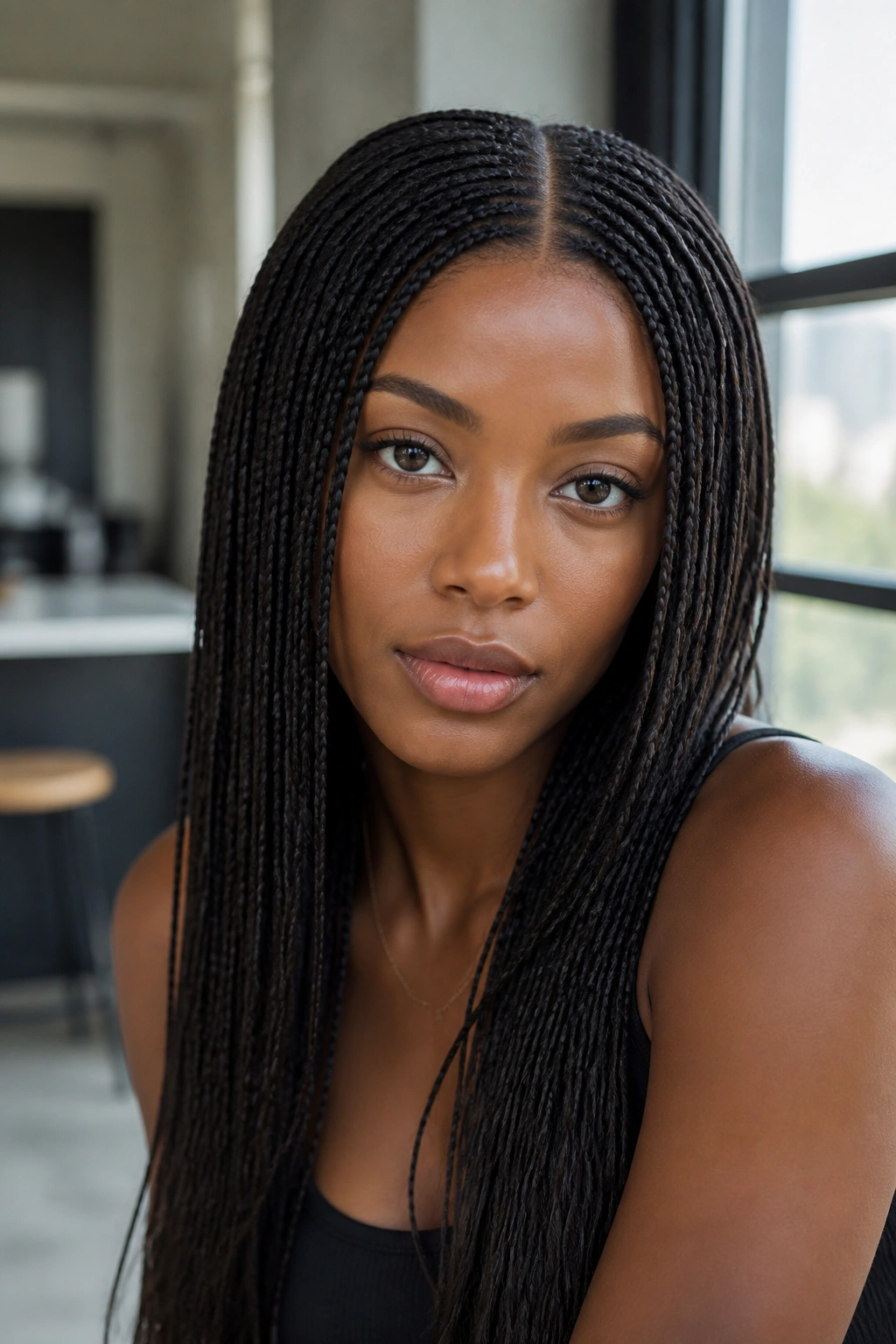
Need a style that reads polished without looking stiff? A center part does that job with very little effort. It gives micro braids a clean split down the face, and that single line can make the whole style feel sharper.
The middle part works especially well when the braids are long enough to fall evenly on both sides. You get symmetry, but not a frozen look. The braids still move, which keeps the style from feeling too severe.
It’s tidy. Almost architectural.
If your features are softer or rounder, a center part can add a little length to the face. If your face is already long, keep the front pieces slightly fuller so the style doesn’t pull everything downward. A crisp part only looks good when the rest of the shape is balanced.
3. Side-Swept Micro Braids

A side part, a strong brow, and a few braids tucked behind one ear can carry an entire look. Side-swept micro braids feel a little more relaxed than the middle-part version, and that shift is enough to make them feel new.
This style has movement built in. The weight gathers to one side, so the braids naturally fall across the collarbone or the shoulder in a way that looks easy but still deliberate. It’s a good choice when you want to show off earrings, makeup, or a bold neckline.
The trick is not making the sweep too heavy. If every braid is dragged to one side, the style can feel lopsided. Instead, let the front do the work and keep the rest soft and even.
A side sweep also pairs well with micro braids that end in the same length. The clean edge makes the parting stand out more, which is half the appeal.
4. Micro Braids with Curled Ends
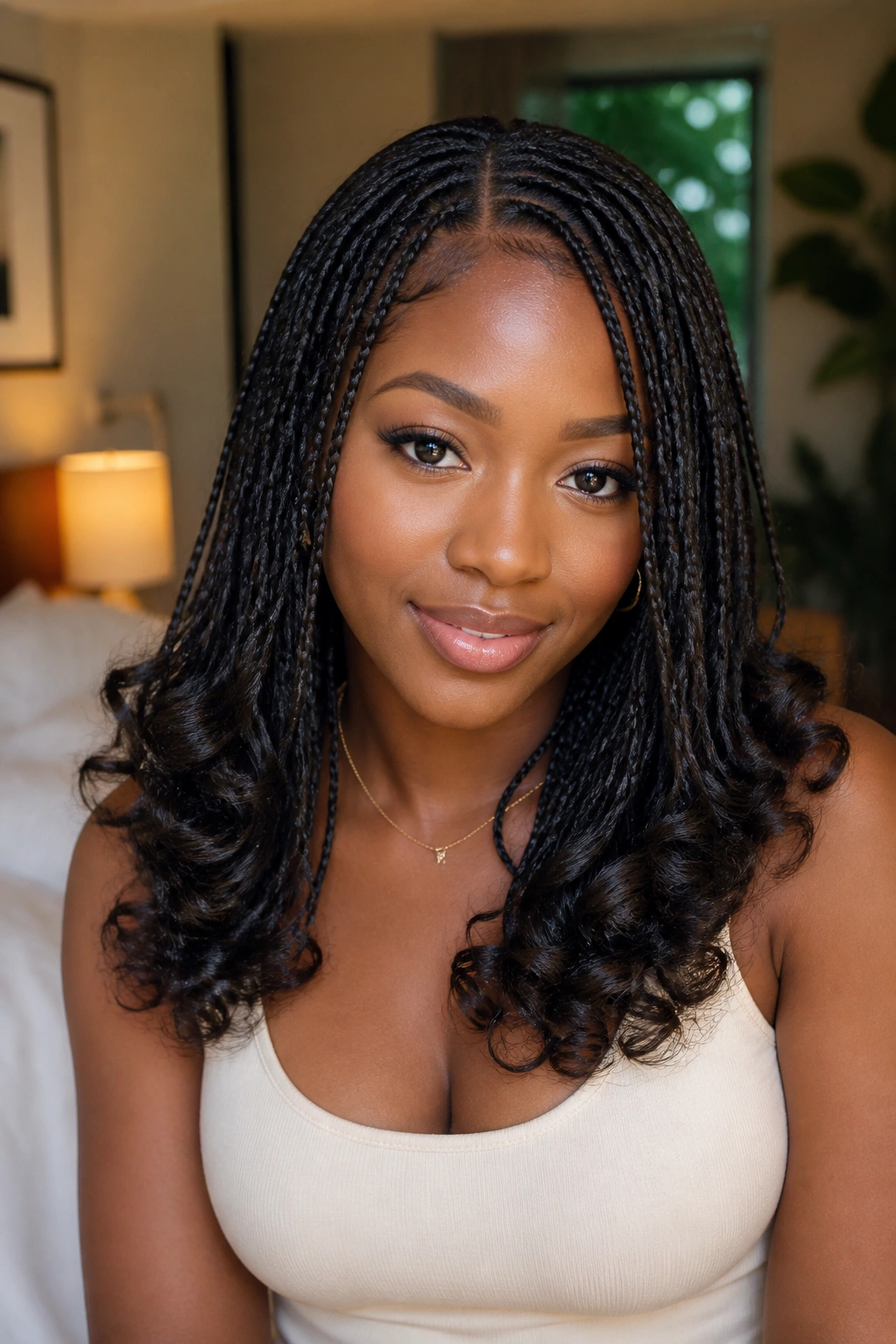
Not every braid style has to end blunt. Curled ends soften micro braids fast, and that tiny change turns a neat protective style into something with a little bounce.
How the curls change the mood
Curled ends add lift at the bottom, so the hair doesn’t hang in one straight line. That matters if your braids are fine or if the length is heavy enough to pull the whole style down.
The curls can be loose, spiral, or soft barrel waves, depending on the rods or rollers used at the ends. I prefer a looser curl when the braids are long, because tight curls at the bottom can start to look fussy after a few days.
What to ask for at the chair
- Leave enough braid length at the ends to wrap around flexi rods or perm rods.
- Ask for the curl to begin a little above the very tip if you want movement that lasts.
- Keep the ends sealed neatly so the curl pattern doesn’t unravel too fast.
- If humidity tends to flatten your styles, pick a medium curl instead of a tight one.
One warning: Curled ends need a little more care at night. Pineapple the hair loosely, or the bottom can go flat and frizzy by morning.
5. High Ponytail Micro Braids

If you have a workout, a brunch, and a long day in between, a high ponytail is the move. Micro braids in a high ponytail feel energetic right away, and the lifted shape pulls the face up in a nice, clean way.
This style works best when the ponytail sits at the crown rather than too far forward. Too low and it loses its shape. Too high and the base can feel tight, especially if the braids are long and heavy. There’s a sweet spot right in the middle.
The other thing I like here is the simplicity. You can keep the ponytail bare, or wrap a few braids around the base so the elastic disappears. Either way, it looks finished.
- Use a wide satin scrunchie or a strong coil band, not a thin elastic that cuts into the braids.
- Leave a few front braids loose if you want a softer hairline.
- Wrap one braid around the base to hide the tie.
- Keep the ponytail loose enough that the scalp doesn’t feel yanked by the end of the day.
6. Half-Up, Half-Down Micro Braids
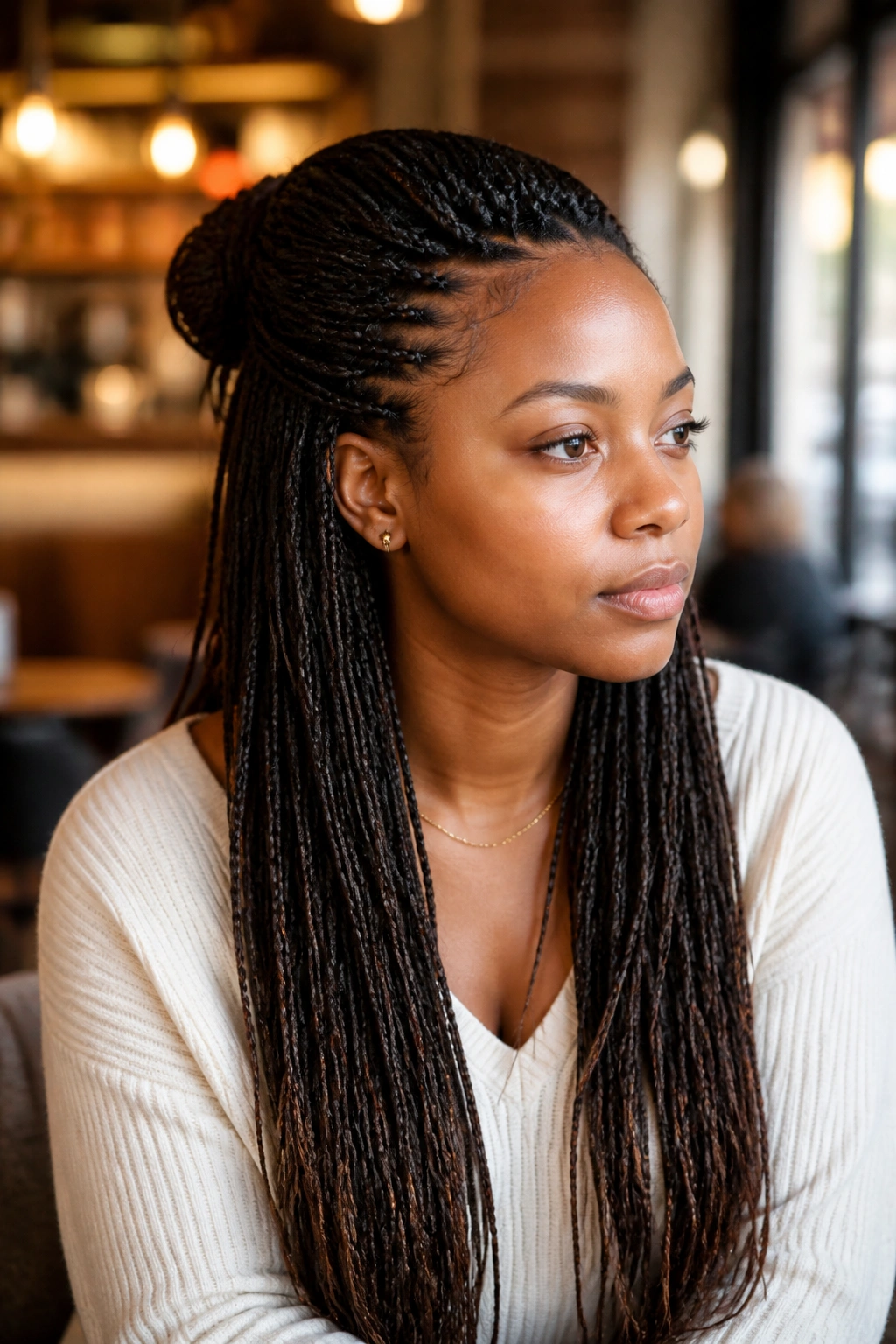
This is the style I reach for when I want the length on show but do not want hair sitting in my face. Half-up, half-down micro braids split the difference in a way that feels easy to wear and easy to restyle later.
The top section can be twisted into a knot, clipped back, or tied into a small ponytail, while the rest hangs free. That makes the style useful for busy days, date nights, and anything in between. It also gives the braids two personalities at once: neat on top, loose through the ends.
One-sentence truth: it’s versatile without trying too hard.
I like this one especially for people who wear glasses, hoops, or strong brows. The lifted front keeps the face open, while the length still gives the style some drama. If your braids are waist length, this is a good way to cut the weight visually without actually cutting anything.
7. Chin-Length Micro Braid Bob

Why do chin-length micro braid bobs look so sharp? Because they keep the shape close to the face and let the details do the talking. There’s nowhere for the style to hide, so clean parting and even lengths matter a lot here.
Compared with longer braids, a bob feels lighter on the neck and easier to toss into a jacket or coat. It also shows off the jawline in a way that can be flattering without needing layers or extra styling. If you like earrings, this one is a gift.
What makes it easier to wear
- Less weight on the scalp than waist-length braids.
- Faster to wash and dry after cleansing the scalp.
- Easier to tuck behind the ears without pinning.
- A good choice if you want a neat look that still moves.
The only real downside is that you lose some styling range. You won’t get the same long ponytail options, and that’s fine. The bob is about shape, not options.
8. Beaded Micro Braids
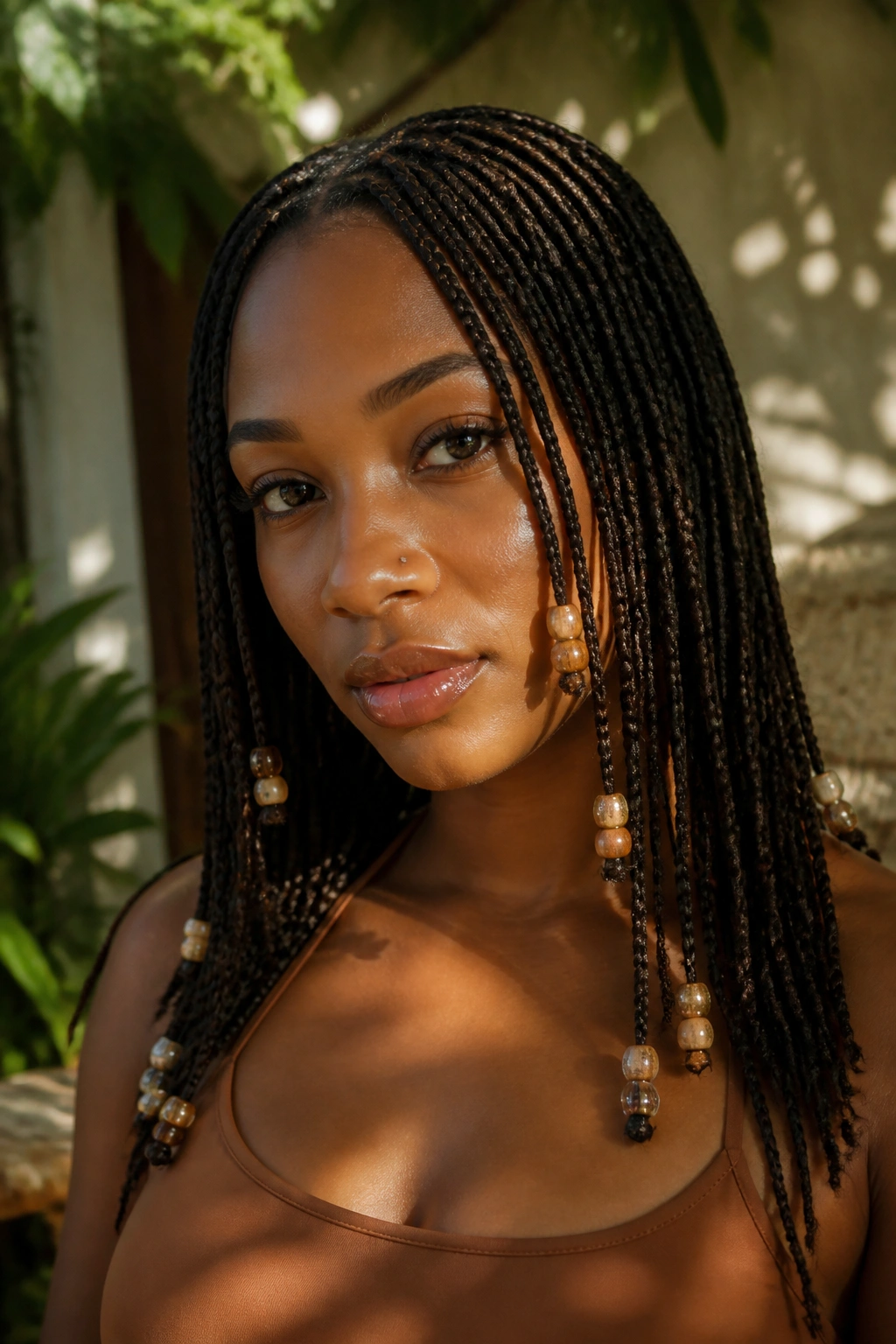
A few beads go a long way. Beaded micro braids add sound, movement, and a little personality without changing the whole structure of the style.
I like beads best when they’re placed with some restraint. Too many at once can make the ends feel crowded and heavy, especially on fine braids. A few at the bottom, or scattered around the front, keeps the look playful instead of noisy.
Where to place the beads
- Put the heaviest beads lower on the braid so the scalp doesn’t carry extra weight.
- Use clear, wooden, or black beads if you want the braids to stay the focus.
- Mix bead sizes only if the rest of the style is very simple.
- Avoid loading every braid with hardware; the style gets clunky fast.
Beads work beautifully for vacations, festivals, family events, or just a week when you want your hair to make a little sound when you move. Small detail. Big effect.
9. Deep Side-Part Micro Braids
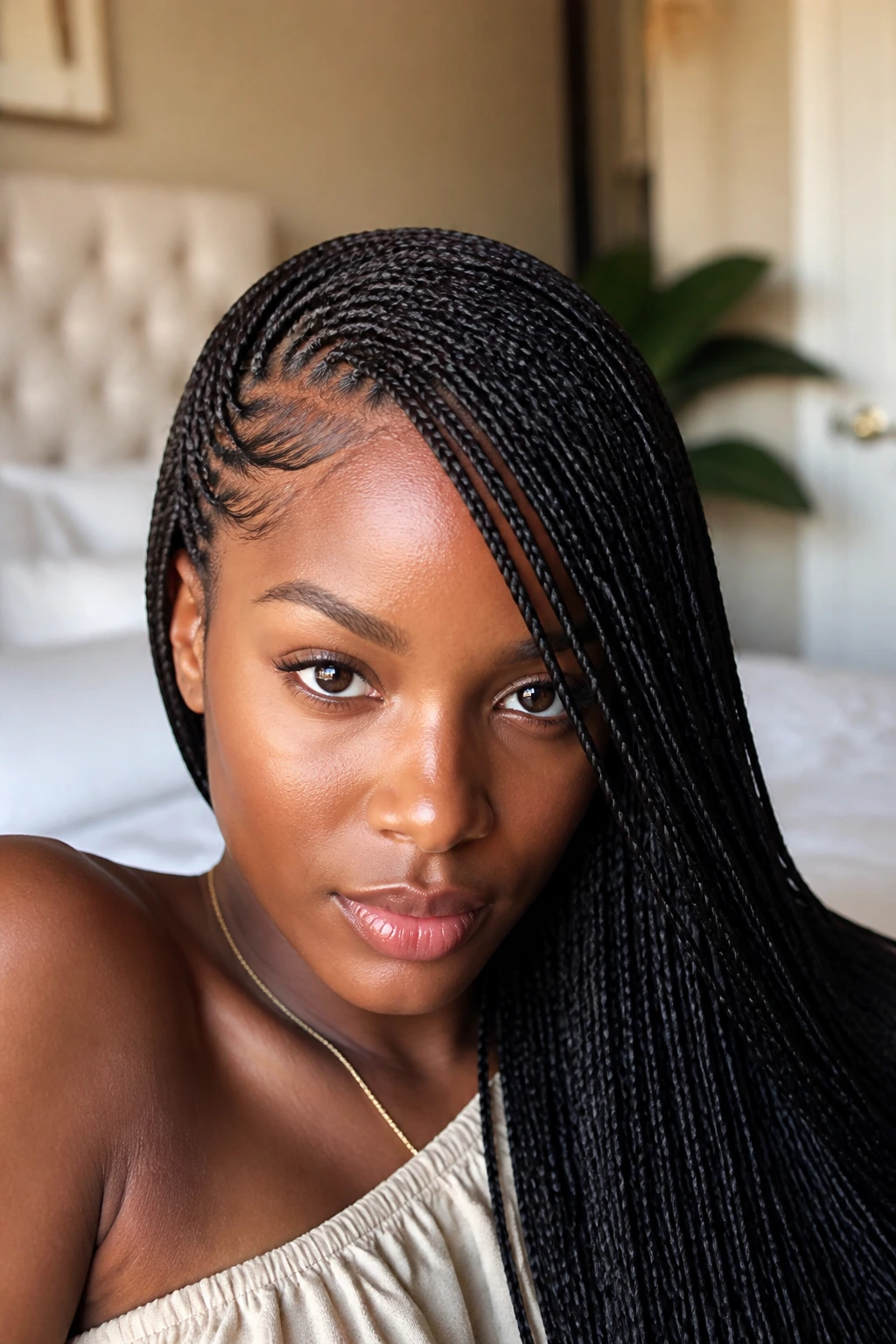
Want the fastest way to change micro braids without redoing the whole install? Shift the part. A deep side part brings instant drama and can make the same braids feel softer, older, or more glamorous depending on how you wear them.
The big advantage is asymmetry. One side frames the face while the other side opens it up, and that imbalance keeps the look interesting. If you like strong cheekbones, the deeper part can highlight them. If you prefer a bit more coverage on one side, it does that too.
Why the part matters
A deep side part changes the weight line of the braids. Instead of falling evenly, the hair lands with more body on one side, which creates that fuller, more styled feeling.
It also works well with side tucks. Pin one side back with a small clip or let the front braids sweep across the forehead. Both look good. The key is to keep the part clean, because a messy one will fight the whole idea.
10. Low Micro Braid Bun
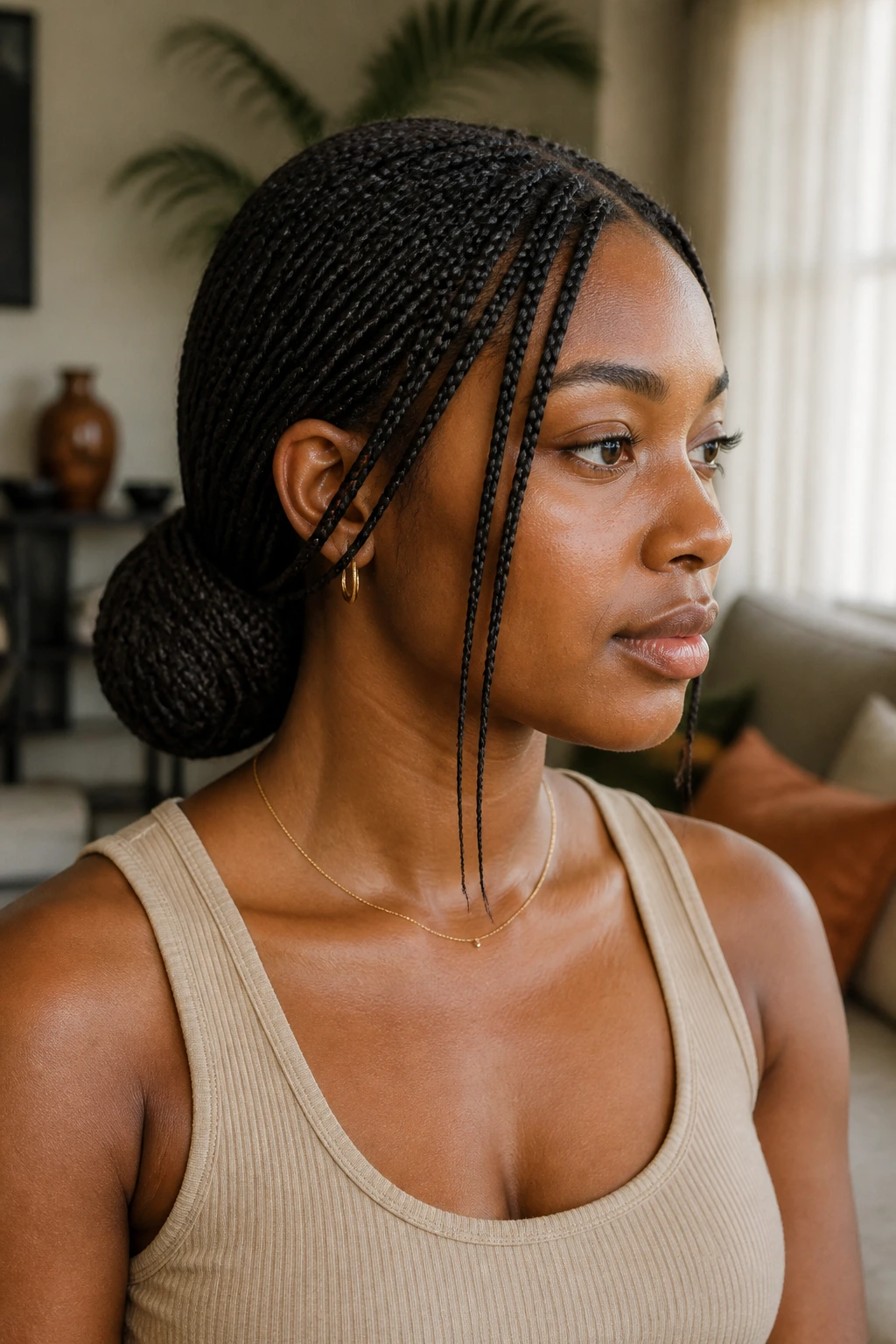
If you need your hair off your neck but still want the braids to look deliberate, the low bun is hard to beat. It sits quietly at the nape, which gives the style a calm, neat finish.
This one is especially good for long wear. High buns can get heavy and start to tug, but a low bun spreads the weight out more naturally. It also plays nicely with scarves, collars, and structured tops because nothing is sitting tall at the crown.
- Gather the braids at the nape with a soft band.
- Twist the length into a loose coil rather than a hard knot.
- Leave two or three braids free around the face if you want a softer edge.
- Use pins that grip without squeezing the braids flat.
The bun can be slick or slightly undone. I prefer slightly undone. It reads less formal and keeps the texture visible.
11. Honey-Brown Ombre Micro Braids

Warm brown at the roots and honey through the ends gives micro braids a softer finish than a solid dark install. The color shift catches the eye in a quiet way, which is often better than going too bright too fast.
What matters here is where the lighter shade starts. If the ombre begins too high, the style can lose depth at the scalp. Start the lighter color lower and the braids keep that grounded look while still feeling fresh.
The best part is how the color changes the mood of the braid itself. Dark roots keep the style anchored, then the lighter ends break it up so the length doesn’t feel heavy or flat. It’s a small trick, but it makes a big visual difference.
I’d keep the tone close to your skin’s warmth rather than chasing a harsh contrast. Honey, caramel, chestnut, and cinnamon all sit nicely in micro braids and tend to age better than a super-bright tone.
12. Fulani-Inspired Micro Braids
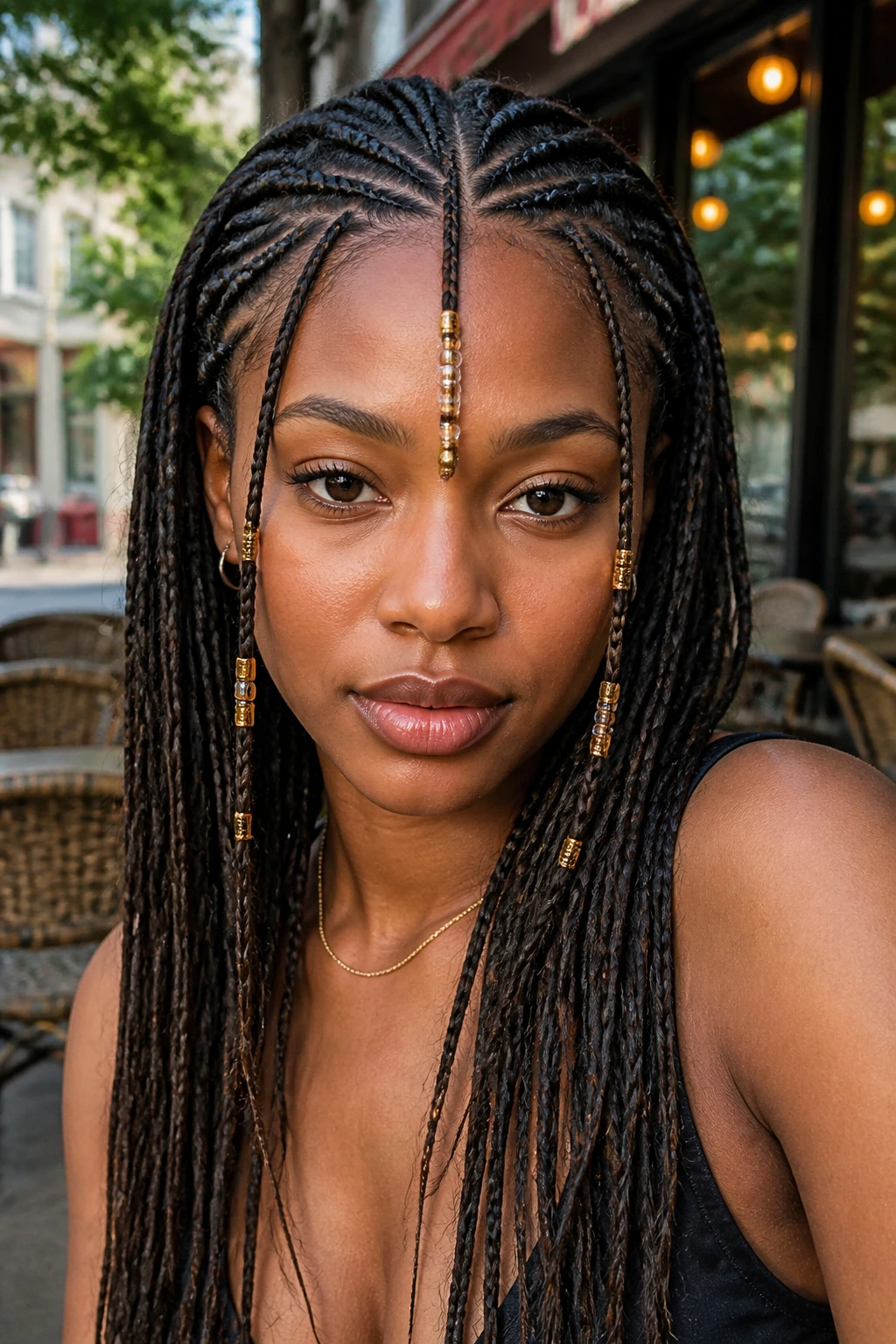
Why do Fulani-inspired micro braids stay appealing? Because they mix structure and decoration in a way that still feels wearable. You get the neat parting, the front framing, and a little edge without turning the whole head into a costume.
The classic Fulani influence usually shows up in a center braid, side braids, or a few braids directed toward the face. With micro braids, that idea gets finer and lighter, which makes the style easier to wear for everyday life.
What makes it Fulani-inspired
- A clear front braid pattern, often centered.
- Braids that are directed in a defined way instead of scattered randomly.
- Light accents like beads, cuffs, or thread.
- A shape that frames the forehead and temples on purpose.
This look suits people who want detail at the front and freedom at the back. It’s a nice middle ground between a fully simple install and a style with lots of decoration.
13. Zigzag-Part Micro Braids
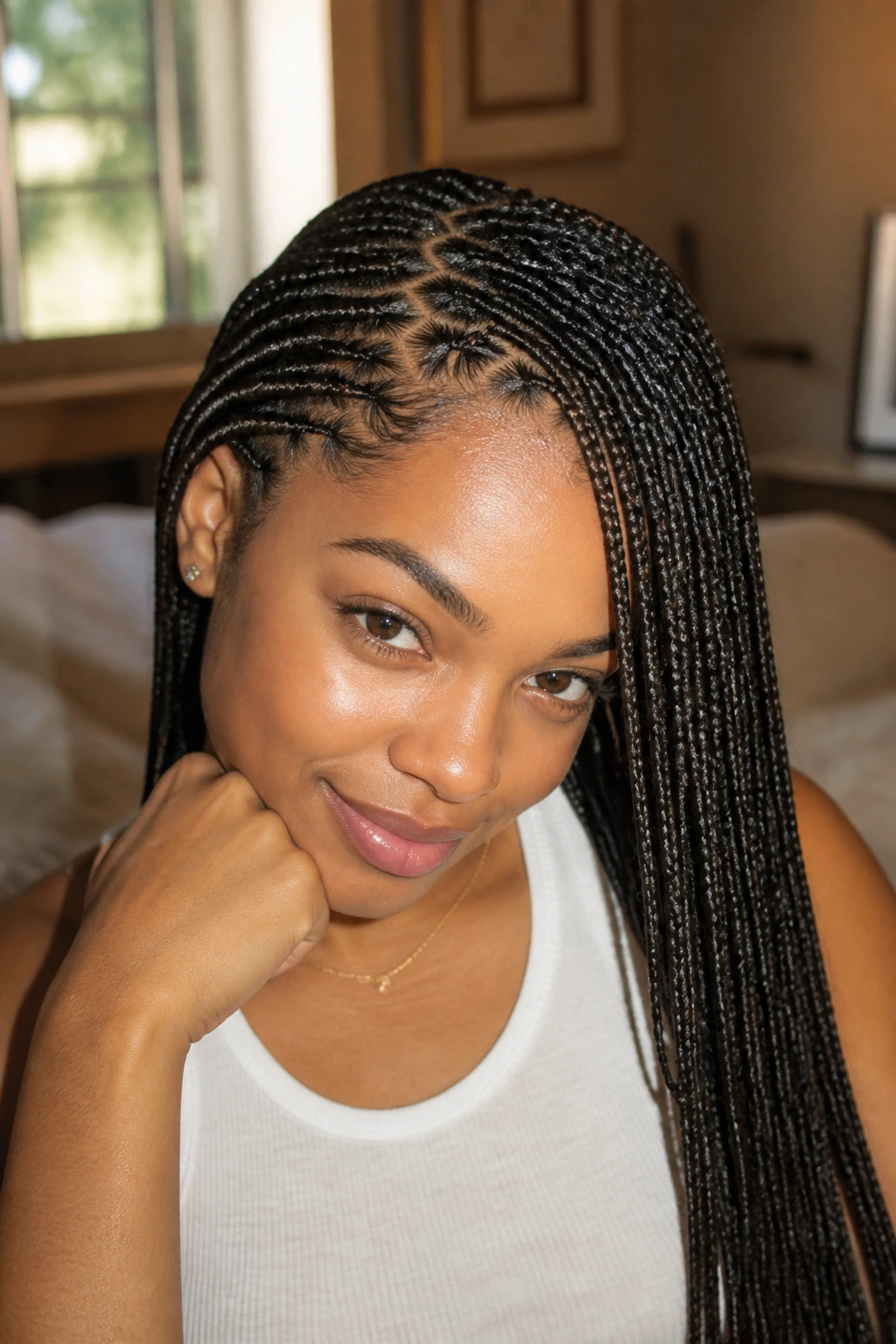
Straight parts are safe. Zigzag parts have more personality. They turn the scalp into part of the design, and on micro braids that detail can make the whole style feel fresh even before the braids settle.
The parting matters more here than people think. A zigzag that’s too tiny disappears under the braids. A zigzag that’s too wide can look sloppy. You want clear angles that still read clean from a few feet away.
What to watch for
- Use a sharp rat-tail comb so the lines stay crisp.
- Work under bright light; dim rooms make zigzags sloppy fast.
- Keep the spacing even so one side doesn’t look heavier.
- Let the pattern breathe. Crowded zigzags lose the point.
This style is good when you want something a little playful but not loud. The part itself does the talking, so the rest of the install can stay simple.
14. Space-Bun Micro Braids
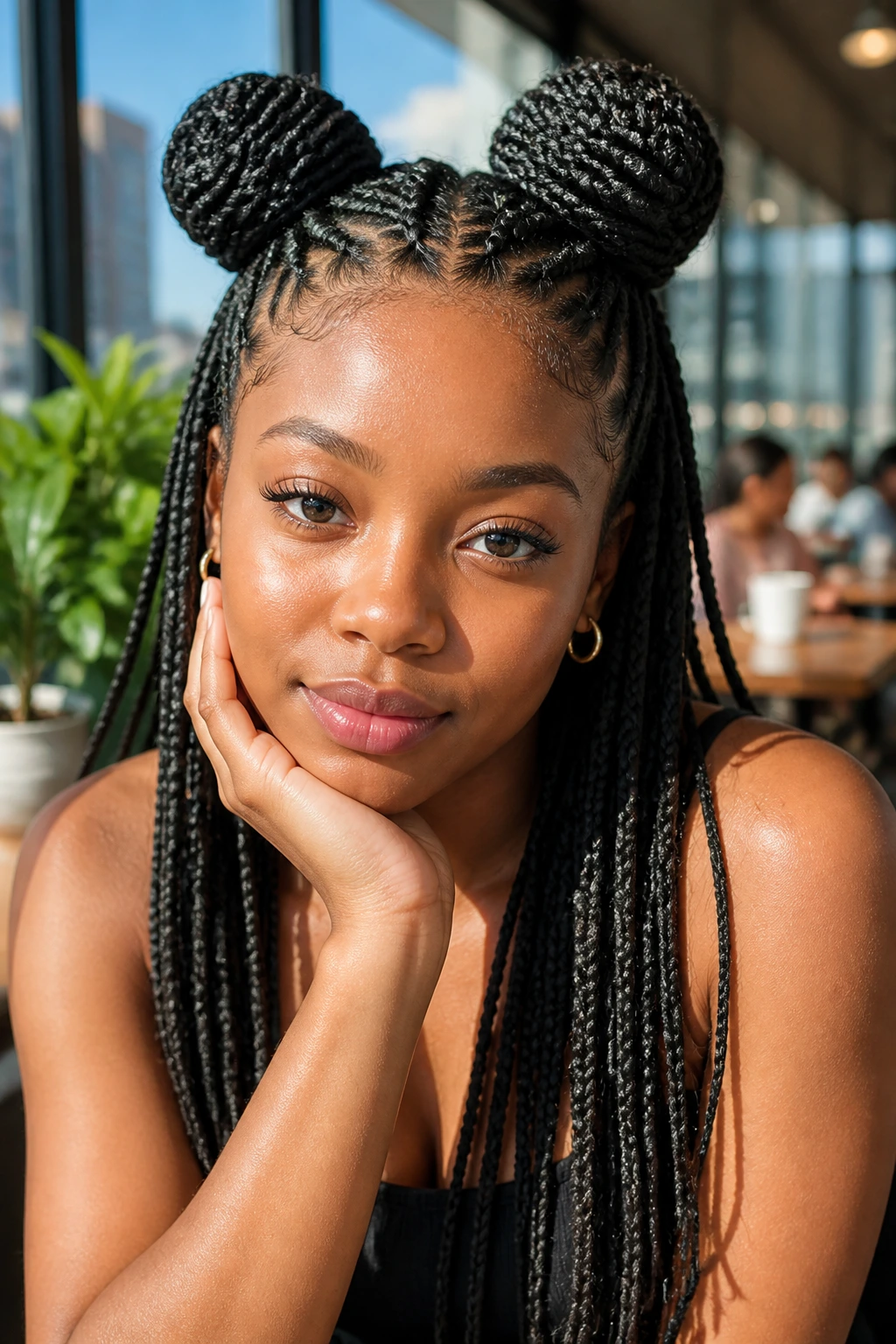
Two buns high on the head can make tiny braids look playful instead of severe. Space-bun micro braids have that young, lively energy, but they can still feel grown if the buns are neat and the rest of the braids hang cleanly.
The style works best when the buns are balanced. One bun sitting higher than the other throws off the whole look. Keep them even, and let the lengths fall with enough slack that the style doesn’t pull the scalp.
A friend of mine wears this look when she wants to look dressed up without spending extra time. Honestly, that makes sense. It’s fun, and it takes the braids away from the neck, which is a gift on warm days or packed commutes.
- Keep each bun loose enough to avoid tension.
- Leave a few front braids out if you want a softer face frame.
- Use the tails to wrap the base so the buns look intentional.
- Best on medium to long braids that still have enough length after folding.
15. Micro Braids with Twisted Front Pieces
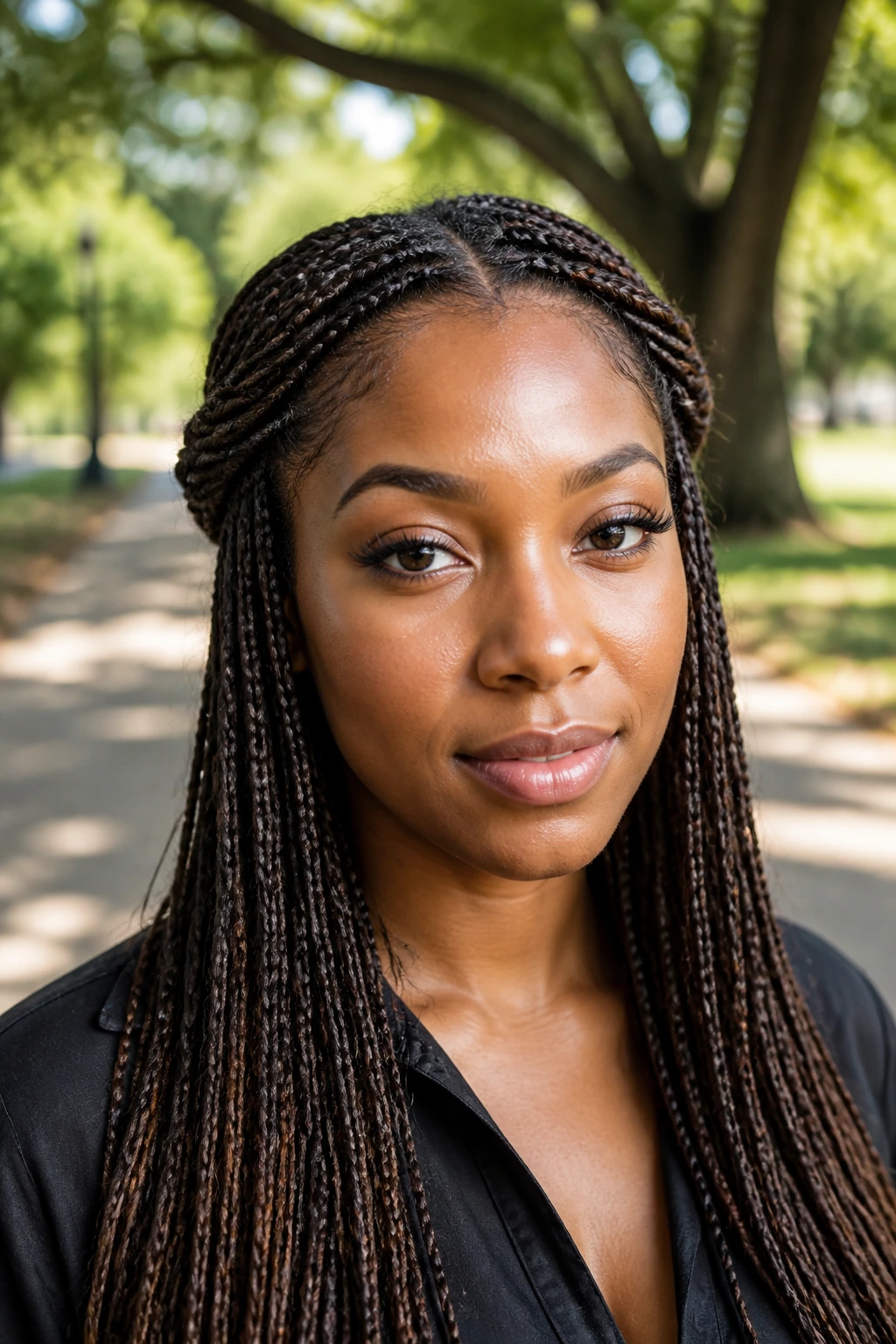
What if you want your braids off your face without putting them all up? Twist the front pieces back. It’s a small move, but it changes how the whole style sits and gives your face more air.
This works especially well when the hairline is the part you want to protect from friction. Twisting the front braids away from the temples creates a gentle lift, and that lift can make the rest of the style feel cleaner.
How to wear the front twist
- Take two or three braids from each front side.
- Twist them loosely toward the crown.
- Pin them behind the ear or at the back with small clips.
- Keep the twist soft so it doesn’t create a hard ridge across the head.
The look is neat without being severe. It’s also a useful option when you want to wear glasses, sunglasses, or statement earrings and don’t want braids crowding the face.
16. Tapered-Side Micro Braids

Micro braids do not need to be long to make a point. On a tapered cut, they can look sharp, modern, and very clean around the edges, especially when the top has enough length to show off the braid pattern.
This style has a stronger silhouette than most of the others on the list. The contrast between the close sides and the braided top creates shape immediately, so you don’t need much else. A crisp line-up helps. So does a well-kept nape.
It’s a good pick if you like hair that feels structured and a little bold. The smaller braids on top keep it feminine and detailed, while the tapered sides stop it from getting bulky.
One thing people underestimate: this cut grows out fast at the sides. If you like the look neat, keep up with the shape around the ears and neck.
17. Crown Updo Micro Braids
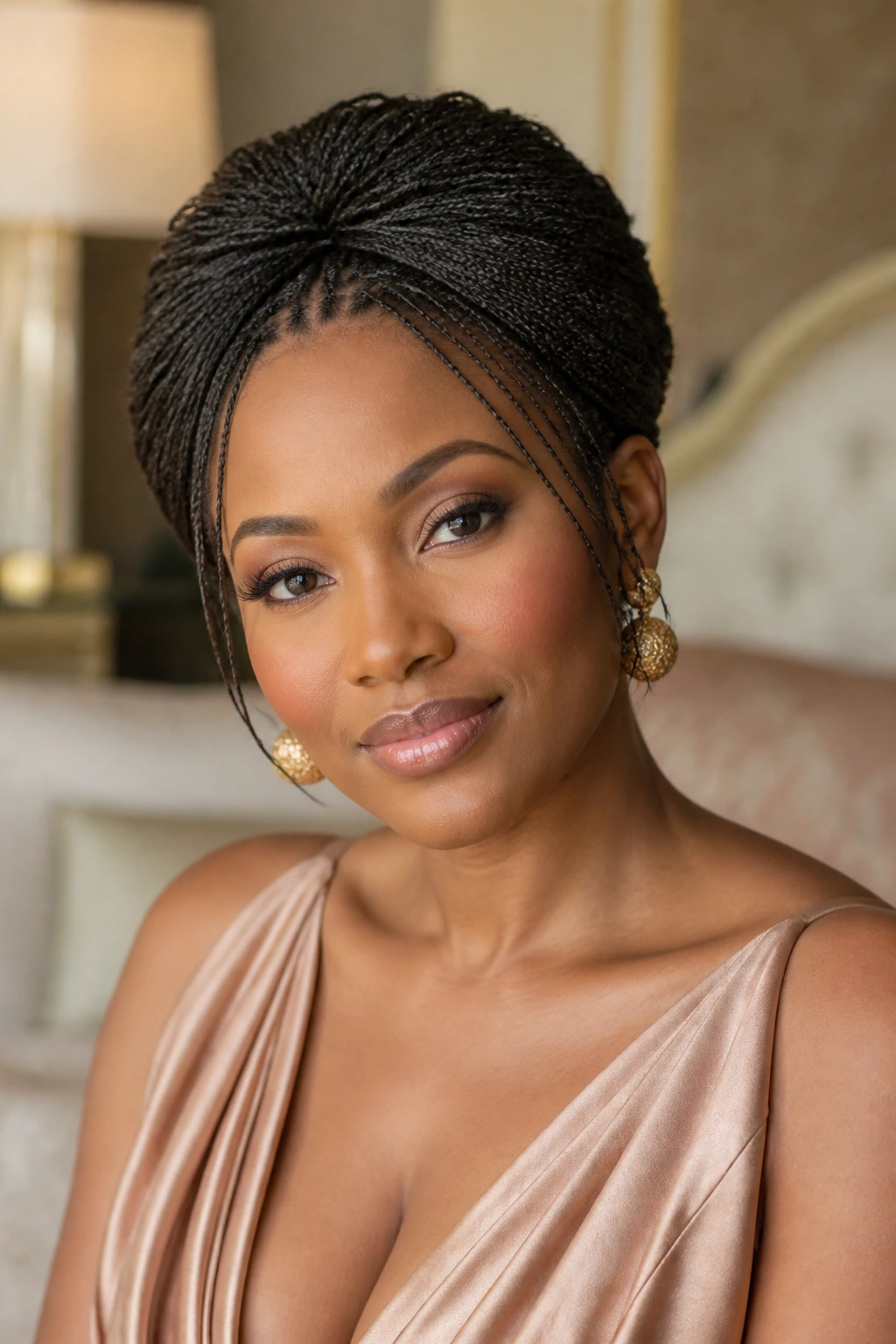
Picture the braids lifted and pinned around the head so they sit like a frame instead of hanging loose. That’s the charm of a crown updo. It feels formal without becoming stiff, and it shows off the neckline in a really clean way.
This style is especially nice when you want the face fully open. The braids can be wrapped around the perimeter and pinned low enough that the shape stays soft, not tall and stiff. If a few ends peek out, that is fine. In fact, it helps.
I like this version for weddings, dinners, and any moment when a regular ponytail feels too plain. It looks like work, but the work is mostly in the pinning. Once it’s set, the style holds its shape well.
A satin pin cushion would be nice, but a handful of strong bobby pins does the job too.
18. Micro Braids with Shells and Gold Cuffs
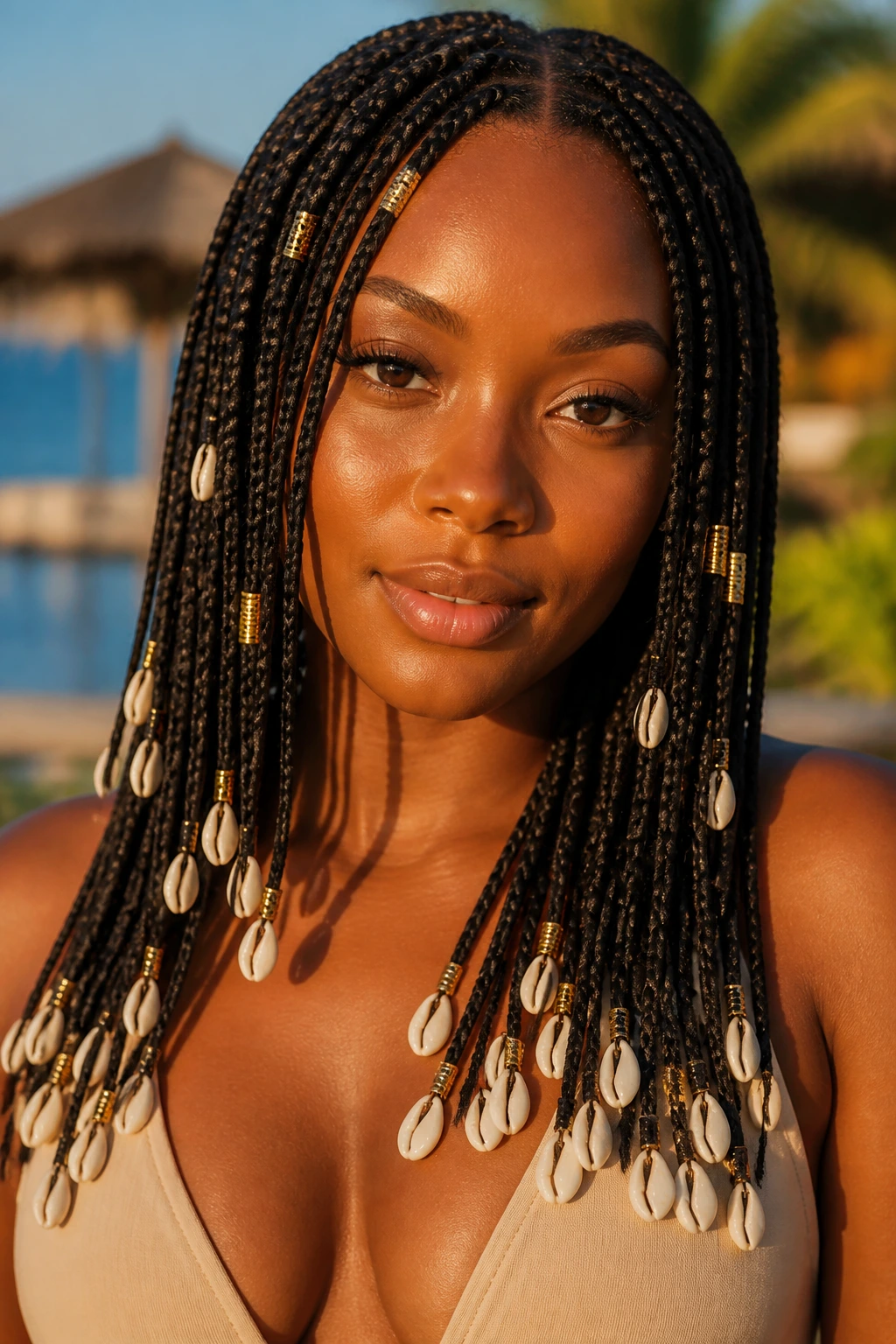
A shell at the end of a braid changes the whole feeling of the style. Add a few gold cuffs, and the look moves from simple to styled with almost no extra effort.
I prefer shells and cuffs when they’re used sparingly. One shell cluster, a few cuffs near the front, or a tiny run of metal accents along one side keeps the style interesting. Covering every braid is too much. You lose the detail that made the accessories appealing in the first place.
Choosing the right accents
- Shells feel softer and more organic.
- Gold cuffs give the braids a cleaner, brighter edge.
- Silver can read cooler and a little sharper.
- Pick one accent type if you want the style to stay calm.
This is a good option for trips, beach plans, or any outfit that needs a little extra texture near the face. The best part is that the braids still do the heavy lifting; the accessories are there to add punctuation.
19. Low Braided Ponytail Micro Braids

Unlike a high ponytail, a low one keeps the weight near the neck and feels calmer at the hairline. That alone makes it easier to wear for long stretches, especially if your braids are long.
The low ponytail also looks more grounded. It sits neatly at the nape and tends to work well with tailored clothes, soft knits, and open collars. It is not trying to be the loudest style in the room. It just holds the room together.
Why it wears so well
The lower placement puts less pressure on the crown, which matters more than people admit. If your scalp is even a little tender, a low ponytail usually feels better than a pulled-up version.
You can keep it sleek or let a few braids curve out naturally before they drop. Both look good. For a polished finish, wrap a braid around the band and pin the end underneath so the tie disappears.
It’s a quiet style, but not a boring one.
20. Shoulder-Length Layered Micro Braids

If long braids feel like too much, shoulder length is easier to live with. Layered micro braids at this length move more freely, dry faster after washing, and don’t drag the same way heavier styles do.
The layered part matters because it stops the ends from forming one solid block. A little variation in length near the face softens the whole install and makes the braids look more natural in motion. It also keeps the style from looking too boxy.
This is one of my favorite choices for everyday wear. It’s neat enough for work, light enough for errands, and easy to tuck into a jacket without having the ends jam up around your ribs. Small thing. Huge difference.
If you want a style that feels practical first and pretty second, this is the one I’d point to without hesitation.
Final Thoughts
Micro braid hairstyles work best when the shape fits your real life, not just the mirror. If you wear headphones all day, drive a lot, or spend time in collars and scarves, shorter or lower styles will usually feel easier than extra-long ones.
The smartest choice is the one that protects your edges, stays neat long enough to feel worth the install, and still gives you room to change things up. A center part, a bun, a bob, a side sweep — they all change the mood fast when the braids are tiny and clean.
Pick the version that matches how you move. Good braids should make your day easier, not ask for a performance.