



There is something undeniably transformative about the ritual of getting your hair braided. You sit in the chair, feeling the weight of the day—and the weight of your hair—shift as fingers move with rhythmic precision. It is a quiet, meditative space. Hours later, you stand up, look in the mirror, and feel like you have been handed a fresh start. Whether you are looking to protect your natural texture, save time on your morning routine, or simply change your silhouette, braided styles remain one of the most versatile and culturally rich options available.
Choosing the right style is not just about what looks good on a social media feed; it is about matching the weight, tension, and maintenance level to your lifestyle. A style that looks stunning on a model might pull at your edges if your hair is fine, while a thick, heavy style might overwhelm a shorter cut. The best approach starts with understanding your own hair type—its porosity, its strength, and how much tension it can handle before it cries for mercy.
The following list offers a range of styles, from the practical and long-lasting to the intricate and event-ready. Remember that the longevity of any of these depends entirely on how you treat them during the first week and the kind of care you give your scalp beneath the extensions.
1. Knotless Box Braids
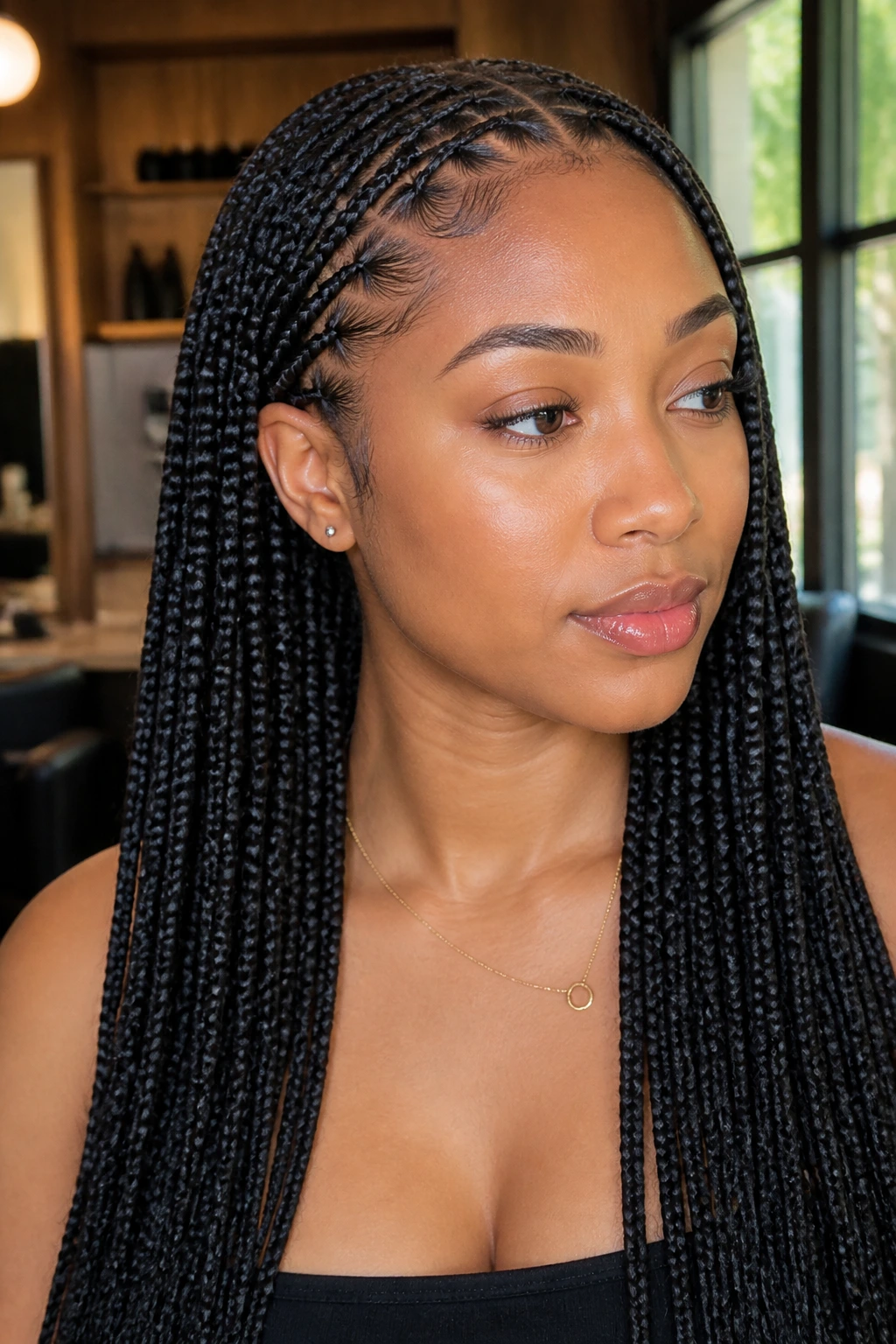
Knotless braids have effectively changed the game for anyone with a sensitive scalp or a low threshold for the dreaded “tension headache.” Unlike traditional box braids where a small knot of synthetic hair is anchored directly against the scalp, these are started with your own natural hair. The stylist feeds the extension in gradually, creating a seamless, flat foundation that looks like it is growing right out of your head.
Why They Work
The main draw is the lack of bulk. Because there is no knot at the root, the braids move freely from the moment you leave the chair. There is no stiff “break-in” period where you have to sleep with your hair in a high bun to keep it from poking your neck. They are perfect for anyone prone to traction alopecia because the weight is distributed more evenly across the section rather than pulling on a single point.
Pro tip: Because these are so light, it is tempting to go for waist-length, but keep in mind that extra length adds weight. If you want to protect your edges, aim for mid-back length or shorter to minimize pulling.
2. Classic Jumbo Box Braids
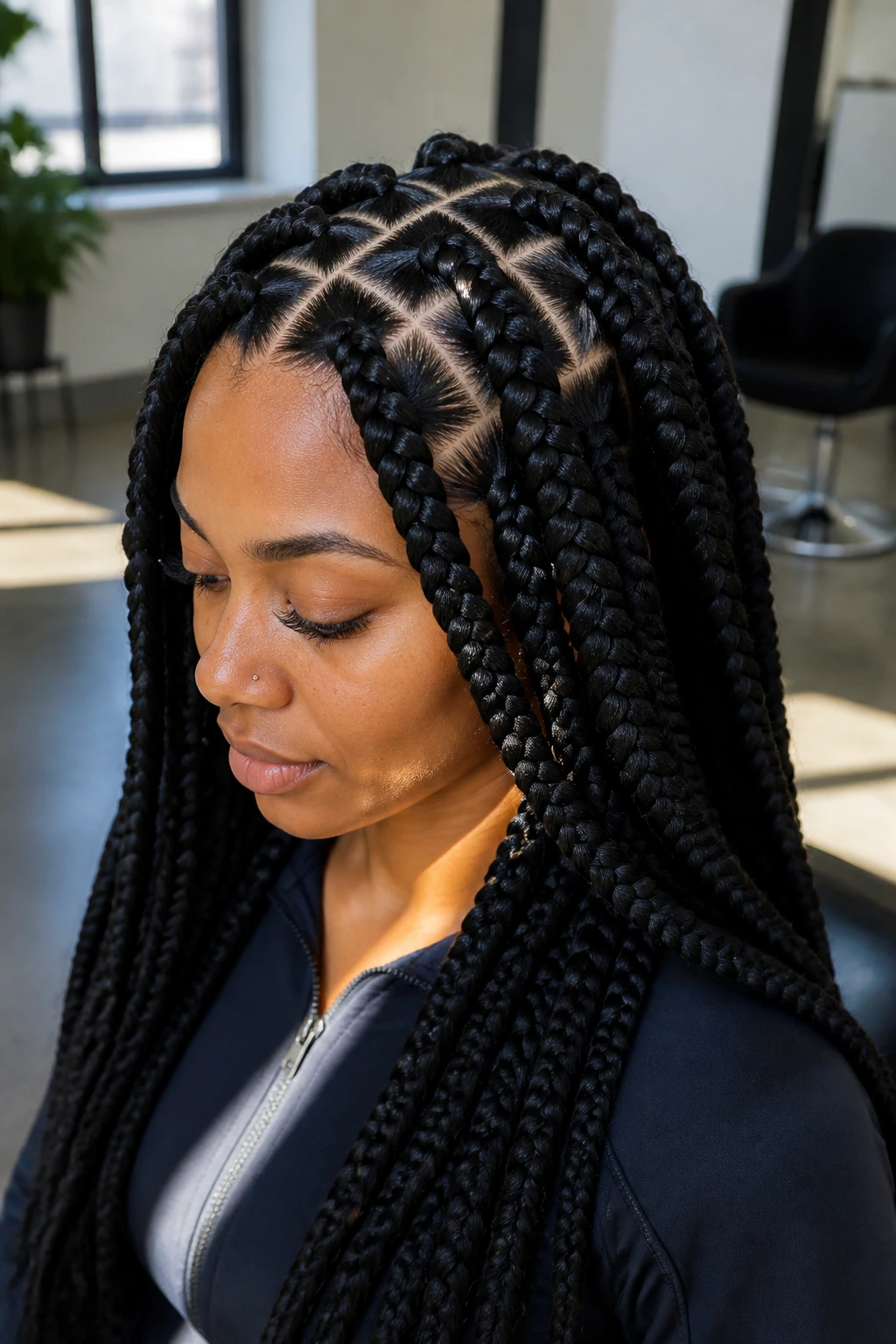
Sometimes you just want to get the job done and be out the door. Jumbo box braids are the ultimate time-saver. By sectioning the hair into larger parts, you reduce the install time significantly, which is a massive win for anyone who hates sitting in a salon chair for eight hours. These are bold, dramatic, and have an aesthetic that leans into a chunky, 90s-inspired look.
Styling Considerations
Since the parts are bigger, the look is much more defined. You see the grid of your scalp very clearly, so ensure your parting is clean and sharp. You can play with texture by using different types of braiding hair; a matte, pre-stretched synthetic fiber gives a more natural appearance, while a slightly shinier kanekalon can give you that sleek, polished finish.
3. Sleek Feed-In Ponytail
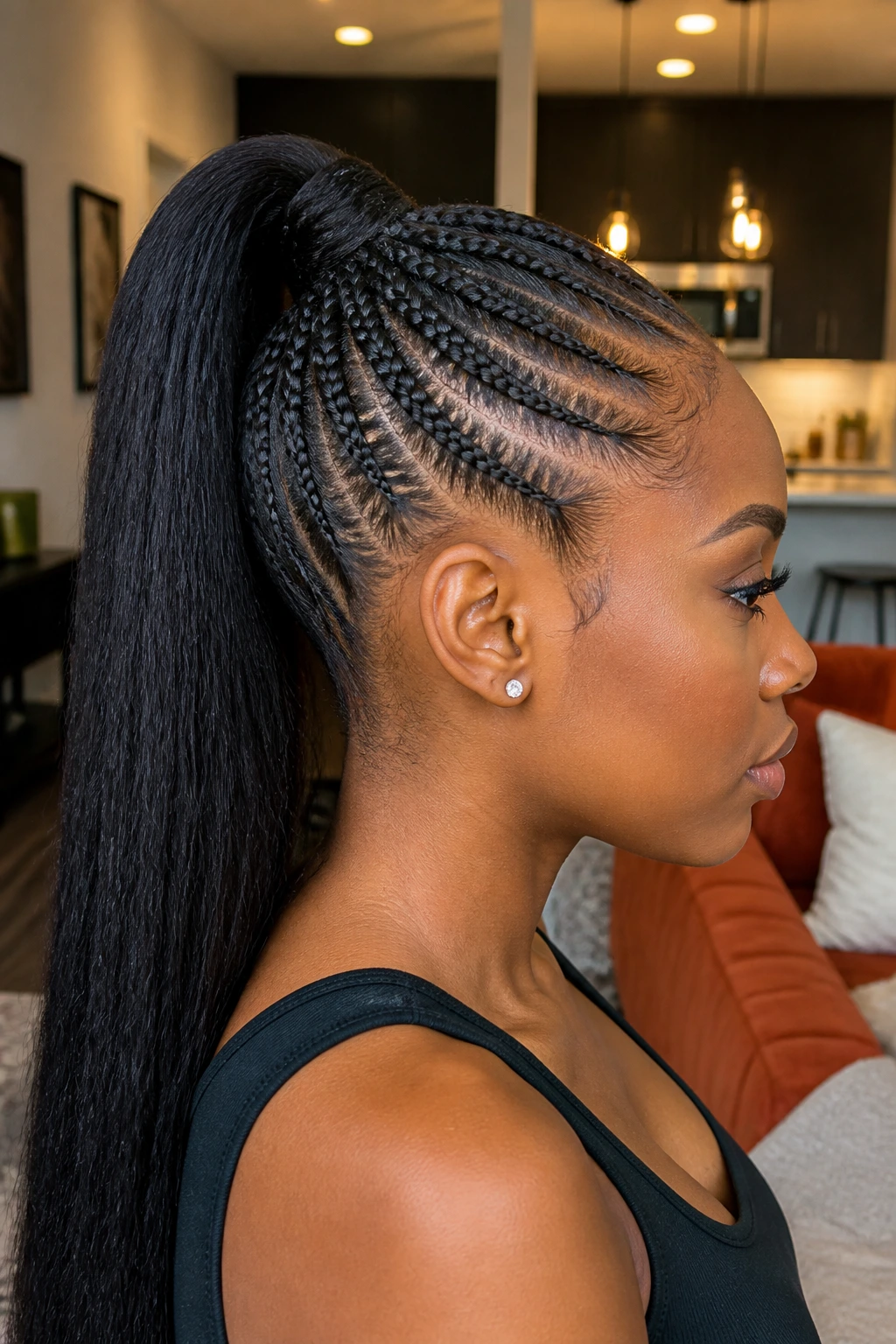
This is the “can’t go wrong” style for almost any occasion. A feed-in ponytail uses cornrows that start at the perimeter and flow upward, meeting at the crown to create a high, secure ponytail. It is a cleaner version of the traditional braided ponytail because the feed-in method allows the stylist to add hair gradually, creating a smooth transition from your natural hair to the extension.
The Maintenance Factor
The trick with a high ponytail is preventing the “pull” at the nape of the neck. Ensure your stylist does not anchor the base too tightly. If you notice white bumps or redness immediately after the style is finished, the tension is too high. You can keep these looking fresh for weeks by wrapping the base with a silk scarf at night and using a light mousse to lay down any flyaways.
4. Lemonade Braids
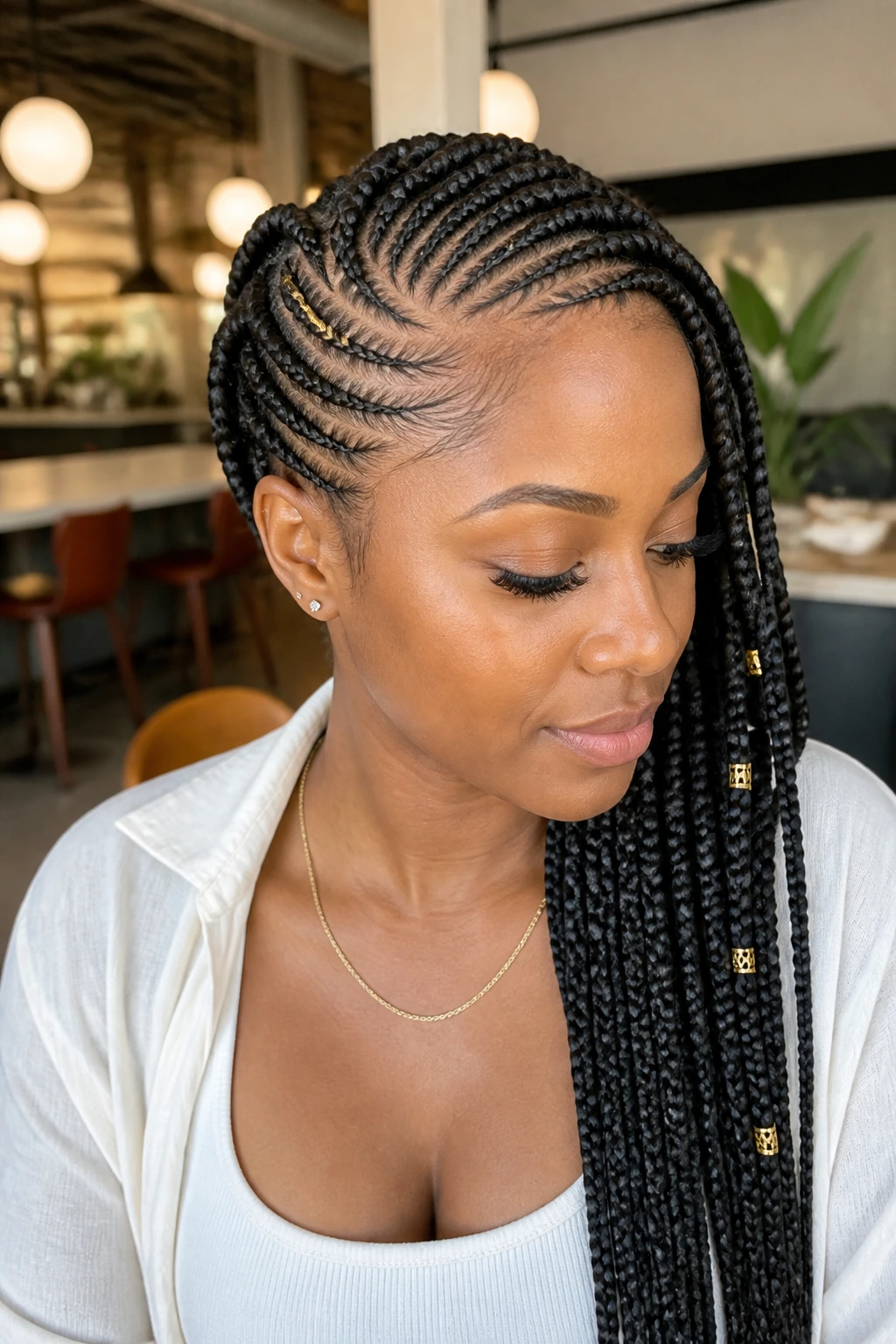
Named after the style popularized by Beyoncé, these are essentially cornrows that are swept to the side. They have a distinct, asymmetrical look that feels sophisticated without trying too hard. You can customize them by varying the size of the braids—some people like a mix of small and thick braids—or by adding gold cuffs and rings to emphasize the pattern.
Why They Stand Out
The side-swept nature of this style is incredibly flattering on almost every face shape. It draws the eye across the face rather than just vertically, which can soften sharp jawlines. They also hold up better than most styles because the direction of the braid naturally follows the way you would tie them back anyway, meaning less tugging on the roots.
5. Fulani Braids
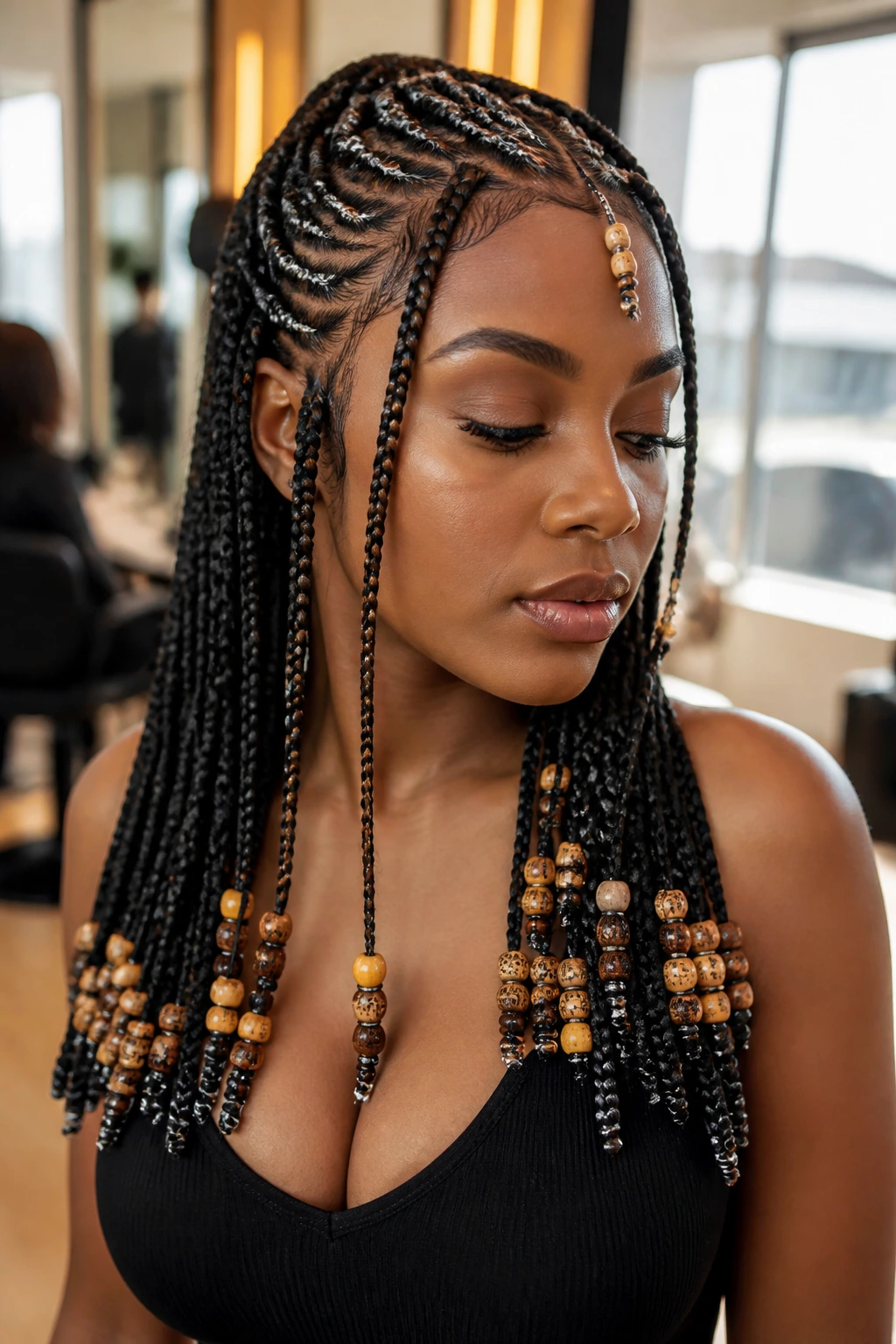
Fulani braids are a specific cultural style that combines cornrows in the front with individual box braids in the back. Often, they feature a center part and a braid running right along the hairline, sometimes with decorative beads or gold accessories. It is a look that feels both traditional and modern, and it allows for a lot of creative expression.
Styling for Detail
The beauty of Fulani braids is in the accessories. Do not shy away from using beads, cowrie shells, or metallic cuffs. If you decide to go with beads, make sure you use a small rubber band at the end of the braid to keep them from sliding off. This style requires a bit more care because the beads can add weight and snag on clothing, so be mindful when pulling on sweaters or scarves.
6. Tribal Braids
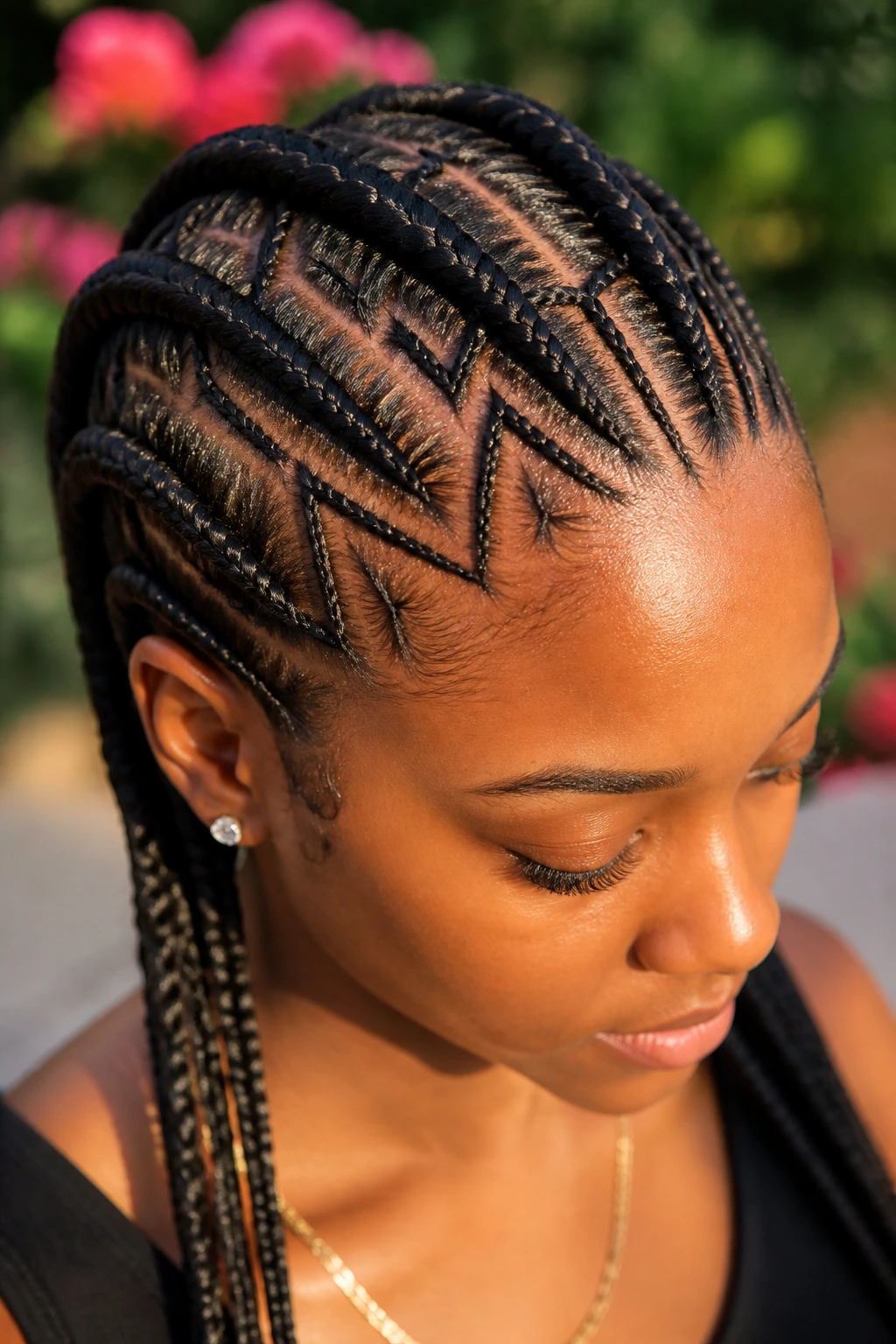
Tribal braids are often used as an umbrella term for various intricate braiding patterns that incorporate different sizes and shapes, frequently involving distinct, geometric parts. Unlike standard cornrows, which usually go straight back, tribal braids might feature a “swoop” or a specific pattern that creates a design on the scalp itself.
Getting the Design Right
If you have a specific pattern in mind, bring a picture. Tribal braids rely heavily on the precision of the parting. You want a stylist who takes their time mapping out the design before they start braiding. If the parts are messy, the whole visual impact is lost. Because of the complexity, expect to pay a premium for the time and skill required to execute these clean lines.
7. Goddess Braids
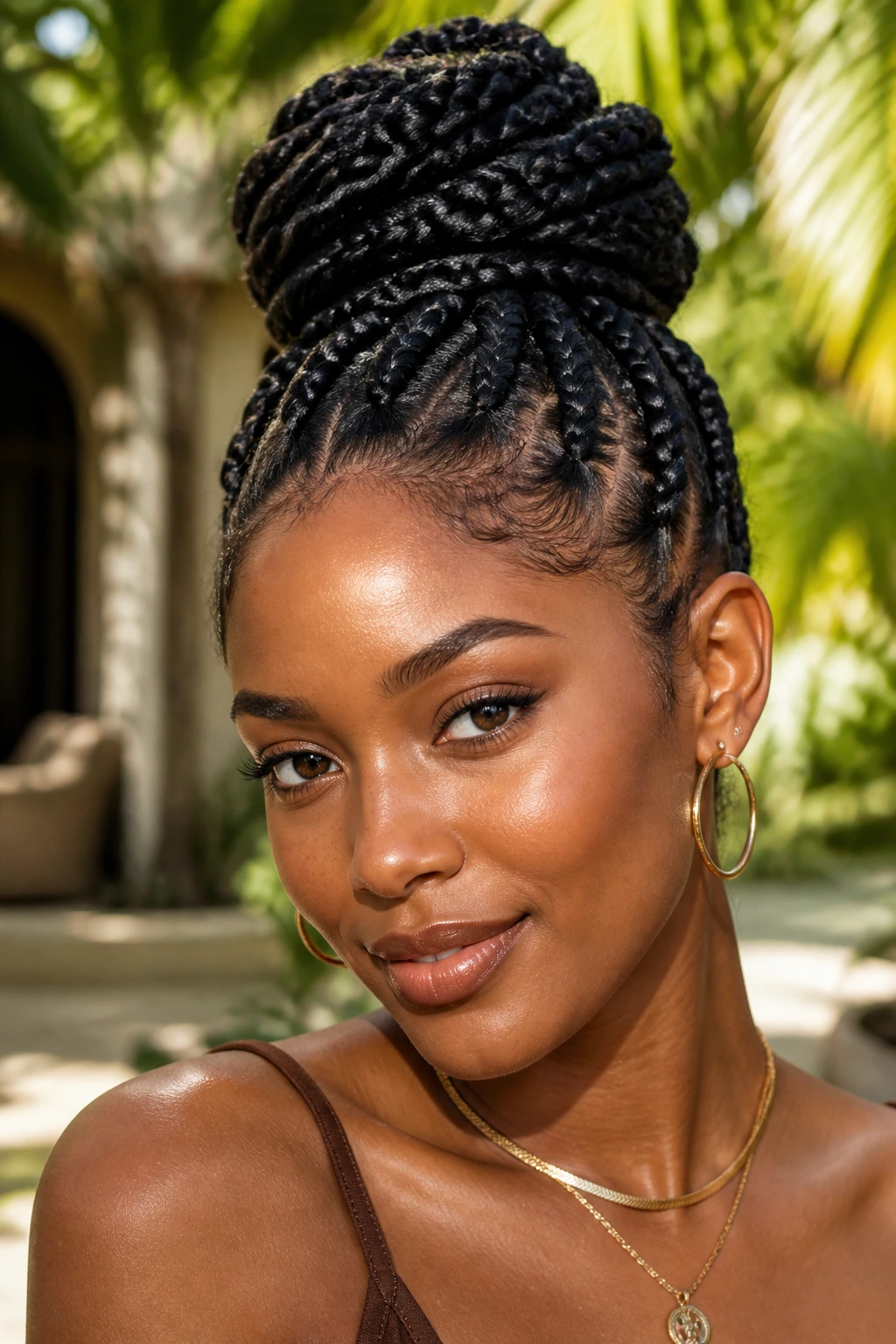
Goddess braids are larger, thicker cornrows that are usually braided closer to the scalp. They can be styled in a variety of ways—up in a bun, flowing to the side, or as a halo. What distinguishes them is the size; they are significantly thicker than standard cornrows, making them quicker to install and giving them a bold, impactful presence.
The Best Use Case
These are excellent for vacation hair. Because the braids are so thick, they are durable. You can swim, sweat, and live your life without worrying about them unraveling. When you wash them, focus your shampoo on the scalp between the braids, then rinse thoroughly. Avoid piling the weight on top of your head, as the thick braids can be heavy when wet.
8. Senegalese Twists
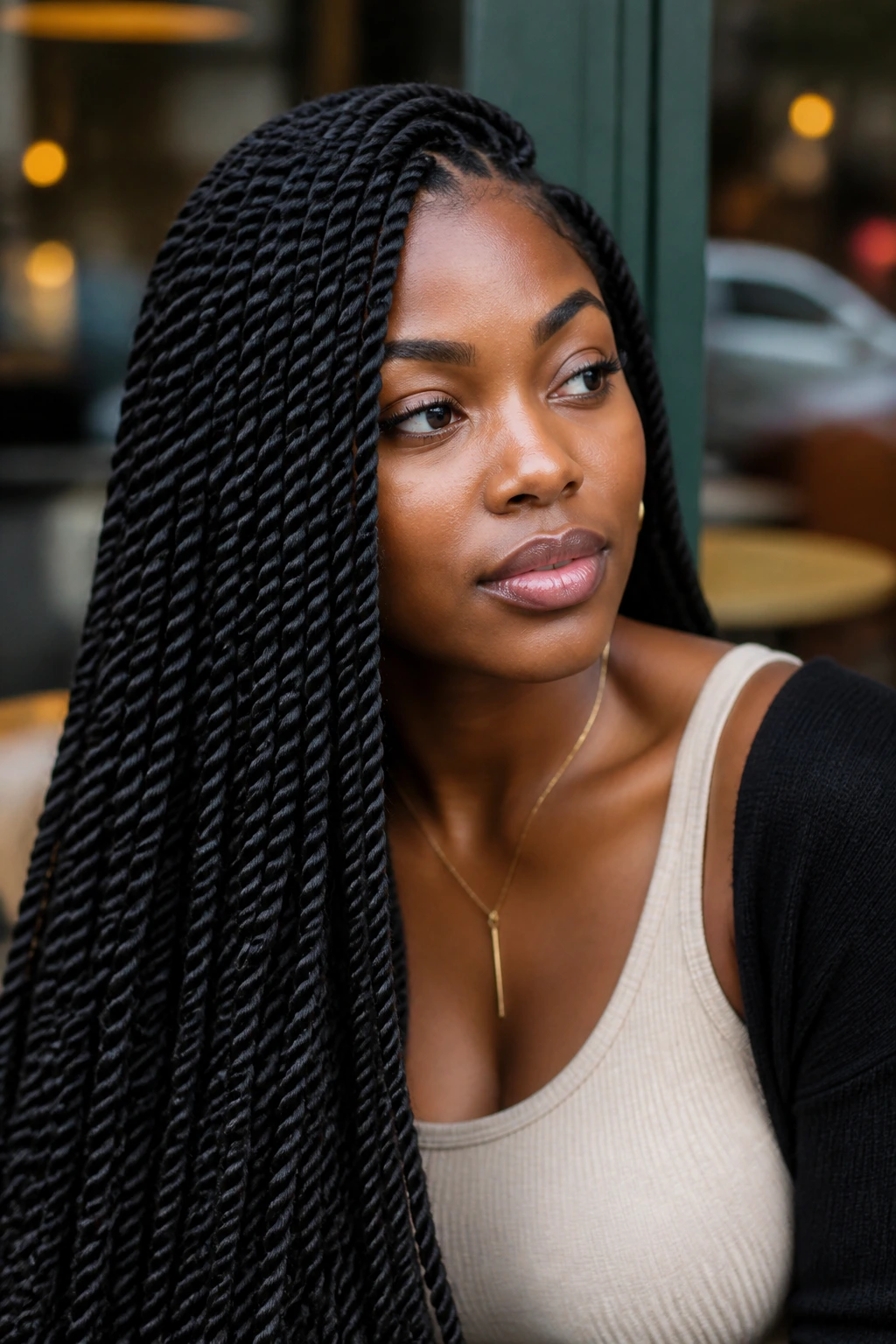
If you love the look of braids but want something with a bit more movement and a different texture, Senegalese twists are the answer. They are rope-like twists created by wrapping synthetic hair around sections of your natural hair. They are smooth, sleek, and tend to look more “polished” than box braids because there is no braided texture—just the twist.
The Texture Difference
These tend to be heavier than knotless braids. The synthetic hair used for twists is usually a bit silkier, which makes them easier to untwist when it is time to take them out. However, that same silkiness means they can unravel if the ends are not sealed properly. Always ensure your stylist dips the ends in boiling water to lock the twist in place.
9. Passion Twists
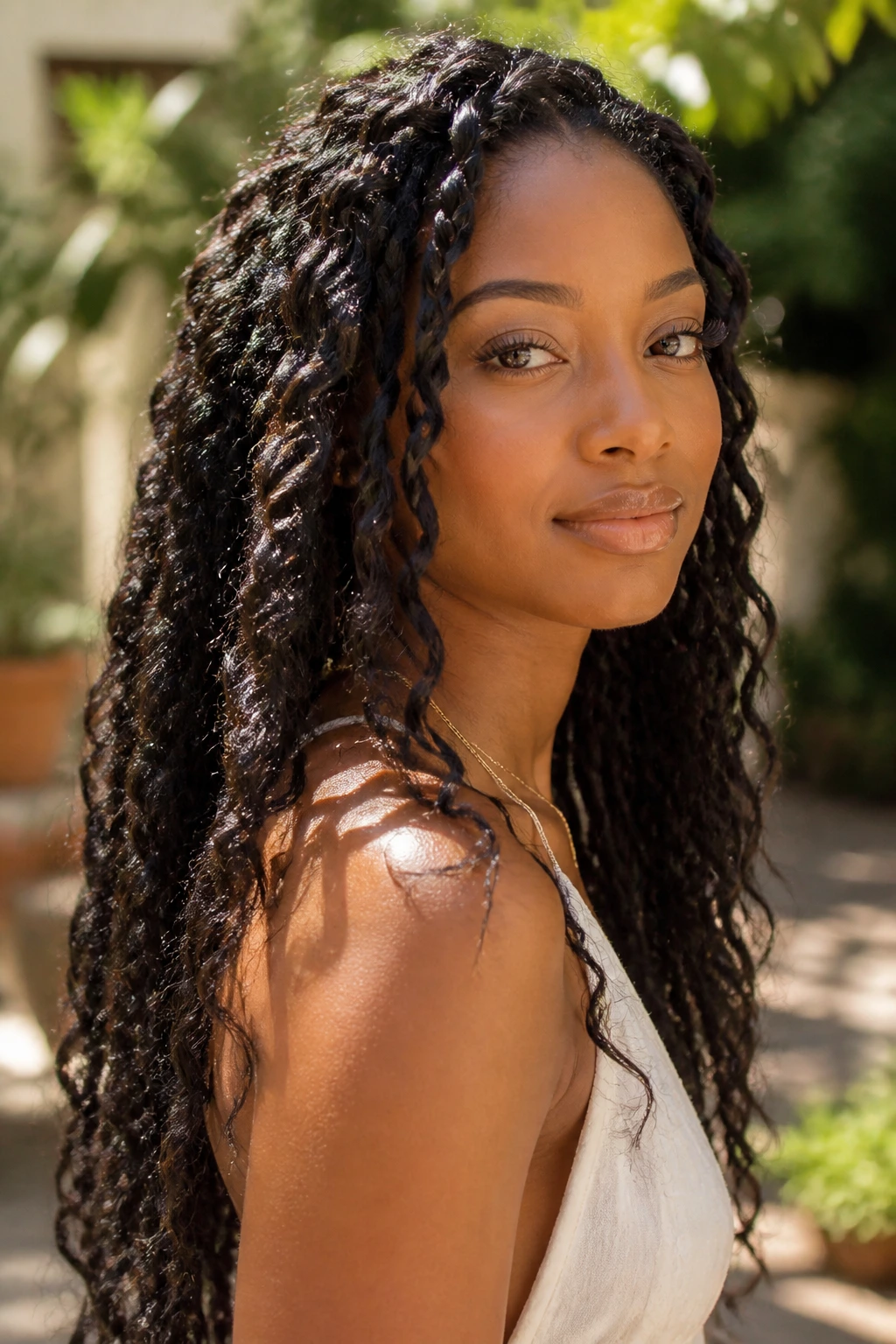
Passion twists are the “bohemian cousin” of Senegalese twists. They are made using a specific type of wavy synthetic hair that gives them a loose, messy, and effortless look. They are intended to look a bit frizzy and imperfect from the start, which makes them incredibly forgiving. You do not have to worry about maintaining a perfectly sleek look; the frizz is part of the charm.
Long-Term Maintenance
The challenge with passion twists is tangling. Because the hair is wavy, the strands will naturally want to lock together. To combat this, use a lightweight leave-in spray that detangles. Do not use heavy oils or waxes; they will only cause the hair to clump and matt faster. Sleep with a satin bonnet that is large enough to contain the volume without crushing the twists.
10. Bohemian Box Braids
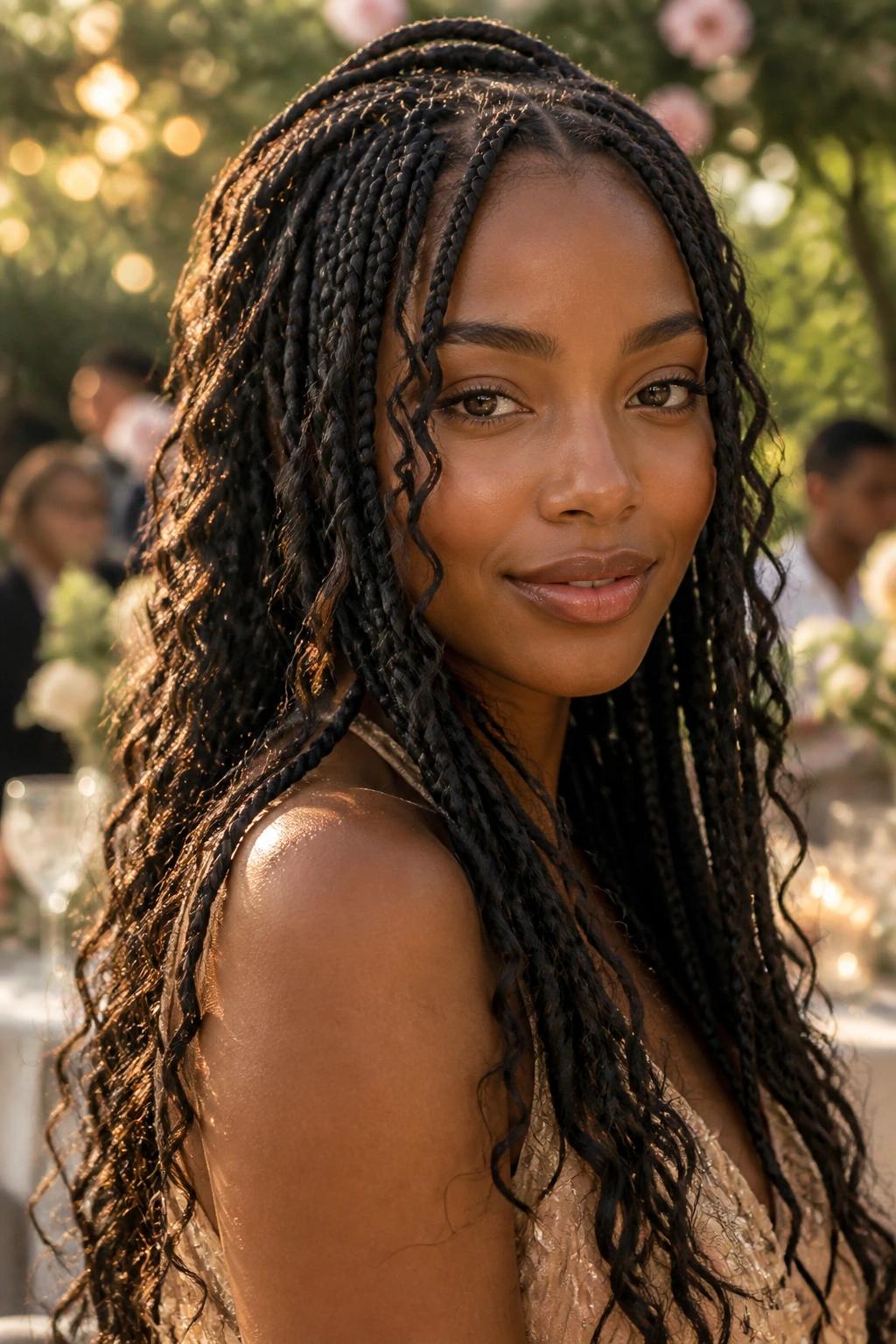
Take standard box braids and leave some of the extension hair loose in curly tendrils throughout the length of the braid. This is the “boho” look. It adds a romantic, soft aesthetic that breaks up the severity of standard braids. The key is in the ratio: too much loose hair, and it tangles; too little, and you lose the effect.
Material Matters
Use human hair or high-quality synthetic “beach wave” hair for the loose curls. Cheap synthetic hair will turn into a rat’s nest within 48 hours. If you want these to last, you must be prepared to maintain those curls. Use a light sheen spray and gently finger-detangle the loose strands every morning. It is a high-maintenance style, but the look is worth the effort for special occasions.
11. Micro Braids
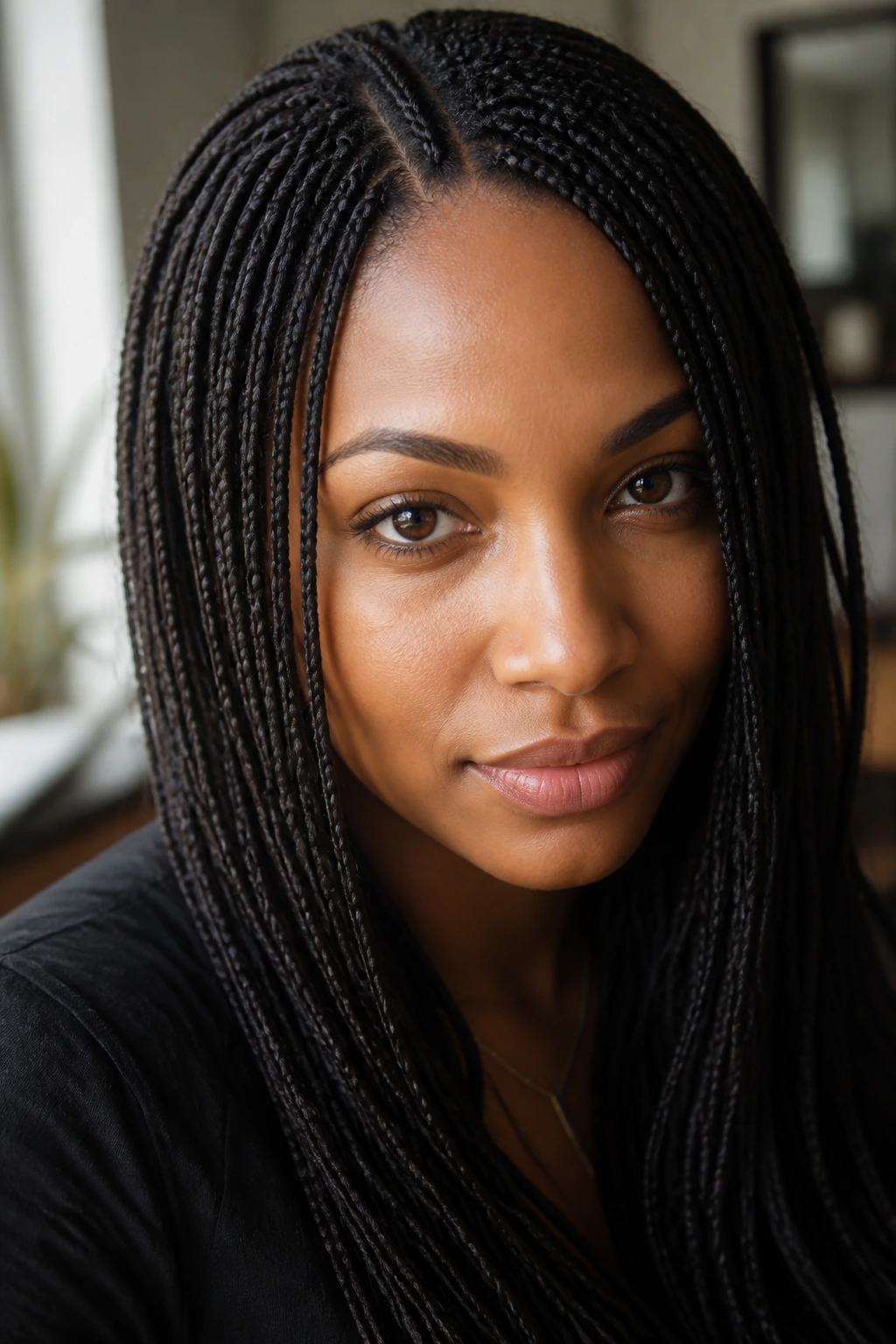
Micro braids are tiny, individual braids that were incredibly popular in the 90s and are seeing a strong resurgence. They offer the most versatility because they behave just like loose hair—you can put them in a ponytail, curl them, or wear them down. However, they take a long time to install.
The Trade-off
The biggest risk with micro braids is tension. Because the sections are so small, there is a lot of hair on your head. Ensure your stylist is not gripping the hair too tightly at the root. Also, removing them is a marathon, not a sprint. Do not rush the takedown; use plenty of conditioner and a detangling brush, and start from the ends, working your way up.
12. Sleek Cornrow Ponytail
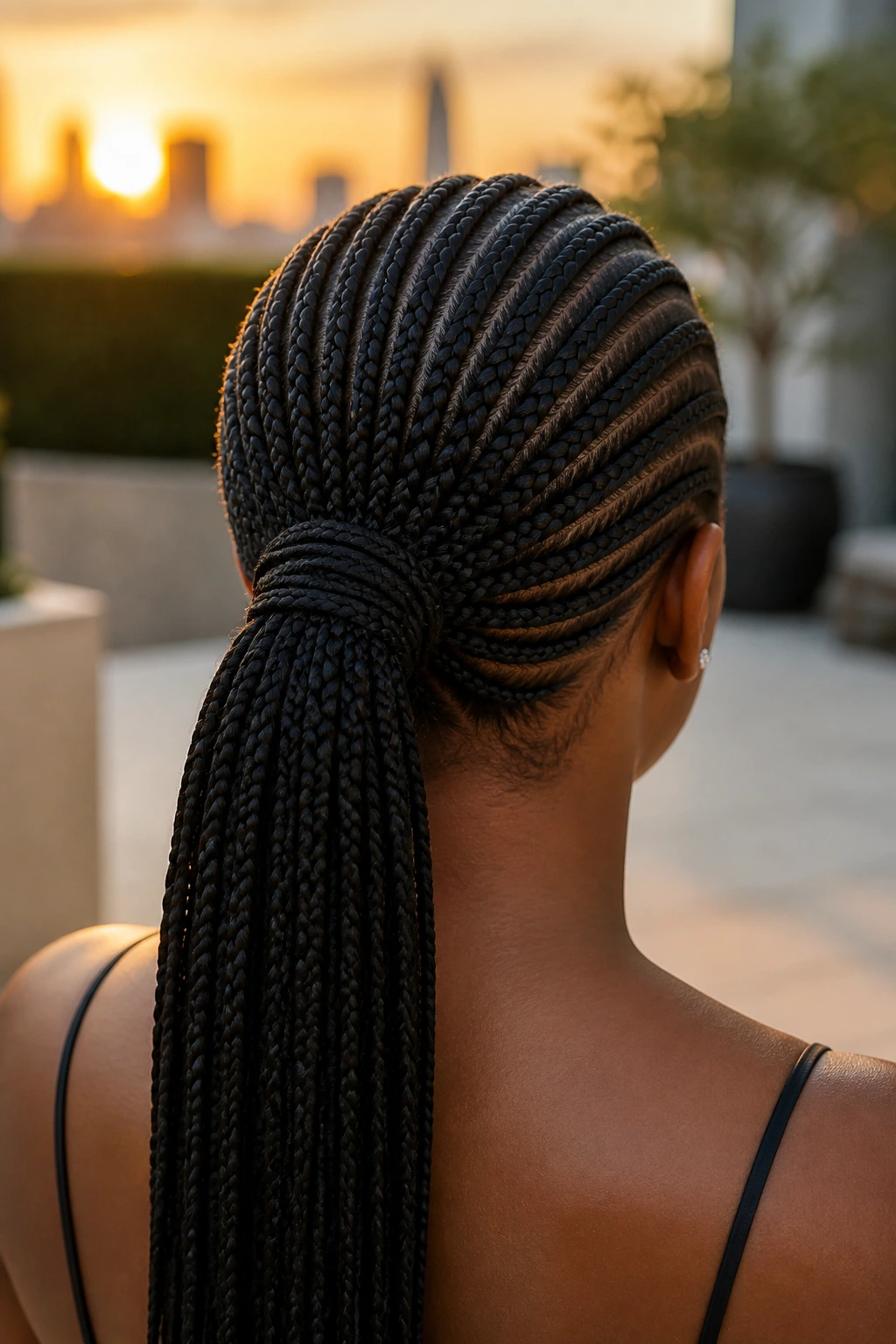
Think of this as the elevated ponytail. Instead of just pulling your hair back, the entire head is braided in straight-back cornrows that meet at a central point. You can add a hair wrap or a bun at the end of the ponytail to hide the ends. It is incredibly sleek and looks fantastic with a sharp, winged eyeliner or a bold lip.
Styling Tip
The secret to this look is the edges. If your hair texture is natural, use a firm-hold edge control gel to lay down your baby hairs after the braids are finished. A little goes a long way. If you use too much, it will look flaky and white by the end of the day. A toothbrush or a soft edge brush is your best tool for getting those perfect, swirled baby hairs.
13. Stitch Braids
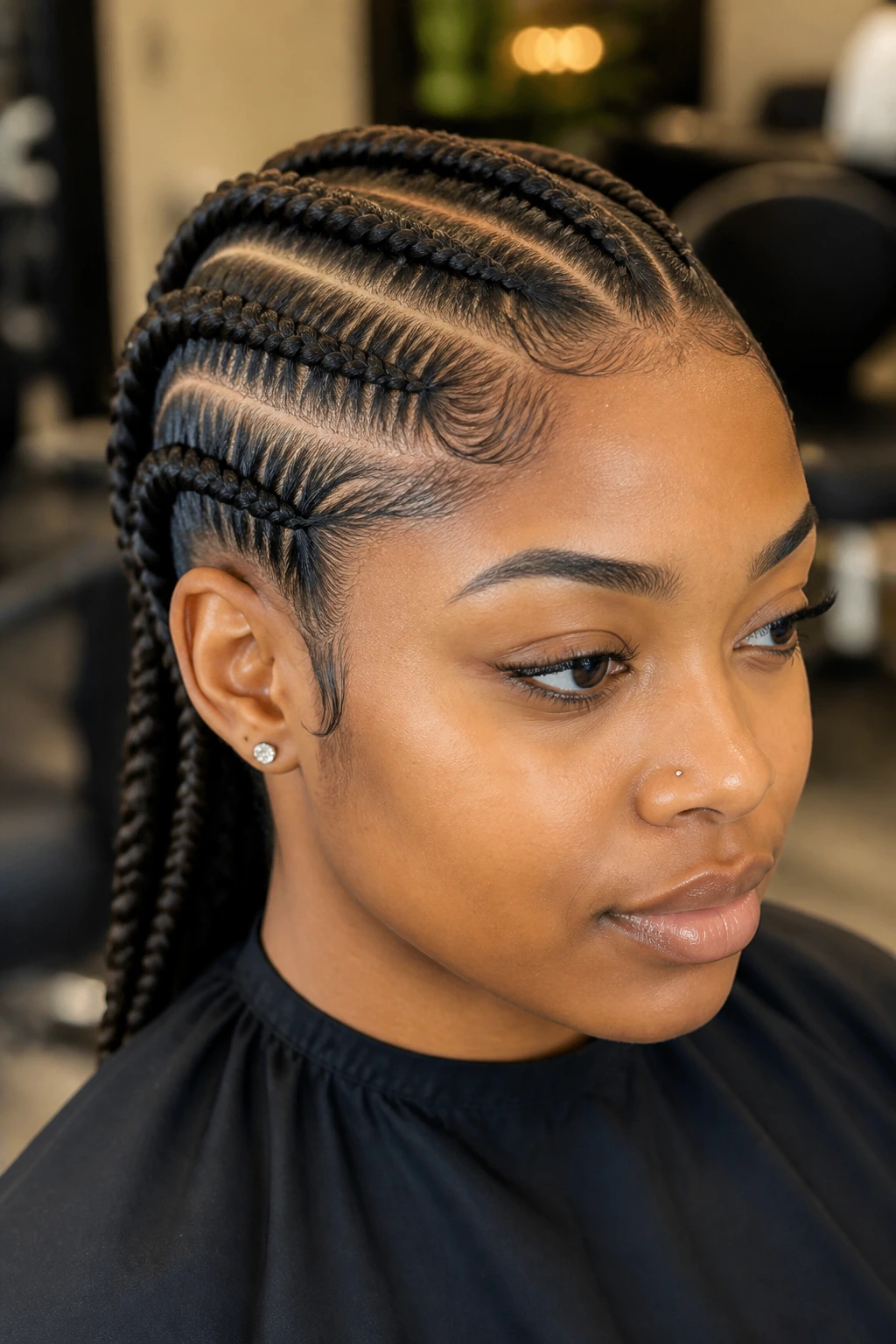
Stitch braids are a technique rather than a style, but the result is a very specific, defined look. The stylist uses their pinky finger and nail to “stitch” the hair into sections, creating perfectly parallel, horizontal lines across the scalp. It creates an incredibly neat, professional appearance.
Why They Last
Because the sections are so precisely created and tight, stitch braids stay neat longer than standard cornrows. They don’t get that “fuzzy” look as quickly. This makes them a favorite for athletes or anyone who wants a style that will stay intact during physical activity. Just be sure to oil your scalp regularly; the braids are tight, so keeping the skin underneath hydrated is crucial to preventing itching.
14. Halo Braid
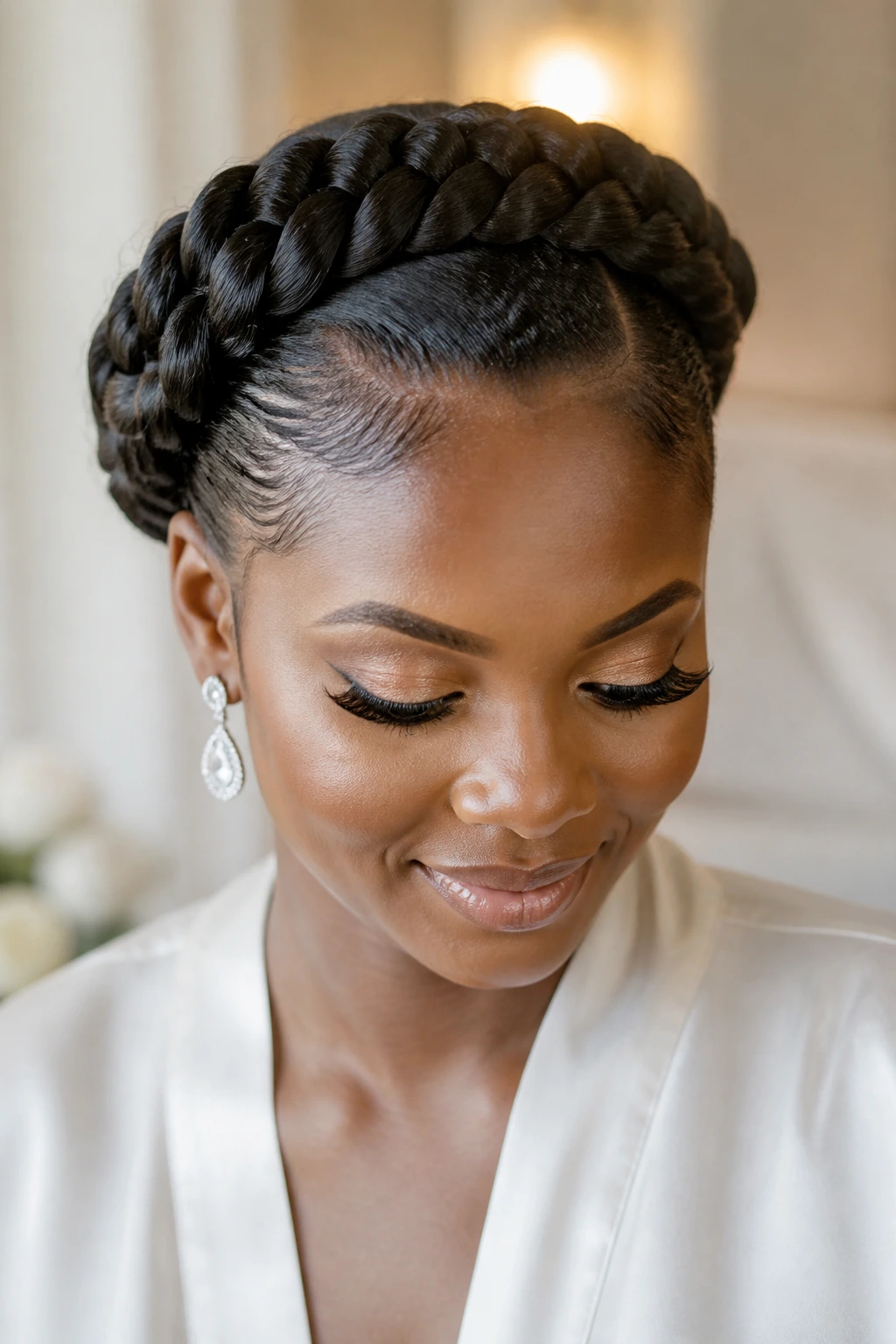
The halo braid is a crown-like style where one or two large braids are wrapped around the head. It is elegant, timeless, and keeps the hair completely off your face and neck. You can do this with your own hair if it is long enough, or with added extensions for thickness and length.
Best for Occasions
This is a go-to style for weddings, galas, or formal events. It gives a regal, soft vibe. To elevate it, tuck the ends of the braid underneath the starting point so the seam is invisible. You can add small floral pins or pearls if you want to dress it up. It is a very safe style for your natural hair because there is minimal tension involved.
15. Ghana Braids
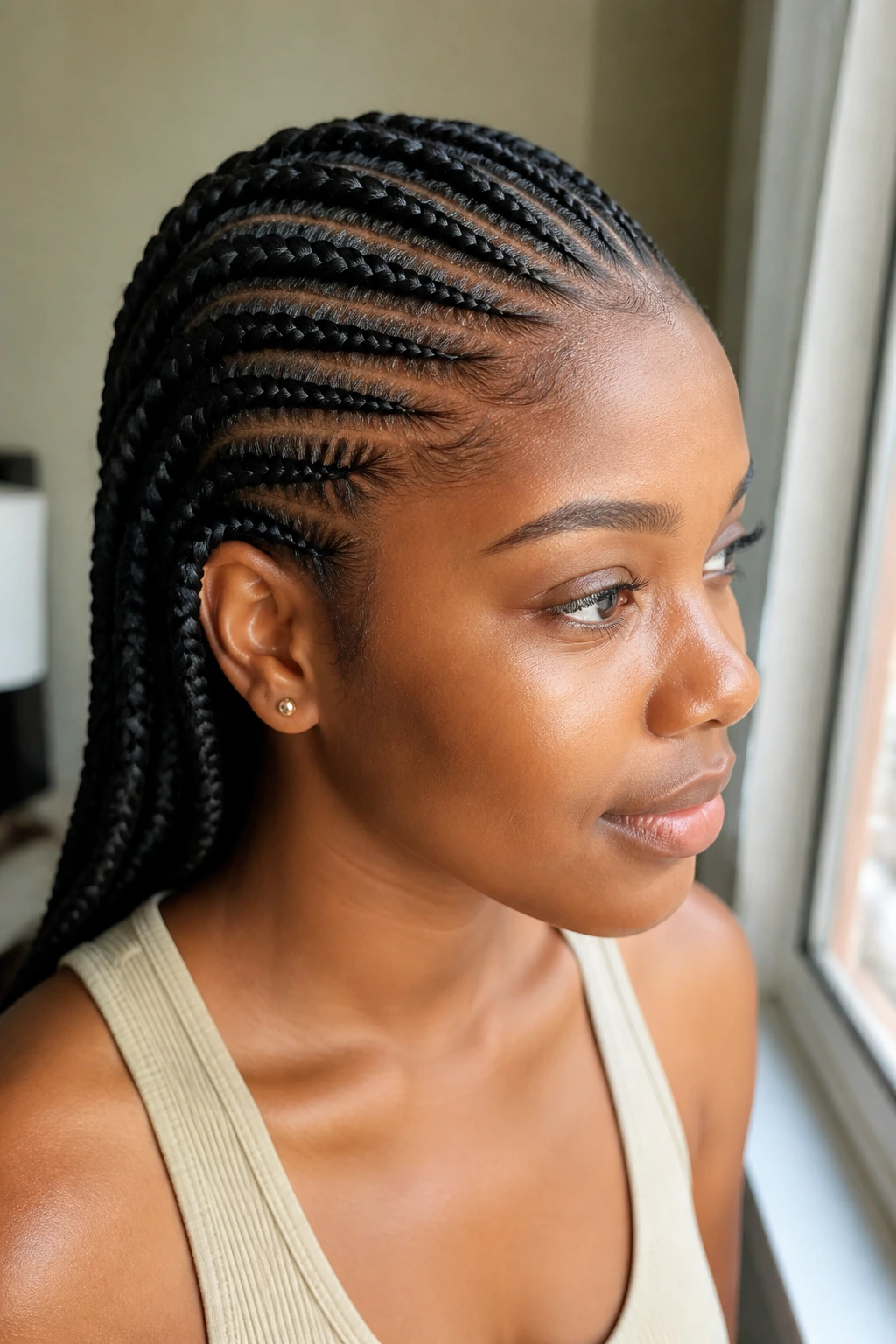
Ghana braids are a variation of cornrows that start thin at the hairline and get progressively thicker as the braid moves toward the back. The stylist adds more hair as they go, creating a gradient effect. This creates a very natural-looking braid that mimics the appearance of a larger, fuller head of hair.
The Visual Effect
The beauty of Ghana braids is the taper. Because they start thin, they don’t look bulky at your forehead, which is often a complaint with regular cornrows. This makes them much more flattering for people with smaller foreheads. They are also incredibly easy to style—you can pull them into a bun or a low ponytail without any stiff resistance.
16. Butterfly Braids
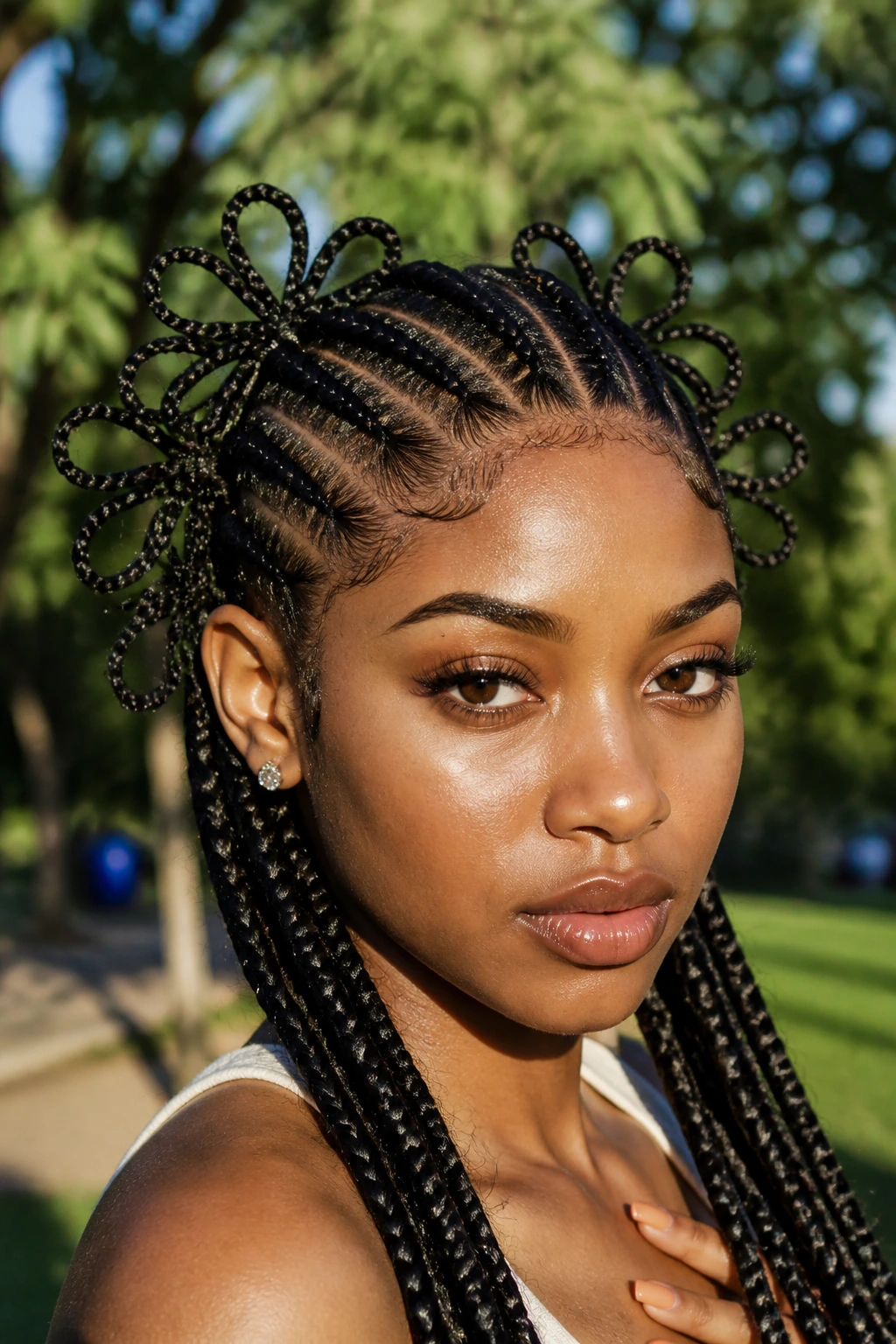
Butterfly braids are essentially large cornrows that are “distressed.” The stylist pulls small loops of hair out from the braid while braiding, creating a winged, fluttery appearance. It is a very artistic, textured style that has a distinct bohemian flair.
Managing the Loops
The loops are delicate. If you catch them on jewelry or rough fabric, they can pull out or frizz up. This style is best for people who don’t have to deal with a lot of heavy outerwear or busy daily routines. If you work in an environment where you are constantly touching your hair, the loops might lose their shape fairly quickly.
17. Bantu Knots with Braided Base
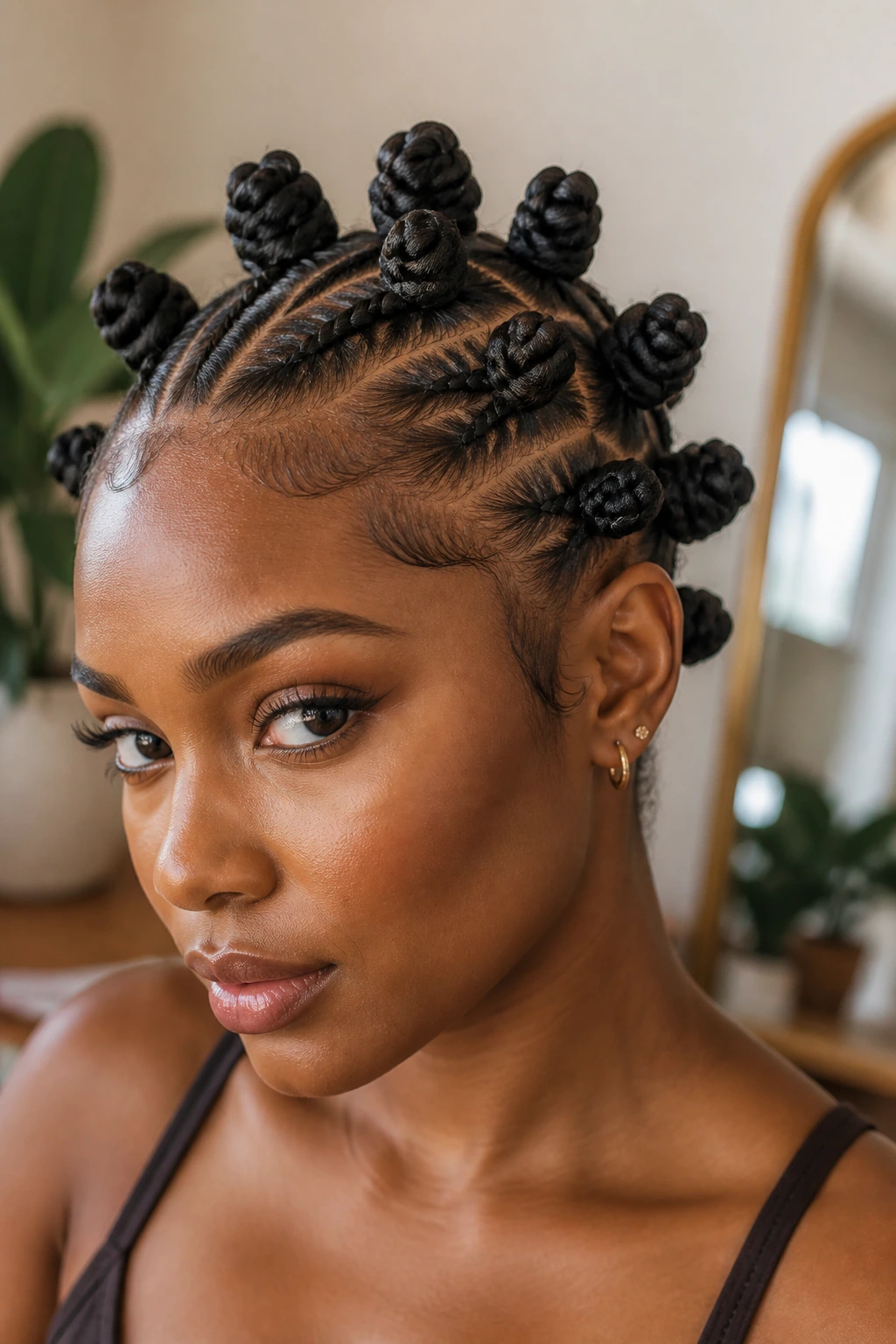
Bantu knots are a classic African hairstyle. Adding a braided base—where the hair is cornrowed back to the point where the knot is formed—gives it a modern, architectural twist. It is a fantastic way to protect the ends of your hair while keeping the crown of your head clear.
Creating the Shape
You can make the knots as large or as small as you want. Small, numerous knots create a dramatic, textured look, while fewer, larger knots feel more minimalist. The key to the base is the cornrow direction. Make sure the braids are feeding directly into the knot so there is no awkward space between the braid and the twist.
18. French Curl Braids
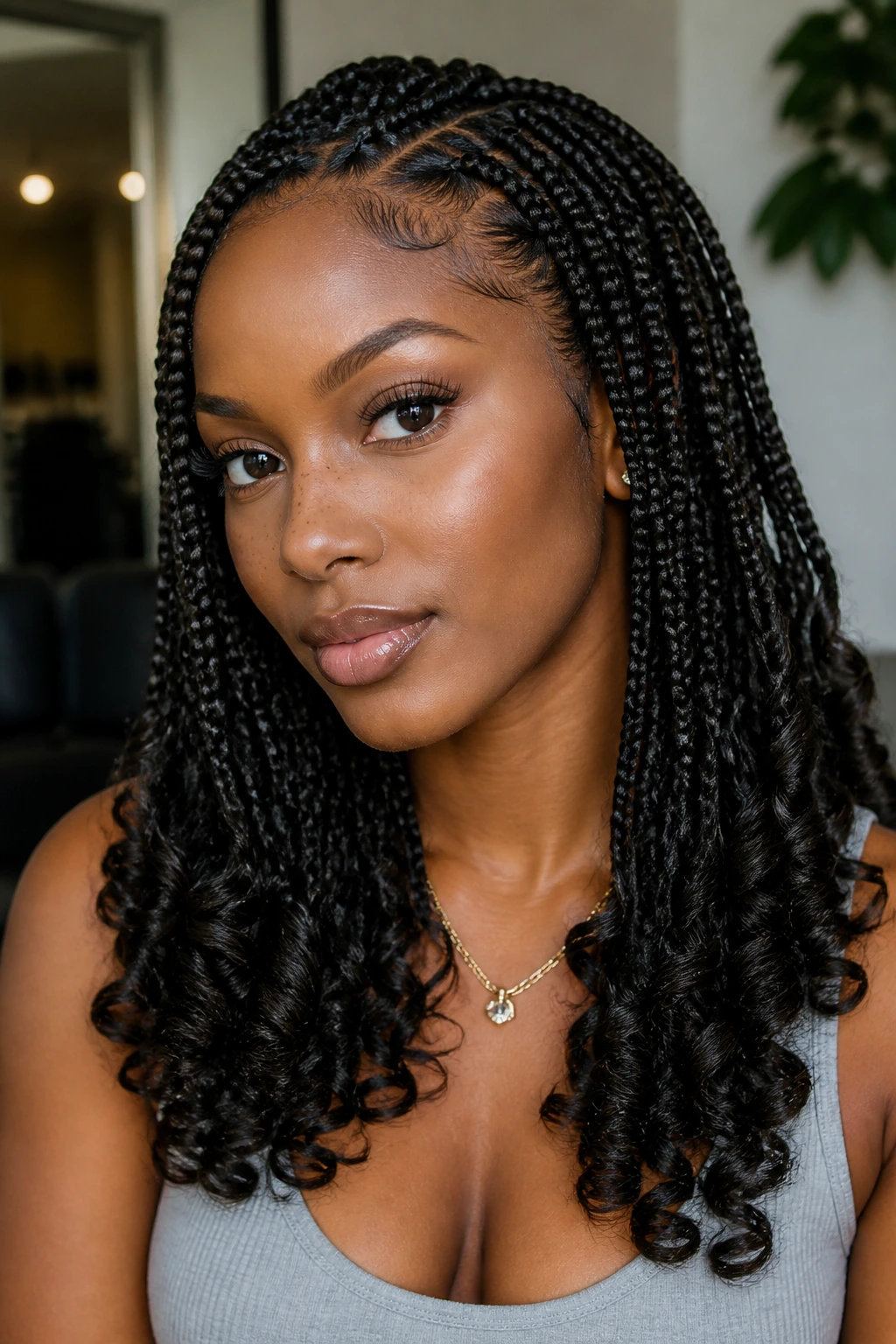
This is a variation of box braids where the ends of the extensions are left curled. Think of them as a hybrid between box braids and a sew-in. The braid section is sleek and tight, and then it transitions into a bouncy, voluminous curl.
The Curl Challenge
The curls are synthetic and require maintenance. They will tangle. To keep them looking fresh, you need to use a mousse on the ends every few days and separate the curls with your fingers. Do not use a brush, or you will ruin the curl pattern. If they get too frizzy, you can dip the ends in hot water to “reset” the curl, but be careful not to burn yourself.
19. Mohawk Braids
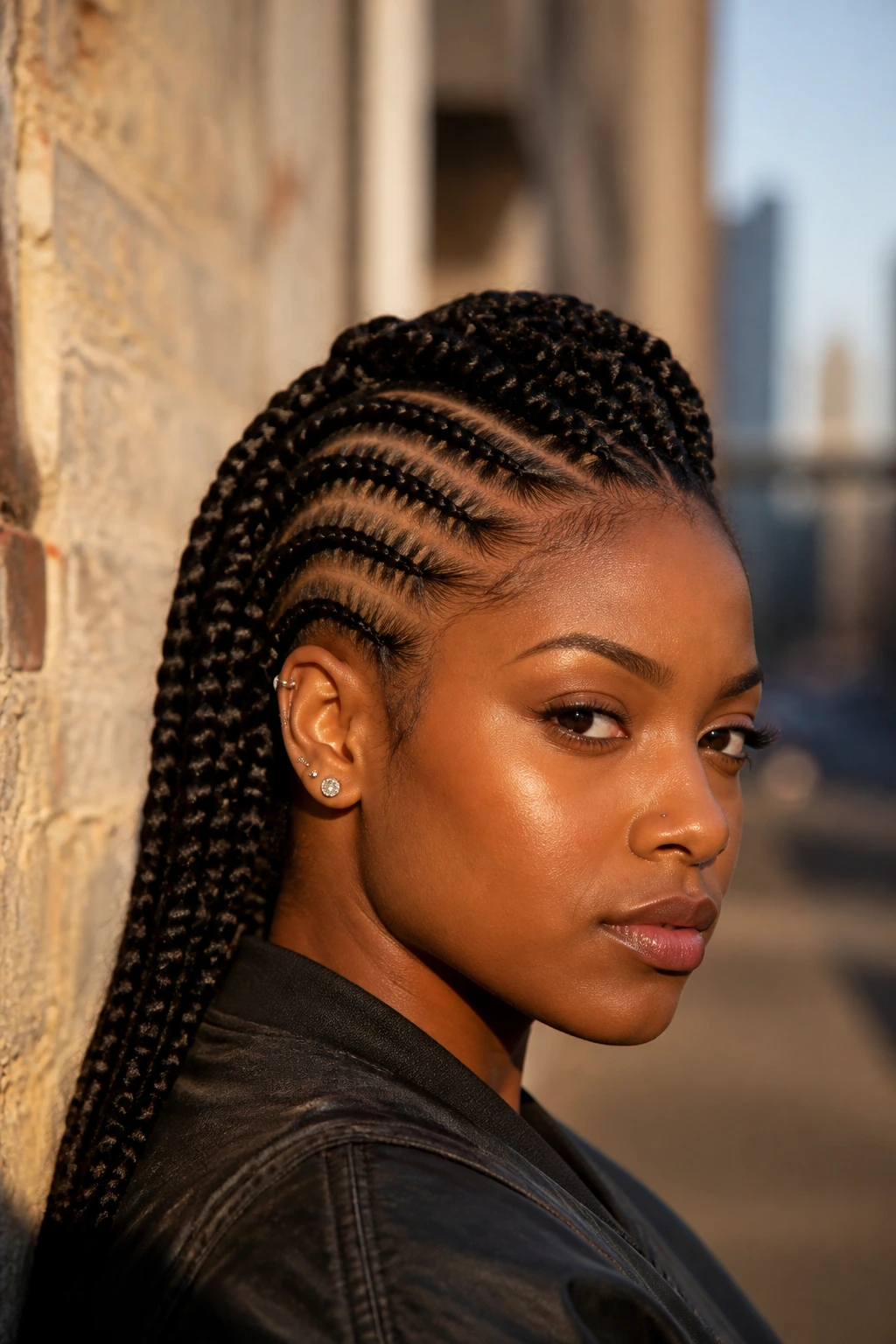
This is an edgy, bold style. The sides of the head are braided flat against the scalp, leading up to a “mohawk” of braids or twists in the center. You can do this with feed-in cornrows on the sides and jumbo box braids in the middle. It is a style that commands attention.
Customization Options
You can play with the width of the mohawk. A narrow mohawk feels more punk and dramatic, while a wider section gives you more styling versatility. This style is great if you are considering cutting your hair short but aren’t quite ready to take the plunge—it gives you that shaved-side silhouette without the commitment.
20. Jumbo Cornrows with Accessories
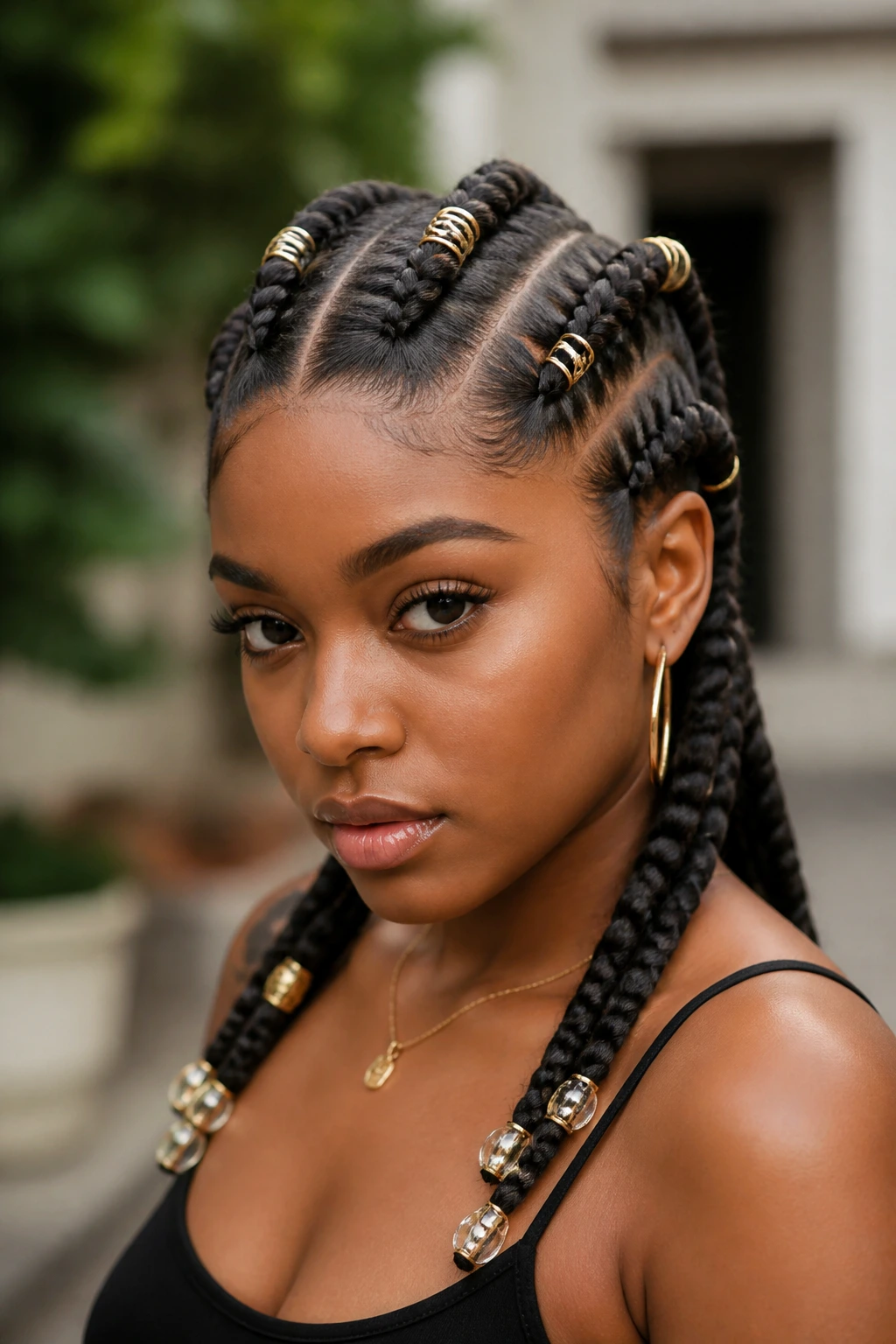
Sometimes simple is best. Four or five massive, straight-back cornrows are the definition of cool. The key here is the accessories. Add large gold rings, clear beads, or even gold string interwoven through the braid.
The “Less Is More” Rule
With jumbo cornrows, the parting is everything. Make sure the parts are razor-straight. Because the braids are so big, a crooked part is extremely noticeable. Use a mirror to check the back of your head. If you are doing this yourself, use a three-way mirror setup to ensure the lines are crisp.
21. Invisible Locs
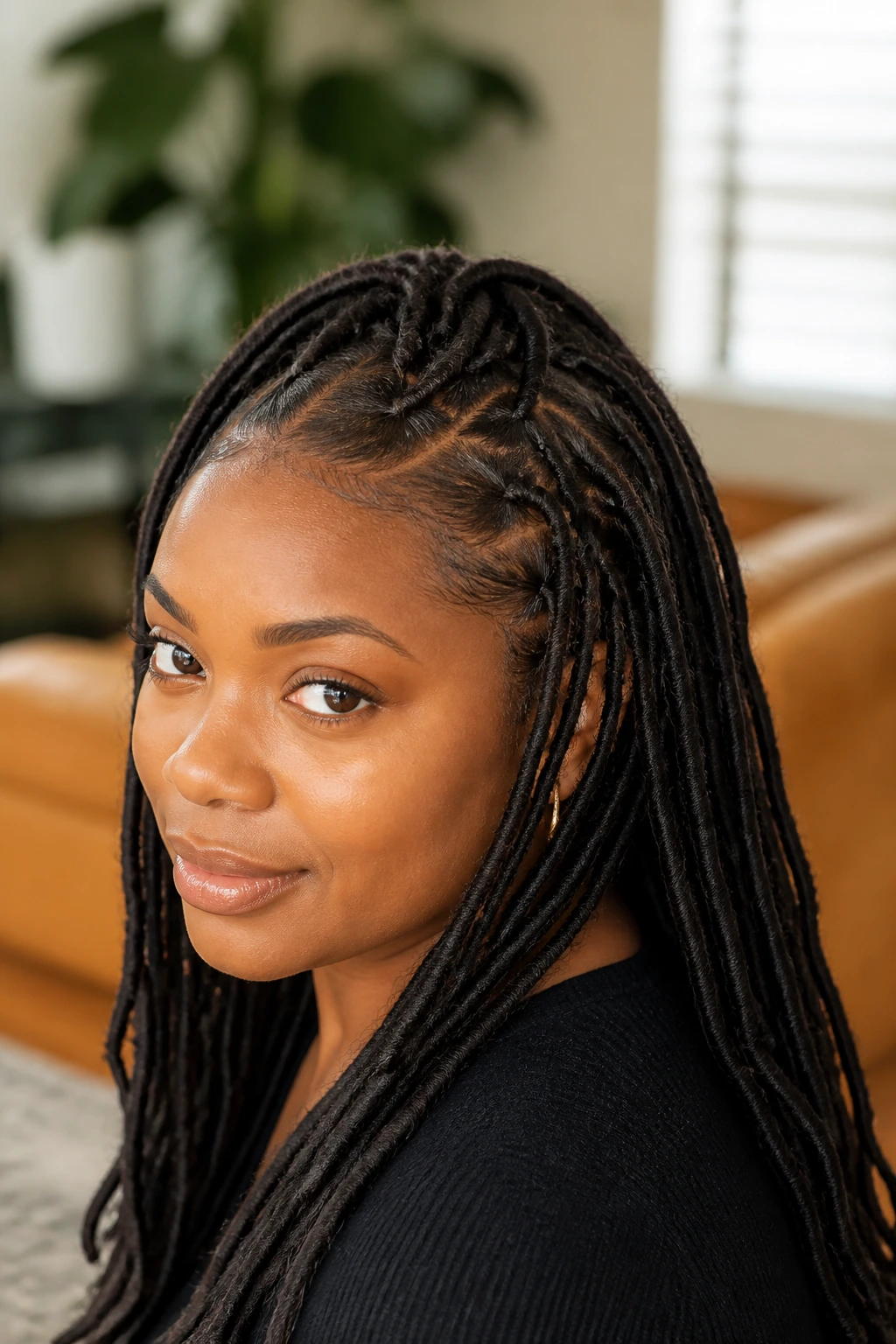
Invisible locs look like mature, natural locs, but they are created using a twist-and-wrap method. The “invisible” part refers to the root, where the extension is blended so seamlessly with your hair that you cannot see where the braid ends and the loc begins.
The Realistic Look
These are excellent if you are thinking about loc-ing your hair but want to test the look first. They have a nice, organic texture that isn’t too perfect. They are generally lightweight, but because of the wrapping technique, they can be a bit more expensive to install due to the labor involved.
22. Half-Up Half-Down Braids
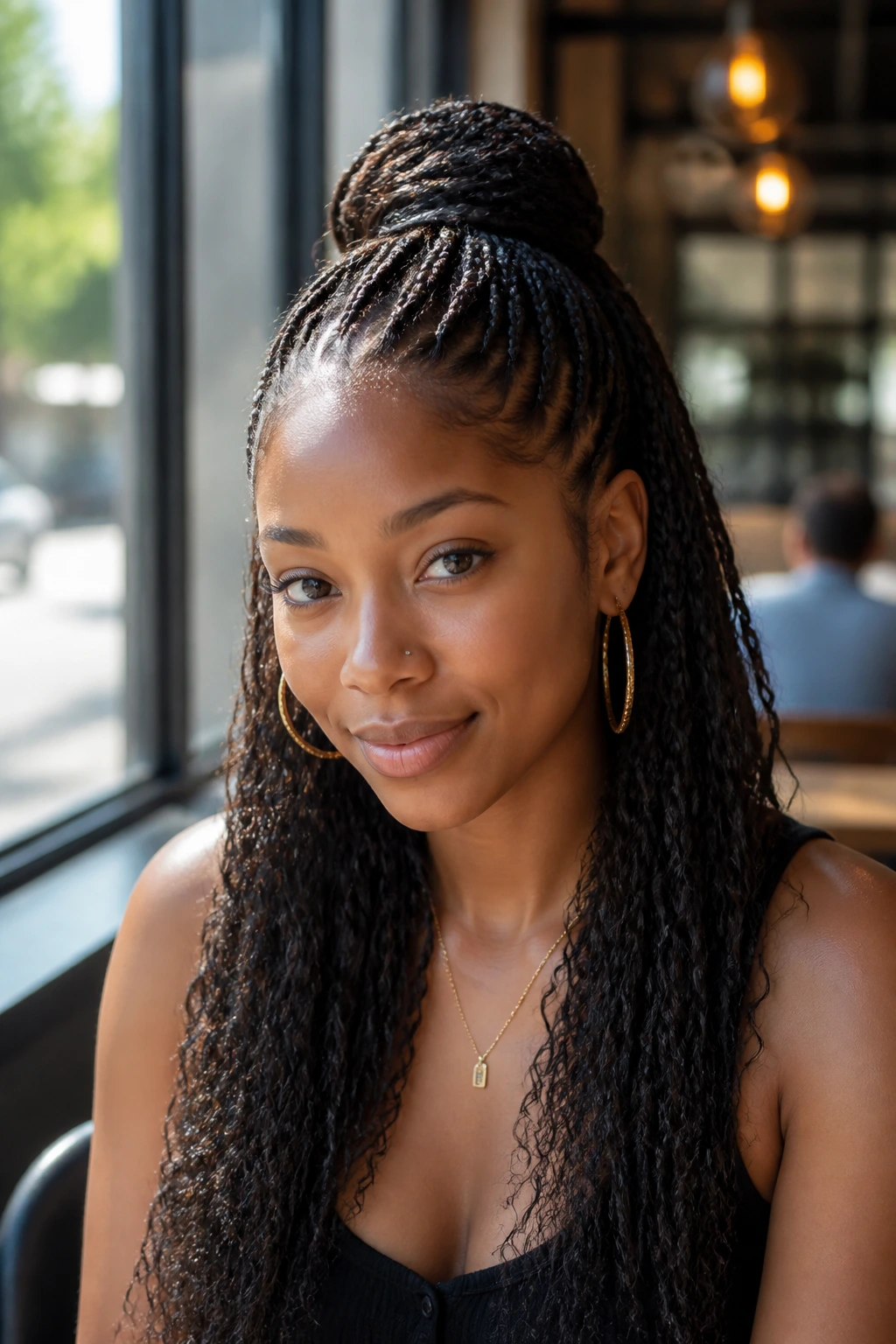
This style combines the security of braids with the freedom of a loose style. You braid the top half of your hair—either into a bun or a ponytail—and leave the bottom half flowing. It is versatile and works for both professional settings and casual weekends.
Balancing the Weight
The trick is ensuring the top section doesn’t pull too hard on your hairline. If you are using heavy extensions for the bottom half, keep the top section smaller. You can use your own natural hair for the top knot to lighten the tension and use extensions only for the bottom length.
23. Braided Bob
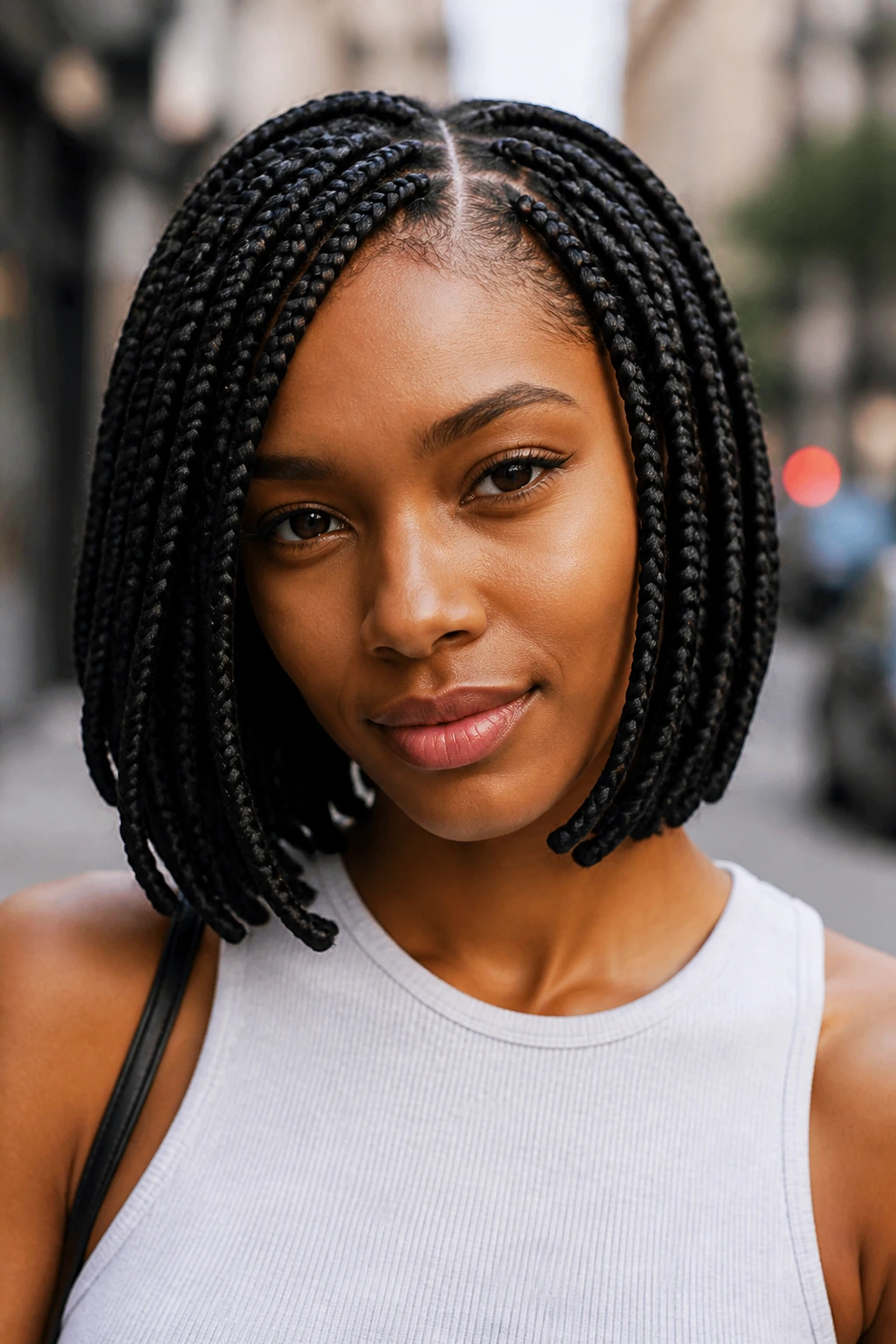
A braided bob is exactly what it sounds like: box braids cut at chin or shoulder length. It is chic, youthful, and much lighter than long braids. It is also a fantastic way to give your natural hair a break from the weight of long extensions.
Maintenance and Growth
Bobs are great for hair health because they don’t drag on your shoulders or clothes. They don’t have the same “swing” as long braids, so you don’t have to worry about them getting caught in zippers or bags. When the ends start to look worn, they are easy to trim yourself—just make sure you use sharp hair shears, not kitchen scissors.
24. Crisscross Cornrows
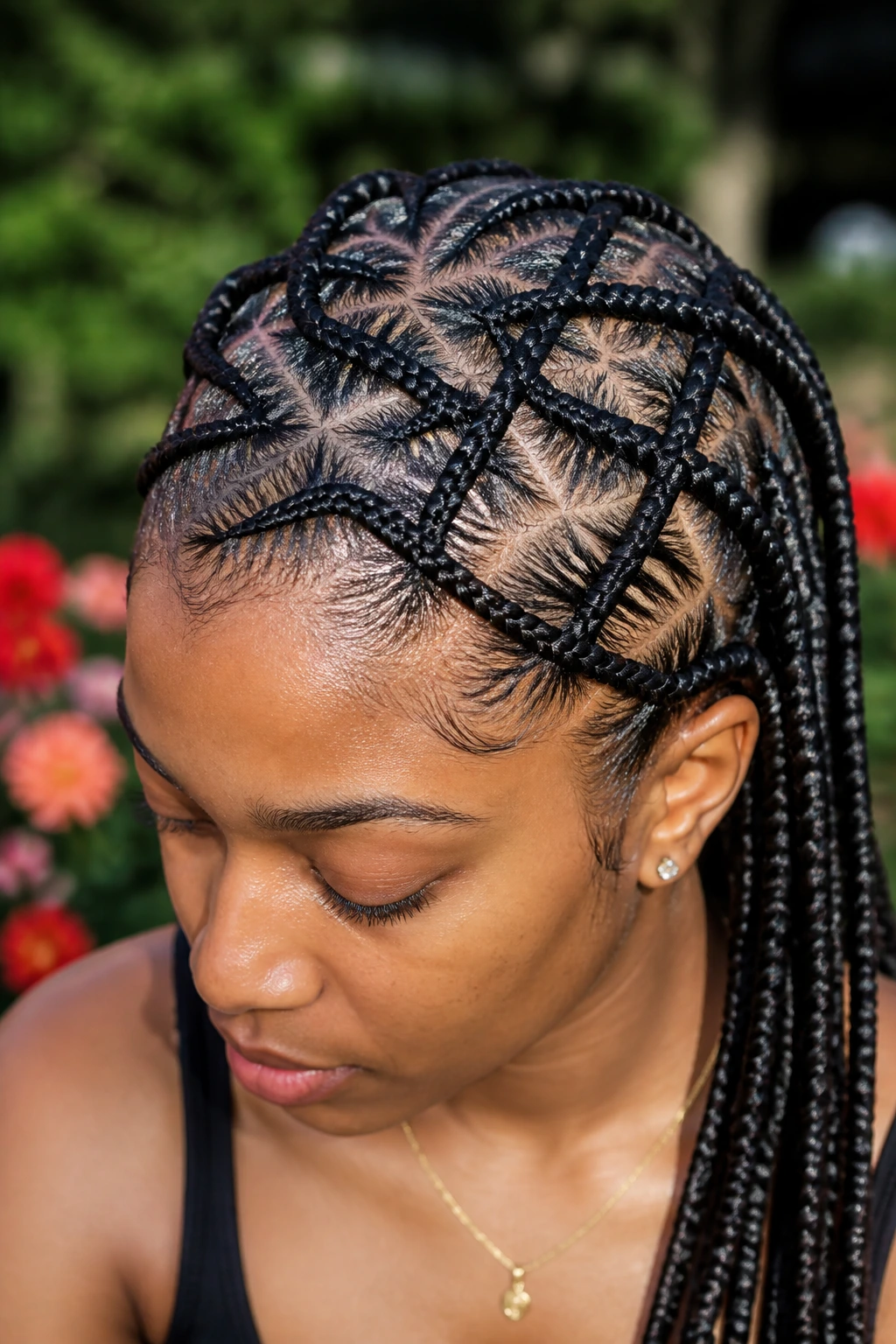
This is all about the pattern on the scalp. The braids cross over each other, creating a diamond or lattice effect. It is a complex design, but the result is a beautiful, intricate top-of-the-head pattern that really highlights the artistry of the stylist.
The Planning Stage
This style requires a map. You cannot just wing this. Discuss the pattern with your stylist beforehand. The most successful crisscross styles have a central focal point where the braids intersect. It creates a striking visual that makes the hair look like an accessory in itself.
25. Goddess Ponytail
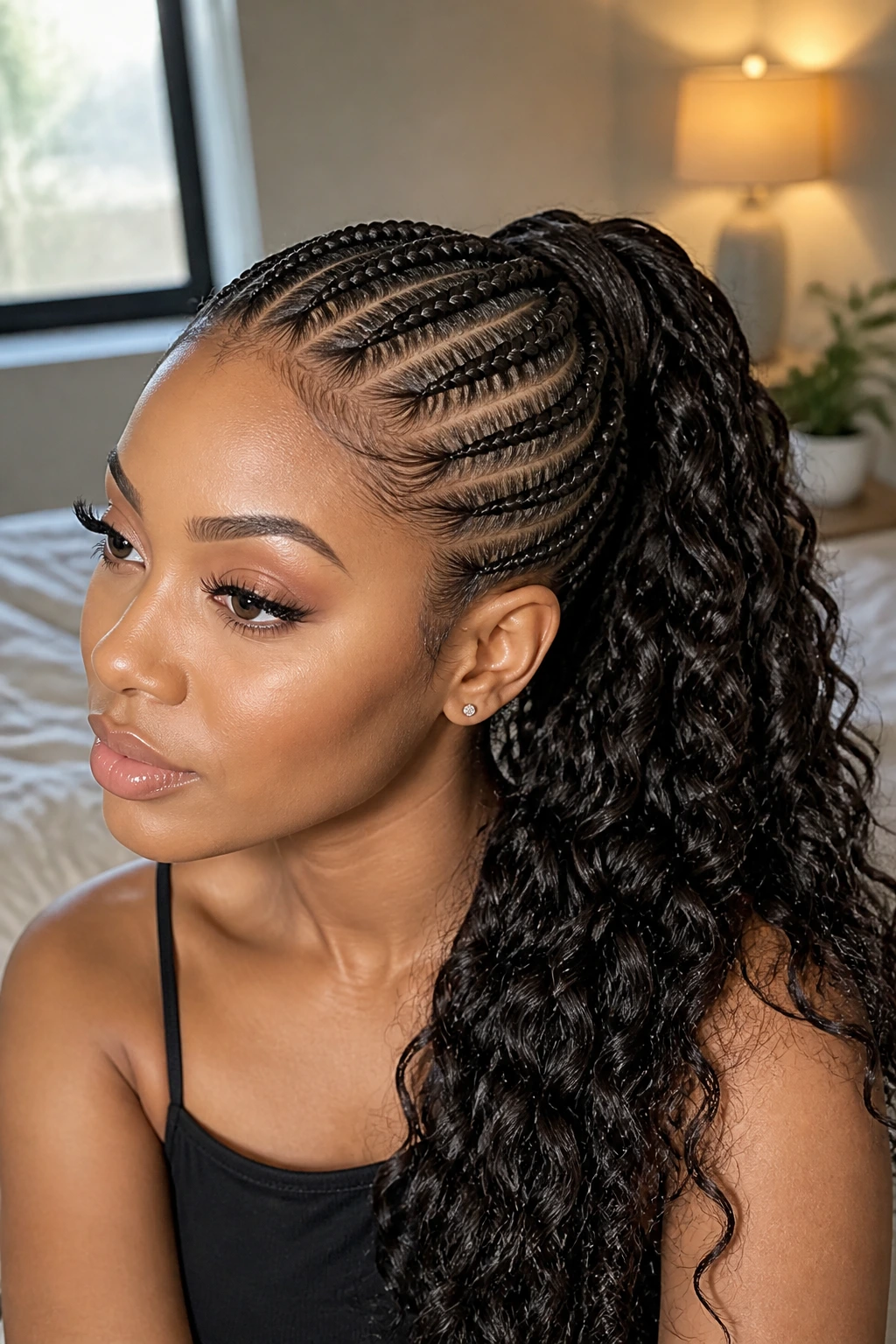
A goddess ponytail features a sleek, braided base that leads into a long, curly ponytail. The contrast between the tight, cornrowed scalp and the loose, flowing curls of the ponytail is incredibly flattering.
Managing the Curls
The ponytail hair is usually added using a crochet method or wrapped around the base. To keep the curls looking good, avoid wrapping the ponytail too tight, which can crush the curl pattern. If the curls start to droop, you can use a small amount of curling cream on your hands to scrunch them back to life.
26. Fishtail Braided Updo
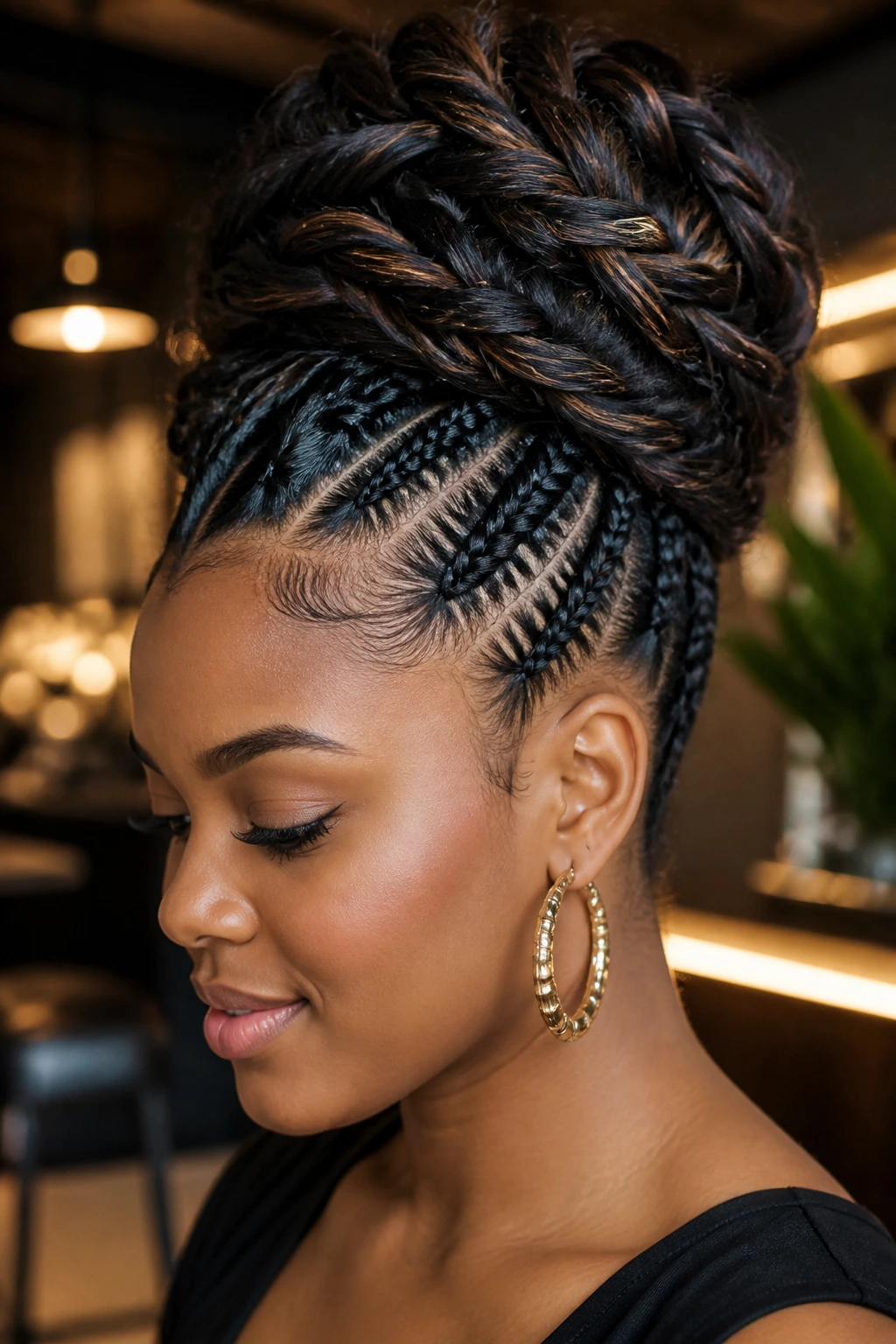
While this is often done with loose hair, doing it with braided hair creates a massive, voluminous look. A fishtail braid creates a tight, intricate pattern that looks complex and refined. Pulling the braid apart once it is finished—”pancaking” it—makes it look twice as thick.
Achieving Volume
Do not be afraid to pull on the edges of the fishtail. It is meant to be slightly undone and messy. If you pull too hard, the braid will unravel, so tug gently from the outer edges. This is a perfect style for when you want to look polished but have an event to go to directly from work.
27. Marley Twists
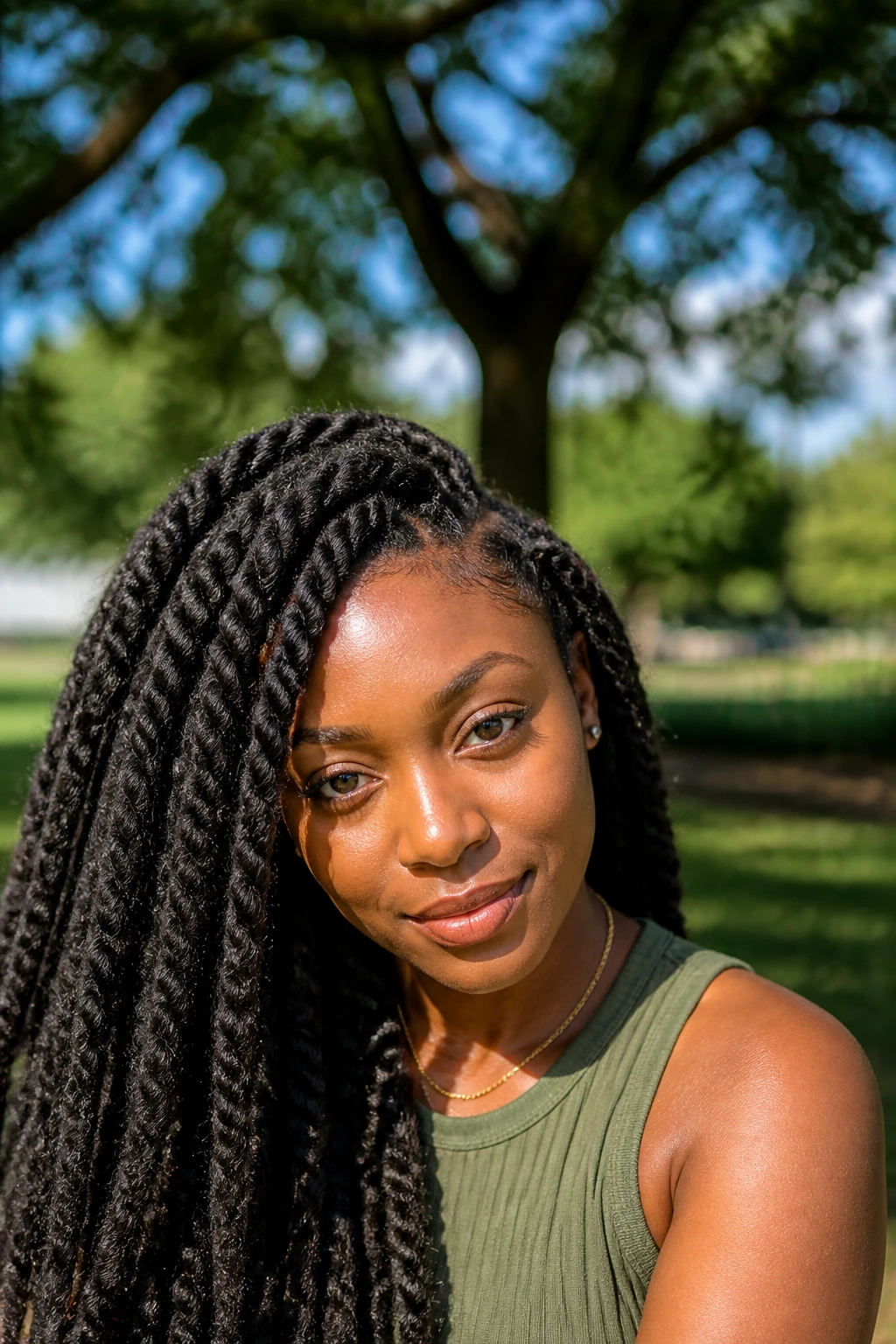
Marley twists are made with a rougher, kinky-textured synthetic hair that mimics natural 4C hair. They are very popular for the “naturalista” look. They have a matte, dull finish that looks like real, coiled hair.
The Texture Perk
Because the hair is textured, these twists are less prone to unraveling than smoother twists. They grip the hair better. They are also incredibly lightweight. If you hate the “plastic” shine of some synthetic hair, Marley hair is your best friend. It blends beautifully with natural textures.
28. Zig-Zag Parting Braids
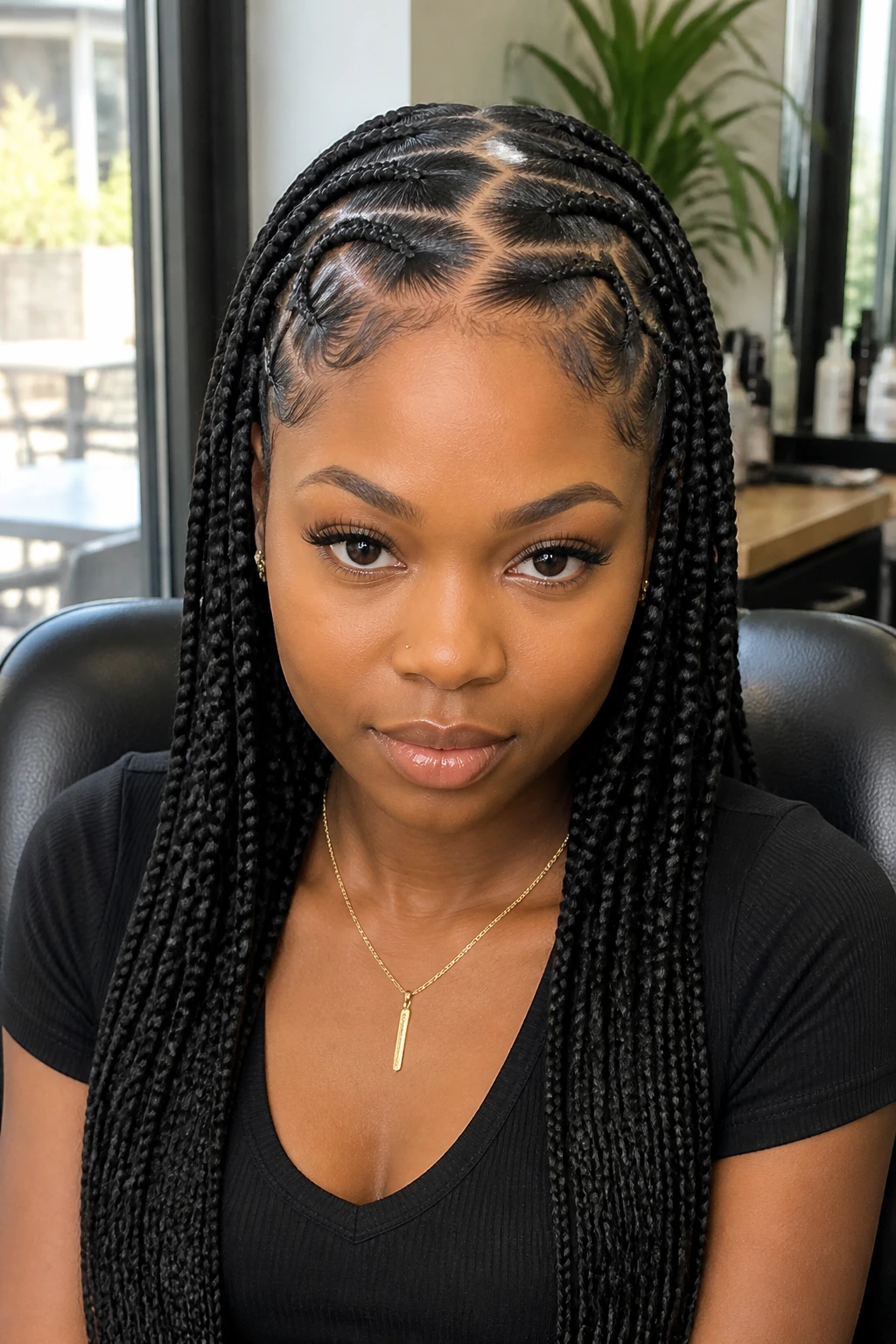
The parts are the star here. Instead of straight lines, the braids are separated by sharp, zig-zagging parts. It is a bold, geometric look that brings a lot of energy to the style. You can do this with box braids or cornrows.
Precision Is Key
This style is very hard to do on yourself. The parting needs to be exact to get that clean zig-zag effect. If the angles are off, it just looks messy. Go to a stylist who specializes in intricate parting to get the full effect of this design. It looks particularly good with shorter, bob-length braids.
29. Heart-Shaped Braids
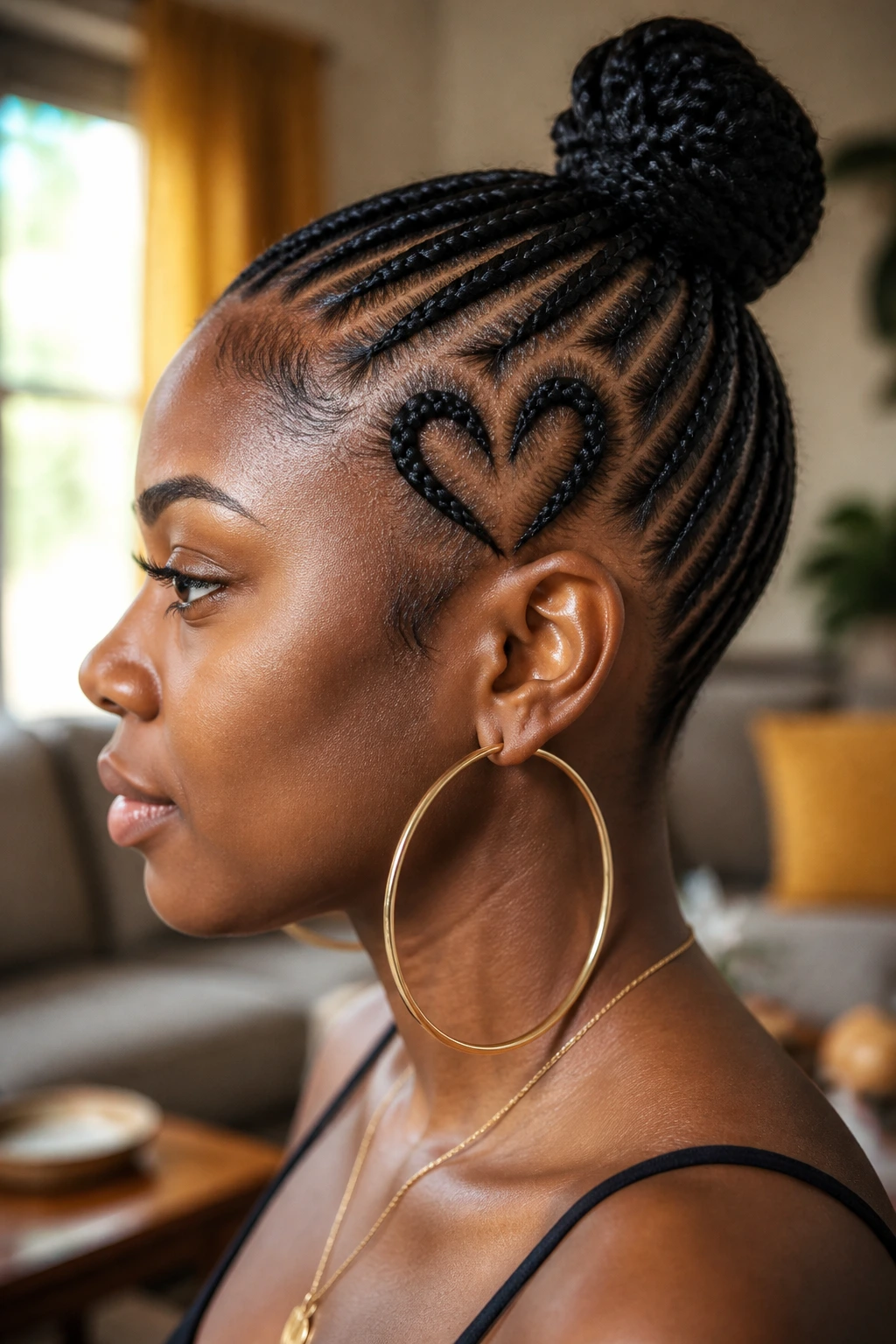
This is a fun, creative style where the cornrows are braided into the shape of a heart on one side of the head. It is popular for children and adults who want a playful, unique look. It is often paired with a ponytail or buns.
Placement Matters
The heart shape should be placed where it is visible—usually on the side or the back of the head. If it is too far down, it will be hidden by your neck or collar. It is a great way to add a bit of whimsy to a standard cornrow style without changing the integrity of the base.
30. Beaded Braids
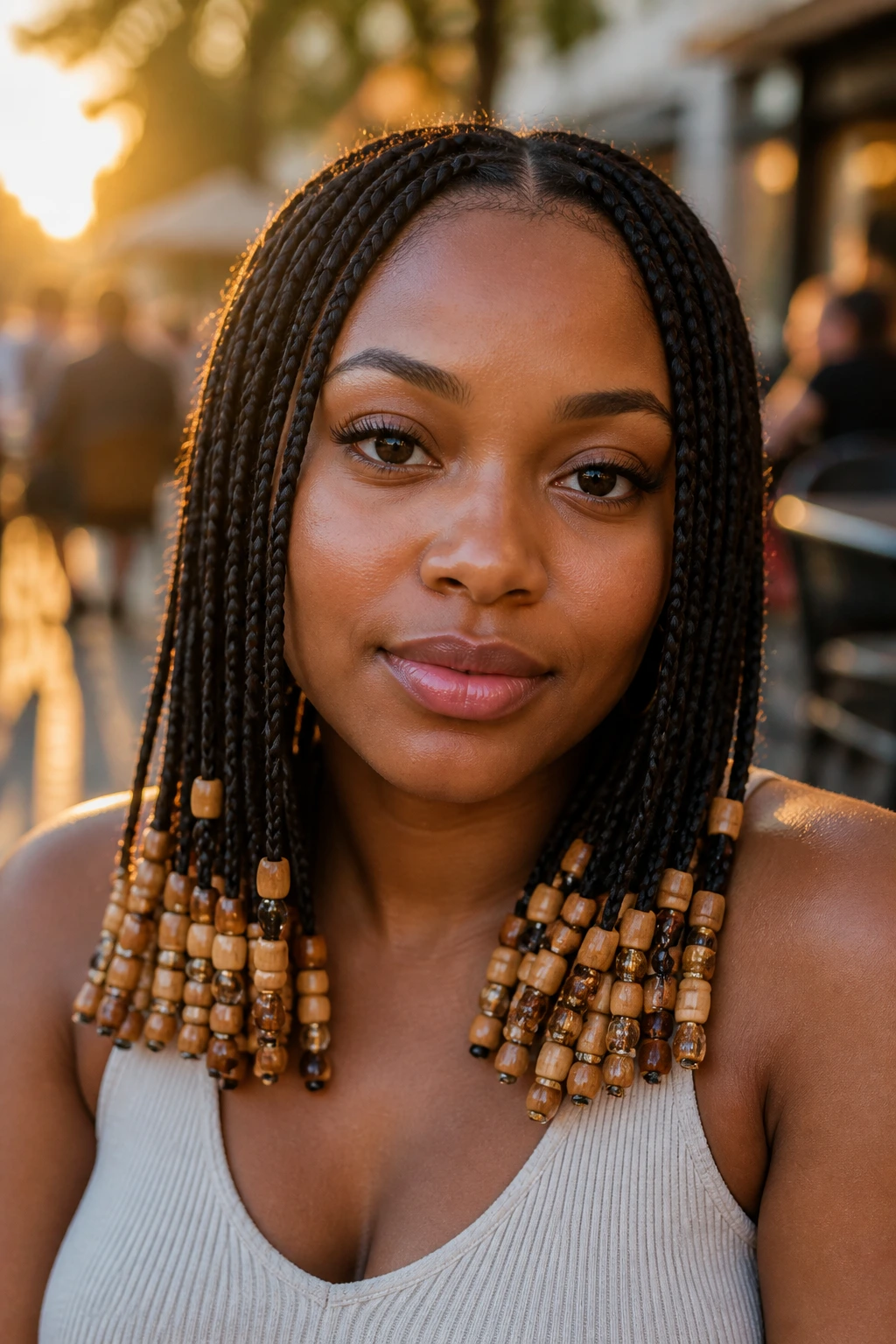
Beads are not just for children. They are a powerful, decorative tool. Adding clear, wood, or metallic beads to the ends of any braided style—box braids, cornrows, or micro braids—instantly elevates the look.
The Sound and Movement
There is a specific joy in the sound of beads clicking together when you turn your head. It is part of the experience. Just be mindful of the weight. A few beads are fine, but a whole head of heavy glass beads can cause neck strain. Opt for lighter plastic or wooden beads if you want to cover every single end.
The Bottom Line
There is no “perfect” braid style that works for everyone. The best choice is the one that respects your hair’s limits and fits your lifestyle. If you are active, stick to styles that aren’t too heavy or prone to tangling. If you are prone to traction alopecia, always prioritize knotless techniques and looser installations. Above all, do not treat your protective style as a “set it and forget it” solution. Your scalp still needs to breathe, and your natural hair underneath still needs moisture. Whether you choose a classic jumbo box braid or an intricate tribal pattern, the real secret to great hair is how you care for it while it is hidden away. Take your time, choose a skilled stylist, and enjoy the confidence that comes with a fresh, intentional look.
