



Medium length layered haircuts for wavy hair work best when they respect the wave instead of trying to sand it down. Cut the layers in the wrong place and you get puffiness at the sides, stringy ends, or that awkward triangle shape nobody asked for. Put the weight in the right spots, though, and the same hair suddenly has bend, swing, and a shape that looks like it belongs to your face.
Shoulder-grazing to collarbone length is the sweet spot for a lot of wavy textures. It’s long enough to keep the wave clumping in a flattering way, but short enough that the hair doesn’t drag itself flat the way longer lengths sometimes do. And there’s a small but important detail most people miss: a good wavy cut usually needs the perimeter, the layers, and the face-framing pieces to do different jobs. One line. Three jobs.
I’ve always liked layered cuts on waves more than on straight hair, honestly. Straight hair can hide a sloppy layer line for a while. Wavy hair exposes everything. If the layers are too abrupt, you see it. If they’re too timid, you get a heavy block. The best medium cuts for waves land somewhere in the middle, where the hair still looks full but moves when you turn your head.
1. Collarbone Shag With Curtain Bangs

A collarbone shag is the cut I reach for when someone wants movement without losing length. The layers start high enough to wake up the wave pattern, but not so high that the whole shape turns fuzzy. Curtain bangs help because they split the front of the face and give the cut a soft, lived-in feel instead of a hard edge.
Why It Works for Waves
The magic here is in the balance. Shorter pieces around the crown create lift, while the longer length at the shoulders keeps the style from collapsing into a puffball. That matters with wavy hair, because waves need a little room to bend.
Curtain bangs are forgiving, which is why I like them here. They can sit a bit longer, brush to the side, or fall open in the middle when you air-dry. If you hate the look of a heavy fringe, this is the easier way in.
- Best for medium to thick waves that want shape
- Layers often begin around the cheekbone or lip line
- The longest pieces usually skim the collarbone
- Works well with a side or center part
Tip: Ask for the bangs to be cut longer than you think, then adjust from there. Wavy fringe shrinks up more than straight hair, and there’s no elegant fix for bangs that landed too short.
2. Butterfly Layers on a Wavy Lob

If your waves go flat at the roots but stay full at the ends, the butterfly cut gives you a cleaner answer than a blunt lob ever will. The top layers are shorter and feathered, almost like a built-in blowout frame, while the bottom length stays intact. It looks airy, not choppy.
That’s the appeal. You get height at the crown without sacrificing the swing of the ends. On medium-length wavy hair, that matters because too much uniform layering can make the bottom half look thin and vague. The butterfly shape keeps the outline interesting.
This cut is a smart fit for people who like styling with a round brush, a diffuser, or even a quick bend through the front pieces. The shorter top layer gives you somewhere to put volume, which means you spend less time trying to fake it with product. And if you let it air-dry, the pieces still fall in a nice frame instead of puffing out all over the place.
3. Rounded Layers With a Side Part
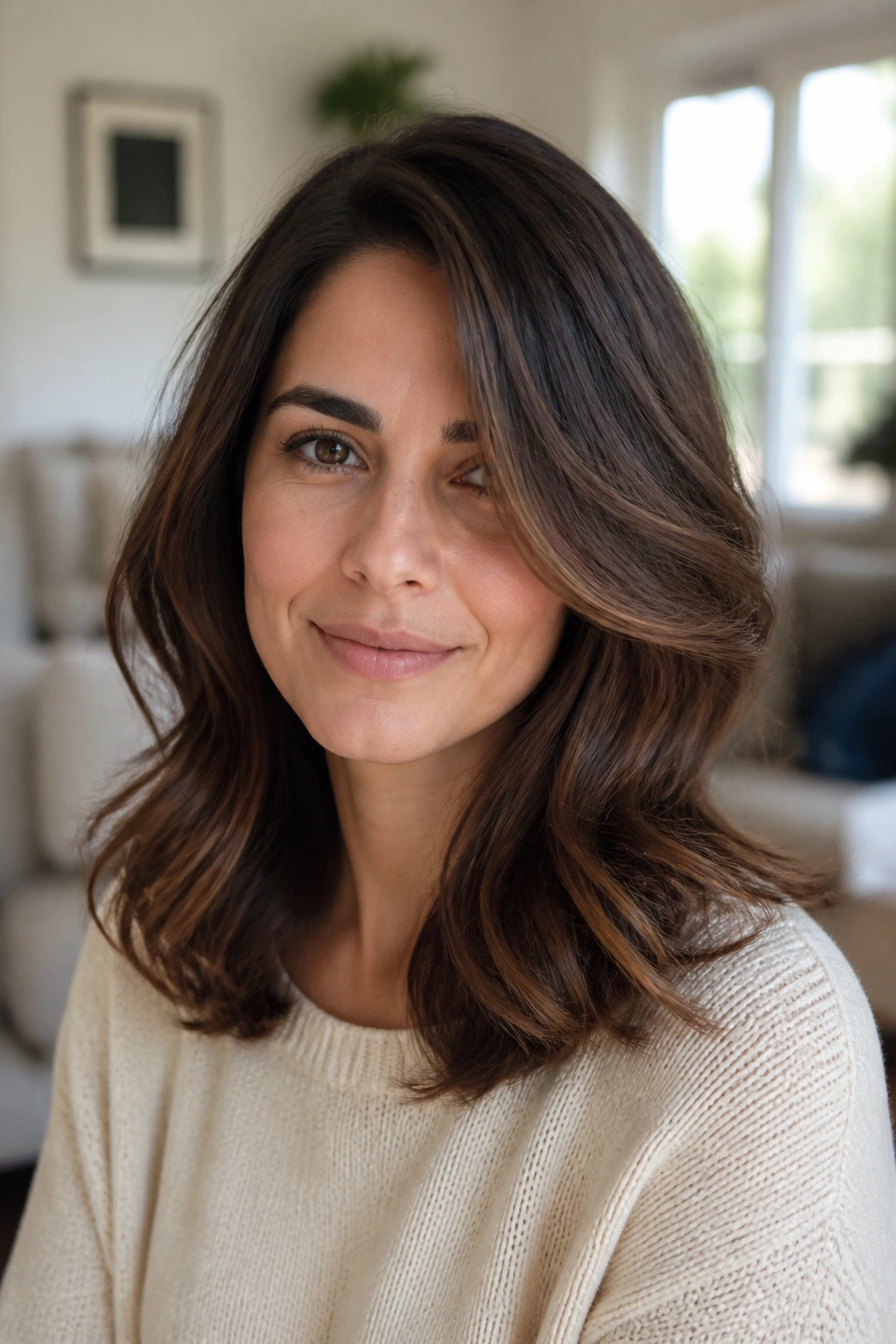
Why do some medium cuts make wavy hair look wider instead of prettier? Because the layers are cut evenly all around, and the wave pushes out at the sides. A rounded layer pattern avoids that problem by letting the shape taper gently instead of expanding like a box.
The side part helps, too. It shifts the volume off center and gives the hair a bit of movement near the face. That one small part change can make a layered cut look softer and more deliberate.
How to Wear It
A side part about 1 to 2 inches off center is usually enough. You do not need a dramatic sweep unless your face shape really wants it.
- Tuck the heavier side behind one ear to show the layer pattern
- Use a light cream through the mids, not the roots
- Scrunch once and stop fussing with it
- Let the top keep a little lift instead of flattening it down
This cut is especially good if your waves are medium density and you like a shape that feels neat even when it dries a little imperfectly. It has polish, but it does not look stiff.
4. Razor-Cut Midi With Soft Ends

I’ve seen this cut rescue hair that felt like a shelf. Thick waves that sit at the shoulders can pile outward, and the lower edge starts to look blunt in the wrong way. A razor-cut midi softens all that by removing bulk in a way that scissors sometimes can’t mimic.
The result is feathered, not shredded. The ends look lighter, but the perimeter still has a visible line, which keeps the haircut from turning mushy. That’s the part people get wrong. A razor is a tool, not a personality trait.
What to Ask For
- Length landing about 1 to 2 inches below the collarbone
- Interior layers that break up bulk at the mid-lengths
- Soft, slightly feathered ends instead of a hard shelf
- Minimal thinning near the very ends if the hair is already fine
The best versions of this cut work on medium to coarse wave patterns. If your hair is fragile, over-processed, or already wispy at the bottom, a heavy razor pass can leave it looking see-through. No thanks.
5. Long Layers With Face-Framing Pieces
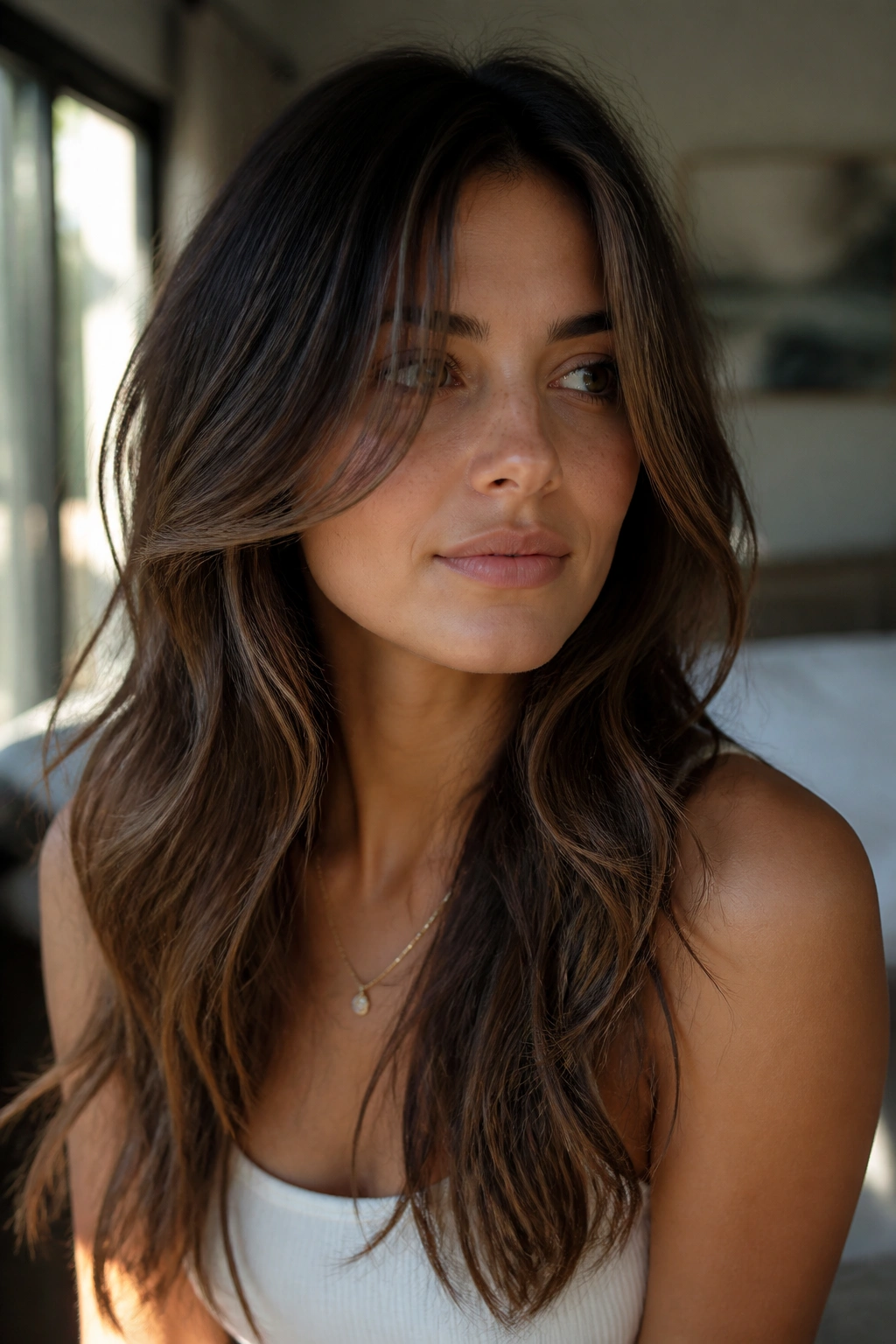
Some people want layers, but they do not want a haircut that screams for attention every morning. This is the quiet answer. Long layers with face-framing pieces keep most of the length intact, then add just enough shape around the cheeks, jaw, and collarbone to stop the hair from hanging there like a wet towel.
That restraint is the whole point. It’s one of the easiest medium-length layered haircuts for wavy hair to wear if you’re nervous about commitment. You can still pull it back. You can still tuck it. You can still grow it out without feeling trapped by the shape.
The face-framing pieces should be placed with care. Too short, and they become a constant styling chore. Too long, and they disappear into the rest of the hair. I like them when they start somewhere between the lip and chin, depending on how much the wave springs up.
The back should stay a little fuller than you might expect. That keeps the cut from looking thin at the perimeter, which is the mistake that turns so many wavy layers flat and sad.
6. U-Shaped Layered Lob

A blunt lob has its fans, but a U-shaped layered lob is kinder to waves. The outline dips slightly in the center and rises toward the sides, which gives the hair a softer fall and a less boxy finish. On wavy hair, that small change makes a big difference.
Unlike a straight-across cut, the U-shape lets the waves move without making the bottom line look heavy. The layers inside the shape lighten the middle, while the longer outer edges keep the cut anchored. It’s tidy. It’s easy. It doesn’t fight the texture.
This is one of the better choices for medium-density hair that needs a little control but not a dramatic transformation. Tell the stylist you want a gentle U, not a deep crescent. The difference matters more than people think, and if the U gets too pronounced, the hair can swing too much in the front.
It’s also a nice cut if you like wearing hair behind the ears. The front pieces still have enough length to stay soft instead of sticking out awkwardly.
7. Tousled Wolf-Cut Lite
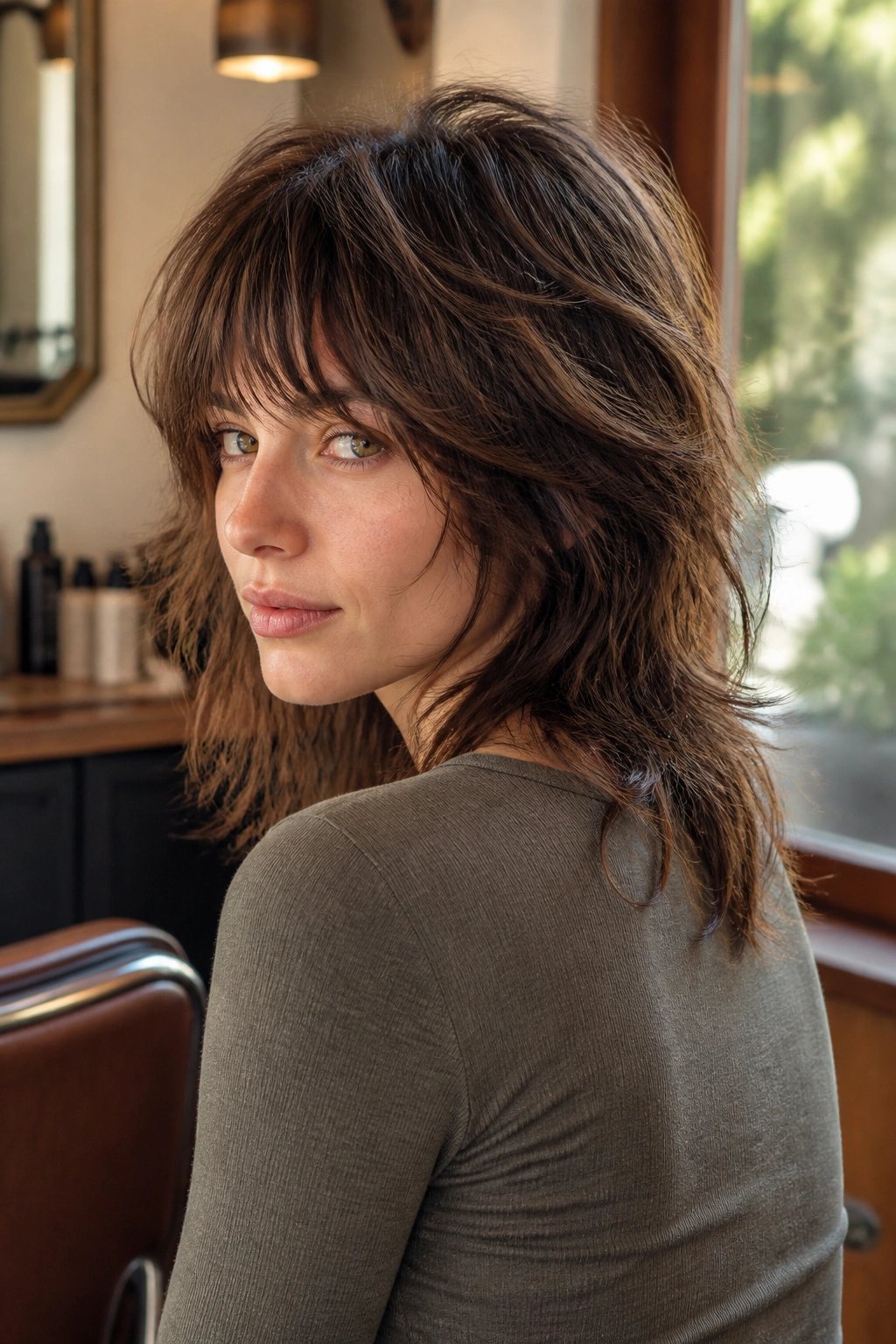
A full wolf cut can get wild fast. The lite version keeps the same spirit—shorter crown, softer sides, longer back—but tones down the extremes so it works in real life, not just on a mood board. For wavy hair, that’s a good trade.
The shape gives the crown some air and lets the lower layers hang loose. The trick is keeping the texture piecey, not fuzzy. Too much thinning near the top and you’ll spend the next six weeks trying to tame a halo of frizz.
What to Ask For at the Salon
- Shorter top layers, but not a shaved-in crown
- A gentle taper through the sides
- Enough length left in the back to keep a medium silhouette
- Texturizing concentrated in the mid-lengths, not the ends
This cut suits someone who likes an undone finish and does not mind a little attitude in the shape. If you want hair that looks polished with zero effort, skip it. If you like waves that move around your face and don’t behave too politely, it’s a good one.
8. Invisible Layers for Thick Waves
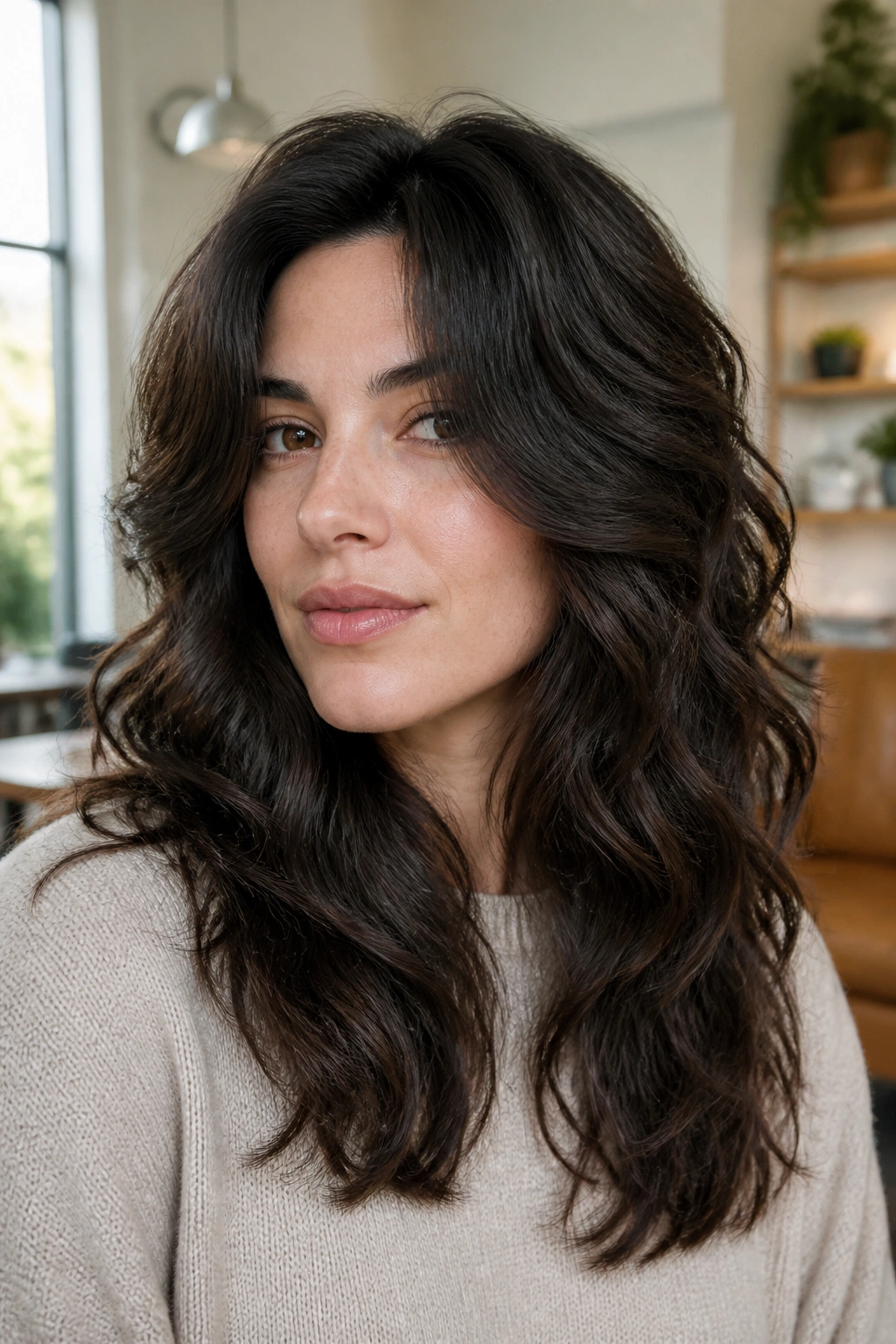
The quietest haircut in the group is also one of the smartest. Invisible layers sit inside the haircut rather than shouting from the outside, which means the surface still looks smooth while the inside loses weight. Thick waves love this.
It’s the difference between removing bulk and advertising that you removed bulk. The outer line stays cleaner, so the hair doesn’t look chopped up. That matters if your waves already have a lot going on or if you work in a setting where you want the cut to read as neat first and textured second.
This style is especially helpful if your hair swells in humidity. Hidden layers prevent that heavy triangular spread that thick wavy hair can develop around the shoulders. You still get movement, but it stays tucked into the haircut instead of exploding outward.
Styling can stay simple. A leave-in cream, a wide-tooth comb, and a light scrunch are enough for most days. If you overdo the product, the point of the cut gets buried, which is annoying because the whole charm here is how little it asks from you.
9. Choppy Layers With Blunt Ends

Can a haircut look messy and neat at the same time? Yes, and this is how. Choppy layers inside a blunt perimeter give wavy hair some texture up top while keeping the bottom line strong. That contrast keeps the cut from feeling too sweet or too fuzzy.
The blunt ends matter more than people expect. They hold the shape together when the waves separate. Without that anchor, choppy layers can start to look shredded by the third day, which is not the same thing as lived-in.
How to Keep It Sharp
- Keep the bottom edge clean and even
- Ask for interior texture, not heavy thinning at the ends
- Use a 1.25-inch iron if you want to define the wave pattern
- Finish with a light mist of spray, not a heavy lacquer
This cut works best when the wave is medium to loose and has a bit of natural bend. If the hair is very coarse, the choppiness can stack up too much. If it’s very fine, too much texture can make the ends vanish. That’s the catch.
10. Midi Cut With Bottleneck Bangs

I like bottleneck bangs on wavy hair because they solve the old fringe problem: you want something around the face, but you do not want full bangs swallowing your forehead and needing a trim every ten minutes. Bottleneck bangs start narrow in the center, then open out toward the temples. They blend better than a strict straight fringe.
The medium-length cut underneath should stay flexible. The bangs should look like part of the haircut, not a separate project. If the layers and fringe fight each other, the whole thing gets fussy fast.
A good version usually hits around the collarbone or just below it. The front pieces should be soft enough to tuck behind the ear or sweep aside on a lazy day. That gives you options, which matters more than a lot of people admit.
This is a smart cut for someone who wants face framing without committing to a blunt bang line. It also helps if your waves tend to separate around the front, because the bottleneck shape hides a little chaos instead of demanding perfect styling.
11. Soft Mullet-Inspired Layers

The soft mullet-inspired cut sounds braver than it is. In practice, it’s just a medium-length layered shape with a bit more lift at the crown and a bit more taper around the nape. The sides stay wearable, which keeps it from drifting into costume territory.
Wavy hair does well here because the texture fills out the shape naturally. The crown gets room to move, the neckline stays light, and the whole cut feels alive. That last part is the real attraction. It does not sit still.
This version works best when the layers are blended enough to avoid a harsh step between top and bottom. If the transition is too sharp, the haircut starts looking disconnected. That can be cool if that is your thing, but most people want a softer read.
I would recommend it for someone who likes a little edge and does not mind a haircut that looks best when it is slightly imperfect. If you are after sleek and symmetrical, keep walking. If you like pieces that fall differently every day, it has real charm.
12. Air-Dried Piecey Layers
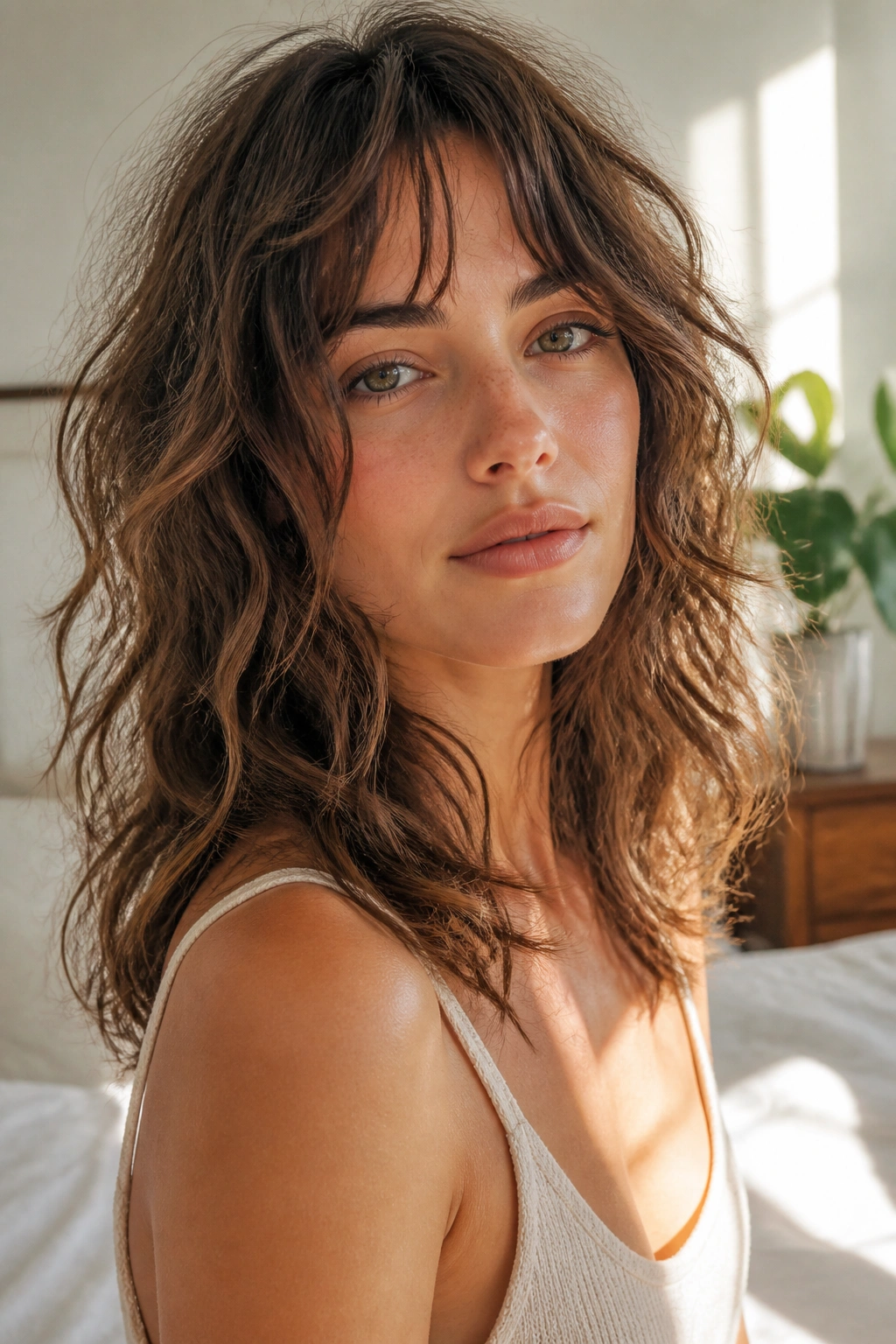
The best air-dried haircut is not the one with the most layers. It’s the one with the right layers. Piecey medium cuts work because they leave enough separation for the wave pattern to dry in clumps instead of merging into one flat sheet.
Unlike a heavily brushed blowout shape, this cut is designed to dry with texture already built in. That makes it a good fit for people who do not want to spend twenty minutes with a round brush every time they wash their hair. A little gel or mousse, some scrunching, and you’re off.
It is especially good for loose to medium waves that already bend well on their own. The haircut gives the curl clumps permission to exist. That sounds a little dramatic, but it’s true.
The styling rule is simple: put product in while the hair is still damp, and do not keep touching it. People ruin this look by fussing with it as it dries. Let the clumps set, then break them up only at the very end.
13. Angled Lob With Stacked Back

An angled lob does one thing better than a straight shoulder cut: it moves the eye forward. The back sits a little shorter, the front stays longer, and the whole shape feels lifted instead of droopy. On wavy hair, that angle helps the waves fall forward with purpose.
The stacking in the back is subtle, not helmet-like. You want enough lift to keep the neck area clean, but not so much that the back looks overbuilt. That’s the line. Cross it, and the haircut starts to feel like a dated formal style instead of a modern wavy cut.
What to Ask For
- Back length around the nape or slightly below
- Front pieces grazing the collarbone
- A gentle forward angle, not a steep diagonal
- Light stacking only where the hair needs lift
This cut is handy if your hair tends to puff at the shoulders. The forward length pulls the shape down, which gives the waves a softer drape. It also looks good with a deep side tuck or one ear exposed, which is one of those small styling tricks that makes a cut look intentional without much effort.
14. Layered Cut With an Off-Center Fringe

An off-center fringe is one of the easiest ways to wake up medium-length waves without making a huge cut commitment. It shifts the focus off the middle of the face, which can be helpful if you want a little asymmetry and a little softness at the same time. The fringe does not need to be bold to do its job.
Compared with a full center curtain, the off-center version feels a bit sharper and less predictable. That can be useful if your hair naturally wants to fall in one direction anyway. Fighting the grain is overrated.
The layers underneath should echo the fringe, not compete with it. Keep the front pieces light enough to bend away from the eyes, but long enough to tuck behind the cheekbone when you want them out of the way. That balance is what keeps the style useful.
This cut tends to flatter round and square faces because it breaks up width around the cheeks and jaw. But I’d still keep it soft rather than severe. Hard lines and wavy hair do not always make friends.
15. Beachy Mid-Length Layers

What makes beachy hair look soft instead of stringy? Usually, it’s not the product. It’s the cut. Beachy medium layers work because the haircut leaves room for loose bends without building too many short bits that frizz out by noon.
The internal layers do most of the work. They keep the surface calm while giving the wave pattern a little lift underneath. That’s why this style can look laid-back even when it’s actually pretty deliberate.
Styling Without Heat
- Scrunch in a lightweight mousse on damp hair
- Add a little salt spray only through the mids, not the roots
- Twist two or three front sections while they dry
- Break the cast with clean hands once the hair is fully dry
This is a good cut if you like the look of saltwater texture but do not want your hair to feel dry and rough all the time. The shoulder-to-collarbone length keeps the bends visible. Any shorter and the beachy effect can start looking too fluffy.
16. Curly-Wavy Hybrid at Shoulder Length

Some hair lives in both camps. It waves in one section, curls in another, and behaves like two different heads of hair depending on the humidity. A curly-wavy hybrid cut respects that weirdness instead of trying to flatten it into one pattern.
A shoulder-length version gives the curl clumps enough room to form without dragging them down. The layers should support the bend, not slice it apart. That is the line that matters here. If the layers are too aggressive, the curl pattern breaks up and the whole head gets frizzy.
I like this cut for people whose hair is loose and springy near the front, then tighter underneath. A good stylist will notice the pattern differences and cut for them, not against them. Sometimes that means leaving a few pieces longer than you expected. Good. That is usually the right call.
If you air-dry, keep the product light and hands off. If you diffuse, use low heat and stop before the roots get crispy. This haircut rewards restraint more than enthusiasm.
17. Textured Cut for Fine Wavy Hair
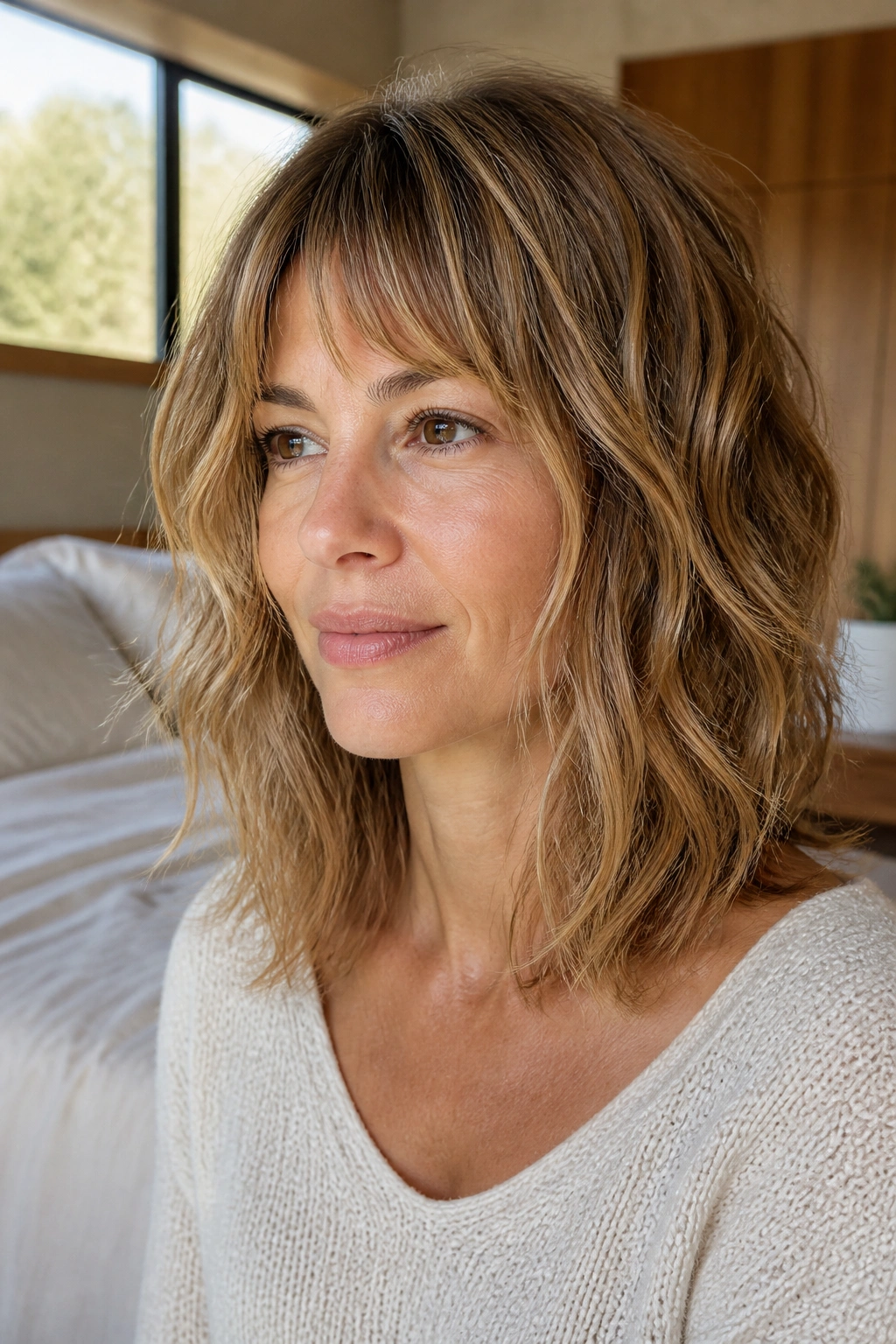
Fine wavy hair needs a careful hand. Too many layers and it goes airy in the worst way, with ends that look thin and scraggly. Too few layers and it lies there like it’s bored. The answer is a textured cut that keeps the perimeter a touch blunt while creating just enough movement through the mids.
The goal is lift, not emptiness. A little texture at the top can make fine hair look fuller, but over-thinning will expose the problem fast. That is why I like this style cut with a light touch rather than a heavy one.
This one benefits from a root-lifting spray or a small amount of mousse at the crown. A quick blow-dry with a round brush at the top only can help, but you do not need a full salon finish to make it work. The haircut should carry most of the load.
If your hair is fine and wavy, this is one of the better options because it keeps the outline alive without turning the ends into wisps. It feels lighter, but not sparse. That distinction matters.
18. Shoulder-Skimming Layers With a Deep Side Fringe

A deep side fringe changes the whole mood of medium-length layers. Instead of framing the face evenly, it lets one side carry more weight and movement, which can be useful when your waves fall more heavily on one side than the other. And a lot of wavy hair does.
Compared with a center part, the deep side fringe gives the haircut a little drama without making it look formal. It also helps when you’ve got a stubborn cowlick or a front section that refuses to cooperate. Sometimes the easiest fix is to stop asking the hair to do the same thing on both sides.
The fringe should start near the brow arch and sweep into the cheekbone area. The rest of the cut can stay shoulder-skimming and softly layered. That keeps the style from getting too heavy in front.
This is a good pick if you like a haircut that looks different when you flip your part. It gives you more than one version of the same style, which is handy when you get bored fast.
19. Messy Midi With Razored Ends

A messy midi is for the person who wants a haircut that looks better after a light sleep than after a perfect salon blowout. The razored ends keep the shape soft and broken up, while the medium length gives the waves enough room to bounce and fall wherever they want.
The key is not to overdo the mess. You want controlled looseness, not hair that looks chewed up. Those are different things, and the difference usually comes down to how much texture was taken out of the ends.
How to Keep It From Going Frizzy
- Use a cream or light gel on damp hair
- Skip aggressive towel drying
- Air-dry partway, then diffuse on low if needed
- Do not brush it dry unless you want fluff
This cut is a good choice if you like relaxed shapes and do not need your hair to look crisp every minute of the day. It pairs well with earrings, boots, a denim jacket—any outfit that can handle a little edge. And yes, it’s one of those cuts that looks better when it is slightly off than when it is too controlled.
20. Low-Maintenance Layered Lob With Polished Finish

If I had to hand one cut to someone who wants shape without a lot of daily fuss, this would be it. The low-maintenance layered lob keeps the length in the useful zone, adds movement where waves need it, and stays tidy enough to wear straight from a quick air-dry or a fast blowout.
The finish is polished, but not stiff. That distinction matters. The layers should be soft enough to move, but the outline still needs enough weight to hold together when the hair gets humid, windy, or a little neglected. Medium wavy hair looks better when it has a bit of backbone.
It’s a good option for people who like a haircut that grows out gracefully. The shape stays understandable for weeks, not days. You can tuck it, clip it, bend the front pieces, or let it fall naturally, and it still reads as a real haircut instead of a compromise.
If you want the safest place to start, start here. It has enough shape to feel current, enough length to stay practical, and enough structure to keep the waves doing something useful rather than just existing.
