



If your hair looks polished for about ten minutes after wash day and then starts puffing out at the sides, the cut is probably fighting your texture. Long layers for 2c curly hair can fix that, but only when the layers are placed with some restraint. Too many short pieces. Too much thinning. Too much faith in a cut that was really meant for straighter hair.
2c hair sits in an awkward little middle zone. It has bend, but not always enough ringlet to hold a round shape on its own. The roots can go flat. The mid-lengths can swell. The ends can look wispy if the weight is removed in the wrong places. A good layered haircut works with that pattern instead of trying to bully it into submission.
The trick is not “more layers.” It’s smarter layers. Long ones. Layers that give movement where the hair needs lift and keep weight where the shape needs polish. When that balance is right, the hair moves. It has swing. It dries with a softer outline and fewer blunt shelves.
And yes, the details matter. A lot. Where the first layer starts, how much length is left at the perimeter, whether the stylist uses a dry check before finishing the cut — all of that changes how 2c hair behaves once it’s out of the chair and back in your routine.
1. Face-Framing Long Layers That Start at the Chin
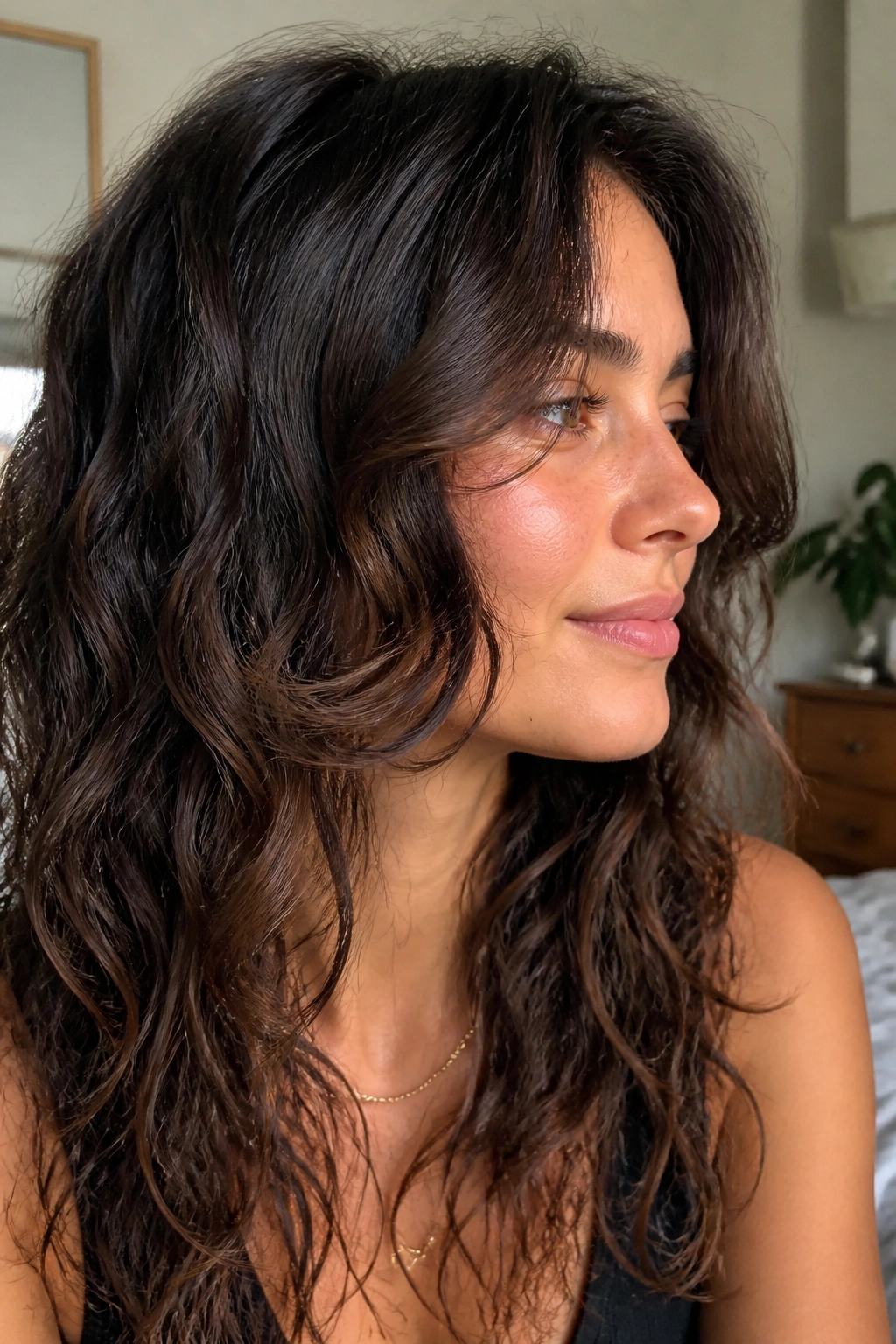
Face-framing layers are the easiest place to start when you want long layers for 2c curly hair without losing the overall length. The reason is simple: the weight stays in the back, while the front gets enough movement to stop the hair from hanging like one solid sheet. If your waves tend to collapse near the cheeks, chin-length pieces give them somewhere to bend.
Why They Work So Well
The chin is a useful anchor point on 2c hair. It is low enough to avoid that over-chopped look, but high enough to break up a heavy front edge. When the shortest face frame lands near the chin, the wave pattern can bend around the jaw instead of puffing out at the cheekbones.
Ask for the front pieces to be blended softly into the rest of the cut. You do not want a dramatic staircase. You want a quiet shift. That way, the hair still looks long from the side, but it has shape when you turn your head.
- Best for hair that puffs at the sides
- Good if you wear your hair parted in the middle
- Helps soften a square or round face without making the cut look obvious
- Keeps most of the density in the back and ends
Pro tip: bring your hair to the salon in its usual dry state if you can. 2c waves often sit differently once they dry, and that little detail can change where the first layer should land.
2. Butterfly Layers That Keep the Length

Butterfly layers are the safest “I want change, but not too much” haircut for 2c waves. The top pieces come up high enough to give lift, while the lower length stays long and full. You get movement around the crown and face without giving up the long silhouette people usually want.
The cut works because it creates two visual zones. The upper zone catches the eye first. The lower zone keeps the hair from looking chopped. On 2c hair, that matters more than it does on straighter textures, because the wave already breaks up the line of the haircut. If the layers are too short, the whole shape can start looking fuzzy instead of airy.
I like this option for anyone who wants long hair to feel lighter on the shoulders. It also grows out with less drama than a shorter shag. The outline stays recognizable for a long time, which is handy if you do not want to be in the salon every few weeks.
One catch: butterfly layers need blending. Hard shelves in the top section can look lumpy when 2c hair air-dries. Ask for a soft transition, not a sharp disconnect. That small distinction saves the cut.
3. U-Shaped Long Layers for Soft Movement

Why does a U-shape work so well on 2c hair? Because it lets the length curve gently around the back instead of dropping in a flat line. That soft arc makes the hair look fuller at the ends and less blocky from behind. On wavy hair, a blunt edge can sometimes feel heavy. A U-shape loosens that up without taking away the sense of length.
The middle back stays a touch longer than the sides, which gives the whole cut a softer fall. If your hair tends to widen at the bottom, this shape helps narrow that bulk a bit. If your waves lie flatter near the crown, the U-shape also gives the eye something more interesting to follow than a straight perimeter.
How to Ask for It
Tell the stylist you want the back to stay rounded, not squared off. The layers should blend into that shape instead of breaking it apart. You can also ask for the front pieces to be slightly shorter than the back so the face gets a little lift.
A U-shape is a good middle ground. It feels polished. It does not try too hard. And on 2c hair, that usually means less fighting and fewer styling tricks to make it behave.
4. V-Shaped Layers for Extra Swing
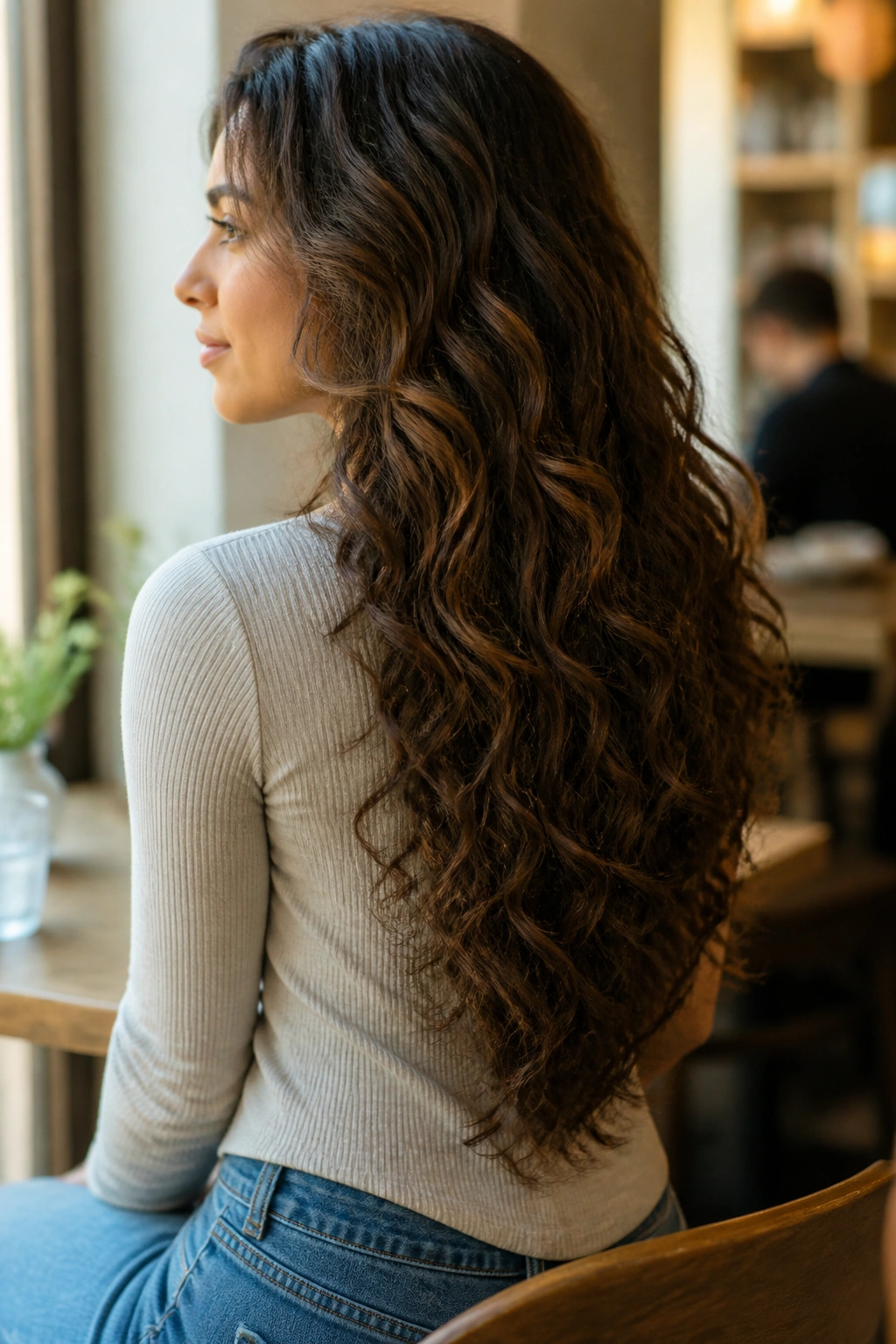
Picture hair that drops heavier in the middle and feels almost too thick when it dries. A V-shaped cut solves that problem fast. The center back stays longest, and the sides taper upward more noticeably, which gives the whole shape a pointed finish and a lot more swing through the ends.
That extra movement is useful on dense 2c hair, especially if the hair tends to stack up at the nape. The V pulls some of that weight out of the shape. It also gives long waves a more dramatic line when they fall over the shoulders. The look is not subtle. That is the point.
- Best for dense hair that feels bulky at the back
- Gives the ends a clearer shape when air-dried
- Works well if you like a visible taper from front to back
- Can feel too severe on fine hair with little density
Watch for this: if the V is cut too sharply, the sides can look thin while the center still feels heavy. The fix is a softer taper and longer layers through the mid-lengths, not a deep point that looks good only when it is freshly styled.
This is one of those cuts that looks especially strong when the waves separate a little. The movement becomes part of the shape instead of fighting it.
5. Invisible Layers Hidden Inside the Hair
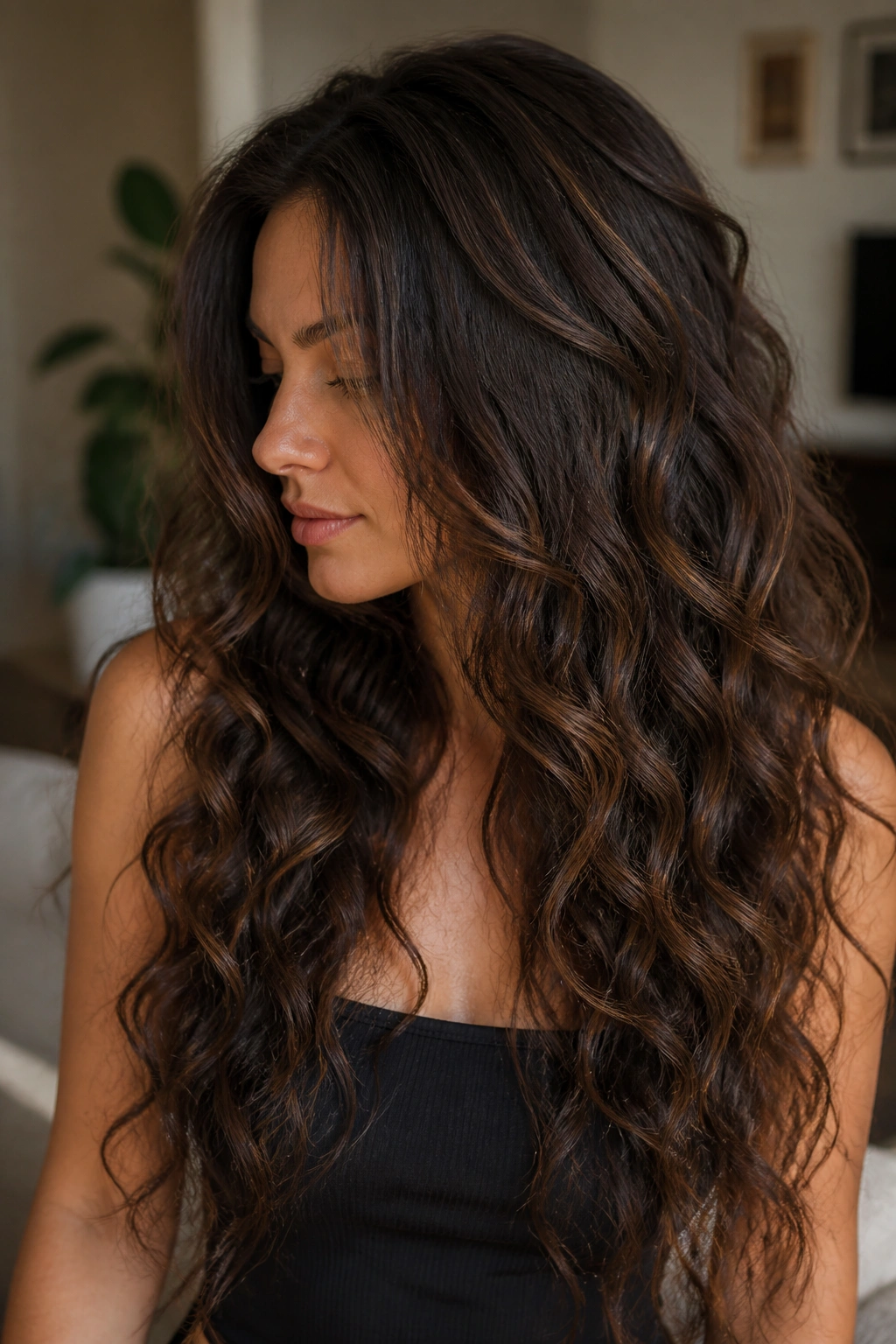
Invisible layers are for people who want shape without shouting about the haircut. The outer line stays long and clean, while the weight comes out from the inside. From the outside, the hair still looks like one long curtain. Underneath, the bulk is easier to manage.
That matters for 2c hair because the surface can frizz faster than the interior. If you over-layer the outside, the cut can start looking puffy. Invisible layers avoid that problem. They give the waves room to move, but they do not expose every little section of the cut to the air.
The result is a more controlled shape with less obvious layering. It is a good pick if you like wearing your hair down most of the time and you want the ends to look thick. It also helps if your waves clump unevenly, since the hidden layers let the top sit flatter while the lower sections still have some bounce.
This is not the haircut for someone who wants a dramatic, piecey look. It is the haircut for someone who wants their hair to behave without announcing itself from across the room.
6. Curtain Bangs with Long Layers

Curtain bangs change the whole mood of a layered cut. They also make 2c hair look intentional on days when the rest of the style is being a little lazy. Unlike a blunt fringe, curtain bangs can grow out with less misery, and that matters because wave patterns rarely sit in the exact same place every morning.
The best version starts longer than people expect. Short curtain bangs on 2c hair can spring up and separate too much. Longer pieces, usually around the cheekbone or a bit below it, give the wave room to bend. They frame the eyes without turning into a triangle at the forehead.
What to Ask for
Ask for the shortest point to sit somewhere in the cheekbone range, then have the sides feather into the front layers. If you wear your hair parted off-center, tell the stylist. It changes how the bangs fall. A lot.
Curtain bangs are also a smart choice if you like pulling your hair back. The front pieces drop out on their own and still look like part of the haircut. That little detail makes the style feel less rigid, which is exactly what 2c hair tends to need.
7. A Soft Curly Shag with Long Ends

A shag does not have to mean choppy ends and a lot of attitude. In 2c hair, a soft shag can be one of the nicest ways to get volume without building a helmet shape. The trick is keeping the layers long enough that the waves still fall together instead of breaking into separate little chunks.
What Makes It Different
The shag gives lift high up, usually around the crown and upper sides, where 2c hair often looks flat. The lower length stays long enough to keep the style from feeling too short or too airy. That mix is why it works. It balances the flat roots with fuller movement through the body of the hair.
- Good if your hair looks heavy at the top and limp at the roots
- Helpful when you want a little grit and texture
- Works best when the ends are kept soft, not razor-thin
- Needs regular dusting so the layers do not turn scraggly
One warning: a shag can go wrong fast if the stylist thins the ends too much. 2c hair already has a loose structure. Strip away too much weight and you get frizz instead of shape.
Keep the edges soft, not feathery. That is the difference between a shag that looks lively and one that looks like it has been overworked.
8. Mid-Length Layers That Leave the Bottom Full
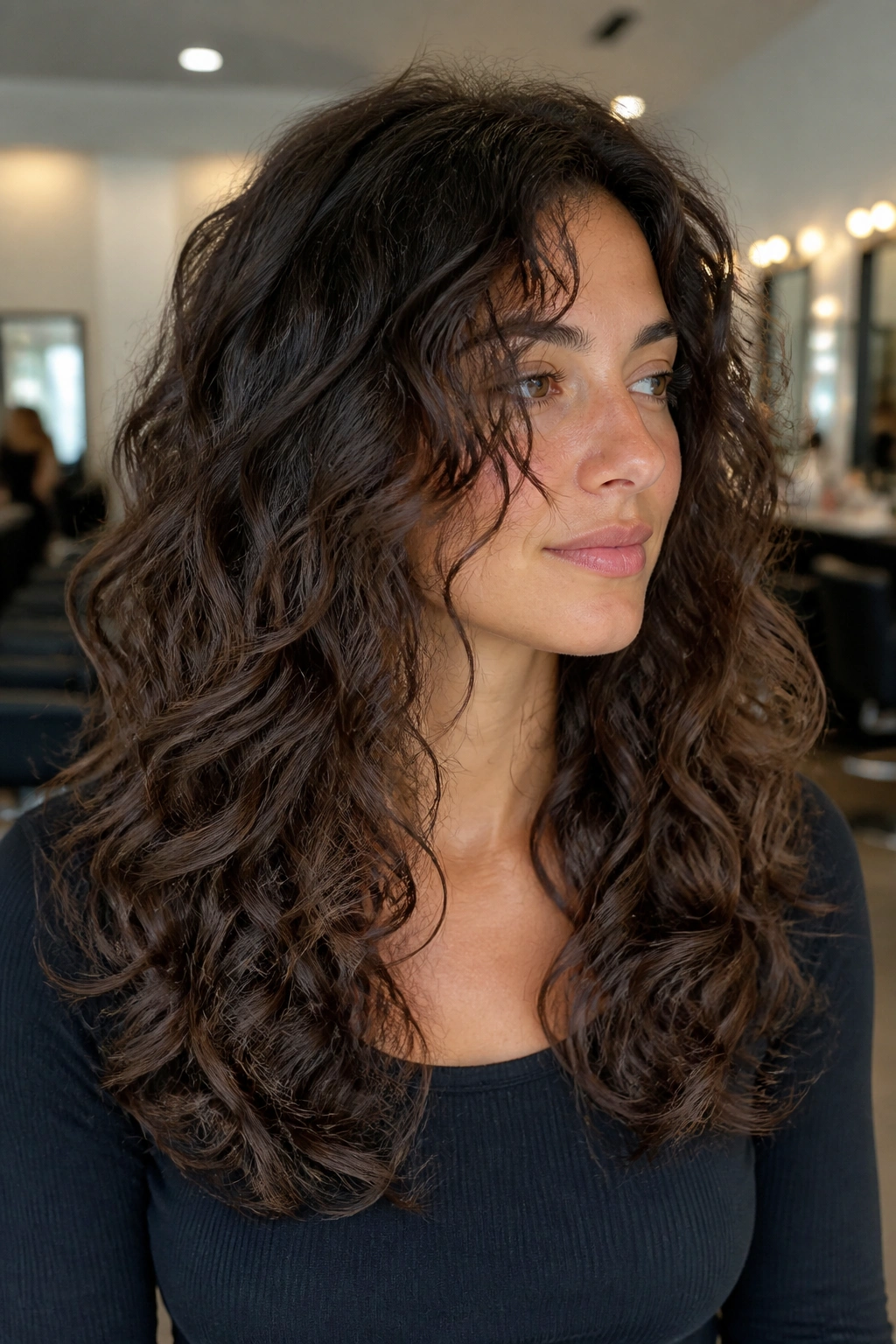
If your hair gets wispy when it is over-layered, keep the lowest part of the cut heavy. That is the whole point of this shape. The layers live mostly through the middle third of the hair, while the bottom four or five inches stay fuller and more solid. On 2c hair, that helps the wave pattern hold together instead of scattering into fine pieces.
This cut is especially useful when the ends have a habit of looking transparent. Some waves need that weight to look healthy. Not every layered cut should be light all the way through. Sometimes the smartest move is to keep the outline strong and only remove density where the hair starts to mushroom.
The shape can be subtle, which is a good thing. You do not have to broadcast the layers to get the benefit. When the length below the shoulders stays full, the whole cut looks more expensive and less chopped up.
If your hair is medium density and tends to spread at the bottom, this is one of the better choices. It keeps the length while giving the top and middle enough movement to avoid that blocky, triangular finish.
9. Rounded Long Layers for Fuller Ends
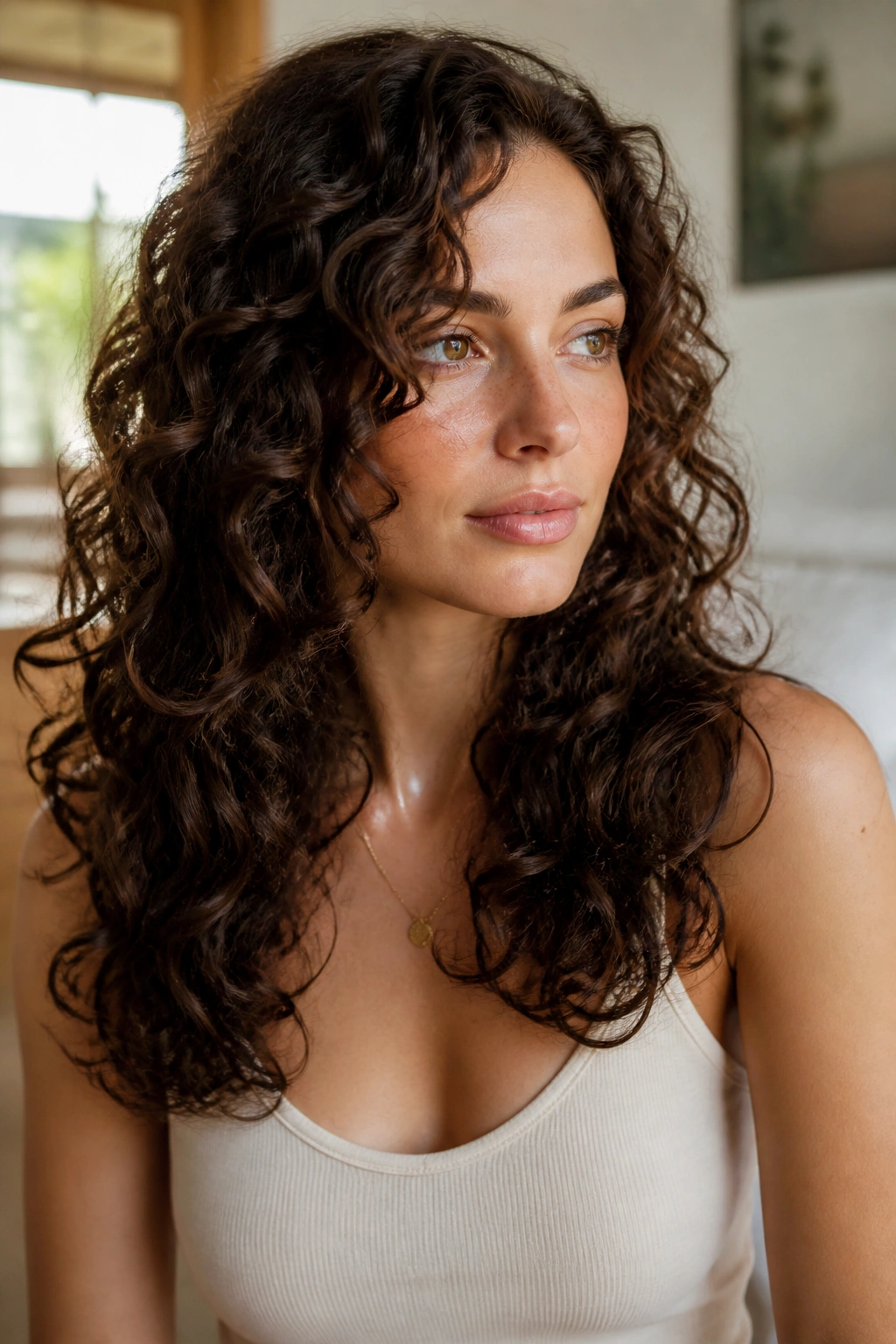
Want the hair to feel softer around the perimeter instead of sharp at the bottom? Rounded layers are the answer. They shape the hair in a gentle arc, which keeps the ends from looking like a hard shelf. On 2c texture, that kind of softness matters because the wave already creates movement. The cut should support that, not create a box on top of it.
The rounded shape is nice if you wear your hair loose a lot. It looks deliberate even when the styling is minimal. The hair falls inward a little, then out, then inward again, and that rhythm keeps the silhouette from going square. It also helps the face frame blend into the rest of the cut without a harsh break.
How to Get the Most From It
Ask for the sides to be connected to the back with a soft curve. The stylist should avoid making the front pieces too short unless your face shape really needs it. A rounded layer pattern only works if the perimeter stays smooth enough to hold the line.
This is one of the more flattering choices for people who want their hair to read as thick, not airy. It gives the illusion of density. That is the part people notice first.
10. Blunt Perimeter with Interior Layers
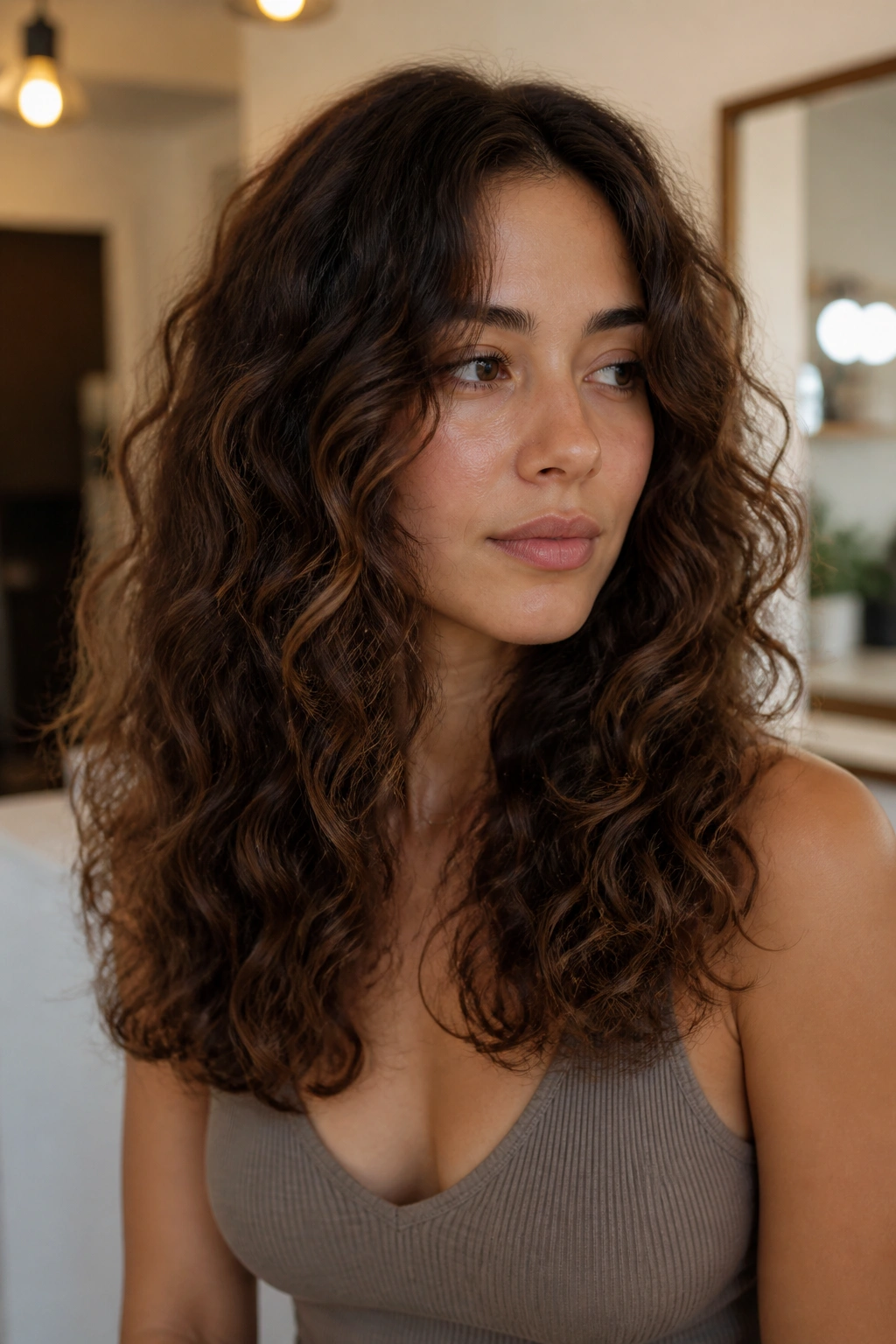
A blunt edge can sound boring, but on 2c hair it can be the thing that keeps the cut from looking flimsy. The interior layers remove some of the bulk, while the outer line stays clean and solid. That combination gives you movement without sacrificing weight at the bottom.
Think of it as a haircut with a spine. The inside can bend and shift. The outside still knows where it ends. That matters when the wave pattern gets looser toward the ends, because a blunt perimeter keeps the shape from looking thin or uneven.
- Good for fine to medium 2c hair that needs a fuller outline
- Helps the ends look thicker in photos and in person
- Reduces the chance of a stringy finish
- Needs a careful stylist, since too much interior cutting can make the hair collapse
My opinion: this is one of the most underrated shapes for wavy hair. People often assume layers have to be obvious to matter. They do not.
If you want a little swing but hate the look of choppy layers, this is the version to ask about.
11. Deep Side-Part Layers for Flat Roots
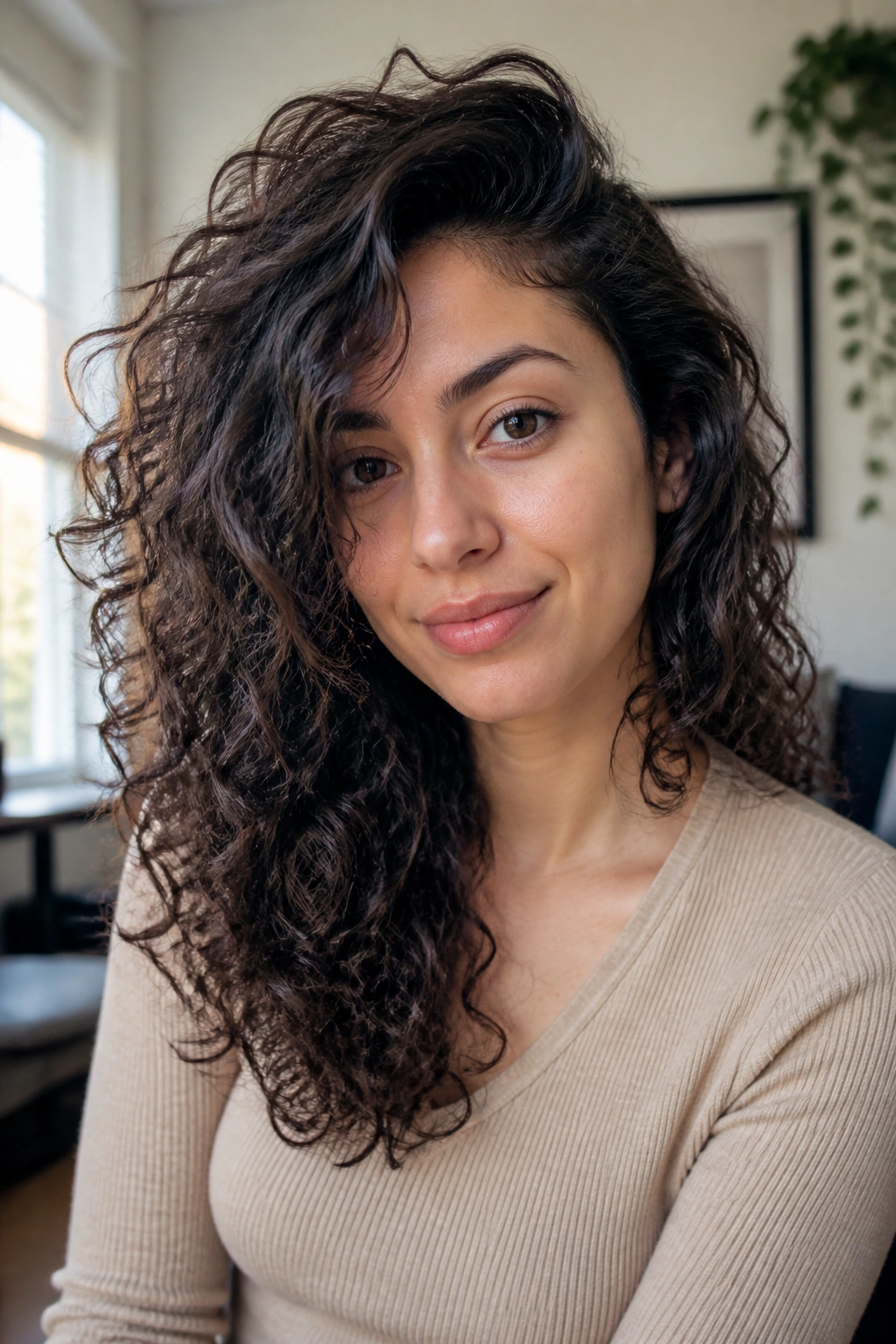
A side part changes the haircut more than people expect. Shift the weight to one side, and the waves suddenly look taller at the root and looser through the lengths. For 2c hair, that extra lift can save the whole style on days when the crown decides to lie down.
The cut itself should still be balanced underneath. That part matters. You want the layers to support the side part, not depend on it. A good stylist will keep enough length on both sides to let the hair move naturally, then shape the front so the heavier side does not swallow your face.
The side part also makes longer layers feel less symmetrical, which can be a good thing if your waves clump in odd patterns. The asymmetry hides that. It gives the hair a lived-in feel without making it look messy.
This is a strong option if your roots flatten fast but the lower half of your hair has a nice wave. You keep the shape. You gain lift. And you do not have to cut your hair any shorter to get it.
12. Long Layers Built for Thick 2c Hair

Thick 2c hair needs a different kind of layering than fine 2c hair. There is more weight to move, more bulk to control, and more chance of ending up with a wide triangle if the cut is too heavy at the bottom. Long layers built for thick hair remove density through the middle, not just the ends.
That middle zone is where the trouble usually lives. The hair can balloon out around the shoulders, then drag down at the ends. A well-placed layer breaks that up. It lets the waves stack in a cleaner way and keeps the cut from feeling swampy when the hair is dry.
Unlike a lot of texturizing-heavy cuts, this one should still leave enough weight at the ends to avoid frizz. Thicker 2c hair can handle more movement, but it does not need to be shredded. A careful stylist will slice away bulk in measured sections rather than attacking the whole head at once.
If your hair feels huge after air-drying, this is the lane to stay in. Long, controlled, and not too choppy. That combination tends to age well between trims.
13. Long Layers That Help Fine 2c Hair Look Denser
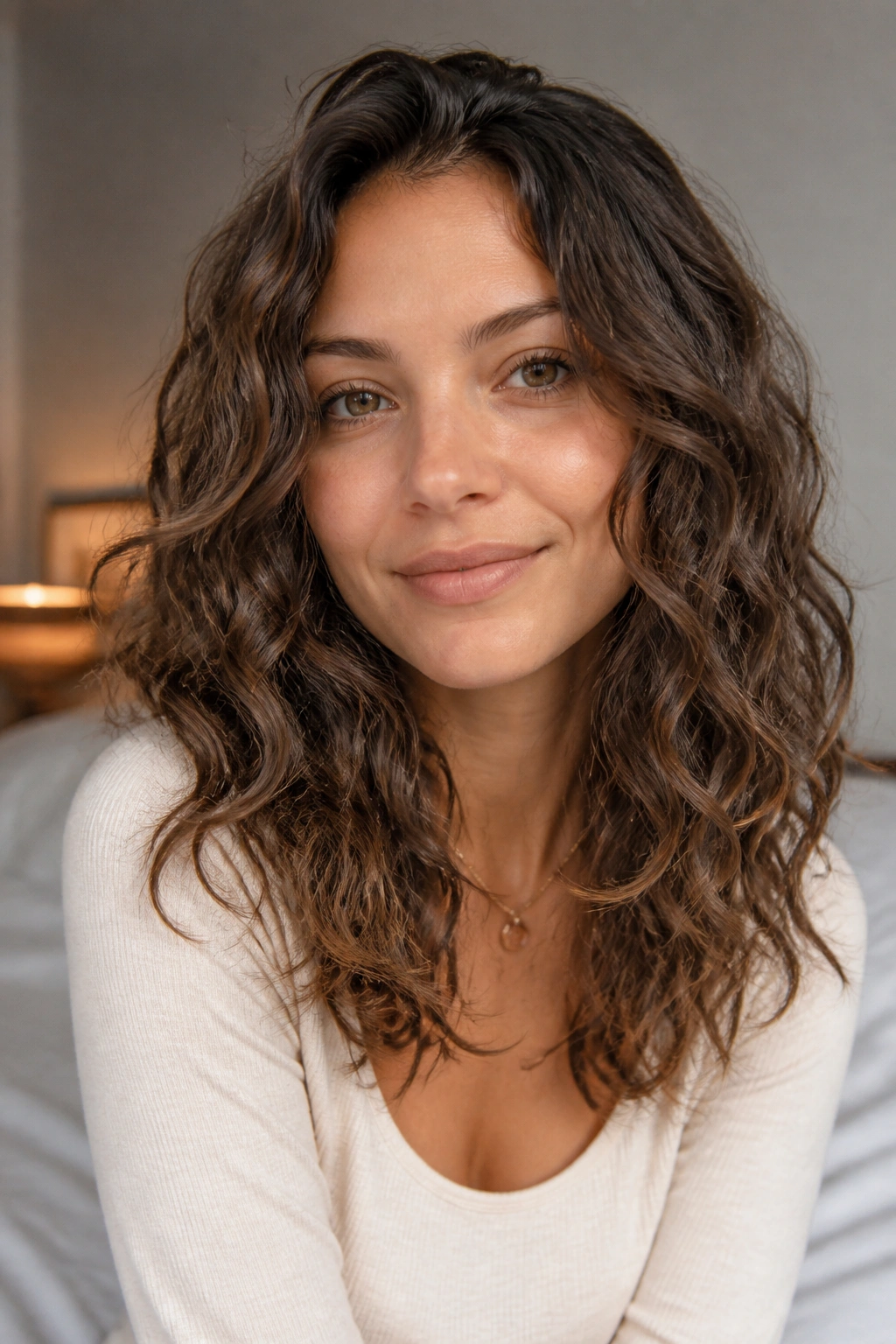
Fine 2c hair can be a little deceptive. It has wave, so it looks like it should have more body than it does. Then the wrong cut removes too much weight and the ends start to look see-through. That is why the best long layers for finer texture are often gentler than people expect.
What to Ask For
- Keep the first visible layer lower, around the collarbone or below
- Leave the perimeter full enough to look thick at the ends
- Avoid aggressive point cutting near the bottom
- Ask for soft face framing instead of short, disconnected pieces
The goal is not airy volume. It is believable density. When the layers are too short, fine 2c hair can separate into pieces and show every little gap. A lower layering pattern keeps the silhouette smoother and the ends heavier.
One more thing. Fine hair often looks best with fewer layers than social media haircuts suggest. That is not boring. It is practical. The cut should make the hair look fuller from a normal distance, not only from a ring light.
If you have finer waves, this version usually beats anything too shaggy or too thinned out.
14. Grow-Out Friendly Long Layers

The most useful haircut is the one that still looks decent after it has grown for a while. That is where grow-out friendly layers shine. They are blended enough to move with the hair, but they do not rely on sharp, short pieces that start poking out once the haircut loses its shape.
This matters a lot for 2c hair because the texture already changes the outline as it grows. A cut with soft transitions tends to age better than one with dramatic steps. The layers blur into one another. The waves take over. And the haircut still looks on purpose.
A good grow-out shape usually keeps the first layer low and the longest pieces long enough to stay part of the overall line. That means fewer awkward phases. The hair can stretch between trims without turning into a disconnected mess.
If you hate frequent salon visits, this is one of the smartest options on the list. It buys you time. It also gives you a haircut that can survive a lazy styling week without falling apart immediately.
15. Long Layers with No-Drama Maintenance
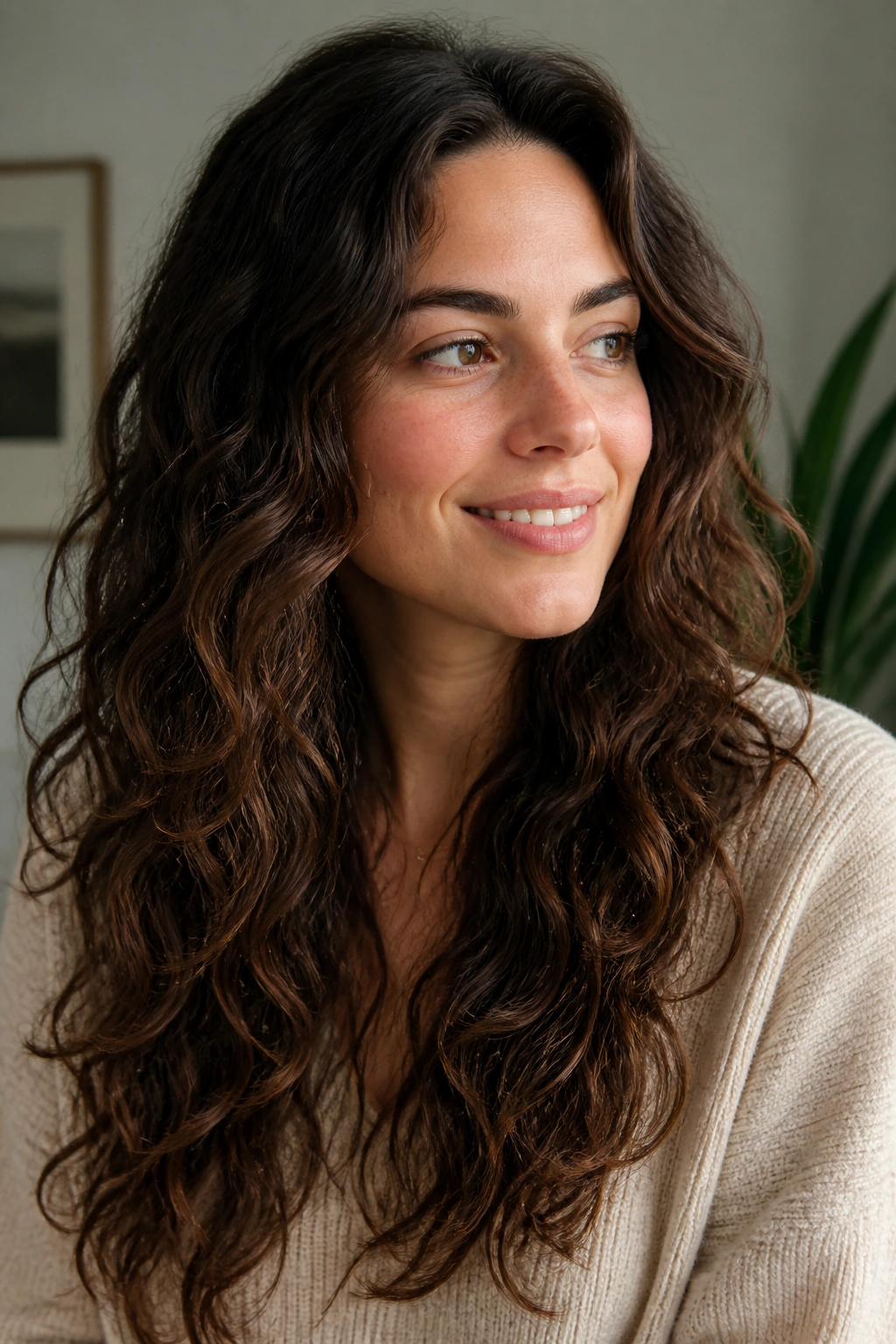
Do you want the hair to look good with minimal effort? Then the cut needs to do a lot of the work. Long layers with no-drama maintenance are built for air-drying, quick scrunching, and the occasional diffuser pass. The layers stay soft, the perimeter stays long, and the overall shape is forgiving.
This version is usually best when the shortest pieces are kept low enough to avoid sticking up or separating too much. On 2c hair, that means the hair still falls together even if you skip a complicated styling routine. The cut should hold its own in a messy bun, loose wave, or half-up clip. If it only looks good in one perfect styling setup, it is asking for too much.
How to Make It Behave on Wash Day
- Use a light leave-in so the waves stay soft, not crunchy
- Scrunch with a microfiber towel or cotton T-shirt
- Diffuse only until the roots lose their wet look, then stop
- Let the ends dry without constant touching
This is the haircut for busy weeks, humid weather, and people who do not want to rebuild their hair every morning. Practical. Low fuss. Still attractive.
Final Thoughts

Long layers can do a lot for 2c hair, but the real magic is in restraint. The best versions keep the ends thick enough to feel intentional and place movement where the wave pattern actually needs help.
If your hair has been looking too flat, too wide, or too thin at the bottom, the fix is usually a better shape rather than a shorter cut. A good layered haircut should make 2c texture look softer, not busier.
Bring photos. Bring your dry hair if you can. And ask the stylist where the first layer will land before anyone picks up the scissors. That one question saves a lot of regret later.
