



Heavy ends are the enemy. They drag down movement, flatten the shape, and make medium hair look longer than it feels.
Medium length haircuts with layers fix that problem without forcing you into a short cut you may not want. The right layers can make shoulder-skimming hair swing, separate, and bend in a way that feels lived-in instead of overworked. That matters more than people admit. A cut can look fine leaving the salon and then fall dead flat two shampoos later.
The trick is choosing the right kind of layering for your hair’s density, texture, and styling habits. Some layers should whisper. Others should be obvious from across the room. The difference between those two is where the shortest pieces start, how much weight gets removed, and whether the ends stay blunt, feathered, or piecey.
That’s the part most people skip. And it’s where the best cuts are born.
1. Collarbone Layers That Move at the Ends
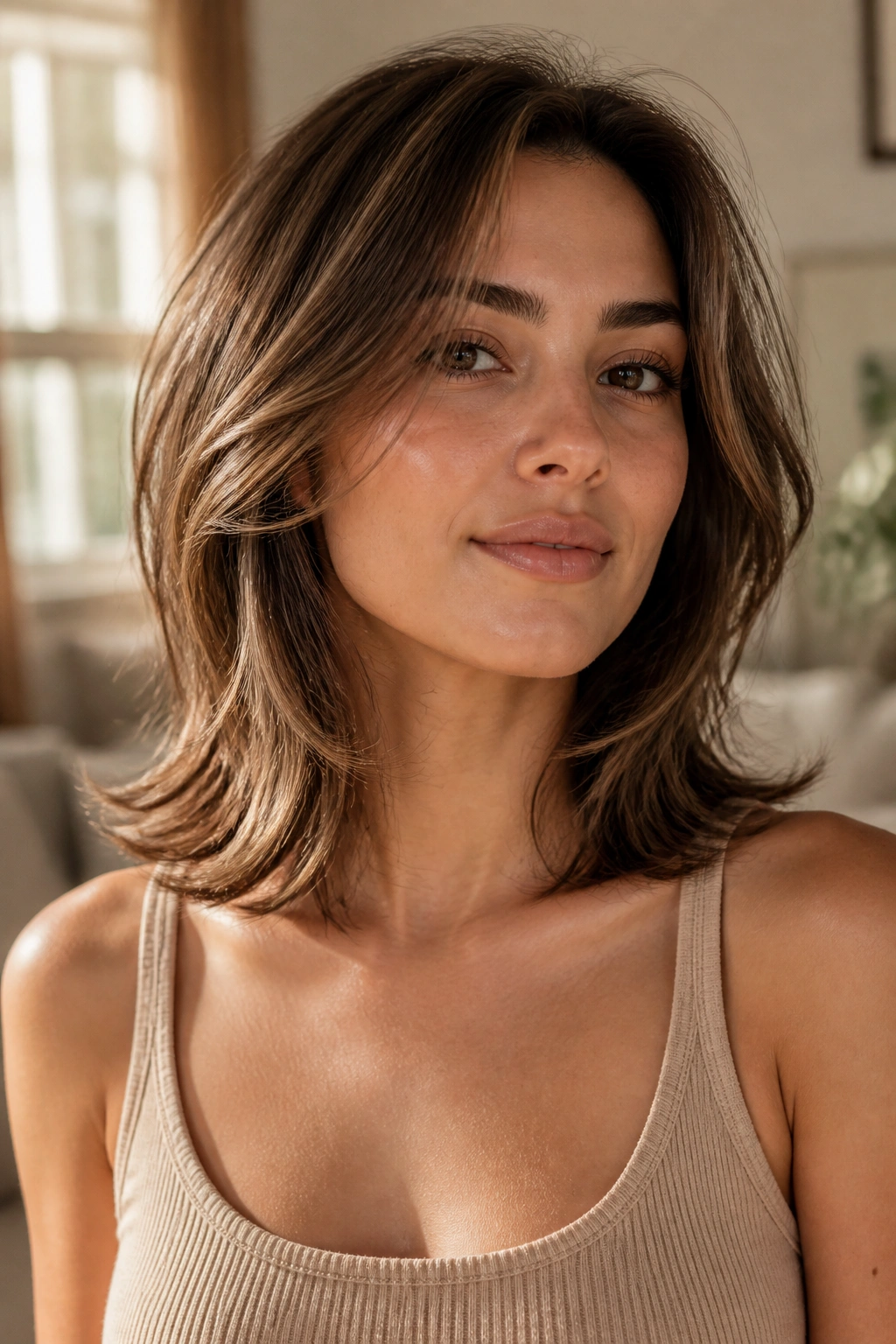
The collarbone is a sweet spot. It gives you enough length to tuck hair behind your ears, tie it back, or twist it into a clip, but it also keeps the shape from feeling saggy.
These layers work because the shortest pieces usually begin just below the cheek or jaw and then soften toward the collarbone. That creates movement at the bottom without stripping away too much density. If your hair tends to sit heavy, this is one of the easiest ways to wake it up.
Why it works
The cut keeps the perimeter long enough to look polished, while the layers stop the ends from forming one blunt curtain. That little bend at the bottom matters. It makes straight hair look less rigid and gives wavy hair a nicer shape when it dries naturally.
Ask for soft, blended layers with a blunt-ish edge. Too much thinning can make the ends look wispy in a bad way.
Best for: medium to thick hair, oval faces, and anyone who wants movement without obvious choppiness.
Pro tip: finish with a 1.25-inch curling iron, but leave the last inch out. The ends will flip just enough to show the layers.
2. Face-Framing Layers That Start at the Cheekbone
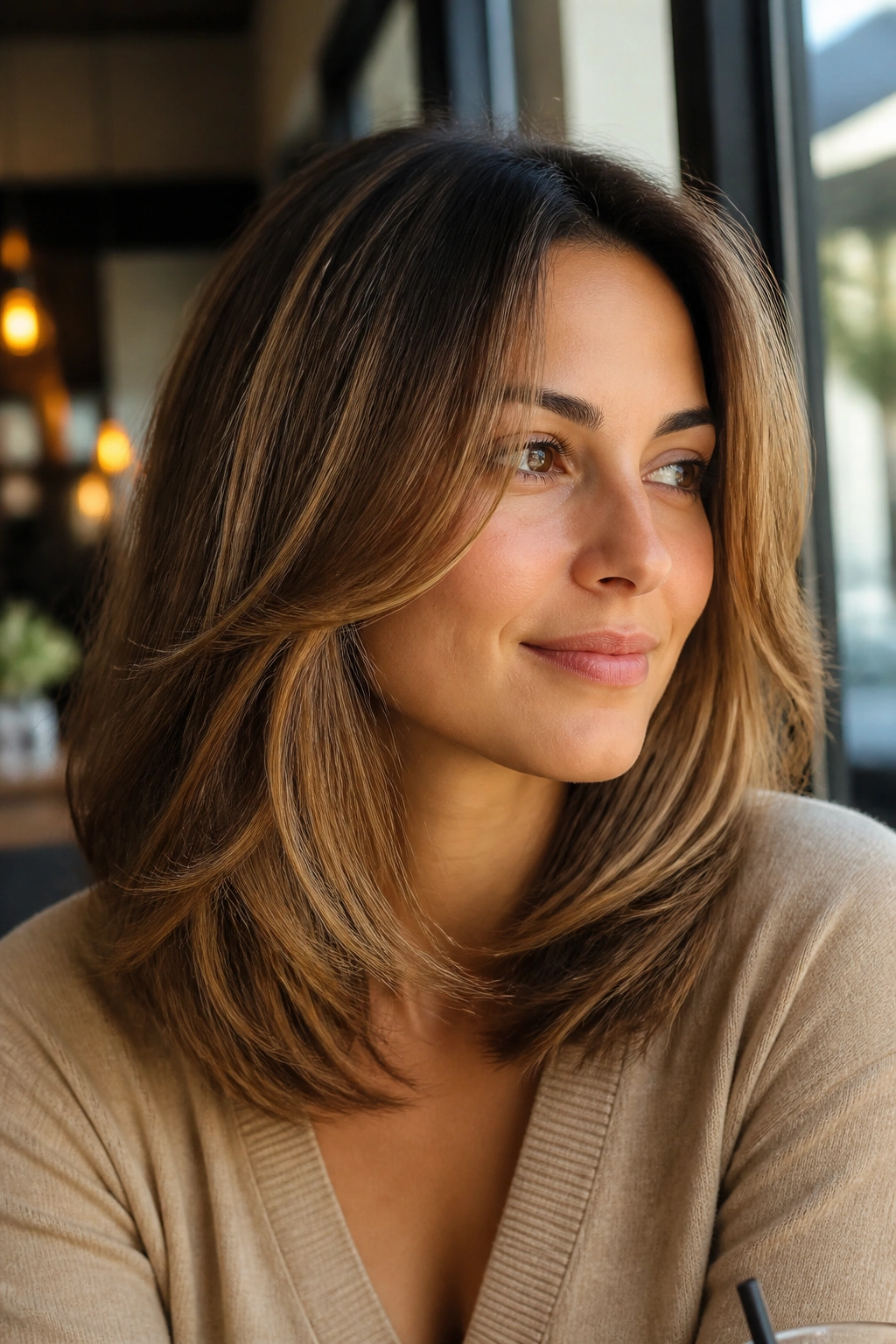
Want the fastest way to make medium hair feel more alive? Start the layers near the face.
Face-framing layers pull attention upward, which is a gift if your hair falls straight around the cheeks. They soften sharp jawlines, make round faces look a little longer, and give even simple ponytails a better shape. Honestly, this is one of those cuts that looks expensive even when it’s quiet.
The key is placement. If the shortest pieces hit around the cheekbone, they’ll open the face without turning into fringe. If they start too low, you lose the effect. If they start too high, the cut can feel dated fast. Middle ground wins here.
A good stylist should cut these pieces so they curve into the rest of the hair, not hang like separate strings. That detail matters more than people think. The whole point is flow.
3. Curtain Bangs With Shoulder Layers
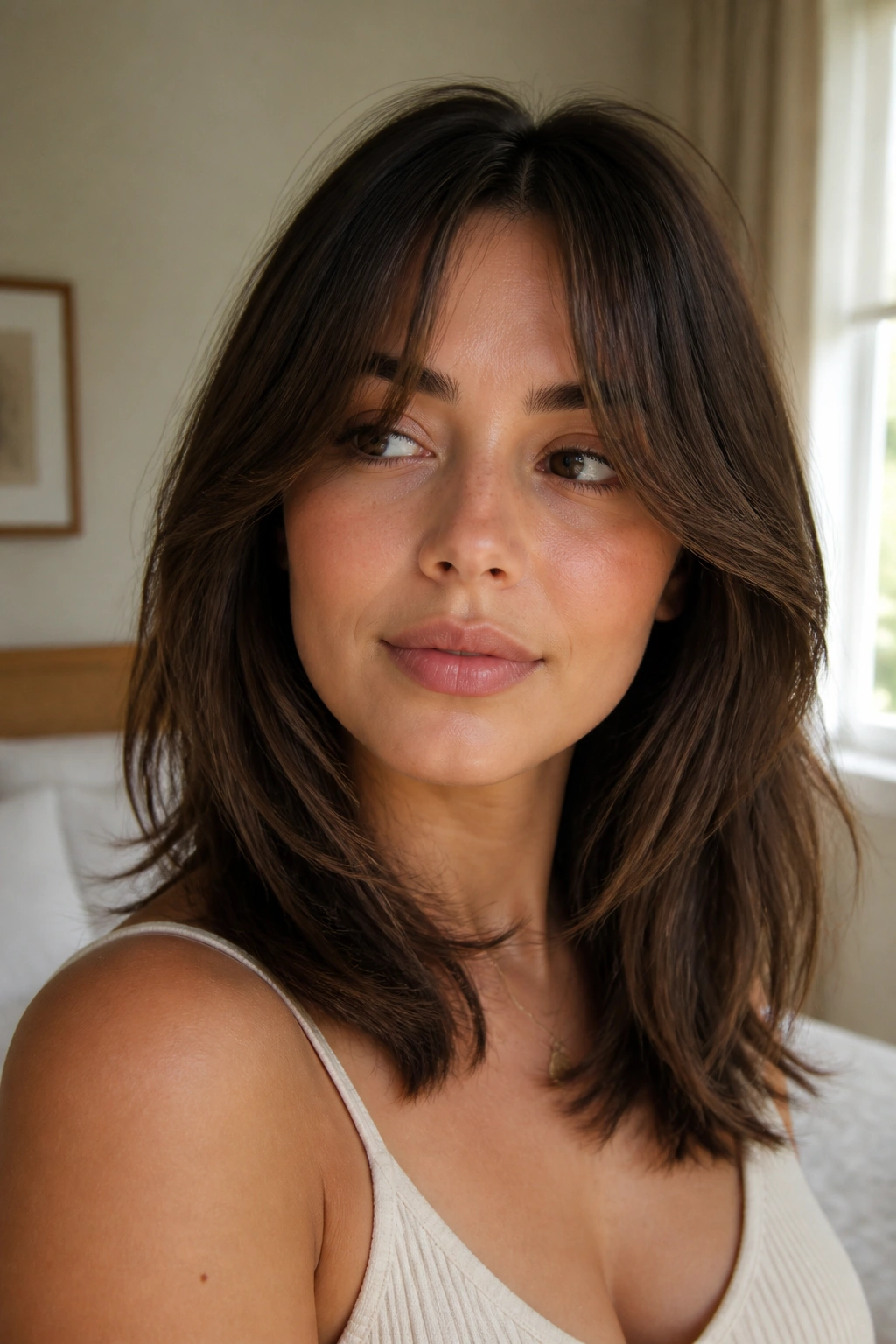
Curtain bangs are not a small decision. They change the whole mood of a haircut.
When they’re paired with shoulder-length layers, they give the front of the hair a soft, split-open shape that feels easy instead of severe. The fringe blends into the layers, so the cut looks like one idea rather than a bang add-on. That’s why this style keeps showing up on medium hair—it solves the problem of flatness near the hairline.
How to wear them
Blow-dry the bangs forward first, then sweep them off-center with a round brush. If you skip that first step, they can split in weird places and sit too flat against the forehead.
This cut is especially kind to hair that grows out quickly. The bangs can drift into face-framing pieces, which buys you time between trims. Not bad.
For the rest of the hair, ask for medium layers that start around the chin and soften toward the shoulders. You want softness, not a hard step.
4. Choppy Layers on a Lob

Not every layered cut needs to be soft. Sometimes the point is to look a little more undone.
A choppy lob gives medium hair some bite. The layers are shorter, more separated, and usually cut to create visible ends instead of a smooth blend. That makes the hair look fuller and more textured, especially if your strands are straight or only slightly wavy.
This is the cut for people who hate spending twenty minutes trying to fake volume. A bit of texture spray, a quick rough-dry, and you’re close enough. It can also take blunt hair from neat to edgy without losing the shoulder-grazing length that makes medium hair so wearable.
What to ask for:
- A lob that lands around the collarbone or just above it
- Light internal layering for movement
- Piecey ends, not feathered ends
- A bit of texture around the front
Skip this if your hair is already fragile and over-thinned. Choppy is good. Sparse is not.
5. Feathered Layers for Fine Hair

Fine hair needs a careful hand. Too many layers, and it can go soft at the top and see-through at the bottom in a hurry.
Feathered layers are different. They’re cut and styled to look airy, with the ends moving outward instead of sitting in one heavy line. On medium hair, that can make the whole head look fuller because the shape catches light better and the roots don’t have to carry so much weight.
The styling part matters
Use a round brush or a large velcro roller to lift the top sections while the hair cools. That soft bend is what sells the cut. If you air-dry feathered layers without any help, they can collapse into nothing.
A light mousse at the roots is often enough. Heavy creams are a bad match here; they drag the hair down and erase the whole effect.
This style is a good fit if you want movement without obvious chopping. It reads polished, but not stiff.
6. Butterfly Layers for Medium Hair
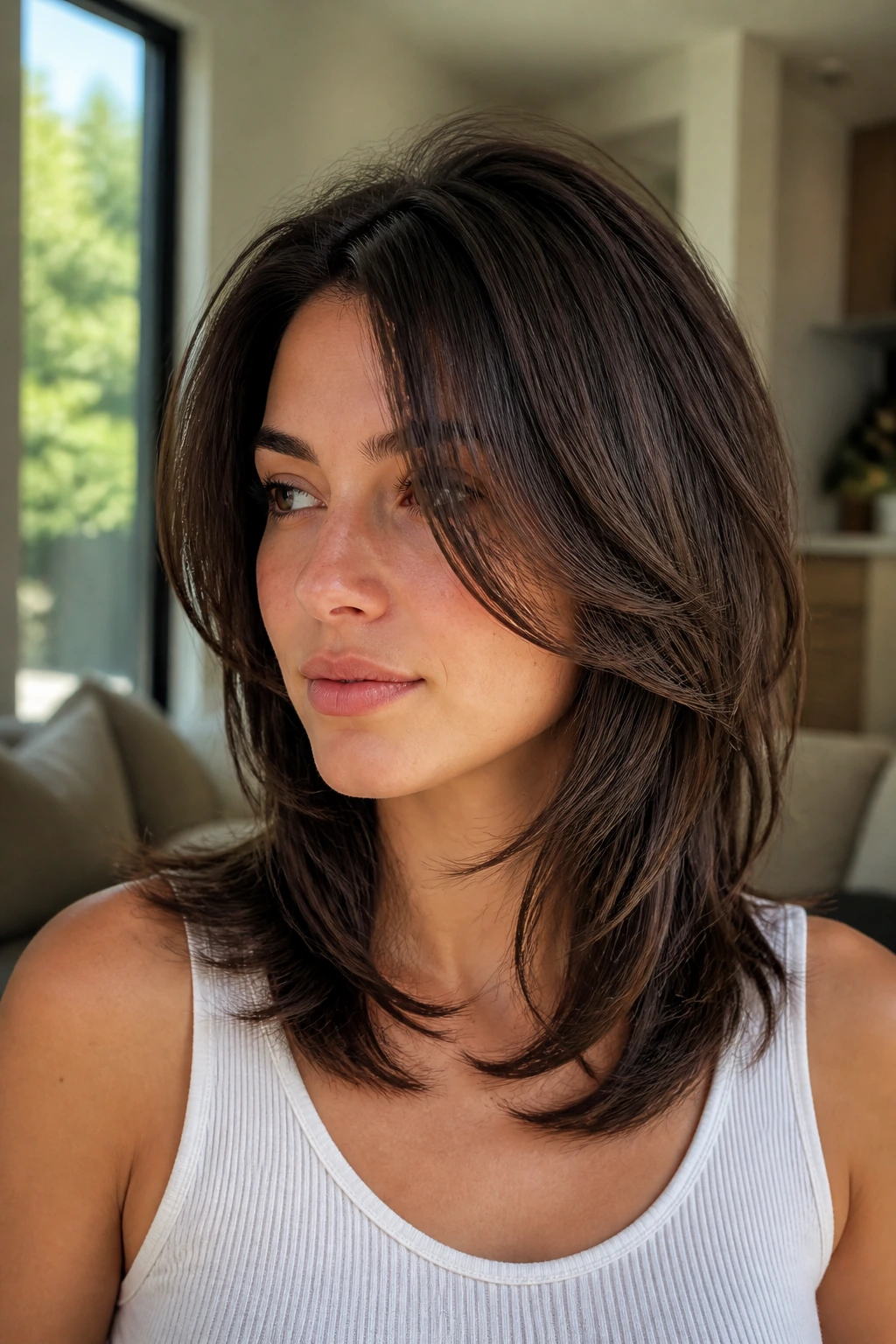
The butterfly cut works because it gives you two moods in one haircut. The top layers create lift and shape, while the longer bottom layers keep the length intact.
That’s a smart move on medium hair. You get volume near the crown and cheekbones, but the rest of the hair still falls with enough weight to look full. On blow-dried hair, the difference is dramatic. On air-dried hair, it’s softer, but still there.
The cut usually uses shorter face-framing layers that blend into longer layers below the chin. That means the front can flip out and move independently while the back stays smoother. It’s a little glamorous, but not fussy.
Why people keep asking for it
Because it gives the feeling of long hair without the drag. That’s the whole appeal. The silhouette looks full when the hair is down and easy when it’s clipped up.
If your hair is very fine, ask for a lighter version. If it’s thick, the full shape can be gorgeous.
7. Shag-Inspired Layers With a Soft Fringe

Picture second-day hair that looks better than day one. That’s the shag’s natural habitat.
A shag-inspired medium cut uses uneven, airy layers to make the hair look lived-in and a little bit cool without trying too hard. The fringe is usually soft and broken up, not blunt. The result feels relaxed, which is exactly why people with natural wave or bend love it.
The beauty of this cut is that it doesn’t ask for perfection. A little mess is part of the look. In fact, a perfectly brushed shag can look wrong—too neat, too precious. The piecey layers need room to fall on their own.
If you want a strong shape without heavy maintenance, this is one of the best medium length haircuts with layers to ask about. Use a diffuser if you have wave or curl. If your hair is straighter, rough-dry it and pinch a touch of styling paste into the ends.
8. U-Shaped Layers for Thick Hair
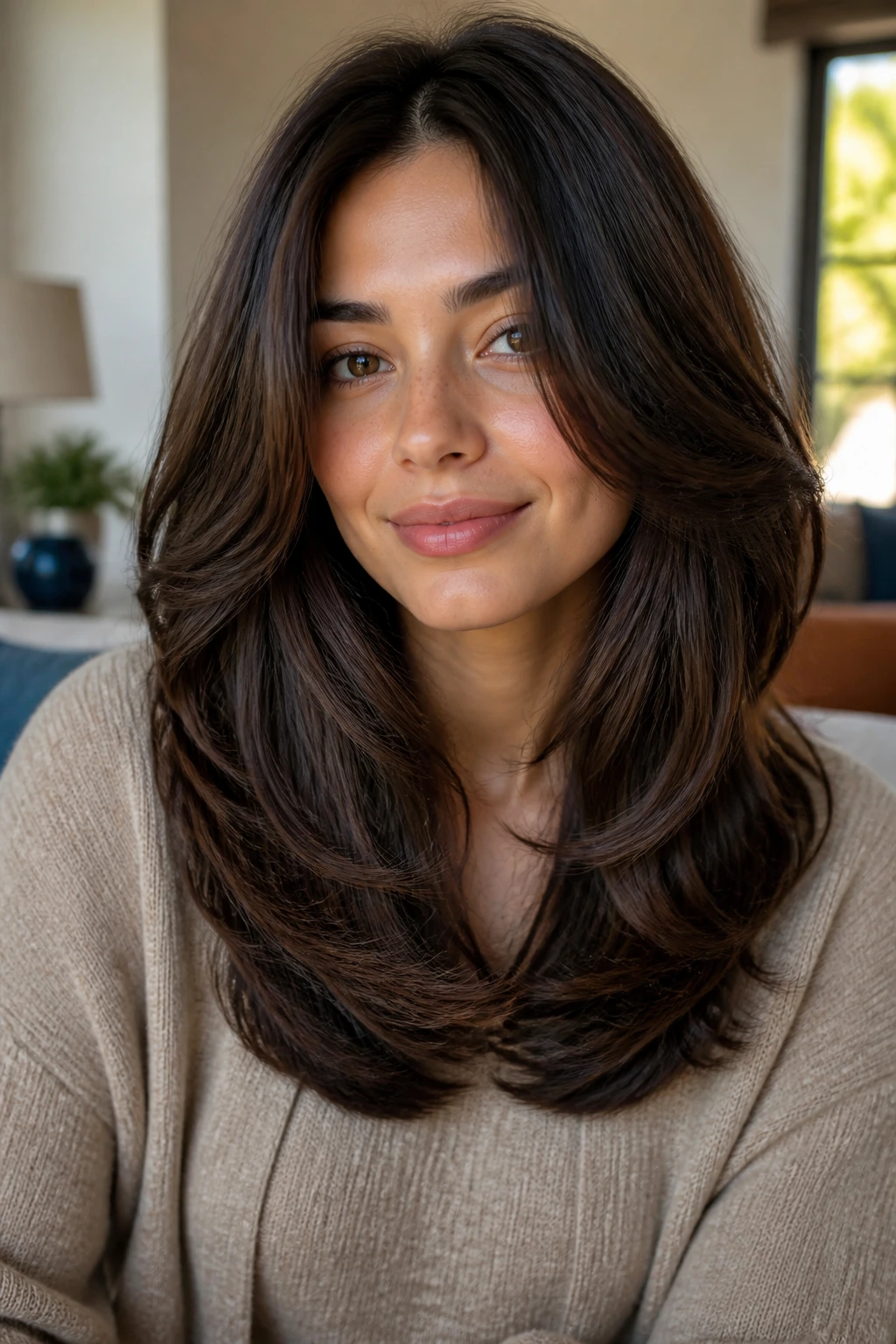
Thick hair does not always need more layers. Sometimes it needs a cleaner shape.
A U-shaped cut keeps the center slightly longer and curves the sides inward, which stops thick hair from turning into a box. Add layers inside that shape, and the haircut loses weight without losing its sense of fullness. That matters. Too much chopping can make thick hair puff out in the wrong places.
This cut is especially good if you want to wear your hair down often. The rounded outline keeps the back soft, while the internal layers help the hair sit closer to the head. It also grows out nicely, which is worth saying because some heavily layered cuts become awkward fast.
Ask for long internal layers and a curved perimeter. If your stylist starts slicing too high through the bulk, the cut can get frizzy or triangular. No one wants that.
9. V-Shaped Layers for Straight Hair

A V shape sounds dramatic, and it is. That’s part of the appeal.
On medium length hair, a V-shaped layered cut tapers the back into a soft point while the front pieces stay longer. Straight hair shows this shape beautifully because the lines are so clean. The layers add movement, but the silhouette still looks sharp and intentional.
This is one of the few layered cuts that can make straight hair feel less plain without pushing it into a shag or lob. The back keeps a nice sweep, and the front pieces fall forward in a way that looks good in a low ponytail too. Small win, but a real one.
If you like wearing your hair sleek, this shape is a strong choice. If you prefer a fuller, rounder outline, go with a U shape instead. Those two cuts are cousins, not twins.
10. Invisible Layers for a Blunt Look
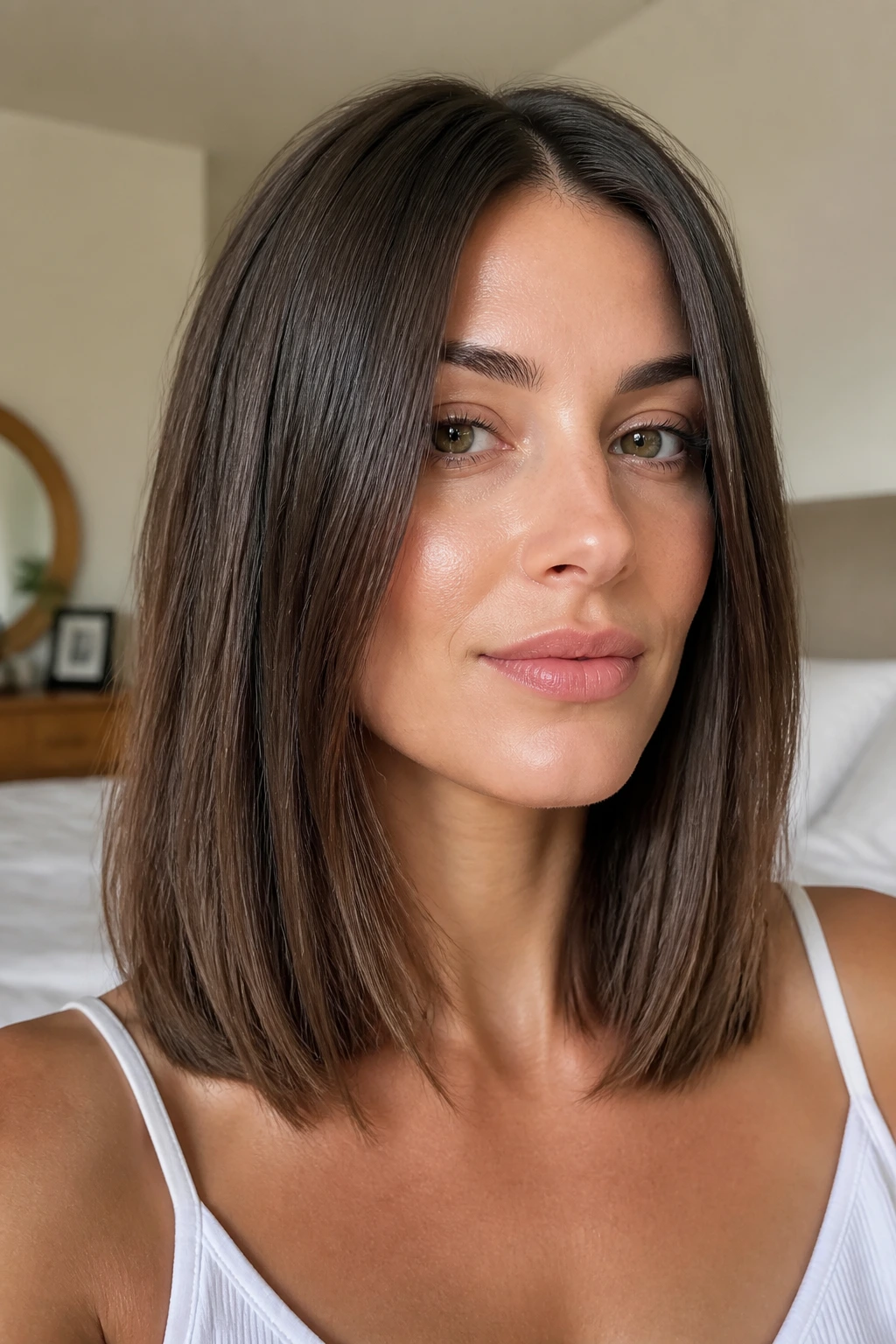
Want movement without making the layers obvious? Ask for invisible layers.
These are tucked inside the haircut, so the outer line still looks blunt and full. You get a cleaner surface with a little bend underneath. That’s a smart option if you like simple hair that still moves when you turn your head. It’s also a favorite for people who want to keep the ends looking thick.
The cut depends on precision. The stylist removes weight from the interior sections, not the perimeter. That means the hair keeps a solid edge at the bottom while the inside layers stop it from feeling heavy. It sounds subtle because it is subtle. But subtle can be the whole point.
This style works especially well if you wear a center part and don’t want obvious steps around the face. It gives medium hair a softer fall without shouting about it.
11. Razored Layers for Soft, Airy Texture
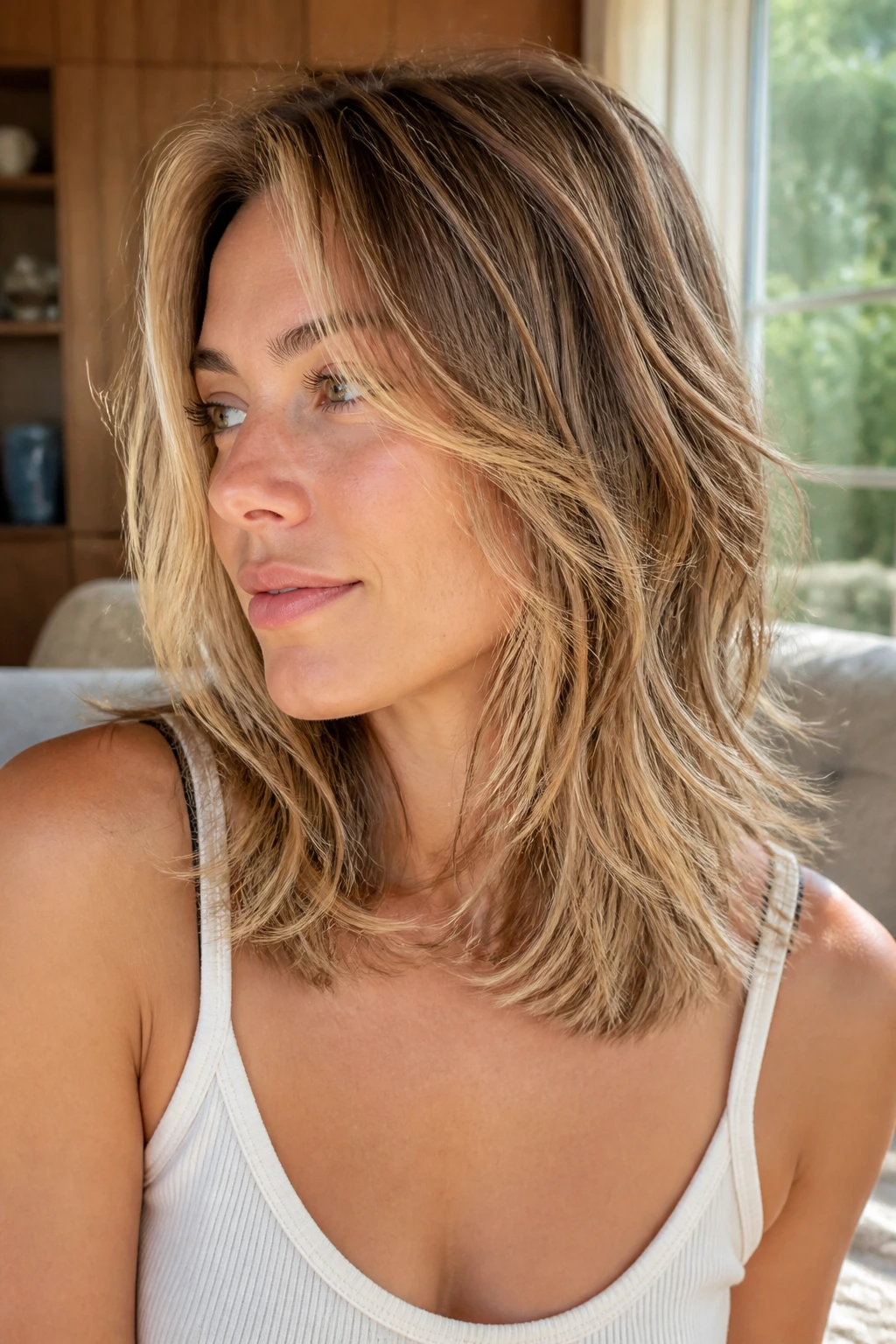
A razor can be a great tool, but it’s not the one-size-fits-all answer people sometimes pretend it is.
On medium hair, razor-cut layers create airy edges that move easily and break up dense sections. That makes the haircut feel lighter and looser. The finish has a little slip to it, almost like the hair is feathering itself as it dries. It’s lovely on hair that needs softness.
What to watch for
Very dry or fragile ends can look worse with a razor cut, not better. If your hair already splits easily, scissors may be safer. A good stylist will know when to use the razor lightly and when to put it down.
This cut shines when paired with a bit of texture cream or a light wave. It’s not meant to look stiff. It should move when you shake your head. That’s the test, honestly.
12. Side-Swept Bangs With Layers

Side-swept bangs are for people who want a little framing without the commitment of full fringe. They also give medium hair an easy diagonal line, which can make the whole cut feel softer.
The bang should blend into the rest of the layers, not sit on top like an afterthought. If the shortest pieces are cut with enough length to sweep across the forehead and disappear into the side, the haircut will look balanced. That’s the difference between dated and useful.
This style is good if your hairline has a cowlick or if you do not love a centered front. A side part can hide a stubborn growth pattern better than you’d expect.
For styling, blow the bangs in the opposite direction first, then sweep them back. That little trick gives them a bend instead of a flat crease. Cheap-looking bangs usually need better drying, not more product.
13. Wavy Lob With Internal Layers

Wavy hair wants shape, not clutter.
A wavy lob with internal layers keeps the outline of the cut clean while giving the waves space to separate. The layers usually sit beneath the surface, which stops the waves from turning into one solid triangle. That’s a real risk with medium hair if the density is high and the cut is too blunt.
The best version of this cut looks different once the hair dries. Air-dried waves get a little piecey. Diffused waves get more lift at the roots and a fuller curve through the mid-lengths. Both versions work, which is why this cut is so easy to live with.
Styling note
Use a light leave-in on the ends, then scrunch in a foam or gel while the hair is damp. Heavy cream can weigh the wave down and blur the layers.
If your waves are loose, internal layers are a better bet than a highly textured shag. You’ll keep the shape without losing control.
14. Straight Medium Cut With Internal Movement
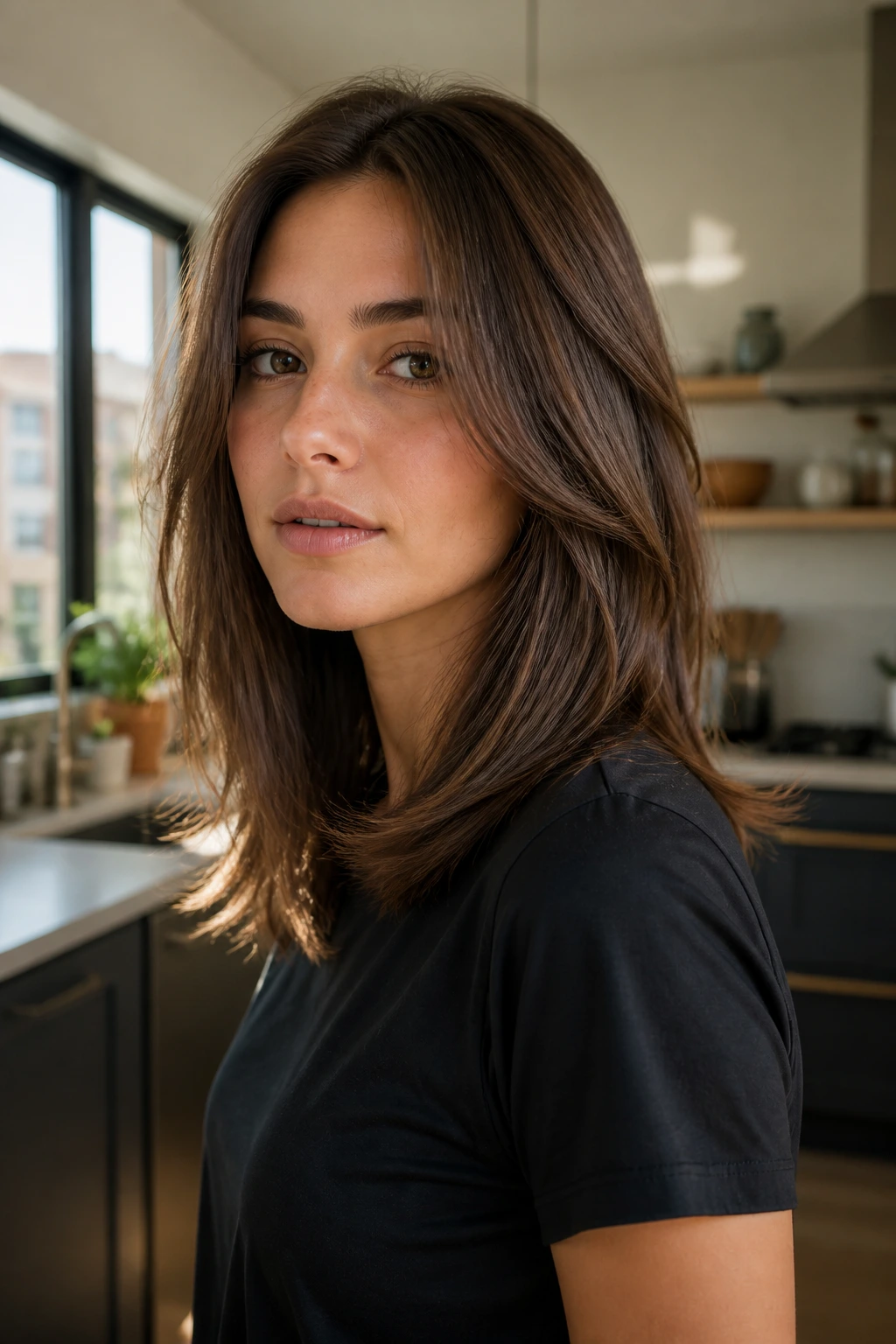
Straight hair can look boring fast, but not when the cut has hidden movement inside it.
This style keeps the outside shape clean and simple, while the inner layers stop the hair from hanging like a curtain. The result is sleek, but not flat. It’s one of the smartest choices for someone who likes a polished finish and does not want obvious choppiness around the face.
The real value here is versatility. Blow it smooth and it looks refined. Add a soft bend at the ends and it feels more relaxed. The haircut does the work either way.
One small detail matters: the ends should still have enough density to look strong. If the stylist over-thins the interior, straight hair can go stringy and the whole point falls apart. Keep the shape healthy.
15. Rounded Layers for Curly Hair
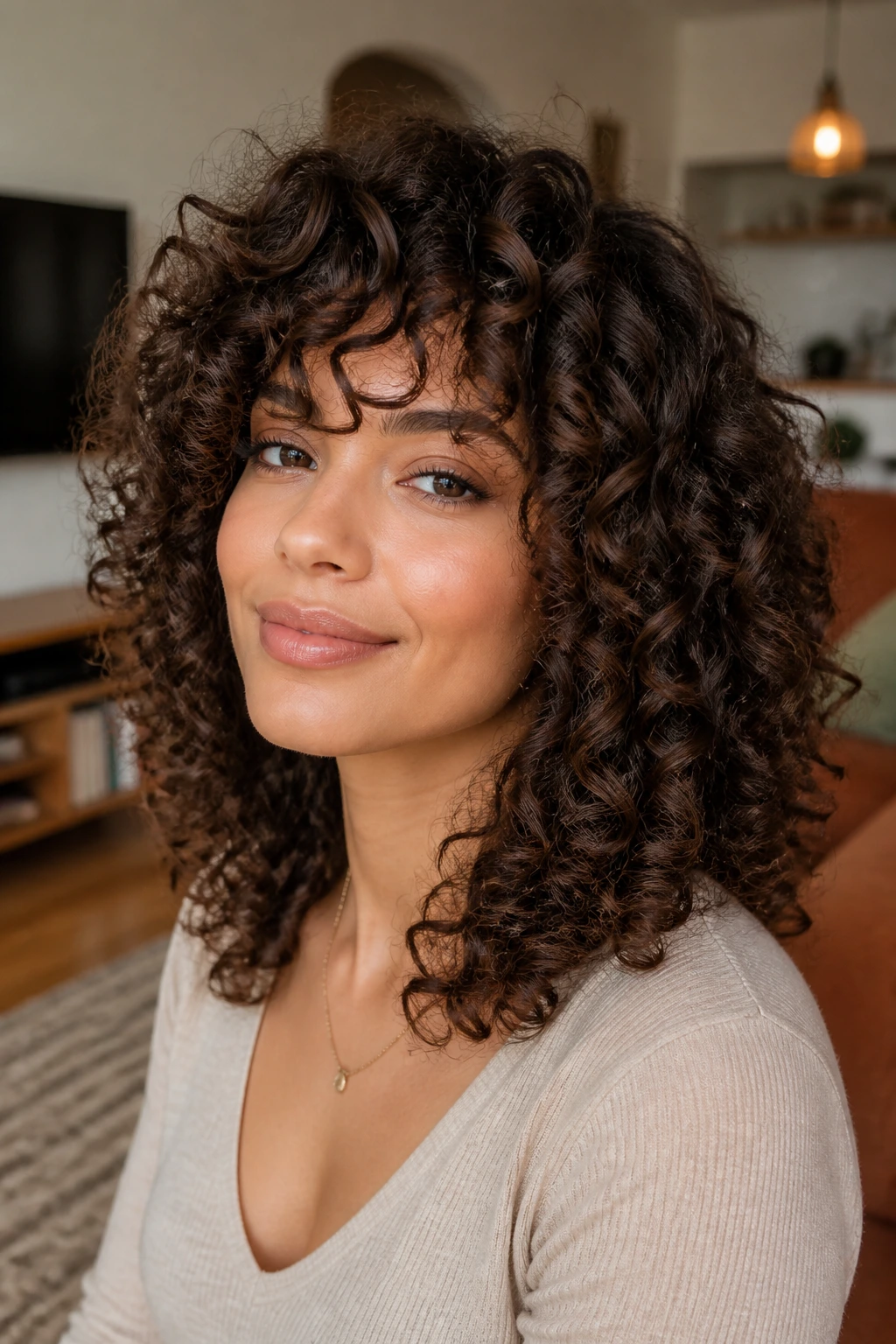
Curly hair likes a shape that respects the curl pattern. Rounded layers do that better than most cuts.
Instead of creating a flat shelf or a triangle, the layers follow the curve of the head and the spring of the curls. That helps the shape expand evenly, which is a big deal at medium length. Curly hair can get bulky in one spot and narrow in another if the layers are guessed at instead of planned.
How to ask for it
- Ask for the hair to be cut in its natural curl pattern, not stretched straight
- Request rounded layers that maintain fullness at the sides
- Keep some length at the perimeter so the curls do not frizz outward
- Check the shape dry before anything gets shortened again
This is one of those cuts where a dry cut or curl-by-curl approach can make a real difference. The curl shrinks as it dries, and that shrinkage can fool people into cutting too much off. Annoying, but true.
16. Wolf-Cut Lite for Medium Length Hair

The full wolf cut can be a lot. The lighter version is easier to wear.
A wolf-cut lite keeps the edgy layering through the crown and cheek area, but it softens the shape so it works on medium hair without looking costume-y. You get lift up top, texture in the middle, and a looser finish at the ends. It feels rebellious, but still manageable.
This cut is strongest on hair that already has some bend or roughness. If your hair is pin-straight, you’ll need more styling work to make it read the right way. Not impossible. Just more effort.
The good part is how much personality it adds. Even a plain outfit looks more interesting with this haircut. The bad part is that it can lose shape if you leave it too long between trims. Layers this short need upkeep.
17. Textured Shoulder-Grazing Cut
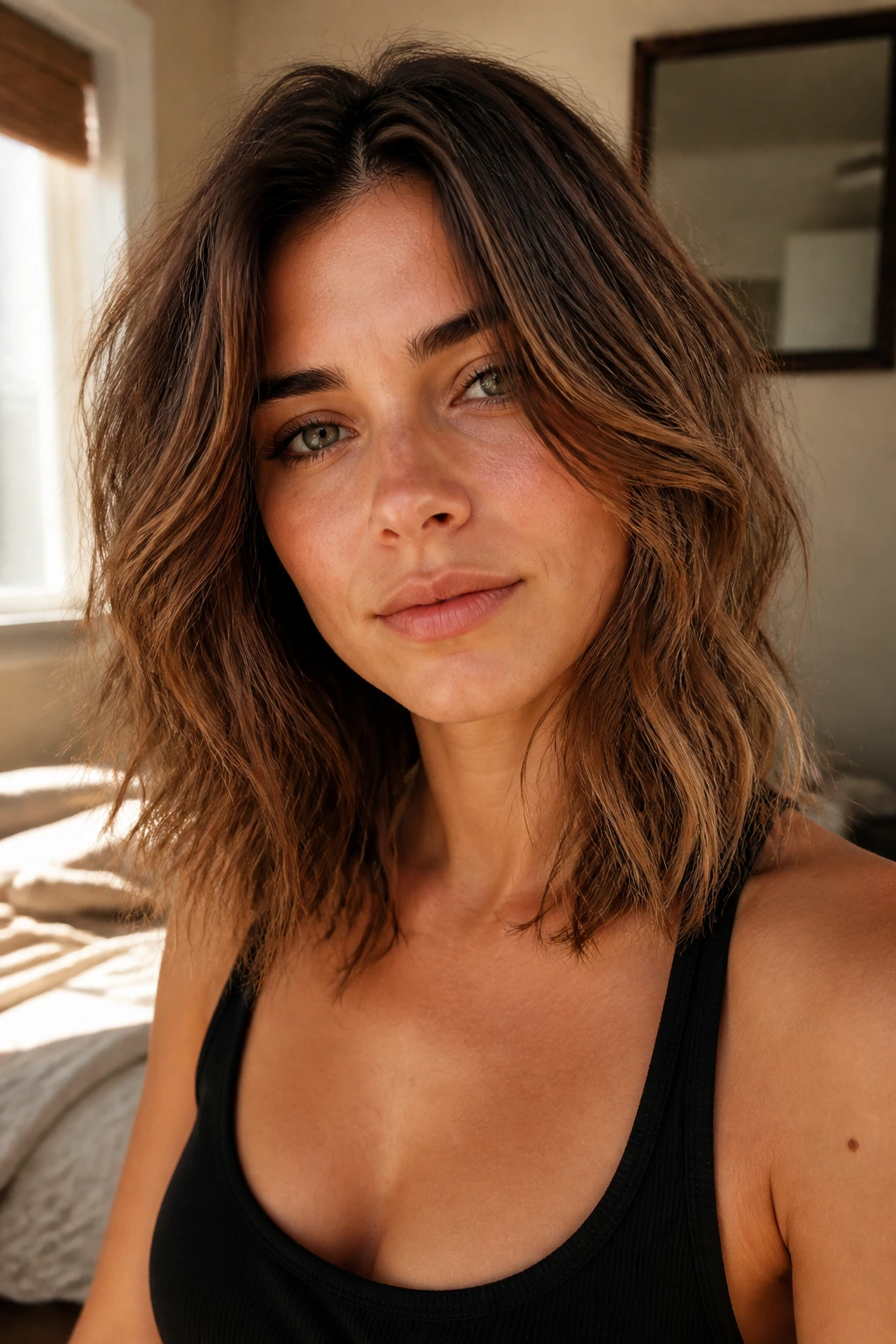
Shoulder-grazing hair has a built-in problem: it can look too safe.
Texture fixes that. A textured medium cut keeps the length in the shoulder zone but breaks up the ends enough to give the hair some edge and movement. It’s not as dramatic as a shag and not as polished as a straight lob. That middle ground is probably why so many people end up loving it.
The best version is loose and touchable. You want the ends to separate a little, not fray. That means the layers should be placed to create movement through the mid-lengths while the bottom edge stays strong enough to look intentional.
This is a useful cut if your routine changes from day to day. It can air-dry, blow-dry, or be loosely curled without fighting back. Hair that behaves across more than one styling method is worth keeping.
18. Long Layers With Blunt Ends

Long layers are not always about removing weight. Sometimes they’re about shape.
On medium hair, long layers with blunt ends keep the perimeter full while adding motion through the middle. That balance is gold if your hair is medium or fine and you want body without losing the look of thickness. The blunt edge keeps the cut grounded. The layers stop it from feeling stiff.
This is the cut I’d suggest for someone who likes their hair to look healthy first and styled second. It grows out gracefully, which matters because a lot of layers get ugly at the six-week mark. These don’t.
There’s a nice side effect too: curled ends hold their shape better when the bottom line is blunt. The waves have something to sit on.
19. Deep Side-Part Layers
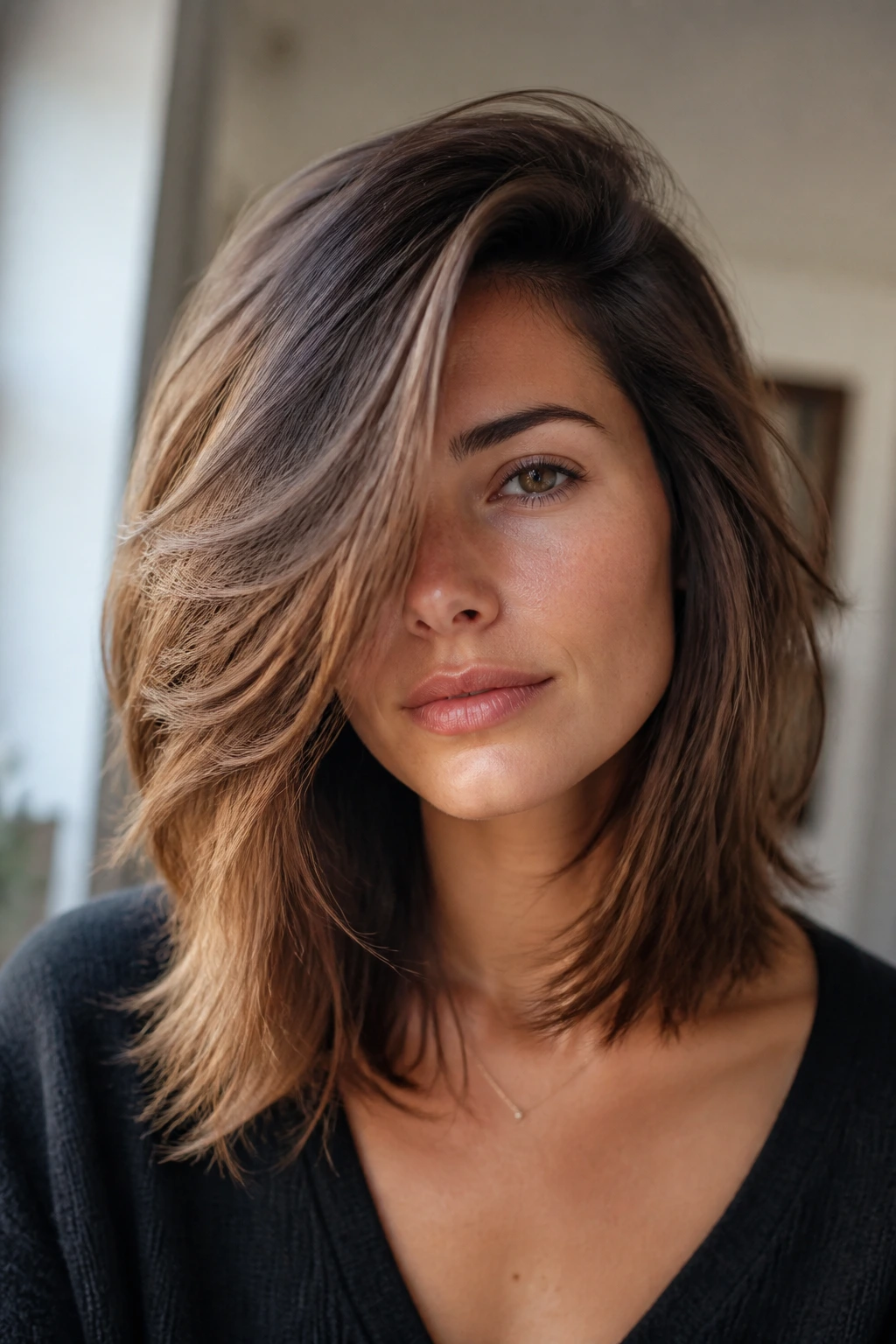
A side part can change a haircut more than people expect. Move the part, and suddenly the volume shifts with it.
Deep side-part layers work especially well on medium hair that falls flat at the roots. The longer side gets a bit more lift, while the opposite side lays closer to the face. That asymmetry can sharpen the whole cut and make the layers feel more dramatic without actually shortening much hair.
This is a smart move for rounder face shapes, but it can help almost anyone who wants more root volume. The trick is keeping the layers light enough to follow the part instead of fighting it. If the top is too heavy, the lift disappears.
You do not need a heavy side-swept fringe for this. Sometimes the part alone is enough. Small change. Big difference.
20. Air-Dry Layers for Busy Mornings

Some cuts are made for hot tools. Others are made for a towel and a decent leave-in.
Air-dry layers on medium hair should be cut to fall into place with as little help as possible. That usually means soft face-framing pieces, a little internal removal of weight, and ends that still look full when they dry on their own. The haircut should do most of the work before you touch it.
What to ask your stylist
- Keep the shape soft and even around the shoulders
- Remove bulk from the inside, not the outer line
- Add face-framing pieces that dry into a bend
- Avoid over-thinning the ends
This kind of cut is honest. If your hair dries fuzzy or puffy, the shape will show it. But when it’s done well, it saves time every single week. That’s not glamorous, just useful.
And useful hair usually gets worn the most.
Final Thoughts
The best medium length layered cut is the one that matches how your hair behaves when nobody is styling it. That part gets ignored all the time, and it’s why some cuts look amazing on day one and frustrating by day three.
A blunt edge with invisible layers, a shag with soft fringe, a butterfly cut, a feathered lob—each one solves a different problem. Volume, movement, density, face shape, styling time. Pick the problem first, then the shape.
If you’re sitting between two choices, go with the one that makes your hair feel lighter without making it look thin. That balance is where medium length haircuts with layers usually do their best work.
