



A good pixie cut on a round face does one thing better than almost any other short haircut: it gives you shape where you need it and a little lift where it counts.
That matters even more when you’re past the age where you want your hair to fight your face. The best short cuts for round faces over 40 don’t try to hide everything. They create a vertical line, soften the widest part of the cheeks, and keep the whole look light around the jaw. I always think the sweet spot is a cut that feels crisp without looking severe.
Hair texture changes the game, too. Some people get finer strands at the temples, some get thicker growth at the crown, and some wake up with one stubborn cowlick that refuses to behave unless the cut is working with it instead of against it. A pixie can solve a lot of that. A bad pixie can make all of it louder.
So the real question isn’t whether a pixie suits a round face. It does. The question is which version gives you height, movement, and softness without turning into helmet hair the minute you leave the salon chair.
1. Side-Swept Layered Pixie
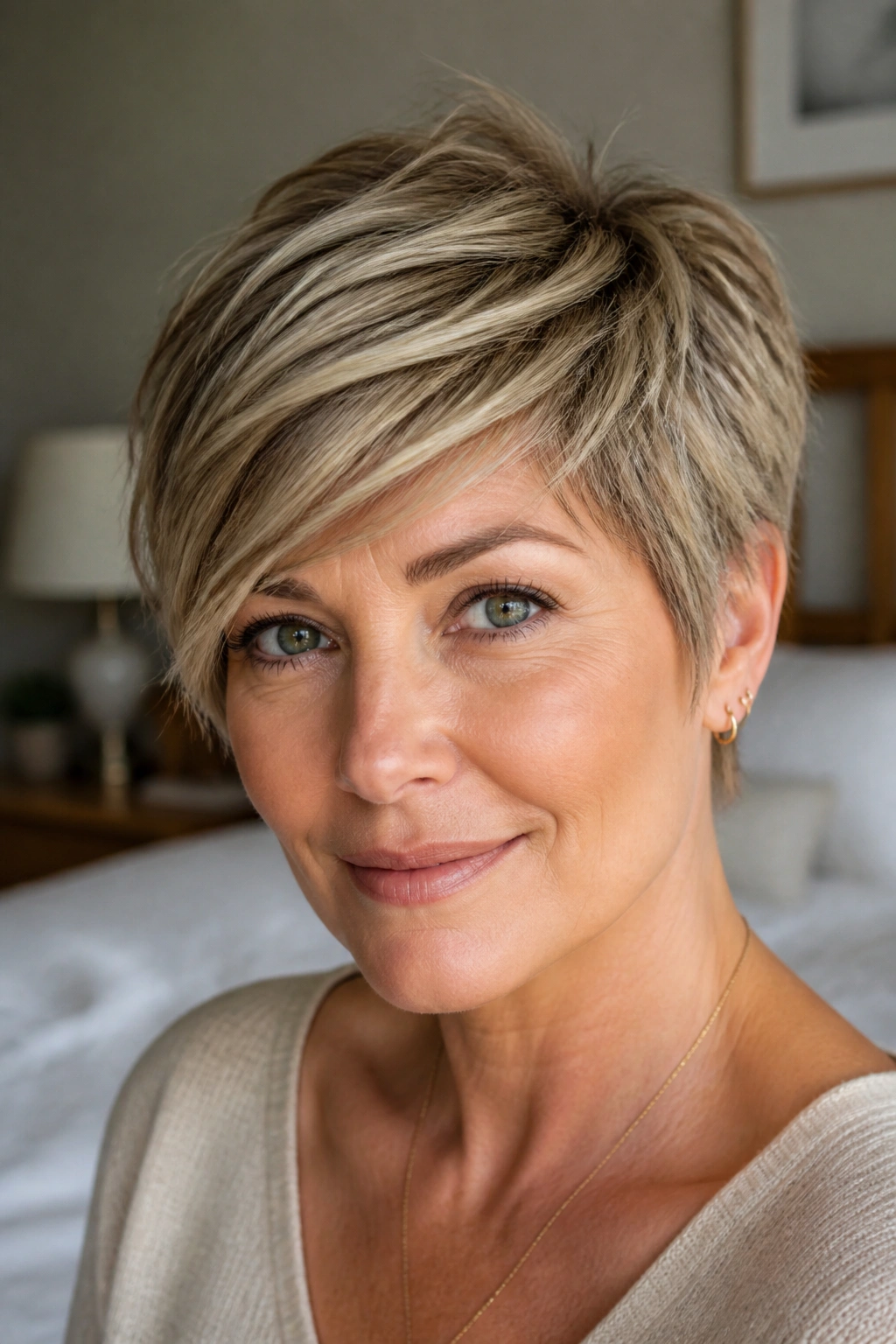
A side-swept layered pixie is the workhorse cut in this group. It softens the widest part of a round face without flattening the whole head, which is why I keep coming back to it for people who want short hair but still want some movement around the forehead.
Why It Flatters
The side-swept fringe pulls the eye diagonally, and that diagonal line does a lot of quiet work. It breaks up the width at the cheeks, gives the front some energy, and keeps the cut from sitting in a perfect little circle around the face. That last part matters. Perfect symmetry is often the enemy here.
Ask for short, tapered sides and a top that stays around 2 to 3 inches long, with the longest piece falling just past the eyebrow. If your hair is fine, keep the layers soft. If it’s thick, the stylist can remove bulk under the crown so the top doesn’t puff out like a mushroom.
- Best for: straight to slightly wavy hair
- Salon ask: side fringe, stacked crown layers, tapered nape
- Styling note: blow-dry the fringe across the forehead, not straight down
- Maintenance: every 5 to 6 weeks
My honest take: if you want one pixie that feels easy, flattering, and not too fussy, start here.
2. Asymmetrical Pixie With a Longer Front
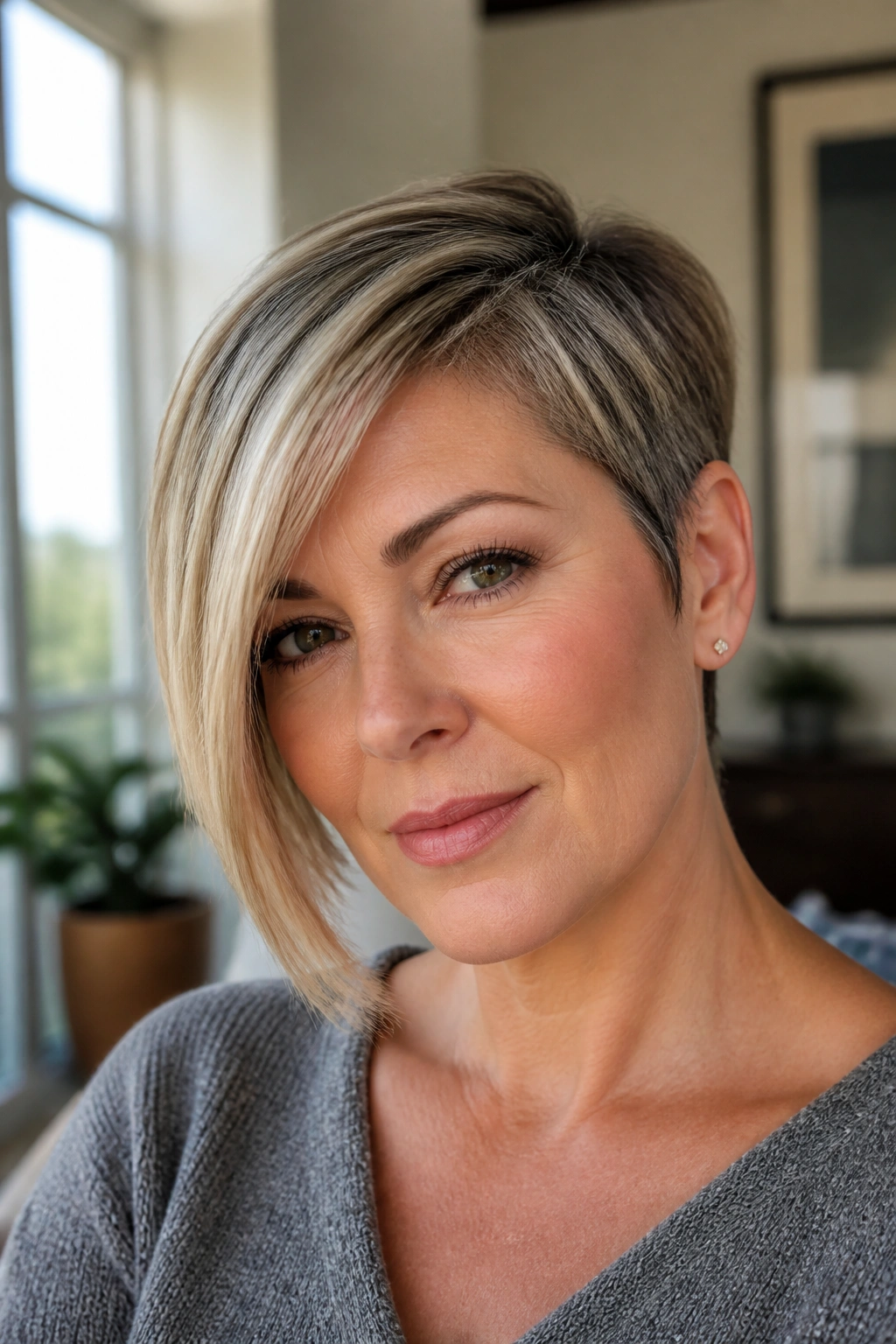
If you want sharper shape, asymmetry usually wins. On a round face, one longer side gives the haircut a built-in line that changes the whole silhouette.
The trick is not to make the difference dramatic just for the sake of drama. You do not need one side to be a bob and the other side to be a buzz cut. A difference of 1 to 2 inches is enough to make the face look longer and leaner, especially when the longer side falls just below the cheekbone. That little bit of length changes where the eye lands.
I like this cut for people who wear glasses or strong earrings, because the asymmetry frames them instead of competing with them. It also works well when your hair has a bit of natural bend. Pin-straight hair can do it, but it needs careful styling so the lines stay clean.
Wear it with a deep side part. Keep the heavier side smooth and the shorter side snug to the head. That contrast is the whole point.
3. Tapered Pixie With Lift at the Crown
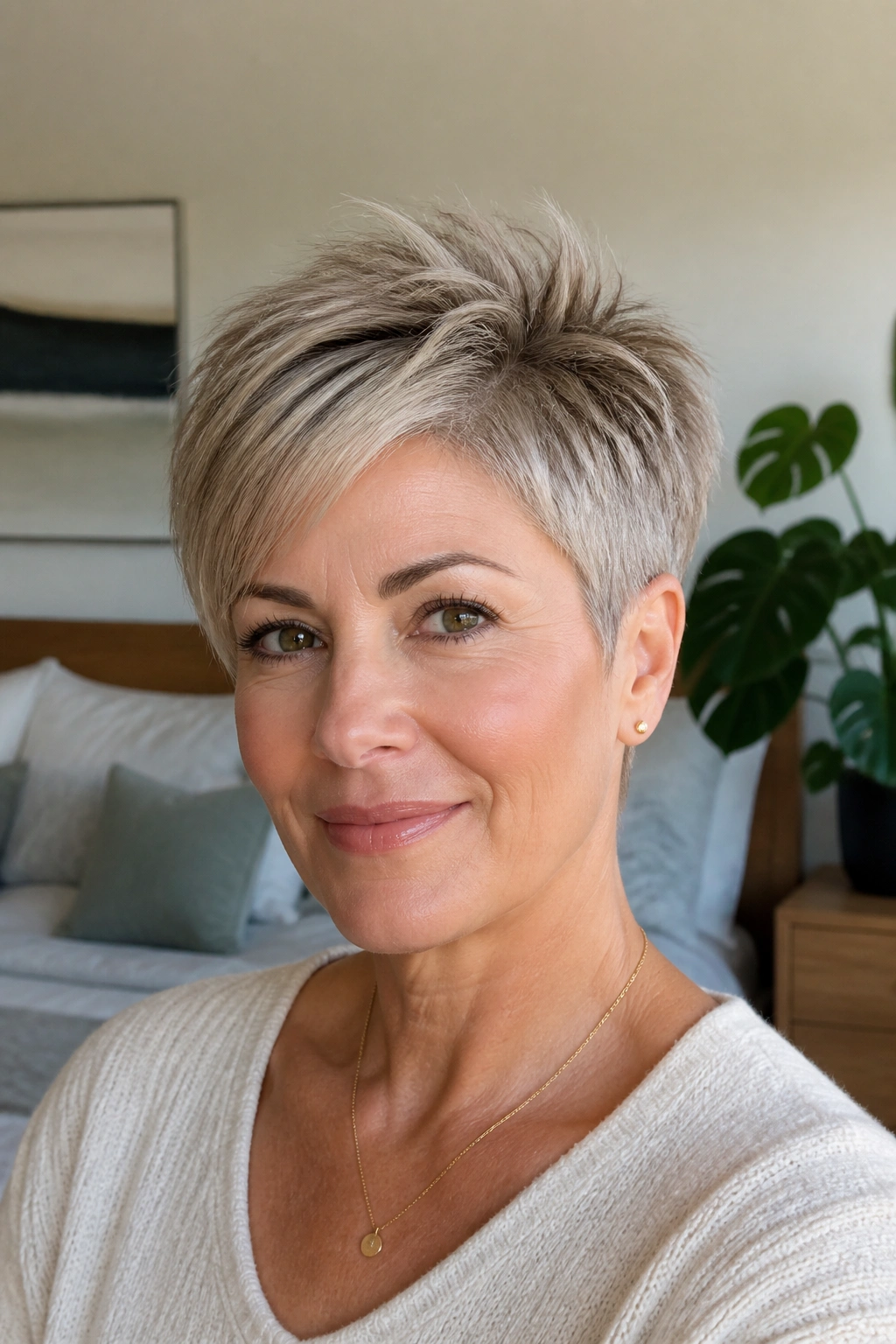
Why does a little height at the crown matter so much? Because round faces already carry width through the middle, and the easiest way to change that balance is to move the visual weight upward.
A tapered pixie with crown lift does exactly that. The sides hug the head, the nape stays neat, and the top builds a narrow column of height without looking teased or old-fashioned. I’m not talking about stiff hair that stands up on command. I mean a soft rise—enough to give the face a taller frame.
How to Style It
Use a root-lift mousse at the crown before blow-drying, then lift the hair up and slightly back with a medium round brush. If you have very fine hair, a pea-sized dab of lightweight paste at the roots after drying can help it stay put.
- Best for: fine or medium hair
- Shape detail: tight sides, narrow nape, taller crown
- Face effect: makes the face look longer, not wider
- Upkeep: every 4 to 5 weeks
A lot of people think volume means width. It doesn’t, at least not here. The right kind of volume goes straight up. That’s the point.
4. Feathered Pixie With Soft Ends
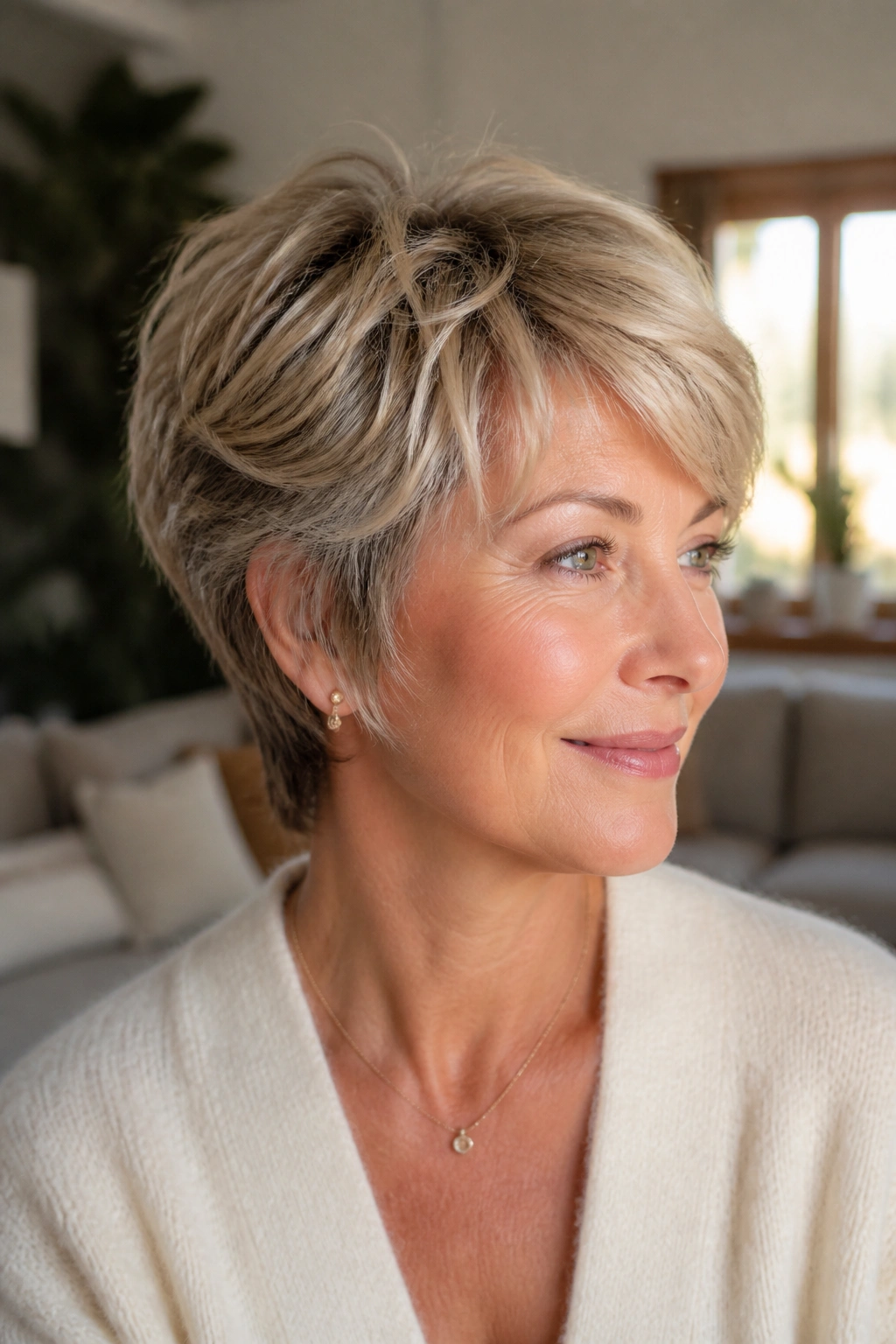
A feathered pixie is the cut I reach for when someone wants softness more than edge. It’s especially good if your face is round and your features are gentle, because the ends of the hair break up the outline instead of drawing a hard line around it.
Picture wispy layers that move when you turn your head. That’s the feeling. The ends shouldn’t look chopped or blunt. They should look air-kissed, almost brushed apart, which keeps the haircut light around the cheeks and jaw.
What Makes It Different
Feathering works best when the stylist uses a light point-cutting technique near the perimeter. That keeps the edges narrow and avoids the heavy shelf effect some pixies get when the layers are too blunt. It’s also a smart choice if your hair has a little wave, because the softness shows better when the strands bend naturally.
- Best for: medium hair, soft waves, delicate features
- Avoid: heavy, blunt bangs with this shape
- Styling product: a small amount of cream or soft wax
- Maintenance: every 6 weeks
There’s a sweetness to this cut that never feels childish. That’s hard to get right, and it’s why feathering is still worth asking for.
5. Long Fringe Pixie
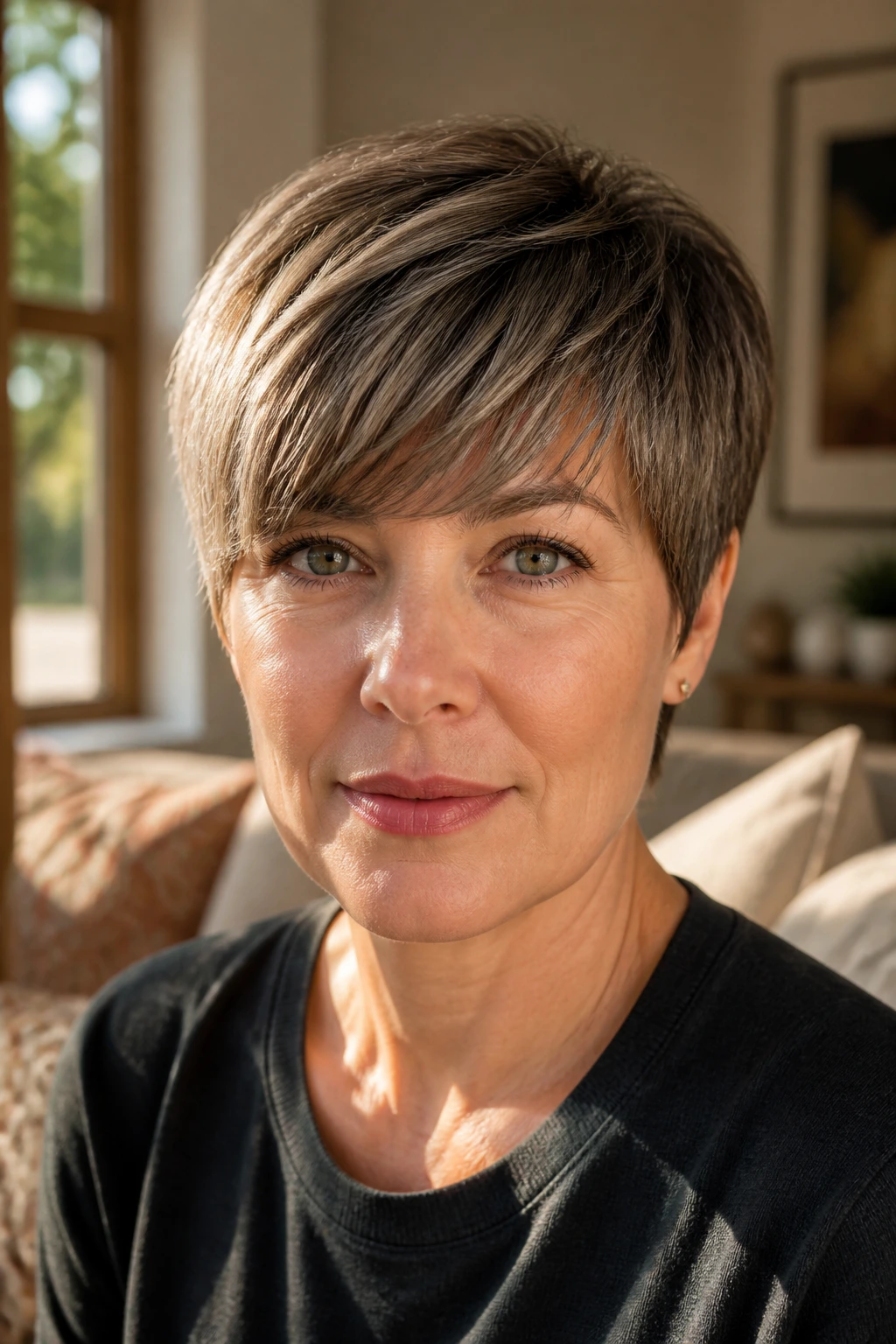
A long fringe pixie is one of the easiest ways to keep a pixie flattering on a round face without making it look too severe. The fringe gives you coverage where you want it, and the rest of the cut can stay clean and close.
I like this version because it gives you options. Sweep the fringe across the forehead on busy days. Push it to one side when you want more lift. Clip it back when you need your face fully open. That flexibility matters more than people admit. Short hair is supposed to simplify life, not lock you into one look.
The fringe should sit somewhere between eyebrow length and just below the brow, depending on your forehead height and hair texture. Too short, and the cut gets boxy. Too thick, and it can flatten the face. A little wispy movement at the ends keeps it modern.
This is also a good place to let silver or salt-and-pepper hair do its thing. The fringe softens the face, and the color gives the cut some natural texture without extra styling.
6. Choppy Textured Pixie
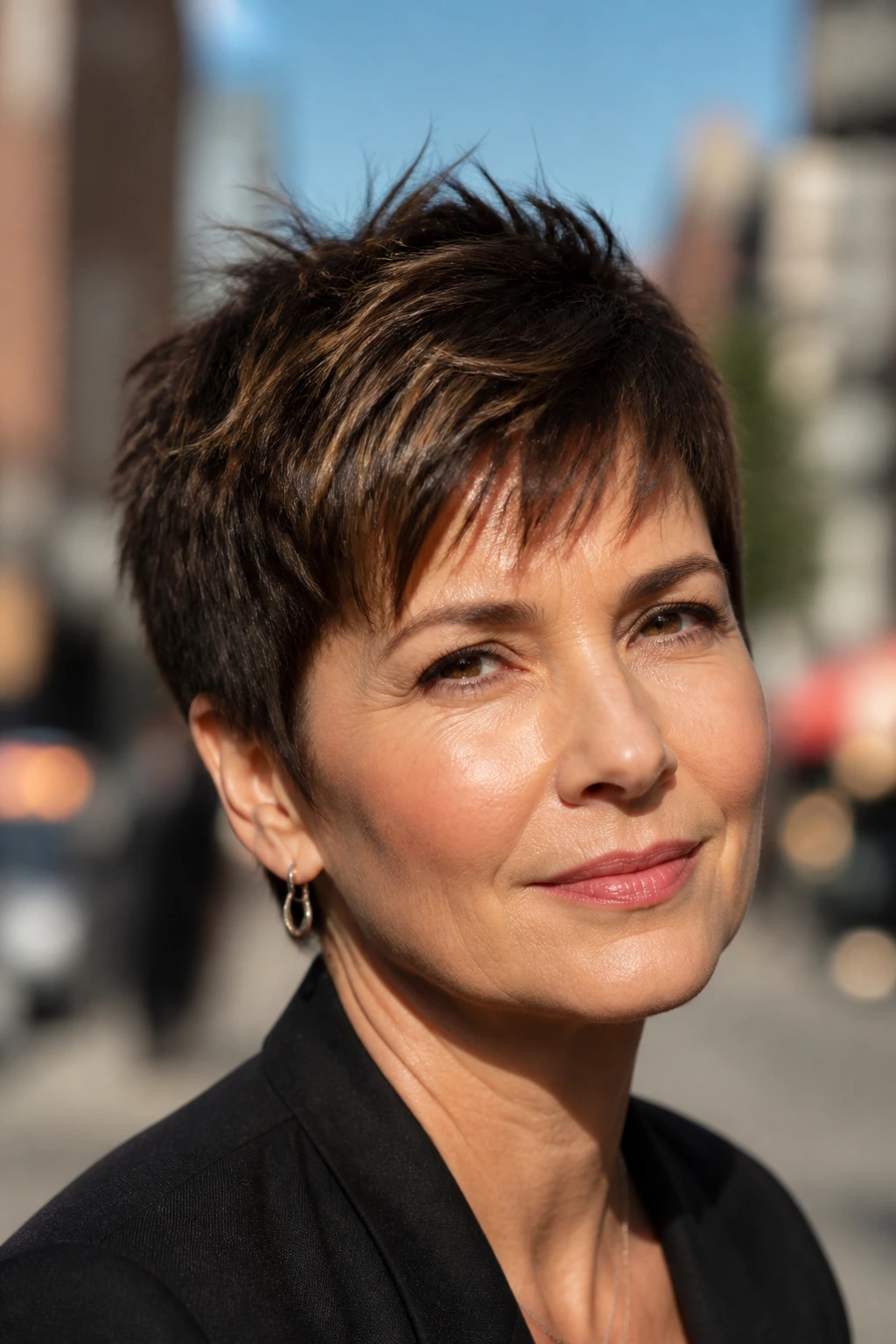
Choppy texture is the fastest way to keep a pixie from looking too round. The jagged ends break the outline, which is exactly what a round face needs when the goal is a little more edge.
This is not the same as a feathered pixie. Feathered is softer and more airy. Choppy is a little bolder, with visible separation between pieces. You can see the layers, and that matters because those little irregularities stop the haircut from reading as one solid shape.
I like this cut on people with thicker hair, since the texture takes weight out of the top and sides without making the hair feel thin. Ask for piecey layers cut with a razor or strong point-cutting, then style with a matte paste. A shiny cream can make the ends collapse together, and that ruins the point.
Keep the top long enough to mess with. Two and a half to 3 inches is usually the sweet spot. Shorter than that, and the shape can lose its personality fast.
7. Curly Pixie With a Side Part
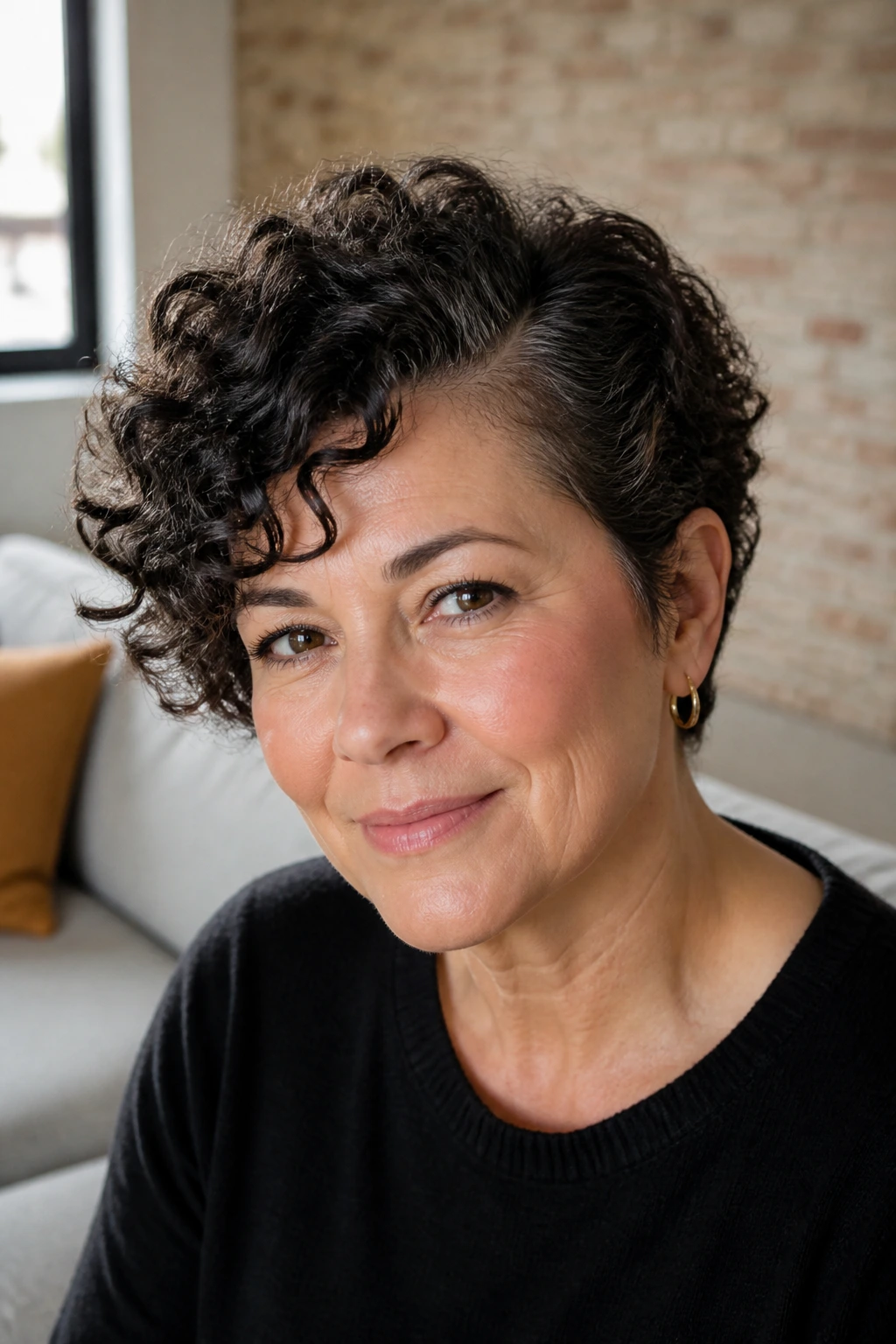
What happens when curly hair meets a round face? If the cut is wrong, you get width. If the cut is right, you get a soft halo with shape in all the right places.
The side part matters here. It breaks the curl pattern just enough to stop the whole style from sitting evenly around the face, which is where a lot of roundness sneaks in. Leave a little more length on top—usually 3 to 4 inches depending on curl tightness—so the curl can spring without puffing straight out.
How to Work With the Curl
Use a curl cream or lightweight gel on damp hair, then diffuse on low heat until the roots are dry and the curls have a firm cast. Scrunch only after the hair is mostly dry. If you touch it too soon, you get fuzz. Nobody wants that.
- Best for: wavy, curly, and coily hair
- Cut detail: longer top, tapered sides, side part
- Styling tool: diffuser, not a brush
- Maintenance: every 6 to 8 weeks
The best curly pixie doesn’t fight the curl pattern. It gives the curl somewhere to go.
8. Silver Fox Cropped Pixie
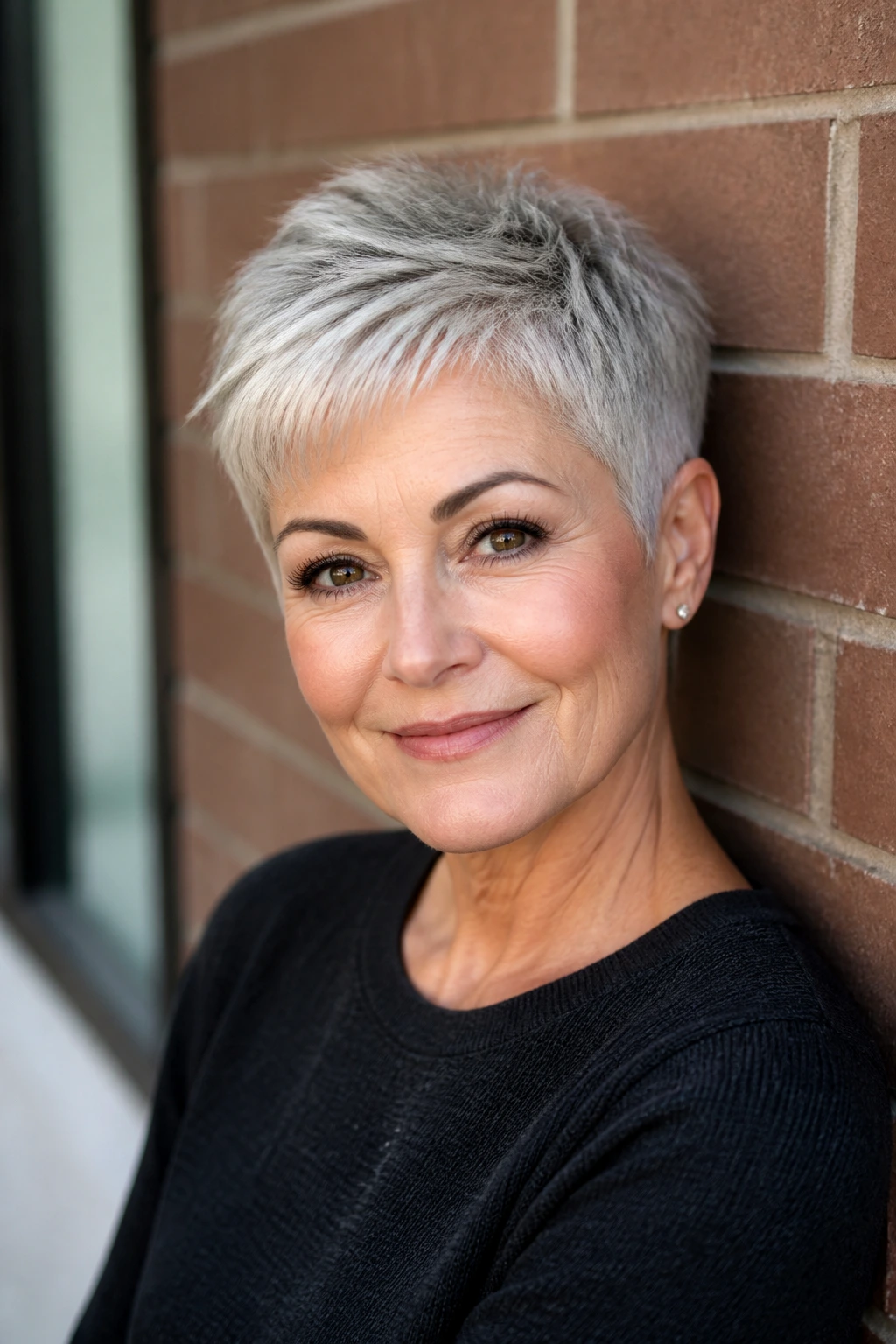
Silver hair looks especially good in a cropped pixie because the short shape lets the color read as deliberate, not accidental. That’s a big difference. A longer cut can sometimes make gray blend in too softly; a cropped pixie gives it edges.
I’m a fan of this cut on round faces because the clean shape keeps the color from spreading visually across the widest part of the face. Instead, the eye moves around the shape of the crop. If the crown has a little lift and the sides are kept tidy, the whole thing feels sharp in a good way.
The styling part is easy. Use a light styling cream or a tiny bit of paste—no heavy product, because silver hair can go dull fast. If the hair has yellowing at the ends, a purple shampoo once every week or two is enough for most people. More than that, and the tone can go flat.
This cut works with dignity, sure, but also a little attitude. That’s the fun part.
9. Undercut Pixie With a Soft Top
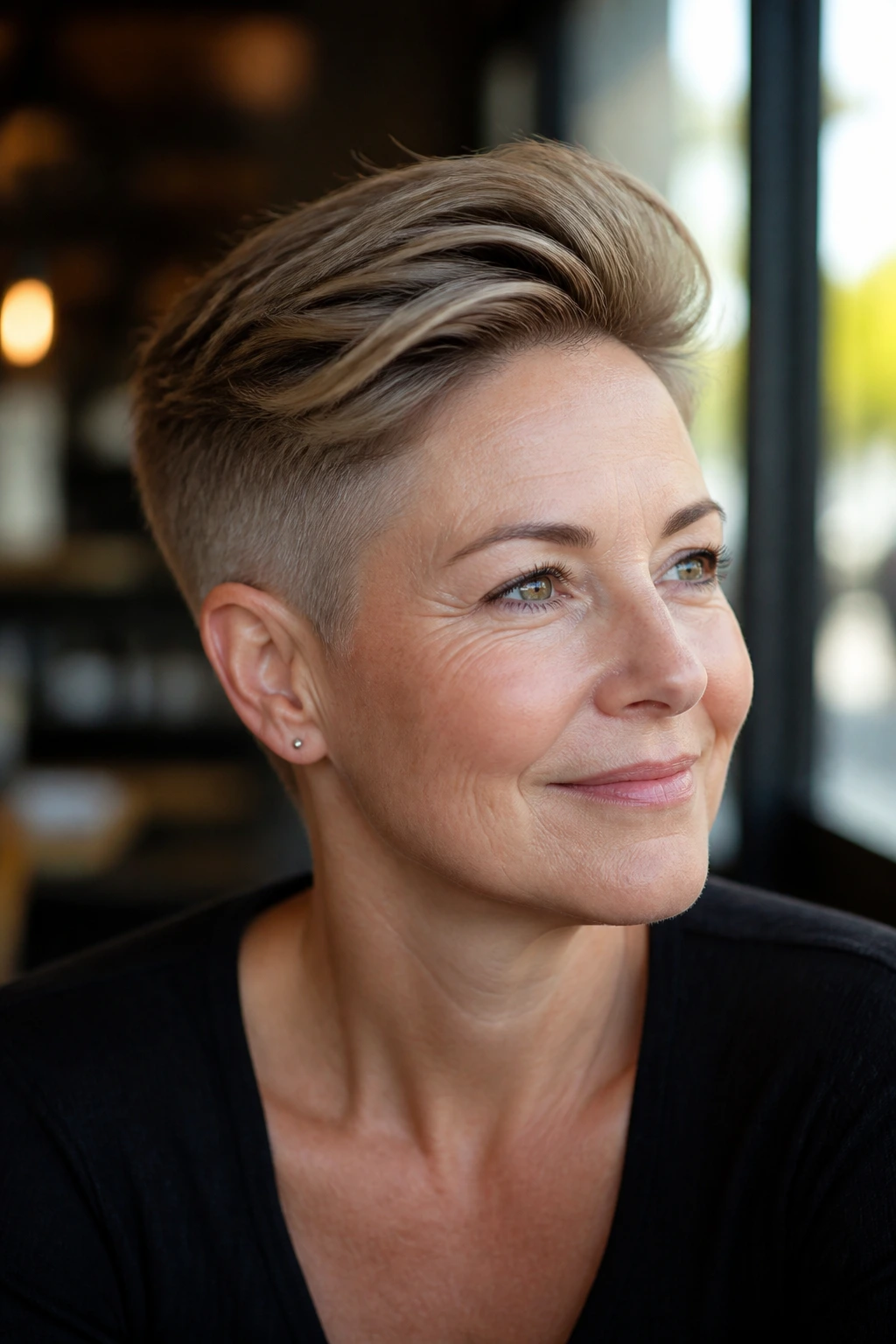
What if your hair is thick and refuses to lie flat? Go under it.
An undercut pixie solves the bulk problem without making the top look tiny. The sides and nape are clipped shorter, sometimes very short, while the top stays soft and movable. For round faces, that contrast is useful because it keeps the widest part of the hair closer to the head and leaves the eye focused on the higher line of the crown.
What to Ask For
Ask the stylist to keep the undercut tight at the nape and behind the ears, but not to over-shave the side panels unless you want a stronger look. A lot of women over 40 prefer a softer version with only the bottom layers removed. That gives you the same shape without the hard edge.
A little length on top—around 3 inches—lets you sweep, tuck, or rough-dry it into place. If you like a neat finish, use a blow-dryer nozzle and brush the top back while the sides stay close.
This is one of the best cuts for thick hair that has a mind of its own.
10. Pompadour-Inspired Pixie
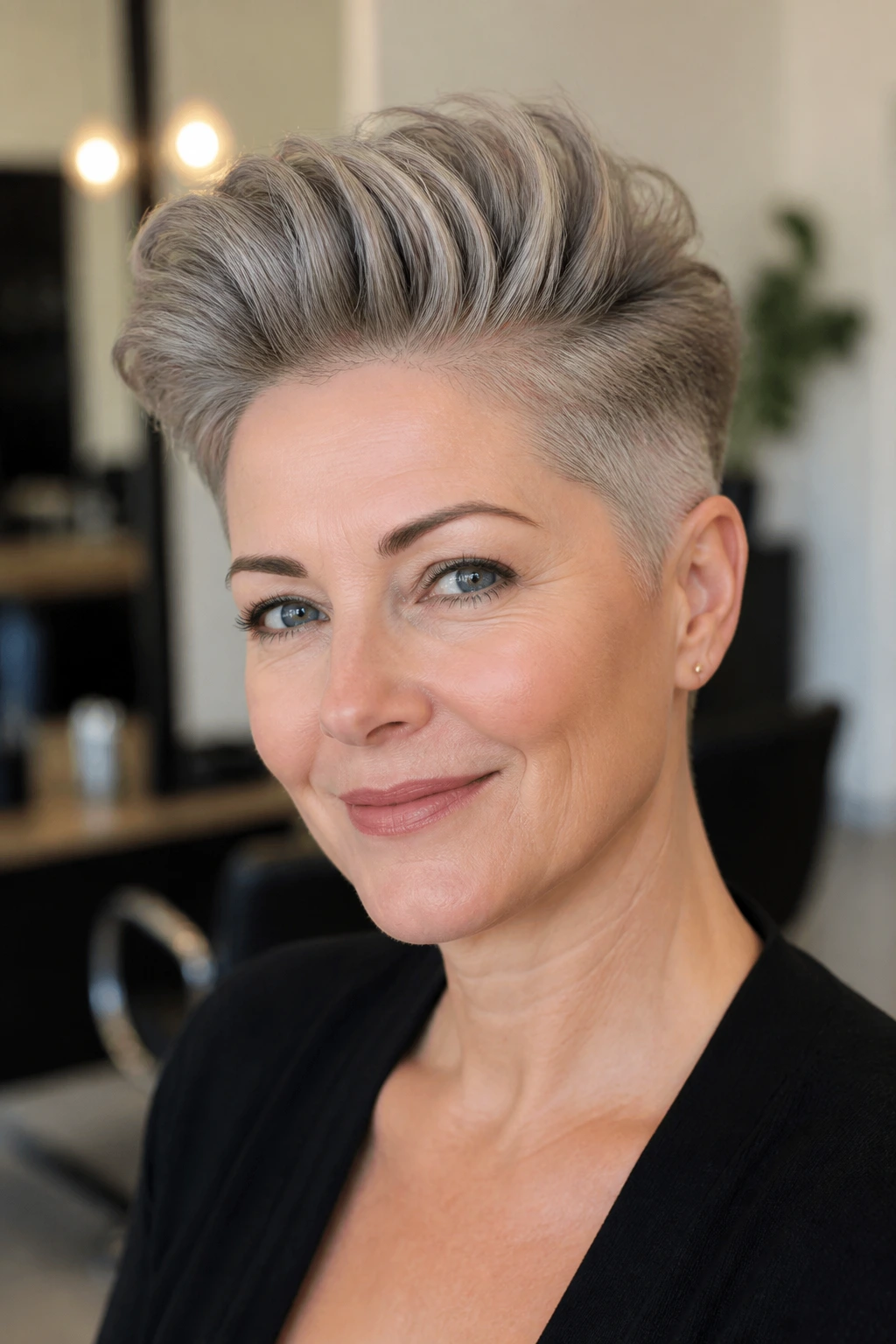
A pompadour-inspired pixie sounds dramatic, but it doesn’t have to be. The point is lift. Strong lift, actually. That’s why it suits round faces so well.
The shape rises at the front and crown, then narrows toward the sides and nape. That upward curve pulls the eye vertically, which is exactly what balances a fuller face. I’ve seen this cut work on everything from fine hair with product to dense hair that needs serious shaping.
The Detail That Makes It Work
The front should be long enough to roll back or up, usually 3 to 4 inches. The sides need to stay tight so the style doesn’t spread sideways. If the stylist leaves too much weight at the temples, the pompadour effect gets lost and the whole cut starts looking bulky.
A light volumizing mousse, a round brush, and a little heat go a long way. Finish with a flexible hairspray, not a helmet spray. The hair should still move.
- Best for: anyone who wants height and polish
- Avoid: very flat, very stubborn cowlicks unless you’re willing to style
- Best feature: strong crown lift
- Upkeep: every 3 to 4 weeks
This cut has presence. No pretending otherwise.
11. Bixie With Micro Layers
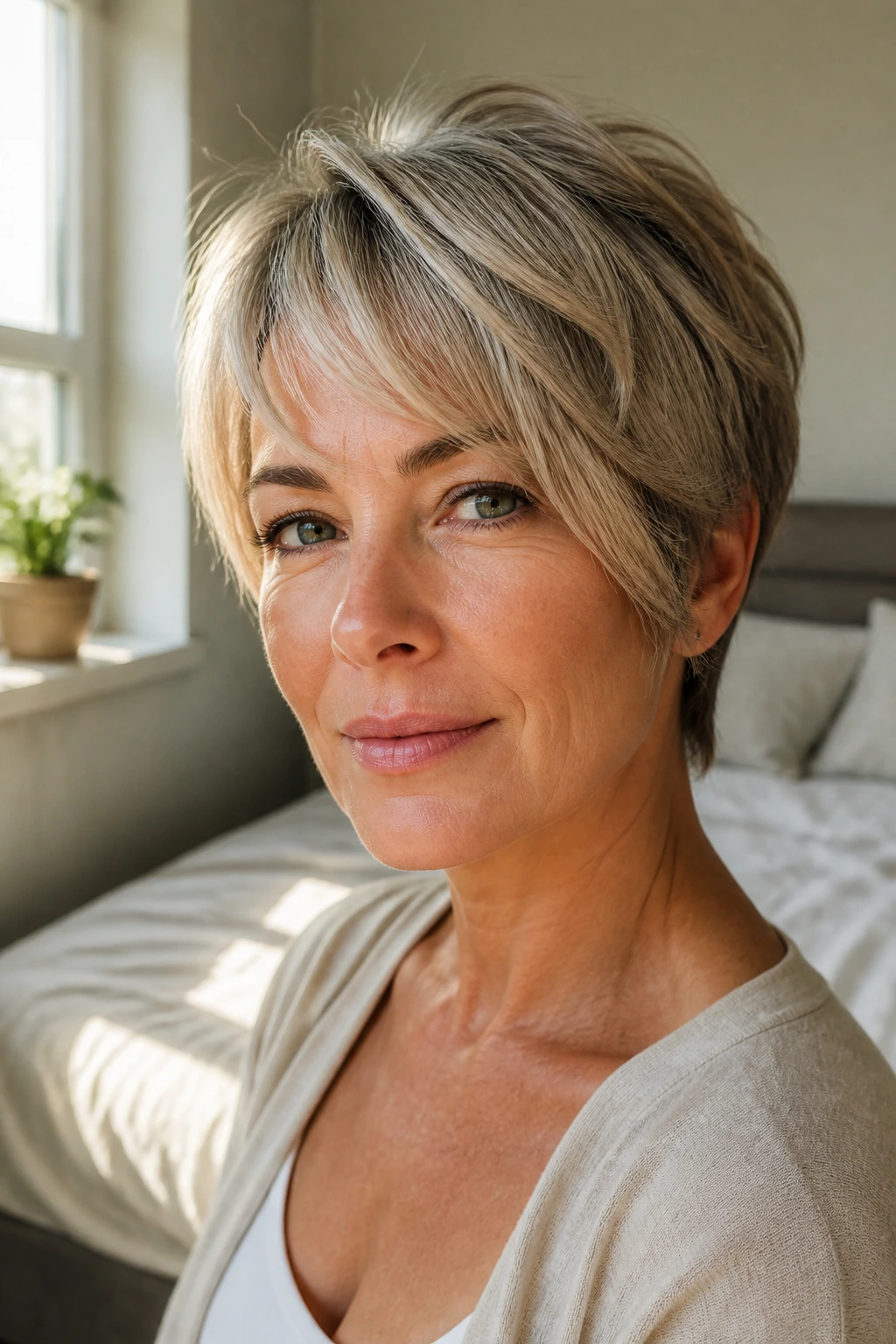
A bixie sits between a bob and a pixie, and that middle ground can be a gift for round faces. The extra length around the ears and cheek area gives a little softness, while the shorter crown keeps it from feeling heavy.
I like this cut for someone who wants to go short but not all the way short. That’s a real preference, not a compromise. The bixie gives you more hair to tuck, tuck away, or bend forward, and that extra movement can be more flattering than a bare-short crop if your face is round and your hairline is soft.
Micro layers matter here. They stop the shape from turning into one solid cap. Ask for light internal layers through the top and sides, plus a slightly longer front that can skim the cheekbone. If the front is too blunt, the cut loses that easy swing.
This style is especially forgiving with second-day hair. A little dry shampoo at the roots and a finger-comb is often enough. Not every flattering cut needs a daily wrestling match.
12. Tucked-Behind-the-Ear Pixie
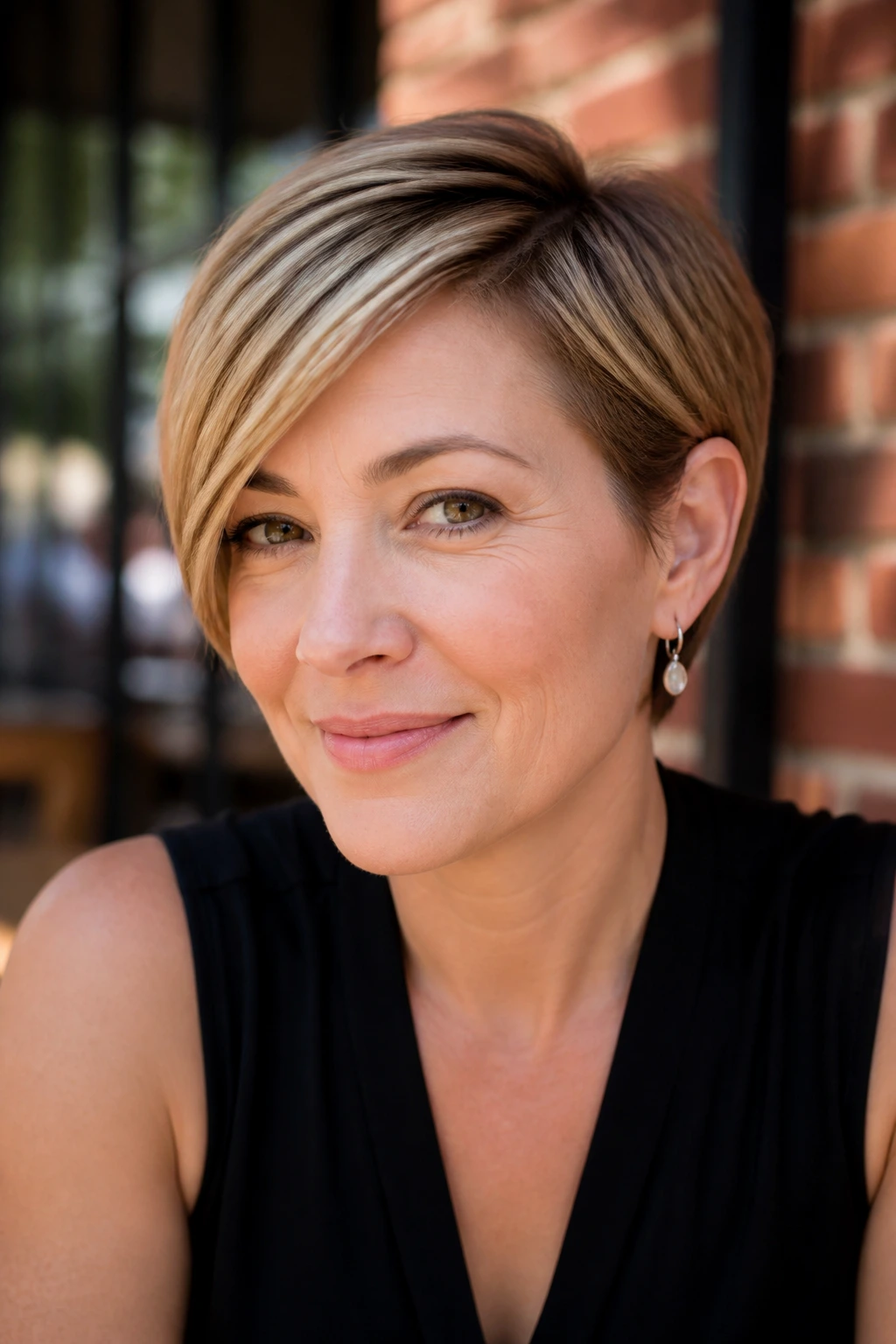
Some cuts flatter because they reveal the face instead of covering it. The tucked-behind-the-ear pixie is one of them.
The shape is short enough to sit neatly behind the ear, but long enough on top and through the front to keep a soft line. On a round face, that tucked detail opens up the cheekbones and lets the jaw look a bit longer. It also shows earrings, which I’m not ashamed to say is part of the appeal.
The style works best when the front is cut with a little diagonal sweep rather than a straight line across the forehead. That gives the hair motion when one side is tucked and the other side falls naturally. It should look intentional, not like you forgot to finish one side.
This cut is simple to maintain. A quick pass with a flat brush or your fingers, a dab of lightweight cream, and you’re done. If the hair starts slipping out around the ear, a touch of texturizing spray at the roots fixes it fast.
It’s clean. It’s easy. And it doesn’t try too hard.
13. Piecey Shaggy Pixie
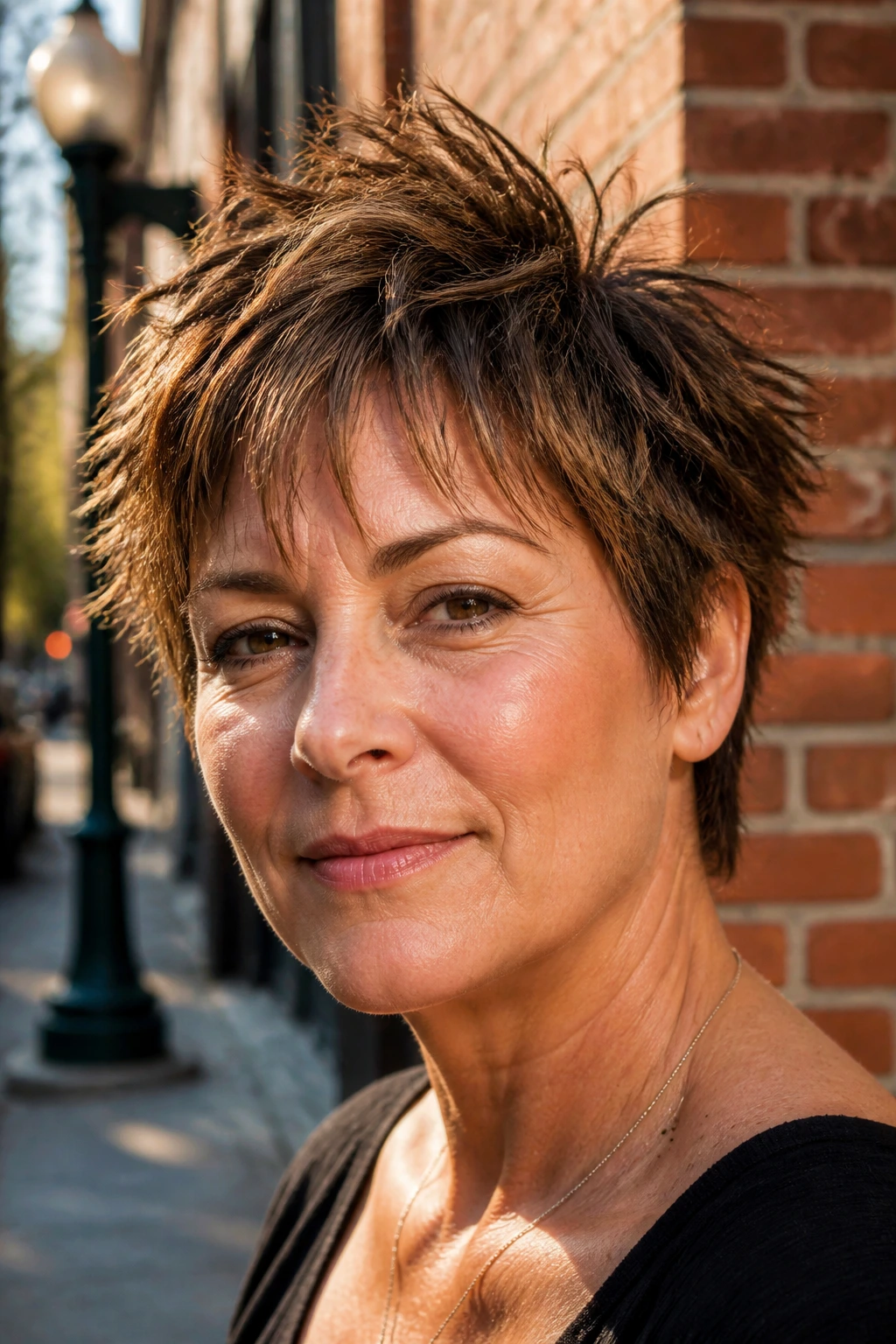
This is the cut for someone who hates looking too done.
A piecey shaggy pixie has rougher texture than a feathered one and more attitude than a classic layered pixie. The pieces stand apart instead of blending into one soft cloud, which gives the haircut a little grit and keeps a round face from looking overly polished in the middle. That matters more than people think. Too much polish can make roundness feel even rounder.
Where the Shape Lives
The crown should have some lift, but not a lot. The sides need broken-up texture, and the fringe should be irregular rather than straight. A few uneven strands around the forehead and temples do the actual face-shaping work here.
- Best for: thick hair, wavy hair, anyone who likes an undone finish
- Styling product: matte paste or dry texture spray
- Good detail to request: shattered ends around the cheeks
- Maintenance: every 5 to 6 weeks
If you want something that looks casual but still thought through, this cut has a nice edge. It doesn’t scream. It smirks a little.
14. Soft Razor-Cut Pixie
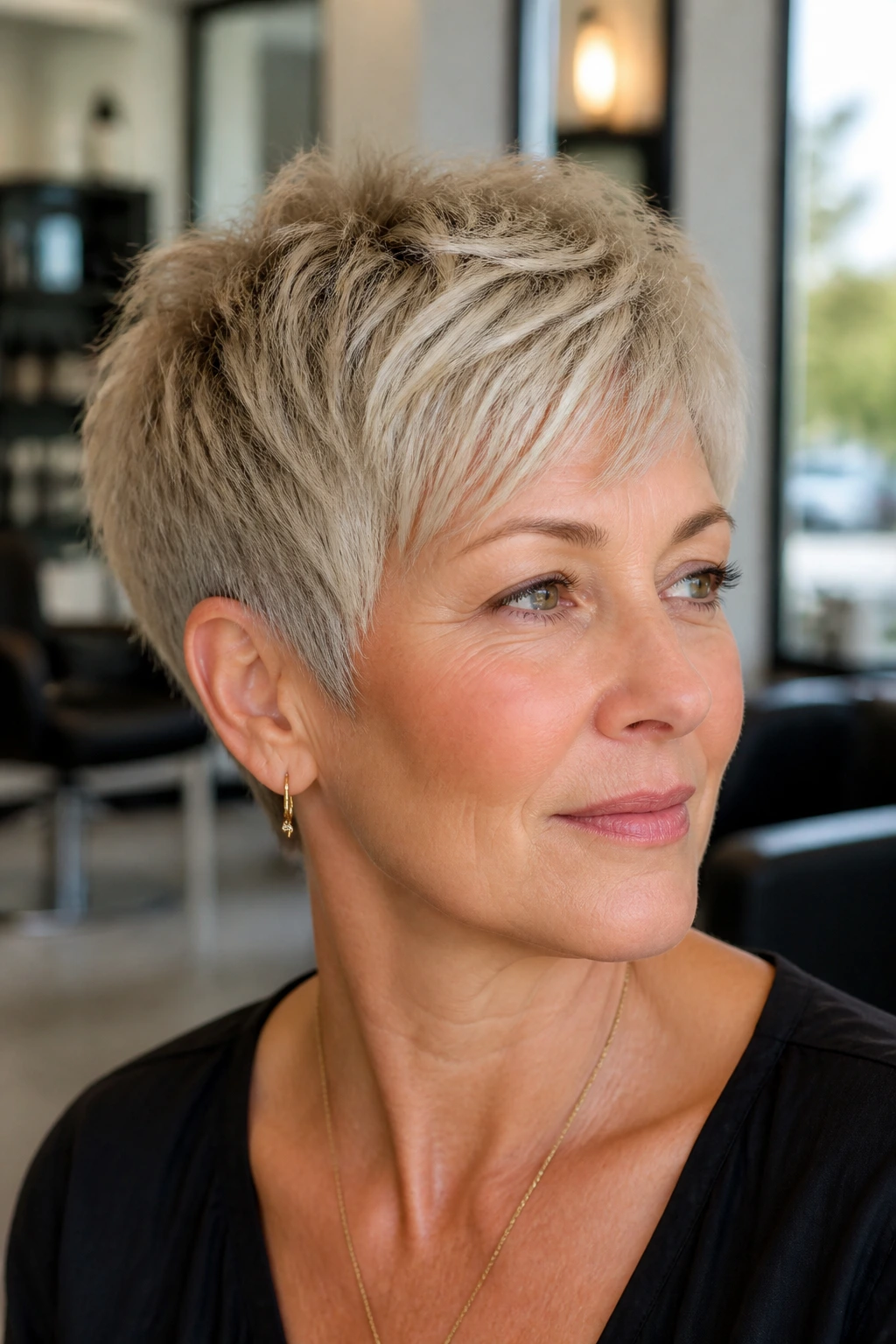
Razor-cut ends can be a lifesaver on dense hair. They remove weight without creating the blunt edges that can make a round face look wider.
The trick is softness. A razor should be used to thin the ends and open up the line, not to shred the hair into a mess. When done well, a soft razor-cut pixie feels airy and moves with the head. When done badly, it frizzes. You can guess which outcome I prefer.
This cut is especially useful if your hair is heavy at the sides or grows out in a bell shape. Keeping the top slightly longer and the edges light helps the haircut stay close to the head instead of flaring out. That alone can change the whole face shape.
I’d ask for this only with a stylist who knows how your hair behaves when dry. Razor work can look great in the chair and then misbehave at home if the hair is too fine. Honest consultation matters here.
15. Swept-Back Polished Pixie
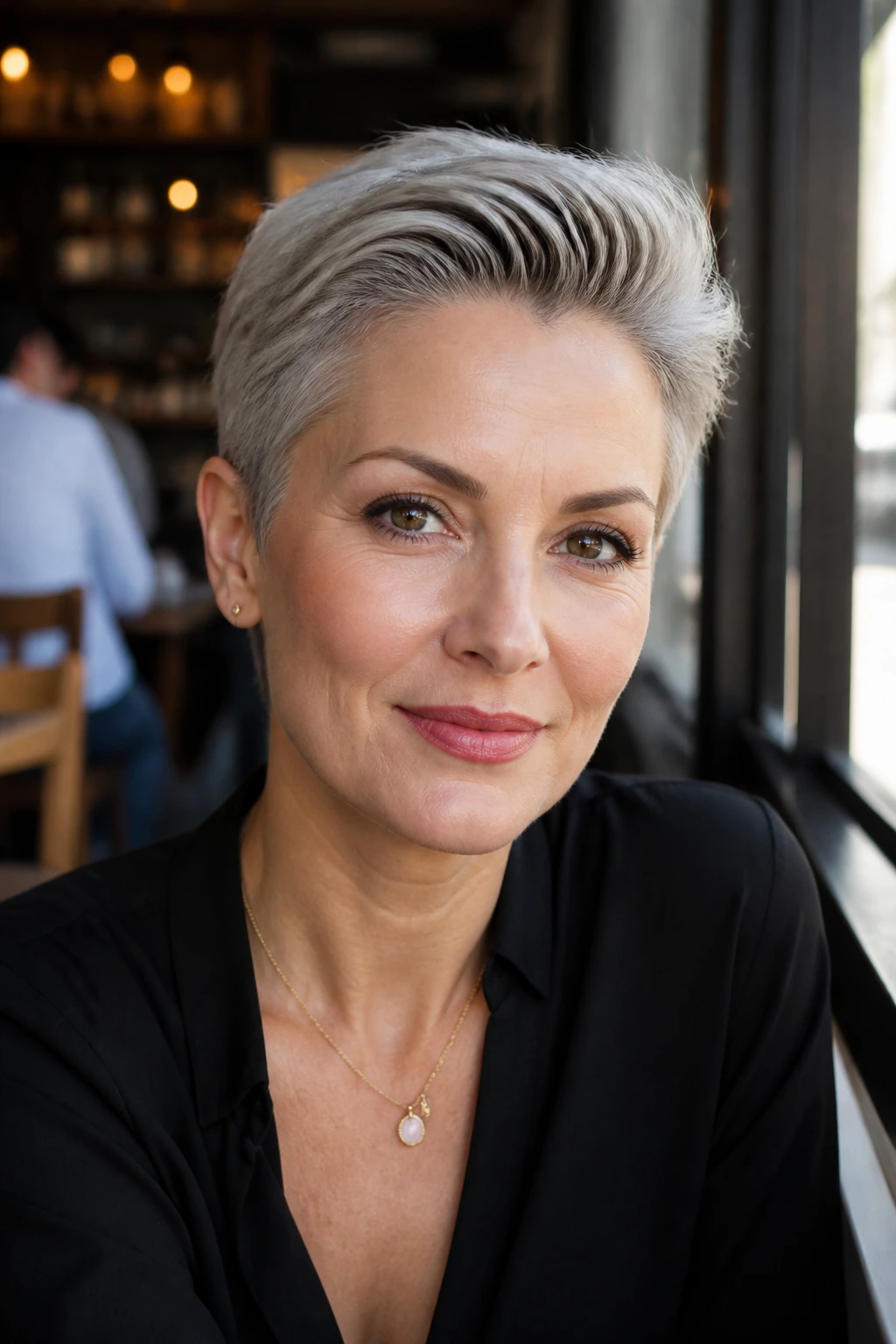
Can a swept-back pixie look soft? Absolutely. It just needs the right balance of control and lift.
This style pulls the hair away from the forehead and pushes the eye upward, which is one of the cleanest ways to flatter a round face. The sides stay snug, the top stays smooth, and the front moves back instead of across. I like it when the finish is polished but not slicked flat. There’s a difference, and it’s a big one.
How to Wear It Without Stiffness
Work a small amount of mousse or styling foam through damp hair, then dry the front up and back with a round brush or fingers. Once it’s dry, use a pea-sized amount of light wax at the ends to keep the shape from falling apart. Too much product and you lose the softness.
This cut looks especially good with defined brows, glasses, or a strong lip because the face stays open. It also suits straight hair that tends to lie close to the scalp. The shape provides the drama; the styling just keeps it neat.
It’s tidy without being boring. That’s a useful combination.
16. Wavy Crop With a Tapered Neck
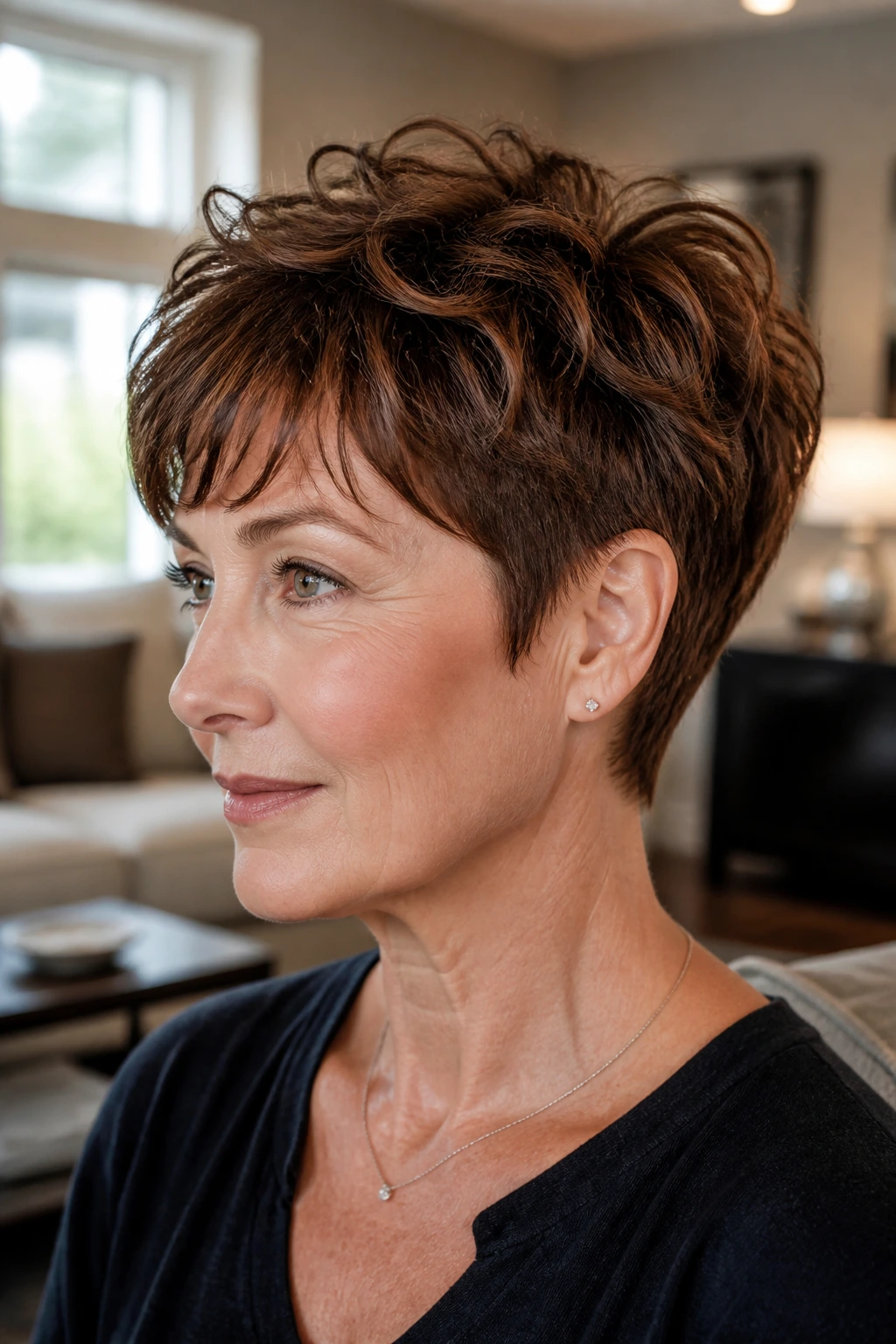
A wavy crop with a tapered neck gives you movement up top and order underneath. That contrast is what makes it work on round faces.
The wave keeps the top loose, while the tapered nape stops the shape from getting bulky at the back of the neck. When the neck area is clean, the whole haircut looks lighter and taller. That little detail changes how the silhouette reads from behind and from the side.
The Best Way to Cut It
Ask for the top to stay long enough for your wave pattern to show—usually 2.5 to 3.5 inches—and make sure the taper at the neck is gradual, not abrupt. A hard line back there can look severe. A soft taper feels better and grows out more gracefully.
- Best for: natural waves, slightly coarse hair, low-maintenance wearers
- Styling note: air-dry with a little cream, then break up the wave with your fingers
- Face effect: opens the jaw and elongates the neck
- Upkeep: every 6 weeks
This cut has a lived-in feel that works especially well if you don’t want to spend twenty minutes fighting your hair every morning.
17. Short Pixie With Long Sideburns
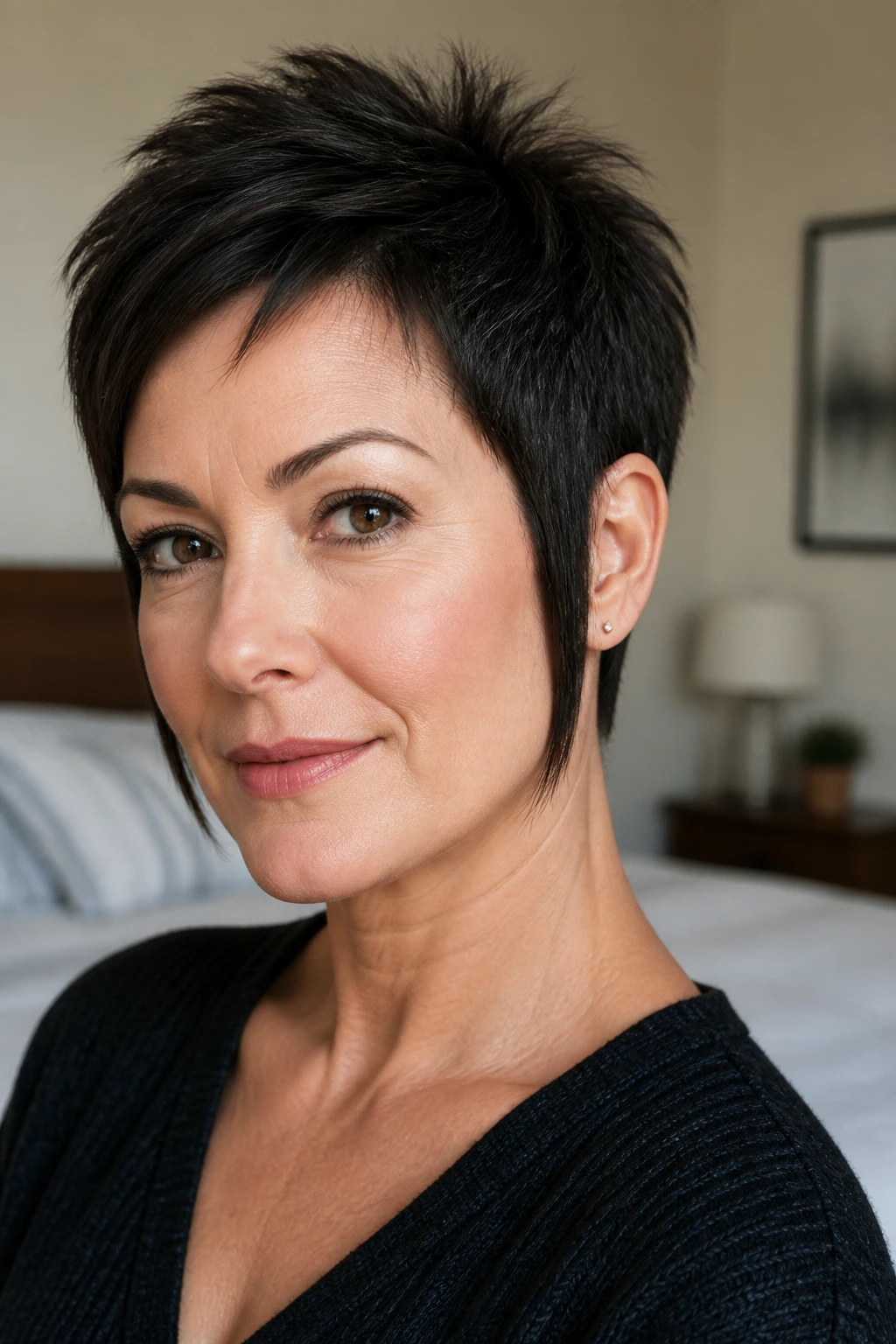
Long sideburns are underrated. I’ll say it plainly.
On a round face, they create two narrow vertical lines right where the width often feels strongest. That helps the haircut guide the eye downward instead of outward. The result is subtle, but you can see it immediately when the rest of the cut is short and tidy.
This style works best when the sideburns stop somewhere around the middle of the ear or just below it, not at the jawline. If they get too long, the cut starts sliding into bob territory. Too short, and you lose the frame that makes the style interesting. The top can stay short and lightly textured, but the sideburns should have enough length to touch the cheek when you turn your head.
I like this cut on straight hair and on fine hair that needs a little definition. It’s also a smart move if you wear statement earrings and want the face area to feel more deliberate. Small detail. Big payoff.
18. Salt-and-Pepper Dimensional Pixie
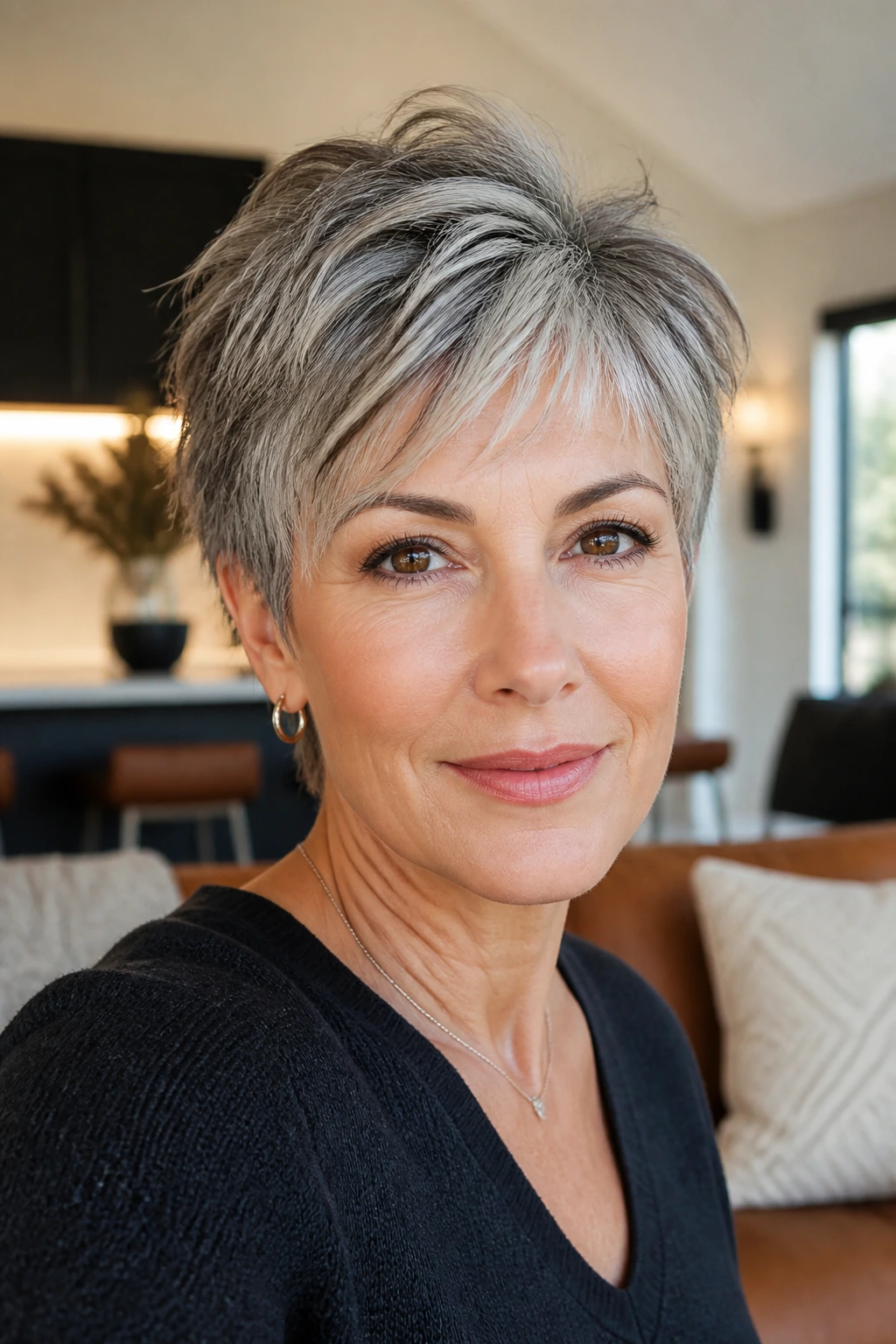
A salt-and-pepper pixie can look flat if the cut is too uniform. It can look expensive if the shape has enough movement to let the color shift around.
That’s why dimension matters. You don’t need a lot of layers, but you do need enough variation in length for the gray, silver, and darker strands to catch each other. A round face benefits from that visual movement because it stops the whole haircut from becoming one wide block of tone.
I’m not talking about coloring tricks here. I’m talking about shape. A soft crown lift, a tapered side, and a bit of piecey texture can make salt-and-pepper hair look richer than a perfectly smooth crop ever will. The cut should give the color places to change, not flatten it into one note.
This is one of those styles that looks better with a little mess. Clean around the edges, yes. Overcontrolled on top, no. The slight irregularity is what makes it feel alive.
19. Close-Cropped French Pixie
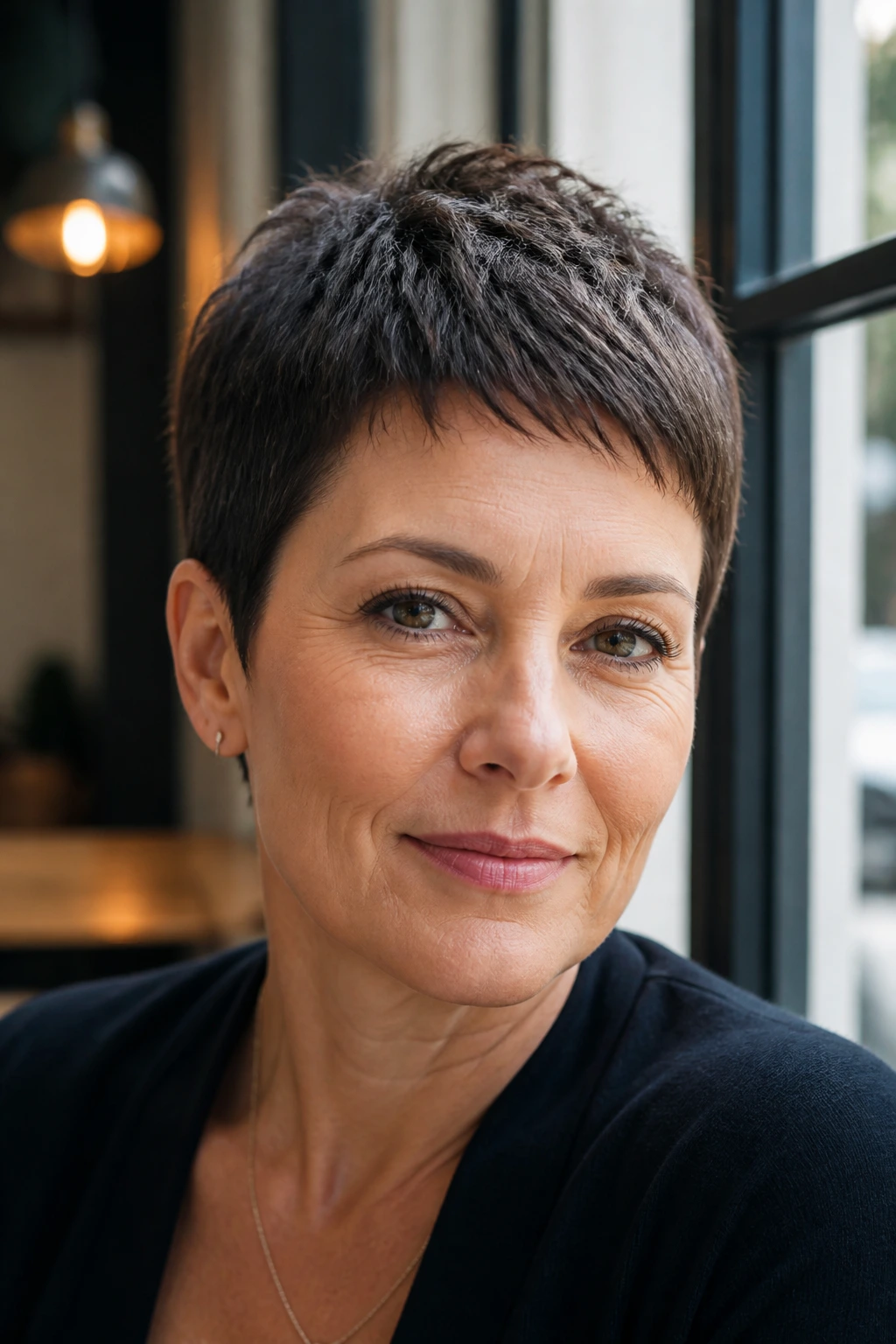
A close-cropped French pixie is chic in a very spare way. It’s shorter than a shaggy pixie, softer than a buzzed crop, and usually wears a neat fringe or a tiny sweep of hair across the forehead.
For a round face, the trick is keeping the top slightly longer than the sides so the cut still has a vertical line. If the whole thing is one even length, it can widen the face. If the top has just enough height and the fringe is lightly broken up, it feels elegant and balanced.
What to Ask For
Request a nape that hugs the neck, sides that stay close, and a top that can be pushed forward or sideways. A tiny amount of separation at the fringe helps a lot. The line should be soft, not rigid.
This cut tends to suit people who like low-fuss styling and strong outlines. It grows out fast, though, so be ready for 3 to 4 week trims if you want to keep the shape crisp. That’s the trade-off.
There’s something appealing about a cut that says exactly what it is. No fluff. No pretending.
20. Airy Fringe-and-Crown Pixie
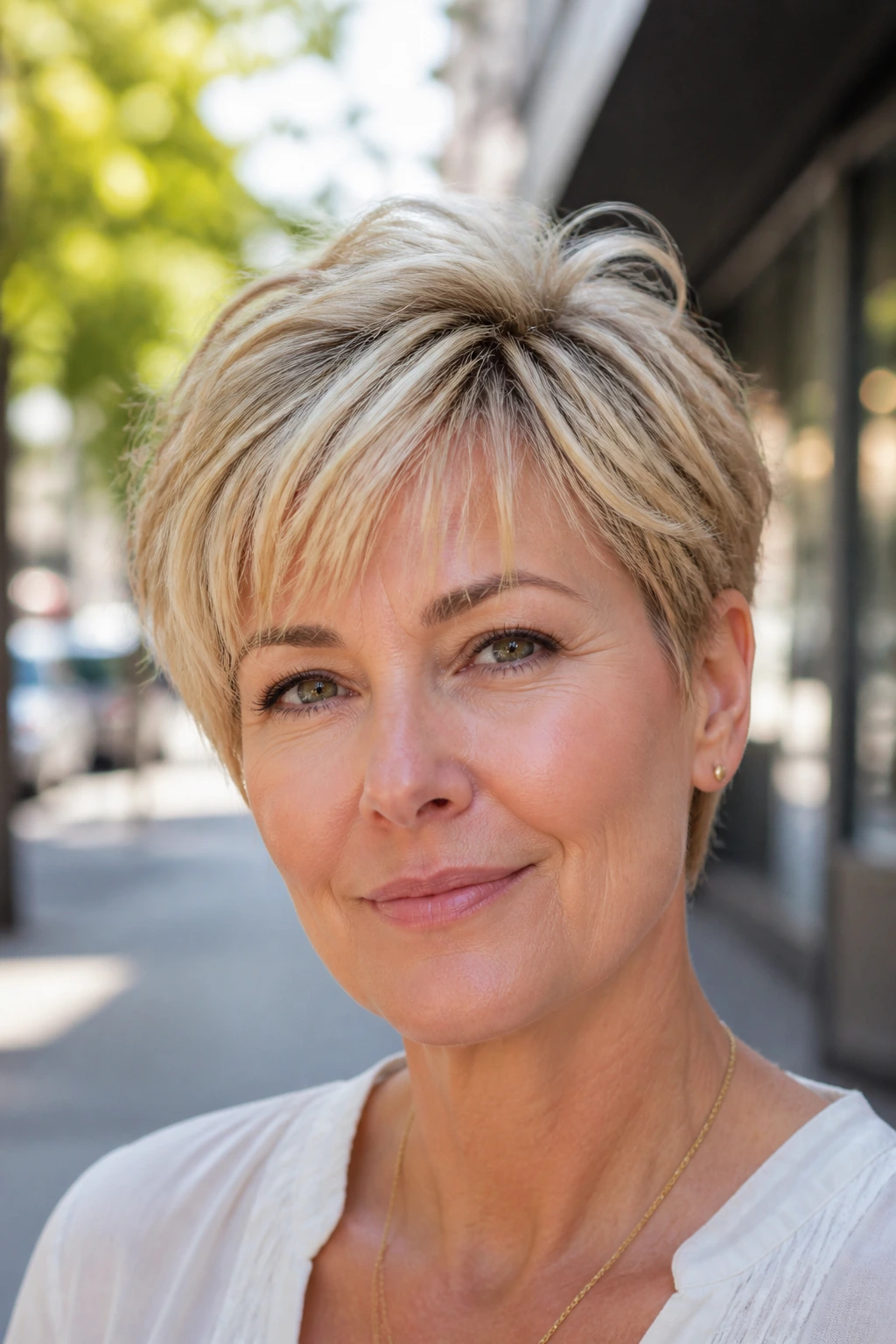
This is the cut I’d hand to someone who wants softness, lift, and easy movement all in one shape. The airy fringe keeps the forehead from feeling too open, while the crown carries enough height to lengthen a round face.
Think of it as a careful balance between the first few styles on this list. You get the side-swept ease of a layered pixie, the lift of a tapered crown, and just enough fringe to keep the face looking relaxed. The difference is in the lightness. The edges should feel airy, not chopped.
The best version uses short sides, a crown that stays about 2.5 to 3 inches, and fringe pieces that fall in uneven lengths. That unevenness is useful. It keeps the eye moving, which is what you want when you’re trying to soften width without hiding your features. A light styling cream or mousse is enough; heavy paste will close the whole thing down.
If you want a pixie that feels modern without trying to prove anything, this is a strong place to land.
Final Thoughts
The best pixie cuts for round faces over 40 all do the same basic job, but they do it in different ways. Some lift at the crown. Some carve out space with asymmetry. Some soften the cheek area with fringe or texture. That choice comes down to how much styling you want to do in the morning, and how much structure you want the haircut to carry on its own.
One thing I’d tell anyone in the salon chair: ask where the widest part of the cut will sit. If it lands right at the cheeks, you may feel wider than you want. If the cut narrows there and shifts the visual weight upward or diagonally, the whole face changes shape in a much nicer way.
And don’t ignore growth pattern. A great pixie should still look decent three weeks later, not only on day one. That’s the difference between a cute haircut and one you actually enjoy living with.
