



Pixie haircuts for round faces work best when they pull the eye up and off to one side. A cut that sits evenly around the cheeks can make the face look fuller than it is; a cut with height, diagonal movement, or a narrow temple line usually does the opposite.
That is the part people miss. Short is not the goal. Shape is.
A pixie can be soft, punky, polished, shaggy, curly, or almost boyish, but the flattering versions all do a similar job: they keep bulk away from the widest part of the face and leave some life at the crown, the fringe, or the temples. If your stylist knows how to place those pieces, the haircut stops fighting your face and starts working with it.
The cuts below handle that balance in different ways, from the safest starter version to the more daring ones that still play nicely with a round face.
1. Long Side-Swept Pixie for Round Faces
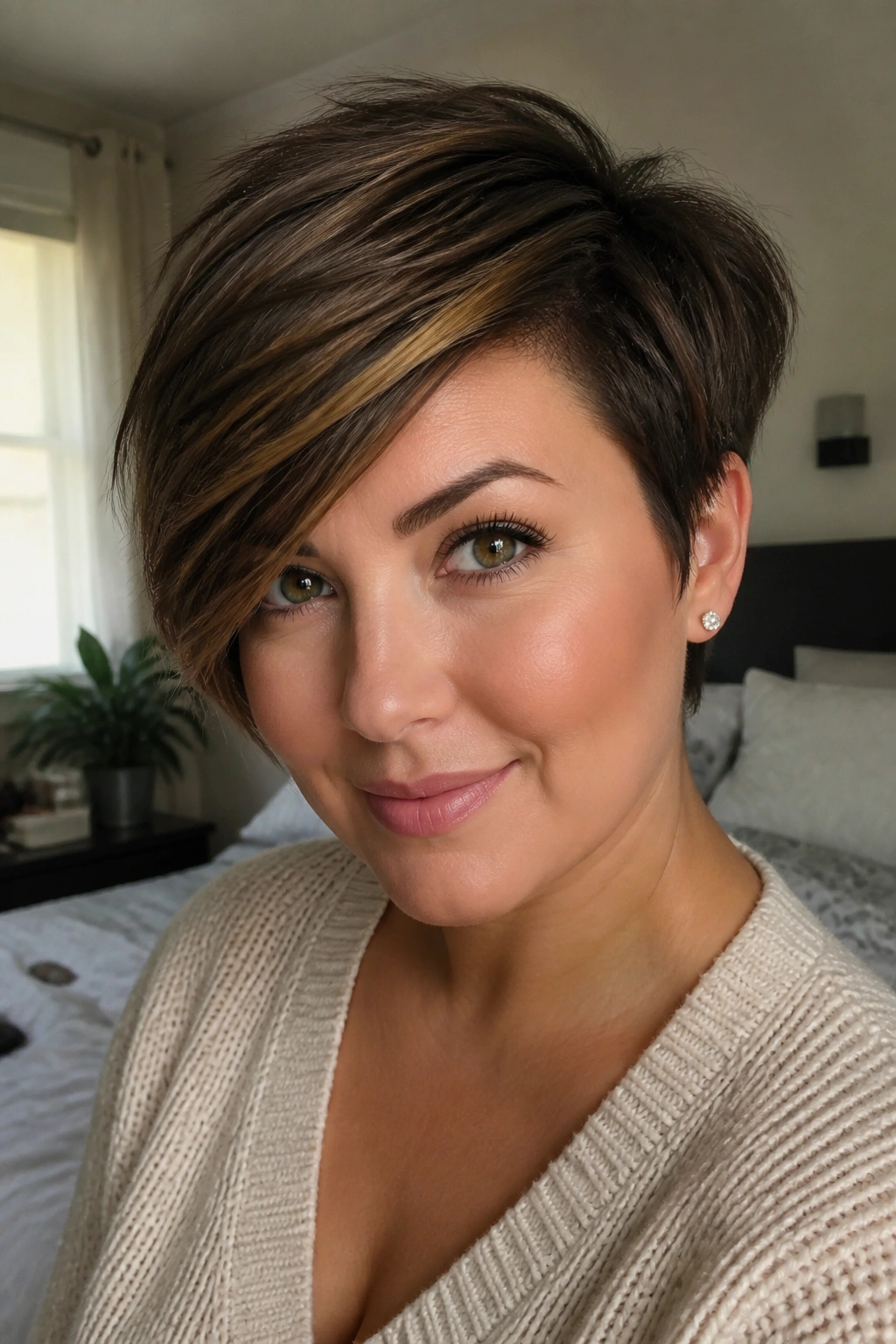
If you want the safest starting point, this is it. A long side-swept pixie gives you the clean feel of short hair without cutting the face straight across the middle.
The magic is in the direction. A deep side part and a longer front section create a diagonal line that makes the face look a little longer, while the close sides keep the width down.
Ask for about 2 to 3 inches on top and a fringe that can skim the eyebrow or cheekbone on one side. It styles fast, too. A small round brush, a little root spray, and two minutes with the blow-dryer is often enough.
2. Tapered Crown Pixie With Close Sides
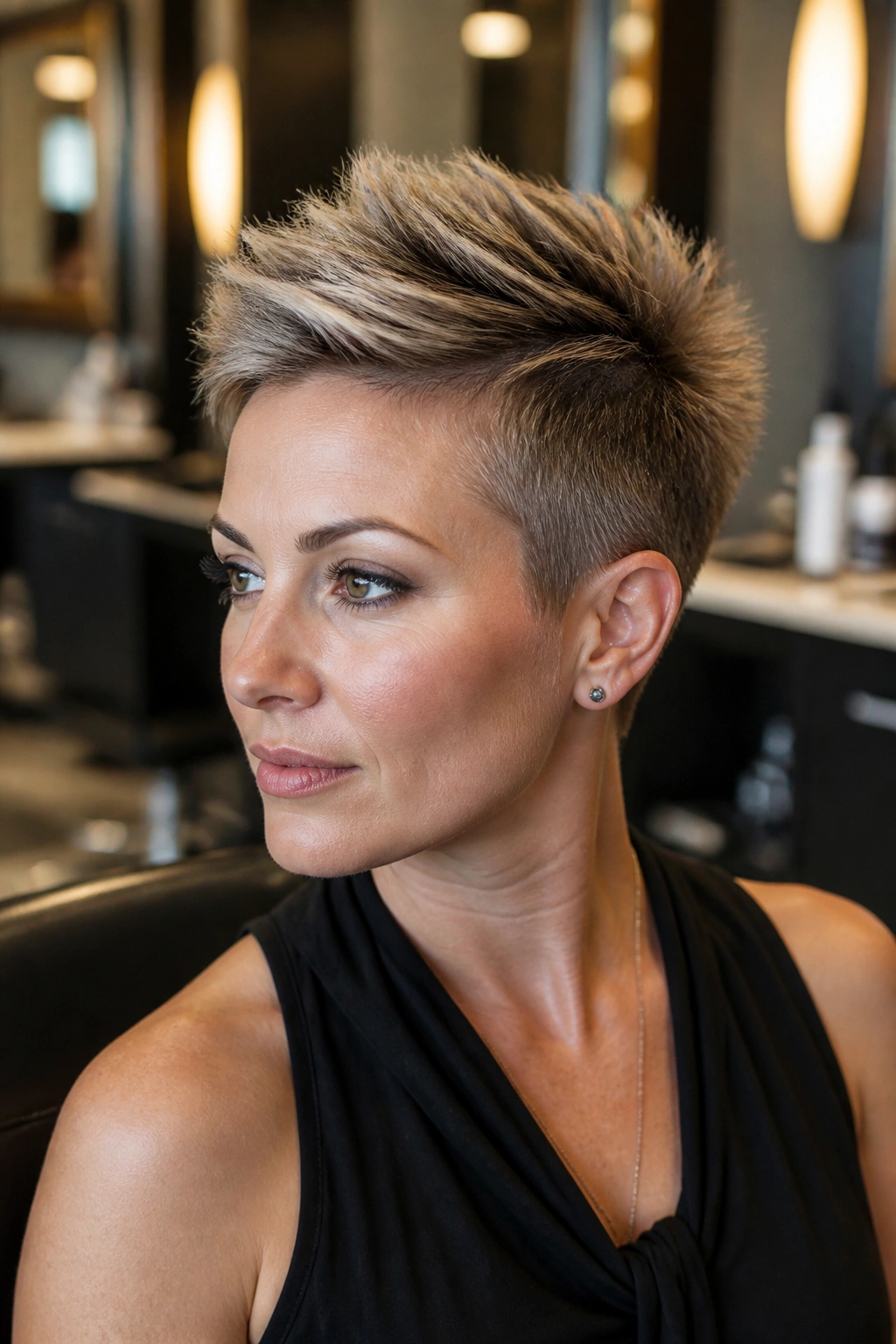
Why does a tapered crown matter so much on a round face? Because height near the top of the head changes the whole silhouette.
A tight nape and snug sides keep the haircut neat, but the crown stays a touch fuller so the eye moves upward. That little lift makes the face feel less wide and more vertical.
What to ask for
- Keep the sides close, but not shaved to the skin.
- Leave enough length at the crown for 1 to 2 inches of lift.
- Ask for soft point-cut ends so the top does not look helmet-like.
- Keep the nape tight so the back does not puff out.
This cut is a good one for fine hair that falls flat. It also behaves well with a dab of volumizing mousse at the roots.
3. Choppy Textured Pixie With Piecey Ends
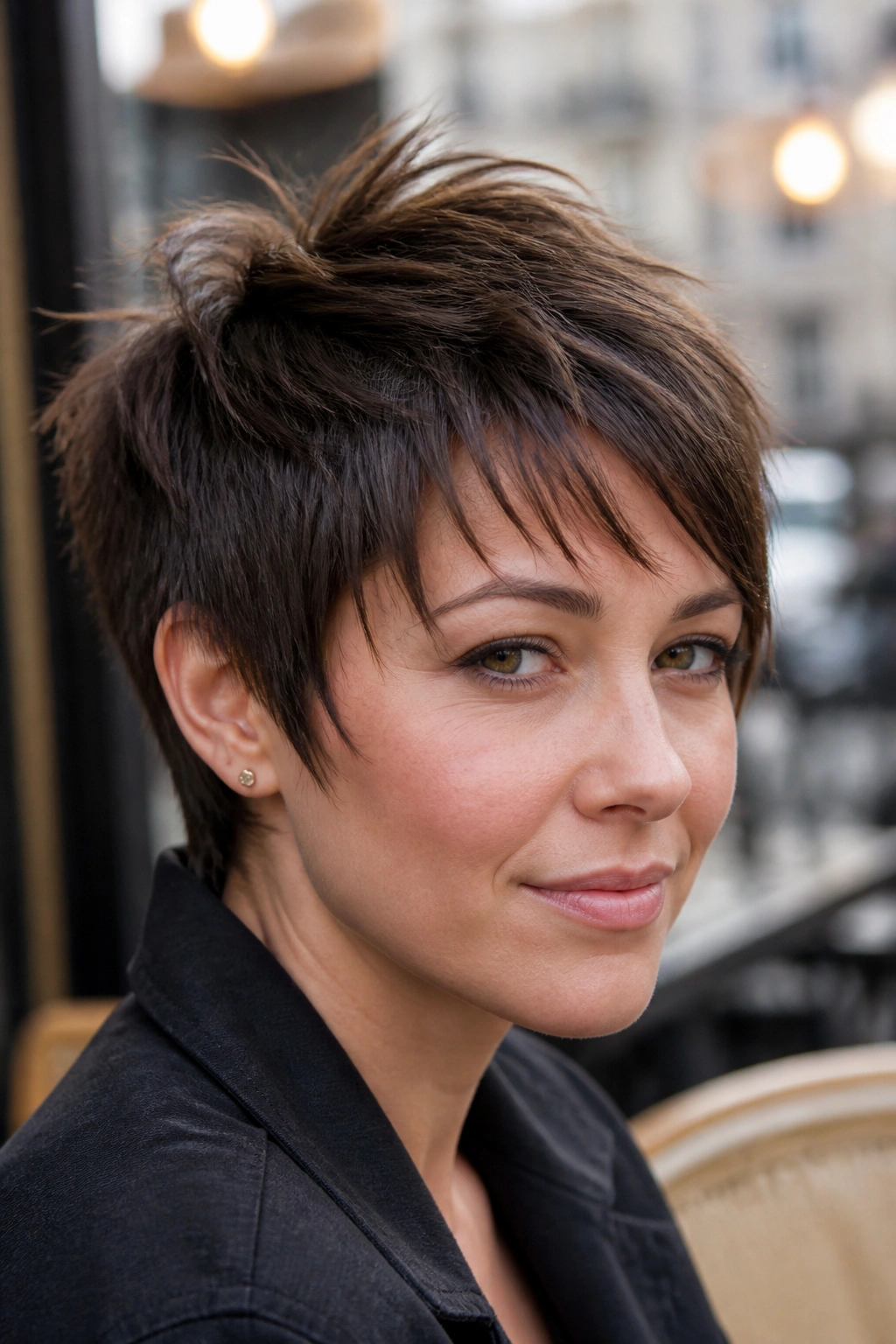
If your hair collapses by lunchtime, a choppy pixie helps. The broken-up ends stop the cut from looking like one solid block.
That matters on round faces because heavy, even shapes can echo the curve of the cheeks. Choppy layers interrupt that shape and make the whole haircut feel lighter and more angular.
A matte paste works better than shiny pomade here. Use a pea-sized amount, rub it between your palms, and pinch small sections near the front and crown. The goal is not polish. It is separation.
4. Asymmetrical Pixie Cut With One Longer Side
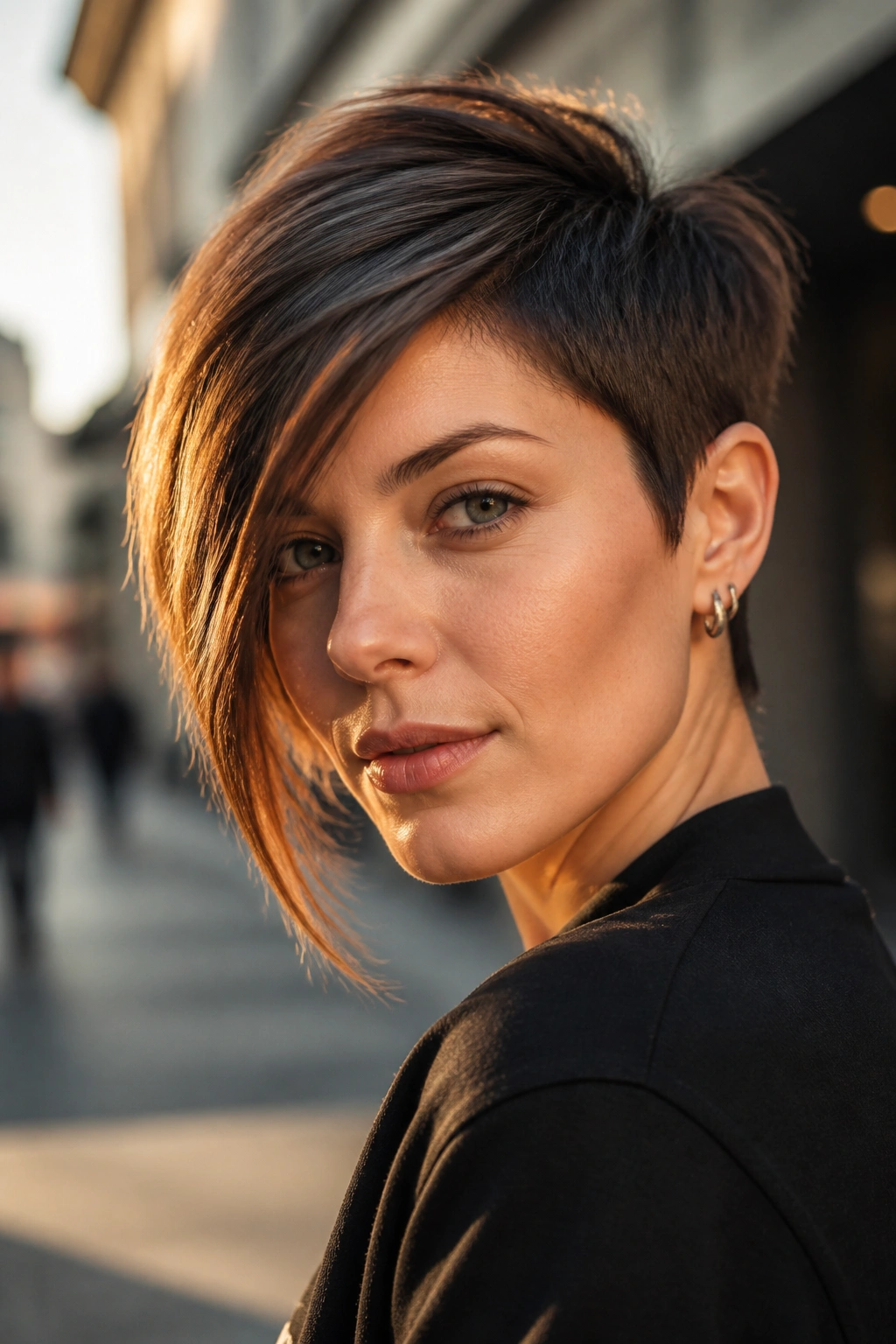
A perfectly even pixie can be the least flattering version for a round face. Asymmetry fixes that fast.
One side stays shorter, the other side hangs a little longer across the cheek. That single shift creates a line that cuts through the softness of the face instead of repeating it.
It is especially good if you wear glasses or like a side part that feels deliberate. The longer side can sit around the cheekbone, not the jaw, and that gives you shape without adding bulk.
One side longer. One side shorter. Easy, but effective.
5. Curly Pixie With Lifted Roots
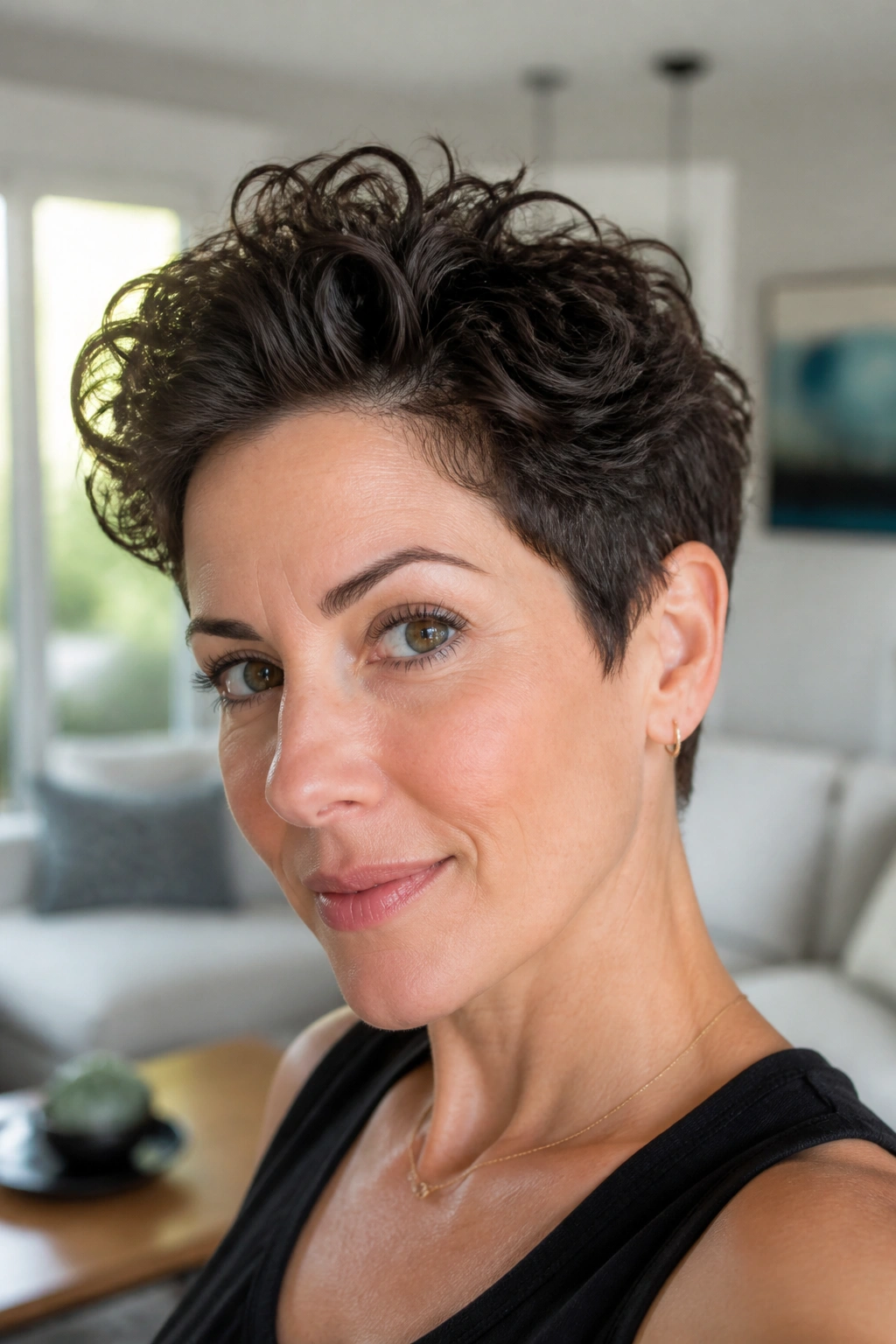
Curls need room, but not too much room. A curly pixie works best when the top is shaped with lift and the sides are kept tidy.
If curls sit too wide at the temples, the face can look rounder. If the top rises a bit and the sides taper in, the cut suddenly feels balanced and airy.
Use a curl cream first, then diffuse on low heat until the hair is about 80 percent dry. After that, stop touching it. Too much finger-combing breaks the curl pattern and makes the sides puff out.
- Diffuse upside down for root lift.
- Scrunch with a microfiber towel, not a rough bath towel.
- Skip heavy oils near the sides.
- Let a few curls fall forward on purpose.
6. Pixie With Curtain Bangs and a Soft Part
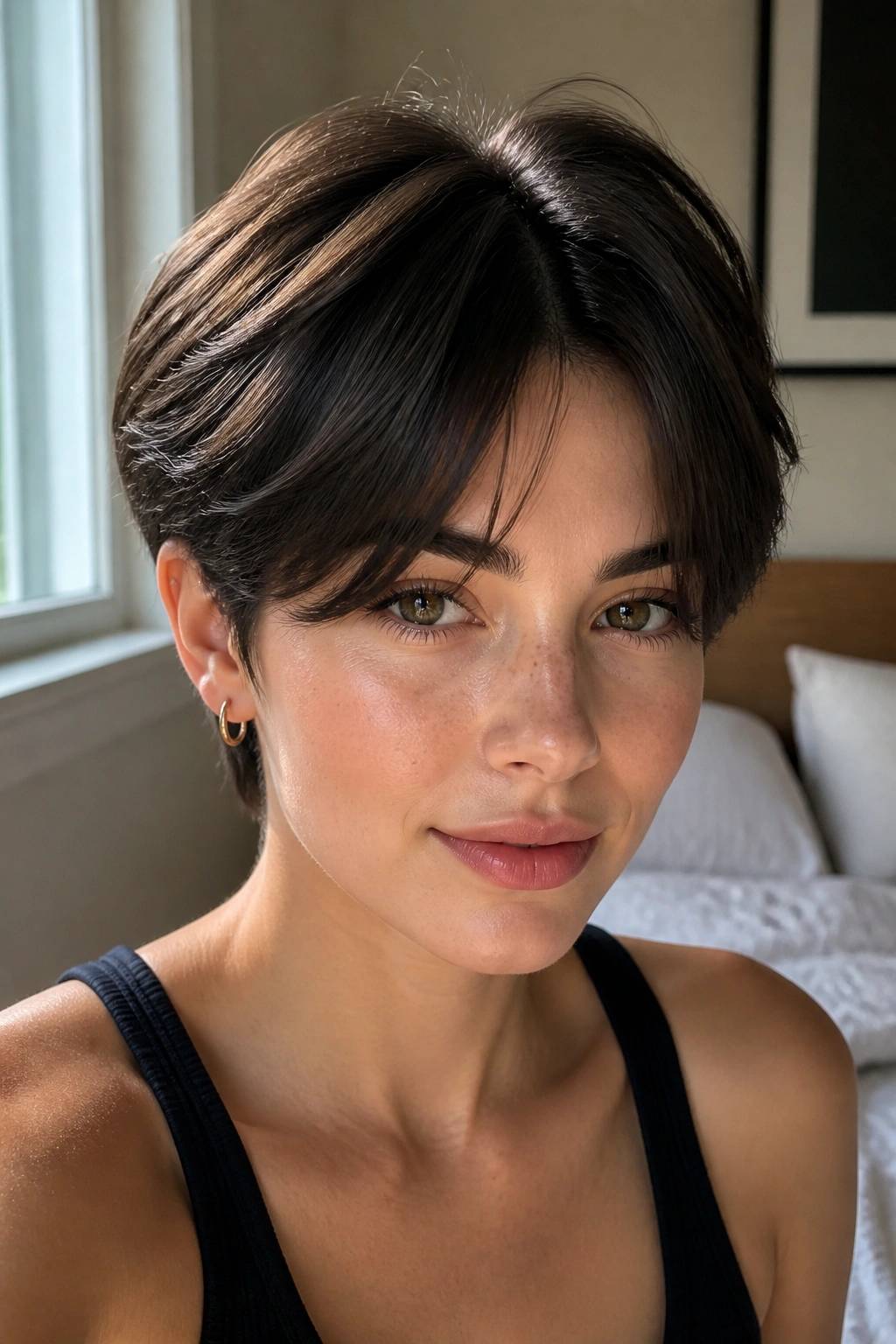
This is for the person who wants short hair but still likes a little hair around the face. Curtain bangs split the fringe and open the center, which keeps the front from feeling boxy.
The effect is softer than a blunt bang. Instead of drawing a hard horizontal line across the forehead, the fringe moves away from the middle and frames the eyes and temples.
I like this version on round faces because it gives motion without crowding the cheeks. Blow-dry the bangs away from the center with a small brush, then pinch the ends with a touch of cream. Keep them light.
7. Undercut Pixie With Extra Volume on Top
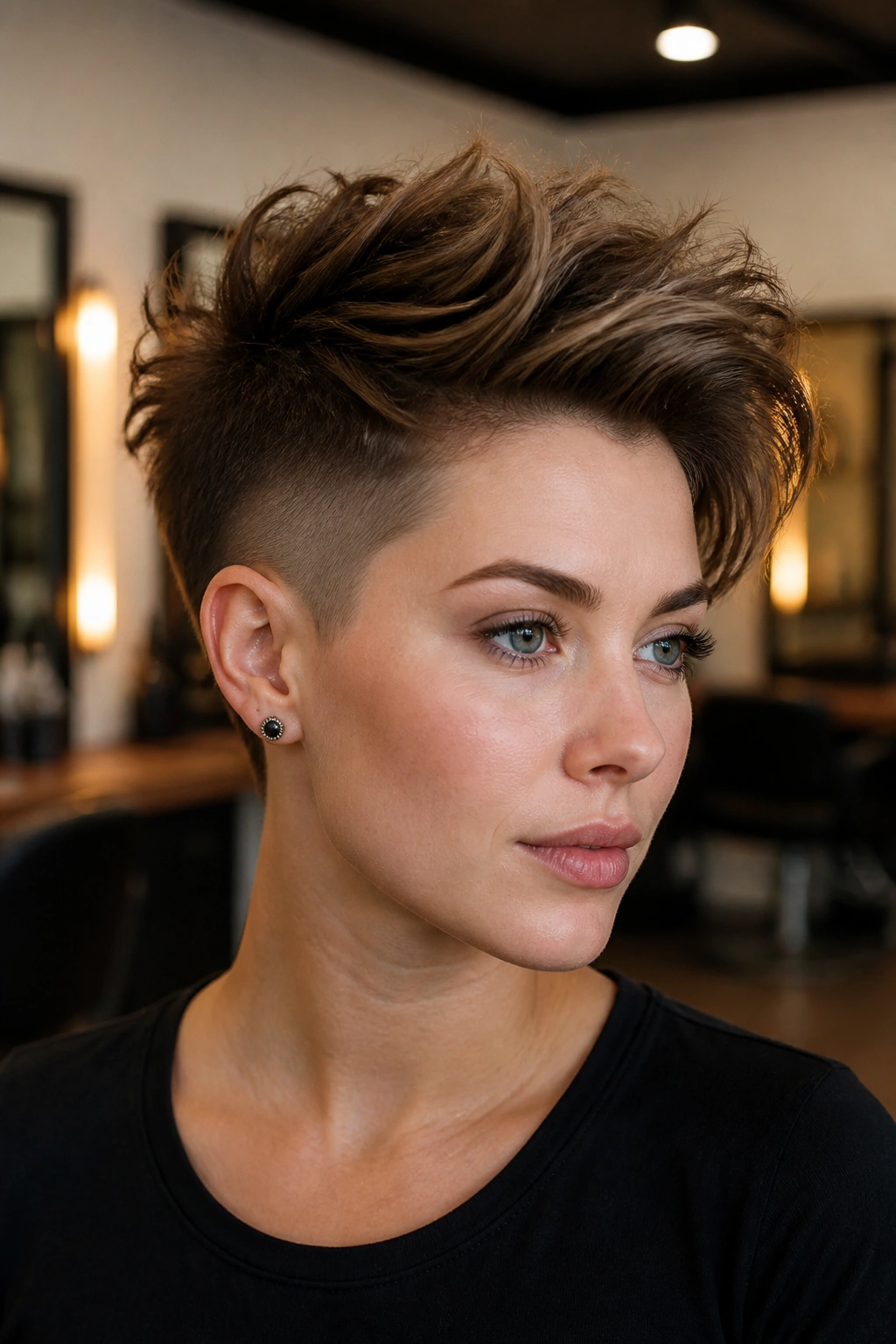
Thick hair and round cheeks often get along better with an undercut than with a fluffy top. That sounds harsh. It is not.
An undercut removes bulk from the sides and back, which lets the top sit higher and cleaner. The face ends up looking narrower, while the haircut itself feels sharper and easier to manage.
If your hair is dense, this can save you from the mushroom effect. Ask for the top to stay long enough to move — usually 3 to 4 inches — while the underneath is clipped much shorter. It grows fast, so plan on trims every few weeks.
8. Feathered Pixie With Airy Layers
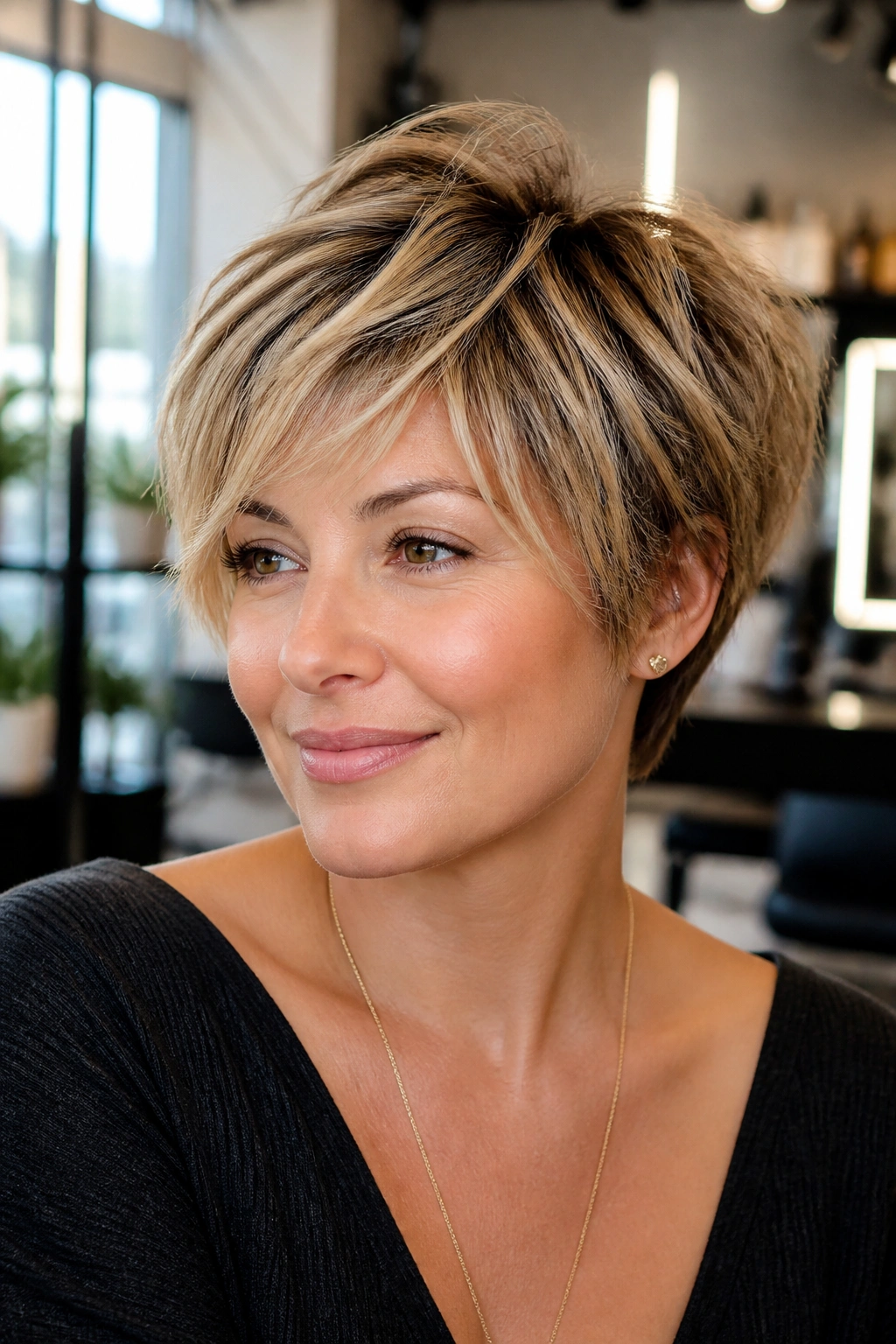
Unlike a choppy pixie, a feathered pixie softens the edges instead of breaking them apart. That makes it useful when you want movement but do not want the haircut to feel edgy or too styled.
Feathering works well for fine to medium hair because it creates lightness without removing too much weight. Around a round face, those airy ends keep the cut from sitting as one wide shape.
This is the one I suggest for people who want a softer, more feminine pixie. It looks good with a loose blow-dry and a tiny amount of light mousse.
- Best for fine, straight, or slightly wavy hair.
- Ask for feathering around the temples and crown.
- Keep the fringe broken up, not blunt.
- Avoid over-thinning the ends.
9. Pixie Bob Hybrid With Jaw-Skimming Length
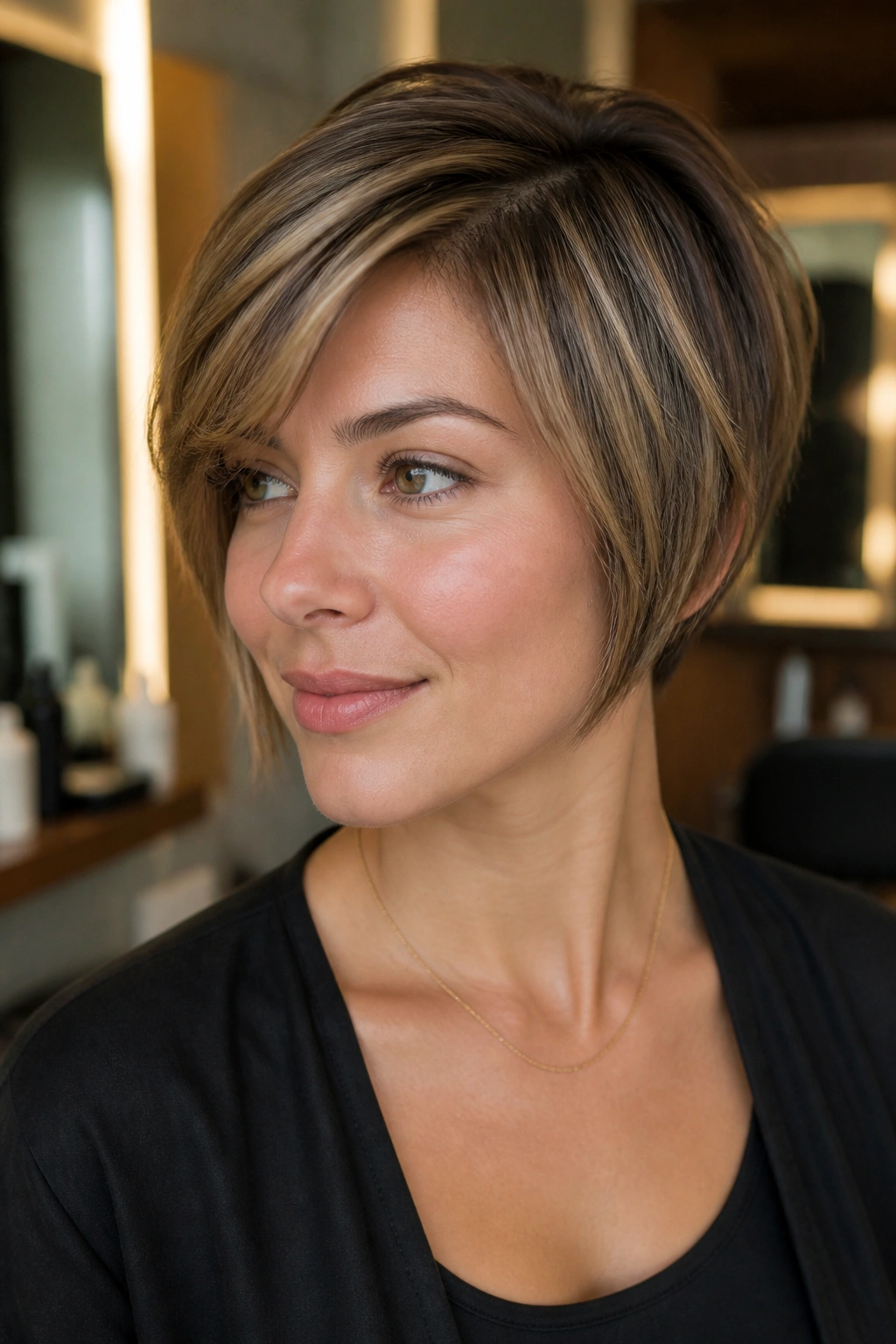
Some people are not ready for a full short crop, and that is fine. The pixie bob hybrid — often called a bixie — gives you a little more length around the jaw while still reading as a pixie.
That extra length matters on round faces because it creates a longer outline below the cheeks. The cut also grows out better than a strict pixie, which means fewer panic moments between trims.
If you want a softer transition into short hair, this is the one. Keep the back short and the front pieces slightly longer so the face does not get boxed in.
10. Faux-Hawk Pixie for a Strong Vertical Line
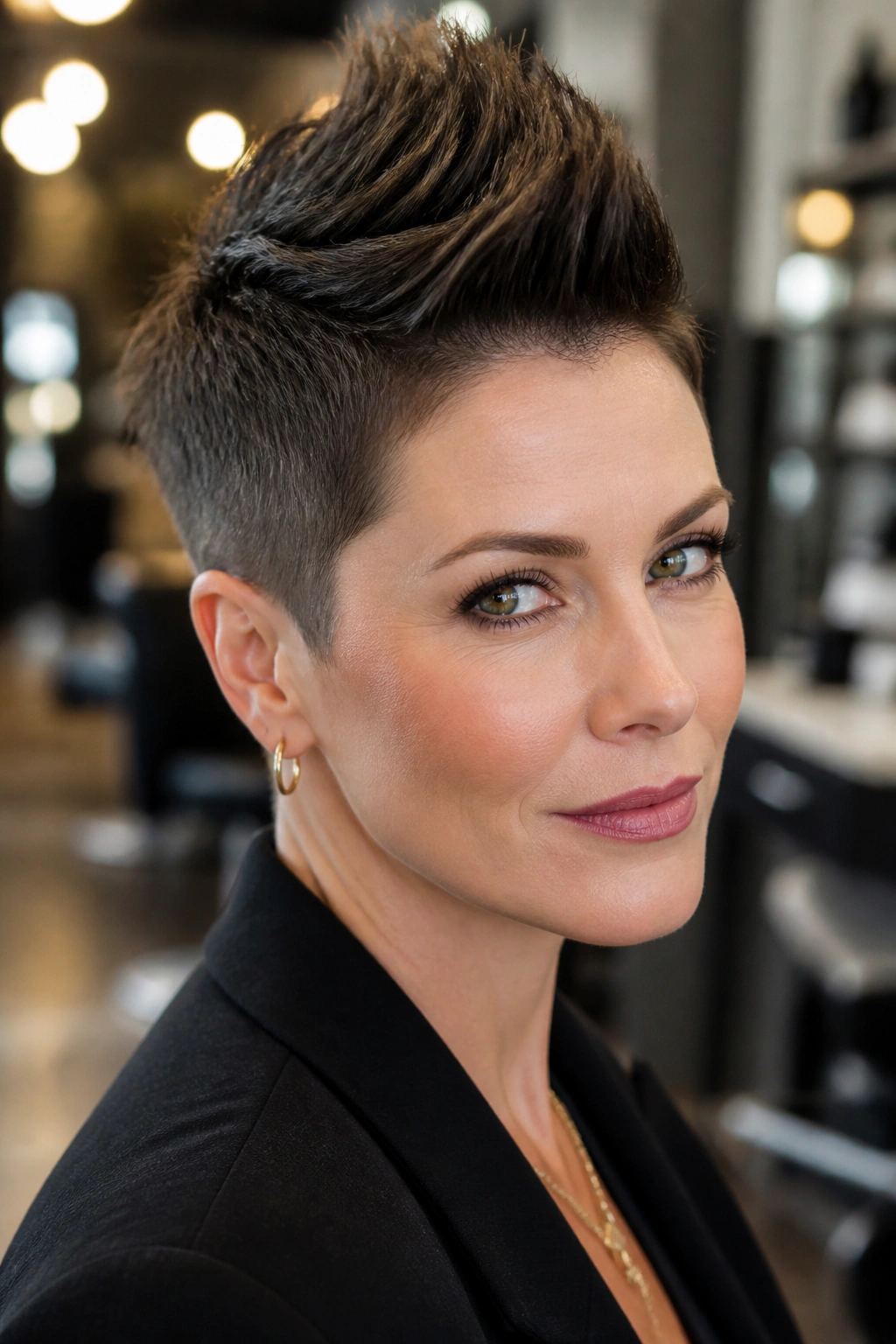
Want the face to look longer without losing edge? The faux-hawk pixie does that job.
The center strip stays lifted, while the sides sit close to the head. That creates a strong vertical line through the middle of the haircut, which is exactly what a round face tends to like.
How to style the ridge
- Blow-dry the center section upward with a vent brush.
- Use a root-lift spray at the crown.
- Smooth the sides back with a small amount of wax.
- Keep the top piecey, not stiff.
This cut has personality. It also needs a bit of maintenance, because the shape depends on the top staying buoyant.
11. Wispy Fringe Pixie With Broken-Up Bangs
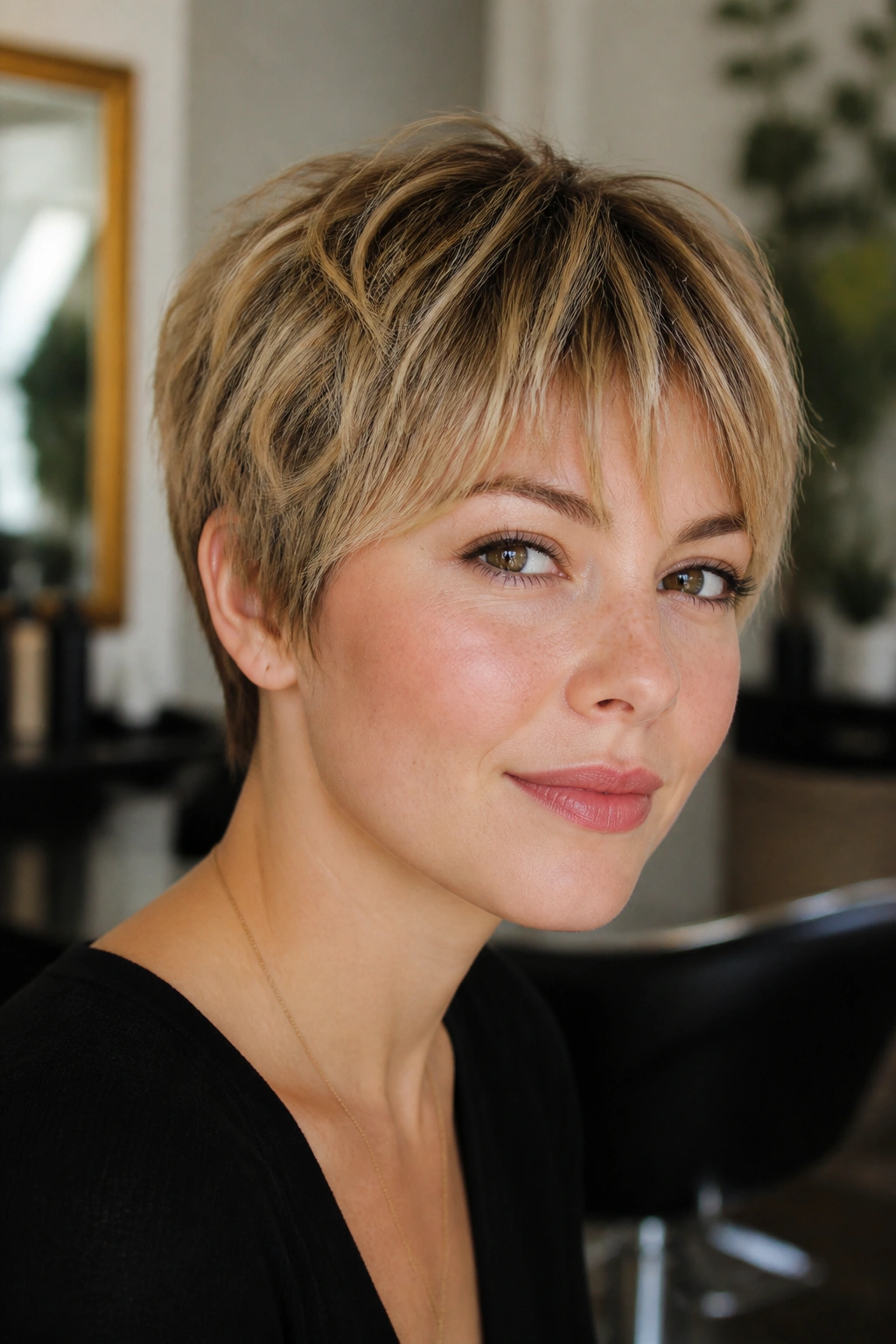
A heavy fringe can make a round face feel shorter. A wispy fringe usually does the opposite because it lets forehead skin show through in small gaps.
The trick is to keep the bang line broken. Ask your stylist for point cutting through the fringe so it falls in small pieces instead of one solid curtain.
That softness helps if you like some face coverage but hate bluntness. The look is gentle, not childish, and it works well when the rest of the cut stays neat around the ears.
A tiny bit of styling cream is enough. More than that and the fringe starts to clump.
12. Side-Parted Sleek Pixie
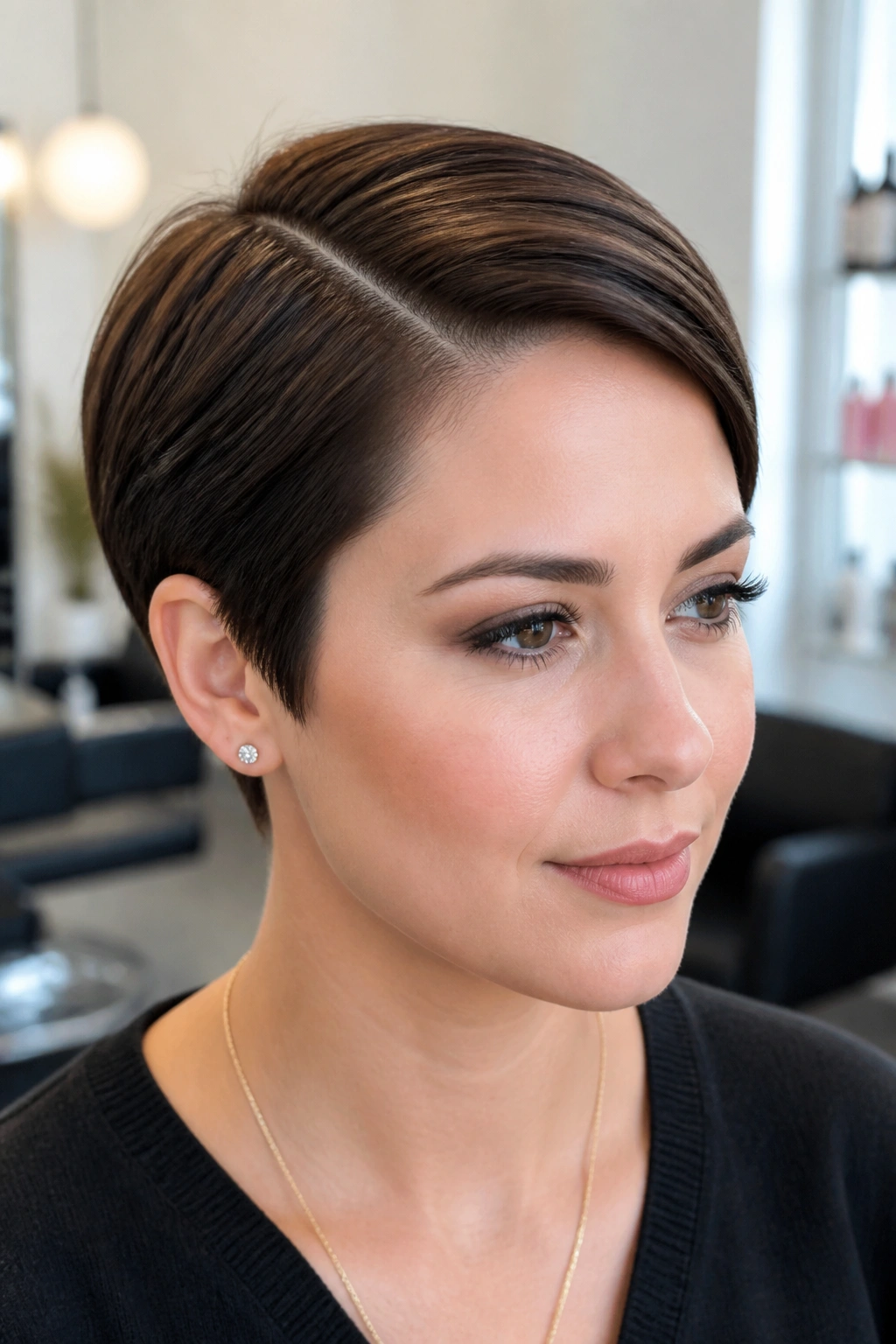
Some mornings call for a cut that can go from bedhead to clean in ten minutes. A sleek side-parted pixie does exactly that.
The side part gives the face a diagonal line, and the smooth finish keeps the shape neat instead of fluffy. On a round face, that polish can be surprisingly flattering because it narrows the outline at the temples.
This version likes straight hair or a quick blowout. A drop of serum on the ends, worked between your fingertips, keeps it shiny without making it greasy.
It is not the most playful pixie on the list. It is one of the easiest to live with.
13. Soft Shag Pixie With a Tapered Nape
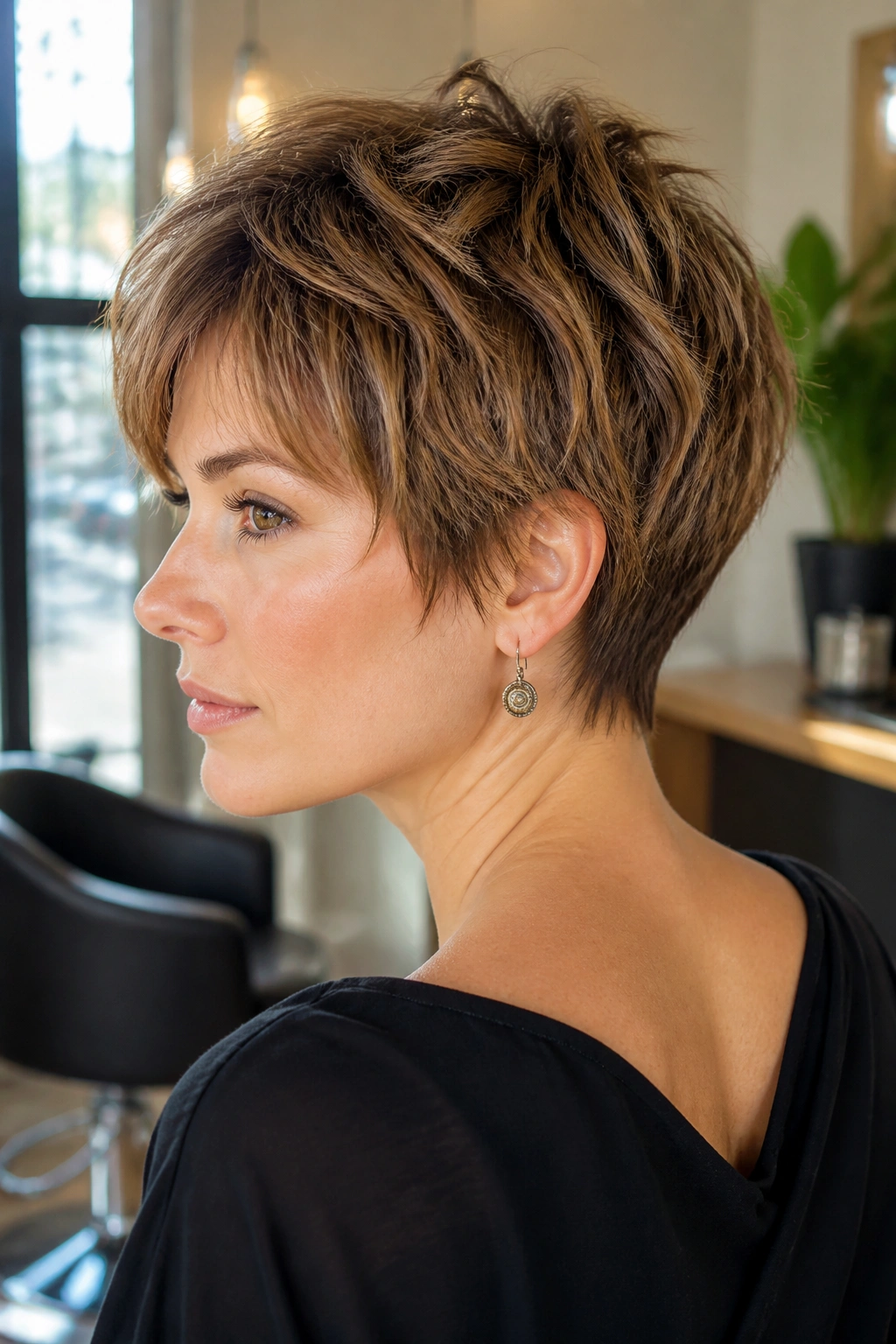
A little shag makes a round face look less round. That is the short version.
The soft shag pixie uses loose layers at the crown and sides, but keeps the nape tapered so the back does not puff out. The shape feels a bit undone in a good way — not messy, just relaxed.
What makes it work
- Crown layers add height without stiffness.
- Side layers should skim, not sit heavy.
- The nape needs to stay clean and narrow.
- The ends should look broken, not blunt.
If you like hair that moves when you turn your head, this one is worth a close look. It has more attitude than a classic pixie, but not so much that it becomes fussy.
14. Ear-Tucked Pixie With Face-Framing Sides
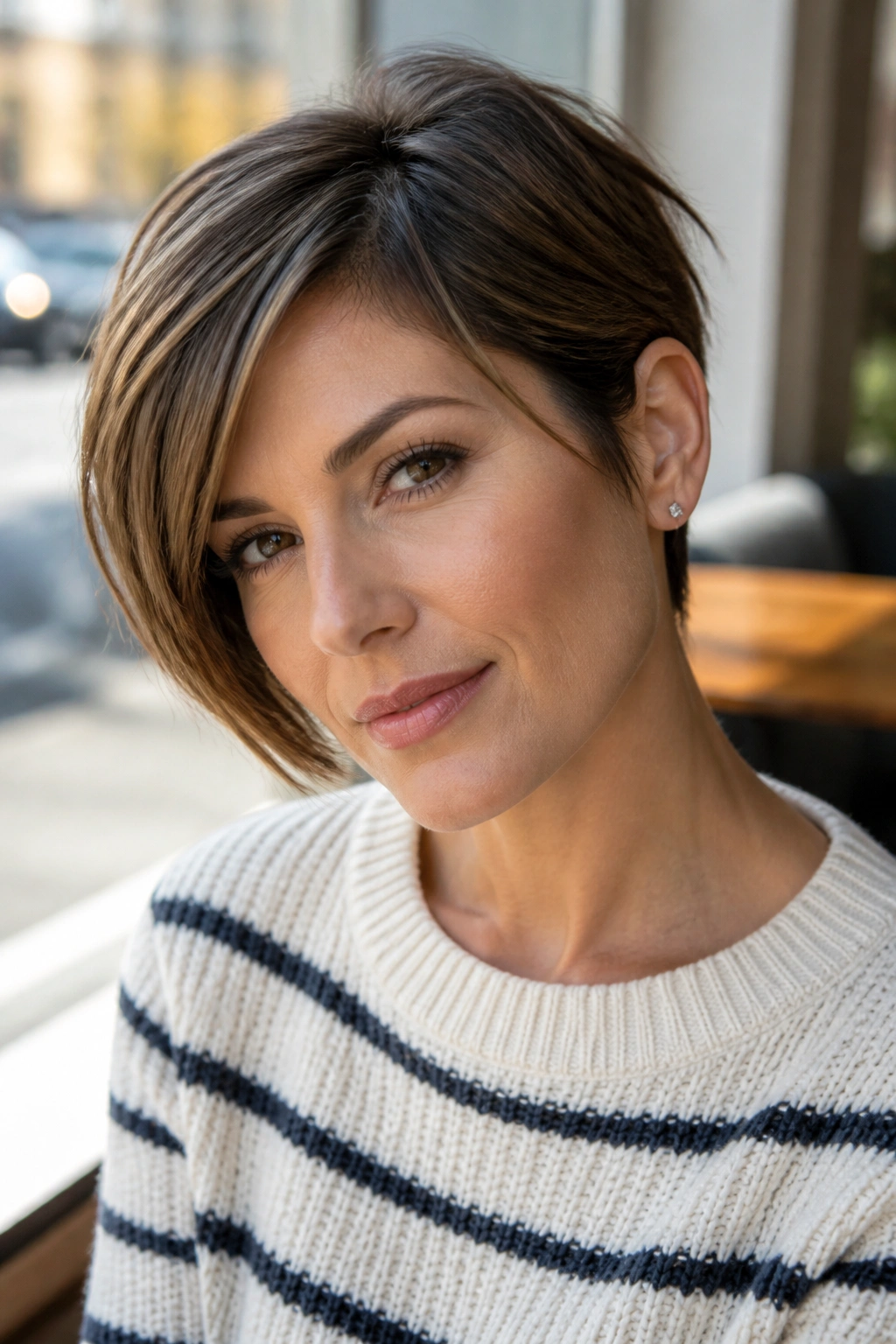
One ear showing, one hidden. That small bit of asymmetry can change the whole haircut.
An ear-tucked pixie works because it opens one side of the face and lets the eye travel down instead of across. The cheek looks a little slimmer, and the jaw gets a cleaner line.
It is also a nice haircut if you wear earrings, because the short side gives them room to show. Keep the front pieces long enough to tuck cleanly, or the style starts to look accidental.
It is sneaky flattering. Not flashy. Just smart.
15. Razored Pixie Haircuts for Round Faces That Need More Edge
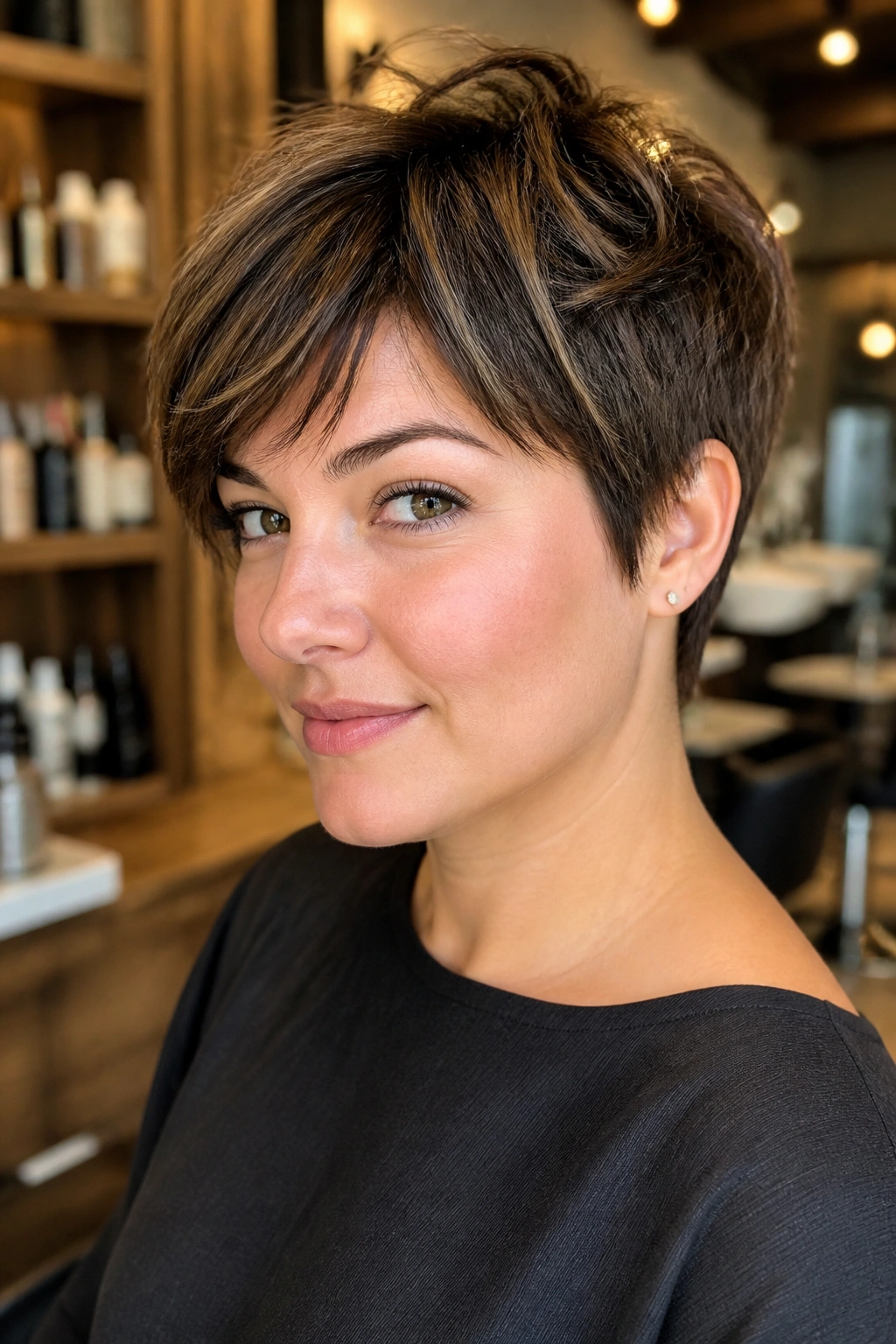
A razor can do for hair what a sharp pencil line does for a sketch. It adds movement and a little bite.
Razored pixie haircuts for round faces work because the blade softens the perimeter and breaks up bulk at the same time. That means the cut does not sit as one thick ring around the head, which is the thing you want to avoid.
When the razor helps
- Thick hair gets lighter fast.
- The top can stay airy instead of bulky.
- The fringe falls in separated pieces.
- The whole cut feels sharper without looking hard.
If your hair is fragile, ask for point cutting instead of a heavy razor pass. That keeps the ends healthier and still gives you texture.
16. Cropped Curly Top Pixie
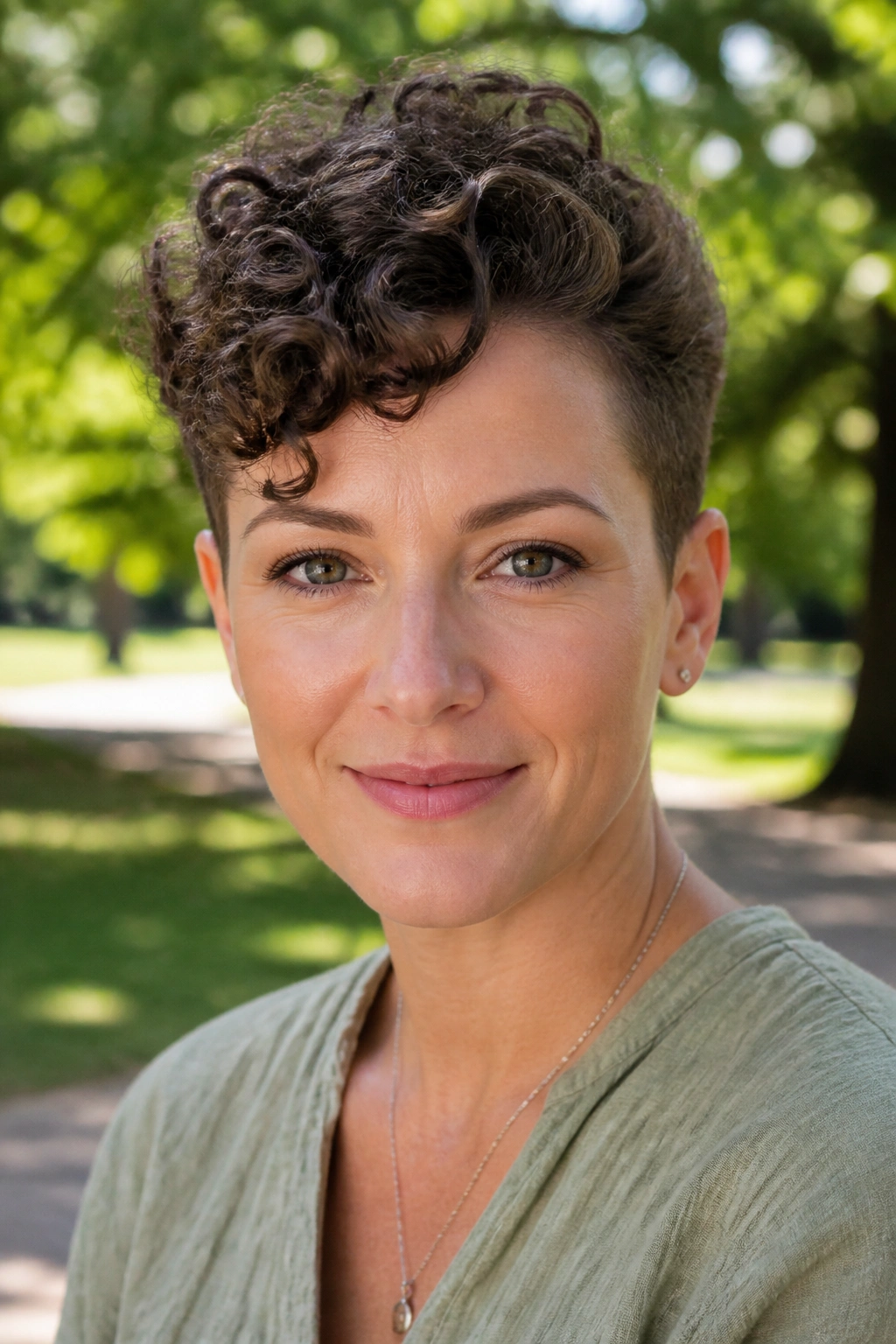
Curly hair does not need to be long to create shape. A cropped curly top pixie proves that.
The sides stay close, while the curls on top keep a little lift and roundness of their own. The difference is that the curve happens at the crown, not at the cheeks, so the face stays balanced.
This cut is good for tighter curl patterns and coils that want a defined outline. A curl-defining cream and a diffuser are usually enough, but keep the amount light. Heavy product makes short curls collapse into a sticky block.
The shape should look compact, not puffy.
17. Swept-Back Pixie With a Lifted Front
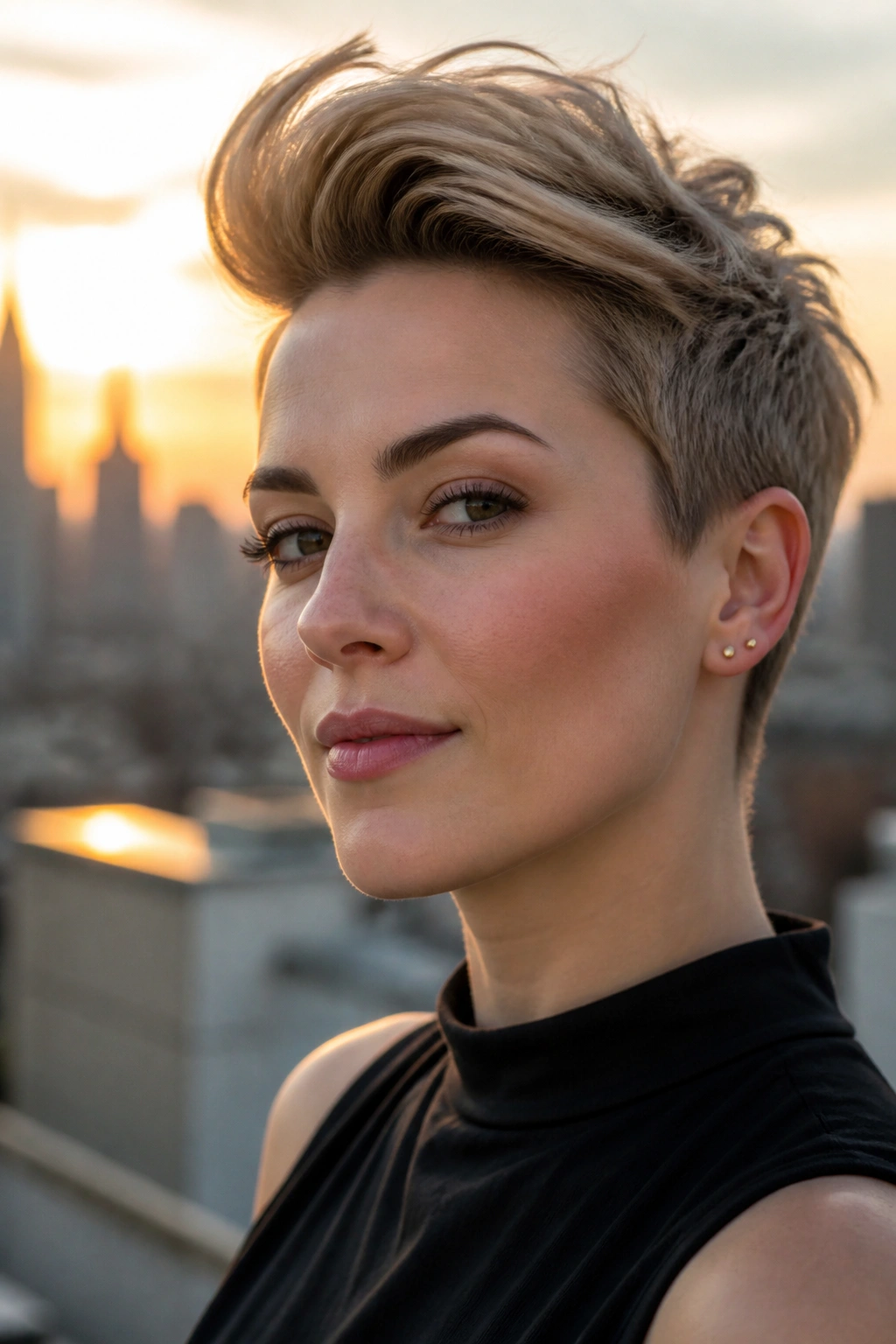
A swept-back front opens the face the way a good brow shape does. It gives room.
This pixie keeps the fringe pushed away from the forehead, sometimes almost into a mini pompadour shape. The height at the front changes the proportions right away, and a round face usually looks longer because of it.
Use a root-lift spray, then blow-dry the front section upward and back while it is still damp. A small round brush helps, but fingers work too if you want a looser finish.
This one hates heavy oils. Keep the product light or the lift falls flat.
18. Tapered Nape Pixie With Clean Neckline
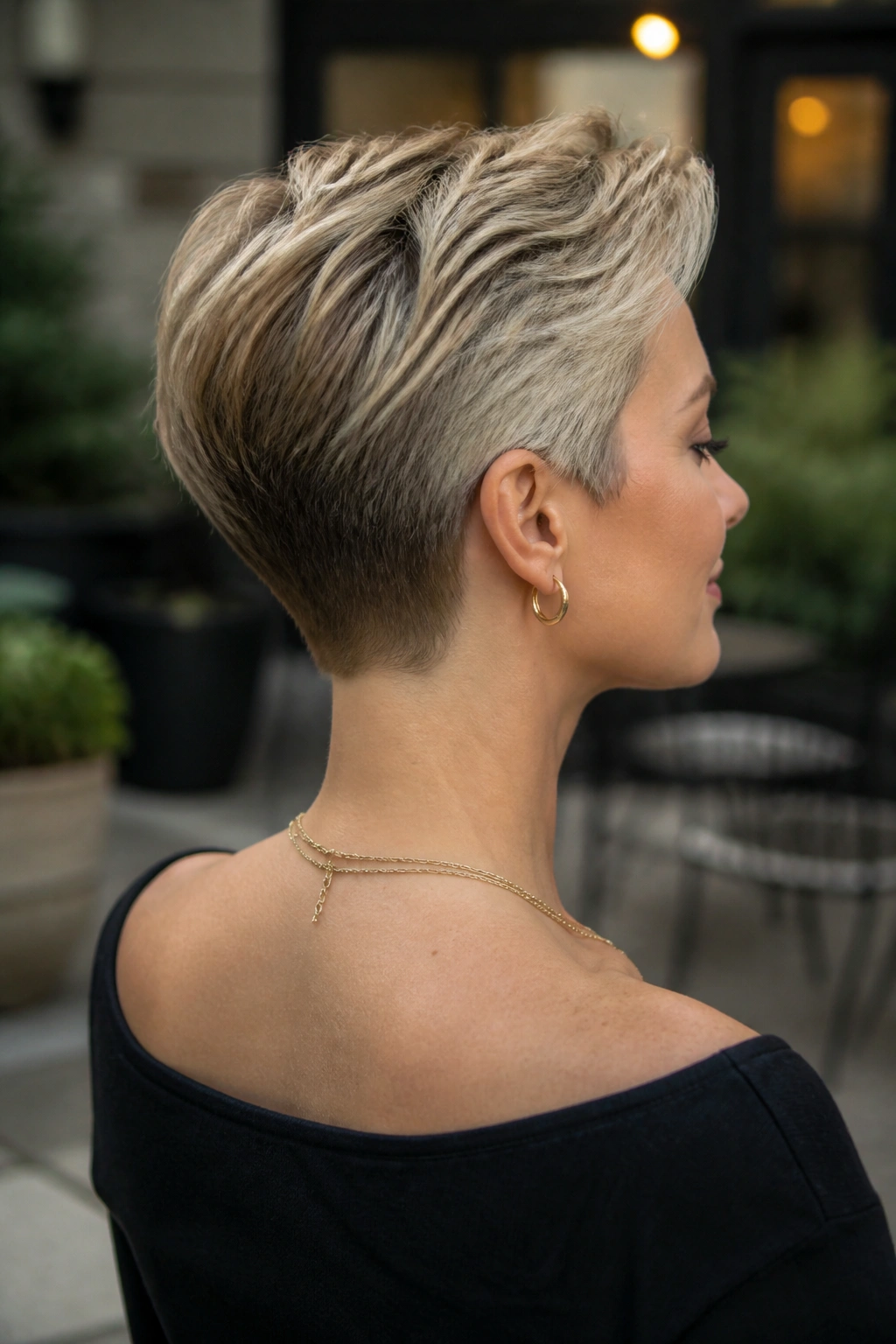
The back of a pixie matters more than people think. A tapered nape keeps the haircut crisp and stops it from ballooning below the head shape.
That clean neckline also helps a round face because the silhouette stays narrow from top to bottom. You do not get that squat, mushroom-like effect that comes from too much length at the back.
What to ask for
- Start the taper just below the occipital bone.
- Keep the shortest pieces soft, not shaved to the skin.
- Blend the crown into the nape so the transition looks smooth.
- Leave enough top length for movement.
This is a quiet haircut. It works hard in the background, which is often the best kind.
19. Grown-Out Pixie That Hovers at the Ears
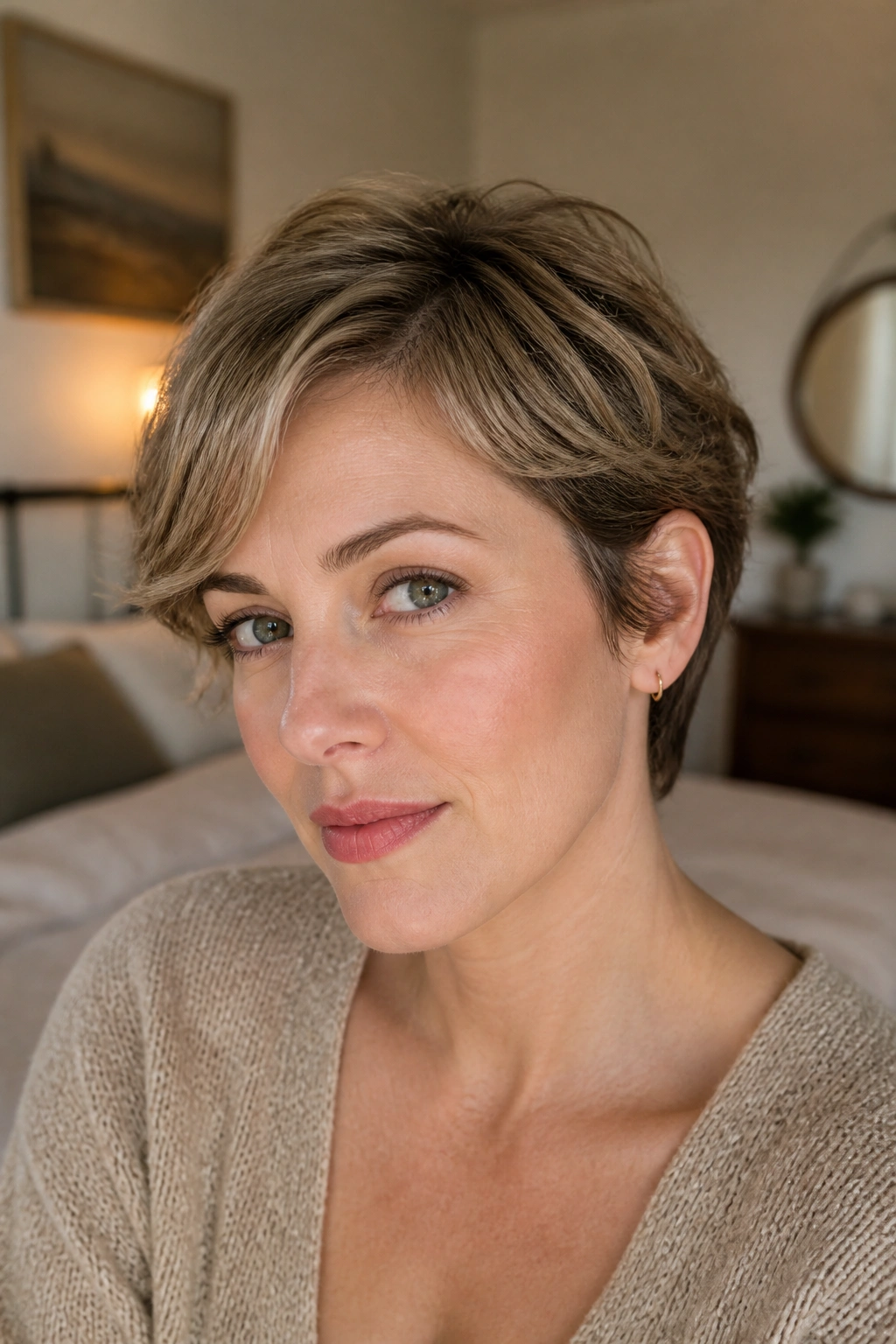
Not everyone wants a sharp chop every five weeks. A grown-out pixie gives you the shape without the constant upkeep.
The length hovers around the ears and nape, with enough softness to tuck or tousle. On a round face, that extra length can help narrow the lower half without turning into a bob.
It is a smart move if you are growing out a shorter crop or if you want short hair that still feels forgiving. A little bend in the front pieces keeps the cut from looking heavy.
This is also one of the easiest pixies to live with on busy mornings. Finger-comb it, add a touch of cream, and go.
20. Sideburn-Framing Pixie With Long Temples
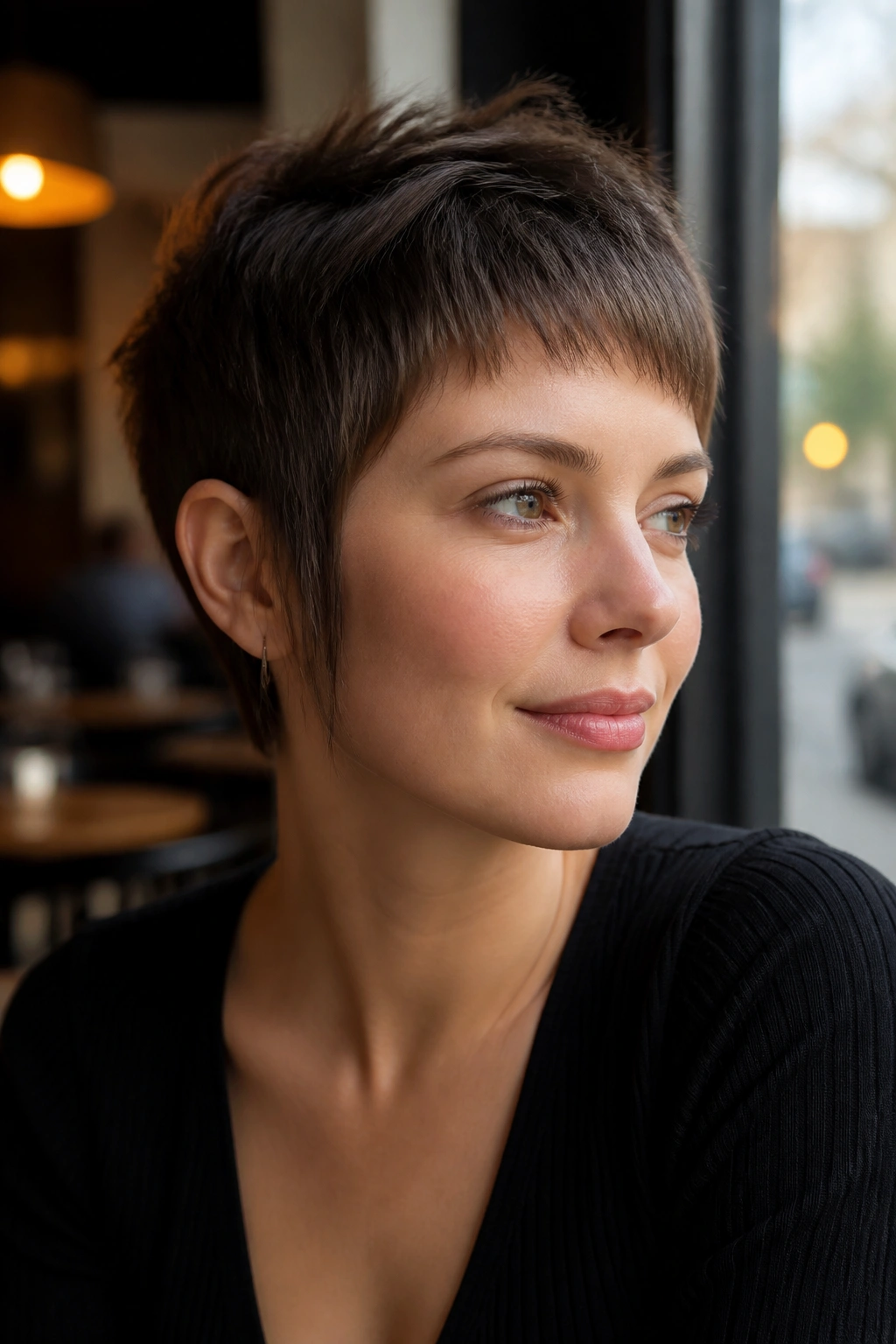
The small pieces by the temples matter more than most people think. They sit right where the face starts to widen.
A sideburn-framing pixie uses those temple pieces like narrow rails. They draw the eye down the side of the face, which can make the cheeks look less full and the jaw line cleaner.
How long should they be?
- Aim for cheekbone level or just below.
- Keep the pieces slim, not wide.
- Let them lie flat or tuck behind the ear.
- Avoid temple chunks that flare outward.
This shape is a good match for glasses because the temple pieces work with the frames instead of fighting them. It is subtle, but it counts.
21. Airy Layered Pixie for Fine Hair
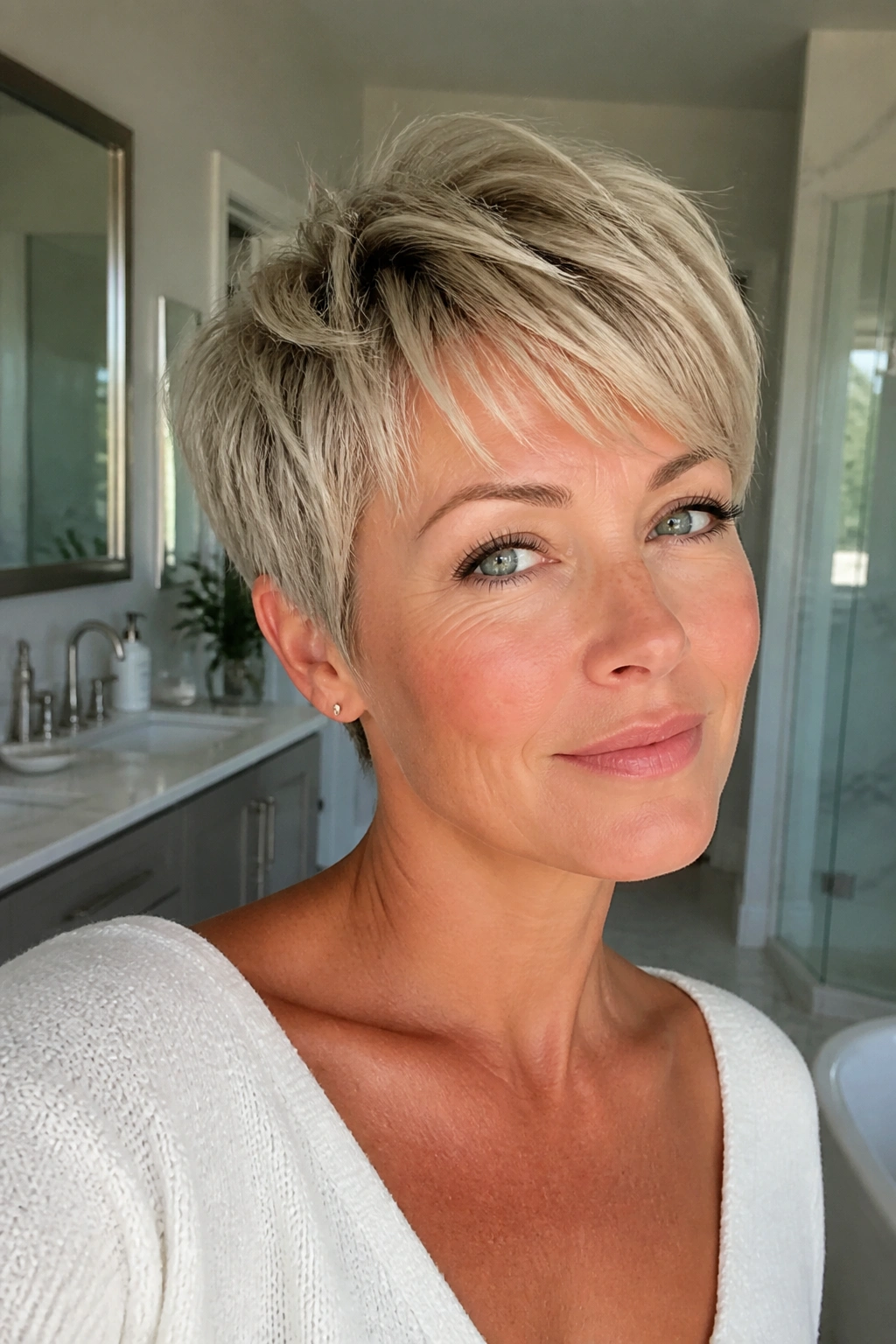
Can fine hair wear a pixie without going flat? Yes, if the layers are light and the top has some air in it.
An airy layered pixie keeps the ends soft and avoids too much interior weight. That means the hair can lift at the roots instead of hanging around the head like a cap.
A tiny amount of mousse at the roots is enough. Blow-dry with your fingers, lifting at the crown, then finish with dry shampoo on day two if the top starts to settle.
The cut should feel easy, not fragile. Fine hair needs shape, but it does not need a lot of cutting.
22. Deep Side Fringe Pixie That Cuts Across the Face
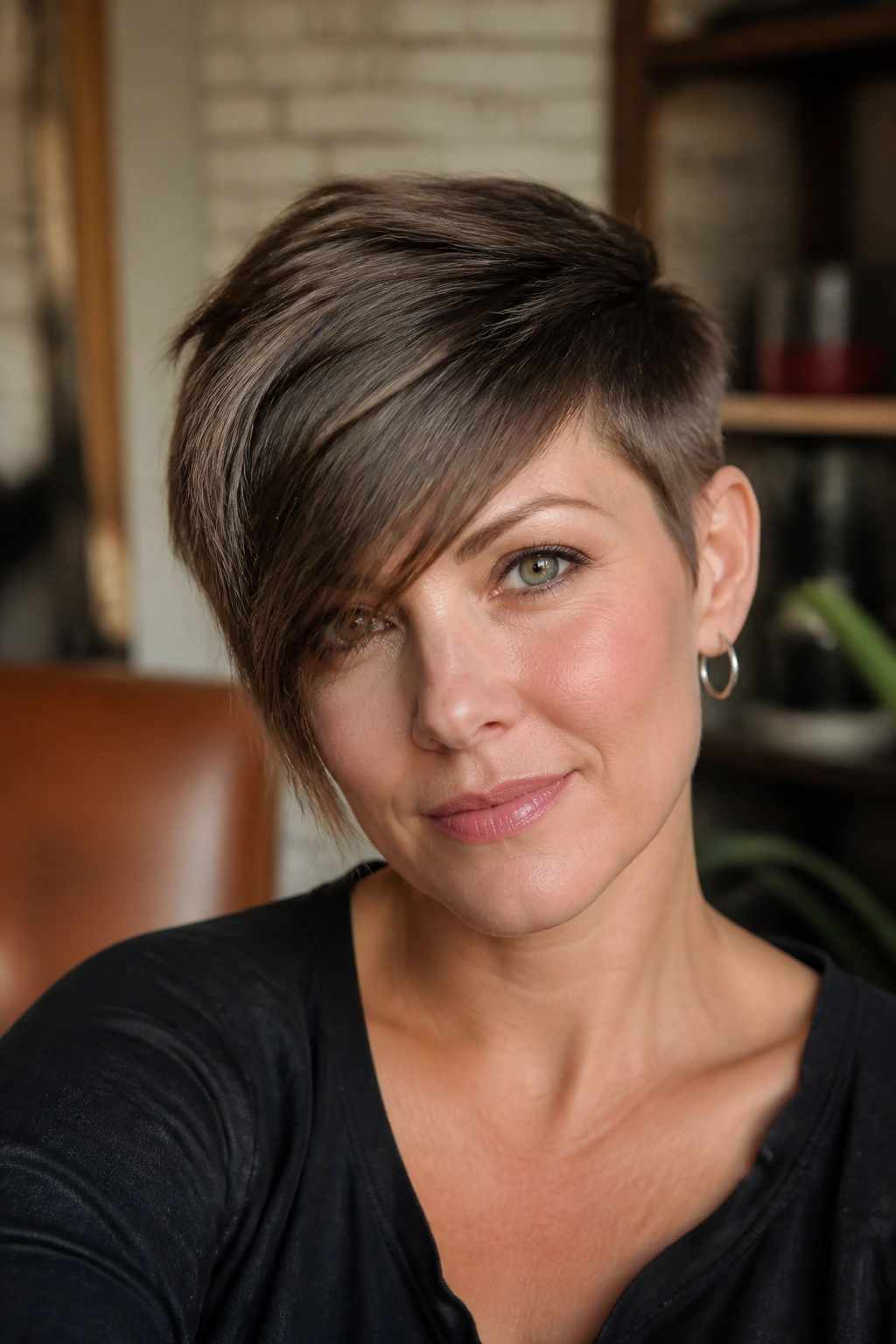
A deep side fringe does more face-shaping than a straight fringe ever will. It breaks the circle.
This version sweeps across the forehead and lands off to one side, which creates a strong diagonal line over the widest part of the face. That is why it works so well on round faces.
It is also useful if you want to soften one side more than the other. Maybe one cheek is fuller. Maybe one temple sits higher. A deep fringe can balance that without looking obvious.
Keep the fringe light and movable. If it is too dense, you lose the whole point.
23. Minimal Close Crop With Hidden Height
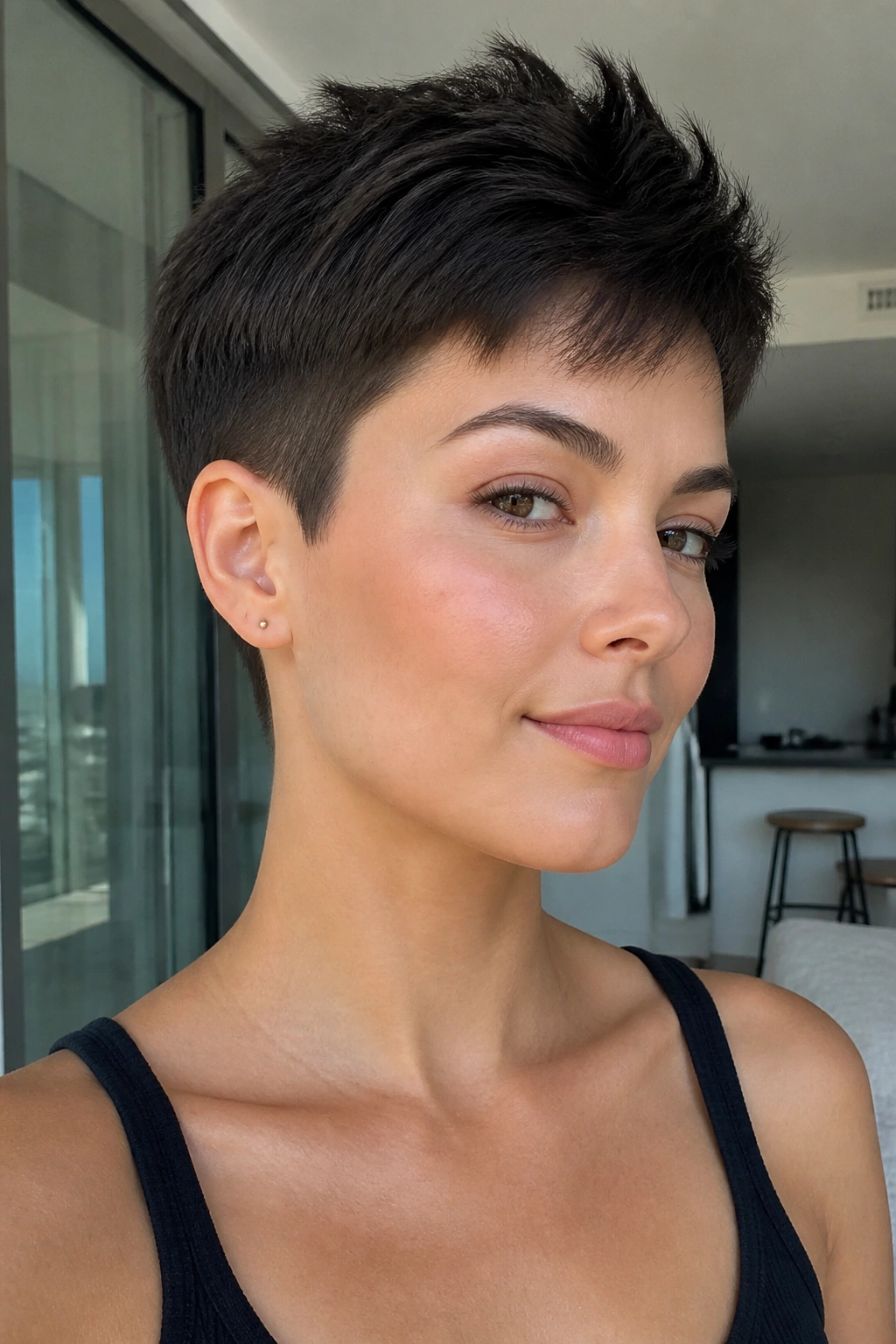
Short all over does not have to mean wide. A close crop can still flatter a round face if the top carries a little hidden height.
The sides and back stay very tidy, sometimes almost buzzed close, while the top is left just long enough to lift. That tiny bit of lift changes the outline more than people expect.
This cut is for someone who likes low fuss and does not mind showing the face. It works best when the head shape is clean and the stylist knows where to remove bulk.
One small warning: the crop has to be precise. A sloppy version can look boxy fast.
24. Wavy Tousled Pixie for Natural Texture
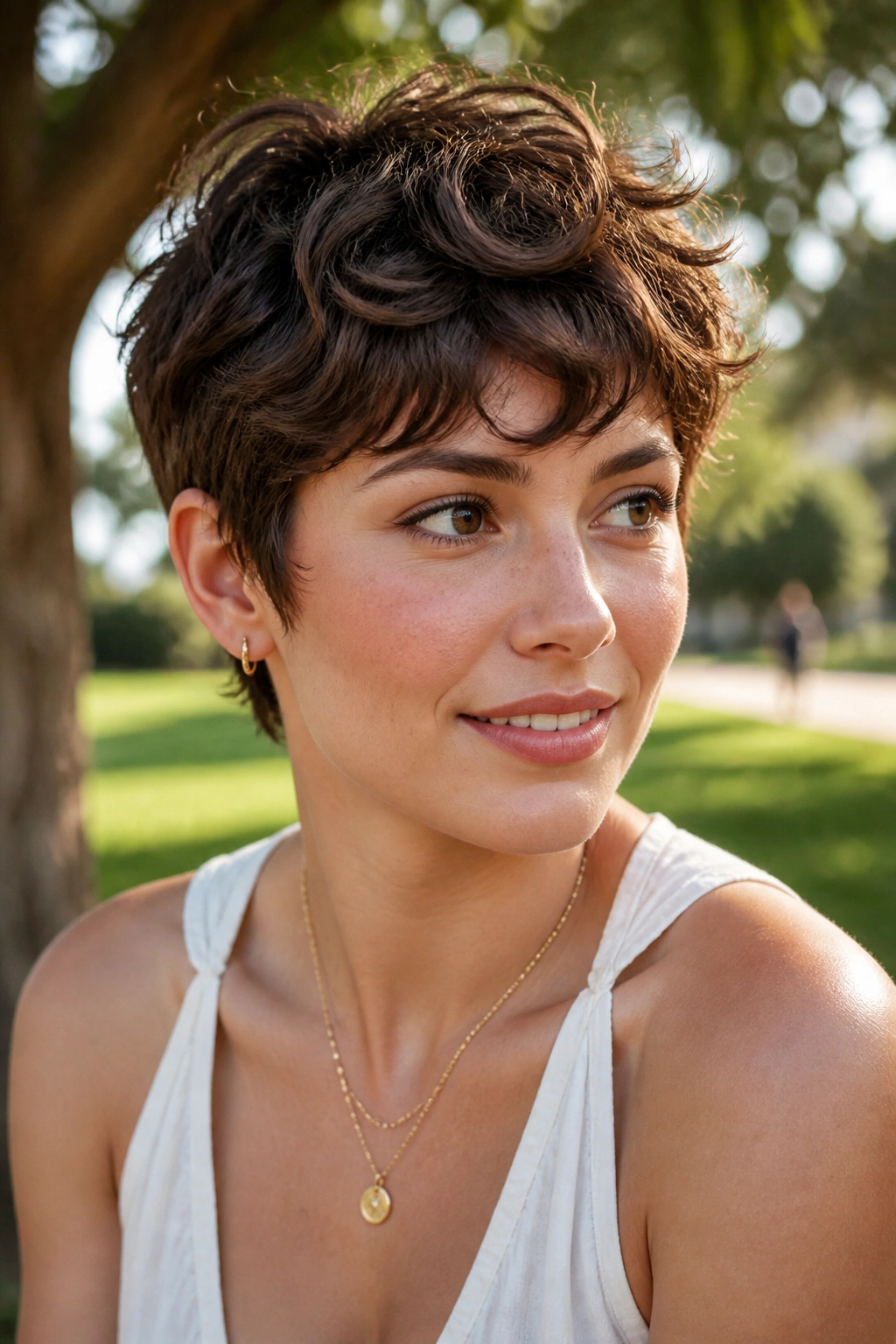
Waves make this cut feel alive. They bend the outline just enough to keep a round face from looking too circular.
The best part is how easy it can be. Let the hair air-dry about 70 percent, scrunch in a little curl cream or sea salt spray, and stop before it gets overworked. A little roughness is the point.
Round faces tend to like this pixie because the movement breaks up width at the sides. It feels softer than a slick crop and less formal than a polished side part.
If your wave pattern gets puffy in humidity, keep the product light and focus it on the mid-lengths, not the roots.
25. Sculpted Temple-Piece Pixie
When the temples are right, the whole haircut looks sharper. That is the whole idea here.
A sculpted temple-piece pixie keeps longer bits at the temples and shorter sections elsewhere, so the face gets a neat frame without extra width. The temple pieces should angle down, not flare out.
It works especially well if your cheeks are soft and you want the outline to look cleaner. A good stylist will keep the temple length narrow and use careful texturing so those pieces move instead of sticking out.
- Temple pieces should sit close to the face.
- The crown can stay a touch fuller.
- The nape should stay tidy.
- The front needs enough movement to avoid stiffness.
26. Micro-Layered Pixie for Fine Hair
Micro-layers are tiny, careful layers placed inside the haircut, not huge choppy steps you can see from across the room. That makes them useful for very fine hair.
A micro-layered pixie gives the top some lift and keeps the sides from clinging too flat to the head. On a round face, that small amount of structure can make a big difference.
What to ask your stylist
- Use internal layers, not bulky surface layers.
- Keep the perimeter soft around the ears.
- Leave a little extra length at the front.
- Avoid over-thinning the ends.
This cut is for people who want movement without mess. It is subtle, but it avoids the flat, heavy look that can make a pixie feel too wide.
27. Thick-Hair Pixie With Interior Thinning
Thick hair can ruin a pixie if the bulk is left in the wrong places. It puffs. It sits out. It fights the face.
Interior thinning fixes that by removing weight from inside the haircut while keeping the outer shape clean. That matters on round faces because the goal is control, not a swollen outline.
A good thick-hair pixie usually needs a short nape, a carefully layered top, and enough shape around the crown to stop the sides from expanding. Too much thinning at the very ends, though, can make the cut frizzy. So the work has to be measured.
If your hair is dense, this is worth discussing in detail before the first snip.
28. Soft Crescent Fringe Pixie
A curved fringe can work on a round face, but only if it stays light. A heavy semicircle around the forehead is a different story, and not the flattering one.
The soft crescent fringe bends gently across the front without closing the face in. It gives a little structure up top while still leaving room at the sides.
Compared with a blunt bowl-like fringe, this version feels looser and more modern. The key is to keep the curve broken and the ends textured so the fringe does not form one hard line.
This is a good choice if you want some forehead coverage but still want the haircut to look airy. Ask for softness, not weight.
29. Polished Office-Ready Pixie With a Smooth Finish
Some pixies look best a little messy. This one does not.
A polished office-ready pixie relies on a smooth side part, tidy nape, and controlled sides that stay close to the head. On a round face, that smoothness can be flattering because it keeps the silhouette clean and direct.
A half-pea-sized bit of pomade is usually enough. Warm it in your hands first, then smooth the front and temple pieces into place. Too much product makes the hair greasy, and a greasy pixie loses its shape fast.
This is a good haircut if you want something neat for work, dinner, or anywhere you do not want to fuss with your hair every hour.
30. Softly Tapered Pixie With a Long Front for Round Faces
If someone asked me to choose one cut from this whole list, I would start here. The softly tapered pixie with a long front gets the balance right.
It keeps the sides and nape narrow, leaves the front long enough to sweep across the face, and adds just enough crown lift to stop the shape from sitting flat. That combination flatters round faces because it creates length without looking severe.
It is also the easiest version to hand to a stylist who has not cut your hair before. Say you want soft temples, a tapered back, and a longer front section that can move sideways or slightly back. That gives them a clear map.
If you only remember one thing, make it this: short hair should create shape, not repeat the face shape. A good pixie does not fight your features, and it does not hide them either.
