



Thick hair is a blessing until a blunt cut turns it into a box. The shape lands too wide at the sides, the crown pops up where you do not want it, and the back can feel heavy enough to sit on your neck.
That’s why long pixie cuts for thick hair work so well when they’re done with intent. They keep enough length to soften the face, but they also remove weight where dense hair tends to go stiff, puffy, or triangular. A good pixie on thick hair is less about chopping everything off and more about placing the bulk in the right places.
The best versions do three things at once: they trim the nape so the neckline looks clean, they keep some length around the fringe so the cut feels feminine and wearable, and they build in texture so the hair moves instead of swelling out. Small details matter here. A few millimeters at the temple can change the whole balance of the cut.
And yes, thick hair can absolutely carry a pixie. The trick is choosing the right shape for your texture, your face, and how much styling you’re willing to do before coffee.
1. Side-Swept Long Pixie Layers
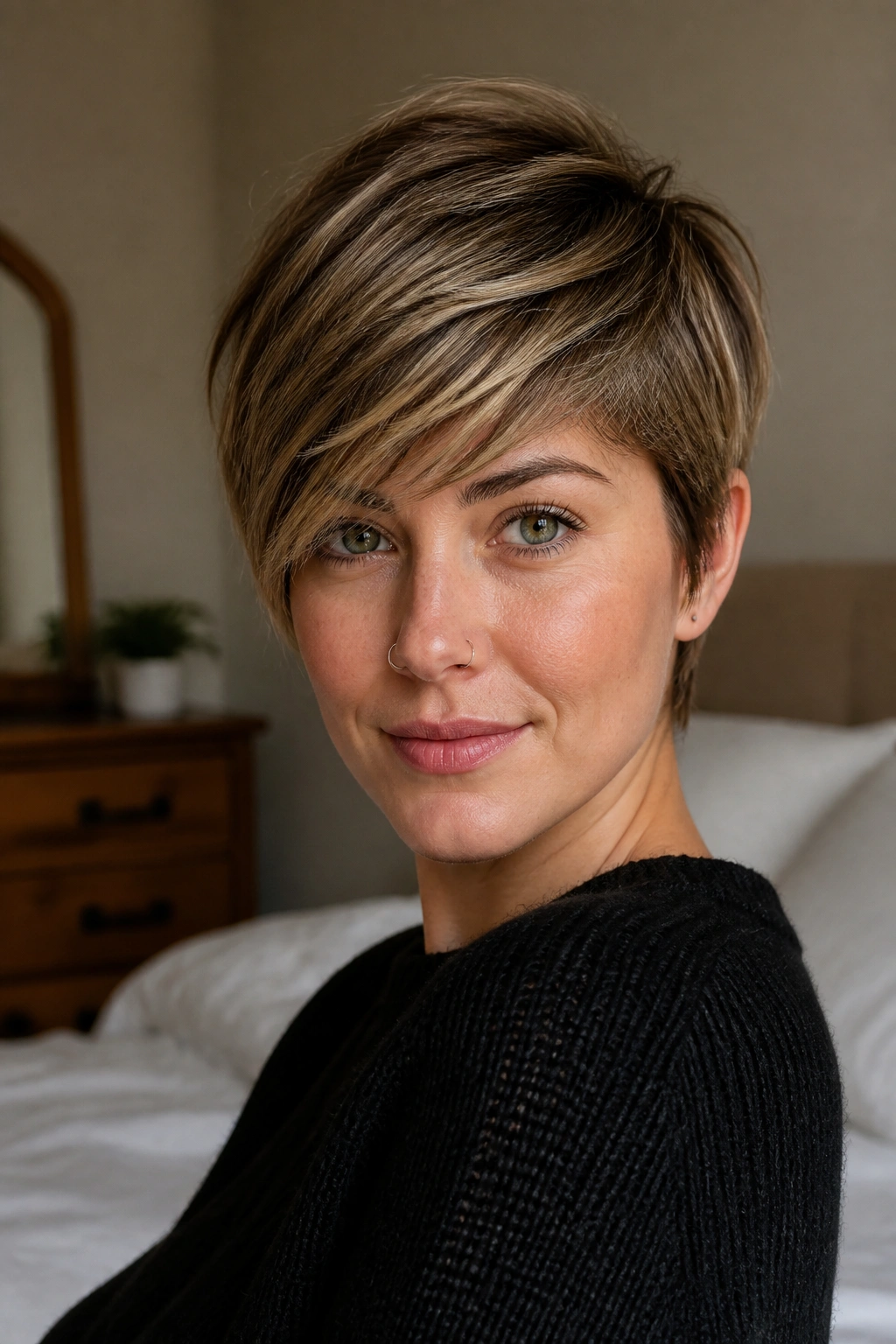
A side-swept long pixie is the one I reach for first when thick hair needs shape without losing softness. The fringe lands long enough to brush the brow or cheekbone, while the sides stay slim and controlled. It keeps the cut from turning into a helmet, which is a real risk when dense hair gets too much width around the temples.
Why It Works on Thick Hair
The long sweep across the face breaks up bulk fast. Thick hair can make a short cut feel heavy at the front, and this shape fixes that by moving the weight diagonally instead of letting it sit straight across.
Ask your stylist for internal layering near the crown and a soft, side-directed fringe. That combination keeps the top airy and stops the cut from looking square. If your hair puffs out at the sides, ask for some removal around the parietal ridge — that’s the area just above the ears. It makes a bigger difference than most people expect.
- Best for round, square, or heart-shaped faces
- Works well with blow-dried or air-dried texture
- Needs only a light mousse and a round brush
- Looks polished even when the fringe falls a little loose
My blunt advice: keep the fringe long enough to tuck behind one ear. It gives you styling room on rushed mornings.
2. Feathered Crown Long Pixie
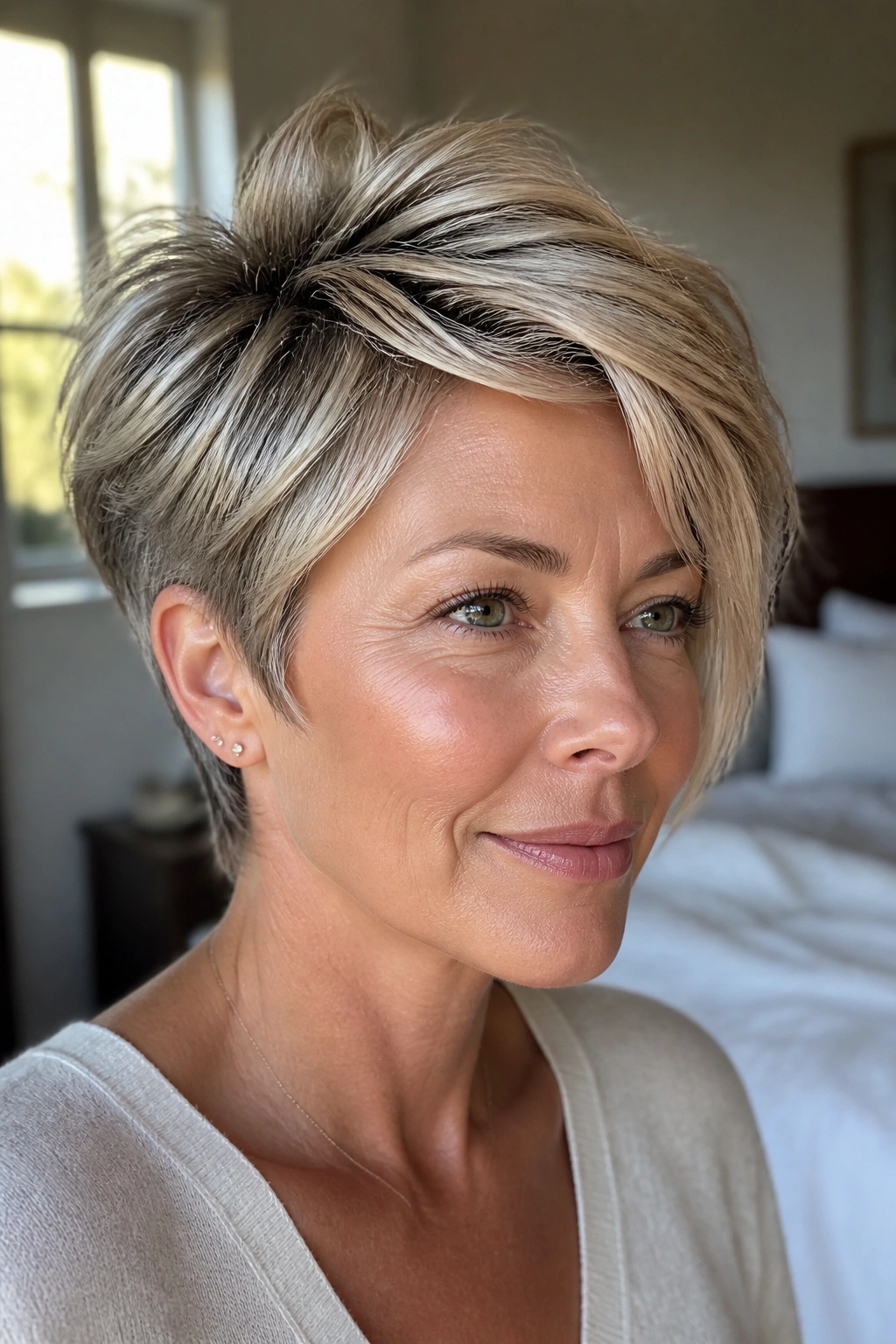
A feathered crown can save thick hair from looking blunt and boxy. That sounds dramatic, but I mean it. When the top of a dense pixie is cut with soft feathering instead of chunky layers, the whole head sits lighter and the shape reads cleaner from every angle.
The best feathered versions have movement at the crown, not just length. Hair that’s thick at the roots tends to stack up on itself, so the top needs some air built into it. Feathering does that without stripping out too much density. The result is a cut that lifts at the top and settles closer to the head through the sides.
Dry it with your fingers first, then go in with a vent brush or small round brush only at the root area. A pea-sized amount of styling cream is enough. More than that and the feathered texture can collapse, which defeats the point.
This cut is good if you want soft volume instead of big volume. There’s a difference. Big volume can look puffy on thick hair. Soft volume looks deliberate, even if you did it in five minutes.
3. Asymmetrical Long Pixie
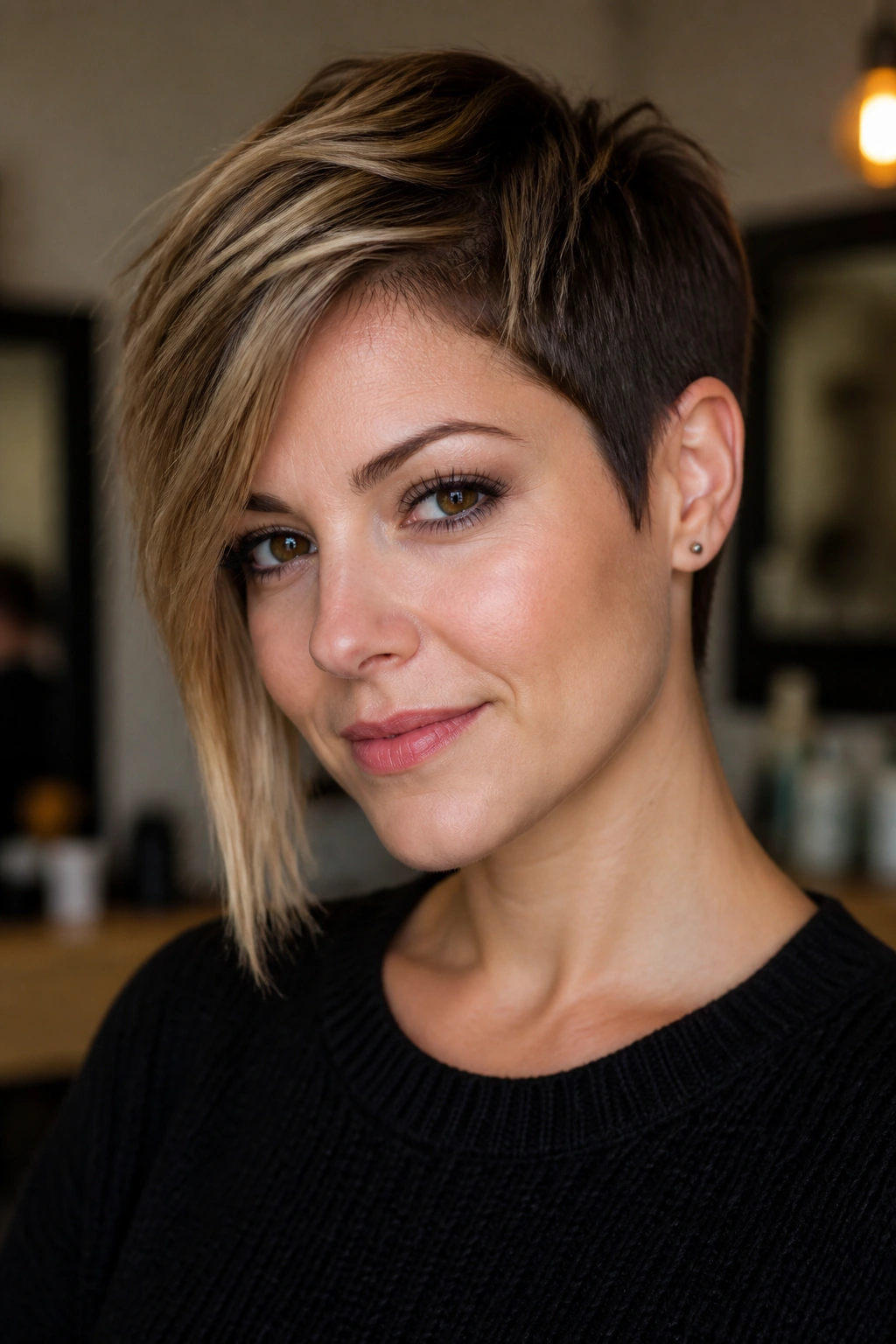
Picture one side grazing the jaw while the other sits closer to the ear. That small imbalance changes everything.
An asymmetrical long pixie is one of the smartest choices for thick hair because it pulls the eye in one direction and stops the cut from feeling too heavy on both sides. Dense hair likes to expand evenly. Asymmetry breaks that pattern and makes the whole style feel sharper, leaner, and more interesting.
What Makes It Different
The longer side gives you a little drama without asking for long-hair maintenance. The shorter side keeps the silhouette close to the head, which is useful if your hair tends to bulk up around the ears. It also works well for anyone who wants a face-framing effect without full bangs.
- Ask for one side to stay 1 to 2 inches longer
- Keep the heavier side textured, not blunt
- Use a flat iron only on the front sections if needed
- Tuck the shorter side behind the ear for a clean line
I like this cut on thick hair that has a bit of natural bend. Straight hair can look a touch severe if the contrast is too strong, so soften the ends with point cutting or a tiny bit of bend at the front. That keeps it modern instead of stiff.
4. Undercut Long Pixie
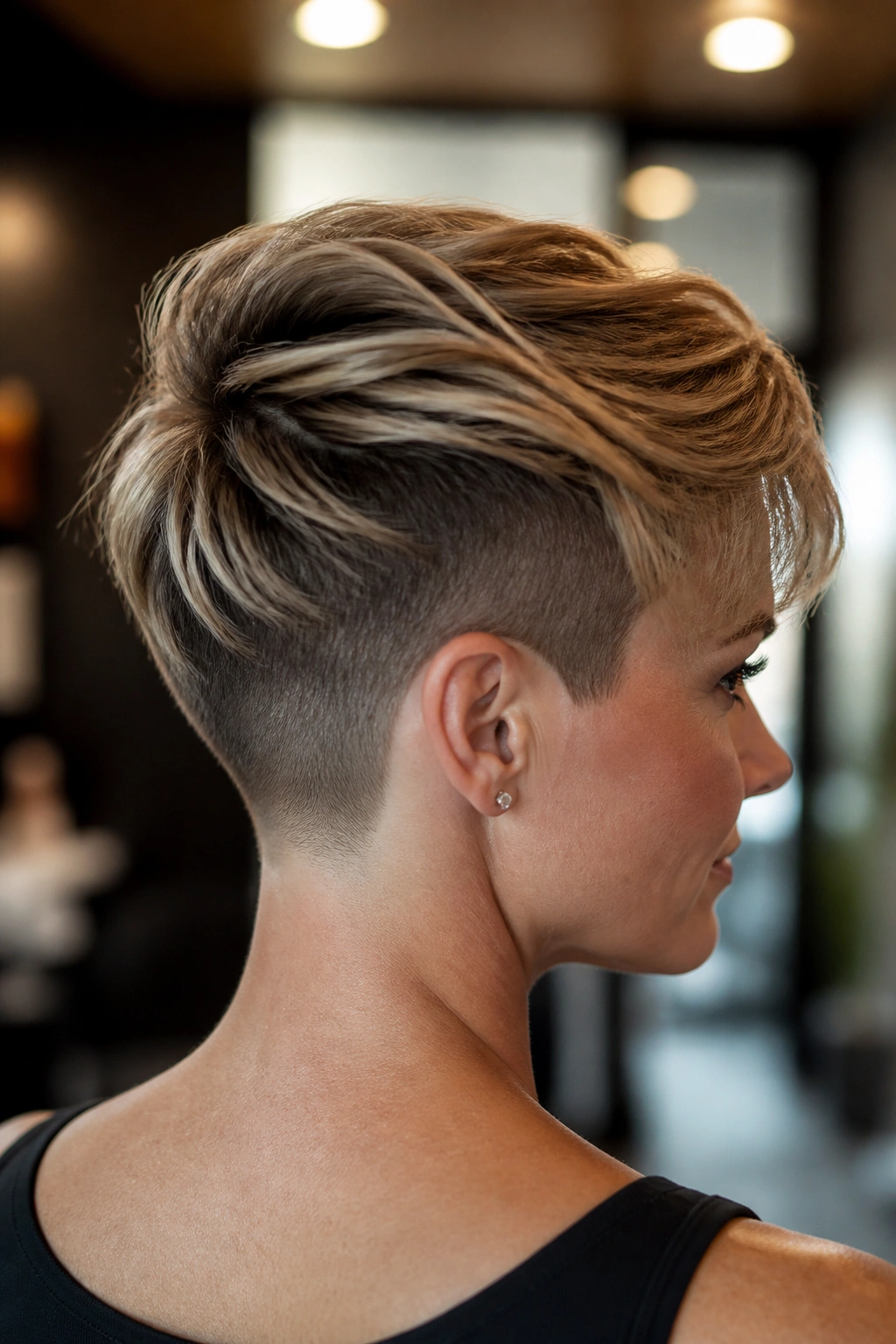
A hidden undercut is the fastest way to take a thick pixie from bulky to clean.
This is the one to choose if your hair eats up shape no matter how much layering you do. An undercut removes weight at the nape or just behind the ears, where thick hair often piles up and flips out. The top stays long enough to style, but the bottom is carved away so the silhouette sits closer to the head. It’s a practical fix, not a fashion trick.
Compared with a fully layered pixie, the undercut version gives you more contrast and less daily fuss. You can still wear the top sleek, side-swept, or tousled, but the back stays neat. That matters if you hate the mushroom effect that some short cuts create on dense hair.
Who should skip it? People who want every side of their hair to be the same length and anyone who likes to wear the top very short and fluffy. The undercut needs a top layer with enough length to show the shape. If the top is too short, you lose the point of the cut.
Best use: ask for a concealed undercut if you want the clean look without making the style feel shaved.
5. Shaggy Long Pixie with Choppy Ends
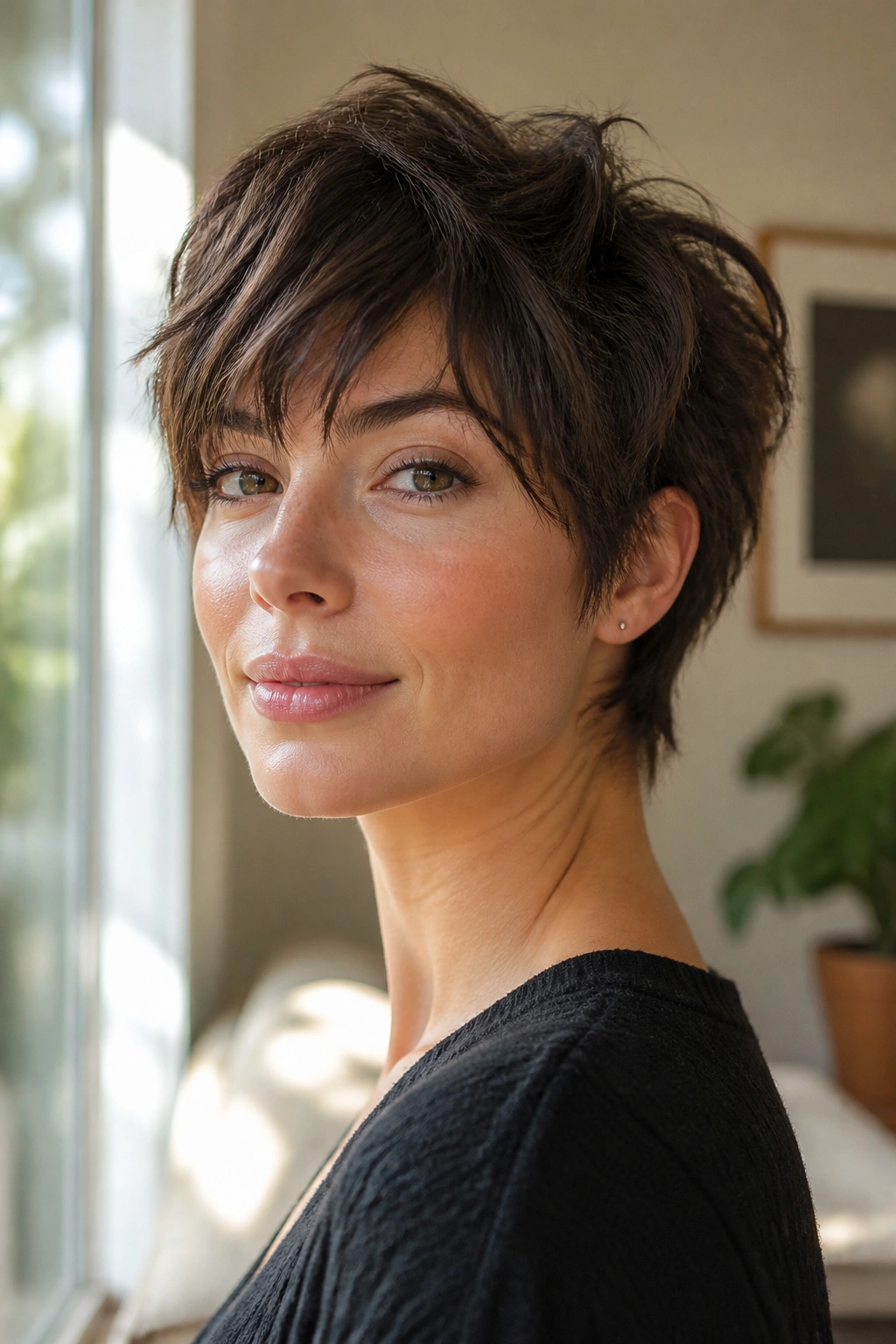
A shaggy long pixie is the one I recommend when someone says, “I want my thick hair to stop acting so serious.”
The choppy ends keep the cut from sitting in one heavy block. Thick hair often holds a blunt line too well, which sounds nice until it starts looking stiff. Choppy ends soften that effect. They break the edge, let the hair move, and make the style feel easier to wear on imperfect mornings.
The nice part is that this cut does not need a perfect blowout. A quick rough-dry, a dab of texture cream, and a few finger scrunches can be enough. If your hair has a little wave, even better. The shaggy shape gives that wave somewhere to go instead of forcing it into a solid dome.
I’d avoid over-styling it. Too much brush work can flatten the texture and make the haircut lose its point. Let some pieces stay uneven. That little messiness is doing the heavy lifting.
If you’re nervous about short hair looking too severe, this is a safe landing spot. It keeps the spirit of a pixie but leaves enough softness around the face that it never feels too stripped down.
6. Long Pixie with Curtain Bangs
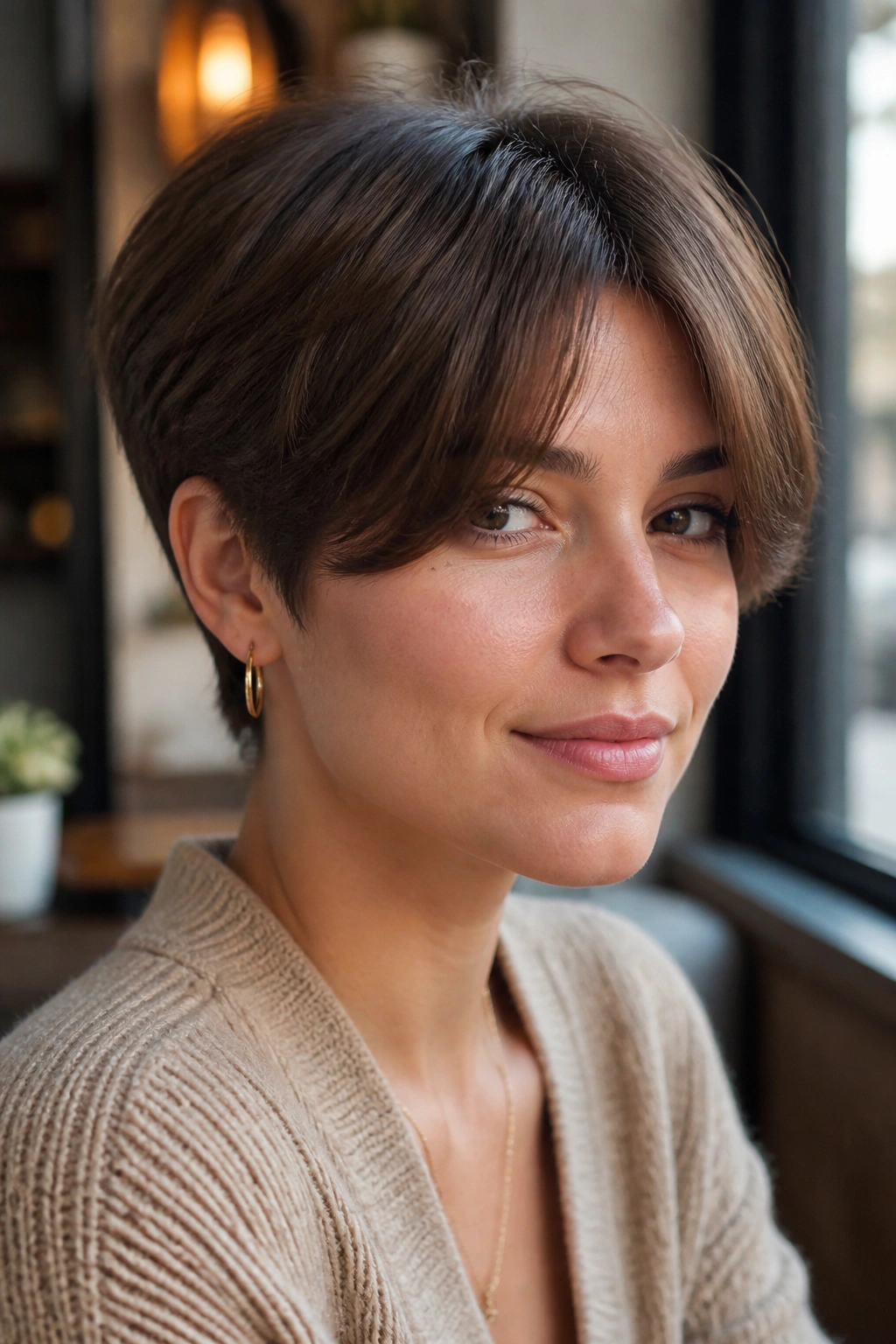
Can curtain bangs work on a pixie? Yes — and on thick hair, they often work better than blunt fringe.
The reason is simple. Curtain bangs split the front weight into two sides, which keeps dense hair from dropping straight down in one heavy wall. They also give the face a softer frame without forcing you to commit to full bangs, which can be a headache on thick texture if the forehead area grows out fast.
How to Style It
Blow-dry the bangs forward for about 20 seconds, then wrap each side away from the face with a 1.5-inch round brush. That small bend matters. It helps the bangs curve instead of sitting flat and heavy.
A root-lifting spray at the front is worth the extra minute. Thick hair can make bangs collapse if they’re too damp or too weighted down, so keep the product light. You want movement, not a sticky helmet.
This cut is especially good if your face is longer or if you like a little softness around the cheekbones. The bangs can be worn split, tucked, or brushed slightly to one side. It is one of the more flexible long pixie cuts for thick hair, and flexibility counts when you’re growing it out or changing your part often.
7. Tapered Nape Long Pixie
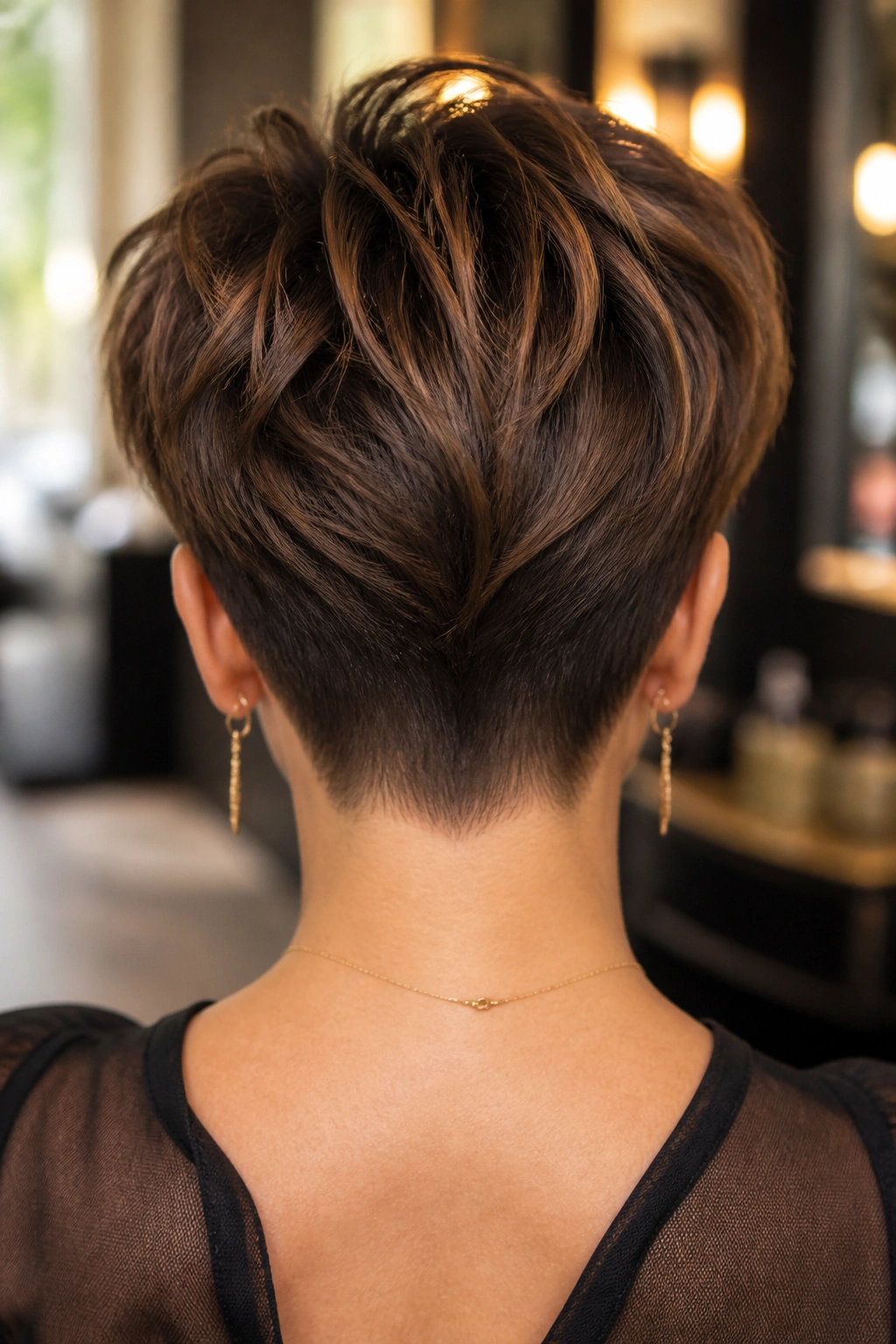
The back of the head tells on a haircut fast.
If the nape is too bulky, thick hair can make even a nice pixie look unfinished from behind. A tapered nape fixes that by narrowing the outline at the neckline and letting the rest of the cut sit more deliberately on top. It sounds like a small detail, but small details are usually what separate a good pixie from a lumpy one.
A tapered back also makes necklines look longer and cleaner. That matters if you wear collars, scarves, or jackets that sit close to the neck. The cut stops fighting your clothes. Nice bonus.
- Keep the taper soft, not skin-close, if you want a feminine finish
- Ask for clean graduation at the neckline
- Leave enough length at the crown to balance the shorter back
- Use a light paste only at the ends if they flip out
This style is a good pick if you want your hair to look neat with almost no effort. It can still be textured on top, but the base stays tidy. That combination is what makes it so wearable for thick hair. No puffball back. No awkward bulge under the occipital bone. Just shape.
8. Curly Long Pixie
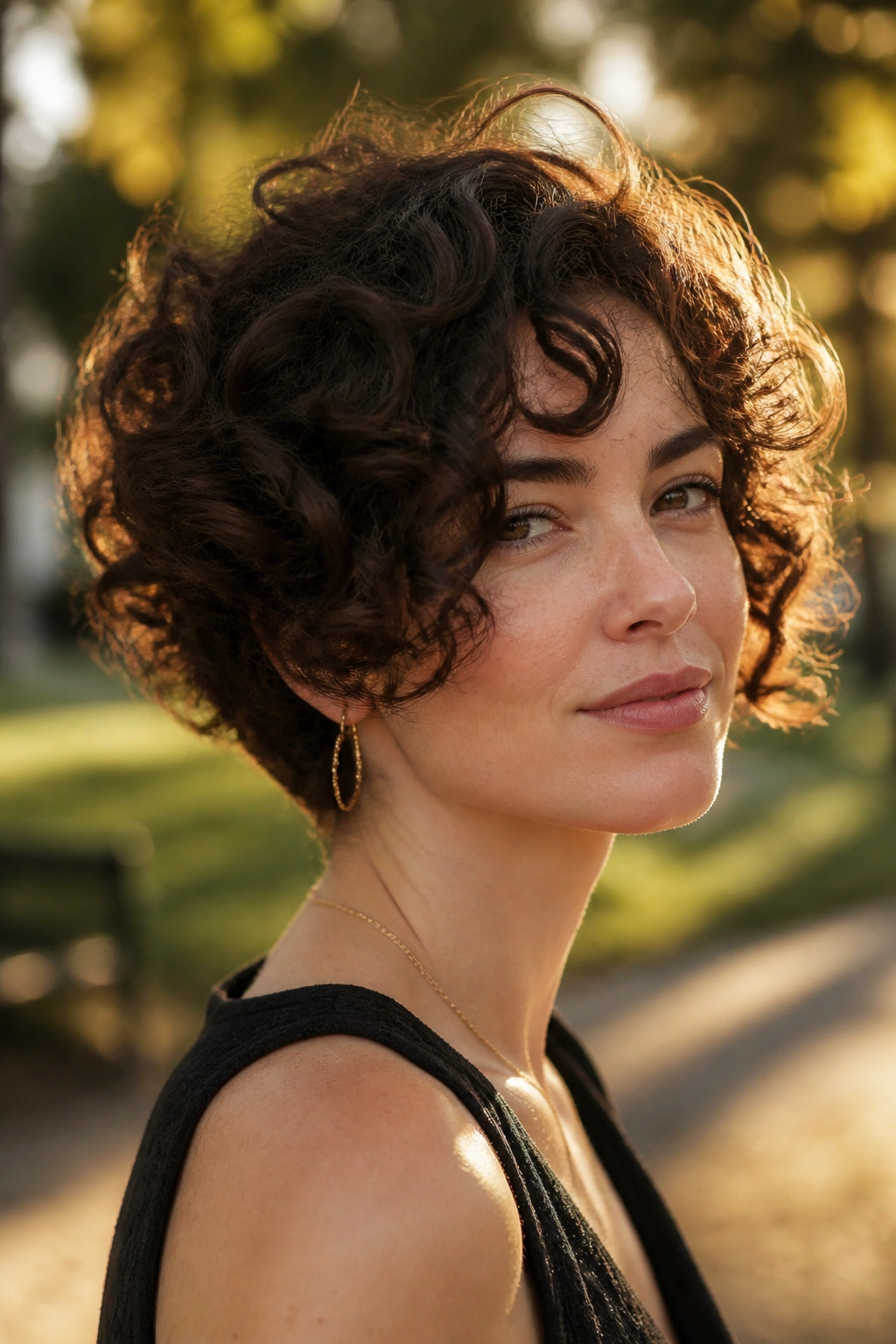
Curly thick hair does not need to be tamed into submission. It needs room.
A long pixie on curls works when the stylist respects shrinkage and cuts the shape while the curls are in their natural pattern. If they cut it too short while stretched, the finished result can jump up and look boxy. If they leave enough length at the top and crown, the curls stack in a much better way and the haircut keeps its balance.
This is one of those cuts where the perimeter matters more than people think. The lower edges should be shaped so the curls don’t build into a triangle at the jaw. A little cleanup around the sides and nape helps the curls spring upward without spreading outward.
Use a leave-in conditioner and a light gel, then scrunch and air-dry or diffuse on low heat. High heat can rough up the curl pattern and make thick hair frizz at the ends first, which is where most people notice the damage.
I like this cut for people who want texture to do the work. If your curls already have personality, don’t fight them with a stiff shape. Let the cut support the curl instead of flattening it.
9. Sleek Long Pixie with a Deep Side Part
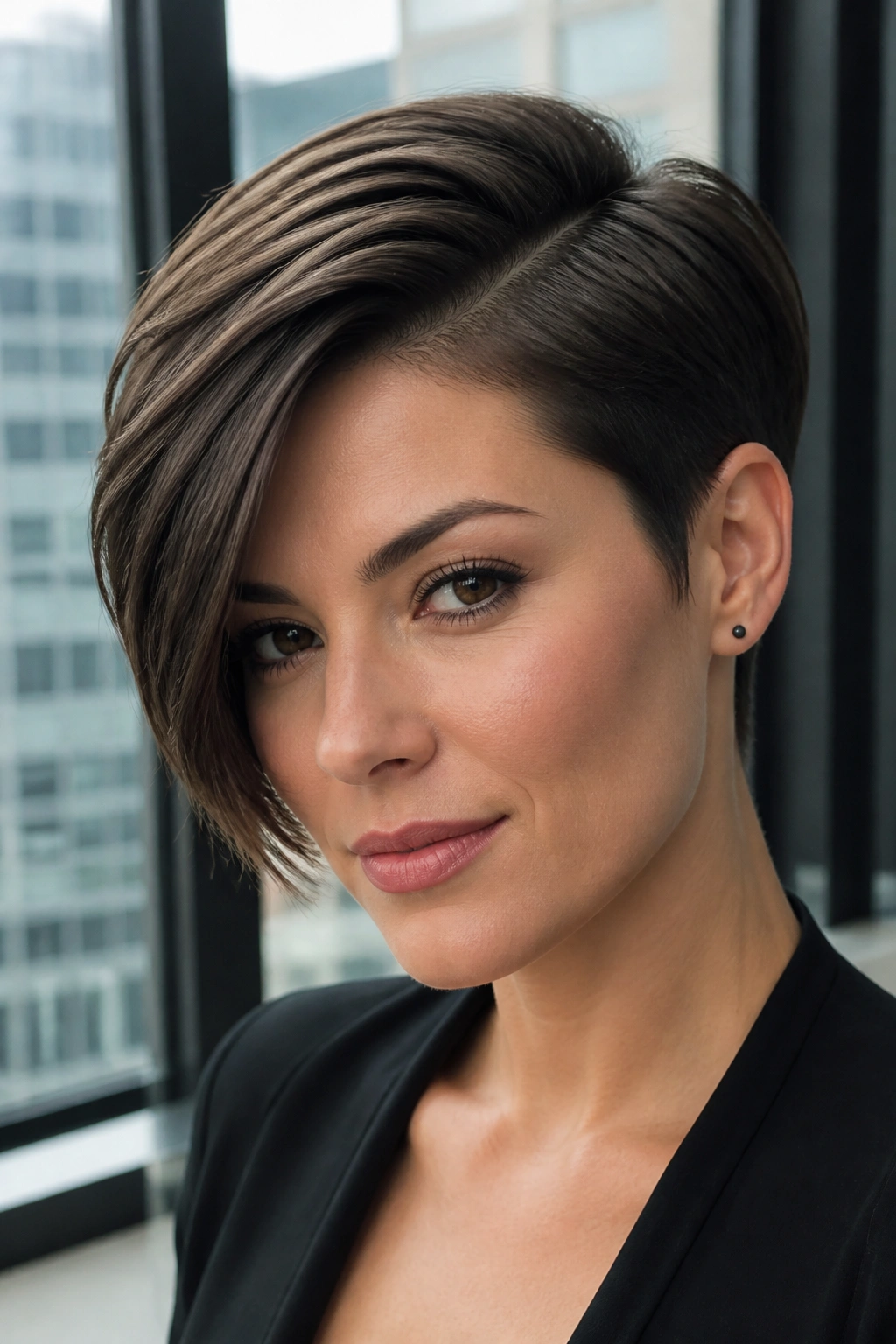
If you like your hair neat, sharp, and a little dramatic, the deep side part is your friend.
On thick hair, a deep side part redistributes weight instead of letting it sit dead center. That alone makes the cut look slimmer. The longer front section can fall across the forehead or cheekbone, while the short side stays close and controlled. It’s a clean shape, and clean shapes are underrated on dense hair.
The trick is keeping the finish smooth without making it flat. Thick hair can take a lot of heat, but it does not need it. Use a heat protectant, blow-dry the roots in the direction you want them to sit, then finish the front with a flat iron only if needed. You’re polishing, not ironing the life out of it.
This look suits straight or slightly wavy thick hair best. If your texture is very coarse, use a small amount of shine cream on the ends only. Too much product at the root can kill the lift and make the part collapse.
It’s a strong office cut, a strong dinner cut, and a strong “I got my hair done for a reason” cut. Some styles whisper. This one has a voice.
10. Tousled Long Pixie with Piecey Texture
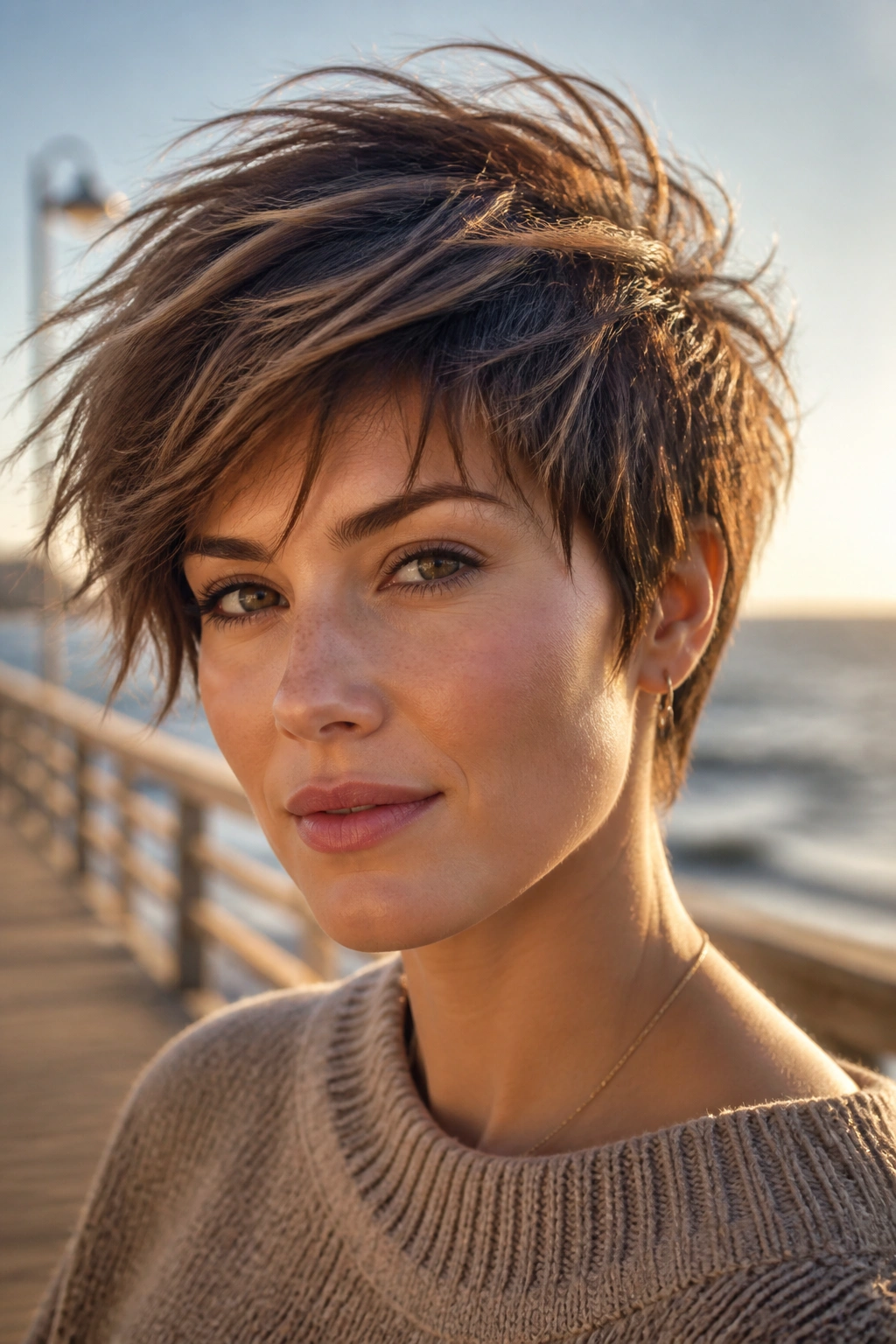
A tousled pixie is not lazy hair. Done well, it’s controlled messiness.
The piecey finish helps thick hair separate instead of forming one giant mass. That separation is the whole point. When the layers are cut with a little irregularity and styled with a touch of wax or paste, the hair reads lighter and more modern. You can see the movement. You can also see where the bulk was removed, which is satisfying in the best way.
What to Ask For
Ask for soft interior layers and ends that are point-cut rather than chopped blunt. Then ask your stylist to avoid over-thinning the top. Thick hair needs removal in the right places, not everywhere. If too much density disappears from the wrong area, the style can turn wispy at the top and heavy at the bottom. That’s an ugly trade.
Use a pea-sized amount of matte paste, warm it in your palms, and pinch sections from the fringe toward the crown. Don’t rake it through like conditioner. You want little bends and separations, not a sticky shell.
This is one of the easiest long pixie cuts for thick hair to live with if you like texture that looks intentional but not stiff. It’s casual without being sloppy. That line matters.
11. Ear-Length Long Pixie with Soft Fringe
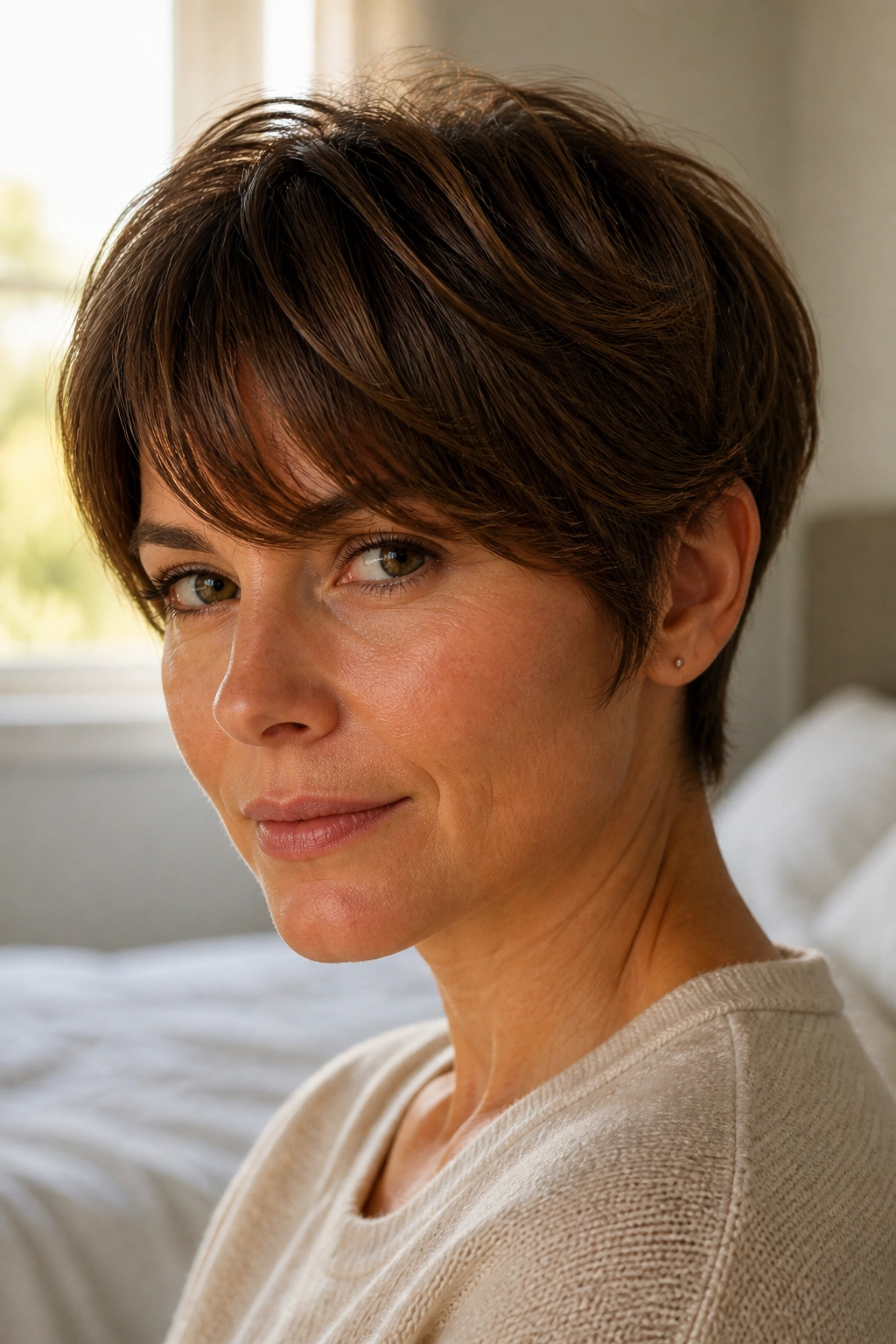
Ear-length side sections make thick hair feel lighter almost immediately.
The soft fringe gives the front some breathing room, while the sides stop just around the ear or a touch below it. That length is long enough to tuck, but short enough to keep the face open. If your thick hair tends to widen at cheek level, this shape pulls everything in a bit and keeps the outline friendlier.
Why It Feels Softer
The fringe doesn’t sit in one straight line. It breaks slightly at the middle or sweeps off-center, which means it bends with the face instead of sitting on top of it. That matters more than people think. A stiff fringe on dense hair can make the whole haircut feel boxy in a hurry.
- Good for square faces that want some softening
- Easy to tuck behind one ear for asymmetry
- Works with glasses because the fringe stays light
- Needs trims often enough to keep the front from closing in on the eyes
I’d choose this over blunt bangs if your hair is especially dense in the front. Soft fringe takes the edge off without competing with your texture. And if you’re growing out a shorter cut, this is one of the easiest landing points.
12. Bixie for Thick Hair
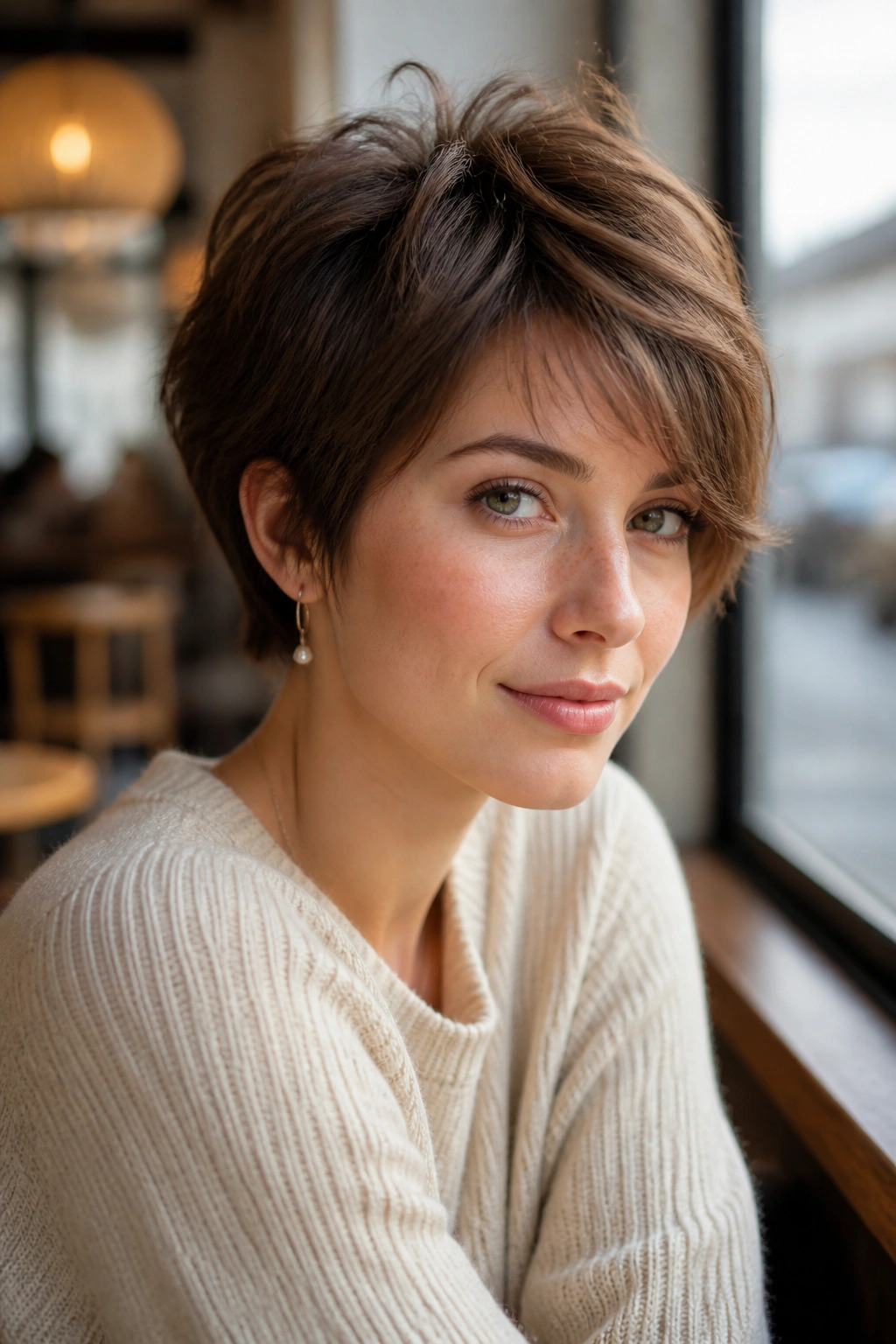
Is it a bob? Is it a pixie? It lands somewhere in the middle, and that’s the point.
A bixie gives thick hair a little more length than a standard pixie, which helps if you want shape but hate how short cuts sit against your head. The extra inch or two around the sides and front creates a softer line, while the back still stays cropped enough to feel light. For dense hair, that balance is gold.
The bixie is also forgiving during grow-out. If you’re between cuts, the extra length buys you time. It doesn’t scream for a haircut the way a tighter pixie can once it starts losing shape. That alone makes it practical.
I like this style for anyone who wants movement without the commitment of a true short crop. You can tuck the front, part it deep, or wear it with a bit of bend around the face. It’s less severe than a standard pixie and less fussy than a bob that needs constant smoothing.
If your thick hair has a wave, the bixie often lands in the sweet spot. Not too short. Not too long. Just enough structure to keep things under control.
13. Razor-Cut Long Pixie
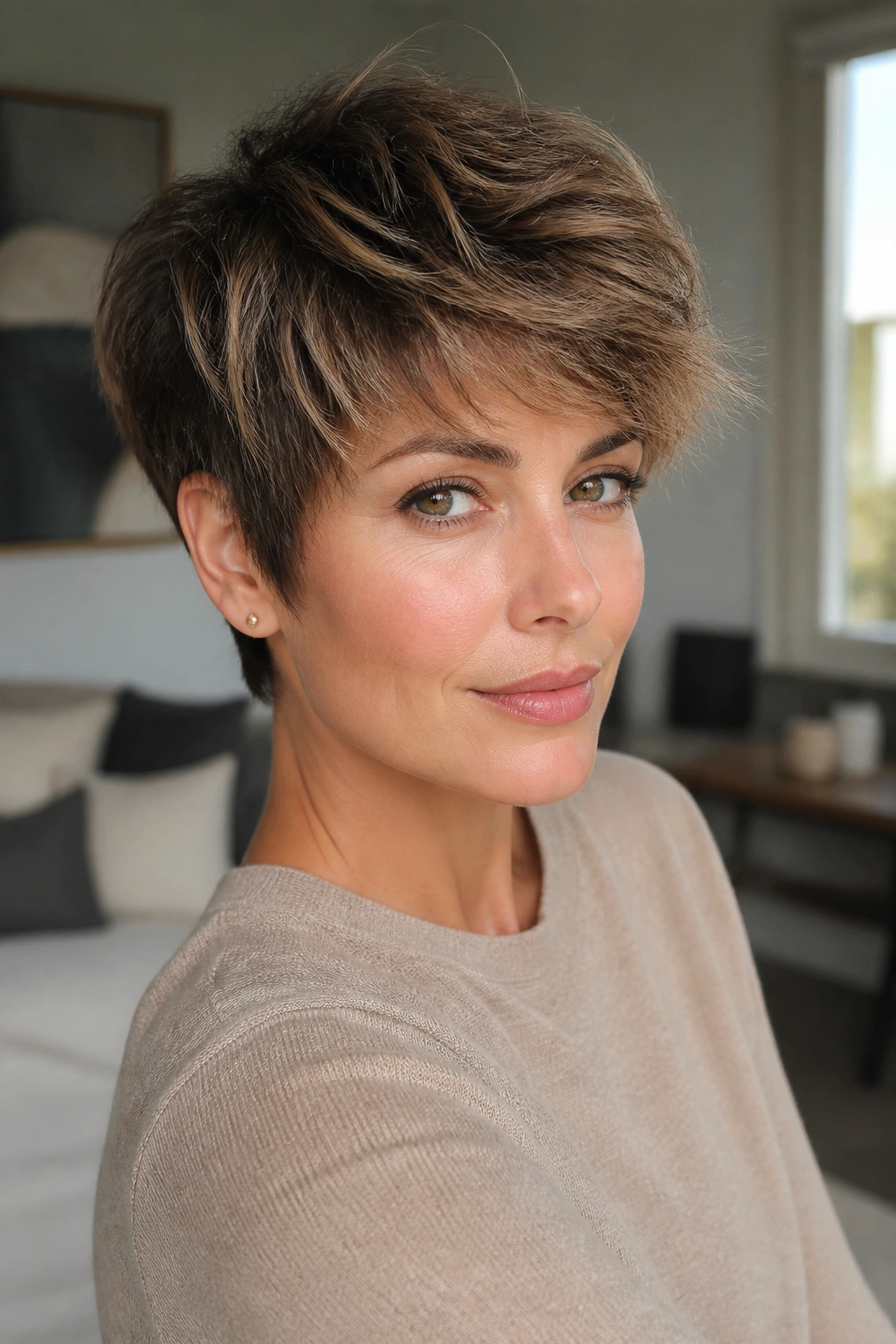
A razor cut can make thick hair feel lighter in a way scissors sometimes can’t.
The blade removes softness from the ends and creates a lighter edge, which is useful if your hair is dense, straight, and prone to sitting in a solid block. That said, razor work needs a careful hand. On coarse or fragile ends, too much razor cutting can leave the hair looking frayed. I’m not a fan of heavy-handed razor work on thick hair unless the stylist knows exactly where to stop.
The best version uses the razor only on the surface layers and the fringe area, not through the whole head. That keeps the ends airy while preserving enough strength underneath. You want lift, not shred.
This cut tends to look best when the hair has a little natural movement. Straight thick hair can show every line the razor creates, so it helps if there’s some bend or texture to work with. A light styling lotion and air-dry finish usually suit it well.
If you like pieces that fall with a softer edge, this style deserves a look. If your ends are already dry, split, or rough, ask for a scissor-based version instead. Razor cutting is not magic. It’s a tool.
14. Disconnected Long Pixie with Heavy Top
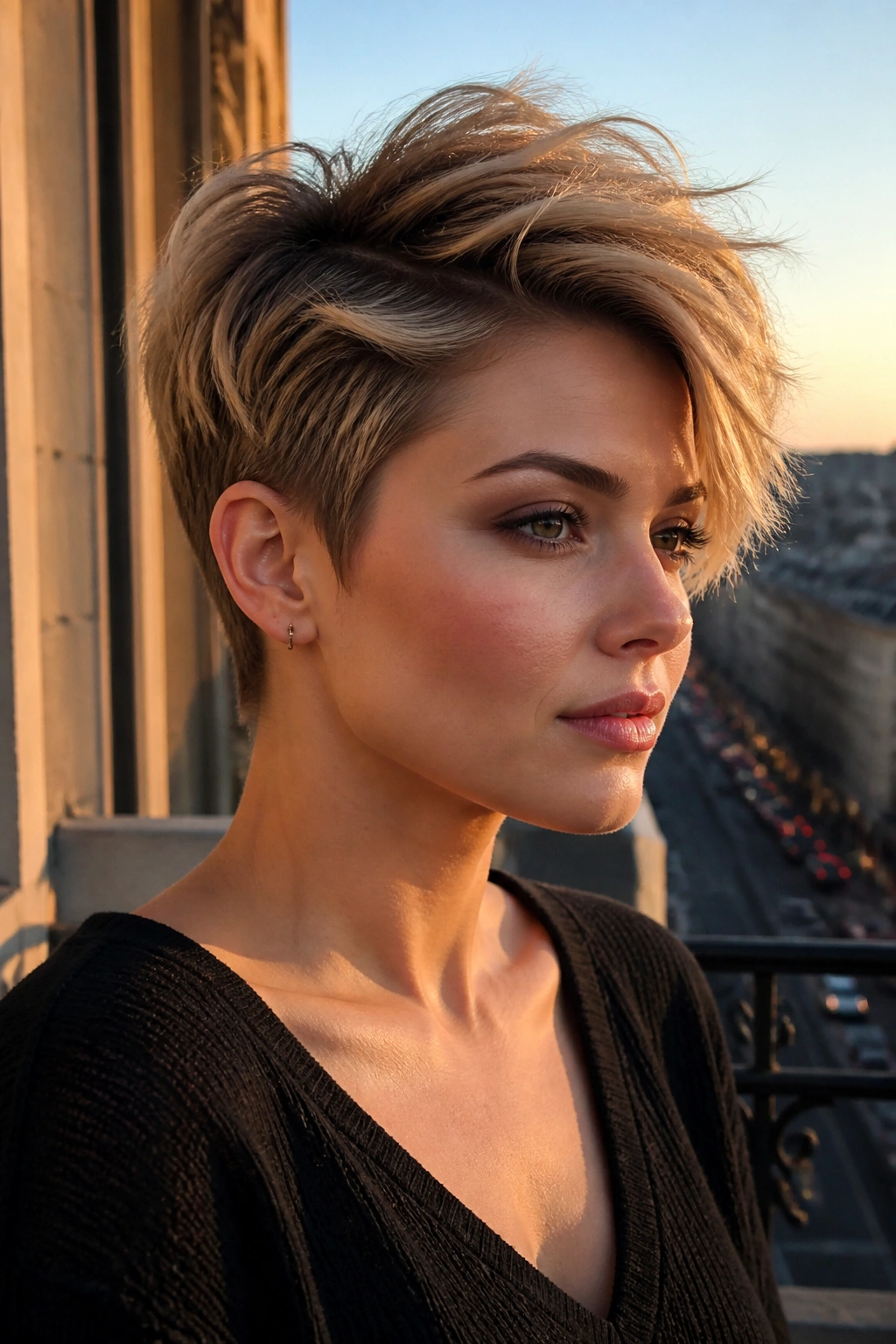
Some thick hair needs a clear difference between the top and the sides. No apology about it.
A disconnected long pixie keeps the crown and fringe longer while the sides stay noticeably shorter. That contrast gives the hair structure fast, especially if your thick hair tends to balloon out at the temples and back. The heavy top creates shape; the shorter sides keep the cut from spreading.
What To Ask For
Say you want length left on top with a strong reduction at the sides and nape. Those words matter because “short pixie” can mean too many things. A disconnected cut needs a visible difference in length, not a gentle blend.
- Leave 3 to 4 inches on top if you want styling options
- Keep the sides close enough to slim the silhouette
- Add texture through the top rather than thinning it blindly
- Style with a matte clay if you want separation and hold
This cut has attitude. It also has structure, which thick hair benefits from more than almost any other texture. If you like a cut that can be swept up, brushed forward, or pushed to one side, the disconnected version gives you that range. It can look edgy, sure. But it can also look very polished if the top is controlled.
15. Low-Maintenance Air-Dry Long Pixie
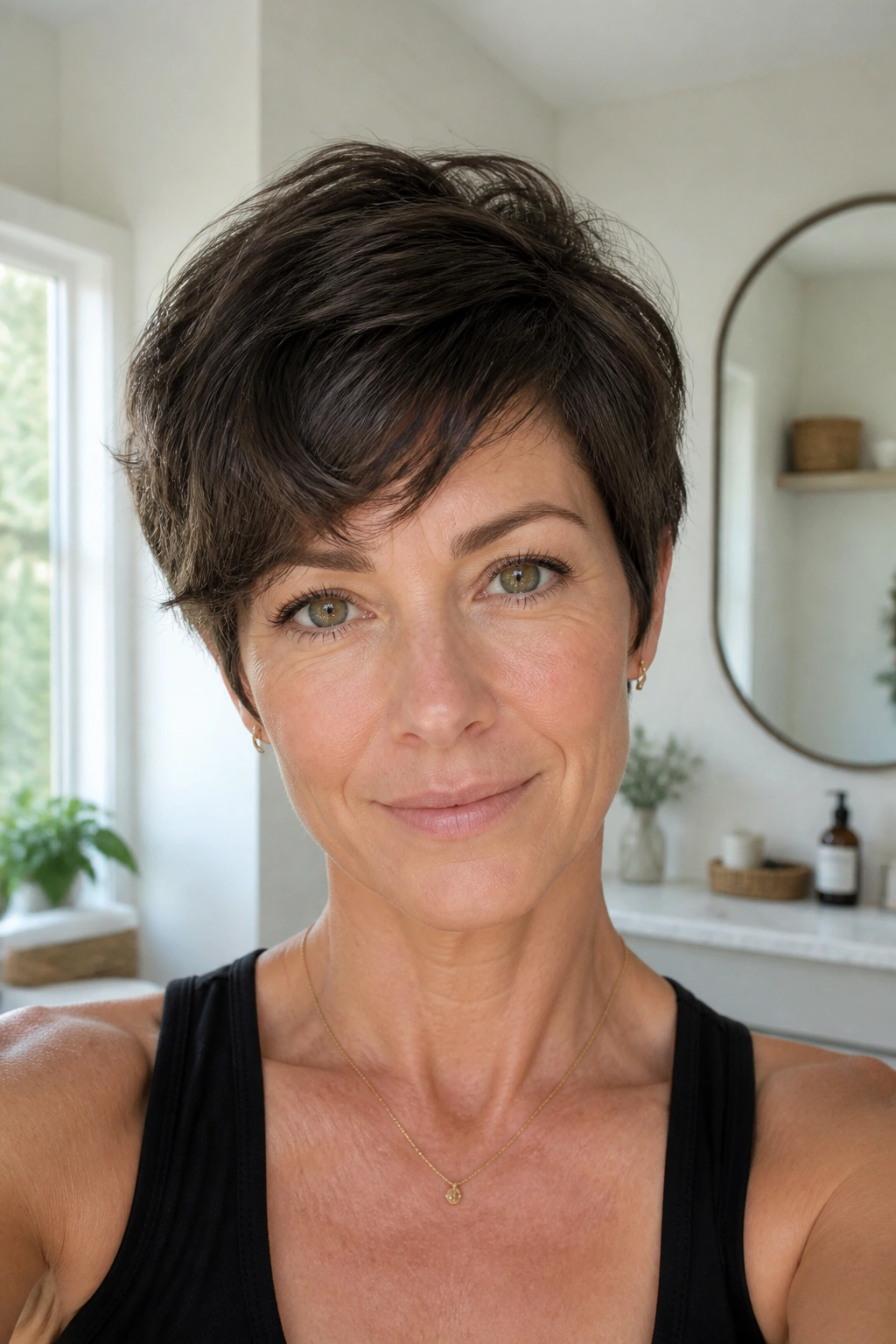
The easiest long pixie for thick hair is the one that still looks good when you forget about it for a minute.
An air-dry friendly shape needs smart layering, a clean nape, and enough length around the front to fall into place on its own. Thick hair usually has enough body to support the style without heavy product, which is a gift if you’re not interested in spending 20 minutes with a round brush every morning. Leave-in conditioner, a little curl cream or lightweight mousse, and hands off. That’s the basic formula.
This cut works best when the layers are placed where the hair naturally bends. If your thick hair bends at the jaw, keep some length there. If it kicks out near the crown, remove weight from that area instead of hacking at the bottom. Hair obeys gravity only to a point. It has opinions.
I like this option for people who want a pixie but still want their hair to feel a little soft and touchable. It’s not the sharpest cut on the list, and that’s the charm. It grows out gracefully, it doesn’t need perfect styling, and it gives thick hair shape without asking for a daily negotiation with a blow dryer.
