



A pixie cut can make a round face look longer in a hurry — or make the cheeks look wider if the shape is wrong. With a double chin, the stakes feel a little higher, because every line around the jaw and neck gets more visual weight than you probably want. The answer is not “go shorter” and hope for the best.
The smartest pixie cuts for round faces with double chin do three things: they add height where the eye can travel upward, they keep the sides neat instead of fluffy, and they leave enough softness around the temples or fringe so the cut doesn’t stop hard at the widest part of the face. That balance matters. A blunt edge at the cheek is a bully.
I like pixies that work with the face instead of fighting it. A side-swept fringe, a tapered nape, a little asymmetry, or a lifted crown can change the whole read of the cut, even when the hair is short enough to dry in ten minutes. And yes, texture matters too; fine hair needs lift, thick hair needs internal weight removed, and curls need shape rather than bulk.
The 15 cuts below handle those problems in different ways. Some are soft and wearable, some are sharper, and a couple are for people who want something bolder. Read them with your hair texture in mind, then take the ones that match your daily styling habits, not just the ones that look cute in a photo.
1. Side-Swept Long Pixie
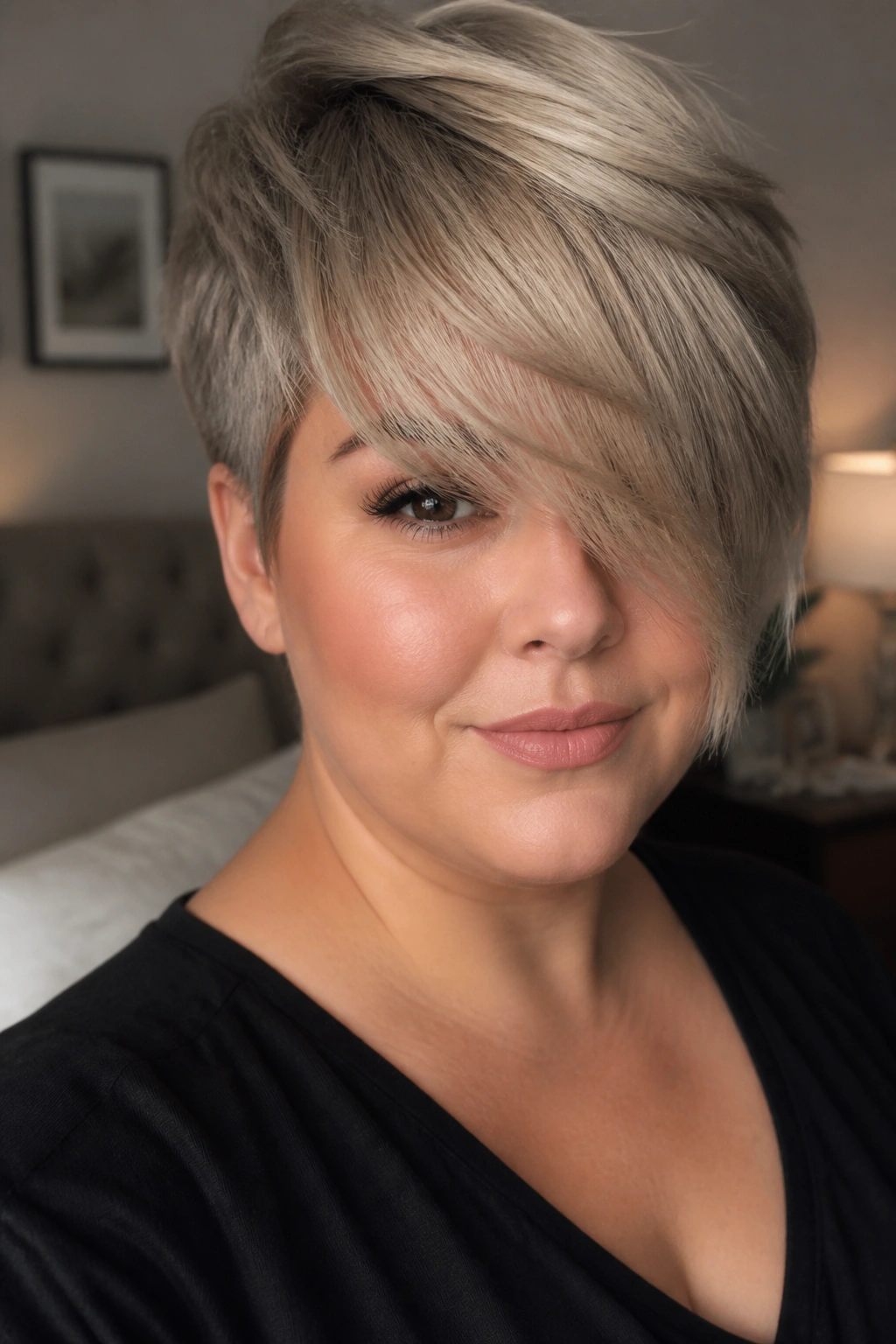
A long fringe can do more for a round face than most people expect. It pulls the eye diagonally, which is exactly why it helps the face read a little leaner, and it keeps the cut from feeling boxy right across the forehead.
Tiny shift. Big payoff.
The version that works best here keeps the top around 3 to 4 inches, with the fringe long enough to skim the brow or brush the top of the cheekbone. The sides should stay close to the head, not puffed out at the temple. That little difference matters when you are trying to soften a double chin without letting the haircut turn heavy around the jaw.
Ask for this shape
- Keep the top at 3 to 4 inches for movement.
- Leave the front fringe long enough to sweep across one eye.
- Taper the sides so they hug the head.
- Keep the nape clean and narrow, not square.
Best styling move: blow-dry the fringe in the opposite direction first, then sweep it over with a pea-sized dab of matte paste. That little bend at the root gives the cut lift without making it look stiff.
2. Asymmetrical Deep Side-Part Pixie
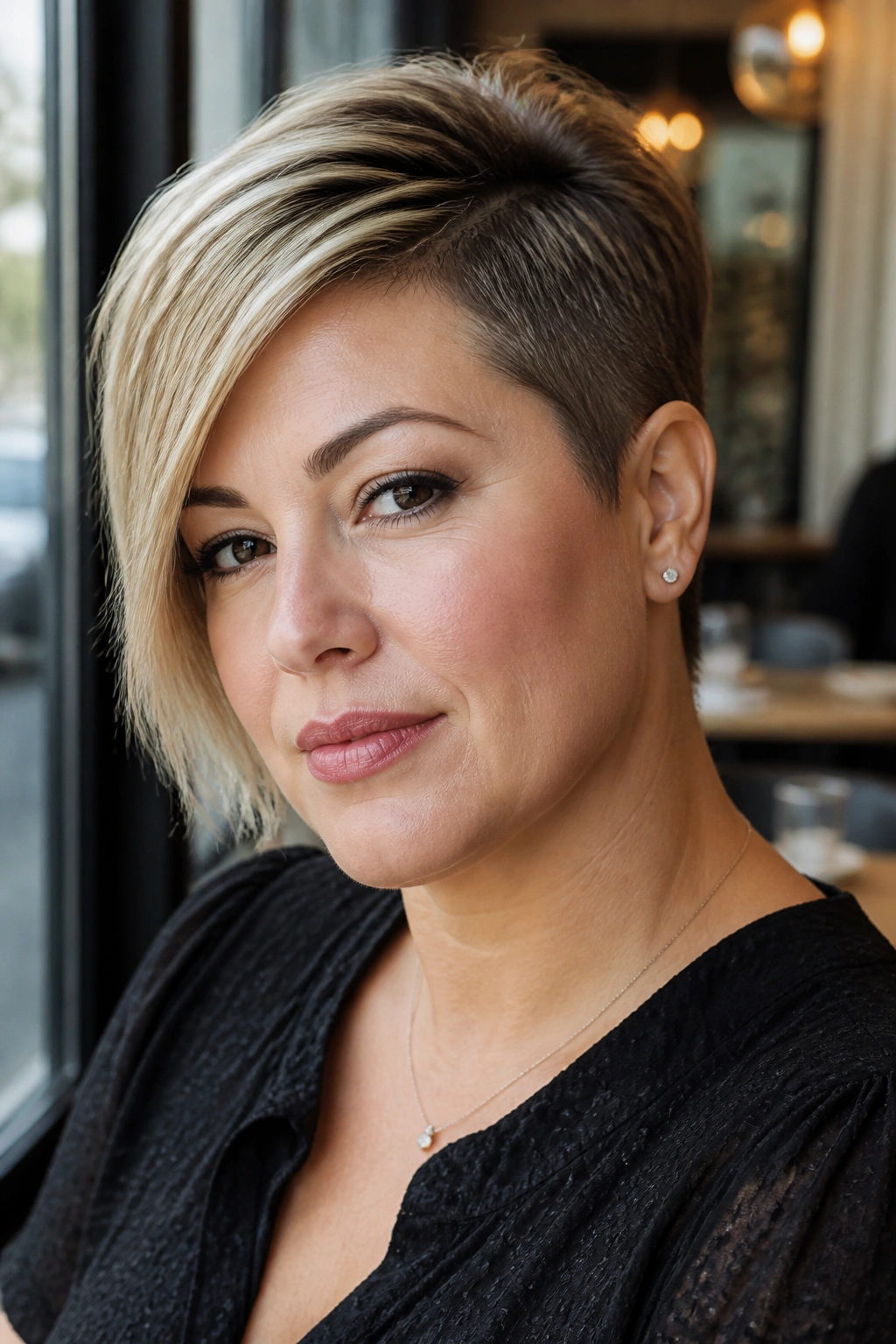
Why does one longer side make such a difference? Because it creates a line that breaks up the width of the face before the eye settles on the cheeks or chin. A deep side part is one of the simplest tricks in haircutting, and it still works because it’s doing real shape work, not decoration.
This version is especially good if your round face has soft cheeks and you want a sharper outline without going full edgy. Keep one side a little longer so it can fall toward the cheekbone, while the shorter side stays tucked and light. The contrast gives the face a cleaner angle. It also keeps the cut from looking too symmetrical, which is where round faces can start to feel broader.
How to wear it
- Set the part about 1 to 2 inches off center.
- Ask for one side to skim the cheekbone.
- Keep the opposite side cropped tighter around the temple.
- Use a root-lift spray only at the crown; don’t fog the whole head with product.
If your hair naturally wants to split in the middle, don’t fight it all day. Fight it at the blow-dry stage, which is the one place it actually matters.
3. Crown-Volume Tapered Pixie
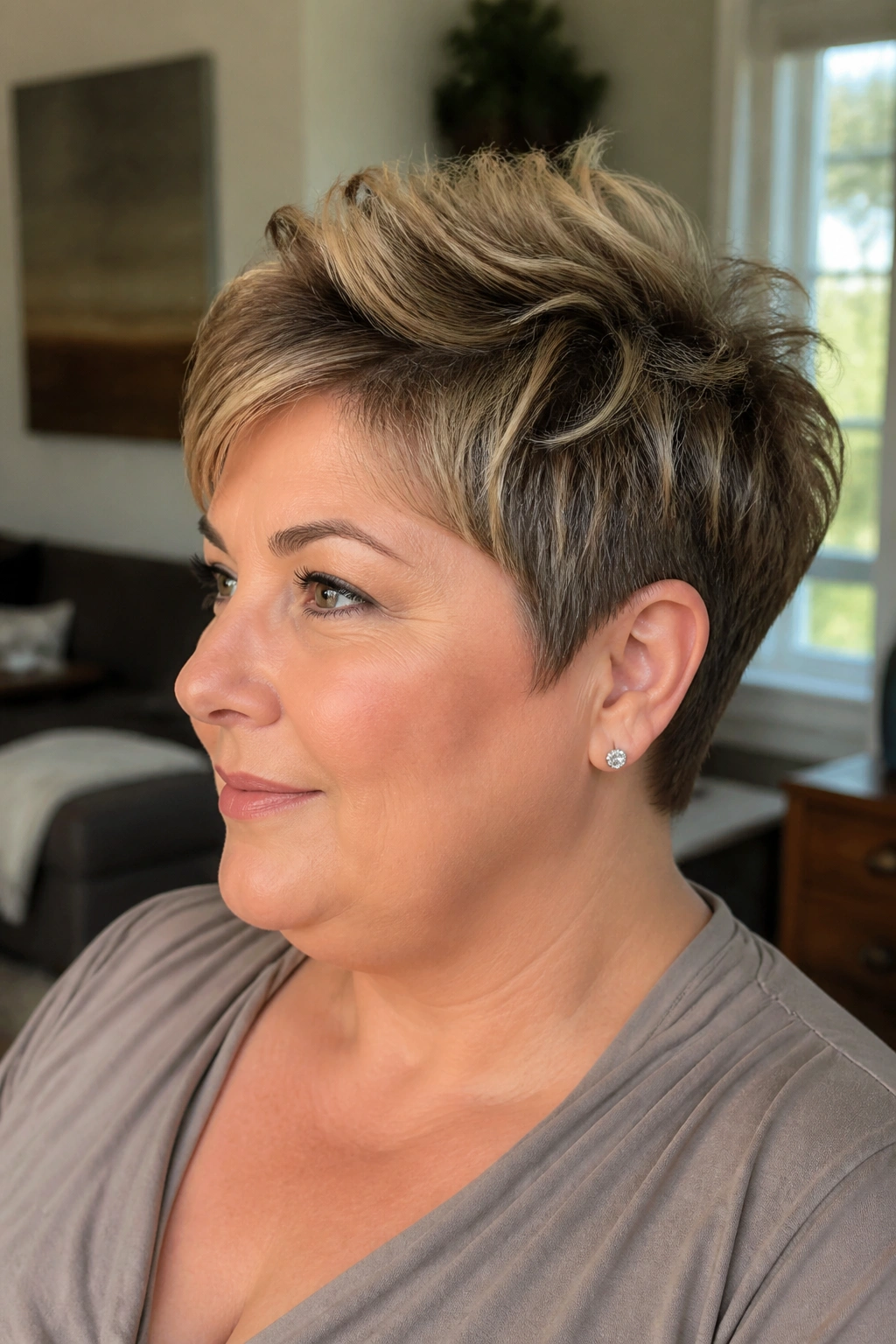
If your hair falls flat, this is the smartest shape in the room. A tapered pixie with lift at the crown lengthens the face visually, and that extra height draws attention upward instead of outward. For round faces with a double chin, that upward pull is doing a lot of quiet work.
The trick is to keep the sides controlled while building volume only where the top needs it. You do not want width at the temples. You want the illusion of length. A good stylist will remove weight low on the head and leave enough top length for the hair to stand up about an inch or two above the rest of the shape.
What to ask for
- Tight taper through the nape and around the ears.
- Extra length through the crown for lift.
- Soft layers on top, not choppy chunks.
- No heavy side bulk.
A round brush and a blow dryer are your best friends here. Lift the roots first, then bend the top slightly back and to one side. Finish with a light mist of flexible hairspray. Avoid heavy waxes near the roots; they collapse the shape and make the face feel wider again.
4. Choppy Shag Pixie
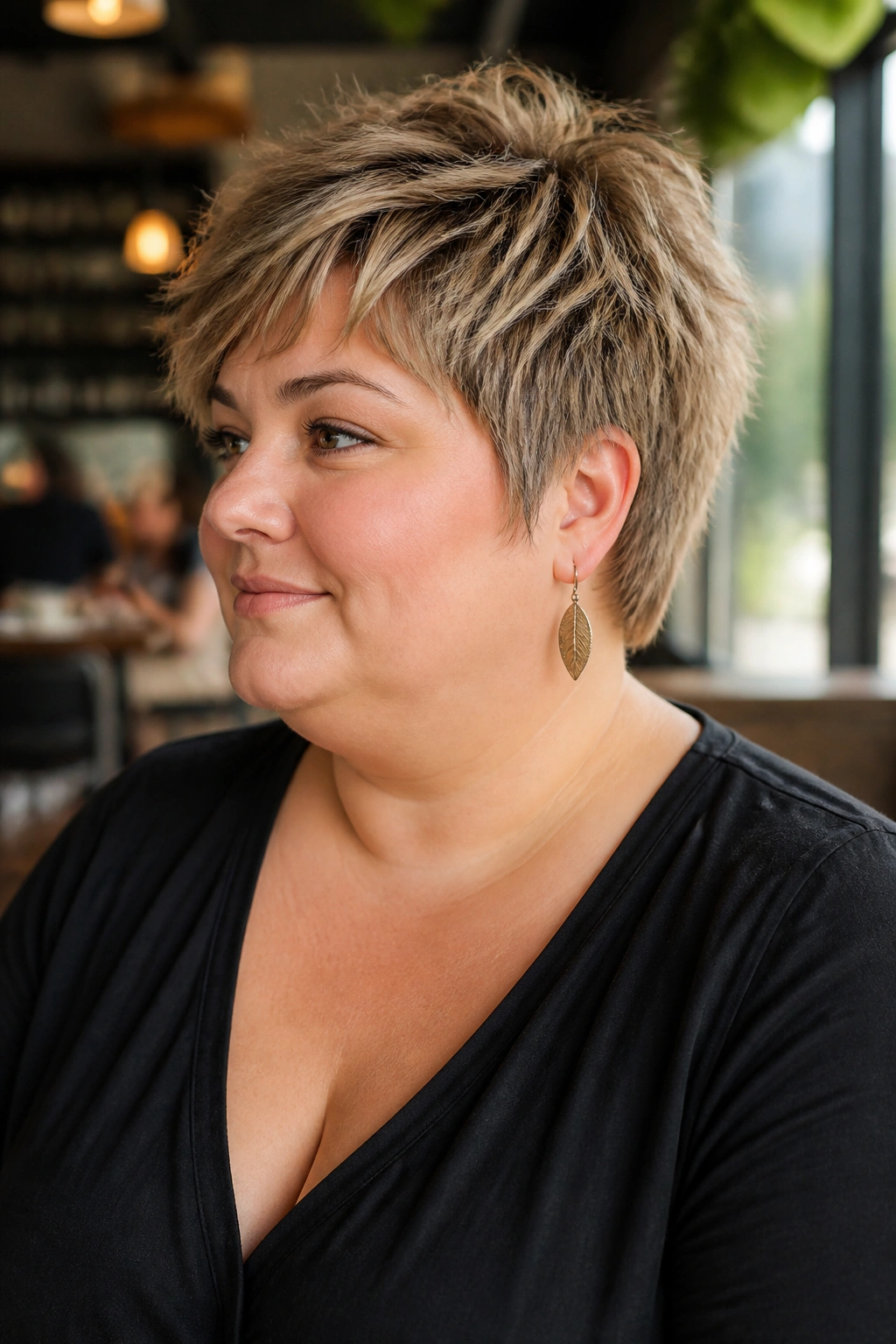
This cut likes movement.
That’s the whole point. A choppy shag pixie breaks up the roundness of the face with uneven ends and a little controlled mess on top. It’s not about making the hair look wild. It’s about keeping the silhouette soft enough that your eyes don’t land on one straight line across the face.
I especially like this on hair that has a bit of wave or bend, because the texture can live on its own without constant fussing. The layers should be sliced or point-cut so the ends look broken, not blunt. Around a round face, those broken edges keep the cheek area from feeling boxed in. Around a double chin, the cleaner nape keeps the neckline from looking heavy.
The caveat is simple: don’t let the texture spread too far out at the sides. That’s where people go wrong. The top can be messy. The temples should stay light.
5. Pixie Bob Hybrid
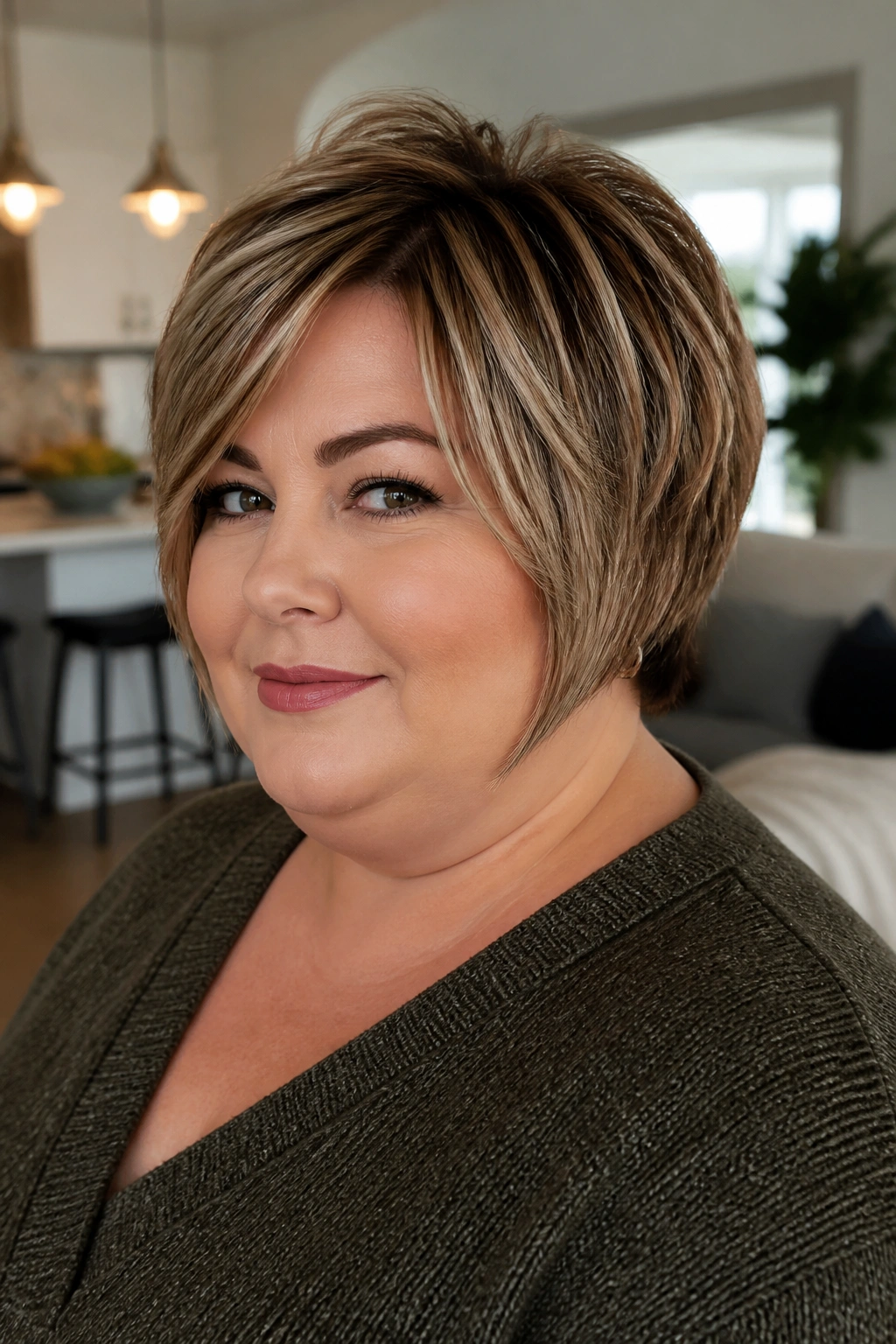
A bixie is the middle ground people ask for when they’re nervous about going short, and I get why. You keep more length than a classic pixie, but you still get the lift and shape that make short hair feel fresh. For a round face with a double chin, that extra length can be useful if you want the face to feel a little narrower without exposing everything at once.
Unlike a cropped pixie, the pixie bob hybrid leaves pieces around the cheekbone and ear that can move. That movement matters. It softens the lower face and gives the cut a more vertical feel, especially if the nape is short and the front is slightly longer.
If you’re not ready for a very tight haircut, start here. It’s also a good pick if you wear glasses, because the longer front pieces can sit beside the frames instead of competing with them. Keep the front just under cheekbone length, and ask for graduation at the back so the shape doesn’t puff out.
A quick blow-dry with a paddle brush is usually enough. Add a little texture spray at the ends and leave the crown slightly lifted. Flat is the enemy here.
6. Curly Pixie With Lifted Crown
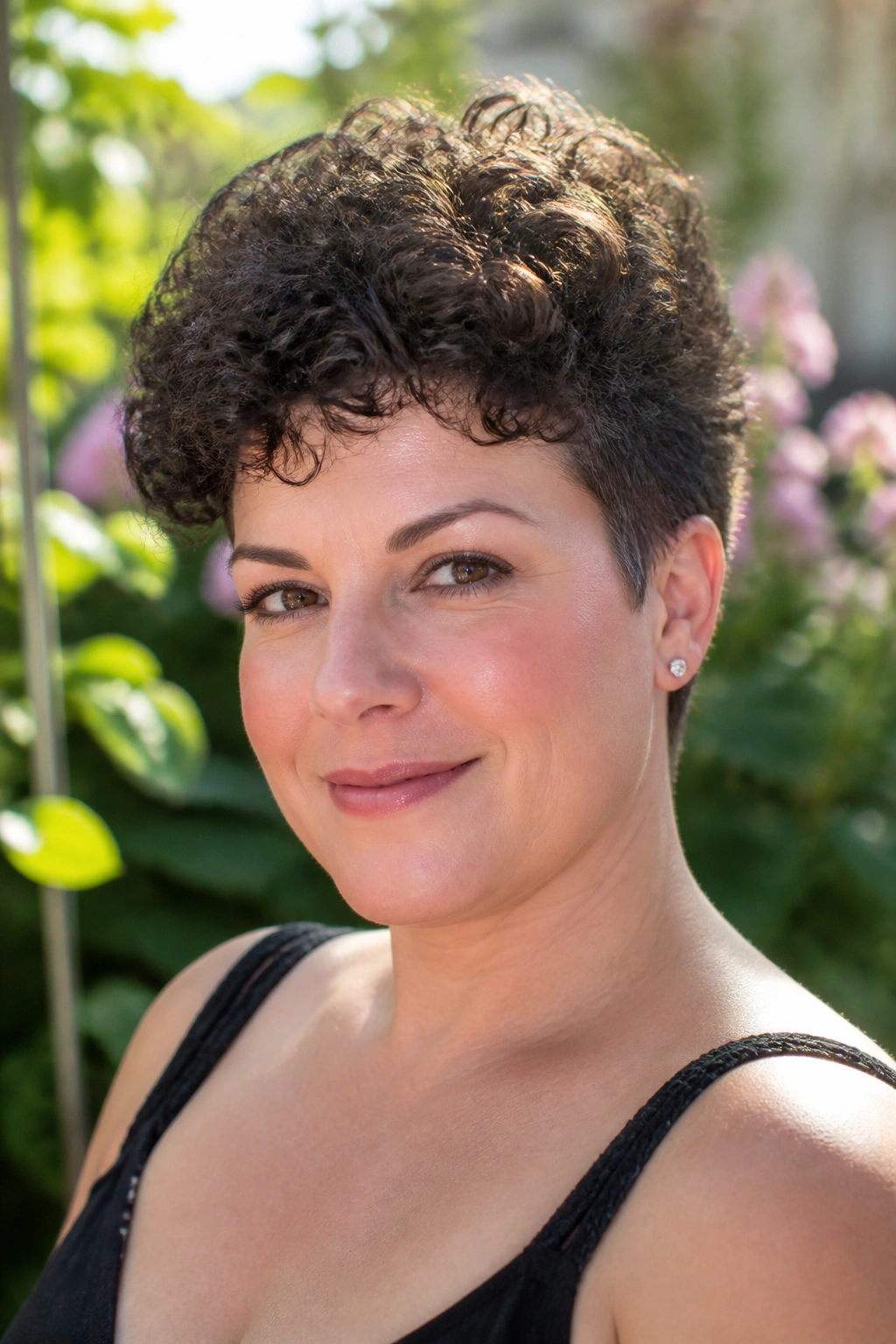
Can curly hair work in a pixie without making a round face look wider? Absolutely — if the curl is shaped up, not out. The mistake is letting curls bloom at the cheeks, where they add width right where you don’t want it. The smarter move is to keep the crown a little taller and the sides more contained.
How to keep it from puffing out
- Ask for the curl to be shaped dry, if possible.
- Keep the sides trimmed close enough to reduce side volume.
- Leave extra length on top so the curls stack upward.
- Use a light curl cream, not a heavy butter.
A good curly pixie should look springy, not bulky. The top can have 1 to 2 inches more height than the sides, which gives the face a longer line. I also like this cut when the neck is one of the features you want to show off, because the curl on top gives softness while the nape stays clean.
Diffuse on low heat, then stop before the curls get crunchy. A little softness is better than a helmet. Every time.
7. Undercut Pixie With Swept-Over Top
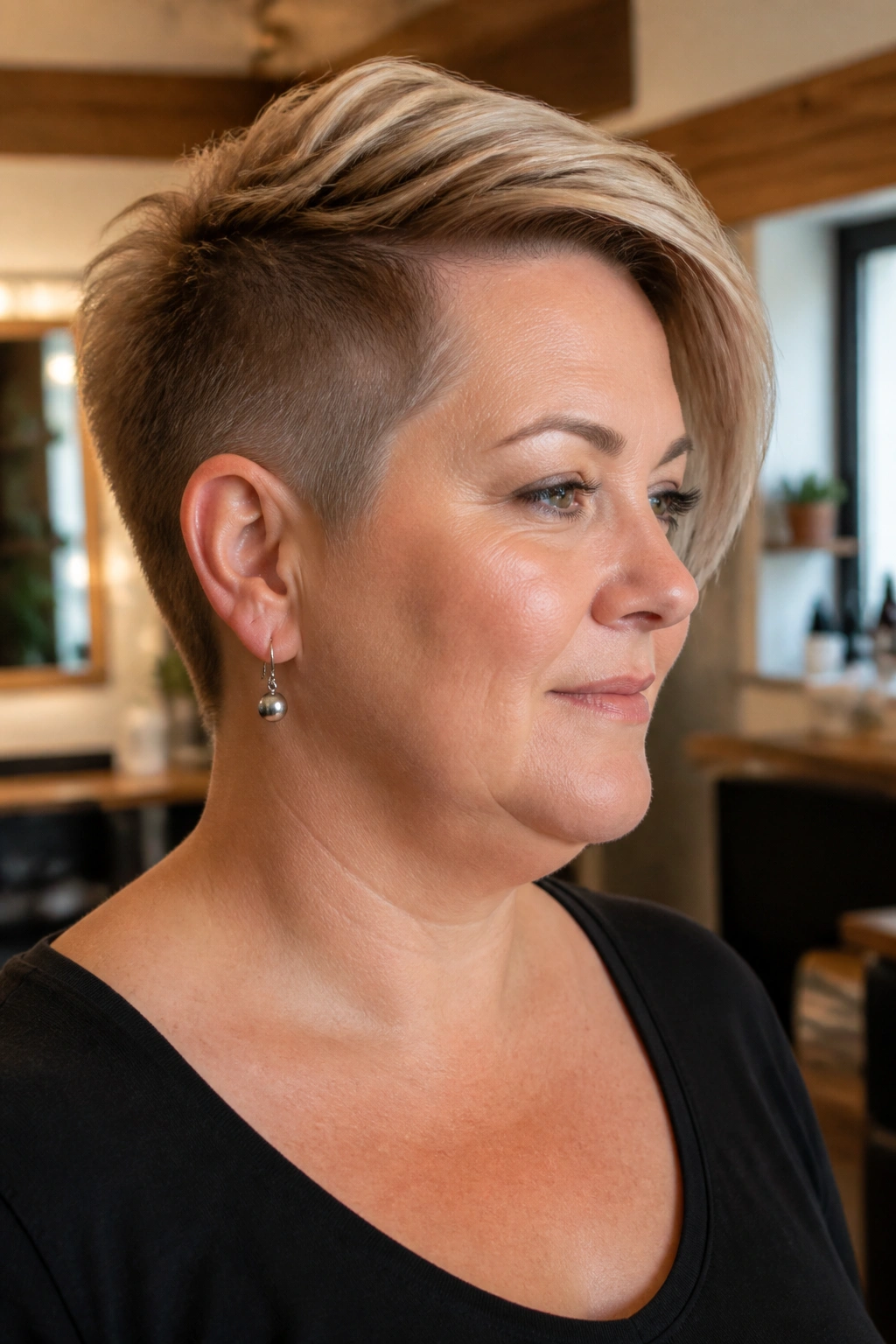
An undercut is not automatically harsh.
That’s the part people miss. When the sides and nape are clipped close, the haircut loses side width fast. Then the swept-over top becomes the star, and that top line can lengthen a round face better than a broader, fluffier cut ever will. If you’re dealing with a double chin and want the lower face to look less dominant, this shape can be a strong move.
The key is to keep the top soft enough that it moves. You want sweep, not a stiff ridge. A lot of people imagine an undercut pixie as sharp and severe, but that depends on how the top is handled. If the top is point-cut and brushed diagonally, the whole thing feels more wearable.
Salon note
- Ask for clipped sides that stay very close to the head.
- Leave the top around 4 to 5 inches for sweeping.
- Keep the front longer than the crown for a slanted line.
- Avoid blunt edges through the fringe.
This cut is especially useful for thick hair, because the undercut removes bulk where it tends to balloon. Styling takes about five minutes with mousse and a blow dryer, which is honestly half the appeal.
8. Feathered Pixie With Wispy Bangs
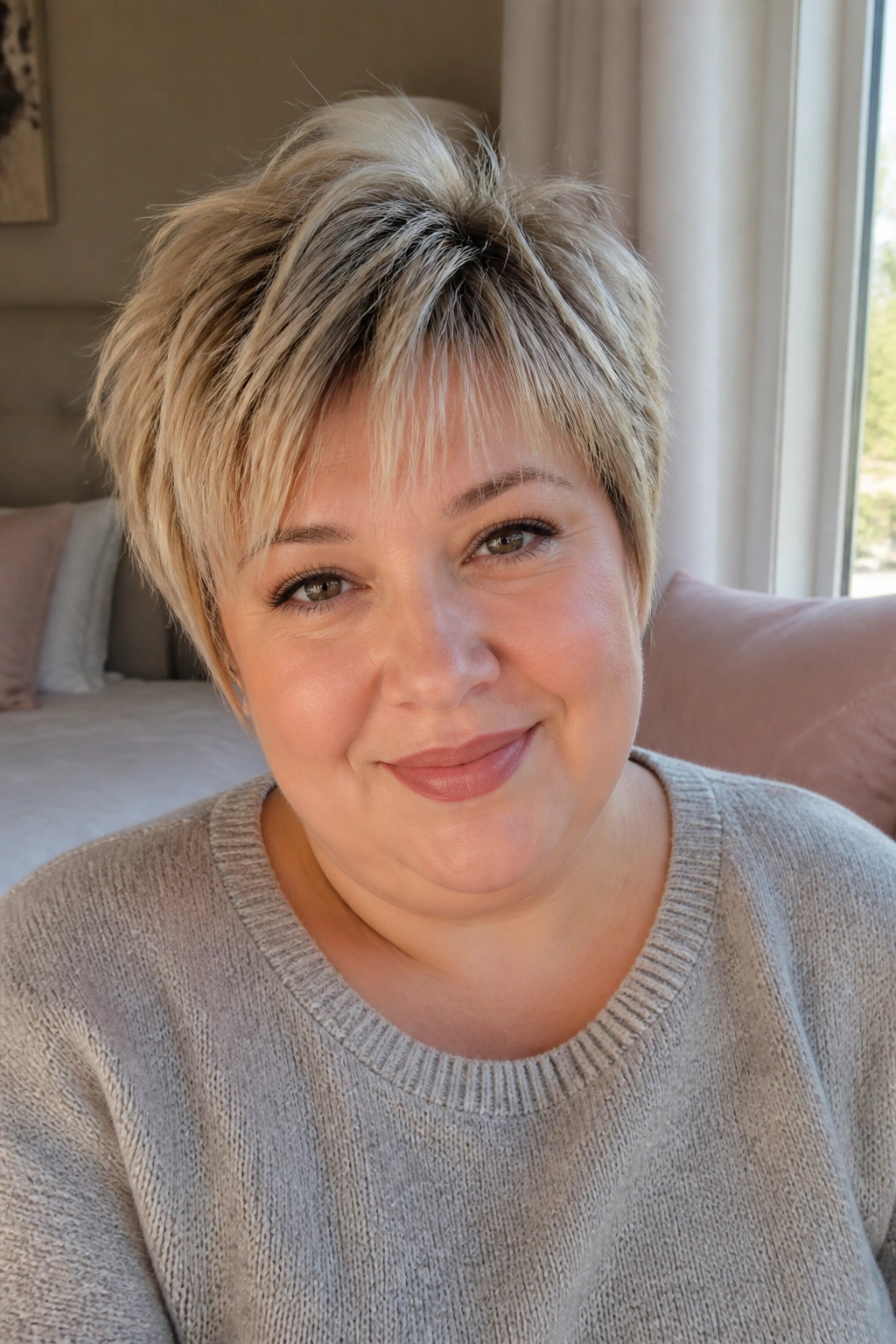
Feathered ends move.
That’s what makes this pixie so good on a round face. The cut has enough softness to blur the edges of the face, but not so much weight that it closes in around the cheeks. Wispy bangs help, too, because they break up the forehead without creating a hard horizontal line across it.
I prefer this version when someone wants a pixie that feels feminine without being sweet in a sugary way. The feathering gives the haircut air. It also stops the hair from landing in one thick block at the sides, which is exactly where round faces can start to look wider.
The bangs should be broken up with point-cutting, not cut straight across. They can hover right at the brow or sit slightly above it. Either way, they should look light. If the fringe is too blunt, the face gets shorter. If it’s too thin, it can disappear. That middle ground is the sweet spot.
A small round brush, a quick bend at the front, and a little light mousse are enough. Do not overload this cut with paste. It loses its softness fast.
9. Ear-Tucked Pixie With One Longer Side
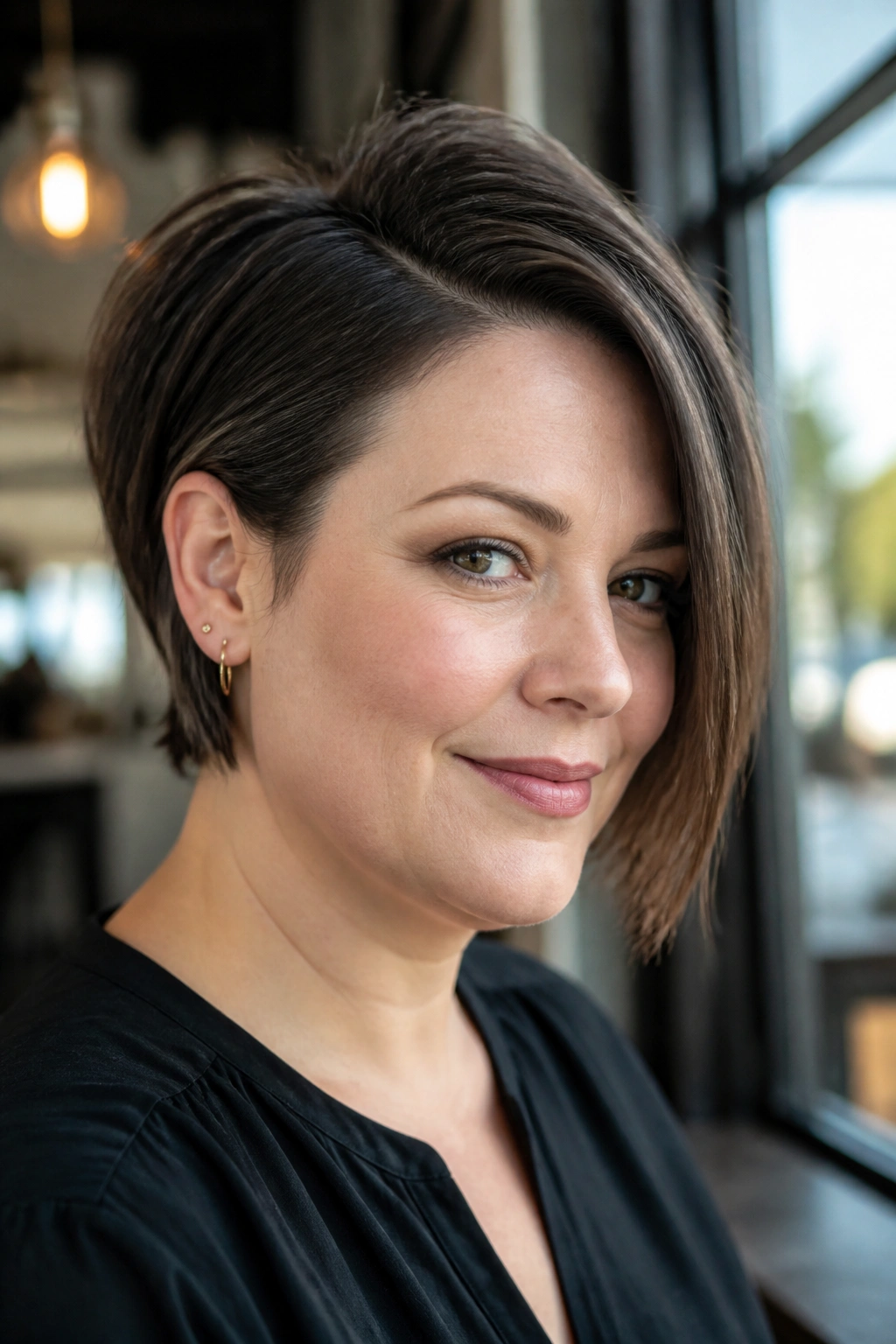
Wear earrings? This cut pays you back.
The whole idea is simple: one side stays long enough to tuck neatly behind the ear, while the other side hangs a little farther forward. That asymmetry creates a slim line near the cheek and gives the face a little length without needing a lot of hair. For round faces with a double chin, that longer side can help guide the eye down and out, instead of straight across the face.
What makes it work
- One side should reach just past the cheekbone.
- The tucked side should stay clean and controlled.
- The sideburn area should be soft, not bulky.
- The part can sit off-center or deep for more shape.
This is a good choice if you like seeing your ears, necklaces, or glasses frames. It also feels less severe than a fully cropped pixie, which is handy if you’re easing into short hair. I’d keep the nape short and the top slightly piecey so the haircut still has movement when you turn your head.
The tucked side gives a neat finish. The longer side gives balance. That combination works more often than people expect.
10. Textured Micro Pixie
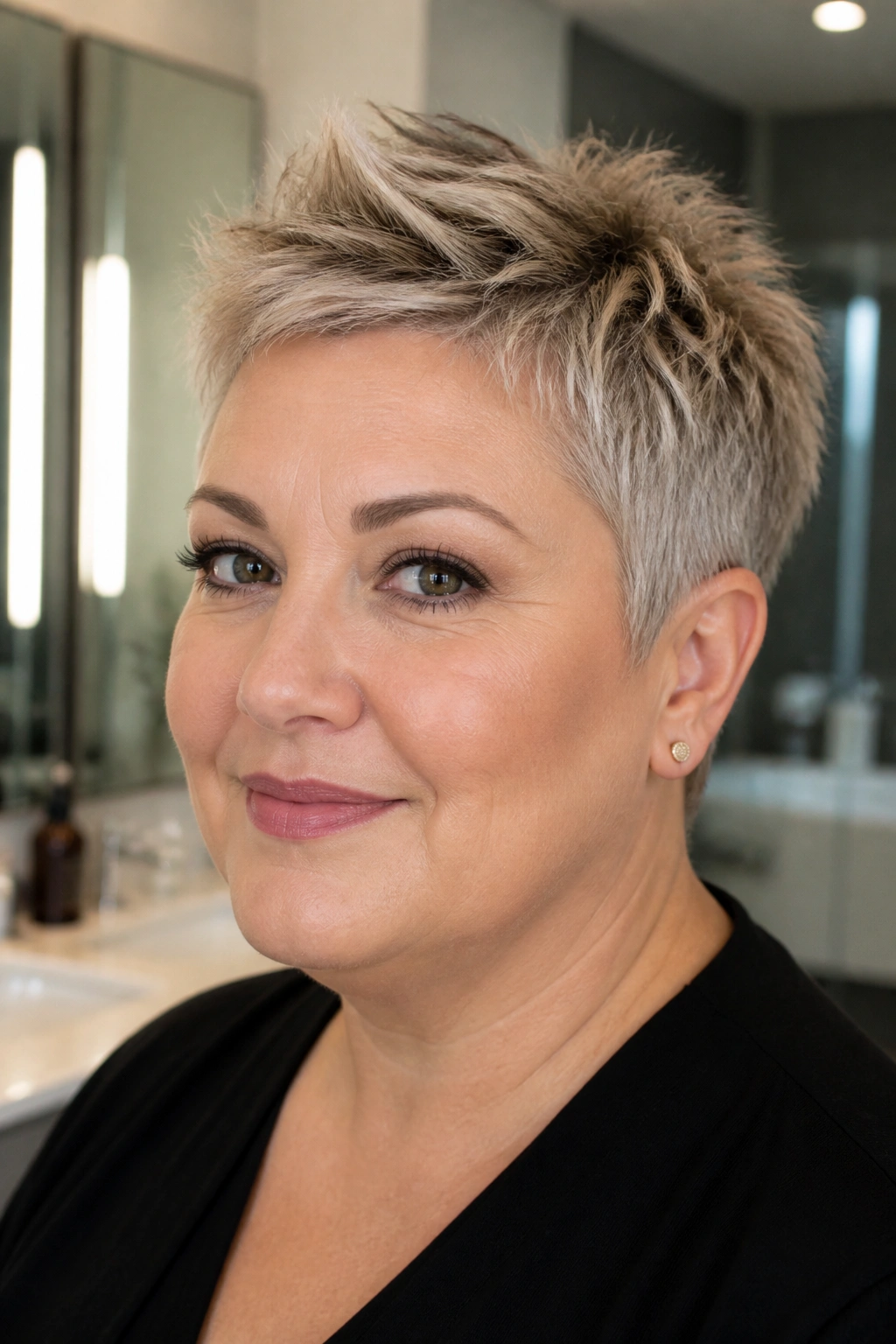
Short does not have to mean severe. A textured micro pixie can look sharp and flattering on a round face when the top is cut with movement and the sides are kept tight. The cut is short enough to feel bold, but the texture keeps it from looking flat and boxy.
This is not the cut for someone who wants a lot of face-framing length. It is for someone who likes clean lines, quick styling, and a neckline that looks neat without extra effort. If the double chin is what you’re trying to soften, the answer here is not more hair at the jaw. It’s better structure above it.
Good fit if you want:
- A low-maintenance shape that dries fast.
- Short sides with a piecey top.
- A cleaner neck and ear area.
- Less time spent fussing with fringe.
Keep the top texturized so it has a little lift. A dab of matte paste can separate the ends, but don’t smear it through the whole cut. That’s how a micro pixie turns stiff. A strong face can carry this style well. A very soft face can too, as long as the crown has enough height to keep the profile open.
11. Faux Hawk Pixie
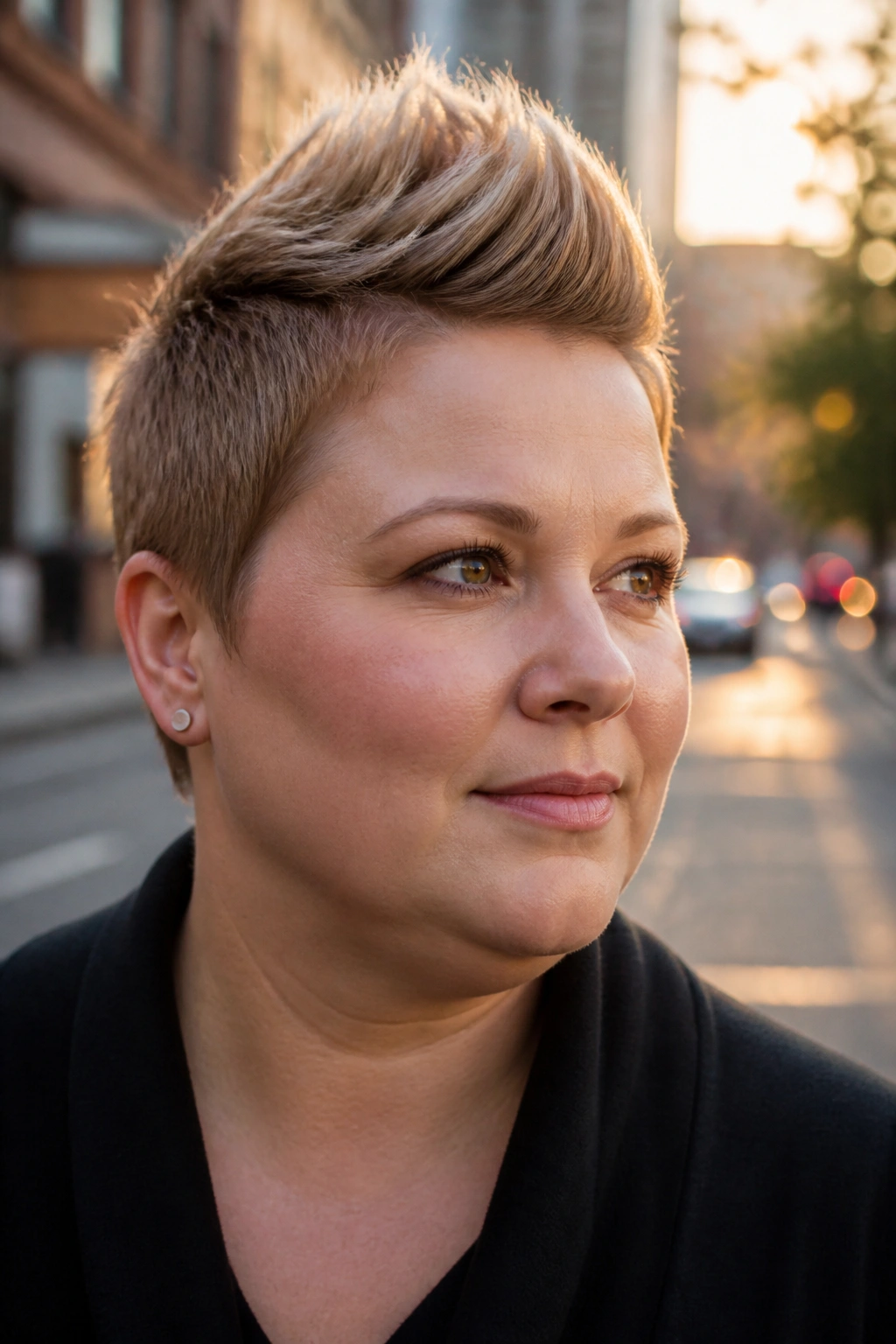
Can a faux hawk feel too bold for a round face? It can — if the sides are too fluffy or the top is too rigid. But when the center ridge is soft and the sides stay close, the shape actually helps. It draws the eye up the middle of the head, which lengthens the face and keeps attention away from the chin area.
This cut works best with a bit of attitude, and I mean that in the nicest way. You need to like a haircut that has a clear point of view. The top should be the tallest spot, with the hair brushed upward and slightly forward, not stiffly straight back. The sides need to hug the head. If they puff, the whole thing loses its edge.
How to style it
- Work mousse into damp roots.
- Blow-dry the top upward with fingers or a vent brush.
- Keep the sides close with a light cream.
- Finish with a flexible spray so the top moves.
A faux hawk pixie is especially good if your hair is dense and resists flat shapes. The middle ridge gives it a lane to follow. Without that lane, thick hair can spread outward and widen the face. With it, the shape looks deliberate.
12. Swept-Back Polished Pixie
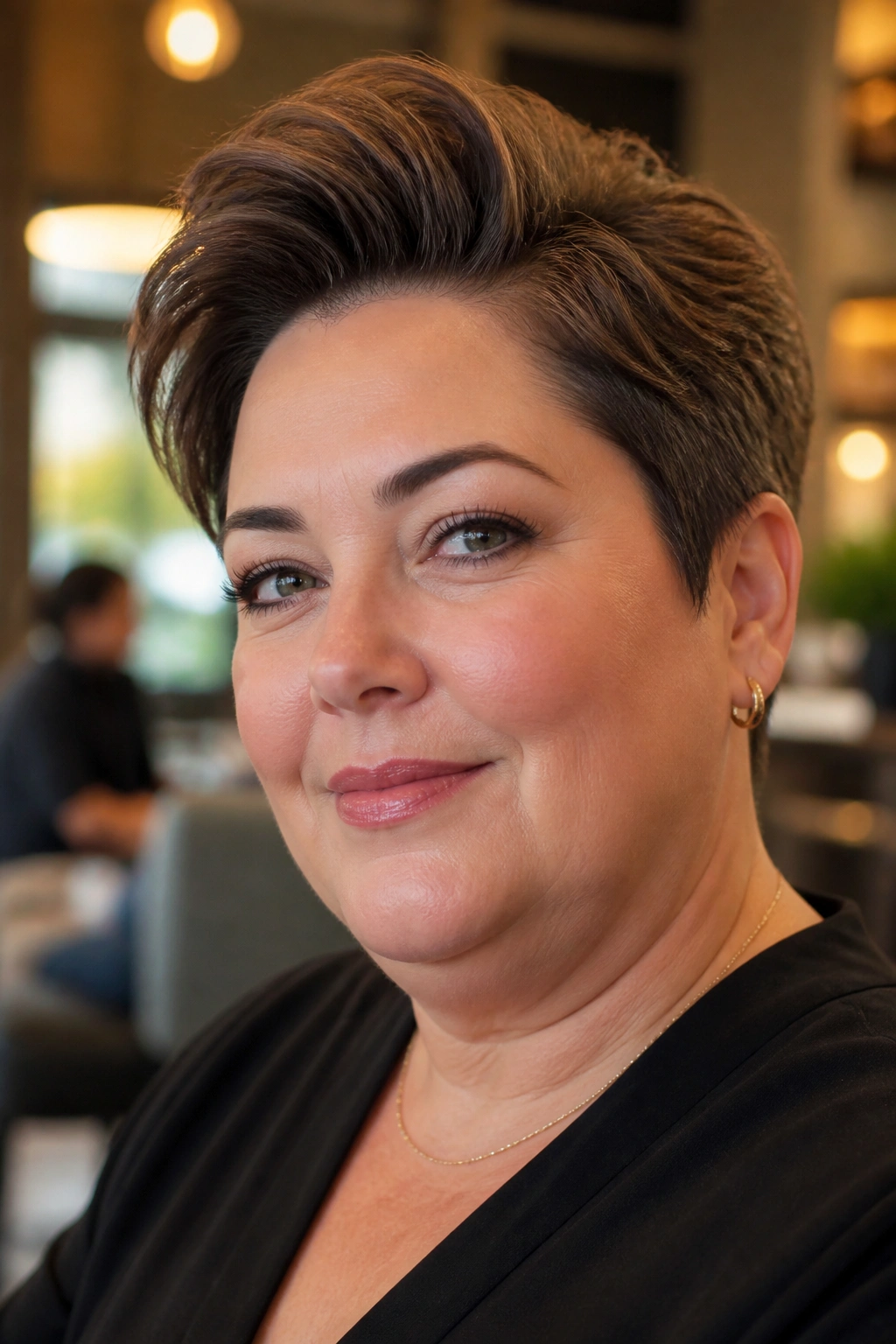
There’s a clean, grown-up feel to a swept-back pixie that I always like. It opens the face, shows the eyes, and keeps the side profile neat. On a round face with a double chin, that lifted front can make the whole shape feel taller and less compressed.
The hair should be brushed back with a soft bend, not slicked flat to the scalp unless you want a much sharper finish. A little height at the front matters. So does a tight nape. If the sides are too big, the look can turn wide fast, which is not the point here.
This style is one of the easiest to dress up, too. If you want something tidy for work, dinner, or a night out, it doesn’t need much. A small amount of smoothing cream, a flat brush, and a quick blast of air are enough. Then use your fingers to break the front slightly so it doesn’t read as helmet-like.
The polished version is best for someone who likes their haircut to feel neat. If you want fringe to hide behind, this is not the one. If you want clean angles and a little lift, it’s a strong pick.
13. Face-Framing Sideburn Pixie
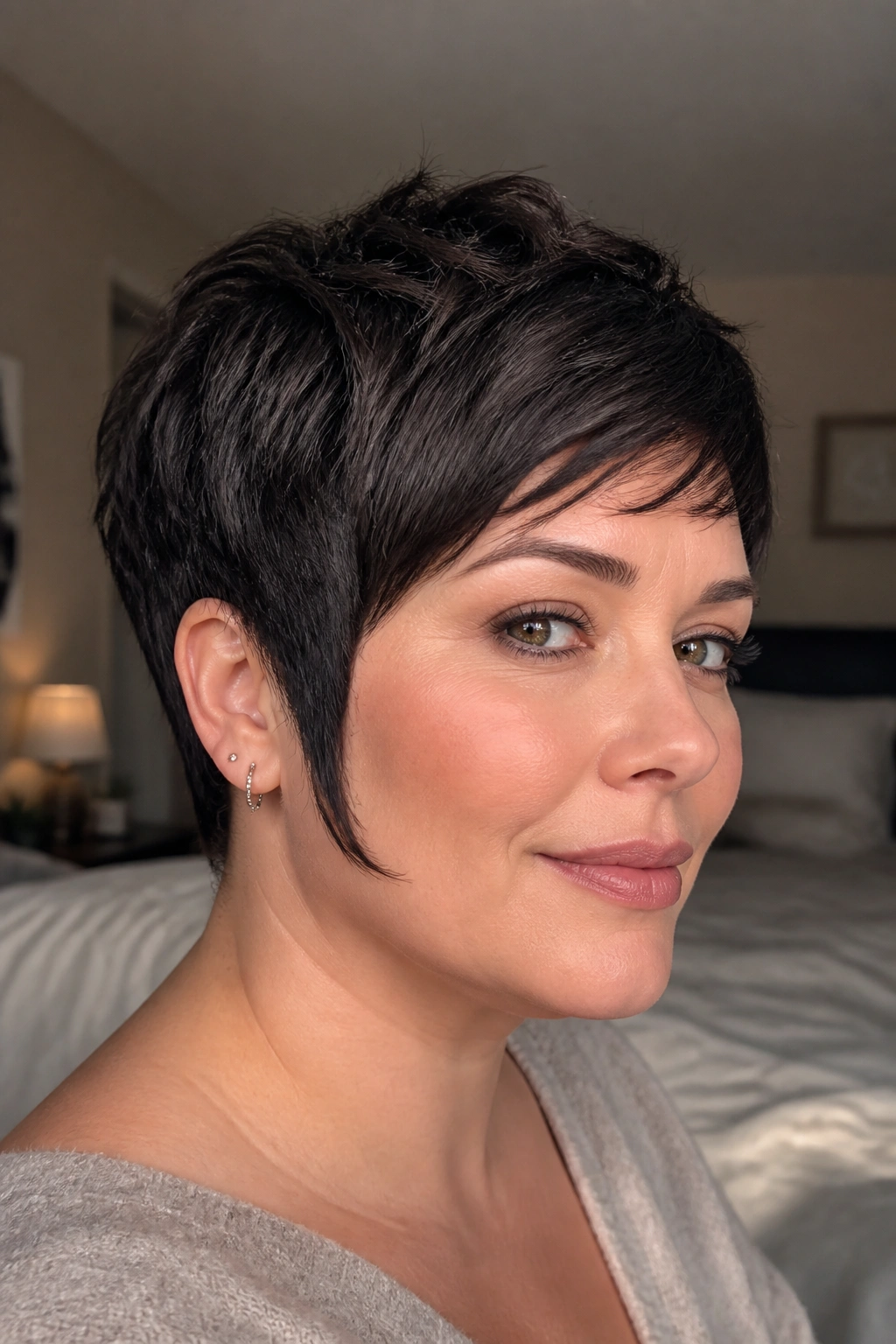
People fixate on bangs, but sideburns do real work here.
A face-framing sideburn pixie leaves just enough length near the temples and in front of the ear to narrow the cheek area without adding weight. That’s useful on a round face, because the eye gets a vertical guide instead of a wide one. And with a double chin, those slim front pieces can keep the haircut from ending too abruptly at the jaw.
Ask for these details
- Keep the sideburn area soft and narrow.
- Leave the front temple pieces slightly longer than the rest.
- Point-cut the ends so they don’t form a block.
- Taper the neckline cleanly so the silhouette stays lean.
This cut looks especially good if you wear glasses or earrings, because the little side pieces frame the face instead of fighting with accessories. It also gives you a bit more freedom than a super short crop. You can tuck one side, push the other forward, or let both sides sit lightly against the face.
I’d call this a practical pretty cut. Not fussy. Not hard-edged. Just smart.
14. Tousled Piecey Pixie With Airy Fringe
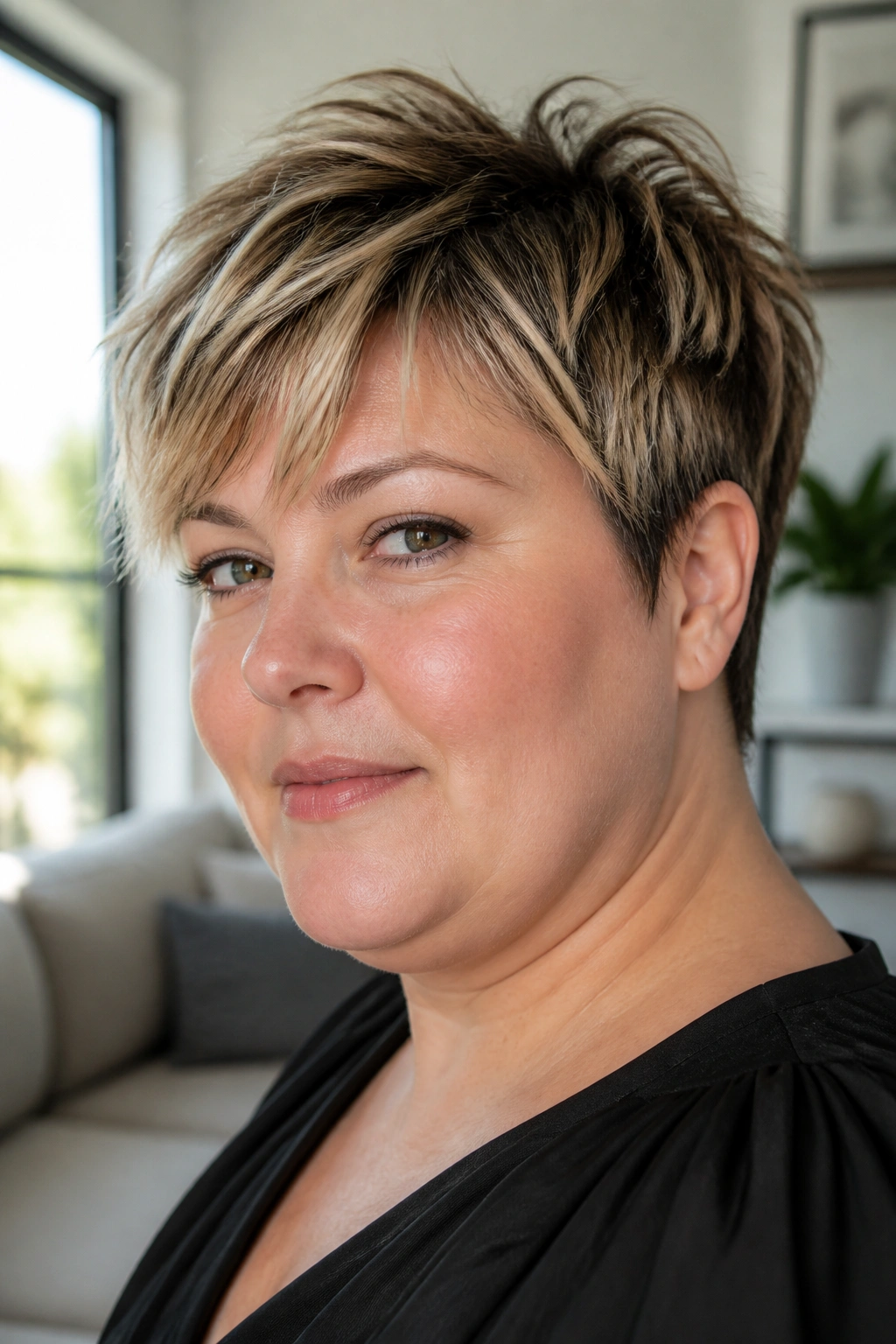
This is the fun one.
A tousled piecey pixie with an airy fringe gives you movement without the bulk that can widen a round face. The ends are separated, the fringe is soft, and the whole haircut feels lifted instead of heavy. That matters because a round face needs space around it, not a wall of hair.
The trick is in the texture. The top should be cut so a few pieces fall forward, while others stand up or sweep sideways. That mix keeps the eye moving. The fringe should stay light enough to break the forehead line, but not so wispy that it disappears. And the sides? Keep them compact. If they start spreading, the face can look fuller than it is.
I like this style on straight or slightly wavy hair because it’s easy to rough up with your fingers. A little texturizing spray at the roots, a touch of wax on the ends, and you’re done. If the hair is very fine, use less product than you think. If it’s thick, use more lift at the crown and less near the cheeks.
This cut should look touched, not overdone. That’s the whole charm.
15. Short Tapered Pixie With Long Temple Length
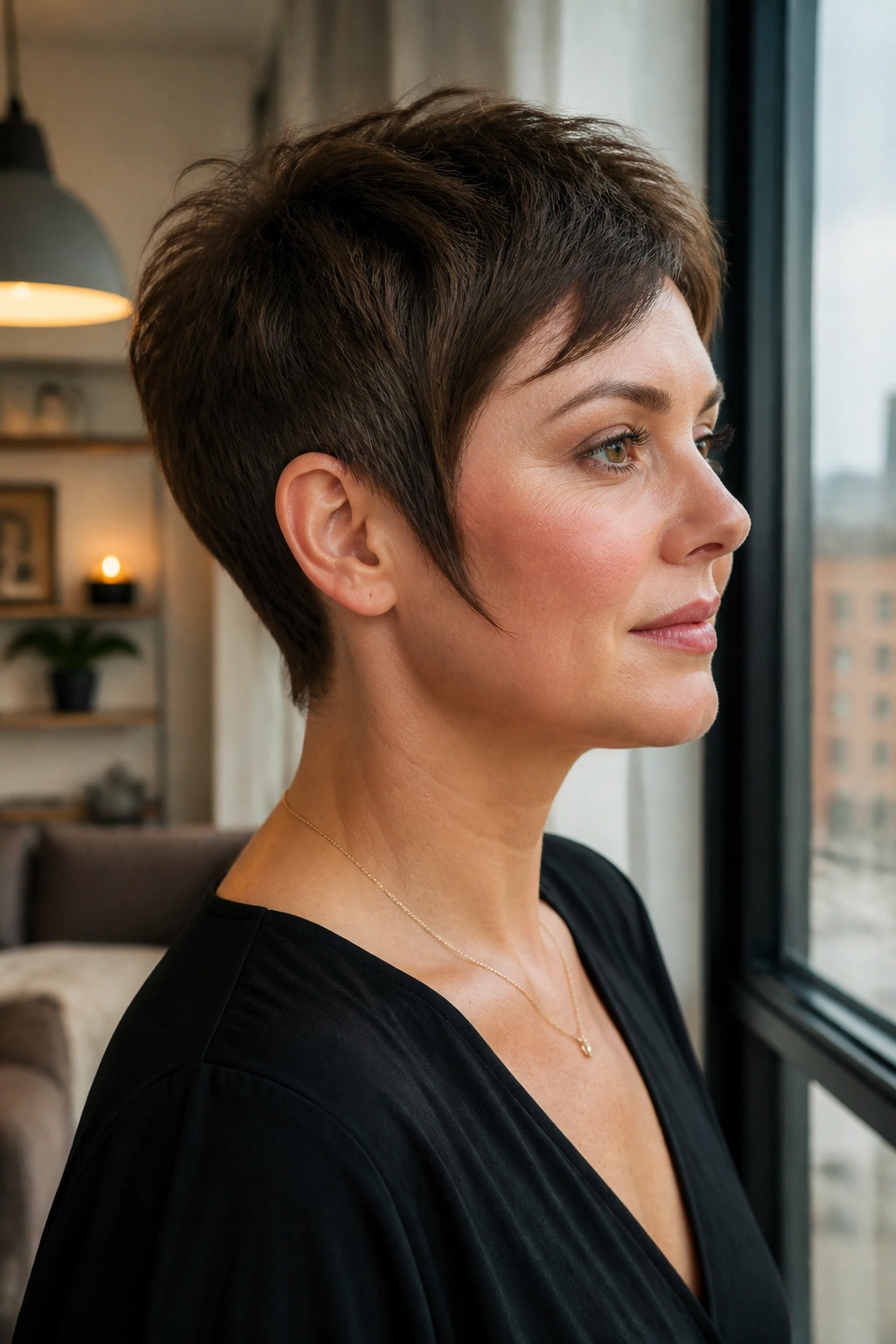
If you want the cleanest answer, start here.
A short tapered pixie with longer temple pieces gives a round face the two things it needs most: a narrower outline at the sides and a little vertical reach where the eye can travel upward. The nape stays close and neat, which helps the neck look longer. The temple length softens the face without dragging the focus down to the jawline.
This is one of my favorite shapes for a double chin because it doesn’t try to hide everything with more hair. It uses placement instead. Shorter at the back. Slightly longer at the temples. Lift at the top. That balance can make the whole face look cleaner in profile, especially when the hair is styled with a slight bend rather than pinned flat.
A stylist should be able to tailor the length, but the basic idea is simple: keep the sides lean, leave a little movement at the temples, and don’t let the top go flat. Flat hair makes the whole cut look heavier. A little height changes everything.
Bring photos if you can. Better yet, bring one photo of what you like and one of what you don’t. That saves a surprising amount of guesswork, and it helps the stylist see where your taste actually lives. The right pixie on a round face is never random. It’s the one that makes the face look intentional without making the hair feel stiff, and that’s a pretty good place to stop.
