



Fine hair after 60 can be a little rude. It flattens at the crown, goes limp when it gets a touch too long, and seems to announce every bad layer cut with embarrassing clarity. That is exactly why pixie cuts for fine hair over 60 work so well when they’re done with a little thought: they remove drag, open up the crown, and let the shape do the work that long hair can no longer do on its own.
Not every short cut helps, though. Some pixies get thinned out until the ends look see-through. Others keep too much bulk at the sides and make the face look wider than it is. The sweet spot is a cut with lift on top, a controlled nape, and enough softness around the face to keep it from reading hard or boxy.
Age is not the problem here. Hair behavior is. Fine strands need smart placement, not a pile of product and a prayer. A good pixie makes the head look lighter, the neck look longer, and the whole style look intentional even when you have not had time to fuss with it.
Here are the 15 cuts I keep coming back to—the ones that hold their shape, play nicely with glasses, and make fine hair behave a lot better than most shoulder-length styles ever do.
1. Feathered Crown Pixie
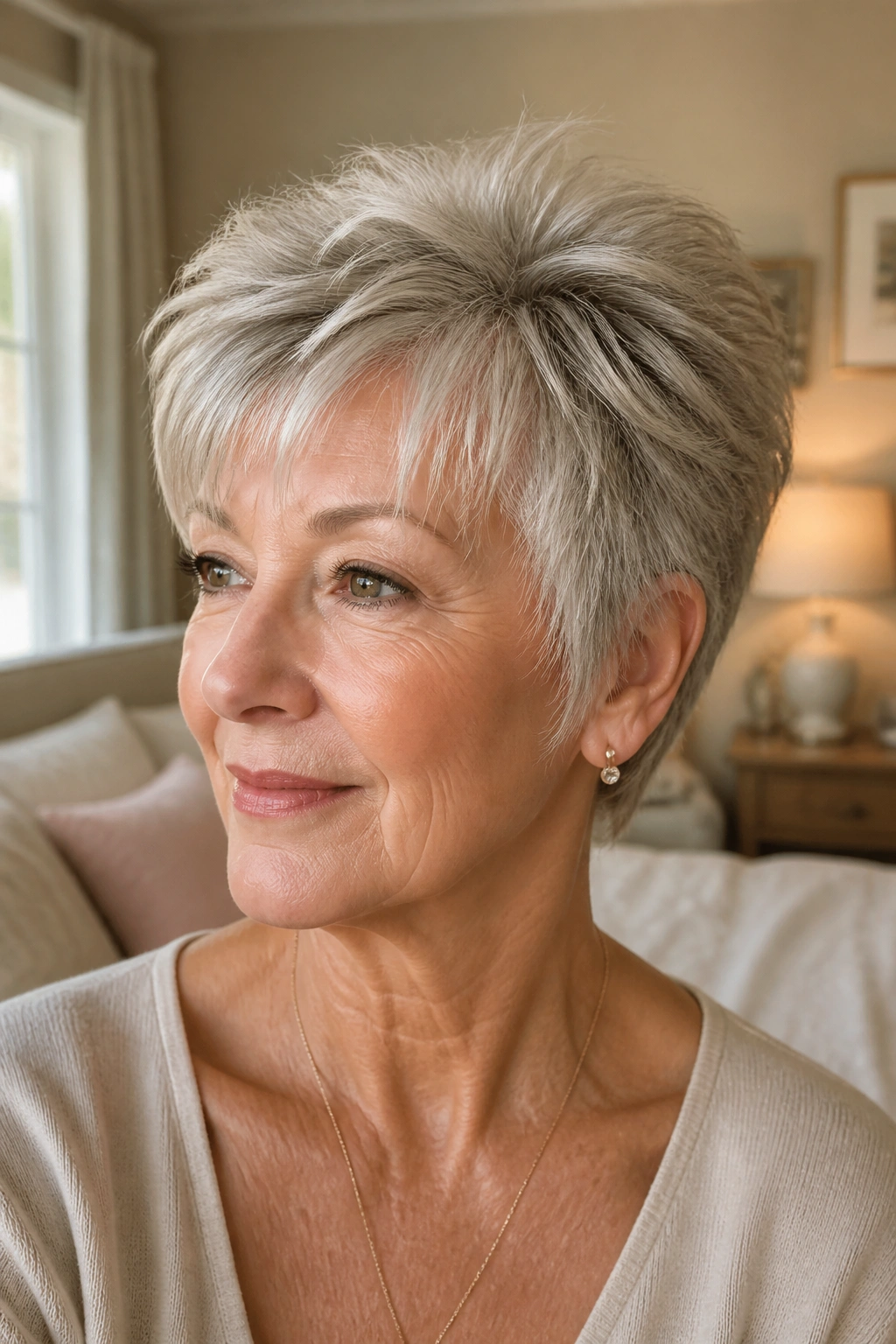
If the top of your head goes flat fast, start here.
A feathered crown pixie is one of the most forgiving shapes for fine hair because it builds movement where you need it most: at the roots. The top stays long enough to lift, but the ends are softened so the shape does not sit on the head like a cap. That little bit of air around the crown matters more than people think.
Why the Crown Matters
The crown is where fine hair usually gives up first. If that area is cut too short, the style collapses. If it is left too long, it drags everything down. A feathered cut keeps the balance in the middle, with short-to-medium layers that can be pushed up with your fingers or brushed lightly back.
This is also a nice choice if your hair is starting to change texture. Some strands feel softer, some feel wiry, and that mix can be frustrating. Feathering hides the mismatch better than blunt edges do.
- Keep the crown around 1.5 to 2.5 inches.
- Ask for point cutting instead of heavy thinning.
- Leave the sides close to the head so the top can stand out.
- Style with a light mousse or root spray, not a heavy cream.
Pro tip: blow-dry the crown forward first, then lift it back with your fingers. That tiny reset gives fine hair more height than trying to force it up from the start.
2. Side-Swept Fringe Pixie
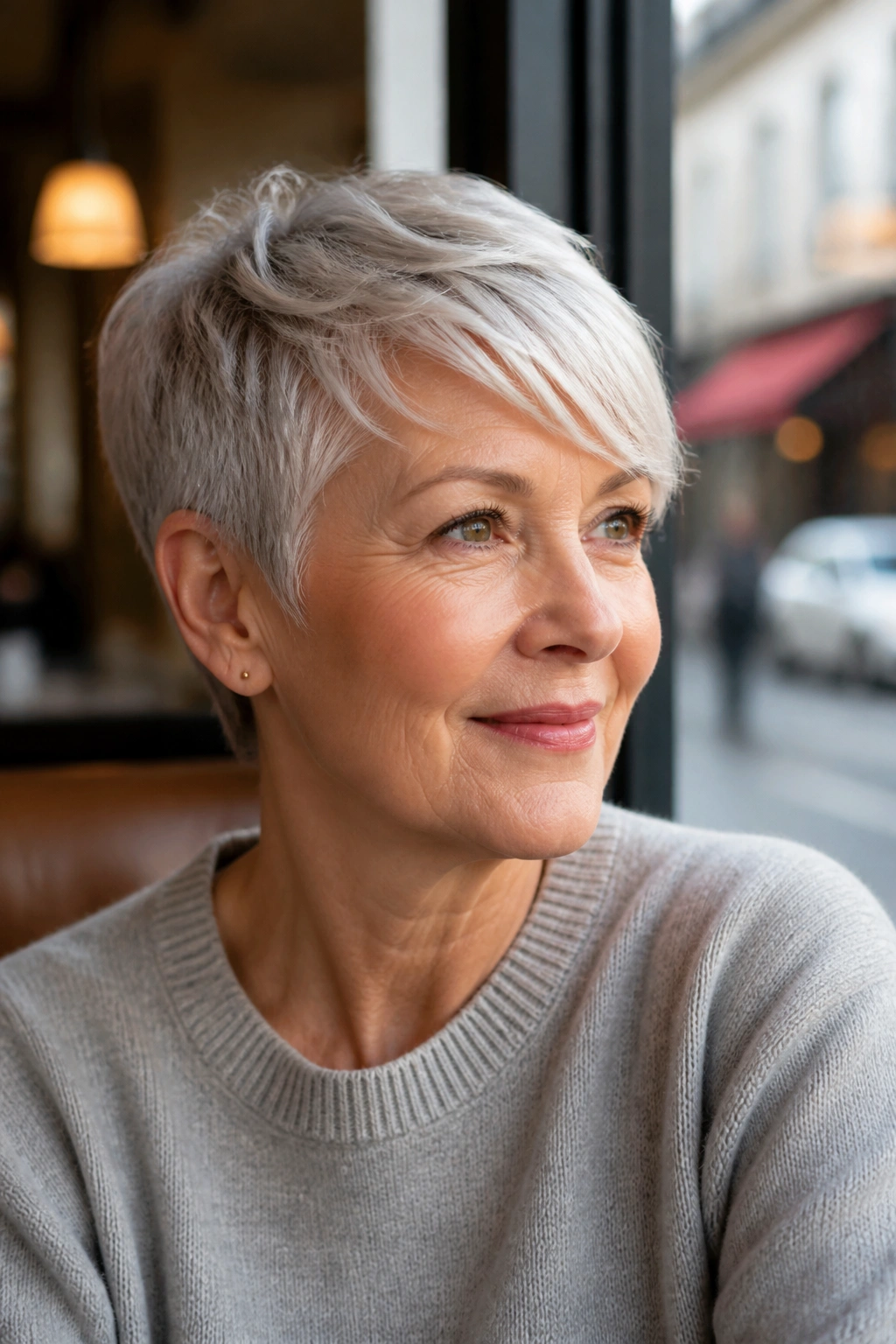
A side-swept fringe is the easiest way to soften a pixie without stealing volume from the top.
That sweeping diagonal line does a lot of quiet work. It softens forehead lines, gives glasses a better frame, and helps if your hairline is a little sparse at the temples. The front should move across the face, not hang over it like a curtain. There is a difference, and it is a big one.
I like this cut for women who want the face to look open but not severe. A blunt bang can feel heavy on fine hair. A side-swept fringe feels lighter and less fussy, which is usually the better trade.
Keep the longest piece around the cheekbone or just above it if you want the face to stay lifted. If the fringe drops lower than that, it starts to chew up the volume on top. And that is the part you do not want to lose.
A good styling move here is simple: dry the fringe in the opposite direction first, then sweep it over. It bends better that way and keeps the front from splitting in the middle by noon.
3. Tapered Nape Pixie
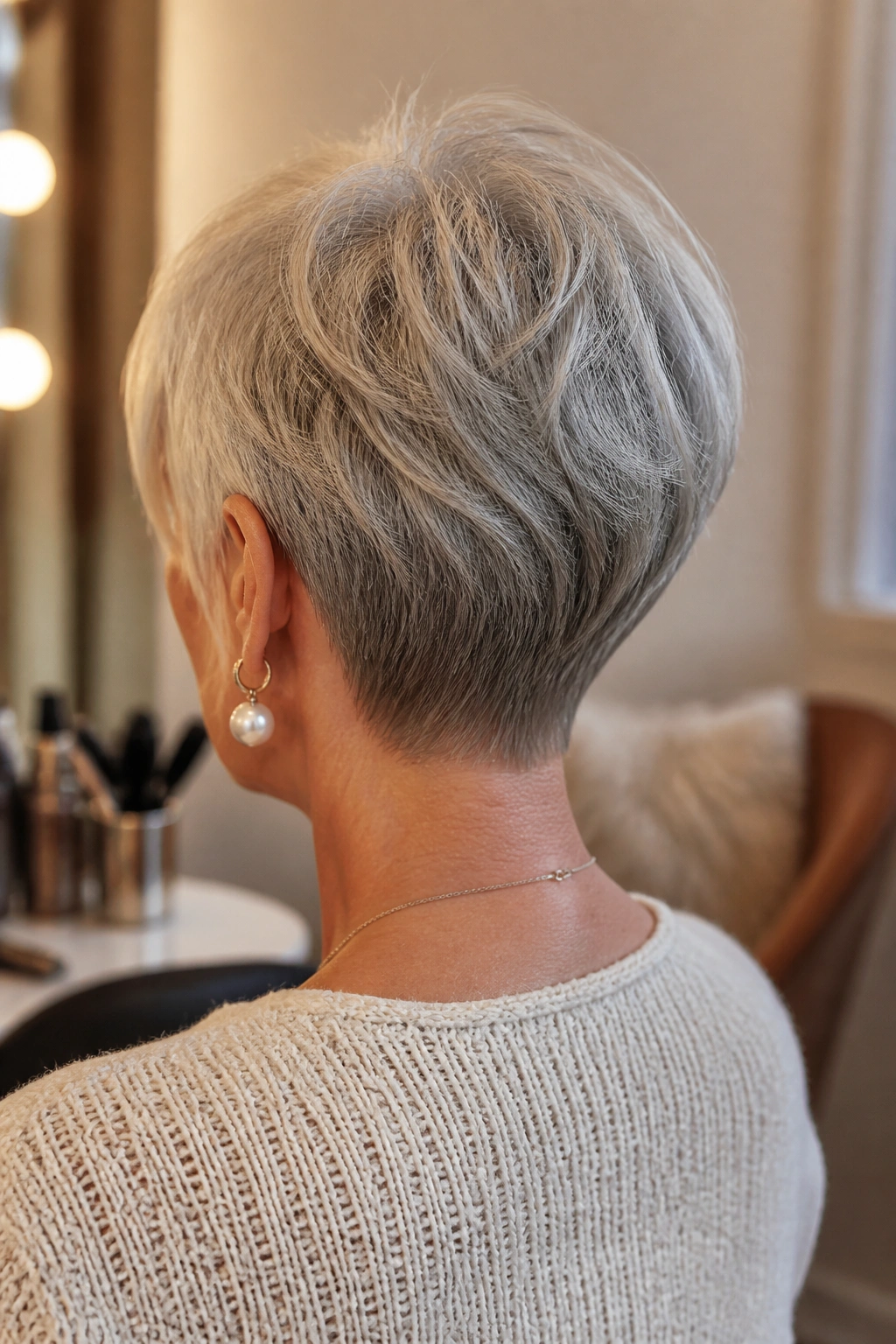
The back of this cut should feel neat under your fingertips.
A tapered nape gives the whole haircut a cleaner line, and fine hair needs that kind of discipline. If the back is too bulky, the cut looks bottom-heavy. If it is too short and too hard, it can look severe. The taper is the sweet spot: close to the neck, but soft enough to move.
What the Nape Does for the Whole Shape
The nape is one of those small areas that changes everything. A well-tapered back makes the neck look longer and the head shape look tidier. That matters even more if your hair grows in different directions, because a clean taper prevents the back from puffing out in odd places.
This cut also works well if you wear collared shirts, scarves, or necklaces. The haircut stays out of the way and lets those pieces show without competing.
- Ask for a close nape, not a shaved one.
- Keep the top slightly longer so the cut does not feel too small.
- Blend the sideburns into the jawline instead of chopping them off.
- If you have a strong cowlick at the back, leave a little extra length there.
A tapered nape is not flashy. It is tidy, and tidy is underrated.
4. Choppy Textured Pixie
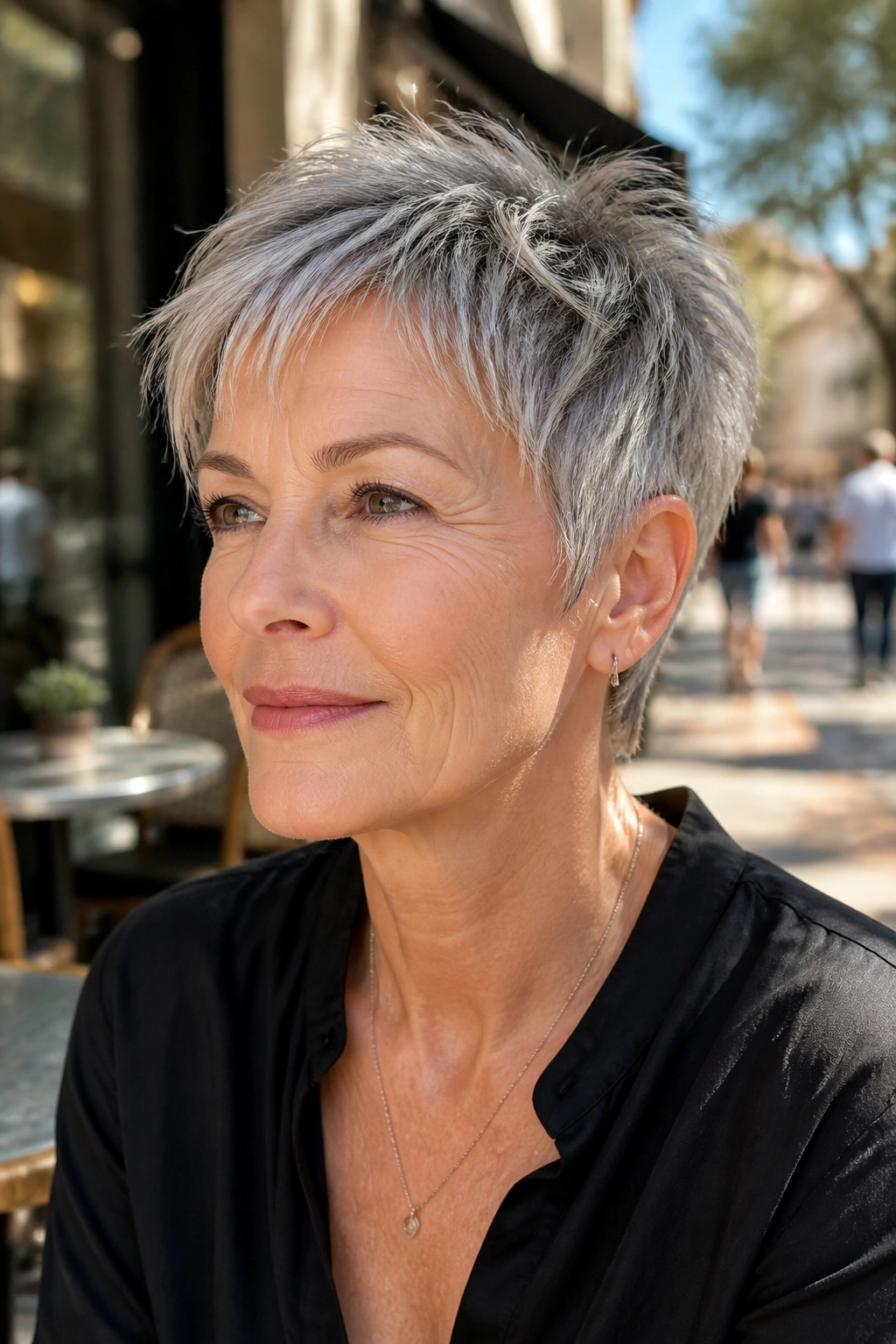
Straight, limp hair needs movement more than it needs more length.
That is why a choppy textured pixie works so well on fine hair over 60. The cut is built from small, uneven layers that break up flatness and create little pieces that catch the eye. The trick is not to shred the hair. Choppy is not the same as messy. If the ends are over-thinned, the cut starts to look fuzzy instead of lively.
This style is especially good if your hair lies pin-straight and refuses to hold a curl. The uneven texture gives the illusion of density without needing a lot of product. A matte paste or a soft texture spray is usually enough. Heavy serum is the enemy here. It makes the pieces clump, and then the whole thing sinks.
Ask the stylist to use point cutting on the top and around the crown, then leave the perimeter a little stronger so the shape holds. That mix keeps the haircut from falling apart after the first wash.
The best version of this cut has a bit of edge, but not a wrecked look. There is a line between lively and overdone. Stay on the lively side.
5. Long Pixie with Wispy Layers
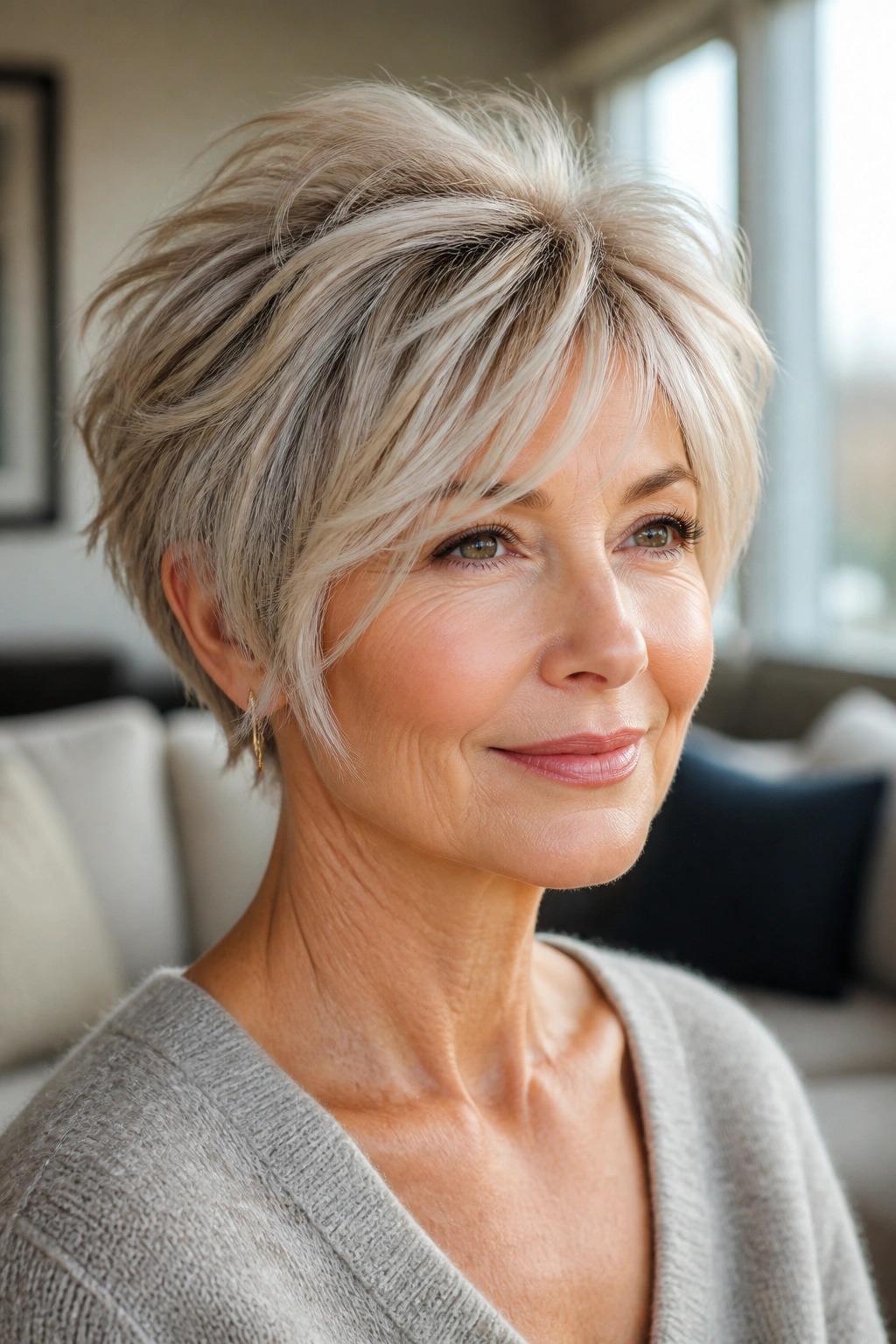
If you keep saying, “I want short hair, but not that short,” this is the cut.
A long pixie with wispy layers sits right between a classic pixie and a tiny bob. That middle ground is useful. Fine hair gets a little more weight at the ends, which helps it look fuller, and you still get the easy styling that makes short hair worth the trouble in the first place.
This shape is kind to people who are nervous about going dramatically short. It gives you enough hair to tuck behind the ear, enough length in front to soften the face, and enough lift on top to keep the cut from feeling flat. The wispy part matters. It keeps the style light, so it does not turn into a little helmet.
Who It Flatters
This version usually works well for longer faces, stronger jawlines, and anyone who wants a little more movement around the eyes. It can also make the grow-out phase less annoying, which is not a small thing.
Ask for about 3 inches on top, slightly shorter at the sides, and soft layers that skim instead of slice. On day two, a quick mist of water and a dab of lightweight cream is usually enough to wake it back up. No elaborate routine. Good.
6. Curly Pixie with Soft Definition
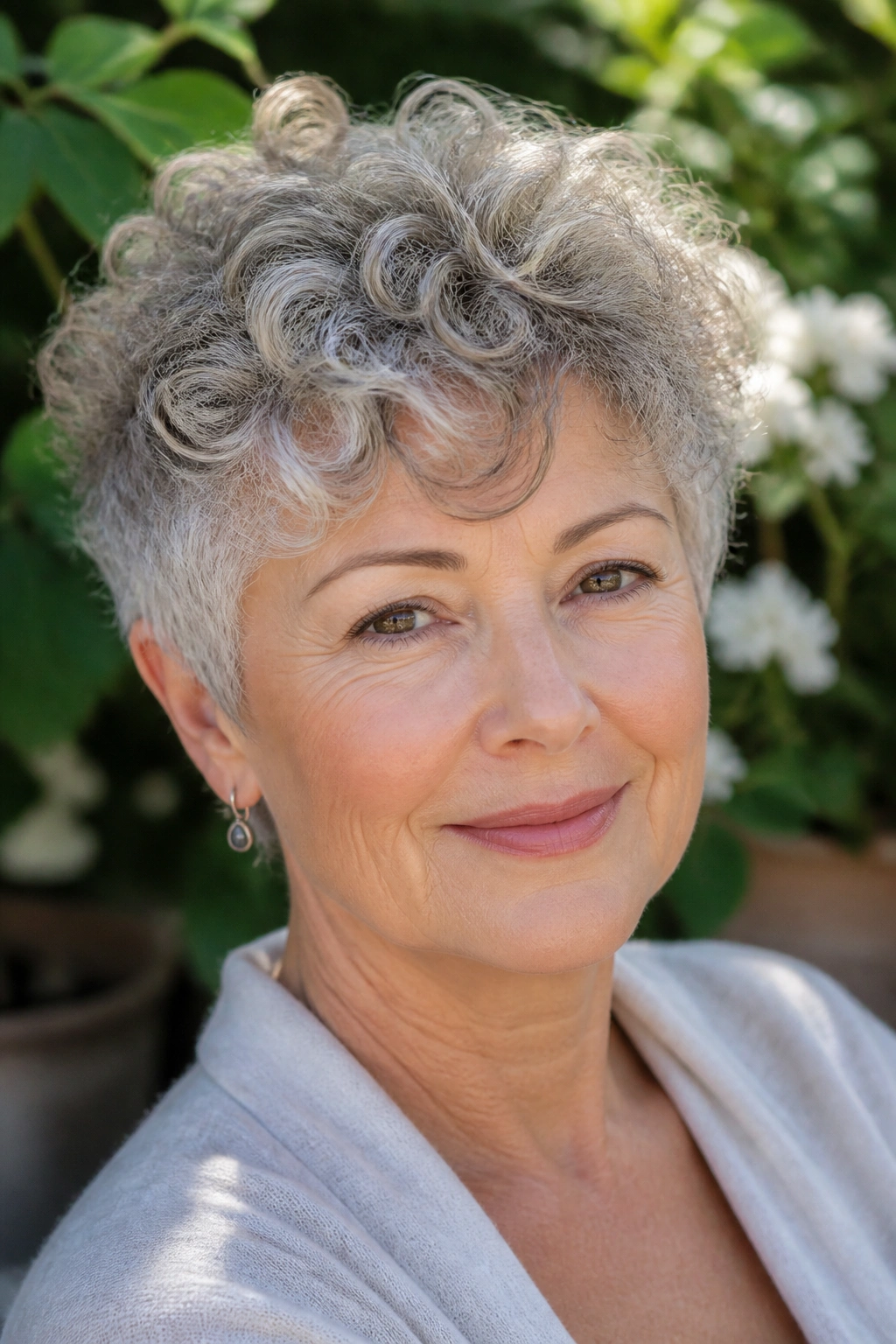
Why fight a wave pattern that is already doing half the work?
If your fine hair has any bend at all, a curly pixie can be a smart move. The goal is not perfect curl uniformity. The goal is shape. Soft definition at the top and around the front can make fine hair look fuller because the texture creates its own lift. A lot of people assume curls make hair look bigger in a bad way. Not if the cut is right.
The mistake to avoid is cutting too much length off the top while the hair is wet. Curly hair shrinks, and fine curls can spring up in a way that surprises even experienced stylists. A dry check, or at least a careful dry finish, helps the shape stay honest. Leave a little more length than you think you need. The hair will take some of it back once it dries.
How to Keep the Curl from Puffing
- Use a light curl cream or gel cream on damp hair.
- Scrunch gently, then stop touching it.
- Diffuse on low heat if you want more lift.
- If the crown gets frizzy, smooth only that area with a tiny bit of cream.
This cut is not for someone who wants every strand pinned into place. It is for someone who wants movement that looks natural and stays soft.
7. Undercut Pixie with Lift on Top
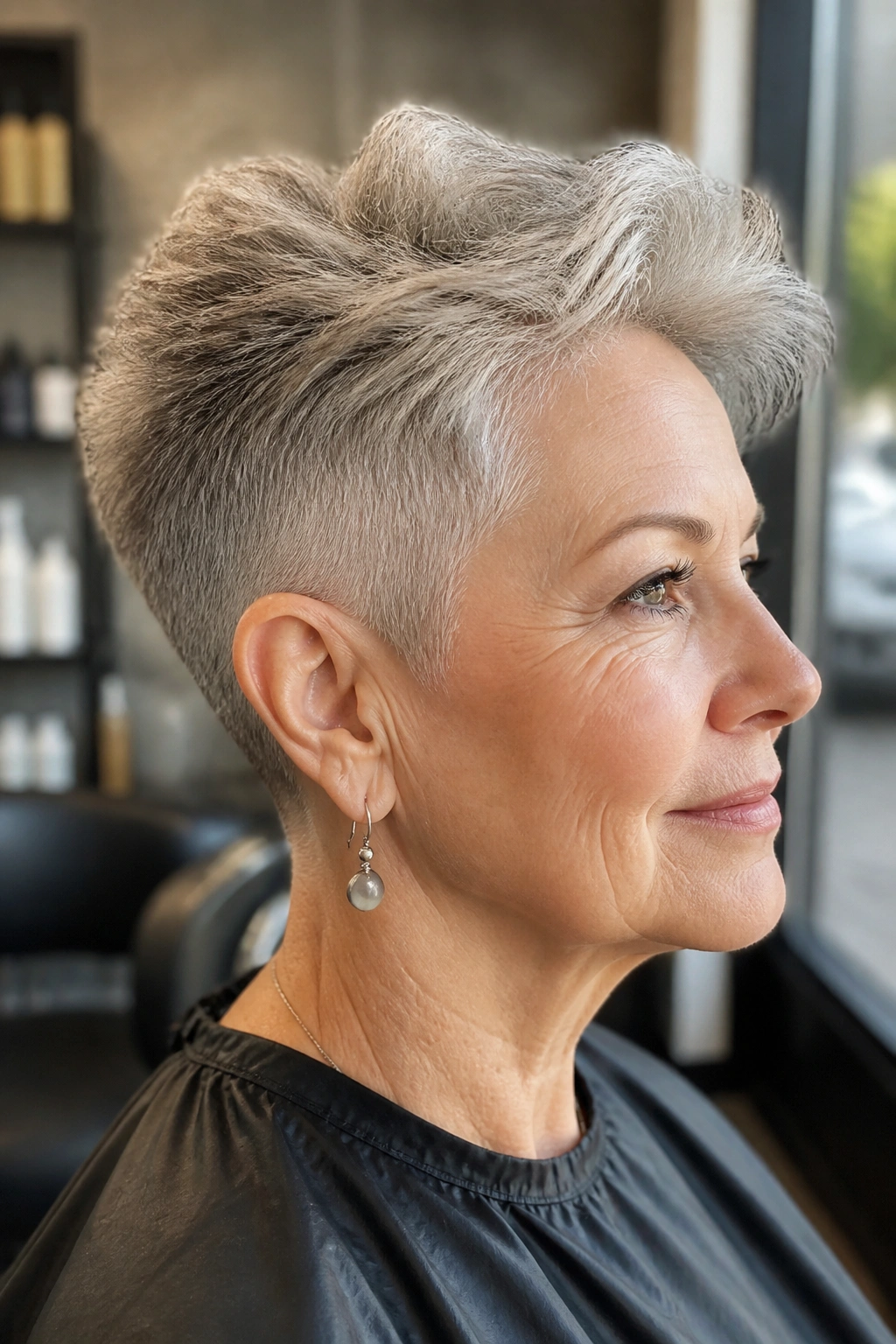
An undercut sounds bold, but on fine hair it can make the top look fuller in a way blunt cuts never do.
That sounds backwards until you see it in a mirror. Removing hidden bulk from the sides or nape lets the top sit higher. Fine hair often looks flat not because there is too little hair, but because the denser lower sections drag the shape down. An undercut clears that weight out.
This is not the same as shaving the whole side of the head. It can be much subtler than that. A narrow undercut at the nape or behind the ears is often enough. The top stays soft and airy, while the bottom stays neat and controlled. If you wear earrings, this cut also gives them room to show. Nice bonus.
It does grow out faster than a softer pixie, so it asks for a bit more upkeep. Still, if your hair grows out puffy and triangular, the cleanup is worth it.
One thing I like about this cut is how honest it is. It does not pretend fine hair is thick. It works with the actual amount of hair you have and makes that hair look sharper.
8. Swept-Back Pixie Pompadour
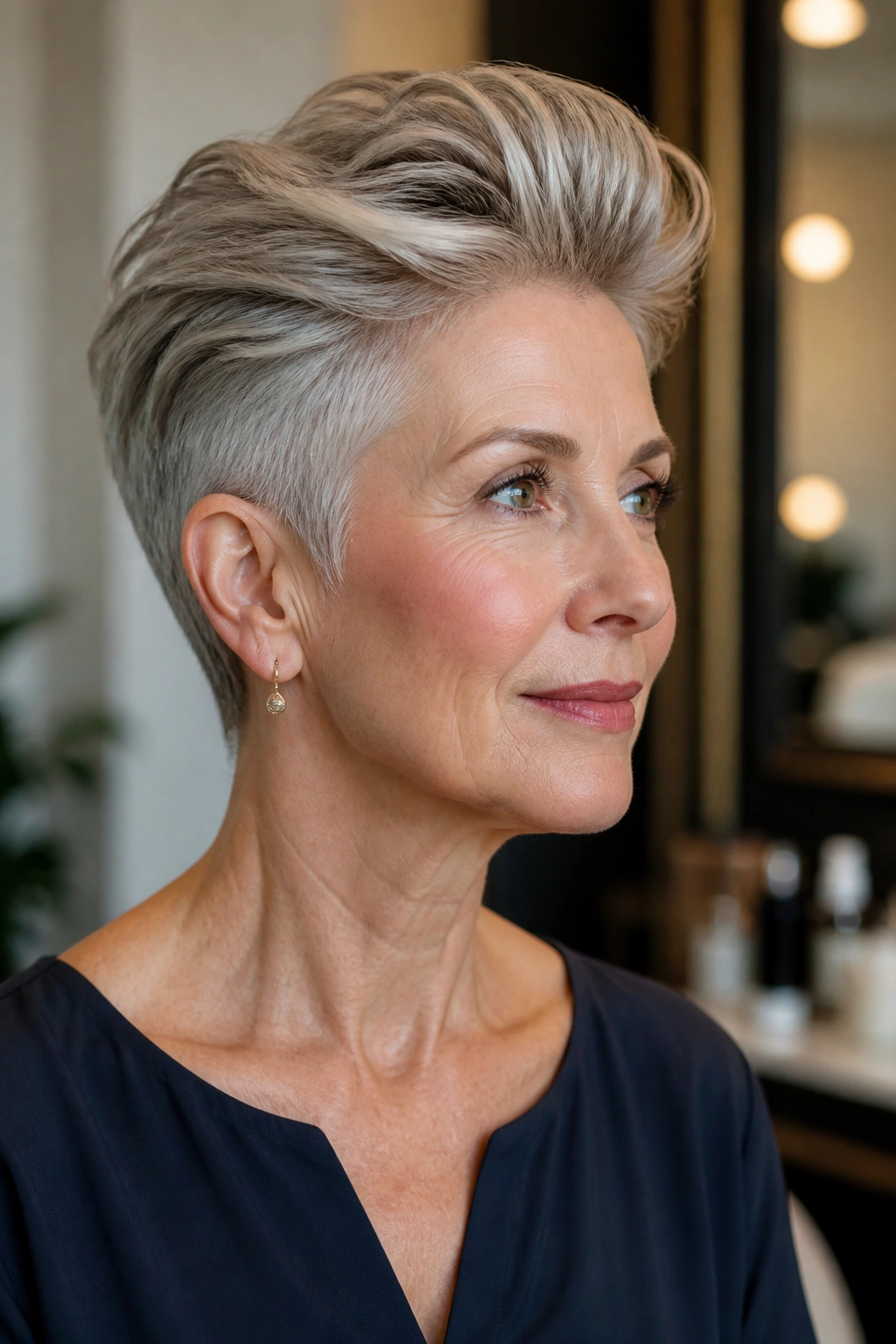
Some mornings call for polish, not a ten-minute wrestling match.
A swept-back pixie pompadour gives you height at the front and a little drama at the crown without needing long hair. The front gets lifted up and back, which can be a gift for fine hair because the shape stretches the face and opens the eyes. It is a good option if you like a little structure and do not mind using a blow-dryer.
What to Ask for in the Chair
The front usually needs a bit more length—about 2.5 to 3 inches—so it can bend back instead of sticking straight up. The sides stay shorter and tighter, and the crown gets enough layering to hold lift. If the top is too short, this style loses its shape fast.
A medium round brush helps, but so do velcro rollers if you want more height with less effort. A small amount of root mousse at the roots, then a flexible spray at the end, usually does the trick. You do not want a helmet. You want movement that stays where you put it.
This style suits people who like a sharper look. It feels a little more styled, a little less casual. Not fussy. Just deliberate.
9. Cropped French Pixie
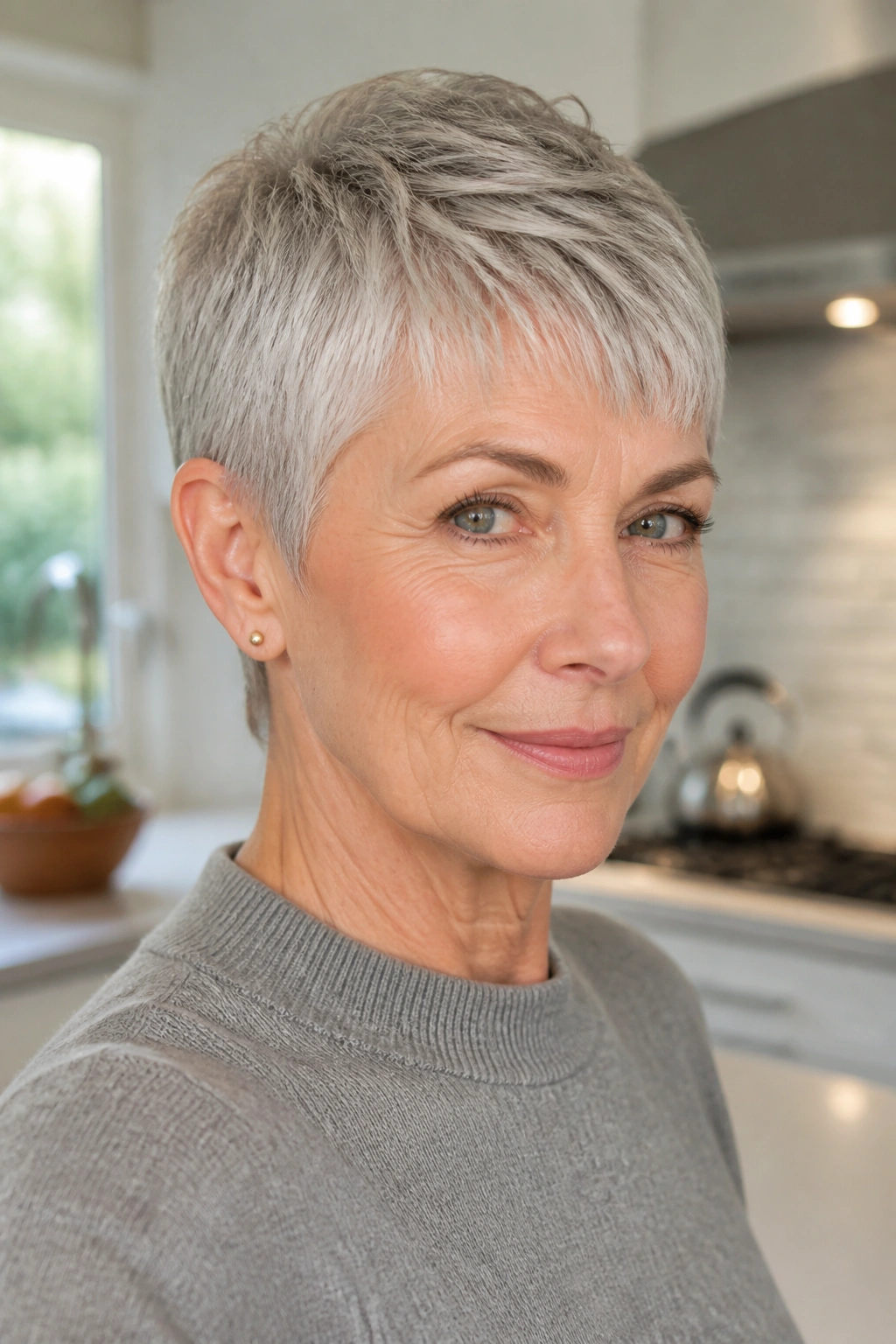
This is the pixie for someone who likes clean lines but hates a severe look.
A cropped French pixie sits short around the ears and nape, with a soft, short fringe or a lightly broken front. It has that crisp shape that makes fine hair look cared for, but it does not rely on heavy volume to do the job. The effect is neat, chic, and a little effortless-looking, even though the cut itself is precise.
I think this one works especially well with silver or salt-and-pepper hair because the shape stays clear even when the color grows out. You do not need a lot of styling product. In fact, too much product can ruin the clean finish and make the short fringe separate in odd ways.
It also plays nicely with face lines that have softened over time. The short fringe adds interest without covering everything up. The sides stay close enough to show the jaw and cheekbone, which keeps the look from feeling boxed in.
There is a quiet confidence to this cut. Not the fake kind. The real kind that comes from a haircut that knows exactly what it is doing.
10. Asymmetrical Pixie
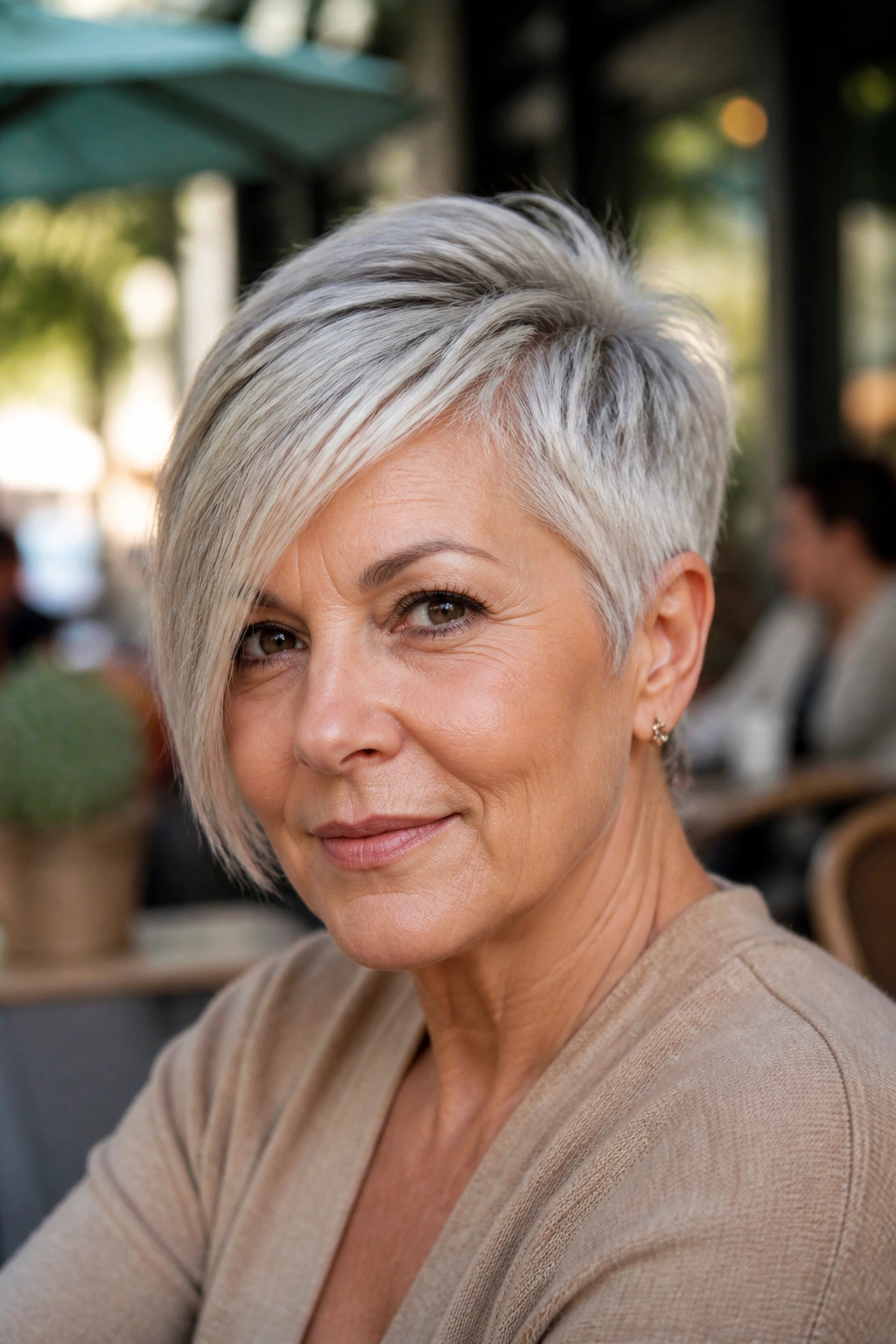
Perfect symmetry can be boring on fine hair. A slight imbalance gives the eye something to follow.
An asymmetrical pixie uses one side a little longer than the other, or a longer sweep in front, to create shape where the hair itself may not have much body. On fine hair, that diagonal line can make the whole cut look fuller because it keeps the eye moving. Flat hair looks flatter when every side is the same. A tiny offset helps.
Where the Longer Side Should Land
Keep the difference subtle. I am talking about one side that lands about 1 to 1.5 inches longer, not a dramatic side flap that swallows the face. On fine hair, too much asymmetry can look accidental rather than stylish, especially if the density is low.
This cut works well for round faces because the diagonal line creates a little length. It can also soften a square jaw if the longer side curves toward the cheek. If you wear glasses, ask the stylist to place the longer piece so it clears the frame instead of fighting with it.
The only real caution is balance. If the longer side is too heavy, it can drag the whole look down. Keep the top lifted and the shorter side neat. That contrast is what makes the shape work.
11. Pixie Bob with a Soft Edge
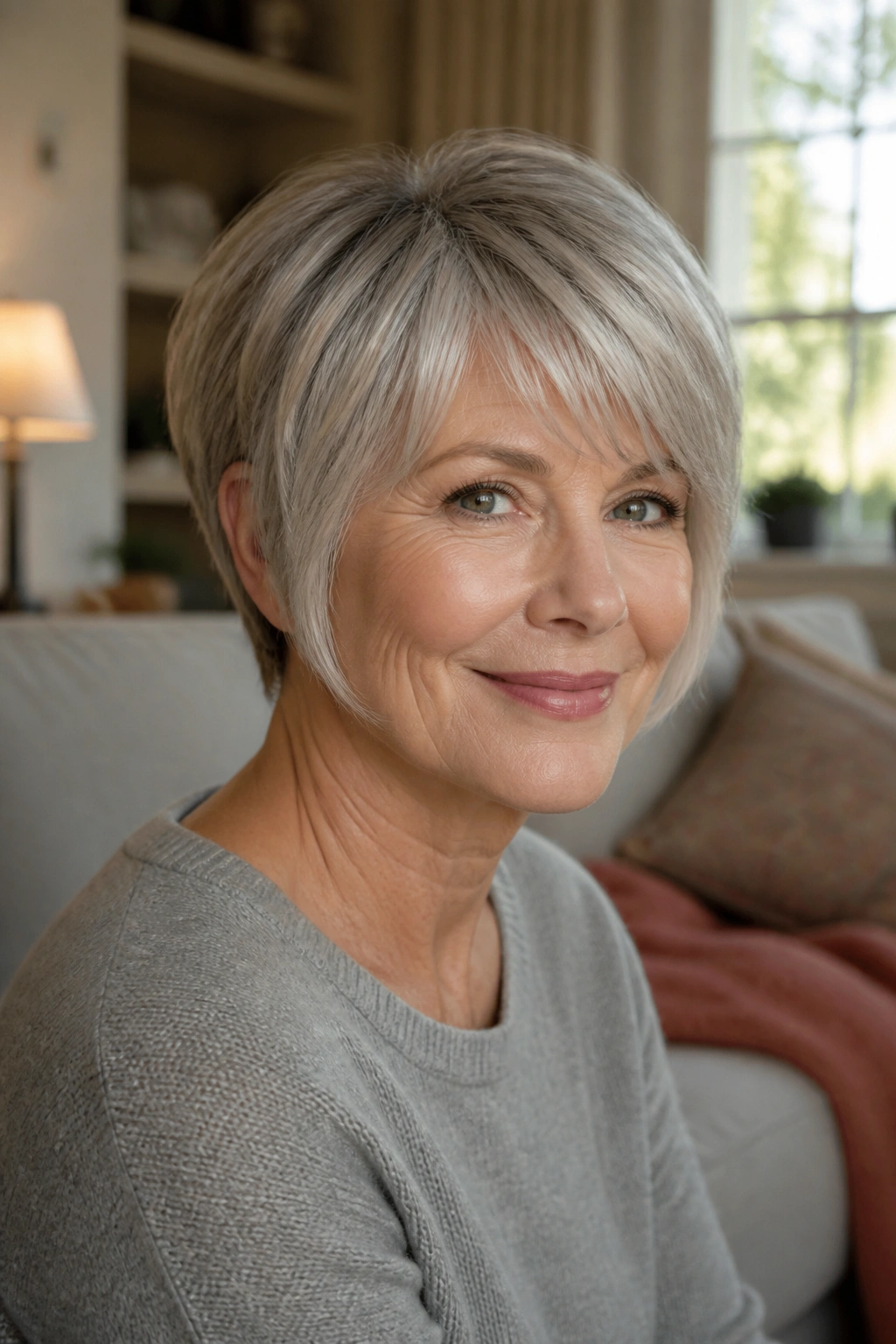
If you are nervous about going too short, the bixie is the smart compromise.
A pixie bob, or bixie, sits between a cropped pixie and a short bob. It keeps a little more length around the sides and front, which is useful for fine hair because those extra inches add weight at the ends. That tiny bit of weight can stop hair from floating away from the head in the wrong places.
Among pixie cuts for fine hair over 60, this is the safety-net option I trust most. It still reads as short hair, but it gives you room to tuck a side back, part it differently, or wear it a little messier on low-energy days. The perimeter should stay soft, not blunt. A hard line can make thin ends look sparse.
A soft edge also helps this cut grow out in a way that feels less awkward. You are not trapped in a narrow shape that falls apart after two weeks. That matters if you do not want to live at the salon.
If your hair has lost density at the temples, the bixie is worth a serious look. It gives a little coverage without dragging the style into bob territory.
12. Piecey Shaggy Pixie
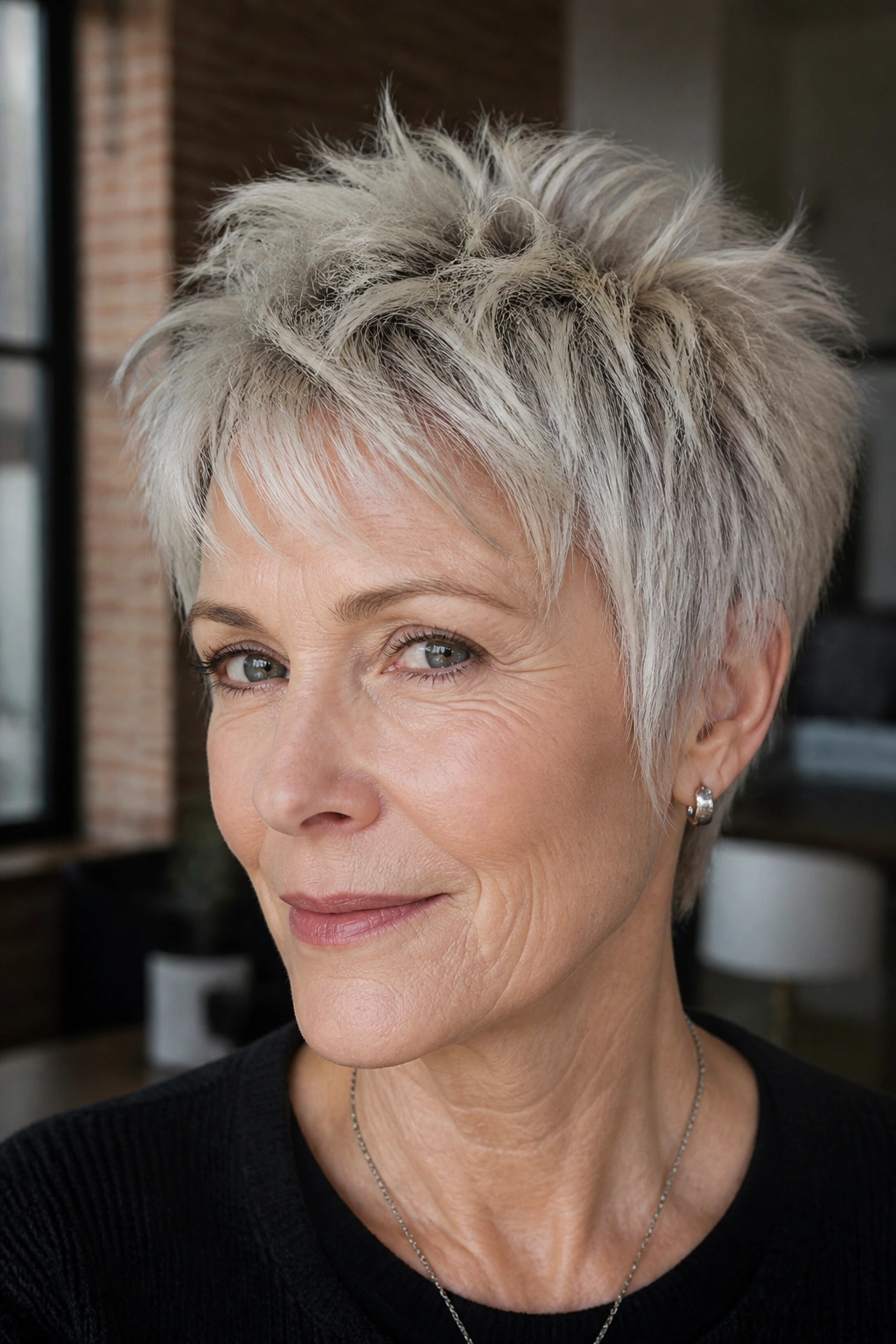
Need a little edge without living at the salon?
A piecey shaggy pixie brings movement and separation to fine hair, which can be a relief if your strands tend to lie down like they are waiting for instructions. The cut has a slightly softer, more lived-in feel than a classic neat pixie. It relies on short, broken layers and a bit of unevenness through the top and front.
The danger is overdoing it. Fine hair can only take so much texture before it starts looking see-through. If the stylist uses too much razor work or thins the ends too hard, the cut gets fuzzy and weak. Better to keep the pieces defined and let the product do the separation.
A matte paste works well here, especially if you rub a tiny amount between the palms and pinch it into the ends rather than smearing it over the whole head. You want pieces, not grease. A small round brush at the crown can add a touch of lift if the hair is stubborn.
What to Avoid
- Heavy serum on the top.
- Over-brushing after styling.
- Too much thinning at the ends.
- Cutting the fringe so short that it sticks straight up.
This is a good cut for anyone who likes a bit of texture and does not need every hair to obey.
13. Ear-Hugging Pixie with Soft Sideburns
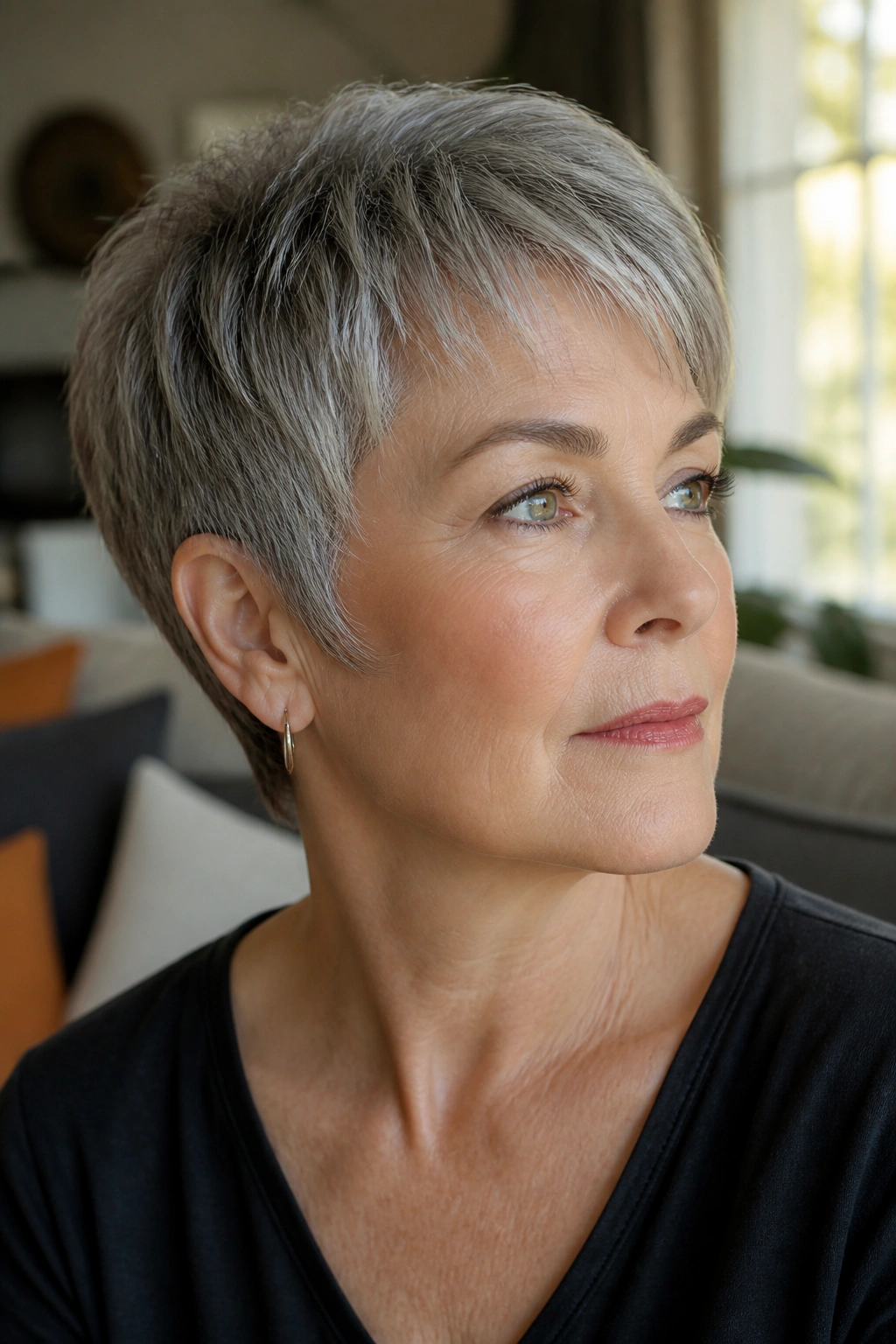
A good ear-hugging pixie keeps the sides close enough to show your earrings and soft enough to avoid looking hard.
That balance matters on fine hair. If the sides flare out, the face can look wider. If they are cut too tight and too blunt, the whole style can feel severe. Soft sideburns help bridge that gap. They skim the jaw instead of ending in a hard little line, which makes the cut gentler and more flattering.
This shape is especially nice if you wear glasses or small hoops because it leaves room around the ear. It also works well when the neck and jawline are areas you want to keep clean and visible. A tidy side can make the whole haircut feel more polished, even if the top is loose and airy.
Ask for the sideburns to stay around half an inch to 1 inch long, then blend them into the cheek area with a soft touch. The overall effect should be neat, not severe. That word again. It matters.
If your hair starts to puff around the ears after a few weeks, this is the cut that will show it first, so trims matter. Small shape, big difference.
14. Salt-and-Pepper Pixie with Crown Height
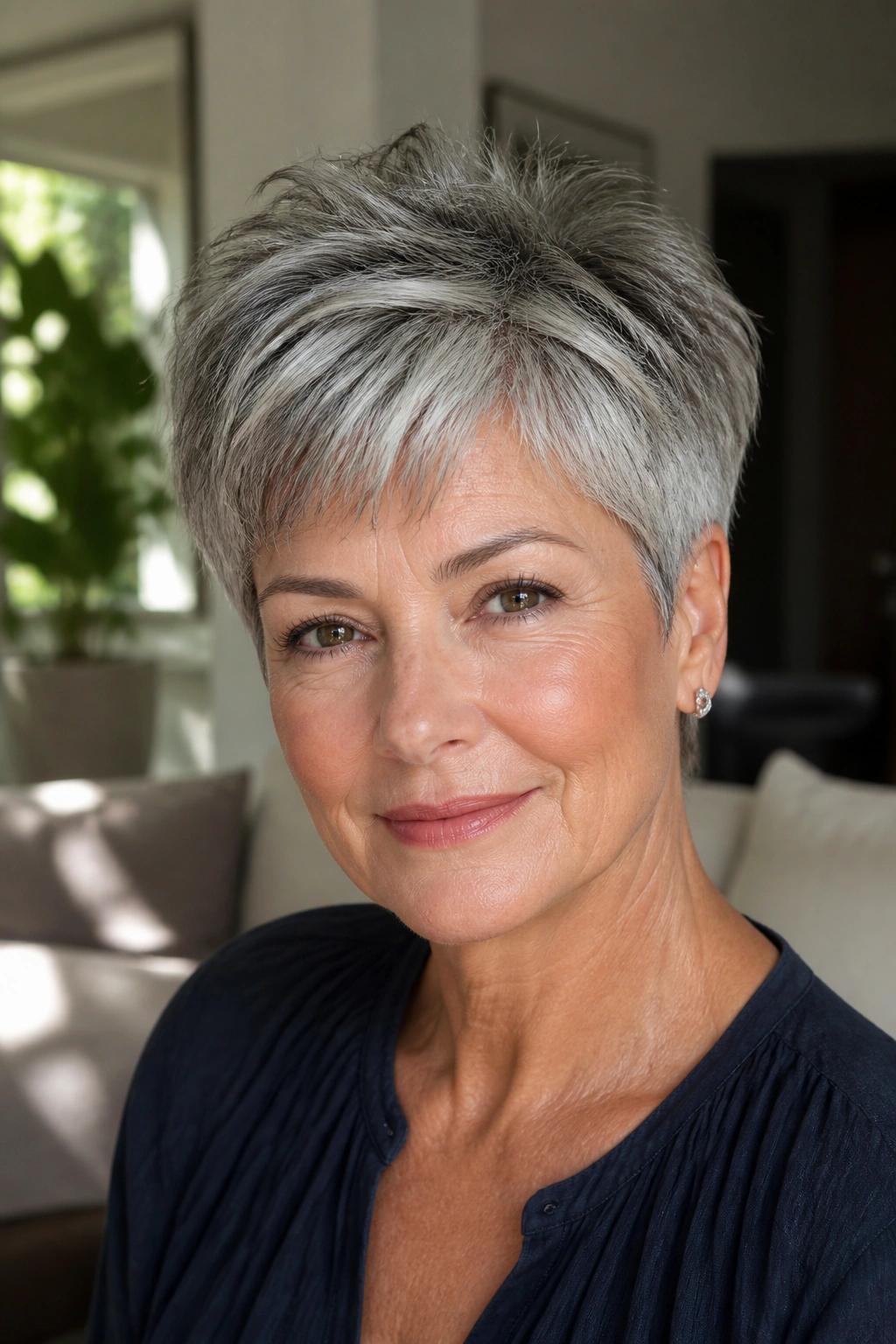
Gray hair can look thicker when the cut gives it lift and shape.
That is one reason a salt-and-pepper pixie with crown height is such a strong choice for fine hair. The color itself adds visual texture, and the cut gives the eye something to follow at the top. When silver strands are cut into a shape with a little rise at the crown, the whole style reads brighter and fuller.
Cut and Color Should Work Together
A lot of people try to solve fine hair with color tricks alone. Sometimes that helps. A few subtle lowlights can add depth, and a softer root area can make the cut look denser. But the haircut still has to do most of the work. If the shape is flat, no color placement can fix that.
This style usually looks best when the crown stays a little longer than the sides, with soft layers that move instead of collapse. Keep the fringe light if you have one. Heavy bangs can drag the cut down and cover too much of the face.
- Ask for lift at the crown, not volume everywhere.
- Keep the sides snug so the top can breathe.
- Use a lightweight spray rather than a rich cream.
- If your silver hair is coarse in spots, ask for soft texture, not aggressive thinning.
There is something clean and direct about this cut. It does not hide the color. It lets the color sit in a shape that makes sense.
15. Wash-and-Go Pixie
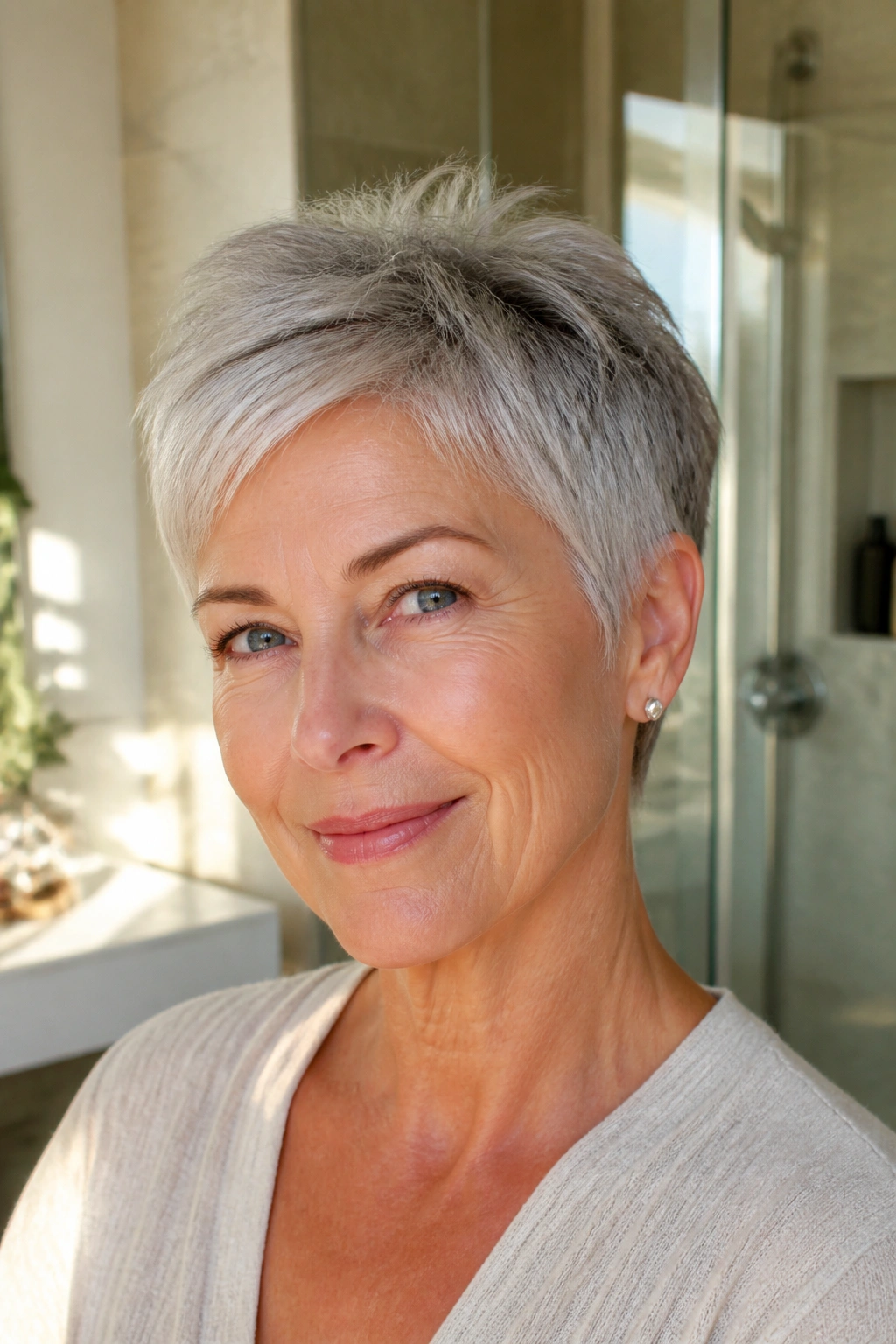
No fuss. No round brush.
A wash-and-go pixie is the one to choose if you want the shortest possible route from shower to decent-looking hair. It is still a real haircut, though. The top needs enough length to move, and the sides need enough control to keep the shape from puffing out. If the cut is too short all over, it can start to look like a clipper job. If it is too long, it stops being wash-and-go and starts demanding a routine.
The sweet spot is a soft crop with a little height at the crown, a close nape, and slightly longer pieces around the front. Fine hair usually behaves well in this kind of shape because the haircut does the organizing for you. A pea-sized bit of lightweight cream on damp hair, then finger-combing into place, is often enough. That is the whole appeal.
Who This Cut Suits Best
- Women who want a fast morning routine.
- Anyone whose hair collapses under heavier styling.
- People who like a neat neckline.
- Anyone tired of fighting a blow-dry every single day.
The honest truth is that this cut asks less of you, but only if the shape is right. A poorly cut wash-and-go pixie becomes a flat little problem by noon. A well-cut one feels easy from the start and keeps its shape with almost no effort.
That is the part I like most about a good pixie on fine hair. It does not try to pretend the hair is thicker than it is. It gives the hair a smarter job, and that usually looks better anyway.
