



Flat, heavy hair has a way of looking neat in the mirror and lifeless by lunch. Long hair cuts with lots of layers fix that problem better than almost anything else, but only when the layers are placed with some thought. Too many people ask for “layers” and leave the salon with ends that feel thin, frizzy, or oddly disconnected from the rest of the cut.
The trick is not just adding more pieces. It’s deciding where the shortest layer lands, how much weight gets removed, and whether the shape should feel soft, sharp, airy, or full-on textured. A good long layered haircut keeps the length you love while giving the hair a reason to move when you walk, turn your head, or run your fingers through it.
I’m a fan of cuts that still hold a strong outline. That matters. If your hair is fine, high layers can make the ends look wispy fast. If your hair is thick, layers that start too low can leave the mid-lengths bulky and the bottom heavy. The best long layered cuts solve a real problem instead of just looking pretty in a photo.
So here are 20 long hair cuts with lots of layers, each with a different mood, shape, and level of upkeep. Some are polished. Some are shaggy. Some are for people who live with a blow-dryer, and some are for people who want to air-dry and get on with their lives. The butterfly cut is a strong place to start.
1. Butterfly Layers With Curtain Bangs
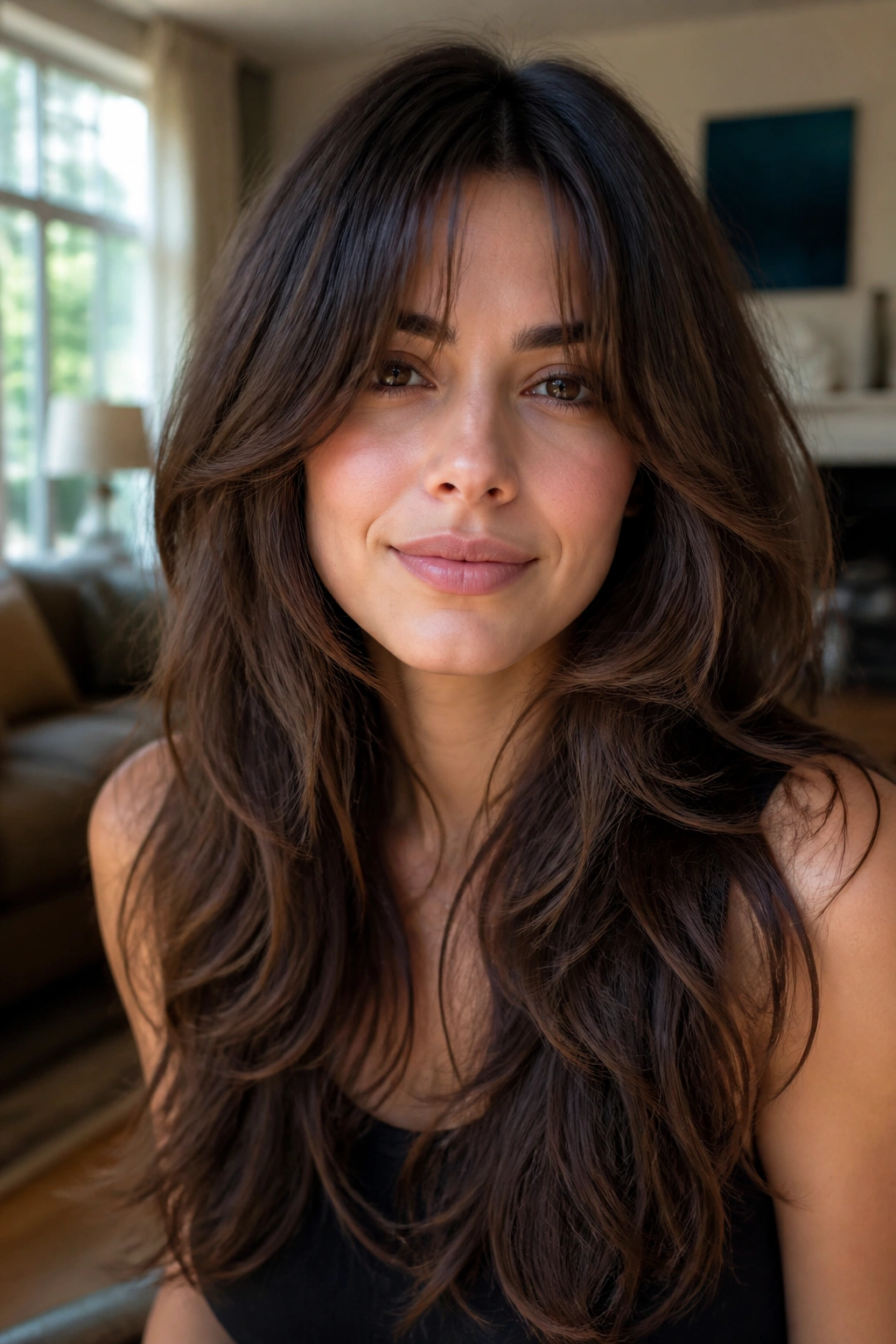
The butterfly cut is the poster child for long hair cuts with lots of layers, and for good reason: it gives you that lifted crown, soft face frame, and long trailing ends without chopping off the overall length. The shortest layers usually start around the cheekbone or jaw, then fall away into longer pieces that keep the shape light. On straight hair, it can look glossy and polished. On wavy hair, it has a little swing to it that feels expensive without trying too hard.
Why It Works So Well
The whole point is contrast. The top section gets enough layering to move, while the bottom stays long enough to keep the cut from feeling short or flimsy. Curtain bangs help bridge that gap, so the front doesn’t look heavy or suddenly disconnected from the rest of the hair.
A stylist will usually use point cutting or soft slide cutting through the top and front sections, then leave the perimeter long. That matters more than people think. If the layers are too blunt, the haircut can feel stiff. If they’re too choppy, the cut loses that butterfly shape and starts looking like a random stack of pieces.
What To Ask For
- Shortest layers at cheekbone to jaw level
- Curtain bangs that blend into the side layers
- A long, soft perimeter that still reaches past the shoulders
- Light shaping around the face, not a hard frame
Tip: If you style with a round brush, flip the front layers away from the face first. It gives the cut that lifted, open shape instead of a collapsed curtain.
2. Soft U-Shaped Layers

Why do some long layers look soft while others look scattered? The answer is usually the outline. A U-shaped cut keeps the bottom edge curved instead of flat, so the layers feel like part of one flowing shape rather than separate chunks. It is one of my favorite options for anyone who wants movement without drama.
The best part is how easy this cut is to wear. The layers can begin below the collarbone and blend down gradually, which keeps the ends looking full. That makes it a smart choice for medium-to-thick hair that needs motion but not a lot of visible texture. You can blow it out smooth, braid it, or let it dry naturally and still have a defined shape.
It also grows out well. That sounds boring, but it matters. A U-shape holds together for months because the curve at the bottom keeps the eye moving, even when the layers soften. If you hate sitting in the salon chair every six weeks, this is a good one to keep on your list.
3. V-Cut Layers That Narrow at the Back

If you like a sharper outline, the V-cut gives long hair a point at the center back and longer sides that taper around it. It has more edge than a U-shape, and it looks especially good when the hair is thick enough to hold the shape. The back falls into a clear V, which creates a long, lean line that feels deliberate.
How the Taper Changes the Shape
The V is not just visual decoration. It changes the weight distribution. Hair at the center back sits a little shorter, which helps the rest of the length drape around it instead of hanging like one solid curtain. That makes the ends feel lighter when you move.
This cut works well if you like wearing your hair down most of the time. It also gives braids and half-up styles a nice drop in the back. The downside is simple: if your hair is very fine, the point can look too thin. On dense hair, though, it reads as clean and strong.
Best For
- Thick, straight, or loosely wavy hair
- People who want a visible shape from the back
- Long hair that needs more movement near the ends
- Anyone who likes a slightly dramatic silhouette
Ask your stylist to keep the point soft, not razor-sharp. That small detail keeps the cut from looking harsh when it grows out.
4. Face-Framing Layers That Start at the Cheekbone
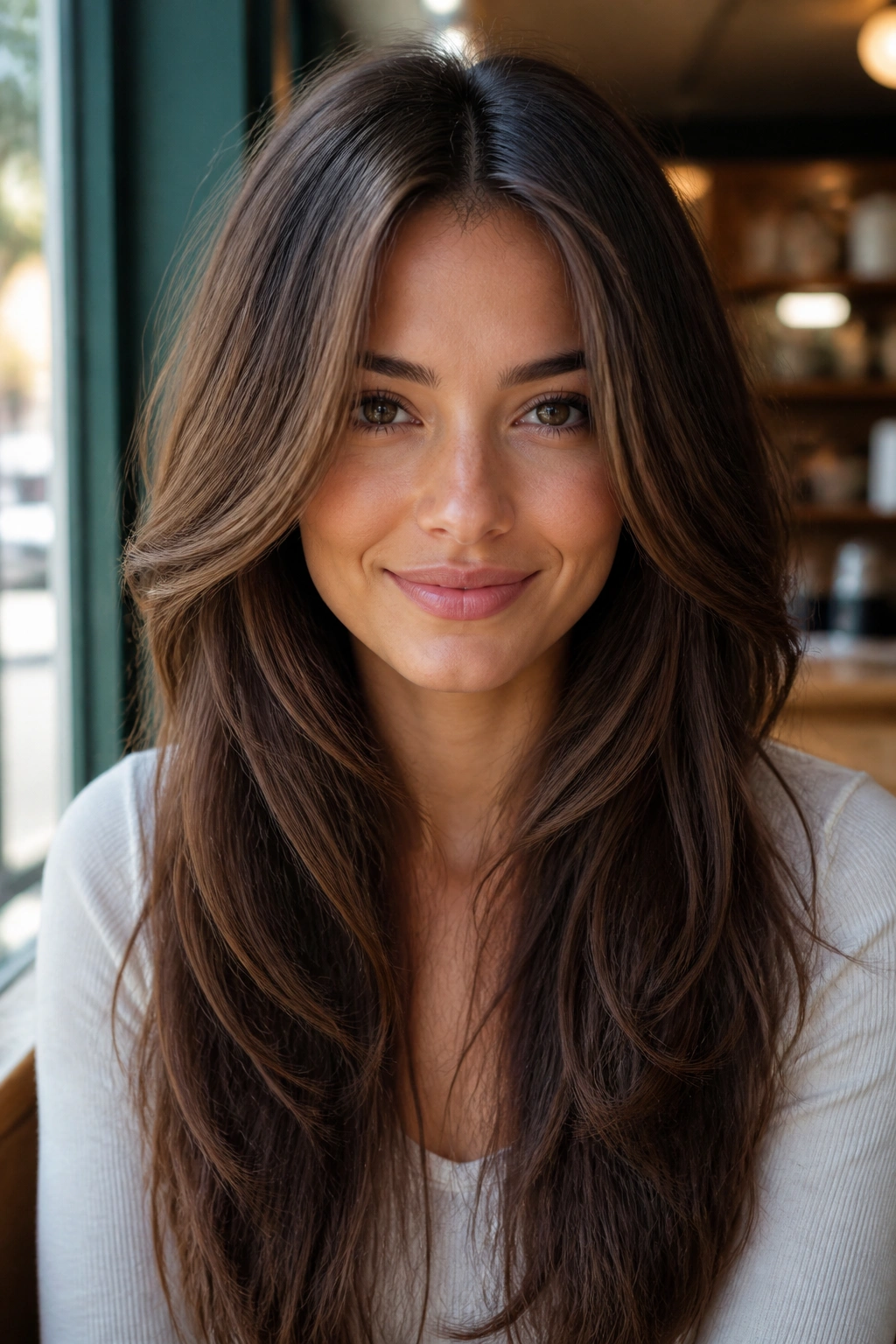
Not every long layered haircut needs to start at the chin. Sometimes the best move is a high face frame that begins around the cheekbone and melts into longer lengths by the collarbone. That shape opens the face fast, which is why it flatters so many people who wear their hair down more than up.
This cut does a lot with a little. The hair around the face gets lifted and shaped, but the rest of the length stays quiet and long. I like that contrast. It keeps the haircut from feeling overworked, and it gives you a simple styling target: get the front pieces smooth and let the rest fall.
It’s also one of the most useful options if you wear glasses. The front pieces can be trimmed so they sit away from the frames instead of crowding them. On straight hair, this looks neat and clean. On wavy hair, it gives a soft frame that doesn’t need perfect styling to make sense.
5. Invisible Layers for Fine Hair
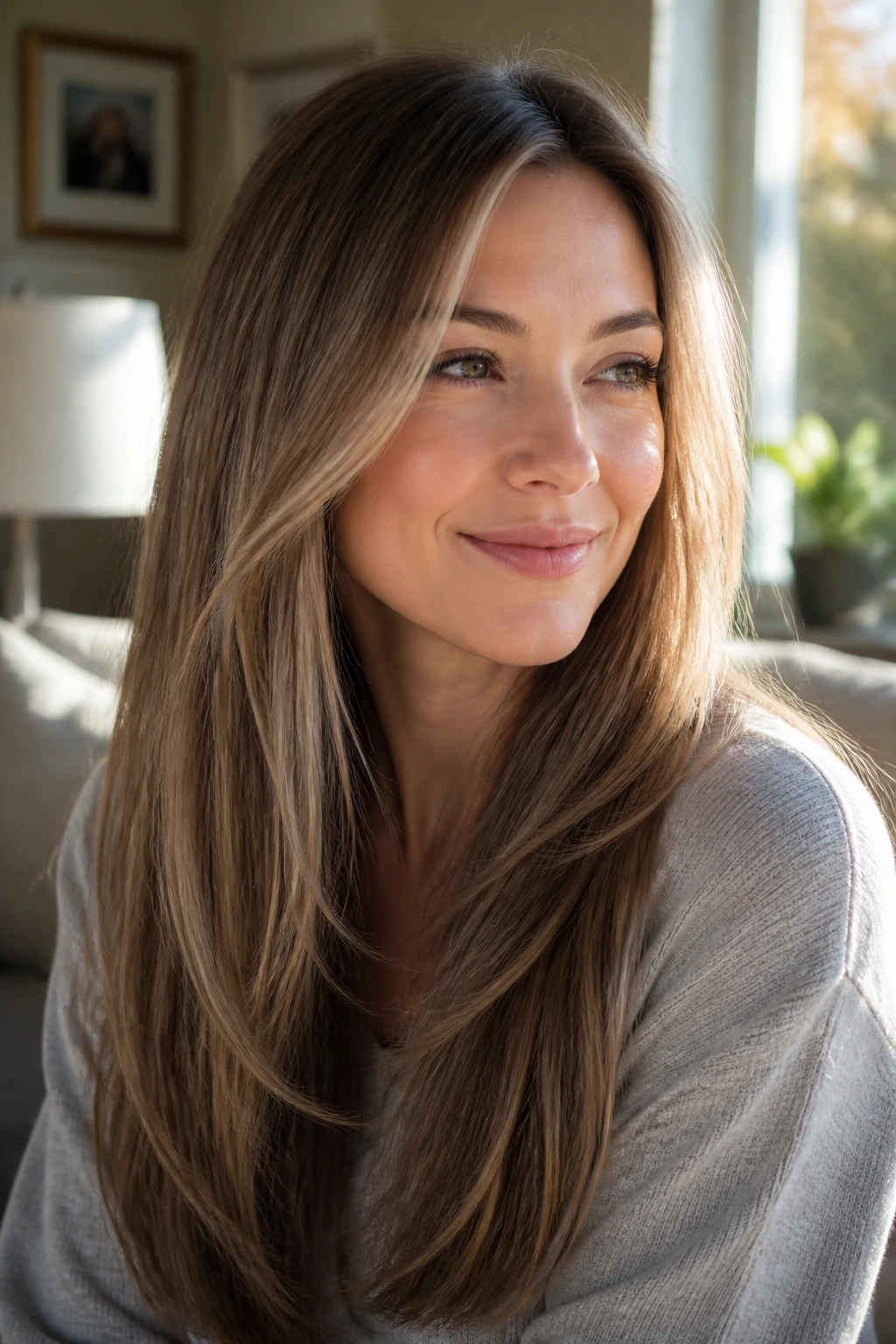
Subtle matters here. Fine hair can look thin fast if the layers are chopped too aggressively, so invisible layers are a better fit than obvious ones. The haircut keeps a mostly even outline, while the interior is softened enough to remove weight and add a little lift at the roots.
This is one of those cuts that looks almost boring in a salon chair and then behaves beautifully at home. The trick is that the layers live inside the shape, not all over the outside. That means you still get movement without losing the feeling of density at the ends. If your hair tends to separate into stringy pieces, that hidden structure helps a lot.
What To Request
- Long internal layers, not heavy surface layering
- A blunt or softly curved perimeter
- Minimal texturizing at the ends
- Lightweight blowout or air-dry styling
What To Avoid
- Too many short pieces around the crown
- Over-thinning with a razor
- Layers cut too high on the sides
A tiny bit of volume spray at the roots can help, but the cut should do most of the work. If it doesn’t, the layers were probably placed too aggressively.
6. Razor-Cut Layers With Wispy Ends

A razor cut changes the feel of the hair at the edge. Instead of a crisp, blunt finish, the ends become feathered and light, which is exactly why this style can work so well on long layered hair that needs softness. The overall look is airy, a little undone, and less rigid than scissor-cut layers.
The catch is texture. Razor cuts can be gorgeous on straight to slightly wavy hair, but they can turn frizzy on coarse or very curly hair if the stylist gets too eager. I’m picky about this one. A good razor cut should feel deliberate, not shredded. You want wispy movement, not ends that look chewed up.
This cut shines when paired with loose waves, a center part, and a small amount of smoothing cream. It is not the right choice if you love pin-straight, glassy hair and hate any sign of texture at the perimeter. For the right person, though, it gives long layers a soft, almost floating finish.
7. Shaggy Long Layers
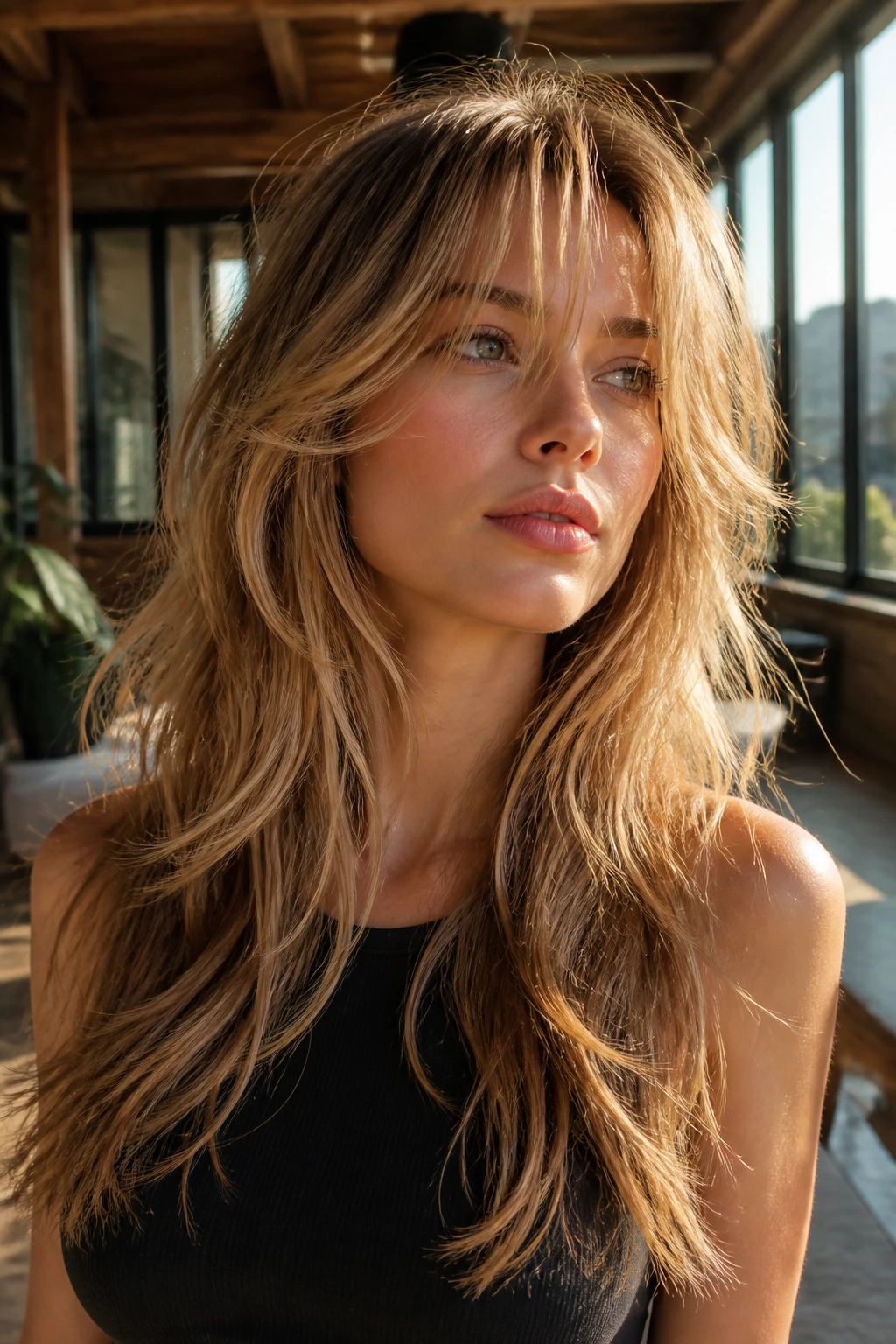
The shag is not messy hair. That’s the first thing to get straight. A long shag uses layers to break up thickness, create lift at the crown, and build a lived-in shape that feels relaxed but still intentional. It usually has shorter layers around the top, a lot of texture through the mids, and a perimeter that stays long enough to keep the cut wearable.
Why It Has So Much Personality
A shag works because it refuses to sit flat. The layers give the hair places to bend, so the shape changes depending on how you dry it. Air-dry it, and it gets loose and piecey. Blow it out with a diffuser or rough-dry it, and it gets more volume and separation. That flexibility is the whole appeal.
What To Watch For
- Short crown layers can create lift fast
- Bangs often help the shape feel finished
- Texture spray is more useful than heavy cream
- Fine hair may need a softer version of the cut
I like this cut on people who don’t want their hair to look “done” every day. It has energy. It also has a bit of attitude, which is probably why it keeps showing up again and again.
8. Waterfall Layers That Cascade Down the Length
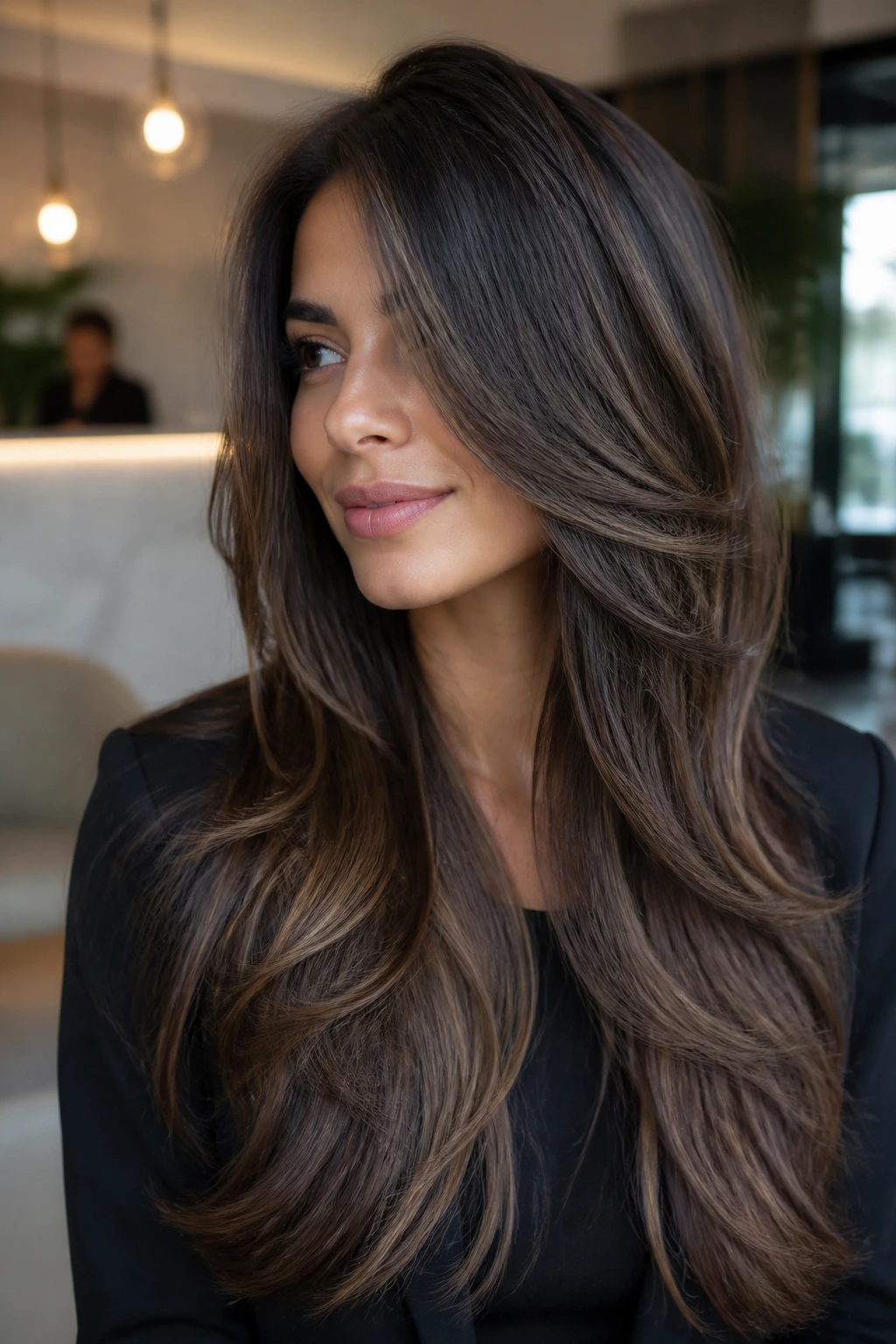
What makes waterfall layers different from a standard layered haircut? The transition is smoother. The layers are cut so they cascade down the hair in a way that feels like one soft slope instead of obvious steps. You see movement, but you don’t see hard breaks.
This is a good choice for long, straight hair that needs motion without losing polish. The layers usually start around the collarbone or a little below, then soften as they fall. That keeps the hair from getting that heavy, curtain-like feel at the bottom. It also works nicely if you like wearing your hair half-up, because the layers still frame the face when the rest is pulled back.
The cut has a calm, expensive-looking quality in person. Not flashy. Just clean. And because the layers blend so smoothly, it tends to suit office hair, weekend hair, and dinner-out hair without needing a different shape for each one.
9. C-Shaped Layers Around the Face
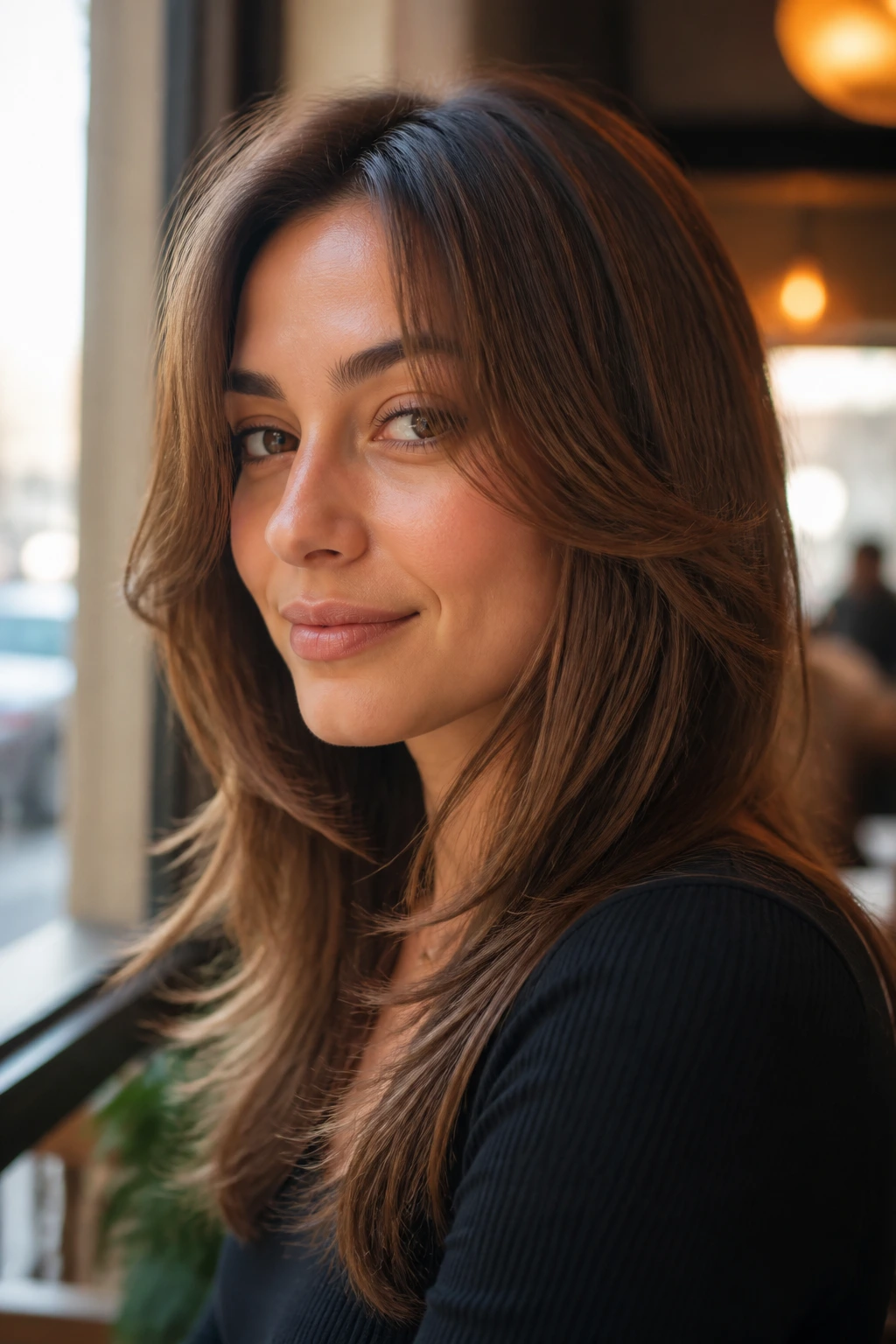
Picture the front of the hair curving inward like a C. That’s the idea here. Instead of a straight face frame or an aggressive shag, the layers arc around the cheeks and jaw, then melt into the rest of the length. It’s flattering in a quiet way, and it gives long hair a softer outline.
The Shape in Practice
A C-shape is a good middle ground for people who want face framing without heavy bangs. The shortest pieces often land around the mouth or chin, then curve toward the collarbone. That curve matters because it keeps the eye moving down the face instead of stopping at one hard line.
It works especially well on medium-density hair that needs some movement but not a lot of visible chopping. On blowouts, the curve looks smooth and deliberate. On air-dried hair, it still reads as face shaping rather than random front layers.
Good Fit If You Want
- A softer alternative to curtain bangs
- Movement around the cheeks and jaw
- Long hair that still feels polished
- Easy styling with a flat brush or round brush
If your face frame tends to flip out in weird ways, ask for longer blending near the ends. That tiny adjustment saves a lot of frustration.
10. Long Layers With Blunt Ends
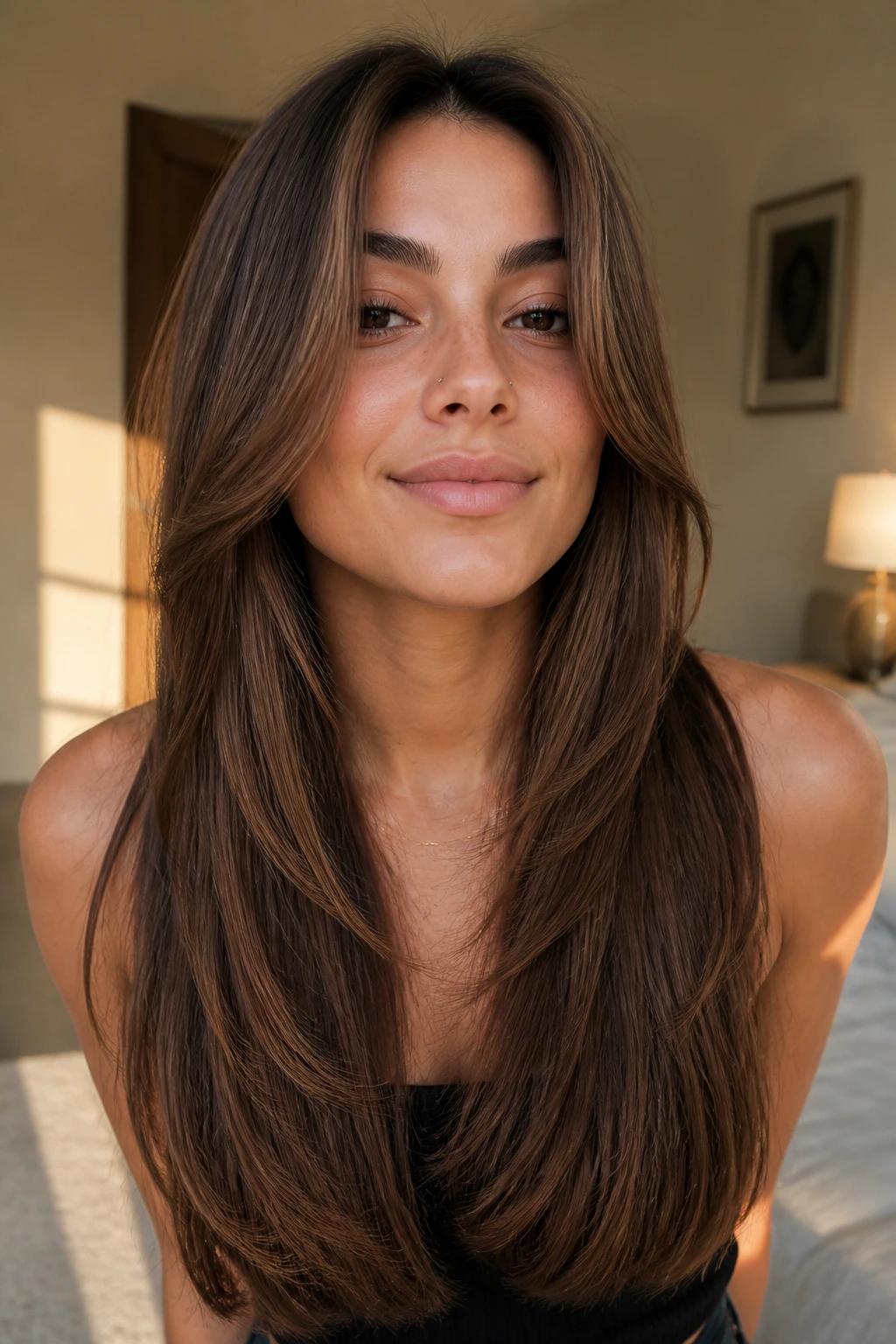
Here’s the thing: not every layered haircut needs wispy ends. Sometimes the smartest move is to keep the bottom line blunt and let the layers live above it. That gives long hair structure, which can be a relief if you’re tired of cuts that feel too broken up.
This style is especially good for people who want movement but still like the look of dense ends. The blunt edge makes the hair appear thicker, while the long layers above it stop the shape from feeling blocky. It’s a strong choice for straight hair and for wavy hair that tends to puff if the ends are too thin.
I also like this cut because it grows out without looking sloppy. The line stays honest. The layers soften. Nothing falls apart too quickly. If you live in ponytails most days but still want your hair to look good down, this cut is practical in a way people often underestimate.
11. Long Layers for Thick Hair

Thick hair needs a different kind of layering. Too much surface texture can make it puff, but enough internal shaping can turn a heavy mane into something that actually moves. The goal here is weight removal without losing the feeling of fullness at the ends.
What To Ask Your Stylist
- Long interior layers that reduce bulk
- Soft shaping near the crown, not all-over thinning
- A perimeter that stays strong
- Point cutting instead of heavy razor thinning
Thick hair often benefits from layers that start lower than people expect. Around the collarbone is common, and that makes sense because it lets the top stay full while the lower lengths stop feeling like a blanket. If your hair takes forever to dry, removing bulk in the right spots can cut some of that time without turning the haircut sparse.
This is also one of the easiest cuts to ruin with over-thinning shears. I’m not being dramatic. That tool can chew up the ends and leave the cut frizzy if used carelessly. A good stylist knows when to stop.
12. Long Layers for Fine Hair

Fine hair and lots of layers need a careful hand. If the shortest pieces go too high, the haircut can lose all its body. So the best version of this style uses longer layers, a soft perimeter, and just enough shaping to keep the hair from hanging flat.
How To Keep It Full
A round brush at the roots helps, but the cut matters more than the styling. Ask for layers that start below the chin or near the collarbone, then blend slowly. You want movement, not gaps. You also want the ends to stay dense, because thin-looking ends make fine hair feel even finer.
A blunt bottom line can be your friend here. It gives the eye a solid finish to land on. If your hair is very straight, a light mousse at the roots and a small amount of dry texture spray can add lift without making the cut crunchy or sticky.
Best Styling Habits
- Blow-dry the roots first for lift
- Avoid heavy oils on the mids and ends
- Use a small barrel brush if you want bend
- Trim before the layers turn straggly
Fine hair does not need a pile of short pieces. It needs smart spacing.
13. Long Layers for Wavy Hair

Wavy hair is one of the easiest places for layers to shine, because waves already want to move. The cut just needs to cooperate. Long layers help keep the wave pattern visible from top to bottom, instead of making the hair balloon in the wrong spots or hang flat underneath.
A good wavy layered cut usually keeps some length in the front and enough internal shape through the back so the waves stack nicely without turning bulky. If your waves are loose, the layers can start around the cheekbone or lower. If they’re stronger, the cut can go a little shorter in the crown to keep the shape from collapsing.
I like this cut because it doesn’t demand perfect styling. A little leave-in conditioner, a scrunch, maybe a diffuser if you’re feeling patient, and the shape already makes sense. The layers should encourage the wave, not fight it. When that happens, the hair looks like it has natural body instead of forced volume.
14. Long Layers for Curly Hair
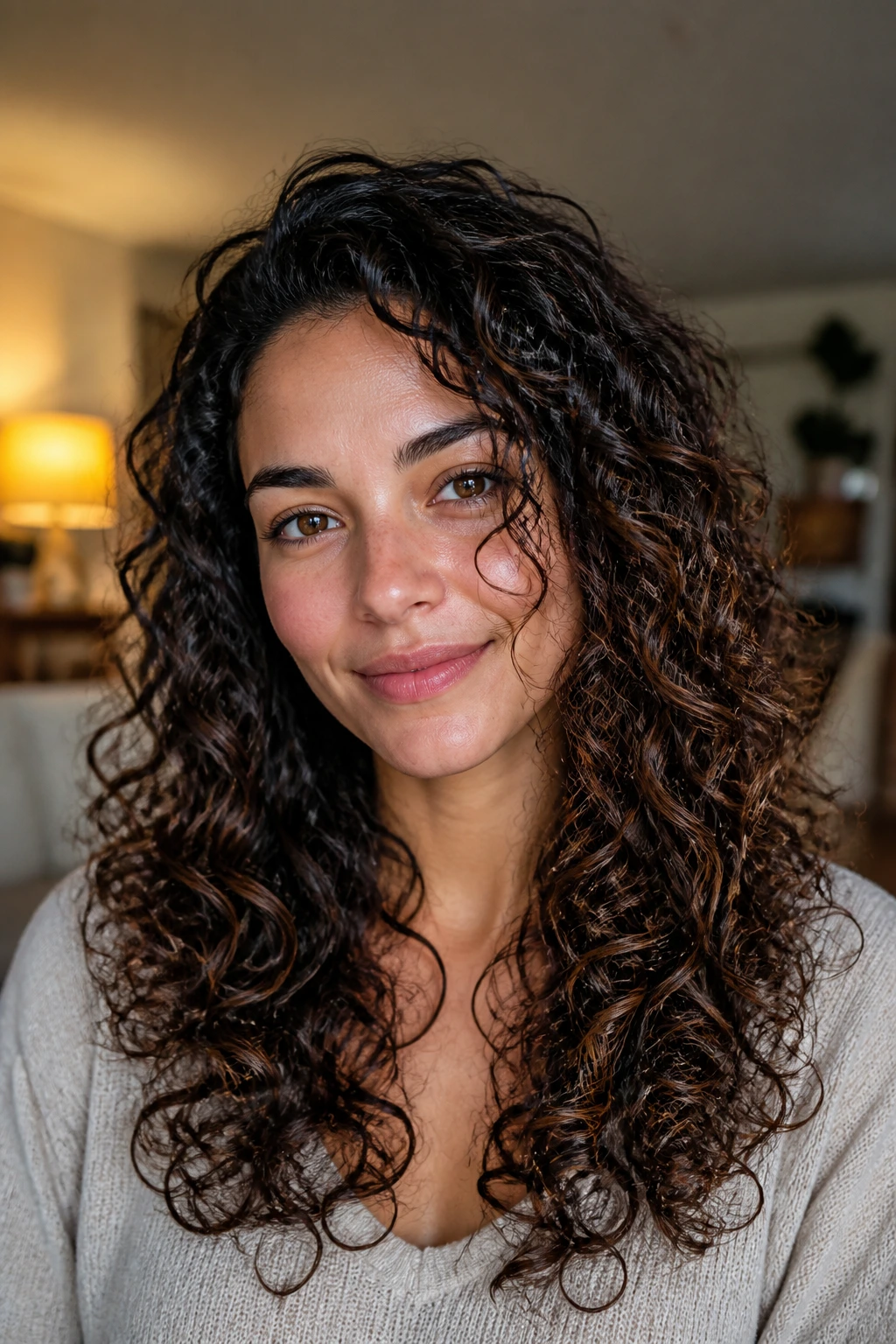
Do curls need layers? Absolutely. Do they need the right kind of layers? Even more. Curly hair can build a pyramid shape if the bottom gets too heavy, and long layers help distribute the curl pattern so the shape looks rounder and more balanced.
How Curly Layers Should Be Cut
The best curly cuts are often done with the hair in its natural state, or at least close to it. That helps the stylist see how each curl springs back. Layers are then placed where the curl wants to live, not where it would sit if it were straight. That distinction is huge.
What Makes This Different
- Layers should follow curl shrinkage
- Weight removal needs to respect curl clumps
- Dry cutting can help the shape land correctly
- Too much thinning can make curls frizz
A curly layered cut often looks a little long and uneven when wet, then settles into shape once it dries. That’s normal. The important part is avoiding a cut that tries to force every curl into the same line. Curls do not work that way, and pretending they do is a good way to get a triangle.
15. Bottleneck Bangs With Long Layers
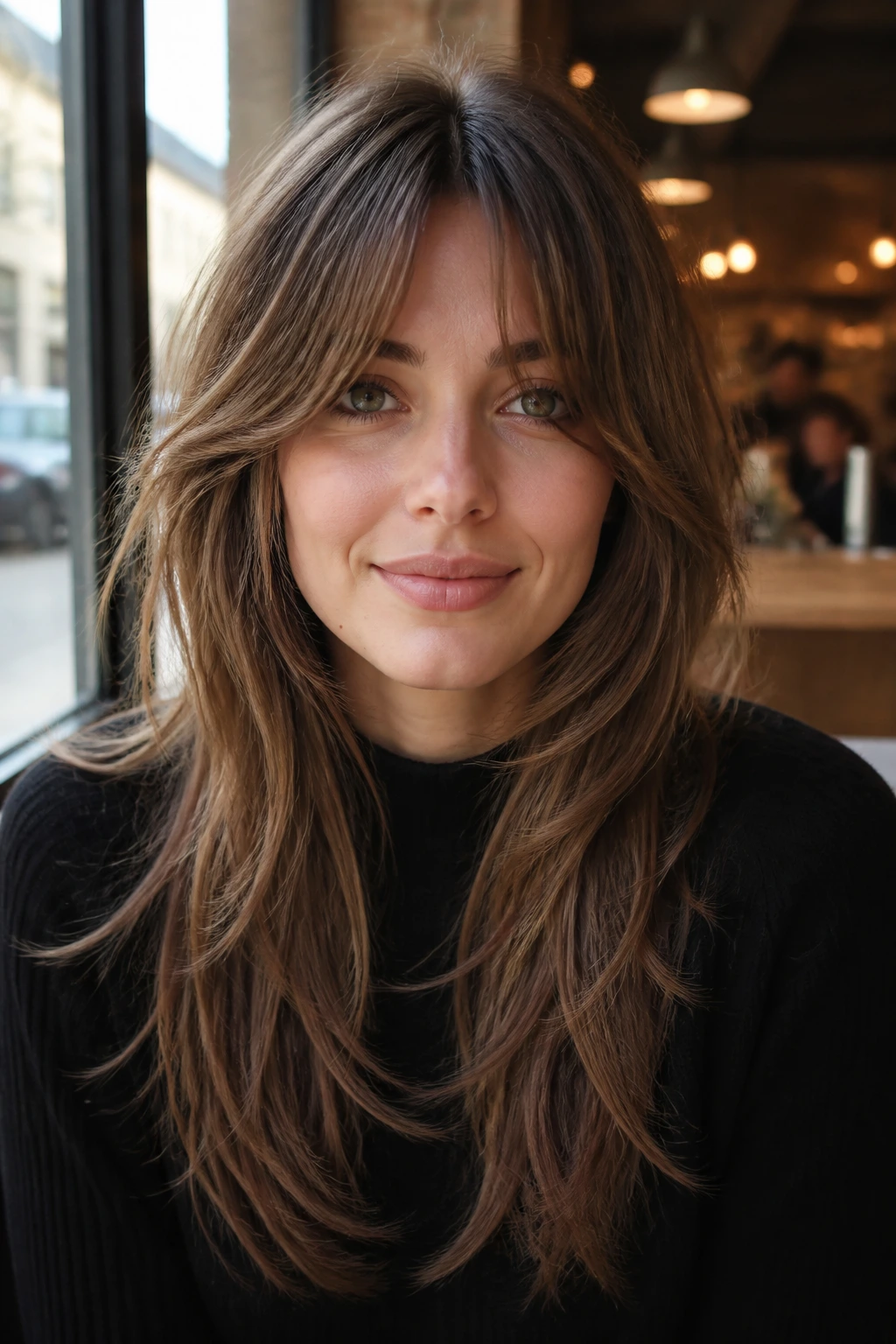
Bottleneck bangs are a clever piece of face framing. They start narrow in the center, then widen out around the cheekbones, which makes them a nice partner for long layers that need a softer front. The shape is a little more relaxed than full bangs and a little more modern than a standard curtain fringe.
This cut is a smart choice if you want change without losing the feeling of long hair. The bangs give the front a fresh edge, while the layers carry that movement through the rest of the length. On straight hair, the look feels polished. On wavy hair, it has a loose, cool shape that does not try too hard.
It does ask for some upkeep, though. Bangs are bangs. They need trims more often than the rest of the haircut, and they need a little styling when they first air-dry. If that does not bother you, they can make long layered hair feel much more current without changing the length you’ve grown out.
16. Long Wolf Cut

The long wolf cut is the unrulier cousin of the shag. It has more disconnection, more texture, and a stronger sense of movement from the crown to the ends. If you like hair that looks a little wild on purpose, this one makes sense.
Unlike softer long layered haircuts, the wolf cut leans into contrast. Shorter layers sit high on the head, then the length drops away fast. That creates lift at the roots and a choppy feel through the mids that works especially well on hair with natural wave. If your hair is stick-straight and flat, you may need a bit of heat styling to wake it up.
I would not recommend this cut to someone who wants a clean, smooth outline every day. It has edge. It also has personality, which is part of the appeal. Paired with a little mousse and a rough-dry, it can look lived-in in a way that feels intentional rather than messy.
17. Deep Side-Part Layers
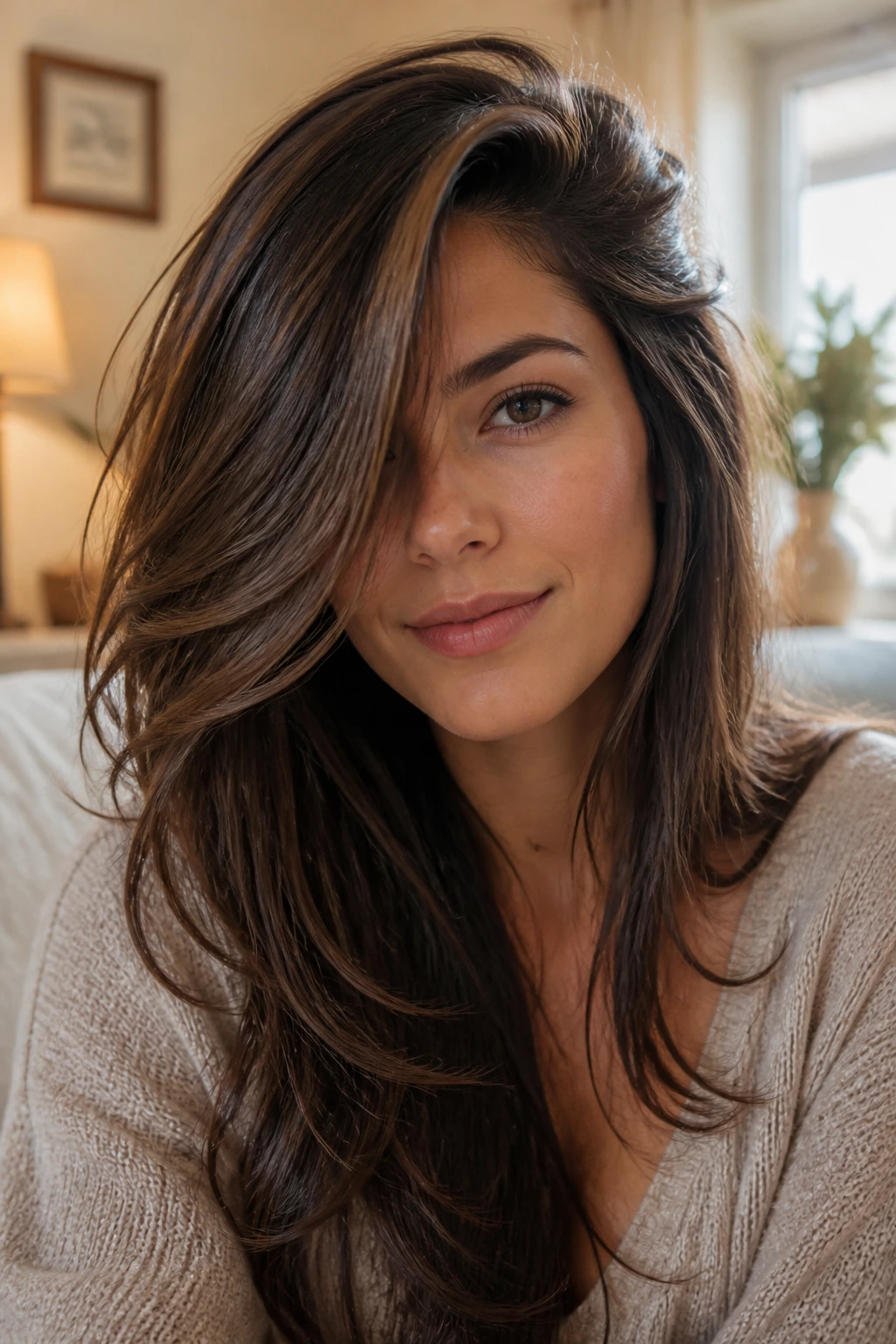
A deep side part can change a layered haircut more than people expect. Suddenly the layers fall across the forehead differently, the crown gets more lift on one side, and the whole cut looks more dramatic without actually losing length. It is a simple shift with a big payoff.
Why the Part Matters
Hair does not sit the same way on both sides of the head. A deep side part takes advantage of that, especially if one side naturally holds more volume than the other. The shorter front pieces sweep across the face, while the longer side creates a softer drop. That asymmetry makes the layers feel more dynamic.
Where It Works Best
- Straight hair that needs volume at the root
- Wavy hair that wants a little more shape
- Long layers with a blowout finish
- Cuts that already have face framing
This is one of those styles that can look quietly glamorous without much work. You change the part, add a round-brush bend to the front, and the haircut suddenly has more life. Small effort. Big difference.
18. Internal Weight-Removal Layers
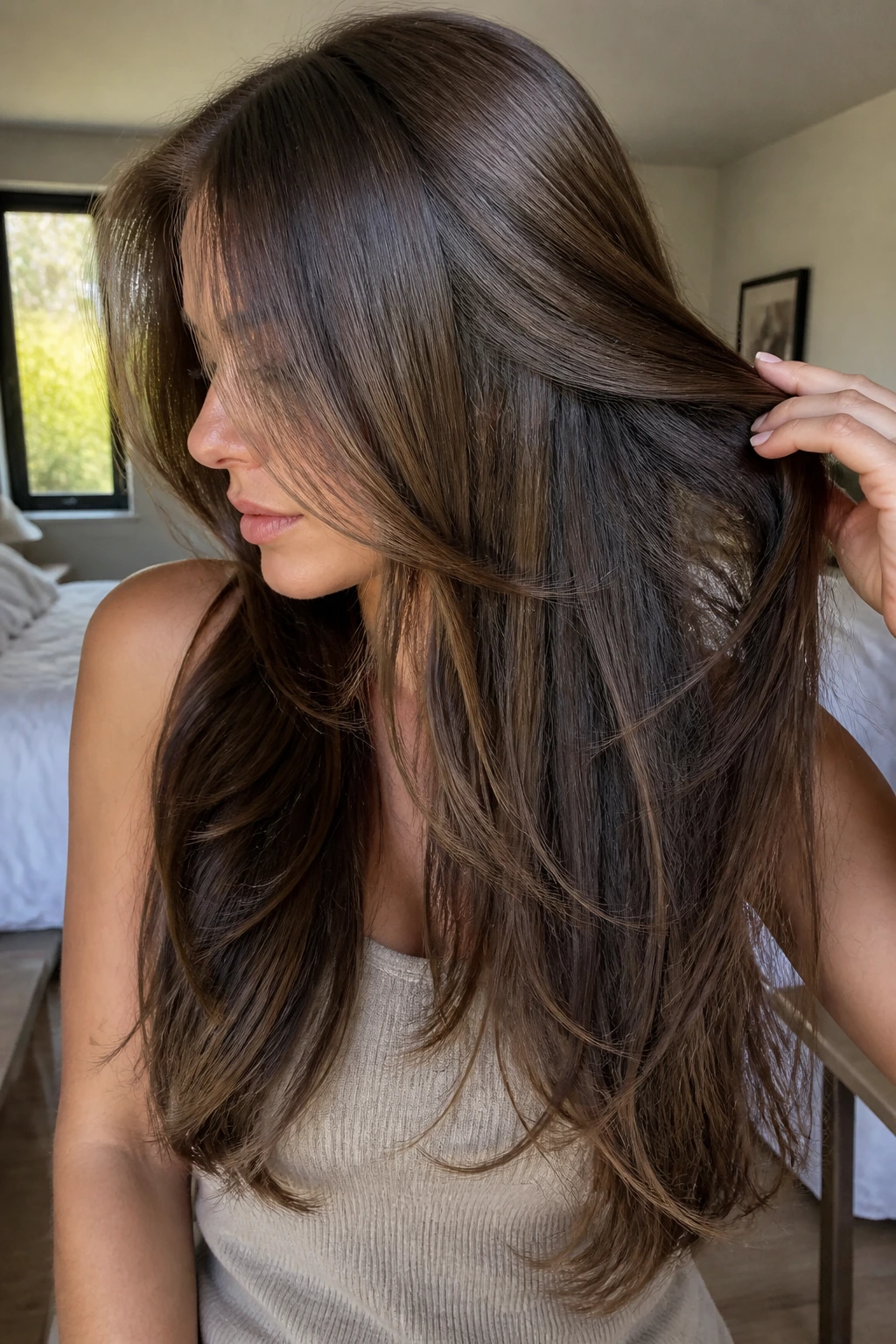
Some hair is heavy in places you cannot see at first glance. That is where internal weight-removal layers come in. They sit beneath the surface and take bulk out of the center of the haircut while leaving the outside shape intact. It is one of the smartest techniques for long hair that looks thick on the outside but feels like a helmet underneath.
The cut is especially useful if your hair puffs out at the sides or sits flat at the top and heavy at the bottom. By removing some of that hidden weight, the hair falls more naturally. The surface can still look full, but the mid-lengths stop fighting each other.
This is not a flashy haircut. It is a problem-solver. You may not even notice the layers when the hair is dry and styled, which is exactly the point. The real difference shows up in how the hair bends, how fast it dries, and how much easier it is to move your fingers through it without getting caught at the mids.
19. Feathered Long Layers

Feathered layers have a soft, brushed-out feel that reminds me of older salon cuts in the best way. They are light around the ends, airy through the mids, and usually less choppy than a shag or wolf cut. The shape is gentle, which makes it good for long hair that needs motion without looking edgy.
The Feathered Look
Feathering softens the ends so they taper instead of stopping abruptly. That gives the haircut a smoother finish, especially on hair that gets frizzy when blunt. A blowout brush helps this style shine, but even air-dried hair tends to look more open and touchable because of the way the layers are shaped.
Who It Suits
- Straight to wavy hair
- People who like a soft blowout
- Long hair that feels too heavy at the bottom
- Anyone who wants movement without obvious choppiness
I’d choose feathered layers over a harder cut when the goal is softness. If you want sharp texture, go elsewhere. If you want hair that moves lightly and falls with a little bend, this one earns its place.
20. Long Layers for Growing Out a Blunt Cut
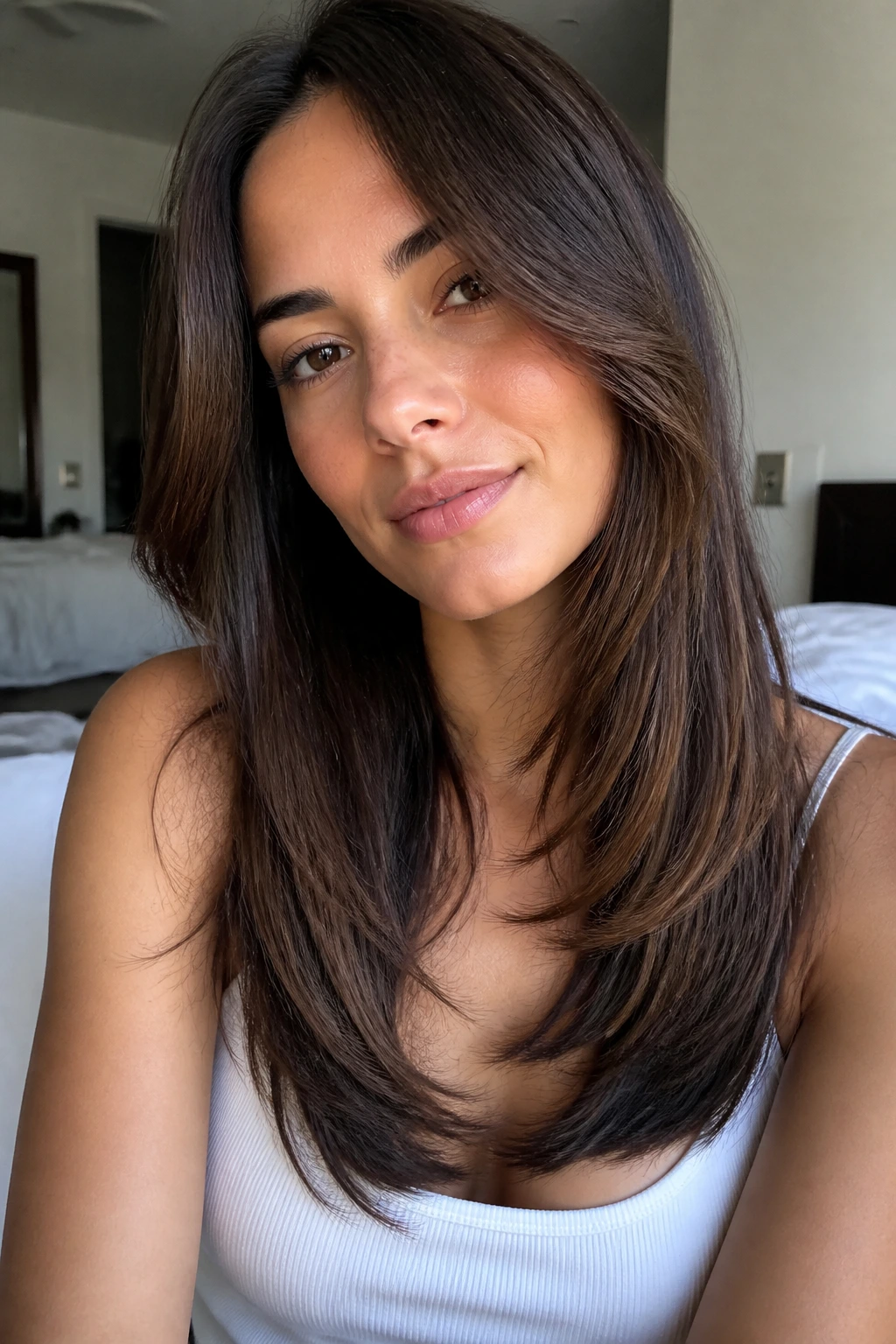
Growing out a blunt cut can be awkward. The ends feel blunt and heavy one month, then the shape starts to kick out the next. Long layers help that transition behave more like a plan and less like a phase you want to hide.
The key is restraint. You do not want a big chop on top of a grow-out. You want soft layers placed low enough to break up the blocky line while keeping the overall length intact. Around the collarbone or just below is often the sweet spot. That gives the cut movement, but it does not erase the fact that you are still keeping your hair long.
This is the style I recommend for people who are nervous about going from one shape to another. It gives the hair a little life while you wait for the next length goal, and it keeps the outline from looking stuck in between. If you hate the feeling of an awkward grow-out, this is the most practical long layered haircut on the list.
One good trim every 8 to 12 weeks keeps the shape honest. After that, let the layers do their quiet work.
